

The DOI matches its Crossref record; 65 of the 66 references it cites were found in a registry or an index.
Dietary fat and gut microbiota interactions determine diet-induced obesity in mice
Open accessAbstract
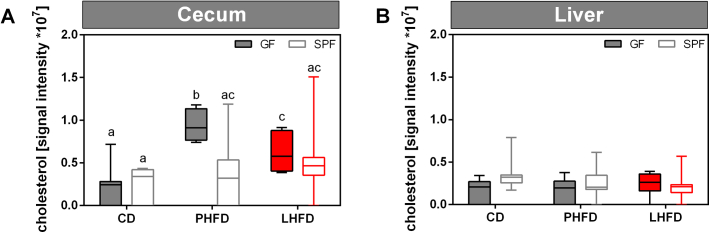
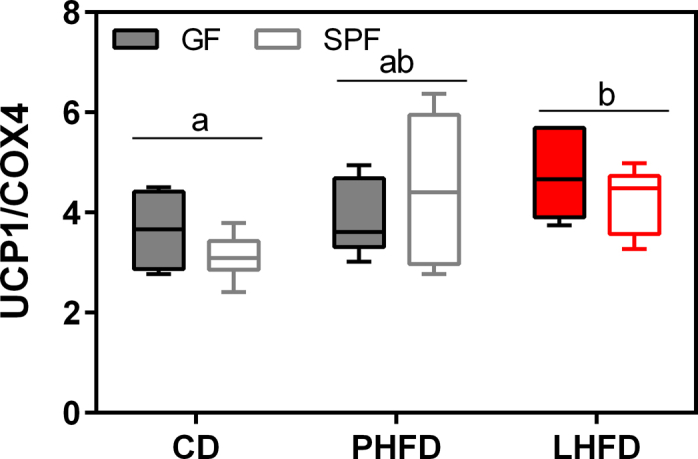
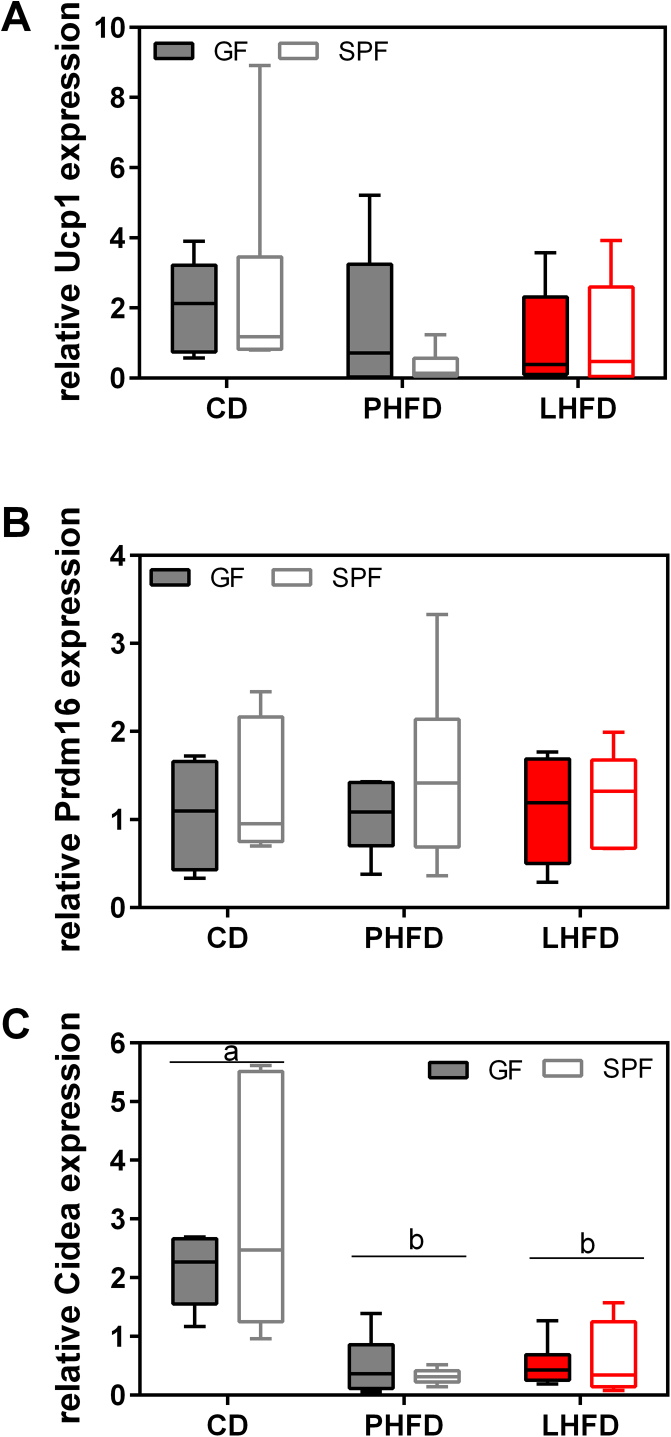
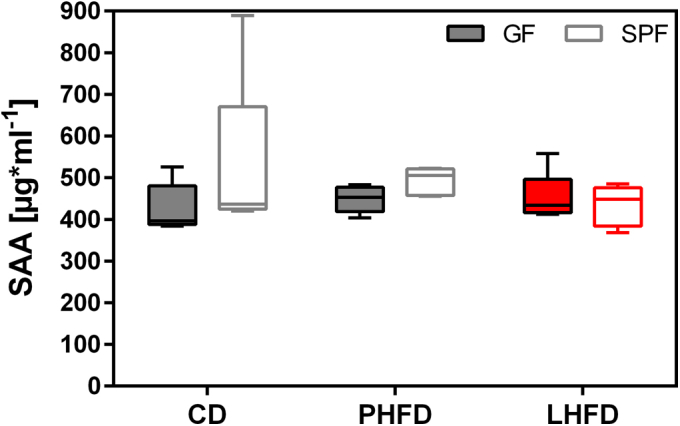
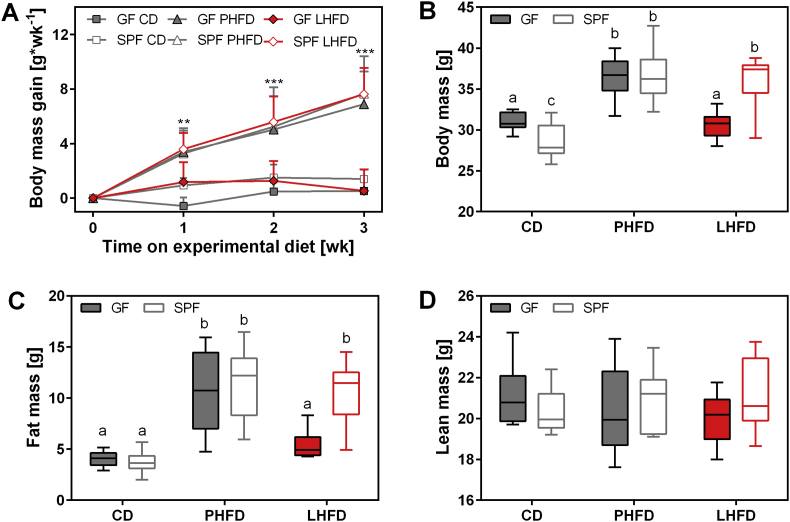
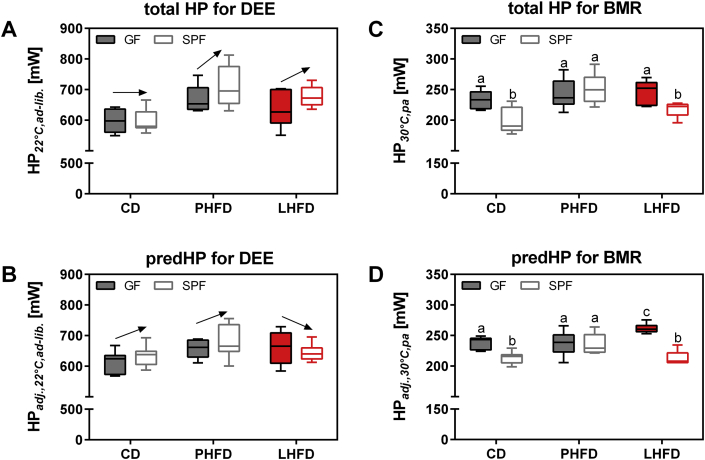
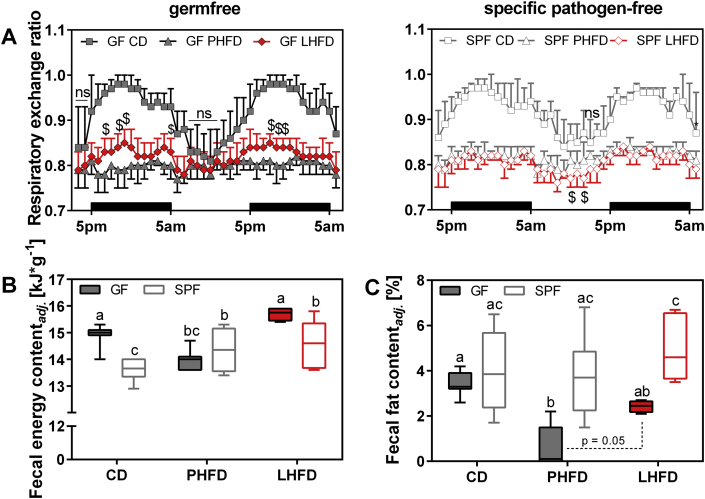
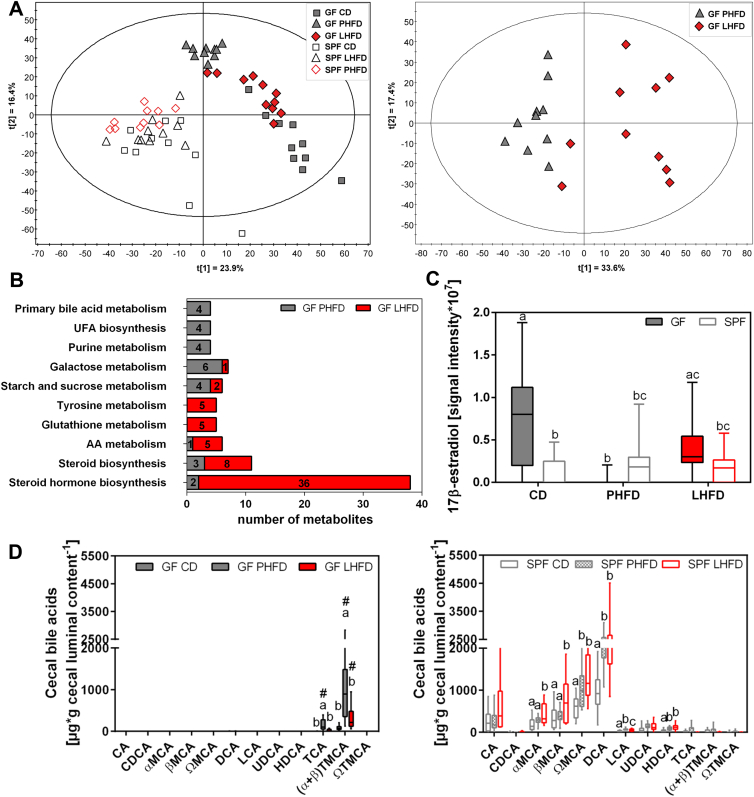
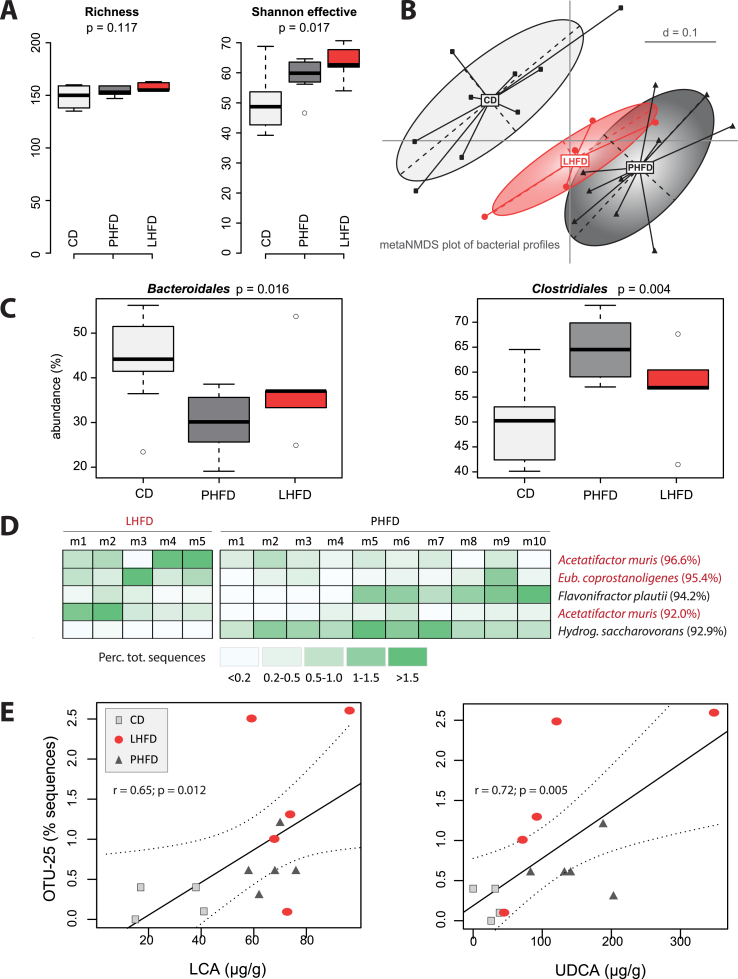
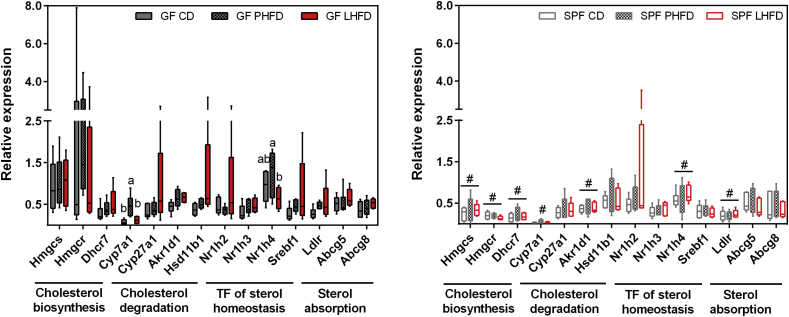
Objective Gut microbiota may promote positive energy balance; however, germfree mice can be either resistant or susceptible to diet-induced obesity (DIO) depending on the type of dietary intervention. We here sought to identify the dietary constituents that determine the susceptibility to body fat accretion in germfree (GF) mice. Methods GF and specific pathogen free (SPF) male C57BL/6N mice were fed high-fat diets either based on lard or palm oil for 4 wks. Mice were metabolically characterized at the end of the feeding trial. FT-ICR-MS and UPLC-TOF-MS were used for cecal as well as hepatic metabolite profiling and cecal bile acids quantification, respectively. Hepatic gene expression was examined by qRT-PCR and cecal gut microbiota of SPF mice was analyzed by high-throughput 16S rRNA gene sequencing. Results GF mice, but not SPF mice, were completely DIO resistant when fed a cholesterol-rich lard-based high-fat diet, whereas on a cholesterol-free palm oil-based high-fat diet, DIO was independent of gut microbiota. In GF lard-fed mice, DIO resistance was conveyed by increased energy expenditure, preferential carbohydrate oxidation, and increased fecal fat and energy excretion. Cecal metabolite profiling revealed a shift in bile acid and steroid metabolites in these lean mice, with a significant rise in 17β-estradiol, which is known to stimulate energy expenditure and interfere with bile acid metabolism. Decreased cecal bile acid levels were associated with decreased hepatic expression of genes involved in bile acid synthesis. These metabolic adaptations were largely attenuated in GF mice fed the palm-oil based high-fat diet. We propose that an interaction of gut microbiota and cholesterol metabolism is essential for fat accretion in normal SPF mice fed cholesterol-rich lard as the main dietary fat source. This is supported by a positive correlation between bile acid levels and specific bacteria of the order Clostridiales (phylum Firmicutes ) as a characteristic feature of normal SPF mice fed lard. Conclusions In conclusion, our study identified dietary cholesterol as a candidate ingredient affecting the crosstalk between gut microbiota and host metabolism.
Overview
The claims and statistics of this paper haven’t been checked yet.
Run the check — free, no account needed. It reads the open-access text and checks the sources it cites.
Integrity signals
Registry
Cites
Statistics
Figures
Verification
Claims the paper makes
The claims and statistics of this paper haven’t been checked yet.
Run the check — free, no account needed. It reads the open-access text and checks the sources it cites.
Self-check
Percentages, sums and reported differences re-computed from the paper’s own numbers.
The self-check needs the paper’s full text.
Citations
Cites
An obesity-associated gut microbiome with increased capacity for energy harvest
Turnbaugh, P. J., Ley, R. E., Mahowald, M. A., Magrini, V., Mardis, E. R., & Gordon, J. I. (2006) · Nature · doi:10.1038/nature05414 · Cited by 12,444
Primer3—new capabilities and interfaces
Untergasser, A., Cutcutache, I., Kõressaar, T., Ye, J., Faircloth, B., Remm, M., & Rozen, S. (2012) · Nucleic Acids Research · doi:10.1093/nar/gks596 · Cited by 9,165
Changes of Intestinal Functions in Liver Cirrhosis
Fukui, H., & Wiest, R. (2016) · Inflammatory Intestinal Diseases · doi:10.1159/000444436 · Cited by 6,820
The gut microbiota as an environmental factor that regulates fat storage
Bäckhed, F., Ding, H., Wang, T., Hooper, L. V., Koh, G. Y., Nagy, A., Semenkovich, C. F., & Gordon, J. I. (2004) · Proceedings of the National Academy of Sciences · doi:10.1073/pnas.0407076101 · Cited by 6,245
Host-Bacterial Mutualism in the Human Intestine
Bäckhed, F., Ley, R. E., Sonnenburg, J. L., Peterson, D. A., & Gordon, J. I. (2005) · Science · doi:10.1126/science.1104816 · Cited by 5,277
Cani, P. D., Bibiloni, R., Knauf, C., Waget, A., Neyrinck, A. M., Delzenne, N. M., & Burcelin, R. (2008) · Diabetes · doi:10.2337/db07-1403 · Cited by 4,819
Functional interactions between the gut microbiota and host metabolism
Tremaroli, V., & Bäckhed, F. (2012) · Nature · doi:10.1038/nature11552 · Cited by 4,387
Mechanisms underlying the resistance to diet-induced obesity in germ-free mice
Bäckhed, F., Manchester, J. K., Semenkovich, C. F., & Gordon, J. I. (2007) · Proceedings of the National Academy of Sciences · doi:10.1073/pnas.0605374104 · Cited by 2,615
Sayin, S. I., Wahlström, A., Felin, J., Jäntti, S., Marschall, H.-U., Bamberg, K., Angelin, B., Hyötyläinen, T., Orešič, M., & Bäckhed, F. (2013) · Cell Metabolism · doi:10.1016/j.cmet.2013.01.003 · Cited by 2,331
Bile acids induce energy expenditure by promoting intracellular thyroid hormone activation
Watanabe, M., Houten, S. M., Mataki, C., Christoffolete, M. A., Kim, B. W., Sato, H., Messaddeq, N., Harney, J. W., Ezaki, O., Kodama, T., et al. (2006) · Nature · doi:10.1038/nature04330 · Cited by 2,220
Cited by
Sorted by citations
The gut microbiota at the intersection of diet and human health
Gentile, C. L., & Weir, T. L. (2018) · Science · doi:10.1126/science.aau5812 · Cited by 1,049
Animal models of obesity and diabetes mellitus
Kleinert, M., Clemmensen, C., Hofmann, S. M., Moore, M. C., Renner, S., Woods, S. C., Huypens, P., Beckers, J., de Angelis, M. H., Schürmann, A., et al. (2018) · Nature Reviews Endocrinology · doi:10.1038/nrendo.2017.161 · Cited by 893
Self-citationXu, X., Poulsen, K. L., Wu, L., Liu, S., Miyata, T., Song, Q., Wei, Q., Zhao, C., Lin, C., & Yang, J. B. (2022) · Signal Transduction and Targeted Therapy · doi:10.1038/s41392-022-01119-3 · Cited by 387
Gut Microbiota-Dependent Modulation of Energy Metabolism
Heiss, C. N., & Olofsson, L. E. (2018) · Journal of Innate Immunity · doi:10.1159/000481519 · Cited by 310
The gut microbiota drives the impact of bile acids and fat source in diet on mouse metabolism
Just, S., Mondot, S., Ecker, J., Wegner, K., Rath, E., Gau, L., Streidl, T., Hery-Arnaud, G., Schmidt, S., Lesker, T. R., et al. (2018) · Microbiome · doi:10.1186/s40168-018-0510-8 · Cited by 269
Self-citationThe Mouse Microbiome Is Required for Sex-Specific Diurnal Rhythms of Gene Expression and Metabolism
Weger, B. D., Gobet, C., Yeung, J., Martin, E., Jimenez, S., Betrisey, B., Foata, F., Berger, B., Balvay, A., Foussier, A., et al. (2019) · Cell Metabolism · doi:10.1016/j.cmet.2018.09.023 · Cited by 269
Microbiome-based interventions to modulate gut ecology and the immune system
Hitch, T. C. A., Hall, L. J., Walsh, S. K., Leventhal, G. E., Slack, E. M. C., de Wouters, T., Walter, J., & Clavel, T. (2022) · Mucosal Immunology · doi:10.1038/s41385-022-00564-1 · Cited by 268
Self-citationCândido, F. G., Valente, F. X., Grześkowiak, Ł., Moreira, A. P. B., Rocha, D. M. U. P., & Alfenas, R. D. C. G. (2017) · International Journal of Food Sciences and Nutrition · doi:10.1080/09637486.2017.1343286 · Cited by 248
You’ve got male: Sex and the microbiota-gut-brain axis across the lifespan
Jaggar, M., Rea, K., Spichak, S., Dinan, T. G., & Cryan, J. F. (2020) · Frontiers in Neuroendocrinology · doi:10.1016/j.yfrne.2019.100815 · Cited by 200
Gut microbiota in overweight and obesity: crosstalk with adipose tissue
Cani, P. D., & Hul, M. V. (2023) · Nature Reviews Gastroenterology & Hepatology · doi:10.1038/s41575-023-00867-z · Cited by 230
Diet and microbiota linked in health and disease
Requena, T., Martínez‐Cuesta, M. C., & Peláez, C. (2018) · Food & Function · doi:10.1039/c7fo01820g · Cited by 191
Hughes, R., & Holscher, H. D. (2021) · Advances in Nutrition · doi:10.1093/advances/nmab077 · Cited by 212
Yu, D., Du, J., Pu, X., Zheng, L., Chen, S., Wang, N., Li, J., Chen, S., Pan, S., & Shen, B. (2022) · Frontiers in Cellular and Infection Microbiology · doi:10.3389/fcimb.2021.763507 · Cited by 171
New insights into the mechanisms of high‐fat diet mediated gut microbiota in chronic diseases
Chen, J., Xiao, Y., Li, D., Zhang, S., Wu, Y., Zhang, Q., & Bai, W. (2023) · iMeta · doi:10.1002/imt2.69 · Cited by 178
van Deuren, T., Blaak, E. E., & Canfora, E. E. (2022) · Obesity Reviews · doi:10.1111/obr.13498 · Cited by 169
Münch, N. S., Fang, H., Ingermann, J., Maurer, H. C., Anand, A., Kellner, V., Sahm, V., Wiethaler, M., Baumeister, T., Wein, F., et al. (2019) · Gastroenterology · doi:10.1053/j.gastro.2019.04.013 · Cited by 153
Self-citationBile acids and bariatric surgery
Albaugh, V. L., Banan, B., Ajouz, H., Abumrad, N. N., & Flynn, C. R. (2017) · Molecular Aspects of Medicine · doi:10.1016/j.mam.2017.04.001 · Cited by 148
Microbiota‐gut‐brain axis as a regulator of reward processes
García‐Cabrerizo, R., Carbia, C., O’Riordan, K. J., Schellekens, H., & Cryan, J. F. (2020) · Journal of Neurochemistry · doi:10.1111/jnc.15284 · Cited by 150
Sulfonolipids as novel metabolite markers of Alistipes and Odoribacter affected by high-fat diets
Walker, A., Pfitzner, B., Harir, M., Schaubeck, M., Ćalasan, J., Heinzmann, S. S., Turaev, D., Rattei, T., Endesfelder, D., zu Castell, W., et al. (2017) · Scientific Reports · doi:10.1038/s41598-017-10369-z · Cited by 128
Self-citationVildagliptin increases butyrate-producing bacteria in the gut of diabetic rats
Zhang, Q., Xiao, X., Li, M., Yu, M., Ping, F., Zheng, J., Wang, T., & Wang, X. (2017) · PLOS ONE · doi:10.1371/journal.pone.0184735 · Cited by 124
Madsen, M. S. A., Holm, J. B., Pallejá, A., Wismann, P., Fabricius, K., Rigbolt, K. T. G., Mikkelsen, M., Sommer, M. O. A., Jelsing, J., Nielsen, H. B., et al. (2019) · Scientific Reports · doi:10.1038/s41598-019-52103-x · Cited by 131
The Gut Microbiome and Individual-Specific Responses to Diet
Leshem, A., Segal, E., & Elinav, E. (2020) · mSystems · doi:10.1128/msystems.00665-20 · Cited by 109
Kotsiliti, E., Leone, V., Schuehle, S., Govaere, O., Li, H., Wolf, M. J., Horvatic, H., Bierwirth, S., Hundertmark, J., Inverso, D., et al. (2023) · Journal of Hepatology · doi:10.1016/j.jhep.2023.04.037 · Cited by 108
Self-citationGesteiro, E., Guijarro, L., Sánchez-Muniz, F. J., Vidal‐Carou, M. C., Troncoso, A. M., Venanci, L., Jimeno, V., Quı́lez, J., Anadón, A., & González‐Gross, M. (2019) · Nutrients · doi:10.3390/nu11092008 · Cited by 101
Diet-Induced Gut Dysbiosis and Leaky Gut Syndrome
Chae, Y.-R., Lee, Y. R., Kim, Y., & Park, H. (2024) · Journal of Microbiology and Biotechnology · doi:10.4014/jmb.2312.12031 · Cited by 108
Fecal Microbial Transplantation and Its Potential Application in Cardiometabolic Syndrome
Leshem, A., Horesh, N., & Elinav, E. (2019) · Frontiers in Immunology · doi:10.3389/fimmu.2019.01341 · Cited by 96
Liu, Y., Li, T., Alim, A., Ren, D., Zhao, Y., & Yang, X. (2019) · Journal of Agricultural and Food Chemistry · doi:10.1021/acs.jafc.9b04731 · Cited by 93
Zhang, M., Zhu, J., Zhang, X., Zhao, D., Ma, Y., Li, D., Ho, C., & Huang, Q. (2020) · Food & Function · doi:10.1039/c9fo02907a · Cited by 91
Ye, Z., Xu, Y., & Liu, Y. (2021) · Trends in Food Science & Technology · doi:10.1016/j.tifs.2021.05.001 · Cited by 86
The Interplay between Androgen and Gut Microbiota: Is There a Microbiota-Gut-Testis Axis
Li, X., Cheng, W., Shang, H., Wei, H., & Deng, C. (2021) · Reproductive Sciences · doi:10.1007/s43032-021-00624-0 · Cited by 86
Wang, Y., Zhao, A., Du, H., Liu, Y., Qi, B., & Yang, X. (2021) · Journal of Agricultural and Food Chemistry · doi:10.1021/acs.jafc.1c04626 · Cited by 82
The Role of the Gut Microbiota on the Beneficial Effects of Ketogenic Diets
Attaye, I., van Oppenraaij, S. L., Warmbrunn, M. V., & Nieuwdorp, M. (2021) · Nutrients · doi:10.3390/nu14010191 · Cited by 85
Mokkala, K., Houttu, N., Cansev, T., & Laitinen, K. (2019) · Clinical Nutrition · doi:10.1016/j.clnu.2019.05.003 · Cited by 82
Liang, H., Jiang, F., Cheng, R., Luo, Y., Wang, J., Luo, Z., Li, M., Shen, X. P., & He, F. (2020) · EXPERIMENTAL ANIMALS · doi:10.1538/expanim.20-0094 · Cited by 78
Proceedings of the International Scientific and Practical Conference
(2023) · doi:10.37143/conf-1-2023 · Cited by 78
Dissociation of Adaptive Thermogenesis from Glucose Homeostasis in Microbiome-Deficient Mice
Krisko, T. I., Nicholls, H. T., Bare, C. J., Holman, C. D., Putzel, G., Jansen, R. S., Sun, N. Z., Rhee, K. Y., Banks, A. S., & Cohen, D. E. (2020) · Cell Metabolism · doi:10.1016/j.cmet.2020.01.012 · Cited by 78
“Western Diet”-Induced Adipose Inflammation Requires a Complex Gut Microbiota
Tran, H. Q., Bretin, A., Adeshirlarijaney, A., Yeoh, B. S., Vijay–Kumar, M., Zou, J., Denning, T. L., Chassaing, B., & Gewirtz, A. T. (2019) · Cellular and Molecular Gastroenterology and Hepatology · doi:10.1016/j.jcmgh.2019.09.009 · Cited by 74
Zhao, Q., Fu, Y., Zhang, F., Wang, C., Yang, X., Bai, S., Xue, Y., & Shen, Q. (2022) · Molecular Nutrition & Food Research · doi:10.1002/mnfr.202100907 · Cited by 68
When fat meets the gut—focus on intestinal lipid handling in metabolic health and disease
Wit, M., Viera, J. T., Strohmeyer, A., Klingenspor, M., Hankir, M. K., & Sumara, G. (2022) · EMBO Molecular Medicine · doi:10.15252/emmm.202114742 · Cited by 63
Self-citationWu, R., Zhao, D., An, R., Wang, Z., Li, Y., Shi, B., & Ni, Q. (2019) · Frontiers in Physiology · doi:10.3389/fphys.2019.00918 · Cited by 62
Cross-Talk Between Gut Microbiota and Adipose Tissues in Obesity and Related Metabolic Diseases
Wu, D., Wang, H., Xie, L., & Hu, F. (2022) · Frontiers in Endocrinology · doi:10.3389/fendo.2022.908868 · Cited by 62
n-6 High Fat Diet Induces Gut Microbiome Dysbiosis and Colonic Inflammation
Selmin, O. I., Papoutsis, A. J., Hazan, S. C., Smith, C., Greenfield, N., Donovan, M. G., Wren, S. N., Doetschman, T., Snider, J. M., Snider, A. J., et al. (2021) · International Journal of Molecular Sciences · doi:10.3390/ijms22136919 · Cited by 57
Zhu, Y. S., Li, T., Din, A. U., Hassan, A., Wang, Y., & Wang, G. (2019) · Applied Microbiology and Biotechnology · doi:10.1007/s00253-019-09681-7 · Cited by 50
de Pace, F., Carvalho, B. M., Zanotto, T. M., Santos, A., Guadagnini, D., Silva, K. L. C., Mendes, M. C. S., Rocha, G. Z., Allegretti, S. M., dos Santos, G. A., et al. (2018) · Pharmacological Research · doi:10.1016/j.phrs.2018.04.008 · Cited by 49
Incretin Hormones, Obesity and Gut Microbiota
Angelini, G., Russo, S., & Mingrone, G. (2024) · Peptides · doi:10.1016/j.peptides.2024.171216 · Cited by 47
Hoces, D., Lan, J., Sun, W., Geiser, T., Stäubli, M. L., Barazzone, E. C., Arnoldini, M., Challa, T. D., Klug, M., Kellenberger, A., et al. (2022) · PLoS Biology · doi:10.1371/journal.pbio.3001743 · Cited by 49
Norris, G. H., Porter, C. M., Jiang, C., & Blesso, C. N. (2017) · Beverages · doi:10.3390/beverages3030037 · Cited by 47
Saturated Fat: Part of a Healthy Diet
Gershuni, V. M. (2018) · Current Nutrition Reports · doi:10.1007/s13668-018-0238-x · Cited by 48
Fang, S., Chen, X., Pan, J., Chen, Q., Zhou, L., Wang, C., Xiao, T., & Gan, Q. F. (2020) · BMC Microbiology · doi:10.1186/s12866-020-01797-5 · Cited by 48
Contribution of uremic dysbiosis to insulin resistance and sarcopenia
Uchiyama, K., Wakino, S., Irie, J., Miyamoto, J., Matsui, A., Tajima, T., Itoh, T., Oshima, Y., Yoshifuji, A., Kimura, I., et al. (2020) · Nephrology Dialysis Transplantation · doi:10.1093/ndt/gfaa076 · Cited by 45
The source of the fat significantly affects the results of high-fat diet intervention
An, J., Wang, Q., Yi, S., Liu, X., Jin, H., Xu, J., Wen, G., Zhu, J., & Tuo, B. (2022) · Scientific Reports · doi:10.1038/s41598-022-08249-2 · Cited by 45
Xu, L., Tang, Z., Herrera‐Balandrano, D. D., Qiu, Z., Li, B., Yang, Y., & Huang, W. (2023) · Food Research International · doi:10.1016/j.foodres.2023.113761 · Cited by 42
Disruptions in gut microbial-host co-metabolism and the development of metabolic disorders
Rajani, C., & Jia, W. P. (2018) · Clinical Science · doi:10.1042/cs20171328 · Cited by 44
Codium fragile Ameliorates High-Fat Diet-Induced Metabolism by Modulating the Gut Microbiota in Mice
Kim, J., Choi, J. H., Oh, T., Ahn, B.-J., & Unno, T. (2020) · Nutrients · doi:10.3390/nu12061848 · Cited by 41
Millman, J. F., Okamoto, S., Kimura, A., Uema, T., Higa, M., Yonamine, M., Namba, T., Ogata, E., Yamazaki, S., Shimabukuro, M., et al. (2019) · European Journal of Nutrition · doi:10.1007/s00394-019-02088-0 · Cited by 39
Germ‐free mice are not protected against diet‐induced obesity and metabolic dysfunction
Moretti, C. H., Schiffer, T. A., Li, X., Weitzberg, E., Carlström, M., & Lundberg, J. O. (2020) · Acta Physiologica · doi:10.1111/apha.13581 · Cited by 38
Fruit bioactive compounds: Effect on lactic acid bacteria and on intestinal microbiota
Borgonovi, T. F., Virgolin, L. B., Janzantti, N. S., Casarotti, S. N., & Penna, A. L. B. (2022) · Food Research International · doi:10.1016/j.foodres.2022.111809 · Cited by 40
Gut Microbiota and Aging: Traditional Chinese Medicine and Modern Medicine
Li, J., Li, D., Chen, Y., Chen, W., Xu, J., & Gao, L. (2023) · Clinical Interventions in Aging · doi:10.2147/cia.s414714 · Cited by 37
Trichinella spiralis infection ameliorated diet-induced obesity model in mice
Kang, S. A., Choi, J. H., Baek, K., Lee, D. I., Jeong, M., & Yu, H. S. (2020) · International Journal for Parasitology · doi:10.1016/j.ijpara.2020.07.012 · Cited by 36
Bile acid and its bidirectional interactions with gut microbiota: a review
He, S., Li, L., Yao, Y., Su, J., Lei, S., Zhang, Y., & Zeng, H. (2023) · Critical Reviews in Microbiology · doi:10.1080/1040841x.2023.2262020 · Cited by 36
Kim, J. H., Heo, J. S., Baek, K. S., Kim, S., Kim, J., Baek, K., Kim, K. E., & Sheen, Y. H. (2018) · Clinica Chimica Acta · doi:10.1016/j.cca.2018.03.005 · Cited by 35
Li, D., Wu, H., & Dou, H. (2019) · Bioscience Biotechnology and Biochemistry · doi:10.1080/09168451.2019.1578640 · Cited by 34
Acute Changes of Bile Acids and FGF19 After Sleeve Gastrectomy and Roux-en-Y Gastric Bypass
Chen, Y., Lu, J., Nemati, R., Plank, L. D., & Murphy, R. (2019) · Obesity Surgery · doi:10.1007/s11695-019-04040-x · Cited by 37
Zhao, Y., He, Z., Hao, W., Zhu, H., Liu, J., Ma, K. Y., He, W., & Chen, Z. (2021) · Food & Function · doi:10.1039/d1fo02906a · Cited by 37
Ye, Z., Chen, C., Li, Q., Xu, Y., & Liu, Y. (2020) · Food Research International · doi:10.1016/j.foodres.2020.109117 · Cited by 34
Moinard, A., Payen, C., Ouguerram, K., André, A., Hernandez, J. L., Drut, A., Biourge, V. C., Suchodolski, J. S., Flanagan, J., Nguyen, P., et al. (2020) · Frontiers in Veterinary Science · doi:10.3389/fvets.2020.566282 · Cited by 32
Diet and gut microbiome in fatty liver and its associated liver cancer
Pan, Y., & Zhang, X. (2021) · Journal of Gastroenterology and Hepatology · doi:10.1111/jgh.15713 · Cited by 35
Jia, X., Chen, Q., Wu, H., Liu, H., Jing, C., Gong, A., & Zhang, Y. (2023) · Frontiers in Nutrition · doi:10.3389/fnut.2023.1291853 · Cited by 35
Zhang, S., Ren, X., Zhang, B., Lan, T., & Liu, B. (2024) · Molecules · doi:10.3390/molecules29081859 · Cited by 37
Targeting the gut microbiota by Asian and Western dietary constituents: a new avenue for diabetes
Conteh, A. R., & Huang, R. (2020) · Toxicology Research · doi:10.1093/toxres/tfaa065 · Cited by 34
High-Fat Diets with Differential Fatty Acids Induce Obesity and Perturb Gut Microbiota in Honey Bee
Wang, X., Zhong, Z., Chen, X., Hong, Z., Lin, W., Mu, X., Hu, X., & Zheng, H. (2021) · International Journal of Molecular Sciences · doi:10.3390/ijms22020834 · Cited by 33
Impact of diet and host genetics on the murine intestinal mycobiome
Gupta, Y., Ernst, A. L., Vorobyev, A., Beltsiou, F., Zillikens, D., Bieber, K., Sanna‐Cherchi, S., Christiano, A. M., Sadik, C. D., Ludwig, R. J., et al. (2023) · Nature Communications · doi:10.1038/s41467-023-36479-z · Cited by 33
So, S. Y., Wu, Q., Leung, K. S., Kundi, Z. M., Savidge, T., & El-Nezami, H. S. (2021) · American Journal of Physiology-Gastrointestinal and Liver Physiology · doi:10.1152/ajpgi.00226.2021 · Cited by 31
Dysregulated lipid metabolism in colorectal cancer
Coleman, O. I., Ecker, M., & Haller, D. (2021) · Current Opinion in Gastroenterology · doi:10.1097/mog.0000000000000811 · Cited by 31
Self-citationQuestioning the foundations of the gut microbiota and obesity
Dalby, M. J. (2023) · Philosophical Transactions of the Royal Society B Biological Sciences · doi:10.1098/rstb.2022.0221 · Cited by 34
Germ-Free Swiss Webster Mice on a High-Fat Diet Develop Obesity, Hyperglycemia, and Dyslipidemia
Logan, I. E., Bobe, G., Miranda, C. L., Vasquez‐Perez, S., Choi, J., Lowry, M. B., Sharpton, T. J., Morgun, A., Maier, C. S., Stevens, J. F., et al. (2020) · Microorganisms · doi:10.3390/microorganisms8040520 · Cited by 31
Puértolas-Balint, F., & Schroeder, B. O. (2020) · Frontiers in Immunology · doi:10.3389/fimmu.2020.01164 · Cited by 30
The effect of gut microbiota on the intestinal lipidome of mice
Liebisch, G., Plagge, J., Höring, M., Seeliger, C., & Ecker, J. (2021) · International Journal of Medical Microbiology · doi:10.1016/j.ijmm.2021.151488 · Cited by 30
Shen, C., Hao, Y.-F., Hao, Z.-X., Liu, Q., Zhang, L., Jiang, C., & Jiang, J. (2021) · Food & Function · doi:10.1039/d1fo01373d · Cited by 29
Wu, J.-Y., Feng, L., Wu, P., Liu, Y., Ren, H., Jin, X., Jiang, J., Kuang, S., Li, S., Tang, L., et al. (2022) · Aquaculture · doi:10.1016/j.aquaculture.2022.738656 · Cited by 29
Edmands, W. M. B., Petrick, L. M., Barupal, D. K., Scalbert, A., Wilson, M. J., Wickliffe, J. K., & Rappaport, S. M. (2017) · Analytical Chemistry · doi:10.1021/acs.analchem.6b02394 · Cited by 28
New Insights into Stroke Prevention and Treatment: Gut Microbiome
Zhao, L., Yang, L., Guo, Y., Xiao, J., Zhang, J., & Xu, S. (2021) · Cellular and Molecular Neurobiology · doi:10.1007/s10571-021-01047-w · Cited by 29
Chen, Y., Hsu, A., Chiou, S., Lin, Y., & Lin, J. (2021) · Nutrients · doi:10.3390/nu13072182 · Cited by 26
The gut microbiota instructs the hepatic endothelial cell transcriptome
Formes, H., Bernardes, J. P., Mann, A., Bayer, F., Pontarollo, G., Kiouptsi, K., Schäfer, K., Attig, S., Nikolova, T., Hofmann, T. G., et al. (2021) · iScience · doi:10.1016/j.isci.2021.103092 · Cited by 28
Noureldein, M. H., Nawfal, R., Bitar, S., Maxwell, S., Khurana, I., Kassouf, H. K., Khuri, F. R., El‐Osta, A., & Eid, A. A. (2022) · Cellular and Molecular Life Sciences · doi:10.1007/s00018-022-04485-x · Cited by 29
Gut Microbiota Restores Central Neuropeptide Deficits in Germ-Free Mice
Hamamah, S., & Covasa, M. (2022) · International Journal of Molecular Sciences · doi:10.3390/ijms231911756 · Cited by 25
Yu, H., Qiu, N., Meng, Y., & Keast, R. (2020) · Journal of the Science of Food and Agriculture · doi:10.1002/jsfa.10387 · Cited by 25
Zhou, B., Feng, C., Sun, S., Chen, X., Zhuansun, D., Wang, D., Yu, X., Meng, X., Xiao, J., Wu, L., et al. (2024) · Developmental Cell · doi:10.1016/j.devcel.2024.03.034 · Cited by 29
Gnotobiotic and Conventional Mouse Systems to Support Microbiota Based Studies
Lavin, R., DiBenedetto, N., Yeliseyev, V., Delaney, M. L., & Bry, L. (2018) · Current Protocols in Immunology · doi:10.1002/cpim.48 · Cited by 24
Abenavoli, L., Gambardella, M. L., Scarlata, G. G. M., Lenci, I., Baiocchi, L., & Luzza, F. (2024) · Medicina · doi:10.3390/medicina60040563 · Cited by 22
Microcapsule of sweet orange essential oil changes gut microbiota in diet-induced obese rats
Li, D., Wu, H., Dou, H., Guo, L., & Huang, W. G. (2018) · Biochemical and Biophysical Research Communications · doi:10.1016/j.bbrc.2018.10.035 · Cited by 26
Functional relevance of microbiome signatures: The correlation era requires tools for consolidation
Buttó, L. F., & Haller, D. (2017) · Journal of Allergy and Clinical Immunology · doi:10.1016/j.jaci.2017.02.010 · Cited by 23
Self-citationScavizzi, F., Bassi, C., Lupini, L., Guerriero, P., Raspa, M., & Sabbioni, S. (2021) · Animal Microbiome · doi:10.1186/s42523-021-00113-4 · Cited by 22
Kochumon, S., Malik, M. Z., Sindhu, S. T. A. K., Arefanian, H., JACOB, T. K., Bahman, F., Nizam, R., Hasan, A., Thomas, R., Al‐Rashed, F., et al. (2024) · Nutrients · doi:10.3390/nu16121929 · Cited by 21
Zhang, H., Wu, Q., & Qin, X. (2020) · Journal of the Science of Food and Agriculture · doi:10.1002/jsfa.10471 · Cited by 22
Marco, P. D., Henriques, A. C., Azevedo, R. M. S., Sá, S. I., Cardoso, A., Fonseca, B. M., Barbosa, J., & Leal, S. M. (2021) · Nutrients · doi:10.3390/nu13093236 · Cited by 22
Modeling microbiota-associated human diseases: from minimal models to complex systems
Aguanno, D., Metwaly, A., Coleman, O. I., & Haller, D. (2022) · Microbiome Research Reports · doi:10.20517/mrr.2022.01 · Cited by 24
Self-citationGarruti, G., Ciaula, A. D., Wang, H. H., Wang, D. Q. ‐., & Portincasa, P. (2017) · Annals of Hepatology · doi:10.5604/01.3001.0010.5499 · Cited by 22
Wei, Y., Cheng, J., Luo, M., Yang, S., Xing, Q., Cheng, J., Lv, J., Yu, C., Sun, L., Shi, D., et al. (2022) · The Journal of Steroid Biochemistry and Molecular Biology · doi:10.1016/j.jsbmb.2022.106115 · Cited by 24
Nedergaard, J., von Essen, G., & Cannon, B. (2023) · Philosophical Transactions of the Royal Society B Biological Sciences · doi:10.1098/rstb.2022.0220 · Cited by 21
Metadata
- Authors
- Kübeck, R., Bonet-Ripoll, C., Hoffmann, C., Walker, A., Müller, V. M., Schüppel, V. L., Lagkouvardos, I., Scholz, B., Engel, K.-H., Daniel, H., Schmitt-Kopplin, P., Haller, D., Clavel, T., & Klingenspor, M.
- Affiliations
- Else Kröner Fresenius Zentrum für Ernährungsmedizin (DE)
- Helmholtz Munich (DE)
- Technical University of Munich (DE)
- Corresponding author
- Klingenspor, Martin
- ORCID
- Venue
- Molecular Metabolism
- Publisher
- Elsevier BV
- Published
- 2016-12
- Volume
- 5
- Issue
- 12
- Pages
- 1162-1174
- ISSN
- 2212-8778 (ISSN-L)
- PMC
- PMC5123202
- OpenAlex
- W2530535683
- Cited by
- 211
- References
- 66
- Citations by year
- 2026: 11 · 2025: 16 · 2024: 18 · 2023: 22 · 2022: 32 · 2021: 35 · 2020: 30 · 2019: 19 · 2018: 17 · 2017: 11
- FWCI
- 8.14
- Type
- journal article
- Language
- en
- Open access
- gold
- doi.org
- Licence
- Locations
- Molecular Metabolism (publishedVersion, cc-by-nc-nd)
- PubMed Central (publishedVersion, cc-by-nc-nd)
- PubMed (publishedVersion)
- PuSH - Publication Server of Helmholtz Zentrum München (submittedVersion, cc-by-nc-nd)
- DOAJ (DOAJ: Directory of Open Access Journals) (submittedVersion, cc-by-sa)
- mediaTUM (Technical University of Munich) (submittedVersion, other-oa)
- mediaTUM – the media and publications repository of the Technical University Munich (Technical University Munich) (submittedVersion, other-oa)
- mediaTUM – the media and publications repository of the Technical University Munich (Technical University Munich) (submittedVersion)
- Site cant be reached (submittedVersion, cc-by-nc-nd)
- Funders
- ZIEL – Institute for Food and Health
- Else-Kröner-Fresenius-Stiftung
- German Research Foundation
- Topics
- Life Sciences › Biochemistry, Genetics and Molecular Biology › Molecular Biology › Gut microbiota and health
- Health Sciences › Medicine › Endocrinology, Diabetes and Metabolism › Diet, Metabolism, and Disease
- Health Sciences › Medicine › Endocrinology, Diabetes and Metabolism › Adipokines, Inflammation, and Metabolic Diseases
- Keywords
- diet-induced obesity, gut microbiota, germ-free mice, dietary cholesterol, lard, palm oil, bile acids, estradiol, energy expenditure, cecal metabolites, hepatic bile acid synthesis, Clostridiales, host-microbe interactions, high-fat diet
- MeSH terms
- Gastrointestinal Microbiome, Adipose Tissue, Animals, Cholesterol, Cholesterol, Dietary, Dietary Fats, Liver, Male, Mice, Inbred C57BL, Obesity, Lipid Metabolism, Mice, Diet, High-Fat
About these checks
Registry, retraction, Cites and statistics results are computed, not judged, with one exception: a printed reference that no index lists is read once by a model before it counts as a citation error. Claims are extracted by a model and kept only when their quote appears verbatim in the text; each cited source is then checked, with a model’s help, for whether it says what the claim relies on. Those verdicts can be wrong — read the claim’s quote and the cited source before relying on one.
Statistics and arithmetic are recomputed, not judged.
Confidence bands are shown only for fields calibrated on our annotated test set. None is calibrated yet, so no band is shown.
What counts as a claim ›How we measure confidence ›How we check this ›
Are you an author, or do you see a problem with this page? Request a review
