

The DOI matches its Crossref record; 160 of the 161 references it cites were found in a registry or an index.
Influence of GluN2 subunit identity on NMDA receptor function
Open accessAbstract
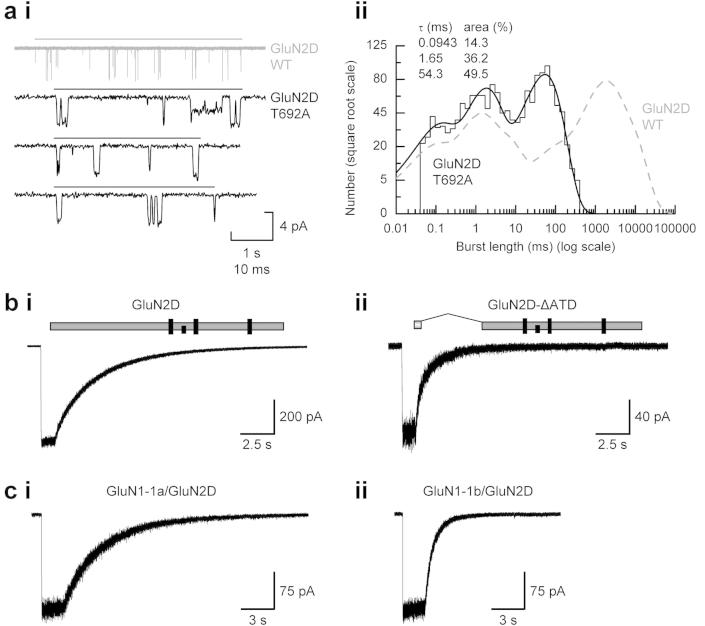
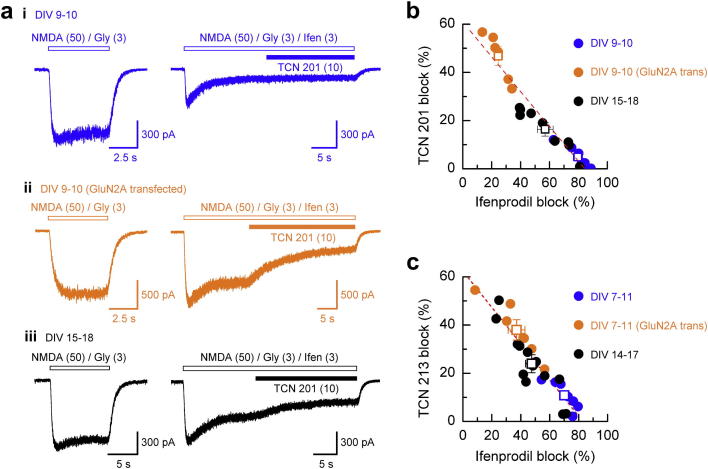
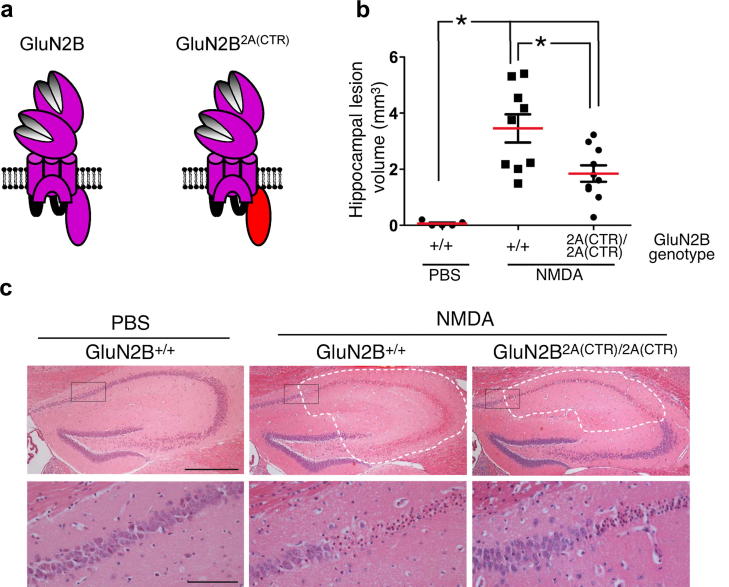
N-methyl-d-aspartate receptors (NMDARs) are ligand-gated ion channels ('ionotropic' receptors) activated by the major excitatory neurotransmitter, l-glutamate. While the term 'the NMDAR' is often used it obscures the fact that this class of receptor contains within it members whose properties are as different as they are similar. This heterogeneity was evident from early electrophysiological, pharmacological and biochemical assessments of the functional properties of NMDARs and while the molecular basis of this heterogeneity has taken many years to elucidate, it indicated from the outset that the diversity of NMDAR phenotypes could allow this receptor family to subserve a variety of functions in the mammalian central nervous system. In this review we highlight some recent studies that have identified structural elements within GluN2 subunits that contribute to the heterogeneous biophysical properties of NMDARs, consider why some recently described novel pharmacological tools may permit better identification of native NMDAR subtypes, examine the evidence that NMDAR subtypes differentially contribute to the induction of long-term potentiation and long-term depression and discuss how through the use of chimeric proteins additional insights have been obtained that account for NMDAR subtype-dependency of physiological and pathophysiological signalling. This article is part of the Special Issue entitled 'Glutamate Receptor-Dependent Synaptic Plasticity'.
Overview
The claims and statistics of this paper haven’t been checked yet.
Run the check — free, no account needed. It reads the open-access text and checks the sources it cites.
Integrity signals
Registry
Cites
Statistics
Figures
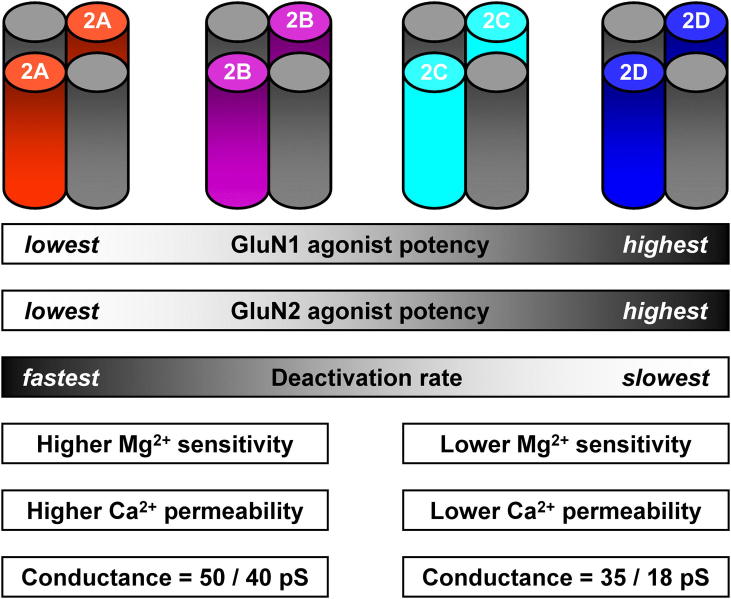
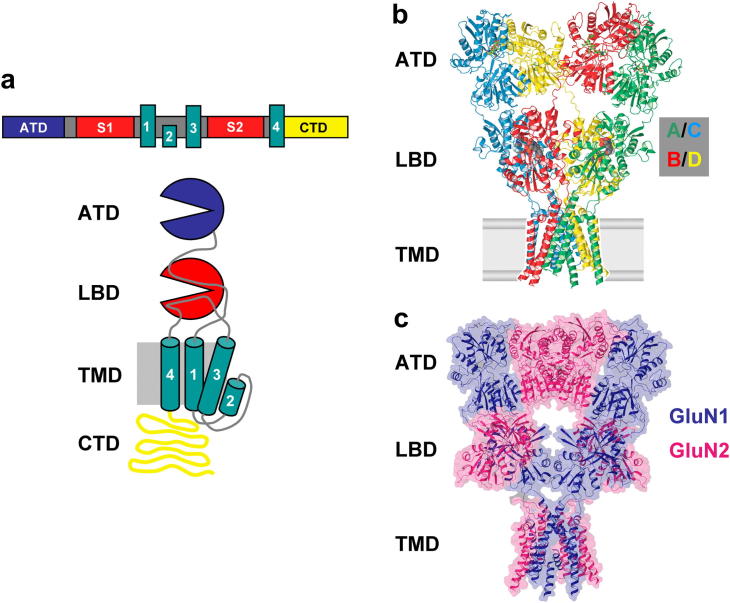
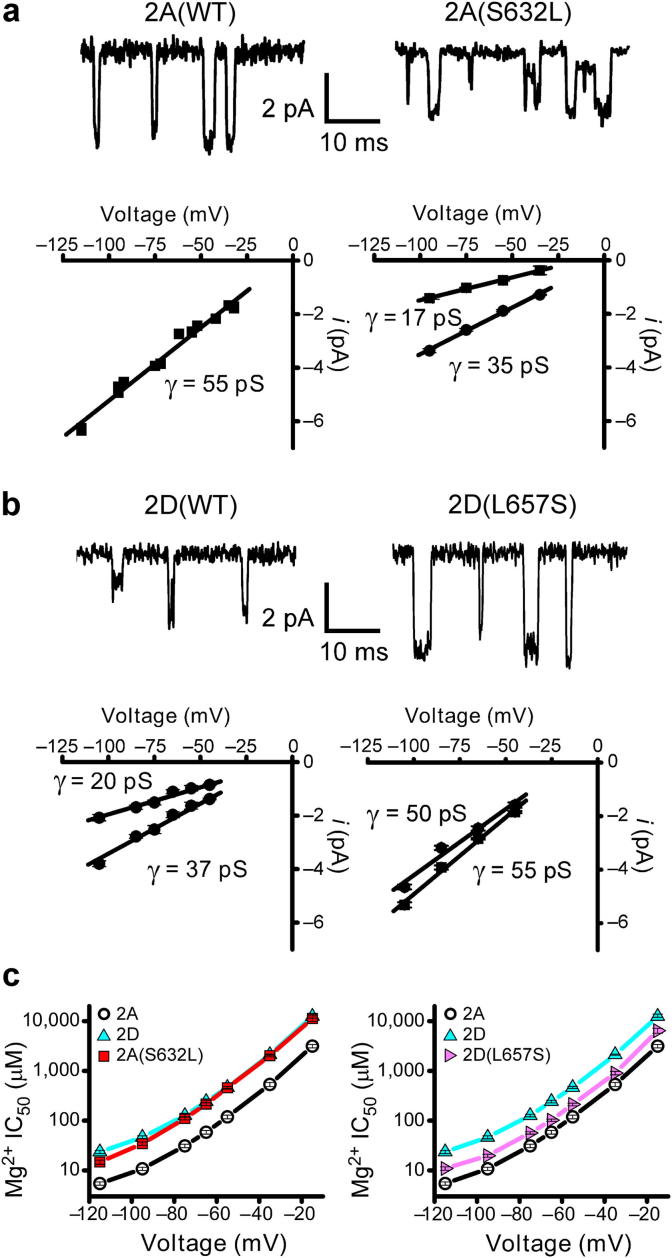
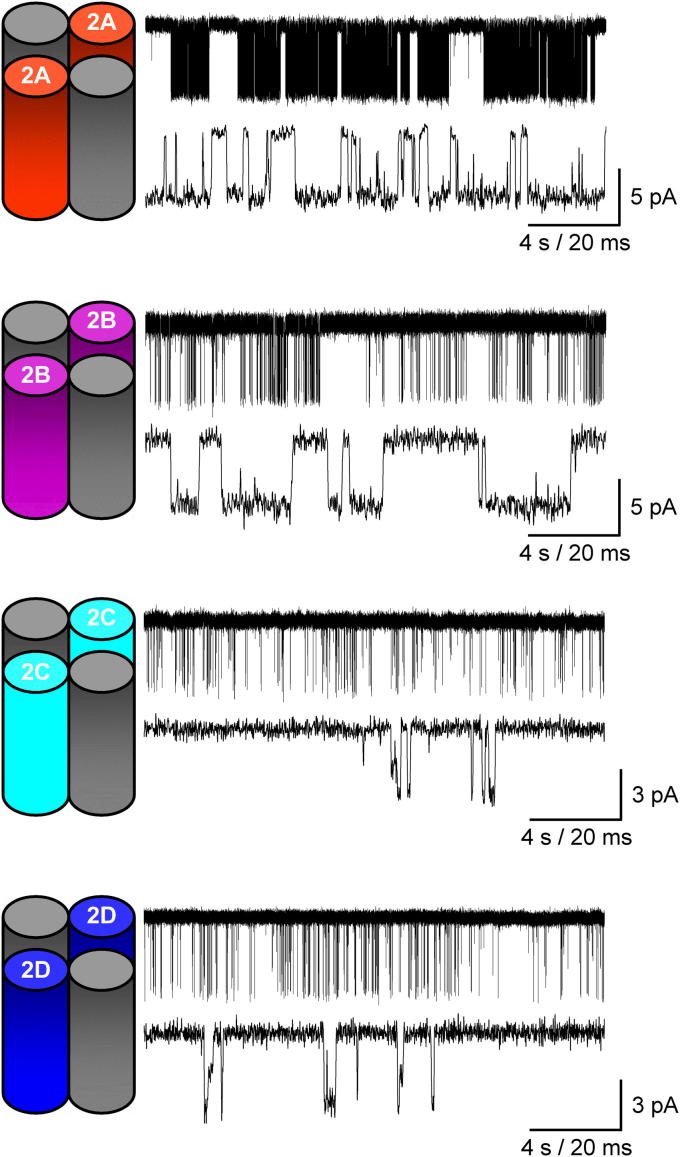
Verification
Claims the paper makes
The claims and statistics of this paper haven’t been checked yet.
Run the check — free, no account needed. It reads the open-access text and checks the sources it cites.
Claims other papers make about this one
Each is checked against this paper’s own text: does it say what the citing paper says it does?
In the citing paper
“They are permeant to Ca 2+ , which mediates many of the consequences of NMDAR activity, including synaptic modification, learning and memory, activity-dependent development, and neuroprotective/homeostatic signaling [6][7][8] .”
From Linking early-life NMDAR hypofunction and oxidative stress in schizophrenia pathogenesis (2016) · cites this paper as [7]
Self-check
Percentages, sums and reported differences re-computed from the paper’s own numbers.
The self-check needs the paper’s full text.
Citations
Cites
Glutamate Receptor Ion Channels: Structure, Regulation, and Function
Traynelis, S. F., Wollmuth, L. P., McBain, C. J., Menniti, F. S., Vance, K. M., Ogden, K. K., Hansen, K. B., Yuan, H., Myers, S. J., & Dingledine, R. (2010) · Pharmacological Reviews · doi:10.1124/pr.109.002451 · Cited by 3,568
Monyer, H., Burnashev, N., Laurie, D. J., Sakmann, B., & Seeburg, P. H. (1994) · Neuron · doi:10.1016/0896-6273(94)90210-0 · Cited by 3,535
Heteromeric NMDA receptors: molecular and functional distinction of subtypes
Monyer, H., Sprengel, R., Schoepfer, R., Herb, A., Higuchi, M., Lomeli, H., Burnashev, N., Sakmann, B., & Seeburg, P. H. (1992) · Science · doi:10.1126/science.256.5060.1217 · Cited by 2,541
Collingridge, G. L., Kehl, S. J., & McLennan, H. (1983) · The Journal of Physiology · doi:10.1113/jphysiol.1983.sp014478 · Cited by 2,413
The anticonvulsant MK-801 is a potent N-methyl-D-aspartate antagonist.
Wong, E. H. F., Kemp, J. A., Priestley, T., Knight, A. R., Woodruff, G. N., & Iversen, L. L. (1986) · Proceedings of the National Academy of Sciences · doi:10.1073/pnas.83.18.7104 · Cited by 1,820
Synaptic versus extrasynaptic NMDA receptor signalling: implications for neurodegenerative disorders
Hardingham, G. E., & Bading, H. (2010) · Nature Reviews Neuroscience · doi:10.1038/nrn2911 · Cited by 1,644 · cited 4×
“The specific sub-cellular localisation of GluN2A and GluN2Bcontaining NMDARs within the adult forebrain has been of considerable interest given the differing roles of synaptic and extrasynaptic NMDARs in signalling to neuronal survival and death (reviewed in Hardingham and Bading, 2010).”
BackgroundInfluentialSelf-citationPDZ domain proteins of synapses
Kim, E., & Sheng, M. (2004) · Nature reviews. Neuroscience · doi:10.1038/nrn1517 · Cited by 1,630
Functional Repression of cAMP Response Element in 6-Hydroxydopamine-treated Neuronal Cells
Chalovich, E. M., Zhu, J.-H., Caltagarone, J., Bowser, R., & Chu, C. T. (2006) · Journal of Biological Chemistry · doi:10.1074/jbc.m602632200 · Cited by 1,385
Changing subunit composition of heteromeric NMDA receptors during development of rat cortex
Sheng, M., Cummings, J., Roldan, L. A., Jan, Y. N., & Jan, L. Y. (1994) · Nature · doi:10.1038/368144a0 · Cited by 1,377
Ciabarra, A., Sullivan, J., Gahn, L. G., Pecht, G., Heinemann, S., & Sevarino, K. (1995) · Journal of Neuroscience · doi:10.1523/jneurosci.15-10-06498.1995 · Cited by 1,260
Cited by
Sorted by citations
Items 201–263 of 263
Markus, A., Frehland, B., Schepmann, D., & Wünsch, B. (2022) · Archiv der Pharmazie · doi:10.1002/ardp.202200177 · Cited by 3
Costa, B. M., Hines, D., Phillip, N., Boehringer, S. C., Anandakrishnan, R., & Davis, J. L. (2025) · Journal of Pharmacology and Experimental Therapeutics · doi:10.1016/j.jpet.2025.103401 · Cited by 2
Fili, K., Kuchtiak, V., Tomović, E., Candelas, M., Kubik‐Zahorodna, A., Harant, K., Božíková, P., Černý, J., Kořı́nek, M., Krausová, B. H., et al. (2026) · Cellular and Molecular Life Sciences · doi:10.1007/s00018-025-06057-1 · Cited by 2
Behind the scenes: Are latent memories supported by calcium independent plasticity?
Keith, R. E., Ogoe, R. H., & Dumas, T. C. (2021) · Hippocampus · doi:10.1002/hipo.23332 · Cited by 2
dos Santos, F. M., Pflüger, P., Lazzarotto, L., Uczay, M., de Aguida, W. R., da Silva, L. S., Boaretto, F. B. M., de Sousa, J. T., Picada, J. N., Torres, I. L. D. S., et al. (2021) · Neurochemical Research · doi:10.1007/s11064-021-03345-7 · Cited by 2
Evaluation of SK-N-SH Cells as a Model for NMDA Receptor Induced Toxicity
Schreiber, J. A., & Goerges, G. (2024) · Cellular Physiology and Biochemistry · doi:10.33594/000000722 · Cited by 2
NP10679: A new horizon for neuroprotection in aneurysmal subarachnoid hemorrhage
García‐Bonilla, L. (2025) · Journal of Pharmacology and Experimental Therapeutics · doi:10.1016/j.jpet.2025.103390 · Cited by 2
Abramova, V., Tomović, E., Kysilov, B., Kořı́nek, M., Dobrovolski, M., Krausová, B. H., Fili, K., Rahman, F. E. S. A., Božíková, P., Černý, J., et al. (2025) · Journal of Neuroscience · doi:10.1523/jneurosci.0946-25.2025 · Cited by 2
Kynurenines and Brain Development
Stone, T. W., Forrest, C. M., & Darlington, L. G. (2015) · Springer eBooks · doi:10.1007/978-3-319-11870-3_4 · Cited by 2
Calpain inhibition reduces NMDA receptor rundown in rat substantia nigra dopamine neurons
Zhao, J., Baudry, M., & Jones, S. (2018) · Neuropharmacology · doi:10.1016/j.neuropharm.2018.05.003 · Cited by 2
Distinct Roles of NMDA Receptor GluN2 Subunits in the Effects of Ketamine and Its Enantiomers
Ide, S., & Ikeda, K. (2020) · Springer eBooks · doi:10.1007/978-981-15-2902-3_10 · Cited by 2
Cheng, J., Wang, Q., Hu, Y., Mou, T., Wang, J., Wang, L., Zhang, Y., Wang, T., & Li, Q. (2022) · Frontiers in Cellular and Infection Microbiology · doi:10.3389/fcimb.2022.942334 · Cited by 2
Opioids and autism spectrum disorder: liaisons dangereuses?
Vutskits, L. (2023) · British Journal of Anaesthesia · doi:10.1016/j.bja.2023.01.003 · Cited by 2
Luca, P. D., Mele, M., Tanqueiro, S. R., Napoli, F., Butkevičiūtė, U., Souto, A. C., Costa, R. O., Schwarz, A. P., Drexel, M., Sebastião, A. M., et al. (2024) · bioRxiv (Cold Spring Harbor Laboratory) · doi:10.1101/2024.10.21.618702 · Cited by 2
Bechthold, E., Schreiber, J. A., Ritter, N., Schepmann, D., Daniliuc, C. G., Seebohm, G., & Wünsch, B. (2022) · European Journal of Medicinal Chemistry · doi:10.1016/j.ejmech.2022.114359 · Cited by 1
Korff, M., Lüken, J., Schmidt, J., Schepmann, D., Goerges, G., Ritter, N., Disse, P., Schreiber, J. A., Seebohm, G., & Wünsch, B. (2023) · Organic & Biomolecular Chemistry · doi:10.1039/d3ob01208e · Cited by 1
Excitatory Transmission in Status Epilepticus
Joshi, S., & Kapur, J. (2024) · Oxford University Press eBooks · doi:10.1093/med/9780197549469.003.0070 · Cited by 1
Zhang, Q., Gao, Y., Li, J., Bai, H.-H., Xu, Y., Dang, J.-N., Liu, X.-X., Bai, X., Yang, X., Suo, Z., et al. (2025) · Neuropharmacology · doi:10.1016/j.neuropharm.2025.110644 · Cited by 2
Serafini, M. M., Midali, M., Aram, F., Barzasi, M., Grumelli, G., Marinovich, M., Corsini, E., & Viviani, B. (2025) · European Journal of Pharmacology · doi:10.1016/j.ejphar.2025.178364 · Cited by 1
Abreu, C. C., Biorac, A., Baldessarini, R. J., & Vázquez, G. H. (2025) · Therapeutic Advances in Psychopharmacology · doi:10.1177/20451253251392429 · Cited by 1
Quinolone bioisosteres of phenolic GluN2B‐selective NMDA receptor antagonists
Rathing, F., Schepmann, D., & Wünsch, B. (2024) · Archiv der Pharmazie · doi:10.1002/ardp.202400279 · Cited by 1
Salim, S. S., Nasir, J., & Chen, P. E. (2019) · FEBS Letters · doi:10.1002/1873-3468.13434 · Cited by 1
21st century excitatory amino acid research: A Q & A with Jeff Watkins and Dick Evans
Watkins, J. C., Evans, R. H., Bayés, À., Booker, S. A., Gibb, A. J., Mabb, A. M., Mayer, M. L., Mellor, J. R., Molnár, E., Niu, L., et al. (2021) · Neuropharmacology · doi:10.1016/j.neuropharm.2021.108743 · Cited by 2
Self-citationNMDA RECEPTORS IN THE DORSAL VAGAL COMPLEX OF NORMAL AND DIABETIC MICE
Bach, E. C. (2013) · UKnowledge (University of Kentucky)
Ha, J.-S., Kim, J. W., & Song, J. (2015) · Journal of Life Science · doi:10.5352/jls.2015.25.9.1043
N-Methyl-D-Aspartate Receptors: “C”ing the Culprits Behind Cocaine-Induced Metaplasticity
Wright, W. J., & Dong, Y. (2016) · Biological Psychiatry · doi:10.1016/j.biopsych.2016.08.003
Dubovyk, V. (2017) · Dokumentenrepositorium der RUB (Ruhr University Bochum)
Regulation of ABCB1 expression and activity in porcine brain endothelial cells
Vergara, P. (2016) · Research Explorer (The University of Manchester)
Modelling the details: integrating structure with function
Wyllie, D. J. A. (2018) · The Journal of Physiology · doi:10.1113/jp276664
Self-citationExamination of mechanisms underlying the effect of single-session exercise on cortical plasticity
Thacker, J. S. (2018) · UWSpace (University of Waterloo)
Molecular and Synaptic Alterations in the Striatum of GluN1-Deficient Mice
Chen, Y. (2018) · TSpace (University of Toronto)
[Small hospitals--future tasks and functions].
Melsom, H., Jonsbu, J., & Mork, T. (1991) · PubMed
Lai, T. K. Y. (2019) · TSpace (University of Toronto)
Alejo, V., & Alejo, N. E. V. (2020)
Schmidt, C. C., Tong, R., & Emptage, N. J. (2021) · bioRxiv (Cold Spring Harbor Laboratory) · doi:10.1101/2021.09.19.460978
Faculty Opinions recommendation of Structure, function, and allosteric modulation of NMDA receptors.
Peoples, R. W. (2018) · Faculty Opinions – Post-Publication Peer Review of the Biomedical Literature · doi:10.3410/f.733689357.793549023
Ionotropic glutamate receptors in GtoPdb v.2021.3
Bettler, B., Collingridge, G. L., Dingledine, R. J., Heinemann, S. F., Hollmann, M., Lerma, J., Lodge, D., Mayer, M. L., Mishina, M., Mulle, C., et al. (2021) · IUPHAR/BPS Guide to Pharmacology CITE · doi:10.2218/gtopdb/f75/2021.3
Traynelis, S. F. (2019) · Faculty Opinions – Post-Publication Peer Review of the Biomedical Literature · doi:10.3410/f.734757979.793567064
Traynelis, S. F. (2019) · Faculty Opinions – Post-Publication Peer Review of the Biomedical Literature · doi:10.3410/f.734628231.793567059
Pediatric Epilepsy and its Health Conditions in UAE: A Review Article
Elsadek, H. E. (2024) · American Journal of Medical Science and Innovation · doi:10.54536/ajmsi.v3i1.2539
Role of Branched-Chain Amino Acids in Traumatic Brain Injury
Elsamman, K. (2024) · Nutritional neurosciences · doi:10.1007/978-981-97-6341-2_7
Codadu, N. K., Hardingham, G. E., Kind, P. C., & Wyllie, D. J. A. (2025) · bioRxiv (Cold Spring Harbor Laboratory) · doi:10.1101/2025.06.09.658610
Self-citationAbsence of a glutamatergic channel arrest mechanisms in hypoxic naked mole-rat cortex
Otell, G., Eaton, L., Roy, M., & Pamenter, M. E. (2025) · Neuroscience Letters · doi:10.1016/j.neulet.2025.138309
Fili, K., Kuchtiak, V., Tomović, E., Candelas, M., Kubik‐Zahorodna, A., Harant, K., Božíková, P., Černý, J., Kořı́nek, M., Krausová, B. H., et al. (2025) · bioRxiv (Cold Spring Harbor Laboratory) · doi:10.1101/2025.10.02.680004
Zhou, R., Chen, X., Gao, R., Chen, Z., Lou, S., Liu, S., Wang, H., Du, X., Du, J., Zhang, G., et al. (2025) · Sleep Medicine · doi:10.1016/j.sleep.2025.108648
EAR-20 peptide, a novel NMDA receptor positive allosteric modulator
García-Díaz, R., Castellanos, A., Míguez‐Cabello, F., Picañol, J., Pérez-González, A., Gratacòs‐Batlle, E., Vega, N. A., Altafaj, X., Reyes-Guzmán, E. A., Reyes-Montaño, E. A., et al. (2025) · Frontiers in Pharmacology · doi:10.3389/fphar.2025.1639698
Cholesterol, lipid metabolism, and lipid rafts in Alzheimer's disease
Taghibiglou, C., Pordeli, M., Setork, E., & Cayabyab, F. S. (2025) · Elsevier eBooks · doi:10.1016/b978-0-443-30008-0.00010-7
Rôle du zinc dans la transmission synaptique normale et pathologique
Serraz, B. (2019) · theses.fr (ABES) · doi:10.70675/c9307d17zdbe8z495dz8561z8136a8c5dbb7
Hunter, D. (2023) · theses.fr (ABES) · doi:10.70675/ae0cf321z922dz4431z8e9czca6cbf457b2e
Molecular impact of anti-NMDA receptor autoantibodies
Jamet, Z. (2023) · theses.fr (ABES) · doi:10.70675/87243db0za802z49e1zbd1ez607bb3d60120
Exploring the molecular determinants of behavioral changes induced by ketamine at the nanoscale
Uyttersprot, F. (2024) · theses.fr (ABES) · doi:10.70675/df438baaz92d0z488aza38cz4227b46c9acb
Castañeda-Cabral, J. L., López-Pérez, S., Contreras-Marín, S., Castro-Torres, R. D., & Ureña-Guerrero, M. E. (2026) · Physiology and Behavior · doi:10.1016/j.physbeh.2026.115456
Wendling, F., Chang-Halabi, Y., Schmidt, J., Schepmann, D., Schreiber, J. A., Zhu, W. F., Bermúdez, M., & Wuensch, B. (2026) · RSC Medicinal Chemistry · doi:10.1039/d6md00252h
Navaneethan, B., Costa, P. A., Debs, S. R., Gavljak, I., Conn, I., Penklis, A. G., Weickert, C. S., & Purves-Tyson, T. D. (2026) · Progress in Neuro-Psychopharmacology and Biological Psychiatry · doi:10.1016/j.pnpbp.2026.111933
Zhu, M., Abdulzahir, A., Perkins, M., Chu, C., Krause, B., Casey, C., Lennertz, R., Ruhl, D., Hentschke, H., Nagarajan, R., et al. (2023) · Harvard Dataverse · doi:10.7910/dvn/osrwiv
Metadata
- Authors
- Wyllie, D. J. A., Livesey, M. R., & Hardingham, G. E.
- Affiliations
- University of Edinburgh (GB)
- Corresponding author
- Wyllie, D.J.A.
- Venue
- Neuropharmacology
- Publisher
- Elsevier BV
- Published
- 2013-11
- Volume
- 74
- Pages
- 4-17
- ISSN
- 0028-3908 (ISSN-L)
- PMC
- PMC3778433
- OpenAlex
- W2108909652
- Cited by
- 260
- References
- 161
- Citations by year
- 2026: 6 · 2025: 27 · 2024: 21 · 2023: 16 · 2022: 29 · 2021: 24 · 2020: 20 · 2019: 23 · 2018: 26 · 2017: 18 · 2016: 18 · 2015: 16 · 2014: 10 · 2013: 5
- FWCI
- 1.66
- Type
- journal article
- Language
- en
- Open access
- hybrid
- doi.org
- Locations
- Neuropharmacology (publishedVersion, cc-by)
- Europe PMC (PubMed Central) (publishedVersion, cc-by)
- PubMed Central (publishedVersion, cc-by)
- PubMed (publishedVersion)
- Edinburgh Research Explorer (University of Edinburgh) (submittedVersion, other-oa)
- Funders
- The Wellcome Trust
- The Medical Research Council
- The Biotechnology and Biological Science Research Council
- The European Union
- Topics
- Life Sciences › Neuroscience › Cellular and Molecular Neuroscience › Neuroscience and Neuropharmacology Research
- Life Sciences › Biochemistry, Genetics and Molecular Biology › Biochemistry › Amino Acid Enzymes and Metabolism
- Life Sciences › Biochemistry, Genetics and Molecular Biology › Molecular Biology › Receptor Mechanisms and Signaling
- Keywords
- NMDA receptor, GluN2 subunits, receptor heterogeneity, ionotropic glutamate receptors, receptor subtypes, long-term potentiation, long-term depression, synaptic plasticity, fusion protein, receptor pharmacology, glutamate signalling
- MeSH terms
- Animals, Models, Molecular, Neuronal Plasticity, Receptors, N-Methyl-D-Aspartate, Long-Term Potentiation, Excitatory Amino Acid Antagonists, Protein Subunits, Protein Multimerization
About these checks
Registry, retraction, Cites and statistics results are computed, not judged, with one exception: a printed reference that no index lists is read once by a model before it counts as a citation error. Claims are extracted by a model and kept only when their quote appears verbatim in the text; each cited source is then checked, with a model’s help, for whether it says what the claim relies on. Those verdicts can be wrong — read the claim’s quote and the cited source before relying on one.
Statistics and arithmetic are recomputed, not judged.
Confidence bands are shown only for fields calibrated on our annotated test set. None is calibrated yet, so no band is shown.
What counts as a claim ›How we measure confidence ›How we check this ›
Are you an author, or do you see a problem with this page? Request a review
