

Human T cell engineering via serial delivery of mRNA encapsulated within lipid nanoparticles
Open accessThe DOI matches its Crossref record; 108 of the 108 references it cites were found in a registry or an index; 1 of the 57 sources its claims cite were checked for support.
Abstract
Human T cells modified with nucleic acids constitute a powerful and emerging therapeutic modality for cancer, autoimmune disorders, and aging-related diseases. However, delivering nucleic acids, such as mRNA encoding synthetic receptors, transcription factors, cytokines, or genome editors to T cells can be challenging, as nucleic acids can unintentionally reduce viable T cell yield and function, particularly when delivered sequentially ex vivo . To address this challenge, we evaluated the efficiency of serial non-viral delivery of synthetic mRNA encapsulated within lipid nanoparticles (LNPs) incorporating cationic lipid, 1,2-dioleoyl-3-trimethylammonium-propane (DOTAP), and fusogenic helper lipid, 1,2-dioleoyl-sn-glycero-3-phosphoethanolamine (DOPE). DOTAP/DOPE-containing LNPs delivered mRNA more efficiently than a clinically benchmarked 1,2-distearoyl-sn-glycero-3-phosphocholine (DSPC)-containing LNP formulation, resulting in significantly higher protein expression in primary human T cells. Furthermore, DOTAP/DOPE-LNP delivery resulted in 100% higher yield of live cells compared to electroporation, an advantage that compounded over serial rounds, with LNP-treated cultures maintaining substantially more viable cells through all four transfections. Additionally, serial transfection of mRNAs encoding a therapeutically relevant chimeric antigen receptor (CAR) payload produced functional CAR T cells. These results demonstrate that LNPs can be a viable platform for serial and iterative T cell engineering using multiple mRNA payloads, providing an alternative to electroporation for the engineering of therapeutic T cells.
Overview
CoChat Summary
TL;DR
This study shows that DOTAP/DOPE-containing lipid nanoparticles (SM102-DD) can serially deliver mRNA to primary human T cells with higher viable cell yields than electroporation while producing functional uPAR CAR T cells. The platform preserves untransfected bystander cells across four rounds, though per-round transfection efficiency remains lower than electroporation.
Key findings
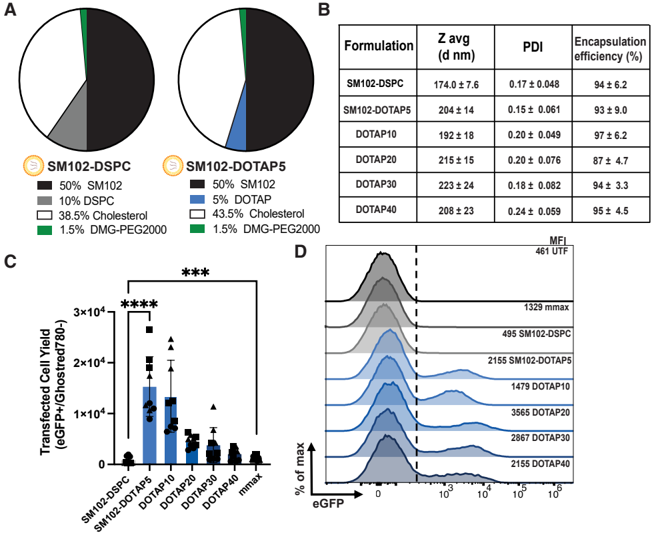
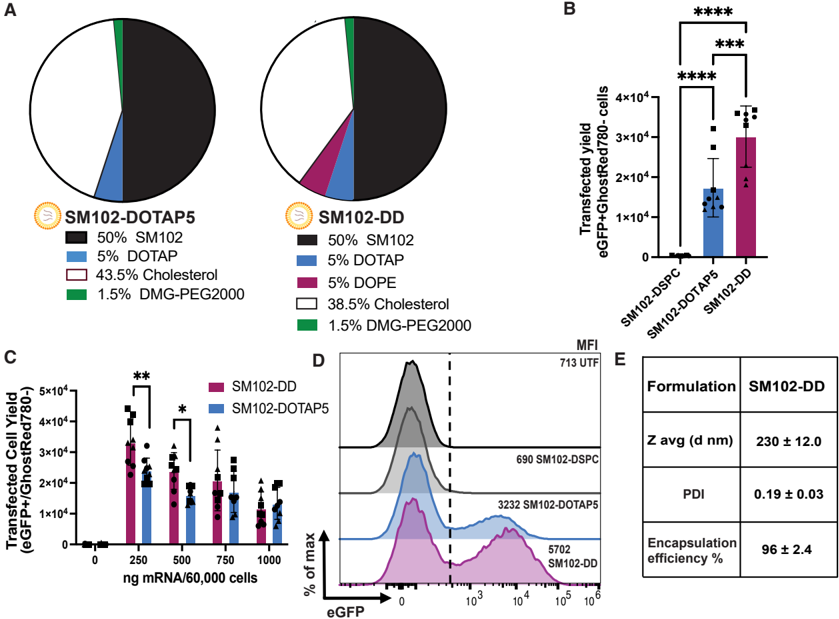
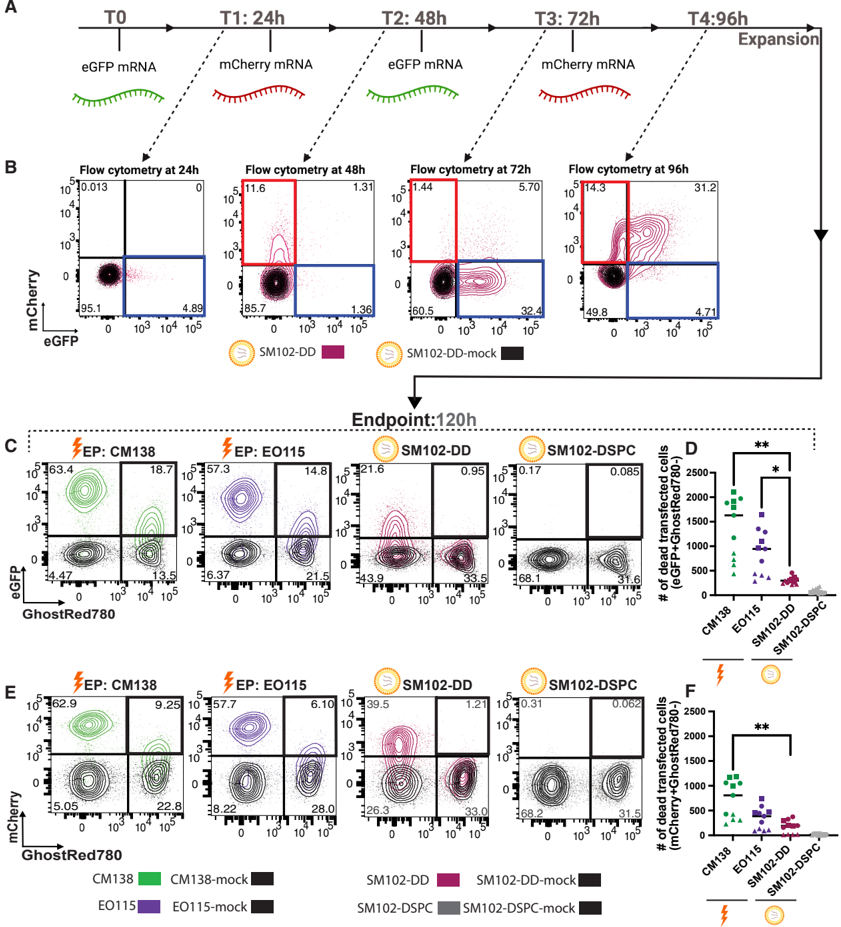
- SM102-DD LNPs (5% DOTAP + 5% DOPE) delivered reporter mRNA more efficiently than SM102-DSPC; replacing DSPC with 5% DOTAP gave 50-fold more transfected cell yield, and adding DOPE augmented this by 1.8-fold.
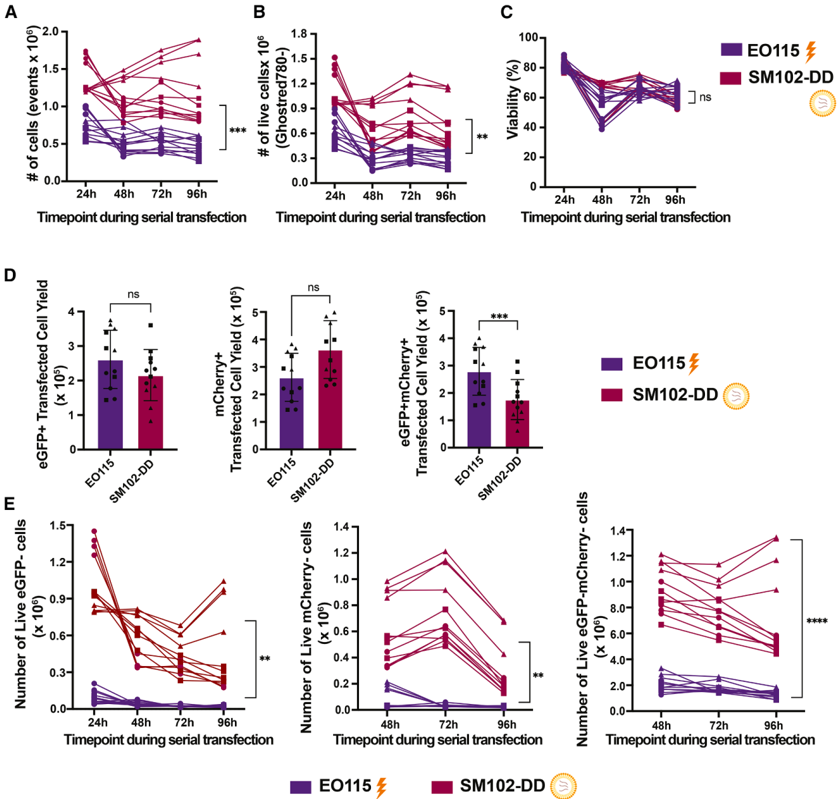
- Four serial transfections every 24 h maintained reporter expression and produced 100% higher live-cell yield than electroporation; LNP-treated cultures had significantly higher total viable cell number and more live untransfected cells across rounds.
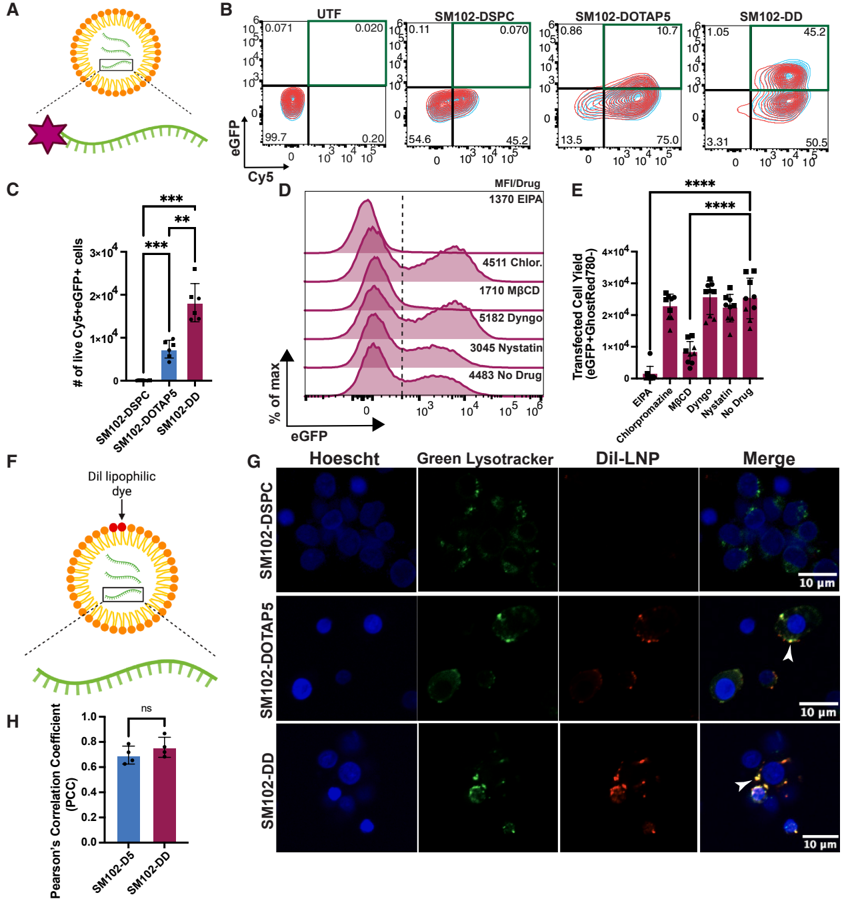
- Uptake was primarily via macropinocytosis: EIPA and MβCD reduced eGFP MFI to 1,370 and 1,710 vs 4,483 untreated (~3-fold lower), while clathrin, dynamin, and caveolae inhibitors did not significantly reduce transfected cell yield.
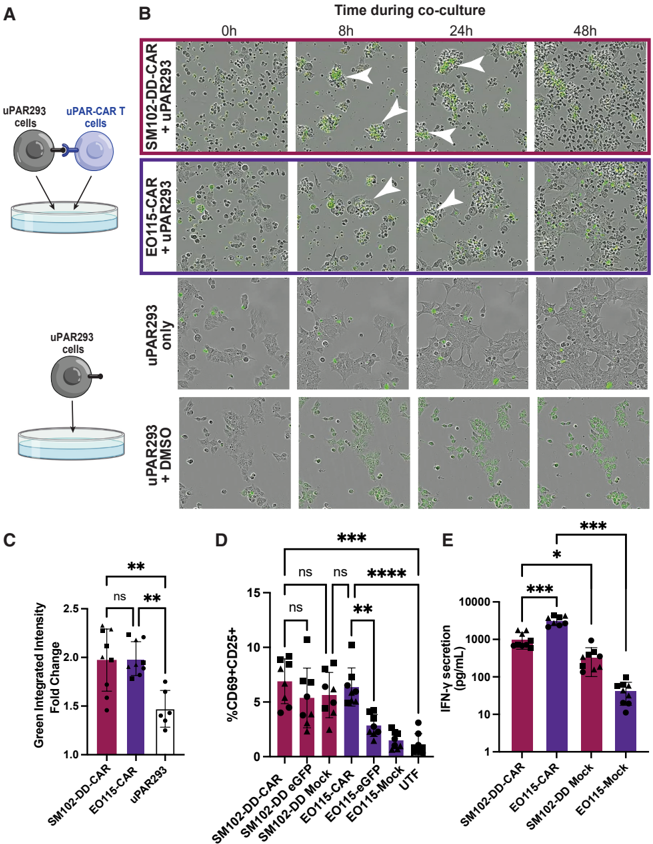
- Serial uPAR CAR mRNA delivery produced functional CAR T cells: CAR surface MFI rose from 722 to 3,535 across 250–1,000 ng doses; target-cell killing was comparable to electroporation by 96 h, with higher CD69+CD25+ activation and IFN-γ vs mock, and exhaustion markers below 1.5%.
Methods
- In vitro primary human CD3+ T cells from healthy donors (16 donors total; typical n = 9, 3 donors), activated 48 h and cultured in ImmunoCult-XF + 100 IU/mL IL-2.
- LNPs formulated by vortex mixing with SM102, cholesterol, DMG-PEG2000, and DSPC/DOTAP/DOPE; characterized by DLS, RiboGreen, and zeta potential. Reporter mRNA (0.5 µg/500,000 cells) or uPAR CAR mRNA (2 µg/700,000 cells) was delivered every 24 h for four rounds and compared with Lonza 4D electroporation (EO115/CM138).
- Readouts: flow cytometry for expression/viability/phenotype, confocal imaging for uptake/lysosomal colocalization, Incucyte cytotoxicity, IFN-γ ELISA, and ANOVA.
Limitations
- Stated: LNP inflammatory responses were not evaluated; activation/exhaustion was assessed only at endpoint; longer-term persistence, memory differentiation, and functional durability need study; different mRNA doses/transcript lengths may affect viability/yield; donor variability requires larger diverse cohorts; assays did not fully distinguish electroporation-mediated death from CAR-dependent cytotoxicity.
- Stated: per-round LNP efficiency was lower than electroporation during the first two transfections; CAR-dependent effects were more robustly resolved in the electroporation arm, and LNP treatment may elevate PD-1+TIM-3+ independent of CAR.
- Evident: donors were not age- or sex-matched and donor number was not formally powered; LNPs were made by vortex mixing, which may yield larger/less uniform particles than microfluidic methods; data are available only upon request.
Model-written summary. Check it against the paper before relying on it.
Integrity signals
Registry
Cites
Statistics
Figures
Verification
Claims the paper makes
1 Valid · 0 Not valid · 36 Not checked · 100 Own results and interpretations
The cited sources support only part of this claim — read each source’s verdict below.
In the paper
“This improvement is due in part to the ability of DOTAP to complex with negatively charged nucleic acids and facilitate effective endosomal escape.62,63”
§ Human T cell engineering via serial delivery of mRNA encapsulated within lipid nanoparticles > Results > Titrating DOTAP in an LNP formulation improved mRNA delivery to primary human T cells ex vivo
What the sources say
- Partly supportedcites [62] Blakney A.K. McKay P.F. Yus B.I. Aldon Y. Shattock R.J. Inside out: optimization of lipid nanoparticle formulations for exterior complexation and in vivo delivery of saRNA Gene Ther. 26 2019 363 372 10.1038/s41434-019-0095-2 PMC6760535 31300730 sourceExperimental — accuracy not yet measured
The Introduction (para. on mRNA/cationic delivery platforms) states the principle of using a cationic lipid to 'electrostatically complex the anionic RNA molecules, reducing the size of the particle and facilitating cellular uptake', and the Discussion confirms that 'cationic lipids are able to complex, condense, and protect the RNA from RNAse degradation'; the Results (Effect of complexation position...) show exterior DOTAP complexation giving ~10^6 RLU vs 10^5 for encapsulated saRNA. So the first half of the claim — DOTAP complexing negatively charged nucleic acids and thereby improving delivery — is supported. However, no passage in our copy attributes anything to endosomal escape: searches for 'endosomal escape', 'endosome/lysosomal escape/membrane fusion' and 'mechanism of uptake' returned only RNase-protection, particle-size and cellular-uptake statements. The endosomal-escape mechanism attributed here is therefore not stated by this paper (which also notes DDA outperformed DOTAP in vivo). (LLM, conf=0.78)
- Not checked yetcites [63] Wang X. Liu S. Sun Y. Yu X. Lee S.M. Cheng Q. Wei T. Gong J. Robinson J. Zhang D. Preparation of selective organ-targeting (SORT) lipid nanoparticles (LNPs) using multiple technical methods for tissue-specific mRNA delivery Nat. Protoc. 18 2023 265 291 10.1038/s41596-022-00755-x PMC9888002 36316378 source
hedgedstates a possible cause- Asserted: passes — The authors put it forward as true.
- Checkable: passes — It can be checked against evidence.
- Load-bearing: passes — The paper’s conclusions depend on it.
- Based: passes — The paper gives a reason why it holds.
- Partly supported
A result the paper reports from its own data — it cites no other source for it, so there is none to check. The quote shows it is in the paper.
In the paper
“Overall cell viability percentages over four transfections were statistically similar between LNP and electroporation-treated groups (Figures 6C and S5C).”
§ Human T cell engineering via serial delivery of mRNA encapsulated within lipid nanoparticles > Results > Four rounds of serial LNP-transfection yielded more viable T cells than serial electroporation
plainn = 12- Asserted: passes — The authors put it forward as true.
- Checkable: passes — It can be checked against evidence.
- Load-bearing: unclear — It is unclear whether the paper’s conclusions depend on it.
- Based: passes — The paper gives a reason why it holds.
A result the paper reports from its own data — it cites no other source for it, so there is none to check. The quote shows it is in the paper.
In the paper
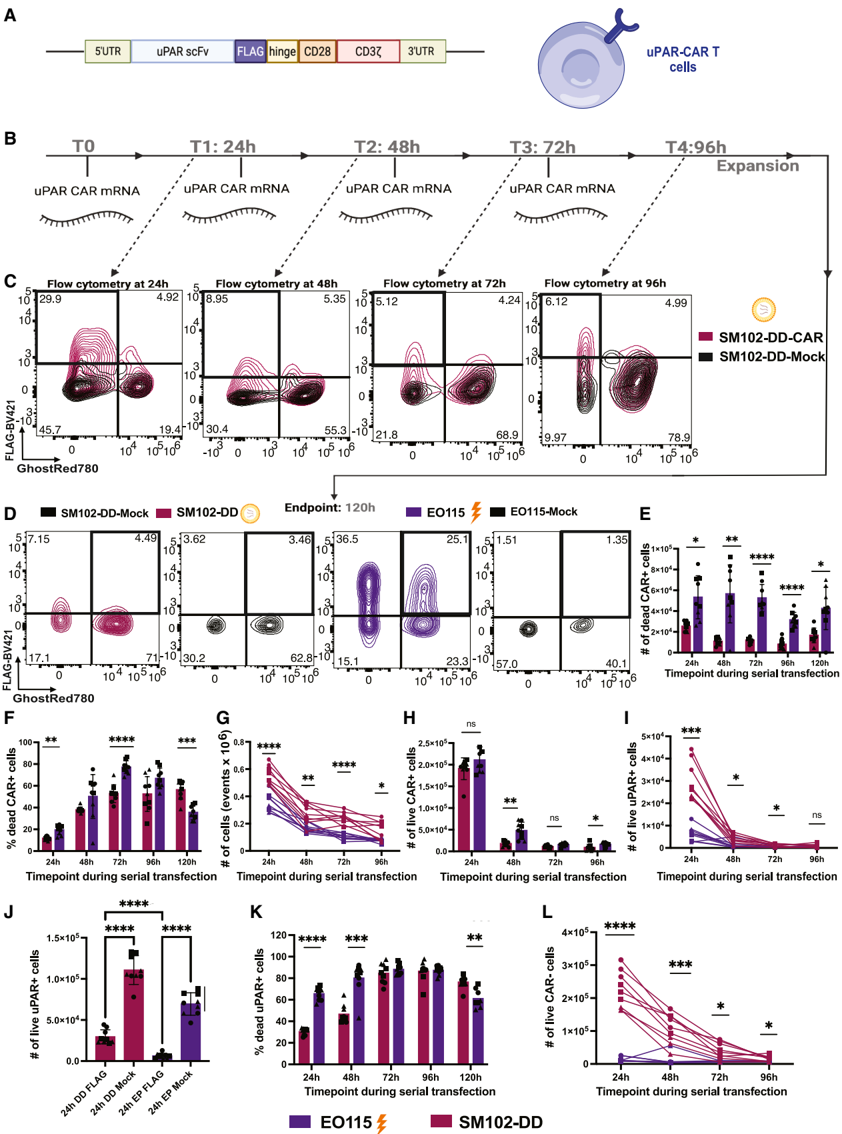
“CAR was expressed and trafficked to the cell surface after each dose using the SM102-DD LNPs (Figure 7C).”
§ Human T cell engineering via serial delivery of mRNA encapsulated within lipid nanoparticles > Results > Serial delivery of uPAR CAR mRNA via LNPs produces functional CAR T cells
plainstates a cause- Asserted: passes — The authors put it forward as true.
- Checkable: passes — It can be checked against evidence.
- Load-bearing: passes — The paper’s conclusions depend on it.
- Based: passes — The paper gives a reason why it holds.
A result the paper reports from its own data — it cites no other source for it, so there is none to check. The quote shows it is in the paper.
In the paper
“The addition of DOTAP to LNP formulations enhanced the delivery of firefly luciferase (ffluc) and eGFP mRNA to T cells cultured in ImmunoCult-XF compared with the SM102-DSPC formulation or the commercially available transfection agent MessengerMAX (mmax).”
§ Human T cell engineering via serial delivery of mRNA encapsulated within lipid nanoparticles > Results > Titrating DOTAP in an LNP formulation improved mRNA delivery to primary human T cells ex vivo
plainstates a cause- Asserted: passes — The authors put it forward as true.
- Checkable: passes — It can be checked against evidence.
- Load-bearing: passes — The paper’s conclusions depend on it.
- Based: passes — The paper gives a reason why it holds.
A result the paper reports from its own data — it cites no other source for it, so there is none to check. The quote shows it is in the paper.
In the paper
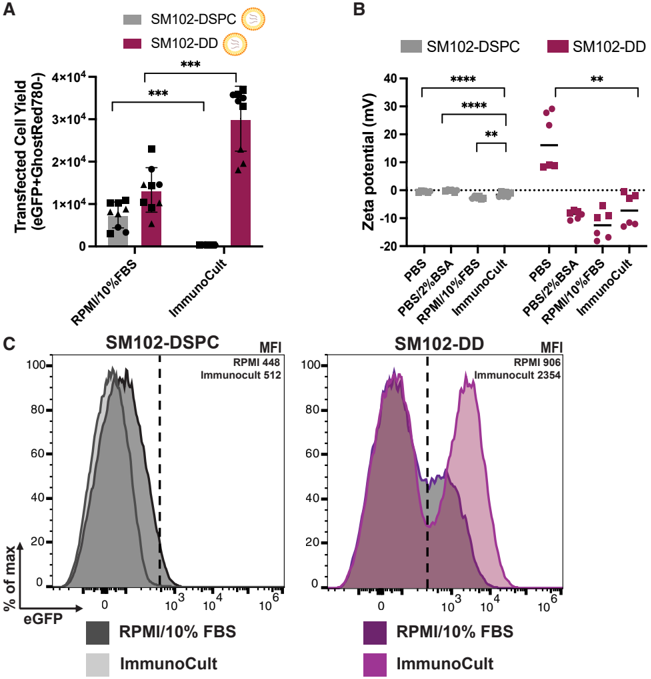
“In T cells cultured in RPMI/10% FBS, both ffluc and eGFP expression were significantly reduced compared to T cells in serum-free ImmunoCult-XF when delivered using SM102-DD (Figures 3A, 3C, S3A, and S3C).”
§ Human T cell engineering via serial delivery of mRNA encapsulated within lipid nanoparticles > Results > LNP-mediated mRNA delivery to T cells depended on media conditions
plainstates a cause- Asserted: passes — The authors put it forward as true.
- Checkable: passes — It can be checked against evidence.
- Load-bearing: passes — The paper’s conclusions depend on it.
- Based: passes — The paper gives a reason why it holds.
59 more claims
Create a free account to see all 137 claims and to verify the 56 references still open.
- It may state two separate claims as one. 46
- Probably not a substantial claim. 31
Self-check
Percentages, sums and reported differences re-computed from the paper’s own numbers.
Each contradiction between two passages listed here was confirmed by an independent check.
Rated minor: it would not touch a result — a value no result rests on, a p-value that stays on the same side of the significance level, or a conflict that is clerical, resolved elsewhere in the paper, or outside its own findings.
In the paper
§ Human T cell engineering via serial delivery of mRNA encapsulated within lipid nanoparticles > Results > Titrating DOTAP in an LNP formulation improved mRNA delivery to primary human T cells ex vivo
“replacing DSPC with varying amounts of DOTAP from 5% to 40% by molar ratio, while proportionally decreasing cholesterol content”
§ Human T cell engineering via serial delivery of mRNA encapsulated within lipid nanoparticles > Materials and methods > LNP formulation and characterization
“the SM102-DOTAP5 LNP was made by replacing 5% DSPC with 5% cationic lipid DOTAP (Avanti Polar Lipids, Birmingham, AL, USA) and adding 5% to the molar ratio of cholesterol.”
Rated minor: it would not touch a result — a value no result rests on, a p-value that stays on the same side of the significance level, or a conflict that is clerical, resolved elsewhere in the paper, or outside its own findings.
In the paper
§ Human T cell engineering via serial delivery of mRNA encapsulated within lipid nanoparticles > Discussion
“Donor-to-donor variability was observed across 16 donors for absolute yields of transfected cells (Figure 7H)”
§ Human T cell engineering via serial delivery of mRNA encapsulated within lipid nanoparticles > Results > Serial delivery of uPAR CAR mRNA via LNPs produces functional CAR T cells
“(H) Number of live CAR+ cells at each time point across SM102-DD-CAR and EO115-CAR conditions (n = 9, 3 donors).”
Rated minor: it would not touch a result — a value no result rests on, a p-value that stays on the same side of the significance level, or a conflict that is clerical, resolved elsewhere in the paper, or outside its own findings.
In the paper
§ Human T cell engineering via serial delivery of mRNA encapsulated within lipid nanoparticles > Materials and methods > LNP formulation and characterization
“the SM102-DOTAP5 LNP was made by replacing 5% DSPC with 5% cationic lipid DOTAP”
§ Human T cell engineering via serial delivery of mRNA encapsulated within lipid nanoparticles > Results > Adding DOPE to DOTAP-containing LNP improved mRNA delivery to T cells
“SM102-DOTAP5 LNPs are composed of SM102, 5% DOTAP, cholesterol, and DMG-PEG2000.”
Rated minor: it would not touch a result — a value no result rests on, a p-value that stays on the same side of the significance level, or a conflict that is clerical, resolved elsewhere in the paper, or outside its own findings.
In the paper
§ Human T cell engineering via serial delivery of mRNA encapsulated within lipid nanoparticles > Results > LNP-mediated mRNA delivery to T cells depended on media conditions
“SM102-DSPC LNPs exhibit consistent zeta potentials”
§ Human T cell engineering via serial delivery of mRNA encapsulated within lipid nanoparticles > Results > LNP-mediated mRNA delivery to T cells depended on media conditions
“Both formulations cultured in RPMI/10% FBS showed a significant difference in zeta potential compared to ImmunoCult-XF”
Citations
Cites
COVID-19 vaccine BNT162b1 elicits human antibody and TH1 T cell responses
Sahin, U., Muik, A., Derhovanessian, E., Vogler, I., Kranz, L. M., Vormehr, M., Baum, A., Pascal, K., Quandt, J., Maurus, D., et al. (2020) · Nature · doi:10.1038/s41586-020-2814-7 · Cited by 1,977
Targeting a CAR to the TRAC locus with CRISPR/Cas9 enhances tumour rejection
Eyquem, J., Mansilla-Soto, J., Giavridis, T., van der Stegen, S. J. C., Hamieh, M., Cunanan, K. M., Odak, A., Gönen, M., & Sadelain, M. (2017) · Nature · doi:10.1038/nature21405 · Cited by 1,831
SARS-CoV-2 mRNA Vaccine Design Enabled by Prototype Pathogen Preparedness
Corbett, K. S., Edwards, D. K., Leist, S. R., Abiona, O. M., Boyoglu-Barnum, S., Gillespie, R. A., Himansu, S., Schäfer, A., Ziwawo, C. T., DiPiazza, A. T., et al. (2020) · Nature · doi:10.1038/s41586-020-2622-0 · Cited by 1,615
CAR T cells produced in vivo to treat cardiac injury
Rurik, J. G., Tombácz, I., Yadegari, A., Méndez Fernández, P. O., Shewale, S. V., Li, L., Kimura, T., Soliman, O. Y., Papp, T. E., Tam, Y. K., et al. (2022) · Science · doi:10.1126/science.abm0594 · Cited by 1,400
‘Off-the-shelf’ allogeneic CAR T cells: development and challenges
Depil, S., Duchateau, P., Grupp, S. A., Mufti, G., & Poirot, L. (2020) · Nature Reviews Drug Discovery · doi:10.1038/s41573-019-0051-2 · Cited by 1,227
Senolytic CAR T cells reverse senescence-associated pathologies
Amor, C., Feucht, J., Leibold, J., Ho, Y.-J., Zhu, C., Alonso-Curbelo, D., Mansilla-Soto, J., Boyer, J. A., Li, X., Giavridis, T., et al. (2020) · Nature · doi:10.1038/s41586-020-2403-9 · Cited by 1,098
Chemically modified guide RNAs enhance CRISPR-Cas genome editing in human primary cells
Hendel, A., Bak, R. O., Clark, J. T., Kennedy, A. B., Ryan, D. E., Roy, S., Steinfeld, I., Lunstad, B. D., Kaiser, R. J., Wilkens, A. B., et al. (2015) · Nature Biotechnology · doi:10.1038/nbt.3290 · Cited by 1,090
On the mechanism of tissue-specific mRNA delivery by selective organ targeting nanoparticles
Dilliard, S. A., Cheng, Q., & Siegwart, D. J. (2021) · Proceedings of the National Academy of Sciences · doi:10.1073/pnas.2109256118 · Cited by 1,018 · cited 2×
“85 Adding helper lipid DOPE augmented the improvement in transfection by 1.8-fold, boosting both protein production and the number of transfected cells, possibly due to an increase in endosomal escape mediated by the fusogenic nature of DOPE.”
InfluentialRemote control of therapeutic T cells through a small molecule–gated chimeric receptor
Wu, C.-Y., Roybal, K. T., Puchner, E. M., Onuffer, J., & Lim, W. A. (2015) · Science · doi:10.1126/science.aab4077 · Cited by 687
Ndeupen, S., Qin, Z., Jacobsen, S., Bouteau, A., Estanbouli, H., & Igyártó, B. Z. (2021) · iScience · doi:10.1016/j.isci.2021.103479 · Cited by 678
Ionizable Lipid Nanoparticle-Mediated mRNA Delivery for Human CAR T Cell Engineering
Billingsley, M. M., Singh, N., Ravikumar, P., Zhang, R., June, C. H., & Mitchell, M. J. (2020) · Nano Letters · doi:10.1021/acs.nanolett.9b04246 · Cited by 636
Transient rest restores functionality in exhausted CAR-T cells through epigenetic remodeling
Weber, E. W., Parker, K. R., Sotillo, E., Lynn, R. C., Anbunathan, H., Lattin, J., Good, Z., Belk, J. A., Daniel, B., Klysz, D., et al. (2021) · Science · doi:10.1126/science.aba1786 · Cited by 607
A facile method for the removal of dsRNA contaminant from in vitro-transcribed mRNA
Baiersdörfer, M., Boros, G., Muramatsu, H., Mahiny, A., Vlatkovic, I., Sahin, U., & Karikó, K. (2019) · Molecular Therapy — Nucleic Acids · doi:10.1016/j.omtn.2019.02.018 · Cited by 569
Wang, X., Liu, S., Sun, Y., Yu, X., Lee, S. M., Cheng, Q., Wei, T., Gong, J., Robinson, J., Zhang, D., et al. (2023) · Nature Protocols · doi:10.1038/s41596-022-00755-x · Cited by 549
Themeli, M., Kloss, C. C., Ciriello, G., Fedorov, V. D., Perna, F., Gonen, M., & Sadelain, M. (2013) · Nature Biotechnology · doi:10.1038/nbt.2678 · Cited by 473 · cited 1×
“41 54 In cases requiring a series of transcription factors reach terminal differentiation, sequential mRNA delivery may be necessary.”
From bench to bedside: the history and progress of CAR T cell therapy
Mitra, A., Barua, A., Huang, L., Ganguly, S., Feng, Q., & He, B. (2023) · Frontiers in Immunology · doi:10.3389/fimmu.2023.1188049 · Cited by 466
Alizadeh, D., Wong, R. A., Yang, X., Wang, D., Pecoraro, J. R., Kuo, C.-F., Aguilar, B., Qi, Y., Ann, D. K., Starr, R., et al. (2019) · Cancer Immunology Research · doi:10.1158/2326-6066.cir-18-0466 · Cited by 453
Parayath, N. N., Stephan, S. B., Koehne, A. L., Nelson, P. S., & Stephan, M. T. (2020) · Nature Communications · doi:10.1038/s41467-020-19486-2 · Cited by 446
CAR T-cell therapy in autoimmune diseases
Schett, G., Mackensen, A., & Mougiakakos, D. (2023) · The Lancet · doi:10.1016/s0140-6736(23)01126-1 · Cited by 430
CAR-T Cell Therapy in Hematological Malignancies: Current Opportunities and Challenges
Zhang, X., Zhu, L., Zhang, H., Chen, S., & Xiao, Y. (2022) · Frontiers in Immunology · doi:10.3389/fimmu.2022.927153 · Cited by 396
γδ T cells: origin and fate, subsets, diseases and immunotherapy
Hu, Y., Hu, Q., Li, Y., Lu, L., Xiang, Z., Yin, Z., Kabelitz, D., & Wu, Y. (2023) · Signal Transduction and Targeted Therapy · doi:10.1038/s41392-023-01653-8 · Cited by 382
CAR-T design: Elements and their synergistic function
Jayaraman, J., Mellody, M. P., Hou, A. J., Desai, R. P., Fung, A. W., Pham, A. H. T., Chen, Y. Y., & Zhao, W. (2020) · EBioMedicine · doi:10.1016/j.ebiom.2020.102931 · Cited by 374
Engineering the next-generation of CAR T-cells with CRISPR-Cas9 gene editing
Dimitri, A., Herbst, F., & Fraietta, J. A. (2022) · Molecular Cancer · doi:10.1186/s12943-022-01559-z · Cited by 352
Endocytosis of Gene Delivery Vectors: From Clathrin-dependent to Lipid Raft-mediated Endocytosis
El-Sayed, A., & Harashima, H. (2013) · Molecular Therapy · doi:10.1038/mt.2013.54 · Cited by 345
Base-Edited CAR7 T Cells for Relapsed T-Cell Acute Lymphoblastic Leukemia
Chiesa, R., Georgiadis, C., Syed, F., Zhan, H., Etuk, A., Gkazi, S. A., Preece, R., Ottaviano, G., Braybrook, T., Chu, J., et al. (2023) · New England Journal of Medicine · doi:10.1056/nejmoa2300709 · Cited by 340
Wang, H.-X., Song, Z., Lao, Y.-H., Xu, X., Gong, J., Cheng, D., Chakraborty, S., Park, J. S., Li, M., Huang, D., et al. (2018) · Proceedings of the National Academy of Sciences · doi:10.1073/pnas.1712963115 · Cited by 277
Billingsley, M. M., Gong, N., Mukalel, A. J., Thatte, A. S., El‐Mayta, R., Patel, S. K., Metzloff, A. E., Swingle, K. L., Han, X., Xue, L., et al. (2024) · Small · doi:10.1002/smll.202304378 · Cited by 268
How transcription factors drive choice of the T cell fate
Hosokawa, H., & Rothenberg, E. V. (2021) · Nature Reviews Immunology · doi:10.1038/s41577-020-00426-6 · Cited by 247
Effect of mRNA-LNP components of two globally-marketed COVID-19 vaccines on efficacy and stability
Zhang, L., More, K. R., Ojha, A., Jackson, C. B., Quinlan, B. D., Li, H., He, W., Farzan, M., Pardi, N., & Choe, H. (2023) · npj Vaccines · doi:10.1038/s41541-023-00751-6 · Cited by 244
Webber, B. R., Lonetree, C.-L., Kluesner, M. G., Johnson, M. J., Pomeroy, E. J., Diers, M. D., Lahr, W. S., Draper, G. M., Slipek, N. J., Smeester, B. A., et al. (2019) · Nature Communications · doi:10.1038/s41467-019-13007-6 · Cited by 232
Amor, C., Fernández-Maestre, I., Chowdhury, S., Ho, Y.-J., Nadella, S., Graham, C., Carrasco, S. E., Nnuji-John, E., Feucht, J., Hinterleitner, C., et al. (2024) · Nature Aging · doi:10.1038/s43587-023-00560-5 · Cited by 228
FOXO1 is a master regulator of memory programming in CAR T cells
Doan, A. E., Mueller, K. P., Chen, A. Y., Rouin, G. T., Chen, Y., Daniel, B., Lattin, J., Markovska, M., Mozarsky, B., Arias-Umana, J., et al. (2024) · Nature · doi:10.1038/s41586-024-07300-8 · Cited by 223
Mitigation of chromosome loss in clinical CRISPR-Cas9-engineered T cells
Tsuchida, C. A., Brandes, N., Bueno, R., Trinidad, M., Mazumder, T., Yu, B., Hwang, B., Chang, C., Liu, J., Sun, Y., et al. (2023) · Cell · doi:10.1016/j.cell.2023.08.041 · Cited by 209
Blakney, A. K., McKay, P. F., Yus, B. I., Aldon, Y., & Shattock, R. J. (2019) · Gene Therapy · doi:10.1038/s41434-019-0095-2 · Cited by 206 · cited 1×
“62,63 As a first-generation synthetic transfection agent, DOTAP has a quaternary ammonium head group that interacts with both nucleic acids and cellular membranes, facilitating intracellular delivery.”
Cell engineering with microfluidic squeezing preserves functionality of primary immune cells in vivo
DiTommaso, T., Cole, J. M., Cassereau, L., Buggé, J. A., Hanson, J. L. S., Bridgen, D. T., Stokes, B. D., Loughhead, S. M., Beutel, B. A., Gilbert, J. B., et al. (2018) · Proceedings of the National Academy of Sciences · doi:10.1073/pnas.1809671115 · Cited by 185
Hit-and-run programming of therapeutic cytoreagents using mRNA nanocarriers
Moffett, H. F., Coon, M. E., Radtke, S., Stephan, S. B., McKnight, L., Lambert, A., Stoddard, B. L., Kiem, H. P., & Stephan, M. T. (2017) · Nature Communications · doi:10.1038/s41467-017-00505-8 · Cited by 183
Wei, T., Sun, Y., Cheng, Q., Chatterjee, S., Traylor, Z., Johnson, L. T., Coquelin, M. L., Wang, J., Torres, M. J., Lian, X., et al. (2023) · Nature Communications · doi:10.1038/s41467-023-42948-2 · Cited by 183
Current Progress in CAR-T Cell Therapy for Hematological Malignancies
Han, D., Xu, Z., Zhuang, Y., Ye, Z., & Qian, Q. (2021) · Journal of Cancer · doi:10.7150/jca.48976 · Cited by 179
Lung and liver editing by lipid nanoparticle delivery of a stable CRISPR–Cas9 ribonucleoprotein
Chen, K., Han, H., Zhao, S., Xu, B., Yin, B., Lawanprasert, A., Trinidad, M., Burgstone, B. W., Murthy, N., & Doudna, J. A. (2025) · Nature Biotechnology · doi:10.1038/s41587-024-02437-3 · Cited by 171
Counteracting CAR T cell dysfunction
Poorebrahim, M., Melief, J., Pico de Coaña, Y., L. Wickström, S., Cid-Arregui, A., & Kiessling, R. (2021) · Oncogene · doi:10.1038/s41388-020-01501-x · Cited by 168
Beyond the blood: expanding CAR T cell therapy to solid tumors
Uslu, U., & June, C. H. (2025) · Nature Biotechnology · doi:10.1038/s41587-024-02446-2 · Cited by 162
Chaudhary, N., Kasiewicz, L. N., Newby, A. N., Arral, M. L., Yerneni, S. S., Melamed, J. R., LoPresti, S. T., Fein, K. C., Strelkova Petersen, D. M., Kumar, S., et al. (2024) · Nature Biomedical Engineering · doi:10.1038/s41551-024-01256-w · Cited by 159
Base-edited CAR T cells for combinational therapy against T cell malignancies
Georgiadis, C., Rasaiyaah, J., Gkazi, S. A., Preece, R., Etuk, A., Christi, A., & Qasim, W. (2021) · Leukemia · doi:10.1038/s41375-021-01282-6 · Cited by 150
Added to pre-existing inflammation, mRNA-lipid nanoparticles induce inflammation exacerbation (IE)
Parhiz, H., Brenner, J. S., Patel, P. N., Papp, T. E., Shahnawaz, H., Li, Q., Shi, R., Zamora, M. E., Yadegari, A., Marcos-Contreras, O. A., et al. (2022) · Journal of Controlled Release · doi:10.1016/j.jconrel.2021.12.027 · Cited by 150
Pro-inflammatory concerns with lipid nanoparticles
Moghimi, S. M., & Simberg, D. (2022) · Molecular Therapy · doi:10.1016/j.ymthe.2022.04.011 · Cited by 131
Lipid nanoparticles outperform electroporation in mRNA-based CAR T cell engineering
Kitte, R., Rabel, M., Geczy, R., Park, S., Fricke, S., Koehl, U., & Tretbar, U. S. (2023) · Molecular Therapy Methods & Clinical Development · doi:10.1016/j.omtm.2023.101139 · Cited by 125
Transient delivery of modified mRNA encoding TERT rapidly extends telomeres in human cells
Ramunas, J., Yakubov, E., Brady, J. J., Corbel, S. Y., Holbrook, C., Brandt, M., Stein, J., Santiago, J. G., Cooke, J. P., & Blau, H. M. (2015) · The FASEB Journal · doi:10.1096/fj.14-259531 · Cited by 119
Diorio, C. J., Teachey, D. T., & Grupp, S. A. (2024) · Nature Reviews Clinical Oncology · doi:10.1038/s41571-024-00959-y · Cited by 115
Hamilton, A. G., Swingle, K. L., Joseph, R. A., Mai, D. H., Gong, N., Billingsley, M. M., Alameh, M., Weissman, D., Sheppard, N. C., June, C. H., et al. (2023) · Advanced Healthcare Materials · doi:10.1002/adhm.202301515 · Cited by 114
Cardarelli, F., Pozzi, D., Bifone, A., Marchini, C., & Caracciolo, G. (2012) · Molecular Pharmaceutics · doi:10.1021/mp200374e · Cited by 103
Review of structural design guiding the development of lipid nanoparticles for nucleic acid delivery
Cárdenas, M., Campbell, R. A., Yanez Arteta, M., Lawrence, M. J., & Sebastiani, F. (2023) · Current Opinion in Colloid & Interface Science · doi:10.1016/j.cocis.2023.101705 · Cited by 103
Lipid nanoparticles allow efficient and harmless ex vivo gene editing of human hematopoietic cells
Vavassori, V., Ferrari, S., Beretta, S., Asperti, C., Albano, L., Annoni, A., Gaddoni, C., Varesi, A., Soldi, M., Cuomo, A., et al. (2023) · Blood · doi:10.1182/blood.2022019333 · Cited by 100
DOTAP/DOPE ratio and cell type determine transfection efficiency with DOTAP-liposomes
Kim, B.-K., Hwang, G.-B., Seu, Y.-B., Choi, J.-S., Jin, K. S., & Doh, K.-O. (2015) · Biochimica et Biophysica Acta (BBA) - Biomembranes · doi:10.1016/j.bbamem.2015.06.020 · Cited by 100
Accelerating and optimising CAR T-cell manufacture to deliver better patient products
Agliardi, G., Dias, J., Rampotas, A., Garcia, J., & Roddie, C. (2024) · The Lancet Haematology · doi:10.1016/s2352-3026(24)00273-4 · Cited by 96
Petersen, D. M. S., Chaudhary, N., Arral, M. L., Weiss, R. M., & Whitehead, K. A. (2023) · European Journal of Pharmaceutics and Biopharmaceutics · doi:10.1016/j.ejpb.2023.10.006 · Cited by 92
Emerging trends in clinical allogeneic CAR cell therapy
Li, Y.-R., Zhu, Y., Fang, Y., Lyu, Z., & Yang, L. (2025) · Med · doi:10.1016/j.medj.2025.100677 · Cited by 92
mRNA-Based Genetic Reprogramming
Warren, L., & Lin, C. (2019) · Molecular Therapy · doi:10.1016/j.ymthe.2018.12.009 · Cited by 87
The role of helper lipids in optimising nanoparticle formulations of self-amplifying RNA
Barbieri, B. D., Peeler, D. J., Samnuan, K., Day, S., Hu, K., Sallah, H. J., Tregoning, J. S., McKay, P. F., & Shattock, R. J. (2024) · Journal of Controlled Release · doi:10.1016/j.jconrel.2024.08.016 · Cited by 87
Genome engineering of induced pluripotent stem cells to manufacture natural killer cell therapies
Shankar, K., Capitini, C. M., & Saha, K. (2020) · Stem Cell Research & Therapy · doi:10.1186/s13287-020-01741-4 · Cited by 85
Self-citationMacropinocytosis drives T cell growth by sustaining the activation of mTORC1
Charpentier, J. C., Chen, D., Lapinski, P. E., Turner, J., Grigorova, I., Swanson, J. A., & King, P. D. (2020) · Nature Communications · doi:10.1038/s41467-019-13997-3 · Cited by 84
Ionizable Lipid Nanoparticles for Therapeutic Base Editing of Congenital Brain Disease
Palanki, R., Bose, S. K., Dave, A., White, B. M., Berkowitz, C., Luks, V., Yaqoob, F., Han, E., Swingle, K. L., Menon, P., et al. (2023) · ACS Nano · doi:10.1021/acsnano.3c02268 · Cited by 83
CAR-T cell therapy embarks on autoimmune disease
Rampotas, A., Richter, J., Isenberg, D. A., & Roddie, C. (2024) · Bone Marrow Transplantation · doi:10.1038/s41409-024-02429-6 · Cited by 72
Managing allorejection in off-the-shelf CAR-engineered cell therapies
Li, Y.-R., Fang, Y., Niu, S., Chen, Y., Lyu, Z., & Yang, L. (2024) · Molecular Therapy · doi:10.1016/j.ymthe.2024.11.035 · Cited by 71
Antigen Presenting Cell Mimetic Lipid Nanoparticles for Rapid mRNA CAR T Cell Cancer Immunotherapy
Metzloff, A. E., Padilla, M. S., Gong, N., Billingsley, M. M., Han, X., Merolle, M., Mai, D., Figueroa‐Espada, C. G., Thatte, A. S., Haley, R. M., et al. (2024) · Advanced Materials · doi:10.1002/adma.202313226 · Cited by 68
Optimization of DOTAP/chol cationic lipid nanoparticles for mRNA, pDNA, and oligonucleotide delivery
Sun, M., Dang, U. J., Yuan, Y., Psaras, A. M., Osipitan, O., Brooks, T. A., Lu, F., & Di Pasqua, A. J. (2022) · AAPS PharmSciTech · doi:10.1208/s12249-022-02294-w · Cited by 67
Mueller, K. P., Piscopo, N. J., Forsberg, M. H., Saraspe, L. A., Das, A., Russell, B., Smerchansky, M. E., Cappabianca, D., Shi, L., Shankar, K., et al. (2022) · Journal for ImmunoTherapy of Cancer · doi:10.1136/jitc-2021-004446 · Cited by 66
Self-citationAllogeneic CD5-specific CAR-T therapy for relapsed/refractory T-ALL: a phase 1 trial
Pan, J., Tan, Y., Shan, L., Seery, S., Deng, B., Ling, Z., Xu, J., Duan, J., Wang, Z., Wang, K., et al. (2024) · Nature Medicine · doi:10.1038/s41591-024-03282-2 · Cited by 66
Glaser, V., Flugel, C., Kath, J., Du, W., Drosdek, V., Franke, C., Stein, M., Pruß, A., Schmueck-Henneresse, M., Volk, H.-D., et al. (2023) · Genome biology · doi:10.1186/s13059-023-02928-7 · Cited by 65
Genome-wide CRISPR screen in human T cells reveals regulators of FOXP3
Chen, K. Y., Kibayashi, T., Giguelay, A., Hata, M., Nakajima, S., Mikami, N., Takeshima, Y., Ichiyama, K., Omiya, R., Ludwig, L. S., et al. (2025) · Nature · doi:10.1038/s41586-025-08795-5 · Cited by 63
Tilsed, C. M., Sadiq, B. A., Papp, T. E., Areesawangkit, P., Kimura, K., Noguera-Ortega, E., Scholler, J., Cerda, N., Aghajanian, H. K., Bot, A. I., et al. (2024) · Proceedings of the National Academy of Sciences · doi:10.1073/pnas.2319856121 · Cited by 60
Cadiñanos-Garai, A., Flugel, C., Cheung, A., Jiang, E., Vaissié, A., & Abou‐El‐Enein, M. (2025) · Molecular Therapy · doi:10.1016/j.ymthe.2025.04.006 · Cited by 58
Zhang, Z., Ma, B., Li, B., Li, Z., Gao, M., Zhao, H., Peng, R., Hu, J., Wang, Y., You, W., et al. (2025) · Cell Reports Medicine · doi:10.1016/j.xcrm.2025.102209 · Cited by 55
mRNA lipid nanoparticle formulation, characterization and evaluation
Ma, Y., VanKeulen-Miller, R., & Fenton, O. S. (2025) · Nature Protocols · doi:10.1038/s41596-024-01134-4 · Cited by 54
Albanese, M., Ruhle, A., Mittermaier, J., Mejías‐Pérez, E., Gapp, M., Linder, A., Schmacke, N. A., Hofmann, K., Hennrich, A. A., Levy, D. N., et al. (2021) · Nature Methods · doi:10.1038/s41592-021-01328-8 · Cited by 52
Elucidating lipid nanoparticle properties and structure through biophysical analyses
Padilla, M. S., Shepherd, S. J., Hanna, A. R., Kurnik, M., Zhang, X., Chen, M., Byrnes, J., Joseph, R. A., Yamagata, H. M., Ricciardi, A. S., et al. (2025) · Nature Biotechnology · doi:10.1038/s41587-025-02855-x · Cited by 51
Campillo-Davó, D., Fujiki, F., den Bergh, J. M. J. V., Reu, H. D., Smits, E., Goossens, H., Sugiyama, H., Lion, E., Berneman, Z. N., & Tendeloo, V. F. V. (2018) · Frontiers in Immunology · doi:10.3389/fimmu.2018.02503 · Cited by 47
Beyond youth: Understanding CAR T cell fitness in the context of immunological aging
Noll, J. H., Levine, B. L., June, C. H., & Fraietta, J. A. (2023) · Seminars in Immunology · doi:10.1016/j.smim.2023.101840 · Cited by 43
Hou, Y., Žák, J., Shi, Y., Pratumchai, I., Dinner, B., Wang, W., Qin, K., Weber, E. W., Teijaro, J. R., & Wu, P. (2024) · Cancer Immunology Research · doi:10.1158/2326-6066.cir-24-0089 · Cited by 40
Engel, N. W., Steinfeld, I., Ryan, D., Anupindi, K., Kim, S., Wellhausen, N., Chen, L., Wilkins, K., Baker, D. J., Rommel, P. C., et al. (2025) · Proceedings of the National Academy of Sciences · doi:10.1073/pnas.2427216122 · Cited by 39
DOTAP: Structure, hydration, and the counterion effect
Mihailescu, M., Worcester, D. L., Carroll, C. L., Chamberlin, A. R., & White, S. H. (2023) · Biophysical Journal · doi:10.1016/j.bpj.2023.01.031 · Cited by 39
Efficient mRNA delivery to resting T cells to reverse HIV latency
Cevaal, P. M., Kan, S., Fisher, B. M., Moso, M. A., Tan, A., Liu, H., Ali, A., Tanaka, K., Shepherd, R. A., Kim, Y., et al. (2025) · Nature Communications · doi:10.1038/s41467-025-60001-2 · Cited by 38 · cited 2×
“36,37,89,90 Furthermore, Jurkat cells, a frequently used T cell line, are also cultured in RPMI with 10% serum for survival and proliferation.”
Detection of chromosomal alteration after infusion of gene-edited allogeneic CAR T cells
Sasu, B. J., Opiteck, G. J., Gopalakrishnan, S., Kaimal, V., Furmanak, T., Huang, D., Goswami, A., He, Y., Chen, J., Nguyen, T. A., et al. (2022) · Molecular Therapy · doi:10.1016/j.ymthe.2022.12.004 · Cited by 35
Cyclosporine A-resistant CAR-T cells mediate antitumour immunity in the presence of allogeneic cells
Zhang, Y., Fang, H., Wang, G., Yuan, G., Dong, R., Luo, J., Lyu, Y., Wang, Y., Li, P., Zhou, C., et al. (2023) · Nature Communications · doi:10.1038/s41467-023-44176-0 · Cited by 34
Genome Editing in Engineered T Cells for Cancer Immunotherapy
Bonini, C., Chapuis, A. G., Hudecek, M., Guedan, S., Magnani, C. F., & Qasim, W. (2023) · Human Gene Therapy · doi:10.1089/hum.2023.128 · Cited by 30
Shin, H. E., Han, J., Park, J. D., Park, M., Han, J., Kang, M., Lee, J. S., Park, C. G., Park, J., Kim, H., et al. (2024) · Advanced Functional Materials · doi:10.1002/adfm.202315721 · Cited by 25
Zhao, J., Wei, C., Wang, S., Zhang, Y., Wang, W., Zhao, D., Wang, Z., Zhou, Z., Bai, J., Zhang, W., et al. (2023) · Blood Cancer Journal · doi:10.1038/s41408-023-00958-9 · Cited by 20
Schrum, A. G., Palmer, E., & Turka, L. A. (2005) · European Journal of Immunology · doi:10.1002/eji.200425635 · Cited by 20
Exploration of mRNA nanoparticles based on DOTAP through optimization of the helper lipids
Ma, X., Wu, F., Peng, C., Chen, H., Zhang, D., & Han, T. (2023) · Biotechnology Journal · doi:10.1002/biot.202300123 · Cited by 17
Yang, M., Tkach, D., Boyne, A. R., Kazancioglu, S., Duclert, A., Poirot, L., Duchateau, P. N., & Juillerat, A. (2021) · FEBS Open Bio · doi:10.1002/2211-5463.13292 · Cited by 17
Zhou, J., Zhou, Z., Wang, Z., Sun, L., Li, F., Tang, Y., Liu, R., Liu, J., Zheng, X., Yu, L., et al. (2024) · Nano Today · doi:10.1016/j.nantod.2024.102610 · Cited by 17
Customizable mRNA lipid nanoparticles for transfection of primary human T cells
VanKeulen-Miller, R., Huff, J., Narasipura, E. A., Browne, E. P., & Fenton, O. S. (2025) · ACS Nano · doi:10.1021/acsnano.5c15903 · Cited by 17
von Auw, N., Serfling, R., Kitte, R., Hilger, N., Zhang, C., Gebhardt, C., Dünkel, A., Franz, P., Koehl, U., Fricke, S., et al. (2023) · Scientific Reports · doi:10.1038/s41598-023-45197-x · Cited by 17
Saffie-Siebert, S., Torabi-Pour, N., Gibson, A., Sutera, F. M., Dehsorkhi, A., Baran-Rachwalska, P., & Quinn, S. (2024) · Molecular Therapy - Methods & Clinical Development · doi:10.1016/j.omtm.2024.101299 · Cited by 17
Therapeutic applications of cell engineering using mRNA technology
He, Y., Johnston, A. P. R., & Pouton, C. W. (2024) · Trends in biotechnology · doi:10.1016/j.tibtech.2024.07.012 · Cited by 14
CRISPR tools for T cells: targeting the genome, epigenome, and transcriptome
Wachsmann, T. L. A., & Qi, L. S. (2025) · Trends in cancer · doi:10.1016/j.trecan.2025.08.001 · Cited by 9
Enhancing the potency of CAR-T cells against solid tumors through transcription factor engineering
Chen, R., Chen, L., Tang, Y. R., Xiaolin, S., Wang, Y., Tang, P., Shentu, X., & Sun, J. (2025) · JCI Insight · doi:10.1172/jci.insight.193048 · Cited by 9
Picht, S., Farrera-Sal, M., Hiller, A. L., Brumhard, S., Klaas, A. M., Schulenberg, S., Friedrich, R., Scholz, C., Hemmerling, L., Simon, D. N., et al. (2026) · Molecular Therapy Nucleic Acids · doi:10.1016/j.omtn.2026.102929 · Cited by 7
Engineered multicellular niches for pluripotent stem cell–derived immunotherapy
Smerchansky, M. E., & Kinney, M. A. (2020) · Current Opinion in Biomedical Engineering · doi:10.1016/j.cobme.2020.06.002 · Cited by 6
Harnessing chimeric antigen receptor (CAR)-T cells as a potential treatment for Alzheimer’s disease
Sarko, L. E., & Saha, K. (2023) · Cell and Gene Therapy Insights · doi:10.18609/cgti.2023.132 · Cited by 5
Self-citationSystematic optimization of siRNA productive uptake into resting and activated T cells ex vivo
Kremer, A., Ryaykenen, T., & Haraszti, R. Á. (2024) · Biomedicine & Pharmacotherapy · doi:10.1016/j.biopha.2024.116285 · Cited by 4
Precondensed Plasmid DNA enhances CAR-T cell generation via lipid nanoparticles
Pirrottina, A., Renzi, S., Digiacomo, L., Giulimondi, F., De Lorenzi, V., Ghignoli, S., Pesce, L., Cardarelli, F., Mura, F., Parisi, G., et al. (2025) · ACS Omega · doi:10.1021/acsomega.5c04308 · Cited by 4
Hydroxyapatite Binding Peptide Lipid Nanoparticles for Biomimetic mRNA Delivery to Bone
Choe, J. A., Moseman, J. E., Jones, J. M., Burger, J. C., Weichmann, A. M. M., McNeel, D. G., & Murphy, W. L. (2025) · Advanced Therapeutics · doi:10.1002/adtp.202400505 · Cited by 4
Self-citationCationic mRNA lipid nanoparticles for ex vivo NanoCAR-T cell engineering
Harinck, L., De Munter, S., De Velder, M., Ingels, J., Berdecka, D., Lentacker, I., De Vos, W. H., Vandekerckhove, B., Braeckmans, K., & Raemdonck, K. (2026) · Advanced Science · doi:10.1002/advs.202521507 · Cited by 2
Sarko, L. E., Givand, D., Rattin, B., Shepley, C., Tommasi, A., Attar, A., Taylor, R., Kutler, B., Traynor, R. M., Upadhyaya, A., et al. (2026) · Molecular Therapy · doi:10.1016/j.ymthe.2026.05.029 · Cited by 2
Self-citationMetzloff, A. E., Padilla, M. S., Gong, N., Billingsley, M. M., Han, X., Merolle, M. I., Mai, D. H., Figueroa‐Espada, C. G., Thatte, A. S., Haley, R. M., et al. (2024) · Advanced Materials · doi:10.1002/adma.202470201
Shin, H. E., Han, J., Park, J. D., Park, M., Han, J., Kang, M., Lee, J. S., Park, C. G., Park, J., Kim, H., et al. (2024) · Advanced Functional Materials · doi:10.1002/adfm.202470164
Padilla, M. S., Shepherd, S. J., Hanna, A. R., Kurnik, M., Zhang, X., Chen, M., Byrnes, J., Joseph, R. A., Yamagata, H. M., Ricciardi, A. S., et al. (2026) · Nature Biotechnology · doi:10.1038/s41587-026-03014-6
Cited by
Still being checked.
Metadata
- Authors
- Ramamurthy, A., Scimonelli, G., Murphy, W. L., & Saha, K.
- Affiliations
- University of Wisconsin–Madison (US)
- Corresponding author
- Murphy, William L.
- Saha, Krishanu
- Venue
- Molecular Therapy Nucleic Acids
- Publisher
- Elsevier BV
- Published
- 2026-12
- Volume
- 37
- Issue
- 4
- Pages
- 103081
- ISSN
- 2162-2531 (ISSN-L)
- PMC
- PMC13634528
- OpenAlex
- W7206213539
- Cited by
- 0
- References
- 104
- FWCI
- 0.00
- Type
- journal article
- Language
- en
- Open access
- gold
- doi.org
- Licence
- cc-by-nc-nd
- www.elsevier.com/tdm/userlicense/1.0/ (tdm)
- www.elsevier.com/legal/tdmrep-license (tdm)
- creativecommons.org/licenses/by-nc-nd/4.0/ (vor)
- Locations
- Molecular Therapy — Nucleic Acids (publishedVersion, cc-by-nc-nd)
- PubMed Central (publishedVersion, cc-by-nc-nd)
- PubMed (publishedVersion)
- DOAJ (DOAJ: Directory of Open Access Journals) (submittedVersion)
- Funders
- National Science Foundation (EEC 1648035)
- National Institutes of Health (R01 CA278051, R35 GM119644)
- Wisconsin Alumni Research Foundation
- Office of the Vice Chancellor for Research and Graduate Education, University of Wisconsin-Madison
- Topics
- Life Sciences › Biochemistry, Genetics and Molecular Biology › Molecular Biology › RNA Interference and Gene Delivery
- Health Sciences › Medicine › Oncology › CAR-T cell therapy research
- Physical Sciences › Materials Science › Biomaterials › Nanoparticle-Based Drug Delivery
- Keywords
- T cell engineering, lipid nanoparticles, mRNA delivery, cationic lipids, chimeric antigen receptor T cells, chimeric antigen receptor, T cell viability, non-viral gene delivery
About these checks
Registry, retraction, Cites and statistics results are computed, not judged, with one exception: a printed reference that no index lists is read once by a model before it counts as a citation error. Claims are extracted by a model and kept only when their quote appears verbatim in the text; each cited source is then checked, with a model’s help, for whether it says what the claim relies on. Those verdicts can be wrong — read the claim’s quote and the cited source before relying on one.
The claim verdicts this report counts are experimental: their accuracy is not yet measured.
A language model drew the claims from the paper on 2026-11-21, under version 3 of the claim definition (model deepseek-v4.1-flash, prompt extract-v3).
A second model labelled each claim on 2026-11-21 (model jev-1.13-20260917, definition revision gold-guideline-v0.2).
Cited sources are checked with a language model’s help (qwen3.8-omni-flash).
Statistics and arithmetic are recomputed, not judged.
Confidence bands are shown only for fields calibrated on our annotated test set. None is calibrated yet, so no band is shown.
What counts as a claim ›How we measure confidence ›How we check this ›
Are you an author, or do you see a problem with this page? Request a review
Data sources
Bibliographic data: Semantic Scholar, OpenAlex, Crossref.
Contains information from the Semantic Scholar Academic Graph Datasets, made available under the ODC Attribution License (ODC-BY 1.0).
Semantic Scholar’s data is described in: Kinney, R., et al. (2023). The Semantic Scholar Open Data Platform. arXiv:2301.10140.
