

The DOI matches its Crossref record; 47 of the 49 references it cites were found in a registry or an index.
Patient-Specific iPSC-Derived Astrocytes Contribute to Non-Cell-Autonomous Neurodegeneration in Parkinson's Disease
Open accessAbstract
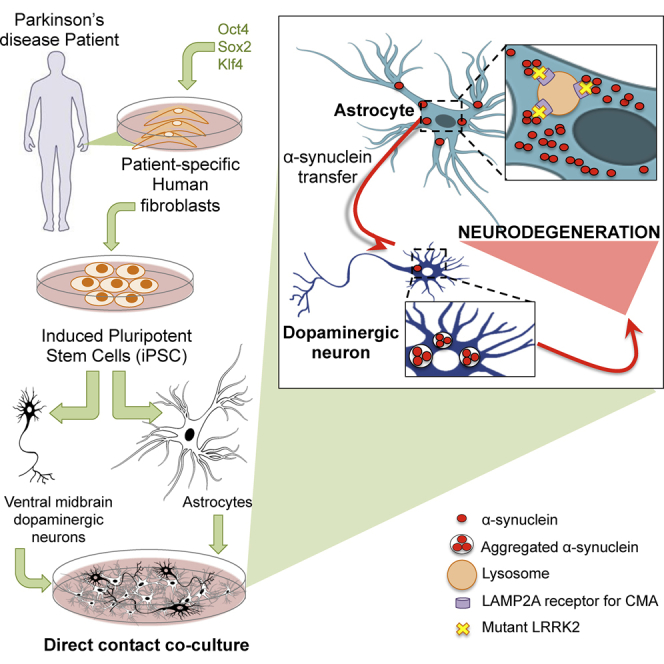
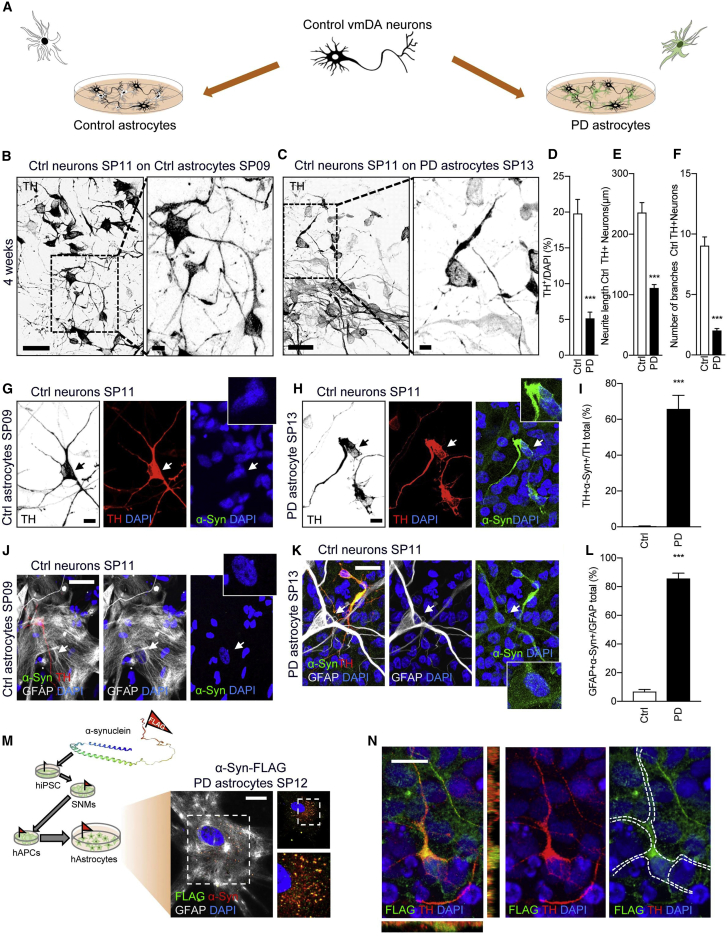
Parkinson's disease (PD) is associated with the degeneration of ventral midbrain dopaminergic neurons (vmDAns) and the accumulation of toxic α-synuclein. A non-cell-autonomous contribution, in particular of astrocytes, during PD pathogenesis has been suggested by observational studies, but remains to be experimentally tested. Here, we generated induced pluripotent stem cell-derived astrocytes and neurons from familial mutant LRRK2 G2019S PD patients and healthy individuals. Upon co-culture on top of PD astrocytes, control vmDAns displayed morphological signs of neurodegeneration and abnormal, astrocyte-derived α-synuclein accumulation. Conversely, control astrocytes partially prevented the appearance of disease-related phenotypes in PD vmDAns. We additionally identified dysfunctional chaperone-mediated autophagy (CMA), impaired macroautophagy, and progressive α-synuclein accumulation in PD astrocytes. Finally, chemical enhancement of CMA protected PD astrocytes and vmDAns via the clearance of α-synuclein accumulation. Our findings unveil a crucial non-cell-autonomous contribution of astrocytes during PD pathogenesis, and open the path to exploring novel therapeutic strategies aimed at blocking the pathogenic cross talk between neurons and glial cells.
Overview
The claims and statistics of this paper haven’t been checked yet.
Run the check — free, no account needed. It reads the open-access text and checks the sources it cites.
Integrity signals
Registry
Cites
Statistics
Figures
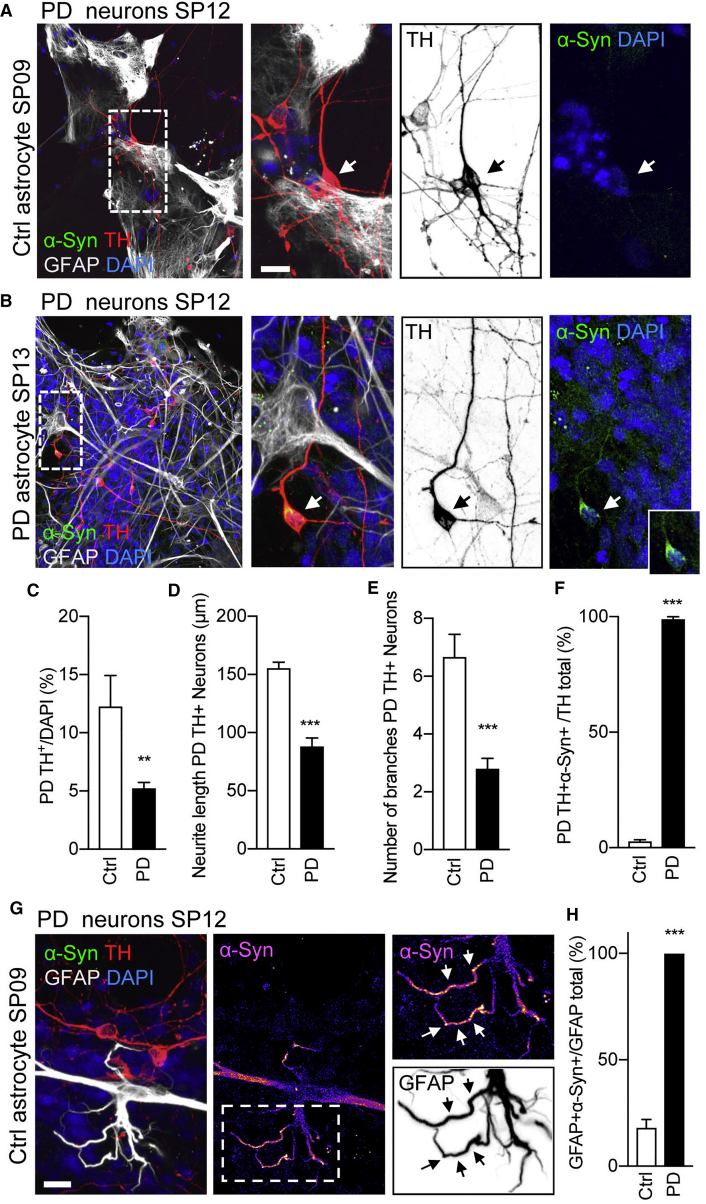
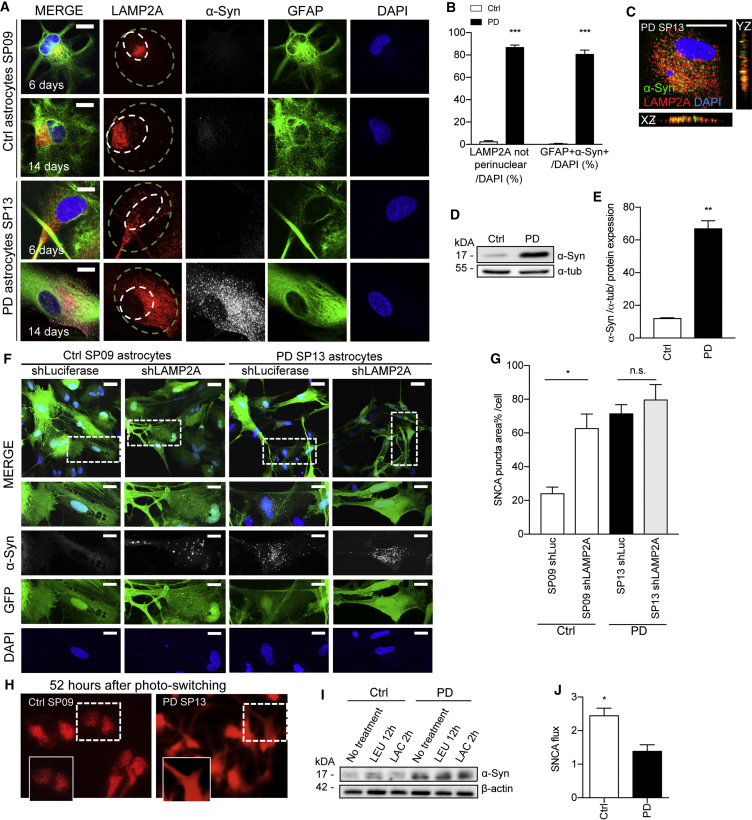
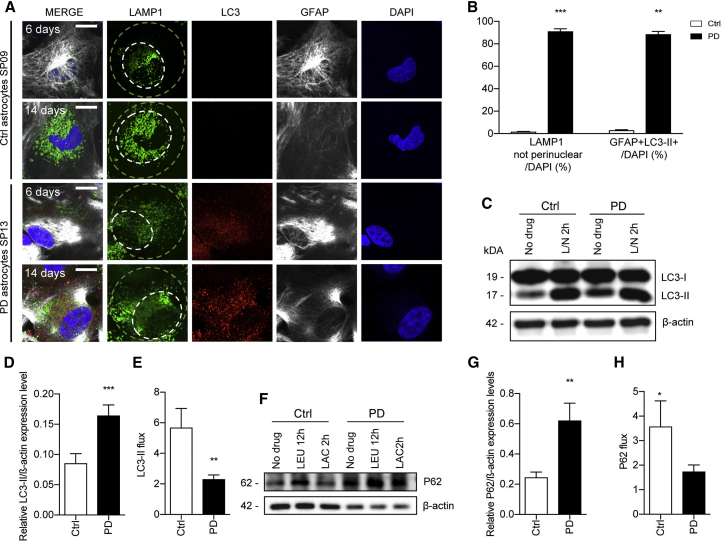
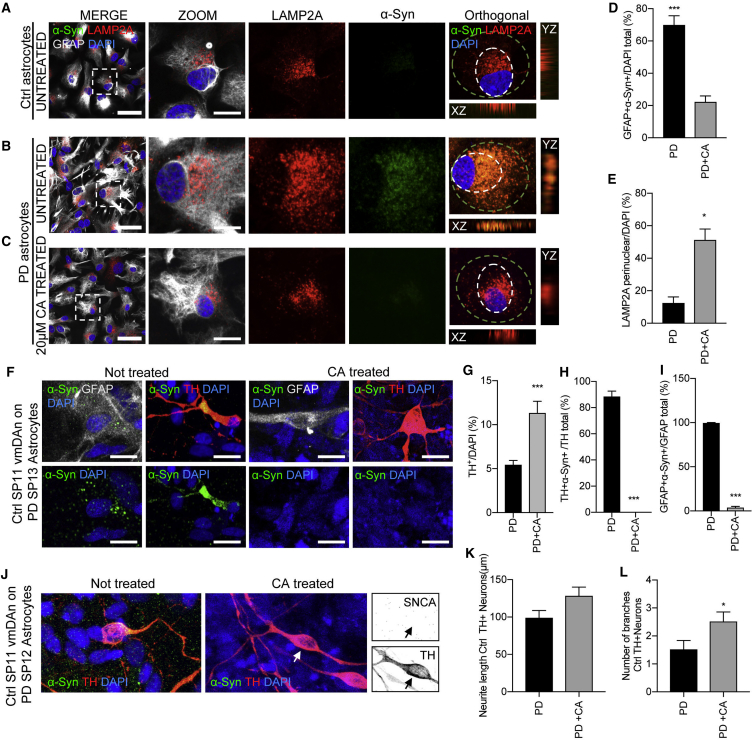
Verification
Claims the paper makes
The claims and statistics of this paper haven’t been checked yet.
Run the check — free, no account needed. It reads the open-access text and checks the sources it cites.
Claims other papers make about this one
Each is checked against this paper’s own text: does it say what the citing paper says it does?
The source backs part of the claim, not all of it — or backs it for a different population, condition or comparison.
In the citing paper
“in contrast to neuron-specific cell autonomous mechanisms that affect individual DA neurons within the SNc, non-cell autonomous mechanisms can cause dysfunction across the entire SNc, thereby leading to rapid DA neurodegeneration”
From Mitochondrial DNA Damage in Substantia Nigra Pars Compacta Astrocytes Exacerbates Dopaminergic Neuron Loss in a 6-Hydroxydopamine Mouse Model of Parkinsonism (2026) · cites this paper as di Domenico et al. 2019
Experimental — accuracy not yet measuredThe cited source says what the claim attributes to it.
In the citing paper
“Interestingly, astrocytes generated from hiPSC derived from fibroblasts obtained from patients with CNS diseases (usually with a genetic mutation causative of disease or a risk polymorphism) show pathological phenotypes, including dysregulation of lipid metabolism11, alteration in the contents of the extracellular vesicles released by astrocytes80, reduced autophagy81, or altered STAT3 signaling82”
From Reactive astrocyte nomenclature, definitions, and future directions (2021) · cites this paper as [81]
Self-check
Percentages, sums and reported differences re-computed from the paper’s own numbers.
The self-check needs the paper’s full text.
Citations
Cites
Vos, T., Barber, R. M., Bell, B., Bertozzi-Villa, A., Biryukov, S., Bolliger, I., Charlson, F., Davis, A., Degenhardt, L., Dicker, D., et al. (2015) · The Lancet · doi:10.1016/s0140-6736(15)60692-4 · Cited by 6,414
Highly efficient neural conversion of human ES and iPS cells by dual inhibition of SMAD signaling
Chambers, S. M., Fasano, C. A., Papapetrou, E. P., Tomishima, M., Sadelain, M., & Studer, L. (2009) · Nature Biotechnology · doi:10.1038/nbt.1529 · Cited by 3,620
Impaired Degradation of Mutant α-Synuclein by Chaperone-Mediated Autophagy
Cuervo, A. M., Stefanis, L., Fredenburg, R., Lansbury, P. T., & Sulzer, D. (2004) · Science · doi:10.1126/science.1101738 · Cited by 2,024 · cited 2×
“…in a-syn turnover in these cells. a-syn has previously been shown to undergo degradation both by the ubiquitin/proteasome system and by autophagy (Cuervo et al., 2004; Webb et al., 2003); therefore a-syn flux in the presence of lysosomal and proteasome inhibitors (leupeptin and lactacystin,…”
BackgroundSelf-citationKriks, S., Shim, J., Piao, J., Ganat, Y. M., Wakeman, D. R., Xie, Z., Carrillo‐Reid, L., Auyeung, G., Antonacci, C. L., Buch, A., et al. (2011) · Nature · doi:10.1038/nature10648 · Cited by 1,951
α-Synuclein Is Degraded by Both Autophagy and the Proteasome
Webb, J. L., Ravikumar, B., Atkins, J., Skepper, J. N., & Rubinsztein, D. C. (2003) · Journal of Biological Chemistry · doi:10.1074/jbc.m300227200 · Cited by 1,429
Lee, H.-J., Suk, J.-E., Patrick, C., Bae, E.-J., Cho, J.-H., Rho, S., Hwang, D., Masliah, E., & Lee, S.-J. (2010) · Journal of Biological Chemistry · doi:10.1074/jbc.m109.081125 · Cited by 877
α-Synuclein impairs macroautophagy: implications for Parkinson’s disease
Winslow, A. R., Chen, C.-W., Corrochano, S., Acevedo-Arozena, A., Gordon, D. E., Peden, A. A., Lichtenberg, M., Menzies, F. M., Ravikumar, B., Imarisio, S., et al. (2010) · Journal of Cell Biology · doi:10.1083/jcb.201003122 · Cited by 825 · cited 2×
“Degradation of a-syn has been shown to occur by both proteasome and autophagic pathways, and conversely, high levels of a-syn have been demonstrated to be toxic for both systems (Tanaka et al., 2001; Webb et al., 2003; Winslow et al., 2010).”
BackgroundA common LRRK2 mutation in idiopathic Parkinson's disease
Gilks, W. P., Abou-Sleiman, P. M., Gandhi, S., Jain, S., Singleton, A., Lees, A. J., Shaw, K., Bhatia, K. P., Bonifati, V., Quinn, N. P., et al. (2005) · The Lancet · doi:10.1016/s0140-6736(05)17830-1 · Cited by 774
LRRK2 Mutant iPSC-Derived DA Neurons Demonstrate Increased Susceptibility to Oxidative Stress
Nguyen, H. N., Byers, B., Cord, B. J., Shcheglovitov, A., Byrne, J., Gujar, P., Kee, K., Schüle, B., Dolmetsch, R. E., Langston, J. W., et al. (2011) · Cell stem cell · doi:10.1016/j.stem.2011.01.013 · Cited by 768
A novel TALE nuclease scaffold enables high genome editing activity in combination with low toxicity
Mussolino, C., Morbitzer, R., Lütge, F., Dannemann, N., Lahaye, T., & Cathomen, T. (2011) · Nucleic Acids Research · doi:10.1093/nar/gkr597 · Cited by 714
Cited by
Sorted by citations
Guidelines for the use and interpretation of assays for monitoring autophagy (4th edition) 1
Klionsky, D. J., Abdel-Aziz, A. K., Abdelfatah, S., Abdellatif, M., Abdoli, A., Abel, S., Abeliovich, H., Abildgaard, M. H., Abudu, Y. P., Acevedo-Arozena, A., et al. (2021) · Autophagy · doi:10.1080/15548627.2020.1797280 · Cited by 2,897
Self-citationReactive astrocyte nomenclature, definitions, and future directions
Escartin, C., Galea, E., Lakatos, A., O’Callaghan, J. P., Petzold, G. C., Serrano-Pozo, A., Steinhäuser, C., Volterra, A., Carmignoto, G., Agarwal, A., et al. (2021) · Nature Neuroscience · doi:10.1038/s41593-020-00783-4 · Cited by 2,513
Functional roles of reactive astrocytes in neuroinflammation and neurodegeneration
Patani, R., Hardingham, G. E., & Liddelow, S. A. (2023) · Nature Reviews Neurology · doi:10.1038/s41582-023-00822-1 · Cited by 531
The different autophagy degradation pathways and neurodegeneration
Fleming, A., Bourdenx, M., Fujimaki, M., Karabiyik, C., Krause, G. J., Lopez, A., Martín‐Segura, A., Puri, C., Scrivo, A., Skidmore, J., et al. (2022) · Neuron · doi:10.1016/j.neuron.2022.01.017 · Cited by 500
Self-citationCai, Y., Song, W., Li, J., Jing, Y., Liang, C., Zhang, L., Zhang, X., Zhang, W., Liu, B., An, Y., et al. (2022) · Science China Life Sciences · doi:10.1007/s11427-022-2161-3 · Cited by 450
Microglia and astrocyte dysfunction in parkinson's disease
Kam, T., Hinkle, J. T., Dawson, T. M., & Dawson, V. L. (2020) · Neurobiology of Disease · doi:10.1016/j.nbd.2020.105028 · Cited by 420
Glucocerebrosidase and its relevance to Parkinson disease
Do, J., McKinney, C. E., Sharma, P., & Sidransky, E. (2019) · Molecular Neurodegeneration · doi:10.1186/s13024-019-0336-2 · Cited by 305
Autophagy and the hallmarks of aging
Kaushik, S., Tasset, I., Arias, E., Pampliega, O., Wong, E., Martinez-Vicente, M., & Cuervo, A. M. (2021) · Ageing Research Reviews · doi:10.1016/j.arr.2021.101468 · Cited by 285
Self-citationLi, L., Acioglu, C., Heary, R. F., & Elkabes, S. (2021) · Brain, Behavior, and Immunity · doi:10.1016/j.bbi.2020.10.007 · Cited by 283
The Contribution of Microglia to Neuroinflammation in Parkinson’s Disease
Badanjak, K., Fixemer, S., Smajić, S., Skupin, A., & Grünewald, A. (2021) · International Journal of Molecular Sciences · doi:10.3390/ijms22094676 · Cited by 296
LRRK2 mediates tubulation and vesicle sorting from lysosomes
Bonet‐Ponce, L., Beilina, A. G., Williamson, C. D., Lindberg, E., Kluss, J. H., Sáez-Atiénzar, S., Landeck, N., Kumaran, R., Mamais, A., Bleck, C. K. E., et al. (2020) · Science Advances · doi:10.1126/sciadv.abb2454 · Cited by 252
Lysosomal dysfunction in neurodegeneration: emerging concepts and methods
Udayar, V., Chen, Y., Sidransky, E., & Jagasia, R. (2022) · Trends in Neurosciences · doi:10.1016/j.tins.2021.12.004 · Cited by 255
CD49f Is a Novel Marker of Functional and Reactive Human iPSC-Derived Astrocytes
Barbar, L., Jain, T., Zimmer, M., Kruglikov, I., Sadick, J. S., Wang, M., Kalpana, K., Rose, I. V. L., Burstein, S. R., Rusielewicz, T., et al. (2020) · Neuron · doi:10.1016/j.neuron.2020.05.014 · Cited by 211
Neuron-Astrocyte Interactions in Parkinson’s Disease
Miyazaki, I., & Asanuma, M. (2020) · Cells · doi:10.3390/cells9122623 · Cited by 186
Metabolic alterations in Parkinson’s disease astrocytes
Sonninen, T.-M., Hämäläinen, R. H., Koskuvi, M., Oksanen, M., Shakirzyanova, A., Wojciechowski, S., Puttonen, K. A., Naumenko, N. V., Goldsteins, G., Laham-Karam, N., et al. (2020) · Scientific Reports · doi:10.1038/s41598-020-71329-8 · Cited by 181
Copas, A. N. M., McComish, S. F., Fletcher, J. M., & Caldwell, M. A. (2021) · Frontiers in Neurology · doi:10.3389/fneur.2021.666737 · Cited by 186
Melatonin and Autophagy in Aging-Related Neurodegenerative Diseases
Luo, F., Sandhu, A. F., Rungratanawanich, W., Williams, G. E., Akbar, M. D., Zhou, S., Song, B., & Wang, X. (2020) · International Journal of Molecular Sciences · doi:10.3390/ijms21197174 · Cited by 162
Dysfunction of Cellular Proteostasis in Parkinson’s Disease
Lehtonen, Š., Sonninen, T.-M., Wojciechowski, S., Goldsteins, G., & Koıstınaho, J. (2019) · Frontiers in Neuroscience · doi:10.3389/fnins.2019.00457 · Cited by 152
The immune system in Parkinson's disease: what we know so far
Roodveldt, C., Bernardino, L. I., Çakmak, Ö. Ö., Dragić, M., Fladmark, K. E., Ertan, S., Aktaş, B., Pita, C., Ciglar, L., Garraux, G., et al. (2024) · Brain · doi:10.1093/brain/awae177 · Cited by 151
“LRRK2: Autophagy and Lysosomal Activity”
Madureira, M., Connor‐Robson, N., & Wade‐Martins, R. (2020) · Frontiers in Neuroscience · doi:10.3389/fnins.2020.00498 · Cited by 143
Chang, C.-Y., Ting, H.-C., Liu, C.-A., Su, H., Chiou, T., Lin, S., Harn, H., & Ho, T. (2020) · Molecules · doi:10.3390/molecules25082000 · Cited by 140
The Emerging Role of the Lysosome in Parkinson’s Disease
Navarro-Romero, A., Montpeyó, M., & Martínez‐Vicente, M. (2020) · Cells · doi:10.3390/cells9112399 · Cited by 139
Jacquet, A. D. R., Alpaugh, M., Denis, H. L., Tancredi, J. L., Boutin, M. E., Decaestecker, J., Beauparlant, C., Herrmann, L., Saint‐Pierre, M., Parent, M., et al. (2023) · Nature Communications · doi:10.1038/s41467-023-39038-8 · Cited by 126
Parkinson’s Disease–Associated LRRK2 Interferes with Astrocyte-Mediated Alpha-Synuclein Clearance
Streubel-Gallasch, L., Giusti, V., Sandre, M., Tessari, I., Plotegher, N., Giusto, E., Masato, A., Iovino, L., Battisti, I., Arrigoni, G., et al. (2021) · Molecular Neurobiology · doi:10.1007/s12035-021-02327-8 · Cited by 100
Astrocytes Protect Human Dopaminergic Neurons from α-Synuclein Accumulation and Propagation
Tsunemi, T., Ishiguro, Y., Yoroisaka, A., Valdez, C., Miyamoto, K., Ishikawa, K., Saiki, S., Akamatsu, W., Hattori, N., & Krainc, D. (2020) · Journal of Neuroscience · doi:10.1523/jneurosci.0954-20.2020 · Cited by 118
Contribution of astrocytes to neuropathology of neurodegenerative diseases
Acıoğlu, Ç., Li, L., & Elkabes, S. (2021) · Brain Research · doi:10.1016/j.brainres.2021.147291 · Cited by 119
The Vicious Cycle Between α ‐Synuclein Aggregation and Autophagic‐Lysosomal Dysfunction
Bellomo, G., Paciotti, S., Gatticchi, L., & Parnetti, L. (2019) · Movement Disorders · doi:10.1002/mds.27895 · Cited by 116
Lysosome and Inflammatory Defects in GBA1‐Mutant Astrocytes Are Normalized by LRRK2 Inhibition
Sanyal, A., DeAndrade, M. P., Novis, H. S., Lin, S. C., Chang, J., Lengacher, N. A., Tomlinson, J. J., Tansey, M. G., & LaVoie, M. J. (2020) · Movement Disorders · doi:10.1002/mds.27994 · Cited by 111
Advances in microfluidic in vitro systems for neurological disease modeling
Holloway, P. M., Willaime‐Morawek, S., Siow, R. C. M., Barber, M., Owens, R. M., Sharma, A. D., Rowan, W. C., Hill, E. J., & Zagnoni, M. (2021) · Journal of Neuroscience Research · doi:10.1002/jnr.24794 · Cited by 101
Lee, J. H., Han, J., Kim, H., Park, S. M., Joe, E.-H., & Jou, I. (2019) · Acta Neuropathologica Communications · doi:10.1186/s40478-019-0716-4 · Cited by 113
The A1 astrocyte paradigm: New avenues for pharmacological intervention in neurodegeneration
Hinkle, J. T., Dawson, V. L., & Dawson, T. M. (2019) · Movement Disorders · doi:10.1002/mds.27718 · Cited by 100
Key genes and convergent pathogenic mechanisms in Parkinson disease
Coukos, R., & Krainc, D. (2024) · Nature reviews. Neuroscience · doi:10.1038/s41583-024-00812-2 · Cited by 116
Immune responses in the Parkinson's disease brain
Weiss, F. C., Labrador‐Garrido, A., Dzamko, N. L., & Halliday, G. M. (2022) · Neurobiology of Disease · doi:10.1016/j.nbd.2022.105700 · Cited by 100
Mitochondrial dysfunction in astrocytes: A role in Parkinson’s disease?
Bantle, C. M., Hirst, W. D., Weihofen, A., & Shlevkov, E. (2021) · Frontiers in Cell and Developmental Biology · doi:10.3389/fcell.2020.608026 · Cited by 95
Estes, R., Lin, B. C., Khera, A., & Davis, M. Y. (2021) · Frontiers in Molecular Neuroscience · doi:10.3389/fnmol.2021.788695 · Cited by 99
Boonpraman, N., Yoon, S., Kim, C. Y., Moon, J., & Yi, S. S. (2023) · Redox Biology · doi:10.1016/j.redox.2023.102698 · Cited by 95
Wilson, H., Dervenoulas, G., Pagano, G., Tyacke, R. J., Polychronis, S., Myers, J., Gunn, R. N., Rabiner, E. A., Nutt, D., & Politis, M. (2019) · Brain · doi:10.1093/brain/awz260 · Cited by 94
Lara Ordónez, A. J., Fernández, B., Fdez, E., Romo-Lozano, M., Madero-Pérez, J., Lobbestael, E., Baekelandt, V., Aiastui, A., López de Munaín, A., Melrose, H. L., et al. (2019) · Human Molecular Genetics · doi:10.1093/hmg/ddz201 · Cited by 103
Blood–Brain Barrier and Neurodegenerative Diseases—Modeling with iPSC-Derived Brain Cells
Wu, Y., Sonninen, T.-M., Peltonen, S., Koıstınaho, J., & Lehtonen, Š. (2021) · International Journal of Molecular Sciences · doi:10.3390/ijms22147710 · Cited by 91
Neuroinflammatory Responses and Parkinson’ Disease: Pathogenic Mechanisms and Therapeutic Targets
Yang, L., Mao, K., Yu, H., & Chen, J. (2020) · Journal of Neuroimmune Pharmacology · doi:10.1007/s11481-020-09926-7 · Cited by 91
Jacquet, A. D. R., Tancredi, J. L., Lemire, A. L., DeSantis, M. C., Li, W., & O’Shea, E. K. (2021) · eLife · doi:10.7554/elife.73062 · Cited by 91
Arredondo, C., Cefaliello, C., Dyrda, A., Jury, N., Martínez, P., Díaz, I. D. P., Amaro, A., Tran, H., Morales, D., Pertusa, M., et al. (2022) · Neuron · doi:10.1016/j.neuron.2022.02.010 · Cited by 89
Pathogenesis of α-Synuclein in Parkinson’s Disease: From a Neuron-Glia Crosstalk Perspective
Yi, S., Wang, L., Wang, H., Ho, M. S.-C., & Zhang, S. (2022) · International Journal of Molecular Sciences · doi:10.3390/ijms232314753 · Cited by 96
Wang, C., Yang, T., Liang, M., Xie, J., & Song, N. (2021) · Translational Neurodegeneration · doi:10.1186/s40035-021-00265-y · Cited by 90
A characterization of Gaucher iPS-derived astrocytes: Potential implications for Parkinson's disease
Aflaki, E., Stubblefield, B. K., McGlinchey, R. P., McMahon, B., Ory, D. S., & Sidransky, E. (2019) · Neurobiology of Disease · doi:10.1016/j.nbd.2019.104647 · Cited by 77
Astrocytic atrophy as a pathological feature of Parkinson’s disease with LRRK2 mutation
Ramos‐Gonzalez, P., Mato, S., Chara, J. C., Verkhratsky, A., Matute, C., & Cavaliere, F. (2021) · npj Parkinson s Disease · doi:10.1038/s41531-021-00175-w · Cited by 81
Autophagy in Astrocytes and its Implications in Neurodegeneration
Sung, K., & Jiménez-Sánchez, M. (2020) · Journal of Molecular Biology · doi:10.1016/j.jmb.2019.12.041 · Cited by 78
Towards Advanced iPSC-based Drug Development for Neurodegenerative Disease
Pasteuning-Vuhman, S., de Jongh, R., Timmers, A., & Pasterkamp, R. J. (2020) · Trends in Molecular Medicine · doi:10.1016/j.molmed.2020.09.013 · Cited by 72
Boas, S. M., Joyce, K. L., & Cowell, R. M. (2021) · Antioxidants · doi:10.3390/antiox11010008 · Cited by 70
Ribarič, S. (2022) · International Journal of Molecular Sciences · doi:10.3390/ijms23063245 · Cited by 77
Induced pluripotent stem cells: a tool for modeling Parkinson’s disease
Bose, A., Petsko, G. A., & Studer, L. (2022) · Trends in Neurosciences · doi:10.1016/j.tins.2022.05.001 · Cited by 74
Parfitt, G. M., Coccia, E., Goldman, C., Whitney, K. R., Reyes, R., Sarrafha, L., Nam, K. H., Sohail, S., Jones, D. R., Crary, J. F., et al. (2024) · Nature Communications · doi:10.1038/s41467-024-44732-2 · Cited by 77
Insights into the pathogenesis of multiple system atrophy: focus on glial cytoplasmic inclusions
Kaji, S., Maki, T., Ishimoto, T., Yamakado, H., & Takahashi, R. (2020) · Translational Neurodegeneration · doi:10.1186/s40035-020-0185-5 · Cited by 71
Neuromodulation of Glial Function During Neurodegeneration
Stevenson, R., Samokhina, E., Rossetti, I., Morley, J. W., & Buskila, Y. (2020) · Frontiers in Cellular Neuroscience · doi:10.3389/fncel.2020.00278 · Cited by 72
An update on human astrocytes and their role in development and disease
de Majo, M., Koontz, M., Rowitch, D. H., & Ullian, E. M. (2020) · Glia · doi:10.1002/glia.23771 · Cited by 69
Astrocytes and microglia in neurodegenerative diseases: Lessons from human in vitro models
Franklin, H., Clarke, B. E., & Patani, R. (2021) · Progress in Neurobiology · doi:10.1016/j.pneurobio.2020.101973 · Cited by 66
Smith, L. J., Lee, C., Menozzi, E., & Schapira, A. H. V. (2022) · Frontiers in Neurology · doi:10.3389/fneur.2022.971252 · Cited by 67
Unique signatures of stress-induced senescent human astrocytes
Simmnacher, K., Krach, F., Schneider, Y., Alecu, J. E., Mautner, L., Klein, P., Roybon, L., Prots, I., Xiang, W., & Winner, B. (2020) · Experimental Neurology · doi:10.1016/j.expneurol.2020.113466 · Cited by 65
Glia in Neurodegeneration: The Housekeeper, the Defender and the Perpetrator
Sheeler, C. A., Rosa, J. S., Ferro, A., McAdams, B. D., Borgenheimer, E., & Cvetanović, M. (2020) · International Journal of Molecular Sciences · doi:10.3390/ijms21239188 · Cited by 61
Pons‐Espinal, M., Blasco-Agell, L., Fernández‐Carasa, I., Andrés‐Benito, P., di Domenico, A., Richaud‐Patín, Y., Baruffi, V., Marruecos, L., Espinosa, L., Garrido, A., et al. (2024) · JCI Insight · doi:10.1172/jci.insight.163359 · Cited by 69
Self-citationWasielewska, J. M., & White, A. R. (2022) · Pharmaceutical Research · doi:10.1007/s11095-022-03185-2 · Cited by 67
Gatto, N., Dos Santos Souza, C., Shaw, A. C., Bell, S. M., Myszczynska, M. A., Powers, S., Meyer, K., Castelli, L. M., Karyka, E., Mortiboys, H., et al. (2021) · Aging Cell · doi:10.1111/acel.13281 · Cited by 58
Reduced astrocytic reactivity in human brains and midbrain organoids with PRKN mutations
Kano, M., Takanashi, M., Oyama, G., Yoritaka, A., Hatano, T., Shiba‐Fukushima, K., Nagai, M., Nishiyama, K., Hasegawa, K., Inoshita, T., et al. (2020) · npj Parkinson s Disease · doi:10.1038/s41531-020-00137-8 · Cited by 66
Single-cell brain atlas of Parkinson's disease mouse model
Zhong, J., Tang, G., Zhu, J., Wu, W., Li, G., Lin, X., Liang, L., Chai, C., Zeng, Y., Wang, F., et al. (2021) · Journal of genetics and genomics/Journal of Genetics and Genomics · doi:10.1016/j.jgg.2021.01.003 · Cited by 59
Bowles, K. R., Pugh, D. A., Liu, Y., Patel, T., Renton, A. E., Bandrés‐Ciga, S., Gan‐Or, Z., Heutink, P., Siitonen, A., Bertelsen, S. E., et al. (2022) · Molecular Neurodegeneration · doi:10.1186/s13024-022-00551-x · Cited by 58
Dong, A.-Q., Yang, Y., Jiang, S.-M., Yao, X., Qi, D., Mao, C., Cheng, X.-Y., Wang, F., Hu, L., & Liu, C. (2022) · Acta Pharmacologica Sinica · doi:10.1038/s41401-022-00951-1 · Cited by 57
Bang, S., Lee, S., Choi, N., & Kim, H. N. (2021) · Advanced Healthcare Materials · doi:10.1002/adhm.202002119 · Cited by 57
3D hydrogel models of the neurovascular unit to investigate blood–brain barrier dysfunction
Potjewyd, G., Kellett, K. A. B., & Hooper, N. M. (2021) · Neuronal Signaling · doi:10.1042/ns20210027 · Cited by 53
Neurodegeneration cell per cell
Balusu, S., Praschberger, R., Lauwers, E., Strooper, B. D., & Verstreken, P. (2023) · Neuron · doi:10.1016/j.neuron.2023.01.016 · Cited by 53
Degl’Innocenti, E., & Dell’Anno, M. T. (2023) · Frontiers in Neuroanatomy · doi:10.3389/fnana.2023.1130729 · Cited by 55
The Involvement of Neuroinflammation in the Onset and Progression of Parkinson’s Disease
Jurcău, A., Andronie-Cioară, F. L., Nistor-Cseppento, C. D., Pașcalău, N., Rus, M., Vasca, E., & Jurcău, M. C. (2023) · International Journal of Molecular Sciences · doi:10.3390/ijms241914582 · Cited by 58
Jellinger, K. A. (2019) · Journal of Neural Transmission · doi:10.1007/s00702-019-02028-6 · Cited by 58
Astrocytic modulation of neuronal signalling
Purushotham, S. S., & Buskila, Y. (2023) · Frontiers in Network Physiology · doi:10.3389/fnetp.2023.1205544 · Cited by 56
Brain clearance of protein aggregates: a close-up on astrocytes
Giusti, V., Kaur, G., Giusto, E., & Civiero, L. (2024) · Molecular Neurodegeneration · doi:10.1186/s13024-024-00703-1 · Cited by 54
The role of glia in protein aggregation
Li, Q., & Haney, M. S. (2020) · Neurobiology of Disease · doi:10.1016/j.nbd.2020.105015 · Cited by 54
Neurons and Glia Interplay in α-Synucleinopathies
Mavroeidi, P., & Xilouri, M. (2021) · International Journal of Molecular Sciences · doi:10.3390/ijms22094994 · Cited by 55
Role of SNAREs in Unconventional Secretion—Focus on the VAMP7-Dependent Secretion
Vats, S., & Galli, T. (2022) · Frontiers in Cell and Developmental Biology · doi:10.3389/fcell.2022.884020 · Cited by 52
Role of Astrocytes in Parkinson’s Disease Associated with Genetic Mutations and Neurotoxicants
Kim, S., Pajarillo, E. A. B., Nyarko‐Danquah, I., Aschner, M., & Lee, E.-S. (2023) · Cells · doi:10.3390/cells12040622 · Cited by 60
Extracellular clusterin limits the uptake of α‐synuclein fibrils by murine and human astrocytes
Filippini, A., Mutti, V., Faustini, G., Longhena, F., Ramazzina, I., Rizzi, F., Kaganovich, A., Roosen, D. A., Landeck, N., Duffy, M. F., et al. (2020) · Glia · doi:10.1002/glia.23920 · Cited by 49
Khawaja, R. R., Martín‐Segura, A., Santiago‐Fernández, O., Sereda, R., Lindenau, K. L., McCabe, M., Macho‐González, A., Jafari, M., Scrivo, A., Gómez‐Sintes, R., et al. (2025) · Nature Aging · doi:10.1038/s43587-024-00799-6 · Cited by 56
Self-citationPolychlorinated biphenyls induce oxidative stress and metabolic responses in astrocytes
McCann, M. S., Fernandez, H. R., Flowers, S. A., & Maguire‐Zeiss, K. A. (2021) · NeuroToxicology · doi:10.1016/j.neuro.2021.07.001 · Cited by 51
Human iPSC-Based Modeling of Central Nerve System Disorders for Drug Discovery
Lu, Q., & Julia, T. C. W. (2021) · International Journal of Molecular Sciences · doi:10.3390/ijms22031203 · Cited by 49
Neyrinck, K., Daele, J. V. D., Vervliet, T., Smedt, J. D., Wierda, K. D. B., Nijs, M., Vanbokhoven, T., D’hondt, A., Planque, M., Fendt, S., et al. (2021) · Stem Cell Reviews and Reports · doi:10.1007/s12015-021-10179-x · Cited by 47
Extracellular Alpha-Synuclein: Mechanisms for Glial Cell Internalization and Activation
Chavarría, C., Ivagnes, R., & Souza, J. M. (2022) · Biomolecules · doi:10.3390/biom12050655 · Cited by 47
Sen, T., & Thummer, R. P. (2022) · Neurotoxicity Research · doi:10.1007/s12640-022-00564-w · Cited by 52
Muddapu, V. R., & Chakravarthy, V. S. (2021) · Scientific Reports · doi:10.1038/s41598-021-81185-9 · Cited by 49
From cell lines to pluripotent stem cells for modelling Parkinson's Disease
Ferrari, E. S., Cardinale, A., Picconi, B., & Gardoni, F. (2020) · Journal of Neuroscience Methods · doi:10.1016/j.jneumeth.2020.108741 · Cited by 46
Impact of Chaperone-Mediated Autophagy in Brain Aging: Neurodegenerative Diseases and Glioblastoma
Auzmendi-Iriarte, J., & Matheu, A. (2021) · Frontiers in Aging Neuroscience · doi:10.3389/fnagi.2020.630743 · Cited by 47
Alpha-Synuclein and the Endolysosomal System in Parkinson’s Disease: Guilty by Association
Teixeira, M., Sheta, R., Idi, W., & Oueslati, A. (2021) · Biomolecules · doi:10.3390/biom11091333 · Cited by 46
Raikwar, S. P., Kikkeri, N. S., Sakuru, R. C., Saeed, D., Zahoor, H., Premkumar, K., Mentor, S., Thangavel, R., Dubova, I., Ahmed, M. E., et al. (2019) · Journal of Neuroimmune Pharmacology · doi:10.1007/s11481-019-09849-y · Cited by 48
Kanno, H., Handa, K., Murakami, T., Aizawa, T., & Ozawa, H. (2022) · Cells · doi:10.3390/cells11071205 · Cited by 47
Olsen, A. L., & Feany, M. Β. (2019) · Glia · doi:10.1002/glia.23671 · Cited by 45
Patient-Derived Midbrain Organoids to Explore the Molecular Basis of Parkinson's Disease
Galet, B., Cheval, H., & Ravassard, P. (2020) · Frontiers in Neurology · doi:10.3389/fneur.2020.01005 · Cited by 47
Labib, D., Wang, Z., Prakash, P. S., Zimmer, M., Smith, M. D., Frazel, P. W., Barbar, L., Sapar, M. L., Calabresi, P. A., Peng, J., et al. (2022) · Frontiers in Molecular Neuroscience · doi:10.3389/fnmol.2022.870085 · Cited by 45
Jusop, A. S., Thanaskody, K., Tye, G. J., Dass, S. A., Zaman, W. S. W. K., & Nordin, F. (2023) · Frontiers in Molecular Neuroscience · doi:10.3389/fnmol.2023.1173433 · Cited by 42
Novel human iPSC models of neuroinflammation in neurodegenerative disease and regenerative medicine
Summers, R. A., Fagiani, F., Rowitch, D. H., Absinta, M., & Reich, D. S. (2024) · Trends in Immunology · doi:10.1016/j.it.2024.08.004 · Cited by 39
Comprehensive Perspectives on Experimental Models for Parkinson’s Disease
Ke, M., Chong, C., Zhu, Q., Zhang, K., Cai, C.-Z., Lu, J., Qin, D., & Su, H. (2021) · Aging and Disease · doi:10.14336/ad.2020.0331 · Cited by 41
Utilising Induced Pluripotent Stem Cells in Neurodegenerative Disease Research: Focus on Glia
Albert, K., Niskanen, J., Kälvälä, S., & Lehtonen, Š. (2021) · International Journal of Molecular Sciences · doi:10.3390/ijms22094334 · Cited by 40
Therapeutic Potential of Astrocyte Transplantation
Hastings, N., Kuan, W., Osborne, A., & Kotter, M. (2022) · Cell Transplantation · doi:10.1177/09636897221105499 · Cited by 39
Vieira, R., Mariani, J. N., Huynh, N. P. T., Stephensen, H. J. T., Solly, R., Tate, A., Schanz, S. J., Cotrupi, N., Mousaei, M., Jon Sporring, A., et al. (2023) · Nature Biotechnology · doi:10.1038/s41587-023-01798-5 · Cited by 37
Metadata
- Authors
- di Domenico, A., Carola, G., Calatayud, C., Pons-Espinal, M., Muñoz, J. P., Richaud-Patin, Y., Fernandez-Carasa, I., Gut, M., Faella, A., Parameswaran, J., Soriano, J., Ferrer, I., Tolosa, E., Zorzano, A., Cuervo, A. M., Raya, A., & Consiglio, A.
- Affiliations
- Bellvitge University Hospital (ES)
- Institute for Research in Biomedicine (ES)
- Centro Nacional de Análisis Genómico (ES)
- Universitat de Barcelona (ES)
- Biomedical Research Networking Center on Neurodegenerative Diseases (ES)
- Corresponding author
- Consiglio, Antonella
- ORCID
- Venue
- Stem Cell Reports
- Publisher
- Elsevier BV
- Published
- 2019-02
- Volume
- 12
- Issue
- 2
- Pages
- 213-229
- ISSN
- 2213-6711 (ISSN-L)
- PMC
- PMC6372974
- OpenAlex
- W2911036111
- Cited by
- 372
- References
- 49
- Citations by year
- 2026: 32 · 2025: 38 · 2024: 44 · 2023: 45 · 2022: 65 · 2021: 69 · 2020: 53 · 2019: 26
- FWCI
- 36.04
- Type
- journal article
- Language
- en
- Open access
- gold
- doi.org
- Licence
- Locations
- Stem Cell Reports (publishedVersion, cc-by)
- Europe PMC (PubMed Central) (publishedVersion, cc-by)
- PubMed Central (publishedVersion, cc-by)
- PubMed (publishedVersion)
- Dipòsit Digital de la Universitat de Barcelona (Universitat de Barcelona) (publishedVersion, cc-by)
- DOAJ (DOAJ: Directory of Open Access Journals) (submittedVersion, cc-by-sa)
- Institutional Research Information System (Università degli Studi di Brescia) (submittedVersion)
- Repositori digital de la UPF (Universitat Pompeu Fabra) (submittedVersion, cc-by)
- Funders
- Agència de Gestió d'Ajuts Universitaris i de Recerca (2014-SGR-878, 2017-SGR-899)
- Ministerio de Educación, Cultura y Deporte (BES-2014-069603, FPU12/03332)
- Ministerio de Economía y Competitividad (BFU2016-80870-P, FIS2016-78507-C2-2-P, SAF2015-69706-R)
- Instituto de Salud Carlos III
- European Regional Development Fund (RD16/0011/0024)
- Generalitat de Catalunya
- European Research Council (2012-StG-311736-PD-HUMMODEL)
- Topics
- Health Sciences › Medicine › Clinical Neurology › Parkinson's Disease Mechanisms and Treatments
- Life Sciences › Biochemistry, Genetics and Molecular Biology › Molecular Biology › Pluripotent Stem Cells Research
- Life Sciences › Neuroscience › Neurology › Neuroinflammation and Neurodegeneration Mechanisms
- Keywords
- Parkinson's disease, astrocytes, non-cell autonomous neurodegeneration, induced pluripotent stem cell-derived astrocytes, dopaminergic neurons, ventral midbrain, LRRK2 G2019S, familial Parkinson's disease, alpha-synuclein accumulation, chaperone-mediated autophagy, macroautophagy, neuron-glia interactions
- MeSH terms
- Leucine-Rich Repeat Serine-Threonine Protein Kinase-2, Astrocytes, Autophagy, Cell Differentiation, Cells, Cultured, Humans, Mesencephalon, Neuroglia, Parkinson Disease, Phenotype, Coculture Techniques, alpha-Synuclein, Induced Pluripotent Stem Cells, Dopaminergic Neurons
About these checks
Registry, retraction, Cites and statistics results are computed, not judged, with one exception: a printed reference that no index lists is read once by a model before it counts as a citation error. Claims are extracted by a model and kept only when their quote appears verbatim in the text; each cited source is then checked, with a model’s help, for whether it says what the claim relies on. Those verdicts can be wrong — read the claim’s quote and the cited source before relying on one.
Statistics and arithmetic are recomputed, not judged.
Confidence bands are shown only for fields calibrated on our annotated test set. None is calibrated yet, so no band is shown.
What counts as a claim ›How we measure confidence ›How we check this ›
Are you an author, or do you see a problem with this page? Request a review
