

A Mouse Model of Hepatocellular Carcinoma
Open accessThe DOI matches its Crossref record, with a small difference in title or year; 71 of the 77 references it cites were found in a registry or an index.
Abstract
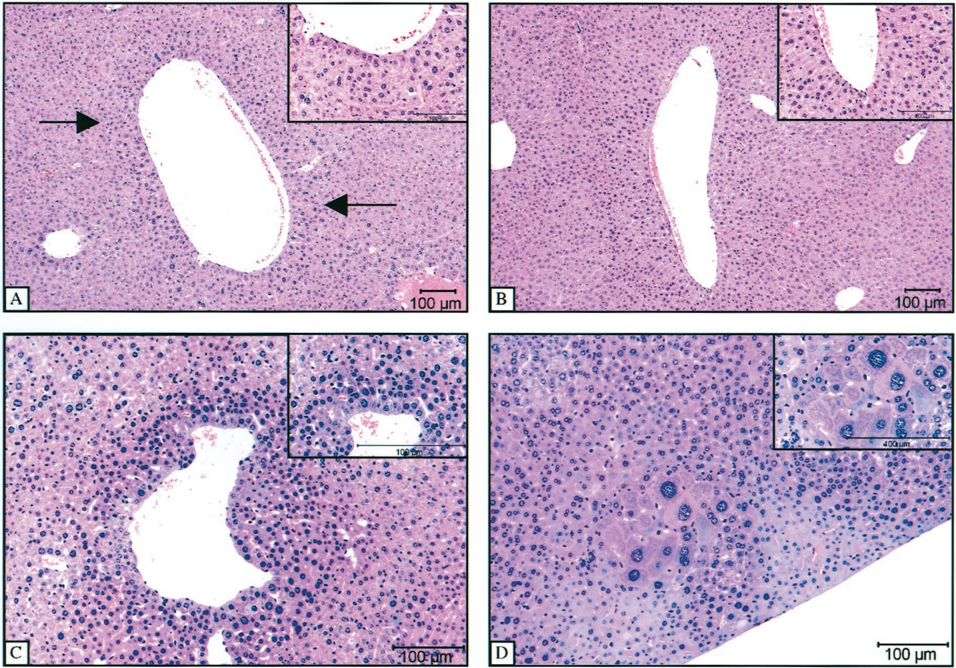
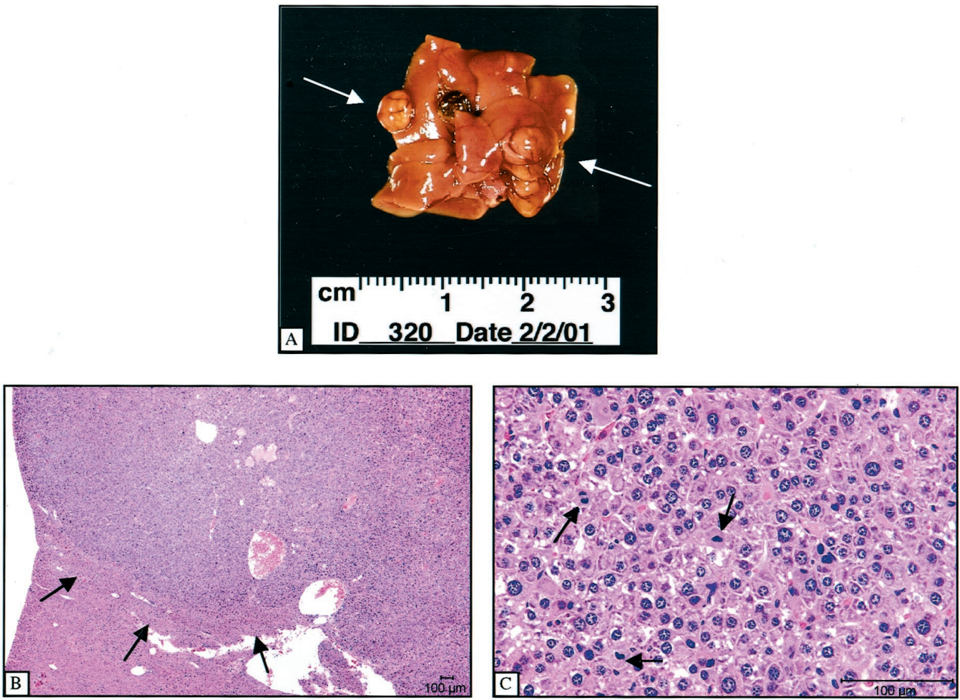
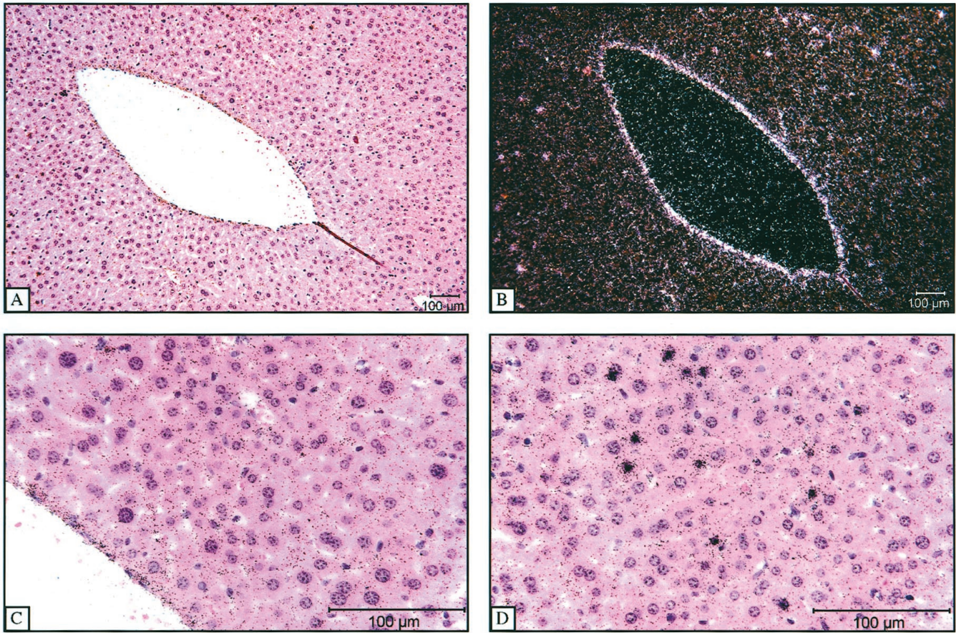
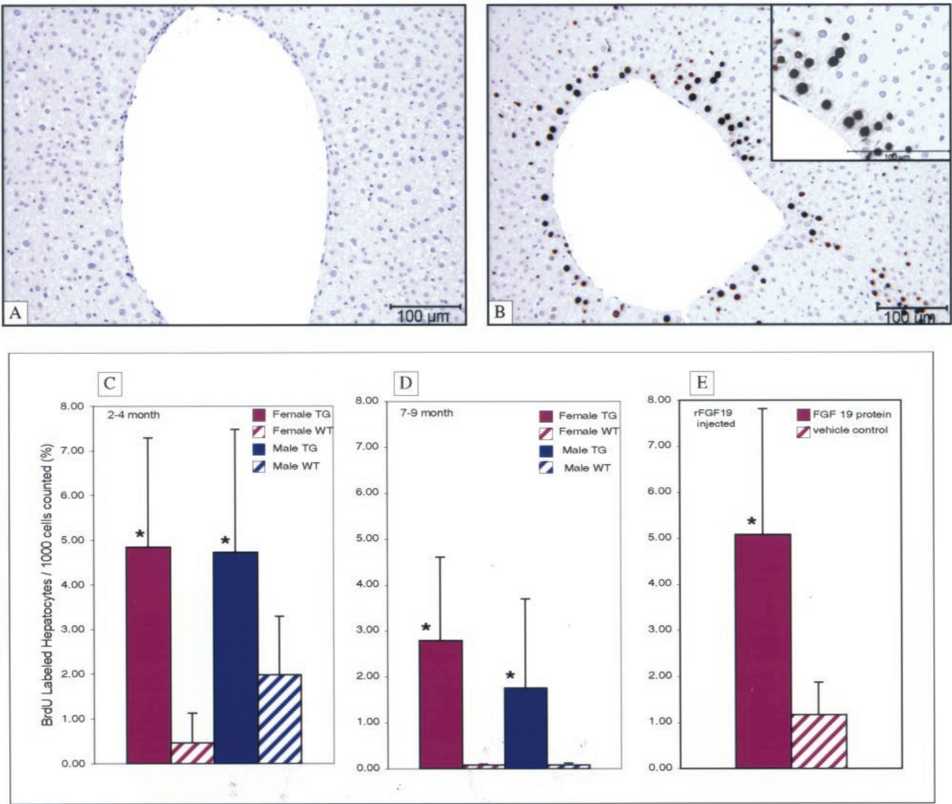
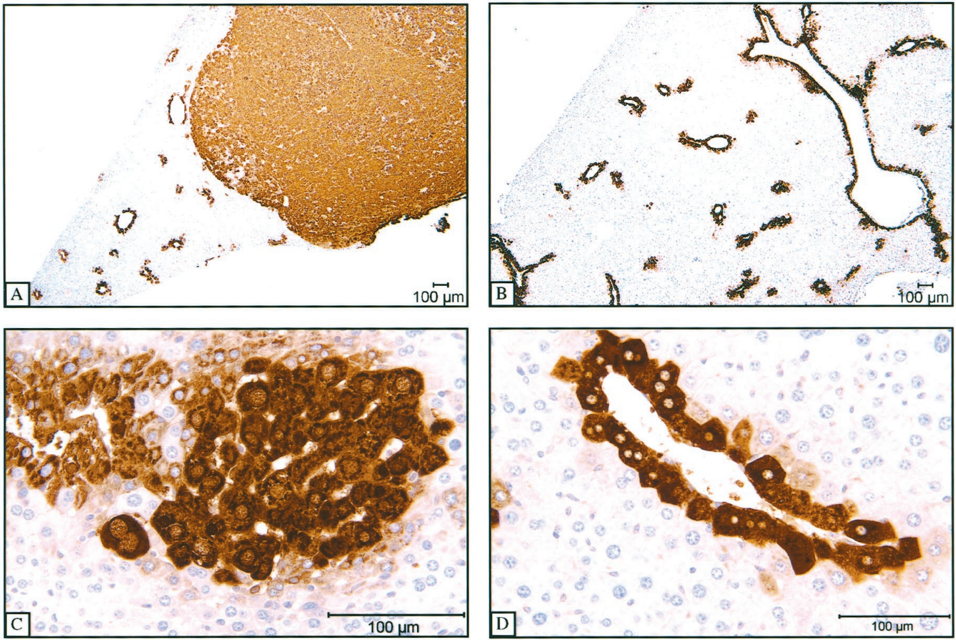
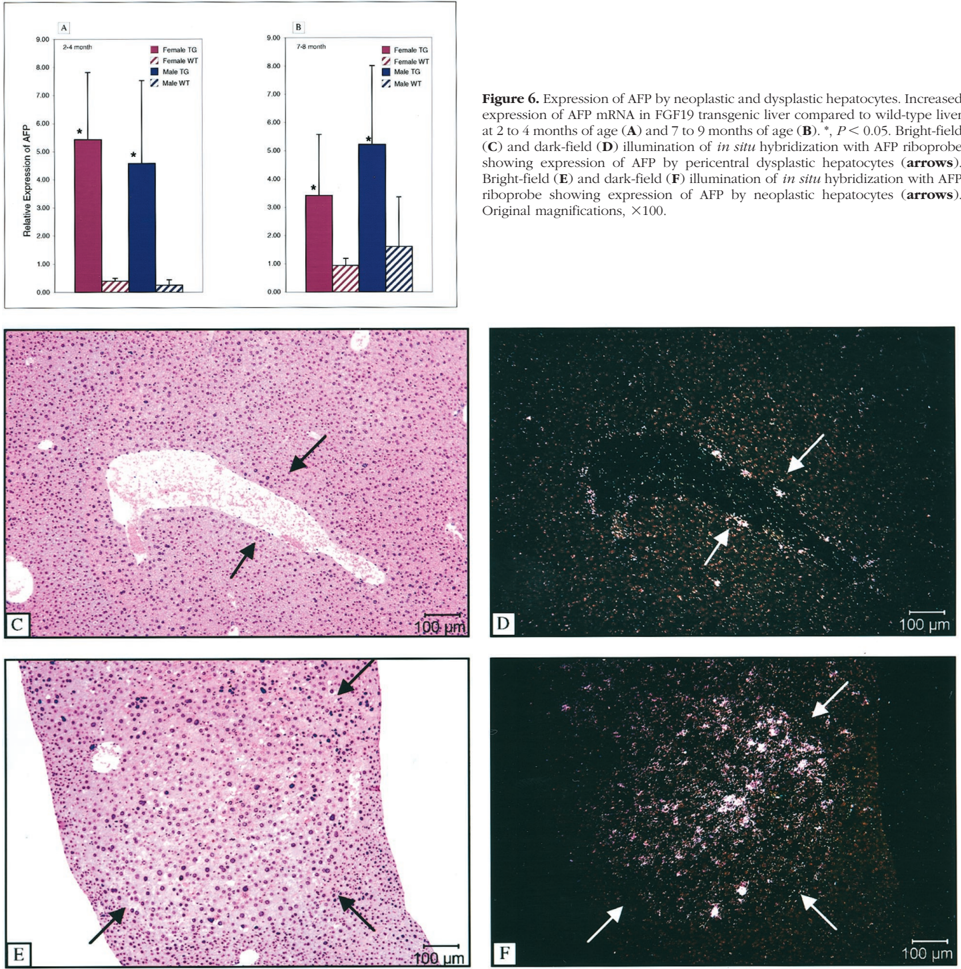
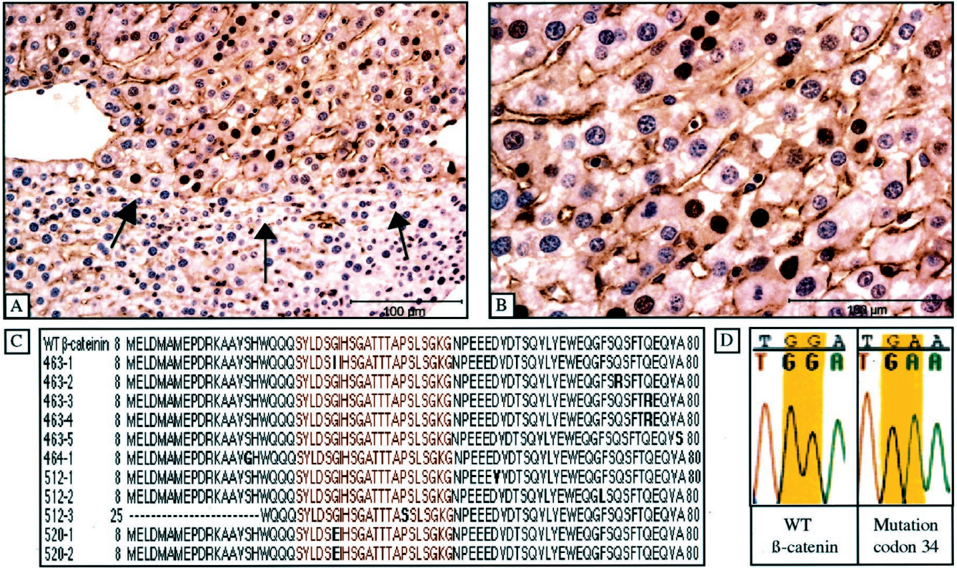
Most mouse models of hepatocellular carcinoma have expressed growth factors and oncogenes under the control of a liver-specific promoter. In contrast, we describe here the formation of liver tumors in transgenic mice overexpressing human fibroblast growth factor 19 (FGF19) in skeletal muscle. FGF19 transgenic mice had elevated hepatic alpha-fetoprotein mRNA as early as 2 months of age, and hepatocellular carcinomas were evident by 10 months of age. Increased proliferation of pericentral hepatocytes was demonstrated by 5-bromo-2'-deoxyuridine incorporation in the FGF19 transgenic mice before tumor formation and in nontransgenic mice injected with recombinant FGF19 protein. Areas of small cell dysplasia were initially evident pericentrally, and dysplastic/neoplastic foci throughout the hepatic lobule were glutamine synthetase-positive, suggestive of a pericentral origin. Consistent with chronic activation of the Wingless/Wnt pathway, 44% of the hepatocellular tumors from FGF19 transgenic mice had nuclear staining for beta-catenin. Sequencing of the tumor DNA encoding beta-catenin revealed point mutations that resulted in amino acid substitutions. These findings suggest a previously unknown role for FGF19 in hepatocellular carcinomas.
Overview
The claims and statistics of this paper haven’t been checked yet.
Free: it reads the open-access text and checks the first 5 claims that cite a source we can check. Create a free account to check every claim.
Integrity signals
Registry
Cites
Statistics
Figures
Verification
Claims the paper makes
The claims and statistics of this paper haven’t been checked yet.
Free: it reads the open-access text and checks the first 5 claims that cite a source we can check. Create a free account to check every claim.
Claims other papers make about this one
Each is checked against this paper’s own text: does it say what the citing paper says it does?
The cited source says what the claim attributes to it.
In the citing paper
“However, the therapeutic potential of FGF19 has been hindered by its effect on potential occurrence of HCC, since mice expressing an FGF19 transgene developed liver tumors while tumor FGF19 hepatic mRNA expression was an independent prognostic factor for overall and disease-free survival [259,260].”
From Gut-pancreas-liver Axis as a target for treatment of NAFLD/NASH (2020) · cites this paper as [259]
The cited source says what the claim attributes to it.
In the citing paper
“Given that mice expressing a FGF19 transgene develop hepatocellular carcinomas,14 the potential risk of tumorigenicity in patients treated with FXR agonists may need to be monitored.”
From NGM282 for Treatment of Patients With Primary Biliary Cholangitis: A Multicenter, Randomized, Double‐Blind, Placebo‐Controlled Trial (2018) · cites this paper as [14]
The check wasn’t confident either way, so it gives no verdict — never disputed.
In the citing paper
“However, the therapeutic potential of FGF19 has been hindered by its effect on potential occurrence of HCC, since mice expressing an FGF19 transgene developed liver tumors while tumor FGF19 hepatic mRNA expression was an independent prognostic factor for overall and disease-free survival [259,260].”
From Gut-pancreas-liver Axis as a target for treatment of NAFLD/NASH (2020) · cites this paper as [259]
Experimental — accuracy not yet measuredIn the citing paper
“However, the therapeutic potential of FGF19 is limited by concerns about tumorigenicity, as ectopic overexpression of FGF19 in mice results in the development of hepatocellular carcinoma.14”
From NGM282 for Treatment of Patients With Primary Biliary Cholangitis: A Multicenter, Randomized, Double‐Blind, Placebo‐Controlled Trial (2018) · cites this paper as [14]
In the citing paper
“Similarly, expression of fibroblast growth factor 19 (FGF19) by skeletal muscle cells has been shown to induce hepatocellular carcinomas, which acquire somatic mutations in β-catenin (Ctnnb1).53”
From Paracrine roles of cellular senescence in promoting tumourigenesis (2018) · cites this paper as [53]
Self-check
Percentages, sums and reported differences re-computed from the paper’s own numbers.
The self-check needs the paper’s full text.
Citations
Cites
Mortality by cause for eight regions of the world: Global Burden of Disease Study
Murray, C. J., & Lopez, A. D. (1997) · The Lancet · doi:10.1016/s0140-6736(96)07493-4 · Cited by 4,043 · cited 1×
“Primary cancer of the liver, or HCC, is the third most frequent cause of death by cancer in the world.(15) Consistent with the observation that oncogenes, growth factors, or viral genes are frequently up-regulated in human HCC, it is not surprising that overexpression of these genes in the liver also causes HCC in tra…”
Backgroundβ-catenin is a target for the ubiquitin–proteasome pathway
Aberle, H., Bauer, A., Stappert, J., Kispert, A., & Kemler, R. (1997) · The EMBO Journal · doi:10.1093/emboj/16.13.3797 · Cited by 2,529
Ornitz, D. M., & Itoh, N. (2001) · Genome biology · doi:10.1186/gb-2001-2-3-reviews3005 · Cited by 2,305
Estimates of the worldwide incidence of 25 major cancers in 1990
Parkin, Pisani, P., & Ferlay, J. (1999) · International Journal of Cancer · doi:10.1002/(sici)1097-0215(19990315)80:6<827::aid-ijc6>3.0.co;2-p · Cited by 2,037
Smit, J. J. M., Schinkel, A. H., Elferink, R. P. J. O., Groen, A. K., Wagenaar, E., van Deemter, L., Mol, C. A. A. M., Ottenhoff, R., van der Lugt, N. M. T., van Roon, M. A., et al. (1993) · Cell · doi:10.1016/0092-8674(93)90380-9 · Cited by 1,456 · cited 1×
“Inflammation is also prominent in mice lacking the mdr2 gene that results in failure to transport phosphatidyl choline into the bile and inability to emulsify biliary components leading to inflammation, hepatocellular proliferation, and HCC by 18 months of age.(30) Similarly, mice lacking peroxisomal fatty acyl-CoA ox…”
BackgroundMichael, M. D., Kulkarni, R. N., Postic, C., Previs, S. F., Shulman, G. I., Magnuson, M. A., & Kahn, C. R. (2000) · Molecular Cell · doi:10.1016/s1097-2765(05)00015-8 · Cited by 1,296
Yost, C., Torres, M., Miller, J. R., Huang, E., Kimelman, D., & Moon, R. T. (1996) · Genes & Development · doi:10.1101/gad.10.12.1443 · Cited by 1,165
Somatic mutations of the β-catenin gene are frequent in mouse and human hepatocellular carcinomas
Coste, A. D. L., Romagnolo, B., Billuart, P., Renard, C.-A., Buendia, M.-A., Soubrane, O., Fabre, M., Chelly, J., Beldjord, C., Kahn, A., et al. (1998) · Proceedings of the National Academy of Sciences · doi:10.1073/pnas.95.15.8847 · Cited by 1,121
Fausto, N. (2000) · Journal of Hepatology · doi:10.1016/s0168-8278(00)80412-2 · Cited by 1,022
Distribution of methyl and ethyl adducts following alkylation with monofunctional alkylating agents
Beranek, D. T. (1990) · Mutation Research - Fundamental and Molecular Mechanisms of Mutagenesis · doi:10.1016/0027-5107(90)90173-2 · Cited by 899 · cited 2×
“For example, diethylnitrosamine induces pericentral foci of small dysplastic hepatocytes(55,56) and acts by ethylating nucleophilic sites in DNA.(57) Diethylnitrosamine-induced HCCs are also glutamine synthetase-positive suggesting that the neoplasFigure 5.”
Background
Research works printed but not linked: 1
- 54. Harada T, Enomoto A, Boorman GA, Maronpot RR: Liver and Gallbladder. Pathology of the Mouse. Edited by RR Maronpot, GA Boorman, BW Gaul. Vienna, Cache River Press, 1999, pp 119-183
Cited by
Items 101–200 of 369
Tiong, K. H., Tan, B. S., Choo, H. L., Chung, F. F., Hii, L., Tan, S. H., Khor, N. T., Wong, S. F., See, S.-J., Tan, Y.-F., et al. (2016) · Oncotarget · doi:10.18632/oncotarget.9328 · Cited by 107
Henriksson, E., & Andersen, B. (2020) · Frontiers in Endocrinology · doi:10.3389/fendo.2020.601349 · Cited by 95
Dissecting the Role of the FGF19-FGFR4 Signaling Pathway in Cancer Development and Progression
Liu, Y., Cao, M., Cai, Y., Li, X., Zhao, C., & Cui, R. (2020) · Frontiers in Cell and Developmental Biology · doi:10.3389/fcell.2020.00095 · Cited by 101
Norton, L., Fourcaudot, M. J., Abdul-Ghani, M. A., Winnier, D. A., Mehta, F. F., Jenkinson, C. P., & DeFronzo, R. A. (2011) · Diabetologia · doi:10.1007/s00125-011-2289-z · Cited by 94
“The WNT/β-catenin pathway is a major determinant of the metabolic fate of hepatocytes [9, 38–40].”
BackgroundKriegermeier, A. A., & Green, R. R. (2020) · Frontiers in Medicine · doi:10.3389/fmed.2020.00149 · Cited by 97
“However, there are concerns that FGF19 over-expression in mice lead to hepatocellular carcinoma, and concerns about a potential risk of the development of cholangiocarcinoma in cholestatic biliary diseases (149).”
BackgroundThe Wnt/β-catenin signaling pathway in liver biology and disease
Behari, J. (2010) · Expert Review of Gastroenterology & Hepatology · doi:10.1586/egh.10.74 · Cited by 88
FGF19 and FGF21: In NASH we trust
Talukdar, S., & Kharitonenkov, A. (2020) · Molecular Metabolism · doi:10.1016/j.molmet.2020.101152 · Cited by 97
miR-486-3p mediates hepatocellular carcinoma sorafenib resistance by targeting FGFR4 and EGFR
Ji, L., Lin, Z., Wan, Z., Xia, S., Shi, J., Cen, D., Cai, L., Xu, J., & Cai, X. (2020) · Cell Death and Disease · doi:10.1038/s41419-020-2413-4 · Cited by 94
Bile Acid Signaling in Metabolic and Inflammatory Diseases and Drug Development
Li, T., & Chiang, J. Y. L. (2024) · Pharmacological Reviews · doi:10.1124/pharmrev.124.000978 · Cited by 90
Ileal FGF 15 contributes to fibrosis‐associated hepatocellular carcinoma development
Uriarte, I., Latasa, M. U., Carotti, S., Fernandez‐Barrena, M. G., Garcia‐Irigoyen, O., Elizalde, M., Urtasun, R., Vespasiani‐Gentilucci, U., Morini, S., de Mingo, A., et al. (2015) · International Journal of Cancer · doi:10.1002/ijc.29287 · Cited by 88
“Previous works had shown that ectopic expression of FGF19 in mice led to spontaneous HCC development preceded by increased hepatocellular proliferation, and in enhanced DEN-induced carcinogenesis.(8,9) The FGF19 pro-carcinogenic effect was dependent on FGFR4 expression.”
BackgroundManagement of cholestatic disease in 2017
de Vries, E., & Beuers, U. (2017) · Liver International · doi:10.1111/liv.13306 · Cited by 90
Bile acid-based therapies for non-alcoholic steatohepatitis and alcoholic liver disease
Li, T., & Chiang, J. Y. L. (2020) · HepatoBiliary Surgery and Nutrition · doi:10.21037/hbsn.2019.09.03 · Cited by 91
“Studies in animal models have shown that FGF19 promote liver cancer (139-141), which raised concerns for its use in treating chronic diseases.”
BackgroundASBT(SLC10A2): A promising target for treatment of diseases and drug discovery
Yang, N., Dong, Y., Jia, G., Fan, S., Li, S.-Z., Yang, S., & Li, Y. (2020) · Biomedicine & Pharmacotherapy · doi:10.1016/j.biopha.2020.110835 · Cited by 87
Wang, H., Xiao, Y., Fu, L., Zhao, H., Zhang, Y., Wan, X., Qin, Y., Huang, Y., Gao, H., & Li, X. (2010) · BMC Biotechnology · doi:10.1186/1472-6750-10-14 · Cited by 92
“FGF21 is free of the proliferative and tumorigenic effects [5-7] that are documented for other members of the FGF family [3,8,9].”
BackgroundFibroblast growth factor signaling in liver carcinogenesis
Sandhu, D. S., Baichoo, E., & Roberts, L. R. (2014) · Hepatology · doi:10.1002/hep.26679 · Cited by 83
“Ectopic expression of FGF19 in mice also promoted hepatocellular proliferation, dysplastic changes, and liver carcinogenesis.(30) Targeting the FGF19/FGFR4 interaction using a neutralizing antibody against FGF19 inhibits hepatocarcinogenesis in mice.”
BackgroundNonsteroidal FXR Ligands: Current Status and Clinical Applications
Gege, C., Hambruch, E., Hambruch, N., Kinzel, O., & Kremoser, C. (2019) · Handbook of Experimental Pharmacology · doi:10.1007/164_2019_232 · Cited by 83
Chan, S. L., Schüler, M., Kang, Y., Yen, C., Edeline, J., Choo, S. P., Lin, C., Okusaka, T., Weiss, K.-H., Macarulla, T. M., et al. (2022) · Journal of Experimental & Clinical Cancer Research · doi:10.1186/s13046-022-02383-5 · Cited by 84
“In addition, FGF19 expressed by nontumor cells has been shown to induce hepatocyte proliferation and dysplastic changes throughout the hepatic lobule ultimately resulting in HCC [20].”
BackgroundDostálová, I., Haluzíková, D., & Haluzík, M. (2009) · Physiological Research · doi:10.33549/physiolres.931610 · Cited by 85
Endocrine Fibroblast Growth Factor FGF19 Promotes Prostate Cancer Progression
Feng, S., Dakhova, O., Creighton, C. J., & Ittmann, M. (2013) · Cancer Research · doi:10.1158/0008-5472.can-12-4108 · Cited by 79
Fibrosis in Chronic Liver Disease: An Update on Diagnostic and Treatment Modalities
Manka, P., Zeller, A., & Syn, W.-K. (2019) · Drugs · doi:10.1007/s40265-019-01126-9 · Cited by 76
Targeting FGF19/FGFR4 Pathway: A Novel Therapeutic Strategy for Hepatocellular Carcinoma
Repana, D., & Ross, P. J. (2015) · Diseases · doi:10.3390/diseases3040294 · Cited by 81
“FGF19 in skeletal muscle develop multiple hepatocellular carcinomas early in their life, usually by 10–12 months, whilst other tissues are not affected [31].”
BackgroundBadman, M. K., Chen, J., Desai, S., Vaidya, S., Neelakantham, S., Zhang, J., Gan, L., Danis, K., Laffitte, B., & Klickstein, L. B. (2020) · Clinical Pharmacology in Drug Development · doi:10.1002/cpdd.762 · Cited by 75
Pai, R., French, D., Ma, N., Hotzel, K., Plise, E., Salphati, L., Setchell, K. D. R., Ware, J., Lauriault, V., Schutt, L., et al. (2012) · Toxicological Sciences · doi:10.1093/toxsci/kfs011 · Cited by 76
“Interestingly, a similar observation in gender effects was reported in the incidence of hepatocellular carcinoma in FGF19 transgenic mice; however, the reason for this is unclear (Nicholes et al., 2002).”
BackgroundSelf-citationLin, B. C., & Desnoyers, L. (2012) · Advances in experimental medicine and biology · doi:10.1007/978-1-4614-0887-1_12 · Cited by 80
Wang, Y., Liu, D., Zhang, T., & Xia, L. (2021) · Cancers · doi:10.3390/cancers13061360 · Cited by 80
“These results support the direct effect of FGF19 on HCC initiation [37].”
ResultDevelopments in bile salt based therapies: A critical overview
Donkers, J. M., Abbing, R. L. P. R., & van de Graaf, S. F. J. (2018) · Biochemical Pharmacology · doi:10.1016/j.bcp.2018.12.018 · Cited by 80
Sonne, D. P., Hansen, M., & Knop, F. K. (2014) · European Journal of Endocrinology · doi:10.1530/eje-14-0154 · Cited by 75
Serum FGF-21 Levels in Type 2 Diabetic Patients
Cheng, X., Zhu, B., Jiang, F., & Fan, H. (2011) · Endocrine Research · doi:10.3109/07435800.2011.558550 · Cited by 73
“However, FGF-21 is free of the proliferative and tumorigenic effects (8,9) that were documented for FGF-19 (10).”
BackgroundPoh, W., Wong, W., Ong, H., Aung, M. O., Lim, S. G., Chua, B. T., & Ho, H. K. (2012) · Molecular Cancer · doi:10.1186/1476-4598-11-14 · Cited by 80
“On the other hand, FGFR4 has been proposed as a novel RTK target for HCC based on studies where FGF19-mediated FGFR4 activation resulted in hepatocyte proliferation and HCC formation [11,28].”
BackgroundFibroblast growth factor 21, the endocrine FGF pathway and novel treatments for metabolic syndrome
Zhang, J., & Li, Y. (2013) · Drug Discovery Today · doi:10.1016/j.drudis.2013.10.021 · Cited by 78
ST6GAL1 Is a Novel Serum Biomarker for Lenvatinib-Susceptible FGF19-Driven Hepatocellular Carcinoma
Myojin, Y., Kodama, T., Maesaka, K., Motooka, D., Sato, Y., Tanaka, S., Abe, Y., Ohkawa, K., Mita, E., Hayashi, Y., et al. (2021) · Clinical Cancer Research · doi:10.1158/1078-0432.ccr-20-3382 · Cited by 76
Jin, L., Yang, R., Geng, L., & Xu, A. (2023) · Annual Review of Pharmacology and Toxicology · doi:10.1146/annurev-pharmtox-032322-093904 · Cited by 71
Babaknejad, N., Nayeri, H., Hemmati, R., Bahrami, S., & Esmaillzadeh, A. (2018) · Hormone and Metabolic Research · doi:10.1055/a-0623-2909 · Cited by 71
“Proliferative role of FGF19 is duo to FGFR4 activation so that FGF19-like molecules with reduced FGFR4 activity could have more metabolic benefits without unwanted side effects [27, 101, 102].”
BackgroundJones, S. A. (2012) · Advances in experimental medicine and biology · doi:10.1007/978-1-4614-0887-1_11 · Cited by 79
FGFR4 Role in Epithelial-Mesenchymal Transition and Its Therapeutic Value in Colorectal Cancer
Peláez‐García, A., Barderas, R., Torres, S., Hernández-Varas, P., Teixidó, J., Bonilla, F., de Herreros, A. G., & Casal, J. I. (2013) · PLoS ONE · doi:10.1371/journal.pone.0063695 · Cited by 74
“FGF19-FGFR4 has been proposed to play a role in the induction of hepatocyte proliferation and carcinogenesis [26].”
BackgroundSong, L., Wang, L., Hou, Y., Zhou, J., Chuchu, C., Ye, X., Dong, W., Gao, H. F., Liu, Y., Qiao, G., et al. (2022) · Hepatology · doi:10.1002/hep.32404 · Cited by 68
“[16] However, in experimental mouse models, chronic, excessive FGF19 promotes HCC development.[17] In this study, we identify FGF4, a factor not known to play a role in the liver, as a potentially important regulator of hepatic metabolic and cellular homeostasis in both mouse models and human patients.”
BackgroundTargeting the FGF19–FGFR4 pathway for cholestatic, metabolic, and cancerous diseases
Li, X., Lu, W., Kharitonenkov, A., & Luo, Y. (2024) · Journal of Internal Medicine · doi:10.1111/joim.13767 · Cited by 70
“2), intrahepatic cholangiocarcinoma (ICC), and gall-bladder carcinoma (GBC) [35–37].”
BackgroundGut-pancreas-liver Axis as a target for treatment of NAFLD/NASH
Svegliati-Baroni, G., Patrício, B., Lioci, G., Macedo, M. P., & Gastaldelli, A. (2020) · International Journal of Molecular Sciences · doi:10.3390/ijms21165820 · Cited by 66
Obeticholic acid for the treatment of primary biliary cirrhosis
Trivedi, P. J., Hirschfield, G. M., & Gershwin, M. E. (2016) · Expert Review of Clinical Pharmacology · doi:10.1586/17512433.2015.1092381 · Cited by 63
“For instance, the development of HCC in aged Fxr null mice can be prevented by re-expressing a constitutive active form of FXR in the intestine; [101] conversely, FGF19 transgenic mice are seen to develop spontaneous HCC,[102] and FGF19 amplifications have been implicated in driving hepatic carcinogenesis in man.”
BackgroundCardiac actions of fibroblast growth factor 23
Faul, C. (2016) · Bone · doi:10.1016/j.bone.2016.10.001 · Cited by 69
Ho, H. K., Yeo, A. H. L., Kang, T. S., & Chua, B. T. (2013) · Drug Discovery Today · doi:10.1016/j.drudis.2013.07.021 · Cited by 67
DePaoli, A. M., Zhou, M., Kaplan, D. D., Hunt, S. C., Adams, T. D., Learned, R. M., Tian, H., & Ling, L. (2019) · Diabetes · doi:10.2337/db18-1305 · Cited by 66
“Despite the impressive metabolic efficacy demonstrated in preclinical models, as shown in this report and previously (38,39), safety and ethical concerns have prevented researchers from testing FGF19 in the clinic, since mice expressing an FGF19 transgene develop hepatocellular carcinomas (16).”
BackgroundResultMechanisms of enterohepatic fibroblast growth factor 15/19 signaling in health and disease
Jahn, D., Rau, M., Hermanns, H. M., & Geier, A. (2015) · Cytokine & Growth Factor Reviews · doi:10.1016/j.cytogfr.2015.07.016 · Cited by 69
Park, J. W., Kim, J. H., Kim, S. E., Jung, J. H., Jang, M. K., Park, S. H., Lee, M. S., Kim, H. S., Suk, K. T., & Kim, D. J. (2022) · Biomedicines · doi:10.3390/biomedicines10061288 · Cited by 68
Fibroblast growth factors in cancer: therapeutic possibilities
Jeffers, M., LaRochelle, W. J., & Lichenstein, H. S. (2002) · Expert Opinion on Therapeutic Targets · doi:10.1517/14728222.6.4.469 · Cited by 66
“Moreover, overexpression of mitogenic FGFs in transgenic animals induces hyperplasia as well as benign and malignant tumours [16,31-36].”
BackgroundThe therapeutic landscape of hepatocellular carcinoma
Gallage, S., Beccaria, M. G., Szydlowska, M., Rahbari, M., Mohr, R. U., Tacke, F., & Heikenwälder, M. F. (2021) · Med · doi:10.1016/j.medj.2021.03.002 · Cited by 64
Nakamura, I., Zakharia, K., Banini, B. A., Mikhail, D. S., Kim, T. H., Yang, J. D., Moser, C. D., Shaleh, H. M., Thornburgh, S. R., Walters, I. B., et al. (2014) · PLoS ONE · doi:10.1371/journal.pone.0092273 · Cited by 63
“Growth factors elevated in liver fibrosis and cirrhosis that have been implicated in carcinogenesis include transforming growth factor alpha (TGF-a), epidermal growth factor (EGF), insulin-like growth factor 1 (IGF1), vascular endothelial growth factor (VEGF), fibroblast growth factor (FGF) and platelet-derived growth…”
BackgroundStruik, D., Dommerholt, M. B., & Jonker, J. W. (2019) · Current Opinion in Lipidology · doi:10.1097/mol.0000000000000599 · Cited by 61
Personalized therapy for hepatocellular carcinoma: Where are we now?
Chan, S. L., Wong, A. M., Lee, K., Wong, N., & Chan, A. K. C. (2016) · Cancer Treatment Reviews · doi:10.1016/j.ctrv.2016.02.008 · Cited by 61
Huynh, H. T., Chow, P. K. H., Tai, W. M. D., Choo, S. P., Chung, A. Y. F., Ong, H. S., Soo, K. C., Ong, R., Linnartz, R., & Shi, M. M. (2011) · Journal of Hepatology · doi:10.1016/j.jhep.2011.09.017 · Cited by 60
“Ectopic expression of FGF19 in mice promoted hepatocyte proliferation, hepatocellular dysplasia and neoplasia [9].”
BackgroundCui, G., Martin, R. C. G., Jin, H., Liu, X., Pandit, H., Zhao, H., Cai, L., Zhang, P., Li, W., & Li, Y. (2018) · Journal of Experimental & Clinical Cancer Research · doi:10.1186/s13046-018-0781-8 · Cited by 61
Exploring liver cancer biology through functional genetic screens
Wang, C., Cao, Y., Yang, C. G., Bernards, R., & Qin, W. (2021) · Nature Reviews Gastroenterology & Hepatology · doi:10.1038/s41575-021-00465-x · Cited by 60
Putative roles of hepatitis B x antigen in the pathogenesis of chronic liver disease
Feitelson, M. A., Reis, H. M. G. P. V., Şatıroğlu-Tufan, N. L., Sun, B. S., Pan, J., & Lian, Z. (2009) · Cancer Letters · doi:10.1016/j.canlet.2008.12.010 · Cited by 67
“Up-regulated expression of FGFs is associated with the development of HCC in FGF transgenic mice [113,114], in c-myc/TGFα transgenic mice, and in HBxAg transgenic mice [115], suggesting that the latter may promote the over expression of FGF and/or FGF inducible genes.”
BackgroundHormone-like fibroblast growth factors and metabolic regulation
Long, Y. C., & Kharitonenkov, A. (2011) · Biochimica et Biophysica Acta (BBA) - Molecular Basis of Disease · doi:10.1016/j.bbadis.2011.04.002 · Cited by 64
“However, a critical pharmacological feature that differentiates both factors is that FGF21 is nonmitogenic [5] and may even delay tumor formation [20], whereas FGF19 transgenic mice develop hepatocellular carcinomas [23].”
BackgroundFibroblast growth factor 15/19 expression, regulation, and function: An overview
Guthrie, G. J., Vonderohe, C. E., & Burrin, D. G. (2022) · Molecular and Cellular Endocrinology · doi:10.1016/j.mce.2022.111617 · Cited by 59
Gadaleta, R. M., Scialpi, N., Peres, C., Cariello, M., Ko, B., Luo, J., Porru, E., Roda, A., Sabbà, C., & Moschetta, A. (2018) · Scientific Reports · doi:10.1038/s41598-018-35496-z · Cited by 54
HMGA1 induces FGF19 to drive pancreatic carcinogenesis and stroma formation
Chia, L., Wang, B., Kim, J., Luo, L., Shuai, S., Herrera, I., Chen, S. Y., Li, L., Xian, L., Huso, T. H., et al. (2023) · Journal of Clinical Investigation · doi:10.1172/jci151601 · Cited by 57
“In mice, FGF15 is required for embryogenesis and liver regeneration (92), and FGF15 induces hepatocellular carcinoma (HCC) when overexpressed in skeletal muscle, presumably through paracrine effects (71).”
Is Fibroblast Growth Factor Receptor 4 a Suitable Target of Cancer Therapy?
Heinzle, C. F., Erdem, Z., Paur, J., Grasl‐Kraupp, B., Holzmann, K., Grusch, M., Berger, W., & Marian, B. (2014) · Current Pharmaceutical Design · doi:10.2174/13816128113199990594 · Cited by 64
“Mice transgenic for FGF19 expression in the muscle developed HCC based on stimulation of hepatocyte proliferation via FGFR4 [126] and in human HCC FGF19 expression correlated with tumor progression [125, 128].”
BackgroundLiver cancer heterogeneity modeled by in situ genome editing of hepatocytes
Tang, M., Zhao, Y., Zhao, J., Wei, S., Liu, M., Zheng, N., Geng, D., Han, S., Zhang, Y., Zhong, G., et al. (2022) · Science Advances · doi:10.1126/sciadv.abn5683 · Cited by 58
“While muscular transgenic expression of FGF19 was reported to cause liver tumors with Ctnnb1 mutation ( 47 ), the absence of Ctnnb1 hotspot mutations in MYC+F/C tumors suggested an insufficient role of FGF19 .”
Targeting Fibroblast Growth Factor Receptor Signaling in Hepatocellular Carcinoma
Cheng, A., Shen, Y., & Zhu, A. X. (2011) · Oncology · doi:10.1159/000335472 · Cited by 56
Targeting fibroblast-growth-factor-receptor-dependent signaling for cancer therapy
Heinzle, C. F., Sutterlüty, H., Grusch, M., Grasl‐Kraupp, B., Berger, W., & Marian, B. (2011) · Expert Opinion on Therapeutic Targets · doi:10.1517/14728222.2011.566217 · Cited by 58
“4 Hormone-like FGFs and ancer Transgenic mice over-expressing FGF15/19 are prone to develop hepatocellular cancers due to the high levels of circulating FGF [157].”
BackgroundChen, J., Du, F., Dang, Y., Li, X., Qian, M., Feng, W., Qiao, C., Fan, D., Nie, Y., Wu, K., et al. (2019) · Hepatology · doi:10.1002/hep.30951 · Cited by 55
“Ectopic expression of FGF19 in mice drives HCC carcinogenesis,(15) and FGFR4 knockdown by a blocking anti-FGFR4 monoclonal antibody significantly reduced HCC tumorigenesis”
BackgroundRecent advances in understanding and managing cholestasis
Wagner, M., & Trauner, M. (2016) · F1000Research · doi:10.12688/f1000research.8012.1 · Cited by 55
The therapeutic landscape of non‐alcoholic steatohepatitis
Perazzo, H., & Dufour, J. (2017) · Liver International · doi:10.1111/liv.13270 · Cited by 49
MASLD treatment—a shift in the paradigm is imminent
Machado, M. V. (2023) · Frontiers in Medicine · doi:10.3389/fmed.2023.1316284 · Cited by 51
Roles of the fibroblast growth factor signal transduction system in tissue injury repair
Chen, K., Rao, Z., Dong, S., Chen, Y., Wang, X., Luo, Y., Gong, F., & Li, X. (2022) · Burns & Trauma · doi:10.1093/burnst/tkac005 · Cited by 53
Kong, B., & Guo, G. L. (2014) · PLoS ONE · doi:10.1371/journal.pone.0085890 · Cited by 50
“Moreover, FGF15/19 has been shown to promote liver tumorigenesis [6], energy metabolism [7], insulin sensitivity [8], and liver regeneration [9], but the underlying mechanisms have not been fully clarified.”
BackgroundResident hepatocyte fibroblast growth factor receptor 4 limits hepatocarcinogenesis
Huang, X., Yang, C., Jin, C., Luo, Y., Wang, F., & McKeehan, W. L. (2009) · Molecular Carcinogenesis · doi:10.1002/mc.20494 · Cited by 48
“to cause hepatoma-like liver lesions [29].”
BackgroundInfluentialFairhurst, R. A., Knöpfel, T. F., Leblanc, C., Buschmann, N., Gaul, C., Blank, J., Galuba, I., Trappe, J., Zou, C., Voshol, J., et al. (2017) · MedChemComm · doi:10.1039/c7md00213k · Cited by 52
PRMT1-Dependent Macrophage IL-6 Production Is Required for Alcohol-Induced HCC Progression
Zhao, J., O’Neil, M. F., Vittal, A., Weinman, S. A., & Tikhanovich, I. (2018) · Gene Expression · doi:10.3727/105221618x15372014086197 · Cited by 50
González-Meljem, J. M., & Martínez-Barberá, J. P. (2021) · Cellular and Molecular Life Sciences · doi:10.1007/s00018-021-03798-7 · Cited by 54
“FGF signalling has also been implicated in cell non-autonomous tumourigenesis in the liver, as virally-delivered FGF19 or skeletal muscle-derived FGF19 were shown to be required for the induction of hepatocellular carcinomas in mice [128, 129].”
BackgroundDark and bright side of targeting fibroblast growth factor receptor 4 in the liver
Gadaleta, R. M., & Moschetta, A. (2021) · Journal of Hepatology · doi:10.1016/j.jhep.2021.07.029 · Cited by 48
Li, Y., Zhang, W., Doughtie, A., Cui, G., Li, X., Pandit, H., Yang, Y., Li, S., & Martin, R. C. G. (2016) · Oncotarget · doi:10.18632/oncotarget.10750 · Cited by 49
“Recently, it has been demonstrated that overexpression of human FGF19 and its murine ortholog (FGF15) lead to dysplasia and HCC [16, 17].”
BackgroundThe Role of Fibroblast Growth Factor 19 in Hepatocellular Carcinoma
Chen, Z., Jiang, L., Liang, L., Koral, K., Zhang, Q., Zhao, L., Lu, S., & Tao, J. (2021) · American Journal Of Pathology · doi:10.1016/j.ajpath.2021.04.014 · Cited by 47
“Once the genes of interest are found, then the cBioPortal is a convenient tool to check their SGA co-occurrence with FGF19.”
BackgroundInfluentialMellor, H. R. (2014) · Liver International · doi:10.1111/liv.12462 · Cited by 45
“FGF19 clearly has mitogenic potential, as transgenic mice overexpressing FGF19 in skeletal muscle (FGF19-mice) have been observed to develop HCC (11).”
BackgroundMetabolic roles of endocrine fibroblast growth factors
Fernandes-Freitas, I., & Owen, B. M. (2015) · Current Opinion in Pharmacology · doi:10.1016/j.coph.2015.09.014 · Cited by 50
FGF19 promotes progression of prostate cancer
Nagamatsu, H., Teishima, J., Goto, K., Shikuma, H., Kitano, H., Shoji, K., Inoue, S., & Matsubara, A. (2015) · The Prostate · doi:10.1002/pros.22994 · Cited by 46
Molecular elements in FGF19 and FGF21 defining KLB/FGFR activity and specificity
Agrawal, A., Parlee, S. D., Pérez–Tilve, D., Li, P., Pan, J. H., Mroz, P. A., Hansen, A. M. K., Andersen, B., Finan, B., Kharitonenkov, A., et al. (2018) · Molecular Metabolism · doi:10.1016/j.molmet.2018.05.003 · Cited by 47
“However, FGF19 is a potent inducer of hepatocellular carcinomas in mice [12], whereas FGF21 is not [13,14].”
BackgroundAssociation between Circulating Fibroblast Growth Factor 21 and Aggressiveness in Thyroid Cancer
Kang, Y. E., Kim, J. T., Lim, M. A., Oh, C., Liu, L., Jung, S., Won, H.-R., Lee, K.-M., Chang, J. W., Yi, H., et al. (2019) · Cancers · doi:10.3390/cancers11081154 · Cited by 47
“Moreover, although FGF19 has minimal mitogenic activity in fibroblasts in vitro, the skeletal muscles of FGF19 transgenic mice develop hepatocellular carcinoma in a manner dependent on FGFR4 expression [53,54].”
BackgroundGauglhofer, C., Paur, J., Schrottmaier, W. C., Wingelhofer, B., Huber, D., Naegelen, I., Pirker, C., Mohr, T. T., Heinzle, C. F., Holzmann, K., et al. (2014) · Carcinogenesis · doi:10.1093/carcin/bgu151 · Cited by 47
Lian, Z., Liu, J., Li, L., Li, X., Şatıroğlu-Tufan, N. L., Clayton, M. M., Wu, M., Wang, H., Arbuthnot, P. B., Kew, M. C., et al. (2003) · Neoplasia · doi:10.1016/s1476-5586(03)80055-6 · Cited by 45
“Interestingly, there is a recent report showing that mice transgenic for fibroblast growth factor develop HCC [46], suggesting that gene amplification in this region may have functional consequences in tumor development.”
BackgroundZhang, J., & Li, Y. (2015) · Seminars in Cell and Developmental Biology · doi:10.1016/j.semcdb.2015.09.007 · Cited by 45
Novel bile acid therapeutics for the treatment of chronic liver diseases
Hegade, V. S., Speight, R. A., Etherington, R. E., & Jones, D. E. J. (2016) · Therapeutic Advances in Gastroenterology · doi:10.1177/1756283x16630712 · Cited by 44
Role of the fibroblast growth factor 19 in the skeletal system
Chen, H., Li, J., Zhang, D., Zhou, X., & Xie, J. (2020) · Life Sciences · doi:10.1016/j.lfs.2020.118804 · Cited by 45
Matye, D. J., Wang, H., Luo, W., Sharp, R. R., Chen, C., Gu, L., Jones, K. L., Ding, W., Friedman, J. E., & Li, T. (2021) · Cellular and Molecular Gastroenterology and Hepatology · doi:10.1016/j.jcmgh.2021.04.013 · Cited by 47
“However, chronic FGF19 exposure at high levels caused liver cancer in experimental models.(8) Amplified FGF19 signaling has also been reported in human hepatocellular carcinoma.”
BackgroundGe, H., Baribault, H., Vonderfecht, S., Lemon, B., Weiszmann, J., Gardner, J., Lee, K. J., Gupte, J., Mookherjee, P., Wang, M., et al. (2012) · PLoS ONE · doi:10.1371/journal.pone.0033603 · Cited by 44
“Besides the ability to regulate glucose metabolism, FGF19 has also been shown to induce hepatocyte proliferation mediated through the activation of liver expressed FGFR4 [24,22,26].”
BackgroundMethodResultInfluentialQuantitative liver proteomics identifies FGF19 targets that couple metabolism and proliferation
Massafra, V., Milona, A., Vos, H. R., Burgering, B. M. T., & van Mil, S. W. C. (2017) · PLoS ONE · doi:10.1371/journal.pone.0171185 · Cited by 45
Izaguirre, M., Gil, M. J., Monreal, I., Montecucco, F., Frühbeck, G., & Catalán, V. (2017) · Current Diabetes Reports · doi:10.1007/s11892-017-0866-3 · Cited by 44
The Role of FGF19 and MALRD1 in Enterohepatic Bile Acid Signaling
Wang, L. X., Frey, M. R., & Kohli, R. (2022) · Frontiers in Endocrinology · doi:10.3389/fendo.2021.799648 · Cited by 45
“Administration of FGF19 led to increases in hepatocellular proliferation which preceded tumor development (75).”
BackgroundIL-1β inhibits β-Klotho expression and FGF19 signaling in hepatocytes
Zhao, Y., Meng, C., Wang, Y., Huang, H., Liu, W., Zhang, J., Zhao, H., Feng, B., Leung, P. S., & Xia, Y. Y. (2015) · American Journal of Physiology-Endocrinology and Metabolism · doi:10.1152/ajpendo.00356.2015 · Cited by 46
Bile acid and nonalcoholic steatohepatitis: Molecular insights and therapeutic targets
Cheng, Z., Chen, Y., Schnabl, B., Chu, H., & Yang, L. (2023) · Journal of Advanced Research · doi:10.1016/j.jare.2023.06.009 · Cited by 41
Fibroblast Growth Factor 15/19 in Hepatocarcinogenesis
Álvarez‐Sola, G., Uriarte, I., Latasa, M. U., Urtasun, R., Bárcena‐Varela, M., Elizalde, M., Jiménez, M., Rodríguez‐Ortigosa, C. M., Corrales, F. J., Fernández‐Barrena, M. G., et al. (2017) · Digestive Diseases · doi:10.1159/000450905 · Cited by 42
Kang, H. J., Haq, F. U., Sung, C. O., Choi, J., Hong, S., Eo, S., Jeong, H. J., Shin, J., Shim, J. H., Lee, H. C., et al. (2018) · Liver Cancer · doi:10.1159/000488541 · Cited by 45
Yoshinari, K. (2019) · Biological and Pharmaceutical Bulletin · doi:10.1248/bpb.b19-00267 · Cited by 42
Futami, T., Okada, H., Kihara, R., Kawase, T., Nakayama, A., Suzuki, T., Kameda, M., Shindoh, N., Terasaka, T., Hirano, M., et al. (2016) · Molecular Cancer Therapeutics · doi:10.1158/1535-7163.mct-16-0188 · Cited by 41
“FGF19-expressing transgenicmice spontaneously develop HCC (11), and the knockout of FGFR4 shows that it is required for tumorigenesis in this FGF19-mediated HCCmodel (12).”
BackgroundWild, S. L., Elghajiji, A., Rodriguez, C. G., Weston, S. D., Burke, Z. D., & Tosh, D. (2020) · Genes · doi:10.3390/genes11101163 · Cited by 40
Liver organoid culture methods
Hu, Y., Hu, X., Luo, J. C., Huang, J., Sun, Y., Li, H., Qiao, Y., Wu, H., Li, J., Zhou, L., et al. (2023) · Cell & Bioscience · doi:10.1186/s13578-023-01136-x · Cited by 42
“Another study showed that FGF19 induced hepatocellular carcinoma although it promoted hepatocyte proliferation in the early stage [128].”
BackgroundCurrent and new pharmacotherapy options for non-alcoholic steatohepatitis
Sumida, Y., Yoneda, M., Ogawa, Y., Yoneda, M., Okanoue, T., & Nakajima, A. (2020) · Expert Opinion on Pharmacotherapy · doi:10.1080/14656566.2020.1744564 · Cited by 38
“Worryingly, ectopic overexpression of FGF19 promotes HCC development in mice [53].”
BackgroundCurrent and Future Treatments in the Fight against Non-Alcoholic Fatty Liver Disease
Smeuninx, B., Boslem, E., & Febbraio, M. A. (2020) · Cancers · doi:10.3390/cancers12071714 · Cited by 39
“Rodent studies have explored the therapeutic potential of FGF19, but these have been hindered by its hepatocarcinogenic properties [102].”
BackgroundSchmidt, B. H., Wei, L., DePeralta, D. K., Hoshida, Y., Tan, P. S., Sun, X., Sventek, J. P., Lanuti, M. D., Tanabe, K. K., & Fuchs, B. C. (2015) · International Journal of Cancer · doi:10.1002/ijc.29893 · Cited by 39
“Transgenic mice that overexpress FGF19 develop HCC like lesions that produce AFP.(26,27) When these transgenic mice are cross-bred with FGFR4 T u or M ar ke rs an d Si gn at u es Schmidt et al.”
Background
Metadata
- Authors
- Nicholes, K., Guillet, S., Tomlinson, E., Hillan, K., Wright, B., Frantz, G. D., Pham, T. A., Dillard-Telm, L., Tsai, S. P., Stephan, J.-P., Stinson, J., Stewart, T., & French, D. M.
- Affiliations
- Genentech (US)
- ORCID
- Tsai, Siao Ping
- Venue
- The American Journal of Pathology
- Publisher
- Elsevier BV
- Published
- 2002-06
- Volume
- 160
- Issue
- 6
- Pages
- 2295-2307
- ISSN
- 0002-9440 (ISSN-L)
- PMC
- PMC1850847
- OpenAlex
- W1539520316
- Semantic Scholar
- 7629d8223dcfa70684829195889029225177dc31
- Cited by
- 359
- References
- 77
- Citations by year
- 2026: 7 · 2025: 9 · 2024: 18 · 2023: 14 · 2022: 21 · 2021: 24 · 2020: 30 · 2019: 29 · 2018: 29 · 2017: 22 · 2016: 18 · 2015: 29 · 2014: 16 · 2013: 14 · 2012: 24
- FWCI
- 1.39
- Type
- journal article
- Language
- en
- Open access
- green
- www.ncbi.nlm.nih.gov
- Licence
- www.elsevier.com/tdm/userlicense/1.0/ (tdm)
- Locations
- American Journal Of Pathology (publishedVersion)
- PubMed Central (publishedVersion)
- PubMed (publishedVersion)
- Topics
- Life Sciences › Biochemistry, Genetics and Molecular Biology › Molecular Biology › Fibroblast Growth Factor Research
- Health Sciences › Medicine › Hepatology › Hepatocellular Carcinoma Treatment and Prognosis
- Health Sciences › Medicine › Hepatology › Liver physiology and pathology
- Keywords
- hepatocellular carcinoma, FGF19, transgenic mice, alpha-fetoprotein, hepatocyte proliferation, glutamine synthetase, β-catenin, Wnt signaling, CTNNB1 mutation, tumor origin
- MeSH terms
- Amino Acid Sequence, Animals, Bromodeoxyuridine, Cell Division, Cytoskeletal Proteins, Disease Models, Animal, DNA, Neoplasm, Enzyme-Linked Immunosorbent Assay, Fibroblast Growth Factors, Humans, Immunohistochemistry, Liver, Liver Neoplasms, Experimental, Mice, Transgenic, Molecular Sequence Data, Mutation, Proto-Oncogene Proteins, Recombinant Proteins, Trans-Activators, Receptors, Fibroblast Growth Factor, Muscle, Skeletal, Amino Acid Substitution, Zebrafish Proteins, Wnt Proteins, beta Catenin, Mice, Receptor, Fibroblast Growth Factor, Type 4
About these checks
Registry, retraction, Cites and statistics results are computed, not judged, with one exception: a printed reference that no index lists is read once by a model before it counts as a citation error. Claims are extracted by a model and kept only when their quote appears verbatim in the text; each cited source is then checked, with a model’s help, for whether it says what the claim relies on. Those verdicts can be wrong — read the claim’s quote and the cited source before relying on one.
Statistics and arithmetic are recomputed, not judged.
Confidence bands are shown only for fields calibrated on our annotated test set. None is calibrated yet, so no band is shown.
What counts as a claim ›How we measure confidence ›How we check this ›
Are you an author, or do you see a problem with this page? Request a review
Data sources
Bibliographic data: Semantic Scholar, OpenAlex, Crossref.
Contains information from the Semantic Scholar Academic Graph Datasets, made available under the ODC Attribution License (ODC-BY 1.0).
Semantic Scholar’s data is described in: Kinney, R., et al. (2023). The Semantic Scholar Open Data Platform. arXiv:2301.10140.
