

A Mouse Model of Hepatocellular Carcinoma
Open accessThe DOI matches its Crossref record, with a small difference in title or year; 71 of the 77 references it cites were found in a registry or an index.
Abstract
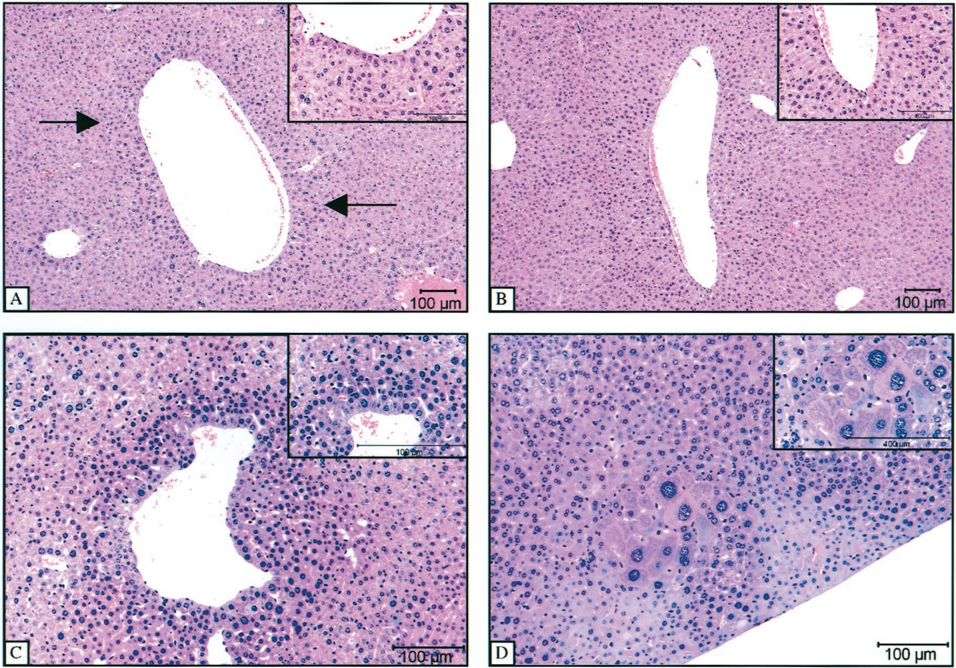
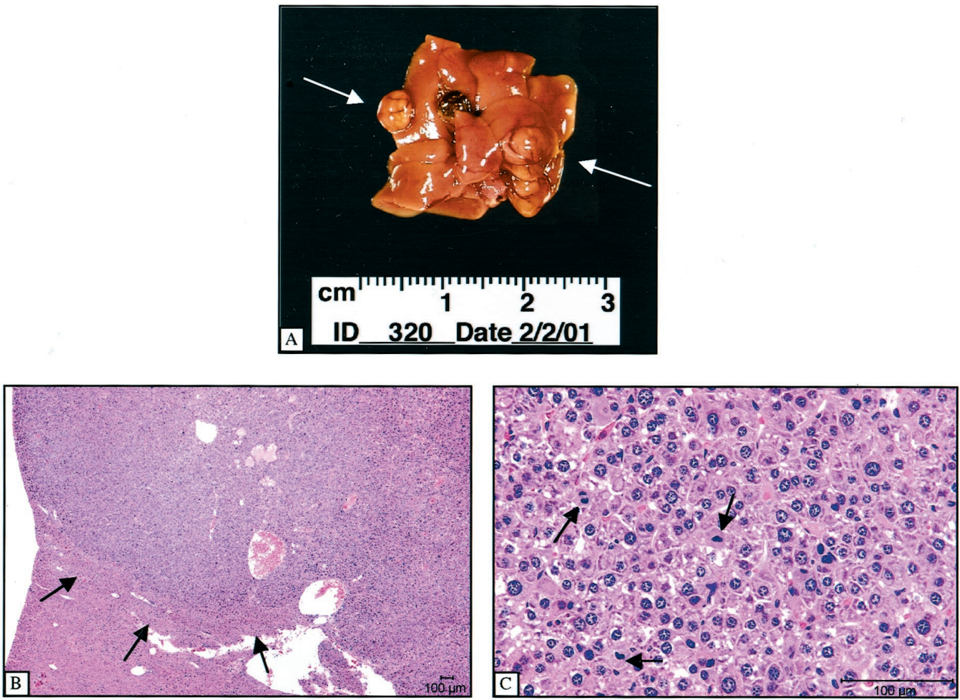
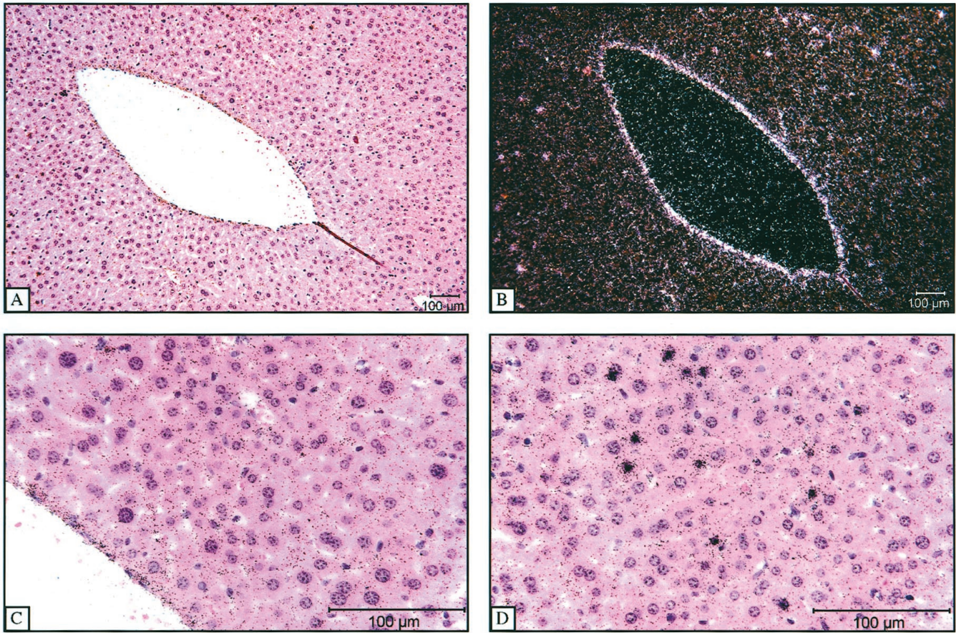
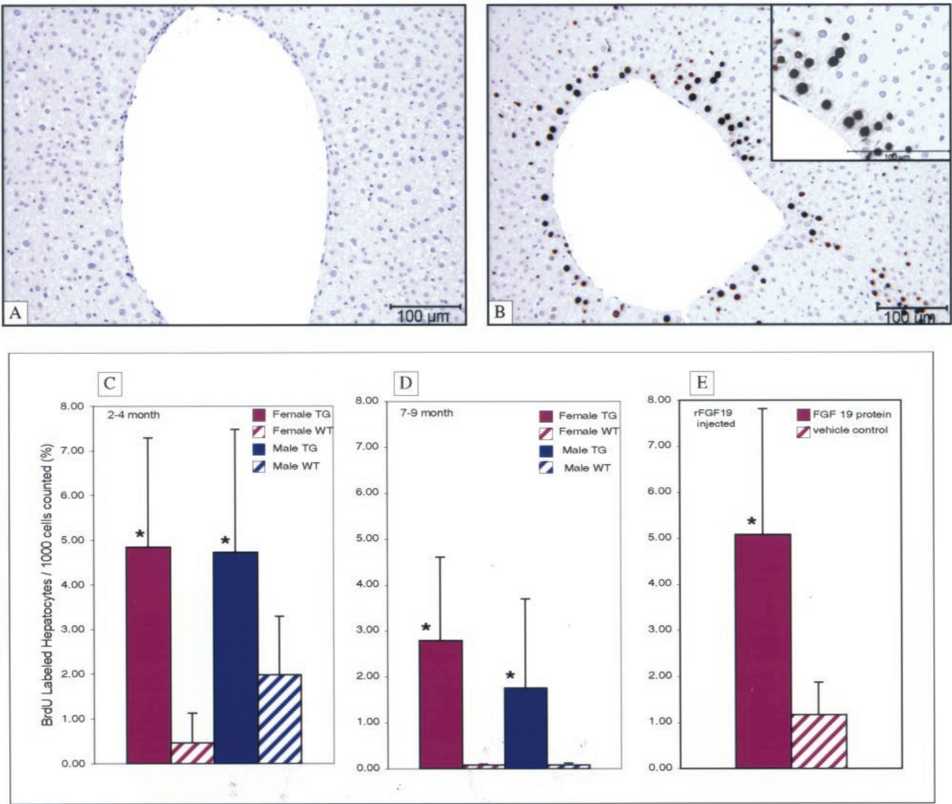
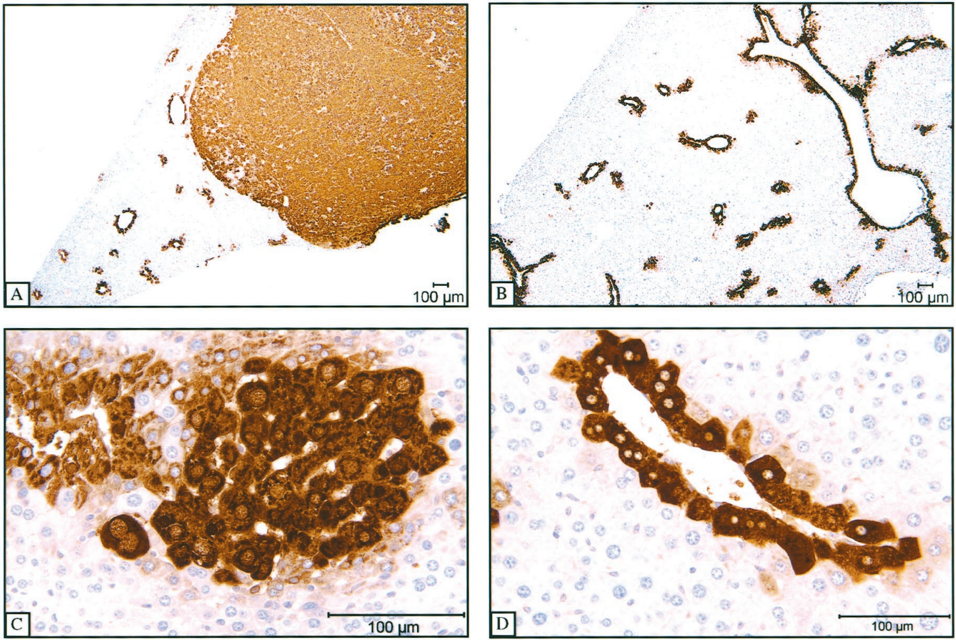
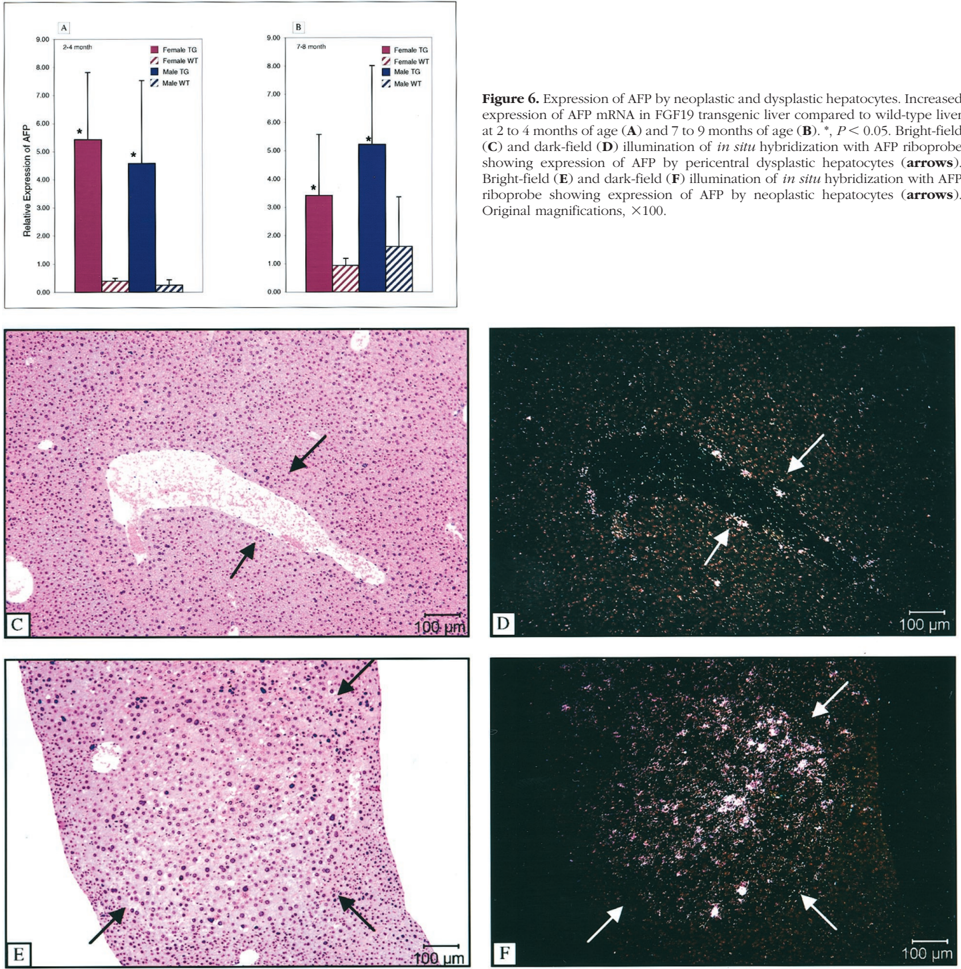
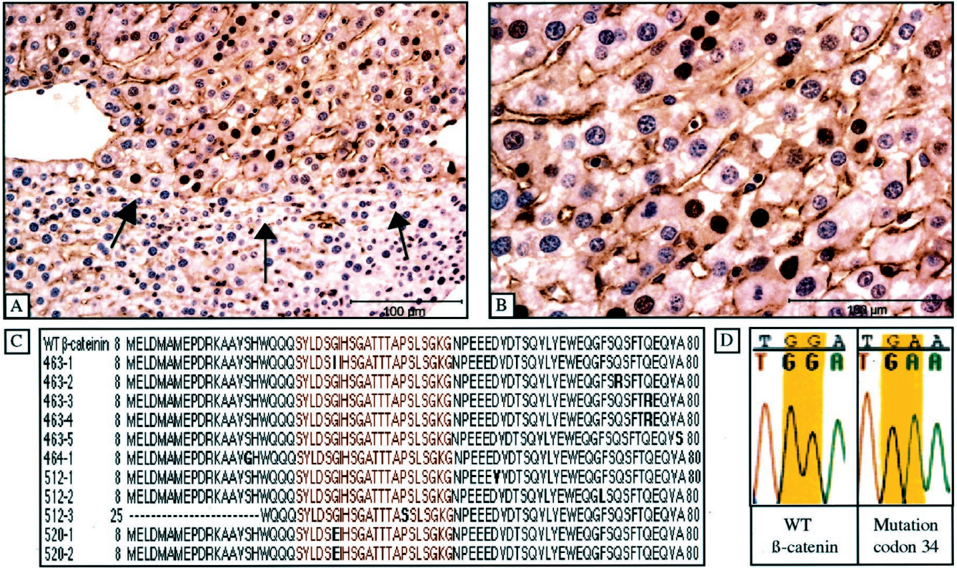
Most mouse models of hepatocellular carcinoma have expressed growth factors and oncogenes under the control of a liver-specific promoter. In contrast, we describe here the formation of liver tumors in transgenic mice overexpressing human fibroblast growth factor 19 (FGF19) in skeletal muscle. FGF19 transgenic mice had elevated hepatic alpha-fetoprotein mRNA as early as 2 months of age, and hepatocellular carcinomas were evident by 10 months of age. Increased proliferation of pericentral hepatocytes was demonstrated by 5-bromo-2'-deoxyuridine incorporation in the FGF19 transgenic mice before tumor formation and in nontransgenic mice injected with recombinant FGF19 protein. Areas of small cell dysplasia were initially evident pericentrally, and dysplastic/neoplastic foci throughout the hepatic lobule were glutamine synthetase-positive, suggestive of a pericentral origin. Consistent with chronic activation of the Wingless/Wnt pathway, 44% of the hepatocellular tumors from FGF19 transgenic mice had nuclear staining for beta-catenin. Sequencing of the tumor DNA encoding beta-catenin revealed point mutations that resulted in amino acid substitutions. These findings suggest a previously unknown role for FGF19 in hepatocellular carcinomas.
Overview
The claims and statistics of this paper haven’t been checked yet.
Free: it reads the open-access text and checks the first 5 claims that cite a source we can check. Create a free account to check every claim.
Integrity signals
Registry
Cites
Statistics
Figures
Verification
Claims the paper makes
The claims and statistics of this paper haven’t been checked yet.
Free: it reads the open-access text and checks the first 5 claims that cite a source we can check. Create a free account to check every claim.
Claims other papers make about this one
Each is checked against this paper’s own text: does it say what the citing paper says it does?
The cited source says what the claim attributes to it.
In the citing paper
“However, the therapeutic potential of FGF19 has been hindered by its effect on potential occurrence of HCC, since mice expressing an FGF19 transgene developed liver tumors while tumor FGF19 hepatic mRNA expression was an independent prognostic factor for overall and disease-free survival [259,260].”
From Gut-pancreas-liver Axis as a target for treatment of NAFLD/NASH (2020) · cites this paper as [259]
The cited source says what the claim attributes to it.
In the citing paper
“Given that mice expressing a FGF19 transgene develop hepatocellular carcinomas,14 the potential risk of tumorigenicity in patients treated with FXR agonists may need to be monitored.”
From NGM282 for Treatment of Patients With Primary Biliary Cholangitis: A Multicenter, Randomized, Double‐Blind, Placebo‐Controlled Trial (2018) · cites this paper as [14]
The check wasn’t confident either way, so it gives no verdict — never disputed.
In the citing paper
“However, the therapeutic potential of FGF19 has been hindered by its effect on potential occurrence of HCC, since mice expressing an FGF19 transgene developed liver tumors while tumor FGF19 hepatic mRNA expression was an independent prognostic factor for overall and disease-free survival [259,260].”
From Gut-pancreas-liver Axis as a target for treatment of NAFLD/NASH (2020) · cites this paper as [259]
Experimental — accuracy not yet measuredIn the citing paper
“However, the therapeutic potential of FGF19 is limited by concerns about tumorigenicity, as ectopic overexpression of FGF19 in mice results in the development of hepatocellular carcinoma.14”
From NGM282 for Treatment of Patients With Primary Biliary Cholangitis: A Multicenter, Randomized, Double‐Blind, Placebo‐Controlled Trial (2018) · cites this paper as [14]
In the citing paper
“Similarly, expression of fibroblast growth factor 19 (FGF19) by skeletal muscle cells has been shown to induce hepatocellular carcinomas, which acquire somatic mutations in β-catenin (Ctnnb1).53”
From Paracrine roles of cellular senescence in promoting tumourigenesis (2018) · cites this paper as [53]
Self-check
Percentages, sums and reported differences re-computed from the paper’s own numbers.
The self-check needs the paper’s full text.
Citations
Cites
Mortality by cause for eight regions of the world: Global Burden of Disease Study
Murray, C. J., & Lopez, A. D. (1997) · The Lancet · doi:10.1016/s0140-6736(96)07493-4 · Cited by 4,043 · cited 1×
“Primary cancer of the liver, or HCC, is the third most frequent cause of death by cancer in the world.(15) Consistent with the observation that oncogenes, growth factors, or viral genes are frequently up-regulated in human HCC, it is not surprising that overexpression of these genes in the liver also causes HCC in tra…”
Backgroundβ-catenin is a target for the ubiquitin–proteasome pathway
Aberle, H., Bauer, A., Stappert, J., Kispert, A., & Kemler, R. (1997) · The EMBO Journal · doi:10.1093/emboj/16.13.3797 · Cited by 2,529
Ornitz, D. M., & Itoh, N. (2001) · Genome biology · doi:10.1186/gb-2001-2-3-reviews3005 · Cited by 2,305
Estimates of the worldwide incidence of 25 major cancers in 1990
Parkin, Pisani, P., & Ferlay, J. (1999) · International Journal of Cancer · doi:10.1002/(sici)1097-0215(19990315)80:6<827::aid-ijc6>3.0.co;2-p · Cited by 2,037
Smit, J. J. M., Schinkel, A. H., Elferink, R. P. J. O., Groen, A. K., Wagenaar, E., van Deemter, L., Mol, C. A. A. M., Ottenhoff, R., van der Lugt, N. M. T., van Roon, M. A., et al. (1993) · Cell · doi:10.1016/0092-8674(93)90380-9 · Cited by 1,456 · cited 1×
“Inflammation is also prominent in mice lacking the mdr2 gene that results in failure to transport phosphatidyl choline into the bile and inability to emulsify biliary components leading to inflammation, hepatocellular proliferation, and HCC by 18 months of age.(30) Similarly, mice lacking peroxisomal fatty acyl-CoA ox…”
BackgroundMichael, M. D., Kulkarni, R. N., Postic, C., Previs, S. F., Shulman, G. I., Magnuson, M. A., & Kahn, C. R. (2000) · Molecular Cell · doi:10.1016/s1097-2765(05)00015-8 · Cited by 1,296
Yost, C., Torres, M., Miller, J. R., Huang, E., Kimelman, D., & Moon, R. T. (1996) · Genes & Development · doi:10.1101/gad.10.12.1443 · Cited by 1,165
Somatic mutations of the β-catenin gene are frequent in mouse and human hepatocellular carcinomas
Coste, A. D. L., Romagnolo, B., Billuart, P., Renard, C.-A., Buendia, M.-A., Soubrane, O., Fabre, M., Chelly, J., Beldjord, C., Kahn, A., et al. (1998) · Proceedings of the National Academy of Sciences · doi:10.1073/pnas.95.15.8847 · Cited by 1,121
Fausto, N. (2000) · Journal of Hepatology · doi:10.1016/s0168-8278(00)80412-2 · Cited by 1,022
Distribution of methyl and ethyl adducts following alkylation with monofunctional alkylating agents
Beranek, D. T. (1990) · Mutation Research - Fundamental and Molecular Mechanisms of Mutagenesis · doi:10.1016/0027-5107(90)90173-2 · Cited by 899 · cited 2×
“For example, diethylnitrosamine induces pericentral foci of small dysplastic hepatocytes(55,56) and acts by ethylating nucleophilic sites in DNA.(57) Diethylnitrosamine-induced HCCs are also glutamine synthetase-positive suggesting that the neoplasFigure 5.”
Background
Research works printed but not linked: 1
- 54. Harada T, Enomoto A, Boorman GA, Maronpot RR: Liver and Gallbladder. Pathology of the Mouse. Edited by RR Maronpot, GA Boorman, BW Gaul. Vienna, Cache River Press, 1999, pp 119-183
Cited by
Fibroblast growth factor signalling: from development to cancer
Turner, N., & Grose, R. (2010) · Nature Reviews Cancer · doi:10.1038/nrc2780 · Cited by 2,693
FGF-21 as a novel metabolic regulator
Kharitonenkov, A., Shiyanova, T. L., Koester, A., Ford, A. M., Micanovic, R., Galbreath, E. J., Sandusky, G. E., Hammond, L. J., Moyers, J. S., Owens, R. A., et al. (2005) · Journal of Clinical Investigation · doi:10.1172/jci23606 · Cited by 2,125
“Furthermore, wild-type mice that were injected with FGF-19 for 6 days had an increase in hepatocellular proliferation (26).”
BackgroundThe FGF family: biology, pathophysiology and therapy
Beenken, A., & Mohammadi, M. (2009) · Nature Reviews Drug Discovery · doi:10.1038/nrd2792 · Cited by 1,945
Fibroblast growth factor 15 functions as an enterohepatic signal to regulate bile acid homeostasis
Inagaki, T., Choi, M., Moschetta, A., Peng, L., Cummins, C. L., McDonald, J. G., Luo, G., Jones, S. A., Goodwin, B., Richardson, J. A., et al. (2005) · Cell Metabolism · doi:10.1016/j.cmet.2005.09.001 · Cited by 1,865
Genetic landscape and biomarkers of hepatocellular carcinoma
Zucman-Rossi, J., Villanueva, A., Nault, J.-C., & Llovet, J. M. (2015) · Gastroenterology · doi:10.1053/j.gastro.2015.05.061 · Cited by 1,325
Lipotoxicity and the gut-liver axis in NASH pathogenesis
Marra, F., & Svegliati-Baroni, G. (2018) · Journal of Hepatology · doi:10.1016/j.jhep.2017.11.014 · Cited by 847
“The use of FGF 15/19 agonists is discouraged by evidence that its activation has been correlated with hepatocytes proliferation, leading to hepatocellular carcinoma (HCC) occurrence in mice, and that human HCC as well as cirrhotic livers showed increased expression of FGF19 [150, 151].”
BackgroundInfluentialAdvances and challenges in targeting FGFR signalling in cancer
Babina, I. S., & Turner, N. C. (2017) · Nature Reviews Cancer · doi:10.1038/nrc.2017.8 · Cited by 799
Nonalcoholic fatty liver disease as a nexus of metabolic and hepatic diseases
Samuel, V. T., & Shulman, G. I. (2018) · Cell Metabolism · doi:10.1016/j.cmet.2017.08.002 · Cited by 745
“However, the therapeutic use of FGF19 itself has been limited by the potential for ectopically produced FGF19 to induce hepatocellular carcinoma (Nicholes et al., 2002).”
The metabolic state of diabetic monkeys is regulated by fibroblast growth factor-21
Kharitonenkov, A., Wroblewski, V. J., Koester, A., Chen, Y.-F., Clutinger, C. K., Tigno, X. T., Hansen, B. C., Shanafelt, A. B., & Etgen, G. J. (2007) · Endocrinology · doi:10.1210/en.2006-1168 · Cited by 738
Fibroblast Growth Factors: Biology, Function, and Application for Tissue Regeneration
Yun, Y.-R., Won, J. E., Jeon, E., Lee, S., Kang, W., Jo, H., Jang, J.-H., Shin, U. S., & Kim, H.-W. (2010) · Journal of Tissue Engineering · doi:10.4061/2010/218142 · Cited by 712
“3 FGFR 4 Diabetes [41]”
The Klotho proteins in health and disease
Kuro-o, M. (2019) · Nature Reviews Nephrology · doi:10.1038/s41581-018-0078-3 · Cited by 707
Bile acid receptors as targets for drug development
Schaap, F. G., Trauner, M., & Jansen, P. L. M. (2014) · Nature Reviews Gastroenterology & Hepatology · doi:10.1038/nrgastro.2013.151 · Cited by 696
Holt, J. A., Luo, G., Billin, A. N., Bisi, J., McNeill, Y. Y., Kozarsky, K. F., Donahee, M., Wang, D. Y., Mansfield, T. A., Kliewer, S. A., et al. (2003) · Genes & Development · doi:10.1101/gad.1083503 · Cited by 696
“These mice also develop hepatocellular carcinomas as they age (Nicholes et al. 2002).”
BackgroundBile acids and nonalcoholic fatty liver disease: Molecular insights and therapeutic perspectives
Arab, J. P., Karpen, S. J., Dawson, P. A., Arrese, M., & Trauner, M. (2017) · Hepatology · doi:10.1002/hep.28709 · Cited by 634
Advances in targeted therapies for hepatocellular carcinoma in the genomic era
Llovet, J. M., Villanueva, A., Lachenmayer, A., & Finn, R. S. (2015) · Nature Reviews Clinical Oncology · doi:10.1038/nrclinonc.2015.103 · Cited by 621
Fu, L., John, L. M., Adams, S. H., Yu, X. X., Tomlinson, E., Renz, M., Williams, P. M., Soriano, R., Corpuz, R., Moffat, B., et al. (2004) · Endocrinology · doi:10.1210/en.2003-1671 · Cited by 579
“Although we recently reported that transgenic mice (exposed to high levels of FGF19 throughout development and adult life) develop hepatic adenocarcinomas (38), the livers of FGF19 transgenic mice are normal in size: 4.”
Self-citationNew paradigms in the treatment of hepatic cholestasis: from UDCA to FXR, PXR and beyond
Beuers, U., Trauner, M., Jansen, P., & Poupon, R. (2015) · Journal of Hepatology · doi:10.1016/j.jhep.2015.02.023 · Cited by 537
“FGF19 has carcinogenic properties and effects on cholangiocarcinogenesis have to be carefully considered [117].”
BackgroundRole of bile acids and their receptors in gastrointestinal and hepatic pathophysiology
Fuchs, C. D., & Trauner, M. (2022) · Nature Reviews Gastroenterology & Hepatology · doi:10.1038/s41575-021-00566-7 · Cited by 490
Molecular Pathways: Fibroblast Growth Factor Signaling: A New Therapeutic Opportunity in Cancer
Brooks, A. N., Kilgour, E., & Smith, P. D. (2012) · Clinical Cancer Research · doi:10.1158/1078-0432.ccr-11-0699 · Cited by 446
Endocrine fibroblast growth factors 15/19 and 21: from feast to famine
Potthoff, M. J., Kliewer, S. A., & Mangelsdorf, D. J. (2012) · Genes & Development · doi:10.1101/gad.184788.111 · Cited by 442
“For example, while on the one hand FGF19 induces b-catenin and cell proliferation (Nicholes et al. 2002; Desnoyers et al. 2008; Pai et al. 2008), it also suppresses the synthesis of bile acids, which are tumor promoters.”
BackgroundSawey, E. T., Chanrion, M., Cai, C., Wu, G., Zhang, J., Zender, L., Zhao, A., Busuttil, R. W., Yee, H., Stein, L., et al. (2011) · Cancer Cell · doi:10.1016/j.ccr.2011.01.040 · Cited by 436
“…mice with FGF19 expressed in the skeletal muscle eventually developed liver tumors through a poorly understood but presumably paracrine mechanism (Nicholes et al., 2002) and that an antiFGF19 monoclonal antibody prevented tumor formation in this model in addition to inhibiting xenograft tumor…”
Self-citationHarrison, S. A., Rinella, M. E., Abdelmalek, M. F., Trotter, J. F., Paredes, A. H., Arnold, H. L., Kugelmas, M., Bashir, M. R., Jaros, M. J., Ling, L., et al. (2018) · The Lancet · doi:10.1016/s0140-6736(18)30474-4 · Cited by 425
Bile Acids as Hormones: The FXR-FGF15/19 Pathway
Kliewer, S. A., & Mangelsdorf, D. J. (2015) · Digestive Diseases · doi:10.1159/000371670 · Cited by 424
Therapeutic potential of the endocrine fibroblast growth factors FGF19, FGF21 and FGF23
Degirolamo, C., Sabbà, C., & Moschetta, A. (2016) · Nature Reviews Drug Discovery · doi:10.1038/nrd.2015.9 · Cited by 424
Targeting the gut-liver axis in liver disease
Wiest, R., Albillos, A., Trauner, M., Bajaj, J. S., & Jalan, R. (2017) · Journal of Hepatology · doi:10.1016/j.jhep.2017.05.007 · Cited by 419
FXR signaling in the enterohepatic system
Matsubara, T., Li, F., & Gonzalez, F. J. (2013) · Molecular and Cellular Endocrinology · doi:10.1016/j.mce.2012.05.004 · Cited by 381
“However, it should be noted that FGF19-transgenic mice have increased hepatocyte proliferation and develop hepatocellular carcinoma (Nicholes et al., 2002), and thus chronic long-term treatment with FXR agonist need to account for this possible side effect.”
BackgroundExperimental mouse models for hepatocellular carcinoma research
Heindryckx, F., Colle, I., & Van Vlierberghe, H. (2009) · International Journal of Experimental Pathology · doi:10.1111/j.1365-2613.2009.00656.x · Cited by 367
“A transgenic mouse model over-expressing fibroblast growth factor 19 (FGF19) in skeletal muscle leads to the occurrence of HCC in 50% of the mice after approximately 52 weeks (Nicholes et al. 2002).”
BackgroundHepatocellular carcinoma: signaling pathways and therapeutic advances
Zheng, J., Wang, S., Xia, L., Sun, Z., Chan, K. M., Bernards, R., Qin, W., Chen, J., Xia, Q., & Jin, H. (2025) · Signal Transduction and Targeted Therapy · doi:10.1038/s41392-024-02075-w · Cited by 341
Bile acids in glucose metabolism and insulin signalling — mechanisms and research needs
Ahmad, T. R., & Haeusler, R. A. (2019) · Nature Reviews Endocrinology · doi:10.1038/s41574-019-0266-7 · Cited by 337
Tissue-specific actions of the metabolic hormones FGF15/19 and FGF21
Owen, B. M., Mangelsdorf, D. J., & Kliewer, S. A. (2015) · Trends in Endocrinology & Metabolism · doi:10.1016/j.tem.2014.10.002 · Cited by 286
Liver-specific Activities of FGF19 Require Klotho beta
Lin, B. C., Wang, M., Blackmore, C., & Desnoyers, L. R. (2007) · Journal of Biological Chemistry · doi:10.1074/jbc.m704244200 · Cited by 283
Desnoyers, L. R., Pai, R., Ferrando, R. E., Hötzel, K., Le, T., Ross, J., Carano, R., D'Souza, A., Qing, J., Mohtashemi, I., et al. (2008) · Oncogene · doi:10.1038/sj.onc.1210623 · Cited by 264
“Systemic FGF19 expression in transgenic mice promotes hepatocellular carcinogenesis (Nicholes et al., 2002).”
BackgroundInfluentialSelf-citationKim, R. D., Sarker, D., Meyer, T., Yau, T., Macarulla, T., Park, J.-W., Choo, S. P., Hollebecque, A., Sung, M. W., Lim, H.-Y., et al. (2019) · Cancer Discovery · doi:10.1158/2159-8290.cd-19-0555 · Cited by 262
“Preclinical data support this by showing that ectopic FGF19 expression in vitro promotes HCC proliferation, and transgenic FGF19 expression in mice causes HCC (17,18).”
BackgroundYang, K., Wang, X., Zhang, H., Wang, Z., Nan, G., Li, Y., Zhang, F., Mohammed, M. K., Haydon, R. C., Luu, H. H., et al. (2016) · Laboratory Investigation · doi:10.1038/labinvest.2015.144 · Cited by 241
Bile acid metabolism and signalling in liver disease
Fuchs, C. D., Simbrunner, B., Baumgartner, M., Campbell, C., Reiberger, T., & Trauner, M. (2025) · Journal of Hepatology · doi:10.1016/j.jhep.2024.09.032 · Cited by 231
New therapeutic concepts in bile acid transport and signaling for management of cholestasis
Trauner, M., Fuchs, C. D., Halilbasic, E., & Paumgartner, G. (2017) · Hepatology · doi:10.1002/hep.28991 · Cited by 227
“In humans, FGF19 is amplified in HCC,((51)) and in mice, ectopic overexpression of FGF19 drives HCC development.((52)) Notably, engineered FGF19 (M70, NGM282) with amino acid modifications in the Nterminus fully retains BA regulatory activity, but does not promote HCC formation, demonstrating that effects of FGF19 on…”
Experimental models of hepatocellular carcinoma
Newell, P., Villanueva, A., Friedman, S. L., Koike, K., & Llovet, J. M. (2008) · Journal of Hepatology · doi:10.1016/j.jhep.2008.01.008 · Cited by 222
Targeting FGFR4 Inhibits Hepatocellular Carcinoma in Preclinical Mouse Models
French, D. M., Lin, B. C., Wang, M., Adams, C., Shek, T., Hötzel, K., Bolon, B., Ferrando, R., Blackmore, C., Schroeder, K., et al. (2012) · PLoS ONE · doi:10.1371/journal.pone.0036713 · Cited by 216
“Consistent with the previously reported higher frequency and severity of tumor development in female FGF19-TG mice [18], the BrdU incorporation was increased in FGF19-TG:FGFR4-WT females as compared to the corresponding males (compare left and right panels of Fig.”
BackgroundMethodResultInfluentialSelf-citationEtiology-dependent molecular mechanisms in human hepatocarcinogenesis
Schlaeger, C., Longerich, T., Schiller, C., Bewerunge, P., Mehrabi, A., Toedt, G., Kleeff, J., Ehemann, V., Eils, R., Lichter, P., et al. (2008) · Hepatology · doi:10.1002/hep.22033 · Cited by 203
Circulating Fibroblast Growth Factors as Metabolic Regulators—A Critical Appraisal
Angelin, B., Larsson, T. E., & Rudling, M. (2012) · Cell Metabolism · doi:10.1016/j.cmet.2012.11.001 · Cited by 209
“The further therapeutic developments were, however, hampered by indications of a liver proliferative response (Nicholes et al., 2002).”
BackgroundMiura, S., Mitsuhashi, N., Shimizu, H., Kimura, F., Yoshidome, H., Otsuka, M., Kato, A., Shida, T., Okamura, D., & Miyazaki, M. (2012) · BMC Cancer · doi:10.1186/1471-2407-12-56 · Cited by 193
“On the other hand, ectopic expression of FGF19 in mice promotes hepatocyte proliferation, hepatocellular dysplasia, and neoplasia [27].”
BackgroundMolecular basis of bile acid-FXR-FGF15/19 signaling axis
Katafuchi, T., & Makishima, M. (2022) · International Journal of Molecular Sciences · doi:10.3390/ijms23116046 · Cited by 193
“These results suggest dimerization of the FGF15/19-FGFR4-KLβ-HS complex is required for eliciting mitogenic activity of FGF19, whereas dimerization is dispensable for FGF19-mediated Cyp7a1 repression in the liver.”
BackgroundInfluentialHo, H. K., Pok, S., Streit, S., Ruhe, J. E., Hart, S., Lim, K. S., Loo, H. L., Aung, M. O., Lim, S. G., & Ullrich, A. (2009) · Journal of Hepatology · doi:10.1016/j.jhep.2008.08.015 · Cited by 192
“Furthermore, mice ectopically expressing FGF19 (in skeletal muscle), a specific ligand for FGFR4 [20], demonstrated AFP elevation and subsequently developed HCC [21].”
BackgroundAmino acid metabolism, transport and signalling in the liver revisited
Paulusma, C. C., Lamers, W. H., Broer, S., & van de Graaf, S. F. J. (2022) · Biochemical Pharmacology · doi:10.1016/j.bcp.2022.115074 · Cited by 172
Mechanisms of FGFR-mediated carcinogenesis
Ahmad, I., Iwata, T., & Leung, H. Y. (2012) · Biochimica et Biophysica Acta (BBA) - Molecular Cell Research · doi:10.1016/j.bbamcr.2012.01.004 · Cited by 184
FGF19-induced Hepatocyte Proliferation Is Mediated through FGFR4 Activation
Wu, X., Ge, H., Lemon, B., Vonderfecht, S., Weiszmann, J., Hecht, R., Gupte, J., Hager, T., Wang, Z., Lindberg, R., et al. (2010) · Journal of Biological Chemistry · doi:10.1074/jbc.m109.068783 · Cited by 183
Wu, A.-L., Coulter, S., Liddle, C., Wong, A., Eastham-Anderson, J., French, D. M., Peterson, A. S., & Sonoda, J. (2011) · PLoS ONE · doi:10.1371/journal.pone.0017868 · Cited by 185
“Indeed, FGF19 expressing transgenic mice exhibit increased hepatic BrdU incorporation and elevated expression of a-fetoprotein (AFP) mRNA, a marker for hepatocyte proliferation, as early as 2 months of age, and go on to spontaneously develop hepatocellular carcinomas [15].”
BackgroundMethodSelf-citationHirschfield, G. M., Chazouillères, O., Drenth, J. P., Thorburn, D., Harrison, S. A., Landis, C. S., Mayo, M. J., Muir, A. J., Trotter, J. F., Leeming, D. J., et al. (2019) · Journal of Hepatology · doi:10.1016/j.jhep.2018.10.035 · Cited by 187
Baghdasaryan, A., Fuchs, C. D., Österreicher, C. H., Lemberger, U. J., Halilbasic, E., Påhlman, I., Graffner, H., Krones, E., Fickert, P., Wahlström, A., et al. (2016) · Journal of Hepatology · doi:10.1016/j.jhep.2015.10.024 · Cited by 187
Uriarte, I., Fernandez-Barrena, M. G., Monte, M. J., Latasa, M. U., Chang, H. C. Y., Carotti, S., Vespasiani-Gentilucci, U., Morini, S., Vicente, E., Concepcion, A. R., et al. (2013) · Gut · doi:10.1136/gutjnl-2012-302945 · Cited by 183
Separating Tumorigenicity from Bile Acid Regulatory Activity for Endocrine Hormone FGF19
Zhou, M., Wang, X., Phung, V., Lindhout, D. A., Mondal, K., Hsu, J.-Y., Yang, H., Humphrey, M., Ding, X., Arora, T., et al. (2014) · Cancer Research · doi:10.1158/0008-5472.can-14-0208 · Cited by 183
“Transgenic mice with ectopic expression of FGF19 in skeletal muscle develop HCC at the age of 10- to 12-month-old (11).”
BackgroundParacrine roles of cellular senescence in promoting tumourigenesis
Gonzalez-Meljem, J. M., Apps, J. R., Fraser, H. C., & Martinez-Barbera, J. P. (2018) · British Journal of Cancer · doi:10.1038/s41416-018-0066-1 · Cited by 183
Bakiri, L., & Wagner, E. F. (2013) · Molecular Oncology · doi:10.1016/j.molonc.2013.01.005 · Cited by 172
Immunosenescence: signaling pathways, diseases and therapeutic targets
Fu, Y., Wang, B., Alu, A., Hong, W., Hong, L., He, X., Shi, H., Cheng, P., & Yang, X. (2025) · Signal Transduction and Targeted Therapy · doi:10.1038/s41392-025-02371-z · Cited by 187
“188 (2) It contributes to tumor invasion and metastasis.”
A nontumorigenic variant of FGF19 treats cholestatic liver diseases
Luo, J., Ko, B., Elliott, M., Zhou, M., Lindhout, D. A., Phung, V., To, C., Learned, R. M., Tian, H., DePaoli, A. M., et al. (2014) · Science Translational Medicine · doi:10.1126/scitranslmed.3009098 · Cited by 167
“In our system, ectopic expression of FGF19 resulted inmarked tumor formation in the liver, in agreement with a previous report of a conventional transgenic study of FGF19 (21).”
BackgroundResultErratum: Advances in targeted therapies for hepatocellular carcinoma in the genomic era
Llovet, J. M., Villanueva, A., Lachenmayer, A., & Finn, R. S. (2015) · Nature Reviews Clinical Oncology · doi:10.1038/nrclinonc.2015.121 · Cited by 163
Yu, C., Wang, F., Jin, C., Huang, X., Miller, D. L., Basilico, C., & McKeehan, W. L. (2003) · The American Journal of Pathology · doi:10.1016/s0002-9440(10)63522-5 · Cited by 167
“Transgenic animals with FGF19 targeted to muscle exhibit an increased metabolic rate and decreased adiposity accompanied by a reduction in expression of liver acetyl CoA carboxylase 2 and triglyceride levels(36) and liver abnormalities associated with cancer in aging mice.(37) FGF21 appears to be specifically expresse…”
BackgroundFGF19–FGFR4 Signaling in Hepatocellular Carcinoma
Raja, A., Park, I., Haq, F., & Ahn, S.-M. (2019) · Cells · doi:10.3390/cells8060536 · Cited by 153
“demonstrated in transgenic mice that overexpression of FGF19 is involved in liver dysplasia [39].”
BackgroundZhou, M., Learned, R. M., Rossi, S. J., DePaoli, A. M., Tian, H., & Ling, L. (2017) · Hepatology Communications · doi:10.1002/hep4.1108 · Cited by 152
“MICE FED AN HFFCD DEVELOP BIOCHEMICAL AND HISTOLOGIC FEATURES RECREATING NASH PROGRESSION IN HUMANS NAFLD represents a spectrum of liver diseases ranging from simple steatosis and NASH to advanced forms that can progress to end-stage liver disease, cirrhosis, and HCC.”
BackgroundInfluentialBile acids and their receptors: modulators and therapeutic targets in liver inflammation
Bertolini, A., Fiorotto, R., & Strazzabosco, M. (2022) · Seminars in Immunopathology · doi:10.1007/s00281-022-00935-7 · Cited by 139
Li, X. (2019) · Frontiers of Medicine · doi:10.1007/s11684-019-0711-y · Cited by 148
“However, whether the same treatment will have a similar adverse effect on the liver still has to be determined because muscle-specific transgenic mice developed prominent hepatocellular carcinoma (HCC) [87] .”
BackgroundFibroblast Growth Factor Signaling in Metabolic Regulation
Nies, V. J. M., Sancar, G., Liu, W., van Zutphen, T., Struik, D., Yu, R. T., Atkins, A. R., Evans, R. M., Jonker, J. W., & Downes, M. R. (2016) · Frontiers in Endocrinology · doi:10.3389/fendo.2015.00193 · Cited by 136
Metabolic Messengers: fibroblast growth factor 15/19
Gadaleta, R. M., & Moschetta, A. (2019) · Nature Metabolism · doi:10.1038/s42255-019-0074-3 · Cited by 144
Zhang, F., Yu, L., Lin, X., Cheng, P., He, L., Li, X., Lu, X., Tan, Y., Yang, H., Cai, L., et al. (2015) · Molecular Endocrinology · doi:10.1210/me.2015-1155 · Cited by 130
“However, one major concern relating to the potential use of FGF19 is its mitogenic function, which may facilitate in tumorigenesis (18).”
BackgroundKharitonenkov, A. (2009) · Current Opinion in Pharmacology · doi:10.1016/j.coph.2009.07.001 · Cited by 150
“Nevertheless, FGF19 and FGF21 differ significantly as FGF21 is nonmitogenic and may even delay tumor formation [19 ] whereas FGF19 transgenic mice develop hepatocellular carcinomas [20].”
BackgroundGebhardt, R., Baldysiak-Figiel, A., Krügel, V., Ueberham, E., & Gaunitz, F. (2007) · Progress in Histochemistry and Cytochemistry · doi:10.1016/j.proghi.2006.12.001 · Cited by 148
Zhou, M., Learned, R. M., Rossi, S. J., DePaoli, A. M., Tian, H., & Ling, L. (2016) · Hepatology · doi:10.1002/hep.28257 · Cited by 128
“In addition to its role in regulating bile acid homeostasis, FGF19 plays a role in regulating cell proliferation in the liver and has been implicated in the formation of hepatocellular carcinomas (HCCs).((25-30)) As a means of harnessing the therapeutic potential of the FGF19 pathway for treating bile acid–related dis…”
BackgroundGadaleta, R. M., Garcia-Irigoyen, O., Cariello, M., Scialpi, N., Peres, C., Vetrano, S., Fiorino, G., Danese, S., Ko, B., Luo, J., et al. (2020) · EBioMedicine · doi:10.1016/j.ebiom.2020.102719 · Cited by 125
Roles of FGF19 in Liver Metabolism
Kir, S., Kliewer, S. A., & Mangelsdorf, D. J. (2011) · Cold Spring Harbor Symposia on Quantitative Biology · doi:10.1101/sqb.2011.76.010710 · Cited by 128
“Transgenic mice that continually overexpress FGF19 eventually form liver tumors (Nicholes et al. 2002) and FGF19 has been implicated as an associated factor with hepatocellular carcinoma (Ho et al. 2009).”
BackgroundTargeting the fibroblast growth factor receptor family in cancer
Hallinan, N., Finn, S. P., Cuffe, S. D., Rafee, S., O'Byrne, K. J., & Gately, K. A. (2016) · Cancer Treatment Reviews · doi:10.1016/j.ctrv.2016.03.015 · Cited by 135
“In addition to its role in breast cancer, FGF19 has also been shown to play a role in the development of hepatocellular carcinomas in FGF19 transgenic murine models [80], as well as the development of prostate carcinomas [81].”
BackgroundFibroblast Growth Factor 15/19: From Basic Functions to Therapeutic Perspectives
Somm, E., & Jornayvaz, F. R. (2018) · Endocrine Reviews · doi:10.1210/er.2018-00134 · Cited by 116
Harmer, N. J., Pellegrini, L., Chirgadze, D., Fernandez-Recio, J., & Blundell, T. L. (2004) · Biochemistry · doi:10.1021/bi035320k · Cited by 124
Mayo, M. J., Wigg, A. J., Leggett, B. A., Arnold, H., Thompson, A. J., Weltman, M., Carey, E. J., Muir, A. J., Ling, L., Rossi, S. J., et al. (2018) · Hepatology Communications · doi:10.1002/hep4.1209 · Cited by 125
“(12,13) However, the therapeutic potential of FGF19 is limited by concerns about tumorigenicity, as ectopic overexpression of FGF19 in mice results in the development of hepatocellular carcinoma.(14) NGM282 is a nontumorigenic analogue of FGF19 being evaluated for the treatment of PBC.”
BackgroundInhibition of Fibroblast Growth Factor 19 Reduces Tumor Growth by Modulating β-Catenin Signaling
Pai, R., Dunlap, D., Qing, J., Mohtashemi, I., Hotzel, K., & French, D. M. (2008) · Cancer Research · doi:10.1158/0008-5472.can-07-2325 · Cited by 119
Self-citationNon-cell-autonomous activation of IL-6/STAT3 signaling mediates FGF19-driven hepatocarcinogenesis
Zhou, M., Yang, H., Learned, R. M., Tian, H., & Ling, L. (2017) · Nature Communications · doi:10.1038/ncomms15433 · Cited by 123
Fairhurst, R. A., Knöpfel, T. F., Buschmann, N., Leblanc, C., Mah, R., Todorov, M., Nimsgern, P., Ripoche, S., Niklaus, M., Warin, N., et al. (2020) · Journal of Medicinal Chemistry · doi:10.1021/acs.jmedchem.0c01019 · Cited by 123
Fibroblast growth factors in cardiovascular disease: The emerging role of FGF21
Domouzoglou, E. M., Naka, K. K., Vlahos, A. P., Papafaklis, M. I., Michalis, L. K., Tsatsoulis, A., & Maratos-Flier, E. (2015) · American Journal of Physiology-Heart and Circulatory Physiology · doi:10.1152/ajpheart.00527.2015 · Cited by 115
Gut-liver axis signaling in portal hypertension
Simbrunner, B., Mandorfer, M., Trauner, M., & Reiberger, T. (2019) · World Journal of Gastroenterology · doi:10.3748/wjg.v25.i39.5897 · Cited by 120
Mini-Review: Endocrine Actions of Fibroblast Growth Factor 19
Jones, S. (2008) · Molecular Pharmaceutics · doi:10.1021/mp700105z · Cited by 114
Liver carcinogenesis: Rodent models of hepatocarcinoma and cholangiocarcinoma
Minicis, S. D., Kisseleva, T., Francis, H., Svegliati‐Baroni, G., Benedetti, A., Brenner, D. A., Alvaro, D., Alpini, G. D., & Marzioni, M. (2012) · Digestive and Liver Disease · doi:10.1016/j.dld.2012.10.008 · Cited by 120
FGF21 Revolutions: Recent Advances Illuminating FGF21 Biology and Medicinal Properties
Kharitonenkov, A., & DiMarchi, R. D. (2015) · Trends in Endocrinology and Metabolism · doi:10.1016/j.tem.2015.09.007 · Cited by 118
“Indeed, wild-type FGF21 is nonmitogenic [1], but FGF19 induces hepatocellular carcinomas (HCCs) in mice [86].”
Weiss, A., Adler, F., Buhles, A., Stamm, C., Fairhurst, R. A., Kiffe, M., Sterker, D., Centeleghe, M., Wartmann, M., Kinyamu-Akunda, J., et al. (2019) · Molecular Cancer Therapeutics · doi:10.1158/1535-7163.mct-18-1291 · Cited by 117
“The results however, do not exclude the possibility that tumors that are only positive for KLB and FGFR4 could be driven in a paracrinemanner by FGF19 produced by notumor cells and consequently respond to FGFR4 inhibitors (9).”
BackgroundFGF21-receptor agonists: an emerging therapeutic class for obesity-related diseases
Sonoda, J., Chen, M. Z., & Baruch, A. (2017) · Hormone Molecular Biology and Clinical Investigation · doi:10.1515/hmbci-2017-0002 · Cited by 105
FGF1 — a new weapon to control type 2 diabetes mellitus
Gasser, E., Moutos, C. P., Downes, M., & Evans, R. M. (2017) · Nature Reviews Endocrinology · doi:10.1038/nrendo.2017.78 · Cited by 115
Fundamentals of FGF19 & FGF21 Action In Vitro and In Vivo
Adams, A. C., Coskun, T., Irizarry Rovira, A. R., Schneider, M. A., Raches, D. W., Micanovic, R., Bina, H. A., Dunbar, J. D., & Kharitonenkov, A. (2012) · PLoS ONE · doi:10.1371/journal.pone.0038438 · Cited by 109
“This finding is important as while previous reports have shown binding of FGF19 to FGFR4 [18,20,21], our report is the first to show that the physical FGF19/FGFR4 interaction leads to subsequent activation of FGFR4.”
BackgroundResultKeitel, V., Dröge, C., & Häussinger, D. (2019) · Handbook of experimental pharmacology · doi:10.1007/164_2019_231 · Cited by 121
Review article: therapeutic aspects of bile acid signalling in the gut‐liver axis
Simbrunner, B., Trauner, M., & Reiberger, T. (2021) · Alimentary Pharmacology & Therapeutics · doi:10.1111/apt.16602 · Cited by 114
Liu, T., Song, X., Khan, S., Li, Y., Guo, Z., Li, C., Wang, S., Dong, W., Liu, W., Wang, B., et al. (2019) · International Journal of Cancer · doi:10.1002/ijc.32563 · Cited by 109
“The results confirmed a significant increase in hepatocyte proliferation in transgenic mice and rFGF19 treated mice.(110) In hepatocellular carcinoma patients, FGF19 was significantly overexpressed in cancerous tissues as compared to the corresponding noncancerous hepatic tissues, and this was correlated with poor pro…”
Yu, C., Wang, F., Jin, C., Huang, X., & McKeehan, W. L. (2005) · Journal of Biological Chemistry · doi:10.1074/jbc.m411771200 · Cited by 103
Gebhardt, R., & Hovhannisyan, A. (2010) · Developmental Dynamics · doi:10.1002/dvdy.22041 · Cited by 102
Separating mitogenic and metabolic activities of fibroblast growth factor 19 (FGF19)
Wu, X., Ge, H., Lemon, B., Vonderfecht, S., Baribault, H., Weiszmann, J., Gupte, J., Gardner, J., Lindberg, R., Wang, Z., et al. (2010) · Proceedings of the National Academy of Sciences · doi:10.1073/pnas.1009427107 · Cited by 104
“The increased hepatocyte proliferation also has been observed in normal mice injected with recombinant FGF19 for 6 d (12); however, such a proliferative effect has not been observed in FGF21-treated animals (13).”
BackgroundMetabolic fibroblast growth factors (FGFs): Mediators of energy homeostasis
Markan, K. R., & Potthoff, M. J. (2016) · Seminars in Cell & Developmental Biology · doi:10.1016/j.semcdb.2015.09.021 · Cited by 103
“FGF19 transgenic mice have increased hepatocyte proliferation as early as 2 months of age and develop hepatocellular carcinoma and die within 12 months of age [94].”
BackgroundFibroblast growth factor 15 deficiency impairs liver regeneration in mice
Kong, B., Huang, J., Zhu, Y., Li, G., Williams, J., Shen, S., Aleksunes, L. M., Richardson, J. R., Apte, U., Rudnick, D. A., et al. (2014) · American Journal of Physiology-Gastrointestinal and Liver Physiology · doi:10.1152/ajpgi.00337.2013 · Cited by 102
“Indeed, besides regulating lipid and energy homeostasis, FGF19 promotes cell proliferation in vitro, and FGF19 transgenic mice develop liver tumors (23, 24).”
Mouse species-specific control of hepatocarcinogenesis and metabolism by FGF19/FGF15
Zhou, M., Luo, J., Chen, M., Yang, H., Learned, R. M., DePaoli, A. M., Tian, H., & Ling, L. (2017) · Journal of Hepatology · doi:10.1016/j.jhep.2017.01.027 · Cited by 102
Wunsch, E., Milkiewicz, M., Wasik, U., Trottier, J., Kempińska-Podhorodecka, A., Elias, E., Barbier, O., & Milkiewicz, P. (2015) · Scientific Reports · doi:10.1038/srep13462 · Cited by 98
Lu, X., Chen, H., Patterson, A. V., Smaill, J. B., & Ding, K. (2018) · Journal of Medicinal Chemistry · doi:10.1021/acs.jmedchem.8b01531 · Cited by 104
Fibroblast growth factor 21 night watch: advances and uncertainties in the field
Kharitonenkov, A., & DiMarchi, R. (2017) · Journal of Internal Medicine · doi:10.1111/joim.12580 · Cited by 100
Hyeon, J., Ahn, S., Lee, J. J., Song, D. H., & Park, C.-K. (2013) · Digestive Diseases and Sciences · doi:10.1007/s10620-013-2609-x · Cited by 103
“Ectopic expression of FGF19 in transgenic mice resulted in the development of HCC by 10 months of age and liver tumors of these transgenic mice had neoplastic cells that showed nuclear localization of b-catenin [10].”
BackgroundTurkington, R. C., Longley, D. B., Allen, W. L., Stevenson, L., McLaughlin, K., Dunne, P. D., Blayney, J. K., Salto-Tellez, M., Van Schaeybroeck, S., & Johnston, P. G. (2014) · Cell Death & Disease · doi:10.1038/cddis.2014.10 · Cited by 98
“Initial observations of an increased rate of hepatocellular carcinoma formation in FGF19 transgenic mice and the predominant expression of FGFR4 in the liver provided a link between FGF19-FGFR4 signalling and tumourigenesis.(11,17,18) Recently, FGFR4 has been recognised”
BackgroundEmerging role of fibroblast growth factors 15/19 and 21 as metabolic integrators in the liver
Cicione, C., Degirolamo, C., & Moschetta, A. (2012) · Hepatology · doi:10.1002/hep.25929 · Cited by 94
“However, the observation that FGF19 Tg mice developed hepatocellular carcinomas (HCCs) within 12 months of age and displayed nuclear accumulation of b-catenin has cast doubt on the safety and effectiveness of a chronic administration of this hormone.(36) Moreover, in HCC patients, FGF19 expression is upregulated and c…”
Background
Metadata
- Authors
- Nicholes, K., Guillet, S., Tomlinson, E., Hillan, K., Wright, B., Frantz, G. D., Pham, T. A., Dillard-Telm, L., Tsai, S. P., Stephan, J.-P., Stinson, J., Stewart, T., & French, D. M.
- Affiliations
- Genentech (US)
- ORCID
- Tsai, Siao Ping
- Venue
- The American Journal of Pathology
- Publisher
- Elsevier BV
- Published
- 2002-06
- Volume
- 160
- Issue
- 6
- Pages
- 2295-2307
- ISSN
- 0002-9440 (ISSN-L)
- PMC
- PMC1850847
- OpenAlex
- W1539520316
- Cited by
- 359
- References
- 77
- Citations by year
- 2026: 7 · 2025: 9 · 2024: 18 · 2023: 14 · 2022: 21 · 2021: 24 · 2020: 30 · 2019: 29 · 2018: 29 · 2017: 22 · 2016: 18 · 2015: 29 · 2014: 16 · 2013: 14 · 2012: 24
- FWCI
- 1.39
- Type
- journal article
- Language
- en
- Open access
- green
- www.ncbi.nlm.nih.gov
- Licence
- www.elsevier.com/tdm/userlicense/1.0/ (tdm)
- Locations
- American Journal Of Pathology (publishedVersion)
- PubMed Central (publishedVersion)
- PubMed (publishedVersion)
- Topics
- Life Sciences › Biochemistry, Genetics and Molecular Biology › Molecular Biology › Fibroblast Growth Factor Research
- Health Sciences › Medicine › Hepatology › Hepatocellular Carcinoma Treatment and Prognosis
- Health Sciences › Medicine › Hepatology › Liver physiology and pathology
- Keywords
- hepatocellular carcinoma, FGF19, transgenic mice, alpha-fetoprotein, hepatocyte proliferation, glutamine synthetase, β-catenin, Wnt signaling, CTNNB1 mutation, tumor origin
- MeSH terms
- Amino Acid Sequence, Animals, Bromodeoxyuridine, Cell Division, Cytoskeletal Proteins, Disease Models, Animal, DNA, Neoplasm, Enzyme-Linked Immunosorbent Assay, Fibroblast Growth Factors, Humans, Immunohistochemistry, Liver, Liver Neoplasms, Experimental, Mice, Transgenic, Molecular Sequence Data, Mutation, Proto-Oncogene Proteins, Recombinant Proteins, Trans-Activators, Receptors, Fibroblast Growth Factor, Muscle, Skeletal, Amino Acid Substitution, Zebrafish Proteins, Wnt Proteins, beta Catenin, Mice, Receptor, Fibroblast Growth Factor, Type 4
About these checks
Registry, retraction, Cites and statistics results are computed, not judged, with one exception: a printed reference that no index lists is read once by a model before it counts as a citation error. Claims are extracted by a model and kept only when their quote appears verbatim in the text; each cited source is then checked, with a model’s help, for whether it says what the claim relies on. Those verdicts can be wrong — read the claim’s quote and the cited source before relying on one.
Statistics and arithmetic are recomputed, not judged.
Confidence bands are shown only for fields calibrated on our annotated test set. None is calibrated yet, so no band is shown.
What counts as a claim ›How we measure confidence ›How we check this ›
Are you an author, or do you see a problem with this page? Request a review
Data sources
Bibliographic data: Semantic Scholar, OpenAlex, Crossref.
Contains information from the Semantic Scholar Academic Graph Datasets, made available under the ODC Attribution License (ODC-BY 1.0).
Semantic Scholar’s data is described in: Kinney, R., et al. (2023). The Semantic Scholar Open Data Platform. arXiv:2301.10140.
