

A role for norepinephrine in stress-induced cognitive deficits: α-1-adrenoceptor mediation in the prefrontal cortex
Open accessThe DOI matches its Crossref record; 48 of the 49 references it cites were found in a registry or an index.
Abstract
BACKGROUND: Stress exacerbates many neuropsychiatric disorders associated with prefrontal cortical (PFC) dysfunction. Stress also impairs the working memory functions of the PFC. Although stress research has focused on dopaminergic mechanisms, stress also increases norepinephrine (NE) release in PFC, and intra-PFC infusions of NE alpha-1-adrenoceptor agonists impair working memory. The current study examined whether NE alpha-1-adrenoceptor actions in PFC contribute to stress-induced deficits in working memory performance. METHODS: Rats were treated with a pharmacological stressor, FG7142 (30 mg/kg) or vehicle 30 min before testing on a test of spatial working memory, delayed alternation. The alpha-1-adrenoceptor antagonist, urapidil (0.1 microgram/0.5 microL), or saline vehicle, was infused into the PFC 15 min before delayed alternation testing. RESULTS: As observed previously, FG7142 significantly impaired the accuracy of delayed alternation performance, and induced a perseverative pattern of responding consistent with PFC dysfunction. FG7142 also slowed motor response times. Infusion of urapidil into the PFC completely reversed the FG7142-induced impairment in delayed alternation performance, but did not alter the slowed motor responding. CONCLUSIONS: These findings indicate that alpha-1-adrenoceptor stimulation in the PFC contributes to stress-induced impairments in PFC cognitive functions. These neurochemical actions may contribute to symptoms of working memory impairment, poor attention regulation, or disinhibited behaviors in neuropsychiatric disorders sensitive to stress exposure.
Overview
The claims and statistics of this paper haven’t been checked yet.
Free: it reads the open-access text and checks the first 5 claims that cite a source we can check. Create a free account to check every claim.
Integrity signals
Registry
Cites
Statistics
Figures
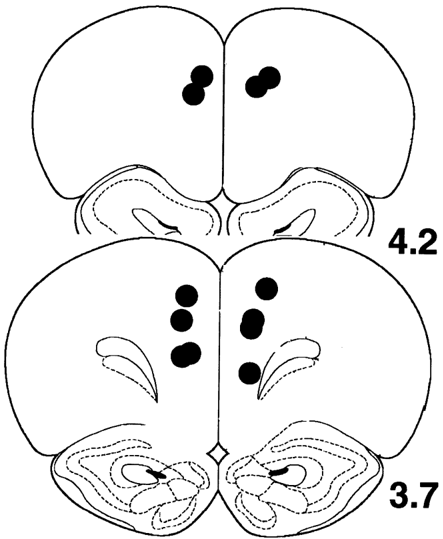
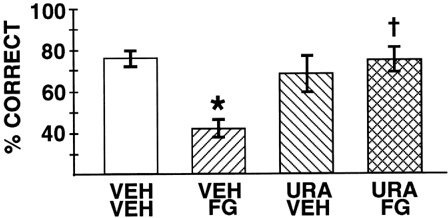
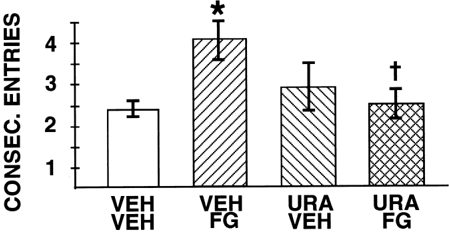
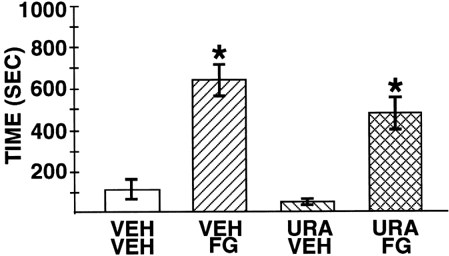
Verification
Claims the paper makes
The claims and statistics of this paper haven’t been checked yet.
Free: it reads the open-access text and checks the first 5 claims that cite a source we can check. Create a free account to check every claim.
Claims other papers make about this one
Each is checked against this paper’s own text: does it say what the citing paper says it does?
The source backs part of the claim, not all of it — or backs it for a different population, condition or comparison.
In the citing paper
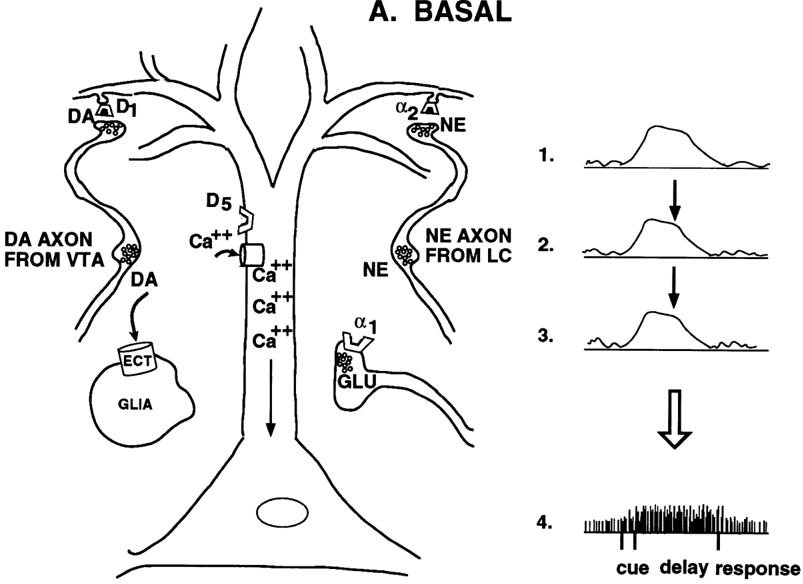
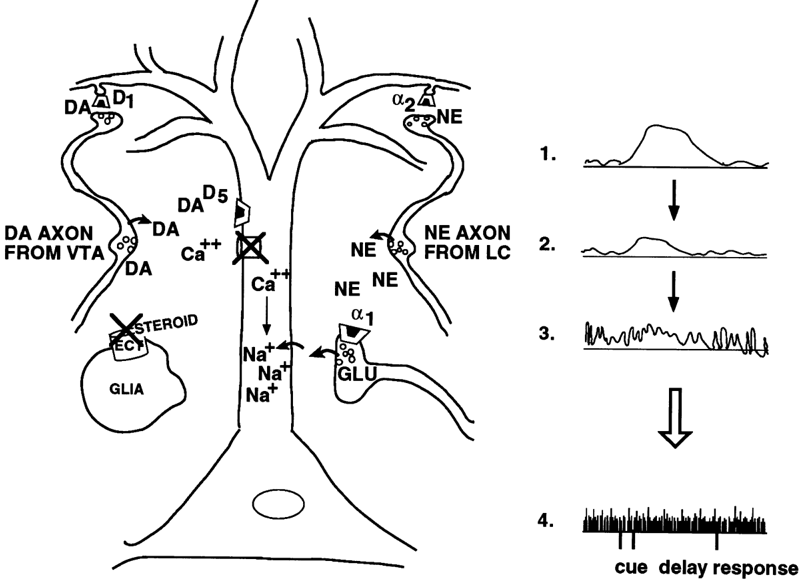
“As shown in FIG. 2, the levels of noradrenaline that are released during alert, non-stressed waking optimize working memory by engaging α2A-receptors52,53, whereas the high levels of noradrenaline that are released during stress impair PFC function by stimulating lower-affinity α1-receptors54 and β1-receptors55.”
From Stress signalling pathways that impair prefrontal cortex structure and function (2009) · cites this paper as [54]
Experimental — accuracy not yet measuredThe source backs part of the claim, not all of it — or backs it for a different population, condition or comparison.
In the citing paper
“Similarly, stress-induced cognitive deficits can be prevented by administration of α1-receptor antagonists in the PFC or systemically54.”
From Stress signalling pathways that impair prefrontal cortex structure and function (2009) · cites this paper as [54]
Experimental — accuracy not yet measuredThe source backs part of the claim, not all of it — or backs it for a different population, condition or comparison.
In the citing paper
“Systemic administration of an α1 agonist that crosses the blood brain barrier also impairs working memory performance, while administration of an α1 antagonist, e.g., prazosin, can protect working memory performance during stress (37,50,51).”
From Catecholamine Influences on Dorsolateral Prefrontal Cortical Networks (2011) · cites this paper as [37]
Experimental — accuracy not yet measuredThe source backs part of the claim, not all of it — or backs it for a different population, condition or comparison.
In the citing paper
“Data from studies of monkey dorsolateral PFC demonstrate an inverted-U dose-response: moderate levels of NE released during alert, nonstressed waking improve working memory performance by engaging postsynaptic, α2A receptors (35,36), whereas high levels of NE released during stress impair PFC function via stimulation of lower affinity α1 (37) and β1 receptors (38).”
From Catecholamine Influences on Dorsolateral Prefrontal Cortical Networks (2011) · cites this paper as [37]
Experimental — accuracy not yet measuredThe source backs part of the claim, not all of it — or backs it for a different population, condition or comparison.
In the citing paper
“In both rats and monkeys, stress-induced PFC dysfunction can be blocked by dopamine D1 receptor (D1R) or norepinephrine α1-adrenoceptor (AR) antagonists19,54, and conversely, it can be mimicked by high levels of D1R55 or α1-AR56,57 stimulation in PFC.”
From Stress weakens prefrontal networks: molecular insults to higher cognition (2015) · cites this paper as [54]
Experimental — accuracy not yet measured
1 more claim about this paper
Create a free account to see every claim other papers make about this one.
Self-check
Percentages, sums and reported differences re-computed from the paper’s own numbers.
The self-check needs the paper’s full text.
Citations
Cites
The role of the amygdala in fear and anxiety
Davis, M. (1992) · Annual Review of Neuroscience · doi:10.1146/annurev.ne.15.030192.002033 · Cited by 2,357 · cited 1×
“For example, freezing responses to stress are likely mediated by interactions between structures such as the amygdala and periaqueductal gray (Davis 1992).”
BackgroundModulation of memory fields by dopamine Dl receptors in prefrontal cortex
Williams, G. V., & Goldman-Rakic, P. S. (1995) · Nature · doi:10.1038/376572a0 · Cited by 1,593
Cognitive Deficit Caused by Regional Depletion of Dopamine in Prefrontal Cortex of Rhesus Monkey
Brozoski, T. J., Brown, R. M., Rosvold, H. E., & Goldman, P. S. (1979) · Science · doi:10.1126/science.112679 · Cited by 1,500
D1 Dopamine Receptors in Prefrontal Cortex: Involvement in Working Memory
Sawaguchi, T., & Goldman-Rakic, P. S. (1991) · Science · doi:10.1126/science.1825731 · Cited by 1,364
Selective activation of the mesocortical DA system by stress
THIERRY, A. M., TASSIN, J. P., BLANC, G., & GLOWINSKI, J. (1976) · Nature · doi:10.1038/263242a0 · Cited by 1,033
Zahrt, J., Taylor, J. R., Mathew, R. G., & Arnsten, A. F. T. (1997) · The Journal of Neuroscience · doi:10.1523/jneurosci.17-21-08528.1997 · Cited by 796
Self-citationMurphy, B. L., Arnsten, A. F., Goldman-Rakic, P. S., & Roth, R. H. (1996) · Proceedings of the National Academy of Sciences · doi:10.1073/pnas.93.3.1325 · Cited by 590
Self-citationBergson, C., Mrzljak, L., Smiley, J., Pappy, M., Levenson, R., & Goldman-Rakic, P. (1995) · The Journal of Neuroscience · doi:10.1523/jneurosci.15-12-07821.1995 · Cited by 488
Seamans, J. K., Floresco, S. B., & Phillips, A. G. (1998) · The Journal of Neuroscience · doi:10.1523/jneurosci.18-04-01613.1998 · Cited by 474
Arnsten, A. F. T. (1996) · Archives of General Psychiatry · doi:10.1001/archpsyc.1996.01830050084013 · Cited by 458
Self-citation
Research works printed but not linked: 2
- Li B-M, Mei Z-T (1994a): Alpha-2 adrenergic modulation of prefrontal neuronal activity related to working memory in monkeys. Abstracts of the 3rd Congress of Federation of Asian and Oceanian Physiological Societies 96. Stress Impairs PFC Function via ␣-1 NE Mechanism 1273 BIOL PSYCHIATRY 1999;46:1266 -1274
- Simon H (1981): Dopaminergic A10 neurons and the frontal system. J de Physiol 77:81-95.
Cited by
Items 201–291 of 291
Berridge, C. W. (2005) · Techniques in the behavioral and neural sciences · doi:10.1016/s0921-0709(05)80025-2 · Cited by 12
Syed, S. A., Sinha, R., Milivojevic, V., MacDougall, A., LaVallee, H., Angarita, G. A., & Fox, H. C. (2023) · Human Psychopharmacology Clinical and Experimental · doi:10.1002/hup.2867 · Cited by 6
“…at α1 receptors (Ehrenreich et al., 1997; Helen C. Fox et al., 2005; Smith & Aston‐ Jones, 2008), known to impair attentional state by attenuating salient “signals” and increasing irrelevant “noise” in cortical control regions (Aghajanian & Marek, 1999; Arnsten, 2000; Birnbaum et al., 1999).”
BackgroundNeurobiology of disaster exposure: fear, anxiety, trauma, and resilience
Smith, R. P., Katz, C. L., Charney, D. S., & Southwick, S. M. (2007) · Cambridge University Press eBooks · doi:10.1017/cbo9780511544415.006 · Cited by 5
Dikanović, M., Kadojić, D., Demarin, V., Trkanjec, Z., Mihaljević, I., Bitunjac, M., Kadojić, M., Matić, I., Šapina, L., Vuletić, V., et al. (2009) · PubMed · Cited by 5
Gao, H., Gao, X., Ma, B.-X., & Zhang, H. (2014) · International Journal of Cardiology · doi:10.1016/j.ijcard.2014.09.145 · Cited by 5
New Pharmacological Treatment Approaches for Anxiety Disorders
Ströhle, A. (2005) · Handbook of experimental pharmacology · doi:10.1007/3-540-28082-0_18 · Cited by 6
Al‐Khairi, I., Baharnoori, M., Kamath, A., Bhardwaj, S. K., & Srivastava, L. K. (2009) · Synapse · doi:10.1002/syn.20691 · Cited by 6
Homeostasis to Allostasis: Prefrontal Astrocyte Roles in Cognitive Flexibility and Stress Biology
Wulaer, B., Holtz, M., & Nagai, J. (2024) · Advances in neurobiology · doi:10.1007/978-3-031-64839-7_6 · Cited by 4
Zelek-Molik, A., Gądek-Michalska, A., Wilczkowski, M., Bielawski, A., Maziarz, K., Kreiner, G., & Nalepa, I. (2025) · Frontiers in Pharmacology · doi:10.3389/fphar.2024.1451895 · Cited by 4
(Lack of) Effects of noradrenergic stimulation on human working memory performance
Wanke, N., Müller, J. C., Wiedemann, K., & Schwabe, L. (2020) · Psychopharmacology · doi:10.1007/s00213-020-05590-0 · Cited by 4
Bio-Behavioral Indices of Emotion Regulation: Potential Targets for Treatment in Addiction
Fox, H. C., Karim, A., & Syed, S. A. (2020) · Current Addiction Reports · doi:10.1007/s40429-020-00330-y · Cited by 4
Attention deficit hyperactivity disorder
Berridge, C. W., Devilbiss, D. M., Spencer, R. C., Schmeichel, B. E., & Arnsten, A. F. T. (2012) · Cambridge University Press eBooks · doi:10.1017/cbo9780511980053.018 · Cited by 4
Self-citationRoberts, W., Verplaetse, T. L., Moore, K. E., Oberleitner, L., & McKee, S. A. (2018) · Human Psychopharmacology Clinical and Experimental · doi:10.1002/hup.2660 · Cited by 4
Neurobiology of Anxiety Disorders
Meaney, M. J., Liebowitz, M. L., & Leonardo, E. D. (2015) · Wiley eBooks · doi:10.1002/9781118753378.ch20 · Cited by 4
Fuster, J. M. (2015) · Elsevier eBooks · doi:10.1016/b978-0-12-407815-4.00003-9 · Cited by 5
Evaluating the Implications of Stigma-Induced Identity Threat for Health and Health Care
Phelan, S. M. (2010) · University of Minnesota Digital Conservancy (University of Minnesota) · Cited by 7
Horie, I., Muroi, Y., & Ishii, T. (2024) · Molecular Neurobiology · doi:10.1007/s12035-024-04240-2 · Cited by 4
Effects of Maternal Alpha Methyldopa Administration on Memory of Rat Offspring during Growing Age
Akbari, S., Rabbani, M., Sharifzadeh, M., & Hosseini-Sharifabad, A. (2017) · Iranian Journal of Toxicology · doi:10.29252/arakmu.11.1.43
“The mentioned neurotransmitters play an important role in the formation of memory [9-11].”
BackgroundCooke, S. K., Martin, A. J., Spencer, R. C., Nicol, S. E., & Berridge, C. W. (2025) · Biological Psychiatry · doi:10.1016/j.biopsych.2025.03.011 · Cited by 3
Gálosi, R., Petykó, Z., Kállai, V., Tóth, A., Ollmann, T., Péczely, L., Kovács, A., Berta, B., & Lénárd, L. (2018) · Behavioural Brain Research · doi:10.1016/j.bbr.2018.02.016 · Cited by 3
A modulatory attentional gate promotes recent memory expression in DrosophilaPreprint
Kapoor, I., & Waddell, S. (2024) · bioRxiv (Cold Spring Harbor Laboratory) · doi:10.1101/2024.12.20.629828 · Cited by 3
Berridge, C. W., & Devilbiss, D. M. (2012) · Psiquiatría Biológica · doi:10.1016/j.psiq.2012.07.001 · Cited by 5
Prevention of Stress-Induced Cognitive Impairment: Today and Tomorrow
Trofimiuk, E., & Braszko, J. J. (2015) · Springer eBooks · doi:10.1007/978-3-319-17103-6_10 · Cited by 2
Ciottone, R. A. (2015) · Elsevier eBooks · doi:10.1016/b978-0-323-28665-7.00064-9 · Cited by 2
Stress, monoamines, and cognitive flexibility
Snyder, K. P. (2013) · Scholarly Commons (University of Pennsylvania) · Cited by 3
Li, Y., Hong, K. O. N. G., Qian, S. O. N. G., & Cai, J. (2010) · Acta Psychologica Sinica · doi:10.3724/sp.j.1041.2010.00235 · Cited by 3
Miner, L. A. H., & Sesack, S. R. (2007) · Springer eBooks · doi:10.1007/978-0-387-72256-6_3 · Cited by 2
The neuromediator mechanisms of the cognitive deficit in schizophrenia
Storozheva, Z. I., Kirenskaya, A. V., & Proshin, A. T. (2015) · Neurochemical Journal · doi:10.1134/s1819712415030095 · Cited by 2
Relationships Between Total Cholesterol Levels and Specific Alterations in Impulsivity and Attention
Gendle, M. H., Glazer, K., Olszewski, E. A., & Novak, C. A. (2011) · Journal of North Carolina Academy of Science · doi:10.7572/2167-5880-127.1.13 · Cited by 3
Ciottone, R. A. (2006) · Elsevier eBooks · doi:10.1016/b978-0-323-03253-7.50061-3 · Cited by 2
Chronobiology of Mood Disorders
Iasevoli, F., Avvisati, L., Gilardi, V., Latte, G., Prinzivalli, E., Berardis, D. D., Valchera, A., Fornaro, M., Tomasetti, C., & de Bartolomeis, A. (2016) · Springer eBooks · doi:10.1007/978-81-322-2803-5_20 · Cited by 3
The Role of Monoamine System in Core Affects and Basic Emotions
Wang, F. (2019) · Archives in Neurology & Neuroscience · doi:10.33552/ann.2019.03.000553 · Cited by 2
Fuster, J. M. (2008) · Elsevier eBooks · doi:10.1016/b978-0-12-373644-4.00003-7 · Cited by 2
McGaugh, J. L., & Roozendaal, B. (2017) · Elsevier eBooks · doi:10.1016/b978-0-12-809324-5.21092-4 · Cited by 2
Anpassungsstörung, akute und posttraumatische Belastungsstörung
Kapfhammer, H. P. (2008) · Springer eBooks · doi:10.1007/978-3-540-33129-2_60 · Cited by 5
Stimulating development of new drugs to improve cognition in schizophrenia
Horan, W. P., Rassovsky, Y., & Green, M. F. (2005) · Current Psychosis & Therapeutics Reports · doi:10.1007/bf02629424 · Cited by 2
Pharmacologic approaches to cognitive rehabilitation
McAllister, T. W., & Arnsten, A. F. T. (2008) · Cambridge University Press eBooks · doi:10.1017/cbo9781316529898.022 · Cited by 3
Self-citationKapfhammer, H. (2008) · Springer eBooks · doi:10.1007/978-3-540-33129-2_61 · Cited by 3
Fox, H. C., Milivojevic, V., & Sinha, R. (2023) · Handbook of experimental pharmacology · doi:10.1007/164_2023_687 · Cited by 1
Ataniya, R., Koike, K., & Inamoto, A. (2025) · International Journal of Molecular Sciences · doi:10.3390/ijms26094003 · Cited by 1
“Stimulation of the α -1 receptor by high levels of NE reduces PFC cell firing, resulting in impaired PFC function [63].”
Alpha-2 Adrenergic Agonists Reduce Heavy Alcohol Drinking and Improve Cognitive Performance in Mice
Quadir, S. G., Lepeak, L., Miracle, S. A., Collu, R., Velte, O., He, Y., Öztürk, Z., Rohl, C. D., Sabino, V., & Cottone, P. (2026) · eNeuro · doi:10.1523/eneuro.0368-25.2026 · Cited by 1
“The detrimental effects of high NE levels on attention and memory are known to be mediated by α 1 AR (Arnsten and Goldman-Rakic, 1985a,b; Cai et al., 1993; Birnbaum et al., 1999; Ramos et al., 2005).”
Raskind, M. A. (2018) · Springer eBooks · doi:10.1007/978-1-4939-7148-0_30 · Cited by 1
Ataniya, R., SAITO, M., & Takahashi, T. (2017) · Juntendō Igaku/Juntendo igaku · doi:10.14789/jmj.63.449 · Cited by 1
The effects of lavandula angustifolia on animal and human laboratory models of anxiety
Bradley, B. F. (2008) · CLOK (University of Central Lancashire) · Cited by 1
Biochemical profile of anseculin (KA‐672) at different brain receptors
Knauber, J., & Müller, W. E. G. (2002) · Drug Development Research · doi:10.1002/ddr.10053 · Cited by 1
“Different lines of evidence implicate α1-adenoceptors in learning and memory [Birnbaum et al., 1999; Mao et al., 1999; Knauber and Müller, 2000a,b].”
Heinbockel, H., Leicht, G., Wagner, A. D., & Schwabe, L. (2025) · eLife · doi:10.7554/elife.100525 · Cited by 2
Chathu, F., & Paulose, C. S. (2007) · Dyuthi Digital Repository (Cochin University of Science and Technology) · Cited by 1
Noradrenergic Modulation of the Basolateral Amygdala: Alterations by Stress Exposure
Buffalari, D. M. (2007) · D-Scholarship@Pitt (University of Pittsburgh)
The intracellular signaling cascade and stress
Dwivedi, Y., & Pandey, G. N. (2005) · Techniques in the behavioral and neural sciences · doi:10.1016/s0921-0709(05)80034-3
Optimising perceptuo-motor performance and learning with EEG neurofeedback
Ros, T. (2010) · Goldsmiths (University of London) · doi:10.13140/rg.2.1.2055.7521
Behavioural, neurochemical and neuroendocrine effects of predator stress in mice
Beekman, M. (2004) · doi:10.5282/edoc.2193 · Cited by 1
Jedema, H. P. (2002) · D-Scholarship@Pitt (University of Pittsburgh)
Pickering, C. (2006) · Figshare · Cited by 1
Raskind, M. A. (2015) · Defense Technical Information Center (DTIC) · doi:10.21236/ada622633
Maeng, L. Y. (2013) · doi:10.7282/t38913wz
“It is also consistent with other reports indicating that the mPFC is involved in the modulatory effects of stress on learning (Shansky et al., 2004; Arnsten & Goldman-Rakic, 1998; Cerqueira et al., 2007; Murphy et al., 1996; Birnbaum et al., 1999; Radley et al., 2006).”
ResultBEHAVIOURAL, NEUROCHEMICAL AND NEUROENDOCRINE EFFECTS OF
Stress, P. (2004)
Wisneski, L. (2017) · Routledge eBooks · doi:10.4324/9781315153889-4
Role of Adrenergic Receptors in Effects of Antipsychotic Medications on Prefrontal Cortical Function
Arnsten, A. F. T. (2000) · Handbooks of pharmacology and toxicology · doi:10.1201/9781420041774.ch7 · Cited by 1
Self-citationThe temporal nature of the acute stress response and its impact on explicit learning
Hutchinson, S. (2015) · DigitalCommons (California Polytechnic State University)
Woodcock, E. W. (2017) · Human Biology
Guille, C., Cortese, B. M., & Uhde, T. W. (2011) · Elsevier eBooks · doi:10.1016/b978-1-4377-1703-7.10055-6
Ataniya, R. (2018) · Asia Pacific Journal of Clinical Trials Nervous System Diseases · doi:10.4103/2542-3932.245224
Cognitive Flexibility in the Context of Stress and Depressive Disorders
Gabrys, R. L. (2017) · Carleton University's Institutional Repository (MacOdrum Library, Carleton University) · doi:10.22215/etd/2017-11965
“…cognitive functioning by engaging α2A-receptors (Arnsten & Goldman-Rakic, 1985), whereas the high levels of NE that are released in response to a stressor impair PFC-related cognitive processes by stimulating lower-affinity α1-receptors and β1-receptors (Birnbaum et al., 1999; Ramos et al., 2005).”
BackgroundGirardi, N. G. (2019) · CU Scholar (University of Colorado Boulder)
The Sensitivity and Vulnerability of the Prefrontal Cortex to Changes in Daily Rhythms
Hoffmann, M. W. (2019) · Cambridge University Press eBooks · doi:10.1017/9781108589246.010
(2009) · CRC Press eBooks · doi:10.1201/b10166-4
Rusz, C.-M., Jîtcă, G., Miklos, A., Bătrînu, M.-G., Ősz, B. E., & Imre, S. (2021) · Acta Marisiensis. Seria Medica · doi:10.2478/amma-2021-0023
“High levels of NE disrupt the inhibition that normally, the PFC holds on the amygdala through the α1 receptors, therefore, the amygdala-defensive behavior characteristic in PTSD is activated [15-17].”
BackgroundMovement, Cognition and Learning
Biele, C. (2021) · Studies in computational intelligence · doi:10.1007/978-3-030-90004-5_10
Cucumo, V., & Clerici, F. (2012) · Springer eBooks · doi:10.1007/978-88-470-2080-1_4
Ciottone, R. A., & Ciottone, M. A. (2023) · Elsevier eBooks · doi:10.1016/b978-0-323-80932-0.00068-9
Heinbockel, H., Leicht, G., Wagner, A. D., & Schwabe, L. (2025) · eLife · doi:10.1101/2024.06.26.600820
Heinbockel, H., Leicht, G., Wagner, A. D., & Schwabe, L. (2024) · eLife · doi:10.7554/elife.100525.1
The circuit mechanisms of working memory: Key roles of the dorsolateral prefrontal cortex
Arnsten, A. F. T., & Martínez-Trujillo, J. (2024) · Elsevier eBooks · doi:10.1016/b978-0-443-15754-7.00038-9
Self-citationEtude du système noradrenergique chez l'homme et dans la maladie de Parkinson
Laurencin, C. (2023) · theses.fr (ABES) · doi:10.70675/6741e7cazdc23z459cz9474zb7eb272a5e19
Heinbockel, H., Leicht, G., Wagner, A. D., & Schwabe, L. (2025) · eLife · doi:10.7554/elife.100525.2
OCD : Compulsive behaviors are closely related to needs and norepinephrine (NE)Preprint
Zhu, H. (2025) · OSF Preprints (OSF Preprints) · doi:10.31219/osf.io/vqadg_v1 · Cited by 1
Stress drives the hippocampus to prioritize statistical prediction over episodic encoding
Zhou, I., Bai, Z., Huang, Y., Wijaya, E. G., Sherman, B. E., Turk‐Browne, N. B., & Goldfarb, E. V. (2026) · Philosophical Transactions of the Royal Society B Biological Sciences · doi:10.1098/rstb.2025.0238
“Given the roles of pupil responses in arousal [87], and interactions between pupil-associated adrenergic responses and other parts of the stress response [88–90], it is reasonable to expect that stress might modulate pupil responses during learning.”
Chernoff, C. S. (2023) · cIRcle (University of British Columbia) · doi:10.14288/1.0431176
Locarno, A. (2020) · CINECA IRIS Institutial Research Information System (University of Genoa) · doi:10.15167/locarno-andrea_phd2020-02-27
Characterizing the Influence of Perturbations in Global State on Working Memory
Garrett, J. (2024) · eScholarship (California Digital Library) · Cited by 1
Homar-Ruano, P. (2020) · Dipòsit Digital de la Universitat de Barcelona (Universitat de Barcelona)
Neuroenhancement in Military Personnel: Conceptual and Methodological Promises and Challenges
Brunyé, T. T., Beaudoin, M. E., Feltman, K. A., Heaton, K. J., McKinley, R. A., Vartanian, O. A., Tangney, J. F., van Erp, J. B. F., Vergin, A., Merla, A., et al. (2022) · University of Twente Research Information · Cited by 6
Xing, L., Yujie, C. H. E. N., Chengguo, M. I. A. O., & Yang, Z. (2026) · Advances in Psychological Science · doi:10.3724/sp.j.1042.2026.0313
Mazzelli, M., Saleri, S., Zonca, V., Marizzoni, M., Riva, M. A., Begni, V., & Cattaneo, A. (2026) · Biomolecules · doi:10.3390/biom16020327
Cortex préfrontal et flexibilité comportementale : implication de la noradrénaline
Cerpa, J.-C. (2019) · theses.fr (ABES) · doi:10.70675/d4f665b9z3943z4c88z9b4bzbf11cd7cf8d1
Mouille, A. (2024) · theses.fr (ABES) · doi:10.70675/11fc9415zb9a9z48dezb304z86464e5058ea
Cognition and Human Performance
Tomporowski, P. D., Perez, T. M., Qazi, A. S., & Sullivan, S. G. B. (2026) · Springer eBooks · doi:10.1007/978-3-032-21528-4_1
Vreven, A., Chandler, D. J., Fan, W., Jordan, R., Krentzman, O. J., Lüthi, A., McCall, J. G., Sciolino, N. R., Tkaczynski, J., & Totah, N. K. B. (2026) · Elsevier eBooks · doi:10.1016/b978-0-443-24078-2.00010-3
Prostaglandin E2 in Brain Inflammation: Roles and Dynamics
Nakanishi, T., & Fukuchi, M. (2026) · Brain Sciences · doi:10.3390/brainsci16101118
“Under stress-free conditions, these cate-cholamines enhance PFC regulation and optimize working memory [71,72], whereas the stress-induced surges in catecholamine impair PFC functions [73,74].”
Cognitive impairment: quantification and possibilities for pharmacological treatment
Housden, C. R. (2013) · Apollo (University of Cambridge) · doi:10.17863/cam.16550
Metadata
- Authors
- Birnbaum, S., Gobeske, K. T., Auerbach, J., Taylor, J. R., & Arnsten, A. F. T.
- Affiliations
- Yale University (US)
- Corresponding author
- Arnsten, Amy F.T
- Venue
- Biological Psychiatry
- Publisher
- Elsevier BV
- Published
- 1999-11
- Volume
- 46
- Issue
- 9
- Pages
- 1266-1274
- ISSN
- 0006-3223 (ISSN-L)
- OpenAlex
- W2043803755
- Semantic Scholar
- b0cf1181d89aac9d141fcaa5d22e326d670dcffa
- Cited by
- 281
- References
- 49
- Citations by year
- 2026: 6 · 2025: 6 · 2024: 9 · 2023: 6 · 2022: 4 · 2021: 6 · 2020: 11 · 2019: 16 · 2018: 9 · 2017: 16 · 2016: 9 · 2015: 17 · 2014: 15 · 2013: 12 · 2012: 10
- FWCI
- 2.27
- Type
- journal article
- Language
- en
- Open access
- hybrid
- doi.org
- Licence
- cc-by-nc-nd
- www.elsevier.com/tdm/userlicense/1.0/ (tdm)
- www.elsevier.com/legal/tdmrep-license (tdm)
- creativecommons.org/licenses/by-nc-nd/4.0/ (vor, 394 d)
- Locations
- Biological Psychiatry (publishedVersion, cc-by-nc-nd)
- PubMed (publishedVersion)
- Funders
- U.S. Public Health Service
- National Institute on Aging (AG06036)
- Topics
- Life Sciences › Neuroscience › Cellular and Molecular Neuroscience › Neurotransmitter Receptor Influence on Behavior
- Life Sciences › Neuroscience › Behavioral Neuroscience › Stress Responses and Cortisol
- Life Sciences › Neuroscience › Cognitive Neuroscience › Neural and Behavioral Psychology Studies
- Keywords
- norepinephrine, alpha1-adrenoceptors, prefrontal cortex, stress, working memory, urapidil, FG 7142, delayed alternation, perseverative responding, motor reaction time, neuropsychiatric disorders
- MeSH terms
- Adrenergic alpha-Antagonists, Animals, Carbolines, Cognition, Male, Memory, Short-Term, Norepinephrine, Piperazines, Spatial Behavior, Stress, Psychological, Rats, Sprague-Dawley, Prefrontal Cortex, Receptors, Adrenergic, alpha-1, Rats
About these checks
Registry, retraction, Cites and statistics results are computed, not judged, with one exception: a printed reference that no index lists is read once by a model before it counts as a citation error. Claims are extracted by a model and kept only when their quote appears verbatim in the text; each cited source is then checked, with a model’s help, for whether it says what the claim relies on. Those verdicts can be wrong — read the claim’s quote and the cited source before relying on one.
Statistics and arithmetic are recomputed, not judged.
Confidence bands are shown only for fields calibrated on our annotated test set. None is calibrated yet, so no band is shown.
What counts as a claim ›How we measure confidence ›How we check this ›
Are you an author, or do you see a problem with this page? Request a review
Data sources
Bibliographic data: Semantic Scholar, OpenAlex, Crossref.
Contains information from the Semantic Scholar Academic Graph Datasets, made available under the ODC Attribution License (ODC-BY 1.0).
Semantic Scholar’s data is described in: Kinney, R., et al. (2023). The Semantic Scholar Open Data Platform. arXiv:2301.10140.
