

A role for norepinephrine in stress-induced cognitive deficits: α-1-adrenoceptor mediation in the prefrontal cortex
Open accessThe DOI matches its Crossref record; 48 of the 49 references it cites were found in a registry or an index.
Abstract
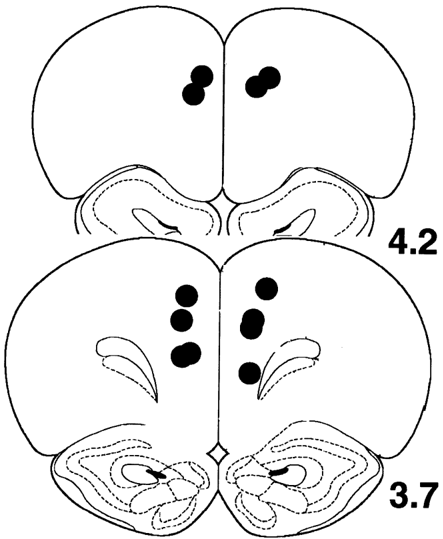
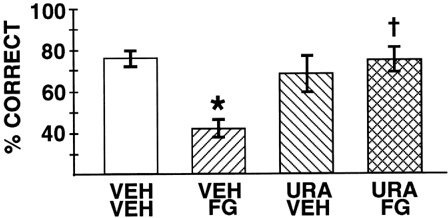
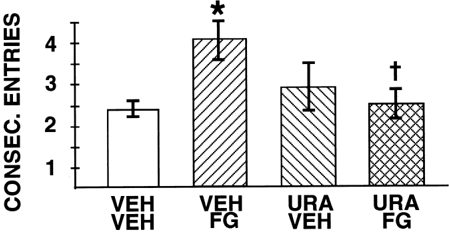
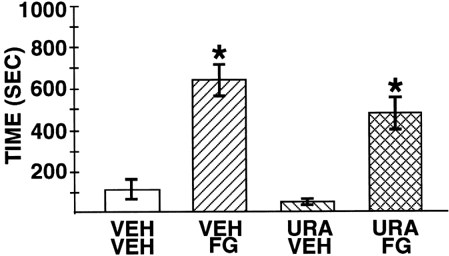
BACKGROUND: Stress exacerbates many neuropsychiatric disorders associated with prefrontal cortical (PFC) dysfunction. Stress also impairs the working memory functions of the PFC. Although stress research has focused on dopaminergic mechanisms, stress also increases norepinephrine (NE) release in PFC, and intra-PFC infusions of NE alpha-1-adrenoceptor agonists impair working memory. The current study examined whether NE alpha-1-adrenoceptor actions in PFC contribute to stress-induced deficits in working memory performance. METHODS: Rats were treated with a pharmacological stressor, FG7142 (30 mg/kg) or vehicle 30 min before testing on a test of spatial working memory, delayed alternation. The alpha-1-adrenoceptor antagonist, urapidil (0.1 microgram/0.5 microL), or saline vehicle, was infused into the PFC 15 min before delayed alternation testing. RESULTS: As observed previously, FG7142 significantly impaired the accuracy of delayed alternation performance, and induced a perseverative pattern of responding consistent with PFC dysfunction. FG7142 also slowed motor response times. Infusion of urapidil into the PFC completely reversed the FG7142-induced impairment in delayed alternation performance, but did not alter the slowed motor responding. CONCLUSIONS: These findings indicate that alpha-1-adrenoceptor stimulation in the PFC contributes to stress-induced impairments in PFC cognitive functions. These neurochemical actions may contribute to symptoms of working memory impairment, poor attention regulation, or disinhibited behaviors in neuropsychiatric disorders sensitive to stress exposure.
Overview
The claims and statistics of this paper haven’t been checked yet.
Free: it reads the open-access text and checks the first 5 claims that cite a source we can check. Create a free account to check every claim.
Integrity signals
Registry
Cites
Statistics
Figures
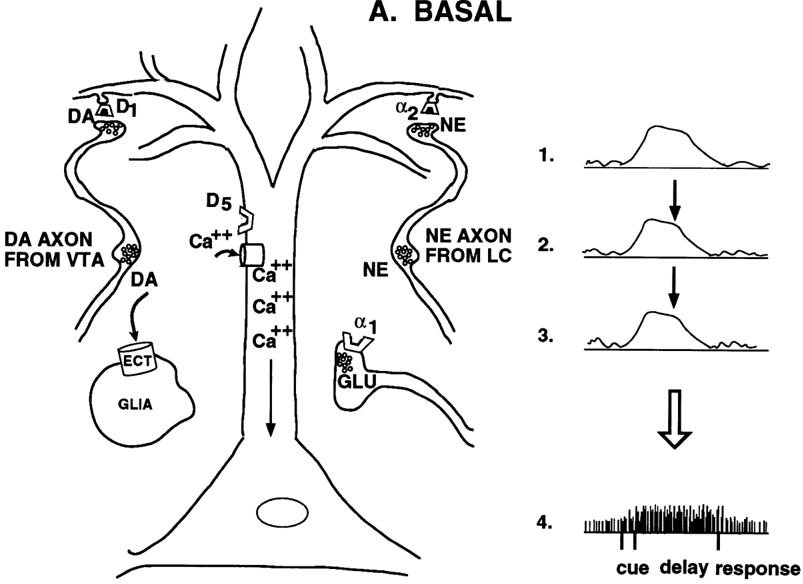
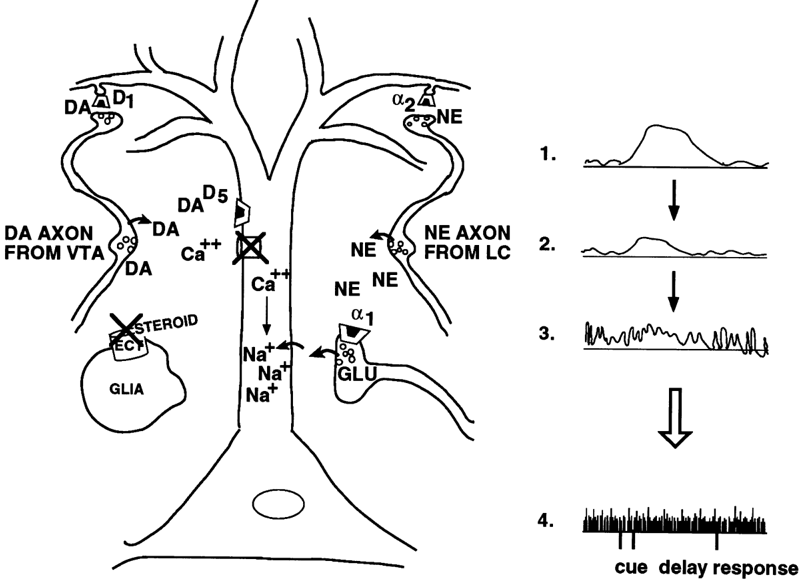
Verification
Claims the paper makes
The claims and statistics of this paper haven’t been checked yet.
Free: it reads the open-access text and checks the first 5 claims that cite a source we can check. Create a free account to check every claim.
Claims other papers make about this one
Each is checked against this paper’s own text: does it say what the citing paper says it does?
The source backs part of the claim, not all of it — or backs it for a different population, condition or comparison.
In the citing paper
“As shown in FIG. 2, the levels of noradrenaline that are released during alert, non-stressed waking optimize working memory by engaging α2A-receptors52,53, whereas the high levels of noradrenaline that are released during stress impair PFC function by stimulating lower-affinity α1-receptors54 and β1-receptors55.”
From Stress signalling pathways that impair prefrontal cortex structure and function (2009) · cites this paper as [54]
Experimental — accuracy not yet measuredThe source backs part of the claim, not all of it — or backs it for a different population, condition or comparison.
In the citing paper
“Similarly, stress-induced cognitive deficits can be prevented by administration of α1-receptor antagonists in the PFC or systemically54.”
From Stress signalling pathways that impair prefrontal cortex structure and function (2009) · cites this paper as [54]
Experimental — accuracy not yet measuredThe source backs part of the claim, not all of it — or backs it for a different population, condition or comparison.
In the citing paper
“Systemic administration of an α1 agonist that crosses the blood brain barrier also impairs working memory performance, while administration of an α1 antagonist, e.g., prazosin, can protect working memory performance during stress (37,50,51).”
From Catecholamine Influences on Dorsolateral Prefrontal Cortical Networks (2011) · cites this paper as [37]
Experimental — accuracy not yet measuredThe source backs part of the claim, not all of it — or backs it for a different population, condition or comparison.
In the citing paper
“Data from studies of monkey dorsolateral PFC demonstrate an inverted-U dose-response: moderate levels of NE released during alert, nonstressed waking improve working memory performance by engaging postsynaptic, α2A receptors (35,36), whereas high levels of NE released during stress impair PFC function via stimulation of lower affinity α1 (37) and β1 receptors (38).”
From Catecholamine Influences on Dorsolateral Prefrontal Cortical Networks (2011) · cites this paper as [37]
Experimental — accuracy not yet measuredThe source backs part of the claim, not all of it — or backs it for a different population, condition or comparison.
In the citing paper
“In both rats and monkeys, stress-induced PFC dysfunction can be blocked by dopamine D1 receptor (D1R) or norepinephrine α1-adrenoceptor (AR) antagonists19,54, and conversely, it can be mimicked by high levels of D1R55 or α1-AR56,57 stimulation in PFC.”
From Stress weakens prefrontal networks: molecular insults to higher cognition (2015) · cites this paper as [54]
Experimental — accuracy not yet measured
1 more claim about this paper
Create a free account to see every claim other papers make about this one.
Self-check
Percentages, sums and reported differences re-computed from the paper’s own numbers.
The self-check needs the paper’s full text.
Citations
Cites
The role of the amygdala in fear and anxiety
Davis, M. (1992) · Annual Review of Neuroscience · doi:10.1146/annurev.ne.15.030192.002033 · Cited by 2,357 · cited 1×
“For example, freezing responses to stress are likely mediated by interactions between structures such as the amygdala and periaqueductal gray (Davis 1992).”
BackgroundModulation of memory fields by dopamine Dl receptors in prefrontal cortex
Williams, G. V., & Goldman-Rakic, P. S. (1995) · Nature · doi:10.1038/376572a0 · Cited by 1,593
Cognitive Deficit Caused by Regional Depletion of Dopamine in Prefrontal Cortex of Rhesus Monkey
Brozoski, T. J., Brown, R. M., Rosvold, H. E., & Goldman, P. S. (1979) · Science · doi:10.1126/science.112679 · Cited by 1,500
D1 Dopamine Receptors in Prefrontal Cortex: Involvement in Working Memory
Sawaguchi, T., & Goldman-Rakic, P. S. (1991) · Science · doi:10.1126/science.1825731 · Cited by 1,364
Selective activation of the mesocortical DA system by stress
THIERRY, A. M., TASSIN, J. P., BLANC, G., & GLOWINSKI, J. (1976) · Nature · doi:10.1038/263242a0 · Cited by 1,033
Zahrt, J., Taylor, J. R., Mathew, R. G., & Arnsten, A. F. T. (1997) · The Journal of Neuroscience · doi:10.1523/jneurosci.17-21-08528.1997 · Cited by 796
Self-citationMurphy, B. L., Arnsten, A. F., Goldman-Rakic, P. S., & Roth, R. H. (1996) · Proceedings of the National Academy of Sciences · doi:10.1073/pnas.93.3.1325 · Cited by 590
Self-citationBergson, C., Mrzljak, L., Smiley, J., Pappy, M., Levenson, R., & Goldman-Rakic, P. (1995) · The Journal of Neuroscience · doi:10.1523/jneurosci.15-12-07821.1995 · Cited by 488
Seamans, J. K., Floresco, S. B., & Phillips, A. G. (1998) · The Journal of Neuroscience · doi:10.1523/jneurosci.18-04-01613.1998 · Cited by 474
Arnsten, A. F. T. (1996) · Archives of General Psychiatry · doi:10.1001/archpsyc.1996.01830050084013 · Cited by 458
Self-citationFinlay, J. M., Zigmond, M. J., & Abercrombie, E. D. (1995) · Neuroscience · doi:10.1016/0306-4522(94)00331-x · Cited by 434
Goldstein, L. E., Rasmusson, A. M., Bunney, B. S., & Roth, R. H. (1996) · The Journal of Neuroscience · doi:10.1523/jneurosci.16-15-04787.1996 · Cited by 387
Molecular identification of the corticosterone-sensitive extraneuronal catecholamine transporter
Gründemann, D., Schechinger, B., Rappold, G., & Schömig, E. (1998) · Nature Neuroscience · doi:10.1038/1557 · Cited by 374
Yang, C., & Seamans, J. (1996) · The Journal of Neuroscience · doi:10.1523/jneurosci.16-05-01922.1996 · Cited by 370
Noradrenergic and Serotonergic Function in Posttraumatic Stress Disorder
Southwick, S. M. (1997) · Archives of General Psychiatry · doi:10.1001/archpsyc.1997.01830200083012 · Cited by 321
Bremner, J. D. (1997) · Archives of General Psychiatry · doi:10.1001/archpsyc.1997.01830150070011 · Cited by 299
METABOLISM OF NOREPINEPHRINE, SEROTONIN AND DOPAMINE IN RAT BRAIN WITH STRESS
BLISS, E. L., AILION, J., & ZWANZIGER, J. (1968) · The Journal of Pharmacology and Experimental Therapeutics · doi:10.1016/s0022-3565(25)28110-1 · Cited by 294
Cai, J. X., & Arnsten, A. F. T. (1997) · The Journal of Pharmacology and Experimental Therapeutics · doi:10.1016/s0022-3565(24)36983-6 · Cited by 285 · cited 1×
“a-2-Adrenoceptor stimulation (Li and Mei 1994a; Sawaguchi 1998), or modest levels of D1/D5 receptor stimulation (Cai and Arnsten 1997; Sawaguchi et al 1988; Williams and Goldman-Rakic 1995) both enhance delay-related activity and spatial working memory performance in monkeys.”
BackgroundSelf-citationImaging dopamine transmission in schizophrenia. A review and meta-analysis.
Laruelle, M. (1998) · PubMed · Cited by 281
Aging in the Rhesus Monkey: Debilitating Effects on Short-term Memory
Bartus, R. T., Fleming, D., & Johnson, H. R. (1978) · Journal of Gerontology · doi:10.1093/geronj/33.6.858 · Cited by 281
α-1 noradrenergic receptor stimulation impairs prefrontal cortical cognitive function
Arnsten, A. F. T., Mathew, R., Ubriani, R., Taylor, J. R., & Li, B.-M. (1999) · Biological Psychiatry · doi:10.1016/s0006-3223(98)00296-0 · Cited by 245
Self-citationMarek, G. J., & Aghajanian, G. K. (1999) · European Journal of Pharmacology · doi:10.1016/s0014-2999(98)00945-5 · Cited by 221
Wallace, D. M., Magnuson, D. J., & Gray, T. S. (1992) · Brain Research Bulletin · doi:10.1016/0361-9230(92)90046-z · Cited by 218
Li, B.-M., & Mei, Z.-T. (1994) · Behavioral and Neural Biology · doi:10.1016/s0163-1047(05)80034-2 · Cited by 186
Spatial memory deficits in aged rats: contributions of monoaminergic systems
Luine, V., Bowling, D., & Hearns, M. (1990) · Brain Research · doi:10.1016/0006-8993(90)90368-l · Cited by 169
Sawaguchi, T., Matsumura, M., & Kubota, K. (1988) · Neuroscience Research · doi:10.1016/0168-0102(88)90030-2 · Cited by 167
Mao, Z.-M., Arnsten, A. F. T., & Li, B.-M. (1999) · Biological Psychiatry · doi:10.1016/s0006-3223(99)00139-0 · Cited by 156
Self-citationReduced brain 5-HT and elevated NE turnover and metabolites in bipolar affective disorder
Young, L. T., Warsh, J. J., Kish, S. J., Shannak, K. S., & HORNYKEIWICZ, O. (1994) · Biological Psychiatry · doi:10.1016/0006-3223(94)91201-7 · Cited by 156
Central Norepinephrine Metabolism in Affective Illness: MHPG in the Cerebrospinal Fluid
Post, R. M., Gordon, E. K., Goodwin, F. K., & Bunney, W. E. (1973) · Science · doi:10.1126/science.179.4077.1002 · Cited by 154
Do Central Antiadrenergic Actions Contribute to the Atypical Properties of Clozapine?
Baldessarini, R. J., Huston-Lyons, D., Campbell, A., Marsh, E., & Cohen, B. M. (1992) · British Journal of Psychiatry · doi:10.1192/s0007125000296852 · Cited by 134
Roozendaal, B., Koolhaas, J. M., & Bohus, B. (1991) · Physiology & Behavior · doi:10.1016/0031-9384(91)90016-h · Cited by 125
Cai, J. X., Ma, Y.-Y., Xu, L., & Hu, X.-T. (1993) · Brain Research · doi:10.1016/0006-8993(93)91034-p · Cited by 122
Michels, R., & Marzuk, P. M. (1993) · New England Journal of Medicine · doi:10.1056/nejm199308193290808 · Cited by 121
(1995) · American Psychiatric Press eBooks · Cited by 118
Biogenic Amines and Affective Disorders
Schildkraut, J. J. (1974) · Annual Review of Medicine · doi:10.1146/annurev.me.25.020174.002001 · Cited by 115 · cited 1×
“Furthermore, disorders such as schizophrenia (Baldessarini et al 1992; Laruelle 1998), mania (Post et al 1973, 1978; Schildkraut 1974; Young et al 1994) and anxiety disorders such as post-traumatic stress disorder (Bremner et al 1997; Krystal et al 1996; Southwick et al 1997a, 1997b) are associated with increased cate…”
BackgroundCerebrospinal fluid norepinephrine in affective illness
(1978) · American Journal of Psychiatry · doi:10.1176/ajp.135.8.907 · Cited by 110
Marek, G. J., & Aghajanian, G. K. (1998) · Neuroscience · doi:10.1016/s0306-4522(98)00043-8 · Cited by 88
Arnsten, A. F. T., & Jentsch, J. D. (1997) · Pharmacology Biochemistry and Behavior · doi:10.1016/s0091-3057(96)00477-7 · Cited by 85 · cited 1×
“Systemic administration of the imidazoline/a-1 agonist, cirazoline, impairs delayed response performance in aged monkeys (Arnsten and Jentsch 1997).”
BackgroundSelf-citationRasmusson, A. M., Goldstein, L. E., Deutch, A. Y., Bunney, B. S., & Roth, R. H. (1994) · Synapse · doi:10.1002/syn.890180307 · Cited by 78
Gro�, G., Hanft, G., & Kolassa, N. (1987) · Naunyn-Schmiedeberg s Archives of Pharmacology · doi:10.1007/bf00165749 · Cited by 77
Noradrenergic Alterations in Posttraumatic Stress Disorder
Southwick, S. M., Morgan, C. A., Bremner, A. D., Grillon, C., Krystal, J. H., Nagy, L. M., & Charney, D. S. (1997) · Annals of the New York Academy of Sciences · doi:10.1111/j.1749-6632.1997.tb48274.x · Cited by 73
[Dopaminergic A10 neurons and frontal system (author's transl)].
Simon, H. (1981) · PubMed · Cited by 69
Sawaguchi, T. (1998) · Journal of Neurophysiology · doi:10.1152/jn.1998.80.4.2200 · Cited by 55
Clozapine Reverses the Spatial Working Memory Deficits Induced by FG7142 in Monkeys
Murphy, B. L., Roth, R. H., & Arnsten, A. F. (1997) · Neuropsychopharmacology · doi:10.1016/s0893-133x(97)00019-5 · Cited by 49
Guéniau, C., & Oberlander, C. (1997) · The Journal of Pharmacology and Experimental Therapeutics · doi:10.1016/s0022-3565(24)36797-7 · Cited by 45
The biological basis of panic disorder.
Krystal, J. H., Deutsch, D., & Charney, D. S. (1996) · PubMed · Cited by 38
Effect of a pharmacological stressor on glutamate efflux in the prefrontal cortex
Karreman, M., & Moghaddam, B. (1996) · Brain Research · doi:10.1016/0006-8993(96)00015-7 · Cited by 30
Arnsten, A. F. T., & Goldman-Rakic, P. S. (1998) · Archives of General Psychiatry · doi:10.1001/archpsyc.55.4.362 · Cited by 6 · cited 3×
“Behavioral studies have shown that exposure to mild stress induces deficits in working memory tasks, but not in control discrimination tasks with similar motor and motivational demands (Arnsten and Goldman-Rakic 1998; Murphy et al 1996).”
BackgroundInfluentialSelf-citation
Research works printed but not linked: 2
- Li B-M, Mei Z-T (1994a): Alpha-2 adrenergic modulation of prefrontal neuronal activity related to working memory in monkeys. Abstracts of the 3rd Congress of Federation of Asian and Oceanian Physiological Societies 96. Stress Impairs PFC Function via ␣-1 NE Mechanism 1273 BIOL PSYCHIATRY 1999;46:1266 -1274
- Simon H (1981): Dopaminergic A10 neurons and the frontal system. J de Physiol 77:81-95.
Cited by
Stress signalling pathways that impair prefrontal cortex structure and function
Arnsten, A. F. T. (2009) · Nature Reviews Neuroscience · doi:10.1038/nrn2648 · Cited by 3,299
“, whereas the high levels of noradrenaline that are released during stress impair PFC function by stimulating lower-affinity α 1 -receptor”
Self-citationBerridge, C. W., & Waterhouse, B. D. (2003) · Brain Research Reviews · doi:10.1016/s0165-0173(03)00143-7 · Cited by 2,529
The cognitive neuroscience of sustained attention: where top-down meets bottom-up.
Sarter, M., Givens, B., & Bruno, J. P. (2001) · Brain Research Reviews · doi:10.1016/s0165-0173(01)00044-3 · Cited by 1,194
Diamond, A., & Ling, D. S. (2016) · Developmental Cognitive Neuroscience · doi:10.1016/j.dcn.2015.11.005 · Cited by 1,177
“The norepinephrine system in prefrontal ortex (through heightened 1 adrenoceptor stimulation) also conributes to prefrontal cortex dysfunction when we are stressed Birnbaum et al., 1999).”
BackgroundDynamic adaptation of large-scale brain networks in response to acute stressors
Hermans, E. J., Henckens, M. J. A. G., Joëls, M., & Fernández, G. (2014) · Trends in Neurosciences · doi:10.1016/j.tins.2014.03.006 · Cited by 949
Metadata
- Authors
- Birnbaum, S., Gobeske, K. T., Auerbach, J., Taylor, J. R., & Arnsten, A. F. T.
- Affiliations
- Yale University (US)
- Corresponding author
- Arnsten, Amy F.T
- Venue
- Biological Psychiatry
- Publisher
- Elsevier BV
- Published
- 1999-11
- Volume
- 46
- Issue
- 9
- Pages
- 1266-1274
- ISSN
- 0006-3223 (ISSN-L)
- OpenAlex
- W2043803755
- Semantic Scholar
- b0cf1181d89aac9d141fcaa5d22e326d670dcffa
- Cited by
- 281
- References
- 49
- Citations by year
- 2026: 6 · 2025: 6 · 2024: 9 · 2023: 6 · 2022: 4 · 2021: 6 · 2020: 11 · 2019: 16 · 2018: 9 · 2017: 16 · 2016: 9 · 2015: 17 · 2014: 15 · 2013: 12 · 2012: 10
- FWCI
- 2.27
- Type
- journal article
- Language
- en
- Open access
- hybrid
- doi.org
- Licence
- cc-by-nc-nd
- www.elsevier.com/tdm/userlicense/1.0/ (tdm)
- www.elsevier.com/legal/tdmrep-license (tdm)
- creativecommons.org/licenses/by-nc-nd/4.0/ (vor, 394 d)
- Locations
- Biological Psychiatry (publishedVersion, cc-by-nc-nd)
- PubMed (publishedVersion)
- Funders
- U.S. Public Health Service
- National Institute on Aging (AG06036)
- Topics
- Life Sciences › Neuroscience › Cellular and Molecular Neuroscience › Neurotransmitter Receptor Influence on Behavior
- Life Sciences › Neuroscience › Behavioral Neuroscience › Stress Responses and Cortisol
- Life Sciences › Neuroscience › Cognitive Neuroscience › Neural and Behavioral Psychology Studies
- Keywords
- norepinephrine, alpha1-adrenoceptors, prefrontal cortex, stress, working memory, urapidil, FG 7142, delayed alternation, perseverative responding, motor reaction time, neuropsychiatric disorders
- MeSH terms
- Adrenergic alpha-Antagonists, Animals, Carbolines, Cognition, Male, Memory, Short-Term, Norepinephrine, Piperazines, Spatial Behavior, Stress, Psychological, Rats, Sprague-Dawley, Prefrontal Cortex, Receptors, Adrenergic, alpha-1, Rats
About these checks
Registry, retraction, Cites and statistics results are computed, not judged, with one exception: a printed reference that no index lists is read once by a model before it counts as a citation error. Claims are extracted by a model and kept only when their quote appears verbatim in the text; each cited source is then checked, with a model’s help, for whether it says what the claim relies on. Those verdicts can be wrong — read the claim’s quote and the cited source before relying on one.
Statistics and arithmetic are recomputed, not judged.
Confidence bands are shown only for fields calibrated on our annotated test set. None is calibrated yet, so no band is shown.
What counts as a claim ›How we measure confidence ›How we check this ›
Are you an author, or do you see a problem with this page? Request a review
Data sources
Bibliographic data: Semantic Scholar, OpenAlex, Crossref.
Contains information from the Semantic Scholar Academic Graph Datasets, made available under the ODC Attribution License (ODC-BY 1.0).
Semantic Scholar’s data is described in: Kinney, R., et al. (2023). The Semantic Scholar Open Data Platform. arXiv:2301.10140.
