

Risk of HIV transmission through condomless sex in serodifferent gay couples with the HIV-positive partner taking suppressive antiretroviral therapy (PARTNER): final results of a multicentre, prospective, observational study.
Open accessThe DOI matches its Crossref record; 35 of the 35 references it cites were found in a registry or an index.
Abstract
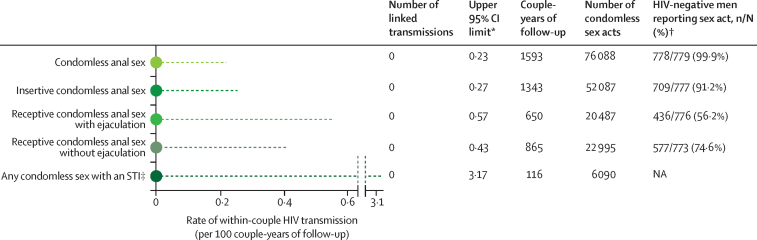
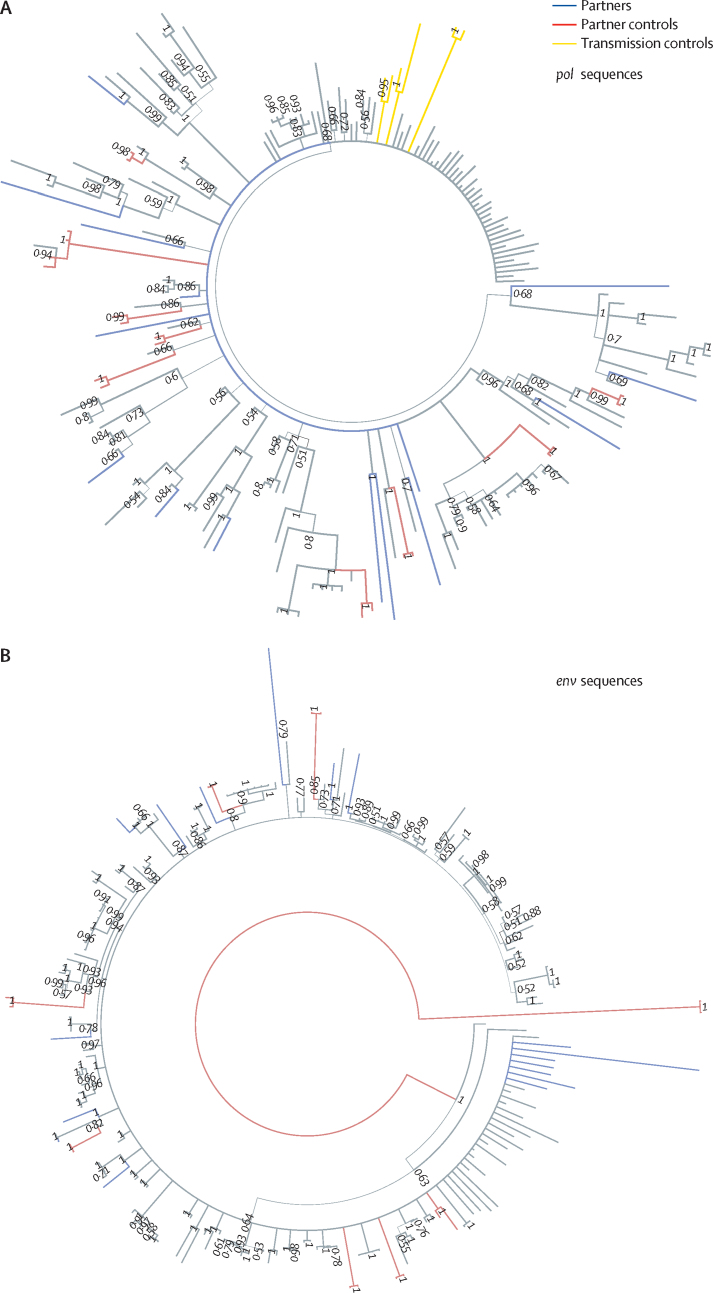
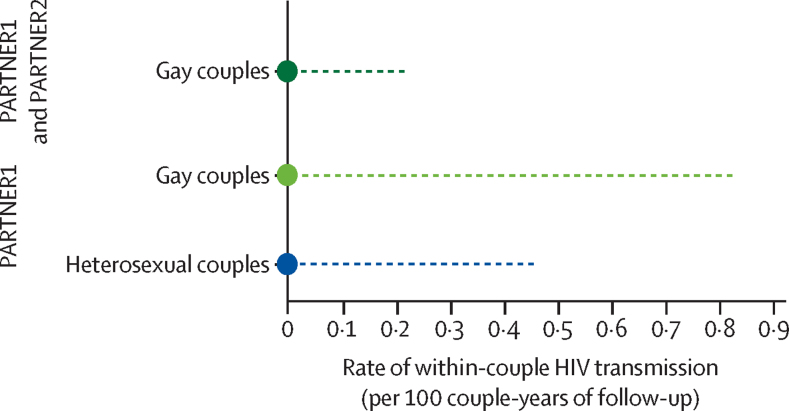
BACKGROUND: The level of evidence for HIV transmission risk through condomless sex in serodifferent gay couples with the HIV-positive partner taking virally suppressive antiretroviral therapy (ART) is limited compared with the evidence available for transmission risk in heterosexual couples. The aim of the second phase of the PARTNER study (PARTNER2) was to provide precise estimates of transmission risk in gay serodifferent partnerships. METHODS: The PARTNER study was a prospective observational study done at 75 sites in 14 European countries. The first phase of the study (PARTNER1; Sept 15, 2010, to May 31, 2014) recruited and followed up both heterosexual and gay serodifferent couples (HIV-positive partner taking suppressive ART) who reported condomless sex, whereas the PARTNER2 extension (to April 30, 2018) recruited and followed up gay couples only. At study visits, data collection included sexual behaviour questionnaires, HIV testing (HIV-negative partner), and HIV-1 viral load testing (HIV-positive partner). If a seroconversion occurred in the HIV-negative partner, anonymised phylogenetic analysis was done to compare HIV-1 pol and env sequences in both partners to identify linked transmissions. Couple-years of follow-up were eligible for inclusion if condomless sex was reported, use of pre-exposure prophylaxis or post-exposure prophylaxis was not reported by the HIV-negative partner, and the HIV-positive partner was virally suppressed (plasma HIV-1 RNA <200 copies per mL) at the most recent visit (within the past year). Incidence rate of HIV transmission was calculated as the number of phylogenetically linked HIV infections that occurred during eligible couple-years of follow-up divided by eligible couple-years of follow-up. Two-sided 95% CIs for the incidence rate of transmission were calculated using exact Poisson methods. FINDINGS: Between Sept 15, 2010, and July 31, 2017, 972 gay couples were enrolled, of which 782 provided 1593 eligible couple-years of follow-up with a median follow-up of 2·0 years (IQR 1·1-3·5). At baseline, median age for HIV-positive partners was 40 years (IQR 33-46) and couples reported condomless sex for a median of 1·0 years (IQR 0·4-2·9). During eligible couple-years of follow-up, couples reported condomless anal sex a total of 76 088 times. 288 (37%) of 777 HIV-negative men reported condomless sex with other partners. 15 new HIV infections occurred during eligible couple-years of follow-up, but none were phylogenetically linked within-couple transmissions, resulting in an HIV transmission rate of zero (upper 95% CI 0·23 per 100 couple-years of follow-up). INTERPRETATION: Our results provide a similar level of evidence on viral suppression and HIV transmission risk for gay men to that previously generated for heterosexual couples and suggest that the risk of HIV transmission in gay couples through condomless sex when HIV viral load is suppressed is effectively zero. Our findings support the message of the U=U (undetectable equals untransmittable) campaign, and the benefits of early testing and treatment for HIV. FUNDING: National Institute for Health Research.
Overview
The claims and statistics of this paper haven’t been checked yet.
Free: it reads the open-access text and checks the first 5 claims that cite a source we can check. Create a free account to check every claim.
Integrity signals
Registry
Cites
Statistics
Figures
Verification
Claims the paper makes
The claims and statistics of this paper haven’t been checked yet.
Free: it reads the open-access text and checks the first 5 claims that cite a source we can check. Create a free account to check every claim.
Claims other papers make about this one
Each is checked against this paper’s own text: does it say what the citing paper says it does?
The source backs part of the claim, not all of it — or backs it for a different population, condition or comparison.
In the citing paper
“Effective ART that suppresses HIV replication to undetectable levels reduces morbidity, provides a near-normal lifespan, and prevents sexual transmission of HIV to others (95–97,410–412).”
From Sexually Transmitted Infections Treatment Guidelines, 2021 (2021) · cites this paper as [97]
Experimental — accuracy not yet measuredThe cited source says what the claim attributes to it.
In the citing paper
“Additional studies of HIV mixed-status couples, heterosexual and MSM couples (PARTNER study), and MSM couples (Opposites Attract and PARTNERS2 studies) reported that patients with HIV taking ART who maintain an undetectable viral load demonstrate no risk for transmitting HIV to their HIV-negative sex partners (95–97).”
From Sexually Transmitted Infections Treatment Guidelines, 2021 (2021) · cites this paper as [97]
The cited source says what the claim attributes to it.
In the citing paper
“Persons with HIV infection who achieve and maintain a viral load suppressed to <200 copies/mL with ART have effectively no risk for sexually transmitting HIV (95–97,421).”
From Sexually Transmitted Infections Treatment Guidelines, 2021 (2021) · cites this paper as [97]
Self-check
Percentages, sums and reported differences re-computed from the paper’s own numbers.
The self-check needs the paper’s full text.
Citations
Cites
Prevention of HIV-1 infection with early antiretroviral therapy.
Cohen, M. S., Chen, Y. Q., McCauley, M., Gamble, T., Hosseinipour, M. C., Kumarasamy, N., Hakim, J. G., Kumwenda, J., Grinsztejn, B., Pilotto, J. H. S., et al. (2011) · New England Journal of Medicine · doi:10.1056/nejmoa1105243 · Cited by 6,873
Viral Load and Heterosexual Transmission of Human Immunodeficiency Virus Type 1
Quinn, T. C., Wawer, M. J., Sewankambo, N., Serwadda, D., Li, C., Wabwire-Mangen, F., Meehan, M. O., Lutalo, T., & Gray, R. H. (2000) · New England Journal of Medicine · doi:10.1056/nejm200003303421303 · Cited by 3,020
Antiretroviral therapy for the prevention of HIV-1 transmission.
Cohen, M. S., Chen, Y. Q., McCauley, M., Gamble, T., Hosseinipour, M. C., Kumarasamy, N., Hakim, J. G., Kumwenda, J., Grinsztejn, B., Pilotto, J. H. S., et al. (2016) · New England Journal of Medicine · doi:10.1056/nejmoa1600693 · Cited by 1,700
Rodger, A. J., Cambiano, V., Bruun, T., Vernazza, P., Collins, S., van Lunzen, J., Corbelli, G. M., Estrada, V., Geretti, A. M., Beloukas, A., et al. (2016) · JAMA · doi:10.1001/jama.2016.5148 · Cited by 1,431
Self-citationAttia, S., Egger, M., Müller, M., Zwahlen, M., & Low, N. (2009) · AIDS · doi:10.1097/qad.0b013e32832b7dca · Cited by 1,001
Donnell, D., Baeten, J. M., Kiarie, J., Thomas, K. K., Stevens, W., Cohen, C. R., McIntyre, J., Lingappa, J. R., & Celum, C. (2010) · The Lancet · doi:10.1016/s0140-6736(10)60705-2 · Cited by 952
Baggaley, R. F., White, R. G., & Boily, M.-C. (2010) · International Journal of Epidemiology · doi:10.1093/ije/dyq057 · Cited by 713
Bavinton, B. R., Pinto, A. N., Phanuphak, N., Grinsztejn, B., Prestage, G. P., Zablotska-Manos, I. B., Jin, F., Fairley, C. K., Moore, R., Roth, N., et al. (2018) · The Lancet HIV · doi:10.1016/s2352-3018(18)30132-2 · Cited by 524
Effectiveness of Highly Active Antiretroviral Therapy in Reducing Heterosexual Transmission of HIV
Castilla, J., del Romero, J., Hernando, V., Marincovich, B., García, S., & Rodríguez, C. (2005) · JAIDS Journal of Acquired Immune Deficiency Syndromes · doi:10.1097/01.qai.0000157389.78374.45 · Cited by 384
Genital HIV-1 RNA Predicts Risk of Heterosexual HIV-1 Transmission
Baeten, J. M., Kahle, E., Lingappa, J. R., Coombs, R. W., Delany-Moretlwe, S., Nakku-Joloba, E., Mugo, N. R., Wald, A., Corey, L., Donnell, D., et al. (2011) · Science Translational Medicine · doi:10.1126/scitranslmed.3001888 · Cited by 293
Research works printed but not linked: 2
- Rodger A, Bruun T, Cambiano V, et al. HIV transmission risk through condomless sex if HIV positive partner on suppressive ART: PARTNER Study. 21st Conference on Retroviruses and Opportunistic Infections (CROI); Boston, MA, USA; March 3–6, 2014. Abstract 153LB.
- Landovitz RJ, Tran TT, Cohn SE, et al. Perception of infectiousness in HIV-infected persons after initiating ART: ACTG A5257. 23rd Conference on Retroviruses and Opportunistic Infections (CROI); Boston, MA, USA; Feb 22–25, 2016. Abstract 55.
Cited by
Sexually Transmitted Infections Treatment Guidelines, 2021
Workowski, K. A., Bachmann, L. H., Chan, P. A., Johnston, C. M., Muzny, C. A., Park, I., Reno, H., Zenilman, J. M., & Bolan, G. A. (2021) · MMWR. Recommendations and Reports · doi:10.15585/mmwr.rr7004a1 · Cited by 3,018
US Preventive Services Task Force, Owens, D. K., Davidson, K. W., Krist, A. H., Barry, M. J., Cabana, M., Caughey, A. B., Curry, S. J., Doubeni, C. A., Epling, J. W., et al. (2019) · JAMA · doi:10.1001/jama.2019.6390 · Cited by 312
Thompson, M. A., Horberg, M. A., Agwu, A. L., Colasanti, J. A., Jain, M. K., Short, W. R., Singh, T., & Aberg, J. A. (2021) · Clinical Infectious Diseases · doi:10.1093/cid/ciaa1391 · Cited by 256
Santos, G.-M., Ackerman, B., Rao, A., Wallach, S., Ayala, G., Lamontage, E., Garner, A., Holloway, I. W., Arreola, S., Silenzio, V., et al. (2021) · AIDS and Behavior · doi:10.1007/s10461-020-02969-0 · Cited by 253
Bekker, L.-G., Beyrer, C., Mgodi, N., Lewin, S. R., Delany-Moretlwe, S., Taiwo, B., Masters, M. C., & Lazarus, J. V. (2023) · Nature Reviews Disease Primers · doi:10.1038/s41572-023-00452-3 · Cited by 241
Screening for HIV Infection: US Preventive Services Task Force Recommendation Statement
US Preventive Services Task Force, Owens, D. K., Davidson, K. W., Krist, A. H., Barry, M. J., Cabana, M., Caughey, A. B., Curry, S. J., Doubeni, C. A., Epling, J. W., et al. (2019) · JAMA · doi:10.1001/jama.2019.6587 · Cited by 218
Broyles, L. N., Luo, R., Boeras, D., & Vojnov, L. (2023) · The Lancet · doi:10.1016/s0140-6736(23)00877-2 · Cited by 218
Coronavirus disease 2019 (COVID‐19) outcomes in HIV/AIDS patients: a systematic review
Cooper, T., Woodward, B., Alom, S., & Harky, A. (2020) · HIV Medicine · doi:10.1111/hiv.12911 · Cited by 211
Viral load and contact heterogeneity predict SARS-CoV-2 transmission and super-spreading events
Goyal, A., Reeves, D. B., Cardozo-Ojeda, E. F., Schiffer, J. T., & Mayer, B. T. (2021) · eLife · doi:10.7554/elife.63537 · Cited by 200
Bor, J. H., Fischer, C. B., Modi, M., Richman, B., Kinker, C., King, R. L., Calabrese, S. K., Mokhele, I., Sineke, T., Zuma, T., et al. (2021) · AIDS and Behavior · doi:10.1007/s10461-021-03296-8 · Cited by 182
“Since then, large cohort studies—PARTNER I (2016) and II (2019) [4, 5] and Opposites Attract (2018) [6]—have shown that the risk of sexual transmission is zero when viral load is undetectable, finding no linked transmissions in mixed-status couples across 126,000 condomless sex acts.”
BackgroundCohen, M. S., & Chen, J. S. (2019) · Journal of the International AIDS Society · doi:10.1002/jia2.25355 · Cited by 206
Why and where an HIV cure is needed and how it might be achieved
Ndung’u, T., McCune, J. M., & Deeks, S. G. (2019) · Nature · doi:10.1038/s41586-019-1841-8 · Cited by 166
Jin, F., Dore, G. J., Matthews, G. V., Luhmann, N., Macdonald, V., Bajis, S., Baggaley, R. C., Mathers, B. M., Verster, A. D., & Grulich, A. E. (2020) · The Lancet. Gastroenterology & hepatology · doi:10.1016/s2468-1253(20)30303-4 · Cited by 176
HIV epidemiology, prevention, treatment, and implementation strategies for public health
Mody, A., Sohn, A. H., Iwuji, C. C., Tan, R. K. J., Venter, F., & Geng, E. (2023) · The Lancet · doi:10.1016/s0140-6736(23)01381-8 · Cited by 170
The persistent and evolving HIV epidemic in American men who have sex with men
Mayer, K. H., Nelson, L. E., Hightow‐Weidman, L., Mimiaga, M. J., Mena, L. A., Reisner, S. L., Daskalakis, D., Safren, S. A., Beyrer, C., & Sullivan, P. S. (2021) · The Lancet · doi:10.1016/s0140-6736(21)00321-4 · Cited by 147
Vaccines and Broadly Neutralizing Antibodies for HIV-1 Prevention
Stephenson, K. E., Wagh, K., Korber, B., & Barouch, D. H. (2020) · Annual Review of Immunology · doi:10.1146/annurev-immunol-080219-023629 · Cited by 125
HIV treatment and prevention 2019: current standards of care
Phanuphak, N., & Gulick, R. M. (2020) · Current Opinion in HIV and AIDS · doi:10.1097/coh.0000000000000588 · Cited by 101
Rendina, H. J., Cienfuegos-Szalay, J., Talan, A. J., Jones, S. S., & Jimenez, R. H. (2019) · JAIDS Journal of Acquired Immune Deficiency Syndromes · doi:10.1097/qai.0000000000002239 · Cited by 101
Baral, S., Rao, A., Sullivan, P. S., Phaswana-Mafuya, N. R., Diouf, D., Millett, G. A., Musyoki, H., Geng, E., & Mishra, S. (2019) · The Lancet HIV · doi:10.1016/s2352-3018(19)30226-7 · Cited by 105
BHIVA guidelines on antiretroviral treatment for adults living with HIV‐1 2022
Waters, L. J., Winston, A., Reeves, I., Boffito, M., Churchill, D. R., Cromarty, B., Dunn, D. T., Fink, D., Fidler, S. J., Foster, C., et al. (2022) · HIV Medicine · doi:10.1111/hiv.13446 · Cited by 105
Self-citationAlzheimer’s disease as a viral disease: Revisiting the infectious hypothesis
Bruno, F., Abondio, P., Bruno, R., Ceraudo, L., Paparazzo, E., Citrigno, L., Luiselli, D., Bruni, A. C., Passarino, G., Colao, R., et al. (2023) · Ageing Research Reviews · doi:10.1016/j.arr.2023.102068 · Cited by 88
Pitasi, M. A., Beer, L., Cha, S., Lyons, S. J., Hernandez, A. L., Prejean, J., Valleroy, L. A., Crim, S. M., Trujillo, L., Hardman, D., et al. (2021) · MMWR Morbidity and Mortality Weekly Report · doi:10.15585/mmwr.mm7048e1 · Cited by 82
HIV and women in the USA: what we know and where to go from here
Adimora, A. A., Ramirez, C. B., Poteat, T., Archin, N. M., Averitt, D., Auerbach, J. D., Agwu, A. L., Currier, J. S., & Gandhi, M. (2021) · The Lancet · doi:10.1016/s0140-6736(21)00396-2 · Cited by 91
Multi-stakeholder consensus on a target product profile for an HIV cure
Lewin, S. R., Attoye, T., Bansbach, C., Doehle, B., Dubé, K., Dybul, M., SenGupta, D., Jiang, A., Johnston, R., Lamplough, R., et al. (2021) · The Lancet HIV · doi:10.1016/s2352-3018(20)30234-4 · Cited by 78
Matacotta, J. J., Rosales-Perez, F. J., & Carrillo, C. M. (2020) · Journal of patient-centered research and reviews · doi:10.17294/2330-0698.1737 · Cited by 77
Southern African HIV Clinicians Society guidelines for antiretroviral therapy in adults: 2020 update
Nel, J. S., Dlamini, S. K., Meintjes, G., Burton, R., Black, J. M., Davies, N., Hefer, E., Maartens, G., Mangena, P., Mathe, M., et al. (2020) · Southern African Journal of HIV Medicine · doi:10.4102/sajhivmed.v21i1.1115 · Cited by 93
The Time Is Now to End the HIV Epidemic
Giroir, B. P. (2019) · American Journal of Public Health · doi:10.2105/ajph.2019.305380 · Cited by 85
Block and Lock HIV Cure Strategies to Control the Latent Reservoir
Ahlenstiel, C., Symonds, G. P., Kent, S. J., & Kelleher, A. D. (2020) · Frontiers in Cellular and Infection Microbiology · doi:10.3389/fcimb.2020.00424 · Cited by 89
“Combined antiretroviral therapy (ART) is now such a highly efficacious treatment, that once a person living with HIV (PLWH) has commenced therapy and has an undetectable viral load they are then unable to transmit the virus (U=U) (Cohen et al., 2016; Bavinton et al., 2018; Rodger et al., 2019).”
BackgroundCombating HIV stigma in low‐ and middle‐income healthcare settings: a scoping review
Smith, M. K., Xu, R., Hunt, S., Wei, C., Tucker, J. D., Tang, W., Luo, D., Xue, H., Wang, C., Yang, L., et al. (2020) · Journal of the International AIDS Society · doi:10.1002/jia2.25553 · Cited by 72
“1 | INTRODUCTION Despite tremendous biomedical advances to make HIV more preventable [1-3] and more treatable [4], stigma is still cited as a significant barrier to controlling the epidemic.”
BackgroundRendina, H. J., Talan, A. J., Cienfuegos-Szalay, J., Carter, J. A., & Shalhav, O. (2020) · AIDS Patient Care and STDs · doi:10.1089/apc.2020.0137 · Cited by 74
“Most recently, looking specifically at serodifferent male couples, at least three studies have now demonstrated no linked HIV transmissions during condomless anal sex (CAS) when the partner living with HIV had a suppressed VL.(2,3)”
InfluentialMaskew, M., Sharpey-Schafer, K., Voux, L. D., Crompton, T., Bor, J. H., Rennick, M., Chirowodza, A., Miot, J., Molefi, S., Onaga, C., et al. (2022) · Scientific Reports · doi:10.1038/s41598-022-16062-0 · Cited by 78
Sacco, S., Ashina, M., Diener, H., Haghdoost, F., Lee, M. J., Monteith, T., Jenkins, B., Peres, M. F. P., Pozo‐Rosich, P., Ornello, R., et al. (2025) · Cephalalgia · doi:10.1177/03331024251320608 · Cited by 77
“A similar evolution, toward complete control of diseases, has occurred in other fi elds of medicine, such as for arterial hypertension (19), diabetes mellitus (20), depression (21) and HIV/AIDS (22).”
Self-citationKanazawa, J. T., Saberi, P., Sauceda, J. A., & Dubé, K. (2020) · AIDS Research and Human Retroviruses · doi:10.1089/aid.2020.0126 · Cited by 72
US Preventive Services Task Force, Barry, M. J., Nicholson, W. K., Silverstein, M., Chelmow, D. P., Coker, T. R., Davis, E. M., Donahue, K. E., Jaén, C. R., Kubik, M., et al. (2023) · JAMA · doi:10.1001/jama.2023.14461 · Cited by 79
Understanding disparities in viral suppression among Black MSM living with HIV in Atlanta Georgia
Sullivan, P. S., Knox, J., Jones, J., Taussig, J., Valentine Graves, M., Millett, G., Luisi, N., Hall, E., Sanchez, T. H., Del Rio, C., et al. (2021) · Journal of the International AIDS Society · doi:10.1002/jia2.25689 · Cited by 62
“Viral suppression is the cornerstone of improving clinical outcomes for people living with HIV, and people living with HIV who are virally suppressed are effectively unable to transmit HIV to their sex partners [40-42].”
BackgroundHIV antiretroviral therapy and prevention use in US blood donors: a new blood safety concern
Custer, B., Quiner, C. A., Haaland, R. E., Martin, A. M., Stone, M., Reik, R. A., Steele, W. R., Kessler, D. A., Williamson, P. C., Anderson, S. A., et al. (2020) · Blood · doi:10.1182/blood.2020006890 · Cited by 63
Sun, C.-Q., Li, J., Liu, X., Zhang, Z., Qiu, T., Hu, H., Wang, Y., & Fu, G. (2021) · AIDS Research and Therapy · doi:10.1186/s12981-021-00415-2 · Cited by 59
“To some degree, ART also can prevent sexual HIV transmission in both homosexual and heterosexual individuals [14].”
BackgroundStigma impedes HIV prevention by stifling patient–provider communication about U = U
Calabrese, S. K., & Mayer, K. H. (2020) · Journal of the International AIDS Society · doi:10.1002/jia2.25559 · Cited by 63
“Early research investigating providers’ perspectives and experiences surrounding U = U [2-5] suggests several reasons why they may not be communicating about U = U with patients: lack of knowledge; disbelief (despite robust evidence demonstrating that virologic suppression prevents sexual transmission [6,7]); and conc…”
BackgroundHaberer, J. E., Bwana, B. M., Orrell, C., Asiimwe, S. B., Amanyire, G., Musinguzi, N., Siedner, M. J., Matthews, L. T., Tsai, A. C., Katz, I. T., et al. (2019) · Journal of the International AIDS Society · doi:10.1002/jia2.25232 · Cited by 60
HIV and Sexual Dysfunction in Men
Vincentis, S. D., Tartaro, G., Rochira, V., & Santi, D. (2021) · Journal of Clinical Medicine · doi:10.3390/jcm10051088 · Cited by 65
The Past, Present, and Future of PrEP implementation Among People Who Use Drugs
Biello, K. B., Mimiaga, M. J., Valente, P. K., Saxena, N., & Bazzi, A. R. (2021) · Current HIV/AIDS Reports · doi:10.1007/s11904-021-00556-z · Cited by 60
Zhang, C., Koniak‐Griffin, D., Qian, H.-Z., Goldsamt, L. A., Wang, H., Brecht, M., & Li, X. (2020) · PLoS Medicine · doi:10.1371/journal.pmed.1003365 · Cited by 56
Grace, D., Nath, R., Parry, R., Connell, J., Wong, J., & Grennan, T. (2020) · Culture Health & Sexuality · doi:10.1080/13691058.2020.1776397 · Cited by 54
“Following this, the PARTNER2 study enrolled 783 couples of sexual minority men followed over eight years and found no linked transmissions from an undetectable partner (Rodger et al. 2019).”
MethodInfluentialGrace, D., Stewart, M., Blaque, E., Ryu, H., Anand, P., Gaspar, M., Worthington, C., & Gilbert, M. (2022) · PLoS ONE · doi:10.1371/journal.pone.0271607 · Cited by 56
“To be clear, this understanding of HIV science—the “negligible” or “99 percent” effective frame—is fundamentally at odds with the current scientific consensus regarding HIV being sexual untransmittable when someone has a sustained undetectable viral load [5, 6].”
BackgroundPeluso, M. J., Dee, L., Campbell, D., Taylor, J., Hoh, R., Rutishauser, R. L., Sauceda, J. A., Deeks, S. G., & Dubé, K. (2020) · Journal of Virus Eradication · doi:10.1016/s2055-6640(20)30009-1 · Cited by 55
Payne, D., Wadonda-Kabondo, N., Wang, A., Smith-Sreen, J., Kabaghe, A. N., Bello, G., Kayigamba, F. R., Tenthani, L., Maida, A., Auld, A. F., et al. (2023) · The Lancet HIV · doi:10.1016/s2352-3018(23)00144-3 · Cited by 49
HIV and Solid Organ Transplantation: Where Are we Now
Botha, J. F., Fabian, J., Etheredge, H. R., Conradie, F., & Tiemessen, C. T. (2019) · Current HIV/AIDS Reports · doi:10.1007/s11904-019-00460-7 · Cited by 49
HIV Related Stigma among Healthcare Providers: Opportunities for Education and Training
Spence, A. B., Wang, C., Michel, K. G., Ocampo, J. M. F., Kharfen, M., Merenstein, D. J., Goparaju, L., & Kassaye, S. (2022) · Journal of the International Association of Providers of AIDS Care (JIAPAC) · doi:10.1177/23259582221114797 · Cited by 59
“Mother to child transmission of HIV can be prevented with HIV treatment and the risk of sexual transmission of HIV from a partner with virologic suppression is very low.(23,24) There are specific consensus recommendations for counseling and treatment of PLWH who wish to conceive and/or are currently expecting.”
BackgroundGodfrey‐Faussett, P., Frescura, L., Karim, Q. A., Clayton, M., Ghys, P. D., & (on behalf of the 2025 prevention targets working group) (2022) · PLoS Medicine · doi:10.1371/journal.pmed.1004102 · Cited by 58
Masters, M. C., Krueger, K., Williams, J. L., Morrison, L., & Cohn, S. E. (2019) · Expert Review of Clinical Pharmacology · doi:10.1080/17512433.2019.1698946 · Cited by 49
Monod, M., Brizzi, A., Galiwango, R. M., Ssekubugu, R., Chen, Y., Xi, X., Kankaka, E. N., Ssempijja, V., Abeler‐Dörner, L., Akullian, A. N., et al. (2023) · Nature Microbiology · doi:10.1038/s41564-023-01530-8 · Cited by 49
“It has been previously demonstrated that people with HIV who are on ART and maintain suppressed virus do not transmit HIV 41,42 .”
Shahmanesh, M., Mthiyane, T. N., Herbsst, C., Neuman, M., Adeagbo, O., Mee, P., Chimbindi, N., Smit, T., Okesola, N., Harling, G., et al. (2021) · BMJ Global Health · doi:10.1136/bmjgh-2020-004574 · Cited by 45
Temporal Trends in the Epidemiology of HIV in Turkey
Erdinç, F. Ş., Dokuzoğuz, B., Ünal, S., Kömür, S., İnkaya, A. Ç., İnan, D., Karaoğlan, İ., Deveci, A., Çelen, M. K., Köse, Ş., et al. (2020) · Current HIV Research · doi:10.2174/1570162x18666200427223823 · Cited by 42
Adopting U = U to end stigma and discrimination
Ford, O. G., Rufurwadzo, T. G., Richman, B., Green, I., & Alesi, J. (2022) · Journal of the International AIDS Society · doi:10.1002/jia2.25891 · Cited by 45
“Activists and researchers united in 2016 to launch U = U: building a scientific consensus and movement promoting the fact that when consistent adherence to HIV treatment suppresses the viral load of PLHIV to undetectable levels, there is no risk of onward transmission to sexual partners [1,2].”
BackgroundPrioritising pleasure and correcting misinformation in the era of U=U
Calabrese, S. K., Mayer, K. H., & Marcus, J. L. (2021) · The Lancet HIV · doi:10.1016/s2352-3018(20)30341-6 · Cited by 42
Wu, H., Ku, S. W., Chang, H. H., Li, C., Ko, N., & Strong, C. (2021) · Journal of the International AIDS Society · doi:10.1002/jia2.25733 · Cited by 42
“From a preventioneffective adherence perspective, PrEP adherence – where adhering to PrEP perfectly might not be essential – needs to be considered with other HIV prevention strategies, such as using condoms, or having sex with someone on PrEP or having an undetectable HIV viral load [8,10,29-31].”
BackgroundAn ordeal that does not heal: understanding barriers to a cure for HIV-1 infection
Lichterfeld, M. D., Gao, C., & Yu, X. G. (2022) · Trends in Immunology · doi:10.1016/j.it.2022.06.002 · Cited by 45
The role of machine learning in HIV risk prediction
Fieggen, J., Smith, E., Arora, L., & Segal, B. (2022) · Frontiers in Reproductive Health · doi:10.3389/frph.2022.1062387 · Cited by 52
Toward T Cell-Mediated Control or Elimination of HIV Reservoirs: Lessons From Cancer Immunology
Mylvaganam, G., Yanez, A. G., Maus, M. V., & Walker, B. D. (2019) · Frontiers in Immunology · doi:10.3389/fimmu.2019.02109 · Cited by 38
Huang, Y., Sun, H., Chuang, Y., Huang, Y., Lin, K., Huang, S., Chen, G., Luo, Y.-Z., Wu, P., Liu, W., et al. (2019) · BMJ Open · doi:10.1136/bmjopen-2019-033246 · Cited by 43
Gannon, B. “., Davis, R., Kuhns, L. M., Rodriguez, R. G., Garofalo, R., & Schnall, R. (2020) · JMIR Formative Research · doi:10.2196/17901 · Cited by 45
Ndlovu, Z., Burton, R., Stewart, R., Bygrave, H., Roberts, T., Fajardo, E., Mataka, A., Szumilin, E., Kerschberger, B., Cutsem, G. V., et al. (2020) · The Lancet HIV · doi:10.1016/s2352-3018(20)30101-6 · Cited by 40
Vojnov, L., Carmona, S., Zeh, C. E., Markby, J. L., Boeras, D. I., Prescott, M. R., Mayne, A. L. H., Sawadogo, S., Adjé-Touré, C., Zhang, G., et al. (2022) · PLoS Medicine · doi:10.1371/journal.pmed.1004076 · Cited by 46
Sexual transmission of infections across Europe: appraising the present, scoping the future
Geretti, A. M., Mårdh, O., de Vries, H. J. C., Winter, A., McSorley, J., Seguy, N., Vuylsteke, B., & Gökengin, D. (2022) · Sexually Transmitted Infections · doi:10.1136/sextrans-2022-055455 · Cited by 43
Self-citationMoore, D. M., Cui, Z., Skakoon‐Sparling, S., Sang, J. M., Barath, J., Wang, L., Lachowsky, N. J., Cox, J., Lambert, G., Noor, S. W. B., et al. (2021) · Journal of the International AIDS Society · doi:10.1002/jia2.25699 · Cited by 36
“The use of biomedical HIV prevention has been recognized as having the potential to act as a preventive measure at both the individual level [5] and the population level [6,7].”
BackgroundHepatitis and Global Infectious Diseases Consensus Panel European Treatment Network for HIV (2020) · AIDS · doi:10.1097/qad.0000000000002622 · Cited by 40
Chun, H., Dirlikov, E., Cox, M. H., Williams-Sherlock, M., Obeng-Aduasare, Y., Sato, K., Voetsch, A. C., Ater, A. D., Rottinghaus, E., Tomlinson, H. L., et al. (2023) · MMWR Morbidity and Mortality Weekly Report · doi:10.15585/mmwr.mm7212e1 · Cited by 40
de Jong, W., Leal, L., Buyze, J., Pannus, P., Guardo, A., Salgado, M., Mothe, B., Molto, J., Moron-Lopez, S., Gálvez, C., et al. (2019) · Vaccines · doi:10.3390/vaccines7040209 · Cited by 37
“Despite the major successes of antiretroviral treatment (ART), the burden of treatment and costs drive the search for alternatives [1,2].”
BackgroundSelf-citationBatchelder, A., Foley, J. D., Kim, J., Thiim, A., Kelly, J. F., Mayer, K. H., & O’Cleirigh, C. M. (2021) · Social Science & Medicine · doi:10.1016/j.socscimed.2021.113824 · Cited by 43
“HIV treatment has improved greatly over the years, including advances in antiretroviral medications and the identification that an undetectable viral load effectively eliminates the risk of HIV transmission (Rodger et al., 2019).”
BackgroundRodger, A., McCabe, L., Phillips, A. N., Lampe, F. C., Burns, F. M., Ward, D., Delpech, V., Weatherburn, P., Witzel, T. C., Pebody, R., et al. (2022) · The Lancet HIV · doi:10.1016/s2352-3018(22)00266-1 · Cited by 42
Self-citationSuccessful treatment of HIV eliminates sexual transmission
Cohen, M. S. (2019) · The Lancet · doi:10.1016/s0140-6736(19)30701-9 · Cited by 45
Vieira, J. A. P., Reyes‐Urueña, J., Imaz, A., Bruguera, A., Force, L., Orti, A., Llibre, J. M., Vilaró, I., Borràs, F. H., Falcó, V., et al. (2021) · BMC Public Health · doi:10.1186/s12889-021-11613-y · Cited by 38
“Since it has been demonstrated that sexual transmission of HIV does not occur if undetectable blood plasma HIV RNA is maintained [5, 6], treatment for HIV also presents a great opportunity to reduce stigma and transform PLWH’s sexual relationships [7].”
BackgroundSelf-citationHuntingdon, B., Muscat, D. M., de Wit, J. B. F., Duracinský, M., & Juraskova, I. (2019) · The Journal of Sex Research · doi:10.1080/00224499.2019.1689379 · Cited by 41
Viral Rebound Among Persons With Diagnosed HIV Who Achieved Viral Suppression, United States
Craw, J. A., Beer, L., Tie, Y., Jaenicke, T., Shouse, R. L., & Prejean, J. (2020) · JAIDS Journal of Acquired Immune Deficiency Syndromes · doi:10.1097/qai.0000000000002321 · Cited by 34
Wulandari, L. P. L., Kaldor, J. M., & Guy, R. (2020) · BMC Public Health · doi:10.1186/s12889-020-08812-4 · Cited by 33
“HIV treatment reduces the risk of onward HIV transmission to effectively zero [21, 22] and the risk of morbidity and mortality for people [20].”
BackgroundMiltz, A. R., Rodger, A., Sewell, J., Gilson, R. J. C., Allan, S., Scott, C., Sadiq, S. T., Farazmand, P., McDonnell, J., Speakman, A., et al. (2021) · International Journal of Drug Policy · doi:10.1016/j.drugpo.2020.103101 · Cited by 44
Self-citationScott, H. M., Vittinghoff, E., Irvin, R., Liu, A., Nelson, L. E., del Río, C., Magnus, M., Mannheimer, S., Fields, S. D., Tieu, H., et al. (2019) · AIDS and Behavior · doi:10.1007/s10461-019-02616-3 · Cited by 36
Benefits of antiretroviral therapy initiation during acute HIV infection
Clercq, J. D., Rutsaert, S., Scheerder, M. D., Verhofstede, C., Callens, S. F. J., & Vandekerckhove, L. (2020) · Acta Clinica Belgica · doi:10.1080/17843286.2020.1770413 · Cited by 38
“when the viral load is undetectable, both in heterosexual and homosexual couples [53].”
BackgroundSelf-citationMind the Gap: HIV Prevention Among Young Black Men Who Have Sex with Men
Fields, E. L., Hussen, S. A., & Malebranche, D. J. (2020) · Current HIV/AIDS Reports · doi:10.1007/s11904-020-00532-z · Cited by 40
Stojanovski, K., Naja-Riese, G. M., King, E. J., & Fuchs, J. D. (2021) · AIDS and Behavior · doi:10.1007/s10461-021-03259-z · Cited by 35
“Treat stresses rapid linkage to HIV care, and initiation of antiretroviral therapy to achieve viral suppression, thus eliminating onward transmission [2, 3].”
BackgroundTanner, M. R., O’Shea, J., Byrd, K. M., Johnston, M., Dumitru, G. G., Le, J. N., Lale, A., Byrd, K. K., Cholli, P. A., Kamitani, E., et al. (2025) · MMWR Recommendations and Reports · doi:10.15585/mmwr.rr7401a1 · Cited by 46
Luz, P. M., Torres, T. S., Almeida-Brasil, C. C., Marins, L. M. S., Veloso, V. G., Grinsztejn, B. G. J., Cox, J., & Moodie, E. E. M. (2020) · AIDS and Behavior · doi:10.1007/s10461-020-03035-5 · Cited by 35
Drysdale, K., Bryant, J., Dowsett, G. W., Lea, T., Treloar, C., Aggleton, P., & Holt, M. (2021) · International Journal of Drug Policy · doi:10.1016/j.drugpo.2021.103163 · Cited by 40
Redefining therapeutic success in HIV patients: an expert view
Antela, A., Rivero, A., Llibre, J. M., Moreno, S., the RET Group, Antela, A., Llibre, J. M., Moreno, S., Rivero, A., Montero, M., et al. (2021) · Journal of Antimicrobial Chemotherapy · doi:10.1093/jac/dkab168 · Cited by 34
Self-citationCalabrese, S. K., Kalwicz, D. A., Zaheer, M. A., Dovidio, J. F., Garner, A., Zea, M. C., Treloar, C., Holt, M., Smith, A. K. J., MacGibbon, J., et al. (2024) · AIDS and Behavior · doi:10.1007/s10461-023-04263-1 · Cited by 35
Seed, C. R., Styles, C. E., Hoad, V. C., Yang, H., Thomas, M. J., & Gosbell, I. B. (2020) · Vox Sanguinis · doi:10.1111/vox.13011 · Cited by 32
Aoko, A., Pals, S. L., Ngugi, T., Katiku, E., Joseph, R., Basiye, F. L., Kimanga, D. O., Kimani, M., Masamaro, K., Ngugi, E. W., et al. (2023) · EClinicalMedicine · doi:10.1016/j.eclinm.2023.102166 · Cited by 38
Intimate Relations: Molecular and Immunologic Interactions Between Neisseria gonorrhoeae and HIV-1
Guvenc, F., Kaul, R., & Gray‐Owen, S. D. (2020) · Frontiers in Microbiology · doi:10.3389/fmicb.2020.01299 · Cited by 41
Challenges of reaching 90–90–90 in the Southern United States
Colasanti, J. A., & Armstrong, W. S. (2019) · Current Opinion in HIV and AIDS · doi:10.1097/coh.0000000000000577 · Cited by 34
Herce, M. E., Hoffmann, C. J., Fielding, K., Topp, S. M., Hausler, H., Chimoyi, L., Smith, H., Chetty-Makkan, C. M., Mukora, R., Tlali, M., et al. (2020) · The Lancet HIV · doi:10.1016/s2352-3018(20)30188-0 · Cited by 30
Amstutz, A., Nsakala, B. L., Vanobberghen, F. M., Muhairwe, J. A., Glass, T. R., Namane, T., Mpholo, T., Battegay, M., Klimkait, T., & Labhardt, N. D. (2020) · PLoS Medicine · doi:10.1371/journal.pmed.1003325 · Cited by 33
“A sustained HIV viral load (VL) below the detection limit significantly reduces the risk of AIDS-defining events, severe non-AIDS-defining events and death, and prevents onward transmission [2,3].”
BackgroundSelf-citationKnowledge, Stigma, and HIV Testing: An Analysis of a Widespread Hiv/Aids ProgramPreprint
Yang, D., Allen, J. E., Mahumane, A., Riddell, J., & Yu, H. (2021) · SSRN Electronic Journal · doi:10.1016/j.jdeveco.2022.102958 · Cited by 35
Late diagnosis of HIV in 2022: Why so little change?
Collins, S., Namiba, A., Sparrowhawk, A., Strachan, S., Thompson, M., & Nakamura, H. (2022) · HIV Medicine · doi:10.1111/hiv.13444 · Cited by 30
Self-citationJordans, C. C. E., Vasylyev, M., Rae, C., Jakobsen, M. L., Vassilenko, A., Dauby, N., Grevsen, A. L., Jakobsen, S. F., Raahauge, A., Champenois, K., et al. (2022) · Eurosurveillance · doi:10.2807/1560-7917.es.2022.27.48.2200338 · Cited by 32
Herren, O. M., Gillman, A. S., Marshall, V. J., & Das, R. (2022) · Gastro Hep Advances · doi:10.1016/j.gastha.2022.12.001 · Cited by 29
Undetectable Equals Untransmittable: A Game Changer for HIV Prevention
Patel, R. R., Curoe, K. A., & Chan, P. A. (2020) · Clinical Chemistry · doi:10.1093/clinchem/hvz010 · Cited by 31
Fearon, E., Tenza, S., Mokoena, C., Moodley, K., Smith, A. D., Bourne, A. H., Weatherburn, P., & Palanee‐Phillips, T. (2020) · PLoS ONE · doi:10.1371/journal.pone.0234384 · Cited by 32
“Effective treatment to achieve viral suppression also avoids sexual transmission of the virus, including among MSM[8], and at the population level, ‘Treatment as Prevention’ (TasP) has the potential to reduce HIV incidence[9, 10].”
BackgroundVourli, G., Noori, T., Pharris, A., Porter, K., Axelsson, M., Begovać, J., Cazein, F., Costagliola, D. G., Cowan, S. A., Croxford, S., et al. (2020) · Clinical Infectious Diseases · doi:10.1093/cid/ciaa696 · Cited by 32
Optimal Allocation of Societal HIV Prevention Resources to Reduce HIV Incidence in the United States
Sansom, S. L., Hicks, K. A., Carrico, J., Jacobson, E. U., Shrestha, R. K., Green, T. A., & Purcell, D. W. (2020) · American Journal of Public Health · doi:10.2105/ajph.2020.305965 · Cited by 33
Recent HIV Infection: Diagnosis and Public Health Implications
Nikolopoulos, G. K., & Tsantes, A. G. (2022) · Diagnostics · doi:10.3390/diagnostics12112657 · Cited by 36
Metadata
- Authors
- Rodger, A. J., Cambiano, V., Bruun, T., Vernazza, P., Collins, S., Degen, O., Corbelli, G. M., Estrada, V., Geretti, A. M., Beloukas, A., Raben, D., Coll, P., Antinori, A., Nwokolo, N., Rieger, A., Prins, J. M., Blaxhult, A., Weber, R., Van Eeden, A., Brockmeyer, N. H., Clarke, A., del Romero Guerrero, J., Raffi, F., Bogner, J. R., Wandeler, G., Gerstoft, J., Gutiérrez, F., Brinkman, K., Kitchen, M., Ostergaard, L., Leon, A., Ristola, M., Jessen, H., Stellbrink, H.-J., Phillips, A. N., Lundgren, J., Coll, P., Cobarsi, P., Nieto, A., Meulbroek, M., Carrillo, A., Saz, J., Guerrero, J. D. R., García, M. V., Gutiérrez, F., Masiá, M., Robledano, C., Leon, A., Leal, L., Redondo, E. G., Estrada, V. P., Marquez, R., Sandoval, R., Viciana, P., Espinosa, N., Lopez-Cortes, L., Podzamczer, D., Tiraboschi, J., Morenilla, S., Antela, A., Losada, E., Nwokolo, N., Sewell, J., Clarke, A., Kirk, S., Knott, A., Rodger, A. J., Fernandez, T., Gompels, M., Jennings, L., Ward, L., Fox, J., Lwanga, J., Lee, M., Gilson, R., Leen, C., Morris, S., Clutterbuck, D., Brady, M., Asboe, D., Fedele, S., Fidler, S., Brockmeyer, N., Potthoff, A., Skaletz-Rorowski, A., Bogner, J., Seybold, U., Roider, J., Jessen, H., Jessen, A., Ruzicic, S., Stellbrink, H.-J., Kümmerle, T., Lehmann, C., Degen, O., Bartel, S., Hüfner, A., Rockstroh, J., Mohrmann, K., Boesecke, C., Krznaric, I., Ingiliz, P., Weber, R., Grube, C., Braun, D., Günthard, H., Wandeler, G., Furrer, H., Rauch, A., Vernazza, P., Schmid, P., Rasi, M., Borso, D., Stratmann, M., Caviezel, O., Stoeckle, M., Battegay, M., Tarr, P., Christinet, V., Jouinot, F., Isambert, C., Bernasconi, E., Bernasconi, B., Gerstoft, J., Jensen, L. P., Bayer, A. A., Ostergaard, L., Yehdego, Y., Bach, A., Handberg, P., Kronborg, G., Pedersen, S. S., Bülow, N., Ramskover, B., Ristola, M., Debnam, O., Sutinen, J., Blaxhult, A., Ask, R., Hildingsson-Lundh, B., Westling, K., Frisen, E.-M., Cortney, G., O'Dea, S., De Wit, S., Necsoi, C., Vandekerckhove, L., Goffard, J.-C., Henrard, S., Prins, J., Nobel, H.-H., Weijsenfeld, A., Van Eeden, A., Elsenburg, L., Brinkman, K., Vos, D., Hoijenga, I., Gisolf, E., Van Bentum, P., Verhagen, D., Raffi, F., Billaud, E., Ohayon, M., Gosset, D., Fior, A., Pialoux, G., Thibaut, P., Chas, J., Leclercq, V., Pechenot, V., Coquelin, V., Pradier, C., Breaud, S., Touzeau-Romer, V., Rieger, A., Kitchen - Maria Geit, M., Sarcletti, M., Gisinger, M., Oellinger, A., Antinori, A., Menichetti, S., Bini, T., Mussini, C., Meschiari, M., Di Biagio, A., Taramasso, L., Celesia, B. M., Gussio, M., & Janeiro, N.
- Affiliations
- University College London (GB)
- University of Copenhagen (DK)
- University of Liverpool (GB)
- Innsbruck Medical University (AT)
- Infektionsmedizinisches Centrum Hamburg (DE)
- LMU Klinikum (DE)
- Inserm (FR)
- University of Bern (CH)
- Istituto Nazionale per le Malattie Infettive Lazzaro Spallanzani (IT)
- ORCID
- Cambiano, Valentina
- Collins, Simon
- Corbelli, Giulio Maria
- Beloukas, Apostolos
- Raben, Dorthe
- Kitchen, Maria
- Phillips, Andrew N
- Lundgren, Jens
- Saz, Jorge
- Masiá, Mar
- Leal, Lorna
- Tiraboschi, Juan
- Antela, Antonio
- Losada, Elena
- Sewell, Janey
- Fernandez, Thomas
- Gompels, Mark
- Fox, Julie
- Lee, Ming
- Gilson, Richard
- Leen, Clifford
- Clutterbuck, Dan
- Brady, Michael
- Asboe, David
- Fidler, Sarah
- Potthoff, Anja
- Seybold, Ulrich
- Roider, Julia
- Lehmann, Clara
- Rockstroh, Jürgen
- Boesecke, Christoph
- Krznaric, Ivanka
- Ingiliz, Patrick
- Braun, Dominique
- Günthard, Huldrych
- Furrer, Hansjakob
- Rauch, Andri
- Schmid, Patrick
- Stoeckle, Marcel
- Battegay, Manuel
- Tarr, Philip
- Bernasconi, Enos
- Kronborg, Gitte
- Westling, Katarina
- Vandekerckhove, Linos
- Goffard, Jean-Christophe
- Henrard, Sophie
- Weijsenfeld, Annouschka
- Elsenburg, Loek
- Gisolf, Elisabeth
- Verhagen, Dominique
- Chas, Julie
- Pradier, Christian
- Gisinger, Martin
- Mussini, Cristina
- Meschiari, Marianna
- Taramasso, Lucia
- Celesia, Benedetto M.
- Venue
- The Lancet
- Publisher
- Elsevier BV
- Published
- 2019-06
- Volume
- 393
- Issue
- 10189
- Pages
- 2428-2438
- ISSN
- 0099-5355 (ISSN-L)
- 0140-6736
- PMC
- PMC6584382
- OpenAlex
- W2943039121
- Cited by
- 1,023
- References
- 35
- Citations by year
- 2026: 87 · 2025: 122 · 2024: 126 · 2023: 153 · 2022: 153 · 2021: 144 · 2020: 168 · 2019: 68
- FWCI
- 102.10
- Type
- journal article
- Language
- en
- Open access
- hybrid
- doi.org
- Licence
- cc-by-nc-nd
- www.elsevier.com/tdm/userlicense/1.0/ (tdm)
- www.elsevier.com/legal/tdmrep-license (tdm)
- creativecommons.org/licenses/by-nc-nd/4.0/ (vor)
- Locations
- The Lancet (publishedVersion, cc-by-nc-nd)
- PubMed Central (publishedVersion, cc-by-nc-nd)
- PubMed (publishedVersion)
- Kölner Universitäts PublikationsServer (Universität zu Köln) (publishedVersion)
- Research at the University of Copenhagen (University of Copenhagen) (publishedVersion, cc-by-nc-nd)
- Ghent University Academic Bibliography (Ghent University) (submittedVersion, cc-by-nc-nd)
- Työväentutkimus Vuosikirja (submittedVersion, cc-by-nc-nd)
- IRIS UNIMORE (University of Modena and Reggio Emilia) (submittedVersion, cc-by)
- Data Archiving and Networked Services (DANS) (submittedVersion)
- Archivio Istituzionale della Ricerca (Universita Degli Studi Di Milano) (submittedVersion, other-oa)
- Cineca Institutional Research Information System (Tor Vergata University) (submittedVersion, other-oa)
- BORIS (University Library Bern) (submittedVersion, cc-by-nc-nd)
- UCL Discovery (University College London) (submittedVersion)
- CINECA IRIS Institutial Research Information System (University of Genoa) (submittedVersion, other-oa)
- Pure Amsterdam UMC (submittedVersion, cc-by-nc-nd)
- Edinburgh Research Explorer (University of Edinburgh) (submittedVersion, cc-by-nc-nd)
- RUNA. Repositorio Institucional del Sergas (Servicio Gallego de Salud (SERGAS)) (submittedVersion, cc-by-nc-nd)
- Spiral (Imperial College London) (submittedVersion, other-oa)
- Zurich Open Repository and Archive (University of Zurich) (submittedVersion)
- Data Archiving and Networked Services (DANS) (submittedVersion, other-oa)
- Open Access CRIS of the University of Bern
- Funders
- Danmarks Grundforskningsfond (126)
- Gilead Sciences
- Augustinus Fonden
- National Institute for Health and Care Research
- A.P. Møller og Hustru Chastine Mc-Kinney Møllers Fond til almene Formaal
- Research for Patient Benefit Programme (PB-PG-1013-32069)
- British HIV Association
- Topics
- Health Sciences › Medicine › Infectious Diseases › HIV/AIDS Research and Interventions
- Life Sciences › Immunology and Microbiology › Virology › HIV Research and Treatment
- Health Sciences › Medicine › Epidemiology › HIV, Drug Use, Sexual Risk
- Keywords
- HIV transmission, gay men, unprotected sex, antiretroviral therapy, viral suppression, HIV-1, transmission risk, phylogenetic analysis, seroconversion, HIV prevention, HIV-negative partners, HIV-positive partners, sexual behavior, pre-exposure prophylaxis, post-exposure prophylaxis, HIV-1 drug resistance, HIV-1 subtype C, HIV-1 subtype D, HIV-1 subtype E, HIV-1 subtype F, HIV-1 subtype G
- MeSH terms
- Adult, HIV Seropositivity, Humans, Male, Middle Aged, Prospective Studies, Sexual Partners, Condoms, Homosexuality, Male, Anti-HIV Agents, Viral Load, Antiretroviral Therapy, Highly Active, Unsafe Sex
About these checks
Registry, retraction, Cites and statistics results are computed, not judged, with one exception: a printed reference that no index lists is read once by a model before it counts as a citation error. Claims are extracted by a model and kept only when their quote appears verbatim in the text; each cited source is then checked, with a model’s help, for whether it says what the claim relies on. Those verdicts can be wrong — read the claim’s quote and the cited source before relying on one.
Statistics and arithmetic are recomputed, not judged.
Confidence bands are shown only for fields calibrated on our annotated test set. None is calibrated yet, so no band is shown.
What counts as a claim ›How we measure confidence ›How we check this ›
Are you an author, or do you see a problem with this page? Request a review
Data sources
Bibliographic data: Semantic Scholar, OpenAlex, Crossref.
Contains information from the Semantic Scholar Academic Graph Datasets, made available under the ODC Attribution License (ODC-BY 1.0).
Semantic Scholar’s data is described in: Kinney, R., et al. (2023). The Semantic Scholar Open Data Platform. arXiv:2301.10140.
