

Risk of HIV transmission through condomless sex in serodifferent gay couples with the HIV-positive partner taking suppressive antiretroviral therapy (PARTNER): final results of a multicentre, prospective, observational study.
Open accessThe DOI matches its Crossref record; 35 of the 35 references it cites were found in a registry or an index.
Abstract
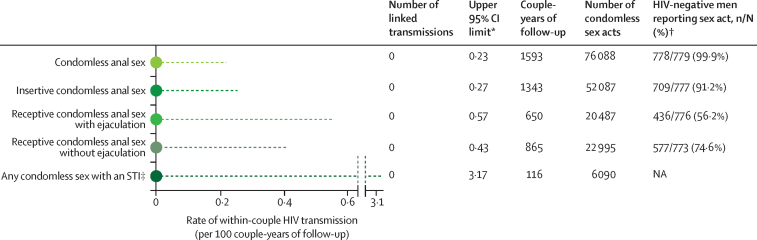
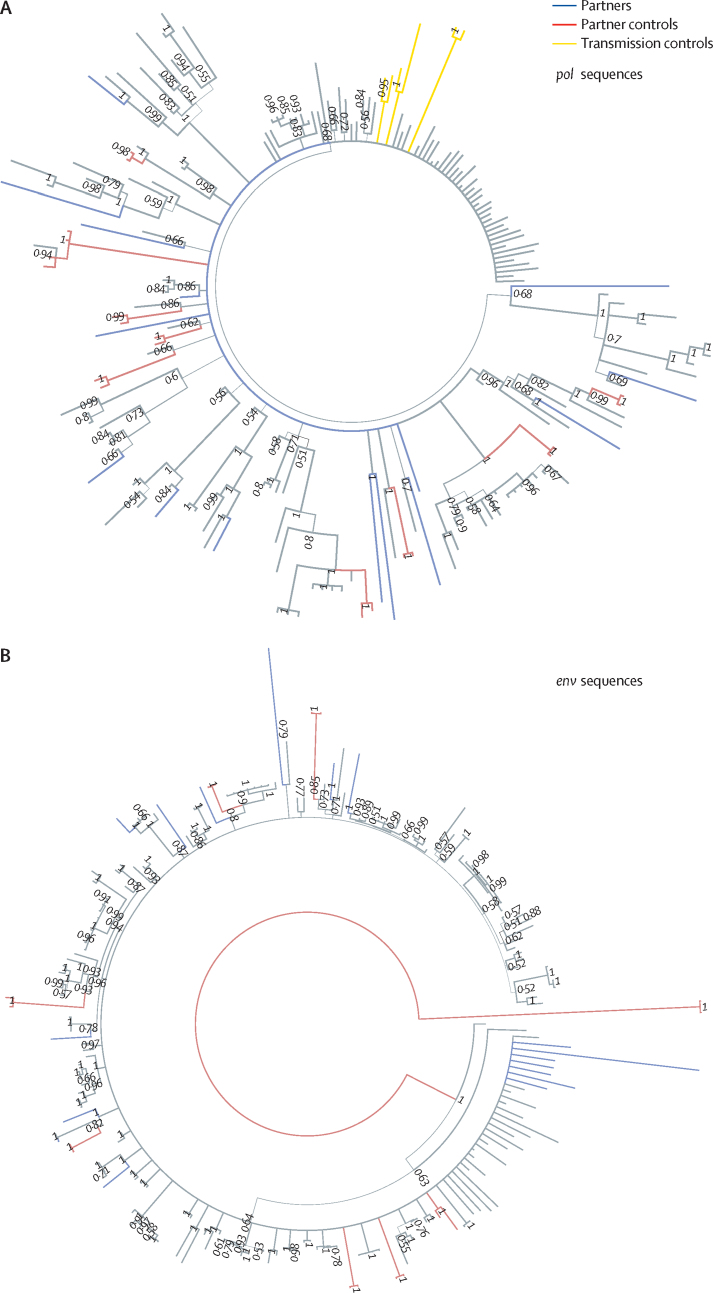
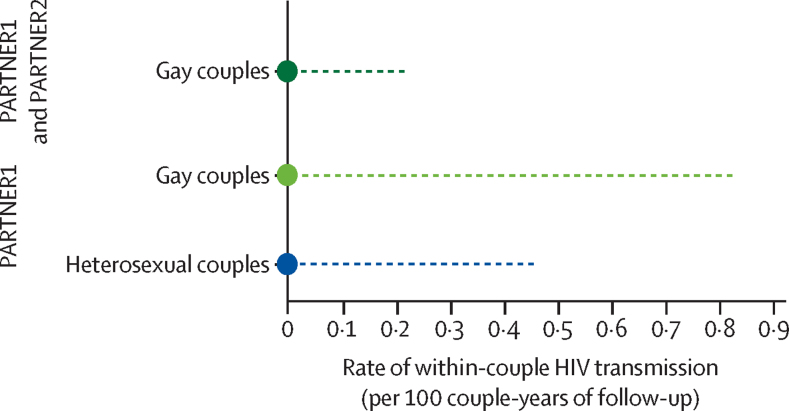
BACKGROUND: The level of evidence for HIV transmission risk through condomless sex in serodifferent gay couples with the HIV-positive partner taking virally suppressive antiretroviral therapy (ART) is limited compared with the evidence available for transmission risk in heterosexual couples. The aim of the second phase of the PARTNER study (PARTNER2) was to provide precise estimates of transmission risk in gay serodifferent partnerships. METHODS: The PARTNER study was a prospective observational study done at 75 sites in 14 European countries. The first phase of the study (PARTNER1; Sept 15, 2010, to May 31, 2014) recruited and followed up both heterosexual and gay serodifferent couples (HIV-positive partner taking suppressive ART) who reported condomless sex, whereas the PARTNER2 extension (to April 30, 2018) recruited and followed up gay couples only. At study visits, data collection included sexual behaviour questionnaires, HIV testing (HIV-negative partner), and HIV-1 viral load testing (HIV-positive partner). If a seroconversion occurred in the HIV-negative partner, anonymised phylogenetic analysis was done to compare HIV-1 pol and env sequences in both partners to identify linked transmissions. Couple-years of follow-up were eligible for inclusion if condomless sex was reported, use of pre-exposure prophylaxis or post-exposure prophylaxis was not reported by the HIV-negative partner, and the HIV-positive partner was virally suppressed (plasma HIV-1 RNA <200 copies per mL) at the most recent visit (within the past year). Incidence rate of HIV transmission was calculated as the number of phylogenetically linked HIV infections that occurred during eligible couple-years of follow-up divided by eligible couple-years of follow-up. Two-sided 95% CIs for the incidence rate of transmission were calculated using exact Poisson methods. FINDINGS: Between Sept 15, 2010, and July 31, 2017, 972 gay couples were enrolled, of which 782 provided 1593 eligible couple-years of follow-up with a median follow-up of 2·0 years (IQR 1·1-3·5). At baseline, median age for HIV-positive partners was 40 years (IQR 33-46) and couples reported condomless sex for a median of 1·0 years (IQR 0·4-2·9). During eligible couple-years of follow-up, couples reported condomless anal sex a total of 76 088 times. 288 (37%) of 777 HIV-negative men reported condomless sex with other partners. 15 new HIV infections occurred during eligible couple-years of follow-up, but none were phylogenetically linked within-couple transmissions, resulting in an HIV transmission rate of zero (upper 95% CI 0·23 per 100 couple-years of follow-up). INTERPRETATION: Our results provide a similar level of evidence on viral suppression and HIV transmission risk for gay men to that previously generated for heterosexual couples and suggest that the risk of HIV transmission in gay couples through condomless sex when HIV viral load is suppressed is effectively zero. Our findings support the message of the U=U (undetectable equals untransmittable) campaign, and the benefits of early testing and treatment for HIV. FUNDING: National Institute for Health Research.
Overview
The claims and statistics of this paper haven’t been checked yet.
Free: it reads the open-access text and checks the first 5 claims that cite a source we can check. Create a free account to check every claim.
Integrity signals
Registry
Cites
Statistics
Figures
Verification
Claims the paper makes
The claims and statistics of this paper haven’t been checked yet.
Free: it reads the open-access text and checks the first 5 claims that cite a source we can check. Create a free account to check every claim.
Claims other papers make about this one
Each is checked against this paper’s own text: does it say what the citing paper says it does?
The source backs part of the claim, not all of it — or backs it for a different population, condition or comparison.
In the citing paper
“Effective ART that suppresses HIV replication to undetectable levels reduces morbidity, provides a near-normal lifespan, and prevents sexual transmission of HIV to others (95–97,410–412).”
From Sexually Transmitted Infections Treatment Guidelines, 2021 (2021) · cites this paper as [97]
Experimental — accuracy not yet measuredThe cited source says what the claim attributes to it.
In the citing paper
“Additional studies of HIV mixed-status couples, heterosexual and MSM couples (PARTNER study), and MSM couples (Opposites Attract and PARTNERS2 studies) reported that patients with HIV taking ART who maintain an undetectable viral load demonstrate no risk for transmitting HIV to their HIV-negative sex partners (95–97).”
From Sexually Transmitted Infections Treatment Guidelines, 2021 (2021) · cites this paper as [97]
The cited source says what the claim attributes to it.
In the citing paper
“Persons with HIV infection who achieve and maintain a viral load suppressed to <200 copies/mL with ART have effectively no risk for sexually transmitting HIV (95–97,421).”
From Sexually Transmitted Infections Treatment Guidelines, 2021 (2021) · cites this paper as [97]
Self-check
Percentages, sums and reported differences re-computed from the paper’s own numbers.
The self-check needs the paper’s full text.
Citations
Cites
Prevention of HIV-1 infection with early antiretroviral therapy.
Cohen, M. S., Chen, Y. Q., McCauley, M., Gamble, T., Hosseinipour, M. C., Kumarasamy, N., Hakim, J. G., Kumwenda, J., Grinsztejn, B., Pilotto, J. H. S., et al. (2011) · New England Journal of Medicine · doi:10.1056/nejmoa1105243 · Cited by 6,873
Viral Load and Heterosexual Transmission of Human Immunodeficiency Virus Type 1
Quinn, T. C., Wawer, M. J., Sewankambo, N., Serwadda, D., Li, C., Wabwire-Mangen, F., Meehan, M. O., Lutalo, T., & Gray, R. H. (2000) · New England Journal of Medicine · doi:10.1056/nejm200003303421303 · Cited by 3,020
Antiretroviral therapy for the prevention of HIV-1 transmission.
Cohen, M. S., Chen, Y. Q., McCauley, M., Gamble, T., Hosseinipour, M. C., Kumarasamy, N., Hakim, J. G., Kumwenda, J., Grinsztejn, B., Pilotto, J. H. S., et al. (2016) · New England Journal of Medicine · doi:10.1056/nejmoa1600693 · Cited by 1,700
Rodger, A. J., Cambiano, V., Bruun, T., Vernazza, P., Collins, S., van Lunzen, J., Corbelli, G. M., Estrada, V., Geretti, A. M., Beloukas, A., et al. (2016) · JAMA · doi:10.1001/jama.2016.5148 · Cited by 1,431
Self-citationAttia, S., Egger, M., Müller, M., Zwahlen, M., & Low, N. (2009) · AIDS · doi:10.1097/qad.0b013e32832b7dca · Cited by 1,001
Donnell, D., Baeten, J. M., Kiarie, J., Thomas, K. K., Stevens, W., Cohen, C. R., McIntyre, J., Lingappa, J. R., & Celum, C. (2010) · The Lancet · doi:10.1016/s0140-6736(10)60705-2 · Cited by 952
Baggaley, R. F., White, R. G., & Boily, M.-C. (2010) · International Journal of Epidemiology · doi:10.1093/ije/dyq057 · Cited by 713
Bavinton, B. R., Pinto, A. N., Phanuphak, N., Grinsztejn, B., Prestage, G. P., Zablotska-Manos, I. B., Jin, F., Fairley, C. K., Moore, R., Roth, N., et al. (2018) · The Lancet HIV · doi:10.1016/s2352-3018(18)30132-2 · Cited by 524
Effectiveness of Highly Active Antiretroviral Therapy in Reducing Heterosexual Transmission of HIV
Castilla, J., del Romero, J., Hernando, V., Marincovich, B., García, S., & Rodríguez, C. (2005) · JAIDS Journal of Acquired Immune Deficiency Syndromes · doi:10.1097/01.qai.0000157389.78374.45 · Cited by 384
Genital HIV-1 RNA Predicts Risk of Heterosexual HIV-1 Transmission
Baeten, J. M., Kahle, E., Lingappa, J. R., Coombs, R. W., Delany-Moretlwe, S., Nakku-Joloba, E., Mugo, N. R., Wald, A., Corey, L., Donnell, D., et al. (2011) · Science Translational Medicine · doi:10.1126/scitranslmed.3001888 · Cited by 293
Research works printed but not linked: 2
- Rodger A, Bruun T, Cambiano V, et al. HIV transmission risk through condomless sex if HIV positive partner on suppressive ART: PARTNER Study. 21st Conference on Retroviruses and Opportunistic Infections (CROI); Boston, MA, USA; March 3–6, 2014. Abstract 153LB.
- Landovitz RJ, Tran TT, Cohn SE, et al. Perception of infectiousness in HIV-infected persons after initiating ART: ACTG A5257. 23rd Conference on Retroviruses and Opportunistic Infections (CROI); Boston, MA, USA; Feb 22–25, 2016. Abstract 55.
Cited by
Items 201–300 of 998
Liao, S., Li, J., Liu, M., Xie, H., Lu, Y., & Jiang, Y. (2023) · PLoS ONE · doi:10.1371/journal.pone.0284865 · Cited by 15
“HIV testing is helpful for infected people to discover their status earlier, which is crucial for seeking antiviral treatment and preventing the spread of HIV [10, 11].”
BackgroundMa, J., Wang, G., Zhu, X., Li, L., Wang, L., Hao, L., Gao, L., Ma, W., & Zhang, N. (2023) · Frontiers in Immunology · doi:10.3389/fimmu.2023.1269650 · Cited by 17
Systematic Review: Strategies for Improving HIV Testing and Detection Rates in European Hospitals
Vliegenthart-Jongbloed, K. J., Vasylyev, M., Jordans, C. C. E., Bernardino, J. I., Nozza, S., Psomas, C. K., Voit, F., Barber, T., Skrzat‐Klapaczyńska, A., Săndulescu, O., et al. (2024) · Microorganisms · doi:10.3390/microorganisms12020254 · Cited by 15
The stratified biomedicalization of HIV prevention in Mexico City
Cruz, C. T., & Suárez‐Díaz, E. (2019) · Global Public Health · doi:10.1080/17441692.2019.1679217 · Cited by 15
“…Paradigm (TasP), using scientific evidence from longitudinal studies carried out in parts of the world including Europe (Rodger et al., 2012; Rodger et al., 2019), the United States (Mulatu et al., 2018; The Lancet, 2011), Africa (Iwuji et al., 2013) and Australia (Jin et al., 2010), has…”
BackgroundZhang, C., Li, X., Heilemann, M. V., Chen, X., Wang, H., & Koniak‐Griffin, D. (2020) · Journal of the Association of Nurses in AIDS Care · doi:10.1097/jnc.0000000000000218 · Cited by 15
Radical Pleasure: Feminist Digital Storytelling by, with, and for Women Living with HIV
Carter, A., Anam, F. R., Sánchez, M., Roche, J., Wynne, S. T., Stash, J., Webster, K., Nicholson, V., Patterson, S., & Kaida, A. (2020) · Archives of Sexual Behavior · doi:10.1007/s10508-020-01822-8 · Cited by 22
Eustaquio, P. C., Docken, S. S., Leyritana, K., & Wulandari, L. P. L. (2021) · International Journal of STD & AIDS · doi:10.1177/0956462420987435 · Cited by 16
“, <30 days from diagnosis, or not); (4) retained in care (those documented alive on ART, without documented 90 day absence(3) since their last expected clinic visit, or otherwise)(25); (5) VL measurement done 6–12 months after ART initiation; and (6) VL suppression (VL < 200 copies/mL).(22)”
BackgroundNgo, H. T., Jin, M., Trick, A. Y., Chen, F., Chen, L., Hsieh, K., & Wang, T. (2022) · Analytical Chemistry · doi:10.1021/acs.analchem.2c03897 · Cited by 20
Nduva, G. M., Nazziwa, J., Hassan, A. S., Sanders, E. J., & Esbjörnsson, J. (2021) · Viruses · doi:10.3390/v13061174 · Cited by 18
Henderson, D. K., Dembry, L., Sifri, C. D., Palmore, T. N., Dellinger, E. P., Yokoe, D. S., Grady, C., Heller, T., Weber, D. J., del Rı́o, C., et al. (2020) · Infection Control and Hospital Epidemiology · doi:10.1017/ice.2020.458 · Cited by 18
“34,35 Since the magnitude of risk for a single unprotected sexual encounter approximates the magnitude of risk for occupational infection following a parenteral occupational exposure (eg, needlestick exposure to blood from a person living with HIV in the pre-antiretroviral era), these data are…”
Firkey, M. K., Sheinfil, A. Z., Ramos, J. M., & Woolf‐King, S. E. (2021) · AIDS and Behavior · doi:10.1007/s10461-021-03228-6 · Cited by 17
HIV Serostatus Disclosure Among Men Who Have Sex with Men in China in the Era of U=U and PrEP
Cao, W., Li, J., Sun, S., Sturm, C. D., Peng, L., Gu, J., Hao, C., Hou, F., Wei, D., You, X., et al. (2021) · AIDS and Behavior · doi:10.1007/s10461-021-03502-7 · Cited by 15
Okamoto, E. E., Anam, F. R., Baptiste, S. L., Dukashe, M., Castellanos, E., Poonkasetwattana, M., & Richman, B. (2024) · The Lancet HIV · doi:10.1016/s2352-3018(24)00241-8 · Cited by 21
Card, K. G., Fournier, A. B., Sorge, J., Morgan, J., Grace, D., Ham, D. C., Lachowsky, N. J., & Trussler, T. (2020) · AIDS Care · doi:10.1080/09540121.2020.1719026 · Cited by 14
Rodger, A., Dunn, D. T., McCabe, L., Weatherburn, P., Lampe, F. C., Witzel, T. C., Burns, F. M., Ward, D., Pebody, R., Trevelion, R., et al. (2020) · HIV Medicine · doi:10.1111/hiv.12919 · Cited by 15
Self-citationHolt, M., MacGibbon, J., Bear, B., Lea, T., Kolstee, J., Crawford, D., Murphy, D., Power, C., Ellard, J., & de Wit, J. B. F. (2021) · AIDS Education and Prevention · doi:10.1521/aeap.2021.33.1.62 · Cited by 21
Johnson, S. D., Fox, H. S., Buch, S. J., & Byrareddy, S. N. (2021) · Journal of Neuroimmune Pharmacology · doi:10.1007/s11481-021-09993-4 · Cited by 15
Carey, J. W., Carnes, N., Schoua‐Glusberg, A., Kenward, K., Gelaude, D., Denson, D. J., Gall, E. M., Randall, L. A., & Frew, P. M. (2019) · AIDS Education and Prevention · doi:10.1521/aeap.2019.31.4.306 · Cited by 15
HIV stigma in UK press reporting of a case of intentional HIV transmission
Jaspal, R., & Nerlich, B. (2020) · Health An Interdisciplinary Journal for the Social Study of Health Illness and Medicine · doi:10.1177/1363459320949901 · Cited by 19
“More recently, the second phase of the PARTNERS study (focusing on gay, bisexual and other men who have sex with men) demonstrated the efficacy of ‘treatment as prevention’ (Rodger et al., 2019).”
BackgroundGoyal, R., Hu, C., Klein, P. W., Hotchkiss, J. R., Morris, E., Mandsager, P., Cohen, S. M., Luca, D. L., Gao, J., Jones, A., et al. (2020) · JAIDS Journal of Acquired Immune Deficiency Syndromes · doi:10.1097/qai.0000000000002546 · Cited by 15
Kanki, P. J., & Koofhethile, C. K. (2023) · Encyclopedia of sustainability science and technology series · doi:10.1007/978-1-0716-2463-0_522 · Cited by 15
Kazemian, P., Costantini, S., Neilan, A. M., Resch, S., Walensky, R. P., Weinstein, M. C., & Freedberg, K. A. (2020) · Journal of Biomedical Informatics · doi:10.1016/j.jbi.2020.103475 · Cited by 13
Christopoulos, K., Erguera, X. A., VanderZanden, L., Campbell, C. K., Green, M., Tsuzuki, M. D., Schneider, J. A., Coffey, S., Bacon, O., Gandhi, M., et al. (2021) · Open Forum Infectious Diseases · doi:10.1093/ofid/ofab469 · Cited by 13
Holt, M., Chan, C., Broady, T. R., MacGibbon, J., Mao, L., Smith, A. K. J., Rule, J., & Bavinton, B. R. (2023) · AIDS and Behavior · doi:10.1007/s10461-023-04172-3 · Cited by 17
HIV/AIDS Among Sexual and Gender Minority Communities Globally
Beckham, S. W., Glick, J. L., Malone, J., Rich, A. J., Wirtz, A. L., & Baral, S. (2024) · Global LGBTQ health · doi:10.1007/978-3-031-36204-0_7 · Cited by 17
Bailón, L., Puertas, M. C., García-Guerrero, M. C., Moraes-Cardoso, I., Aparicio, E., Alarcón‐Soto, Y., Rivero, À., Rosen, E. P., Estes, J. D., Blanco, J., et al. (2024) · The Journal of Infectious Diseases · doi:10.1093/infdis/jiae530 · Cited by 13
Self-citationSerodiscordance predictors among couples in the HIV context: implications for health care
Antonini, M., Pontes, P. S., Melo, E. S., Alves, R. D. S., Gir, E., Sørensen, W. Ø., & Reis, R. K. (2021) · BMC Public Health · doi:10.1186/s12889-021-11835-0 · Cited by 14
Optimizing HIV Prevention Efforts to Achieve EHE Incidence Targets
Jacobson, E. U., Hicks, K. A., Carrico, J., Purcell, D. W., Green, T. A., Mermin, J., & Farnham, P. G. (2021) · JAIDS Journal of Acquired Immune Deficiency Syndromes · doi:10.1097/qai.0000000000002885 · Cited by 15
Past and future of HIV infection. A document based on expert opinion
Bouza, E., Arribas, J. R., Bernardino, J. I., Alejos, B., Coiras, M., Coll, P., Romero, J. D., Fuster, M. J. L., Górgolas, M., Gutiérrez, A., et al. (2022) · Revista Española de Quimioterapia · doi:10.37201/req/083.2021 · Cited by 22
Self-citationLove in the Time of HIV: How Beliefs About Externalities Impact Health Behavior
Derksen, L., Muula, A. S., & van Oosterhout, J. J. (2022) · Journal of Development Economics · doi:10.1016/j.jdeveco.2022.102993 · Cited by 17
Isothermal nucleic acid amplification technology in HIV detection
Abudushalamu, G., Zou, M., Ma, S., Yao, Y., Fan, X., & Wu, G. (2023) · The Analyst · doi:10.1039/d2an01813f · Cited by 13
da Silva, L. A. V., Duarte, F. M., Magno, L., Dourado, I. C., & Squire, C. (2021) · Sociology of Health & Illness · doi:10.1111/1467-9566.13230 · Cited by 15
Howarth, A., Apea, V., Michie, S., Morris, S., Sachikonye, M., Mercer, C. H., Evans, A. M., Delpech, V., Sabin, C. A., & Burns, F. M. (2021) · HIV Medicine · doi:10.1111/hiv.13103 · Cited by 18
Hulstein, S. H., Zimmermann, H. M. L., de la Court, F., Matser, A. A., van der Loeff, M. F. S., Hoornenborg, E., Davidovich, U., Prins, M., & de Vries, H. J. C. (2022) · Sexually Transmitted Diseases · doi:10.1097/olq.0000000000001599 · Cited by 13
Batista, D. R. L., Dávila, R. N., Santos, A. C. D., Rocha, F. Q., Araújo, J. A., Alencar, A., do Nascimento, L. R. A., de Araújo, N. D., Lopes, S. C. P., Araújo, P. S., et al. (2024) · PLoS ONE · doi:10.1371/journal.pone.0296201 · Cited by 18
for the AURAH Study Group, Miltz, A. R., Rodger, A., Cozzi‐Lepri, A., Sewell, J., Nwokolo, N. C., Allan, S., Scott, C., Ivens, D. R., Lascar, M., et al. (2019) · AIDS and Behavior · doi:10.1007/s10461-019-02724-0 · Cited by 11
“Studies also need to take into account knowledge of an HIV-positive partner’s HIV treatment status in defining CLS outcomes, as recent evidence has unequivocally shown that someone with an undetectable viral load cannot transmit HIV [59].”
BackgroundSelf-citationChemsex: Reintroducing Sexuality in the Pleasure and Pain of the Infans
Πούλιος, Α. (2022) · Studies in Gender and Sexuality · doi:10.1080/15240657.2022.2097472 · Cited by 14
Paioni, P., Aebi‐Popp, K., de Tejada, B. M., Rudin, C., Bernasconi, E., Braun, D. L., Kouyos, R. D., Wagner, N., Crisinel, P. A., Güsewell, S., et al. (2023) · The Lancet Regional Health - Europe · doi:10.1016/j.lanepe.2023.100656 · Cited by 12
Self-citationEvangeli, M., Gnan, G., Musiime, V., Fidler, S. J., Seeley, J., Frize, G., Uwizera, A., Lisi, M., & Foster, C. (2024) · AIDS and Behavior · doi:10.1007/s10461-024-04294-2 · Cited by 14
“It is proven that successful viral suppression (< 200 copies HIV RNA/ml) with ART prevents HIV transmission to sexual partners (Undetectable = Untransmit-table; U = U) [11, 12].”
BackgroundSelf-citationShintani, T., Iwata, T., Okada, M., Nakaoka, M., Yamasaki, N., Fujii, T., & Shiba, H. (2020) · Current HIV Research · doi:10.2174/1570162x18666200804151118 · Cited by 15
Matsuda, E. M., de Oliveira, I. P., Bao, L. B., Manzoni, F. M., Campos, N. C., Varejão, B. B., Leal, M. P., do Nascimento, V. B., & Brígido, L. F. D. M. (2022) · Revista de Saúde Pública · doi:10.11606/s1518-8787.2022056004314 · Cited by 15
The Penis, the Vagina and HIV Risk: Key Differences (Aside from the Obvious)
Kaul, R., Liu, C. M., Park, D. E., Galiwango, R. M., Tobian, A. A. R., & Prodger, J. L. (2022) · Viruses · doi:10.3390/v14061164 · Cited by 16
Undetectable equals untransmittable
York, A. (2019) · Nature Reviews Microbiology · doi:10.1038/s41579-019-0215-4 · Cited by 12
Fernández‐González, M., García, J. A., Padilla, S., García‐Abellán, J., Agulló, V., Gutiérrez, F., & Masiá, M. (2019) · Journal of Antimicrobial Chemotherapy · doi:10.1093/jac/dkz482 · Cited by 13
Self-citationHerrmann, A., Roesner, M., Werner, T. A., Hauck, S. M., Koch, A., Bauer, A., Schneider, M., & Brack‐Werner, R. (2020) · Scientific Reports · doi:10.1038/s41598-020-57843-9 · Cited by 14
Whittaker, R. N., Case, K. K., Nilsen, Ø., Blystad, H., Cowan, S. A., Kløvstad, H., & van Sighem, A. (2020) · BMC Infectious Diseases · doi:10.1186/s12879-020-05178-1 · Cited by 13
Lockman, S., Holme, M. P., Makhema, J. M., Bachanas, P. J., Moore, J. S., Wirth, K. E., Lebelonyane, R., & Essex, M. (2020) · Current HIV/AIDS Reports · doi:10.1007/s11904-020-00523-0 · Cited by 15
Chen, J. S., Matoga, M., Massa, C., Tegha, G., Ndalama, B., Bonongwe, N., Mathiya, E., Jere, E., Banda, G., Loftis, A. J., et al. (2020) · Clinical Infectious Diseases · doi:10.1093/cid/ciaa1529 · Cited by 13
HIV Infection in Adults: Initial Management.
Goldschmidt, R. H., & Chu, C. (2021) · American family physician · Cited by 21
Lalloo, E. C., Mellgren, Å., Berg, M., & Rusner, M. (2021) · Sexual & Reproductive Healthcare · doi:10.1016/j.srhc.2021.100640 · Cited by 12
Edwards, R. J., Cyrus, E., Bhatt, C. B., Lyons, N., Lavia, L.-O., & Boyce, G. (2019) · Global Public Health · doi:10.1080/17441692.2019.1633379 · Cited by 12
“Additionally, an undetectable viral load can also reduce HIV transmission with a resultant decrease in HIV incidence (Rodger et al., 2019).”
BackgroundGaliwango, R. M., Bagaya, B. S., Mpendo, J., Joag, V., Okech, B. A., Nanvubya, A., Ssetaala, A., Muwanga, M., & Kaul, R. (2019) · Trials · doi:10.1186/s13063-019-3545-7 · Cited by 12
“The provision of early and effective antiretroviral therapy for a person infected with HIV reduces the risk of transmission to their partner to negligible levels, and consistent use by an uninfected person of pre-exposure prophylaxis (PrEP) reduces their risk of HIV acquisition by 90–95% [1, 2].”
BackgroundHealthcare workers potentially exposed to HIV: an update
Asanati, K., Majeed, A., Shemtob, L., & Cresswell, F. V. (2022) · Journal of the Royal Society of Medicine · doi:10.1177/01410768221107122 · Cited by 15
Anyanwu, C. F., Johnbull, T.-O., Usman, I. M., Aigbogun, E., Ochai, J., Qasem, A. H., Alkhayyat, S. S., Alexiou, A. T., & Batiha, G. E. (2021) · Frontiers in Reproductive Health · doi:10.3389/frph.2021.664080 · Cited by 12
Kaida, A., Cameron, B., Conway, T., Cotnam, J., Danforth, J., de Pokomandy, A., Gagnier, B., Godoy, S., Gormley, R., Greene, S., et al. (2022) · Women s Health · doi:10.1177/17455057221090829 · Cited by 14
Alckmin-Carvalho, F., Pereira, H., Oliveira, A., & Nichiata, L. Y. I. (2024) · European Journal of Investigation in Health Psychology and Education · doi:10.3390/ejihpe14060098 · Cited by 33
“Furthermore, sufficient evidence indicates that people with an undetectable viral load do not transmit the HIV infection sexually, even without using preventive methods [12].”
BackgroundMukuku, O. K., Govender, K., & Wembonyama, S. O. (2025) · PLoS ONE · doi:10.1371/journal.pone.0320417 · Cited by 11
“The main objective of ART is to achieve viral load suppression (VLS) to undetectable levels, a step that not only improves the health and longevity of people living with HIV (PLHIV) but also eliminates the risk of viral transmission to others, as demonstrated by the Partner Study [2].”
Papageorgiou, V., Cullen, L., Witzel, T. C., Sparrowhawk, A., Coukan, F., Sewell, J., Rodger, A., May, C. R., & Burns, F. M. (2025) · Social Science & Medicine · doi:10.1016/j.socscimed.2025.118109 · Cited by 14
“People with HIV on successful antiretroviral treatment will have an undetectable viral load meaning the virus is sexually untransmittable (U = U) (Rodger et al., 2019).”
Self-citationJohnson, J. E., Brotherton, A. L., Rossi, M. R., Sanchez, M. C., & Beckwith, C. G. (2025) · Current HIV/AIDS Reports · doi:10.1007/s11904-025-00741-4 · Cited by 13
Leech, A. A., Biancarelli, D. L., Aaron, E. Z., Miller, E. S., Coleman, J. S., Anderson, P. L., Nkwihoreze, H., Condron, B., & Sullivan, M. M. (2020) · AIDS Patient Care and STDs · doi:10.1089/apc.2020.0005 · Cited by 12
Implementing Implementation Research: Teaching Implementation Research to HIV Researchers
Schwartz, S., Smith, J. D., Hoffmann, C. J., Hansoti, B., Mishra, S., Means, A. R., Go, V. F.-L., Sherr, K., Nash, D., Sullivan, P. S., et al. (2021) · Current HIV/AIDS Reports · doi:10.1007/s11904-021-00551-4 · Cited by 11
Mussini, C., Lorenzini, P., Cozzi‐Lepri, A., Mammone, A., Guaraldi, G., Marchetti, G. C., Lichtner, M., Lapadula, G., Caputo, S. L., Antinori, A., et al. (2021) · Scientific Reports · doi:10.1038/s41598-021-88367-5 · Cited by 13
Self-citationLanguage impairments and CNS infections: a review
Rofes, A., van de Beek, D., & Miceli, G. (2021) · Aphasiology · doi:10.1080/02687038.2021.1937922 · Cited by 9
“Furthermore, HIV/AIDS is one of the leading causes of death in low-income economies and there are specific populations at risk, also in middle-income and higher income countries (Baral et al., 2012; Kral et al., 2003; Rodger et al., 2019).”
BackgroundPantke, A., Hoebel, J., der Heiden, M. A., Michalski, N., Gunsenheimer‐Bartmeyer, B., Hanke, K., Bannert, N., Bremer, V., & Koppe, U. (2022) · BMC Infectious Diseases · doi:10.1186/s12879-022-07168-x · Cited by 11
“An early diagnosis together with continuous treatment furthermore plays a pivotal role in controlling HIV transmission in populations as effective ART leads to viral suppression and the practical elimination of a risk for onward sexual transmission [8].”
BackgroundChinbunchorn, T., Thaneerat, N., Howell, S., Sowaprux, T., Phiphatkhunarnon, P., Lujintanon, S., Kaewpoowat, Q., Phanuphak, P., Phanuphak, N., & Ramautarsing, R. A. (2022) · Sexually Transmitted Infections · doi:10.1136/sextrans-2021-055300 · Cited by 12
Fu, R., Hou, J., Gu, Y., & Yu, N. X. (2022) · AIDS and Behavior · doi:10.1007/s10461-022-03768-5 · Cited by 11
“, U = U) [8, 10, 11], as well as HIV counseling and testing [12], and access to pre-exposure prophylaxis (PrEP) [13] for the HIV-negative partner.”
BackgroundGeldsetzer, P., Chebet, J. J., Tarumbiswa, T., Phate-Lesihla, R., Maponga, C., Mandara, E., Bärnighausen, T., & McMahon, S. A. (2022) · PLOS Global Public Health · doi:10.1371/journal.pgph.0000762 · Cited by 20
Is U=U consistently known and implemented? A survey among different medical specialists in Brazil
Nunes, N. N., Vasconcelos, R. D. P., Cortez, A. L., Filho, E. S. F., Kobayasi, R., Willets, C., Cocuzza, M., & Avelino‐Silva, V. I. (2023) · International Journal of STD & AIDS · doi:10.1177/09564624231153202 · Cited by 11
“It is appropriate to explain to this patient that there is no risk of sexual transmission of HIV, even without using condoms, as long as he persists with regular antiretroviral treatment and undetectable HIV viral load(1) (%) 79 (41) 57 (29) 10 (5) 37 (19) 12 (6)”
Backgroundcohort, T. H.-1. S., Schmidt, D., cohort, T. C. H., Kollan, C., Stoll, M., Hamouda, O., Bremer, V., Kurth, T., & Gunsenheimer‐Bartmeyer, B. (2021) · BMC Public Health · doi:10.1186/s12889-020-10088-7 · Cited by 15
Increased targeted HIV testing and reduced undiagnosed HIV infections among gay and bisexual men
Patel, P., Keen, P., McManus, H., Duck, T., Callander, D., Selvey, C., Power, C., Gray, R. T., Knight, V., Asselin, J., et al. (2021) · HIV Medicine · doi:10.1111/hiv.13102 · Cited by 14
HIV self‐testing: A review and analysis to guide HIV prevention policy
O’Byrne, P. (2021) · Public Health Nursing · doi:10.1111/phn.12917 · Cited by 13
Sauermilch, D., Siegel, K., Hoppe, T., Roth, G., & Meunier, É. (2022) · Sexuality Research and Social Policy · doi:10.1007/s13178-022-00710-1 · Cited by 14
Antiretroviral Medications for the Prevention of HIV Infection
Heendeniya, A., & Bogoch, I. I. (2019) · Infectious Disease Clinics of North America · doi:10.1016/j.idc.2019.04.002 · Cited by 13
Sha, B. E., Kniuksta, R., Exner, K., Kishen, E., Shankaran, S., Williams, B., Aziz, M. S., Lai, R., & Purim-Shem-Tov, Y. A. (2019) · Journal of Emergency Medicine · doi:10.1016/j.jemermed.2019.08.008 · Cited by 15
McManus, K. A., Killelea, A., Honeycutt, E., An, Z., & Keim‐Malpass, J. (2020) · AIDS Research and Human Retroviruses · doi:10.1089/aid.2020.0013 · Cited by 10
Analysis of HIV latent infection model with multiple infection stages and different drug classes
Alshorman, A., Alhosainat, N., & Jackson, T. L. (2022) · Journal of Biological Dynamics · doi:10.1080/17513758.2022.2113828 · Cited by 10
“Durable suppression of HIV can improve the immune system and HIV-patient health, prevent HIV-associated mortality and reduce the risk of transmission [4,6,7,16,27,69,70].”
BackgroundTrickey, A., Walker, J. G., Bivegete, S., Semchuk, N., Салюк, Т., Varetska, O., Stone, J., & Vickerman, P. T. (2022) · AIDS · doi:10.1097/qad.0000000000003347 · Cited by 13
“This beneficial impact has been achieved through condom distribution, while quickly diagnosing HIV-positive MSM and linking them to ART(9).”
BackgroundShi, J., Ying, G.-X., Zheng, R., & Zhang, Z. (2023) · HIV Medicine · doi:10.1111/hiv.13585 · Cited by 13
“The results of the PARTNER study and the Opposites Attract study found that HIV-infected patients on stable ART with HIV viral loads below 200 copies/mL were not at risk of sexual transmission [39].”
ResultSituación epidemiológica de VIH a nivel global y nacional: Puesta al día
Rodrigo Blamey, D., Sciaraffia, A., Piñera, C., Silva, M., Araya, X., Ceballos, M. E., Cortés, C. P., & Muñoz, L. (2024) · Revista chilena de infectología · doi:10.4067/s0716-10182024000200248 · Cited by 31
Kasadha, B., Hinton, L., Tariq, S., Nyatsanza, F., Namiba, A., Freeman‐Romilly, N., & Rai, T. (2024) · BMC Public Health · doi:10.1186/s12889-024-19581-9 · Cited by 10
“Data show that when on effective antiretroviral therapy (ART), people cannot transmit HIV via condomless sex [2].”
BackgroundLee, M. J., Eason, M., Castagna, A., Laura, G., Scheerder, M. D., Riley, J. L., Tebas, P., Gunst, J. D., Søgaard, O. S., Florence, É., et al. (2024) · Journal of the International AIDS Society · doi:10.1002/jia2.26349 · Cited by 12
Self-citationMwavika, E. T., Kunambi, P. P., Masasi, S. J., Lema, N. A., Kamori, D., & Matee, M. I. (2024) · Bulletin of the National Research Centre/Bulletin of the National Research Center · doi:10.1186/s42269-024-01248-5 · Cited by 10
“Studies conducted in African countries have found the proportion of individuals switching to second-line treatment to range between 62.2 and 67.45% (Ramadhani et al. 2016; Alemu et al. 2022), and this number is projected to increase significantly by 2030 (Rodger et al. 2019).”
InfluentialPhylogenetics and molecular evolution to understand and curb the HIV pandemic
Günthard, H. F., Kusejko, K., & Kouyos, R. D. (2025) · Nature Reviews Microbiology · doi:10.1038/s41579-025-01202-w · Cited by 15
“Further, phylogenetic analyses were an integral part of the HIV Prevention Trials Network 052 and PARTNER studies, demonstrating the effectiveness of treatment as prevention 176,177 .”
Self-citationTaylor, B. S., & Sapién, H. (2020) · Clinical Infectious Diseases · doi:10.1093/cid/ciz1248 · Cited by 10
Lewis, M. A., Harshbarger, C. L., Bann, C., Burrus, O., Peinado, S., Garner, B. R., Khavjou, O., Shrestha, R. K., Karns, S., Borkowf, C. B., et al. (2020) · Contemporary Clinical Trials · doi:10.1016/j.cct.2020.106097 · Cited by 11
Matthews, L. T., Greener, L. R., Khidir, H., Psaros, C., Harrison, A. D., Mosery, F. N., Mathenjwa, M., O’Neil, K., Milford, C., Safren, S. A., et al. (2021) · PLoS ONE · doi:10.1371/journal.pone.0240990 · Cited by 10
Huang, Y., Huang, Y., Lo, Y., Latkin, C. A., Huang, H., Lee, C., Pan, L., & Kuo, H. (2022) · Journal of the International AIDS Society · doi:10.1002/jia2.25897 · Cited by 10
Garner, B. R., Burrus, O., Ortiz, A., Tueller, S., Peinado, S., Hedrick, H., Harshbarger, C. L., Galindo, C. A., Courtenay–Quirk, C., & Lewis, M. A. (2022) · JAIDS Journal of Acquired Immune Deficiency Syndromes · doi:10.1097/qai.0000000000003018 · Cited by 13
“These fit questions were asked in regard to 5 PHC study components: (1) PHC Patient Onboarding (ie, staff assisting users with logging-in), (2) PHC Delivery through iPads or android tablets, (3) PHC Handout Printing and Delivery, (4) Clinic Web Application for tracking patients’ PHC use, and (5) PHC Patient Outreach.”
MethodTowards achieving the end of the HIV epidemic: Advances, challenges and scaling-up strategies
Balogun, K. A., & Slev, P. R. (2022) · Clinical Biochemistry · doi:10.1016/j.clinbiochem.2022.05.006 · Cited by 14
Zhao, B., Qiu, Y., Song, W., Kang, M., Dong, X., Li, X., Wang, L., Liu, J., Ding, H., Chu, Z., et al. (2022) · Viruses · doi:10.3390/v14091895 · Cited by 10
“Prior research has indicated that undetectable equals untransmissible [32].”
BackgroundSeverin, S., Delforge, M., & Wit, S. D. (2022) · HIV Medicine · doi:10.1111/hiv.13440 · Cited by 11
Liu, T., Chambers, L. C., Hansen, B., Bazerman, L. B., Cachay, E. R., Christopoulos, K., Drainoni, M., Gillani, F. S., Mayer, K. H., Moore, R. D., et al. (2023) · Open Forum Infectious Diseases · doi:10.1093/ofid/ofad257 · Cited by 11
Raffe, S. F., Pollard, A., Vera, J. H., Soni, S., Peralta, C., Rodriguez, L., Dean, G. L., & Llewellyn, C. D. (2020) · International Journal of STD & AIDS · doi:10.1177/0956462419890726 · Cited by 10
“Once virological suppression is achieved, there is no risk of sexual transmission of HIV to others (4).”
BackgroundFleischer, L., & Avery, A. (2020) · SAGE Open Medicine · doi:10.1177/2050312120915405 · Cited by 10
“Motivators that were common to both groups were (1) support of family members, and (2) improved physical health on ART.”
BackgroundMethodInfluentialShapiro, H. M., Zaman, L., Kennedy, V. L., Dean, N. L., Yudin, M. H., & Loutfy, M. R. (2020) · Reproductive BioMedicine Online · doi:10.1016/j.rbmo.2020.05.004 · Cited by 12
PrEP in India’s HIV Prevention Policy in the Era of Social Media and Sex Positivity
Kar, A., Bhugra, D., Mukherjee, S., Mondal, A., & Kumar, A. S. (2020) · Central Asian Journal of Global Health · doi:10.5195/cajgh.2020.407 · Cited by 14
Meunier, É., Siegel, K., Sundelson, A. E., & Schrimshaw, E. W. (2020) · AIDS Patient Care and STDs · doi:10.1089/apc.2020.0062 · Cited by 10
Bringing Gene Therapies for HIV Disease to Resource-Limited Parts of the World
McCune, J. M., Turner, E. H., Jiang, A., & Doehle, B. (2020) · Human Gene Therapy · doi:10.1089/hum.2020.252 · Cited by 11
“, <50 copies/mL).(7,10) Such an intervention would have particular impact when targeted to select populations that are now untreated and likely to transmit virus.”
BackgroundContagiousness in treated HIV-1 infection
Eriksen, J., Albert, J., Axelsson, M., Berglund, T., Brännström, J., Gaines, H., Gisslén, M., Gröön, P., Hagstam, P., Navér, L., et al. (2020) · Scandinavian Journal of Infectious Diseases · doi:10.1080/23744235.2020.1831696 · Cited by 12
Experiences and challenges in sexual health service access among men who have sex with men in Kenya
Bourne, A. H., Carman, M., Kabuti, R., Nutland, W., Fearon, E., Liku, J., Tukai, A., Weatherburn, P., Kimani, J., & Smith, A. D. (2021) · Global Public Health · doi:10.1080/17441692.2021.1987501 · Cited by 10
“A person living with diagnosed HIV who is adherent to antiretroviral treatment can achieve an undetectable viral load, which we now recognise precludes any possibility of onward transmission (Rodger et al., 2019).”
Background
Metadata
- Authors
- Rodger, A. J., Cambiano, V., Bruun, T., Vernazza, P., Collins, S., Degen, O., Corbelli, G. M., Estrada, V., Geretti, A. M., Beloukas, A., Raben, D., Coll, P., Antinori, A., Nwokolo, N., Rieger, A., Prins, J. M., Blaxhult, A., Weber, R., Van Eeden, A., Brockmeyer, N. H., Clarke, A., del Romero Guerrero, J., Raffi, F., Bogner, J. R., Wandeler, G., Gerstoft, J., Gutiérrez, F., Brinkman, K., Kitchen, M., Ostergaard, L., Leon, A., Ristola, M., Jessen, H., Stellbrink, H.-J., Phillips, A. N., Lundgren, J., Coll, P., Cobarsi, P., Nieto, A., Meulbroek, M., Carrillo, A., Saz, J., Guerrero, J. D. R., García, M. V., Gutiérrez, F., Masiá, M., Robledano, C., Leon, A., Leal, L., Redondo, E. G., Estrada, V. P., Marquez, R., Sandoval, R., Viciana, P., Espinosa, N., Lopez-Cortes, L., Podzamczer, D., Tiraboschi, J., Morenilla, S., Antela, A., Losada, E., Nwokolo, N., Sewell, J., Clarke, A., Kirk, S., Knott, A., Rodger, A. J., Fernandez, T., Gompels, M., Jennings, L., Ward, L., Fox, J., Lwanga, J., Lee, M., Gilson, R., Leen, C., Morris, S., Clutterbuck, D., Brady, M., Asboe, D., Fedele, S., Fidler, S., Brockmeyer, N., Potthoff, A., Skaletz-Rorowski, A., Bogner, J., Seybold, U., Roider, J., Jessen, H., Jessen, A., Ruzicic, S., Stellbrink, H.-J., Kümmerle, T., Lehmann, C., Degen, O., Bartel, S., Hüfner, A., Rockstroh, J., Mohrmann, K., Boesecke, C., Krznaric, I., Ingiliz, P., Weber, R., Grube, C., Braun, D., Günthard, H., Wandeler, G., Furrer, H., Rauch, A., Vernazza, P., Schmid, P., Rasi, M., Borso, D., Stratmann, M., Caviezel, O., Stoeckle, M., Battegay, M., Tarr, P., Christinet, V., Jouinot, F., Isambert, C., Bernasconi, E., Bernasconi, B., Gerstoft, J., Jensen, L. P., Bayer, A. A., Ostergaard, L., Yehdego, Y., Bach, A., Handberg, P., Kronborg, G., Pedersen, S. S., Bülow, N., Ramskover, B., Ristola, M., Debnam, O., Sutinen, J., Blaxhult, A., Ask, R., Hildingsson-Lundh, B., Westling, K., Frisen, E.-M., Cortney, G., O'Dea, S., De Wit, S., Necsoi, C., Vandekerckhove, L., Goffard, J.-C., Henrard, S., Prins, J., Nobel, H.-H., Weijsenfeld, A., Van Eeden, A., Elsenburg, L., Brinkman, K., Vos, D., Hoijenga, I., Gisolf, E., Van Bentum, P., Verhagen, D., Raffi, F., Billaud, E., Ohayon, M., Gosset, D., Fior, A., Pialoux, G., Thibaut, P., Chas, J., Leclercq, V., Pechenot, V., Coquelin, V., Pradier, C., Breaud, S., Touzeau-Romer, V., Rieger, A., Kitchen - Maria Geit, M., Sarcletti, M., Gisinger, M., Oellinger, A., Antinori, A., Menichetti, S., Bini, T., Mussini, C., Meschiari, M., Di Biagio, A., Taramasso, L., Celesia, B. M., Gussio, M., & Janeiro, N.
- Affiliations
- University College London (GB)
- University of Copenhagen (DK)
- University of Liverpool (GB)
- Innsbruck Medical University (AT)
- Infektionsmedizinisches Centrum Hamburg (DE)
- LMU Klinikum (DE)
- Inserm (FR)
- University of Bern (CH)
- Istituto Nazionale per le Malattie Infettive Lazzaro Spallanzani (IT)
- ORCID
- Cambiano, Valentina
- Collins, Simon
- Corbelli, Giulio Maria
- Beloukas, Apostolos
- Raben, Dorthe
- Kitchen, Maria
- Phillips, Andrew N
- Lundgren, Jens
- Saz, Jorge
- Masiá, Mar
- Leal, Lorna
- Tiraboschi, Juan
- Antela, Antonio
- Losada, Elena
- Sewell, Janey
- Fernandez, Thomas
- Gompels, Mark
- Fox, Julie
- Lee, Ming
- Gilson, Richard
- Leen, Clifford
- Clutterbuck, Dan
- Brady, Michael
- Asboe, David
- Fidler, Sarah
- Potthoff, Anja
- Seybold, Ulrich
- Roider, Julia
- Lehmann, Clara
- Rockstroh, Jürgen
- Boesecke, Christoph
- Krznaric, Ivanka
- Ingiliz, Patrick
- Braun, Dominique
- Günthard, Huldrych
- Furrer, Hansjakob
- Rauch, Andri
- Schmid, Patrick
- Stoeckle, Marcel
- Battegay, Manuel
- Tarr, Philip
- Bernasconi, Enos
- Kronborg, Gitte
- Westling, Katarina
- Vandekerckhove, Linos
- Goffard, Jean-Christophe
- Henrard, Sophie
- Weijsenfeld, Annouschka
- Elsenburg, Loek
- Gisolf, Elisabeth
- Verhagen, Dominique
- Chas, Julie
- Pradier, Christian
- Gisinger, Martin
- Mussini, Cristina
- Meschiari, Marianna
- Taramasso, Lucia
- Celesia, Benedetto M.
- Venue
- The Lancet
- Publisher
- Elsevier BV
- Published
- 2019-06
- Volume
- 393
- Issue
- 10189
- Pages
- 2428-2438
- ISSN
- 0099-5355 (ISSN-L)
- 0140-6736
- PMC
- PMC6584382
- OpenAlex
- W2943039121
- Semantic Scholar
- dd8a22d372911ab5c0669c09eefcfffaddbd6e1c
- Cited by
- 1,023
- References
- 35
- Citations by year
- 2026: 87 · 2025: 122 · 2024: 126 · 2023: 153 · 2022: 153 · 2021: 144 · 2020: 168 · 2019: 68
- FWCI
- 102.10
- Type
- journal article
- Language
- en
- Open access
- hybrid
- doi.org
- Licence
- cc-by-nc-nd
- www.elsevier.com/tdm/userlicense/1.0/ (tdm)
- www.elsevier.com/legal/tdmrep-license (tdm)
- creativecommons.org/licenses/by-nc-nd/4.0/ (vor)
- Locations
- The Lancet (publishedVersion, cc-by-nc-nd)
- PubMed Central (publishedVersion, cc-by-nc-nd)
- PubMed (publishedVersion)
- Kölner Universitäts PublikationsServer (Universität zu Köln) (publishedVersion)
- Research at the University of Copenhagen (University of Copenhagen) (publishedVersion, cc-by-nc-nd)
- Ghent University Academic Bibliography (Ghent University) (submittedVersion, cc-by-nc-nd)
- Työväentutkimus Vuosikirja (submittedVersion, cc-by-nc-nd)
- IRIS UNIMORE (University of Modena and Reggio Emilia) (submittedVersion, cc-by)
- Data Archiving and Networked Services (DANS) (submittedVersion)
- Archivio Istituzionale della Ricerca (Universita Degli Studi Di Milano) (submittedVersion, other-oa)
- Cineca Institutional Research Information System (Tor Vergata University) (submittedVersion, other-oa)
- BORIS (University Library Bern) (submittedVersion, cc-by-nc-nd)
- UCL Discovery (University College London) (submittedVersion)
- CINECA IRIS Institutial Research Information System (University of Genoa) (submittedVersion, other-oa)
- Pure Amsterdam UMC (submittedVersion, cc-by-nc-nd)
- Edinburgh Research Explorer (University of Edinburgh) (submittedVersion, cc-by-nc-nd)
- RUNA. Repositorio Institucional del Sergas (Servicio Gallego de Salud (SERGAS)) (submittedVersion, cc-by-nc-nd)
- Spiral (Imperial College London) (submittedVersion, other-oa)
- Zurich Open Repository and Archive (University of Zurich) (submittedVersion)
- Data Archiving and Networked Services (DANS) (submittedVersion, other-oa)
- Open Access CRIS of the University of Bern
- Funders
- Danmarks Grundforskningsfond (126)
- Gilead Sciences
- Augustinus Fonden
- National Institute for Health and Care Research
- A.P. Møller og Hustru Chastine Mc-Kinney Møllers Fond til almene Formaal
- Research for Patient Benefit Programme (PB-PG-1013-32069)
- British HIV Association
- Topics
- Health Sciences › Medicine › Infectious Diseases › HIV/AIDS Research and Interventions
- Life Sciences › Immunology and Microbiology › Virology › HIV Research and Treatment
- Health Sciences › Medicine › Epidemiology › HIV, Drug Use, Sexual Risk
- Keywords
- HIV transmission, gay men, unprotected sex, antiretroviral therapy, viral suppression, HIV-1, transmission risk, phylogenetic analysis, seroconversion, HIV prevention, HIV-negative partners, HIV-positive partners, sexual behavior, pre-exposure prophylaxis, post-exposure prophylaxis, HIV-1 drug resistance, HIV-1 subtype C, HIV-1 subtype D, HIV-1 subtype E, HIV-1 subtype F, HIV-1 subtype G
- MeSH terms
- Adult, HIV Seropositivity, Humans, Male, Middle Aged, Prospective Studies, Sexual Partners, Condoms, Homosexuality, Male, Anti-HIV Agents, Viral Load, Antiretroviral Therapy, Highly Active, Unsafe Sex
About these checks
Registry, retraction, Cites and statistics results are computed, not judged, with one exception: a printed reference that no index lists is read once by a model before it counts as a citation error. Claims are extracted by a model and kept only when their quote appears verbatim in the text; each cited source is then checked, with a model’s help, for whether it says what the claim relies on. Those verdicts can be wrong — read the claim’s quote and the cited source before relying on one.
Statistics and arithmetic are recomputed, not judged.
Confidence bands are shown only for fields calibrated on our annotated test set. None is calibrated yet, so no band is shown.
What counts as a claim ›How we measure confidence ›How we check this ›
Are you an author, or do you see a problem with this page? Request a review
Data sources
Bibliographic data: Semantic Scholar, OpenAlex, Crossref.
Contains information from the Semantic Scholar Academic Graph Datasets, made available under the ODC Attribution License (ODC-BY 1.0).
Semantic Scholar’s data is described in: Kinney, R., et al. (2023). The Semantic Scholar Open Data Platform. arXiv:2301.10140.
