

Risk of HIV transmission through condomless sex in serodifferent gay couples with the HIV-positive partner taking suppressive antiretroviral therapy (PARTNER): final results of a multicentre, prospective, observational study.
Open accessThe DOI matches its Crossref record; 35 of the 35 references it cites were found in a registry or an index.
Abstract
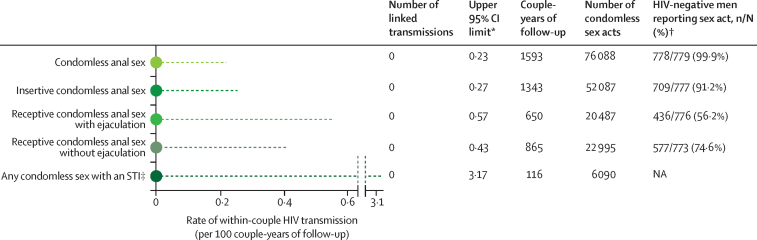
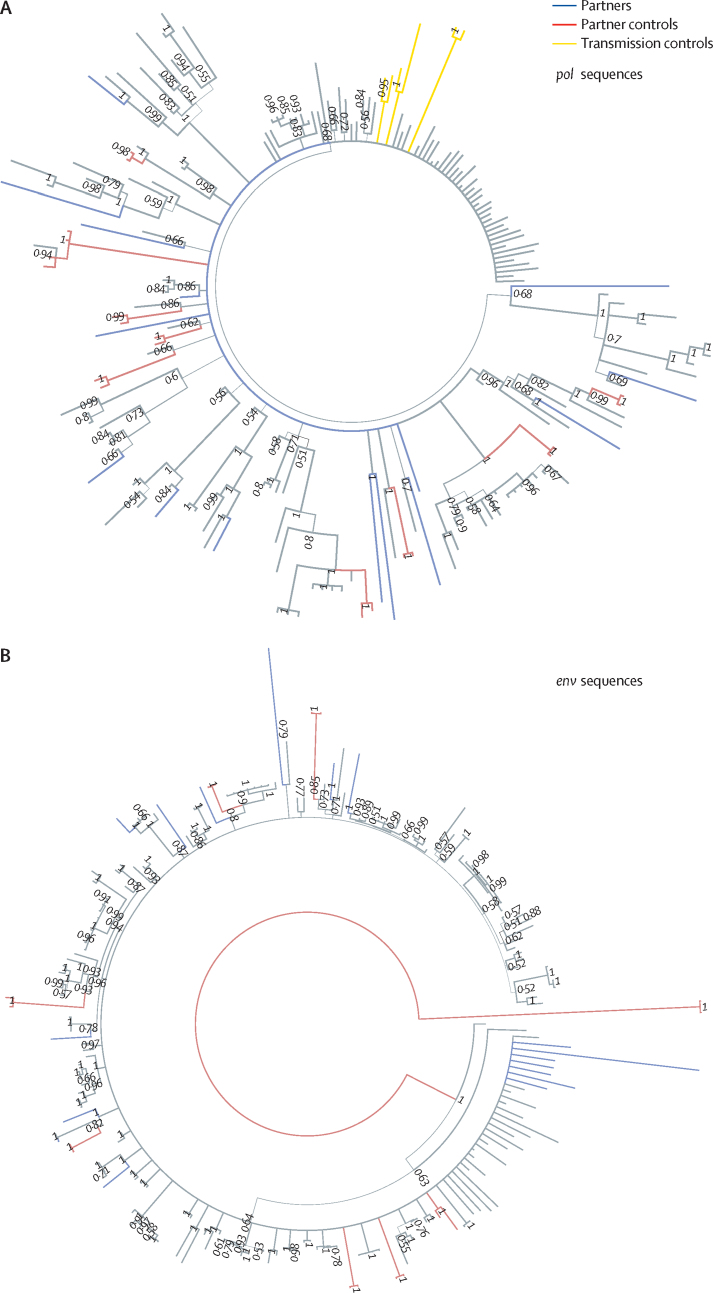
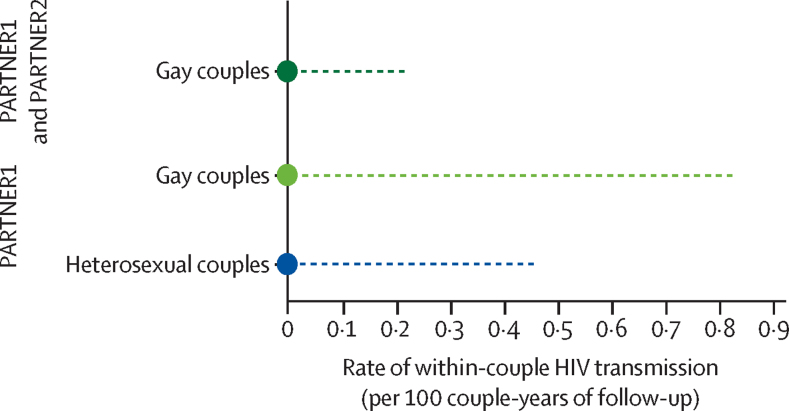
BACKGROUND: The level of evidence for HIV transmission risk through condomless sex in serodifferent gay couples with the HIV-positive partner taking virally suppressive antiretroviral therapy (ART) is limited compared with the evidence available for transmission risk in heterosexual couples. The aim of the second phase of the PARTNER study (PARTNER2) was to provide precise estimates of transmission risk in gay serodifferent partnerships. METHODS: The PARTNER study was a prospective observational study done at 75 sites in 14 European countries. The first phase of the study (PARTNER1; Sept 15, 2010, to May 31, 2014) recruited and followed up both heterosexual and gay serodifferent couples (HIV-positive partner taking suppressive ART) who reported condomless sex, whereas the PARTNER2 extension (to April 30, 2018) recruited and followed up gay couples only. At study visits, data collection included sexual behaviour questionnaires, HIV testing (HIV-negative partner), and HIV-1 viral load testing (HIV-positive partner). If a seroconversion occurred in the HIV-negative partner, anonymised phylogenetic analysis was done to compare HIV-1 pol and env sequences in both partners to identify linked transmissions. Couple-years of follow-up were eligible for inclusion if condomless sex was reported, use of pre-exposure prophylaxis or post-exposure prophylaxis was not reported by the HIV-negative partner, and the HIV-positive partner was virally suppressed (plasma HIV-1 RNA <200 copies per mL) at the most recent visit (within the past year). Incidence rate of HIV transmission was calculated as the number of phylogenetically linked HIV infections that occurred during eligible couple-years of follow-up divided by eligible couple-years of follow-up. Two-sided 95% CIs for the incidence rate of transmission were calculated using exact Poisson methods. FINDINGS: Between Sept 15, 2010, and July 31, 2017, 972 gay couples were enrolled, of which 782 provided 1593 eligible couple-years of follow-up with a median follow-up of 2·0 years (IQR 1·1-3·5). At baseline, median age for HIV-positive partners was 40 years (IQR 33-46) and couples reported condomless sex for a median of 1·0 years (IQR 0·4-2·9). During eligible couple-years of follow-up, couples reported condomless anal sex a total of 76 088 times. 288 (37%) of 777 HIV-negative men reported condomless sex with other partners. 15 new HIV infections occurred during eligible couple-years of follow-up, but none were phylogenetically linked within-couple transmissions, resulting in an HIV transmission rate of zero (upper 95% CI 0·23 per 100 couple-years of follow-up). INTERPRETATION: Our results provide a similar level of evidence on viral suppression and HIV transmission risk for gay men to that previously generated for heterosexual couples and suggest that the risk of HIV transmission in gay couples through condomless sex when HIV viral load is suppressed is effectively zero. Our findings support the message of the U=U (undetectable equals untransmittable) campaign, and the benefits of early testing and treatment for HIV. FUNDING: National Institute for Health Research.
Overview
The claims and statistics of this paper haven’t been checked yet.
Free: it reads the open-access text and checks the first 5 claims that cite a source we can check. Create a free account to check every claim.
Integrity signals
Registry
Cites
Statistics
Figures
Verification
Claims the paper makes
The claims and statistics of this paper haven’t been checked yet.
Free: it reads the open-access text and checks the first 5 claims that cite a source we can check. Create a free account to check every claim.
Claims other papers make about this one
Each is checked against this paper’s own text: does it say what the citing paper says it does?
The source backs part of the claim, not all of it — or backs it for a different population, condition or comparison.
In the citing paper
“Effective ART that suppresses HIV replication to undetectable levels reduces morbidity, provides a near-normal lifespan, and prevents sexual transmission of HIV to others (95–97,410–412).”
From Sexually Transmitted Infections Treatment Guidelines, 2021 (2021) · cites this paper as [97]
Experimental — accuracy not yet measuredThe cited source says what the claim attributes to it.
In the citing paper
“Additional studies of HIV mixed-status couples, heterosexual and MSM couples (PARTNER study), and MSM couples (Opposites Attract and PARTNERS2 studies) reported that patients with HIV taking ART who maintain an undetectable viral load demonstrate no risk for transmitting HIV to their HIV-negative sex partners (95–97).”
From Sexually Transmitted Infections Treatment Guidelines, 2021 (2021) · cites this paper as [97]
The cited source says what the claim attributes to it.
In the citing paper
“Persons with HIV infection who achieve and maintain a viral load suppressed to <200 copies/mL with ART have effectively no risk for sexually transmitting HIV (95–97,421).”
From Sexually Transmitted Infections Treatment Guidelines, 2021 (2021) · cites this paper as [97]
Self-check
Percentages, sums and reported differences re-computed from the paper’s own numbers.
The self-check needs the paper’s full text.
Citations
Cites
Prevention of HIV-1 infection with early antiretroviral therapy.
Cohen, M. S., Chen, Y. Q., McCauley, M., Gamble, T., Hosseinipour, M. C., Kumarasamy, N., Hakim, J. G., Kumwenda, J., Grinsztejn, B., Pilotto, J. H. S., et al. (2011) · New England Journal of Medicine · doi:10.1056/nejmoa1105243 · Cited by 6,873
Viral Load and Heterosexual Transmission of Human Immunodeficiency Virus Type 1
Quinn, T. C., Wawer, M. J., Sewankambo, N., Serwadda, D., Li, C., Wabwire-Mangen, F., Meehan, M. O., Lutalo, T., & Gray, R. H. (2000) · New England Journal of Medicine · doi:10.1056/nejm200003303421303 · Cited by 3,020
Antiretroviral therapy for the prevention of HIV-1 transmission.
Cohen, M. S., Chen, Y. Q., McCauley, M., Gamble, T., Hosseinipour, M. C., Kumarasamy, N., Hakim, J. G., Kumwenda, J., Grinsztejn, B., Pilotto, J. H. S., et al. (2016) · New England Journal of Medicine · doi:10.1056/nejmoa1600693 · Cited by 1,700
Rodger, A. J., Cambiano, V., Bruun, T., Vernazza, P., Collins, S., van Lunzen, J., Corbelli, G. M., Estrada, V., Geretti, A. M., Beloukas, A., et al. (2016) · JAMA · doi:10.1001/jama.2016.5148 · Cited by 1,431
Self-citationAttia, S., Egger, M., Müller, M., Zwahlen, M., & Low, N. (2009) · AIDS · doi:10.1097/qad.0b013e32832b7dca · Cited by 1,001
Donnell, D., Baeten, J. M., Kiarie, J., Thomas, K. K., Stevens, W., Cohen, C. R., McIntyre, J., Lingappa, J. R., & Celum, C. (2010) · The Lancet · doi:10.1016/s0140-6736(10)60705-2 · Cited by 952
Baggaley, R. F., White, R. G., & Boily, M.-C. (2010) · International Journal of Epidemiology · doi:10.1093/ije/dyq057 · Cited by 713
Bavinton, B. R., Pinto, A. N., Phanuphak, N., Grinsztejn, B., Prestage, G. P., Zablotska-Manos, I. B., Jin, F., Fairley, C. K., Moore, R., Roth, N., et al. (2018) · The Lancet HIV · doi:10.1016/s2352-3018(18)30132-2 · Cited by 524
Effectiveness of Highly Active Antiretroviral Therapy in Reducing Heterosexual Transmission of HIV
Castilla, J., del Romero, J., Hernando, V., Marincovich, B., García, S., & Rodríguez, C. (2005) · JAIDS Journal of Acquired Immune Deficiency Syndromes · doi:10.1097/01.qai.0000157389.78374.45 · Cited by 384
Genital HIV-1 RNA Predicts Risk of Heterosexual HIV-1 Transmission
Baeten, J. M., Kahle, E., Lingappa, J. R., Coombs, R. W., Delany-Moretlwe, S., Nakku-Joloba, E., Mugo, N. R., Wald, A., Corey, L., Donnell, D., et al. (2011) · Science Translational Medicine · doi:10.1126/scitranslmed.3001888 · Cited by 293
Research works printed but not linked: 2
- Rodger A, Bruun T, Cambiano V, et al. HIV transmission risk through condomless sex if HIV positive partner on suppressive ART: PARTNER Study. 21st Conference on Retroviruses and Opportunistic Infections (CROI); Boston, MA, USA; March 3–6, 2014. Abstract 153LB.
- Landovitz RJ, Tran TT, Cohn SE, et al. Perception of infectiousness in HIV-infected persons after initiating ART: ACTG A5257. 23rd Conference on Retroviruses and Opportunistic Infections (CROI); Boston, MA, USA; Feb 22–25, 2016. Abstract 55.
Cited by
Items 501–600 of 998
Outcomes of a model for re-testing HIV-negative index contacts in Sedibeng, South Africa
Phiri, D. L., Rees, K., & Davies, N. (2023) · Southern African Journal of HIV Medicine · doi:10.4102/sajhivmed.v24i1.1482 · Cited by 4
White, L. A., Avery, L., Bonanno, L., Knight, C., Irwin, C., Hoeflich, K., Kaliel, D., Hijazi, M., & Raulfs-Wang, E. C. (2023) · Global Health Science and Practice · doi:10.9745/ghsp-d-22-00337 · Cited by 4
Lucas, N. A., Bates, G. W., & Buzwell, S. (2023) · Sexuality Research and Social Policy · doi:10.1007/s13178-023-00829-9 · Cited by 7
“The U = U campaign illustrates how HIV-positive individuals who adhere to their ART regime can suppress their viral load to an undetectable level leading to a negligible risk of HIV transmission (Cambiano et al., 2019).”
Stojanovski, K., King, E. J., O’Connell, S., Gallagher, K. S., Theall, K. P., & Geronimus, A. T. (2023) · Current HIV/AIDS Reports · doi:10.1007/s11904-023-00664-y · Cited by 7
Hanum, N., Cambiano, V., Lončar, D., Mandalia, S., Sharp, A., Lwanga, J., Tiraboschi, J. M., Phillips, A. N., Lampe, F. C., Beck, E. J., et al. (2023) · AIDS Care · doi:10.1080/13548506.2023.2230884 · Cited by 4
Self-citationvan Paassen, P. M., Dijkstra, M., Peay, H. L., Rokx, C., Verbon, A., Reiss, P., Prins, J. M., Henderson, G. E., Rennie, S., Nieuwkerk, P. T., et al. (2024) · AIDS Research and Human Retroviruses · doi:10.1089/aid.2022.0169 · Cited by 4
Self-citationSergouniotis, F., Olofsson, J. I., Westling, K., & Rodriguez‐Wallberg, K. A. (2023) · AIDS Patient Care and STDs · doi:10.1089/apc.2023.0163 · Cited by 4
“…risk of any HIV-positive male with an un-detectable viral load transmitting the virus to a sexual partner is statistically equivalent to zero; 23,24 thus, it has been postulated that numbers of HIV-discordant couples who have other underlying infertility factors will be the dominant group…”
Self-citationGiménez‐Arufe, V., Rotea-Salvo, S., Pradeda, A. M., Mena‐de‐Cea, Á., Margusino‐Framiñán, L., Suanzes, J., Herranz, M. I. M., & Cid‐Silva, P. (2024) · Healthcare · doi:10.3390/healthcare12030361 · Cited by 4
“Otherwise, it may increase morbidity and mortality, possible virus transmission, and delay immunity recovery [1,2].”
BackgroundColpani, A., VITO, A. D., Zauli, B., Menzaghi, B., Calcagno, A., Celesia, B. M., Ceccarelli, M., Nunnari, G., Socio, G. V. D., Biagio, A. D., et al. (2024) · Healthcare · doi:10.3390/healthcare12040417 · Cited by 4
“…showed that antiretroviral therapy prevented more than 96% of HIV infections in serodiscordant couples [9]; then, a 0% risk of HIV transmission for virological suppressed PLHIV in serodiscordant heterosexual and gay couples was confirmed by PARTNER 1 and 2 and The opposites Attract trials [10,11].”
Self-citationProgress Note 2024: Curing HIV; Not in My Lifetime or Just Around the Corner?
Harper, J. L., Betts, M. R., Lichterfeld, M. D., Müller-Trutwin, M. C., Margolis, D. M., Bar, K. J., Li, J. Z., McCune, J. M., Lewin, S. R., Kulpa, D. A., et al. (2024) · Pathogens and Immunity · doi:10.20411/pai.v8i2.665 · Cited by 11
Calabrese, S. K., Zaheer, M. A., Flores, J. J., Kalwicz, D. A., Modrakovic, X., Rao, S., Dovidio, J. F., Zea, M. C., & Eaton, L. A. (2024) · JAIDS Journal of Acquired Immune Deficiency Syndromes · doi:10.1097/qai.0000000000003417 · Cited by 5
Bajčić, T. S., Turina, I. S.-B., Lucijanić, M., Sinožić, T., Vučković, M., & Baždarić, K. (2024) · Epidemiologia · doi:10.3390/epidemiologia5030036 · Cited by 8
“The results of randomized clinical studies indicate that the possibility of infection transmission is reduced in the MSM population if pre-exposure prophylaxis with antiretroviral drugs (PrEP) is used [7,8].”
BackgroundCastonguay, B. J. U., Mancuso, N., Hatcher, S., Watson, S., Okumu, E., Abbott, R. M., Golin, C. E., Mobley, V., Samoff, E., Swygard, H., et al. (2024) · Journal of the International Association of Providers of AIDS Care (JIAPAC) · doi:10.1177/23259582241269919 · Cited by 4
Human Immunodeficiency Virus Types 1 and 2: Global History, Occurrence, and Spread
Kaslow, R. A., Tang, J. ‘., & Goepfert, P. (2024) · Springer eBooks · doi:10.1007/978-1-4939-9544-8_65-1 · Cited by 5
He, J., Zhong, S., Qin, C., Nong, A., Lin, Z., Liang, H., Zhang, F., Jiang, J., Pan, P., Wei, W., et al. (2024) · Emerging Microbes & Infections · doi:10.1080/22221751.2024.2429622 · Cited by 5
Kasadha, B., Tariq, S., Namiba, A., Freeman‐Romilly, N., Moepi, N., Letting, G., & Rai, T. (2025) · Sociology of Health & Illness · doi:10.1111/1467-9566.13871 · Cited by 4
Blair, C. S., Cambou, M. C., & Landovitz, R. J. (2025) · Annual Review of Medicine · doi:10.1146/annurev-med-042823-013707 · Cited by 5
Hahn, A., Kröger, C., Meyer, C. G., Loderstädt, U., Meyer, T., Frickmann, H., & Zautner, A. (2020) · International Journal of Environmental Research and Public Health · doi:10.3390/ijerph17155504 · Cited by 3
La biomedicalización del riesgo sexual en América Latina en el siglo XXI
Cruz, C. T., & Díaz, E. M. S. (2020) · Revista Ciencias de la Salud · doi:10.12804/revistas.urosario.edu.co/revsalud/a.9799 · Cited by 3
Norway is on the verge of ending the HIV epidemic
Whittaker, R. N., Nilsen, Ø., Myrberg, A. J., Angeltvedt, R. M., Bergersen, B. M., & Kløvstad, H. (2020) · Tidsskrift for Den norske legeforening · doi:10.4045/tidsskr.20.0748 · Cited by 4
Johnson, K. A., Okochi, H., Glidden, D. V., Gandhi, M., & Spinelli, M. A. (2021) · JAIDS Journal of Acquired Immune Deficiency Syndromes · doi:10.1097/qai.0000000000002727 · Cited by 4
van Bilsen, W. P. H., Zimmermann, H. M. L., Boyd, A. C., van Harreveld, F., Davidovich, U., & on behalf of HIV Transmission Elimination Team Amsterdam (2021) · AIDS Patient Care and STDs · doi:10.1089/apc.2021.0024 · Cited by 5
Beyond the Magic Bullet: What Will It Take to End the AIDS Epidemic?
El-Sadr, W. M. (2021) · American Journal of Public Health · doi:10.2105/ajph.2021.306290 · Cited by 4
HIV patient access to healthcare services in post-austerity era in Greece
Tsiakalakis, G., Golna, C., Dedes, N., Papageorgiou, G., Athanasakis, K., & Souliotis, K. N. (2021) · International Journal of Human Rights in Healthcare · doi:10.1108/ijhrh-10-2020-0092 · Cited by 5
Palella, F. J., Armon, C., Cole, S. R., Hart, R. L. D., Tedaldi, E., Novak, R. M., Battalora, L. A., Purinton, S., Li, J., & Buchacz, K. A. (2021) · Medicine · doi:10.1097/md.0000000000026285 · Cited by 4
Keita, A., Rigaill, J., Pillet, S., Sérémé, Y., Coulibaly, S. D. P., Diallo, F., Verhoeven, P. O., Pozzetto, B., Thiero, T. A., & Bourlet, T. (2021) · Microorganisms · doi:10.3390/microorganisms9102164 · Cited by 5
“[27], the opposite was found in Partner 2 study, outlining the importance of the studied population (gay couples in Europe [36] versus heterosexual women from Burkina Faso [16]), the sampling, and the possibility of an intermittent viral shedding at the genital level.”
ResultMeunier, É., & Sauermilch, D. (2021) · Journal of Homosexuality · doi:10.1080/00918369.2021.1993662 · Cited by 5
“, pre-exposure prophylaxis and treatment as prevention), and the implementation of similar strategies for sexually transmissible infections is still underway (Grant et al., 2014; Molina et al., 2018; Rodger et al., 2019).”
BackgroundHIV Prevention Research With U.S. Military Service Members: A Systematic Review
Rodriguez, C. A., & Mitchell, J. W. (2022) · Military Medicine · doi:10.1093/milmed/usac018 · Cited by 4
Koole, J. C. D., de la Court, F., Welkers, M. R. A., Yap, K., Stalenhoef, J. E., Jurriaans, S., de Vries, H. J. C., de Coul, E. L. O., Prins, M., & Hoornenborg, E. (2022) · Eurosurveillance · doi:10.2807/1560-7917.es.2022.27.14.2200275 · Cited by 4
“Lastly, prompt ART initiation after diagnosis and optimising ART adherence to achieve and sustain undetectable HIV viral load are key to preventing ongoing HIV transmission [17].”
BackgroundDiagnosis delays in the UK according to pre- or post-migration acquisition of HIV
Stirrup, O., Tostevin, A., Ragonnet-Cronin, M., Volz, E., Burns, F. M., Delpech, V., & Dunn, D. T. (2022) · UCL Discovery (University College London) · Cited by 4
Dennermalm, N., Persson, K. I., Thomsen, S. C., Forsberg, B. C., & Alvesson, H. M. (2022) · PLOS Global Public Health · doi:10.1371/journal.pgph.0000159 · Cited by 4
“Research has evolved to show that an undetectable viral load means zero risk of HIV transmission [22, 72].”
BackgroundTattersall, T. L., Tam, C., Moore, D. M., Wesseling, T., Grieve, S., Wang, L., Bacani, N., Montaner, J. S. G., Hogg, R. S., Barrios, R., et al. (2022) · BMC Public Health · doi:10.1186/s12889-022-13415-2 · Cited by 4
“Importantly, research has continued to demonstrate the larger impact of expanded treatment for HIV, including the virtual elimination of risk of onward HIV transmission among PLWH who immediately start and are sustained on ART [3, 4].”
BackgroundHIV drug resistance in various body compartments
van Zyl, G. U., Dorfman, J. R., & Kearney, M. F. (2022) · Current Opinion in HIV and AIDS · doi:10.1097/coh.0000000000000741 · Cited by 4
“Although detectable HIV RNA in seminal plasma in individuals with suppressed viral loads on ART have been widely reported [60–62], epidemiological data demonstrate that the risk of transmission is effectively eliminated, including in populations reporting high rates of high-risk sex and STIs [63].”
BackgroundFerrara, P., & Gianfredi, V. (2022) · Acta bio-medica dell'Ateneo parmense/Acta biomedica · doi:10.23750/abm.v93i3.12766 · Cited by 4
“ant couples used PrEP or post-exposure prophylaxis (PEP) (15).”
BackgroundMethodInfluentialKolstee, J., MacGibbon, J., Prestage, G., Clackett, S., Paynter, H., Bavinton, B. R., Broady, T. R., Ellard, J., Murphy, D., de Wit, J. B. F., et al. (2022) · AIDS Education and Prevention · doi:10.1521/aeap.2022.34.6.453 · Cited by 5
Agbornkwai, A. N., Bita, A. I. G., Mabouna, S. A., Esa, I., Ajong, B. N., Stanislas, K. A., Akateh, D., Ngunyi, Y. L., Tanah, A. A., Wolloh, G. C. M., et al. (2022) · Advances in Infectious Diseases · doi:10.4236/aid.2022.124048 · Cited by 7
An update on expanding HIV preexposure prophylaxis
Baker, J., & Rolls, J. (2023) · JAAPA · doi:10.1097/01.jaa.0000911184.87186.0f · Cited by 5
VITO, A. D., Colpani, A., Mameli, M. S., Bagella, P., Fiore, V., Fozza, C., Montesu, M. A., Fois, A. G., Filigheddu, F., Manzoni, N., et al. (2023) · Infectious Disease Reports · doi:10.3390/idr15010010 · Cited by 4
Simplified clinical algorithm for immediate antiretroviral therapy initiation
Subronto, Y. W., Kusmayanti, N. A., Januraga, P. P., Wirawan, L. N. D., Wisaksana, R., Sukmaningrum, E., Kawi, N. H., Iskandar, S., Mulyani, T., Sulaiman, N., et al. (2022) · The Indian Journal of Medical Research · doi:10.4103/ijmr.ijmr_239_23 · Cited by 4
“Hospital-based Observational phase 921 8 (4-20) 366 [40, (37-43)] 546 [59, (56-62)] 775 [49, (47-52)]”
InfluentialBogers, S., Nieuwkerk, P. T., van Dijk, N., van der Loeff, M. F. S., Geerlings, S. E., van Bergen, J. E. A. M., van Benthem, T., Bons, D., de Bree, G. J., Brokx, P., et al. (2023) · BMC Family Practice · doi:10.1186/s12875-023-02161-y · Cited by 4
“As transmission is prevented through adequate therapy, most transmissions come from persons with undiagnosed HIV [2, 3].”
BackgroundSelf-citationLenz, C., Rabaholo, T., Mphafi, M., Samonyane, F., Greenberg, L., Thomas, A., & Toska, E. (2024) · Journal of the International AIDS Society · doi:10.1002/jia2.26267 · Cited by 4
Impact of early antiretroviral treatment on sexual behaviour: a randomised comparison
Lampe, F. C., Rodger, A., Burman, W. J., Grulich, A. E., Friedland, G., El‐Sadr, W., Neaton, J. D., Corbelli, G. M., Emery, S., Molina, J., et al. (2019) · AIDS · doi:10.1097/qad.0000000000002359 · Cited by 4
Self-citationA national audit of the management pathways for new HIV diagnoses
Kaide, E., Curtis, H., Freedman, A., Croxford, S., Burns, F. M., Sabin, C. A., Chadwick, D., & Sullivan, A. K. (2021) · International Journal of STD & AIDS · doi:10.1177/0956462420987450 · Cited by 4
Gray, J., Prestage, G., Jin, F., Phanuphak, N., Friedman, R. K., Fairley, C. K., Kelleher, A. D., Templeton, D. J., Zablotska, I., Hoy, J., et al. (2021) · AIDS and Behavior · doi:10.1007/s10461-021-03324-7 · Cited by 6
Update on HIV prevention and preexposure prophylaxis
Baker, J., & Rolls, J. (2020) · JAAPA · doi:10.1097/01.jaa.0000662360.74992.67 · Cited by 4
Community Vs. hospital HIV testing sites in Jerusalem, Israel - who’s tested and who’s at risk?
Atias, D., Levine, H., Elinav, H., Haouzi-Bashan, M., Lior, Y., & Mor, Z. (2020) · Israel Journal of Health Policy Research · doi:10.1186/s13584-020-00368-3 · Cited by 4
“Early HIV detection through periodic HIV testing enables infected individuals to use ART at early stages of their infection and therefore to suppress their viral load and decrease the risk for further HIV transmission [7, 8].”
BackgroundPerceptions of black men who have sex with men about accessing and taking PrEP: A qualitative study
Remy, L. M., Majee, W., Teti, M., & Enriquez, M. (2020) · Journal of HIV/AIDS & Social Services · doi:10.1080/15381501.2020.1824843 · Cited by 4
Close to Zero, but Not Zero: What Is an Acceptable HIV Transmission Risk Through Breastfeeding?
Behrens, G. M. N., Aebi‐Popp, K., & Babiker, A. G. (2021) · JAIDS Journal of Acquired Immune Deficiency Syndromes · doi:10.1097/qai.0000000000002887 · Cited by 4
“The PARTNER study [2] aimed at assessing whether the HIV transmission risk through condomless sex among serodifferent gay men in the context of virally suppressive ART was below an acceptable low level, defined as one infection per 500 couple years of follow up.”
BackgroundGulick, R. M. (2026) · New England Journal of Medicine · doi:10.1056/nejmra2511692 · Cited by 5
Norman, T. L., Bourne, A., Thepsourinthone, J., Murphy, D., Rule, J., Meléndez‐Torres, G. J., & Power, J. (2024) · Sexual Health · doi:10.1071/sh24103 · Cited by 5
Increased mortality and morbidity risk in people with early HIV care interruption in Spain
Izquierdo, R., Rava, M., Gutiérrez, F., García-Fraile, L. J., Riera, M., Imaz, A., Sotomayor, C., Reus, S., Rubio, R., Iribarren, J. A., et al. (2025) · AIDS · doi:10.1097/qad.0000000000004175 · Cited by 3
Self-citationTrends in population HIV viral suppression: a longitudinal analysis
Otto, M., Okango, E. L., Mee, P., Dobra, A., Tram, K. H., Gareta, D., Otambo, W. O., Moyo, R. C., Sereo, T., Blose, N., et al. (2025) · AIDS · doi:10.1097/qad.0000000000004183 · Cited by 9
Ndhlovu, L. C., Giron, L. B., Galinskas, J., Premeaux, T. A., Pang, A. P. S., Dias, D., Baptista, M. V. D. A., Shytaj, I. L., Maricato, J. T., Ferreira, P. R. A., et al. (2025) · The Journal of Infectious Diseases · doi:10.1093/infdis/jiaf430 · Cited by 4
“…undetectable (P27: < 80 copies viral RNA/mL; P29: < 40 copies viral RNA/mL) (differences in the detection limit are due to the volume of seminal plasma obtained), thus supporting the suppression of VL displayed by these 2 individuals and reduced potential risk of HIV sexual transmission [14, 15].”
Cohen, J., Chastek, B. J., Mordi, U., Christoph, M. J., Lim, T. W., Trom, C., & Le, L. B. (2025) · Future Virology · doi:10.1080/17460794.2025.2574763 · Cited by 2
Santostefano, C. M., Galárraga, O., Rahman, M., Dow, P. M., Chan, P. A., Wilson, I. B., & Shireman, T. I. (2025) · Health Affairs · doi:10.1377/hlthaff.2025.00130 · Cited by 3
Allison, S., May, T., Roberts, J., Hill‐Tout, R., Hindle, S., Hickman, M., Yardley, L., Todd, R., Heath, R., & Horwood, J. (2026) · Emergency Medicine Journal · doi:10.1136/emermed-2025-215436 · Cited by 3
Etowa, J. B., Omorodion, F., Mbagwu, I., Etowa, E. B., & Bishwajit, G. (2022) · Journal of Public Health Research · doi:10.4081/jphr.2022.2048 · Cited by 3
Wirden, M., Palich, R., Abdi, B., Valantin, M., Tubiana, R., Schneider, L., Seang, S., Fayçal, A., Sellem, B., Katlama, C., et al. (2022) · Journal of Antimicrobial Chemotherapy · doi:10.1093/jac/dkac174 · Cited by 4
de Oliveira, G. C. B., Bonatto, M., & Cattani, F. (2022) · Arquivos de Ciências da Saúde da UNIPAR · doi:10.25110/arqsaude.v26i2.2022.8055 · Cited by 8
da Silva, V. G. F., Nogueira, I., Elias, T. M. N., Reis, R. K., de Souza, N. L., & de Menezes, R. M. P. (2022) · Revista Brasileira de Enfermagem · doi:10.1590/0034-7167-2021-0867pt · Cited by 3
Wang, G., Song, W., Rao, S., Heitgerd, J. L., Mulatu, M. S., Karch, D. L., & Belcher, L. (2022) · JAIDS Journal of Acquired Immune Deficiency Syndromes · doi:10.1097/qai.0000000000003106 · Cited by 3
Huang, H., Huang, Y., Lo, H.-Y., Chan, P., & Lee, C. (2024) · AIDS Research and Therapy · doi:10.1186/s12981-024-00626-3 · Cited by 3
“The results indicated that when the viral load was smaller than 200 copies/ml, the number of HIV infections caused by sexual transmission was zero [14, 15].”
BackgroundCampbell, C. K., Koester, K. A., Erguera, X. A., Moran, L., Tourneau, N. L., Broussard, J., Crouch, P.-C., Lynch, E., Camp, C., Torres, S., et al. (2024) · International Journal of Environmental Research and Public Health · doi:10.3390/ijerph21091133 · Cited by 4
Tough, R. H., & McLaren, P. J. (2025) · Scientific Reports · doi:10.1038/s41598-024-84817-y · Cited by 3
Gram, E. G., Biering, I. E., Olsen, O., & Gram, G. J. (2025) · Public Health · doi:10.1016/j.puhe.2024.12.008 · Cited by 7
Luz, P. M., Torres, T. S., Matos, V. C., Costa, G. G., Hoagland, B., Pimenta, C., Benedetti, M., Grinsztejn, B. G. J., & Veloso, V. G. (2025) · Journal of the International AIDS Society · doi:10.1002/jia2.26432 · Cited by 6
Perceived Adherence-Related Barriers for Youth Living With HIV in the Southern United States
Weaver, K. E., Miller, S. J., & Harrison, S. E. (2025) · Clinical Practice in Pediatric Psychology · doi:10.1177/21694826251322194 · Cited by 4
“Viral suppression is important not only for the individual ’ s health and well-being but also is an integral part of HIV prevention, as PLHIV with an undetectable viral load are unable to transmit HIV to a sexual partner (Rodger et al., 2019).”
Goyal, R., Honerkamp‐Smith, G., Wells, A., Little, S. J., & Martin, T. (2025) · JAIDS Journal of Acquired Immune Deficiency Syndromes · doi:10.1097/qai.0000000000003670 · Cited by 3
“30,31 Our model utilized standard reported variables from eHARS.”
Nawfal, E. S., Sheehan, D. M., Ibañez, G. E., Hayes, T., Gray, A., & Trepka, M. J. (2025) · AIDS and Behavior · doi:10.1007/s10461-025-04713-y · Cited by 3
“Adherence to ART is a crucial step in achieving and maintaining optimal viral suppression [17, 18].”
Hedima, E. W., Ohieku, J. D., Nasir, A., & Katagum, Y. M. (2025) · Clinical Therapeutics · doi:10.1016/j.clinthera.2025.05.015 · Cited by 6
Calabrese, S. K., Holt, M., Kalwicz, D. A., Flores, J. J., Onochie, K. C., Bavinton, B. R., Haire, B. G., Smith, A. K. J., MacGibbon, J., Brener, L., et al. (2025) · AIDS and Behavior · doi:10.1007/s10461-025-04783-y · Cited by 5
Li, G., Ma, J., Yu, H., Tsahouridis, O., Lou, Y., He, X., Funaki, M., Mathur, P., Kottilil, S., Zheng, P., et al. (2025) · PLoS Pathogens · doi:10.1371/journal.ppat.1012826 · Cited by 3
“The persistence of the HIV-1 reservoir in people infected with HIV (PWH) during combination antiretroviral therapy (cART) prevents HIV cure [1,2].”
Scott, A., Family, H. E., Horwood, J. P., Saunders, J., Sullivan, A. K., Burgin, J., Harryman, L., Stockwell, S., Copping, J., Sheehan, P., et al. (2025) · British Journal of General Practice · doi:10.3399/bjgp.2025.0151 · Cited by 2
“7,29,30 PrEP should be offered to people who may benefit from protection against HIV using criteria in the BHIVA/ British Association for Sexual Health and HIV (BASHH) guidelines.”
A call to action to advance global research priorities related to Undetectable = Untransmittable
Calabrese, S. K., Bor, J. H., Dukashe, M., Kalwicz, D. A., Mupeli, K., Onoya, D., Stackpool‐Moore, L., & Richman, B. (2025) · Journal of the International AIDS Society · doi:10.1002/jia2.70069 · Cited by 3
Zúñiga, M. Á. L., Chueca, N., de Salazar, A., Caballero, J. A. F., Gutiérrez‐Valencia, A., García, D. V., Mohamed-Balghata, M. O., Tenorio, C. H., López‐Ruz, M. Á., & García, F. (2020) · Sexually Transmitted Infections · doi:10.1136/sextrans-2020-054439 · Cited by 3
Cernasev, A., Larson, W. L., Peden‐McAlpine, C., Rockwood, T. H., Ranelli, P. L., Okoro, O. N., & Schommer, J. C. (2020) · Pharmacy · doi:10.3390/pharmacy8020092 · Cited by 3
“A follow-up study (PARTNER2) of serodiscordant homosexual couples, which tested the viral load and HIV status of the appropriate partner, concluded there was no transmission per 100 couple-years of follow-up when the HIV-positive partner’s viral load was less than 200 copies/mL [8].”
BackgroundKusejko, K., Tschumi, N., Chaudron, S. E., Nguyen, H., Battegay, M., Bernasconi, E., Böni, J., Huber, M., Calmy, A., Cavassini, M. L., et al. (2022) · JAIDS Journal of Acquired Immune Deficiency Syndromes · doi:10.1097/qai.0000000000002949 · Cited by 3
“17,35,36 We concentrated on 3 types of cherries: (1) Domestic cherries with both patients being in the same cohort, ie, AHIVCOS or SHCS, termed AHIVCOS/AHIVCOS-cherries or SHCS/SHCS-cherries; (2) International cherries with one patient in the AHIVCOS or SHCS and the other patient from the LA database, termed AHIVCOS/L…”
BackgroundMethodInfluentialSelf-citationBrennan, D. J., Kesler, M. A., Davies, A., Ablona, A., & Collict, D. (2022) · International Journal of Sexual Health · doi:10.1080/19317611.2022.2091076 · Cited by 4
Sang, J. M., Cui, Z., Wang, L., Bacani, N., Lachowsky, N. J., Lal, A., Card, K. G., Roth, E. A., Montaner, J. S. G., Howard, T. L., et al. (2022) · AIDS Care · doi:10.1080/09540121.2022.2142927 · Cited by 5
Bogers, S., van der Loeff, M. F. S., Boyd, A. C., van Dijk, N., Geerlings, S. E., & van Bergen, J. E. A. M. (2023) · PLoS ONE · doi:10.1371/journal.pone.0282607 · Cited by 3
Broady, T. R., Chan, C., MacGibbon, J., Mao, L., Prestage, G., Clifton, B., Paynter, H., Bavinton, B. R., & Holt, M. (2023) · JAIDS Journal of Acquired Immune Deficiency Syndromes · doi:10.1097/qai.0000000000003224 · Cited by 5
Tang, M. E., Goyal, R., Anderson, C. M., Mehta, S. R., & Little, S. J. (2023) · AIDS · doi:10.1097/qad.0000000000003614 · Cited by 3
“Improved scale up of HIV testing could support earlier diagnosis and linkage to care, which when coupled with rapid initiation of effective ART, would prevent onward transmission of HIVand decrease HIV incidence [20,21].”
Sun, H., Liou, B., Chen, T., Yang, C., Huang, S., Lu, P., Huang, C., Tsai, M., Cheng, S., Lee, N., et al. (2023) · Open Forum Infectious Diseases · doi:10.1093/ofid/ofad307 · Cited by 3
Saborido-Alconchel, A., Serna‐Gallego, A., López-Cortés, L. E., Trujillo‐Rodríguez, M., Praena‐Fernández, J. M., Domínguez, M., Lozano, C., Muñoz‐Muela, E., Espinosa, N., Roca-Oporto, C., et al. (2023) · Journal of Antimicrobial Chemotherapy · doi:10.1093/jac/dkad245 · Cited by 3
Self-citationMsosa, T. C., Swai, I. U., Boer, M. S., Ngowi, K. M., de Wit, T. F. R., Aarnoutse, R. E., & Nliwasa, M. (2023) · Trials · doi:10.1186/s13063-023-07496-6 · Cited by 3
Universal-offer HIV testing in primary care: A mixed-methods evaluation of a pilot study
Wenlock, R. D., Dhillon, S., Perera, S., Vera, J. H., Llewellyn, C. D., & Dean, G. L. (2023) · International Journal of STD & AIDS · doi:10.1177/09564624231219285 · Cited by 3
He, L., Pan, X., Yang, J., Zheng, J., Luo, M., Cheng, W., & Chai, C. (2024) · Frontiers in Public Health · doi:10.3389/fpubh.2024.1366795 · Cited by 3
At a crossroads: The crucial role of pharmacists in healthcare teams to end the HIV epidemic
Lam, J. T., & Cocohoba, J. M. (2024) · American Journal of Health-System Pharmacy · doi:10.1093/ajhp/zxae261 · Cited by 4
Genomic surveillance of HIV infection in the Russian Federation
Евгеньевич, К. Д., Алексеевна, К. А., & Акимкин, В. Г. (2025) · HIV Infection and Immunosuppressive Disorders · doi:10.22328/2077-9828-2024-16-4-17-27 · Cited by 3
McFall, S. M., Maïga, M., Glucksberg, M. R., Achenbach, C. J., Palamountain, K. M., & Murphy, R. L. (2019) · Current Opinion in Biomedical Engineering · doi:10.1016/j.cobme.2019.08.009 · Cited by 4
Sang, J. M., Wang, L., Moore, D. M., Bacani, N., Howard, T. L., Blackwell, E., Lal, A., Armstrong, H. L., Card, K. G., Crosby, R. A., et al. (2021) · AIDS and Behavior · doi:10.1007/s10461-021-03224-w · Cited by 3
Moore, D. M., Kremer, H., Wang, L., Lepik, K. J., Li, J., Salters, K., Montaner, J. S. G., Tam, C., Kling, R., Bharmal, A., et al. (2022) · JAIDS Journal of Acquired Immune Deficiency Syndromes · doi:10.1097/qai.0000000000002914 · Cited by 3
Kolstee, J., Prestage, G., Bavinton, B. R., Hammoud, M., Philpot, S. P., Keen, P., Grulich, A. E., & Holt, M. (2022) · Archives of Sexual Behavior · doi:10.1007/s10508-021-02203-5 · Cited by 8
Tan, R. K. J., & Cook, A. R. (2022) · The Lancet Regional Health - Western Pacific · doi:10.1016/j.lanwpc.2022.100588 · Cited by 3
Risk of Sexual Transmission of HIV with Antiretroviral Therapy and Variable or Suppressed Viral Load
Khangura, S. D., Subramonian, A., & Severn, M. (2023) · Canadian Journal of Health Technologies · doi:10.51731/cjht.2023.632 · Cited by 4
Hassan, A., Gruttola, V. D., Hu, Y. W., Sheng, Z., Poortinga, K., & Wertheim, J. O. (2020) · Clinical Infectious Diseases · doi:10.1093/cid/ciaa114 · Cited by 3
Tempering hope with Intimate Knowledge: Contrasting emergences of the concept ‘uninfectious’ in HIV
Keogh, P., & Dodds, C. (2021) · Sociology of Health & Illness · doi:10.1111/1467-9566.13264 · Cited by 3
Croxford, S., Burns, F. M., Copas, A. J., Yin, Z., & Delpech, V. (2021) · HIV Medicine · doi:10.1111/hiv.13078 · Cited by 3
Soro, D. B., Carrobles, J. A., & Antón, M. (2021) · Behavioral Psychology/Psicología Conductual · doi:10.51668/bp.8321202n · Cited by 5
Bradley, M. V., Pereira, L. F., & Cohen, M. A. (2021) · Springer eBooks · doi:10.1007/978-3-030-80665-1_2 · Cited by 3
Metadata
- Authors
- Rodger, A. J., Cambiano, V., Bruun, T., Vernazza, P., Collins, S., Degen, O., Corbelli, G. M., Estrada, V., Geretti, A. M., Beloukas, A., Raben, D., Coll, P., Antinori, A., Nwokolo, N., Rieger, A., Prins, J. M., Blaxhult, A., Weber, R., Van Eeden, A., Brockmeyer, N. H., Clarke, A., del Romero Guerrero, J., Raffi, F., Bogner, J. R., Wandeler, G., Gerstoft, J., Gutiérrez, F., Brinkman, K., Kitchen, M., Ostergaard, L., Leon, A., Ristola, M., Jessen, H., Stellbrink, H.-J., Phillips, A. N., Lundgren, J., Coll, P., Cobarsi, P., Nieto, A., Meulbroek, M., Carrillo, A., Saz, J., Guerrero, J. D. R., García, M. V., Gutiérrez, F., Masiá, M., Robledano, C., Leon, A., Leal, L., Redondo, E. G., Estrada, V. P., Marquez, R., Sandoval, R., Viciana, P., Espinosa, N., Lopez-Cortes, L., Podzamczer, D., Tiraboschi, J., Morenilla, S., Antela, A., Losada, E., Nwokolo, N., Sewell, J., Clarke, A., Kirk, S., Knott, A., Rodger, A. J., Fernandez, T., Gompels, M., Jennings, L., Ward, L., Fox, J., Lwanga, J., Lee, M., Gilson, R., Leen, C., Morris, S., Clutterbuck, D., Brady, M., Asboe, D., Fedele, S., Fidler, S., Brockmeyer, N., Potthoff, A., Skaletz-Rorowski, A., Bogner, J., Seybold, U., Roider, J., Jessen, H., Jessen, A., Ruzicic, S., Stellbrink, H.-J., Kümmerle, T., Lehmann, C., Degen, O., Bartel, S., Hüfner, A., Rockstroh, J., Mohrmann, K., Boesecke, C., Krznaric, I., Ingiliz, P., Weber, R., Grube, C., Braun, D., Günthard, H., Wandeler, G., Furrer, H., Rauch, A., Vernazza, P., Schmid, P., Rasi, M., Borso, D., Stratmann, M., Caviezel, O., Stoeckle, M., Battegay, M., Tarr, P., Christinet, V., Jouinot, F., Isambert, C., Bernasconi, E., Bernasconi, B., Gerstoft, J., Jensen, L. P., Bayer, A. A., Ostergaard, L., Yehdego, Y., Bach, A., Handberg, P., Kronborg, G., Pedersen, S. S., Bülow, N., Ramskover, B., Ristola, M., Debnam, O., Sutinen, J., Blaxhult, A., Ask, R., Hildingsson-Lundh, B., Westling, K., Frisen, E.-M., Cortney, G., O'Dea, S., De Wit, S., Necsoi, C., Vandekerckhove, L., Goffard, J.-C., Henrard, S., Prins, J., Nobel, H.-H., Weijsenfeld, A., Van Eeden, A., Elsenburg, L., Brinkman, K., Vos, D., Hoijenga, I., Gisolf, E., Van Bentum, P., Verhagen, D., Raffi, F., Billaud, E., Ohayon, M., Gosset, D., Fior, A., Pialoux, G., Thibaut, P., Chas, J., Leclercq, V., Pechenot, V., Coquelin, V., Pradier, C., Breaud, S., Touzeau-Romer, V., Rieger, A., Kitchen - Maria Geit, M., Sarcletti, M., Gisinger, M., Oellinger, A., Antinori, A., Menichetti, S., Bini, T., Mussini, C., Meschiari, M., Di Biagio, A., Taramasso, L., Celesia, B. M., Gussio, M., & Janeiro, N.
- Affiliations
- University College London (GB)
- University of Copenhagen (DK)
- University of Liverpool (GB)
- Innsbruck Medical University (AT)
- Infektionsmedizinisches Centrum Hamburg (DE)
- LMU Klinikum (DE)
- Inserm (FR)
- University of Bern (CH)
- Istituto Nazionale per le Malattie Infettive Lazzaro Spallanzani (IT)
- ORCID
- Cambiano, Valentina
- Collins, Simon
- Corbelli, Giulio Maria
- Beloukas, Apostolos
- Raben, Dorthe
- Kitchen, Maria
- Phillips, Andrew N
- Lundgren, Jens
- Saz, Jorge
- Masiá, Mar
- Leal, Lorna
- Tiraboschi, Juan
- Antela, Antonio
- Losada, Elena
- Sewell, Janey
- Fernandez, Thomas
- Gompels, Mark
- Fox, Julie
- Lee, Ming
- Gilson, Richard
- Leen, Clifford
- Clutterbuck, Dan
- Brady, Michael
- Asboe, David
- Fidler, Sarah
- Potthoff, Anja
- Seybold, Ulrich
- Roider, Julia
- Lehmann, Clara
- Rockstroh, Jürgen
- Boesecke, Christoph
- Krznaric, Ivanka
- Ingiliz, Patrick
- Braun, Dominique
- Günthard, Huldrych
- Furrer, Hansjakob
- Rauch, Andri
- Schmid, Patrick
- Stoeckle, Marcel
- Battegay, Manuel
- Tarr, Philip
- Bernasconi, Enos
- Kronborg, Gitte
- Westling, Katarina
- Vandekerckhove, Linos
- Goffard, Jean-Christophe
- Henrard, Sophie
- Weijsenfeld, Annouschka
- Elsenburg, Loek
- Gisolf, Elisabeth
- Verhagen, Dominique
- Chas, Julie
- Pradier, Christian
- Gisinger, Martin
- Mussini, Cristina
- Meschiari, Marianna
- Taramasso, Lucia
- Celesia, Benedetto M.
- Venue
- The Lancet
- Publisher
- Elsevier BV
- Published
- 2019-06
- Volume
- 393
- Issue
- 10189
- Pages
- 2428-2438
- ISSN
- 0099-5355 (ISSN-L)
- 0140-6736
- PMC
- PMC6584382
- OpenAlex
- W2943039121
- Semantic Scholar
- dd8a22d372911ab5c0669c09eefcfffaddbd6e1c
- Cited by
- 1,023
- References
- 35
- Citations by year
- 2026: 87 · 2025: 122 · 2024: 126 · 2023: 153 · 2022: 153 · 2021: 144 · 2020: 168 · 2019: 68
- FWCI
- 102.10
- Type
- journal article
- Language
- en
- Open access
- hybrid
- doi.org
- Licence
- cc-by-nc-nd
- www.elsevier.com/tdm/userlicense/1.0/ (tdm)
- www.elsevier.com/legal/tdmrep-license (tdm)
- creativecommons.org/licenses/by-nc-nd/4.0/ (vor)
- Locations
- The Lancet (publishedVersion, cc-by-nc-nd)
- PubMed Central (publishedVersion, cc-by-nc-nd)
- PubMed (publishedVersion)
- Kölner Universitäts PublikationsServer (Universität zu Köln) (publishedVersion)
- Research at the University of Copenhagen (University of Copenhagen) (publishedVersion, cc-by-nc-nd)
- Ghent University Academic Bibliography (Ghent University) (submittedVersion, cc-by-nc-nd)
- Työväentutkimus Vuosikirja (submittedVersion, cc-by-nc-nd)
- IRIS UNIMORE (University of Modena and Reggio Emilia) (submittedVersion, cc-by)
- Data Archiving and Networked Services (DANS) (submittedVersion)
- Archivio Istituzionale della Ricerca (Universita Degli Studi Di Milano) (submittedVersion, other-oa)
- Cineca Institutional Research Information System (Tor Vergata University) (submittedVersion, other-oa)
- BORIS (University Library Bern) (submittedVersion, cc-by-nc-nd)
- UCL Discovery (University College London) (submittedVersion)
- CINECA IRIS Institutial Research Information System (University of Genoa) (submittedVersion, other-oa)
- Pure Amsterdam UMC (submittedVersion, cc-by-nc-nd)
- Edinburgh Research Explorer (University of Edinburgh) (submittedVersion, cc-by-nc-nd)
- RUNA. Repositorio Institucional del Sergas (Servicio Gallego de Salud (SERGAS)) (submittedVersion, cc-by-nc-nd)
- Spiral (Imperial College London) (submittedVersion, other-oa)
- Zurich Open Repository and Archive (University of Zurich) (submittedVersion)
- Data Archiving and Networked Services (DANS) (submittedVersion, other-oa)
- Open Access CRIS of the University of Bern
- Funders
- Danmarks Grundforskningsfond (126)
- Gilead Sciences
- Augustinus Fonden
- National Institute for Health and Care Research
- A.P. Møller og Hustru Chastine Mc-Kinney Møllers Fond til almene Formaal
- Research for Patient Benefit Programme (PB-PG-1013-32069)
- British HIV Association
- Topics
- Health Sciences › Medicine › Infectious Diseases › HIV/AIDS Research and Interventions
- Life Sciences › Immunology and Microbiology › Virology › HIV Research and Treatment
- Health Sciences › Medicine › Epidemiology › HIV, Drug Use, Sexual Risk
- Keywords
- HIV transmission, gay men, unprotected sex, antiretroviral therapy, viral suppression, HIV-1, transmission risk, phylogenetic analysis, seroconversion, HIV prevention, HIV-negative partners, HIV-positive partners, sexual behavior, pre-exposure prophylaxis, post-exposure prophylaxis, HIV-1 drug resistance, HIV-1 subtype C, HIV-1 subtype D, HIV-1 subtype E, HIV-1 subtype F, HIV-1 subtype G
- MeSH terms
- Adult, HIV Seropositivity, Humans, Male, Middle Aged, Prospective Studies, Sexual Partners, Condoms, Homosexuality, Male, Anti-HIV Agents, Viral Load, Antiretroviral Therapy, Highly Active, Unsafe Sex
About these checks
Registry, retraction, Cites and statistics results are computed, not judged, with one exception: a printed reference that no index lists is read once by a model before it counts as a citation error. Claims are extracted by a model and kept only when their quote appears verbatim in the text; each cited source is then checked, with a model’s help, for whether it says what the claim relies on. Those verdicts can be wrong — read the claim’s quote and the cited source before relying on one.
Statistics and arithmetic are recomputed, not judged.
Confidence bands are shown only for fields calibrated on our annotated test set. None is calibrated yet, so no band is shown.
What counts as a claim ›How we measure confidence ›How we check this ›
Are you an author, or do you see a problem with this page? Request a review
Data sources
Bibliographic data: Semantic Scholar, OpenAlex, Crossref.
Contains information from the Semantic Scholar Academic Graph Datasets, made available under the ODC Attribution License (ODC-BY 1.0).
Semantic Scholar’s data is described in: Kinney, R., et al. (2023). The Semantic Scholar Open Data Platform. arXiv:2301.10140.
