

Risk of HIV transmission through condomless sex in serodifferent gay couples with the HIV-positive partner taking suppressive antiretroviral therapy (PARTNER): final results of a multicentre, prospective, observational study.
Open accessThe DOI matches its Crossref record; 35 of the 35 references it cites were found in a registry or an index.
Abstract
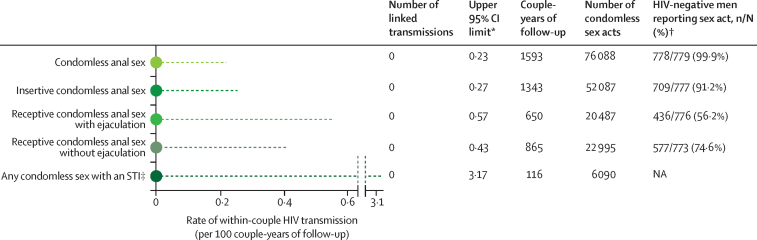
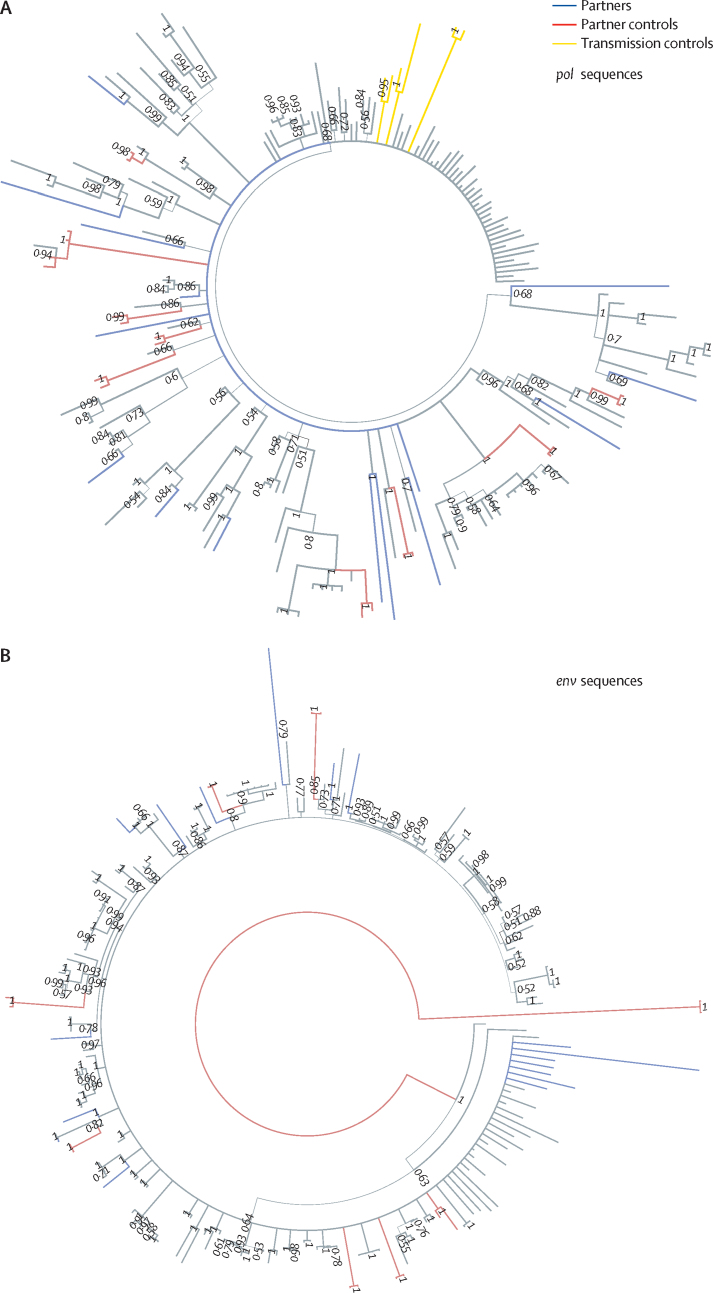
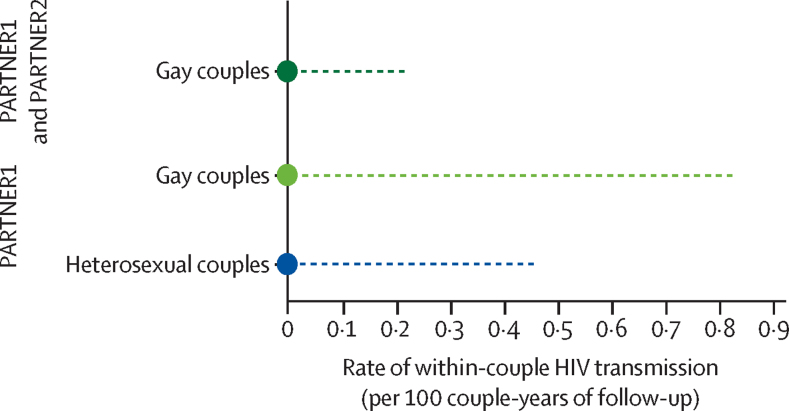
BACKGROUND: The level of evidence for HIV transmission risk through condomless sex in serodifferent gay couples with the HIV-positive partner taking virally suppressive antiretroviral therapy (ART) is limited compared with the evidence available for transmission risk in heterosexual couples. The aim of the second phase of the PARTNER study (PARTNER2) was to provide precise estimates of transmission risk in gay serodifferent partnerships. METHODS: The PARTNER study was a prospective observational study done at 75 sites in 14 European countries. The first phase of the study (PARTNER1; Sept 15, 2010, to May 31, 2014) recruited and followed up both heterosexual and gay serodifferent couples (HIV-positive partner taking suppressive ART) who reported condomless sex, whereas the PARTNER2 extension (to April 30, 2018) recruited and followed up gay couples only. At study visits, data collection included sexual behaviour questionnaires, HIV testing (HIV-negative partner), and HIV-1 viral load testing (HIV-positive partner). If a seroconversion occurred in the HIV-negative partner, anonymised phylogenetic analysis was done to compare HIV-1 pol and env sequences in both partners to identify linked transmissions. Couple-years of follow-up were eligible for inclusion if condomless sex was reported, use of pre-exposure prophylaxis or post-exposure prophylaxis was not reported by the HIV-negative partner, and the HIV-positive partner was virally suppressed (plasma HIV-1 RNA <200 copies per mL) at the most recent visit (within the past year). Incidence rate of HIV transmission was calculated as the number of phylogenetically linked HIV infections that occurred during eligible couple-years of follow-up divided by eligible couple-years of follow-up. Two-sided 95% CIs for the incidence rate of transmission were calculated using exact Poisson methods. FINDINGS: Between Sept 15, 2010, and July 31, 2017, 972 gay couples were enrolled, of which 782 provided 1593 eligible couple-years of follow-up with a median follow-up of 2·0 years (IQR 1·1-3·5). At baseline, median age for HIV-positive partners was 40 years (IQR 33-46) and couples reported condomless sex for a median of 1·0 years (IQR 0·4-2·9). During eligible couple-years of follow-up, couples reported condomless anal sex a total of 76 088 times. 288 (37%) of 777 HIV-negative men reported condomless sex with other partners. 15 new HIV infections occurred during eligible couple-years of follow-up, but none were phylogenetically linked within-couple transmissions, resulting in an HIV transmission rate of zero (upper 95% CI 0·23 per 100 couple-years of follow-up). INTERPRETATION: Our results provide a similar level of evidence on viral suppression and HIV transmission risk for gay men to that previously generated for heterosexual couples and suggest that the risk of HIV transmission in gay couples through condomless sex when HIV viral load is suppressed is effectively zero. Our findings support the message of the U=U (undetectable equals untransmittable) campaign, and the benefits of early testing and treatment for HIV. FUNDING: National Institute for Health Research.
Overview
The claims and statistics of this paper haven’t been checked yet.
Free: it reads the open-access text and checks the first 5 claims that cite a source we can check. Create a free account to check every claim.
Integrity signals
Registry
Cites
Statistics
Figures
Verification
Claims the paper makes
The claims and statistics of this paper haven’t been checked yet.
Free: it reads the open-access text and checks the first 5 claims that cite a source we can check. Create a free account to check every claim.
Claims other papers make about this one
Each is checked against this paper’s own text: does it say what the citing paper says it does?
The source backs part of the claim, not all of it — or backs it for a different population, condition or comparison.
In the citing paper
“Effective ART that suppresses HIV replication to undetectable levels reduces morbidity, provides a near-normal lifespan, and prevents sexual transmission of HIV to others (95–97,410–412).”
From Sexually Transmitted Infections Treatment Guidelines, 2021 (2021) · cites this paper as [97]
Experimental — accuracy not yet measuredThe cited source says what the claim attributes to it.
In the citing paper
“Additional studies of HIV mixed-status couples, heterosexual and MSM couples (PARTNER study), and MSM couples (Opposites Attract and PARTNERS2 studies) reported that patients with HIV taking ART who maintain an undetectable viral load demonstrate no risk for transmitting HIV to their HIV-negative sex partners (95–97).”
From Sexually Transmitted Infections Treatment Guidelines, 2021 (2021) · cites this paper as [97]
The cited source says what the claim attributes to it.
In the citing paper
“Persons with HIV infection who achieve and maintain a viral load suppressed to <200 copies/mL with ART have effectively no risk for sexually transmitting HIV (95–97,421).”
From Sexually Transmitted Infections Treatment Guidelines, 2021 (2021) · cites this paper as [97]
Self-check
Percentages, sums and reported differences re-computed from the paper’s own numbers.
The self-check needs the paper’s full text.
Citations
Cites
Prevention of HIV-1 infection with early antiretroviral therapy.
Cohen, M. S., Chen, Y. Q., McCauley, M., Gamble, T., Hosseinipour, M. C., Kumarasamy, N., Hakim, J. G., Kumwenda, J., Grinsztejn, B., Pilotto, J. H. S., et al. (2011) · New England Journal of Medicine · doi:10.1056/nejmoa1105243 · Cited by 6,873
Viral Load and Heterosexual Transmission of Human Immunodeficiency Virus Type 1
Quinn, T. C., Wawer, M. J., Sewankambo, N., Serwadda, D., Li, C., Wabwire-Mangen, F., Meehan, M. O., Lutalo, T., & Gray, R. H. (2000) · New England Journal of Medicine · doi:10.1056/nejm200003303421303 · Cited by 3,020
Antiretroviral therapy for the prevention of HIV-1 transmission.
Cohen, M. S., Chen, Y. Q., McCauley, M., Gamble, T., Hosseinipour, M. C., Kumarasamy, N., Hakim, J. G., Kumwenda, J., Grinsztejn, B., Pilotto, J. H. S., et al. (2016) · New England Journal of Medicine · doi:10.1056/nejmoa1600693 · Cited by 1,700
Rodger, A. J., Cambiano, V., Bruun, T., Vernazza, P., Collins, S., van Lunzen, J., Corbelli, G. M., Estrada, V., Geretti, A. M., Beloukas, A., et al. (2016) · JAMA · doi:10.1001/jama.2016.5148 · Cited by 1,431
Self-citationAttia, S., Egger, M., Müller, M., Zwahlen, M., & Low, N. (2009) · AIDS · doi:10.1097/qad.0b013e32832b7dca · Cited by 1,001
Donnell, D., Baeten, J. M., Kiarie, J., Thomas, K. K., Stevens, W., Cohen, C. R., McIntyre, J., Lingappa, J. R., & Celum, C. (2010) · The Lancet · doi:10.1016/s0140-6736(10)60705-2 · Cited by 952
Baggaley, R. F., White, R. G., & Boily, M.-C. (2010) · International Journal of Epidemiology · doi:10.1093/ije/dyq057 · Cited by 713
Bavinton, B. R., Pinto, A. N., Phanuphak, N., Grinsztejn, B., Prestage, G. P., Zablotska-Manos, I. B., Jin, F., Fairley, C. K., Moore, R., Roth, N., et al. (2018) · The Lancet HIV · doi:10.1016/s2352-3018(18)30132-2 · Cited by 524
Effectiveness of Highly Active Antiretroviral Therapy in Reducing Heterosexual Transmission of HIV
Castilla, J., del Romero, J., Hernando, V., Marincovich, B., García, S., & Rodríguez, C. (2005) · JAIDS Journal of Acquired Immune Deficiency Syndromes · doi:10.1097/01.qai.0000157389.78374.45 · Cited by 384
Genital HIV-1 RNA Predicts Risk of Heterosexual HIV-1 Transmission
Baeten, J. M., Kahle, E., Lingappa, J. R., Coombs, R. W., Delany-Moretlwe, S., Nakku-Joloba, E., Mugo, N. R., Wald, A., Corey, L., Donnell, D., et al. (2011) · Science Translational Medicine · doi:10.1126/scitranslmed.3001888 · Cited by 293
Research works printed but not linked: 2
- Rodger A, Bruun T, Cambiano V, et al. HIV transmission risk through condomless sex if HIV positive partner on suppressive ART: PARTNER Study. 21st Conference on Retroviruses and Opportunistic Infections (CROI); Boston, MA, USA; March 3–6, 2014. Abstract 153LB.
- Landovitz RJ, Tran TT, Cohn SE, et al. Perception of infectiousness in HIV-infected persons after initiating ART: ACTG A5257. 23rd Conference on Retroviruses and Opportunistic Infections (CROI); Boston, MA, USA; Feb 22–25, 2016. Abstract 55.
Cited by
Items 601–700 of 998
La infección por el virus de la inmunodeficiencia humana 40 años después
Miró, J. M. (2021) · Medicina Clínica · doi:10.1016/j.medcli.2021.09.020 · Cited by 3
An Approach to Quantifying the Interaction between Behavioral and Transmission Clusters
Vizcaya, L. S., Kusejko, K., Günthard, H. F., Böni, J., Metzner, K. J., Braun, D. L., Nicca, D., Bernasconi, E., Calmy, A., Darling, K., et al. (2022) · Viruses · doi:10.3390/v14040784 · Cited by 3
Self-citationBereczky, T. (2020) · Eötvös Loránd Tudományegyetem · doi:10.15476/elte.2019.292 · Cited by 5
Geldsetzer, P., Chebet, J. J., Tarumbiswa, T., Phate-Lesihla, R., Maponga, C., Mandara, E., Bärnighausen, T., & McMahon, S. A. (2022) · medRxiv · doi:10.1101/2022.06.21.22276722 · Cited by 3
B-OK: A Visual and Tactile Tool for HIV Treatment Adherence Support in a United States Urban CenterPreprint
Richterman, A. G., Klaiman, T. A., Palma, D., Ryu, E., Schmucker, L., Villarin, K., Grosso, G., Brady, K. A., Thirumurthy, H., & Buttenheim, A. M. (2024) · medRxiv · doi:10.1101/2024.02.28.24303498 · Cited by 3
Evaluation of factors affecting survival of HIV/AIDS patients using Cox and extended Cox models
Pakdin, B., Rezaeian, S., Najafi, F., Shakiba, I., & Heydarpour, F. (2022) · HIV & AIDS Review · doi:10.5114/hivar.2022.120036 · Cited by 2
Bush, L. M., Nguyen, C., & Maska, E. (2024) · Infectious Diseases in Clinical Practice · doi:10.1097/ipc.0000000000001363 · Cited by 2
Mowbray, E., Costello, J. E., Morgan, P. F., Persson, A., Boydell, K., Bateson, D. J., Leane, K., An, A., Nathan, S., Newman, C. E., et al. (2024) · Journal of HIV/AIDS & Social Services · doi:10.1080/15381501.2024.2413497 · Cited by 2
“Although an undetectable viral load eliminates the risk of HIV transmission (Rodger et al., 2019), stigma toward people living with HIV remains a significant barrier to health and quality of life (Andersson et al., 2020).”
Aldámiz‐Echevarría, T., Fanciulli, C., López, M. M., Latorre, L. P., Tejerina, F., Sanchez, D., Lodeiros, B., López, J. C., Berenguer, J., Bellón, J. M., et al. (2025) · Scientific Reports · doi:10.1038/s41598-025-86540-8 · Cited by 2
Hanum, N., Cambiano, V., Sewell, J., Rodger, A. J., Asboe, D., Whitlock, G. G., Gilson, R. J. C., Clarke, A. E., Miltz, A. R., Collins, S., et al. (2025) · PLoS ONE · doi:10.1371/journal.pone.0308238 · Cited by 2
Self-citationPromoter Methylation of HIV Coreceptor-Related Genes CCR5 and CXCR4: Original Research
Esman, A. S., Salamaikina, S., Алексеевна, К. А., Vinokurov, M., Fomina, D., Sikamov, K. V., Syrkina, A. V., Pokrovskaya, A. V., & Акимкин, В. Г. (2025) · Viruses · doi:10.3390/v17040465 · Cited by 2
Makonokaya, L., Khumbanyiwa, M., Kalitera, L. U., Chamanga, R. K., Dunga, S., Jiah, L., Masina, E., Bhatt, N., & Maphosa, T. (2025) · Southern African Journal of HIV Medicine · doi:10.4102/sajhivmed.v26i1.1692 · Cited by 2
Clifton, B., Keen, P., Trevillyan, J. M., Sullivan, N., Johnson, K. E., Warner, M., Taheny, C., Ellis, H., Freestone, J., Allan, B., et al. (2025) · HIV Medicine · doi:10.1111/hiv.70083 · Cited by 2
Tadese, B. K., Cambron‐Mellott, M. J., Arduino, J. M., Balkaran, B. L., Eslamimehr, S., & Zuniga, J. M. (2025) · Journal of the International Association of Providers of AIDS Care (JIAPAC) · doi:10.1177/23259582251370236 · Cited by 5
Senkoro, E., Muwonge, T. R., Samson, L., Kasiita, V., Nalumansi, A., Kamusiime, B., Mollel, G. J., Weisser, M., & Mujugira, A. (2025) · BMC Public Health · doi:10.1186/s12889-025-24120-1 · Cited by 3
Tian, J. M. L. H., Watson, J. R., Tran, A., Maunder, R., Parsons, J. A., Turan, B., Johnson, M. O., Boni, A. R., Miller, A. D., Wahpoosewyan, D., et al. (2025) · HIV Medicine · doi:10.1111/hiv.70108 · Cited by 2
Ramautarsing, R. A., Pungpapong, N., Chinlaertworasiri, N., Mingkwanrungruang, P., Tongmuang, S., Suriwong, S., Tasomboon, W., & Phanuphak, N. (2025) · AIDS and Behavior · doi:10.1007/s10461-025-04938-x · Cited by 2
Zhao, B., Hu, Y., Huang, Q., Peng, J., & Li, R. (2025) · Scientific Reports · doi:10.1038/s41598-025-22600-3 · Cited by 3
“Questions 6 and 8—designed to probe common misconceptions identified in earlier interviews— initially raised disagreement, but were retained after further expert consultation (Appendix Table 2).”
Jongen, V. W., Boyd, A. C., Albers, T., Schat, N., Verhagen, M. D., van Zoest, R. A., van den Berge, M., van Nieuwkoop, C., Harris, V., Bierman, W. F. W., et al. (2025) · Nature Communications · doi:10.1038/s41467-025-65512-6 · Cited by 3
Telemental Healthcare and HIV Care: A National Study of US Veterans with HIV during COVID-19
Sheinfil, A. Z., Amspoker, A. B., Guajardo, E., Day, G., Walder, A. M., Chen, L., Hogan, J., Giordano, T. P., Lindsay, J. A., & Ecker, A. H. (2025) · AIDS and Behavior · doi:10.1007/s10461-025-04988-1 · Cited by 2
A stochastic reaction-diffusion HIV/AIDS model with implications for long-Acting ART
Gao, B., Luo, Y., Zhang, L., & Teng, Z. (2026) · Mathematical Biosciences · doi:10.1016/j.mbs.2026.109673 · Cited by 2
Dzramado, V. L., Oduro, E., & Lasim, O. U. (2026) · Frontiers in Public Health · doi:10.3389/fpubh.2026.1776541 · Cited by 3
Durability of HIV viral suppression in South Africa: a national cohort study
Lauren, E., Bor, J. H., Bell, T. G., Gareta, D., Shumba, K., Muchengeti, M., MacLeod, W., Fox, M. P., Stevens, W., Molapo, T., et al. (2026) · The Lancet HIV · doi:10.1016/s2352-3018(26)00079-2 · Cited by 3
“To date, most studies of viral rebound have been motivated by the goal of screening for treatment failure and drug resistance rather than assessing HIV transmission risk and implications for U=U as a prevention strategy (appendix pp 4–8).”
Inter-partner Agreement of Condom Use and Sexual Positioning in Male Couples
Walsh, A. R., Sullivan, S. P., & Stephenson, R. B. (2021) · The Journal of Sex Research · doi:10.1080/00224499.2021.1924606 · Cited by 3
“…based on self-reported data (Boily et al., 2009; Eaton et al., 2009; Jin et al., 2009; Johnson et al., 2018; Lasry et al., 2014; Patel et al., 2014; Rodger et al., 2019), yet the current validity and reliability of self-reported sexual behavior measures is unclear, particularly for data from…”
BackgroundVincent, K. L., Frost, P. A., Motamedi, M., Dick, E. J., Wei, J., Yang, J. P., White, R. G., & Gauduin, M. (2021) · Frontiers in Immunology · doi:10.3389/fimmu.2021.660524 · Cited by 2
HIV Compartmentalization in Male Genital Tract: Relevance for Viral Eradication
Peng, X., Isnard, S., Lin, J. C.-Y., Fombuena, B., Royston, L., & Routy, J. (2021) · Infectious Diseases & Immunity · doi:10.1097/id9.0000000000000012 · Cited by 3
“23 per 100 couple-years of follow-up).([26])”
Arends, R. M., Grintjes, K. J. T., van den Heuvel, T. J., Foeken-Verwoert, E. G. J., Schene, A. H., van der Ven, A. J. A. M., & Schellekens, A. (2021) · AIDS Care · doi:10.1080/09540121.2021.2002252 · Cited by 4
“When not fully viral suppressed, STRB can cause transmission of HIV (Rodger et al., 2019).”
BackgroundByrne, M. E., Akselrod, H., Monroe, A. K., Horberg, M. A., Lucar, J. A., Castel, A. D., Denyer, R., Doshi, R. K., Secco, A., Squires, L. E., et al. (2022) · Open Forum Infectious Diseases · doi:10.1093/ofid/ofac139 · Cited by 3
Scévola, S. C., Imaz, A., Cottrell, M. L., Niubó, J., Horne, B. V., Tiraboschi, J. M., Saumoy, M., Morenilla, S., Soriano, I., Kashuba, A. D. M., et al. (2022) · Clinical Infectious Diseases · doi:10.1093/cid/ciac410 · Cited by 2
Self-citationHIV serodiscordant sexual partners: social representations of health care professionals
da Silva, V. G. F., Nogueira, I., Elias, T. M. N., Reis, R. K., de Souza, N. L., & de Menezes, R. M. P. (2022) · Revista Brasileira de Enfermagem · doi:10.1590/0034-7167-2021-0867 · Cited by 5
“It is worth saying that treatment as prevention to reach an undetectable viral load is a scientifically proven effective method that brings positive implications for the sexual health of HIV serodiscordant couples (21-22) .”
Nyman, F., & Jellesma, F. C. (2022) · Journal of Homosexuality · doi:10.1080/00918369.2022.2103870 · Cited by 3
“The virus can even become undetectable, with chance of the virus spreading being effectively zero (Patel et al., 2021; Rodger et al., 2019).”
BackgroundKorkmaz, N., Şentürk, G. Ç., Şibar, E. G., Eser, F., & Duman, Z. (2022) · Flora the Journal of Infectious Diseases and Clinical Microbiology · doi:10.5578/flora.20229810 · Cited by 2
Schmidt, A. J., Ross, M. W., Berg, R. C., & Altan, P. (2022) · Archives of Sexual Behavior · doi:10.1007/s10508-022-02468-4 · Cited by 2
Zerdali, E. Y., Nakir, İ. Y., Sayılı, U., Sürme, S., & Yıldırım, M. (2023) · Current HIV Research · doi:10.2174/1570162x21666230111150431 · Cited by 2
Pantke, A., Kollan, C., Gunsenheimer‐Bartmeyer, B., Jensen, B. O., Stephan, C., Degen, O., Schürmann, D., Kurth, T., Bremer, V., Koppe, U., et al. (2023) · HIV Medicine · doi:10.1111/hiv.13482 · Cited by 2
“As effective ART leads to viral suppression and eliminates the risk for onward sexual transmission [8], early treatment initiation is beneficial not only for individuals but also for populations at risk.”
BackgroundSelf-citationDiaye, A. N., Herder, T., & Agardh, A. (2023) · PLoS ONE · doi:10.1371/journal.pone.0283570 · Cited by 5
“Since the 1980s there have been many developments in the field of antiretroviral therapy (ART), with approximately ten years having elapsed since the establishment of convincing evidence on infectiousness and the inability to sexually transmit HIV when virally suppressed [10–12].”
Práticas de cuidado interprofissional em saúde mental
(2022) · doi:10.51796/978-65-88556-07-8 · Cited by 2
National HIV programme testing recommendations
Choy, C. Y., Wong, C. S., Kumar, P. A., Lin, R. T. P., Low, C., Toh, M. P. H. S., Huang, F., Olszyna, D. P., Teh, Y. E., Chien, M. F. J., et al. (2023) · Singapore Medical Journal · doi:10.4103/singaporemedj.smj-2021-466 · Cited by 3
ANDİÇ, J. (2023) · ViraVerita E-Dergi · doi:10.47124/viraverita.1261704 · Cited by 2
A paradigm shift away from condoms: Focusing STI prevention on evidence-based interventions
Baker, J. (2023) · JAAPA · doi:10.1097/01.jaa.0000937276.51342.74 · Cited by 4
Scévola, S. C., Niubó, J., Domingo, P., Verdejo, G., Curran, A., Díaz-Brito, V., Peñafiel, J., Tiraboschi, J. M., Morenilla, S., García, B., et al. (2023) · The Journal of Infectious Diseases · doi:10.1093/infdis/jiad304 · Cited by 2
Self-citationBorsa, A., & Siegel, K. (2023) · AIDS Education and Prevention · doi:10.1521/aeap.2023.35.5.406 · Cited by 3
Senteza, I., Castelnuovo, B., Mukunya, D., & Makumbi, F. E. (2023) · PLoS ONE · doi:10.1371/journal.pone.0293057 · Cited by 2
Ageing with HIV ; a victory, a challenge and a call to action
Trevillyan, J. M., & Behrens, G. M. N. (2023) · HIV Medicine · doi:10.1111/hiv.13591 · Cited by 2
“Effective ART is also now conclusively proven to prevent HIV transmission [3]; stigma-busting science that has proven that undetectable equals untransmissible, paving the way for the de-medicalisation of the intimate and sexual lives of people living with HIV in whom an undetectable HIV viral load…”
BackgroundRapid antiretroviral therapy in primary HIV-1 infection enhances immune recovery
Thornhill, J. P., Fox, J., Martin, G. E., Hall, R., Lwanga, J., Lewis, H., Brown, H. L., Robinson, N., Kuldanek, K., Loes, S. K., et al. (2023) · AIDS · doi:10.1097/qad.0000000000003825 · Cited by 2
“Early PHI (consistent with Fiebig stage I or II) based on the presence of HIV-1 RNA or p24 antigen positivity”
MethodSelf-citationPreventing Behavioral Human Immunodeficiency Virus Infections in Adolescents and Young Adults
Ryan, R. L., Emmanuel, P. J., & Sanders, L. J. (2024) · Advances in Pediatrics · doi:10.1016/j.yapd.2024.02.004 · Cited by 2
Molldrem, S. (2024) · BioSocieties · doi:10.1057/s41292-024-00326-1 · Cited by 3
“In the TasP era, one of public health agencies’ primary HIV prevention goals is to retain all people living with HIV in continuous care (Molldrem 2020; Girard et al. 2019; Lloyd 2018; CDC 2018b; Rodger et al. 2019; UNAIDS 2017).”
Kostaki, E. G., Roussos, S., Kefala, A. M., Limnaios, S., Psichοgiou, M., Papachristou, E., Nikolopoulos, G. K., Flountzi, E., Friedman, S. R., Λάγιου, Π., et al. (2024) · Infection Genetics and Evolution · doi:10.1016/j.meegid.2024.105597 · Cited by 2
Self-citationDinesha, T. R., Boobalan, J., Kumar, C. V., Manikandan, P., Muhila, M., Solomon, S. S., Srikrishnan, A. K., & Murugavel, K. G. (2024) · HIV Medicine · doi:10.1111/hiv.13641 · Cited by 2
“Various studies underscore that there is effectively no transmission risk via condomless sexual encounters when pVL is 200 copies/mL [6, 20, 21].”
BackgroundLuz, P. M., Apelian, H., Lambert, G., Fourmigue, A., Dvořáková, M., Grace, D., Lachowsky, N. J., Hart, T. A., Moore, D. M., Skakoon‐Sparling, S., et al. (2024) · AIDS and Behavior · doi:10.1007/s10461-024-04380-5 · Cited by 2
Dunn, R., Stegall, C. J., Creel, C., Fuchs, C. J., Menzies, B. E., & Summers, N. A. (2024) · BMC Infectious Diseases · doi:10.1186/s12879-024-09528-1 · Cited by 2
“Not only does HIV viral suppression provide numerous individual health benefits [14–17], including achieving a life-expec-tancy near that of people without HIV [18], it also lowers the risk of viral transmission through sex among heterosexual couples as well as MSM [19–21].”
BackgroundMatsuda, E. M., Santos, J. H. D. S., Ahagon, C. M., Lopes, G. I. S. L., & Brígido, L. F. D. M. (2024) · AIDS Research and Human Retroviruses · doi:10.1089/aid.2023.0127 · Cited by 2
Information and consent in HIV screening
Avilés, M. Á. R. (2024) · Emergencias · doi:10.55633/s3me/064.2024 · Cited by 2
Campbell, J. T., Gesselman, A. N., Staten, M. C., & Carter, G. A. (2024) · Journal of the Association of Nurses in AIDS Care · doi:10.1097/jnc.0000000000000496 · Cited by 3
Richterman, A. G., Klaiman, T. A., Connelly, R., Palma, D., Ryu, E., Schmucker, L., Villarin, K., Grosso, G., Brady, K. A., Thirumurthy, H., et al. (2024) · Global Implementation Research and Applications · doi:10.1007/s43477-024-00135-5 · Cited by 2
Liu, Y., Wang, R., Sun, L., Li, A., Li, Z., Kang, Q., Feng, Y., Lv, S., Zhai, Y., Li, R., et al. (2024) · International Journal of Antimicrobial Agents · doi:10.1016/j.ijantimicag.2024.107396 · Cited by 2
Jordans, C. C. E., Rokx-Niemantsverdriet, L., Struik, J. L., van der Waal, E. C., van der Voorn, P. V. J. M., Bakker, N., Verbon, A., Bindels, P., & Rokx, C. (2024) · BMC Family Practice · doi:10.1186/s12875-024-02666-0 · Cited by 3
“Furthermore, it facilitates HIV transmission in the population [2–6].”
Jin, Y. J., Wang, Y., Xia, T., & Ma, Q. (2025) · Infection and Drug Resistance · doi:10.2147/idr.s488220 · Cited by 3
Li, Y., Jin, F., Li, Y., Li, Y., Wang, Y., & Yang, X. J. (2025) · Frontiers in Cellular and Infection Microbiology · doi:10.3389/fcimb.2025.1474127 · Cited by 2
Ekama, S., Sheth, A. N., Ilomuanya, M. O., Okwuzu, J. O., Musa, A. Z., Idigbe, I. E., Ezeobi, P. M., Oladele, D. A., Ezechi, O., & Salako, B. L. (2025) · HIV/AIDS - Research and Palliative Care · doi:10.2147/hiv.s468667 · Cited by 2
Keen, P., Nigro, S. J., Chan, C., Bavinton, B. R., Aung, H. L., Holt, M., Guy, R., Amin, J., Broady, T. R., Costello, J. E., et al. (2025) · The Lancet Regional Health - Western Pacific · doi:10.1016/j.lanwpc.2025.101535 · Cited by 6
Wu, Z., Zhu, Y.-Y., Huang, X., Chen, S., Chu, Z., Wang, H., Chen, Y.-K., Jiang, Y., Shang, H., & Hu, Q. (2025) · Infectious Diseases of Poverty · doi:10.1186/s40249-025-01305-9 · Cited by 4
“The HCV incidence rates among F/TDF users in our study are consistent with those reported in Australia and other high-income countries [18, 35], highlighting the importance of regular STI screenings, including HCV testing, as an essential component of PrEP management.”
Nyarko, S. B., Twum, J. A., Obeng, A. S., Djangba, H. D., Debrah, O., Kyei, F., Kyei, G. B., & Thomford, N. E. (2025) · PLoS ONE · doi:10.1371/journal.pone.0324360 · Cited by 6
“In recent years, available clinical data have consistently established that viral loads that are undetectable cannot be transmitted to another individual [5,6].”
Anal dysplasia and HIV shedding in ART-treated men
Choi, Y., Salit, I. E., Grech, S., Sano, M., Weiss, E., Kovacs, C. M., Paquette, R., Claudio, M., Gibbons, S., Severini, A., et al. (2020) · Sexually Transmitted Infections · doi:10.1136/sextrans-2019-054262 · Cited by 2
Kostaki, E. G., Hodges-Mameletzis, I., Magiorkinis, G., Adamis, G., Xylomenos, G., Nikolopoulos, G. K., Lazanas, M. C., Chini, M., Mangafas, N., Skoutelis, A. T., et al. (2020) · Sexually Transmitted Infections · doi:10.1136/sextrans-2020-054509 · Cited by 2
Washington, T. A., Brocato, J., Applewhite, S., Dyson, Y. D., & Ramos, A. (2021) · Urban Social Work · doi:10.1891/usw-d-20-00001 · Cited by 4
AIDS, DoençaEmergente Que Permanece
Grinsztejn, B. G. J., Jalil, E. M., & Veloso, V. G. (2023) · Anais da Academia Nacional de Medicina · doi:10.52130/27639878-aanm2023v194n2p56-75 · Cited by 1
Uptake of health services by youth living with HIV: a focused ethnography
Zgambo, M., Arabiat, D. H., & Ireson, D. (2020) · International Nursing Review · doi:10.1111/inr.12638 · Cited by 3
Cascade of care of people diagnosed with HIV in New Zealand between 2006 and 2017
McAllister, S. M., van Asten, H., Anglemyer, A. T., Crengle, S. M., Zeng, J., Raymond, N. J., Handy, R., Giola, M., Dickson, N., & Priest, P. C. (2020) · HIV Medicine · doi:10.1111/hiv.12983 · Cited by 2
Leitinger, D., Ryan, K. E., Wilkinson, A. L., Pedrana, A. E., Hellard, M. E., & Stoove, M. A. (2020) · Sexually Transmitted Diseases · doi:10.1097/olq.0000000000001324 · Cited by 2
“Supporting greater testing frequency among GBM is therefore crucial to HIV prevention in Australia,(4) with timely diagnosis through frequent testing allowing for early commencement of antiretroviral therapy and subsequently eliminating sexual transmission risk.(5) Current Australian guidelines recommend quarterly HIV…”
BackgroundTime between diagnosis and achievement of virologic suppression in people living with HIV
Ilagan, D. J. C., Eitniear, L., Cole, K. A., Duggan, J. M., & Sahloff, E. G. (2021) · American Journal of Health-System Pharmacy · doi:10.1093/ajhp/zxab269 · Cited by 2
Matsuda, E. M., Ahagon, C. M., Coelho, L. P. O., de Campos, I. B., Colpas, D. R., Campos, N. C., Lopes, G. I. S. L., Silva, V. O., de Oliveira, I. P., & Brígido, L. F. D. M. (2021) · Journal of Medical Virology · doi:10.1002/jmv.27398 · Cited by 2
Zhang, Z., Zhang, L., & Shen, Y. (2021) · Virology · doi:10.1016/j.virol.2021.11.010 · Cited by 3
Predictors for HIV testing among Chinese workers in infrastructure construction enterprises in Kenya
Zhou, W., Deng, W., Luo, J., Bai, Y., He, Z., & Wang, H. (2021) · BMC Public Health · doi:10.1186/s12889-021-12234-1 · Cited by 2
“It is the entry point for HIV treatment, care, and support services [16, 17].”
BackgroundFoláyan, M. O., Aliyu, S. H., Oginni, A. B., Ezechi, O., Kolawole, G. O., Ezeama, N. N., Dadem, N. Y., Anenih, J. O., Alagi, M. A., Ekanem, E. I., et al. (2022) · PLoS ONE · doi:10.1371/journal.pone.0268011 · Cited by 2
Sexually Transmitted Diseases (STDs)
Cocci, A., & Romano, A. (2022) · Management of urology · doi:10.1007/978-3-031-12049-7_17 · Cited by 2
Gray, J., Prestage, G., Jin, F., Phanuphak, N., Friedman, R. K., Fairley, C. K., Kelleher, A. D., Templeton, D. J., Zablotska, I., Hoy, J., et al. (2023) · AIDS and Behavior · doi:10.1007/s10461-023-04030-2 · Cited by 3
Greene, E., Walcott, M. M., Guerra, L., Tieu, H., Nandi, V., Soler, J., Diaz, J. E., Curriero, F. C., Latkin, C. A., Bosompem, A., et al. (2023) · AIDS Care · doi:10.1080/09540121.2023.2229816 · Cited by 3
“…that individuals living with HIV who achieve and maintain undetectable viral load status (durable viral suppression) through antiretroviral therapy (ART) has nearly zero chance of infecting their partners through sexual contact (Cohen et al., 2020; Patel et al., 2020; Rodger et al., 2016, 2019).”
BackgroundHIV and urethritis: time required for antiretroviral therapy to suppress HIV in semen
Matoga, M., Chen, J. S., Massa, C., Thengolose, I., Tegha, G., Ndalama, B., Bonongwe, N., Mathiya, E., Jere, E., Banda, G., et al. (2023) · AIDS · doi:10.1097/qad.0000000000003679 · Cited by 2
Resiliência e adesão à terapia antirretroviral em pessoas vivendo com HIV: Revisão integrativa
Carvalho, P. P., Rossato, L., & Scorsolini‐Comin, F. (2023) · Ciencias Psicológicas · doi:10.22235/cp.v17i2.2699 · Cited by 4
Bogers, S., Boyd, A. C., van der Loeff, M. F. S., Geerlings, S. E., Davidovich, U., & on behalf of the HIV Transmission Elimination AMsterdam (and H-TEAM) Consortium (2023) · AIDS Care · doi:10.1080/09540121.2023.2254548 · Cited by 2
“These data indicate that access to and uptake of HIV testing needs to be improved, as early diagnosis and treatment has individual health bene fi ts and reduces onward transmission (INSIGHT START Study Group et al., 2015; Marks et al., 2006; Rodger et al., 2019).”
BackgroundHIV Infection and AIDS: The Present Status of Antiretroviral Therapy
Paparizos, V. A., & Kourkounti, S. (2023) · Springer eBooks · doi:10.1007/978-3-031-15130-9_41 · Cited by 5
Should men who have ever had sex with men be allowed to donate blood in Brazil?
Martínez, E. Z., Galdino, G., & Zucoloto, M. L. (2024) · Hematology Transfusion and Cell Therapy · doi:10.1016/j.htct.2024.03.005 · Cited by 2
“14 The results showed that in nearly 77,000 condomless sexual encounters, there were no cases of HIV transmission when the HIV-infected partner had an undetectable viral load ( 200 copies/mL).”
BackgroundNewcomb, M. E., & Rendina, H. J. (2020) · Archives of Sexual Behavior · doi:10.1007/s10508-020-01639-5 · Cited by 2
Wirth, M., Inauen, J., & Steinke, H. (2020) · Ethik in der Medizin · doi:10.1007/s00481-020-00589-9 · Cited by 2
Undetectable HIV Equals Untransmittable HIV (U = U) Statement in Women. Are we there Yet?
Kowalska, J. D., Krankowska, D. C., Wróblewska, A., & Firląg‐Burkacka, E. (2022) · Acta Scientific Women s Health · doi:10.31080/aswh.2022.04.0374 · Cited by 1
Infecções sexualmente transmissíveis em usuários do Projeto Demonstrativo PrEP Brasil
Vasconcelos, R. D. P. (2021) · Digital Library of Theses and Dissertations (Universidade de São Paulo) · doi:10.11606/t.5.2021.tde-28092021-114014 · Cited by 4
Close to zero, but not zero: What is an acceptable HIV transmission risk through breastfeeding?
Behrens, G. M. N., Aebi‐Popp, K., & Babiker, A. G. (2022) · PubMed · doi:10.48350/162700 · Cited by 2
MacGibbon, J., Bavinton, B. R., Broady, T. R., Ellard, J., Murphy, D., Calabrese, S. K., Kalwicz, D. A., Heath‐Paynter, D., Molyneux, A., Power, C., et al. (2023) · Sexual Health · doi:10.1071/sh23050_co · Cited by 2
Alvarado, B., Martínez-Cajas, J., Mueses-Marín, H. F., Sánchez, D. C., Adam, B. D., & Hart, T. A. (2024) · doi:10.32920/25438495.v1 · Cited by 2
Zhou, Q., Peng, W., Yang, L., Goldsamt, L. A., Shen, Y., Xie, J., Deng, Q., & Li, X. (2024) · SSRN Electronic Journal · doi:10.2139/ssrn.4785363 · Cited by 2
Bates, K., & Brundrett, M. E. (2024) · Springer eBooks · doi:10.1007/978-3-031-54281-7_31 · Cited by 2
Understanding the Importance of Fatherhood among Men Living with HIV in Ontario
Kyne, L. T., Yudin, M. H., Bekele, T., Loutfy, M. R., Rourke, S. B., Watson, J. R., Djiometio, J. N., Antoniou, T., Globerman, J., McGee, A., et al. (2021) · Journal of the International Association of Providers of AIDS Care (JIAPAC) · doi:10.1177/23259582211016133 · Cited by 1
“Additionally, the majority of relevant literature on these topics was completed prior to the publication of landmark studies, namely HPTN052(17) and PARTNERS.(18) The resulting endorsement of U1⁄4U has changed the landscape of HIV forever, opening interest in and opportunities for pursuing parenthood that were unimagi…”
BackgroundCurrent Problems of HIV Transmission Classification
Bimbinov, A. A. (2022) · Actual Problems of Russian Law · doi:10.17803/1994-1471.2022.144.11.111-123 · Cited by 1
Asked to be a sperm donor: disclosure dilemmas of gay men living with HIV
Pralat, R., Anderson, J., Burns, F. M., & Barber, T. (2023) · Culture Health & Sexuality · doi:10.1080/13691058.2023.2276804 · Cited by 1
“Since then, as scientific evidence has confirmed that there is effectively zero risk of HIV transmission when the viral load is suppressed (Rodger et al. 2019), the U = U message has been amplified by HIV organisations, medical associations and public health bodies.”
Quantitative Adherence Level Evaluation Among Long-Term Antiretroviral Therapy Patients in Latvia
Gavrilova, A., Zolovs, M., Urtāne, I., & Šmits, D. (2023) · Patient Preference and Adherence · doi:10.2147/ppa.s437611 · Cited by 1
Addo, P. N. O., Brown, M. J., Nkwonta, C. A., Kaur, A., James, T. A., & Qiao, S. (2024) · Journal of the Association of Nurses in AIDS Care · doi:10.1097/jnc.0000000000000451 · Cited by 2
“The U 5 U campaign is founded on strong scientific evidence (Cohen et al., 2011; Rodger et al., 2019), and it has important implications for people living with HIV (PWH) from a scientific and public health perspective.”
BackgroundLife and Disability Insurance for People with or at Risk of HIV: Aligning Policy with Evidence
Grobman, B., Silverberg, M. J., & Marcus, J. L. (2024) · Journal of Insurance Medicine · doi:10.17849/insm-51-1-25-28.1 · Cited by 1
Miller, S. J., Weaver, K. E., & Harrison, S. E. (2024) · Journal of Pediatric Psychology · doi:10.1093/jpepsy/jsae047 · Cited by 3
Acetylsalicylic acid inhibition of the lipoxygenase pathway: Implications for HIV prevention
Kowatsch, M. M., Winter, T., Oyugi, J. O., Kimani, J., Lajoie, J., Aukema, H. M., & Fowke, K. R. (2024) · Prostaglandins & Other Lipid Mediators · doi:10.1016/j.prostaglandins.2024.106878 · Cited by 1
Metadata
- Authors
- Rodger, A. J., Cambiano, V., Bruun, T., Vernazza, P., Collins, S., Degen, O., Corbelli, G. M., Estrada, V., Geretti, A. M., Beloukas, A., Raben, D., Coll, P., Antinori, A., Nwokolo, N., Rieger, A., Prins, J. M., Blaxhult, A., Weber, R., Van Eeden, A., Brockmeyer, N. H., Clarke, A., del Romero Guerrero, J., Raffi, F., Bogner, J. R., Wandeler, G., Gerstoft, J., Gutiérrez, F., Brinkman, K., Kitchen, M., Ostergaard, L., Leon, A., Ristola, M., Jessen, H., Stellbrink, H.-J., Phillips, A. N., Lundgren, J., Coll, P., Cobarsi, P., Nieto, A., Meulbroek, M., Carrillo, A., Saz, J., Guerrero, J. D. R., García, M. V., Gutiérrez, F., Masiá, M., Robledano, C., Leon, A., Leal, L., Redondo, E. G., Estrada, V. P., Marquez, R., Sandoval, R., Viciana, P., Espinosa, N., Lopez-Cortes, L., Podzamczer, D., Tiraboschi, J., Morenilla, S., Antela, A., Losada, E., Nwokolo, N., Sewell, J., Clarke, A., Kirk, S., Knott, A., Rodger, A. J., Fernandez, T., Gompels, M., Jennings, L., Ward, L., Fox, J., Lwanga, J., Lee, M., Gilson, R., Leen, C., Morris, S., Clutterbuck, D., Brady, M., Asboe, D., Fedele, S., Fidler, S., Brockmeyer, N., Potthoff, A., Skaletz-Rorowski, A., Bogner, J., Seybold, U., Roider, J., Jessen, H., Jessen, A., Ruzicic, S., Stellbrink, H.-J., Kümmerle, T., Lehmann, C., Degen, O., Bartel, S., Hüfner, A., Rockstroh, J., Mohrmann, K., Boesecke, C., Krznaric, I., Ingiliz, P., Weber, R., Grube, C., Braun, D., Günthard, H., Wandeler, G., Furrer, H., Rauch, A., Vernazza, P., Schmid, P., Rasi, M., Borso, D., Stratmann, M., Caviezel, O., Stoeckle, M., Battegay, M., Tarr, P., Christinet, V., Jouinot, F., Isambert, C., Bernasconi, E., Bernasconi, B., Gerstoft, J., Jensen, L. P., Bayer, A. A., Ostergaard, L., Yehdego, Y., Bach, A., Handberg, P., Kronborg, G., Pedersen, S. S., Bülow, N., Ramskover, B., Ristola, M., Debnam, O., Sutinen, J., Blaxhult, A., Ask, R., Hildingsson-Lundh, B., Westling, K., Frisen, E.-M., Cortney, G., O'Dea, S., De Wit, S., Necsoi, C., Vandekerckhove, L., Goffard, J.-C., Henrard, S., Prins, J., Nobel, H.-H., Weijsenfeld, A., Van Eeden, A., Elsenburg, L., Brinkman, K., Vos, D., Hoijenga, I., Gisolf, E., Van Bentum, P., Verhagen, D., Raffi, F., Billaud, E., Ohayon, M., Gosset, D., Fior, A., Pialoux, G., Thibaut, P., Chas, J., Leclercq, V., Pechenot, V., Coquelin, V., Pradier, C., Breaud, S., Touzeau-Romer, V., Rieger, A., Kitchen - Maria Geit, M., Sarcletti, M., Gisinger, M., Oellinger, A., Antinori, A., Menichetti, S., Bini, T., Mussini, C., Meschiari, M., Di Biagio, A., Taramasso, L., Celesia, B. M., Gussio, M., & Janeiro, N.
- Affiliations
- University College London (GB)
- University of Copenhagen (DK)
- University of Liverpool (GB)
- Innsbruck Medical University (AT)
- Infektionsmedizinisches Centrum Hamburg (DE)
- LMU Klinikum (DE)
- Inserm (FR)
- University of Bern (CH)
- Istituto Nazionale per le Malattie Infettive Lazzaro Spallanzani (IT)
- ORCID
- Cambiano, Valentina
- Collins, Simon
- Corbelli, Giulio Maria
- Beloukas, Apostolos
- Raben, Dorthe
- Kitchen, Maria
- Phillips, Andrew N
- Lundgren, Jens
- Saz, Jorge
- Masiá, Mar
- Leal, Lorna
- Tiraboschi, Juan
- Antela, Antonio
- Losada, Elena
- Sewell, Janey
- Fernandez, Thomas
- Gompels, Mark
- Fox, Julie
- Lee, Ming
- Gilson, Richard
- Leen, Clifford
- Clutterbuck, Dan
- Brady, Michael
- Asboe, David
- Fidler, Sarah
- Potthoff, Anja
- Seybold, Ulrich
- Roider, Julia
- Lehmann, Clara
- Rockstroh, Jürgen
- Boesecke, Christoph
- Krznaric, Ivanka
- Ingiliz, Patrick
- Braun, Dominique
- Günthard, Huldrych
- Furrer, Hansjakob
- Rauch, Andri
- Schmid, Patrick
- Stoeckle, Marcel
- Battegay, Manuel
- Tarr, Philip
- Bernasconi, Enos
- Kronborg, Gitte
- Westling, Katarina
- Vandekerckhove, Linos
- Goffard, Jean-Christophe
- Henrard, Sophie
- Weijsenfeld, Annouschka
- Elsenburg, Loek
- Gisolf, Elisabeth
- Verhagen, Dominique
- Chas, Julie
- Pradier, Christian
- Gisinger, Martin
- Mussini, Cristina
- Meschiari, Marianna
- Taramasso, Lucia
- Celesia, Benedetto M.
- Venue
- The Lancet
- Publisher
- Elsevier BV
- Published
- 2019-06
- Volume
- 393
- Issue
- 10189
- Pages
- 2428-2438
- ISSN
- 0099-5355 (ISSN-L)
- 0140-6736
- PMC
- PMC6584382
- OpenAlex
- W2943039121
- Semantic Scholar
- dd8a22d372911ab5c0669c09eefcfffaddbd6e1c
- Cited by
- 1,023
- References
- 35
- Citations by year
- 2026: 87 · 2025: 122 · 2024: 126 · 2023: 153 · 2022: 153 · 2021: 144 · 2020: 168 · 2019: 68
- FWCI
- 102.10
- Type
- journal article
- Language
- en
- Open access
- hybrid
- doi.org
- Licence
- cc-by-nc-nd
- www.elsevier.com/tdm/userlicense/1.0/ (tdm)
- www.elsevier.com/legal/tdmrep-license (tdm)
- creativecommons.org/licenses/by-nc-nd/4.0/ (vor)
- Locations
- The Lancet (publishedVersion, cc-by-nc-nd)
- PubMed Central (publishedVersion, cc-by-nc-nd)
- PubMed (publishedVersion)
- Kölner Universitäts PublikationsServer (Universität zu Köln) (publishedVersion)
- Research at the University of Copenhagen (University of Copenhagen) (publishedVersion, cc-by-nc-nd)
- Ghent University Academic Bibliography (Ghent University) (submittedVersion, cc-by-nc-nd)
- Työväentutkimus Vuosikirja (submittedVersion, cc-by-nc-nd)
- IRIS UNIMORE (University of Modena and Reggio Emilia) (submittedVersion, cc-by)
- Data Archiving and Networked Services (DANS) (submittedVersion)
- Archivio Istituzionale della Ricerca (Universita Degli Studi Di Milano) (submittedVersion, other-oa)
- Cineca Institutional Research Information System (Tor Vergata University) (submittedVersion, other-oa)
- BORIS (University Library Bern) (submittedVersion, cc-by-nc-nd)
- UCL Discovery (University College London) (submittedVersion)
- CINECA IRIS Institutial Research Information System (University of Genoa) (submittedVersion, other-oa)
- Pure Amsterdam UMC (submittedVersion, cc-by-nc-nd)
- Edinburgh Research Explorer (University of Edinburgh) (submittedVersion, cc-by-nc-nd)
- RUNA. Repositorio Institucional del Sergas (Servicio Gallego de Salud (SERGAS)) (submittedVersion, cc-by-nc-nd)
- Spiral (Imperial College London) (submittedVersion, other-oa)
- Zurich Open Repository and Archive (University of Zurich) (submittedVersion)
- Data Archiving and Networked Services (DANS) (submittedVersion, other-oa)
- Open Access CRIS of the University of Bern
- Funders
- Danmarks Grundforskningsfond (126)
- Gilead Sciences
- Augustinus Fonden
- National Institute for Health and Care Research
- A.P. Møller og Hustru Chastine Mc-Kinney Møllers Fond til almene Formaal
- Research for Patient Benefit Programme (PB-PG-1013-32069)
- British HIV Association
- Topics
- Health Sciences › Medicine › Infectious Diseases › HIV/AIDS Research and Interventions
- Life Sciences › Immunology and Microbiology › Virology › HIV Research and Treatment
- Health Sciences › Medicine › Epidemiology › HIV, Drug Use, Sexual Risk
- Keywords
- HIV transmission, gay men, unprotected sex, antiretroviral therapy, viral suppression, HIV-1, transmission risk, phylogenetic analysis, seroconversion, HIV prevention, HIV-negative partners, HIV-positive partners, sexual behavior, pre-exposure prophylaxis, post-exposure prophylaxis, HIV-1 drug resistance, HIV-1 subtype C, HIV-1 subtype D, HIV-1 subtype E, HIV-1 subtype F, HIV-1 subtype G
- MeSH terms
- Adult, HIV Seropositivity, Humans, Male, Middle Aged, Prospective Studies, Sexual Partners, Condoms, Homosexuality, Male, Anti-HIV Agents, Viral Load, Antiretroviral Therapy, Highly Active, Unsafe Sex
About these checks
Registry, retraction, Cites and statistics results are computed, not judged, with one exception: a printed reference that no index lists is read once by a model before it counts as a citation error. Claims are extracted by a model and kept only when their quote appears verbatim in the text; each cited source is then checked, with a model’s help, for whether it says what the claim relies on. Those verdicts can be wrong — read the claim’s quote and the cited source before relying on one.
Statistics and arithmetic are recomputed, not judged.
Confidence bands are shown only for fields calibrated on our annotated test set. None is calibrated yet, so no band is shown.
What counts as a claim ›How we measure confidence ›How we check this ›
Are you an author, or do you see a problem with this page? Request a review
Data sources
Bibliographic data: Semantic Scholar, OpenAlex, Crossref.
Contains information from the Semantic Scholar Academic Graph Datasets, made available under the ODC Attribution License (ODC-BY 1.0).
Semantic Scholar’s data is described in: Kinney, R., et al. (2023). The Semantic Scholar Open Data Platform. arXiv:2301.10140.
