

Risk of HIV transmission through condomless sex in serodifferent gay couples with the HIV-positive partner taking suppressive antiretroviral therapy (PARTNER): final results of a multicentre, prospective, observational study.
Open accessThe DOI matches its Crossref record; 35 of the 35 references it cites were found in a registry or an index.
Abstract
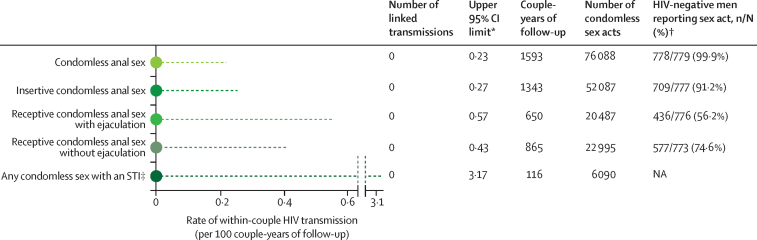
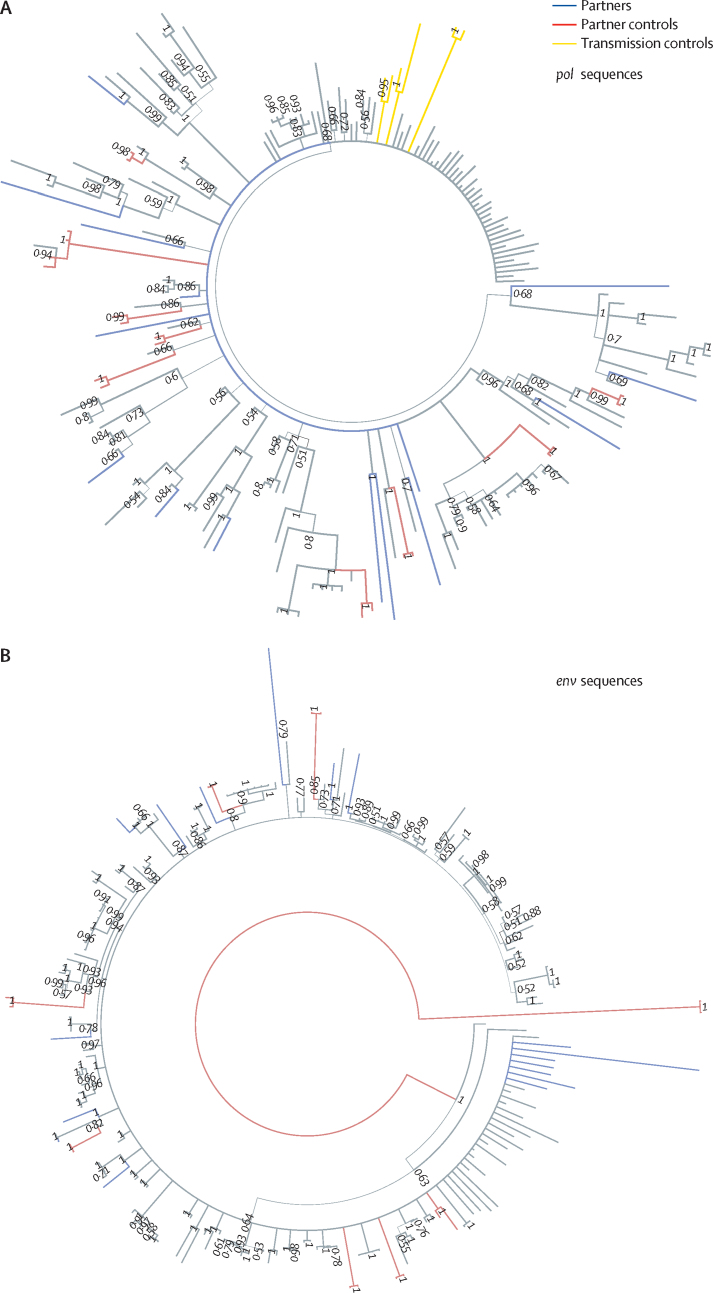
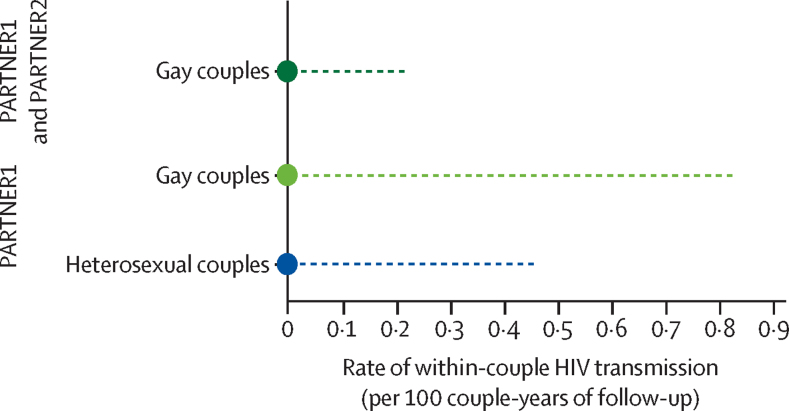
BACKGROUND: The level of evidence for HIV transmission risk through condomless sex in serodifferent gay couples with the HIV-positive partner taking virally suppressive antiretroviral therapy (ART) is limited compared with the evidence available for transmission risk in heterosexual couples. The aim of the second phase of the PARTNER study (PARTNER2) was to provide precise estimates of transmission risk in gay serodifferent partnerships. METHODS: The PARTNER study was a prospective observational study done at 75 sites in 14 European countries. The first phase of the study (PARTNER1; Sept 15, 2010, to May 31, 2014) recruited and followed up both heterosexual and gay serodifferent couples (HIV-positive partner taking suppressive ART) who reported condomless sex, whereas the PARTNER2 extension (to April 30, 2018) recruited and followed up gay couples only. At study visits, data collection included sexual behaviour questionnaires, HIV testing (HIV-negative partner), and HIV-1 viral load testing (HIV-positive partner). If a seroconversion occurred in the HIV-negative partner, anonymised phylogenetic analysis was done to compare HIV-1 pol and env sequences in both partners to identify linked transmissions. Couple-years of follow-up were eligible for inclusion if condomless sex was reported, use of pre-exposure prophylaxis or post-exposure prophylaxis was not reported by the HIV-negative partner, and the HIV-positive partner was virally suppressed (plasma HIV-1 RNA <200 copies per mL) at the most recent visit (within the past year). Incidence rate of HIV transmission was calculated as the number of phylogenetically linked HIV infections that occurred during eligible couple-years of follow-up divided by eligible couple-years of follow-up. Two-sided 95% CIs for the incidence rate of transmission were calculated using exact Poisson methods. FINDINGS: Between Sept 15, 2010, and July 31, 2017, 972 gay couples were enrolled, of which 782 provided 1593 eligible couple-years of follow-up with a median follow-up of 2·0 years (IQR 1·1-3·5). At baseline, median age for HIV-positive partners was 40 years (IQR 33-46) and couples reported condomless sex for a median of 1·0 years (IQR 0·4-2·9). During eligible couple-years of follow-up, couples reported condomless anal sex a total of 76 088 times. 288 (37%) of 777 HIV-negative men reported condomless sex with other partners. 15 new HIV infections occurred during eligible couple-years of follow-up, but none were phylogenetically linked within-couple transmissions, resulting in an HIV transmission rate of zero (upper 95% CI 0·23 per 100 couple-years of follow-up). INTERPRETATION: Our results provide a similar level of evidence on viral suppression and HIV transmission risk for gay men to that previously generated for heterosexual couples and suggest that the risk of HIV transmission in gay couples through condomless sex when HIV viral load is suppressed is effectively zero. Our findings support the message of the U=U (undetectable equals untransmittable) campaign, and the benefits of early testing and treatment for HIV. FUNDING: National Institute for Health Research.
Overview
The claims and statistics of this paper haven’t been checked yet.
Free: it reads the open-access text and checks the first 5 claims that cite a source we can check. Create a free account to check every claim.
Integrity signals
Registry
Cites
Statistics
Figures
Verification
Claims the paper makes
The claims and statistics of this paper haven’t been checked yet.
Free: it reads the open-access text and checks the first 5 claims that cite a source we can check. Create a free account to check every claim.
Claims other papers make about this one
Each is checked against this paper’s own text: does it say what the citing paper says it does?
The source backs part of the claim, not all of it — or backs it for a different population, condition or comparison.
In the citing paper
“Effective ART that suppresses HIV replication to undetectable levels reduces morbidity, provides a near-normal lifespan, and prevents sexual transmission of HIV to others (95–97,410–412).”
From Sexually Transmitted Infections Treatment Guidelines, 2021 (2021) · cites this paper as [97]
Experimental — accuracy not yet measuredThe cited source says what the claim attributes to it.
In the citing paper
“Additional studies of HIV mixed-status couples, heterosexual and MSM couples (PARTNER study), and MSM couples (Opposites Attract and PARTNERS2 studies) reported that patients with HIV taking ART who maintain an undetectable viral load demonstrate no risk for transmitting HIV to their HIV-negative sex partners (95–97).”
From Sexually Transmitted Infections Treatment Guidelines, 2021 (2021) · cites this paper as [97]
The cited source says what the claim attributes to it.
In the citing paper
“Persons with HIV infection who achieve and maintain a viral load suppressed to <200 copies/mL with ART have effectively no risk for sexually transmitting HIV (95–97,421).”
From Sexually Transmitted Infections Treatment Guidelines, 2021 (2021) · cites this paper as [97]
Self-check
Percentages, sums and reported differences re-computed from the paper’s own numbers.
The self-check needs the paper’s full text.
Citations
Cites
Prevention of HIV-1 infection with early antiretroviral therapy.
Cohen, M. S., Chen, Y. Q., McCauley, M., Gamble, T., Hosseinipour, M. C., Kumarasamy, N., Hakim, J. G., Kumwenda, J., Grinsztejn, B., Pilotto, J. H. S., et al. (2011) · New England Journal of Medicine · doi:10.1056/nejmoa1105243 · Cited by 6,873
Viral Load and Heterosexual Transmission of Human Immunodeficiency Virus Type 1
Quinn, T. C., Wawer, M. J., Sewankambo, N., Serwadda, D., Li, C., Wabwire-Mangen, F., Meehan, M. O., Lutalo, T., & Gray, R. H. (2000) · New England Journal of Medicine · doi:10.1056/nejm200003303421303 · Cited by 3,020
Antiretroviral therapy for the prevention of HIV-1 transmission.
Cohen, M. S., Chen, Y. Q., McCauley, M., Gamble, T., Hosseinipour, M. C., Kumarasamy, N., Hakim, J. G., Kumwenda, J., Grinsztejn, B., Pilotto, J. H. S., et al. (2016) · New England Journal of Medicine · doi:10.1056/nejmoa1600693 · Cited by 1,700
Rodger, A. J., Cambiano, V., Bruun, T., Vernazza, P., Collins, S., van Lunzen, J., Corbelli, G. M., Estrada, V., Geretti, A. M., Beloukas, A., et al. (2016) · JAMA · doi:10.1001/jama.2016.5148 · Cited by 1,431
Self-citationAttia, S., Egger, M., Müller, M., Zwahlen, M., & Low, N. (2009) · AIDS · doi:10.1097/qad.0b013e32832b7dca · Cited by 1,001
Donnell, D., Baeten, J. M., Kiarie, J., Thomas, K. K., Stevens, W., Cohen, C. R., McIntyre, J., Lingappa, J. R., & Celum, C. (2010) · The Lancet · doi:10.1016/s0140-6736(10)60705-2 · Cited by 952
Baggaley, R. F., White, R. G., & Boily, M.-C. (2010) · International Journal of Epidemiology · doi:10.1093/ije/dyq057 · Cited by 713
Bavinton, B. R., Pinto, A. N., Phanuphak, N., Grinsztejn, B., Prestage, G. P., Zablotska-Manos, I. B., Jin, F., Fairley, C. K., Moore, R., Roth, N., et al. (2018) · The Lancet HIV · doi:10.1016/s2352-3018(18)30132-2 · Cited by 524
Effectiveness of Highly Active Antiretroviral Therapy in Reducing Heterosexual Transmission of HIV
Castilla, J., del Romero, J., Hernando, V., Marincovich, B., García, S., & Rodríguez, C. (2005) · JAIDS Journal of Acquired Immune Deficiency Syndromes · doi:10.1097/01.qai.0000157389.78374.45 · Cited by 384
Genital HIV-1 RNA Predicts Risk of Heterosexual HIV-1 Transmission
Baeten, J. M., Kahle, E., Lingappa, J. R., Coombs, R. W., Delany-Moretlwe, S., Nakku-Joloba, E., Mugo, N. R., Wald, A., Corey, L., Donnell, D., et al. (2011) · Science Translational Medicine · doi:10.1126/scitranslmed.3001888 · Cited by 293
Research works printed but not linked: 2
- Rodger A, Bruun T, Cambiano V, et al. HIV transmission risk through condomless sex if HIV positive partner on suppressive ART: PARTNER Study. 21st Conference on Retroviruses and Opportunistic Infections (CROI); Boston, MA, USA; March 3–6, 2014. Abstract 153LB.
- Landovitz RJ, Tran TT, Cohn SE, et al. Perception of infectiousness in HIV-infected persons after initiating ART: ACTG A5257. 23rd Conference on Retroviruses and Opportunistic Infections (CROI); Boston, MA, USA; Feb 22–25, 2016. Abstract 55.
Cited by
Items 401–500 of 998
Mizushima, D., Gatanaga, H., & Oka, S. (2024) · Global Health & Medicine · doi:10.35772/ghm.2024.01043 · Cited by 7
Employment Status and HIV Viral Load in Chilean Adult Population: A Propensity Score Analysis
Leiva-Escobar, I., Cortés, C. P., & Lamadrid, A. (2025) · AIDS and Behavior · doi:10.1007/s10461-024-04600-y · Cited by 7
German evidence‐ and consensus‐based guideline on the management of penile urethritis
Werner, R. N., Vader, I., Abunijela, S., Bickel, M., Biel, A., Boesecke, C., Branke, L., Bremer, V., Brockmeyer, N. H., Buder, S. C., et al. (2025) · JDDG Journal der Deutschen Dermatologischen Gesellschaft · doi:10.1111/ddg.15617 · Cited by 9
Self-citationAoki, M., Chang, S. B., Das, D., Martyr, C. D., Delino, N. S., Takamatsu, Y., Ghosh, A. K., & Mitsuya, H. (2019) · Global Health & Medicine · doi:10.35772/ghm.2019.01003 · Cited by 6
“The study supports the message of the U=U (undetectable=untransmittable) campaign and the benefits of early testing and cART (2).”
ResultEvangeli, M., Foster, C., Musiime, V., Fidler, S. J., Seeley, J., & Gnan, G. (2020) · Pilot and Feasibility Studies · doi:10.1186/s40814-020-00688-w · Cited by 6
Self-citationStigma and HIV Concealment Motivation among Gay Men Living with HIV in Finland
Jaspal, R. (2020) · Journal of Homosexuality · doi:10.1080/00918369.2020.1851958 · Cited by 11
An Update on Antiretroviral Therapy
Menéndez‐Arias, L., Martín-Alonso, S., & Frutos-Beltrán, E. (2021) · Advances in experimental medicine and biology · doi:10.1007/978-981-16-0267-2_2 · Cited by 9
Diagnosis delays in the UK according to pre or postmigration acquisition of HIV
Stirrup, O., Tostevin, A., Ragonnet-Cronin, M., Volz, E., Burns, F. M., Delpech, V., & Dunn, D. T. (2021) · AIDS · doi:10.1097/qad.0000000000003110 · Cited by 6
“Nevertheless migrants, particularly from sub-Saharan origin, remain a key group for targeted testing to minimize HIV-related morbidity and mortality and to prevent onward transmission of HIV through antiretroviral therapy (ART) [3].”
BackgroundInfluentialPromising measures to reduce the mortality in Russia: an analytical review
Kobyakova, О. S., Стародубов, В. И., Khaltourina, D. A., Zykov, V. A., Zubkova, T. S., & Замятнина, Е. С. (2021) · Health Care of the Russian Federation · doi:10.47470/0044-197x-2021-65-6-573-580 · Cited by 9
Kutner, B. A., Perry, N. S., Stout, C. D., Pala, A. N., Paredes, C. D., & Nelson, K. M. (2022) · The Journal of Sexual Medicine · doi:10.1016/j.jsxm.2021.12.011 · Cited by 6
Howarth, A., Apea, V., Michie, S., Stephen Morris, A., Sachikonye, M., Mercer, C. H., Evans, A. M., Delpech, V., Sabin, C. A., & Burns, F. M. (2022) · AIDS and Behavior · doi:10.1007/s10461-022-03681-x · Cited by 6
Investigating latent syphilis in HIV treatment-experienced Ethiopians and response to therapy
Girma, S., & Amogne, W. (2022) · PLoS ONE · doi:10.1371/journal.pone.0270878 · Cited by 8
“HIV transmission is highly unlikely in PWH with suppressed viral load and no active syphilitic lesions [21, 22].”
BackgroundMalekinejad, M., Jimsheleishvili, S., Barker, E. K., Hutchinson, A. B., Shrestha, R. K., Volberding, P. A., & Kahn, J. G. (2022) · AIDS and Behavior · doi:10.1007/s10461-022-03761-y · Cited by 6
“Further, even though antiretroviral therapy (ART) can lead to viral suppression that essentially eliminates transmission risk [4], risk of HIV persists for the many MSM who do not enter treatment right away (28% in 2017) [5] and among those who do not maintain viral suppression [6].”
Mesić, A., Decroo, T., Mar, H. T., Jacobs, B. K. M., Thandar, M. P., Thwe, T. T., Kyaw, A., Sangma, M., Beversluis, D., Aza, E. B., et al. (2022) · PLoS ONE · doi:10.1371/journal.pone.0271910 · Cited by 6
Moving towards zero new HIV infections: The importance of combination prevention
van Sighem, A., & van der Valk, M. (2022) · The Lancet Regional Health - Western Pacific · doi:10.1016/j.lanwpc.2022.100558 · Cited by 6
Mendes, J. C., Ceccato, M. D. G. B., Reis, A. M. M., & Silveira, M. R. (2023) · Current Medical Research and Opinion · doi:10.1080/03007995.2023.2189855 · Cited by 7
“So, the treatment with DTG could increase undetectable HIV-RNA enhancing the quality of life of people with HIV.30 DTG-based or EFV-based regimens triggered neuropsychiatric ADRs in individuals starting ART, although the frequency was lower with DTG. Notwithstanding this, both drugs are considered safe for the treatme…”
BackgroundHow food support improves mental health among people living with HIV: A qualitative study
Chayama, K. L., Hufstedler, E. L., Whittle, H. J., Nápoles, T. M., Seligman, H. K., Madsen, K., Frongillo, E. A., Weiser, S. D., & Palar, K. (2023) · PLoS ONE · doi:10.1371/journal.pone.0282857 · Cited by 6
da Silva, L. A. V., Brasil, S. A., Duarte, F. M., Cunha, L. A., & Castellanos, M. E. P. (2023) · Cadernos de Saúde Pública · doi:10.1590/0102-311xen139221 · Cited by 11
de Morales, A. G. G.-R., Martínez‐Sanz, J., Vivancos, M. J., Sánchez‐Conde, M., Vélez‐Díaz‐Pallarés, M., Romero‐Hernández, B., Vázquez, D., de Luque, C. M. C., González-Sarria, A., Galán, J. C., et al. (2023) · Frontiers in Public Health · doi:10.3389/fpubh.2023.1136988 · Cited by 6
Etami, Y., Zaheer, M. A., Marcus, J. L., & Calabrese, S. K. (2023) · AIDS Patient Care and STDs · doi:10.1089/apc.2023.0150 · Cited by 6
Fiebig, U., Altmann, B., Hauser, A., Koppe, U., Hanke, K., Gunsenheimer‐Bartmeyer, B., Bremer, V., Baumgarten, A., & Bannert, N. (2023) · BMC Infectious Diseases · doi:10.1186/s12879-023-08649-3 · Cited by 6
“Moreover, effective virus suppression prevents sexual transmission [1].”
BackgroundCommunity Insights in Phylogenetic HIV Research: The CIPHR Project Protocol
Cholette, F., Lazarus, L., Macharia, P., Thompson, L. H., Githaiga, S., Mathenge, J., Walimbwa, J., Kuria, I., Okoth, S., Wambua, S., et al. (2023) · Global Public Health · doi:10.1080/17441692.2023.2269435 · Cited by 6
“…fi cant role in the Undetectable Equals Untransmissible (U = U) movement by showing that sexual transmission of HIV in sero-discordant couples did not occur when the partner living with HIV was virally suppressed (Cohen et al., 2011; Rodger et al., 2016; Rodger et al., 2019; Zhang et al., 2021).”
BackgroundQualidade de vida de pessoas que vivem com HIV no Brasil: revisão sistemática
Alckmin-Carvalho, F., Silva, M. M. S., Simão, N. S., & Nichiata, L. Y. I. (2024) · Revista Brasileira de Qualidade de Vida · doi:10.3895/rbqv.v16n0.17425 · Cited by 7
Sharma, A., Kahle, E., Sullivan, S. P., & Stephenson, R. B. (2019) · AIDS and Behavior · doi:10.1007/s10461-019-02740-0 · Cited by 8
McCormack, H., Nathan, S., Varma, R., & Haire, B. G. (2020) · Health Promotion Journal of Australia · doi:10.1002/hpja.429 · Cited by 8
Rapid Start of Antiretroviral Therapy in Youth Diagnosed with HIV Infection
Patel, N., Dallas, R. H., Knapp, K. M., Flynn, P. M., & Gaur, A. H. (2021) · The Pediatric Infectious Disease Journal · doi:10.1097/inf.0000000000002969 · Cited by 6
Lalloo, E. C., Rusner, M., Berg, M., Svedhem, V., & Mellgren, Å. (2021) · AIDS Care · doi:10.1080/09540121.2021.1909698 · Cited by 6
Shuper, P. A. (2021) · AIDS and Behavior · doi:10.1007/s10461-021-03302-z · Cited by 6
“Current HIV secondary prevention efforts emphasize “treatment-as-prevention” (TasP), which involves PLWH taking antiretroviral therapy (ART) to achieve HIV viral suppression; thereby essentially eliminating the possibility of onward viral transmission [4, 5].”
BackgroundDurham, M. D., Armon, C., Novák, R., Mahnken, J. D., Carlson, K., Li, J., Buchacz, K. A., and the HOPS Investigators, Akridge, C., Purinton, S., et al. (2022) · AIDS and Behavior · doi:10.1007/s10461-022-03655-z · Cited by 7
“Improved levels of HIV viral suppression and reductions in anal/vaginal condomless sex among people with HIV (PWH) may substantially decrease the rates of transmission for HIV [2, 3] and other sexually transmitted infections (STIs) [4], contributing to the national goal for reducing new HIV infections outlined in the…”
BackgroundBorsa, A., & Siegel, K. (2023) · AIDS Patient Care and STDs · doi:10.1089/apc.2023.0001 · Cited by 7
Reduced Sexual Risk Behaviors Among Persons With HIV After Release From the Criminal Justice System
Biondi, B. E., Frank, C. A., Horn, B. P., & Springer, S. A. (2019) · Open Forum Infectious Diseases · doi:10.1093/ofid/ofz411 · Cited by 6
Wirawan, D. N. (2019) · Public Health and Preventive Medicine Archive · doi:10.15562/phpma.v7i1.206 · Cited by 10
Heijne, J. C. M., Xiridou, M., Turner, K., Basten, M., Visser, M., BENTHEM, B. H. B. V., & Low, N. N. (2020) · medRxiv · doi:10.1101/2020.09.14.20192062 · Cited by 6
Tucker, E., Nieva, H. R., Schiffer, K., Yin, M. T., Castor, D., Gordon, P. C., Elhadad, N., & Zucker, J. E. (2023) · Open Forum Infectious Diseases · doi:10.1093/ofid/ofad584 · Cited by 6
Kielhold, K., Storholm, E. D., Reynolds, H. E., Vincent, W., Siconolfi, D. E., Kegeles, S. M., Pollack, L. M., & Campbell, C. K. (2024) · Patient Preference and Adherence · doi:10.2147/ppa.s467587 · Cited by 6
Management of occupational exposure to blood and body fluids in primary care
Pierce, A. B. (2024) · Australian Prescriber · doi:10.18773/austprescr.2024.037 · Cited by 8
Ma, Q., Jiang, T., Chen, W., Jiang, S., Zheng, J., Wang, H., & He, L. (2025) · JMIR Public Health and Surveillance · doi:10.2196/66139 · Cited by 6
“Patients with HIV viral suppression have a lower disclosure rate [16], as it is now established that there is no risk of HIV transmission when the viral load is undetectable [17,18].”
Lama, J. R., Ignacio, R. B., & Duerr, A. C. (2025) · Current Opinion in HIV and AIDS · doi:10.1097/coh.0000000000000933 · Cited by 6
Georgiadis, N., Katsimpris, A., Halkitis, P. N., Kaba, E., Tzanakaki, G., Vassilakou, T., Beloukas, A. I., & Sergentanis, T. Ν. (2025) · Pathogens · doi:10.3390/pathogens14070673 · Cited by 10
“…to enhance awareness regarding the efficacy of HIV treatment as prevention (TasP), highlighting that individuals living with HIV who achieve and maintain an undetectable viral load through antiretroviral therapy (ART) for at least 6 months cannot transmit the virus to their sexual partners [7–9].”
Self-citationInsights into medication adherence among HIV-positive patients: the integrated change model
Mirzaei-Alavijeh, M., Rahimi, F. C., Hamzeh, B., Mansouri, F., Shoukohi, N., & Jalilian, F. (2025) · AIDS Research and Therapy · doi:10.1186/s12981-025-00763-3 · Cited by 9
“Furthermore, appropriate use of ART improves the well-being of HIV patients, suppresses viral load, and reduces the risk of HIV transmission, thus serving as a key prevention strategy [8].”
Tran, A., Watson, J. R., Tian, J. M. L. H., McBain, K., Miller, A. D., Boni, A. R., Cioppa, L., Murphy, M., Norris, D., Samson, K., et al. (2025) · AIDS Care · doi:10.1080/09540121.2025.2562238 · Cited by 8
“…Access Campaign, 2016), the U = U message is grounded in conclusive scientific evidence showing that people living with HIV on antiretroviral therapy (ART) and with undetectable viral loads, cannot sexually transmit the virus (Cohen et al., 2016; Rodger et al., 2019; Rodger et al., 2016).”
Madeen, E. P., Maldarelli, F. M., & Groopman, J. D. (2021) · Pathogens · doi:10.3390/pathogens10101229 · Cited by 6
“The PARTNER2 study demonstrated that there is no risk f HIV transmission in serodiscordant European MSM couples having URAI if the HIV BPVL is maintained b low 200 c pies/mL with antiretroviral therapy [100], leading to the “undetectable = untransmissible” c mpaign abbreviated “U = U”.”
BackgroundA psychosocial network approach studying biomedical HIV prevention uptake between 2017 and 2019
Zimmermann, H. M. L., Davidovich, U., van Bilsen, W. P. H., Coyer, L., Matser, A. A., Prins, M., & van Harreveld, F. (2023) · Scientific Reports · doi:10.1038/s41598-023-42762-2 · Cited by 6
“In brief: men are eligible for enrolment in the ACS if they are at least 18 years old, live in the Amsterdam area or are involved in MSM-related activities taking place in Amsterdam, and had sex with other men in the past 6 months.”
MethodInfluentialKubheka, S., Patel, R., Ramothwala, P., Moorhouse, M. A., Mohammed, P., Doblado-Maldonado, A., & Okoli, C. (2024) · Population Medicine · doi:10.18332/popmed/182917 · Cited by 6
Navarra, A.-M. D., Gormley, M., Liang, E., Loughran, C., Vorderstrasse, A. A., Garcia, D. R., Rosenberg, M. G., Fletcher, J., & Goldsamt, L. A. (2024) · PEC Innovation · doi:10.1016/j.pecinn.2024.100263 · Cited by 8
“…a plasma HIV RNA level below the lower limit of detection ( 20 copies/mL depending on the assay used) [2], is a vital component of HIV treatment and prevention, as research shows that people who adhere to antiretroviral therapy (ART) and achieve an undetectable viral load cannot transmit HIV [3].”
MethodViguerie, A., Gopalappa, C., Lyles, C. M., & Farnham, P. G. (2024) · Epidemics · doi:10.1016/j.epidem.2024.100796 · Cited by 7
“Indeed, the uptake and adherence of antiretroviral therapy (ART) medications to achieve viral suppression (VLS) has been found to be the most significant factor in reducing HIV incidence [16], with PWH who are VLS carrying essentially no risk of sexual transmission [17], [18].”
BackgroundHorvath, K. J., Lammert, S. M., Martinka, A., & Erickson, D. J. (2019) · Archives of Sexual Behavior · doi:10.1007/s10508-019-01499-8 · Cited by 7
State Trends in HIV Testing Among US Adults Aged 18-64 Years, 2011-2017
Krueger, A. L., Johnson, C. H., Heitgerd, J. L., Patel, D., & Harris, N. (2020) · Public Health Reports · doi:10.1177/0033354920931833 · Cited by 5
Making the Ideal Real: Biomedical HIV Prevention as Social Public Health
Davis, M. D. M. (2021) · Social aspects of HIV · doi:10.1007/978-3-030-69819-5_3 · Cited by 6
Bayisa, L., Bayisa, D., Turi, E., Mulisa, D., Tolossa, T., Akuma, A. O., Bokora, M. C., & Rundasa, D. T. (2023) · HIV/AIDS - Research and Palliative Care · doi:10.2147/hiv.s395238 · Cited by 5
Padilla, M., Gutierrez, M., Basu, M., & Fagan, J. L. (2023) · AIDS and Behavior · doi:10.1007/s10461-023-04032-0 · Cited by 5
Advances in the treatment and prevention of HIV: what you need to know
Colloty, J., Teixeira, M., & Hunt, R. (2023) · British Journal of Hospital Medicine · doi:10.12968/hmed.2022.0502 · Cited by 9
Bedert, M., Moody, K., Nieuwkerk, P. T., van Holten, N., de Wit, J. B. F., & van der Valk, M. (2023) · Journal of Advanced Nursing · doi:10.1111/jan.15941 · Cited by 5
Cai, C., Tang, H., Qin, Q., Jin, Y., & Lv, F. (2024) · BMC Infectious Diseases · doi:10.1186/s12879-023-08956-9 · Cited by 7
“The transmission risk should be very low under such high coverage and effective ART [3].”
BackgroundBarroso, S. E., Guitart‐Mampel, M., García‐García, F. J., Cantó, J., Valls‐Roca, L., Andújar-Sánchez, F., Vilaseca-Capel, A., Tobías, E., Arias-Dimas, A., Quesada‐López, T., et al. (2024) · International Journal of Molecular Sciences · doi:10.3390/ijms25158418 · Cited by 5
“Additionally, the benefits of early treatment also include decreasing infection Additionally, the benefits of early treatment also include decreasing infection rates [7].”
BackgroundShi, Z., Li, J., Lin, H., Wang, X., Cao, W., & Shi, Y. (2024) · AIDS and Behavior · doi:10.1007/s10461-024-04502-z · Cited by 5
“Undetectable equals Untransmittable (U = U) was proposed in 2016 [ 2, 3], which means that the risk of sexual transmission of HIV is negligible in people who are on antiretroviral therapy (ART) and maintain a detectable viral load of less than 200 copies/mL in their blood [ 4, 5].”
InfluentialA modeling study of pre-exposure prophylaxis to eliminate HIV in Taiwan by 2030
Wu, H., Cheng, Y.-P., Chen, Y., Chang, C.-C., Lo, T., & Fang, C. (2025) · Communications Medicine · doi:10.1038/s43856-025-00833-7 · Cited by 7
“We consider individuals taking ART and achieving viral load suppression as non-transmissible (undetectable equals untransmittable, U = U) 61 .”
Antiretroviral treatment can reduce the risk of HIV transmission between male partners to ‘zero’
Cook, R., Davidson, P., & Martin, R. (2019) · BMJ · doi:10.1136/bmj.l4915 · Cited by 5
Daskalopoulou, M., Rodger, A., Phillips, A. N., Gilson, R. J. C., Sherr, L., Wayal, S., Anderson, J., Aderogba, K., McDonnell, J., Wilkins, E., et al. (2020) · AIDS Care · doi:10.1080/09540121.2020.1728218 · Cited by 5
“…2005; Przybyla et al., 2014; Simoni & Pantalone, 2004; van Kesteren, Hospers, van Empelen, van Breukelen, & Kok, 2007), while some reported that non-disclosure was linked to condom-protected sex (Abler et al., 2015; Klitzman et al., 2007; Serovich et al., 2018; Simon Rosser et al., 2008).”
BackgroundInfluentialSelf-citationSun, L., Liu, A., Li, J., Shao, Y., Li, Q., Ye, J., Zhang, H., Li, Z., & Wang, H. (2020) · BMC Infectious Diseases · doi:10.1186/s12879-020-4912-4 · Cited by 8
Lang, R., Gill, M. J., Vu, Q., Viczko, J., Naugler, C., & Church, D. L. (2020) · EClinicalMedicine · doi:10.1016/j.eclinm.2020.100675 · Cited by 5
“Virologic suppression in plasma was defined as 200 RNA copies/mL [24, 25].”
BackgroundMcManus, K. A., Srikanth, K., Powers, S. D., Dillingham, R., & McQuade, E. T. R. (2020) · Open Forum Infectious Diseases · doi:10.1093/ofid/ofaa595 · Cited by 6
Ryan, M. J., Mendelsohn, J., Daftary, A., Yang, M., Bullock, S. L., Lebouché, B., & Calzavara, L. (2022) · Social Science & Medicine · doi:10.1016/j.socscimed.2022.114863 · Cited by 5
Norman, T. L., Bourne, A. H., Lyons, A., Rule, J., & Power, J. (2022) · AIDS and Behavior · doi:10.1007/s10461-022-03795-2 · Cited by 8
“Although this sample predominantly featured heterosexual couples, such findings were similarly demonstrated among gay and bisexual men who have sex with men within the following 2 years [2, 3].”
ResultInfluentialHIV prevention metrics: lessons to be learned from contraception
Pyra, M. N., Heffron, R. A., Haberer, J. E., & Kiarie, J. N. (2022) · Journal of the International AIDS Society · doi:10.1002/jia2.25958 · Cited by 6
Ripamonti, D., Poliseno, M., Mazzola, G. C., Colletti, P., Biagio, A. D., Celesia, B. M., Gori, A., Bellagamba, R., Madeddu, G., Nozza, S., et al. (2022) · AIDS Research and Human Retroviruses · doi:10.1089/aid.2022.0056 · Cited by 6
Self-citationMatlapeng, K. M., Babatunde, G. B., & Akintola, O. (2022) · African Journal of AIDS Research · doi:10.2989/16085906.2022.2077780 · Cited by 6
“These studies indicate that perceived susceptibility and poor health contribute to the decision to test (Rosenstock et al., 1994).”
BackgroundYang, X., Sun, S., Zeng, C., Shi, F., Qiao, S., James, T. A., Brown, M. J., & Li, X. (2023) · AIDS Care · doi:10.1080/09540121.2023.2188159 · Cited by 5
“Recent evidence that zero transmission rate was observed among sero-discordant MSM couples when HIV-positive MSM maintained undetectable viral load (Rodger et al., 2019) has highlighted the importance of MSM achieving each goal of the HIV care continuum for the public health bene fi ts at the…”
BackgroundA systematic review of qualitative research on recently acquired HIV
Nicholls, E. J., Policek, N., Volny‐Anne, A., Spire, B., Burns, F. M., Ruiz-Burga, E., & Tariq, S. (2023) · AIDS · doi:10.1097/qad.0000000000003697 · Cited by 19
“prophylaxis (PrEP), and treatment as prevention (TasP [1,2], have reduced the incidence of HIV and HIV-associated approximately 1.3 million people globally acquired HIV in 2022 [3].”
InfluentialMitchell, J. W., Brown, S., Pennington, J., Wu, Y. Y., & Konda, K. A. (2019) · International Journal of Sexual Health · doi:10.1080/19317611.2019.1662532 · Cited by 5
Repositioning Implementation Science in the HIV Response: Looking Ahead From AIDS 2018
Hargreaves, J., Dalal, S., Rice, B. D., Anderegg, N., Bhattacharjee, P., Gafos, M., Hensen, B., Mangenah, C., Quaife, M., & PADIAN, N. S. (2019) · JAIDS Journal of Acquired Immune Deficiency Syndromes · doi:10.1097/qai.0000000000002209 · Cited by 5
Agustí, C., Muñoz, R., González, V., Villegas, L., Fibla, J., Meroño, M., Capitán, A., Fernàndez-López, L., Platteau, T., & Casabona, J. (2020) · Enfermedades Infecciosas y Microbiología Clínica · doi:10.1016/j.eimc.2020.01.020 · Cited by 5
Multidrug-resistant HIV viral rebound during early syphilis: a case report
Giacomelli, A., Micheli, V., Cattaneo, D., Mancon, A., & Gervasoni, C. (2020) · BMC Infectious Diseases · doi:10.1186/s12879-020-04999-4 · Cited by 6
Mayasi, N., Nani‐Tuma, H. S., Mambimbi, M. M., Mashi, M. L., Bepouka, B. I., Maes, N., Moutschen, M. P., & Darcis, G. (2020) · AIDS · doi:10.1097/qad.0000000000002802 · Cited by 5
A community-based study of clients’ lived experiences of going through the rural HIV care continuum
Owens, C., Voorheis, E., Struble, N., Lester, J. N., Green, H. D., Herbenick, D., Hubach, R. D., & Dodge, B. (2021) · Journal of HIV/AIDS & Social Services · doi:10.1080/15381501.2021.1906819 · Cited by 6
Cho, Y.-M., & Chin, B. S. (2021) · Infection and Chemotherapy · doi:10.3947/ic.2021.0025 · Cited by 5
Knowledge, Stigma, and HIV Testing: An Analysis of a Widespread HIV/AIDS Program
Yang, D., Allen, J. E., Mahumane, A., Riddell, J., & Yu, H. (2021) · National Bureau of Economic Research · doi:10.3386/w28716 · Cited by 14
U = U: A Catalyst for Ending AIDS as a Public Health Threat
Zuniga, J. M. (2024) · Journal of the International Association of Providers of AIDS Care (JIAPAC) · doi:10.1177/23259582241282561 · Cited by 7
Barriers to Retention in Care among Adults with HIV in Developed Countries: An Integrative Review
Sanders, T. N., Roed, A. K. H., Missel, M., Berg, S. K., Nielsen, S. D., Olesen, M. L., & Kirk, O. (2025) · AIDS and Behavior · doi:10.1007/s10461-025-04685-z · Cited by 5
Duan, Y., Li, Y., Qin, Z., Wang, P., Liu, T., Wang, H., & Xiao, X. (2025) · Patient Preference and Adherence · doi:10.2147/ppa.s544362 · Cited by 4
Inferring HIV transmission patterns from viral deep-sequence data via latent typed point processes
Bu, F., Kagaayi, J., Grabowski, M. K., Ratmann, O., & Xu, J. (2024) · Biometrics · doi:10.1093/biomtc/ujad015 · Cited by 9
“…illustrates the potential limitations of the typed point process model, because women in this age group tend to have lower HIV viral load at the population-level than men, rendering this population group of women on average less infectious than men (Grabowski et al., 2017; Rodger et al., 2019).”
BackgroundCarrillo-Acosta, I., Heras, M. L. D. L., Martínez, S. C., Prieto-Pérez, L., Álvarez, B., Al‐Hayani, A., Suarez-Inclán, J. I., Fernández, S. L., Luengo, P. Q., Diaz, M. E. A., et al. (2024) · Sexually Transmitted Infections · doi:10.1136/sextrans-2024-056109 · Cited by 5
Shanley, A., O’Donnell, K., Weatherburn, P., Gilmore, J., & Witzel, T. C. (2024) · PLoS ONE · doi:10.1371/journal.pone.0306280 · Cited by 5
‘Uma parte de mim sabia que isso aconteceria um dia’: vivências de jovens com HIV/aids
da Fonseca, B. S., Rodrigues, T. F. C. D. S., Silva, G. M., Ferrari, R. A. P., da Silva, M., Furtado, M. D., & Merino, M. D. F. G. L. (2024) · Saúde em Debate · doi:10.1590/2358-289820241418986p · Cited by 4
Zhang, X. J., Zhang, X., Chen, Y. Q., Ou, T., Wang, X., Zhou, H., Li, X., Guo, Y., Chen, Z., & Ruan, W. (2024) · Public Health Nursing · doi:10.1111/phn.13382 · Cited by 4
Developing a Practice-Driven Taxonomy of Implementation Strategies for HIV Prevention
Golub, S. A., Wolfer, C., Beacham, A. R., Lane, B., Chastain, C. A., & Meyers, K. A. (2025) · JAIDS Journal of Acquired Immune Deficiency Syndromes · doi:10.1097/qai.0000000000003581 · Cited by 5
Bergman, A., Relf, M. V., Lowensen, K., Ndhlovu, N., Lerefolo, S., & Farley, J. E. (2025) · International Journal of Nursing Studies · doi:10.1016/j.ijnurstu.2025.104999 · Cited by 8
Jordans, C. C. E., Vliegenthart-Jongbloed, K. J., Osbak, K. K., Hanssen, J. L. J., van Beek, J. E. A., Vriesde, M., van Holten, N., Dorama, W., van der Sluis, D., de Steenwinkel, J. E. M., et al. (2025) · AIDS · doi:10.1097/qad.0000000000004167 · Cited by 4
Montaner, J. S. G., Lima, V. D., Salters, K. A., Toy, J., Joy, J. B., Guillemi, S. A., & Barrios, R. (2025) · Tropical Medicine and Infectious Disease · doi:10.3390/tropicalmed10030075 · Cited by 4
Costa, A. B., ELY, I. G. B., Penzato, V., Fontanari, A. M. V., Alckmin-Carvalho, F., Pereira, H., & Wendt, G. W. (2025) · HIV/AIDS - Research and Palliative Care · doi:10.2147/hiv.s534526 · Cited by 4
“6 Based on this study, the phrase “undetectable=untransmittable” was developed and popularized, and HIV case detection, early treatment and UVL became one of the most urgent measures to reduce new infections.”
Syphilis 2020 - die Infektionszahlen steigen stetig
Rasokat, H. (2020) · gynäkologie + geburtshilfe · doi:10.1007/s15013-020-3175-x · Cited by 4
“Gleichzeitig ist unter diesen Therapien trotz Fortbestehens der HIV-Infektion die Infektiosität de facto aufgehoben [1].”
Backgroundvan de Vijver, D. A. M. C., Mukherjee, S., & van Kampen, J. J. A. (2021) · Current treatment options in infectious diseases/Current treatment options in infectious disease · doi:10.1007/s40506-021-00246-9 · Cited by 4
“Antiretroviral drugs can be used for prevention of HIV transmission as individuals living with HIV that are virally suppressed due to antiretroviral drug treatment cannot transmit the virus to others [2, 3].”
BackgroundMental Health and Perceived Access to Care among People Who Inject Drugs in Athens, Greece
Pampaka, D., Pantavou, K. G., Giallouros, G., Pavlitina, E., Williams, L. D., Piovani, D., Bonovas, S., & Nikolopoulos, G. K. (2021) · Journal of Clinical Medicine · doi:10.3390/jcm10061181 · Cited by 4
“Together with stigma, it has a negative impact on seeking care, adherence to antiretroviral treatment (ART), and clinic attendance [6,10–15].”
BackgroundMorris, M. (2021) · Culture Health & Sexuality · doi:10.1080/13691058.2021.1930172 · Cited by 4
“Firstly, my boyfriend (Alex) and I were participants in the PARTNER study, demonstrating that when someone is on highly effective antiretroviral therapy, it becomes impossible to transmit the virus (Rodger et al. 2019).”
BackgroundPralat, R., Anderson, J., Burns, F. M., Yarrow, E., & Barber, T. (2021) · BMC Public Health · doi:10.1186/s12889-021-12285-4 · Cited by 4
Kinnman, E., Herder, T., Björkman, P., Månsson, F., & Agardh, A. (2022) · Global Health Action · doi:10.1080/16549716.2021.2021631 · Cited by 5
“Increased testing could lead to earlier detection and treatment initiation, reducing HIV-related morbidity and mortality, in addition to curbing further transmission [4,5].”
BackgroundHome Care Assistance: Has Covid-19 had an Impact on the Complex Management of HIV Patients?
Dusina, A., Lombardi, F., Tamburrini, E., Onorati, F., Petrucci, M., & Giambenedetto, S. D. (2022) · AIDS and Behavior · doi:10.1007/s10461-022-03854-8 · Cited by 4
“It is well known that optimal adherence to potent combination ART increases the likelihood of achieving viral suppression [1]; this, in turn, reduces HIV-associated morbidity and mortality, increases health-related quality of life and prevents HIV transmission [2, 3].”
BackgroundGlobal strategy in the treatment of HIV infection in 2022
Cancio-Suárez, M. R., & Moreno, S. (2022) · Revista Española de Quimioterapia · doi:10.37201/req/s03.08.2022 · Cited by 5
“After the results of randomized clinical trials on the optimal time to start treatment to preserve the health of patients [6] and prevent transmission of infection [7] and large observational studies [8], the recommendation is unanimous: ART should be started in all person with HIV regardless of other factors, such as…”
BackgroundCollins, C. B., Higa, D. H., Taylor, J. C., Wright, C., Murray, K. H., Pitasi, M. A., Greene, Y., Lyles, C. M., Edwards, A. E., Andía, J. F., et al. (2022) · AIDS and Behavior · doi:10.1007/s10461-022-03958-1 · Cited by 4
Substance use and sexual risk behaviour among HIV-infected men who have sex with men
Biała, M., & Inglot, M. (2022) · Journal of Health Inequalities · doi:10.5114/jhi.2022.123441 · Cited by 4
Metadata
- Authors
- Rodger, A. J., Cambiano, V., Bruun, T., Vernazza, P., Collins, S., Degen, O., Corbelli, G. M., Estrada, V., Geretti, A. M., Beloukas, A., Raben, D., Coll, P., Antinori, A., Nwokolo, N., Rieger, A., Prins, J. M., Blaxhult, A., Weber, R., Van Eeden, A., Brockmeyer, N. H., Clarke, A., del Romero Guerrero, J., Raffi, F., Bogner, J. R., Wandeler, G., Gerstoft, J., Gutiérrez, F., Brinkman, K., Kitchen, M., Ostergaard, L., Leon, A., Ristola, M., Jessen, H., Stellbrink, H.-J., Phillips, A. N., Lundgren, J., Coll, P., Cobarsi, P., Nieto, A., Meulbroek, M., Carrillo, A., Saz, J., Guerrero, J. D. R., García, M. V., Gutiérrez, F., Masiá, M., Robledano, C., Leon, A., Leal, L., Redondo, E. G., Estrada, V. P., Marquez, R., Sandoval, R., Viciana, P., Espinosa, N., Lopez-Cortes, L., Podzamczer, D., Tiraboschi, J., Morenilla, S., Antela, A., Losada, E., Nwokolo, N., Sewell, J., Clarke, A., Kirk, S., Knott, A., Rodger, A. J., Fernandez, T., Gompels, M., Jennings, L., Ward, L., Fox, J., Lwanga, J., Lee, M., Gilson, R., Leen, C., Morris, S., Clutterbuck, D., Brady, M., Asboe, D., Fedele, S., Fidler, S., Brockmeyer, N., Potthoff, A., Skaletz-Rorowski, A., Bogner, J., Seybold, U., Roider, J., Jessen, H., Jessen, A., Ruzicic, S., Stellbrink, H.-J., Kümmerle, T., Lehmann, C., Degen, O., Bartel, S., Hüfner, A., Rockstroh, J., Mohrmann, K., Boesecke, C., Krznaric, I., Ingiliz, P., Weber, R., Grube, C., Braun, D., Günthard, H., Wandeler, G., Furrer, H., Rauch, A., Vernazza, P., Schmid, P., Rasi, M., Borso, D., Stratmann, M., Caviezel, O., Stoeckle, M., Battegay, M., Tarr, P., Christinet, V., Jouinot, F., Isambert, C., Bernasconi, E., Bernasconi, B., Gerstoft, J., Jensen, L. P., Bayer, A. A., Ostergaard, L., Yehdego, Y., Bach, A., Handberg, P., Kronborg, G., Pedersen, S. S., Bülow, N., Ramskover, B., Ristola, M., Debnam, O., Sutinen, J., Blaxhult, A., Ask, R., Hildingsson-Lundh, B., Westling, K., Frisen, E.-M., Cortney, G., O'Dea, S., De Wit, S., Necsoi, C., Vandekerckhove, L., Goffard, J.-C., Henrard, S., Prins, J., Nobel, H.-H., Weijsenfeld, A., Van Eeden, A., Elsenburg, L., Brinkman, K., Vos, D., Hoijenga, I., Gisolf, E., Van Bentum, P., Verhagen, D., Raffi, F., Billaud, E., Ohayon, M., Gosset, D., Fior, A., Pialoux, G., Thibaut, P., Chas, J., Leclercq, V., Pechenot, V., Coquelin, V., Pradier, C., Breaud, S., Touzeau-Romer, V., Rieger, A., Kitchen - Maria Geit, M., Sarcletti, M., Gisinger, M., Oellinger, A., Antinori, A., Menichetti, S., Bini, T., Mussini, C., Meschiari, M., Di Biagio, A., Taramasso, L., Celesia, B. M., Gussio, M., & Janeiro, N.
- Affiliations
- University College London (GB)
- University of Copenhagen (DK)
- University of Liverpool (GB)
- Innsbruck Medical University (AT)
- Infektionsmedizinisches Centrum Hamburg (DE)
- LMU Klinikum (DE)
- Inserm (FR)
- University of Bern (CH)
- Istituto Nazionale per le Malattie Infettive Lazzaro Spallanzani (IT)
- ORCID
- Cambiano, Valentina
- Collins, Simon
- Corbelli, Giulio Maria
- Beloukas, Apostolos
- Raben, Dorthe
- Kitchen, Maria
- Phillips, Andrew N
- Lundgren, Jens
- Saz, Jorge
- Masiá, Mar
- Leal, Lorna
- Tiraboschi, Juan
- Antela, Antonio
- Losada, Elena
- Sewell, Janey
- Fernandez, Thomas
- Gompels, Mark
- Fox, Julie
- Lee, Ming
- Gilson, Richard
- Leen, Clifford
- Clutterbuck, Dan
- Brady, Michael
- Asboe, David
- Fidler, Sarah
- Potthoff, Anja
- Seybold, Ulrich
- Roider, Julia
- Lehmann, Clara
- Rockstroh, Jürgen
- Boesecke, Christoph
- Krznaric, Ivanka
- Ingiliz, Patrick
- Braun, Dominique
- Günthard, Huldrych
- Furrer, Hansjakob
- Rauch, Andri
- Schmid, Patrick
- Stoeckle, Marcel
- Battegay, Manuel
- Tarr, Philip
- Bernasconi, Enos
- Kronborg, Gitte
- Westling, Katarina
- Vandekerckhove, Linos
- Goffard, Jean-Christophe
- Henrard, Sophie
- Weijsenfeld, Annouschka
- Elsenburg, Loek
- Gisolf, Elisabeth
- Verhagen, Dominique
- Chas, Julie
- Pradier, Christian
- Gisinger, Martin
- Mussini, Cristina
- Meschiari, Marianna
- Taramasso, Lucia
- Celesia, Benedetto M.
- Venue
- The Lancet
- Publisher
- Elsevier BV
- Published
- 2019-06
- Volume
- 393
- Issue
- 10189
- Pages
- 2428-2438
- ISSN
- 0099-5355 (ISSN-L)
- 0140-6736
- PMC
- PMC6584382
- OpenAlex
- W2943039121
- Semantic Scholar
- dd8a22d372911ab5c0669c09eefcfffaddbd6e1c
- Cited by
- 1,023
- References
- 35
- Citations by year
- 2026: 87 · 2025: 122 · 2024: 126 · 2023: 153 · 2022: 153 · 2021: 144 · 2020: 168 · 2019: 68
- FWCI
- 102.10
- Type
- journal article
- Language
- en
- Open access
- hybrid
- doi.org
- Licence
- cc-by-nc-nd
- www.elsevier.com/tdm/userlicense/1.0/ (tdm)
- www.elsevier.com/legal/tdmrep-license (tdm)
- creativecommons.org/licenses/by-nc-nd/4.0/ (vor)
- Locations
- The Lancet (publishedVersion, cc-by-nc-nd)
- PubMed Central (publishedVersion, cc-by-nc-nd)
- PubMed (publishedVersion)
- Kölner Universitäts PublikationsServer (Universität zu Köln) (publishedVersion)
- Research at the University of Copenhagen (University of Copenhagen) (publishedVersion, cc-by-nc-nd)
- Ghent University Academic Bibliography (Ghent University) (submittedVersion, cc-by-nc-nd)
- Työväentutkimus Vuosikirja (submittedVersion, cc-by-nc-nd)
- IRIS UNIMORE (University of Modena and Reggio Emilia) (submittedVersion, cc-by)
- Data Archiving and Networked Services (DANS) (submittedVersion)
- Archivio Istituzionale della Ricerca (Universita Degli Studi Di Milano) (submittedVersion, other-oa)
- Cineca Institutional Research Information System (Tor Vergata University) (submittedVersion, other-oa)
- BORIS (University Library Bern) (submittedVersion, cc-by-nc-nd)
- UCL Discovery (University College London) (submittedVersion)
- CINECA IRIS Institutial Research Information System (University of Genoa) (submittedVersion, other-oa)
- Pure Amsterdam UMC (submittedVersion, cc-by-nc-nd)
- Edinburgh Research Explorer (University of Edinburgh) (submittedVersion, cc-by-nc-nd)
- RUNA. Repositorio Institucional del Sergas (Servicio Gallego de Salud (SERGAS)) (submittedVersion, cc-by-nc-nd)
- Spiral (Imperial College London) (submittedVersion, other-oa)
- Zurich Open Repository and Archive (University of Zurich) (submittedVersion)
- Data Archiving and Networked Services (DANS) (submittedVersion, other-oa)
- Open Access CRIS of the University of Bern
- Funders
- Danmarks Grundforskningsfond (126)
- Gilead Sciences
- Augustinus Fonden
- National Institute for Health and Care Research
- A.P. Møller og Hustru Chastine Mc-Kinney Møllers Fond til almene Formaal
- Research for Patient Benefit Programme (PB-PG-1013-32069)
- British HIV Association
- Topics
- Health Sciences › Medicine › Infectious Diseases › HIV/AIDS Research and Interventions
- Life Sciences › Immunology and Microbiology › Virology › HIV Research and Treatment
- Health Sciences › Medicine › Epidemiology › HIV, Drug Use, Sexual Risk
- Keywords
- HIV transmission, gay men, unprotected sex, antiretroviral therapy, viral suppression, HIV-1, transmission risk, phylogenetic analysis, seroconversion, HIV prevention, HIV-negative partners, HIV-positive partners, sexual behavior, pre-exposure prophylaxis, post-exposure prophylaxis, HIV-1 drug resistance, HIV-1 subtype C, HIV-1 subtype D, HIV-1 subtype E, HIV-1 subtype F, HIV-1 subtype G
- MeSH terms
- Adult, HIV Seropositivity, Humans, Male, Middle Aged, Prospective Studies, Sexual Partners, Condoms, Homosexuality, Male, Anti-HIV Agents, Viral Load, Antiretroviral Therapy, Highly Active, Unsafe Sex
About these checks
Registry, retraction, Cites and statistics results are computed, not judged, with one exception: a printed reference that no index lists is read once by a model before it counts as a citation error. Claims are extracted by a model and kept only when their quote appears verbatim in the text; each cited source is then checked, with a model’s help, for whether it says what the claim relies on. Those verdicts can be wrong — read the claim’s quote and the cited source before relying on one.
Statistics and arithmetic are recomputed, not judged.
Confidence bands are shown only for fields calibrated on our annotated test set. None is calibrated yet, so no band is shown.
What counts as a claim ›How we measure confidence ›How we check this ›
Are you an author, or do you see a problem with this page? Request a review
Data sources
Bibliographic data: Semantic Scholar, OpenAlex, Crossref.
Contains information from the Semantic Scholar Academic Graph Datasets, made available under the ODC Attribution License (ODC-BY 1.0).
Semantic Scholar’s data is described in: Kinney, R., et al. (2023). The Semantic Scholar Open Data Platform. arXiv:2301.10140.
