

Clinical and biomarker changes of Alzheimer's disease in adults with Down syndrome: a cross-sectional study
Open accessThe DOI matches its Crossref record; 36 of the 37 references it cites were found in a registry or an index.
Abstract
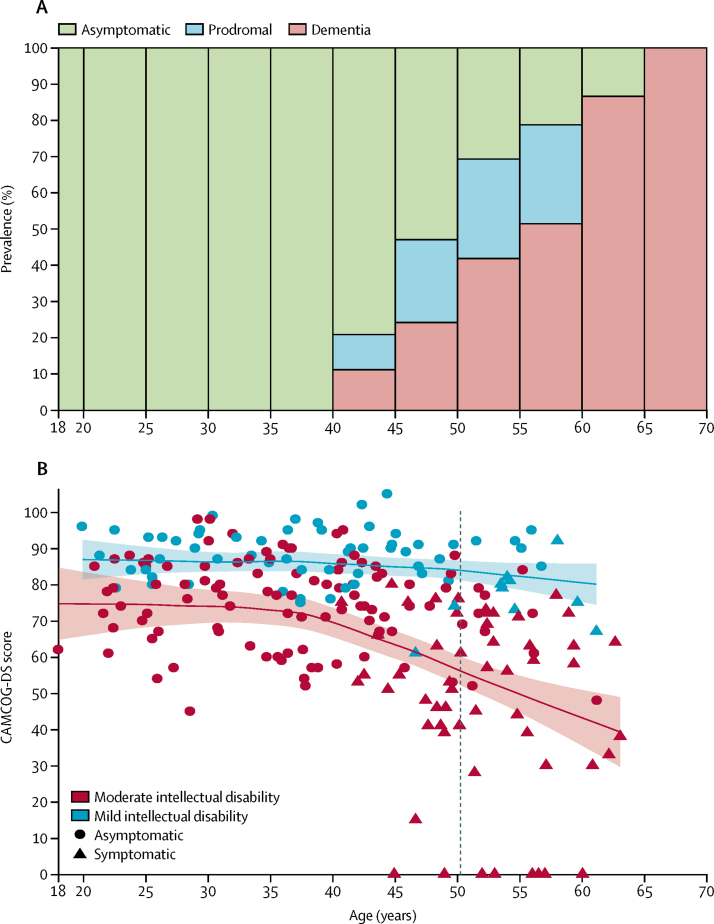
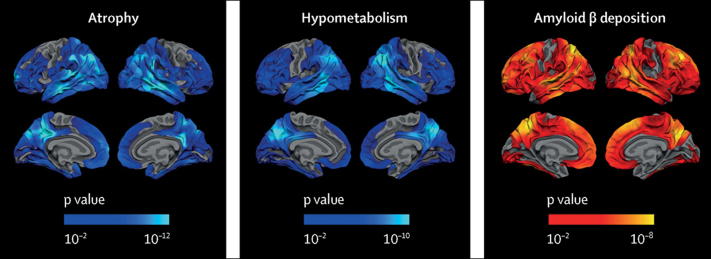
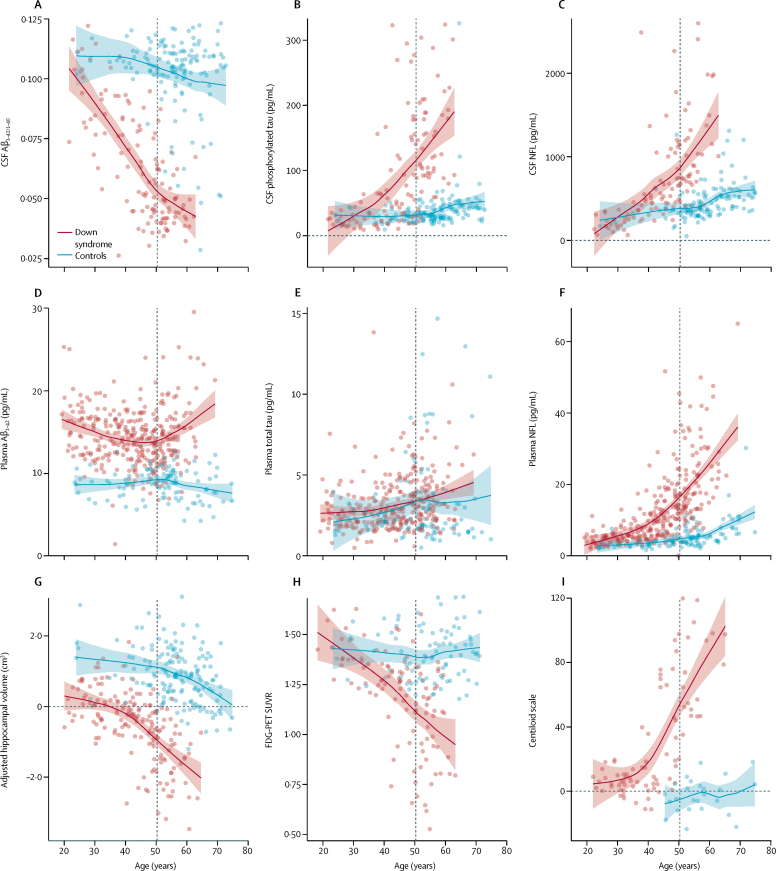
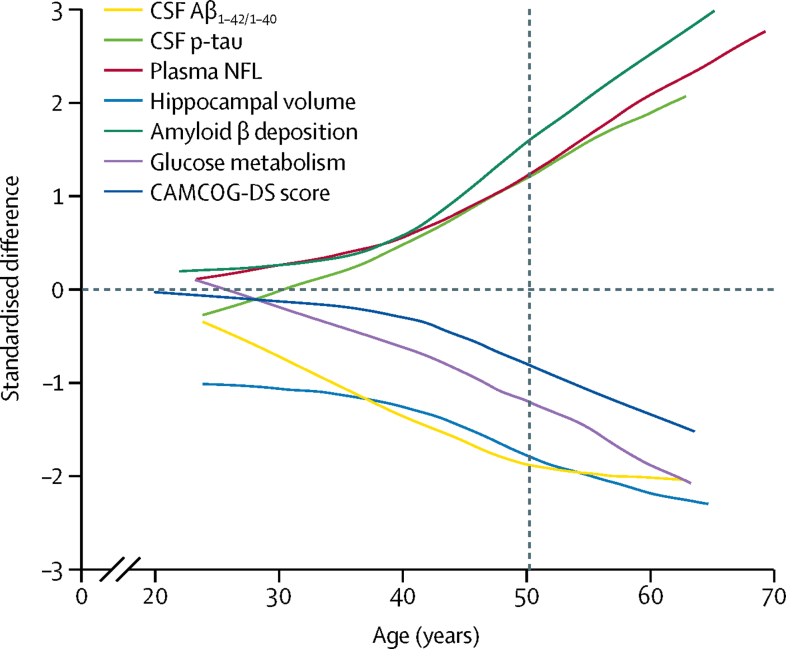
Background Alzheimer's disease and its complications are the leading cause of death in adults with Down syndrome. Studies have assessed Alzheimer's disease in individuals with Down syndrome, but the natural history of biomarker changes in Down syndrome has not been established. We characterised the order and timing of changes in biomarkers of Alzheimer's disease in a population of adults with Down syndrome. Methods We did a dual-centre cross-sectional study of adults with Down syndrome recruited through a population-based health plan in Barcelona (Spain) and through services for people with intellectual disabilities in Cambridge (UK). Cognitive impairment in participants with Down syndrome was classified with the Cambridge Cognitive Examination for Older Adults with Down Syndrome (CAMCOG-DS). Only participants with mild or moderate disability were included who had at least one of the following Alzheimer's disease measures: apolipoprotein E allele carrier status; plasma concentrations of amyloid β peptides 1–42 and 1–40 and their ratio (Aβ 1–42/1–40 ), total tau protein, and neurofilament light chain (NFL); tau phosphorylated at threonine 181 (p-tau), and NFL in cerebrospinal fluid (CSF); and one or more of PET with 18 F-fluorodeoxyglucose, PET with amyloid tracers, and MRI. Cognitively healthy euploid controls aged up to 75 years who had no biomarker abnormalities were recruited from the Sant Pau Initiative on Neurodegeneration. We used a first-order locally estimated scatterplot smoothing curve to determine the order and age at onset of the biomarker changes, and the lowest ages at the divergence with 95% CIs are also reported where appropriate. Findings Between Feb 1, 2013, and June 28, 2019 (Barcelona), and between June 1, 2009, and Dec 31, 2014 (Cambridge), we included 388 participants with Down syndrome (257 [66%] asymptomatic, 48 [12%] with prodromal Alzheimer's disease, and 83 [21%] with Alzheimer's disease dementia) and 242 euploid controls. CSF Aβ 1–42/1–40 and plasma NFL values changed in individuals with Down syndrome as early as the third decade of life, and amyloid PET uptake changed in the fourth decade. 18 F-fluorodeoxyglucose PET and CSF p-tau changes occurred later in the fourth decade of life, followed by hippocampal atrophy and changes in cognition in the fifth decade of life. Prodromal Alzheimer's disease was diagnosed at a median age of 50·2 years (IQR 47·5–54·1), and Alzheimer's disease dementia at 53·7 years (49·5–57·2). Symptomatic Alzheimer's disease prevalence increased with age in individuals with Down syndrome, reaching 90–100% in the seventh decade of life. Interpretation Alzheimer's disease in individuals with Down syndrome has a long preclinical phase in which biomarkers follow a predictable order of changes over more than two decades. The similarities with sporadic and autosomal dominant Alzheimer's disease and the prevalence of Down syndrome make this population a suitable target for Alzheimer's disease preventive treatments. Funding Instituto de Salud Carlos III, Fundació Bancaria La Caixa, Fundació La Marató de TV3, Medical Research Council, and National Institutes of Health.
Overview
The claims and statistics of this paper haven’t been checked yet.
Free: it reads the open-access text and checks the first 5 claims that cite a source we can check. Create a free account to check every claim.
Integrity signals
Registry
Cites
Statistics
Figures
Verification
Claims the paper makes
The claims and statistics of this paper haven’t been checked yet.
Free: it reads the open-access text and checks the first 5 claims that cite a source we can check. Create a free account to check every claim.
Claims other papers make about this one
Each is checked against this paper’s own text: does it say what the citing paper says it does?
The cited source says what the claim attributes to it.
In the citing paper
“Studies suggest that the brain changes of Alzheimer's disease in people with Down syndrome are more common than these percentages indicate.92,93”
From 2023 Alzheimer's disease facts and figures (2023) · cites this paper as [92]
Experimental — accuracy not yet measuredThe cited source says what the claim attributes to it.
In the citing paper
“Emerging research suggests that Alzheimer's brain changes in people with Down syndrome may be even more common than these percentages indicate.”
From 2024 Alzheimer's disease facts and figures (2024) · cites this paper as [99]
Self-check
Percentages, sums and reported differences re-computed from the paper’s own numbers.
The self-check needs the paper’s full text.
Citations
Cites
Diagnostic and Statistical Manual of Mental Disorders
Williams, J. B. W., & First, M. (2013) · Encyclopedia of Social Work · doi:10.1093/acrefore/9780199975839.013.104 · Cited by 109,519
NIA‐AA Research Framework: Toward a biological definition of Alzheimer's disease
Jack, C. R., Bennett, D. A., Blennow, K., Carrillo, M. C., Dunn, B., Haeberlein, S. B., Holtzman, D. M., Jagust, W., Jessen, F., Karlawish, J., et al. (2018) · Alzheimer's & Dementia · doi:10.1016/j.jalz.2018.02.018 · Cited by 10,537
Measuring the thickness of the human cerebral cortex from magnetic resonance images
Fischl, B., & Dale, A. M. (2000) · Proceedings of the National Academy of Sciences · doi:10.1073/pnas.200033797 · Cited by 5,818
Clinical and biomarker changes in dominantly inherited Alzheimer's disease
Bateman, R. J., Xiong, C., Benzinger, T. L. S., Fagan, A. M., Goate, A., Fox, N. C., Marcus, D. S., Cairns, N. J., Xie, X., Blazey, T. M., et al. (2012) · New England Journal of Medicine · doi:10.1056/nejmoa1202753 · Cited by 3,814
Advancing research diagnostic criteria for Alzheimer's disease: the IWG-2 criteria
Dubois, B., Feldman, H. H., Jacova, C., Hampel, H., Molinuevo, J. L., Blennow, K., DeKosky, S. T., Gauthier, S., Selkoe, D., Bateman, R., et al. (2014) · The Lancet Neurology · doi:10.1016/s1474-4422(14)70090-0 · Cited by 3,321
The Centiloid Project: standardizing quantitative amyloid plaque estimation by PET
Klunk, W. E., Koeppe, R. A., Price, J. C., Benzinger, T. L., Devous, M. D., Jagust, W. J., Johnson, K. A., Mathis, C. A., Minhas, D., Pontecorvo, M. J., et al. (2015) · Alzheimer's & Dementia · doi:10.1016/j.jalz.2014.07.003 · Cited by 1,348
Occurrence of neuropathological changes and dementia of Alzheimer’s disease in Down’s syndrome
Wisniewski, K. E., Wisniewski, H. M., & Wen, G. Y. (1985) · Annals of Neurology · doi:10.1002/ana.410170310 · Cited by 1,159
Jack, C. R., Lowe, V. J., Weigand, S. D., Wiste, H. J., Senjem, M. L., Knopman, D. S., Shiung, M. M., Gunter, J. L., Boeve, B. F., Kemp, B. J., et al. (2009) · Brain · doi:10.1093/brain/awp062 · Cited by 1,099
Associations between cognitive, functional, and FDG-PET measures of decline in AD and MCI
Landau, S. M., Harvey, D., Madison, C. M., Koeppe, R. A., Reiman, E. M., Foster, N. L., Weiner, M. W., & Jagust, W. J. (2011) · Neurobiology of Aging · doi:10.1016/j.neurobiolaging.2009.07.002 · Cited by 750
Amyloid deposition, hypometabolism, and longitudinal cognitive decline
Landau, S. M., Mintun, M. A., Joshi, A. D., Koeppe, R. A., Petersen, R. C., Aisen, P. S., Weiner, M. W., Jagust, W. J., & Initiative, F. T. A. D. N. (2012) · Annals of Neurology · doi:10.1002/ana.23650 · Cited by 727
Cited by
Items 301–373 of 373
Jandy, M., Hu, H., Liu, Y., & Bhattacharyya, A. (2025) · Springer eBooks · doi:10.1007/978-3-031-78611-2_7
Wegwijzer verstandelijke beperking en dementie: 100 praktijk vragen en antwoorden
Dekker, A. D. (2025) · University of Groningen Press eBooks · doi:10.21827/67b72efaf36e9
Bartesaghi, R., Chen, X., Johnstone, A. D., Das, U., & Mobley, W. C. (2025) · Springer eBooks · doi:10.1007/978-3-031-89307-0_19 · Cited by 1
Hunter, A. M. L., Atkinson, S. D., Murray, E. K., Saunders, K. J., Pető, T., Csincsik, L., Mitchell, J., Zetterberg, H., Strydom, A., Little, J., et al. (2025) · BMJ Open · doi:10.1136/bmjopen-2024-098285 · Cited by 1
The Brain and Eyes Working TogetherPreprint
Ordia, J. I. (2025) · doi:10.22541/au.175519467.72867596/v1
Marcadores de envelhecimento em adultos e idosos com síndrome de Down
Cordeiro, A. M. T. (2024) · Digital Library of Theses and Dissertations (Universidade de São Paulo) · doi:10.11606/t.5.2024.tde-02092025-161756
Paradisi, R., Baldimtsi, E. N., Ntailakis, P., Ntritsos, G., Παπαντωνίου, Γ., Konsta, A., & Tsolaki, M. (2025) · American Journal on Intellectual and Developmental Disabilities · doi:10.1352/1944-7558-130.6.503
Giménez, S., & Boeve, B. F. (2025) · Cambridge University Press eBooks · doi:10.1017/9781108985055.025
Self-citationAlzheimer’s Disease: Preclinical to Advanced Dementia
Martínez, N. F., & Sánchez‐Valle, R. (2025) · Cambridge University Press eBooks · doi:10.1017/9781108985055.010
Upadhyay, K. D., Viramgami, A., Singh, D., Kulkarni, N., Chudasama, B., Sivaperumal, P., & Balachandar, R. (2025) · Research Square · doi:10.21203/rs.3.rs-7788186/v1
Song, Z., Morgan, S. E., & Zaman, S. H. (2025) · medRxiv · doi:10.64898/2025.12.13.25342199
Self-citationJohansson, C., Þórðardóttir, S., Laffita-Mesa, J., Pannee, J., Rodriguez‐Vieitez, E., Zetterberg, H., Blennow, K., & Graff, C. (2024) · Figshare · doi:10.6084/m9.figshare.27107560
Maxwell, A. M., Yuan, P., Rivera, B. M., Schaaf, W., Mladinov, M., Prasher, V. P., Robinson, A., DeGrado, W. F., & Condello, C. (2021) · Figshare · doi:10.6084/m9.figshare.17696286
Benejam, B., Aranha, M. R., Videla, L., Padilla, C., Valldeneu, S., Fernández, S., Altuna, M., Carmona‐Iragui, M., Barroeta, I., Iulita, M. F., et al. (2022) · Figshare · doi:10.6084/m9.figshare.20887440
Self-citationWu, Y., Mumford, P., Noy, S., Cleverley, K., Mrzyglod, A., Luo, D., van Dalen, F., Verdoes, M., Fisher, E., & Wiseman, F. K. (2023) · Figshare · doi:10.6084/m9.figshare.23949660
Maxwell, A. M., Yuan, P., Rivera, B. M., Schaaf, W., Mladinov, M., Prasher, V. P., Robinson, A., DeGrado, W. F., & Condello, C. (2021) · Figshare · doi:10.6084/m9.figshare.17696280
Benejam, B., Aranha, M. R., Videla, L., Padilla, C., Valldeneu, S., Fernández, S., Altuna, M., Carmona‐Iragui, M., Barroeta, I., Iulita, M. F., et al. (2022) · Figshare · doi:10.6084/m9.figshare.20887434
Self-citationBenejam, B., Aranha, M. R., Videla, L., Padilla, C., Valldeneu, S., Fernández, S., Altuna, M., Carmona‐Iragui, M., Barroeta, I., Iulita, M. F., et al. (2022) · Figshare · doi:10.6084/m9.figshare.20887437
Self-citationGhosh, U., Tse, E., Yang, H., Shi, M., Caro, C. D., Wang, F., Merz, G. E., Prusiner, S. B., Southworth, D. R., & Condello, C. (2024) · Figshare · doi:10.6084/m9.figshare.26732911
Delaby, C., Estellés, T., Zhu, N., Arranz, J., Barroeta, I., Carmona‐Iragui, M., Illán‐Gala, I., Santos‐Santos, M., Altuna, M., Sala, I., et al. (2022) · Figshare · doi:10.6084/m9.figshare.19106000
Self-citationGhosh, U., Tse, E., Yang, H., Shi, M., Caro, C. D., Wang, F., Merz, G. E., Prusiner, S. B., Southworth, D. R., & Condello, C. (2024) · Figshare · doi:10.6084/m9.figshare.26732908
Videla, L. (2023) · Dipòsit Digital de Documents de la UAB (Universitat Autònoma de Barcelona)
Self-citationEsselakoy Asseke, C. (2023) · Papyrus : Institutional Repository (Université de Montréal) · doi:10.71781/18129
Cañete‐Massé, C. (2022) · Dipòsit Digital de la Universitat de Barcelona (Universitat de Barcelona)
Mateos Villalón, M.-I. (2023) · Tesis Doctorals en Xarxa (Consorci de Serveis Universitaris de Catalunya) · Cited by 2
DiProspero, N. D. (2023) · eScholarship (California Digital Library)
Beyond amyloid: contributions of cerebrovascular injury to Alzheimer’s disease
Rizvi, B. (2024) · eScholarship (California Digital Library)
Botella, M., Estanga, A., Ros, N., Saldias, J., Marta, C., García‐Sebastián, M., Larrea, J. Á., Echeverria, M., Garrido, A., & Altuna, M. (2025) · Journal of Alzheimer s Disease · doi:10.1177/13872877251407121
Self-citationStudy of brain perfusion in adults with Down Syndrome along the Alzheimer's Disease continuum
Franquesa‐Mullerat, M., Morcillo-Nieto, A. O., Arriola‐Infante, J. E., Zsadanyi, S. E., Vaqué‐Alcázar, L., Aranha, M. R., Arranz, J., Rodríguez‐Baz, Í., Maure‐Blesa, L., Videla, L., et al. (2025) · Alzheimer s & Dementia · doi:10.1002/alz70856_106416
Self-citationSpatial abilities in aging adults with Down syndrome
Yang, Y., Bhullar, R., & Conde, S. (2026) · Alzheimer s & Dementia · doi:10.1002/alz.71159
Decoding Alzheimer's disease through down syndrome: insights from a genetically defined population
Russell, J. K., Schlachetzki, Z., & Rafii, M. S. (2026) · Current Opinion in Neurology · doi:10.1097/wco.0000000000001461
Mahmood, R., David, A., Hu, D., Alshurafa, N. I., Haux, L. M., Hester, J. D., Kiselica, A. M., Liu, S., Qiu, C., Wu, C.-Y., et al. (2026) · JMIR Formative Research · doi:10.2196/84618 · Cited by 2
Karppinen, H. (2025) · Tampere University Institutional Repository (Tampere University)
Herrero, M. Z., Tárrega, J. S. J., Barbera, S. T., & Herrera, M. Á. R. (2025) · Avances en Enfermería · doi:10.15446/av.enferm.v43n2.121467
Neuropathological measures of increased tau phosphorylation across the Down syndrome lifespan
Pascual, J. R., Rivera, I., Nguyen, H., Ngo, P. T., Hoang, A., Andrews, E. J., Rouanet, J. P., Wright, S. T., Sordo, L., Kofler, J. K., et al. (2026) · Acta Neuropathologica · doi:10.1007/s00401-026-02994-8
“Aβ and p-tau protein levels in cerebrospinal fluid (CSF) and in plasma are increasingly recognized as biomarkers for the early detection of AD, both in the neurotypical population [18, 66] and in DS [12–14, 24, 26, 28, 29, 41, 54, 55].”
Self-citationIntroduction to the special issue on Down syndrome
Yassuda, M. S. (2025) · Dementia & Neuropsychologia · doi:10.1590/1980-5764-dn-2025-e002
“Furthermore, AD is the leading cause of death after age 35 among people with DS 3 .”
Alterations of gut microbiota in Down syndrome and their association with Alzheimer's disease
Pellegrini, C., Ravaioli, F., Fanti, S. D., Siliquini, A., Sala, C., Rochat, M. J., Pollarini, V., Polischi, B., Pasti, A. P., Grasso, M., et al. (2026) · Alzheimer s & Dementia · doi:10.1002/alz.71815
“7,8,9,10 Premorbid ID level does not affect the timing of AD onset and progression in DS, 11 whereas individuals with DS who carry the apolipoprotein E ( APOE ) ε 4 allele show earlier clinical and AD biomarker changes, similarly to what is observed in the euploid population.”
Application of machine learning to blood‐based biomarkers of Alzheimer's disease in Down syndrome
Luckett, P. H., Petersen, M. E., O’Bryant, S. E., Mapstone, M. E., Christian, B. T., Handen, B. L., Head, E., & Ances, B. M. (2026) · Alzheimer s & Dementia Diagnosis Assessment & Disease Monitoring · doi:10.1002/dad2.70325
Abdullah, L. B., Zhang, F., Petersen, M. E., Hall, J., Handen, B. L., Mapstone, M. E., Christian, B. T., Head, E., Harley, S., Andrews, H., et al. (2026) · Alzheimer s & Dementia · doi:10.1002/alz.71338
Self-citation“My Child Is Lost”: Regression in Individuals with Down Syndrome
Paik, K. E., Godfrey, M., Smith, C., Stredny, C. M., Capone, G. T., & Karlsson, C. D. (2026) · Springer eBooks · doi:10.1007/978-3-032-10099-3_19
Precision medicine for Alzheimer's disease in Down syndrome
Sukreet, S., Kim, E. K., Petersen, M. E., Zhang, F., O’Bryant, S. E., Rafii, M. S., & Rissman, R. A. (2026) · Alzheimer s & Dementia · doi:10.1002/alz.71398
Zakaria, J. A. D., & Vassar, R. J. (2026) · Topics in medicinal chemistry · doi:10.1007/7355_2026_188
McGlinchey, E., Pape, S., Zaman, S. H., Eustace‐Cook, J., Stockbauer, A., Baldimtsi, E. N., Langballe, E. M., Larsen, F., Sandkühler, K., Ivain, P., et al. (2026) · Journal of Neurodevelopmental Disorders · doi:10.1186/s11689-026-09694-0
“Variability in the age of onset of symptoms [9], despite a common genetic predisposition and a predictable sequence of biomarker changes [8], suggest that other factors may influence the relationship between neuropathology and cognitive symptomatology.”
InfluentialSelf-citationRösner, P., Tarasova, D., Kruse, B., Müller, S., & Sappok, T. (2026) · International Journal of Developmental Disabilities · doi:10.1080/20473869.2026.2664777
Godfrey, M., Paik, K. E., & Capone, G. T. (2026) · Journal of Intellectual Disability Research · doi:10.1111/jir.70118
Wang, Z. P., Yang, Y., Wang, L., & Luo, Z. (2026) · International Journal of Molecular Sciences · doi:10.3390/ijms27104231
“For visualization, expression distributions were depicted using violin plots with embedded box plots, and ROC curves were smoothed via Locally Estimated Scatterplot Smoothing (LOESS, span = 0.3) to improve interpretability [60].”
InfluentialMorcillo-Nieto, A. O., Franquesa‐Mullerat, M., Zsadanyi, S. E., Arriola‐Infante, J. E., Vaqué‐Alcázar, L., Aranha, M. R., Parra, J. A., Zhao, Z., Arranz, J., Rodríguez‐Baz, Í., et al. (2026) · Alzheimer s & Dementia · doi:10.1002/alz.71507
“3,4 In parallel, cerebral amyloid angiopathy (CAA), characterized by A β deposition in the walls of lep-tomeningeal and cortical blood vessels, is frequently observed in DS 5,6 and likely contributes to microvascular injury and white matter (WM) damage.”
Self-citationSchlachetzki, Z., Langford, O., Zammit, M. D., Donohue, M., Zhou, X., Sukreet, S., Abdel‐Latif, S., Braunstein, J. B., Rissman, R. A., & Rafii, M. S. (2026) · Communications Medicine · doi:10.1038/s43856-026-01709-0
Larsen, F., Medbøen, I. T., Strydom, A., Selbæk, G., Strand, B. H., & Langballe, E. M. (2026) · Research in Developmental Disabilities · doi:10.1016/j.ridd.2026.105320
Domenico, F. D., Perluigi, M., Tramutola, A., Bacalini, M. G., Victorino, D. B., Barroeta, I., Bartesaghi, R., Carfì, A., Carmona‐Iragui, M., Cohen, A. D., et al. (2026) · NeuroMolecular Medicine · doi:10.1007/s12017-026-08921-0
“In general, cross-sectional findings have confirmed that our mea - sures are reliable for this target population and are sensitive to the clinical progression of AD (Fortea et al., 2020; Fu et al., 2025).”
Self-citationMultiomics and proteomic insights into Alzheimer’s disease biology in Down syndrome
Martá-Ariza, M., & Wisniewski, T. R. (2026) · Expert Review of Neurotherapeutics · doi:10.1080/14737175.2026.2695187
Distinct brain regions are affected by neurodevelopmental or pre-dementia changes in Down syndrome
Jorge, L., Oliveira, J., Martins, R., Lopes, T., Quental, H., & Castelo-Branco, M. S. (2026) · Brain Communications · doi:10.1093/braincomms/fcag269
“Most cortical regions showing age-related decline in individuals with DS differed significantly from TD, indicating accelerated ageing in DS.”
Influentialda Conceição, A. D. S. G. G., Fonseca, L. M., & Forlenza, O. V. (2026) · Dementia & Neuropsychologia · doi:10.1590/1980-5764-dn-2025-0442
“Given the well-established associations between gait disturbances, increased fall risk, and dementia in the general population 21 , it is critical to examine these factors in individuals with DS, a group already at elevated risk for early-onset AD 25 .”
de Oliveira, A. M., Vanetti, C. L. R., Alencar, F., da Conceição, A. D. S. G. G., Martinez, L. D., Sant’Ana, L. C. F. G., Carvalho, C., Mattar, G. P., LEDUC, V. R., Cecilio, A. P. A., et al. (2026) · Dementia & Neuropsychologia · doi:10.1590/1980-5764-dn-2025-0415
“Clinical studies have found that over 80% of DS adults aged 65 years or older show symptoms of Alzheimer-type dementia 6,7 .”
Guerra-Balic, M., Testor, S. P., Fortuño, J., & Bruna, O. (2026) · Springer eBooks · doi:10.1007/978-3-032-20072-3_27
Ptomey, L. T., Aschenbrenner, A. J., Helsel, B. C., Bodde, A. E., Clina, J. G., Danon, J. C., Lepping, R. J., Martin, L. E., Brucks, M. G., Sherman, J. R., et al. (2026) · Disability and health journal · doi:10.1016/j.dhjo.2026.102134
Song, Z.-Y., Song, S.-Y., Clare, I., Head, E., Hom, C., Brickman, A., Hartley, S., Lao, P., Schmitt, F., Ances, B., et al. (2026) · Research Square · doi:10.21203/rs.3.rs-10309496/v1
Self-citationComparison Matrices for Alzheimer's Disease Early Detection using Deep Learning
Kanimozhi, P., Inbavalli, A., & Moganambigai, V. (2026) · International Conference on Data Science for Cyber-Physical Systems Resilience using Advanced Applications (ICDCA) · doi:10.1109/icdca69396.2026.11620142
Valledor, M., Smith, K., Lawrence, J. B., & Sosa, L. J. (2026) · bioRxiv (Cold Spring Harbor Laboratory) · doi:10.64898/2026.08.05.742240
“The amyloid precursor protein (APP), encoded on Chromosome 21(Chr21), is generally important in pathogenesis of Alzheimer’s Disease (AD); APP triplication drives early onset AD in both Down syndrome (DS) and in APP microduplication syndrome (Fortea et al., 2020; Rovelet-lecrux et al., 2006).”
Jorge, L., Oliveira, J., Canário, N., Afonso, S., Quental, H., & Castelo-Branco, M. S. (2026) · Acta Psychologica · doi:10.1016/j.actpsy.2026.107658
Sandkühler, K., Thomas, A., Hofer, N. M., Herke, S., Levin, J., Schenk, T., & Loosli, S. V. (2026) · Developmental Review · doi:10.1016/j.dr.2026.101293
Longitudinal Dynamics of the Blood Proteome Within the Alzheimer Spectrum in Down Syndrome
Wagemann, O., Nübling, G., Sandkühler, K., Wlasich, E., Loosli, S. V., Prix, C., Stockbauer, A., Marth, L., Forte, A., Vöglein, J., et al. (2026) · Neurology · doi:10.1212/wnl.0000000000218494
Ashimgaliyev, M., Zhumadillayeva, А., Mussabek, M., Saparkhojayev, N. P., Qin, P., & Zhamangarin, D. (2026) · Machine Learning and Knowledge Extraction · doi:10.3390/make8090285
Phosphorylated tau 217 in young adults with Down syndrome and Down syndrome regression disorder
Santoro, J. D., Abdel‐Latif, S., Banerjee, A. K., Mager, H., Silverman, M., Kazerooni, L., Otey, S. T., Yousuf, M. M., Lucas, M. C., Schlachetzki, Z., et al. (2026) · Communications Medicine · doi:10.1038/s43856-026-01921-y
Changes in serum β‐synuclein precede blood biomarkers of Alzheimer pathology in Down syndrome
González, A. C., Morcillo-Nieto, A. O., Serrano‐Requena, S., Benejam, B., Videla, L., Barroeta, I., Fernández, S., Soriano, L. D. H., Hernandez, A. S., Maure‐Blesa, L., et al. (2026) · Alzheimer s & Dementia · doi:10.1002/alz.71860
Self-citationFernández, A., Molanes-lopez, E. M., Zuluaga, P., Vaquero, L., Moldenhauer, F., Galván-Román, J., Bajo, R., Lagunas, N., & Alba, J. G. (2026) · Journal of Neurology · doi:10.1007/s00415-026-14165-6
“This pattern is consistent with histo-pathological findings that place the hippocampus as one of the first structures affected by tau accumulation in DS [2, 3].”
Afonso, A. S., Mitchell, L., Carragher, N., Casey, C., & Patel, N. P. (2026) · BMJ Open · doi:10.1136/bmjopen-2026-118484
Tau extent is associated with lower cognition in Down syndrome‐related Alzheimer's disease
Zammit, M. D., Hartley, S. L., Christian, B. T., & Rafii, M. S. (2026) · Alzheimer s & Dementia · doi:10.1002/alz.71925 · Cited by 1
BindingDB (2023) · UC San Diego · doi:10.7270/q2fn1b7v
Park, S.-H. (2026) · Dementia and Neurocognitive Disorders · doi:10.12779/dnd.2026.25.4.195
Blood TRPC6 mRNA as a biomarker for Alzheimer's disease: a nationwide, multicenter study in China
Pu, M., Wen, Y., Chen, Y., Wang, J., 潘晓黎, Wang, G., Li, X., 王桂红, Zuo, C., Shi, J., et al. (2026) · Alzheimer s & Dementia Diagnosis Assessment & Disease Monitoring · doi:10.1002/dad2.70433
Metadata
- Authors
- Fortea, J., Vilaplana, E., Carmona-Iragui, M., Benejam, B., Videla, L., Barroeta, I., Fernández, S., Altuna, M., Pegueroles, J., Montal, V., Valldeneu, S., Giménez, S., González-Ortiz, S., Muñoz, L., Estellés, T., Illán-Gala, I., Belbin, O., Camacho, V., Wilson, L. R., Annus, T., Osorio, R. S., Videla, S., Lehmann, S., Holland, A. J., Alcolea, D., Clarimón, J., Zaman, S. H., Blesa, R., & Lleó, A.
- Affiliations
- Universitat Autònoma de Barcelona (ES)
- Hospital de Sant Pau (ES)
- University of Cambridge (GB)
- NYU Langone Health (US)
- Institut d'Investigació Biomédica de Bellvitge (ES)
- Inserm (FR)
- Corresponding author
- Fortea, Juan
- ORCID
- Fortea, Juan
- Vilaplana, Eduard
- Benejam, Bessy
- Videla, Laura
- Barroeta, Isabel
- Fernández, Susana
- Altuna, Miren
- Pegueroles, Jordi
- Montal, Víctor
- Giménez, Sandra
- Muñoz, Laia
- Belbin, Olivia
- Camacho, Valle
- Wilson, Liam Reese
- Osorio, Ricardo S
- Videla, Sebastián
- Lehmann, Sylvain
- Holland, Anthony J
- Alcolea, Daniel
- Clarimón, Jordi
- Zaman, Shahid H
- Blesa, Rafael
- Lleó, Alberto
- Venue
- The Lancet
- Publisher
- Elsevier BV
- Published
- 2020-06
- Volume
- 395
- Issue
- 10242
- Pages
- 1988-1997
- ISSN
- 0099-5355 (ISSN-L)
- 0140-6736
- PMC
- PMC7322523
- OpenAlex
- W3038008717
- Cited by
- 340
- References
- 37
- Citations by year
- 2026: 43 · 2025: 74 · 2024: 57 · 2023: 43 · 2022: 61 · 2021: 53 · 2020: 9
- FWCI
- 31.31
- Type
- journal article
- Language
- en
- Open access
- hybrid
- doi.org
- Licence
- cc-by-nc-nd
- www.elsevier.com/tdm/userlicense/1.0/ (tdm)
- www.elsevier.com/legal/tdmrep-license (tdm)
- creativecommons.org/licenses/by-nc-nd/4.0/ (vor)
- Locations
- The Lancet (publishedVersion, cc-by-nc-nd)
- PubMed Central (publishedVersion, cc-by-nc-nd)
- PubMed (publishedVersion)
- HAL (submittedVersion, cc-by-nc-nd)
- Dipòsit Digital de Documents de la UAB (Universitat Autònoma de Barcelona) (submittedVersion, cc-by-nc-nd)
- LA Referencia (Red Federada de Repositorios Institucionales de Publicaciones Científicas) (submittedVersion, cc-by-nc-nd)
- Repositori digital de la UPF (Universitat Pompeu Fabra) (submittedVersion, cc-by-nc-nd)
- Apollo (University of Cambridge) (submittedVersion, cc-by-nc-nd)
- Apollo
- Funders
- Fundació la Marató de TV3
- Global Brain Health Institute
- Generalitat de Catalunya
- Centro de Investigación Biomédica en Red sobre Enfermedades Neurodegenerativas
- National Institutes of Health (2013-2016)
- Instituto de Salud Carlos III (2013-2016)
- European Regional Development Fund
- National Institute on Aging (P30AG066512)
- Topics
- Health Sciences › Medicine › Public Health, Environmental and Occupational Health › Down syndrome and intellectual disability research
- Health Sciences › Medicine › Psychiatry and Mental health › Dementia and Cognitive Impairment Research
- Life Sciences › Neuroscience › Cellular and Molecular Neuroscience › Alzheimer's disease research and treatments
- Keywords
- Alzheimer's disease, Down syndrome, biomarkers, natural history (disease), amyloid PET, neurofilament light chain, apolipoprotein E, total tau, cognitive impairment, prodromal Alzheimer's disease, dementia
- MeSH terms
- Adult, Alzheimer Disease, Amyloidosis, Apolipoproteins E, Cross-Sectional Studies, Down Syndrome, United Kingdom, Humans, Magnetic Resonance Imaging, Middle Aged, Spain, Biomarkers, Prevalence, Case-Control Studies, Amyloid beta-Peptides, tau Proteins, Neurofilament Proteins, Fluorodeoxyglucose F18, Positron-Emission Tomography, Cognitive Dysfunction
About these checks
Registry, retraction, Cites and statistics results are computed, not judged, with one exception: a printed reference that no index lists is read once by a model before it counts as a citation error. Claims are extracted by a model and kept only when their quote appears verbatim in the text; each cited source is then checked, with a model’s help, for whether it says what the claim relies on. Those verdicts can be wrong — read the claim’s quote and the cited source before relying on one.
Statistics and arithmetic are recomputed, not judged.
Confidence bands are shown only for fields calibrated on our annotated test set. None is calibrated yet, so no band is shown.
What counts as a claim ›How we measure confidence ›How we check this ›
Are you an author, or do you see a problem with this page? Request a review
Data sources
Bibliographic data: Semantic Scholar, OpenAlex, Crossref.
Contains information from the Semantic Scholar Academic Graph Datasets, made available under the ODC Attribution License (ODC-BY 1.0).
Semantic Scholar’s data is described in: Kinney, R., et al. (2023). The Semantic Scholar Open Data Platform. arXiv:2301.10140.
