

Clinical and biomarker changes of Alzheimer's disease in adults with Down syndrome: a cross-sectional study
Open accessThe DOI matches its Crossref record; 36 of the 37 references it cites were found in a registry or an index.
Abstract
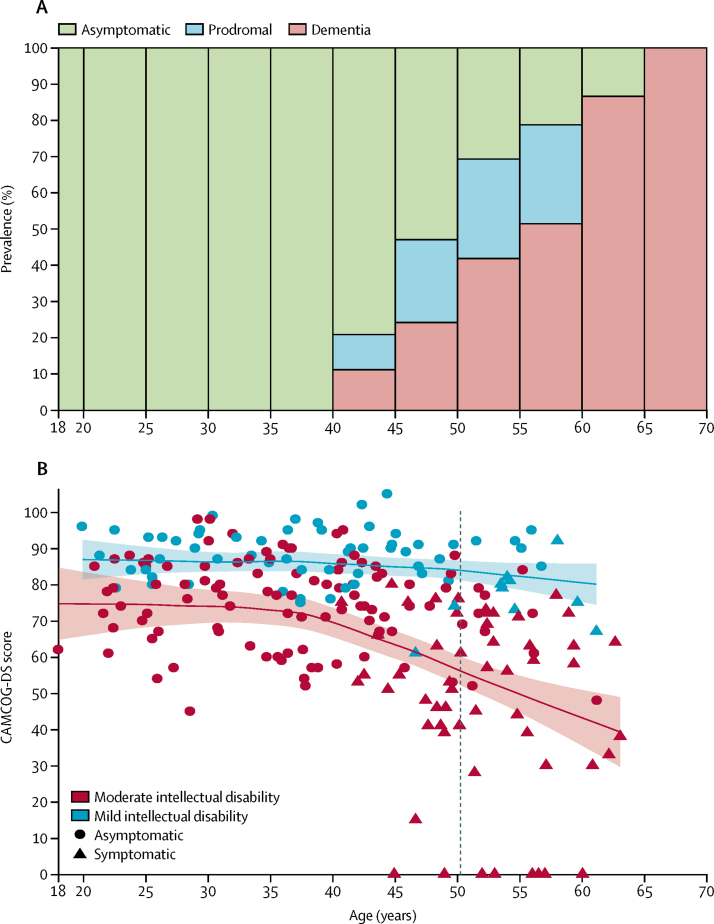
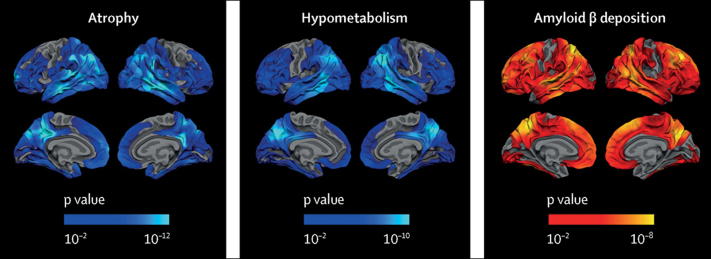
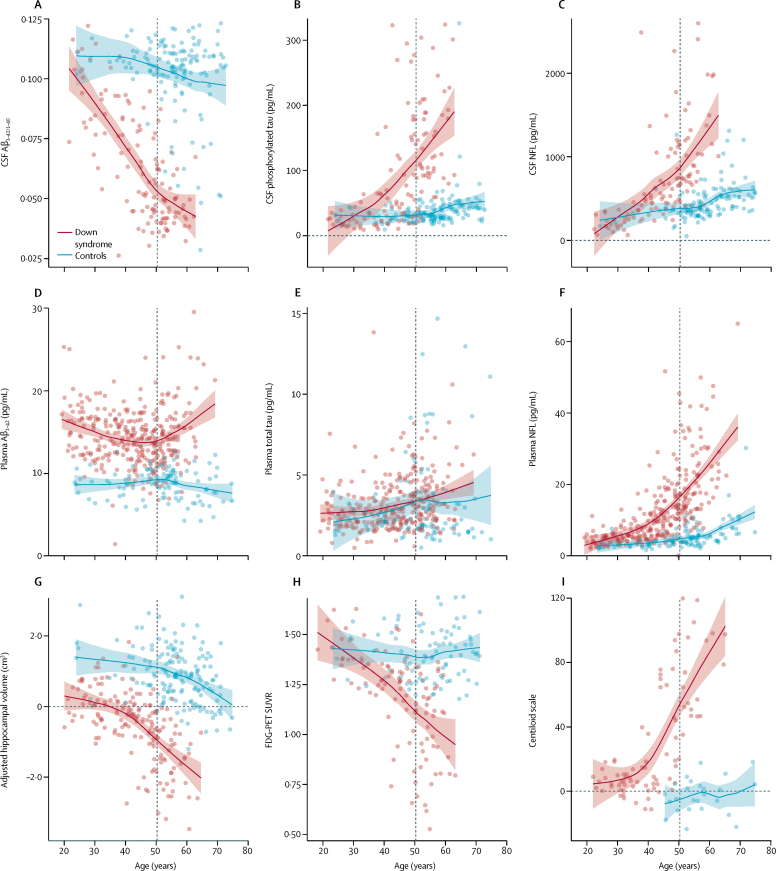
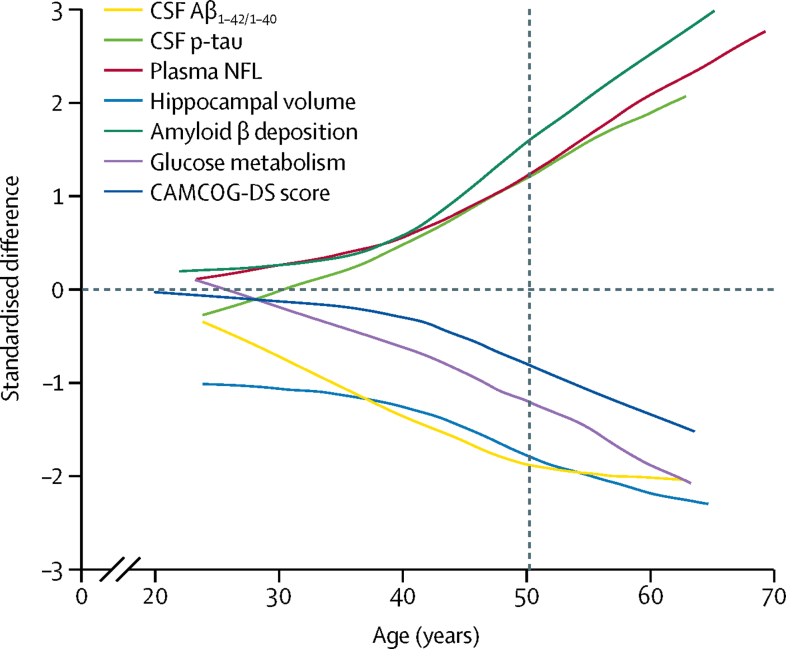
Background Alzheimer's disease and its complications are the leading cause of death in adults with Down syndrome. Studies have assessed Alzheimer's disease in individuals with Down syndrome, but the natural history of biomarker changes in Down syndrome has not been established. We characterised the order and timing of changes in biomarkers of Alzheimer's disease in a population of adults with Down syndrome. Methods We did a dual-centre cross-sectional study of adults with Down syndrome recruited through a population-based health plan in Barcelona (Spain) and through services for people with intellectual disabilities in Cambridge (UK). Cognitive impairment in participants with Down syndrome was classified with the Cambridge Cognitive Examination for Older Adults with Down Syndrome (CAMCOG-DS). Only participants with mild or moderate disability were included who had at least one of the following Alzheimer's disease measures: apolipoprotein E allele carrier status; plasma concentrations of amyloid β peptides 1–42 and 1–40 and their ratio (Aβ 1–42/1–40 ), total tau protein, and neurofilament light chain (NFL); tau phosphorylated at threonine 181 (p-tau), and NFL in cerebrospinal fluid (CSF); and one or more of PET with 18 F-fluorodeoxyglucose, PET with amyloid tracers, and MRI. Cognitively healthy euploid controls aged up to 75 years who had no biomarker abnormalities were recruited from the Sant Pau Initiative on Neurodegeneration. We used a first-order locally estimated scatterplot smoothing curve to determine the order and age at onset of the biomarker changes, and the lowest ages at the divergence with 95% CIs are also reported where appropriate. Findings Between Feb 1, 2013, and June 28, 2019 (Barcelona), and between June 1, 2009, and Dec 31, 2014 (Cambridge), we included 388 participants with Down syndrome (257 [66%] asymptomatic, 48 [12%] with prodromal Alzheimer's disease, and 83 [21%] with Alzheimer's disease dementia) and 242 euploid controls. CSF Aβ 1–42/1–40 and plasma NFL values changed in individuals with Down syndrome as early as the third decade of life, and amyloid PET uptake changed in the fourth decade. 18 F-fluorodeoxyglucose PET and CSF p-tau changes occurred later in the fourth decade of life, followed by hippocampal atrophy and changes in cognition in the fifth decade of life. Prodromal Alzheimer's disease was diagnosed at a median age of 50·2 years (IQR 47·5–54·1), and Alzheimer's disease dementia at 53·7 years (49·5–57·2). Symptomatic Alzheimer's disease prevalence increased with age in individuals with Down syndrome, reaching 90–100% in the seventh decade of life. Interpretation Alzheimer's disease in individuals with Down syndrome has a long preclinical phase in which biomarkers follow a predictable order of changes over more than two decades. The similarities with sporadic and autosomal dominant Alzheimer's disease and the prevalence of Down syndrome make this population a suitable target for Alzheimer's disease preventive treatments. Funding Instituto de Salud Carlos III, Fundació Bancaria La Caixa, Fundació La Marató de TV3, Medical Research Council, and National Institutes of Health.
Overview
The claims and statistics of this paper haven’t been checked yet.
Free: it reads the open-access text and checks the first 5 claims that cite a source we can check. Create a free account to check every claim.
Integrity signals
Registry
Cites
Statistics
Figures
Verification
Claims the paper makes
The claims and statistics of this paper haven’t been checked yet.
Free: it reads the open-access text and checks the first 5 claims that cite a source we can check. Create a free account to check every claim.
Claims other papers make about this one
Each is checked against this paper’s own text: does it say what the citing paper says it does?
The cited source says what the claim attributes to it.
In the citing paper
“Studies suggest that the brain changes of Alzheimer's disease in people with Down syndrome are more common than these percentages indicate.92,93”
From 2023 Alzheimer's disease facts and figures (2023) · cites this paper as [92]
Experimental — accuracy not yet measuredThe cited source says what the claim attributes to it.
In the citing paper
“Emerging research suggests that Alzheimer's brain changes in people with Down syndrome may be even more common than these percentages indicate.”
From 2024 Alzheimer's disease facts and figures (2024) · cites this paper as [99]
Self-check
Percentages, sums and reported differences re-computed from the paper’s own numbers.
The self-check needs the paper’s full text.
Citations
Cites
Diagnostic and Statistical Manual of Mental Disorders
Williams, J. B. W., & First, M. (2013) · Encyclopedia of Social Work · doi:10.1093/acrefore/9780199975839.013.104 · Cited by 109,519
NIA‐AA Research Framework: Toward a biological definition of Alzheimer's disease
Jack, C. R., Bennett, D. A., Blennow, K., Carrillo, M. C., Dunn, B., Haeberlein, S. B., Holtzman, D. M., Jagust, W., Jessen, F., Karlawish, J., et al. (2018) · Alzheimer's & Dementia · doi:10.1016/j.jalz.2018.02.018 · Cited by 10,537
Measuring the thickness of the human cerebral cortex from magnetic resonance images
Fischl, B., & Dale, A. M. (2000) · Proceedings of the National Academy of Sciences · doi:10.1073/pnas.200033797 · Cited by 5,818
Clinical and biomarker changes in dominantly inherited Alzheimer's disease
Bateman, R. J., Xiong, C., Benzinger, T. L. S., Fagan, A. M., Goate, A., Fox, N. C., Marcus, D. S., Cairns, N. J., Xie, X., Blazey, T. M., et al. (2012) · New England Journal of Medicine · doi:10.1056/nejmoa1202753 · Cited by 3,814
Advancing research diagnostic criteria for Alzheimer's disease: the IWG-2 criteria
Dubois, B., Feldman, H. H., Jacova, C., Hampel, H., Molinuevo, J. L., Blennow, K., DeKosky, S. T., Gauthier, S., Selkoe, D., Bateman, R., et al. (2014) · The Lancet Neurology · doi:10.1016/s1474-4422(14)70090-0 · Cited by 3,321
The Centiloid Project: standardizing quantitative amyloid plaque estimation by PET
Klunk, W. E., Koeppe, R. A., Price, J. C., Benzinger, T. L., Devous, M. D., Jagust, W. J., Johnson, K. A., Mathis, C. A., Minhas, D., Pontecorvo, M. J., et al. (2015) · Alzheimer's & Dementia · doi:10.1016/j.jalz.2014.07.003 · Cited by 1,348
Occurrence of neuropathological changes and dementia of Alzheimer’s disease in Down’s syndrome
Wisniewski, K. E., Wisniewski, H. M., & Wen, G. Y. (1985) · Annals of Neurology · doi:10.1002/ana.410170310 · Cited by 1,159
Jack, C. R., Lowe, V. J., Weigand, S. D., Wiste, H. J., Senjem, M. L., Knopman, D. S., Shiung, M. M., Gunter, J. L., Boeve, B. F., Kemp, B. J., et al. (2009) · Brain · doi:10.1093/brain/awp062 · Cited by 1,099
Associations between cognitive, functional, and FDG-PET measures of decline in AD and MCI
Landau, S. M., Harvey, D., Madison, C. M., Koeppe, R. A., Reiman, E. M., Foster, N. L., Weiner, M. W., & Jagust, W. J. (2011) · Neurobiology of Aging · doi:10.1016/j.neurobiolaging.2009.07.002 · Cited by 750
Amyloid deposition, hypometabolism, and longitudinal cognitive decline
Landau, S. M., Mintun, M. A., Joshi, A. D., Koeppe, R. A., Petersen, R. C., Aisen, P. S., Weiner, M. W., Jagust, W. J., & Initiative, F. T. A. D. N. (2012) · Annals of Neurology · doi:10.1002/ana.23650 · Cited by 727
Cited by
Items 101–200 of 373
Towards pharmacological prevention of Alzheimer disease
Llibre‐Guerra, J. J., McDade, E., Schindler, S. E., Clifford, D. B., Supnet, C. B., Atri, A., & Bateman, R. J. (2025) · Nature Reviews Neurology · doi:10.1038/s41582-025-01154-y · Cited by 20
Recent advances in Alzheimer disease genetics
Nicolas, G. (2024) · Current Opinion in Neurology · doi:10.1097/wco.0000000000001242 · Cited by 19
Schworer, E. K., Handen, B. L., Petersen, M. E., O’Bryant, S. E., Peven, J. C., Tudorascu, D. L., Lee, L., Krinsky‐McHale, S. J., Hom, C. L., Clare, I. C. H., et al. (2024) · Alzheimer s & Dementia Diagnosis Assessment & Disease Monitoring · doi:10.1002/dad2.12582 · Cited by 20
Self-citationKrasny, S., Yan, C., Hartley, S., Handen, B., Wisch, J. K., Boehrwinkle, A. H., Ances, B., & Rafii, M. (2024) · Alzheimer's & Dementia · doi:10.1002/alz.14068 · Cited by 15
Bartesaghi, R., Vicari, S., & Mobley, W. C. (2022) · The Annual Review of Pharmacology and Toxicology · doi:10.1146/annurev-pharmtox-041521-103641 · Cited by 21
Vrancx, C., & Annaert, W. G. (2025) · Trends in Neurosciences · doi:10.1016/j.tins.2025.05.007 · Cited by 20
“A substantial body of evidence also demonstrated the post-mortem accumulation of APP-CTFs in human brain tissue from individuals with AD [60], Down syndrome [61] or APP locus duplication [62].”
Barroeta, I., Videla, L., Carmona‐Iragui, M., Fortea, J., & Rafii, M. S. (2025) · Alzheimer s & Dementia · doi:10.1002/alz.70258 · Cited by 20
Self-citationHom, C. L., Kirby, K. A., Ricks‐Oddie, J., Keator, D. B., Krinsky‐McHale, S. J., Pulsifer, M. B., Rosas, H. D., Lai, F., Schupf, N., Lott, I. T., et al. (2021) · Brain Sciences · doi:10.3390/brainsci11091220 · Cited by 21
Dodd, D., Helsel, B. C., Bodde, A. E., Danon, J. C., Sherman, J. R., Donnelly, J. E., Washburn, R. A., & Ptomey, L. T. (2023) · Disability and health journal · doi:10.1016/j.dhjo.2023.101497 · Cited by 18
Miguel, J. C., Perez, S. E., Malek‐Ahmadi, M. H., & Mufson, E. J. (2021) · Frontiers in Aging Neuroscience · doi:10.3389/fnagi.2021.645334 · Cited by 18
“Interestingly, alterations in cerebrospinal fluid and blood neurofilament levels are potential diagnostic/prognostic biomarkers for neurodegenerative diseases, including DS (Rafii et al., 2015; Strydom et al., 2018; Fortea et al., 2020) and AD (Jin et al.”
BackgroundMetabolite Signature of Alzheimer's Disease in Adults with Down Syndrome
Montal, V., Barroeta, I., Bejanin, A., Pegueroles, J., Carmona‐Iragui, M., Altuna, M., Benejam, B., Videla, L., Fernández, S., Padilla, C., et al. (2021) · Annals of Neurology · doi:10.1002/ana.26178 · Cited by 19
“Of note, the AD-vulnerable regions are similar in sporadic amnesic AD(25,41) and DS.(3,42,43) These associations were more prominent in symptomatic stages of the disease.”
BackgroundMethodSelf-citationChen, P., Chen, F., Lei, J., Wang, G., & Zhou, B. (2021) · Research Square · doi:10.21203/rs.3.rs-824416/v1 · Cited by 18
Wang, X., Yang, Q., Zhou, X., Keene, C. D., Ryazanov, A. G., & Ma, T. (2024) · Alzheimer's & Dementia · doi:10.1002/alz.13916 · Cited by 17
Videla, L., Benejam, B., Barroeta, I., Fernández, S., Altuna, M., Arranz, J., Rodríguez‐Baz, Í., Arriola‐Infante, J. E., Maure‐Blesa, L., Soriano, L. D. H., et al. (2025) · Alzheimer s & Dementia · doi:10.1002/alz.70259 · Cited by 18
Self-citationPlasma p-tau217 as a biomarker of Alzheimer’s disease pathology in individuals with Down syndrome
Huber, H., Arranz, J., Arslan, B., Leuzy, A., Kittel, O., Molfetta, G. D., Benejam, B., Videla, L., Barroeta, I., Soriano, L. D. H., et al. (2025) · Nature Communications · doi:10.1038/s41467-025-65882-x · Cited by 17
“Ithasbeen estimated that the lifetime risk of developing Alzheimer-type dementia in adults with DS is >90% 4,5 .”
Self-citationAzimzadeh, M., Cheah, P.-S., & Ling, K. (2024) · Biochemical and Biophysical Research Communications · doi:10.1016/j.bbrc.2024.150713 · Cited by 195
Liou, J., Lou, J. J., Aguilar, L. F., Nakagiri, J., Yong, W. H., Hom, C. L., Doran, E. W., Totoiu, M. O., Lott, I. T., Mapstone, M. E., et al. (2025) · Alzheimer s & Dementia · doi:10.1002/alz.14479 · Cited by 18
Lleó, A., Carmona‐Iragui, M., Videla, L., Fernández, S., Benejam, B., Pegueroles, J., Barroeta, I., Altuna, M., Valldeneu, S., Xiao, M.-F., et al. (2021) · Alzheimer s Research & Therapy · doi:10.1186/s13195-021-00861-0 · Cited by 18
Self-citationWu, Y., Mumford, P., Noy, S., Cleverley, K., Mrzyglod, A., Luo, D., van Dalen, F., Verdoes, M., Fisher, E. M. C., & Wiseman, F. K. (2023) · Acta Neuropathologica Communications · doi:10.1186/s40478-023-01632-8 · Cited by 16
“The majority of individuals who have DS develop early onset-AD in mid-life [43], thus we could not source adult post-mortem brain tissue from individuals who had DS but who did not have AD, to determine if the level of cathepsin activity in absence of AD neuropathology differs between people with DS with and disomic i…”
BackgroundWnt Signaling Pathway: Biological Function, Diseases, and Therapeutic Interventions
Jin, X., Wang, J., Cao, R., & Jiang, D. (2026) · MedComm · doi:10.1002/mco2.70580 · Cited by 17
Sex-related differences in genetically determined Alzheimer’s disease
Soriano, L. D. H., Wagemann, O., Bejanin, A., Levin, J., & Fortea, J. (2025) · Frontiers in Aging Neuroscience · doi:10.3389/fnagi.2025.1522434 · Cited by 17
Self-citationSex and gender differences in dementia
Salwierz, P., Davenport, C., Sumra, V., Iulita, M. F., Ferretti, M. T., & Tartaglia, M. C. (2022) · International review of neurobiology · doi:10.1016/bs.irn.2022.07.002 · Cited by 17
Martá-Ariza, M., Leitner, D. F., Kanshin, E., Suazo, J., Giusti Pedrosa, A., Thierry, M., Lee, E. B., Devinsky, O., Drummond, E., Fortea, J., et al. (2025) · Acta Neuropathologica · doi:10.1007/s00401-025-02844-z · Cited by 15
Self-citationChen, X., Becker, A., Albay, R., Nguyen, P. D., Karachentsev, D., Roberts, A. J., Rynearson, K. D., Tanzi, R. E., & Mobley, W. C. (2024) · Annals of Neurology · doi:10.1002/ana.26958 · Cited by 16
“41 Another signi fi cant feature of brain pathology common to both DS-AD and AD is the hyperactivation of Rab5, which induces enlargement of early endosomes.”
Zsadanyi, S. E., Morcillo-Nieto, A. O., Aranha, M. R., Aragón, I., Arriola‐Infante, J. E., Vaqué‐Alcázar, L., Montal, V., Pegueroles, J., Arranz, J., Rodríguez‐Baz, Í., et al. (2024) · Neurology · doi:10.1212/wnl.0000000000209676 · Cited by 15
Self-citationThe history of Down syndrome–associated Alzheimer's disease; past, present, and future
Maure‐Blesa, L., Carmona‐Iragui, M., Lott, I. T., Head, E., Wısnıewskı, T., Rafii, M. S., Espinosa, J. M., Flórez, J., Mobley, W. C., Holland, A. J., et al. (2025) · Alzheimer s & Dementia · doi:10.1002/alz.70158 · Cited by 17
Self-citationAbnormal degree centrality and functional connectivity in Down syndrome: A resting-state fMRI study
Cañete‐Massé, C., Carbó‐Carreté, M., Peró, M., Cui, S., Yan, C., & Guàrdia‐Olmos, J. (2022) · International Journal of Clinical and Health Psychology · doi:10.1016/j.ijchp.2022.100341 · Cited by 15
Diagnosis and Management of Seizures in Neurodegenerative Diseases
Adan, G., Mitchell, J., Ziso, B., & Larner, A. J. (2021) · Current Treatment Options in Neurology · doi:10.1007/s11940-020-00656-y · Cited by 15
Beresford‐Webb, J., Mak, E., Grigorova, M., Daffern, S. J., Holland, A. J., & Zaman, S. H. (2021) · BJPsych Open · doi:10.1192/bjo.2021.36 · Cited by 17
Self-citationShimizu, E., Goto‐Hirano, K., Motoi, Y., Arai, M., & Hattori, N. (2024) · Neurological Sciences · doi:10.1007/s10072-023-07292-9 · Cited by 15
“…age of diagnosis in the prodromal stage was not analysed; Fortea et al. conducted a two-centre cross-sectional study in Spain and the UK and found that the median age of diagnosis of the prodromal stage and AD in DS was 50.2 years (IQR, 47.5–54.1) and 53.7 years (IQR, 49.5–57.2), respectively [11].”
InfluentialMcLachlan, M., Bettcher, B., McVea, A. K., DiFilippo, A. H., Zammit, M. D., LeMerise, L., Rouanet, J. P., Price, J. C., Tudorascu, D. L., Laymon, C. M., et al. (2025) · Alzheimer s & Dementia · doi:10.1002/alz.70141 · Cited by 14
Self-citationLisgaras, C. P., Giménez, S., Carmona‐Iragui, M., Maure‐Blesa, L., Blessing, E., Fortea, J., & Osorio, R. S. (2025) · Alzheimer s & Dementia · doi:10.1002/alz.70386 · Cited by 16
Self-citationLiquid biopsy in neurodegenerative disease: A minimally invasive approach for early diagnosis
Udayakumar, S., Girigoswami, A., & Girigoswami, K. (2025) · Clinica Chimica Acta · doi:10.1016/j.cca.2025.120517 · Cited by 15
Cortical atrophy and amyloid and tau deposition in Down syndrome: A longitudinal study
Padilla, C., Montal, V., Walpert, M., Hong, Y. T., Fryer, T., Coles, J., Aigbirhio, F., Hartley, S., Cohen, A., Tudorascu, D., et al. (2022) · Alzheimer's & Dementia · doi:10.1002/dad2.12288 · Cited by 11
Self-citationNesfatin-1: A Biomarker and Potential Therapeutic Target in Neurological Disorders
Zhou, S., & Nao, J. (2023) · Neurochemical Research · doi:10.1007/s11064-023-04037-0 · Cited by 16
Altered spontaneous brain activity in Down syndrome and its relation with cognitive outcome
Cañete‐Massé, C., Carbó‐Carreté, M., Peró, M., Cui, S., Yan, C., & Guàrdia‐Olmos, J. (2022) · Scientific Reports · doi:10.1038/s41598-022-19627-1 · Cited by 14
Yu, X., Zhou, X., He, Z., He, B., Wan, K., Wei, M., Guo, T., & Han, Y. (2024) · CNS Neuroscience & Therapeutics · doi:10.1111/cns.14558 · Cited by 13
“10,45,46 Interestingly, in the Sleep + group, we observed that SCI fully me - diated the relationship between GDS and A β 42/40 (proportion of total effect that is mediated: 0.715).”
BackgroundInfluentialIvain, P., Baksh, R. A., Saini, F., Idris, M., Tamayo‐Elizalde, M., Wells, J., Benejam, B., Loosli, S. V., Sandkühler, K., Wlasich, E., et al. (2025) · Alzheimer s & Dementia · doi:10.1002/alz.70071 · Cited by 13
Self-citationLifshitz, H., Bustan, N., & Shnitzer‐Meirovich, S. (2020) · Journal of Applied Research in Intellectual Disabilities · doi:10.1111/jar.12813 · Cited by 14
Nübling, G., Wagemann, O., Loosli, S. V., Wlasich, E., Danek, A., & Levin, J. (2022) · Fortschritte der Neurologie · Psychiatrie · doi:10.1055/a-1771-6273 · Cited by 13
Diseases affecting middle-aged and elderly individuals with trisomy 21
Levin, J., Hasan, A., Alejandre, I. A., Lorenzi, I., Mall, V., & Rohrer, T. R. (2023) · Deutsches Ärzteblatt international · doi:10.3238/arztebl.m2022.03711 · Cited by 16
Ferrer‐Raventós, P., Puertollano‐Martín, D., Querol‐Vilaseca, M., Sánchez‐Aced, É., Valle‐Tamayo, N., González, A. C., Núñez‐Llaves, R., Pegueroles, J., Dols‐Icardo, O., Iulita, M. F., et al. (2023) · Neuropathology and Applied Neurobiology · doi:10.1111/nan.12879 · Cited by 15
Self-citationMgaieth, F., Baksh, R. A., Startin, C. M., Hamburg, S., Hithersay, R., Pape, S. E., Zetterberg, H., Ashton, N. J., Tamayo‐Elizalde, M., Saini, F., et al. (2023) · Alzheimer s & Dementia · doi:10.1002/alz.13097 · Cited by 13
Sukreet, S., Rafii, M. S., & Rissman, R. A. (2024) · Alzheimer s & Dementia Diagnosis Assessment & Disease Monitoring · doi:10.1002/dad2.12580 · Cited by 17
Carmona‐Iragui, M., O’Connor, A., Llibre‐Guerra, J. J., Lao, P. J., Ashton, N. J., Fortea, J., & Sánchez‐Valle, R. (2024) · EBioMedicine · doi:10.1016/j.ebiom.2024.105327 · Cited by 13
Self-citationRamírez‐Toraño, F., García‐Alba, J., Bruña, R., Esteba‐Castillo, S., Vaquero, L., Pereda, E., Maestú, F., & Fernández, A. (2021) · Brain Connectivity · doi:10.1089/brain.2020.0897 · Cited by 14
“Importantly, recent findings show that neuropathological processes related to this disease could start even one decade before (Fortea et al., 2020).”
Zhou, Y., Sheehan, R., Guo, L., & Strydom, A. (2025) · Alzheimer s & Dementia · doi:10.1002/alz.70135 · Cited by 14
Medial temporal lobe atrophy in Down syndrome along the Alzheimer’s disease continuum
Buehner, B. J., Morcillo-Nieto, A. O., Zsadanyi, S. E., Aranha, M. R., Arriola‐Infante, J. E., Vaqué‐Alcázar, L., Arranz, J., Rodríguez‐Baz, Í., Maure‐Blesa, L., Videla, L., et al. (2025) · Brain · doi:10.1093/brain/awaf133 · Cited by 12
Self-citationBACE1 as an early biomarker and its relevance to risk factors for Alzheimer’s disease
Ohno, M. (2025) · Brain Research Bulletin · doi:10.1016/j.brainresbull.2025.111475 · Cited by 13
Zammit, M., Laymon, C., Tudorascu, D., Hartley, S., Piro-Gambetti, B., Johnson, S., Stone, C., Mathis, C., Zaman, S. H., Klunk, W., et al. (2020) · Alzheimer's & Dementia · doi:10.1002/dad2.12138 · Cited by 16
Self-citationDierssen, M., Hérault, Y., Helguera, P. R., de Lagrán, M. M., Vázquez, A. V., Christian, B. T., Carmona‐Iragui, M., Wiseman, F. K., Mobley, W. C., Fisher, E., et al. (2021) · Molecular Syndromology · doi:10.1159/000514437 · Cited by 14
“The results support the use of these biomarkers in clinical practice and clinical trials [Fortea et al., 2020].”
BackgroundResultSelf-citationMoreau, M., Carmona‐Iragui, M., Altuna, M., Dalzon, L., Barroeta, I., Vilaire-Meunier, M., Durand, S., Fortea, J., Rebillat, A., & Janel, N. (2022) · Biomedicines · doi:10.3390/biomedicines10061380 · Cited by 13
“To test this hypothesis, we first have evaluated the effect of DYRK1A overexpression on ADNP in DS mouse models with different genetic complexity [22,23], and have analyzed CSF and blood levels of DYRK1A and ADNP using cohorts of cognitively normal euploid controls, patients with sporadic AD, and adults with DS across…”
BackgroundSelf-citationPoumeaud, F., Mircher, C., Smith, P. J. K., Faye, P.-A., & Sturtz, F. G. (2021) · Neurobiology of Stress · doi:10.1016/j.ynstr.2021.100305 · Cited by 13
da Conceição, A. D. S. G. G., Ana, L., Mattar, G. P., da Silva, M. D. F. R., Ramos, A. R., de Oliveira, A. M., Carvalho, C. L., Ribeiro, O. G., Varotto, B. L. R., Martinez, L. D., et al. (2023) · Alzheimer Disease & Associated Disorders · doi:10.1097/wad.0000000000000580 · Cited by 13
Bivona, G., Iemmolo, M., & Ghersi, G. (2023) · International Journal of Molecular Sciences · doi:10.3390/ijms242316908 · Cited by 13
“Well-established fluid biomarkers for AD include CSF, plasma, and molecular markers, with CSF A β 40, A β 42, A β 42/A β 40 ratio, phosphorylated Tau 181 and total Tau (pTau181 and tTau, respectively) being the most used worldwide [17–22] (Figure 1).”
MethodMoni, F., Petersen, M. E., Zhang, F., Lao, P. J., Zimmerman, M. E., Gu, Y., Gutierrez, J., Rizvi, B. M., Laing, K. K., Igwe, K. C., et al. (2022) · Alzheimer s & Dementia · doi:10.1002/alz.12627 · Cited by 11
Plasma NT1‐tau and Aβ42 correlate with age and cognitive function in two large Down syndrome cohorts
Stern, A. M., Pelt, K. L. V., Liu, L., Anderson, A. K., Ostaszewski, B. L., Mapstone, M. E., O’Bryant, S. E., Petersen, M. E., Christian, B. T., Handen, B. L., et al. (2023) · Alzheimer s & Dementia · doi:10.1002/alz.13382 · Cited by 11
Dukuze, N., Hitayezu, J., Uyisenga, J. P., Hakizimana, O., Bours, V., Uwineza, A., & Alagbonsi, A. I. (2026) · Frontiers in Genetics · doi:10.3389/fgene.2026.1718279 · Cited by 11
“For instance, ID patients with Down syndrome may develop symptoms of Alzheimer’s disease later in life owing to the presence of the amyloid precursor protein (APP) gene on chromosome 21 (Fortea et al., 2020; Martínez-Cué and Rueda, 2020).”
Dementia in People with Intellectual Disabilities
Deb, S. S., Strydom, A., Hithersay, R., Gomiero, T., Vreese, L. P. D., Janicki, M. P., Jokinen, N. S., & Service, K. P. (2022) · Springer eBooks · doi:10.1007/978-3-319-95720-3_28 · Cited by 11
Turning the Spotlight to Cholinergic Pharmacotherapy of the Human Language System
Dávila, G., Torres‐Prioris, M. J., López-Barroso, D., & Berthier, M. L. (2023) · CNS Drugs · doi:10.1007/s40263-023-01017-4 · Cited by 11
“2 Down syndrome Individuals with Down syndrome (DS) have a high risk of premature aging (> 40 years of age), and subsequent cognitive decline inexorably progresses to AD [161, 242].”
BackgroundThe association between cardiovascular health and cognition in adults with Down syndrome
Frank, L., Helsel, B. C., Dodd, D., Bodde, A. E., Danon, J. C., Sherman, J. R., Forsha, D. E., Szabo‐Reed, A. N., Washburn, R. A., Donnelly, J. E., et al. (2023) · Journal of Neurodevelopmental Disorders · doi:10.1186/s11689-023-09510-z · Cited by 11
“Adults with DS also have an earlier onset of dementia with cognitive declines starting at ~ 40 years of age [4, 5].”
Cortical microinfarcts in adults with Down syndrome assessed with 3T‐MRI
Aranha, M. R., Montal, V., van den Brink, H., Pegueroles, J., Carmona‐Iragui, M., Videla, L., Maure‐Blesa, L., Benejam, B., Arranz, J., Valldeneu, S., et al. (2024) · Alzheimer s & Dementia · doi:10.1002/alz.13797 · Cited by 10
Self-citationLessons from Down syndrome and autosomal dominant Alzheimer's disease
Fortea, J., Quiroz, Y. T., & Ryan, N. S. (2022) · The Lancet Neurology · doi:10.1016/s1474-4422(22)00437-9 · Cited by 10
Self-citationZhang, K.-X., Zhang, J., Jiang, Y.-H., Wang, Y., Liu, Z., Ding, P., Wang, X., Cui, W., Xu, X., & Wang, Y. (2025) · Drug Design Development and Therapy · doi:10.2147/dddt.s490900 · Cited by 9
“Differential metabolites may contain four parts: the first is the traditional Chinese medicine’s active”
Wagemann, O., Nübling, G., Martínez-Murcia, F. J., Wlasich, E., Loosli, S. V., Sandkühler, K., Stockbauer, A., Prix, C., Katzdobler, S., Petrera, A., et al. (2025) · Alzheimer s & Dementia · doi:10.1002/alz.70040 · Cited by 9
Self-citationBiomarkers in Down syndrome can help us understand Alzheimer's disease
Head, E., & Ances, B. M. (2020) · The Lancet · doi:10.1016/s0140-6736(20)30916-8 · Cited by 9
Acute Regression in Down Syndrome
Handen, B. L., Clare, I. C. H., Laymon, C. M., Petersen, M. E., Zaman, S. H., O’Bryant, S. E., Minhas, D. S., Tudorascu, D. L., Brown, S. S. G., & Christian, B. T. (2021) · Brain Sciences · doi:10.3390/brainsci11081109 · Cited by 9
“In addition, many of the differences on the MRI and CT scans occur among individuals with DS in the absence of regression, and hippocampal abnormalities, in particular, have been previously documented in the DS population in comparison to neurotypical individuals [9,10].”
ResultSelf-citationLessons from genetic studies in Alzheimer disease
Nicolas, G. (2024) · Revue Neurologique · doi:10.1016/j.neurol.2023.12.006 · Cited by 10
Impact of Alzheimer's disease on sleep in adults with Down syndrome
Giménez, S., Vaqué‐Alcázar, L., Zhu, N., Benejam, B., Arranz, J., Maure‐Blesa, L., Videla, L., Carmona‐Iragui, M., Barroeta, I., Rebillat, A., et al. (2025) · Alzheimer s & Dementia · doi:10.1002/alz.70400 · Cited by 9
Self-citationGiménez, S., Farré, A., Morente, F., Videla, L., Gutiérrez, M., Clos, S., Fernández, A., Blanco, M., Altuna, M., Pegueroles, J., et al. (2022) · Frontiers in Neuroscience · doi:10.3389/fnins.2022.838412 · Cited by 8
Self-citationVidela, L., Benejam, B., Carmona‐Iragui, M., Barroeta, I., Fernández, S., Arranz, J., Azzahchi, S. E., Altuna, M., Padilla, C., Valldeneu, S., et al. (2023) · Alzheimer s & Dementia · doi:10.1002/alz.13073 · Cited by 9
Self-citationSilverman, W. P., Krinsky‐McHale, S. J., Kovacs, C. M., Lee, J. H., Listwan, T. A., Pang, D. I., Zigman, W. B., & Schupf, N. (2023) · Alzheimer s & Dementia Diagnosis Assessment & Disease Monitoring · doi:10.1002/dad2.12444 · Cited by 8
Nadeau, P. A., Jobin, B., & Boller, B. (2023) · Journal of Alzheimer s Disease · doi:10.3233/jad-220991 · Cited by 8
Deng, J., Liu, B., Tao, Q., Luo, Y., Zhu, Y., Huang, X., & Yue, F. (2024) · Neuroscience · doi:10.1016/j.neuroscience.2024.04.002 · Cited by 8
Cognitive outcome measures for tracking Alzheimer's disease in Down syndrome
Fleming, V., Hom, C. L., Clare, I. C. H., Hurd-Thomas, S. L., Krinsky‐McHale, S. J., Handen, B. L., & Hartley, S. L. (2022) · International review of research in developmental disabilities · doi:10.1016/bs.irrdd.2022.05.006 · Cited by 8
Victorino, D. B., Faber, J., Pinheiro, D. J. L. L., Scorza, F. A., de Almeida, A.-C. G., Costa, A. C. S., & Scorza, C. A. (2022) · Aging and Disease · doi:10.14336/ad.2022.0906 · Cited by 11
“We conclude by speculating that this line of investigation could also provide an opportunity for the identification of non- invasive, EEG-based biomarkers with diagnostic and prognostic utility in DS-AD.”
BackgroundInfluentialSafety and tolerability of intravenous immunoglobulin infusion in Down syndrome regression disorder
Santoro, J. D., Jafarpour, S., Khoshnood, M. M., Boyd, N. K., Vogel, B. N., Nguyen, L., Saucier, L. E., Partridge, R., Tiongson, E., Ramos-Platt, L. M., et al. (2024) · American Journal of Medical Genetics Part A · doi:10.1002/ajmg.a.63524 · Cited by 8
“This is increasingly important as new amyloid lowering IV immunotherapies are approved given the high incidence of AD in this population (Fortea et al., 2020; McCarron et al., 2017).”
BackgroundDiProspero, N. D., Keator, D. B., Phelan, M. J., van Erp, T. G. M., Doran, E. W., Powell, D. K., Pelt, K. L. V., Schmitt, F. A., Head, E., Lott, I. T., et al. (2021) · Journal of Alzheimer s Disease · doi:10.3233/jad-210572 · Cited by 8
“However, DS is more common than familial forms of AD, and therefore AD-DS represents a major public health problem in its own right [9, 10].”
Decoding brain structure to stage Alzheimer's disease pathology in Down syndrome
Kennedy, J. T., Wisch, J. K., Dincer, A., Roman, J., Gordon, B. A., Handen, B., Benzinger, T. L. S., Head, E., Mapstone, M., Christian, B. T., et al. (2025) · Alzheimer's & Dementia · doi:10.1002/alz.14519 · Cited by 7
“We hypothesizedthatathinnerparietalcortex 10–13 andsmallerhippocam-pal volume would distinguish AD stages, with hippocampal atrophy outperforming cortical thinning 17 based on the historically poor performance of cortical thickness measures in (LOAD) and ADAD.”
Self-citationDevelopment and validation of a novel Simoa assay for NPTX2 in Alzheimer's disease and Down syndrome
Sauer, M., Gomes, B. F., Shahrouki, P., Lantero‐Rodriguez, J., Montoliu‐Gaya, L., Camporesi, E., Belbin, O., Alcolea, D. A., Kumar, A., Sharma, M., et al. (2025) · Alzheimer s & Dementia · doi:10.1002/alz.70241 · Cited by 8
Self-citationLedreux, A., Carmona‐Iragui, M., Videla, L., Benejam, B., Barroeta, I., Lleó, A., Alcolea, D. A., & Fortea, J. (2025) · Alzheimer s & Dementia · doi:10.1002/alz.70380 · Cited by 7
Self-citationDown syndrome in Africa: Challenges, opportunities, and future directions
McGlinchey, E., Tewolde, S., He, A., Fortea, J., Mbakile‐Mahlanza, L., Tefera, A., Epenge, E., Hassenstab, J. J., Jäck, A., Ranchod, K., et al. (2025) · Alzheimer s & Dementia · doi:10.1002/alz.70388 · Cited by 8
Self-citationGonzález-Molina, L. A., Dekker, A. D., Deyn, P. P. D., Dolga, A. M., & Rots, M. G. (2024) · Elsevier eBooks · doi:10.1016/b978-0-443-18516-8.00014-4 · Cited by 8
DiProspero, N. D., Sathishkumar, M. T., Janecek, J. T., Smith, A. P., McMillan, L. C., Petersen, M. E., Tustison, N. J., Keator, D. B., Doran, E. W., Hom, C. L., et al. (2024) · Alzheimer s & Dementia Diagnosis Assessment & Disease Monitoring · doi:10.1002/dad2.12542 · Cited by 9
Low TGF-β1 plasma levels are associated with cognitive decline in Down syndrome
Grasso, M., Fidilio, A., L’Episcopo, F., Recupero, M., Barone, C., Bacalini, M. G., Benatti, C., Giambirtone, M., Caruso, G., Greco, D., et al. (2024) · Frontiers in Pharmacology · doi:10.3389/fphar.2024.1379965 · Cited by 9
Alpha‐synuclein co‐pathology in Down syndrome‐associated Alzheimer's disease
Bernhardt, A. M., Rodríguez‐Baz, Í., Aldecoa, I., Arranz, J., Arriola‐Infante, J. E., Maure‐Blesa, L., Carmona‐Iragui, M., Longen, S., Trossbach, S. V., Giese, A., et al. (2025) · Alzheimer s & Dementia · doi:10.1002/alz.70342 · Cited by 7
Self-citationFalgàs, N., Maure‐Blesa, L., Ances, B. M., Aguilar, L. F., Hartley, S. L., Hassenstab, J. J., Iulita, M. F., Janicki, M. P., Koenig, K. A., Lao, P. J., et al. (2025) · Alzheimer s & Dementia · doi:10.1002/alz.70309 · Cited by 7
Self-citationThe NGF Metabolic Pathway: New Opportunities for Biomarker Research and Drug Target Discovery
Pentz, R., & Iulita, M. F. (2021) · Advances in experimental medicine and biology · doi:10.1007/978-3-030-74046-7_4 · Cited by 9
Sacco, S., Falquero, S., Bouis, C., Akkaya, M., Gallard, J., Pichot, A., Radice, G., Bazin, F., Montestruc, F., Hiance‐Delahaye, A., et al. (2022) · Journal of Intellectual Disability Research · doi:10.1111/jir.12957 · Cited by 8
Fernández, A., Ramírez‐Toraño, F., Bruña, R., Zuluaga, P., Esteba‐Castillo, S., Abásolo, D., Moldenhauer, F., Shumbayawonda, E., Maestú, F., & García‐Alba, J. (2022) · Frontiers in Aging Neuroscience · doi:10.3389/fnagi.2022.988540 · Cited by 8
Regional Brain Metabolism across the Alzheimer's Disease Continuum in Down Syndrome
Arriola‐Infante, J. E., Morcillo-Nieto, A. O., Zsadanyi, S. E., Franquesa‐Mullerat, M., Vaqué‐Alcázar, L., Aranha, M. R., Arranz, J., Rodríguez‐Baz, Í., Maure‐Blesa, L., Videla, L., et al. (2025) · Annals of Neurology · doi:10.1002/ana.27226 · Cited by 7
“Yet, these results have not been systematically replicated 1,21,30,31 and are still under debate.”
InfluentialSelf-citationEditorial: Down Syndrome, Neurodegeneration and Dementia
Mufson, E. J., Ginsberg, S. D., Ma, T., Ledreux, A., & Perez, S. E. (2021) · Frontiers in Aging Neuroscience · doi:10.3389/fnagi.2021.791044 · Cited by 7
“, 2015) and is now recognized as a genetically-determined form of AD (Fortea et al., 2020).”
BackgroundImaging and plasma biomarkers for pathological accumulation in Down syndrome
Wisch, J. K., Jiao, Z., Kennedy, J. T., Cohen, A. D., Schlachetzki, Z., Petersen, M. E., Handen, B. L., Christian, B. T., Mapstone, M., Rosas, H. D., et al. (2025) · Brain · doi:10.1093/brain/awaf418 · Cited by 7
Self-citationThe tau biomarker cascade is condensed in Down syndrome compared with sporadic Alzheimer’s disease
Zammit, M. D., Bruzzone, H., Cody, K. A., Morse, J., Wilson, R. E., Bettcher, B., McLachlan, M., McVea, A. K., DiFilippo, A. H., Carey, F. J., et al. (2025) · Brain · doi:10.1093/brain/awaf428 · Cited by 7
Self-citationWhat Can We Learn About Alzheimer’s Disease from People with Down Syndrome?
Maure‐Blesa, L., Rodríguez‐Baz, Í., Carmona‐Iragui, M., & Fortea, J. (2024) · Current topics in behavioral neurosciences · doi:10.1007/7854_2024_546 · Cited by 7
Self-citationUse of biomarkers in the diagnosis of Alzheimer’s disease in adults with intellectual disability
McFeely, A., O’Connor, A., & Kennelly, S. (2024) · The Lancet Healthy Longevity · doi:10.1016/j.lanhl.2024.100639 · Cited by 6
Neurodevelopmental Abnormalities in Down Syndrome: Assessing Structural and Functional Deficits
Robinson, J., Chawla, N., Patel, S., Spey, E., McNulty, O., & Kaur, G. (2024) · Cureus · doi:10.7759/cureus.76156 · Cited by 8
“This finding could help detect early AD changes [72].”
Jacob, C., Tollenaere, M., Kachar, H., Potier, M., Deyn, P. P. D., & Dam, D. V. (2024) · Heliyon · doi:10.1016/j.heliyon.2024.e41445 · Cited by 6
“Since NFL levels increased 20 years before prodromal AD diagnosis [71], before the onset of dementia symptoms, hereby reflecting the degree of neurodegeneration before clinical onset, plasma NFL may aid in the diagnosis of both prodromal AD and AD dementia in DS [72,73].”
Soriano, L. D. H., Sandkühler, K., Videla, L., Benejam, B., Carmona‐Iragui, M., Wlasich, E., Kustermann, J., Barroeta, I., Vaqué‐Alcázar, L., Rodríguez‐Baz, Í., et al. (2025) · Alzheimer s & Dementia · doi:10.1002/alz.70307 · Cited by 6
Self-citationIncreased choroidal thickness in adults with Down syndrome
Csincsik, L., Nelson, R., Walpert, M., Pető, T., Holland, A. J., & Lengyel, I. (2021) · Alzheimer s & Dementia Diagnosis Assessment & Disease Monitoring · doi:10.1002/dad2.12170 · Cited by 7
Self-citation
Metadata
- Authors
- Fortea, J., Vilaplana, E., Carmona-Iragui, M., Benejam, B., Videla, L., Barroeta, I., Fernández, S., Altuna, M., Pegueroles, J., Montal, V., Valldeneu, S., Giménez, S., González-Ortiz, S., Muñoz, L., Estellés, T., Illán-Gala, I., Belbin, O., Camacho, V., Wilson, L. R., Annus, T., Osorio, R. S., Videla, S., Lehmann, S., Holland, A. J., Alcolea, D., Clarimón, J., Zaman, S. H., Blesa, R., & Lleó, A.
- Affiliations
- Universitat Autònoma de Barcelona (ES)
- Hospital de Sant Pau (ES)
- University of Cambridge (GB)
- NYU Langone Health (US)
- Institut d'Investigació Biomédica de Bellvitge (ES)
- Inserm (FR)
- Corresponding author
- Fortea, Juan
- ORCID
- Fortea, Juan
- Vilaplana, Eduard
- Benejam, Bessy
- Videla, Laura
- Barroeta, Isabel
- Fernández, Susana
- Altuna, Miren
- Pegueroles, Jordi
- Montal, Víctor
- Giménez, Sandra
- Muñoz, Laia
- Belbin, Olivia
- Camacho, Valle
- Wilson, Liam Reese
- Osorio, Ricardo S
- Videla, Sebastián
- Lehmann, Sylvain
- Holland, Anthony J
- Alcolea, Daniel
- Clarimón, Jordi
- Zaman, Shahid H
- Blesa, Rafael
- Lleó, Alberto
- Venue
- The Lancet
- Publisher
- Elsevier BV
- Published
- 2020-06
- Volume
- 395
- Issue
- 10242
- Pages
- 1988-1997
- ISSN
- 0099-5355 (ISSN-L)
- 0140-6736
- PMC
- PMC7322523
- OpenAlex
- W3038008717
- Cited by
- 340
- References
- 37
- Citations by year
- 2026: 43 · 2025: 74 · 2024: 57 · 2023: 43 · 2022: 61 · 2021: 53 · 2020: 9
- FWCI
- 31.31
- Type
- journal article
- Language
- en
- Open access
- hybrid
- doi.org
- Licence
- cc-by-nc-nd
- www.elsevier.com/tdm/userlicense/1.0/ (tdm)
- www.elsevier.com/legal/tdmrep-license (tdm)
- creativecommons.org/licenses/by-nc-nd/4.0/ (vor)
- Locations
- The Lancet (publishedVersion, cc-by-nc-nd)
- PubMed Central (publishedVersion, cc-by-nc-nd)
- PubMed (publishedVersion)
- HAL (submittedVersion, cc-by-nc-nd)
- Dipòsit Digital de Documents de la UAB (Universitat Autònoma de Barcelona) (submittedVersion, cc-by-nc-nd)
- LA Referencia (Red Federada de Repositorios Institucionales de Publicaciones Científicas) (submittedVersion, cc-by-nc-nd)
- Repositori digital de la UPF (Universitat Pompeu Fabra) (submittedVersion, cc-by-nc-nd)
- Apollo (University of Cambridge) (submittedVersion, cc-by-nc-nd)
- Apollo
- Funders
- Fundació la Marató de TV3
- Global Brain Health Institute
- Generalitat de Catalunya
- Centro de Investigación Biomédica en Red sobre Enfermedades Neurodegenerativas
- National Institutes of Health (2013-2016)
- Instituto de Salud Carlos III (2013-2016)
- European Regional Development Fund
- National Institute on Aging (P30AG066512)
- Topics
- Health Sciences › Medicine › Public Health, Environmental and Occupational Health › Down syndrome and intellectual disability research
- Health Sciences › Medicine › Psychiatry and Mental health › Dementia and Cognitive Impairment Research
- Life Sciences › Neuroscience › Cellular and Molecular Neuroscience › Alzheimer's disease research and treatments
- Keywords
- Alzheimer's disease, Down syndrome, biomarkers, natural history (disease), amyloid PET, neurofilament light chain, apolipoprotein E, total tau, cognitive impairment, prodromal Alzheimer's disease, dementia
- MeSH terms
- Adult, Alzheimer Disease, Amyloidosis, Apolipoproteins E, Cross-Sectional Studies, Down Syndrome, United Kingdom, Humans, Magnetic Resonance Imaging, Middle Aged, Spain, Biomarkers, Prevalence, Case-Control Studies, Amyloid beta-Peptides, tau Proteins, Neurofilament Proteins, Fluorodeoxyglucose F18, Positron-Emission Tomography, Cognitive Dysfunction
About these checks
Registry, retraction, Cites and statistics results are computed, not judged, with one exception: a printed reference that no index lists is read once by a model before it counts as a citation error. Claims are extracted by a model and kept only when their quote appears verbatim in the text; each cited source is then checked, with a model’s help, for whether it says what the claim relies on. Those verdicts can be wrong — read the claim’s quote and the cited source before relying on one.
Statistics and arithmetic are recomputed, not judged.
Confidence bands are shown only for fields calibrated on our annotated test set. None is calibrated yet, so no band is shown.
What counts as a claim ›How we measure confidence ›How we check this ›
Are you an author, or do you see a problem with this page? Request a review
Data sources
Bibliographic data: Semantic Scholar, OpenAlex, Crossref.
Contains information from the Semantic Scholar Academic Graph Datasets, made available under the ODC Attribution License (ODC-BY 1.0).
Semantic Scholar’s data is described in: Kinney, R., et al. (2023). The Semantic Scholar Open Data Platform. arXiv:2301.10140.
