

Global prevalence and burden of depressive and anxiety disorders in 204 countries and territories in 2020 due to the COVID-19 pandemic
Open accessThe DOI matches its Crossref record; 41 of the 42 references it cites were found in a registry or an index; 8 of the 24 sources its claims cite were checked for support.
Abstract
BACKGROUND: Before 2020, mental disorders were leading causes of the global health-related burden, with depressive and anxiety disorders being leading contributors to this burden. The emergence of the COVID-19 pandemic has created an environment where many determinants of poor mental health are exacerbated. The need for up-to-date information on the mental health impacts of COVID-19 in a way that informs health system responses is imperative. In this study, we aimed to quantify the impact of the COVID-19 pandemic on the prevalence and burden of major depressive disorder and anxiety disorders globally in 2020. METHODS: We conducted a systematic review of data reporting the prevalence of major depressive disorder and anxiety disorders during the COVID-19 pandemic and published between Jan 1, 2020, and Jan 29, 2021. We searched PubMed, Google Scholar, preprint servers, grey literature sources, and consulted experts. Eligible studies reported prevalence of depressive or anxiety disorders that were representative of the general population during the COVID-19 pandemic and had a pre-pandemic baseline. We used the assembled data in a meta-regression to estimate change in the prevalence of major depressive disorder and anxiety disorders between pre-pandemic and mid-pandemic (using periods as defined by each study) via COVID-19 impact indicators (human mobility, daily SARS-CoV-2 infection rate, and daily excess mortality rate). We then used this model to estimate the change from pre-pandemic prevalence (estimated using Disease Modelling Meta-Regression version 2.1 [known as DisMod-MR 2.1]) by age, sex, and location. We used final prevalence estimates and disability weights to estimate years lived with disability and disability-adjusted life-years (DALYs) for major depressive disorder and anxiety disorders. FINDINGS: We identified 5683 unique data sources, of which 48 met inclusion criteria (46 studies met criteria for major depressive disorder and 27 for anxiety disorders). Two COVID-19 impact indicators, specifically daily SARS-CoV-2 infection rates and reductions in human mobility, were associated with increased prevalence of major depressive disorder (regression coefficient [B] 0·9 [95% uncertainty interval 0·1 to 1·8; p=0·029] for human mobility, 18·1 [7·9 to 28·3; p=0·0005] for daily SARS-CoV-2 infection) and anxiety disorders (0·9 [0·1 to 1·7; p=0·022] and 13·8 [10·7 to 17·0; p<0·0001]. Females were affected more by the pandemic than males (B 0·1 [0·1 to 0·2; p=0·0001] for major depressive disorder, 0·1 [0·1 to 0·2; p=0·0001] for anxiety disorders) and younger age groups were more affected than older age groups (-0·007 [-0·009 to -0·006; p=0·0001] for major depressive disorder, -0·003 [-0·005 to -0·002; p=0·0001] for anxiety disorders). We estimated that the locations hit hardest by the pandemic in 2020, as measured with decreased human mobility and daily SARS-CoV-2 infection rate, had the greatest increases in prevalence of major depressive disorder and anxiety disorders. We estimated an additional 53·2 million (44·8 to 62·9) cases of major depressive disorder globally (an increase of 27·6% [25·1 to 30·3]) due to the COVID-19 pandemic, such that the total prevalence was 3152·9 cases (2722·5 to 3654·5) per 100 000 population. We also estimated an additional 76·2 million (64·3 to 90·6) cases of anxiety disorders globally (an increase of 25·6% [23·2 to 28·0]), such that the total prevalence was 4802·4 cases (4108·2 to 5588·6) per 100 000 population. Altogether, major depressive disorder caused 49·4 million (33·6 to 68·7) DALYs and anxiety disorders caused 44·5 million (30·2 to 62·5) DALYs globally in 2020. INTERPRETATION: This pandemic has created an increased urgency to strengthen mental health systems in most countries. Mitigation strategies could incorporate ways to promote mental wellbeing and target determinants of poor mental health and interventions to treat those with a mental disorder. Taking no action to address the burden of major depressive disorder and anxiety disorders should not be an option. FUNDING: Queensland Health, National Health and Medical Research Council, and the Bill and Melinda Gates Foundation.
Overview
CoChat Summary
TL;DR
The COVID-19 pandemic was associated with substantial global increases in major depressive disorder and anxiety disorders in 2020, with the largest increases in locations hit hardest by reduced mobility and higher SARS-CoV-2 infection rates. The study estimates an additional 53·2 million major depressive disorder cases and 76·2 million anxiety disorder cases globally in 2020.
Key findings
- Major depressive disorder prevalence rose by an estimated 27·6% (25·1–30·3), an additional 53·2 million (44·8–62·9) cases, to 3152·9 cases (2722·5–3654·5) per 100 000 population.
- Anxiety disorders rose by an estimated 25·6% (23·2–28·0), an additional 76·2 million (64·3–90·6) cases, to 4802·4 cases (4108·2–5588·6) per 100 000 population.
- In 2020, major depressive disorder caused 49·4 million (33·6–68·7) DALYs and anxiety disorders caused 44·5 million (30·2–62·5) DALYs globally.
- Females and younger age groups were more affected than males and older age groups; daily SARS-CoV-2 infection rates and reductions in human mobility were significantly associated with increased prevalence.
Methods
- Systematic review of data published Jan 1, 2020–Jan 29, 2021; 5683 unique sources were identified, and 48 studies met inclusion criteria (46 for major depressive disorder, 27 for anxiety disorders).
- Meta-regression using MR-BRT estimated change in logit prevalence before versus during the pandemic via COVID-19 impact indicators: human mobility, daily SARS-CoV-2 infection rate, and daily excess mortality rate.
- Pre-pandemic prevalence was estimated with DisMod-MR 2.1 by age, sex, and location; final prevalence estimates and disability weights were used to estimate YLDs and DALYs for 204 countries and territories in 2020.
Limitations
- The paper states that human mobility and SARS-CoV-2 infection rates are unlikely to capture the full mental health impact of the pandemic across all countries, and that mobile phone tracking may be inaccurate where subgroups have little or no mobile phone use.
- The paper states that few surveys from low-income and middle-income countries met inclusion criteria, limiting generalisability; it cautions against direct country rankings because of wide uncertainty intervals and data availability.
- The paper states that most surveys used symptom scales estimating probable cases, requiring the assumption that predictive validity remained constant; it also assumed unchanged severity distribution and could not assess how existing cases changed in severity. The text also makes evident that daily excess mortality was not associated with prevalence change after controlling for the other indicators, likely due to high collinearity.
Model-written summary. Check it against the paper before relying on it.
Integrity signals
Registry
Cites
Statistics
Figures
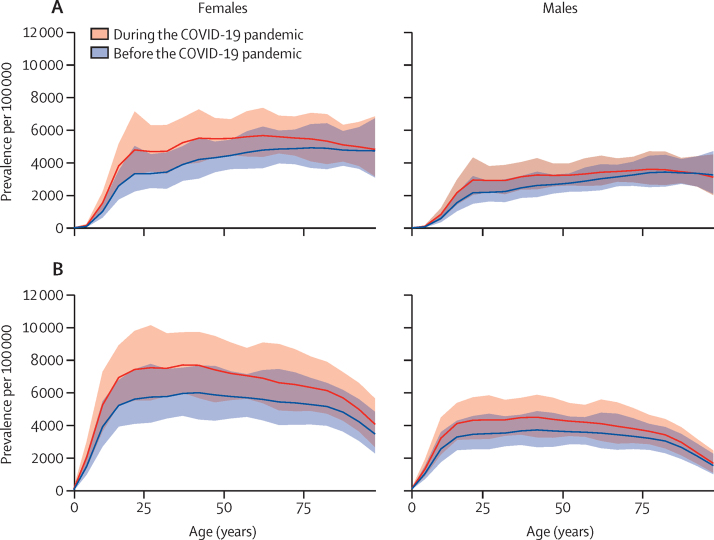
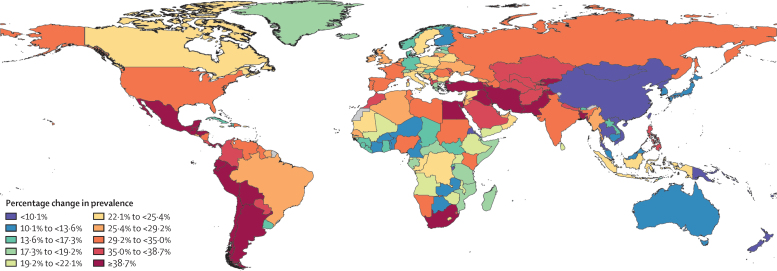
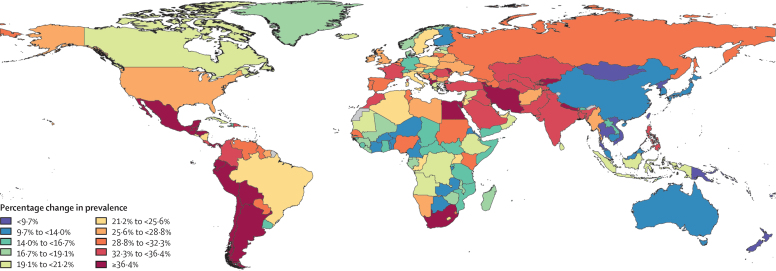
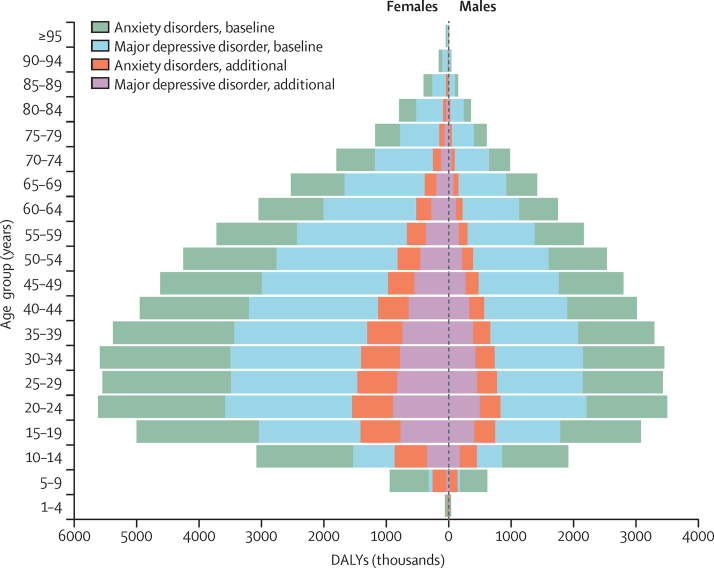
Verification
Claims the paper makes
7 Valid · 1 Not valid · 4 Not checked · 13 Own results and interpretations
The cited sources support only part of this claim — read each source’s verdict below.
In the paper
“The Global Burden of Diseases, Injuries, and Risk Factors Study (GBD) 2019 showed that the two most disabling mental disorders were depressive and anxiety disorders, both ranked among the top 25 leading causes of burden worldwide in 2019.1, 2”
§ Global prevalence and burden of depressive and anxiety disorders in 204 countries and territories in 2020 due to the COVID-19 pandemic > Introduction
What the sources say
- Partly supportedcites [1] GBD 2019 Disease and Injuries Collaborators Global burden of 369 diseases and injuries in 204 countries and territories, 1990–2019: a systematic analysis for the Global Burden of Disease Study 2019 Lancet 396 2020 1204 1222 33069326 PMC7567026 sourceExperimental — accuracy not yet measured
The Results (Global trends; page unavailable) place depressive and anxiety disorders among the top ten causes of DALYs globally for ages 10–24 in 2019, and the Discussion (Main findings; page unavailable) describes mental disorders as major contributors to disability. These passages do not establish that depression and anxiety were the two most disabling mental disorders or that both ranked among the top 25 causes of burden worldwide across all ages. (LLM, conf=0.84)
- Not matchedcites [2] GBD 2019 Mental Disorders Collaborators. Global, regional, and national burden of mental disorders in 204 countries and territories, 1990–2019: a systematic analysis from the Global Burden of Disease Study 2019. Lancet Psychiatry (in press). PMC8776563 35026139
We searched by its title and found no matching paper.
- Partly supported
Every source the paper cites for this claim was checked and supports it.
In the paper
“We used the Preferred Reporting Items for Systematic Reviews and Meta-Analyses (PRISMA) guidelines;9 our PRISMA checklist is in the appendix (pp 28–31), and the search protocol was registered with the International Prospective Register of Systematic Reviews (PROSPERO, CRD42021216590).”
§ Global prevalence and burden of depressive and anxiety disorders in 204 countries and territories in 2020 due to the COVID-19 pandemic > Methods > Data sources
What the sources say
- Supportedcites [9] Page MJ McKenzie JE Bossuyt PM The PRISMA 2020 statement: an updated guideline for reporting systematic reviews BMJ 372 2021 n71 33782057 PMC8005924 source
The citation is attached to the citing authors’ use of PRISMA guidelines, not to their separate statement about PROSPERO registration. The paper’s Abstract identifies PRISMA 2020 as a guideline for reporting systematic reviews and presents its checklist, so it supports the cited identification. (LLM, conf=0.92)
- Supported
The cited sources support only part of this claim — read each source’s verdict below.
In the paper
“The estimation of human mobility, daily SARS-CoV-2 infection rate, and daily excess mortality rate was done by the Institute for Health Metrics and Evaluation (IHME) COVID-19 Forecasting Team and is described in detail elsewhere.13”
§ Global prevalence and burden of depressive and anxiety disorders in 204 countries and territories in 2020 due to the COVID-19 pandemic > Methods > Data sources
What the sources say
- Partly supportedcites [13] Institute for Health Metrics and Evaluation COVID-19 Forecasting Team Modeling COVID-19 scenarios for the United States Nat Med 27 2021 94 105 33097835 PMC7806509 sourceExperimental — accuracy not yet measured
The Data identification and processing section describes a mobility covariate and estimates of total infections by day and state; the Deterministic modeling framework also describes estimated daily infections and deaths. The paper reports daily COVID-19 death rates, however, not daily excess mortality rates, so that part of the attribution is unsupported. (LLM, conf=0.87)
- Partly supported
The cited sources support only part of this claim — read each source’s verdict below.
In the paper
“Both major depressive disorder and anxiety disorders increase the risk of other diseases and suicide.28, 29”
§ Global prevalence and burden of depressive and anxiety disorders in 204 countries and territories in 2020 due to the COVID-19 pandemic > Discussion
What the sources say
- Not checked — no full text of the sourcecites [28] Clarke DM Currie KC Depression, anxiety and their relationship with chronic diseases: a review of the epidemiology, risk and treatment evidence Med J Aust 190 2009 S54 S60 19351294 source
- Partly supportedcites [29] Moitra M Santomauro D Degenhardt L Estimating the risk of suicide associated with mental disorders: a systematic review and meta-regression analysis J Psychiatr Res 137 2021 242 249 33714076 PMC8095367 sourceExperimental — accuracy not yet measured
The Discussion reports that major depressive disorder and anxiety disorders were significantly associated with suicide risk. It also says the analysis was confined to suicide deaths; it does not support the claim that these disorders increase the risk of other diseases. Page numbers were not provided in our copy. (LLM, conf=0.90)
The sources with a verdict support this claim; the rest weren’t checked yet, have no full text we could read, or their verdicts aren’t rated yet.
In the paper
“Women are more likely to be financially disadvantaged during the pandemic due to lower salaries, less savings, and less secure employment than their male counterparts.17, 18, 19”
§ Global prevalence and burden of depressive and anxiety disorders in 204 countries and territories in 2020 due to the COVID-19 pandemic > Discussion
What the sources say
- Not matchedcites [17] UN Policy brief: the impact of COVID-19 on women April 9, 2020 United Nations
Its entry has no title and year that we can search by.
- Not checked — no full text of the sourcecites [18] Wenham C Smith J Davies SE Women are most affected by pandemics - lessons from past outbreaks Nature 583 2020 194 198 32641809 source
- Supportedcites [19] Burki T The indirect impact of COVID-19 on women Lancet Infect Dis 20 2020 904 905 32738239 PMC7836874 source
The passage labelled Abstract states that women earn and save less, hold less secure jobs, and have less capacity than men to absorb economic shocks. It directly supports the claim about greater financial disadvantage during the pandemic. (LLM, conf=0.94)
- Not matched
20 more claims · 3 with their cited sources checked
Create a free account to see all 25 claims and to verify the 1 reference still open.
Claims other papers make about this one
Each is checked against this paper’s own text: does it say what the citing paper says it does?
The source backs part of the claim, not all of it — or backs it for a different population, condition or comparison.
In the citing paper
“The urgency to bridge this gap is further intensified by rising neurological and psychiatric disorders, climate-related stressors and the lingering effects of COVID-19, which disproportionately impact lower-resource environments27,28.”
From Resilience and brain health in global populations (2025) · cites this paper as [27]
Experimental — accuracy not yet measuredThe source backs part of the claim, not all of it — or backs it for a different population, condition or comparison.
In the citing paper
“GBD 2023 incorporated the effects of the COVID-19 pandemic on anxiety disorders and major depressive disorder, which exacerbated the mental health of many around the world, especially women and young people, through loss of employment, increased carer responsibilities, social restrictions, gender-based violence, and disruption to education.7”
From Updated trends in the global prevalence and burden of mental disorders, 1990–2023: a systematic analysis for the Global Burden of Disease Study 2023 (2026) · cites this paper as [7]
Experimental — accuracy not yet measuredThe source backs part of the claim, not all of it — or backs it for a different population, condition or comparison.
In the citing paper
“The non-communicable disease burden was distributed widely across the world's populations, irrespective of age, sex, or socioeconomic circumstance”
From Global incidence, prevalence, years lived with disability (YLDs), disability-adjusted life-years (DALYs), and healthy life expectancy (HALE) for 371 diseases and injuries in 204 countries and territories and 811 subnational locations, 1990–2021: a systematic analysis for the Global Burden of Disease Study 2021 (2024) · cites this paper as [16]
Experimental — accuracy not yet measuredThe source backs part of the claim, not all of it — or backs it for a different population, condition or comparison.
In the citing paper
“The efficacy and cost-effectiveness of treatment options for depressive disorders across low-income, middle-income, and high-income settings have been established by existing research.16”
From Global incidence, prevalence, years lived with disability (YLDs), disability-adjusted life-years (DALYs), and healthy life expectancy (HALE) for 371 diseases and injuries in 204 countries and territories and 811 subnational locations, 1990–2021: a systematic analysis for the Global Burden of Disease Study 2021 (2024) · cites this paper as [16]
Experimental — accuracy not yet measuredThe source backs part of the claim, not all of it — or backs it for a different population, condition or comparison.
In the citing paper
“Additionally, many mental disorders are prevalent during childhood or early adulthood, when other risk factors such as bullying victimisation and childhood maltreatment can occur.16, 42”
From Global incidence, prevalence, years lived with disability (YLDs), disability-adjusted life-years (DALYs), and healthy life expectancy (HALE) for 371 diseases and injuries in 204 countries and territories and 811 subnational locations, 1990–2021: a systematic analysis for the Global Burden of Disease Study 2021 (2024) · cites this paper as [16]
Experimental — accuracy not yet measured
12 more claims about this paper
Create a free account to see every claim other papers make about this one.
Self-check
Percentages, sums and reported differences re-computed from the paper’s own numbers.
Self-check results appear here once an independent check has confirmed them.
Cited works that were retracted
Works this paper cites that were later retracted, from the retraction notices publishers deposit. Major when the notice came out before this paper was published.
A note, not an issue: for example, a cited work that was retracted only after this paper was published, which its authors could not have known.
In the paper
“Emerging evidence suggests people with post-acute sequelae of COVID-19 (sometimes known as long COVID) might develop depressive and anxiety disorder symptoms, 37,38 and so prevalence of long COVID might be a potential indicator in future work.”
Cited work 10.1016/s0140-6736(20)32656-8 · retracted 2023-06-09 · notice 10.1016/s0140-6736(23)01175-3 · this paper published 2021-11
A note, not an issue: for example, a cited work that was retracted only after this paper was published, which its authors could not have known.
In the paper
“39,40 The study that did not report an increased prevalence was conducted in one specific city in Norway (Trondheim) using very small cross-sectional samples.”
Cited work 10.1017/s2045796021000408 · retracted 2023-03-13 · notice 10.1017/s2045796023000082 · this paper published 2021-11
Citations
Cites
2 retracted
RETRACTED: 6-month consequences of COVID-19 in patients discharged from hospital: a cohort study
Huang, C., Huang, L., Wang, Y., Li, X., Ren, L., Gu, X., Kang, L., Guo, L., Liu, M., Zhou, X., et al. (2021) · The Lancet · doi:10.1016/s0140-6736(20)32656-8 · Cited by 4,084 · cited 1×
“Emerging evidence suggests people with post-acute sequelae of COVID-19 (sometimes known as long COVID) might develop depressive and anxiety disorder symptoms, 37,38 and so prevalence of long COVID might be a potential indicator in future work.”
RetractedAyuso-Mateos, J. L., Morillo, D., Haro, J. M., Olaya, B., Lara, E., & Miret, M. (2021) · Epidemiology and Psychiatric Sciences · doi:10.1017/s2045796021000408 · Cited by 53 · cited 1×
“39,40 The study that did not report an increased prevalence was conducted in one specific city in Norway (Trondheim) using very small cross-sectional samples.”
RetractedThe PRISMA 2020 statement: An updated guideline for reporting systematic reviews
Page, M. J., McKenzie, J. E., Bossuyt, P. M., Boutron, I., Hoffmann, T. C., Mulrow, C. D., Shamseer, L., Tetzlaff, J. M., Akl, E. A., Brennan, S. E., et al. (2021) · BMJ · doi:10.1136/bmj.n71 · Cited by 108,283
Vos, T., Lim, S. S., Abbafati, C., Abbas, K. M., Abbasi, M., Abbasifard, M., Abbasi-Kangevari, M., Abbastabar, H., Abd-Allah, F., Abdelalim, A., et al. (2020) · The Lancet · doi:10.1016/s0140-6736(20)30925-9 · Cited by 19,358
Self-citationThe PRISMA 2020 statement: an updated guideline for reporting systematic reviews
Page, M. J., McKenzie, J., Bossuyt, P., Boutron, I., Hoffmann, T., mulrow, C., Shamseer, L., Tetzlaff, J., Akl, E., Brennan, S. E., et al. (2020) · doi:10.31222/osf.io/v7gm2_v1 · Cited by 8,090
The PRISMA 2020 statement: an updated guideline for reporting systematic reviews
Page, M. J., McKenzie, J., Bossuyt, P., Boutron, I., Hoffmann, T., mulrow, C., Shamseer, L., Tetzlaff, J., Akl, E., Brennan, S. E., et al. (2020) · doi:10.31222/osf.io/v7gm2 · Cited by 5,177
Taquet, M., Geddes, J. R., Husain, M., Luciano, S., & Harrison, P. J. (2021) · The Lancet Psychiatry · doi:10.1016/s2215-0366(21)00084-5 · Cited by 2,189
How mental health care should change as a consequence of the COVID-19 pandemic
Moreno, C., Wykes, T., Galderisi, S., Nordentoft, M., Crossley, N., Jones, N., Cannon, M., Correll, C. U., Byrne, L., Carr, S., et al. (2020) · The Lancet Psychiatry · doi:10.1016/s2215-0366(20)30307-2 · Cited by 1,840 · cited 3×
“36 They should consider public health messaging about the mental health impacts of COVID-19, how individuals can best manage their mental health, and well defined pathways to assessment and service access.”
Guidelines for accurate and transparent health estimates reporting: the GATHER statement
Stevens, G. A., Alkema, L., Black, R. E., Boerma, J. T., Collins, G. S., Ezzati, M., Grove, J. T., Hogan, D. R., Hogan, M. C., Horton, R., et al. (2016) · The Lancet · doi:10.1016/s0140-6736(16)30388-9 · Cited by 1,798
Self-citation
Research works printed but not linked: 1
- Flaxman AD Vos T Murray CJL An integrative metaregression framework for descriptive epidemiology 1st edn. 2015 University of Washington Press Seattle, WA
Cited by
Items 5,201–5,300 of 5,424
Tian, R., Huang, Y., Chen, M., Lai, S., Liang, H., Huang, X., Lin, L., Wen, J., Jun, L., & Deng, L. (2026) · Research Square · doi:10.21203/rs.3.rs-8930822/v1
Kurotori, I., Kawaguchi, K., Sunohara, S., Kondo, K., & Tamakoshi, A. (2026) · Death Studies · doi:10.1080/07481187.2026.2690127
Pardini, M., Frumento, S., Martini, M., Alaimo, M., Rho, G., Paparo, N., Cimino, M. G. C. A., Scilingo, E. P., Menicucci, D., Chessa, M., et al. (2026) · IEEE Transactions on Affective Computing · doi:10.1109/taffc.2026.3706297
“Its prevalence has increased in recent years [2], yet its assessment still relies mainly on subjective measures such as clinical interviews and self-reported questionnaires.”
Ortiz, B. O. M., Medinilla-Orozco, S., Dueñas, L. L., Ramírez-Emiliano, J., & Lemus, V. H. B. (2026) · Research Square · doi:10.21203/rs.3.rs-9657245/v1
Lv, F., Chen, Y., & Xia, Y. (2026) · Journal of Neuroimmunology · doi:10.1016/j.jneuroim.2026.579010
Trait anxiety drives premature disengagement despite intact opportunity-cost sensitivityPreprint
Mitra, P., Chauhan, G., Platt, M. L., & Ramakrishnan, A. (2026) · bioRxiv (Cold Spring Harbor Laboratory) · doi:10.64898/2026.06.19.733431
“Anxiety and depression are highly prevalent and a major source of global disability [1].”
Depression and rideshare work in Australia
Shannon, B., Almberg, K. S., Bonney, T., Möller, H., Ivers, R. Q., Ryder, C., Koppel, S., Friedman, L. S., & Ehsani, J. (2026) · Transportation Research Part F Traffic Psychology and Behaviour · doi:10.1016/j.trf.2026.103712
Xu, Y., Huang, T., Wang, F., Zhou, N., Huang, X., Wu, C., Fei, Y., Li, N., Huang, R., Shao, Y., et al. (2026) · BMC Psychiatry · doi:10.1186/s12888-026-08327-z
“The incidence of MDD is approximately twofold higher in women than in men, which may be ascribed to a combination of psychosocial stressors, financial strain, and excessive societal role expectations imposed on women [21].”
Argaw, M. M., Jingili, N., Oyelere, S. S., & Nyström, M. B. T. (2026) · JMIR XR and spatial computing. · doi:10.2196/66713
Wang, C., Zhang, C. H. I., Li, Z., Liu, C., Zhang, C. H. I., Qi, M., Zhao, Z., Pang, T., Gao, Z., Zhang, X., et al. (2026) · Journal of Affective Disorders · doi:10.1016/j.jad.2026.122158 · Cited by 1
Generalised anxiety disorder (GAD-7) in Ukrainian sample during wartime
Алексіна, Н., Shyroka, A., Герасименко, О., Lavrynenko, D., Savchenko, O., Blanch, À., & Malas, O. (2026) · Social Psychiatry and Psychiatric Epidemiology · doi:10.1007/s00127-026-03155-8
Kenbubpha, K., Polrak, A., Tongyonk, C., Pathike, W., & Juengsiragulwit, D. (2026) · Journal of Technology in Behavioral Science · doi:10.1007/s41347-026-00668-6
Hasan, F., Haque, F., Zúñiga, R. A. A., Aly, N. M., & Foláyan, M. O. (2026) · Frontiers in Psychiatry · doi:10.3389/fpsyt.2026.1726108
Yarrington, J. S., Merikangas, K. R., Burstein, M., & Schmitz, A. (2026) · Elsevier eBooks · doi:10.1016/b978-0-443-45863-7.00091-3
Kandasamy, G., Orayj, K. M., Asiri, R., Alanazi, T. S., Reddy, L. K. V., Alshahrani, A. M., Alahmari, A. M., Alahmari, S. M., Vasudevan, R., Khaled, A., et al. (2026) · Medicine · doi:10.1097/md.0000000000049457
de Lange, I. G. S., Albers, M. R. C., Scheepstra, K. W. F., Bockting, C., & Aben, L. (2026) · JMIR Research Protocols · doi:10.2196/101839
Solak, K., & Yorulmaz, F. (2026) · Türk Psikolojik Danışma ve Rehberlik Dergisi · doi:10.17066/tpdrd.1658125
Correa, A. B., Bisby, M. A., Scott, A. J., & Dear, B. F. (2026) · Cognitive Behaviour Therapy · doi:10.1080/16506073.2026.2689747
Silva, C., Alves, E., Schneider, B. C., Sampaio, F., Morgado, B., Santos, B. M., Correia, T., Coelho, J. C. F., Tomaz, M. L., Ferreira, R., et al. (2026) · Cognitive Therapy and Research · doi:10.1007/s10608-026-10767-6 · Cited by 1
Wetchasat, N. (2026) · Thai Journal of Obstetrics and Gynaecology · doi:10.66650/tjog.v34i4.278007
Differential burden of five major mental disorders in the United States across the COVID-19 pandemic
Jin, Z. (2026) · European Archives of Psychiatry and Clinical Neuroscience · doi:10.1007/s00406-026-02308-9
Areas, M., Flückiger, C., & Penedo, J. M. G. (2026) · Research in Psychotherapy Psychopathology Process and Outcome · doi:10.4081/ripppo.2026.894
“…disorders worldwide (GBD 2019 Diseases and Injuries Collaborators, 2020), especially after the impacts of the COVID-19 pandemic ( e.g. , COVID-19 Mental Disorders Collaborators, 2021; Schafer et al. , 2022), more resources to improve anxiety prevention, treatment, and rehabilitation are paramount.”
Sun, J., Lyu, Y., Huang, M., Du, C., Chen, J., Lu, J., Li, G., Wang, Z., Kong, F., Li, Y., et al. (2026) · International Immunopharmacology · doi:10.1016/j.intimp.2026.117098
Hogg, B., Coppens, E., Gatto, D. L., Gil, C. D. C., Ayuso‐Mateos, J. L., Bakiu, K., Callanan, A., Pashoja, A. C., da Conceição, V., Dandi, Ε., et al. (2026) · PLoS ONE · doi:10.1371/journal.pone.0352598
Incidence of long-term sickness absence in Japan following the COVID-19 pandemic
Inoue, Y., Kochi, T., Gommori, N., Miyamoto, T., Yamamoto, M., Okazaki, H., Ide, H., Nakagawa, T., Honda, T., Yamamoto, S., et al. (2026) · Occupational Medicine · doi:10.1093/occmed/kqag062
Validation of the Arabic coronavirus anxiety scale among mothers of infants in Saudi Arabia
Kattan, W. E., Barkin, J. L., Almutari, M., Khoja, L., Abdelmoaty, M., Alghamdi, K. M., & Alfakeh, S. A. (2026) · Maternal Health Neonatology and Perinatology · doi:10.1186/s40748-026-00266-7
“WHO in 2021 projected a 25.0% hike in occurrence of depression or anxiety disorders, highlighting the mental health burden caused by pandemic [11].”
InfluentialFernandes, C. Y. P., Gonçalves, C. M., Neves, L. M., Reimberg, T., Colombo‐Souza, P., Armond, J. D. E., Formiga, N. P. F., & Gil, S. D. S. (2026) · Frontiers in Psychiatry · doi:10.3389/fpsyt.2026.1849690
Gao, Y., Zhang, J., Ma, J., & Lyu, Z. (2026) · Frontiers in Psychiatry · doi:10.3389/fpsyt.2026.1871522
Khan, Z. H. (2025) · Journal of Basic & Clinical Medical Sciences · doi:10.58398/0002.000029
Carmassi, C., Correll, C. U., de Diego-Adeliño, J., Vian-Lains, A., Oliveira, C., Schneider-Pérez, A., & Sharma, V. M. (2026) · Clinical Drug Investigation · doi:10.1007/s40261-026-01576-6
Kao, S., Metaxa, A.-M., & Soliman, R. (2026) · Journal of Medical Internet Research · doi:10.2196/85494
Vásquez, M. R. S., Alvarado-García, P. A. A., Jara-Aguilar, R., Gavídia-Valencia, J. G., Ruiz-Reyes, S. G., & Penadillos, R. A. R. (2026) · Molecules · doi:10.3390/molecules31132378
“Mental disorders are a major and growing public health challenge worldwide, with anxiety and depression representing the most prevalent and disabling conditions [1].”
Zeng, J., Zhou, L., Liao, L., Wu, D., Yang, R., Zhang, C., Bai, Z., Fan, X., Zhou, X., Zhang, C., et al. (2026) · Psychopharmacology · doi:10.1007/s00213-026-07127-3
Schmidt, A., Thompson, E. J., Richards, M., Strauss, C., Grey, N., & Gaysina, D. (2026) · Psychological Medicine · doi:10.1017/s0033291726104930
Pugh, D., Saunders, R., Jones, A., Dunn, B. D., Suh, J. W., Stott, J. C. H., Wheatley, J., Pilling, S., & Buckman, J. E. J. (2026) · Psychological Medicine · doi:10.1017/s0033291726104875
“Major depressive disorder is one of the leading causes of disability worldwide and prevalence appears to have increased substantially since the COVID-19 pandemic (Santomauro et al., 2021).”
Li, R., Huo, J., Ping, J., Wan, J., Ren, X., Zhu, S., Luo, A., & Jiang, T. (2026) · ALPHA PSYCHIATRY · doi:10.31083/ap48228 · Cited by 1
Engaging in life as a potential key transdiagnostic mechanism in emotional disorders
Chen, D., Zhang, Y., Wang, X., Hofmann, S. G., & Liu, X. (2026) · Journal of Contextual Behavioral Science · doi:10.1016/j.jcbs.2026.101020
Cognitive performance modulates regional brain age differences in clinical anxiety and depression
Vega, O. M., Imms, P. E., Chaudhari, N. N., Mack, W. J., Chowdhury, N. F., & Irimia, A. (2026) · Journal of Affective Disorders · doi:10.1016/j.jad.2026.122237 · Cited by 1
Merellano-Navarro, E., Loyola-Arriagada, P., Morán-Toloza, A., Bruneau-Chávez, J., Giakoni-Ramírez, F., Gajardo-Herrera, D., Pena-Rojas, J., & Godoy-Cumillaf, A. E. R. (2026) · Frontiers in Public Health · doi:10.3389/fpubh.2026.1833793
Zainal, N. H. (2024) · OSF Preprints (OSF Preprints)
Natural Language Processing Applied to Psychiatric Clinical Notes: Scoping Review
Rao, S., Chen, X. R., Deng, G., Xie, J., Jiang, T., Li, T., Zhang, Y., & Jiang, H. (2026) · JMIR Medical Informatics · doi:10.2196/91249 · Cited by 2
“All kinds of mental illness negatively affect an individual’s physical health and well-being, and the COVID-19 epidemic has further exacerbated this problem [2].”
Khan, M. A., Amiri, S., Yaghoobi, A., & Fini, F. N. (2026) · Medicine · doi:10.1097/md.0000000000049665
“[14]”
Nawaz, S., Bee, P., & Faija, C. (2026) · BMC Psychiatry · doi:10.1186/s12888-026-08135-5
“Anxiety and depression are among the most common mental health disorders worldwide [1], affecting over 500 million people [2].”
Mental Health, Mental Illness and Happiness: A Yogic Perspective in Light of Patanjali Yoga Sutras
Karmakar, M. (2026) · Studies in Rhythm Engineering · doi:10.1007/978-3-032-19974-4_7
Guan, J., Wen, F., Deng, J., & Lian, K. (2026) · European Archives of Psychiatry and Clinical Neuroscience · doi:10.1007/s00406-026-02322-x · Cited by 1
MediMate AI Health Companion with Memory-Driven Personalization
Saran, G., Vinita, L. J., & Sankari, M. (2026) · International Conference on Next Generation Electronics (NELEX) · doi:10.1109/nelex69209.2026.11590458
Tang, B., Jin, L., Hu, H., Lv, Q., Yi, Z., Ji, Y., & Yi, Q. (2026) · PLOS mental health. · doi:10.1371/journal.pmen.0000544
Natural killer cells against viral infection: from basic biology to immunotherapy
Zhang, Z., Wang, F., Liu, R., Tian, L., Cai, L., & Deng, Y. (2026) · Precision Clinical Medicine · doi:10.1093/pcmedi/pbag020 · Cited by 1
Shi, Y., Zhuang, L., Gao, Z., Lv, R., & Lipowski, M. (2026) · Frontiers in Psychology · doi:10.3389/fpsyg.2026.1852448
“During the first year of the COVID-19 pandemic, pooled prevalence of clinically elevated anxiety symptoms in youth was about 20.5% (Racine et al., 2021), and global modelling estimated a substantial pandemic-associated increase in anxiety burden across countries (Santomauro et al., 2021).”
InfluentialSleep quality and nocturnal pain in patients with elbow disorders: a prospective multicenter study
Schneider, M. M., Nietschke, R., Migliorini, F., Schoch, C., Burkhart, K. J., Hollinger, B., Kimmeyer, M., Lehmann, L., & Zimmerer, A. (2026) · Journal of Orthopaedics and Traumatology · doi:10.1186/s10195-026-00950-6
“Mental health disorders have become a significant global health concern, with a rising incidence in recent years owing to the COVID pandemic, among other reasons [1, 2].”
Delattre, B., Buckman, J. E. J., Harmer, C. J., & Murphy, S. E. (2026) · Psychological Medicine · doi:10.1017/s0033291726104991
Morrill, K. E., Meernik, C., Lacy, R., Hucek, F. A., Leiferman, J. A., Heiney, S. P., & Risendal, B. (2026) · Journal of Health Psychology · doi:10.1177/13591053261455754
Arıkan, G., Acar, İ. H., & Ustundag-Budak, A. M. (2026) · Current Psychology · doi:10.1007/s12144-026-09759-2
“Hence, a rise in prevalence rates of depression in adolescents and young adults is documented both in pre-and post-COVID-19 (Mojtabai et al., 2016; Santomauro et al., 2021).”
Alghamdi, R., Ajeel, A. A., Aljahdali, N. B., Aldoweesh, O. H., Almutairi, A. G., Aljabr, S. A., Alsaeedi, F. I., AlMehaimeed, M. A., Alawami, S. A., Alfehaid, O. S., et al. (2026) · Asian Journal of Psychiatry · doi:10.1016/j.ajp.2026.105094
Gao, M., Yin, H., GAO, C., & Wang, H. (2026) · Medicine · doi:10.1097/md.0000000000049804
Applications to sustainable development goals
Bozkurt, F. (2026) · Elsevier eBooks · doi:10.1016/b978-0-443-45296-3.00010-4
Commemorative Shifts and Transformations to Día de Muertos in Mexico (2020–21)
Lavery, J. E., & Finnegan, N. (2026) · Springer eBooks · doi:10.1007/978-3-031-91042-5_2
Aymerich, C., Peycheva, A., Harmanto, D., Young, A. H., Danese, A., Kandola, A. A., Bockting, C., Cuijpers, P. J., & Breedvelt, J. (2026) · Journal of Affective Disorders · doi:10.1016/j.jad.2026.122289
Calaveras Pandémicas: A Decolonial Archive of Pandemic Poetry
Lavery, J. E., & Finnegan, N. (2026) · Springer eBooks · doi:10.1007/978-3-031-91042-5_6
Wang, Y., Han, J., Yukun, M. E. I., Lin, S., Gong, G., Zheng, F., He, S., & Sun, J. (2026) · Frontiers in Psychology · doi:10.3389/fpsyg.2026.1740018
“…is one of the most prevalent mental health disorders worldwide, with the global prevalence increasing by 23.2–28.0% after the COVID-19 pandemic (Santomauro et al., 2021), and accumulating evidence suggests that elevated anxiety levels have persisted into the post-pandemic period (Aknin et al.,…”
InfluentialAssumpção, F., Oltramari, G., de França, G. H. B., Dias, N. M., & Lopes, F. M. (2026) · Psychiatry International · doi:10.3390/psychiatryint7040162
“This burden was further exacerbated by the COVID-19 pandemic, as global prevalence rates of anxiety and depression increased markedly during its first year [2], with estimates suggesting a rise of approximately 25% [3].”
He, Y., Liu, L., Song, W., Li, Y., Gao, Y., Zhu, W., Mai, R., Tan, F., Xu, F., & Yang, Z. (2026) · PLoS ONE · doi:10.1371/journal.pone.0352932
Insomnia beyond emotion regulation in adolescent anxiety and depression: A severity-based analysis
Sánchez-Moreno, V., Cavas, M., & Rey, L. (2026) · Journal of Psychiatric Research · doi:10.1016/j.jpsychires.2026.07.019
Dalibayeva, G., Горемыкина, М. В., Kozhakhmetov, S., Kushugulova, A. R., Kossumov, A., Kalmakhanov, S. B., & Doszhan, A. (2026) · Epidemiologia · doi:10.3390/epidemiologia7040104
“Depression represents a major contributor to disability and healthcare burden worldwide [1,2], while the gut microbiome represents a potentially modifiable biological system influenced by diet, lifestyle, environmental exposures, and medication use [5–8].”
InfluentialPurgato, M., Prina, E., Cadorin, C., Tedeschi, F., Albanese, E., Abdulmalik, J. O., Bano, B., Betancourt, T. S., Jordans, M. J. D., Lund, C., et al. (2026) · Clinical Psychology Review · doi:10.1016/j.cpr.2026.102785 · Cited by 1
Spirituality as a coping resource: Towards integration into mental health framework
Nepali, S. (2026) · PLOS mental health. · doi:10.1371/journal.pmen.0000667
Mental health and gut-brain crosstalk: implications for depression and Alzheimer's disease
Skourti, K., Katsaitis, F., Pavlidi, P., Anesti, M., Balla, J., Emvalomatis, A., Kokras, N., Dalla, C., & Sotiropoulos, I. (2026) · Neuroscience Applied · doi:10.1016/j.nsa.2026.107023
Development of community psychological first aid guideline in Vietnam
Tran, L. T. K., Ha, D. T., Son, H. T., Hiep, N. T., Phuong, H. T., & Toan, P. M. (2026) · Discover Public Health · doi:10.1186/s12982-026-02636-0 · Cited by 1
Phuttarattanamanee, P., Chantapan, P., Pengnaren, S., & Phosri, A. (2026) · Atmospheric Pollution Research · doi:10.1016/j.apr.2026.103156
Lee, T., Choi, K., & Lee, H. (2026) · Applied Sciences · doi:10.3390/app16157457
Chiappini, S., Ricci, V., Carlo, F. D., Mosca, A., Paolo, M. D., Cavallotto, C., Semeraro, F. M., Fraccalini, T., Longo, A., Pettorruso, M., et al. (2026) · International Journal of Social Psychiatry · doi:10.1177/00207640261470091
Lebrat, M., Carrouel, F., de Vigneulles, B. D. S., Lamure, M. P., Salque, C., Salamon, R., Massoubre, C., Nicolas Franck, B., & Dussart, C. (2026) · JMIR Public Health and Surveillance · doi:10.2196/93207
Outbreak preparedness for women and girls in low- and middle-income countries: a qualitative study
Sarraf, D., Meinhart, M., Seff, I., Poulton, C., Karmin, S., Heckman, C., & Stark, L. (2026) · BMC Global and Public Health · doi:10.1186/s44263-026-00305-7
Boskova, K., Anders, M., & Vňuková, M. (2026) · Research Square · doi:10.21203/rs.3.rs-9277393/v1
THE IMPACT OF INTRANASAL ESKETAMINE ON TREATMENT-RESISTANT DEPRESSION: A SYSTEMATIC REVIEW
Kotlarski, W., Kotlarska, K. M., Mainka, T. S., & Sergejuk, E. (2026) · International Journal of Innovative Technologies in Social Science · doi:10.31435/ijitss.2(50).2026.5523
Romero-Olóriz, C., Hidalgo, E. L., Soria, M. V. V., & Guerrero-Díaz, M. (2026) · Social Psychiatry and Psychiatric Epidemiology · doi:10.1007/s00127-026-03177-2
Sanan, M., Yao, S., Wareesawetsuwan, N., Zhang, P., & Song, X. (2026) · World Journal of Psychiatry · doi:10.5498/wjp.v16.i8.118042
Chen, Q., Guo, Z., Zhu, D., Wang, F., Sun, C., Li, R., Yin, D., Li, C., Xia, B., Li, W., et al. (2026) · Nutrients · doi:10.3390/nu18152468 · Cited by 1
“The 2020 COVID‑19 pandemic further aggravated this problem, with a marked global increase in MDD cases [2].”
Ma, Y., Guan, Q., Ji, J., Chen, Z., Ji, Q., Ren, G., Sun, M., Lin, X., & Zhou, H. (2026) · British Journal of Hospital Medicine · doi:10.31083/bjhm56188
Hosseini, F. A., Bahman, K., Shaygan, M., & Yektatalab, S. (2026) · PLoS ONE · doi:10.1371/journal.pone.0354610
Revisiting the Unani Concept of Hawā-e-Muheet through the Lens of Modern Ecotherapy
Ansari, A. S., Ansari, T. H., Ahmed, M. A. S., et al. (2026) · International Journal of Research and Review · doi:10.52403/ijrr.20260753
Over Three Decades of Mental Health in Sub‐Saharan Africa: An Analysis of GBD Data From 1990 to 2023
Njei, B. M., Al‐Ajlouni, Y. A., Lemos, S. Y., Motaze, N. V., Cleenewerck, L., Bain, L. E., & Saidu, Y. (2026) · Global Health · doi:10.1155/ghe3/5570226
Li, Y., Liu, R., Guo, Y., & Xu, Z. (2026) · Journal of Affective Disorders · doi:10.1016/j.jad.2026.122335 · Cited by 1
Sex differences in the association between depressive symptoms and psoriasis
Wen, X., Deng, Q., Cao, Y., & Tang, H. (2026) · Medicine · doi:10.1097/md.0000000000050036
The Cruel Fantasy of Non-relationality: Depressed Society in an Isolation Tank
Szafranowska, K. (2026) · Springer eBooks · doi:10.1007/978-3-032-21400-3_8
Takamatsu, N., Oba, M. S., Moriyama, Y., Matsunaga, N., Morioka, S., Chiba, H., Matsumoto, J., Kimura, H., Murayama, K., Umemoto, I., et al. (2026) · General Hospital Psychiatry · doi:10.1016/j.genhosppsych.2026.08.001
Machine learning-based depression screening model from pre-drawn structured mandala colorings
Park, S.-R., Kim, J., Jeon, U., Park, C., Lee, S.-S., Han, J., & Cha, Y.-J. (2026) · Current Psychology · doi:10.1007/s12144-026-09822-y
Liu, S., Huang, Y., Deng, W., Shu, Z., & Li, L. (2026) · Research Square · doi:10.21203/rs.3.rs-10431441/v1
Maiese, K. (2026) · Medical Gas Research · doi:10.4103/mgr.medgasres-d-26-00073 · Cited by 4
Kong, D., Zhong, J., Li, C., Wang, W., Yang, H., Liu, Z., Yang, T., Cheng, X., Jiang, G., & Luo, J. (2026) · Frontiers in Public Health · doi:10.3389/fpubh.2026.1895974
“The Global Burden of Disease Study showed that approximately 970 million people worldwide were living with mental disorders in 2019, with anxiety disorders and depressive disorders being the most common types (2, 3).”
Torales, J. C., Filho, L. C. R., Estigarribia, G., Barrios, I., O’Higgins, M. G., Ventriglio, A., & Castaldelli-Maia, J. M. (2026) · Frontiers in Public Health · doi:10.3389/fpubh.2026.1930193 · Cited by 1
Lin, Y.-W., Sung, F.-C., Ma, W., Lin, C., & Lin, M.-H. (2026) · Western Journal of Nursing Research · doi:10.1177/01939459261464350
Sung, G. C. Y., Wu, Y., Fan, S., Santo, T. D., González-Domínguez, N. P., Sun, Y., Li, L., Li, K., Jiang, X., Tasleem, A., et al. (2026) · JAMA Network Open · doi:10.1001/jamanetworkopen.2026.27595 · Cited by 2
Waheed, A., Ghaffar, M., Karkaz, I., Gharaibeh, M., Kurbanova, N., Atajanova, A., Xudoyberganov, D., Smerat, A., Waheed, A., & Naz, H. (2026) · Measurement and Evaluation in Counseling and Development · doi:10.1080/07481756.2026.2711216
(2025) · Elsevier eBooks · doi:10.1016/b978-3-437-21144-7.09975-9
Das Post-COVID-Syndrom: wissenschaftlicher Hintergrund
Kupferschmitt, A. A., Köllner, V., Peters, E., Kohl, C., & Etzrodt, F. (2025) · Elsevier eBooks · doi:10.1016/b978-3-437-21144-7.00002-6
Liu, P., Wang, X., Duan, X. R., Situ, M., Tao, Y., Yang, Z., Zhao, S., Li, L., Li, S., Jiang, Y., et al. (2026) · JMIR mhealth and uhealth · doi:10.2196/86134 · Cited by 1
Komorizono, R., Tamaki, R., Fujita, N., Hamada, M., Suzuki, K., Kaneko, S., & Furuse, Y. (2026) · Journal of Global Health · doi:10.7189/jogh.16.04255
High Dose Vitamin B6 Reduces Depression Symptoms
Field, D. T., Cracknell, R., & Biagi, N. (2026) · Depression and Anxiety · doi:10.1155/da/8926512
Vandormael, M., Goossens, L., Cort, K. D., Brouwer, J., van der Velde, T., de Vos, J. H., Schuhmann, T., & Schruers, K. R. J. (2026) · Behaviour Research and Therapy · doi:10.1016/j.brat.2026.105136
Metadata
- Authors
- Santomauro, D. F., Mantilla Herrera, A. M., Shadid, J., Zheng, P., Ashbaugh, C., Pigott, D. M., Abbafati, C., Adolph, C., Amlag, J. O., Aravkin, A. Y., Bang-Jensen, B. L., Bertolacci, G. J., Bloom, S. S., Castellano, R., Castro, E., Chakrabarti, S., Chattopadhyay, J., Cogen, R. M., Collins, J. K., Dai, X., Dangel, W. J., Dapper, C., Deen, A., Erickson, M., Ewald, S. B., Flaxman, A. D., Frostad, J. J., Fullman, N., Giles, J. R., Giref, A. Z., Guo, G., He, J., Helak, M., Hulland, E. N., Idrisov, B., Lindstrom, A., Linebarger, E., Lotufo, P. A., Lozano, R., Magistro, B., Malta, D. C., Månsson, J. C., Marinho, F., Mokdad, A. H., Monasta, L., Naik, P., Nomura, S., O'Halloran, J. K., Ostroff, S. M., Pasovic, M., Penberthy, L., Reiner Jr, R. C., Reinke, G., Ribeiro, A. L. P., Sholokhov, A., Sorensen, R. J. D., Varavikova, E., Vo, A. T., Walcott, R., Watson, S., Wiysonge, C. S., Zigler, B., Hay, S. I., Vos, T., Murray, C. J. L., Whiteford, H. A., & Ferrari, A. J.
- Affiliations
- The University of Queensland (AU)
- Corresponding author
- Santomauro, Damian F
- ORCID
- Santomauro, Damian F
- Shadid, Jamileh
- Pigott, David M
- Abbafati, Cristiana
- Adolph, Christopher
- Aravkin, Aleksandr Y
- Bang-Jensen, Bree L
- Castellano, Rachel
- Chakrabarti, Suman
- Collins, James K
- Dai, Xiaochen
- Ewald, Samuel B
- Flaxman, Abraham D
- Fullman, Nancy
- Giles, John R
- Guo, Gaorui
- He, Jiawei
- Hulland, Erin N
- Idrisov, Bulat
- Lindstrom, Akiaja
- Lotufo, Paulo A
- Lozano, Rafael
- Magistro, Beatrice
- Mokdad, Ali H
- Monasta, Lorenzo
- Naik, Paulami
- Nomura, Shuhei
- Pasovic, Maja
- Reinke, Grace
- Sholokhov, Aleksei
- Sorensen, Reed J D
- Varavikova, Elena
- Vo, Anh Truc
- Walcott, Rebecca
- Wiysonge, Charles Shey
- Hay, Simon I
- Vos, Theo
- Murray, Christopher J L
- Whiteford, Harvey A
- Ferrari, Alize J
- Venue
- The Lancet
- Publisher
- Elsevier BV
- Published
- 2021-11
- Volume
- 398
- Issue
- 10312
- Pages
- 1700-1712
- ISSN
- 0099-5355 (ISSN-L)
- 0140-6736
- PMC
- PMC8500697
- OpenAlex
- W3203310594
- Semantic Scholar
- b3a95f28a5079ceb81f1d1361c0f99356006f136
- Cited by
- 5,444
- References
- 42
- Citations by year
- 2026: 663 · 2025: 1095 · 2024: 1383 · 2023: 1359 · 2022: 901 · 2021: 36
- FWCI
- 122.91
- Type
- journal article
- Language
- en
- Open access
- hybrid
- doi.org
- Licence
- cc-by
- www.elsevier.com/tdm/userlicense/1.0/ (tdm)
- www.elsevier.com/legal/tdmrep-license (tdm)
- creativecommons.org/licenses/by/4.0/ (vor)
- Locations
- The Lancet (publishedVersion, cc-by)
- PubMed Central (publishedVersion, cc-by)
- PubMed (publishedVersion)
- IRIS Research product catalog (Sapienza University of Rome) (submittedVersion, other-oa)
- Funders
- Bill & Melinda Gates Foundation
- Topics
- Social Sciences › Psychology › Clinical Psychology › COVID-19 and Mental Health
- Health Sciences › Medicine › Psychiatry and Mental health › Mental Health Treatment and Access
- Health Sciences › Medicine › Public Health, Environmental and Occupational Health › Maternal Mental Health During Pregnancy and Postpartum
- Keywords
- major depressive disorder, anxiety disorders, COVID-19 pandemic, mental health burden, prevalence, disability-adjusted life years, years lived with disability, SARS-CoV-2 infection rates, human mobility, excess mortality, age and sex differences, global mental health, health system response, mental health professionals, access to mental health care, mental health stigma
- MeSH terms
- Global Burden of Disease, COVID-19, SARS-CoV-2, Anxiety Disorders, Depression, Humans, Surveys and Questionnaires, Global Health, Prevalence, Pandemics
About these checks
Registry, retraction, Cites and statistics results are computed, not judged, with one exception: a printed reference that no index lists is read once by a model before it counts as a citation error. Claims are extracted by a model and kept only when their quote appears verbatim in the text; each cited source is then checked, with a model’s help, for whether it says what the claim relies on. Those verdicts can be wrong — read the claim’s quote and the cited source before relying on one.
The claim verdicts this report counts are experimental: their accuracy is not yet measured.
A language model drew the claims from the paper on 2026-09-27 (prompt extract-v2).
Cited sources are checked with a language model’s help (gpt-6-sol).
Statistics and arithmetic are recomputed, not judged.
Confidence bands are shown only for fields calibrated on our annotated test set. None is calibrated yet, so no band is shown.
What counts as a claim ›How we measure confidence ›How we check this ›
Are you an author, or do you see a problem with this page? Request a review
Data sources
Bibliographic data: Semantic Scholar, OpenAlex, Crossref.
Contains information from the Semantic Scholar Academic Graph Datasets, made available under the ODC Attribution License (ODC-BY 1.0).
Semantic Scholar’s data is described in: Kinney, R., et al. (2023). The Semantic Scholar Open Data Platform. arXiv:2301.10140.
