

Two-dose ChAdOx1 nCoV-19 vaccine protection against COVID-19 hospital admissions and deaths over time: a retrospective, population-based cohort study in Scotland and Brazil
Open accessThe DOI matches its Crossref record; 33 of the 33 references it cites were found in a registry or an index.
Abstract
BACKGROUND: Reports suggest that COVID-19 vaccine effectiveness is decreasing, but whether this reflects waning or new SARS-CoV-2 variants-especially delta (B.1.617.2)-is unclear. We investigated the association between time since two doses of ChAdOx1 nCoV-19 vaccine and risk of severe COVID-19 outcomes in Scotland (where delta was dominant), with comparative analyses in Brazil (where delta was uncommon). METHODS: In this retrospective, population-based cohort study in Brazil and Scotland, we linked national databases from the EAVE II study in Scotland; and the COVID-19 Vaccination Campaign, Acute Respiratory Infection Suspected Cases, and Severe Acute Respiratory Infection/Illness datasets in Brazil) for vaccination, laboratory testing, clinical, and mortality data. We defined cohorts of adults (aged ≥18 years) who received two doses of ChAdOx1 nCoV-19 and compared rates of severe COVID-19 outcomes (ie, COVID-19 hospital admission or death) across fortnightly periods, relative to 2-3 weeks after the second dose. Entry to the Scotland cohort started from May 19, 2021, and entry to the Brazil cohort started from Jan 18, 2021. Follow-up in both cohorts was until Oct 25, 2021. Poisson regression was used to estimate rate ratios (RRs) and vaccine effectiveness, with 95% CIs. FINDINGS: 1 972 454 adults received two doses of ChAdOx1 nCoV-19 in Scotland and 42 558 839 in Brazil, with longer follow-up in Scotland because two-dose vaccination began earlier in Scotland than in Brazil. In Scotland, RRs for severe COVID-19 increased to 2·01 (95% CI 1·54-2·62) at 10-11 weeks, 3·01 (2·26-3·99) at 14-15 weeks, and 5·43 (4·00-7·38) at 18-19 weeks after the second dose. The pattern of results was similar in Brazil, with RRs of 2·29 (2·01-2·61) at 10-11 weeks, 3·10 (2·63-3·64) at 14-15 weeks, and 4·71 (3·83-5·78) at 18-19 weeks after the second dose. In Scotland, vaccine effectiveness decreased from 83·7% (95% CI 79·7-87·0) at 2-3 weeks, to 75·9% (72·9-78·6) at 14-15 weeks, and 63·7% (59·6-67·4) at 18-19 weeks after the second dose. In Brazil, vaccine effectiveness decreased from 86·4% (85·4-87·3) at 2-3 weeks, to 59·7% (54·6-64·2) at 14-15 weeks, and 42·2% (32·4-50·6) at 18-19 weeks. INTERPRETATION: We found waning vaccine protection of ChAdOx1 nCoV-19 against COVID-19 hospital admissions and deaths in both Scotland and Brazil, this becoming evident within three months of the second vaccine dose. Consideration needs to be given to providing booster vaccine doses for people who have received ChAdOx1 nCoV-19. FUNDING: UK Research and Innovation (Medical Research Council), Scottish Government, Research and Innovation Industrial Strategy Challenge Fund, Health Data Research UK, Fiocruz, Fazer o Bem Faz Bem Programme; Conselho Nacional de Desenvolvimento Científico e Tecnológico, Fundação Carlos Chagas Filho de Amparo à Pesquisa do Estado do Rio de Janeiro. TRANSLATION: For the Portuguese translation of the abstract see Supplementary Materials section.
Overview
The claims and statistics of this paper haven’t been checked yet.
Free: it reads the open-access text and checks the first 5 claims that cite a source we can check. Create a free account to check every claim.
Integrity signals
Registry
Cites
Statistics
Figures
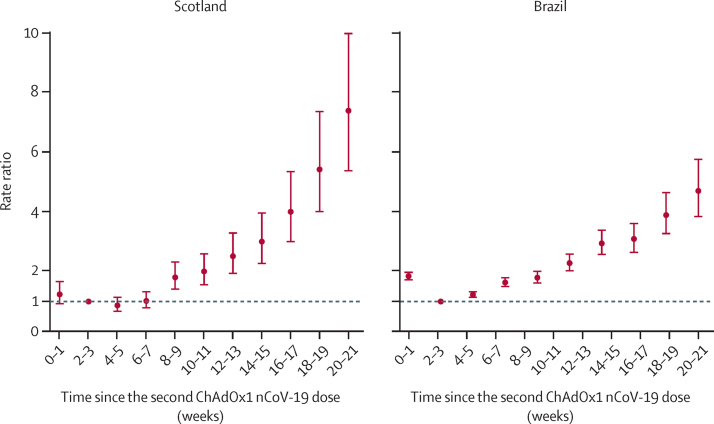
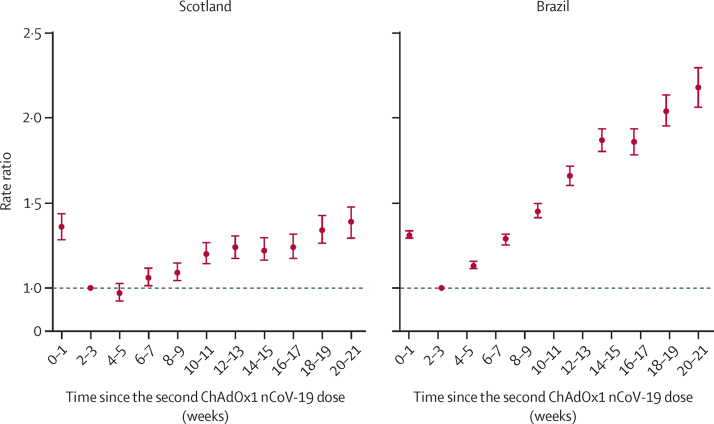
Verification
Claims the paper makes
The claims and statistics of this paper haven’t been checked yet.
Free: it reads the open-access text and checks the first 5 claims that cite a source we can check. Create a free account to check every claim.
Claims other papers make about this one
Each is checked against this paper’s own text: does it say what the citing paper says it does?
The source backs part of the claim, not all of it — or backs it for a different population, condition or comparison.
In the citing paper
“Effectiveness of ChAdOx1 against Delta variant-associated severe disease has been estimated at ≥80% in multiple postlicensure studies63,64, including in India65.”
From Attributed causes of excess mortality during the COVID-19 pandemic in a south Indian city (2023) · cites this paper as [63]
Experimental — accuracy not yet measured
Self-check
Percentages, sums and reported differences re-computed from the paper’s own numbers.
The self-check needs the paper’s full text.
Citations
Cites
von Elm, E., Altman, D. G., Egger, M., Pocock, S. J., Gøtzsche, P. C., & Vandenbroucke, J. P. (2007) · The Lancet · doi:10.1016/s0140-6736(07)61602-x · Cited by 21,320
Safety and Efficacy of the BNT162b2 mRNA Covid-19 Vaccine
Polack, F. P., Thomas, S. J., Kitchin, N., Absalon, J., Gurtman, A., Lockhart, S., Perez, J. L., Pérez Marc, G., Moreira, E. D., Zerbini, C., et al. (2020) · New England Journal of Medicine · doi:10.1056/nejmoa2034577 · Cited by 14,592 · cited 1×
“Randomised trials for ChAdOx1 nCoV-19 have shown short-term effective protection against severe COVID-19 disease; 1,30 however, research on potential vaccine waning has mainly focused on BNT162b2.”
No adjustments are needed for multiple comparisons.
Rothman, K. J. (1990) · Epidemiology · doi:10.1097/00001648-199001000-00010 · Cited by 5,965 · cited 1×
“Fifth, following our prespecified analysis plan and on the basis of published guidance, 41 we did not correct p values for multiple testing.”
Benchimol, E. I., Smeeth, L., Guttmann, A., Harron, K., Moher, D., Petersen, I., Sørensen, H. T., von Elm, E., Langan, S. M., & RECORD Working Committee (2015) · PLOS Medicine · doi:10.1371/journal.pmed.1001885 · Cited by 5,749
Voysey, M., Clemens, S. A. C., Madhi, S. A., Weckx, L. Y., Folegatti, P. M., Aley, P. K., Angus, B., Baillie, V. L., Barnabas, S. L., Bhorat, Q. E., et al. (2021) · The Lancet · doi:10.1016/s0140-6736(20)32661-1 · Cited by 4,616 · cited 1×
“Randomised trials for ChAdOx1 nCoV-19 have shown short-term effective protection against severe COVID-19 disease; 1,30 however, research on potential vaccine waning has mainly focused on BNT162b2.”
Effectiveness of Covid-19 Vaccines against the B.1.617.2 (Delta) Variant
Lopez Bernal, J., Andrews, N., Gower, C., Gallagher, E., Simmons, R., Thelwall, S., Stowe, J., Tessier, E., Groves, N., Dabrera, G., et al. (2021) · New England Journal of Medicine · doi:10.1056/nejmoa2108891 · Cited by 2,889
BNT162b2 mRNA Covid-19 Vaccine in a Nationwide Mass Vaccination Setting
Dagan, N., Barda, N., Kepten, E., Miron, O., Perchik, S., Katz, M. A., Hernán, M. A., Lipsitch, M., Reis, B., & Balicer, R. D. (2021) · New England Journal of Medicine · doi:10.1056/nejmoa2101765 · Cited by 2,527
Folegatti, P. M., Ewer, K. J., Aley, P. K., Angus, B., Becker, S., Belij-Rammerstorfer, S., Bellamy, D., Bibi, S., Bittaye, M., Clutterbuck, E. A., et al. (2020) · The Lancet · doi:10.1016/s0140-6736(20)31604-4 · Cited by 2,419
Reduced sensitivity of SARS-CoV-2 variant Delta to antibody neutralization
Planas, D., Veyer, D., Baidaliuk, A., Staropoli, I., Guivel-Benhassine, F., Rajah, M. M., Planchais, C., Porrot, F., Robillard, N., Puech, J., et al. (2021) · Nature · doi:10.1038/s41586-021-03777-9 · Cited by 1,992
Safety and Efficacy of the BNT162b2 mRNA Covid-19 Vaccine through 6 Months
Thomas, S. J., Moreira, E. D., Kitchin, N., Absalon, J., Gurtman, A., Lockhart, S., Perez, J. L., Pérez Marc, G., Polack, F. P., Zerbini, C., et al. (2021) · New England Journal of Medicine · doi:10.1056/nejmoa2110345 · Cited by 1,640 · cited 2×
“In combination with the emerging immunological and trials data suggesting that vaccine effectiveness declines over time following two-dose vaccination, 12,42 our findings highlight the need to consider providing booster doses.”
Research works printed but not linked: 1
- Skowronski DM Setayeshgar S Zou M Single-dose mRNA vaccine effectiveness against SARS-CoV-2, including alpha and gamma variants: a test-negative design in adults 70 years and older in British Columbia, Canada Clin Infect Dis 2021 published online July 9. 10.1093/cid/cia616 PMC8406884 34244723 · doi:10.1093/cid/cia616
Cited by
Nordström, P., Ballin, M., & Nordström, A. (2022) · The Lancet · doi:10.1016/s0140-6736(22)00089-7 · Cited by 302
Evaluation of Waning of SARS-CoV-2 Vaccine–Induced Immunity: A Systematic Review and Meta-analysis
Menegale, F., Manica, M., Zardini, A., Guzzetta, G., Marziano, V., d'Andrea, V., Trentini, F., Ajelli, M., Poletti, P., & Merler, S. (2023) · JAMA Network Open · doi:10.1001/jamanetworkopen.2023.10650 · Cited by 280
Sheikh, A., Kerr, S., Woolhouse, M., McMenamin, J., Robertson, C., Simpson, C. R., Millington, T., Shi, T., Agrawal, U., Shahul Hameed, S., et al. (2022) · The Lancet Infectious Diseases · doi:10.1016/s1473-3099(22)00141-4 · Cited by 239
Self-citationAgrawal, U., Bedston, S., McCowan, C., Oke, J., Patterson, L., Robertson, C., Akbari, A., Azcoaga-Lorenzo, A., Bradley, D. T., Fagbamigbe, A. F., et al. (2022) · The Lancet · doi:10.1016/s0140-6736(22)01656-7 · Cited by 214
Self-citationCOVID-19 vaccines in patients with cancer: immunogenicity, efficacy and safety
Fendler, A., de Vries, E. G. E., GeurtsvanKessel, C. H., Haanen, J. B., Wörmann, B., Turajlic, S., & von Lilienfeld-Toal, M. (2022) · Nature Reviews Clinical Oncology · doi:10.1038/s41571-022-00610-8 · Cited by 204
Silva, T. C., Andrews, J. R., Boaventura, V. S., Ranzani, O., Oliveira, V. D. A., Paixão, E. S., Bertoldo, J., Machado, T. M., Hitchings, M. D. T., Dorion, M., et al. (2022) · The Lancet Infectious Diseases · doi:10.1016/s1473-3099(22)00140-2 · Cited by 145
Self-citationVaccine effectiveness of heterologous CoronaVac plus BNT162b2 in Brazil
Cerqueira-Silva, T., Katikireddi, S. V., de Araujo Oliveira, V., Flores-Ortiz, R., Júnior, J. B., Paixão, E. S., Robertson, C., Penna, G. O., Werneck, G. L., Barreto, M. L., et al. (2022) · Nature Medicine · doi:10.1038/s41591-022-01701-w · Cited by 121
Self-citationNeutralising antibodies predict protection from severe COVID-19
Cromer, D., Steain, M., Reynaldi, A., Schlub, T. E., Sasson, S. C., Kent, S. J., Khoury, D. S., & Davenport, M. P. (2022) · doi:10.1101/2022.06.09.22275942 · Cited by 139
The end of the COVID‐19 pandemic
Ioannidis, J. P. A. (2022) · European Journal of Clinical Investigation · doi:10.1111/eci.13782 · Cited by 121
Accelerated waning of the humoral response to COVID-19 vaccines in obesity
van der Klaauw, A. A., Horner, E. C., Gerber, P. P., Agrawal, U., Foster, W. S., Spencer, S., Vergese, B., Smith, M., Henning, E., Ramsay, I. D., et al. (2023) · Nature Medicine · doi:10.1038/s41591-023-02343-2 · Cited by 118
Self-citationDurability of Vaccine-Induced and Natural Immunity Against COVID-19: A Narrative Review
Pooley, N., Karim, S. S. A., Combadière, B., Ooi, E. E., Harris, R. C., Guerche‐Séblain, C. E., Kisomi, M., & Shaikh, N. (2023) · Infectious Diseases and Therapy · doi:10.1007/s40121-022-00753-2 · Cited by 109
“most vaccines are still highly efficacious in preventing severe disease, hospitalisation, and death over time [16, 19, 20, 22, 30, 32, 33].”
BackgroundThree-dose vaccination elicits neutralising antibodies against omicron
Wu, M., Wall, E. C., Carr, E. J., Harvey, R., Townsley, H., Mears, H. V., Adams, L., Kjær, S., Kelly, G. P., Warchal, S., et al. (2022) · The Lancet · doi:10.1016/s0140-6736(22)00092-7 · Cited by 92
Shrotri, M., Fragaszy, E., Geismar, C., Nguyen, V., Beale, S., Braithwaite, I., Byrne, T., Fong, W. L. E., Kovar, J., Navaratnam, A. M. D., et al. (2022) · Nature Communications · doi:10.1038/s41467-022-33550-z · Cited by 84
Infectious viral shedding of SARS-CoV-2 Delta following vaccination: A longitudinal cohort study
Garcia-Knight, M., Anglin, K., Tassetto, M., Lu, S., Zhang, A., Goldberg, S. A., Catching, A., Davidson, M. C., Shak, J. R., Romero, M., et al. (2022) · PLoS Pathogens · doi:10.1371/journal.ppat.1010802 · Cited by 64
dos Santos, C. V. B., Valiati, N. C. M., de Noronha, T. G., Pôrto, V. B. G., Pacheco, A. G., Freitas, L. P., Coelho, F. C., Gomes, M. F. D. C., Bastos, L. S., Cruz, O. G., et al. (2023) · The Lancet Regional Health - Americas · doi:10.1016/j.lana.2023.100465 · Cited by 63
Self-citationHorne, E. M. F., Hulme, W. J., Keogh, R. H., Palmer, T. M., Williamson, E. J., Parker, E. P. K., Green, A., Walker, V., Walker, A. J., Curtis, H., et al. (2022) · BMJ · doi:10.1136/bmj-2022-071249 · Cited by 60
Bell, S., Campbell, J., Lambourg, E., Watters, C., O’Neil, M., Almond, A., Buck, K., Carr, E. J., Clark, L., Cousland, Z., et al. (2022) · Journal of the American Society of Nephrology · doi:10.1681/asn.2022010046 · Cited by 58
SARS-CoV-2: phenotype, genotype, and characterization of different variants
Saberiyan, M., Karimi, E., Khademi, Z., Movahhed, P., Safi, A., & Ghahfarrokhi, A. M. (2022) · Cellular & Molecular Biology Letters · doi:10.1186/s11658-022-00352-6 · Cited by 58
Florentino, P. T. V., Alves, F. J. O., Silva, T. C., Oliveira, V. D. A., Bertoldo, J., Jantsch, A. G., Penna, G. O., Boaventura, V. S., Werneck, G. L., Rodrigues, L. C., et al. (2022) · Nature Communications · doi:10.1038/s41467-022-32524-5 · Cited by 57
Self-citationFlorentino, P. T. V., Millington, T., Cerqueira-Silva, T., Robertson, C., de Araújo Oliveira, V., Júnior, J. B. S., Alves, F. J. O., Penna, G. O., Vital Katikireddi, S., Boaventura, V. S., et al. (2022) · The Lancet Infectious Diseases · doi:10.1016/s1473-3099(22)00451-0 · Cited by 55
“8,33 Due to the high proportion of asymptomatic infections among children and adolescents, and testing constraints in Brazil, it would be challenging to estimate the role of hybrid immunity.”
Self-citationdos Santos, C. V. B., de Noronha, T. G., Werneck, G. L., Struchiner, C. J., & Villela, D. A. M. (2022) · The Lancet Regional Health - Americas · doi:10.1016/j.lana.2022.100418 · Cited by 54
Self-citationCerqueira-Silva, T., de Araujo Oliveira, V., Paixão, E. S., Júnior, J. B., Penna, G. O., Werneck, G. L., Pearce, N., Barreto, M. L., Boaventura, V. S., & Barral-Netto, M. (2022) · Nature Communications · doi:10.1038/s41467-022-31839-7 · Cited by 48
Self-citationOrellana, J. D. Y., Marrero, L., & Horta, B. L. (2022) · Cadernos de Saúde Pública · doi:10.1590/0102-311xpt041922 · Cited by 49
Bian, L., Qiangqiang, F., Gan, Z., Wu, Z., Song, Y., Xiong, Y., Hu, F., & Zheng, L. (2023) · Advanced Science · doi:10.1002/advs.202305774 · Cited by 45
Cheetham, N. J., Kibble, M., Wong, A., Silverwood, R. J., Knüppel, A., Williams, D. M., Hamilton, O. K., Lee, P. H., Staatz, C. B., Gessa, G. D., et al. (2023) · eLife · doi:10.7554/elife.80428 · Cited by 44
Self-citationCOVID-19: vaccines, efficacy and effects on variants
Rudan, I., Adeloye, D., & Sheikh, A. (2022) · Current Opinion in Pulmonary Medicine · doi:10.1097/mcp.0000000000000868 · Cited by 41
“They were found to have reduced risk of infection for about six months [62], but with wide individual variation and the titre levels required for individual protection are still being investigated.”
BackgroundSelf-citationSARS-CoV-2: Immunity, Challenges with Current Vaccines, and a Novel Perspective on Mucosal Vaccines
Sunagar, R., Singh, A., & Kumar, S. (2023) · Vaccines · doi:10.3390/vaccines11040849 · Cited by 35
Zhou, G., Dael, N., Verweij, S., Balafas, S., Mubarik, S., Oude Rengerink, K., Pasmooij, A. M. G., van Baarle, D., Mol, P. G. M., de Bock, G. H., et al. (2025) · European Respiratory Review · doi:10.1183/16000617.0222-2024 · Cited by 34
Ngandu, N. K., Mmotsa, T. M., Dassaye, R., Thabetha, A., Odendaal, W., Langdown, N., & Ndwandwe, D. E. (2022) · BMC Infectious Diseases · doi:10.1186/s12879-022-07128-5 · Cited by 34
“General care hospitals could be the ideal points to monitor the need for and effectiveness of booster doses due to the high turnaround of patients, combined with the daily in and out shifts of healthcare staff [62, 64, 65].”
BackgroundXu, K., Fan, C., Han, Y., Dai, L., & Gao, G. F. (2022) · International Immunology · doi:10.1093/intimm/dxac031 · Cited by 32
Sheikh, A., Kerr, S., Woolhouse, M. E. J., McMenamin, J., & Robertson, C. (2021) · Edinburgh Research Explorer (University of Edinburgh) · Cited by 35
Self-citationBouillon, K., Baricault, B., Botton, J., Jabagi, M.-J., Bertrand, M., Semenzato, L., Le Vu, S., Drouin, J., Dray-Spira, R., Weill, A., et al. (2022) · BMJ Medicine · doi:10.1136/bmjmed-2021-000104 · Cited by 31
Rutte, E. A. L., Shattock, A. J., Chitnis, N., Kelly, S. L., & Penny, M. A. (2022) · Communications Medicine · doi:10.1038/s43856-022-00154-z · Cited by 30
Kerwald, J., de Moura, C. F., de Freitas, E. D., Ochi, D., Sorrechia, R., Pietro, R. C. L. R., & Beppu, M. M. (2023) · Carbohydrate Polymer Technologies and Applications · doi:10.1016/j.carpta.2023.100315 · Cited by 26
Reynolds, L., Dewey, C. E., Asfour, G., & Little, M. (2023) · Frontiers in Public Health · doi:10.3389/fpubh.2023.1229716 · Cited by 28
Kerr, S., Bedston, S., Bradley, D., Joy, M., Lowthian, E., Mulholland, R., Akbari, A., Hobbs, R. F., Katikireddi, S. V., de Lusignan, S., et al. (2022) · International Journal of Epidemiology · doi:10.1093/ije/dyac199 · Cited by 24
Self-citationImpact of prior vaccination on clinical outcomes of patients with COVID-19
Seo, W. J., Kang, J., Kang, H. K., Park, S. H., Koo, H., Park, H. K., Lee, S.-S., Song, J. E., Kwak, Y. G., & Kang, J. (2022) · Emerging Microbes & Infections · doi:10.1080/22221751.2022.2069516 · Cited by 24
“effectiveness against SARS-CoV-2 infection has been reported to wane over time [25,26].”
BackgroundAttributed causes of excess mortality during the COVID-19 pandemic in a south Indian city
Lewnard, J. A., B, C. M., Kang, G., & Laxminarayan, R. (2023) · Nature Communications · doi:10.1038/s41467-023-39322-7 · Cited by 23
Liu, C., Tsang, T. K., Sullivan, S. G., Cowling, B. J., & Yang, B. (2025) · Nature Communications · doi:10.1038/s41467-025-60024-9 · Cited by 22
Managing waning vaccine protection against SARS-CoV-2 variants
Leung, K. S. M., & Wu, J. T. K. (2021) · The Lancet · doi:10.1016/s0140-6736(21)02841-5 · Cited by 21
Whitaker, H., Tsang, R. S. M., Byford, R. C., Aspden, C., Button, E., Pillai, P. S., Jamie, G., Kar, D., Williams, J., Sinnathamby, M., et al. (2023) · Journal of Infection · doi:10.1016/j.jinf.2023.08.005 · Cited by 21
“Our aVE for hospitalisation is higher than that reported for Scotland during the Delta variant period, 29 but this included hospitalisations of any length following a positive test while we restricted to hospital stays of 2 nights or more.”
Silva, T. C., Shah, S. A., Robertson, C., Sanchez, M. N., Katikireddi, S. V., Oliveira, V. D. A., Paixão, E. S., Rudan, I., Bertoldo, J., Penna, G. O., et al. (2022) · PLoS Medicine · doi:10.1371/journal.pmed.1004156 · Cited by 21
“However, the protection offered by COVID-19 vaccines has been shown to wane over time [4,5], prompting many countries to provide booster doses [6].”
BackgroundMethodSelf-citationBéraud, G., Bouetard, L., Čivljak, R., Michon, J., Tülek, N., Lejeune, S., Millot, R., Garchet-Beaudron, A., Lefebvre, M., Velikov, P., et al. (2022) · Clinical Microbiology and Infection · doi:10.1016/j.cmi.2022.12.020 · Cited by 19
Rudan, I., Millington, T., Antal, K., Grange, Z., Fenton, L., Sullivan, C. B., Buelo, A., Wood, R., Woolford, L., Swann, O. V., et al. (2022) · The Lancet Regional Health - Europe · doi:10.1016/j.lanepe.2022.100513 · Cited by 20
Self-citationXu, Y., Li, H., Kirui, B. K., Santosa, A., Gisslén, M., Leach, S., Wettermark, B., Vanfleteren, L. E. G. W., & Nyberg, F. (2022) · Vaccines · doi:10.3390/vaccines10122074 · Cited by 19
“Most individuals received two doses of BNT162b2 (78”
ResultInfluentialHitchings, M. D. T., Ranzani, O., Lind, M. L., Dorión, M., D’Agostini, T. L., de Paula, R. C., de Paula, O. F. P., Villela, E. F. D. M., Torres, M. S. S., de Oliveira, S. B., et al. (2022) · BMJ · doi:10.1136/bmj-2022-070102 · Cited by 18
Townsley, H., Gahir, J., Russell, T., Greenwood, D., Carr, E. J., Dyke, M., Adams, L., Miah, M., Clayton, B., Smith, C., et al. (2024) · PLoS ONE · doi:10.1371/journal.pone.0294897 · Cited by 18
“On the assumption that those reporting moderate severity symptoms (grades II or III) would not be able to attend work under the April 2022 guidelines [25] and therefore would self-isolate, 44% of our cohort with active infection (3d+BA.1 [38”
BackgroundResultBert, F., Scaioli, G., Vola, L., Accortanzo, D., Moro, G. L., & Siliquini, R. (2022) · International Journal of Environmental Research and Public Health · doi:10.3390/ijerph19127233 · Cited by 17
SARS-CoV-2 variants of concern: a review
Sarkar, M. S., & Madabhavi, I. (2022) · Monaldi Archives for Chest Disease · doi:10.4081/monaldi.2022.2337 · Cited by 18
Chung, H., Austin, P. C., Brown, K. A., Buchan, S. A., Fell, D. B., Fong, C. H., Gubbay, J. B., Nasreen, S., Schwartz, K. L., Sundaram, M. E., et al. (2022) · Open Forum Infectious Diseases · doi:10.1093/ofid/ofac449 · Cited by 16
Épaulard, O., Abgrall, S., Lefebvre, M., Faucher, J., Michon, J., Frentiu, E., Blanchi, S., Janssen, C., Charbonnier, G., Fresse, A., et al. (2022) · Clinical Microbiology and Infection · doi:10.1016/j.cmi.2022.06.019 · Cited by 16
Public health impact of UK COVID-19 booster vaccination programs during Omicron predominance
Mendes, D., Chapman, R., Aruffo, E., Gal, P., Nguyen, J. L., Hamson, L., Fusco, M. D., Czudek, C., & Yang, J. (2023) · Expert Review of Vaccines · doi:10.1080/14760584.2023.2158816 · Cited by 15
Goldman, J. D., Gonzalez, M. A., Rüthrich, M. M., Sharon, E., & von Lilienfeld‐Toal, M. (2022) · American Society of Clinical Oncology Educational Book · doi:10.1200/edbk_359656 · Cited by 14
Ou, S.-H., Huang, Z., Lan, M., Ye, J., Chen, J., Guo, H., Xiao, J., Zhuang, S., Wu, J., Yang, C., et al. (2022) · Frontiers in Immunology · doi:10.3389/fimmu.2022.1027924 · Cited by 13
Meeraus, W. H., de Munter, L., Gray, C. M., Dwivedi, A., Wyndham-Thomas, C., Ouwens, M., Hartig-Merkel, W., Drikite, L., Rebry, G., Carmona, A., et al. (2023) · The Lancet Regional Health - Europe · doi:10.1016/j.lanepe.2023.100675 · Cited by 13
Kerr, S., Vasileiou, E., Robertson, C., & Sheikh, A. (2022) · Journal of Global Health · doi:10.7189/jogh.12.05025 · Cited by 13
Self-citationWhy do people consent to receiving SARS-CoV-2 vaccinations? A representative survey in Germany
Walach, H., Ofner, M., Ruof, V., Herbig, M., & Klement, R. J. (2022) · BMJ Open · doi:10.1136/bmjopen-2021-060555 · Cited by 14
ESTRESSE EM PROFISSIONAIS DE ENFERMAGEM EM TEMPOS DA COVID-19
Feitosa, M. D. S., Santana, L. M., & Chamon, E. M. Q. D. O. (2023) · Interação - Revista de Ensino Pesquisa e Extensão · doi:10.33836/interacao.v25i1.746 · Cited by 12
Willem, L., Abrams, S., Franco, N., Coletti, P., Libin, P., Wambua, J., Couvreur, S., André, E., Wenseleers, T., Mao, Z., et al. (2024) · BMC Public Health · doi:10.1186/s12889-024-18576-w · Cited by 12
“Despite these efforts, the control of the pandemic was hampered by the emergence of new variants called “Variants of Concern” (VOCs) for which the first generation of vaccines was less effective in reducing transmission [2–5].”
BackgroundKim, J., Bang, H. I., Shin, J. W., Park, Y., Kim, S., Kim, M.-Y., Jang, E. Y., Shin, W. Y., Kim, J., Park, R., et al. (2022) · Annals of Laboratory Medicine · doi:10.3343/alm.2022.42.6.688 · Cited by 12
“Like in our study, the Delta variant was dominant in Scotland from May 19, 2021 to Oct 25, 2021.”
BackgroundInfluentialZhang, J., Yang, W., Huang, F., & Zhang, K. (2023) · Journal of Medical Virology · doi:10.1002/jmv.28623 · Cited by 12
Abrams, S. T., Du, M., Shaw, R., Johnson, C., McGuinness, D., Schofield, J., Yong, J., Turtle, L. C. W., Nicolson, P. L. R., Moxon, C. A., et al. (2023) · Journal of Thrombosis and Haemostasis · doi:10.1016/j.jtha.2023.12.008 · Cited by 12
Meeraus, W. H., Joy, M., Ouwens, M., Taylor, K., Venkatesan, S., Dennis, J., Tran, T. N., Dashtban, A., Fan, X., Williams, R., et al. (2024) · Journal of Infection · doi:10.1016/j.jinf.2024.106129 · Cited by 12
COVID-19 vaccine boosters in the Asia-Pacific region in the context of Omicron
Hart, J., Chokephaibulkit, K., Mayxay, M., Ong‐Lim, A. L., Saketa, S. T., & Russell, F. M. (2022) · The Lancet Regional Health - Western Pacific · doi:10.1016/j.lanwpc.2022.100404 · Cited by 12
SARS-CoV-2 vaccine breakthrough infection in the older adults: a meta-analysis and systematic review
Jing, X., Han, M., Wang, X., & Zhou, L. (2023) · BMC Infectious Diseases · doi:10.1186/s12879-023-08553-w · Cited by 11
Data-enabled responses to pandemics: policy lessons from COVID-19
Dhami, S., Thompson, D., Akoum, M. E., Bates, D. W., Bertollini, R., & Sheikh, A. (2022) · Nature Medicine · doi:10.1038/s41591-022-02054-0 · Cited by 11
Self-citationFano, V., Coviello, E., Consonni, D., Agresta, A., Orsini, N., Crielesi, A., Miglietta, A. S., Pasqua, C., Vairo, F., Vivaldi, F., et al. (2022) · Expert Review of Vaccines · doi:10.1080/14760584.2022.2080057 · Cited by 10
“Moreover, the VE estimates dropping to almost zero after 4 months observed in the ‘Vaxzevria only’ group is also reported in the above mentioned Swedish study [15] and in another study conducted in Scotland and Brazil [16].”
ResultVaccinating against a Novel Pathogen: A Critical Review of COVID-19 Vaccine Effectiveness Evidence
Black, B. S., & Thaw, D. B. (2023) · Microorganisms · doi:10.3390/microorganisms12010089 · Cited by 10
Jang, J., Jeong, H., Kim, B.-H., An, S., Yang, H.-R., & Kim, S. (2023) · PLoS ONE · doi:10.1371/journal.pone.0290154 · Cited by 9
Avoidable COVID-19-related deaths and hospitalizations in Brazil, 2020–2023
Kupek, E. (2024) · Vaccine · doi:10.1016/j.vaccine.2024.04.041 · Cited by 9
A SARS-CoV-2 outbreak associated with vaccine breakthrough in an acute care hospital
Park, S. Y., Kim, T. H., Lee, E. J., Loeb, M. B., Jeong, Y. S., Kim, J. H., Oh, S. M., Cheong, S., Park, H., Jo, S., et al. (2022) · American Journal of Infection Control · doi:10.1016/j.ajic.2022.05.010 · Cited by 9
“9) 0 0 Duration of hospitalization/isolation, days 9 (8-10) 13 (9-19) 9 (6-11) .”
Moine, C. L., Soyfoo, M. S., Mekkaoui, L., Dahma, H., & Tant, L. (2022) · Clinical and Experimental Rheumatology · doi:10.55563/clinexprheumatol/ti3tvu · Cited by 9
“cine, consistent with previous studies (5, 9, 10).”
Safety and immune response kinetics of GRAd-COV2 vaccine: phase 1 clinical trial results
Agrati, C., Castilletti, C., Battella, S., Cimini, E., Matusali, G., Sommella, A., Sacchi, A., Colavita, F., Contino, A. M., Bordoni, V., et al. (2022) · npj Vaccines · doi:10.1038/s41541-022-00531-8 · Cited by 9
Harris, A. W., Kurtovic, L., Nogueira, J., Bouzas, I. C. D. S., Opi, D. H., Wines, B. D., Lee, W. S., Hogarth, P. M., Poumbourios, P., Drummer, H. E., et al. (2024) · Communications Medicine · doi:10.1038/s43856-024-00686-6 · Cited by 8
“Despite this, these vaccines retain signi fi cant ef fi cacy against hospitalisation or death caused by Omicron variants 48 – 51 , suggesting the importanceofimmuneresponsesbeyondneutralisingantibodies,including non-neutralisingantibodiesorT-cellsthatcantargetmoreconserved epitopes.”
Jeremiah, S. S., Miyakawa, K., & Ryo, A. (2022) · Journal of Molecular Cell Biology · doi:10.1093/jmcb/mjac023 · Cited by 8
Shah, S. A., Robertson, C., Rudan, I., Murray, J., McCowan, C., Grange, Z., Buelo, A., Sullivan, C. B., Simpson, C. R., Ritchie, L. D., et al. (2022) · Journal of Global Health · doi:10.7189/jogh.12.05008 · Cited by 8
Self-citationMojadadi, M., Javadinia, S. A., Attarian, F., Samami, E., & Sobhani, M. (2023) · Frontiers in Public Health · doi:10.3389/fpubh.2022.960598 · Cited by 7
Effectiveness and safety of coronavirus disease 2019 vaccines
Shi, T., Robertson, C., & Sheikh, A. (2023) · Current Opinion in Pulmonary Medicine · doi:10.1097/mcp.0000000000000948 · Cited by 7
Self-citationPedrana, A. E., Bowring, A. L., Heath, K., Thomas, A. J., Wilkinson, A. L., Fletcher, S., Saich, F., Munari, S. C., Oliver, J. R., Merner, B., et al. (2024) · BMJ Open · doi:10.1136/bmjopen-2023-076907 · Cited by 7
“28 29 While this health indicators clearly mark the Open access end to a global emergency, the virus continues to spread and evolve and COVID-19 remains a threat, especially to older persons and adults with underlying health conditions.”
BackgroundDurability of ChAdOx1 nCoV-19 (Covishield®) Vaccine Induced Antibody Response in Health Care Workers
Verma, A., Goel, A., Katiyar, H., Tiwari, P., Mayank, M., Asari, S., Khetan, D., BHADAURIA, D. S., Raja, A., Khokher, N., et al. (2022) · Vaccines · doi:10.3390/vaccines11010084 · Cited by 7
“Such a decline in vaccine effectiveness is a surrogate marker of declining vaccine induced immunity [25].”
BackgroundCOVID-19 Vaccines—All You Want to Know
Shishido, A. A., Barnes, A. H., Narayanan, S., & Chua, J. V. (2023) · Seminars in Respiratory and Critical Care Medicine · doi:10.1055/s-0042-1759779 · Cited by 6
The effect of mixed vaccination rollout strategy: A modelling study
Stollenwerk, N., Estadilla, C. D. S., Mar, J., Van-Dierdonck, J. B., Ibarrondo, O., Blasco-Aguado, R., & Aguiar, M. (2023) · Infectious Disease Modelling · doi:10.1016/j.idm.2023.03.002 · Cited by 6
“…severe symptoms needing to be hospitalized (hence (1 (cid:2) h ) gives the mild/asympto-matic proportion of infections), the parameter 4 is a scaling factor used to differentiate the infectivity 4 b of mild/asymptomatic infections from the baseline infectivity b of severe/hospitalized cases.”
Mucosal antibody responses following Vaxzevria vaccination
Selva, K. J., Ramanathan, P., Haycroft, E. R., Tan, C. W., Wang, L., Downie, L. E., Davis, S. K., Purcell, R. A., Kent, H. E., Juno, J. A., et al. (2023) · Immunology and Cell Biology · doi:10.1111/imcb.12685 · Cited by 6
Population-based study of the durability of humoral immunity after SARS-CoV-2 infection
Peterhoff, D., Wiegrebe, S., Einhauser, S., Patt, A. J., Beileke, S., Günther, F., Steininger, P. A., Niller, H. H., Burkhardt, R., Küchenhoff, H., et al. (2023) · Frontiers in Immunology · doi:10.3389/fimmu.2023.1242536 · Cited by 6
Mendes, D., Chapman, R., Gal, P., Atwell, J. E., Nguyen, J. L., Hamson, L., Fusco, M. D., Czudek, C., & Yang, J. (2022) · Journal of Medical Economics · doi:10.1080/13696998.2022.2111935 · Cited by 6
Sardinha, D. M., Ferreira, A. L. D. S., Guimarães, R. J. D. P. S. E., Lima, K. V. B., & Lima, L. N. G. C. (2023) · Vaccines · doi:10.3390/vaccines11040861 · Cited by 6
“They showed protection with two doses in a period of up to three months and recommended a booster dose after the third month of the second dose [47].”
BackgroundIntervensi Perawatan Luka dengan Irigasi pada Pasien DM Tipe II
Nurapandi, A., Rayasari, F., & Anggraini, D. (2023) · Journal of Telenursing (JOTING) · doi:10.31539/joting.v5i2.8163 · Cited by 6
“Penelitian (Nikitara et al., 2022; Katikireddi et al., 2022) menyatakan bahwa penerapan irigasi luka dengan tekanan rendah terbukti efektif dan dinilai dengan menggunakan lembar observasi BJWAT Bates-jensen Wound Assessment Tool.”
BackgroundPark, S., Gatchalian, K. K., & Oh, H.-Y. (2022) · Cureus · doi:10.7759/cureus.27323 · Cited by 5
“However, the effectiveness of messenger RNA (mRNA) and viral vector vaccines against COVID-19 decreases over time [2,3].”
BackgroundMelo, V. L. C., & do Brasil, P. E. A. A. (2024) · The Brazilian Journal of Infectious Diseases · doi:10.1016/j.bjid.2024.103721 · Cited by 5
“6,7,24 That is, once the patient is admitted to the emergency room and a prediction instrument would be applied, either the choice of the instrument is in fl uenced by these information, or the instrument should adjust the prediction given these information.”
BackgroundFernandes, E. R., Taminato, M., Apostólico, J. D. S., Gabrielonni, M. C., Lunardelli, V. A. S., Maricato, J. T., Andersen, M. L., Tufik, S., & Rosa, D. S. (2023) · Journal of Allergy and Clinical Immunology Global · doi:10.1016/j.jacig.2023.100083 · Cited by 5
“The results were provided in arbitrary units (AU) per milliliter, as defined by the manufacturer and ranging between 6.8 and 40.000 AU/mL for anti-RBD antibodies (a level of >50 AU/ mL was considered positive).”
InfluentialPotts, K. G., Noyce, R. S., Gafuik, C., John, C. M., Todesco, H. M., de Heuvel, E., Favis, N. A., Kelly, M. M., Evans, D. H., & Mahoney, D. J. (2021) · bioRxiv (Cold Spring Harbor Laboratory) · doi:10.1101/2021.12.27.474282 · Cited by 5
Rudan, I., Kerr, S., Sullivan, C., Jeffrey, K., Grange, Z., Fenton, L., Kurdi, A. B., Shi, T., Cullen, L. A., Simpson, C. R., et al. (2025) · Journal of Global Health · doi:10.7189/jogh.15.04250 · Cited by 4
“The EAVE II collaboration has previously published a series of individual studies focussing on vaccine uptake [ 72 ], safety [ 73 ], effectiveness (VE) [ 46 , 74 – 77 ], and waning [ 54 ] among adults in Scotland, and among the children aged 12–17 years [ 8 ].”
Self-citationAssessing medication use patterns in patients hospitalised with COVID-19: a retrospective study
Mueller, T., Kurdi, A. B., Hall, E. C. R., Bullard, I., Wapshott, J., Goodfellow, A., Platt, N., Proud, E., McTaggart, S., Bennie, M., et al. (2022) · BMJ Open · doi:10.1136/bmjopen-2022-064320 · Cited by 4
Self-citationMbinta, J. F., Sporle, A. A., Sheppard, J., Su’a-Tavila, A., Nguyen, B. P., French, N. P., & Simpson, C. R. (2024) · New Zealand Medical Journal · doi:10.26635/6965.6573 · Cited by 4
Self-citationText mining method to unravel long COVID’s clinical condition in hospitalized patients
Florentino, P. T. V., Araújo, V. B. C., Zatti, H., Luis, C. V., Cavalcanti, C., de Oliveira, M. H. C., Leão, A. H. F. F., Bertoldo, J., Barbosa, G. C. G., Ravera, E., et al. (2024) · Cell Death and Disease · doi:10.1038/s41419-024-07043-4 · Cited by 4
Self-citationNaffeti, B. S., Ounissi, Z., Srivastav, A. K., Stollenwerk, N., Van-Dierdonck, J. B., & Aguiar, M. (2025) · BMC Infectious Diseases · doi:10.1186/s12879-024-10342-y · Cited by 4
“Research indicates that natural waning immunity occurs within 3–12 months [17, 18] and vaccination-induced immunity decays after 3–4 months [12, 19–21].”
Durability of immune response after SARS-CoV-2 vaccination in patients with chronic liver disease
Song, R., Yang, C., Li, Q., Wang, J., Chen, J., Sun, K., Lv, H., Yang, Y., Liang, J., Ye, Q., et al. (2023) · Frontiers in Immunology · doi:10.3389/fimmu.2023.1200198 · Cited by 4
Fano, V., Crielesi, A., Coviello, E., Fabiani, M., Miglietta, A. S., Colaiocco, G., Moretti, I., Pasqua, C., Vivaldi, F., Angelis, G. D., et al. (2022) · Vaccine · doi:10.1016/j.vaccine.2022.02.063 · Cited by 4
Silva, M. A. A., Alvarez, M., Fortaleza, C. M. C. B., de Souza, L. D. R., & de Pina, D. R. (2024) · Multimedia Tools and Applications · doi:10.1007/s11042-024-18761-4 · Cited by 3
“…transition periods from the gamma to the delta, and delta to omi-cron variants respectively coincided with the first dose and third dose vaccination periods in the city, may have influenced the results of lung impairment quantification, since the vaccine has a protective effect on lungs [37, 38].”
de Munter, L., Meeraus, W. H., Dwivedi, A., Mitratza, M., Wyndham-Thomas, C., Carty, L., Ouwens, M., Hartig-Merkel, W., Drikite, L., Rebry, G., et al. (2025) · European Journal of Public Health · doi:10.1093/eurpub/ckae219 · Cited by 3
Metadata
- Authors
- Katikireddi, S. V., Cerqueira-Silva, T., Vasileiou, E., Robertson, C., Amele, S., Pan, J., Taylor, B., Boaventura, V., Werneck, G. L., Flores-Ortiz, R., Agrawal, U., Docherty, A. B., McCowan, C., McMenamin, J., Moore, E., Ritchie, L. D., Rudan, I., Shah, S. A., Shi, T., Simpson, C. R., Barreto, M. L., Oliveira, V. D. A., Barral-Netto, M., & Sheikh, A.
- Affiliations
- MRC/CSO Social and Public Health Sciences Unit (GB)
- University of Edinburgh (GB)
- University of Strathclyde (GB)
- Public Health Scotland (GB)
- Universidade Federal da Bahia (BR)
- Universidade do Estado do Rio de Janeiro (BR)
- Instituto Gonçalo Moniz (BR)
- University of St Andrews (GB)
- University of Aberdeen (GB)
- Victoria University of Wellington (NZ)
- Corresponding author
- Sheikh, Aziz
- ORCID
- Venue
- The Lancet
- Publisher
- Elsevier BV
- Published
- 2022-01
- Volume
- 399
- Issue
- 10319
- Pages
- 25-35
- ISSN
- 0099-5355 (ISSN-L)
- 0140-6736
- PMC
- PMC8687670
- OpenAlex
- W4200405047
- Semantic Scholar
- 04b46fbc9effb932d4bdb443766968721feef6dc
- Cited by
- 124
- References
- 32
- Citations by year
- 2026: 2 · 2025: 9 · 2024: 15 · 2023: 38 · 2022: 58
- FWCI
- 8.94
- Type
- journal article
- Language
- en
- Open access
- hybrid
- doi.org
- Licence
- cc-by
- www.elsevier.com/tdm/userlicense/1.0/ (tdm)
- www.elsevier.com/legal/tdmrep-license (tdm)
- creativecommons.org/licenses/by/4.0/ (vor)
- Locations
- The Lancet (publishedVersion, cc-by)
- PubMed Central (publishedVersion, cc-by)
- PubMed (publishedVersion)
- ENLIGHTEN (Jurnal Bimbingan dan Konseling Islam) (acceptedVersion, cc-by-sa)
- Strathprints: The University of Strathclyde institutional repository (University of Strathclyde) (acceptedVersion)
- Edinburgh Research Explorer (University of Edinburgh) (submittedVersion, cc-by)
- Arca - Repositório Institucional da Fiocruz (submittedVersion, other-oa)
- Aberdeen University Research Archive (Aberdeen University) (submittedVersion)
- St Andrews Research Repository (St Andrews Research Repository) (submittedVersion, cc-by)
- LA Referencia (Red Federada de Repositorios Institucionales de Publicaciones Científicas) (submittedVersion, other-oa)
- Funders
- UK Research and Innovation (MC_PC_20058)
- Medical Research Council (MC_PC_19075, MC_PC_19004)
- Fundação Carlos Chagas Filho de Amparo à Pesquisa do Estado do Rio de Janeiro (E-26/210.180/2020)
- Health Technology Assessment Programme (MC_UU_00022/2, 11/46/23, SCAF/15/02)
- National Institute for Health Research
- Conselho Nacional de Desenvolvimento Científico e Tecnológico
- Topics
- Health Sciences › Medicine › Infectious Diseases › SARS-CoV-2 and COVID-19 Research
- Social Sciences › Health › Vaccine Coverage and Hesitancy
- Health Sciences › Medicine › Infectious Diseases › COVID-19 Clinical Research Studies
- Keywords
- ChAdOx1 nCoV-19 vaccine, COVID-19 vaccine effectiveness, waning vaccine effectiveness, Delta variant, severe COVID-19 outcomes, COVID-19 hospitalization, COVID-19 mortality, vaccine protection duration, Scotland, Brazil
- MeSH terms
- COVID-19, SARS-CoV-2, COVID-19 Vaccines, Vaccine Efficacy, ChAdOx1 nCoV-19, Adolescent, Adult, Aged, Aged, 80 and over, Brazil, Female, Hospitalization, Humans, Immunization, Secondary, Male, Middle Aged, Retrospective Studies, Scotland, Time Factors, Vaccination
About these checks
Registry, retraction, Cites and statistics results are computed, not judged, with one exception: a printed reference that no index lists is read once by a model before it counts as a citation error. Claims are extracted by a model and kept only when their quote appears verbatim in the text; each cited source is then checked, with a model’s help, for whether it says what the claim relies on. Those verdicts can be wrong — read the claim’s quote and the cited source before relying on one.
Statistics and arithmetic are recomputed, not judged.
Confidence bands are shown only for fields calibrated on our annotated test set. None is calibrated yet, so no band is shown.
What counts as a claim ›How we measure confidence ›How we check this ›
Are you an author, or do you see a problem with this page? Request a review
Data sources
Bibliographic data: Semantic Scholar, OpenAlex, Crossref.
Contains information from the Semantic Scholar Academic Graph Datasets, made available under the ODC Attribution License (ODC-BY 1.0).
Semantic Scholar’s data is described in: Kinney, R., et al. (2023). The Semantic Scholar Open Data Platform. arXiv:2301.10140.
