

Contribution of vaccination to improved survival and health: modelling 50 years of the Expanded Programme on Immunization
Open accessThe DOI matches its Crossref record; 13 of the 14 references it cites were found in a registry or an index; 2 of the 14 sources its claims cite were checked for support.
Abstract
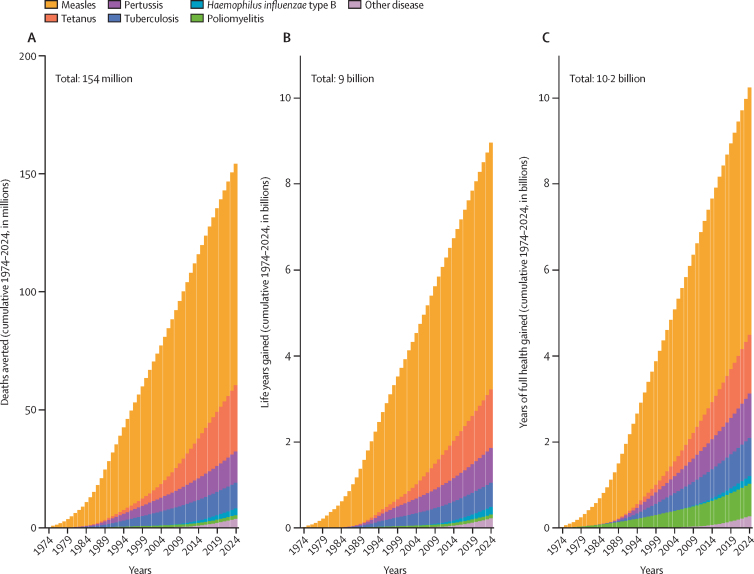
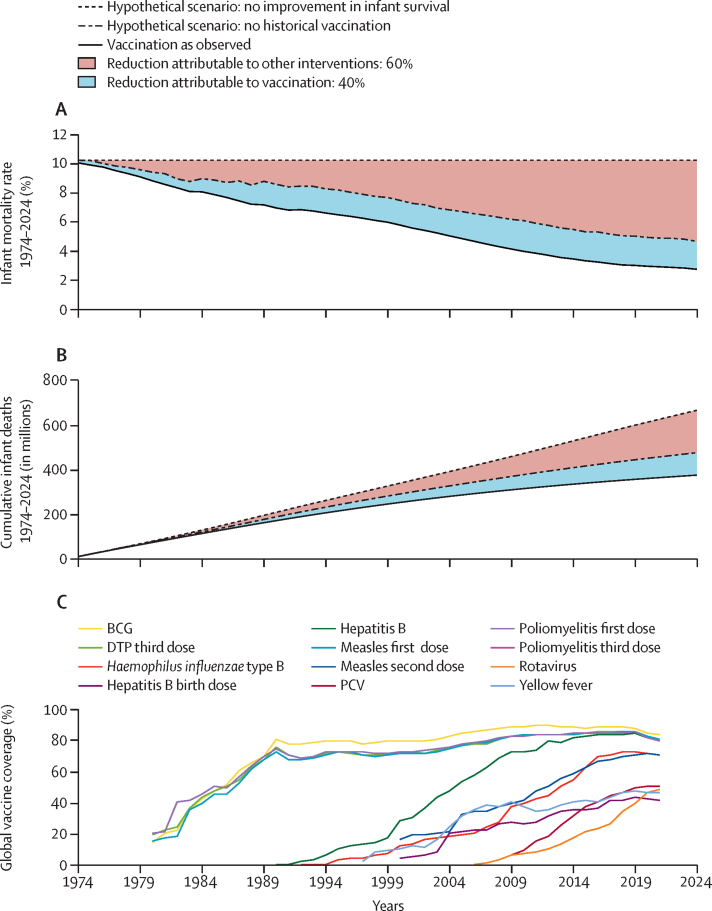
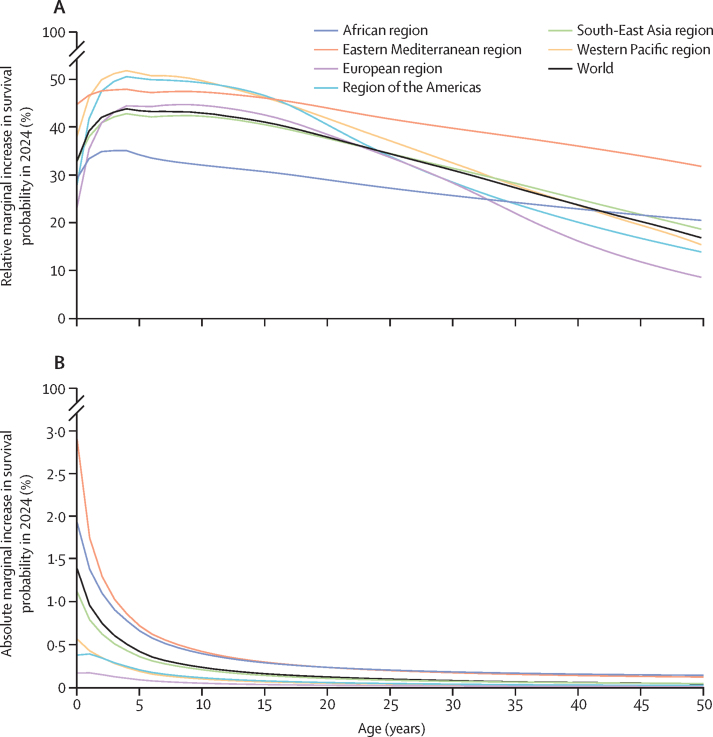
BACKGROUND: WHO, as requested by its member states, launched the Expanded Programme on Immunization (EPI) in 1974 to make life-saving vaccines available to all globally. To mark the 50-year anniversary of EPI, we sought to quantify the public health impact of vaccination globally since the programme's inception. METHODS: In this modelling study, we used a suite of mathematical and statistical models to estimate the global and regional public health impact of 50 years of vaccination against 14 pathogens in EPI. For the modelled pathogens, we considered coverage of all routine and supplementary vaccines delivered since 1974 and estimated the mortality and morbidity averted for each age cohort relative to a hypothetical scenario of no historical vaccination. We then used these modelled outcomes to estimate the contribution of vaccination to globally declining infant and child mortality rates over this period. FINDINGS: Since 1974, vaccination has averted 154 million deaths, including 146 million among children younger than 5 years of whom 101 million were infants younger than 1 year. For every death averted, 66 years of full health were gained on average, translating to 10·2 billion years of full health gained. We estimate that vaccination has accounted for 40% of the observed decline in global infant mortality, 52% in the African region. In 2024, a child younger than 10 years is 40% more likely to survive to their next birthday relative to a hypothetical scenario of no historical vaccination. Increased survival probability is observed even well into late adulthood. INTERPRETATION: Since 1974 substantial gains in childhood survival have occurred in every global region. We estimate that EPI has provided the single greatest contribution to improved infant survival over the past 50 years. In the context of strengthening primary health care, our results show that equitable universal access to immunisation remains crucial to sustain health gains and continue to save future lives from preventable infectious mortality. FUNDING: WHO.
Overview
CoChat Summary
TL;DR
Modelling 50 years of the WHO Expanded Programme on Immunization estimates that vaccination against 14 pathogens averted 154 million deaths from 1974 to 2024, including 146 million in children younger than 5 years, and gained 10·2 billion years of full health. Vaccination accounted for 40% of the global decline in infant mortality, with measles vaccination the single greatest contributor.
Key findings
- Vaccination averted 154 million deaths, including 146 million in children younger than 5 years and 101 million in infants younger than 1 year; 9·0 billion life-years and 10·2 billion years of full health were gained. For each death averted, an average of 58 years of life and 66 years of full health were gained.
- Measles vaccination accounted for 93·7 million lives saved (60·8%) of the 154·0 million total. Poliomyelitis vaccination averted 1% of deaths but accounted for 0·8 billion (7·8%) of the 10·2 billion years of full health gained.
- Vaccination was estimated to be directly responsible for 40% of the global decline in infant mortality, varying from 21% in the Western Pacific region to 52% in the African region. In 2024, children aged 10 years were approximately 44% more likely to survive to their next birthday than with no historical vaccination; individuals aged 25 years were 35% more likely, and those aged 50 years were 16% more likely.
- Global coverage with a third dose of diphtheria–tetanus–pertussis vaccine increased from less than 5% in 1974 to 86% in 2019 before the COVID-19 pandemic, and was 84% at the time of the study.
Methods
- Modelling study estimating deaths averted, life-years gained, and years of full health gained from vaccination against 14 pathogens in 194 WHO member states between June 1, 1974, and May 31, 2024, through routine and supplementary immunisation activities, relative to a hypothetical scenario of no historical vaccination.
- The analysis synthesised results of 22 models using three modelling forms: dynamic transmission models for measles and poliomyelitis; extended Vaccine Impact Modelling Consortium transmission models for *H influenzae* type B, hepatitis B, Japanese encephalitis, invasive pneumococcal disease, rotavirus, and rubella; and upgraded static disease burden models for diphtheria, tetanus, pertussis, and tuberculosis. Age-specific coverage was drawn from WHO Immunization dashboard, WHO Supplementary Immunization Activities Database, WHO Polio Information System, and VIMC estimates; 24 vaccine activities were evaluated.
- Regression-based imputation and functional fitting with Markov chain Monte Carlo and Akaike Information Criterion model selection were used to extrapolate impact to countries and time periods without direct model estimates. Primary outcomes were deaths averted, years of life gained, years of full health gained, and the proportion of infant mortality reduction attributable to vaccination, with secondary evaluation by WHO region and World Bank income stratum.
Limitations
- The paper states that the calendar-year approach does not fully account for post-2024 lifetime vaccination impacts, implying a substantial underestimate for diseases such as hepatitis B; HPV was excluded because of incomparability of timeframe. The analysis also excludes vaccines against COVID-19, influenza, HPV, outbreak vaccines such as cholera or Ebola, vaccines targeting disease in adult life, and vaccines used largely in high-income settings such as varicella, herpes zoster, or mumps; the counterfactual assumed a smallpox-free world, so smallpox eradication benefits were not counted.
- The paper states that double counting is a limitation but estimates it would have only a small (0·01%) effect; findings are presented at global and regional resolution, limiting geographical conclusions; uncertainty propagation was not possible for all hierarchical models or inputs; and posterior credible intervals had arbitrarily predefined widths and should not be interpreted as bounds for final outcomes.
- The text makes evident further limitations: the authors describe the analysis as a minimum conservative estimate because it excludes possible heterologous or non-specific vaccine effects, downstream effects on non-communicable disease mortality, and broader economic or community development gains. The text also contains an internal numerical inconsistency, reporting 10·2 billion years of full health in the abstract and results but referring later to 10·8 billion healthy life-years gained.
Model-written summary. Check it against the paper before relying on it.
Integrity signals
Registry
Cites
Statistics
Figures
Verification
Claims the paper makes
2 Valid · 2 Not valid · 8 Not checked · 77 Own results and interpretations
The sources with a verdict support this claim; the rest weren’t checked yet, have no full text we could read, or their verdicts aren’t rated yet.
In the paper
“Measles vaccination has been the single greatest contributor and is likely to remain so.18, 23”
§ Contribution of vaccination to improved survival and health: modelling 50 years of the Expanded Programme on Immunization > Discussion
What the sources say
- Supportedcites [18] Toor J Echeverria-Londono S Li X Lives saved with vaccination for 10 pathogens across 12 countries in a pre-COVID-19 world eLife 10 2021 10 PMC8277373 34253291 source
The Results (Impact by year of vaccination; page not provided) identify measles as having the largest estimated impact on deaths averted among the ten pathogens over 2000–2030. The Discussion says that, under the default forecast through 2030, measles is predicted to produce the greatest reduction in deaths. The prediction is conditional on that forecast, not an indefinite projection. (LLM, conf=0.90)
- Not checked — no full text of the sourcecites [23] Carter A Msemburi W Sim SY Modeling the impact of vaccination for the Immunization Agenda 2030: deaths averted due to vaccination against 14 pathogens in 194 countries from 2021 to 2030 Vaccine 2023 published online Aug 1. 10.1016/j.vaccine.2023.07.033 37537094 source
hedgedstates a cause- Asserted: passes — The authors put it forward as true.
- Checkable: passes — It can be checked against evidence.
- Load-bearing: passes — The paper’s conclusions depend on it.
- Based: passes — The paper gives a reason why it holds.
- Supported
A result the paper reports from its own data — it cites no other source for it, so there is none to check. The quote shows it is in the paper.
In the paper
“Since 1974, vaccination has averted 154 million deaths,”
- Also stated in: § Findings · plain
“Since 1974, vaccination has averted 154 million deaths, including 146 million among children younger than 5 years of whom 101 million were infants younger than 1 year.”
§ Contribution of vaccination to improved survival and health: modelling 50 years of the Expanded Programme on Immunization > Abstract > Findings
plainstates a cause- Asserted: passes — The authors put it forward as true.
- Checkable: passes — It can be checked against evidence.
- Load-bearing: passes — The paper’s conclusions depend on it.
- Based: passes — The paper gives a reason why it holds.
- Rests on an assumption not shown here.
- Also stated in: § Findings · plain
A result the paper reports from its own data — it cites no other source for it, so there is none to check. The quote shows it is in the paper.
In the paper
“Since 1974, vaccination has averted 154 million deaths, including 146 million among children younger than 5 years of whom 101 million were infants younger than 1 year.”
§ Contribution of vaccination to improved survival and health: modelling 50 years of the Expanded Programme on Immunization > Abstract > Findings
plainstates a causen = 146- Asserted: passes — The authors put it forward as true.
- Checkable: passes — It can be checked against evidence.
- Load-bearing: passes — The paper’s conclusions depend on it.
- Based: passes — The paper gives a reason why it holds.
- Rests on an assumption not shown here.
A result the paper reports from its own data — it cites no other source for it, so there is none to check. The quote shows it is in the paper.
In the paper
“For every death averted, 66 years of full health were gained on average, translating to 10·2 billion years of full health gained.”
§ Contribution of vaccination to improved survival and health: modelling 50 years of the Expanded Programme on Immunization > Abstract > Findings
plainstates a cause- Asserted: passes — The authors put it forward as true.
- Checkable: passes — It can be checked against evidence.
- Load-bearing: passes — The paper’s conclusions depend on it.
- Based: passes — The paper gives a reason why it holds.
- Rests on an assumption not shown here.
A result the paper reports from its own data — it cites no other source for it, so there is none to check. The quote shows it is in the paper.
In the paper
“We estimate that vaccination has accounted for 40% of the observed decline in global infant mortality, 52% in the African region.”
§ Contribution of vaccination to improved survival and health: modelling 50 years of the Expanded Programme on Immunization > Abstract > Findings
hedgedstates a cause- Asserted: passes — The authors put it forward as true.
- Checkable: passes — It can be checked against evidence.
- Load-bearing: passes — The paper’s conclusions depend on it.
- Based: passes — The paper gives a reason why it holds.
- Rests on an assumption not shown here.
48 more claims
Create a free account to see all 89 claims and every source verdict.
- Probably not a substantial claim. 23
- It may state two separate claims as one. 20
Claims other papers make about this one
Each is checked against this paper’s own text: does it say what the citing paper says it does?
The cited source says what the claim attributes to it.
In the citing paper
“For example, the Expanded Programme on Immunization (EPI) marks its 50th anniversary in 2024 and a retrospective assessment of impact estimated that 40% of the post-1974 decline in infant mortality resulted from the EPI.81”
From Global health 2050: the path to halving premature death by mid-century (2024) · cites this paper as [81]
Self-check
Percentages, sums and reported differences re-computed from the paper’s own numbers.
Each contradiction between two passages listed here was confirmed by an independent check.
Rated minor: it would not touch a result — a value no result rests on, a p-value that stays on the same side of the significance level, or a conflict that is clerical, resolved elsewhere in the paper, or outside its own findings.
In the paper
§ Contribution of vaccination to improved survival and health: modelling 50 years of the Expanded Programme on Immunization > Results
“with 0·8 billion (7·8%) of the 10·2 billion years of full health gained attributable to poliomyelitis cases averted.”
§ Contribution of vaccination to improved survival and health: modelling 50 years of the Expanded Programme on Immunization > Discussion
“Vaccination against poliomyelitis has had a modest impact on mortality, averting 1% of deaths, but has led to substantial public health gains by reducing poliomyelitis-induced paralysis, accounting for 8% of the 10·8 billion healthy life-years gained.”
Rated minor: it would not touch a result — a value no result rests on, a p-value that stays on the same side of the significance level, or a conflict that is clerical, resolved elsewhere in the paper, or outside its own findings.
In the paper
§ Contribution of vaccination to improved survival and health: modelling 50 years of the Expanded Programme on Immunization > Discussion
“accounting for 8% of the 10·8 billion healthy life-years gained.”
§ Contribution of vaccination to improved survival and health: modelling 50 years of the Expanded Programme on Immunization > Discussion
“10·2 billion healthy years of life have been gained due to vaccination.”
Citations
Cites
Brisson, M., Kim, J. J., Canfell, K., Drolet, M., Gingras, G., Burger, E. A., Martin, D., Simms, K. T., Bénard, É., Boily, M.-C., et al. (2020) · The Lancet · doi:10.1016/s0140-6736(20)30068-4 · Cited by 1,138 · cited 1×
“18,23,32 This imperative is highly dependent on achieving post-COVID-19 pandemic recovery and restoration of the trajectory to Immunization Agenda 2030 targets; achieving and maintaining universally high coverage with measles-containing vaccines (a principle aim of the Big Catch-up initiative;…”
BackgroundSelf-citationImmunization agenda 2030: A global strategy to leave no one behind
(2024) · Vaccine · doi:10.1016/j.vaccine.2022.11.042 · Cited by 372 · cited 2×
“26,27 Measles outbreaks are a tracer for vaccine programme performance under the Immunization Agenda 2030 (panel).”
The broader economic impact of vaccination: reviewing and appraising the strength of evidence
Jit, M., Hutubessy, R., Png, M. E., Sundaram, N., Audimulam, J., Salim, S., & Yoong, J. (2015) · BMC Medicine · doi:10.1186/s12916-015-0446-9 · Cited by 153 · cited 1×
“30 We also did not include possible heterologous effects of vaccines on epitopically non-specific immune training or other potential mechanisms.”
BackgroundSelf-citationCarter, A., Msemburi, W., Sim, S. Y., Gaythorpe, K. A. M., Lambach, P., Lindstrand, A., & Hutubessy, R. (2024) · Vaccine · doi:10.1016/j.vaccine.2023.07.033 · Cited by 121 · cited 4×
“18 Finally, published static disease burden models for diphtheria, tetanus, pertussis, and tuberculosis were upgraded (appendix pp 23–31).”
BackgroundMethodInfluentialSelf-citationVerguet, S., Johri, M., Morris, S. K., Gauvreau, C. L., Jha, P., & Jit, M. (2014) · Vaccine · doi:10.1016/j.vaccine.2014.11.050 · Cited by 106 · cited 1×
“20,21 For poliomyelitis we ran novel simulations of an existing dynamic model.”
MethodSelf-citationLives saved with vaccination for 10 pathogens across 112 countries in a pre-COVID-19 world
Toor, J., Echeverria-Londono, S., Li, X., Abbas, K., Carter, E. D., Clapham, H. E., Clark, A., de Villiers, M. J., Eilertson, K., Ferrari, M., et al. (2021) · eLife · doi:10.7554/elife.67635 · Cited by 97 · cited 4×
“18 Finally, published static disease burden models for diphtheria, tetanus, pertussis, and tuberculosis were upgraded (appendix pp 23–31).”
BackgroundMethodInfluentialSelf-citationClark, R. A., Mukandavire, C., Portnoy, A., Weerasuriya, C. K., Deol, A., Scarponi, D., Iskauskas, A., Bakker, R., Quaife, M., Malhotra, S., et al. (2023) · The Lancet Global Health · doi:10.1016/s2214-109x(23)00045-1 · Cited by 63
Self-citationHow can the public health impact of vaccination be estimated?
Echeverría-Londoño, S., Li, X., Toor, J., de Villiers, M. J., Nayagam, S., Hallett, T. B., Abbas, K., Jit, M., Klepac, P., Jean, K., et al. (2021) · BMC Public Health · doi:10.1186/s12889-021-12040-9 · Cited by 36 · cited 2×
“18 Finally, published static disease burden models for diphtheria, tetanus, pertussis, and tuberculosis were upgraded (appendix pp 23–31).”
BackgroundSelf-citationPolio by the Numbers—A Global Perspective
Badizadegan, K., Kalkowska, D. A., & Thompson, K. M. (2022) · The Journal of Infectious Diseases · doi:10.1093/infdis/jiac130 · Cited by 35 · cited 1×
“22 Second, we extended a suite of VIMC transmission models for H influenzae type B, hepatitis B, Japanese encephalitis, invasive pneumococcal disease, rotavirus, and rubella, which estimated vaccine impact for 110 countries (fewer for meningitis A and yellow fever) from 2000 to 2024, by…”
MethodSelf-citationEilertson, K. E., Fricks, J., & Ferrari, M. J. (2019) · Statistics in Medicine · doi:10.1002/sim.8290 · Cited by 32 · cited 2×
“20,21 For poliomyelitis we ran novel simulations of an existing dynamic model.”
MethodSelf-citation
Research works printed but not linked: 2
- O'Brien K From the expanded to the essential programme on immunization: achievements of the last 50 years and inspirations for the next 50. IVB Director's Report to SAGE 2024 World Health Organization Geneva
- Institute of Medicine The Children's Vaccine Initiative: achieving the vision 1993 The National Academies Press Washington, DC 25144104
Cited by
mRNA vaccines for infectious diseases — advances, challenges and opportunities
Pardi, N., & Krammer, F. (2024) · Nature Reviews Drug Discovery · doi:10.1038/s41573-024-01042-y · Cited by 229
“Vaccines have had a significant impact on the reduction of morbidity and mortality caused by various pathogens 1 .”
Progress Toward Measles Elimination — Worldwide, 2000–2023
Minta, A. A., Ferrari, M., Antoni, S., Lambert, B., Sayi, T. S., Hsu, C. H., Steulet, C., Gacic-Dobo, M., Rota, P. A., Mulders, M. N., et al. (2024) · MMWR. Morbidity and Mortality Weekly Report · doi:10.15585/mmwr.mm7345a4 · Cited by 201
Self-citationHaeuser, E., Byrne, S., Nguyen, J., Raggi, C., McLaughlin, S. A., Bisignano, C., Harris, A. A., Smith, A. E., Lindstedt, P. A., Smith, G., et al. (2025) · The Lancet · doi:10.1016/s0140-6736(25)01037-2 · Cited by 143
Self-citationGlobal health 2050: the path to halving premature death by mid-century
Jamison, D. T., Summers, L. H., Chang, A. Y., Karlsson, O., Mao, W., Norheim, O. F., Ogbuoji, O., Schäferhoff, M., Watkins, D., Adeyi, O., et al. (2024) · The Lancet · doi:10.1016/s0140-6736(24)01439-9 · Cited by 125
mRNA vaccine sequence and structure design and optimization: Advances and challenges
Jin, L., Zhou, Y., Zhang, S., & Chen, S. (2024) · Journal of Biological Chemistry · doi:10.1016/j.jbc.2024.108015 · Cited by 111
Measles Update — United States, January 1–April 17, 2025
Mathis, A. D., Raines, K., Filardo, T. D., Wiley, N., Leung, J. W. T., Rota, P. A., Martínez, D., Rai, S., Shetty, V. U., Holzinger, N., et al. (2025) · MMWR Morbidity and Mortality Weekly Report · doi:10.15585/mmwr.mm7414a1 · Cited by 88
33 Unresolved Questions in Nanoscience and Nanotechnology
Mirkin, C. A., Petrosko, S. H., Artzi, N., Aydın, K., Biaggne, A., Brinker, C. J., Bujold, K. E., Cao, Y. C., Chan, R. R., Chen, C., et al. (2025) · ACS Nano · doi:10.1021/acsnano.5c12854 · Cited by 69
Pavia, G., Branda, F., Ciccozzi, A., Romano, C., Locci, C., Azzena, I., Pascale, N., Marascio, N., Quirino, A., Matera, G., et al. (2024) · Vaccines · doi:10.3390/vaccines12080847 · Cited by 74
“Specifically, vaccination against 14 diseases, including diphtheria, measles, pertussis, and polio, has reduced infant mortality by 40% globally and more than 50% in Africa [5,6].”
BackgroundBiomarkers of aging: from molecules and surrogates to physiology and function
Furrer, R., & Handschin, C. (2025) · Physiological Reviews · doi:10.1152/physrev.00045.2024 · Cited by 74
Doua, J., Ndembi, N., Auerbach, J., et al. (2025) · Vaccine · doi:10.1016/j.vaccine.2025.126829 · Cited by 33
Lakioti, E., Pagonis, N., Flegkas, D., Itziou, A., Moustakas, K. G., & Karayannis, V. (2025) · Sustainability · doi:10.3390/su17115063 · Cited by 67
Value of Vaccinations: A Fundamental Public Health Priority to Be Fully Evaluated
Boccalini, S. (2025) · Vaccines · doi:10.3390/vaccines13050479 · Cited by 34
“Concerning the clinical bene fi ts of vaccination, vaccines are considered the health intervention with the greatest impact on reducing mortality and controlling population growth, second only to access to safe water [10–18].”
Vaccine Strategies Against RNA Viruses: Current Advances and Future Directions
Hsiung, K. C., Chiang, H.-J., Reinig, S., & Shih, S. (2024) · Vaccines · doi:10.3390/vaccines12121345 · Cited by 26
“According to the World Health Organization, global vaccination programs have saved at least 150 million lives over the past 50 years, thereby highlighting the vital role vaccination plays in public health and the prevention of emerging viral diseases [13].”
Cangelosi, G., Sacchini, F., Mancin, S., Petrelli, F., Amendola, A., Fappani, C., Sguanci, M. E., Palomares, S. M., Gravante, F., & Caggianelli, G. (2025) · Vaccines · doi:10.3390/vaccines13050460 · Cited by 33
“The combination of screening and vaccination provides a dual approach to prevention and early intervention, significantly improving clinical outcomes [10,15].”
Okesanya, O. J., Olatunji, G. D., Olaleke, N. O., Mercy, M., Ilesanmi, A., Kayode, H., Manirambona, E., Ahmed, M. M., Ukoaka, B. M., & Lucero‐Prisno, D. E. (2024) · Adolescent Health Medicine and Therapeutics · doi:10.2147/ahmt.s494099 · Cited by 34
The Problem with Delaying Measles Elimination
Crowcroft, N. S., Minta, A. A., Bolotin, S., Cernuschi, T., Ariyarajah, A., Antoni, S., Mulders, M. N., Bose, A. S., & O’Connor, P. M. (2024) · Vaccines · doi:10.3390/vaccines12070813 · Cited by 27
“Measles is the most cost-effective vaccine and saves more lives than any other vaccine, accounting for an estimated 60% of lives saved since the launch of EPI in 1974 [36].”
BackgroundExpanded Programme on Immunization (EPI): A Legacy of 50 Years and the Road Ahead
Mirza, I., Lemango, E. T., & Lindstrand, A. (2025) · Vaccines · doi:10.3390/vaccines13060649 · Cited by 26
“What began as an ambitious initiative to combat six major infectious diseases—diphtheria, pertussis, tetanus, measles, poliomyelitis, and tuberculosis—has since evolved into one of the most significant public health interventions in history [3].”
Self-citationInnovations, Challenges, and Future Prospects for Combination Vaccines Against Human Infections
Fatima, M., & Hong, K. (2025) · Vaccines · doi:10.3390/vaccines13040335 · Cited by 22
“According to an estimate, vaccination has saved almost 154 million lives in the last five decades, equivalent to about six lives every minute [1].”
Global strategies for addressing diphtheria resurgence epidemiology clinical impact and prevention
Osarenren, J., Omosigho, P. O., & Okesanya, O. J. (2024) · Discover Public Health · doi:10.1186/s12982-024-00352-1 · Cited by 23
“These countries were particularly affected by the pandemic-related disruptions, further exacerbating the coverage gap and making them key targets for recovery efforts under the “Big Catch-Up” initiative [39].”
Simon, D. J., Tokpovi, V. C. K., Dianou, K., Okonji, O. C., Kiragu, A., Olorunsaiye, C. Z., Wayisovia, E. J., Ouedraogo, A., Ngangue, P., Foba, H. T., et al. (2025) · BMJ Global Health · doi:10.1136/bmjgh-2024-018333 · Cited by 25
Zheng, J., Liu, Y., Guan, S., Guo, Z.-Y., Duan, L., Lv, S., Zhang, S.-X., Li, S., Zhou, X., & Feng, X. (2025) · Journal of Advanced Research · doi:10.1016/j.jare.2025.04.004 · Cited by 30
Kitole, F. A., Ali, Z., Song, J., Ali, M. N., Fahlevi, M., Aljuaid, M. M., Heidler, P., Yahya, M., & Shahid, M. (2025) · Healthcare · doi:10.3390/healthcare13091063 · Cited by 35
“The healthcare sector also functions as a safety net, supporting vulnerable and marginalized populations [5].”
Beaulieu-Carbonneau, A., Ducharme, J., Thibeault, C., Akani, B. C., Ziegler, D., Hogan, D. R., Correa, G. C., Reynolds, H. W., & Johri, M. (2025) · BMJ Global Health · doi:10.1136/bmjgh-2024-018293 · Cited by 28
The Strategic Advisory Group of Experts (SAGE) on Immunization—Past, Present and Future
Marti, M., Nohynek, H., DUCLOS, P. J., O’Brien, K. L., & Hombach, J. (2024) · Vaccines · doi:10.3390/vaccines12121402 · Cited by 20
“In 2024, a vaccinated child younger than 10 years is 40% more likely to survive to their next birthday relative to a hypothetical scenario of no vaccination [3].”
Self-citationLessons from Recent Measles Post-Campaign Coverage Surveys Worldwide
Danovaro-Holliday, M. C., Koh, M., Steulet, C., Rhoda, D. A., & Trimner, M. K. (2024) · Vaccines · doi:10.3390/vaccines12111257 · Cited by 15
Petu, A., Masresha, B., Wiysonge, C. S., Mwenda, J. M., Nyarko, K., Bwaka, A. M., Wanyoike, S. W., Mboussou, F., Impouma, B., Usman, A., et al. (2025) · BMJ Global Health · doi:10.1136/bmjgh-2024-017982 · Cited by 14
“However, these NITAGs operate at different levels of functionality.”
InfluentialBiodegradable Polymers for Application as Robust Immunomodulatory Biomaterial Carrier Systems
Barbery, B. G., Lukesh, N. R., Bachelder, E. M., & Ainslie, K. M. (2025) · Small · doi:10.1002/smll.202409422 · Cited by 18
Hilligan, K. L., Darrah, P. A., Seder, R. A., & Sher, A. (2025) · The Journal of Experimental Medicine · doi:10.1084/jem.20240496 · Cited by 14
Enhancing vaccine stability in transdermal microneedle platforms
Pahal, S., Huang, F., Singh, P., Sharma, N., Pham, H., Tran, T. B. T., Sakhrie, A., Akbaba, H., & Nguyen, T. D. (2025) · Drug Delivery and Translational Research · doi:10.1007/s13346-025-01854-4 · Cited by 16
“Almost 150 million lives have been saved in the last 50 years due to global immunization programs [1].”
The Gavi Leap: radical transformation for a new global health architecture
Nishtar, S. (2025) · The Lancet · doi:10.1016/s0140-6736(25)01177-8 · Cited by 12
Nguyen, P. T., Nakamura, R., Shimadzu, H., Abubakar, A. K., Le, P. M., Huy, N. V., Nguyen, H. L., Sato, M., Honda, A., & Gilmour, S. (2025) · PLoS Medicine · doi:10.1371/journal.pmed.1004664 · Cited by 17
“Specifically, vaccination programs have been estimated to have saved 153.8 million lives globally and 52.8 million lives in Africa over the past 50 years [2].”
InfluentialVaccine failure mode determines population-level impact of vaccination campaigns during epidemics
Lee, D., Nande, A., Anderson, T. L., Levy, M. Z., & Hill, A. L. (2025) · Journal of The Royal Society Interface · doi:10.1098/rsif.2024.0689 · Cited by 15
“…(WHO)’s Expanded Immunization Program in 1974, an estimated 154 million lives have been saved and an estimated 9 billion years of life years gained [1] due to vaccines against measles, tetanus, pertussis, tuberculosis, Haemophilus influenzae type B, invasive pneumococcal disease, poliomyelitis,…”
Immunity to fungi and vaccine considerations
Whitehead, A. J., Woodring, T. S., & Klein, B. S. (2024) · Cell Host & Microbe · doi:10.1016/j.chom.2024.09.011 · Cited by 12
Utazi, C. E., Olowe, I., Chan, H. M. T., Dotse‐Gborgbortsi, W., Wagai, J. N., Umar, J. A., Etamesor, S., Atuhaire, B., Fafunmi, B., Crawford, J., et al. (2024) · Vaccines · doi:10.3390/vaccines12121299 · Cited by 19
“…5 million vaccine-preventable deaths every year [1]—a substantial improvement since the introduction of the World Health Organization Expanded Programme on Vaccines 2024 , 12 , 1299. https://doi.org/10.3390/vaccines12121299 https://www.mdpi.com/journal/vaccines Immunization (WHO EPI) in 1974 [2].”
InfluentialGetnet, M., Jejaw, M., Belachew, T. B., Addis, B., Dellie, E., Tafere, T. Z., Worku, N., Geberu, D. M., Yazachew, L., Teshale, G., et al. (2025) · Frontiers in Public Health · doi:10.3389/fpubh.2025.1463303 · Cited by 15
Unlocking health equity by eliminating copayments for essential antihypertensive medications
Frieden, T. R., Garg, R., Banigbe, B., Choudhury, S. R., Ogbureke, N., Duguma, D., & Tangcharoensathien, V. (2025) · EClinicalMedicine · doi:10.1016/j.eclinm.2025.103094 · Cited by 11
Wang, C., Lai, X., Abbas, K., Pouwels, K. B., Zhang, H., Jit, M., & Fang, H. (2025) · The Lancet Public Health · doi:10.1016/s2468-2667(25)00039-8 · Cited by 11
Self-citationGut microbiota as a regulator of vaccine efficacy: implications for personalized vaccination
Lu, Q., Feng, Y., Wang, H., Zhu, K., Teng, L., Yue, M., & Li, Y. (2025) · Gut Microbes · doi:10.1080/19490976.2025.2563709 · Cited by 17
Immunological memory to vaccines
Crotty, S. (2026) · Immunity · doi:10.1016/j.immuni.2026.02.019 · Cited by 16
Ceccarelli, A., Munafò, G., Sintoni, F., et al. (2024) · Vaccines · doi:10.3390/vaccines12121438 · Cited by 9
“A 2024 Lancet article by Andrew Shattock et al. pointed out that vaccinations have saved 154 million people from dying since 1974; vaccinations are also responsible for 40% of the decline in infant mortality globally [3].”
Radcliffe, C. V., & Kotton, C. N. (2025) · Expert Review of Vaccines · doi:10.1080/14760584.2025.2489659 · Cited by 16
“Vaccination is one of the most important medical interventions ever developed [105].”
Kannan, A., Jeffrey, K., Misbah, S., & Ramasamy, K. (2025) · Blood Reviews · doi:10.1016/j.blre.2025.101287 · Cited by 13
Buti, M., Bonanni, P., Ladep, N. G., Papatheodoridis, G., Frühwein, M., James, C., Ward, J. W., Vetter, V., Cacciatore, P., Kesters, D., et al. (2025) · Expert Review of Vaccines · doi:10.1080/14760584.2025.2502030 · Cited by 10
“…study estimated that HBV vaccination across 98 countries globally averted 640,000 deaths, including 270,000 in children younger than 5 years from 2000 to 2019, and from 2000 to 2030, it averted an estimated 22 million global deaths, including 500,000 deaths in children younger than 5 years [39].”
Omar, M., Shibli, H., & Edelstein, M. L. (2025) · Vaccine · doi:10.1016/j.vaccine.2025.127385 · Cited by 13
Sani, J., Halane, S. A., Ahmed, M. M., Ahmed, A. M., & Hersi, M. D. (2025) · Pediatric Health Medicine and Therapeutics · doi:10.2147/phmt.s520721 · Cited by 13
Hameiri‐Bowen, D., Casciola, L., Aimade, W., Lindeburg, E., Muhula, S. O., Osur, J. O., Rakhshani, N. S., Fayomi, S. A., Johnson, T. P., Holme, M., et al. (2025) · The Lancet Global Health · doi:10.1016/s2214-109x(25)00245-1 · Cited by 15
Pijpers, J., van Roon, A. M., Schipper, M., Stok, F. M., van den Hof, S., van Gaalen, R. I., Hahné, S. J. M., & de Melker, H. E. (2025) · Eurosurveillance · doi:10.2807/1560-7917.es.2025.30.39.2500251 · Cited by 12
“The Expanded Programme on Immunisation is estimated to have averted 154 million deaths globally between 1974 and 2024, the majority in children younger than 5 years [1].”
Vaccines for Global Health: Progress and Challenges
Knisely, J. M., & Erbelding, E. J. (2024) · The Journal of Infectious Diseases · doi:10.1093/infdis/jiae511 · Cited by 12
Ahmed, I., Soofi, S. B., Muhammad, S., Ali, R., Khan, A., Naqvi, S. K., Hussain, I., Umer, M. A., & Bhutta, Z. A. (2024) · Vaccines · doi:10.3390/vaccines12121340 · Cited by 11
“Since 1974, vaccination has prevented 154 million deaths, including 146 million in children under 5, with 101 million being infants under the age of 1 year [2].”
Mafuta, E. M., Lulebo, A., Kasonga, J. B., Mvuama, N. M., Luhata, C. L., Hoff, N. A., Nkamba, D. M., Merritt, S., Otomba, J. S., Mbunga, B. K., et al. (2025) · Vaccine · doi:10.1016/j.vaccine.2025.126956 · Cited by 8
“Vaccination is a highly cost-effective and successful public health intervention that contributes to reducing global child morbidity and mortality due to vaccine-preventable diseases (VPDs) [1 – 3].”
Boosting effect of high-dose influenza vaccination on innate immunity among elderly
Bonduelle, O., Delory, T., Moscardini, I. F., Ghidi, M., Bennacer, S., Wokam, M., Lenormand, M., Petrier, M., Rogeaux, O., de Bernard, S., et al. (2025) · JCI Insight · doi:10.1172/jci.insight.184128 · Cited by 9
“Indeed, determining mechanisms of immune responses regarding the dose of vaccine in a particular “fragile” population will not only help in improvement of influenza vaccination uptake but also to revisit the vaccination strategies used in elderly population (31).”
Puagsopa, J., Tongviseskul, N., Jaroentomeechai, T., & Meksiriporn, B. (2025) · Vaccines · doi:10.3390/vaccines13030285 · Cited by 8
“Over the past five decades, vaccines against 14 common pathogens have saved an estimated 154 million lives globally, equivalent to six lives every minute [374].”
Cheuyem, F. Z. L., Amani, A., Achangwa, C., Ajong, B. N., Minkandi, C. A., Zeh, M. M. M. K., Ntsek, L. L. E., Essomba, J. P., Jiogue, R. C., Ndagijimana, O., et al. (2025) · BMC Infectious Diseases · doi:10.1186/s12879-025-10946-y · Cited by 10
“Vaccination has historically played a crucial role in enhancing global public health outcomes, contributing to increased life expectancy and representing a highly cost-effective intervention for disease prevention [3].”
Vaccination readiness among adults in Norway: A cross-sectional survey using the 7C model
Hansen, B. T., Kristoffersen, A. B., & Stecher, M. (2025) · Vaccine · doi:10.1016/j.vaccine.2025.127169 · Cited by 8
The emerging role of the gut microbiota in vaccination responses
Decker, V., Qureshi, K., Roberts, L. A., Powell, N., Marchesi, J. R., Mullish, B. H., & Alexander, J. L. (2025) · Gut Microbes · doi:10.1080/19490976.2025.2549585 · Cited by 16
Oyugi, B., Källander, K., & Shahabuddin, A. (2025) · Vaccines · doi:10.3390/vaccines13101040 · Cited by 21
Richterman, A. G., Bùi, T.-M. N., Bair, E. F., Jérôme, G., Millien, C., Suffrin, J. C. D., Behrman, J. R., & Thirumurthy, H. (2025) · The Lancet · doi:10.1016/s0140-6736(25)01437-0 · Cited by 12
O’Leary, S. T., & Danchin, M. H. (2026) · New England Journal of Medicine · doi:10.1056/nejmcp2516616 · Cited by 8
Wu, Z., Lin, L., Zhang, J., Zhong, J., & Lai, D. (2025) · Frontiers in Public Health · doi:10.3389/fpubh.2025.1597076 · Cited by 14
The Role and Safety of Aluminum Adjuvants in Childhood Vaccines
Nirenberg, E., Maldonado, Y., & Hoffman, S. A. (2026) · PEDIATRICS · doi:10.1542/peds.2025-074874 · Cited by 9
Adamu, A. A., Jalo, R. I., Masresha, B., Ndwandwe, D. E., & Wiysonge, C. S. (2024) · Vaccines · doi:10.3390/vaccines12080896 · Cited by 19
Githaiga, J. N., Noll, S. D., Olivier, J., & Amponsah‐Dacosta, E. (2025) · Vaccine · doi:10.1016/j.vaccine.2025.126784 · Cited by 9
Masresha, B., Shibeshi, M. E., Wee, R. J. D., Shapumba, N., Sayi, T. S., Reef, S. E., & Goodson, J. L. (2024) · Vaccines · doi:10.3390/vaccines12090957 · Cited by 9
“The feasibility and benefits of measles and rubella elimination are well established, and global progress toward elimination continues to be made [7–12].”
BackgroundUnreliable Vaccine Information and the Erosion of Science
Jacobs, J. W., & Booth, G. S. (2025) · JAMA · doi:10.1001/jama.2025.5723 · Cited by 6
Biocompatible lipid nanovehicles for preventive and therapeutic vaccine development
Jia, Y., Zhou, Z., Jiramonai, L., Chen, J., Hua, Q., Zhu, M., Zhang, J., & Liang, X. (2025) · Coordination Chemistry Reviews · doi:10.1016/j.ccr.2025.216718 · Cited by 8
Bouaddi, O., Khalis, M., Abdellatifi, M., Seedat, F., Deal, A., Chemao-Elfihri, W., Assarag, B., Chrifi, H., Chavassieux, N., Turay, I., et al. (2025) · Vaccine · doi:10.1016/j.vaccine.2025.127166 · Cited by 6
Wu, B., Huo, L., & Zhao, L. (2025) · Nonlinear Dynamics · doi:10.1007/s11071-025-11416-5 · Cited by 9
Measles importations by international travelers, GeoSentinel 2019–2025
Huits, R. M. H. G., Buonfrate, D., O’Laughlin, K., Hamer, D. H., Libman, M., Emetulu, H., Larsen, C. S., Wejse, C. M., Kuhn, S., Chen, L. H., et al. (2025) · Travel Medicine and Infectious Disease · doi:10.1016/j.tmaid.2025.102885 · Cited by 8
Valeiro, C., Silva, V., Balteiro, J., et al. (2025) · Healthcare · doi:10.3390/healthcare13151862 · Cited by 6
Trends in DTP3 Vaccination in Asia (2012–2023)
Aguinaga-Ontoso, I., Guillén-Aguinaga, L., Guillén-Aguinaga, S., Alas-Brun, R., Guillen-Aguinaga, M., Aguinaga-Ontoso, E., Onambele, L., & Guillén‐Grima, F. (2025) · Vaccines · doi:10.3390/vaccines13080877 · Cited by 8
“Globally, immunization programs are a cornerstone of public health [1], and they have continually proven to be one of the most impactful [2] and cost-effective investments for the future.”
Gender Barriers to Immunization: A Synthesis of UNICEF’s Analyses to Advance Equity and Coverage
Mansilla, C., Kamlongera, A. P., & Dadari, I. (2025) · Vaccines · doi:10.3390/vaccines13101059 · Cited by 11
Janiak, S., Piszczek, E., Buczkowska, A., & Buczkowski, K. (2025) · Vaccines · doi:10.3390/vaccines13111127 · Cited by 8
Borlini, S., Pennisi, F., Pinto, A., Ponti, E. D., D’Amelio, A. C., & Signorelli, C. (2026) · Vaccine · doi:10.1016/j.vaccine.2026.128426 · Cited by 9
Expanded Programme on Immunization at 50 years: its legacy and future
Wahl, B., & Pitzer, V. E. (2024) · The Lancet · doi:10.1016/s0140-6736(24)00982-6 · Cited by 8
Vaccination in multiple sclerosis: Tackling challenges and paving the way for effective immunization
Carvajal, R., Tur, C., Borràs-Bermejo, B., Saylor, D. R., Montalbán, X., Tintoré, M., & Otero‐Romero, S. (2025) · Multiple Sclerosis Journal · doi:10.1177/13524585251318513 · Cited by 6
Multilevel Analysis of Zero-Dose Children in Sub-Saharan Africa: A Three Delays Model Study
Wiysonge, C. S., Uthman, M. M. B., Ndwandwe, D. E., & Uthman, O. A. (2025) · Vaccines · doi:10.3390/vaccines13090987 · Cited by 15
“Childhood immunization represents one of the most successful and cost-effective public health interventions, preventing an estimated 4–5 million deaths annually and generating substantial economic returns [1].”
O’Sullivan, T., & Keegan, L. T. (2025) · BMC Global and Public Health · doi:10.1186/s44263-025-00156-8 · Cited by 5
“…it was once a leading cause of childhood morbidity and mortality [1], the introduction of effective therapeutics and the three-dose diphtheria tetanus pertussis (DTP3) vaccine (diphtheria vaccine first introduced in 1923) have substantially reduced the burden of diphtheria cases and deaths [2].”
Adult Vaccinations Today—Innovations and Challenges for the Coming Years
Maltezou, H. C., Cassimos, D. C., Sipsas, N. V., & Medić, S. (2025) · Vaccines · doi:10.3390/vaccines13060583 · Cited by 5
“Childhood vaccinations have been a major public health achievement, accounting for a 40% reduction in infantile mortality in the past fifty years [1,2].”
Delport, D., Muellenmeister, A. M., MacKechnie, G. P. D., Vaccher, S. J., Mengistu, T., Hogan, D. R., Abeysuriya, R., & Scott, N. (2025) · BMJ Global Health · doi:10.1136/bmjgh-2024-016887 · Cited by 14
“7–9 These serve as excellent examples of how collaborative modelling efforts can be used to generate comprehensive sets of evidence.”
Geostatistical and machine learning approaches for high-resolution mapping of vaccination coverage
Utazi, C. E., Yankey, O., Chaudhuri, S., Olowe, I., Danovaro-Holliday, M. C., Lázár, A. N., & Tatem, A. J. (2025) · Spatial and Spatio-temporal Epidemiology · doi:10.1016/j.sste.2025.100744 · Cited by 7
Precision Vaccinology: Making Vaccines Work Better for Women and Men
Scully, E. P., Morgan, R., & Klein, S. L. (2025) · The Journal of Infectious Diseases · doi:10.1093/infdis/jiaf397 · Cited by 6
A risk to child health: confusion and concern over changes to US vaccine policy
Pollard, A. J., & Plotkin, S. A. (2026) · The Lancet · doi:10.1016/s0140-6736(26)00090-5 · Cited by 5
Lai, X., Abbas, K., Pouwels, K. B., Jit, M., & Fang, H. (2026) · The Lancet Global Health · doi:10.1016/j.langlo.2026.103965 · Cited by 6
Self-citationBura, V., Srivastava, R., Chawla, A. K., et al. (2024) · The Indian Journal of Medical Research · doi:10.25259/ijmr_1527_2024 · Cited by 5
Global Health: Principles and Perspectives
Baldi, S. L., Bernotti, I., Dall’Olio, L., Perrone, P. M., & Raviglione, M. C. (2025) · Springer eBooks · doi:10.1007/978-981-92-1288-0_110 · Cited by 6
Strategies for Communicating With Parents About Vaccines
O’Leary, S. T. (2025) · JAMA · doi:10.1001/jama.2025.4882 · Cited by 6
Graham, C., Barker, E., Moss, J. W. E., et al. (2025) · Journal of Market Access & Health Policy · doi:10.3390/jmahp13020031 · Cited by 5
“Vaccines are one of the most important public health interventions—and health technologies—worldwide, having saved an estimated 154 million lives in the past 50 years [1].”
Vaccine hesitancy among parents of children in their first two years of life
Magyar, R., Voitl, P., Voitl, J. J. M., & Diesner, S. C. (2024) · Frontiers in Public Health · doi:10.3389/fpubh.2024.1438737 · Cited by 12
Childhood Vaccination and Vaccine Hesitancy: A Comparison Between Türkiye and the World
Kömürlüoğlu, A., & Yalçın, S. S. (2024) · Turkish Journal of Pediatric Disease · doi:10.12956/tchd.1547693 · Cited by 5
Ecarnot, F., & Maggi, S. (2024) · Seminars in Respiratory and Critical Care Medicine · doi:10.1055/a-2500-2121 · Cited by 10
Vaccher, S. J., Laman, M., Danchin, M. H., Angrisano, F., & Morgan, C. (2025) · Vaccines · doi:10.3390/vaccines13020108 · Cited by 7
“Recent modelling from the World Health Organization (WHO) has shown that of the 154 million lives saved by immunisation since 1974, measles vaccination has accounted for over 60% of these [9].”
InfluentialLambach, P., Silal, S. P., Sbarra, A. N., Koh, M., Aggarwal, R., Farooqui, H. H., Flasche, S., Hogan, A. B., Kim, S., Leung, K. S. M., et al. (2025) · Vaccine · doi:10.1016/j.vaccine.2025.127384 · Cited by 5
Self-citationTamir, T. T., Tekeba, B., Techane, M. A., Alemu, T. G., Wubneh, C. A., & Wassie, Y. A. (2025) · Vaccine · doi:10.1016/j.vaccine.2025.127019 · Cited by 6
Routine vaccination rates globally: A continuing and alarming situation
Maltezou, H. C., Medić, S., Cassimos, D. C., et al. (2025) · Vaccine · doi:10.1016/j.vaccine.2025.127269 · Cited by 4
Amicizia, D., Allegretti, S., Grammatico, F., Astengo, M., Marchini, F., Battaglini, A., Schenone, I., Schiavetti, I., Sticchi, C., Rebesco, B., et al. (2025) · Vaccines · doi:10.3390/vaccines13060580 · Cited by 5
“Influenza vaccination, in particular, plays a critical role in protecting children, adults and the elderly, with uptake influenced by a mix of personal, structural, and informational factors [1,17,18].”
Filia, A., Manso, M. D., Petrone, D., et al. (2025) · Vaccines · doi:10.3390/vaccines13070663 · Cited by 4
“Since 1974, the measles vaccine has saved an estimated 93.7 million lives [4].”
InfluentialMeasles without borders: how can travel medicine help limit global resurgence?
McGuinness, S. L., Lau, C. L., & Leder, K. S. (2025) · Journal of Travel Medicine · doi:10.1093/jtm/taaf056 · Cited by 4
Saunders, M. J., Pereboom, M., Alvarez, J. L., Sherlock, M., & Gadroen, K. (2025) · BMJ Global Health · doi:10.1136/bmjgh-2025-019662 · Cited by 7
Meningococcal B Vaccines as a Paradigm of Safe and Effective Vaccines for Children
Tome, M. G., Gonzalez‐Quevedo, R., dos Santos, M. E., Dornbusch, H. J., Straus, S. M. J. M., & Cooke, E. (2025) · Vaccines · doi:10.3390/vaccines13070770 · Cited by 4
“…against infectious diseases, not only saving millions of lives yearly but importantly preventing the sequelae of infectious diseases in survivors, which in the case of IMD can be as severe, disabling and life-changing as deafness, limb amputations, epilepsy, and cognitive impairment [49].”
Hurley, F., Balanuta, S., & Flanagan, P. C. (2025) · Vaccine · doi:10.1016/j.vaccine.2025.127588 · Cited by 7
Metadata
- Authors
- Shattock, A. J., Johnson, H. C., Sim, S. Y., Carter, A., Lambach, P., Hutubessy, R. C. W., Thompson, K. M., Badizadegan, K., Lambert, B., Ferrari, M. J., Jit, M., Fu, H., Silal, S. P., Hounsell, R. A., White, R. G., Mosser, J. F., Gaythorpe, K. A. M., Trotter, C. L., Lindstrand, A., O'Brien, K. L., & Bar-Zeev, N.
- Affiliations
- Swiss Tropical and Public Health Institute (CH)
- University of Cambridge (GB)
- London School of Hygiene & Tropical Medicine (GB)
- University of Washington (US)
- Pennsylvania State University (US)
- University of Cape Town (ZA)
- ORCID
- Shattock, Andrew J
- Johnson, Helen C
- Sim, So Yoon
- Carter, Austin
- Lambach, Philipp
- Hutubessy, Raymond C W
- Thompson, Kimberly M
- Badizadegan, Kamran
- Lambert, Brian
- Ferrari, Matthew J
- Jit, Mark
- Fu, Han
- Silal, Sheetal P
- Hounsell, Rachel A
- White, Richard G
- Mosser, Jonathan F
- Gaythorpe, Katy A M
- Trotter, Caroline L
- Lindstrand, Ann
- Venue
- The Lancet
- Publisher
- Elsevier BV
- Published
- 2024-05
- Volume
- 403
- Issue
- 10441
- Pages
- 2307-2316
- ISSN
- 0099-5355 (ISSN-L)
- 0140-6736
- PMC
- PMC11140691
- OpenAlex
- W4396571207
- Cited by
- 655
- References
- 12
- Citations by year
- 2026: 324 · 2025: 268 · 2024: 63
- FWCI
- 295.47
- Type
- journal article
- Language
- en
- Open access
- hybrid
- doi.org
- Licence
- cc-by
- www.elsevier.com/tdm/userlicense/1.0/ (tdm)
- www.elsevier.com/legal/tdmrep-license (tdm)
- creativecommons.org/licenses/by/3.0/igo/ (vor)
- Locations
- The Lancet (publishedVersion, cc-by)
- PubMed Central (publishedVersion, cc-by)
- PubMed (publishedVersion)
- London School of Economics and Political Science Research Online (London School of Economics and Political Science) (acceptedVersion)
- London School of Economics and Political Science Theses Online (London School of Economics and Political Science) (acceptedVersion)
- LSHTM Research Online (London School of Hygiene and Tropical Medicine) (acceptedVersion)
- UWA Profiles and Research Repository (UWA) (submittedVersion, cc-by)
- Funders
- World Health Organization (201910)
- Bill and Melinda Gates Foundation (OPP1157270, INV-034218, INV-009125)
- Topics
- Social Sciences › Health › Vaccine Coverage and Hesitancy
- Health Sciences › Medicine › Pediatrics, Perinatology and Child Health › Global Maternal and Child Health
- Life Sciences › Immunology and Microbiology › Immunology › Immune responses and vaccinations
- Keywords
- Expanded Programme on Immunization, vaccine impact, mortality averted, child mortality decline, infant mortality, life-years gained, child survival, vaccination coverage, global health impact
- MeSH terms
- Adolescent, Adult, Child, Child, Preschool, Humans, Infant, Infant Mortality, Infant, Newborn, Middle Aged, Public Health, Vaccination, Global Health, Models, Statistical, Immunization Programs, Child Mortality, History, 20th Century, Young Adult
About these checks
Registry, retraction, Cites and statistics results are computed, not judged, with one exception: a printed reference that no index lists is read once by a model before it counts as a citation error. Claims are extracted by a model and kept only when their quote appears verbatim in the text; each cited source is then checked, with a model’s help, for whether it says what the claim relies on. Those verdicts can be wrong — read the claim’s quote and the cited source before relying on one.
The claim verdicts this report counts are experimental: their accuracy is not yet measured.
A language model drew the claims from the paper on 2026-09-28, under version 3 of the claim definition (model deepseek-v4.1-flash, prompt extract-v3).
A second model labelled each claim on 2026-09-28 (model jev-1.13-20260917, definition revision gold-guideline-v0.2).
Cited sources are checked with a language model’s help (gpt-6-sol).
Statistics and arithmetic are recomputed, not judged.
Confidence bands are shown only for fields calibrated on our annotated test set. None is calibrated yet, so no band is shown.
What counts as a claim ›How we measure confidence ›How we check this ›
Are you an author, or do you see a problem with this page? Request a review
Data sources
Bibliographic data: Semantic Scholar, OpenAlex, Crossref.
Contains information from the Semantic Scholar Academic Graph Datasets, made available under the ODC Attribution License (ODC-BY 1.0).
Semantic Scholar’s data is described in: Kinney, R., et al. (2023). The Semantic Scholar Open Data Platform. arXiv:2301.10140.
