

Contribution of vaccination to improved survival and health: modelling 50 years of the Expanded Programme on Immunization
Open accessThe DOI matches its Crossref record; 13 of the 14 references it cites were found in a registry or an index; 2 of the 14 sources its claims cite were checked for support.
Abstract
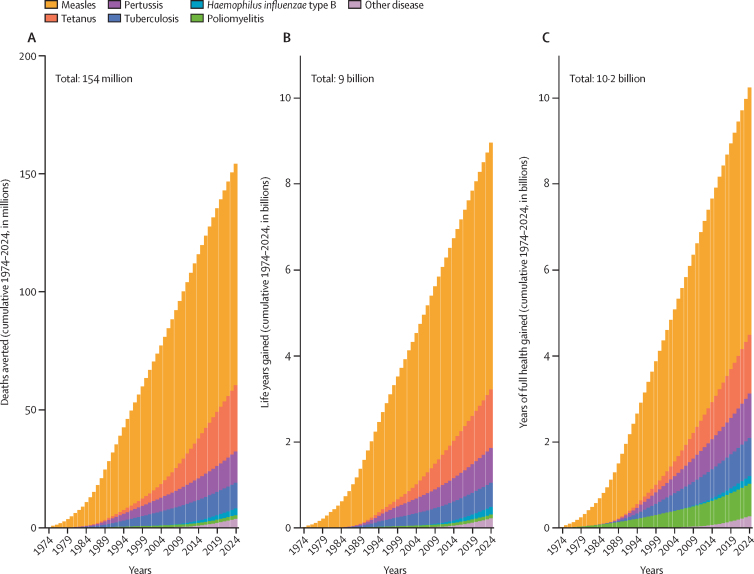
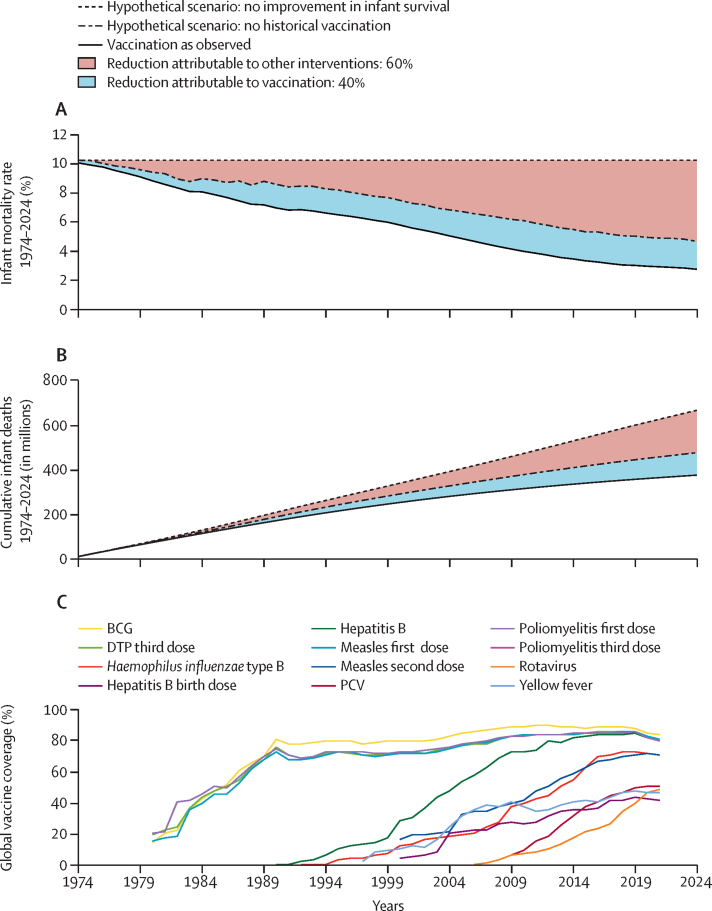
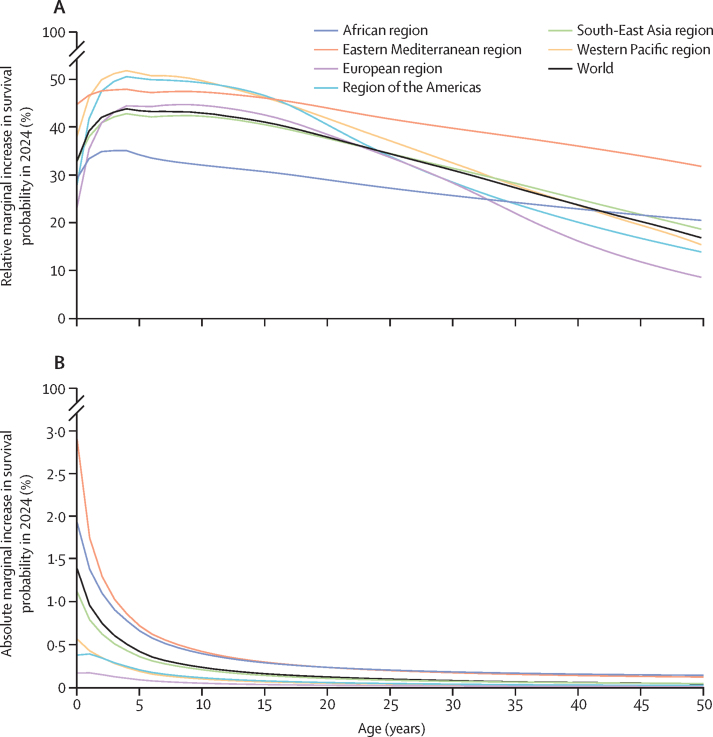
BACKGROUND: WHO, as requested by its member states, launched the Expanded Programme on Immunization (EPI) in 1974 to make life-saving vaccines available to all globally. To mark the 50-year anniversary of EPI, we sought to quantify the public health impact of vaccination globally since the programme's inception. METHODS: In this modelling study, we used a suite of mathematical and statistical models to estimate the global and regional public health impact of 50 years of vaccination against 14 pathogens in EPI. For the modelled pathogens, we considered coverage of all routine and supplementary vaccines delivered since 1974 and estimated the mortality and morbidity averted for each age cohort relative to a hypothetical scenario of no historical vaccination. We then used these modelled outcomes to estimate the contribution of vaccination to globally declining infant and child mortality rates over this period. FINDINGS: Since 1974, vaccination has averted 154 million deaths, including 146 million among children younger than 5 years of whom 101 million were infants younger than 1 year. For every death averted, 66 years of full health were gained on average, translating to 10·2 billion years of full health gained. We estimate that vaccination has accounted for 40% of the observed decline in global infant mortality, 52% in the African region. In 2024, a child younger than 10 years is 40% more likely to survive to their next birthday relative to a hypothetical scenario of no historical vaccination. Increased survival probability is observed even well into late adulthood. INTERPRETATION: Since 1974 substantial gains in childhood survival have occurred in every global region. We estimate that EPI has provided the single greatest contribution to improved infant survival over the past 50 years. In the context of strengthening primary health care, our results show that equitable universal access to immunisation remains crucial to sustain health gains and continue to save future lives from preventable infectious mortality. FUNDING: WHO.
Overview
CoChat Summary
TL;DR
Modelling 50 years of the WHO Expanded Programme on Immunization estimates that vaccination against 14 pathogens averted 154 million deaths from 1974 to 2024, including 146 million in children younger than 5 years, and gained 10·2 billion years of full health. Vaccination accounted for 40% of the global decline in infant mortality, with measles vaccination the single greatest contributor.
Key findings
- Vaccination averted 154 million deaths, including 146 million in children younger than 5 years and 101 million in infants younger than 1 year; 9·0 billion life-years and 10·2 billion years of full health were gained. For each death averted, an average of 58 years of life and 66 years of full health were gained.
- Measles vaccination accounted for 93·7 million lives saved (60·8%) of the 154·0 million total. Poliomyelitis vaccination averted 1% of deaths but accounted for 0·8 billion (7·8%) of the 10·2 billion years of full health gained.
- Vaccination was estimated to be directly responsible for 40% of the global decline in infant mortality, varying from 21% in the Western Pacific region to 52% in the African region. In 2024, children aged 10 years were approximately 44% more likely to survive to their next birthday than with no historical vaccination; individuals aged 25 years were 35% more likely, and those aged 50 years were 16% more likely.
- Global coverage with a third dose of diphtheria–tetanus–pertussis vaccine increased from less than 5% in 1974 to 86% in 2019 before the COVID-19 pandemic, and was 84% at the time of the study.
Methods
- Modelling study estimating deaths averted, life-years gained, and years of full health gained from vaccination against 14 pathogens in 194 WHO member states between June 1, 1974, and May 31, 2024, through routine and supplementary immunisation activities, relative to a hypothetical scenario of no historical vaccination.
- The analysis synthesised results of 22 models using three modelling forms: dynamic transmission models for measles and poliomyelitis; extended Vaccine Impact Modelling Consortium transmission models for *H influenzae* type B, hepatitis B, Japanese encephalitis, invasive pneumococcal disease, rotavirus, and rubella; and upgraded static disease burden models for diphtheria, tetanus, pertussis, and tuberculosis. Age-specific coverage was drawn from WHO Immunization dashboard, WHO Supplementary Immunization Activities Database, WHO Polio Information System, and VIMC estimates; 24 vaccine activities were evaluated.
- Regression-based imputation and functional fitting with Markov chain Monte Carlo and Akaike Information Criterion model selection were used to extrapolate impact to countries and time periods without direct model estimates. Primary outcomes were deaths averted, years of life gained, years of full health gained, and the proportion of infant mortality reduction attributable to vaccination, with secondary evaluation by WHO region and World Bank income stratum.
Limitations
- The paper states that the calendar-year approach does not fully account for post-2024 lifetime vaccination impacts, implying a substantial underestimate for diseases such as hepatitis B; HPV was excluded because of incomparability of timeframe. The analysis also excludes vaccines against COVID-19, influenza, HPV, outbreak vaccines such as cholera or Ebola, vaccines targeting disease in adult life, and vaccines used largely in high-income settings such as varicella, herpes zoster, or mumps; the counterfactual assumed a smallpox-free world, so smallpox eradication benefits were not counted.
- The paper states that double counting is a limitation but estimates it would have only a small (0·01%) effect; findings are presented at global and regional resolution, limiting geographical conclusions; uncertainty propagation was not possible for all hierarchical models or inputs; and posterior credible intervals had arbitrarily predefined widths and should not be interpreted as bounds for final outcomes.
- The text makes evident further limitations: the authors describe the analysis as a minimum conservative estimate because it excludes possible heterologous or non-specific vaccine effects, downstream effects on non-communicable disease mortality, and broader economic or community development gains. The text also contains an internal numerical inconsistency, reporting 10·2 billion years of full health in the abstract and results but referring later to 10·8 billion healthy life-years gained.
Model-written summary. Check it against the paper before relying on it.
Integrity signals
Registry
Cites
Statistics
Figures
Verification
Claims the paper makes
2 Valid · 2 Not valid · 8 Not checked · 77 Own results and interpretations
The sources with a verdict support this claim; the rest weren’t checked yet, have no full text we could read, or their verdicts aren’t rated yet.
In the paper
“Measles vaccination has been the single greatest contributor and is likely to remain so.18, 23”
§ Contribution of vaccination to improved survival and health: modelling 50 years of the Expanded Programme on Immunization > Discussion
What the sources say
- Supportedcites [18] Toor J Echeverria-Londono S Li X Lives saved with vaccination for 10 pathogens across 12 countries in a pre-COVID-19 world eLife 10 2021 10 PMC8277373 34253291 source
The Results (Impact by year of vaccination; page not provided) identify measles as having the largest estimated impact on deaths averted among the ten pathogens over 2000–2030. The Discussion says that, under the default forecast through 2030, measles is predicted to produce the greatest reduction in deaths. The prediction is conditional on that forecast, not an indefinite projection. (LLM, conf=0.90)
- Not checked — no full text of the sourcecites [23] Carter A Msemburi W Sim SY Modeling the impact of vaccination for the Immunization Agenda 2030: deaths averted due to vaccination against 14 pathogens in 194 countries from 2021 to 2030 Vaccine 2023 published online Aug 1. 10.1016/j.vaccine.2023.07.033 37537094 source
hedgedstates a cause- Asserted: passes — The authors put it forward as true.
- Checkable: passes — It can be checked against evidence.
- Load-bearing: passes — The paper’s conclusions depend on it.
- Based: passes — The paper gives a reason why it holds.
- Supported
A result the paper reports from its own data — it cites no other source for it, so there is none to check. The quote shows it is in the paper.
In the paper
“Since 1974, vaccination has averted 154 million deaths,”
- Also stated in: § Findings · plain
“Since 1974, vaccination has averted 154 million deaths, including 146 million among children younger than 5 years of whom 101 million were infants younger than 1 year.”
§ Contribution of vaccination to improved survival and health: modelling 50 years of the Expanded Programme on Immunization > Abstract > Findings
plainstates a cause- Asserted: passes — The authors put it forward as true.
- Checkable: passes — It can be checked against evidence.
- Load-bearing: passes — The paper’s conclusions depend on it.
- Based: passes — The paper gives a reason why it holds.
- Rests on an assumption not shown here.
- Also stated in: § Findings · plain
A result the paper reports from its own data — it cites no other source for it, so there is none to check. The quote shows it is in the paper.
In the paper
“Since 1974, vaccination has averted 154 million deaths, including 146 million among children younger than 5 years of whom 101 million were infants younger than 1 year.”
§ Contribution of vaccination to improved survival and health: modelling 50 years of the Expanded Programme on Immunization > Abstract > Findings
plainstates a causen = 146- Asserted: passes — The authors put it forward as true.
- Checkable: passes — It can be checked against evidence.
- Load-bearing: passes — The paper’s conclusions depend on it.
- Based: passes — The paper gives a reason why it holds.
- Rests on an assumption not shown here.
A result the paper reports from its own data — it cites no other source for it, so there is none to check. The quote shows it is in the paper.
In the paper
“For every death averted, 66 years of full health were gained on average, translating to 10·2 billion years of full health gained.”
§ Contribution of vaccination to improved survival and health: modelling 50 years of the Expanded Programme on Immunization > Abstract > Findings
plainstates a cause- Asserted: passes — The authors put it forward as true.
- Checkable: passes — It can be checked against evidence.
- Load-bearing: passes — The paper’s conclusions depend on it.
- Based: passes — The paper gives a reason why it holds.
- Rests on an assumption not shown here.
A result the paper reports from its own data — it cites no other source for it, so there is none to check. The quote shows it is in the paper.
In the paper
“We estimate that vaccination has accounted for 40% of the observed decline in global infant mortality, 52% in the African region.”
§ Contribution of vaccination to improved survival and health: modelling 50 years of the Expanded Programme on Immunization > Abstract > Findings
hedgedstates a cause- Asserted: passes — The authors put it forward as true.
- Checkable: passes — It can be checked against evidence.
- Load-bearing: passes — The paper’s conclusions depend on it.
- Based: passes — The paper gives a reason why it holds.
- Rests on an assumption not shown here.
48 more claims
Create a free account to see all 89 claims and every source verdict.
- Probably not a substantial claim. 23
- It may state two separate claims as one. 20
Claims other papers make about this one
Each is checked against this paper’s own text: does it say what the citing paper says it does?
The cited source says what the claim attributes to it.
In the citing paper
“For example, the Expanded Programme on Immunization (EPI) marks its 50th anniversary in 2024 and a retrospective assessment of impact estimated that 40% of the post-1974 decline in infant mortality resulted from the EPI.81”
From Global health 2050: the path to halving premature death by mid-century (2024) · cites this paper as [81]
Self-check
Percentages, sums and reported differences re-computed from the paper’s own numbers.
Each contradiction between two passages listed here was confirmed by an independent check.
Rated minor: it would not touch a result — a value no result rests on, a p-value that stays on the same side of the significance level, or a conflict that is clerical, resolved elsewhere in the paper, or outside its own findings.
In the paper
§ Contribution of vaccination to improved survival and health: modelling 50 years of the Expanded Programme on Immunization > Results
“with 0·8 billion (7·8%) of the 10·2 billion years of full health gained attributable to poliomyelitis cases averted.”
§ Contribution of vaccination to improved survival and health: modelling 50 years of the Expanded Programme on Immunization > Discussion
“Vaccination against poliomyelitis has had a modest impact on mortality, averting 1% of deaths, but has led to substantial public health gains by reducing poliomyelitis-induced paralysis, accounting for 8% of the 10·8 billion healthy life-years gained.”
Rated minor: it would not touch a result — a value no result rests on, a p-value that stays on the same side of the significance level, or a conflict that is clerical, resolved elsewhere in the paper, or outside its own findings.
In the paper
§ Contribution of vaccination to improved survival and health: modelling 50 years of the Expanded Programme on Immunization > Discussion
“accounting for 8% of the 10·8 billion healthy life-years gained.”
§ Contribution of vaccination to improved survival and health: modelling 50 years of the Expanded Programme on Immunization > Discussion
“10·2 billion healthy years of life have been gained due to vaccination.”
Citations
Cites
Brisson, M., Kim, J. J., Canfell, K., Drolet, M., Gingras, G., Burger, E. A., Martin, D., Simms, K. T., Bénard, É., Boily, M.-C., et al. (2020) · The Lancet · doi:10.1016/s0140-6736(20)30068-4 · Cited by 1,138 · cited 1×
“18,23,32 This imperative is highly dependent on achieving post-COVID-19 pandemic recovery and restoration of the trajectory to Immunization Agenda 2030 targets; achieving and maintaining universally high coverage with measles-containing vaccines (a principle aim of the Big Catch-up initiative;…”
BackgroundSelf-citationImmunization agenda 2030: A global strategy to leave no one behind
(2024) · Vaccine · doi:10.1016/j.vaccine.2022.11.042 · Cited by 372 · cited 2×
“26,27 Measles outbreaks are a tracer for vaccine programme performance under the Immunization Agenda 2030 (panel).”
The broader economic impact of vaccination: reviewing and appraising the strength of evidence
Jit, M., Hutubessy, R., Png, M. E., Sundaram, N., Audimulam, J., Salim, S., & Yoong, J. (2015) · BMC Medicine · doi:10.1186/s12916-015-0446-9 · Cited by 153 · cited 1×
“30 We also did not include possible heterologous effects of vaccines on epitopically non-specific immune training or other potential mechanisms.”
BackgroundSelf-citationCarter, A., Msemburi, W., Sim, S. Y., Gaythorpe, K. A. M., Lambach, P., Lindstrand, A., & Hutubessy, R. (2024) · Vaccine · doi:10.1016/j.vaccine.2023.07.033 · Cited by 121 · cited 4×
“18 Finally, published static disease burden models for diphtheria, tetanus, pertussis, and tuberculosis were upgraded (appendix pp 23–31).”
BackgroundMethodInfluentialSelf-citationVerguet, S., Johri, M., Morris, S. K., Gauvreau, C. L., Jha, P., & Jit, M. (2014) · Vaccine · doi:10.1016/j.vaccine.2014.11.050 · Cited by 106 · cited 1×
“20,21 For poliomyelitis we ran novel simulations of an existing dynamic model.”
MethodSelf-citationLives saved with vaccination for 10 pathogens across 112 countries in a pre-COVID-19 world
Toor, J., Echeverria-Londono, S., Li, X., Abbas, K., Carter, E. D., Clapham, H. E., Clark, A., de Villiers, M. J., Eilertson, K., Ferrari, M., et al. (2021) · eLife · doi:10.7554/elife.67635 · Cited by 97 · cited 4×
“18 Finally, published static disease burden models for diphtheria, tetanus, pertussis, and tuberculosis were upgraded (appendix pp 23–31).”
BackgroundMethodInfluentialSelf-citationClark, R. A., Mukandavire, C., Portnoy, A., Weerasuriya, C. K., Deol, A., Scarponi, D., Iskauskas, A., Bakker, R., Quaife, M., Malhotra, S., et al. (2023) · The Lancet Global Health · doi:10.1016/s2214-109x(23)00045-1 · Cited by 63
Self-citationHow can the public health impact of vaccination be estimated?
Echeverría-Londoño, S., Li, X., Toor, J., de Villiers, M. J., Nayagam, S., Hallett, T. B., Abbas, K., Jit, M., Klepac, P., Jean, K., et al. (2021) · BMC Public Health · doi:10.1186/s12889-021-12040-9 · Cited by 36 · cited 2×
“18 Finally, published static disease burden models for diphtheria, tetanus, pertussis, and tuberculosis were upgraded (appendix pp 23–31).”
BackgroundSelf-citationPolio by the Numbers—A Global Perspective
Badizadegan, K., Kalkowska, D. A., & Thompson, K. M. (2022) · The Journal of Infectious Diseases · doi:10.1093/infdis/jiac130 · Cited by 35 · cited 1×
“22 Second, we extended a suite of VIMC transmission models for H influenzae type B, hepatitis B, Japanese encephalitis, invasive pneumococcal disease, rotavirus, and rubella, which estimated vaccine impact for 110 countries (fewer for meningitis A and yellow fever) from 2000 to 2024, by…”
MethodSelf-citationEilertson, K. E., Fricks, J., & Ferrari, M. J. (2019) · Statistics in Medicine · doi:10.1002/sim.8290 · Cited by 32 · cited 2×
“20,21 For poliomyelitis we ran novel simulations of an existing dynamic model.”
MethodSelf-citation
Research works printed but not linked: 2
- O'Brien K From the expanded to the essential programme on immunization: achievements of the last 50 years and inspirations for the next 50. IVB Director's Report to SAGE 2024 World Health Organization Geneva
- Institute of Medicine The Children's Vaccine Initiative: achieving the vision 1993 The National Academies Press Washington, DC 25144104
Cited by
Items 101–200 of 631
Current approaches and tools for combating antibiotic resistance
Mmbando, G. S., Ally, O., & Misinzo, G. (2025) · Discover Applied Sciences · doi:10.1007/s42452-025-07108-9 · Cited by 9
Emphasising herd immunity in vaccine advocacy: a systematic review and meta-analysis
Reiter, L., Voracek, M., Betsch, C., & BOHM, R. M. (2025) · Health Psychology Review · doi:10.1080/17437199.2025.2562841 · Cited by 7
“Vaccines are arguably modern medicine’s biggest achievement, having saved an estimated 154 million lives over the past 50 years (Shattock et al., 2024).”
Amoah, A. S., Agnandji, S. T., Bengtson, M., Downs, J. A., Esen, M., Giddaluru, J., Jochems, S. P., Kaisar, M. M. M., Makinde, J., Manurung, M. D., et al. (2025) · The Lancet Microbe · doi:10.1016/j.lanmic.2025.101263 · Cited by 6
Monitoring Vaccine Safety: United States Vaccine Safety Surveillance Systems
Zauche, L. H., Miller, E. R., Kim, S. S., Jazwa, A., & Shay, D. K. (2025) · Journal of Pediatric Health Care · doi:10.1016/j.pedhc.2025.07.016 · Cited by 5
Petersen, E., Marais, B. J., Koopmans, M., Mwaba, P., Asogun, D., Bockarie, M. J., Blumberg, L. H., Goletti, D., Abri, S. A., Scagliarini, A., et al. (2026) · International Journal of Infectious Diseases · doi:10.1016/j.ijid.2026.108472 · Cited by 4
Bergen, N., Schlotheuber, A., Kirkby, K., Arroyave, L., Danovaro-Holliday, M. C., Barros, A. J. D., & Hosseinpoor, A. R. (2026) · Vaccines · doi:10.3390/vaccines14040296 · Cited by 4
“Since the launch of the Expanded Programme on Immunization in 1974, an estimated 154 million deaths have been averted due to immunization (including 101 million deaths averted in infants younger than 1 year), accounting for 40% of the observed decline in global infant mortality [1].”
Gaythorpe, K. A. M., Li, X., Shankar, M., Hartner, A.-M., Gibney, Z., Abbas, K., Abeysuriya, R., Alam, C., Auzenbergs, M., Azman, A. S., et al. (2026) · The Lancet · doi:10.1016/s0140-6736(26)00555-6 · Cited by 6
Self-citationAlrasheedy, A. A., Alharbi, A. T., Alturaifi, H. A., Alkhamis, R. A., Almazyad, R. S., Almozaini, S. S., Godman, B., & Meyer, J. C. (2024) · Human Vaccines & Immunotherapeutics · doi:10.1080/21645515.2024.2414551 · Cited by 7
Thompson, K. M. (2024) · Vaccines · doi:10.3390/vaccines12111210 · Cited by 7
Self-citationDinga, J. N., Akinbobola, J. S., Afolayan, F. I. D., Njoh, A. A., Kassa, T., Lazarus, D. D., Dièye, Y., Mamo, G., Duedu, K. O., Tshifhiwa, N., et al. (2025) · BMJ Global Health · doi:10.1136/bmjgh-2024-015693 · Cited by 4
Strengthening Immunization Data: Protocol for the Evaluation of an Electronic Immunization Register
Sheel, M., Patel, C., Saravanos, G. L., Lynch, M. A., Tinessia, A., Chanlivong, N., Thongseng, M., Gunaratnam, P. J., Pathammavong, C., Phounphenghack, K., et al. (2025) · JMIR Research Protocols · doi:10.2196/65663 · Cited by 3
Exploring health locus of control among vaccine-hesitant parents: a scoping review
Magi, C. E., Buccione, E., Bambi, S., Iovino, P., Zanobini, P., Cecchi, F., Blasi, F. M. D., Marchis, L. D., Peduto, C., Sinisi, D., et al. (2025) · BMJ Open · doi:10.1136/bmjopen-2025-100202 · Cited by 8
Nawaz, R., Khalid, N., Ajmal, F., Akbary, M. F., Gong, S., & Zhou, Z. (2025) · Journal of Health Population and Nutrition · doi:10.1186/s41043-025-00971-7 · Cited by 7
Wrześniewska-Wal, I., Grudziąż-Sękowska, J., Pinkas, J., et al. (2024) · Vaccines · doi:10.3390/vaccines12080835 · Cited by 4
“Currently, there are vaccines against over 20 potentially fatal diseases, and their administration covers both children and adults [2].”
BackgroundAdvancements in Human Vaccine Development: From Traditional to Modern Approaches
Aribi, M. (2024) · Pharmaceutical science. · doi:10.5772/intechopen.115306 · Cited by 6
Enhancing vaccine delivery in Africa with implementation science
Adamu, A. A., Ndiaye, S. M., Jalo, R. I., Karamagi, H. C., Ngwakum, P., Ndwandwe, D. E., & Wiysonge, C. S. (2024) · Discover Public Health · doi:10.1186/s12982-024-00321-8 · Cited by 5
“Despite these bottlenecks, countries in the WHO African Region have made commendable progress in terms of number of child deaths prevented by vaccination since the inception of the EPI [28].”
Leask, J., Christou-Ergos, M., Abdi, I., Mboussou, F., Sabahelzain, M. M., Wiley, K. E., Lambach, P., & Sim, S. Y. (2025) · Vaccine · doi:10.1016/j.vaccine.2025.126800 · Cited by 4
Self-citationVaccine microarray patch self-administration: A preliminary study in adults 50 years of age and over
Davies, C., Baker, B., Berger, M. N., Knox, S. L., Mowbray, E., Stewart, B. G., Booy, R., Hacker, E., Marmol, A., Ross, C. W., et al. (2025) · Vaccine · doi:10.1016/j.vaccine.2024.126699 · Cited by 7
Parekh, S., Xu, L., Hayes, C. V., Hand, K. S. P., Ashiru-Oredope, D. A. I., & Lecky, D. M. (2024) · JAC-Antimicrobial Resistance · doi:10.1093/jacamr/dlaf018 · Cited by 5
Strength and weakness of disease-induced herd immunity in networks
Hiraoka, T., Ghadiri, Z., Rizi, A. K., Kivelä, M., & Saramäki, J. (2025) · Proceedings of the National Academy of Sciences · doi:10.1073/pnas.2421460122 · Cited by 9
Antigen avidity drives the durability of the vaccine immune responsePreprint
Weidner, N. G., Padilla, M. V., Pruitt, L., Cottrell, C. A., Gonzales, K. A., Kalyuzhniy, O., Kubitz, M., Alavi, N. B., Phelps, N., Weglarz, M., et al. (2025) · bioRxiv (Cold Spring Harbor Laboratory) · doi:10.1101/2025.04.18.649567 · Cited by 4
Plant derived nanovesicles and their clinical applications
Manzaneque-López, M. C., Cabán, E., Ramirez, P., Meseguer, C. P., Sánchez‐López, C. M., González, A., Bernal, D., Pérez‐Bermúdez, P., Cortés, A., Soler, C., et al. (2025) · Current topics in membranes · doi:10.1016/bs.ctm.2025.07.009 · Cited by 4
Ciaffi, J., Torrigiani, G., Ruscitti, P., Zambon, A., & Ursini, F. (2025) · Seminars in Arthritis and Rheumatism · doi:10.1016/j.semarthrit.2025.152827 · Cited by 3
Qin, S., Wang, Z., Wu, Y., et al. (2025) · The Pediatric Infectious Disease Journal · doi:10.1097/inf.0000000000004963 · Cited by 3
Frantzeskakis, N., Tziraki, M., Spanakis, M., Katsarou, S., Papadopoulos, N., Linardakis, M. K., Vova-Chatzi, C., Kamekis, A., Pitsoulis, G., Papadakis, A., et al. (2025) · Healthcare · doi:10.3390/healthcare13182337 · Cited by 3
“Focus should be placed on interventions with low uptake but high potential impact, such as adult vaccination and cancer screening, while maintaining widely accepted practices like mammography and biochemical monitoring [94–96].”
Cao, X., Borah, P., Lee, D. K. L., Vishnevskaya, A., Su, Y., & Lorenzano, K. J. (2025) · Vaccine · doi:10.1016/j.vaccine.2025.127760 · Cited by 3
Mendez‐Lopez, A., Hensman, R. D., Ding, S., & Park, K. (2025) · Vaccines · doi:10.3390/vaccines13101032 · Cited by 4
“In the Western Pacific Region, it is estimated that since the inception of EPI, vaccination has averted approximately 14.5 million deaths, of which 13.6 million averted deaths were among children under 5 years old, contributing to 21% of the reduction in infant mortality in the Region [4].”
InfluentialHolford, D. L., Anderson, E., Gould, V. C., Weil, L. G., Wilson, J., Ahmed, R., Karlsson, L. C., & Lewandowsky, S. (2026) · Public Health · doi:10.1016/j.puhe.2026.106295 · Cited by 4
Hansen, B. T., Østlie, I. B., Greve‐Isdahl, M., & Gleditsch, R. N. (2025) · Vaccine · doi:10.1016/j.vaccine.2025.127809 · Cited by 5
Chowdhury, S., Brassel, S., Banhawi, H. E., Bell, E., Neri, M., & Steuten, L. (2025) · Human Vaccines & Immunotherapeutics · doi:10.1080/21645515.2025.2602976 · Cited by 5
Estimating the Value of Combination Vaccines: A Methodological Framework
Jit, M., Portnoy, A., Pecenka, C. J., Hausdorff, W. P., & Gill, C. J. (2026) · PharmacoEconomics · doi:10.1007/s40273-025-01575-z · Cited by 6
“Vaccines are one of the greatest public health success stories of the past century, averting millions of deaths annually [1].”
Self-citationPlasma cells in and around the central nervous system
Merder, A. K., & Moseman, E. A. (2026) · Frontiers in Immunology · doi:10.3389/fimmu.2025.1735430 · Cited by 6
Yiğit, İ., Stoner, M. C. D., Muessig, K. E., Hightow-Weidman, L. B., & Henna Budhwani, P. (2026) · Vaccine · doi:10.1016/j.vaccine.2026.128253 · Cited by 3
Genovese, G., Rizzo, C. E., Bartucciotto, L., Calderone, S. M., Loddo, F., Leonforte, F., Mistretta, A., Squeri, R., & Genovese, C. (2026) · Epidemiologia · doi:10.3390/epidemiologia7010019 · Cited by 4
“…networks accelerate the spread of infectious diseases faster than ever before [22–24], international cooperation remains the bedrock for effectively addressing these threats, ensuring the prompt sharing of critical data and resources, as demonstrated during the COVID-19 pandemic [25,26].”
Keskin, S., & Temizer, M. (2026) · The Turkish Journal of Pediatrics · doi:10.24953/turkjpediatr.2026.6792 · Cited by 4
Konlan, M. Y., Kubio, C., Owusu, S. A., Mahama, F., Appiah, B. O., Adjei, M. R., Boadum, O., Adokiya, M. N., Kwarteng, P. G., Yeboah, M. O., et al. (2026) · PLOS Global Public Health · doi:10.1371/journal.pgph.0005806 · Cited by 5
The health and economic repercussions of declining MMR coverage in the United States
Wells, C. R., Pandey, A., Ye, Y., Bawden, C. E., Giglio, R., Wong, C., Wang, V., Cipriano, C., Ayaz, L., Röst, G., et al. (2026) · Proceedings of the National Academy of Sciences · doi:10.1073/pnas.2605971123 · Cited by 8
Antigen avidity potentiates the durability of the vaccine immune response
Weidner, N. G., Padilla, M. V., Pruitt, L., Cottrell, C. A., Gonzales, K. A., Kalyuzhniy, O., Lu, D., Alavi, N. B., Phelps, N., Aniqua, M., et al. (2026) · Science Translational Medicine · doi:10.1126/scitranslmed.aee5273 · Cited by 10
Health Technology Assessment of Vaccines in Italy: History and Review of Applications
Boccalini, S., Ragusa, R., Panatto, D., Calabrò, G. E., Cortesi, P. A., Giorgianni, G., Favaretti, C., Bonanni, P., Ricciardi, W., & de Waure, C. (2024) · Vaccines · doi:10.3390/vaccines12101090 · Cited by 3
Exposure to Pollutants and Vaccines’ Effectiveness: A Systematic Review
Protano, C., Valeriani, F., Vitale, K., Prete, J. D., Liguori, F., Liguori, G., & Gallé, F. (2024) · Vaccines · doi:10.3390/vaccines12111252 · Cited by 7
“The World Health Organization (WHO) estimates that since 1974, vaccination has prevented 154 million deaths worldwide [2].”
Household energy transition and its crucial role in saving infant lives in developing countries
Liu, Y., Zhu, L., Liao, H., & Sun, Y. (2025) · Journal of Environmental Management · doi:10.1016/j.jenvman.2025.124259 · Cited by 5
Cirilo, T. M., de Oliveira, A. L. G., Pinto, J. C., Rihs, J. B. D. R., Ruas, A. C. L., Siqueira, W. F., de Castro, J. C., Guimarães, N. S., Brito, R. M. D. M., Bueno, L. L., et al. (2025) · Food Bioscience · doi:10.1016/j.fbio.2025.106178 · Cited by 3
The role of myeloid-derived suppressor cells in children
Brauner, J., Wilt, A. L., Montgomery, C. P., & Bline, K. (2025) · Frontiers in Pediatrics · doi:10.3389/fped.2025.1525143 · Cited by 4
Populations Addressed in Vaccines Approved via the European Medicines Agency
Gräf, D. D., Westphal, L., Kimmelman, J., & Hallgreen, C. E. (2025) · Clinical Pharmacology & Therapeutics · doi:10.1002/cpt.3694 · Cited by 4
Vaccination and its social and behavioural drivers in children with disability in Fiji
Jahan, I., Vakaloloma, U., Perera, S., Tuibeqa, I. V., Devi, R., Volavola, L., May, W., Wilson, D., Tuimabu, L., Power, R., et al. (2025) · BMJ Global Health · doi:10.1136/bmjgh-2024-017510 · Cited by 4
Aduse-Poku, I., Ardón, D. A., Call, A. B., Davis, S. C., Evans, P. A. S., Johanson, S., Larson, R. J., Rencher, J., Woolley, I. A., Poole, B. D., et al. (2025) · Vaccines · doi:10.3390/vaccines13060574 · Cited by 3
Johri, M., Munir, M., Medeiros, R. A., Shakya, L., Damte, B., & Bolgrien, A. (2025) · EClinicalMedicine · doi:10.1016/j.eclinm.2025.103314 · Cited by 3
Bwira, E. M., Bukele, T. K., Mutombo, P. B., Kebela, J. K., & Ngo, D. B. (2025) · BMC Public Health · doi:10.1186/s12889-025-23297-9 · Cited by 5
“Recognizing the benefits of vaccines, the World Health Organization (WHO) launched the Expanded Programme on Immunization (EPI) in 1974 [4].”
Zhang, Y., Zhang, X., & Long, Q. (2025) · Vaccines · doi:10.3390/vaccines13090907 · Cited by 3
A Nursing Call to Action: Supporting Vaccine Science and Addressing Vaccine Hesitancy
Thomas, J. S., & Martinez, V. C. (2025) · Critical Care Nurse · doi:10.4037/ccn2025171 · Cited by 3
Maintaining Immunizations for Vaccine-Preventable Diseases in a Changing World
Baidya, A., Willens, V., Wonodi, C. B., & Moss, W. J. (2024) · Annual Review of Public Health · doi:10.1146/annurev-publhealth-071723-111427 · Cited by 12
An Overview of Studies on Parental Attitudes towards Vaccination in Türkiye
Yakışır, K., Avcı, K., Parlakay, A. Ö., Coşkun, A., & Kara, A. (2024) · Çocuk Enfeksiyon Dergisi/Journal of Pediatric Infection · doi:10.5578/ced.20241530 · Cited by 3
Comparison of life expectancy determinants among gulf cooperation council members
Wirayuda, A. A. B., Al-Mahrezi, A. M., Al-Azri, M. H., & Chan, M. F. (2025) · BMC Public Health · doi:10.1186/s12889-025-21296-4 · Cited by 4
Unlocking the potential of blood-stage vaccines for malaria elimination
Nema, S., Rathore, S., Mohmmed, A., et al. (2025) · Transactions of the Royal Society of Tropical Medicine and Hygiene · doi:10.1093/trstmh/traf013 · Cited by 3
Al‐kassab‐Córdova, A., Mezones‐Holguín, E., & Kaufman, J. S. (2025) · Social Science & Medicine · doi:10.1016/j.socscimed.2025.117862 · Cited by 3
Qaseem, A., & Laine, C. M. (2025) · Annals of Internal Medicine · doi:10.7326/annals-25-01576 · Cited by 3
Re-imagining combination vaccines for travel medicine
McGuinness, S. L., Clemens, S. A. C., Clemens, R. L., et al. (2025) · Journal of Travel Medicine · doi:10.1093/jtm/taaf033 · Cited by 3
Measles is resurging in the Americas and the world is watching
Winter, A. K., & Fox, S. J. (2025) · Nature Reviews Microbiology · doi:10.1038/s41579-025-01198-3 · Cited by 3
“The vaccine is 95% effective after two doses, and its introduction into national immunization programmes is estimated to have averted 93.7 million measles deaths globally, with 92.2 million of them among children under 5 years 2 .”
InfluentialTrends in pediatric vaccination coverage in Italy from 2000 to 2023
Villani, L., Causio, F. A., Savoia, C., Pastorino, R., Ricciardi, W., Boccia, S., & de Waure, C. (2025) · European Journal of Public Health · doi:10.1093/eurpub/ckaf107 · Cited by 3
Political vaccine hesitancy: not new but growing problem
MacDonald, N. E., Dubé, È., & Graham, J. (2025) · Vaccine · doi:10.1016/j.vaccine.2025.127643 · Cited by 3
Emerging and Pandemic Pathogens: Lessons Learned From a Clinical Research Network
Atmar, R. L., Abate, G., Deming, M. E., George, S. L., Fleming, A. B., Frey, S. E., Lyke, K. E., Stephens, D. S., del Río, C., & Sahly, H. M. E. (2025) · Clinical Infectious Diseases · doi:10.1093/cid/ciaf380 · Cited by 3
Delport, D., Muellenmeister, A. M., MacKechnie, G. P. D., et al. (2024) · medRxiv · doi:10.1101/2024.06.02.24308241 · Cited by 3
Brook, D., & SINGER, P. A. (2024) · medRxiv · doi:10.1101/2024.11.11.24317112 · Cited by 3
Verma, A. (2025) · SSRN Electronic Journal · doi:10.2139/ssrn.5230068 · Cited by 4
Reclaiming momentum: The Essential Programme on Immunization in the journey to 2030 and beyond
Wiysonge, C. S., Cooper, S., Iwu, C. J., Adamu, A. A., Gunaratna, M. P., & Masresha, B. (2025) · Human Vaccines & Immunotherapeutics · doi:10.1080/21645515.2025.2580134 · Cited by 3
Strategic positioning of immunization at the heart of Africa’s health and development agenda
Wiysonge, C. S., Ndwandwe, D. E., Iwu, C. J., Nnaji, C. A., Machingaidze, S., Adamu, A. A., Fouda, A. A. B., & Hussey, G. D. (2025) · Human Vaccines & Immunotherapeutics · doi:10.1080/21645515.2025.2599628 · Cited by 5
Tampering With Evidence: Selective Silencing of Timely Public Health Data
Marrazzo, J. M. (2026) · Annals of Internal Medicine · doi:10.7326/annals-25-05527 · Cited by 3
Dalton, M., Pomat, W. S., Danchin, M. H., et al. (2025) · Vaccines · doi:10.3390/vaccines13020156 · Cited by 2
“Since it was established in 1974, the World Health Organization (WHO) Expanded Programme on Immunisation has averted an estimated 146 million deaths of children under five globally [3].”
Legal Underpinnings of the Great Vaccine Debate of 2025
Hodge, J. G. (2025) · The Journal of Law Medicine & Ethics · doi:10.1017/jme.2025.51 · Cited by 2
Chan, Y. T., Chair, S. Y., Gao, R. T., Ng, M. H., & Lee, V. W. Y. (2025) · Vaccine · doi:10.1016/j.vaccine.2025.127182 · Cited by 5
RetractedThe Paediatric BCG Vaccine Century: From Historical Success to Future Innovations
Kaufmann, S. H. E. (2025) · Acta Paediatrica · doi:10.1111/apa.70182 · Cited by 6
Adolescents’ knowledge of and confidence in vaccines improves with board game play
Kantorski, B., Bruzdewicz, K., Fedje, K., Bass, K. M., & Pollock, J. A. (2025) · Discover Education · doi:10.1007/s44217-025-00683-4 · Cited by 2
“In just the last 50 years, it is estimated that over 150 million lives have been saved because of vaccinations [1, 25, 26].”
Public health agencies need to be ‘Kennedy ready’: take action now to protect vaccine confidence
Kasstan, B., Bedford, H. E., & Chantler, T. (2025) · Epidemiology and Infection · doi:10.1017/s0950268825100368 · Cited by 2
Finn, K. K., Chow, J., Zhivaki, D., Sengupta, D., Concepcion, H. A., Komoroski, V., MacFarlane, C., Coblentz, P. D., Chokshi, M., Matissek, S. J., et al. (2025) · mBio · doi:10.1128/mbio.02343-25 · Cited by 2
“V accines that prevent infectious diseases have saved over 150 million lives since 1974 (1), yet humanity continues to be at risk for infection.”
Adolescent and School-Based Vaccination: Crucial Components of Life Course Vaccination Globally
Bloem, P. N., Lochlainn, L. N., & Shendale, S. (2025) · Journal of Adolescent Health · doi:10.1016/j.jadohealth.2025.08.002 · Cited by 2
Boiro, H., Baldé, T., Anoko, J. N., Kipela, J. M., Manga, L. A., Sambo, B. H., Biai, S., Diallo, I., Kalumbi, R. R., Gunnlaugsson, G., et al. (2025) · COVID · doi:10.3390/covid5100165 · Cited by 2
“Vaccination stands out as one of the most effective and vital public health interventions, significantly reducing the transmission of infectious diseases such as rubella, measles, and, more recently, COVID-19 [5,6].”
Wariri, O., & Utazi, C. E. (2025) · The Lancet Global Health · doi:10.1016/s2214-109x(25)00355-9 · Cited by 2
Preventive versus curative breakthroughs: shaping the distribution of age at death
Garcia-Sanchez, P., & Pierrard, O. (2025) · Journal of Demographic Economics · doi:10.1017/dem.2025.10009 · Cited by 2
“For example, Shattock et al. (2024) estimate that since 1974, vaccination has averted 154 million deaths worldwide, including 146 million among children younger than 5 years of whom 101 million were infants younger than 1 year.”
21st century innovations in pediatrics
Ravi, U., Chamarthi, V. S., Parsi, S., Ponnam, H. C., & Kashyap, R. (2025) · Frontiers in Pediatrics · doi:10.3389/fped.2025.1700475 · Cited by 3
Santi, T., Ridwansyah, R., Sungono, V., Widjaya, N., Euqenekim, K. N., Prianyanta, C., Hadinegoro, S. R., Setiabudiawan, B., & Jo, J. (2025) · Vaccines · doi:10.3390/vaccines13121178 · Cited by 5
“Vaccination indeed emerges as a crucial complementary strategy to reduce the disease burden [13,14].”
Childhood vaccination coverage and determinants in Jordan: a population-based study
Motawi, B., Ribaira, E., & El‐Kamary, S. S. (2025) · BMC Public Health · doi:10.1186/s12889-025-25549-0 · Cited by 2
“…included: [1] maternal education (categorical: no education, primary, secondary, higher); [2] urban residence (binary: yes/no) [3], region (categorical, with Amman as reference); [4] wealth quintile; and [5] husband/partner occupation (categorical: white collar, blue collar, not working, unknown.”
Mihret, B. G., Belay, B. N., Kelkay, J. M., Amare, A. M., Tarekegn, A. D., Asegu, A. A., Belay, G. N., Engdayehu, A. M., Engda, A. A., Mengist, Y. A., et al. (2025) · Scientific Reports · doi:10.1038/s41598-025-31716-5 · Cited by 2
Acacio-Claro, P. J., Lota, M. M. M., Roxas, E. A., Vidmar, S., Abeleda, A., Dalisay, S. N. M., Landicho, M. B., Fujimori, Y., Rosuello, J. Z., Dato, M. C., et al. (2025) · BMJ Global Health · doi:10.1136/bmjgh-2025-021106 · Cited by 7
Ciaffi, J., Torrigiani, G., Ruscitti, P., Zambon, A., & Ursini, F. (2026) · Seminars in Arthritis and Rheumatism · doi:10.1016/j.semarthrit.2025.152911 · Cited by 2
Yokoyama, Y., Yao, S., Cozza, R., Gil, F., McLaughlin, I. J., Quiroz, P. Y. A., Brown, T. H. T., Shukla, N. M., Chan, M., Messer, K. S., et al. (2026) · Vaccine · doi:10.1016/j.vaccine.2025.128189 · Cited by 2
Singh, L., Jain, H., Jaswal, S., Patel, R., & Banjare, P. (2026) · Molecular Biotechnology · doi:10.1007/s12033-025-01550-1 · Cited by 5
“Researcher Andrew Shattock and his colleagues utilized data on childhood vaccinations, examining their influence on the risk and transmission of infectious diseases, and estimated that routine vaccinations averted 154 million deaths globally in the past fifty years [72].”
Vaccination preferences and predictors of vaccine hesitancy in Brazil: A discrete choice experiment
SEQUEIRA, A. R., Antonini, M., & Andretti, B. (2026) · Health Policy and Technology · doi:10.1016/j.hlpt.2026.101156 · Cited by 2
Yitayew, Y. A., Getaneh, F. B., & Wudu, M. A. (2026) · BMJ Open · doi:10.1136/bmjopen-2025-112102 · Cited by 3
Is the reverse vaccinology idea becoming exhausted?
Zumárraga, J., López, D., Sotillo, J., McConnell, M. J., & Martín-Galiano, A. J. (2026) · Frontiers in Immunology · doi:10.3389/fimmu.2026.1730217 · Cited by 3
Vaccine preferences and their role for vaccine confidence and uptake: a meta-ethnography
Landicho, J., Bravo, T. A., Wachinger, J., Silvestre, C. J., Bärnighausen, K., Scott, K., Bärnighausen, T., McMahon, S. A., & Reñosa, M. D. C. (2026) · Global Health Action · doi:10.1080/16549716.2025.2588846 · Cited by 2
Medić, S., Effraimidou, E., Cassimos, D. C., et al. (2026) · Vaccine · doi:10.1016/j.vaccine.2026.128470 · Cited by 2
Recent advances in LNP-mRNA vaccines
Redenti, B. J., Zhong, Y., Yu, C., & Dong, Y. (2026) · Colloids and Surfaces B Biointerfaces · doi:10.1016/j.colsurfb.2026.115675 · Cited by 5
Mix, M. R., Sievers, C. M., Hassert, M., Kannan, S. K., Pewe, L. L., Huang, S. C., He, R., Fain, C. E., Heidarian, M., Hancox, L. S., et al. (2026) · Journal of Clinical Investigation · doi:10.1172/jci197812 · Cited by 4
“Vaccination to prevent patho-gen-based disease is one of the most successful and cost-effective medical interventions in human history (79).”
Trend of measles outbreak in Galmudug, Somalia: a retrospective study from 2023 to 2024
Keynan, A. M. A., Dirie, A. M., Ahmed, A. M., et al. (2026) · Frontiers in Public Health · doi:10.3389/fpubh.2026.1755840 · Cited by 2
Fatinah, Y., Qolbina, M., Alfaqeeh, M., Insani, W. N., Sinuraya, R. K., Hamad, A. A., & Suwantika, A. A. (2026) · Human Vaccines & Immunotherapeutics · doi:10.1080/21645515.2026.2651508 · Cited by 9
Emerging and Prospective Engineering Technologies Enabling Microneedle Based Vaccine Therapeutics
Ahmad, N., Jalil, N. A., Benziane, R., Iqbal, H., Rana, S. J., AbuAin, T., Al-Asiri, A., Kola-Mustapha, A. T., Arshad, M. S., & Ahmad, Z. (2026) · AAPS PharmSciTech · doi:10.1208/s12249-026-03409-3 · Cited by 2
“Established bodies, such as The World Health Organisation (WHO), are now prioritising vaccine research for the reduction and eradication of several infectious agents with endemic or pandemic-causing agents [4–6].”
Kim, J. H., & Ndembi, N. (2026) · Nature Medicine · doi:10.1038/s41591-026-04384-9 · Cited by 3
“While programs that have saved an estimated 150 million children from death over the past 50 years 135 are being reduced, it will be important to look at the broader value of vaccines (that is, beyond the millions of lives saved), at the most efficient and equitable use of funding, and at vaccine…”
The immune system of preterm infants: an overview
Esser, M. J., Claassen, S. J. C. M., Ebrahimi, M. P., Berkers, S., Wolfs, T. G. A. M., Berkowska, M. A., Driessen, G. J. A., & Bijker, E. M. (2026) · Frontiers in Immunology · doi:10.3389/fimmu.2026.1810170 · Cited by 5
“Vaccination is arguably one of the most effective public health interventions, having averted an estimated 154 million deaths globally since 1974 (199).”
Pumpo, M. D., Villani, L., Maio, V., Gualano, M. R., Marziali, E., Maio, L. D., Mancini, R., Boccia, S., Ricciardi, W., & Laurenti, P. (2026) · Public Health · doi:10.1016/j.puhe.2026.106359 · Cited by 2
Molecular and tissue regulation of memory B cells
Gaya, M., & Good‐Jacobson, K. L. (2026) · Science Immunology · doi:10.1126/sciimmunol.aef3415 · Cited by 3
Metadata
- Authors
- Shattock, A. J., Johnson, H. C., Sim, S. Y., Carter, A., Lambach, P., Hutubessy, R. C. W., Thompson, K. M., Badizadegan, K., Lambert, B., Ferrari, M. J., Jit, M., Fu, H., Silal, S. P., Hounsell, R. A., White, R. G., Mosser, J. F., Gaythorpe, K. A. M., Trotter, C. L., Lindstrand, A., O'Brien, K. L., & Bar-Zeev, N.
- Affiliations
- Swiss Tropical and Public Health Institute (CH)
- University of Cambridge (GB)
- London School of Hygiene & Tropical Medicine (GB)
- University of Washington (US)
- Pennsylvania State University (US)
- University of Cape Town (ZA)
- ORCID
- Shattock, Andrew J
- Johnson, Helen C
- Sim, So Yoon
- Carter, Austin
- Lambach, Philipp
- Hutubessy, Raymond C W
- Thompson, Kimberly M
- Badizadegan, Kamran
- Lambert, Brian
- Ferrari, Matthew J
- Jit, Mark
- Fu, Han
- Silal, Sheetal P
- Hounsell, Rachel A
- White, Richard G
- Mosser, Jonathan F
- Gaythorpe, Katy A M
- Trotter, Caroline L
- Lindstrand, Ann
- Venue
- The Lancet
- Publisher
- Elsevier BV
- Published
- 2024-05
- Volume
- 403
- Issue
- 10441
- Pages
- 2307-2316
- ISSN
- 0099-5355 (ISSN-L)
- 0140-6736
- PMC
- PMC11140691
- OpenAlex
- W4396571207
- Cited by
- 655
- References
- 12
- Citations by year
- 2026: 324 · 2025: 268 · 2024: 63
- FWCI
- 295.47
- Type
- journal article
- Language
- en
- Open access
- hybrid
- doi.org
- Licence
- cc-by
- www.elsevier.com/tdm/userlicense/1.0/ (tdm)
- www.elsevier.com/legal/tdmrep-license (tdm)
- creativecommons.org/licenses/by/3.0/igo/ (vor)
- Locations
- The Lancet (publishedVersion, cc-by)
- PubMed Central (publishedVersion, cc-by)
- PubMed (publishedVersion)
- London School of Economics and Political Science Research Online (London School of Economics and Political Science) (acceptedVersion)
- London School of Economics and Political Science Theses Online (London School of Economics and Political Science) (acceptedVersion)
- LSHTM Research Online (London School of Hygiene and Tropical Medicine) (acceptedVersion)
- UWA Profiles and Research Repository (UWA) (submittedVersion, cc-by)
- Funders
- World Health Organization (201910)
- Bill and Melinda Gates Foundation (OPP1157270, INV-034218, INV-009125)
- Topics
- Social Sciences › Health › Vaccine Coverage and Hesitancy
- Health Sciences › Medicine › Pediatrics, Perinatology and Child Health › Global Maternal and Child Health
- Life Sciences › Immunology and Microbiology › Immunology › Immune responses and vaccinations
- Keywords
- Expanded Programme on Immunization, vaccine impact, mortality averted, child mortality decline, infant mortality, life-years gained, child survival, vaccination coverage, global health impact
- MeSH terms
- Adolescent, Adult, Child, Child, Preschool, Humans, Infant, Infant Mortality, Infant, Newborn, Middle Aged, Public Health, Vaccination, Global Health, Models, Statistical, Immunization Programs, Child Mortality, History, 20th Century, Young Adult
About these checks
Registry, retraction, Cites and statistics results are computed, not judged, with one exception: a printed reference that no index lists is read once by a model before it counts as a citation error. Claims are extracted by a model and kept only when their quote appears verbatim in the text; each cited source is then checked, with a model’s help, for whether it says what the claim relies on. Those verdicts can be wrong — read the claim’s quote and the cited source before relying on one.
The claim verdicts this report counts are experimental: their accuracy is not yet measured.
A language model drew the claims from the paper on 2026-09-28, under version 3 of the claim definition (model deepseek-v4.1-flash, prompt extract-v3).
A second model labelled each claim on 2026-09-28 (model jev-1.13-20260917, definition revision gold-guideline-v0.2).
Cited sources are checked with a language model’s help (gpt-6-sol).
Statistics and arithmetic are recomputed, not judged.
Confidence bands are shown only for fields calibrated on our annotated test set. None is calibrated yet, so no band is shown.
What counts as a claim ›How we measure confidence ›How we check this ›
Are you an author, or do you see a problem with this page? Request a review
Data sources
Bibliographic data: Semantic Scholar, OpenAlex, Crossref.
Contains information from the Semantic Scholar Academic Graph Datasets, made available under the ODC Attribution License (ODC-BY 1.0).
Semantic Scholar’s data is described in: Kinney, R., et al. (2023). The Semantic Scholar Open Data Platform. arXiv:2301.10140.
