

Apoptotic Pathway and MAPKs Differentially Regulate Chemotropic Responses of Retinal Growth Cones
Open accessThe DOI matches its Crossref record; 75 of the 75 references it cites were found in a registry or an index.
Abstract
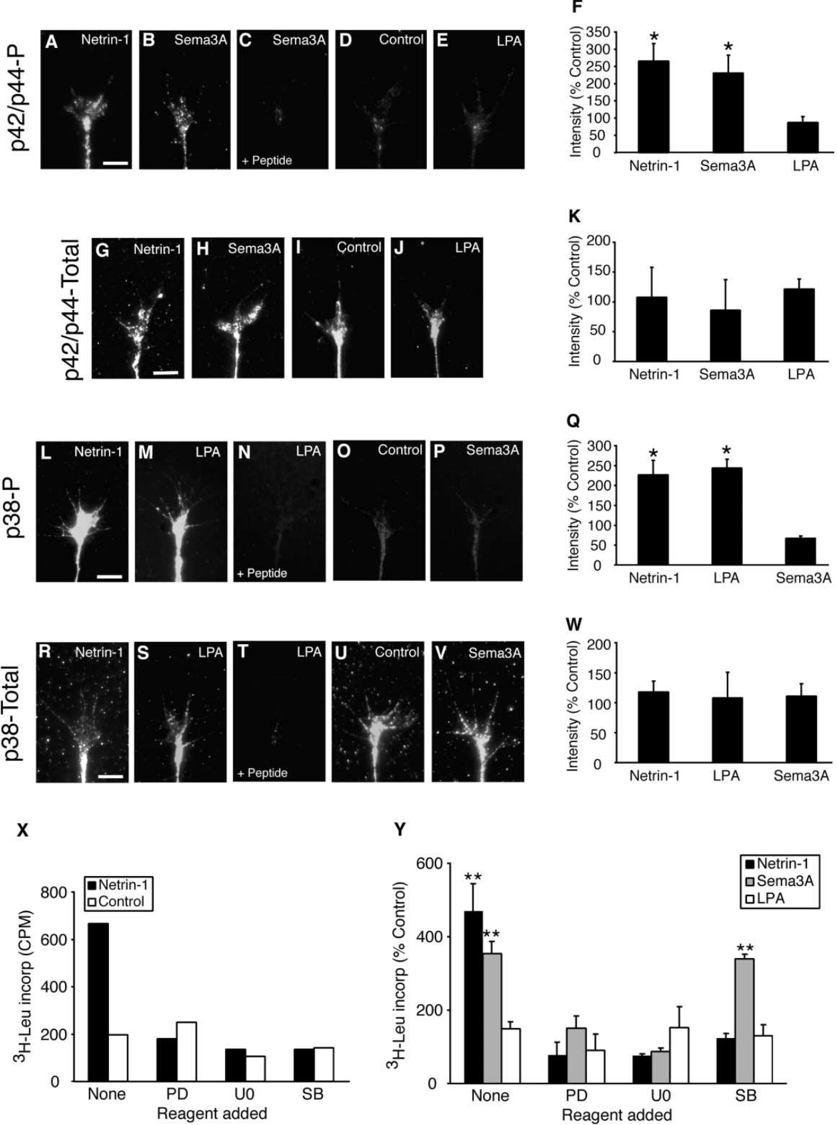
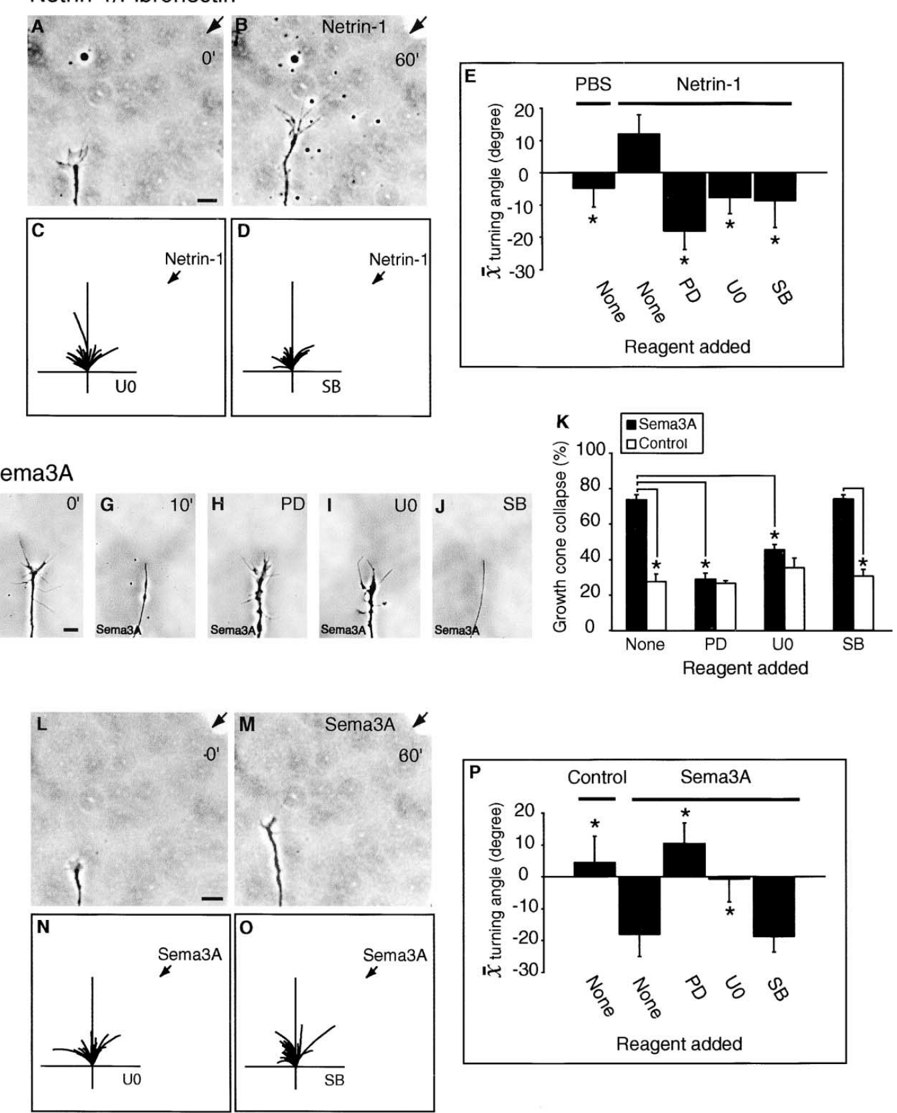
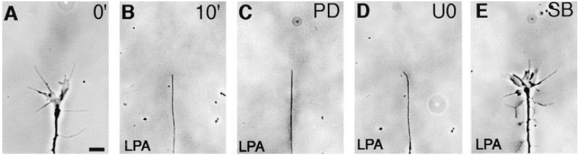
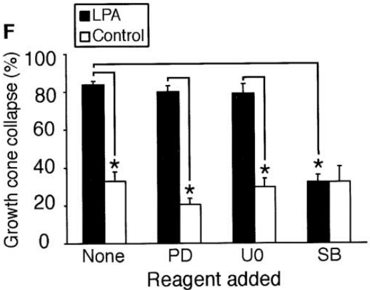
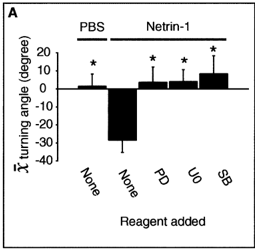
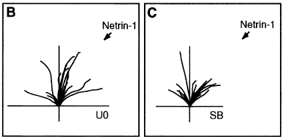
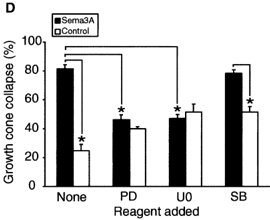
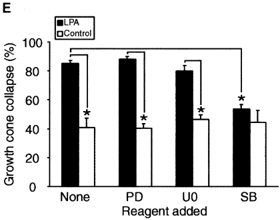
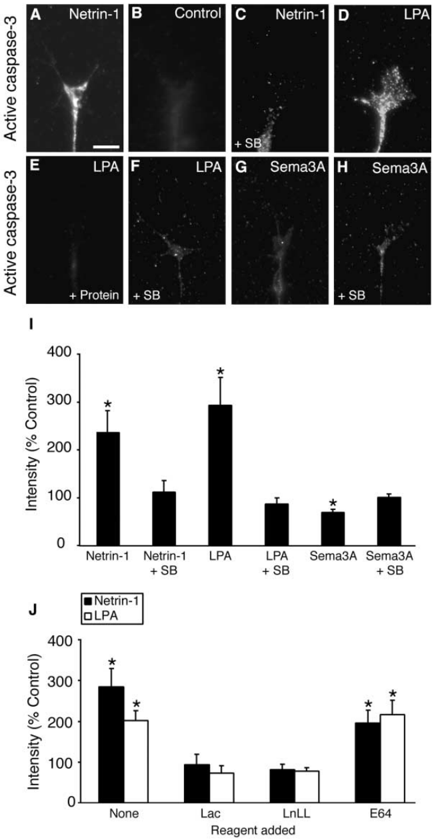
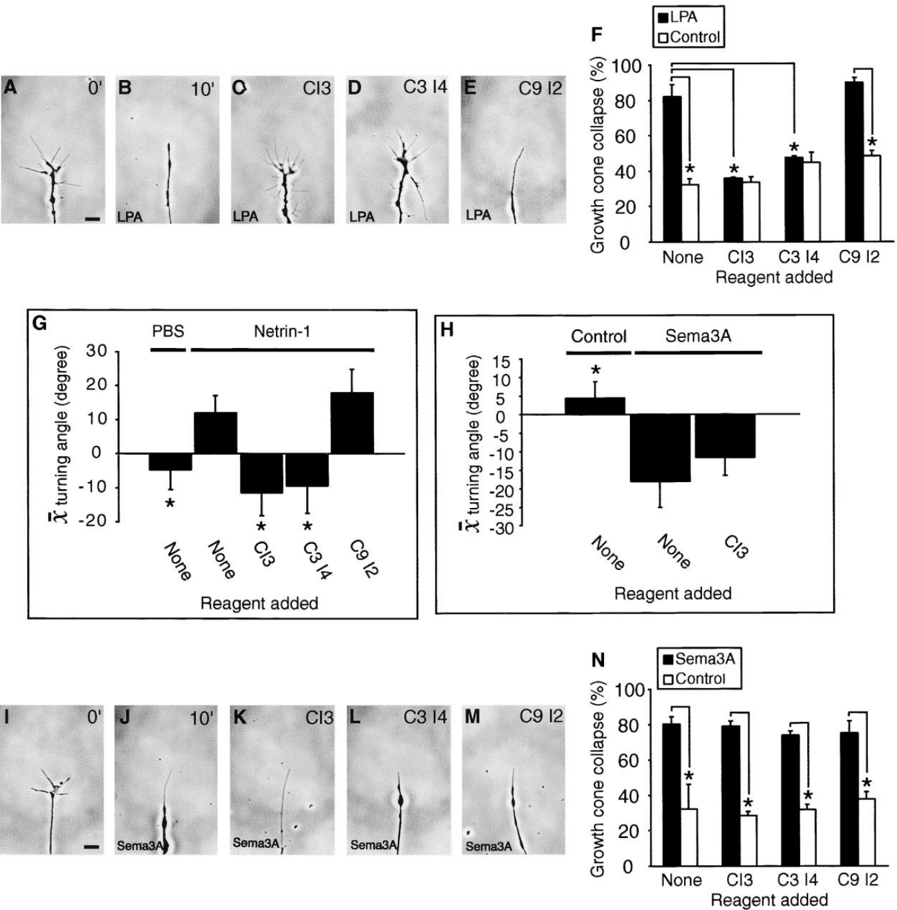
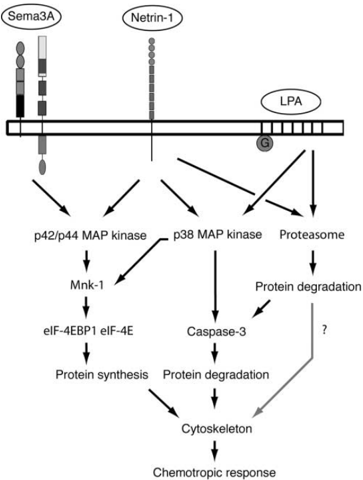
Previous work has shown that guidance cues trigger rapid changes in protein dynamics in retinal growth cones: netrin-1 stimulates both protein synthesis and degradation, while Sema3A elicits synthesis, and LPA induces degradation. What signaling pathways are involved? Our studies confirm that p42/44 MAPK mediates netrin-1 responses and further show that inhibiting its activity blocks cue-induced protein synthesis. Unexpectedly, p38 MAPK is also activated by netrin-1 in retinal growth cones and is required for chemotropic responses and translation. Sema3A- and LPA-induced responses, by contrast, require a single MAPK, p42/p44 and p38, respectively. In addition, we report that caspase-3, an apoptotic protease, is rapidly activated by netrin-1 and LPA in a proteasome- and p38-dependent manner and is required for chemotropic responses. These findings suggest that the apoptotic pathway may be used locally to control protein levels in growth cones and that the differential activation of MAPK pathways may underlie cue-directed migration.
Overview
The claims and statistics of this paper haven’t been checked yet.
Free: it reads the open-access text and checks the first 5 claims that cite a source we can check. Create a free account to check every claim.
Integrity signals
Registry
Cites
Statistics
Figures
Verification
Claims the paper makes
The claims and statistics of this paper haven’t been checked yet.
Free: it reads the open-access text and checks the first 5 claims that cite a source we can check. Create a free account to check every claim.
Claims other papers make about this one
Each is checked against this paper’s own text: does it say what the citing paper says it does?
The cited source says what the claim attributes to it.
In the citing paper
“Also, the ERK1/2 and p338 MAPK pathways are key regulators of growth cone guidance in vitro [ 30 ].”
From MAPK Pathways in Ocular Pathophysiology: Potential Therapeutic Drugs and Challenges (2023) · cites this paper as [30]
Self-check
Percentages, sums and reported differences re-computed from the paper’s own numbers.
The self-check needs the paper’s full text.
Citations
Cites
1 retracted
Stein, E., Zou, Y., Poo, M.-M., & Tessier-Lavigne, M. (2001) · Science · doi:10.1126/science.1059391 · Cited by 242
RetractedOpposing Effects of ERK and JNK-p38 MAP Kinases on Apoptosis
Xia, Z., Dickens, M., Raingeaud, J., Davis, R. J., & Greenberg, M. E. (1995) · Science · doi:10.1126/science.270.5240.1326 · Cited by 5,287
Mammalian MAP kinase signalling cascades
Chang, L., & Karin, M. (2001) · Nature · doi:10.1038/35065000 · Cited by 5,111
Cellular survival: a play in three Akts
Datta, S. R., Brunet, A., & Greenberg, M. E. (1999) · Genes & Development · doi:10.1101/gad.13.22.2905 · Cited by 4,216
The Molecular Biology of Axon Guidance
Tessier-Lavigne, M., & Goodman, C. S. (1996) · Science · doi:10.1126/science.274.5290.1123 · Cited by 3,278
Mammalian Caspases: Structure, Activation, Substrates, and Functions During Apoptosis
Earnshaw, W. C., Martins, L. M., & Kaufmann, S. H. (1999) · Annual Review of Biochemistry · doi:10.1146/annurev.biochem.68.1.383 · Cited by 2,760
A synthetic inhibitor of the mitogen-activated protein kinase cascade.
Dudley, D. T., Pang, L., Decker, S. J., Bridges, A. J., & Saltiel, A. R. (1995) · Proceedings of the National Academy of Sciences · doi:10.1073/pnas.92.17.7686 · Cited by 2,679
eIF4 Initiation Factors: Effectors of mRNA Recruitment to Ribosomes and Regulators of Translation
Gingras, A.-C., Raught, B., & Sonenberg, N. (1999) · Annual Review of Biochemistry · doi:10.1146/annurev.biochem.68.1.913 · Cited by 2,121
(1995) · FEBS Letters · doi:10.1016/0014-5793(95)00357-f · Cited by 2,086
Pagano, M., Tam, S. W., Theodoras, A. M., Beer-Romero, P., Del Sal, G., Chau, V., Yew, P. R., Draetta, G. F., & Rolfe, M. (1995) · Science · doi:10.1126/science.7624798 · Cited by 1,817
Research works printed but not linked: 2
- Bolshakov, V.Y., Carboni, L., Cobb, M.H., Siegelbaum, S.A., and colorectal cancer) defines an alternative mechanism for caspase Belardetti, F. (2000). Dual mitogen-activated protein kinase path- activation. Proc. Natl. Acad. Sci. USA 98, 3416-3421.
- Salvesen, 2002, Apoptosis: IAP proteins, :
Cited by
Lysophospholipid Receptors: Signaling and Biology
Ishii, I., Fukushima, N., Ye, X., & Chun, J. (2004) · Annual Review of Biochemistry · doi:10.1146/annurev.biochem.73.011303.073731 · Cited by 771
Li, Z., Jo, J., Jia, J.-M., Lo, S.-C., Whitcomb, D. J., Jiao, S., Cho, K., & Sheng, M. (2010) · Cell · doi:10.1016/j.cell.2010.03.053 · Cited by 532
“…pruning of Drosophila neurons during development (Kuo et al., 2006; Williams et al., 2006), in the structural remodelling of hippocampal neuron synapses and Xenopus retinal growth cones (Campbell and Holt, 2003; Gilman and Mattson, 2002), and in bird song learning (Huesmann and Clayton, 2006).”
BackgroundInfluentialSemaphorins command cells to move
Kruger, R. P., Aurandt, J., & Guan, K.-L. (2005) · Nature Reviews Molecular Cell Biology · doi:10.1038/nrm1740 · Cited by 491
Jung, H., Yoon, B. C., & Holt, C. E. (2012) · Nature Reviews Neuroscience · doi:10.1038/nrn3210 · Cited by 487
Self-citationNetrins: versatile extracellular cues with diverse functions
Sun, K. L. W., Correia, J. P., & Kennedy, T. E. (2011) · Development · doi:10.1242/dev.044529 · Cited by 427
“DCC-dependent commissural axon chemoattraction also involves the activation of the mitogen-activated protein kinase (MAPK) cascade (Campbell and Holt, 2003; Forcet et al., 2002; Ma et al., 2010).”
BackgroundDynamic Axonal Translation in Developing and Mature Visual Circuits
Shigeoka, T., Jung, H., Jung, J., Turner-Bridger, B., Ohk, J., Lin, J. Q., Amieux, P. S., & Holt, C. E. (2016) · Cell · doi:10.1016/j.cell.2016.05.029 · Cited by 455
“The same pattern of local translation was observed for caspases, whose local action mediates axon dynamics and developmentally controlled branch destruction (Campbell and Holt, 2003; Campbell and Okamoto, 2013; Simon et al., 2012).”
Self-citationAxon Regeneration Requires a Conserved MAP Kinase Pathway
Hammarlund, M., Nix, P., Hauth, L., Jorgensen, E. M., & Bastiani, M. (2009) · Science · doi:10.1126/science.1165527 · Cited by 451
Cell Death Mechanisms and Their Implications in Toxicology
Orrenius, S., Nicotera, P., & Zhivotovsky, B. (2011) · Toxicological Sciences · doi:10.1093/toxsci/kfq268 · Cited by 411
“Here, its activation, confined to a specific compartment, does not trigger a full apoptotic response but rather results in transient, localized changes in specific proteins involved in cone collapse and chemotropic response (Campbell and Holt, 2003).”
BackgroundAxonal Protein Synthesis and Degradation Are Necessary for Efficient Growth Cone Regeneration
Verma, P., Chierzi, S., Codd, A. M., Campbell, D. S., Meyer, R. L., Holt, C. E., & Fawcett, J. W. (2005) · The Journal of Neuroscience · doi:10.1523/jneurosci.3073-04.2005 · Cited by 406
“…upstream regulators of growth cone regeneration, we focused on TOR, the mitogen-activated protein kinase p38, and caspase-3, molecules highly expressed in the CNS and implicated in recent studies on the regulation of axonal protein synthesis during axon guidance (Campbell and Holt, 2001, 2003).”
Self-citationSemaphorin Regulation of Cellular Morphology
Tran, T. S., Kolodkin, A. L., & Bharadwaj, R. (2007) · Annual Review of Cell and Developmental Biology · doi:10.1146/annurev.cellbio.22.010605.093554 · Cited by 388
“These include the regulation of local translation events required for repulsive responses to semaphorins (Campbell & Holt 2003, Wu et al. 2005), the intriguing possibility that semaphorin signaling regulates endocytosis and retrograde transport (Fournier et al. 2000, Togashi et al. 2006), and the…”
BackgroundWillis, D., Li, K. W., Zheng, J.-Q., Chang, J. H., Smit, A., Kelly, T., Merianda, T. T., Sylvester, J., van Minnen, J., & Twiss, J. L. (2005) · The Journal of Neuroscience · doi:10.1523/jneurosci.4235-04.2005 · Cited by 381
“Some chemotropic responses in developing Xenopus retinal axons are mediated by local activation of apoptotic signaling pathways (Campbell and Holt, 2003).”
BackgroundYao, J., Sasaki, Y., Wen, Z., Bassell, G. J., & Zheng, J. Q. (2006) · Nature Neuroscience · doi:10.1038/nn1773 · Cited by 344
Signalling mechanisms mediating neuronal responses to guidance cues
Guan, K.-L., & Rao, Y. (2003) · Nature Reviews Neuroscience · doi:10.1038/nrn1254 · Cited by 289
Apoptotic mechanisms and the synaptic pathology of schizophrenia
Glantz, L. A., Gilmore, J. H., Lieberman, J. A., & Jarskog, L. F. (2006) · Schizophrenia Research · doi:10.1016/j.schres.2005.08.014 · Cited by 292
Ephrin signalling controls brain size by regulating apoptosis of neural progenitors
Depaepe, V., Suarez-Gonzalez, N., Dufour, A., Passante, L., Gorski, J. A., Jones, K. R., Ledent, C., & Vanderhaeghen, P. (2005) · Nature · doi:10.1038/nature03651 · Cited by 284
Extracellular stimuli specifically regulate localized levels of individual neuronal mRNAs
Willis, D. E., van Niekerk, E. A., Sasaki, Y., Mesngon, M., Merianda, T. T., Williams, G. G., Kendall, M., Smith, D. S., Bassell, G. J., & Twiss, J. L. (2007) · The Journal of Cell Biology · doi:10.1083/jcb.200703209 · Cited by 270
Lysophosphatidic Acid Signaling in the Nervous System
Yung, Y. C., Stoddard, N. C., Mirendil, H., & Chun, J. (2015) · Neuron · doi:10.1016/j.neuron.2015.01.009 · Cited by 263
“This supports LPA's role as an inhibitory cue during cell migration or process outgrowth (Fukushima et al., 2002b; Campbell and Holt, 2003).”
Netrin requires focal adhesion kinase and Src family kinases for axon outgrowth and attraction
Liu, G., Beggs, H., Jürgensen, C., Park, H.-T., Tang, H., Gorski, J., Jones, K. R., Reichardt, L. F., Wu, J., & Rao, Y. (2004) · Nature Neuroscience · doi:10.1038/nn1331 · Cited by 259
Caspase-3 in the central nervous system: beyond apoptosis
D’Amelio, M., Sheng, M., & Cecconi, F. (2012) · Trends in Neurosciences · doi:10.1016/j.tins.2012.06.004 · Cited by 253
Lipid Rafts Mediate Chemotropic Guidance of Nerve Growth Cones
Guirland, C., Suzuki, S., Kojima, M., Lu, B., & Zheng, J. Q. (2004) · Neuron · doi:10.1016/s0896-6273(04)00157-6 · Cited by 254
“We thus used a more sensitive and well-established cues (Campbell and Holt, 2003; Forcet et al., 2002; Ming et al., 2002).”
MethodResultDual Functional Activity of Semaphorin 3B Is Required for Positioning the Anterior Commissure
Julien, F., Bechara, A., Fiore, R., Nawabi, H., Zhou, H., Hoyo-Becerra, C., Bozon, M., Rougon, G., Grumet, M., Püschel, A. W., et al. (2005) · Neuron · doi:10.1016/j.neuron.2005.08.033 · Cited by 236
Focal adhesion kinase in netrin-1 signaling
Ren, X.-R., Ming, G.-L., Xie, Y., Hong, Y., Sun, D.-M., Zhao, Z.-Q., Feng, Z., Wang, Q., Shim, S., Chen, Z.-F., et al. (2004) · Nature Neuroscience · doi:10.1038/nn1330 · Cited by 229
Lysophosphatidic acid (LPA) and its receptors
Noguchi, K., Herr, D., Mutoh, T., & Chun, J. (2009) · Current Opinion in Pharmacology · doi:10.1016/j.coph.2008.11.010 · Cited by 235
“Another LPA-induced collapse mechanism is rapid protein degradation in the growth cone of Xenopus retinal neurons, which involves activation of proteasome, p38 MAPK, and caspase-3 [38,39].”
BackgroundThe Ubiquitin Ligase Phr1 Regulates Axon Outgrowth through Modulation of Microtubule Dynamics
Lewcock, J. W., Genoud, N., Lettieri, K., & Pfaff, S. L. (2007) · Neuron · doi:10.1016/j.neuron.2007.09.009 · Cited by 226
“This hypothesis is strengthened further by the observation that proteasome inhibitors have been shown to disrupt the turning of retinal axons toward chemoattractants (Campbell and Holt, 2003).”
BackgroundThe Netrin family of guidance factors: emphasis on Netrin-1 signalling
Barallobre, M. J., Pascual, M., Del Río, J. A., & Soriano, E. (2005) · Brain Research Reviews · doi:10.1016/j.brainresrev.2004.11.003 · Cited by 211
A long way to go: caspase inhibitors in clinical use
Dhani, S., Zhao, Y., & Zhivotovsky, B. (2021) · Cell Death & Disease · doi:10.1038/s41419-021-04240-3 · Cited by 191
Gralle, M., & Ferreira, S. T. (2007) · Progress in Neurobiology · doi:10.1016/j.pneurobio.2007.02.001 · Cited by 191
E3 Ligase Nedd4 Promotes Axon Branching by Downregulating PTEN
Drinjakovic, J., Jung, H., Campbell, D. S., Strochlic, L., Dwivedy, A., & Holt, C. E. (2010) · Neuron · doi:10.1016/j.neuron.2010.01.017 · Cited by 205
Self-citationPiper, M., & Holt, C. (2004) · Annual Review of Cell and Developmental Biology · doi:10.1146/annurev.cellbio.20.010403.111746 · Cited by 196
“…mitogen-activated protein kinase (MAPK) molecules that converge on mTOR and lead to an increase in phosphorylation of translation initiation factors and local protein synthesis, which subsequently mediates growth cone steering responses to these guidance cues (adapted from Campbell & Holt 2003).”
BackgroundSelf-citationIntracellular control of developmental and regenerative axon growth
Zhou, F.-Q., & Snider, W. D. (2006) · Philosophical Transactions of the Royal Society B: Biological Sciences · doi:10.1098/rstb.2006.1882 · Cited by 186
“This requirement of local signalling has been amply demonstrated by experiments using Campenot chambers, a technique that separates neuronal cell bodies from their axons in different compartments (Campenot 1982a,b).”
MethodLocal translation and directional steering in axons
Lin, A. C., & Holt, C. E. (2007) · The EMBO Journal · doi:10.1038/sj.emboj.7601808 · Cited by 184
“Netrin-1 and Sema3A induce phosphorylation of eIF-4EBP via MAP kinases and mammalian target of rapamycin (mTOR) (Campbell and Holt, 2001, 2003), and a netrin-1 gradient induces asymmetrical eIF-4EBP phosphorylation (Leung et al, 2006).”
BackgroundSelf-citationRevisiting Netrin-1: One Who Guides (Axons)
Boyer, N. P., & Gupton, S. L. (2018) · Frontiers in Cellular Neuroscience · doi:10.3389/fncel.2018.00221 · Cited by 178
“Deleted in colorectal cancer is also involved in activating members of the mitogen-activated protein kinase (MAPK) pathway (Campbell and Holt, 2003).”
BackgroundTohda, C., Urano, T., Umezaki, M., Nemere, I., & Kuboyama, T. (2012) · Scientific Reports · doi:10.1038/srep00535 · Cited by 164
Ca 2+ signals and death programmes in neurons
Berliocchi, L., Bano, D., & Nicotera, P. (2005) · Philosophical Transactions of the Royal Society B: Biological Sciences · doi:10.1098/rstb.2005.1765 · Cited by 174
“In neurons, the NaC/Ca2C exchanger (NCX) has the highest capacity, whereas the ATPdriven plasma membrane Ca2C pump (PMCA) has a high affinity for Ca2C but a low turnover number (Carafoli et al. 2001).”
The dependence receptor UNC5H2 mediates apoptosis through DAP‐kinase
Llambi, F., Lourenço, F. C., Gozuacik, D., Guix, C., Pays, L., Del Rio, G., Kimchi, A., & Mehlen, P. (2005) · The EMBO Journal · doi:10.1038/sj.emboj.7600584 · Cited by 173
“Similarly, local caspase activation without cell death induction starts to be documented (Fernando et al, 2002; Campbell and Holt, 2003 ).”
BackgroundChierzi, S., Ratto, G. M., Verma, P., & Fawcett, J. W. (2005) · European Journal of Neuroscience · doi:10.1111/j.1460-9568.2005.04066.x · Cited by 170
“Axonal protein synthesis mediates turning and collapsing responses of Xenopus growth cones in response to different diffusible cues (Campbell & Holt, 2001) and recent evidence has demonstrated that this requires ERK activation (Campbell & Holt, 2003).”
BackgroundThe making of successful axonal regeneration: Genes, molecules and signal transduction pathways
Raivich, G., & Makwana, M. (2007) · Brain Research Reviews · doi:10.1016/j.brainresrev.2006.09.005 · Cited by 168
Piper, M., Salih, S., Weinl, C., Holt, C. E., & Harris, W. A. (2005) · Nature Neuroscience · doi:10.1038/nn1380 · Cited by 162
“In growth cones, both Sema3A and netrin-1 signal through various MAPK molecules to induce turning in a gradient or collaps”
Self-citationClose encounters: regulation of vertebrate skeletal myogenesis by cell-cell contact
Krauss, R. S., Cole, F., Gaio, U., Takaesu, G., Zhang, W., & Kang, J.-S. (2005) · Journal of Cell Science · doi:10.1242/jcs.02397 · Cited by 160
“Brookdale Department of Molecular, Cell and Developmental Biology, Mount Sinai School of Medicine, New York, NY 10029, USA *Author for correspondence (e-mail: robert.krauss@mssm.edu) Journal of Cell Science 118, 2355-2362 Published by The Company of Biologists 2005 doi:10.1242/jcs.02397”
InfluentialRegulation of intrinsic neuronal properties for axon growth and regeneration
Rossi, F., Gianola, S., & Corvetti, L. (2006) · Progress in Neurobiology · doi:10.1016/j.pneurobio.2006.12.001 · Cited by 165
Semaphorin7A regulates neuroglial plasticity in the adult hypothalamic median eminence
Parkash, J., Messina, A., Langlet, F., Cimino, I., Loyens, A., Mazur, D., Gallet, S., Balland, É., Malone, S. A., Pralong, F. P., et al. (2015) · Nature Communications · doi:10.1038/ncomms7385 · Cited by 162
“In support of these findings, FAK–MAPK activation and the phosphorylation of cofilin have previously been linked to Sema3A-induced growth-cone collapse 56,57 .”
Netrins and neogenin promote myotube formation
Kang, J.-S., Yi, M.-J., Zhang, W., Feinleib, J. L., Cole, F., & Krauss, R. S. (2004) · The Journal of Cell Biology · doi:10.1083/jcb.200405039 · Cited by 146
“T H E J O U R N A L O F C E L L B IO L O G Y © The Rockefeller University Press $8.00 The Journal of Cell Biology, Vol. 167, No. 3, November 8, 2004 493–504 http://www.jcb.org/cgi/doi/10.1083/jcb.200405039 JCB: ARTICLE JCB 493 Netrins and neogenin promote myotube formation”
InfluentialFunction and regulation of local axonal translation
Lin, A. C., & Holt, C. E. (2008) · Current Opinion in Neurobiology · doi:10.1016/j.conb.2008.05.004 · Cited by 144
“Axon guidance cues induce global activation of translation through initiation factors like eukaryotic initiation factor 4E (eIF-4E) and eIF-4Ebinding protein [7,8,31 ,51], and guidance cue gradients induce asymmetrical activation of such global translation regulators [12 ].”
BackgroundSelf-citationNonapoptotic Function of BAD and BAX in Long-Term Depression of Synaptic Transmission
Jiao, S., & Li, Z. (2011) · Neuron · doi:10.1016/j.neuron.2011.04.004 · Cited by 143
Guidance Molecules in Axon Pruning and Cell Death
Vanderhaeghen, P., & Cheng, H.-J. (2010) · Cold Spring Harbor Perspectives in Biology · doi:10.1101/cshperspect.a001859 · Cited by 136
Netrin signaling leading to directed growth cone steering
Round, J., & Stein, E. (2007) · Current Opinion in Neurobiology · doi:10.1016/j.conb.2007.01.003 · Cited by 140
Harmful and beneficial effects of inflammation after spinal cord injury
David, S., López‐Vales, R., & Yong, V. W. (2012) · Handbook of clinical neurology · doi:10.1016/b978-0-444-52137-8.00030-9 · Cited by 155
Bechara, A., Nawabi, H., Moret, F., Yaron, A., Weaver, E. J., Bozon, M., Abouzid, K., Guan, J., Tessier‐Lavigne, M., Lemmon, V., et al. (2008) · The EMBO Journal · doi:10.1038/emboj.2008.86 · Cited by 140
“Interestingly, FAK also participates in the signalling of guidance cues including Sema3B (Miao et al, 2000; Carter et al, 2002; Li et al, 2004; Liu et al, 2004; Ren et al, 2004; Falk et al, 2005) although its recruitment to Plexins has not been reported (Barberis et al, 2004).”
BackgroundThe role of local protein synthesis and degradation in axon regeneration
Gumy, L. F., Tan, C. L., & Fawcett, J. W. (2010) · Experimental Neurology · doi:10.1016/j.expneurol.2009.06.004 · Cited by 125
“…synthesis is not immediately clear, it was speculated that they may be involved in the synthesis of growthrelated proteins from axonally-localised mRNAs, not unlike the role of ERK in regulating growth cone chemotropic responses to diffusible cues (Campbell and Holt, 2003; Chierzi et al., 2005).”
BackgroundThe evolving roles of axonally synthesized proteins in regeneration
Willis, D. E., & Twiss, J. L. (2006) · Current Opinion in Neurobiology · doi:10.1016/j.conb.2006.01.002 · Cited by 147
Local protein synthesis during axon guidance and synaptic plasticity
Martin, K. C. (2004) · Current Opinion in Neurobiology · doi:10.1016/j.conb.2004.05.009 · Cited by 144
Tang, F., & Kalil, K. (2005) · The Journal of Neuroscience · doi:10.1523/jneurosci.0871-05.2005 · Cited by 127
Semaphorin3A-induced receptor endocytosis during axon guidance responses is mediated by L1 CAM
Castellani, V., Falk, J., & Rougon, G. (2004) · Molecular and Cellular Neuroscience · doi:10.1016/j.mcn.2004.01.010 · Cited by 130
Light forces the pace: optical manipulation for biophotonics
Stevenson, D. J., Gunn‐Moore, F. J., & Dholakia, K. (2010) · Journal of Biomedical Optics · doi:10.1117/1.3475958 · Cited by 147
Tauszig-Delamasure, S., Yu, L.-Y., Cabrera, J. R., Bouzas-Rodriguez, J., Mermet-Bouvier, C., Guix, C., Bordeaux, M.-C., Arumäe, U., & Mehlen, P. (2007) · Proceedings of the National Academy of Sciences · doi:10.1073/pnas.0701243104 · Cited by 107
The ubiquitin ligase Rnf6 regulates local LIM kinase 1 levels in axonal growth cones
Tursun, B., Schlüter, A., Peters, M. A., Viehweger, B., Ostendorff, H. P., Soosairajah, J., Drung, A., Bossenz, M., Johnsen, S. A., Schweizer, M., et al. (2005) · Genes & Development · doi:10.1101/gad.1340605 · Cited by 119
“…guidance are translated into changes in cytoskeletal actin dynamics in growth cones (da Silva and Dotti 2002; Dickson 2002; van Horck et al. 2004; Campbell and Holt 2003) and that the activity of ubiquitin ligases is often regulated (Pickart 2001), open up the intriguing possibility that Rnf6 is…”
BackgroundNetrin-1: when a neuronal guidance cue turns out to be a regulator of tumorigenesis
Mehlen, P., & Furne, C. (2005) · Cellular and Molecular Life Sciences · doi:10.1007/s00018-005-5191-3 · Cited by 137
Rajnicek, A. M., Foubister, L. E., & McCaig, C. (2006) · Journal of Cell Science · doi:10.1242/jcs.02896 · Cited by 129
“…prevailing model of growth cone chemotropism (Song and Poo, 2001) are short; typically 30 to 60 minutes (e.g. Wen et al., 2004; Ming et al., 2002; Campbell and Holt, 2003), so it would be interesting to determine whether chemotropic signalling requirements change temporally in a manner similar…”
BackgroundMethodInfluentialCagnetta, R., Wong, H. H., Frese, C. K., Mallucci, G. R., Krijgsveld, J., & Holt, C. E. (2018) · Molecular Cell · doi:10.1016/j.molcel.2018.11.013 · Cited by 120
Self-citationCaspases in the Developing Central Nervous System: Apoptosis and Beyond
Nguyen, T. T. M., Gillet, G., & Popgeorgiev, N. (2021) · Frontiers in Cell and Developmental Biology · doi:10.3389/fcell.2021.702404 · Cited by 114
Carter, L. M., Starkey, M. L., Akrimi, S. F., Davies, M., McMahon, S. B., & Bradbury, E. J. (2008) · The Journal of Neuroscience · doi:10.1523/jneurosci.2217-08.2008 · Cited by 104
“…suggests a role for ERK signaling in axonal growth (Zhou and Snider, 2006), including activity in the regulation of growth-associated cytoskeletal proteins such as MAP1b (Goold and Gordon-Weeks, 2005) and the regulation of local protein synthesis in neuronal growth cones (Campbell and Holt, 2003).”
BackgroundPatrick, G. N. (2006) · Current Opinion in Neurobiology · doi:10.1016/j.conb.2006.01.007 · Cited by 114
Schwamborn, J. C., Müller, M., Becker, A. H., & Püschel, A. W. (2007) · The EMBO Journal · doi:10.1038/sj.emboj.7601580 · Cited by 120
“…cones and has been implicated in the regula- tion of axon guidance, synapse formation, and neuronal plasticity, as well as neurodegenerative processes and regene- ration (Campbell and Holt, 2001, 2003; DiAntonio and Hicke, 2004; Konishi et al, 2004; van Roessel et al, 2004; Nakata et al, 2005).”
BackgroundRetractedMukherjee, A., & Williams, D. W. (2017) · Cell Death & Differentiation · doi:10.1038/cdd.2017.64 · Cited by 100
The Role of Protein Synthesis in Striatal Long-Term Depression
Yin, H. H., Davis, M. I., Ronesi, J. A., & Lovinger, D. M. (2006) · The Journal of Neuroscience · doi:10.1523/jneurosci.3196-06.2006 · Cited by 101
“In mammalian axons, currently established functional roles of axonal translation are restricted to growth cone guidance and regeneration after injury (Campbell and Holt, 2001; Zheng et al., 2001; Campbell and Holt, 2003; Willis et al., 2005).”
BackgroundNew roles for old enzymes: killer caspases as the engine of cell behavior changes
Connolly, P. F., Jäger, R., & Fearnhead, H. O. (2014) · Frontiers in Physiology · doi:10.3389/fphys.2014.00149 · Cited by 110
Kill one or kill the many: interplay between mitophagy and apoptosis
Wanderoy, S., Hees, J. T., Klesse, R., Edlich, F., & Harbauer, A. B. (2020) · Biological Chemistry · doi:10.1515/hsz-2020-0231 · Cited by 98
Regulation of EphB2 activation and cell repulsion by feedback control of the MAPK pathway
Poliakov, A., Cotrina, M. L., Pasini, A., & Wilkinson, D. G. (2008) · The Journal of Cell Biology · doi:10.1083/jcb.200807151 · Cited by 105
“It is also possible that the MAPK pathway is required for cell repulsion independently of its effect on EphB2 activation, and indeed, MAPK is involved in growth cone repulsion by Slit ( Campbell and Holt, 2003 ; Piper et al., 2006 ).”
BackgroundInfluentialCaspases in synaptic plasticity
Li, Z., & Sheng, M. (2012) · Molecular Brain · doi:10.1186/1756-6606-5-15 · Cited by 89
“In the nervous system, caspases have been shown to play a non-apoptotic role in synaptic plasticity [11,12], dendritic pruning during development in Drosophila neurons [13,14], chemotropic responses of retinal growth cones in Xenopus [15], neurite outgrowth [16], * Correspondence: lizheng2@mail.”
BackgroundCaspase-3 Protects Stressed Organs against Cell Death
Khalil, H., Peltzer, N., Walicki, J., Yang, J.-Y., Dubuis, G., Gardiol, N., Held, W., Bigliardi, P. L., Marsland, B. J., Liaudet, L., et al. (2012) · Molecular and Cellular Biology · doi:10.1128/mcb.00774-12 · Cited by 92
RNA transport and localized protein synthesis in neurological disorders and neural repair
Wang, W., van Niekerk, E., Willis, D. E., & Twiss, J. L. (2007) · Developmental Neurobiology · doi:10.1002/dneu.20511 · Cited by 89
“Axonal turning responses to the pathfinding cues netrin, semaphorin, Slit, and brain-derived neurotrophin (BDNF) require intra-axonal protein synthesis (Campbell and Holt, 2001, 2003; Ming et al., 2002; Piper et al., 2005, 2006; Wu et al., 2005).”
BackgroundPinan‐Lucarré, B., Gabel, C. V., Reina, C. P., Hulme, S. E., Shevkoplyas, S. S., Slone, R. D., Xue, J., Qiao, Y., Weisberg, S., Roodhouse, K., et al. (2012) · PLoS Biology · doi:10.1371/journal.pbio.1001331 · Cited by 95
“regeneration might influence regrowth in vertebrate neurons. Studies on in vitro vertebrate neuronal culture showed that caspase-3 is rapidly activated within 5 min of application of the guidance cues netrin-1 and LPA on growth cones to promote chemotropic responses”
BackgroundDCC association with lipid rafts is required for netrin-1-mediated axon guidance
Hérincs, Z., Corset, V., Cahuzac, N., Furne, C., Castellani, V., Hueber, A., & Mehlen, P. (2005) · Journal of Cell Science · doi:10.1242/jcs.02296 · Cited by 90
Netrin-1 is a survival factor during commissural neuron navigation
Furne, C., Rama, N., Corset, V., Chédotal, A., & Mehlen, P. (2008) · Proceedings of the National Academy of Sciences · doi:10.1073/pnas.0803645105 · Cited by 77
“Along this line, importance of caspase in axon turning has previously been reported (23) and our preliminary results suggest that addition of the general caspase inhibitor z-VAD-fmk in chick neural tube is associated with defects in commissural axon pathfinding that include aberrant projections (N.”
BackgroundCorradi, E., Dalla Costa, I., Gavoci, A., Iyer, A., Roccuzzo, M., Otto, T. A., Oliani, E., Bridi, S., Strohbuecker, S., Santos‐Rodriguez, G., et al. (2020) · The EMBO Journal · doi:10.15252/embj.2019102513 · Cited by 79
“One key unresolved question is how cues inhibit basal LPS in axons.”
InfluentialHIV‐1 Tat and morphine have interactive effects on oligodendrocyte survival and morphology
Hauser, K. F., Hahn, Y. K., Adjan, V. V., Zou, S., Buch, S. K., Nath, A., Bruce‐Keller, A. J., & Knapp, P. E. (2008) · Glia · doi:10.1002/glia.20746 · Cited by 96
Semaphorins in development and adult brain: Implication for neurological diseases
Mann, F., Chauvet, S., & Rougon, G. (2007) · Progress in Neurobiology · doi:10.1016/j.pneurobio.2007.02.011 · Cited by 94
Semaphorin3A regulates synaptic function of differentiated hippocampal neurons
Bouzioukh, F., Daoudal, G., Falk, J., Debanne, D., Rougon, G., & Castellani, V. (2006) · European Journal of Neuroscience · doi:10.1111/j.1460-9568.2006.04783.x · Cited by 81
“Signalling cascades underlying such effects are diverse, including Rho GTPase and MAPK activation, local protein synthesis and degradation (Campbell & Holt, 2003; Bagnard et al., 2004; Wu et al., 2005).”
BackgroundBartoe, J. L., McKenna, W. L., Quan, T. K., Stafford, B. K., Moore, J. A., Xia, J., Takamiya, K., Huganir, R. L., & Hinck, L. (2006) · Journal of Neuroscience · doi:10.1523/jneurosci.3469-05.2006 · Cited by 107
“This type of clustering has been reported for epidermal growth factor receptors before endocytosis when they move quickly from lipid rafts to bulk plasma membrane where they can be internalized via clathrin-coated vesicles (Sorkin and Waters, 1993; Alexander, 1998; Carpenter, 2000).”
BackgroundDependence receptors: between life and death
Mehlen, P., & Thibert, C. (2004) · Cellular and Molecular Life Sciences · doi:10.1007/s00018-004-3467-7 · Cited by 76
The dependence receptors DCC and UNC5H as a link between neuronal guidance and survival
Mehlen, P., & Mazelin, L. (2003) · Biology of the Cell · doi:10.1016/s0248-4900(03)00072-8 · Cited by 80
“Indeed, the netrin-1 dependent transient caspase-3 activation is not specific for netrin-1 but also occurs for various axonal guidance cues like semaphorin3A or LPA (Campbell and Holt, 2003).”
BackgroundInfluentialPartial Cleavage of RasGAP by Caspases Is Required for Cell Survival in Mild Stress Conditions
Yang, J.-Y., Michod, D., Walicki, J., Murphy, B. M., Kasibhatla, S., Martin, S. J., & Widmann, C. (2004) · Molecular and Cellular Biology · doi:10.1128/mcb.24.23.10425-10436.2004 · Cited by 84
Berliocchi, L., Fava, E., Leist, M., Horvat, V., Dinsdale, D., Read, D., & Nicotera, P. (2005) · The Journal of Cell Biology · doi:10.1083/jcb.200406126 · Cited by 82
“4 C), either reflecting an undefined housekeeping function of caspase-3 (Campbell and Holt, 2003; for review see Perfettini and Kroemer, 2003) or, reflecting a more effective antiapoptotic machinery that operates in the neuronal projections (Potts et al.”
BackgroundApoptotic and Nonapoptotic Caspase Functions in Animal Development
Miura, M. (2012) · Cold Spring Harbor Perspectives in Biology · doi:10.1101/cshperspect.a008664 · Cited by 77
Apoptosis in schizophrenia: pathophysiologic and therapeutic considerations
Jarskog, L. F. (2006) · Current Opinion in Psychiatry · doi:10.1097/01.yco.0000218603.25346.8f · Cited by 81
Lee, S., Nahm, M., Lee, M., Kwon, M., Kim, E., Zadeh, A. D., Cao, H., Kim, H.-J., Lee, Z. H., Oh, S. B., et al. (2007) · Development · doi:10.1242/dev.02842 · Cited by 87
“Treatment of these neurons with netrin-1 leads to the rapid activation of signaling pathways that phosphorylate the translation initiation factor eIF4E and its binding protein eIF4E-BP1 and thus induces axonal protein synthesis (Campbell and Holt, 2001; Campbell and Holt, 2003).”
BackgroundFunction and translational regulation of mRNA in developing axons
Hengst, U., & Jaffrey, S. R. (2007) · Seminars in Cell and Developmental Biology · doi:10.1016/j.semcdb.2007.01.003 · Cited by 89
McLaughlin, B. (2004) · Apoptosis · doi:10.1023/b:appt.0000018793.10779.dc · Cited by 86
Role of Semaphorins during Axon Growth and Guidance
Koncina, E., Roth, L., Gonthier, B., & Bagnard, D. (2008) · Advances in experimental medicine and biology · doi:10.1007/978-0-387-76715-4_4 · Cited by 94
c-Jun N-terminal Kinase 1 (JNK1) Is Required for Coordination of Netrin Signaling in Axon Guidance
Qu, C., Li, W., Shao, Q., Dwyer, T. A., Huang, H., Yang, T., & Liu, G. (2012) · Journal of Biological Chemistry · doi:10.1074/jbc.m112.417881 · Cited by 77
New Views on the Misconstrued: Executioner Caspases and Their Diverse Non-apoptotic Roles
Unsain, N., & Barker, P. A. (2015) · Neuron · doi:10.1016/j.neuron.2015.08.029 · Cited by 84
Selective Suppression of In Vivo Tumorigenicity by Semaphorin SEMA3F in Lung Cancer Cells
Kusy, S., Nasarre, P., Chan, D. C. F., Potiron, V. A., Meyronet, D., Gemmill, R. M., Constantin, B., Drabkin, H. A., & Roche, J. (2005) · Neoplasia · doi:10.1593/neo.04721 · Cited by 75
“In neurons, the opposite effect was reported for SEMA3A [26], and repulsion of neuronal progenitors, as well as protein synthesis regulation, involve the activation of p42/p44 MAPK [27,41].”
BackgroundGTPases in Semaphorin Signaling
Püschel, A. W. (2007) · Advances in experimental medicine and biology · doi:10.1007/978-0-387-70956-7_2 · Cited by 84
Singh, I. N., El‐Hage, N., Campbell, M. E., Lutz, S. E., Knapp, P. E., Nath, A., & Hauser, K. F. (2005) · Neuroscience · doi:10.1016/j.neuroscience.2005.05.028 · Cited by 74
“This is an important distinction, since both JNK and p38 MAPK are reported to influence the outgrowth of new neurites (Campbell and Holt, 2003; Eom et al., 2004), in addition to promoting both degenerative or regenerative processes (Herdegen and Waetzig, 2001; Hashimoto and Masliah, 2003).”
BackgroundBae, G., Yang, Y.-J., Jiang, G., Hong, M., Lee, H., Tessier‐Lavigne, M., Kang, J., & Krauss, R. S. (2009) · Molecular Biology of the Cell · doi:10.1091/mbc.e09-06-0491 · Cited by 73
“Other members of this subfamily include, in vertebrates, deleted in colorectal cancer (DCC); in Drosophila, Frazzled; and in Caenorhabditis elegans, UNC40 (Huber et al., 2003; Round and Stein, 2007).”
BackgroundInfluentialMolecular and Cellular Mechanisms of Axonal Regeneration After Spinal Cord Injury
van Niekerk, E. A., Tuszynski, M. H., Lu, P., & Dulin, J. N. (2016) · Molecular & Cellular Proteomics · doi:10.1074/mcp.r115.053751 · Cited by 82
Deterministic and Stochastic Elements of Axonal Guidance
Maskery, S., & Shinbrot, T. (2005) · Annual Review of Biomedical Engineering · doi:10.1146/annurev.bioeng.7.060804.100446 · Cited by 80
LPA in neural cell development
Fukushima, N. (2004) · Journal of Cellular Biochemistry · doi:10.1002/jcb.20093 · Cited by 71
Local Translation and mRNA Trafficking in Axon Pathfinding
Yoon, B. C., Zivraj, K. H., & Holt, C. E. (2009) · Results and Problems in Cell Differentiation · doi:10.1007/400_2009_5 · Cited by 62
“Interestingly, a PI3K inhibitor, wortmannin, inhibits netrin-1, but not Sema3A-mediated protein synthesis, indicating that the two guidance cues work via similar but distinct signaling pathways (Campbell and Holt 2003).”
BackgroundSelf-citationReceptor-specific interactome as a hub for rapid cue-induced selective translation in axons
Koppers, M., Cagnetta, R., Shigeoka, T., Wunderlich, L. C., Vallejo-Ramirez, P., Qiaojin Lin, J., Zhao, S., Jakobs, M. A., Dwivedy, A., Minett, M. S., et al. (2019) · eLife · doi:10.7554/elife.48718 · Cited by 67
“Consistent with this result, both cues decrease pERK1/2 levels (Figure S4A), an upstream activator of the TOR signalling pathway, which is known to regulate axonal protein synthesis (Campbell and Holt, 2003).”
ResultSelf-citation
Metadata
- Authors
- Campbell, D. S., & Holt, C. E.
- Affiliations
- University of Cambridge (GB)
- Corresponding author
- Campbell, Douglas S.
- Holt, Christine E.
- Venue
- Neuron
- Publisher
- Elsevier BV
- Published
- 2003-03
- Volume
- 37
- Issue
- 6
- Pages
- 939-952
- ISSN
- 0896-6273 (ISSN-L)
- OpenAlex
- W2084687782
- Semantic Scholar
- d68a3ca0248abb3fdcb8f3e84903fc5762949468
- Cited by
- 303
- References
- 75
- Citations by year
- 2025: 3 · 2024: 8 · 2023: 2 · 2022: 5 · 2021: 8 · 2020: 21 · 2019: 8 · 2018: 9 · 2017: 6 · 2016: 11 · 2015: 17 · 2014: 14 · 2013: 13 · 2012: 17
- FWCI
- 8.91
- Type
- journal article
- Language
- en
- Open access
- hybrid
- doi.org
- Licence
- cc-by
- www.elsevier.com/tdm/userlicense/1.0/ (tdm)
- www.elsevier.com/open-access/userlicense/1.0/ (vor, 3791 d)
- Locations
- Neuron (publishedVersion, cc-by)
- PubMed (publishedVersion)
- Topics
- Life Sciences › Neuroscience › Cellular and Molecular Neuroscience › Axon Guidance and Neuronal Signaling
- Life Sciences › Neuroscience › Developmental Neuroscience › Neurogenesis and neuroplasticity mechanisms
- Life Sciences › Biochemistry, Genetics and Molecular Biology › Molecular Biology › Developmental Biology and Gene Regulation
- Keywords
- netrin-1, semaphorin 3A, lysophosphatidic acid, p44/42 MAPK, p38 MAPK, caspase-3, apoptosis, protein synthesis, protein degradation, translation (biology), axon guidance, proteasome, growth cone migration
- MeSH terms
- Netrin-1, Animals, Carrier Proteins, Enzyme Activation, Enzyme Inhibitors, Lysophospholipids, Nerve Growth Factors, Phosphoproteins, Phosphorylation, Proteins, Retina, Protein Biosynthesis, Xenopus laevis, Apoptosis, Protein Serine-Threonine Kinases, Mitogen-Activated Protein Kinase 1, Caspases, Growth Cones, Mitogen-Activated Protein Kinases, Tumor Suppressor Proteins, Eukaryotic Initiation Factor-4E, Semaphorin-3A, Intracellular Signaling Peptides and Proteins, p38 Mitogen-Activated Protein Kinases, Mitogen-Activated Protein Kinase 3, Caspase 3
About these checks
Registry, retraction, Cites and statistics results are computed, not judged, with one exception: a printed reference that no index lists is read once by a model before it counts as a citation error. Claims are extracted by a model and kept only when their quote appears verbatim in the text; each cited source is then checked, with a model’s help, for whether it says what the claim relies on. Those verdicts can be wrong — read the claim’s quote and the cited source before relying on one.
Statistics and arithmetic are recomputed, not judged.
Confidence bands are shown only for fields calibrated on our annotated test set. None is calibrated yet, so no band is shown.
What counts as a claim ›How we measure confidence ›How we check this ›
Are you an author, or do you see a problem with this page? Request a review
Data sources
Bibliographic data: Semantic Scholar, OpenAlex, Crossref.
Contains information from the Semantic Scholar Academic Graph Datasets, made available under the ODC Attribution License (ODC-BY 1.0).
Semantic Scholar’s data is described in: Kinney, R., et al. (2023). The Semantic Scholar Open Data Platform. arXiv:2301.10140.
