

Apoptotic Pathway and MAPKs Differentially Regulate Chemotropic Responses of Retinal Growth Cones
Open accessThe DOI matches its Crossref record; 75 of the 75 references it cites were found in a registry or an index.
Abstract
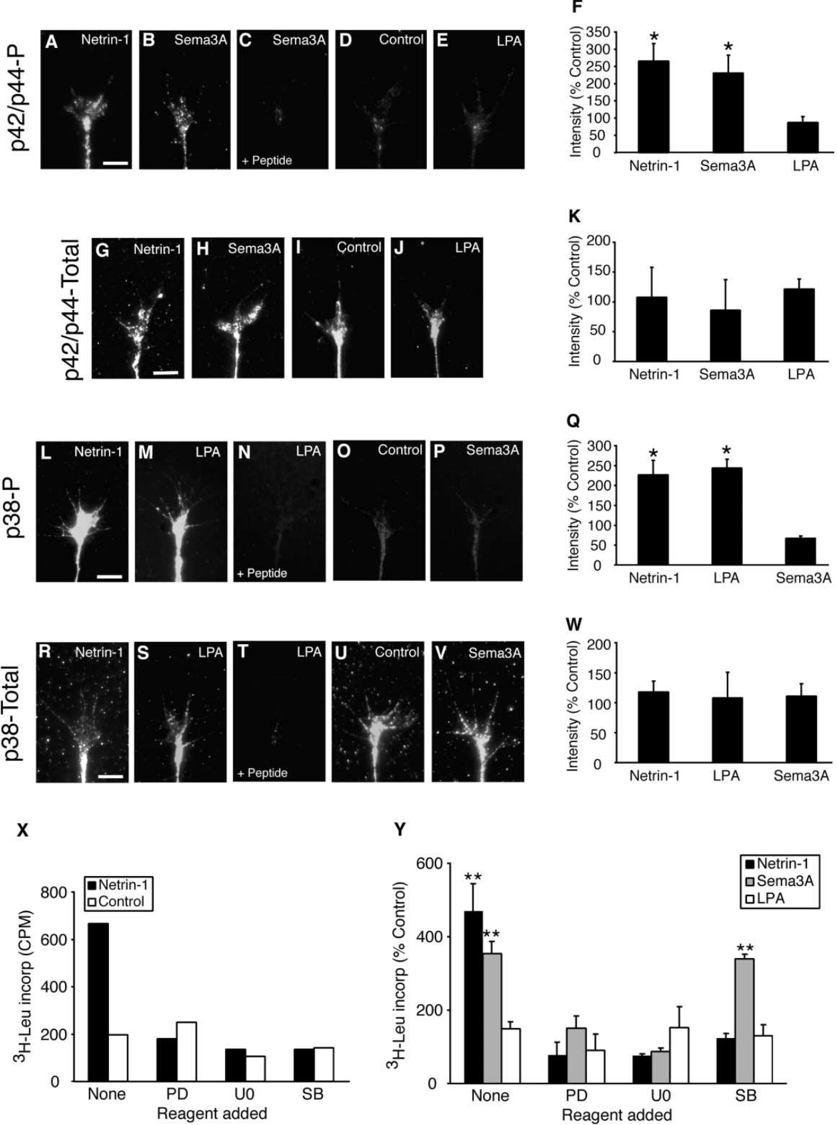
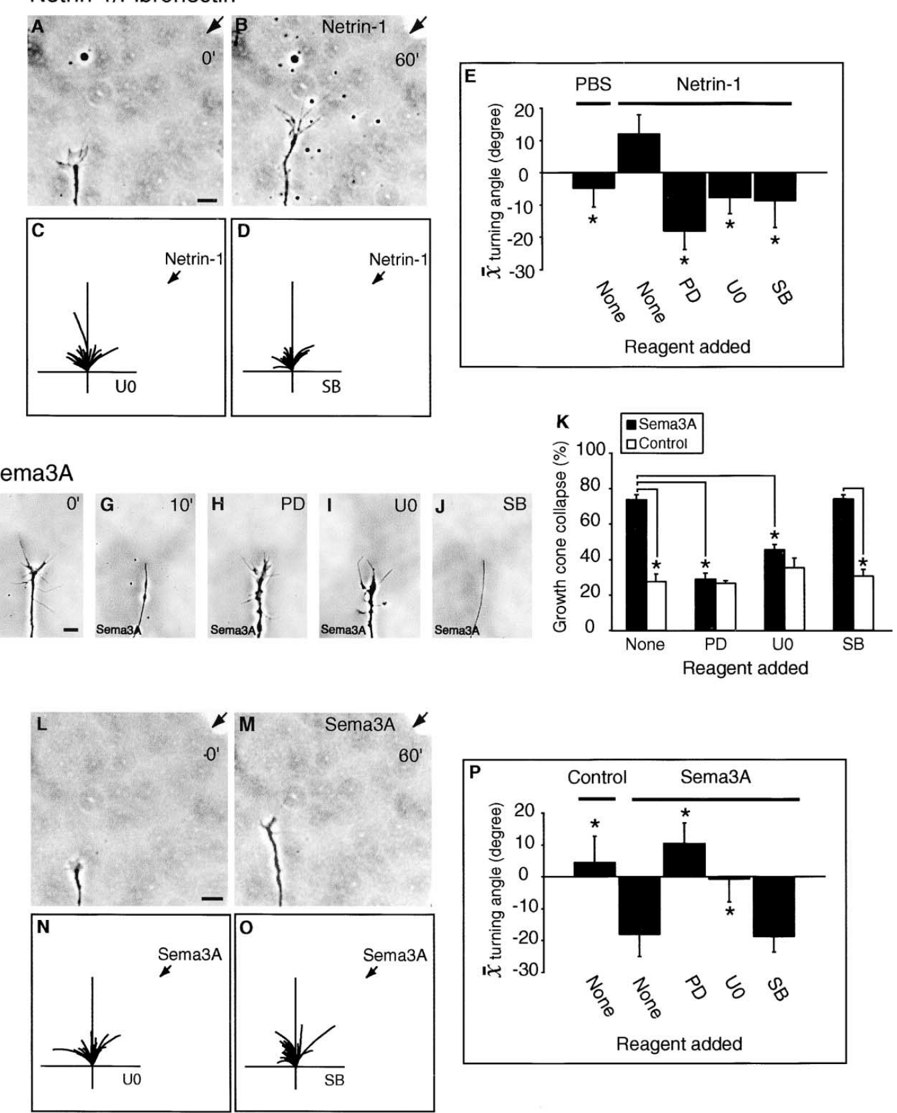
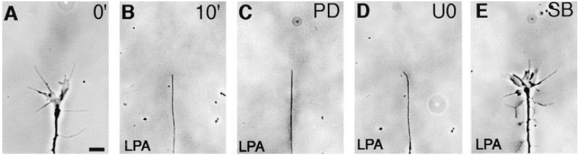
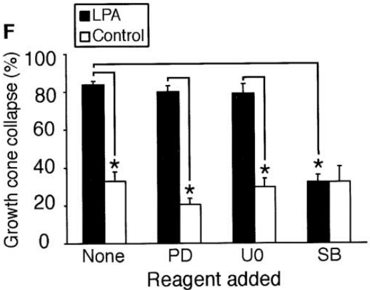
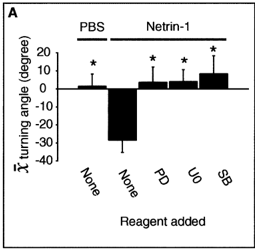
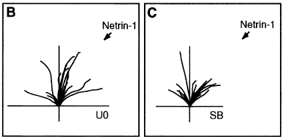
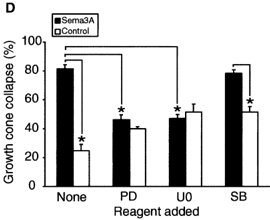
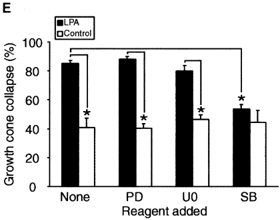
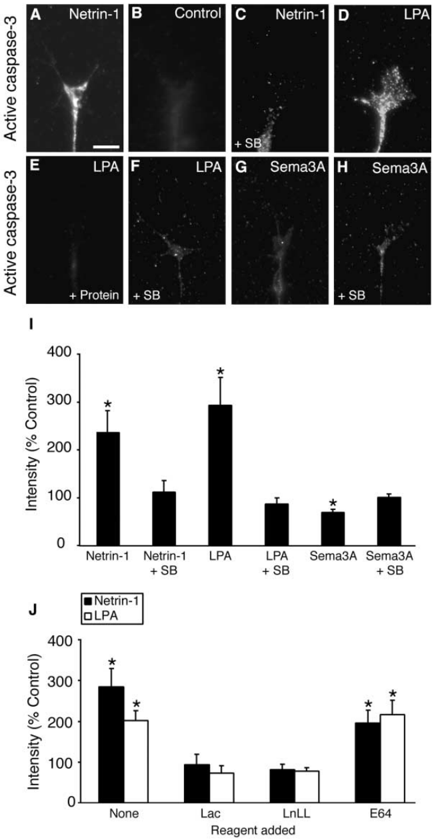
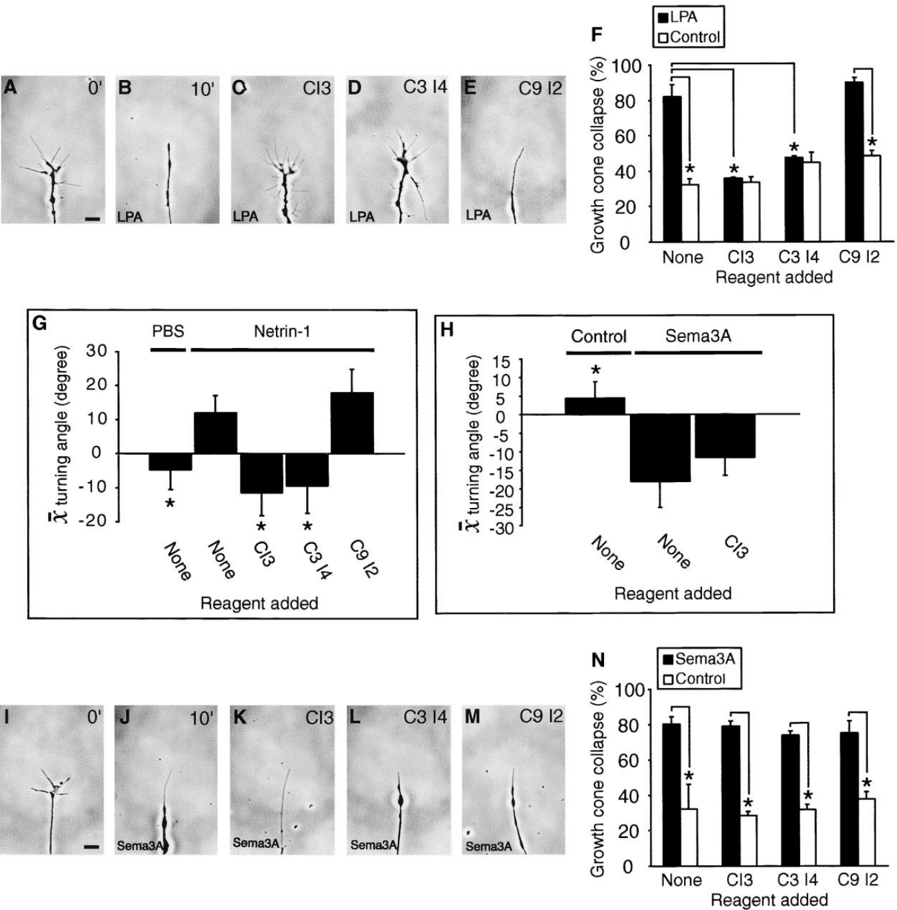
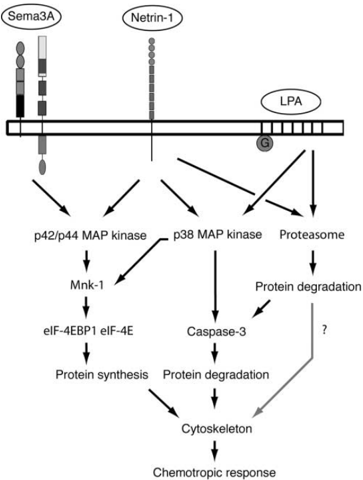
Previous work has shown that guidance cues trigger rapid changes in protein dynamics in retinal growth cones: netrin-1 stimulates both protein synthesis and degradation, while Sema3A elicits synthesis, and LPA induces degradation. What signaling pathways are involved? Our studies confirm that p42/44 MAPK mediates netrin-1 responses and further show that inhibiting its activity blocks cue-induced protein synthesis. Unexpectedly, p38 MAPK is also activated by netrin-1 in retinal growth cones and is required for chemotropic responses and translation. Sema3A- and LPA-induced responses, by contrast, require a single MAPK, p42/p44 and p38, respectively. In addition, we report that caspase-3, an apoptotic protease, is rapidly activated by netrin-1 and LPA in a proteasome- and p38-dependent manner and is required for chemotropic responses. These findings suggest that the apoptotic pathway may be used locally to control protein levels in growth cones and that the differential activation of MAPK pathways may underlie cue-directed migration.
Overview
The claims and statistics of this paper haven’t been checked yet.
Free: it reads the open-access text and checks the first 5 claims that cite a source we can check. Create a free account to check every claim.
Integrity signals
Registry
Cites
Statistics
Figures
Verification
Claims the paper makes
The claims and statistics of this paper haven’t been checked yet.
Free: it reads the open-access text and checks the first 5 claims that cite a source we can check. Create a free account to check every claim.
Claims other papers make about this one
Each is checked against this paper’s own text: does it say what the citing paper says it does?
The cited source says what the claim attributes to it.
In the citing paper
“Also, the ERK1/2 and p338 MAPK pathways are key regulators of growth cone guidance in vitro [ 30 ].”
From MAPK Pathways in Ocular Pathophysiology: Potential Therapeutic Drugs and Challenges (2023) · cites this paper as [30]
Self-check
Percentages, sums and reported differences re-computed from the paper’s own numbers.
The self-check needs the paper’s full text.
Citations
Cites
1 retracted
Stein, E., Zou, Y., Poo, M.-M., & Tessier-Lavigne, M. (2001) · Science · doi:10.1126/science.1059391 · Cited by 242
RetractedOpposing Effects of ERK and JNK-p38 MAP Kinases on Apoptosis
Xia, Z., Dickens, M., Raingeaud, J., Davis, R. J., & Greenberg, M. E. (1995) · Science · doi:10.1126/science.270.5240.1326 · Cited by 5,287
Mammalian MAP kinase signalling cascades
Chang, L., & Karin, M. (2001) · Nature · doi:10.1038/35065000 · Cited by 5,111
Cellular survival: a play in three Akts
Datta, S. R., Brunet, A., & Greenberg, M. E. (1999) · Genes & Development · doi:10.1101/gad.13.22.2905 · Cited by 4,216
The Molecular Biology of Axon Guidance
Tessier-Lavigne, M., & Goodman, C. S. (1996) · Science · doi:10.1126/science.274.5290.1123 · Cited by 3,278
Mammalian Caspases: Structure, Activation, Substrates, and Functions During Apoptosis
Earnshaw, W. C., Martins, L. M., & Kaufmann, S. H. (1999) · Annual Review of Biochemistry · doi:10.1146/annurev.biochem.68.1.383 · Cited by 2,760
A synthetic inhibitor of the mitogen-activated protein kinase cascade.
Dudley, D. T., Pang, L., Decker, S. J., Bridges, A. J., & Saltiel, A. R. (1995) · Proceedings of the National Academy of Sciences · doi:10.1073/pnas.92.17.7686 · Cited by 2,679
eIF4 Initiation Factors: Effectors of mRNA Recruitment to Ribosomes and Regulators of Translation
Gingras, A.-C., Raught, B., & Sonenberg, N. (1999) · Annual Review of Biochemistry · doi:10.1146/annurev.biochem.68.1.913 · Cited by 2,121
(1995) · FEBS Letters · doi:10.1016/0014-5793(95)00357-f · Cited by 2,086
Pagano, M., Tam, S. W., Theodoras, A. M., Beer-Romero, P., Del Sal, G., Chau, V., Yew, P. R., Draetta, G. F., & Rolfe, M. (1995) · Science · doi:10.1126/science.7624798 · Cited by 1,817
Mitogen-Activated Protein Kinases: Specific Messages from Ubiquitous Messengers
Schaeffer, H. J., & Weber, M. J. (1999) · Molecular and Cellular Biology · doi:10.1128/mcb.19.4.2435 · Cited by 1,600
Fenteany, G., Standaert, R. F., Lane, W. S., Choi, S., Corey, E. J., & Schreiber, S. L. (1995) · Science · doi:10.1126/science.7732382 · Cited by 1,583
Caspase-3-Generated Fragment of Gelsolin: Effector of Morphological Change in Apoptosis
Kothakota, S., Azuma, T., Reinhard, C., Klippel, A., Tang, J., Chu, K., McGarry, T. J., Kirschner, M. W., Koths, K., Kwiatkowski, D. J., et al. (1997) · Science · doi:10.1126/science.278.5336.294 · Cited by 1,225
Collapsin: A protein in brain that induces the collapse and paralysis of neuronal growth cones
Luo, Y., Raible, D., & Raper, J. A. (1993) · Cell · doi:10.1016/0092-8674(93)80064-l · Cited by 1,179
Barrett, A. J., Kembhavi, A. A., Brown, M. A., Kirschke, H., Knight, C. G., Tamai, M., & Hanada, K. (1982) · Biochemical Journal · doi:10.1042/bj2010189 · Cited by 1,026
A Requirement for Local Protein Synthesis in Neurotrophin-Induced Hippocampal Synaptic Plasticity
Kang, H., & Schuman, E. M. (1996) · Science · doi:10.1126/science.273.5280.1402 · Cited by 981
Conversion of Neuronal Growth Cone Responses from Repulsion to Attraction by Cyclic Nucleotides
Song, H.-J., Ming, G.-L., He, Z., Lehmann, M., McKerracher, L., Tessier-Lavigne, M., & Poo, M.-M. (1998) · Science · doi:10.1126/science.281.5382.1515 · Cited by 796
Campbell, D. S., & Holt, C. E. (2001) · Neuron · doi:10.1016/s0896-6273(01)00551-7 · Cited by 793
Self-citationYing, S.-W., Futter, M., Rosenblum, K., Webber, M. J., Hunt, S. P., Bliss, T. V. P., & Bramham, C. R. (2002) · The Journal of Neuroscience · doi:10.1523/jneurosci.22-05-01532.2002 · Cited by 784
The mRNA 5′ cap-binding protein eIF4E and control of cell growth
Sonenberg, N., & Gingras, A.-C. (1998) · Current Opinion in Cell Biology · doi:10.1016/s0955-0674(98)80150-6 · Cited by 673
Párrizas, M., Saltiel, A. R., & LeRoith, D. (1997) · Journal of Biological Chemistry · doi:10.1074/jbc.272.1.154 · Cited by 653
Human eukaryotic translation initiation factor 4G (eIF4G) recruits Mnk1 to phosphorylate eIF4E
Pyronnet, S. (1999) · The EMBO Journal · doi:10.1093/emboj/18.1.270 · Cited by 639
Molecular Psychology: Roles for the ERK MAP Kinase Cascade in Memory
Adams, J. P., & Sweatt, J. D. (2002) · Annual Review of Pharmacology and Toxicology · doi:10.1146/annurev.pharmtox.42.082701.145401 · Cited by 593
Extracellular-signal-regulated kinase signalling in neurons
Grewal, S. S., York, R. D., & Stork, P. J. (1999) · Current Opinion in Neurobiology · doi:10.1016/s0959-4388(99)00010-0 · Cited by 555
Obrig, T. G., Culp, W. J., McKeehan, W. L., & Hardesty, B. (1971) · Journal of Biological Chemistry · doi:10.1016/s0021-9258(18)62546-3 · Cited by 512
Growth-cone attraction to netrin-1 is converted to repulsion by laminin-1
Höpker, V. H., Shewan, D., Tessier-Lavigne, M., Poo, M.-M., & Holt, C. (1999) · Nature · doi:10.1038/43441 · Cited by 493
Self-citationWaskiewicz, A. J., Johnson, J. C., Penn, B., Mahalingam, M., Kimball, S. R., & Cooper, J. A. (1999) · Molecular and Cellular Biology · doi:10.1128/mcb.19.3.1871 · Cited by 469
Signal transduction underlying growth cone guidance by diffusible factors
Song, H.-J., & Poo, M.-M. (1999) · Current Opinion in Neurobiology · doi:10.1016/s0959-4388(99)80052-x · Cited by 454
Hirata, H., Takahashi, A., Kobayashi, S., Yonehara, S., Sawai, H., Okazaki, T., Yamamoto, K., & Sasada, M. (1998) · The Journal of Experimental Medicine · doi:10.1084/jem.187.4.587 · Cited by 442
The DCC gene product induces apoptosis by a mechanism requiring receptor proteolysis
Mehlen, P., Rabizadeh, S., Snipas, S. J., Assa-Munt, N., Salvesen, G. S., & Bredesen, D. E. (1998) · Nature · doi:10.1038/27441 · Cited by 437
Adaptation in the chemotactic guidance of nerve growth cones
Ming, G.-L., Wong, S. T., Henley, J., Yuan, X.-B., Song, H.-J., Spitzer, N. C., & Poo, M.-M. (2002) · Nature · doi:10.1038/nature745 · Cited by 412
Microtubules and signal transduction
Gundersen, G. G., & Cook, T. A. (1999) · Current Opinion in Cell Biology · doi:10.1016/s0955-0674(99)80010-6 · Cited by 407
Ekert, P., Silke, J., & Vaux, D. (1999) · Cell Death & Differentiation · doi:10.1038/sj.cdd.4400594 · Cited by 385
Deadly encounter: ubiquitin meets apoptosis
Jesenberger, V., & Jentsch, S. (2002) · Nature Reviews Molecular Cell Biology · doi:10.1038/nrm731 · Cited by 355
Asymmetric modulation of cytosolic cAMP activity induces growth cone turning
Lohof, A., Quillan, M., Dan, Y., & Poo, M. (1992) · The Journal of Neuroscience · doi:10.1523/jneurosci.12-04-01253.1992 · Cited by 352
Harris, W. A., Holt, C. E., & Bonhoeffer, F. (1987) · Development · doi:10.1242/dev.101.1.123 · Cited by 305
Self-citationDeSilva, D. R., Jones, E. A., Favata, M. F., Jaffee, B. D., Magolda, R. L., Trzaskos, J. M., & Scherle, P. A. (1998) · The Journal of Immunology · doi:10.4049/jimmunol.160.9.4175 · Cited by 295
Turning of Retinal Growth Cones in a Netrin-1 Gradient Mediated by the Netrin Receptor DCC
de la Torre, J. R., Höpker, V. H., Ming, G.-L., Poo, M.-M., Tessier-Lavigne, M., Hemmati-Brivanlou, A., & Holt, C. E. (1997) · Neuron · doi:10.1016/s0896-6273(00)80413-4 · Cited by 287
Self-citationD’Amours, D., Sallmann, F. R., Dixit, V. M., & Poirier, G. G. (2001) · Journal of Cell Science · doi:10.1242/jcs.114.20.3771 · Cited by 286
Cisplatin Induces Apoptosis in LLC-PK1 Cells via Activation of Mitochondrial Pathways
Park, M. S., De Leon, M., & Devarajan, P. (2002) · Journal of the American Society of Nephrology · doi:10.1681/asn.v134858 · Cited by 279
Ming, G.-L., Song, H.-J., Berninger, B., Inagaki, N., Tessier-Lavigne, M., & Poo, M.-M. (1999) · Neuron · doi:10.1016/s0896-6273(00)80760-6 · Cited by 279
Netrin-1-mediated axon outgrowth requires deleted in colorectal cancer-dependent MAPK activation
Forcet, C., Stein, E., Pays, L., Corset, V., Llambi, F., Tessier-Lavigne, M., & Mehlen, P. (2002) · Nature · doi:10.1038/nature748 · Cited by 273
X-linked Inhibitor of Apoptosis Protein (XIAP) Inhibits Caspase-3 and -7 in Distinct Modes
Suzuki, Y., Nakabayashi, Y., Nakata, K., Reed, J. C., & Takahashi, R. (2001) · Journal of Biological Chemistry · doi:10.1074/jbc.m102415200 · Cited by 235
Mitogen-activated protein kinases
Arbabi, S., & Maier, R. V. (2002) · Critical Care Medicine · doi:10.1097/00003246-200201001-00010 · Cited by 229
Poly-ADP ribose polymerase activates nuclear proteasome to degrade oxidatively damaged histones
Ullrich, O., Reinheckel, T., Sitte, N., Hass, R., Grune, T., & Davies, K. J. A. (1999) · Proceedings of the National Academy of Sciences · doi:10.1073/pnas.96.11.6223 · Cited by 229
Corset, V., Nguyen-Ba-Charvet, K. T., Forcet, C., Moyse, E., Chédotal, A., & Mehlen, P. (2000) · Nature · doi:10.1038/35037600 · Cited by 223
Dual MAP kinase pathways mediate opposing forms of long-term plasticity at CA3–CA1 synapses
Bolshakov, V. Y., Carboni, L., Cobb, M. H., Siegelbaum, S. A., & Belardetti, F. (2000) · Nature Neuroscience · doi:10.1038/80624 · Cited by 220
Biggs, W. H., Zavitz, K. H., Dickson, B., van der Straten, A., Brunner, D., Hafen, E., & Zipursky, S. L. (1994) · The EMBO Journal · doi:10.1002/j.1460-2075.1994.tb06426.x · Cited by 215
Forcet, C., Ye, X., Granger, L., Corset, V., Shin, H., Bredesen, D. E., & Mehlen, P. (2001) · Proceedings of the National Academy of Sciences · doi:10.1073/pnas.051378298 · Cited by 209
Requirement of ERK Activation for Visual Cortical Plasticity
Cristo, G. D., Berardi, N., Cancedda, L., Pizzorusso, T., Putignano, E., Ratto, G. M., & Maffei, L. (2001) · Science · doi:10.1126/science.1059075 · Cited by 207
Mashima, T., Naito, M., & Tsuruo, T. (1999) · Oncogene · doi:10.1038/sj.onc.1202558 · Cited by 204
Marissen, W. E., & Lloyd, R. E. (1998) · Molecular and Cellular Biology · doi:10.1128/mcb.18.12.7565 · Cited by 198
Campbell, D. S., Regan, A. G., Lopez, J. S., Tannahill, D., Harris, W. A., & Holt, C. E. (2001) · The Journal of Neuroscience · doi:10.1523/jneurosci.21-21-08538.2001 · Cited by 194
Self-citationGDNF acutely modulates excitability and A-type K+ channels in midbrain dopaminergic neurons
Yang, F., Feng, L., Zheng, F., Johnson, S. W., Du, J., Shen, L., Wu, C.-P., & Lu, B. (2001) · Nature Neuroscience · doi:10.1038/nn734 · Cited by 194
Poly(ADP-ribose) Polymerase-1 in the Nervous System
Ha, H. C., & Snyder, S. H. (2000) · Neurobiology of Disease · doi:10.1006/nbdi.2000.0324 · Cited by 193
Shewan, D., Dwivedy, A., Anderson, R., & Holt, C. E. (2002) · Nature Neuroscience · doi:10.1038/nn919 · Cited by 190
Self-citationHerbert, T. P., Tee, A. R., & Proud, C. G. (2002) · Journal of Biological Chemistry · doi:10.1074/jbc.m110367200 · Cited by 181
Distinct Neurite Outgrowth Signaling Pathways Converge on ERK Activation
Perron, J. C., & Bixby, J. L. (1999) · Molecular and Cellular Neuroscience · doi:10.1006/mcne.1999.0753 · Cited by 167
Semaphorins as Mediators of Neuronal Apoptosis
Shirvan, A., Ziv, I., Fleminger, G., Shina, R., He, Z., Brudo, I., Melamed, E., & Barzilai, A. (1999) · Journal of Neurochemistry · doi:10.1046/j.1471-4159.1999.0730961.x · Cited by 152
Canu, N., Barbato, C., Ciotti, M. T., Serafino, A., Dus, L., & Calissano, P. (2000) · The Journal of Neuroscience · doi:10.1523/jneurosci.20-02-00589.2000 · Cited by 145
Do Apoptotic Mechanisms Regulate Synaptic Plasticity and Growth-Cone Motility?
Gilman, C. P., & Mattson, M. P. (2002) · NeuroMolecular Medicine · doi:10.1385/nmm:2:2:197 · Cited by 138
Clemens, M. J., Bushell, M., & Morley, S. J. (1998) · Oncogene · doi:10.1038/sj.onc.1202227 · Cited by 126
Role of p38 Mitogen-Activated Protein Kinase in Chemokine-Induced Emigration and Chemotaxis In Vivo
Cara, D. C., Kaur, J., Forster, M., McCafferty, D.-M., & Kubes, P. (2001) · The Journal of Immunology · doi:10.4049/jimmunol.167.11.6552 · Cited by 120
Regulation of apoptosis by the ubiquitin and proteasome pathway
Wójcik, C. (2002) · Journal of Cellular and Molecular Medicine · doi:10.1111/j.1582-4934.2002.tb00309.x · Cited by 118
PI-3 kinase and IP3 are both necessary and sufficient to mediate NT3-induced synaptic potentiation
Yang, F., He, X., Feng, L., Mizuno, K., Liu, X.-W., Russell, J. T., Xiong, W., & Lu, B. (2001) · Nature Neuroscience · doi:10.1038/82858 · Cited by 116
Jun, H., & Masahiko, S. (1999) · Japanese Journal of Pharmacology · doi:10.1254/jjp.79.369 · Cited by 110
Clockwise Growth of Neurites from Retinal Explants
Heacock, A. M., & Agranoff, B. W. (1977) · Science · doi:10.1126/science.897684 · Cited by 102
D'Mello, S. R., Aglieco, F., Roberts, M. R., Borodezt, K., & Haycock, J. W. (1998) · Journal of Neurochemistry · doi:10.1046/j.1471-4159.1998.70051809.x · Cited by 74
Precocious pathfinding: Retinal axons can navigate in an axonless brain
Cornel, E., & Holt, C. E. (1992) · Neuron · doi:10.1016/0896-6273(92)90061-h · Cited by 67
Self-citationRegulated protein degradation controls PKA function and cell-type differentiation in DictyosteliumPreprint
Mohanty, S., Lee, S., Yadava, N., Dealy, M. J., Dealy, M. J., & Firtel, R. (2001) · Genes & Development · doi:10.1101/gad.871101 · Cited by 66
Poly (ADP-Ribose) Polymerase Cleavage Monitored In Situ in Apoptotic Cells
O’Brien, M. A., Moravec, R. A., & Riss, T. (2001) · BioTechniques · doi:10.2144/01304pf01 · Cited by 58
Gelsolin is localized in neuronal growth cones
Tanaka, J., Kira, M., & Sobue, K. (1993) · Developmental Brain Research · doi:10.1016/0165-3806(93)90217-x · Cited by 55
Yehia, G., Schlotter, F., Razavi, R., Alessandrini, A., & Molina, C. A. (2001) · Journal of Biological Chemistry · doi:10.1074/jbc.m105404200 · Cited by 45
Lysophosphatidic Acid Induction of Neuronal Apoptosis and Necrosis
Steiner, M. R., Holtsberg, F. W., Keller, J. N., Mattson, M. P., & Steiner, S. M. (2000) · Annals of the New York Academy of Sciences · doi:10.1111/j.1749-6632.2000.tb06545.x · Cited by 39
Embryonic Lens Repels Retinal Ganglion Cell Axons
Ohta, K., Tannahill, D., Yoshida, K., Johnson, A. R., Cook, G. M. W., & Keynes, R. J. (1999) · Developmental Biology · doi:10.1006/dbio.1999.9312 · Cited by 34
Research works printed but not linked: 2
- Bolshakov, V.Y., Carboni, L., Cobb, M.H., Siegelbaum, S.A., and colorectal cancer) defines an alternative mechanism for caspase Belardetti, F. (2000). Dual mitogen-activated protein kinase path- activation. Proc. Natl. Acad. Sci. USA 98, 3416-3421.
- Salvesen, 2002, Apoptosis: IAP proteins, :
Cited by
Lysophospholipid Receptors: Signaling and Biology
Ishii, I., Fukushima, N., Ye, X., & Chun, J. (2004) · Annual Review of Biochemistry · doi:10.1146/annurev.biochem.73.011303.073731 · Cited by 771
Li, Z., Jo, J., Jia, J.-M., Lo, S.-C., Whitcomb, D. J., Jiao, S., Cho, K., & Sheng, M. (2010) · Cell · doi:10.1016/j.cell.2010.03.053 · Cited by 532
“…pruning of Drosophila neurons during development (Kuo et al., 2006; Williams et al., 2006), in the structural remodelling of hippocampal neuron synapses and Xenopus retinal growth cones (Campbell and Holt, 2003; Gilman and Mattson, 2002), and in bird song learning (Huesmann and Clayton, 2006).”
BackgroundInfluentialSemaphorins command cells to move
Kruger, R. P., Aurandt, J., & Guan, K.-L. (2005) · Nature Reviews Molecular Cell Biology · doi:10.1038/nrm1740 · Cited by 491
Jung, H., Yoon, B. C., & Holt, C. E. (2012) · Nature Reviews Neuroscience · doi:10.1038/nrn3210 · Cited by 487
Self-citationNetrins: versatile extracellular cues with diverse functions
Sun, K. L. W., Correia, J. P., & Kennedy, T. E. (2011) · Development · doi:10.1242/dev.044529 · Cited by 427
“DCC-dependent commissural axon chemoattraction also involves the activation of the mitogen-activated protein kinase (MAPK) cascade (Campbell and Holt, 2003; Forcet et al., 2002; Ma et al., 2010).”
Background
Metadata
- Authors
- Campbell, D. S., & Holt, C. E.
- Affiliations
- University of Cambridge (GB)
- Corresponding author
- Campbell, Douglas S.
- Holt, Christine E.
- Venue
- Neuron
- Publisher
- Elsevier BV
- Published
- 2003-03
- Volume
- 37
- Issue
- 6
- Pages
- 939-952
- ISSN
- 0896-6273 (ISSN-L)
- OpenAlex
- W2084687782
- Cited by
- 303
- References
- 75
- Citations by year
- 2025: 3 · 2024: 8 · 2023: 2 · 2022: 5 · 2021: 8 · 2020: 21 · 2019: 8 · 2018: 9 · 2017: 6 · 2016: 11 · 2015: 17 · 2014: 14 · 2013: 13 · 2012: 17
- FWCI
- 8.91
- Type
- journal article
- Language
- en
- Open access
- hybrid
- doi.org
- Licence
- cc-by
- www.elsevier.com/tdm/userlicense/1.0/ (tdm)
- www.elsevier.com/open-access/userlicense/1.0/ (vor, 3791 d)
- Locations
- Neuron (publishedVersion, cc-by)
- PubMed (publishedVersion)
- Topics
- Life Sciences › Neuroscience › Cellular and Molecular Neuroscience › Axon Guidance and Neuronal Signaling
- Life Sciences › Neuroscience › Developmental Neuroscience › Neurogenesis and neuroplasticity mechanisms
- Life Sciences › Biochemistry, Genetics and Molecular Biology › Molecular Biology › Developmental Biology and Gene Regulation
- Keywords
- netrin-1, semaphorin 3A, lysophosphatidic acid, p44/42 MAPK, p38 MAPK, caspase-3, apoptosis, protein synthesis, protein degradation, translation (biology), axon guidance, proteasome, growth cone migration
- MeSH terms
- Netrin-1, Animals, Carrier Proteins, Enzyme Activation, Enzyme Inhibitors, Lysophospholipids, Nerve Growth Factors, Phosphoproteins, Phosphorylation, Proteins, Retina, Protein Biosynthesis, Xenopus laevis, Apoptosis, Protein Serine-Threonine Kinases, Mitogen-Activated Protein Kinase 1, Caspases, Growth Cones, Mitogen-Activated Protein Kinases, Tumor Suppressor Proteins, Eukaryotic Initiation Factor-4E, Semaphorin-3A, Intracellular Signaling Peptides and Proteins, p38 Mitogen-Activated Protein Kinases, Mitogen-Activated Protein Kinase 3, Caspase 3
About these checks
Registry, retraction, Cites and statistics results are computed, not judged, with one exception: a printed reference that no index lists is read once by a model before it counts as a citation error. Claims are extracted by a model and kept only when their quote appears verbatim in the text; each cited source is then checked, with a model’s help, for whether it says what the claim relies on. Those verdicts can be wrong — read the claim’s quote and the cited source before relying on one.
Statistics and arithmetic are recomputed, not judged.
Confidence bands are shown only for fields calibrated on our annotated test set. None is calibrated yet, so no band is shown.
What counts as a claim ›How we measure confidence ›How we check this ›
Are you an author, or do you see a problem with this page? Request a review
Data sources
Bibliographic data: Semantic Scholar, OpenAlex, Crossref.
Contains information from the Semantic Scholar Academic Graph Datasets, made available under the ODC Attribution License (ODC-BY 1.0).
Semantic Scholar’s data is described in: Kinney, R., et al. (2023). The Semantic Scholar Open Data Platform. arXiv:2301.10140.
