

PCSK9 genetic variants and risk of type 2 diabetes: a mendelian randomisation study
Open accessThe DOI matches its Crossref record; 43 of the 43 references it cites were found in a registry or an index.
Abstract
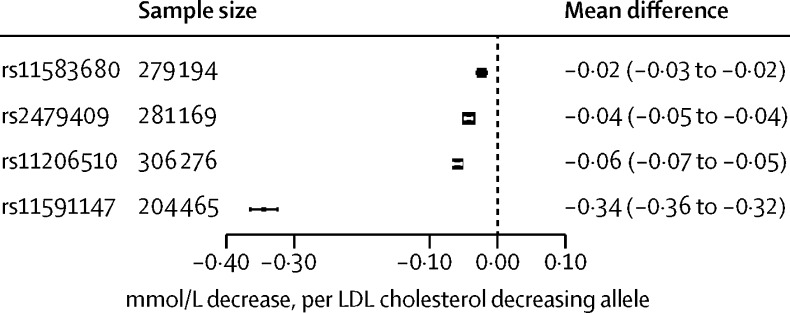
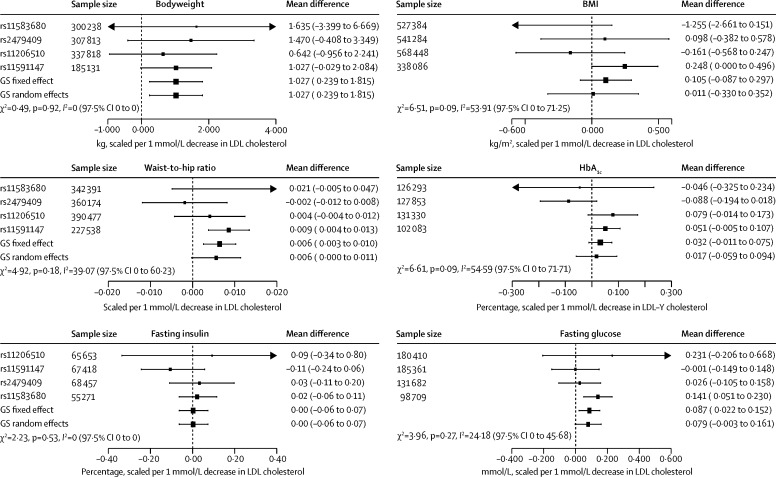
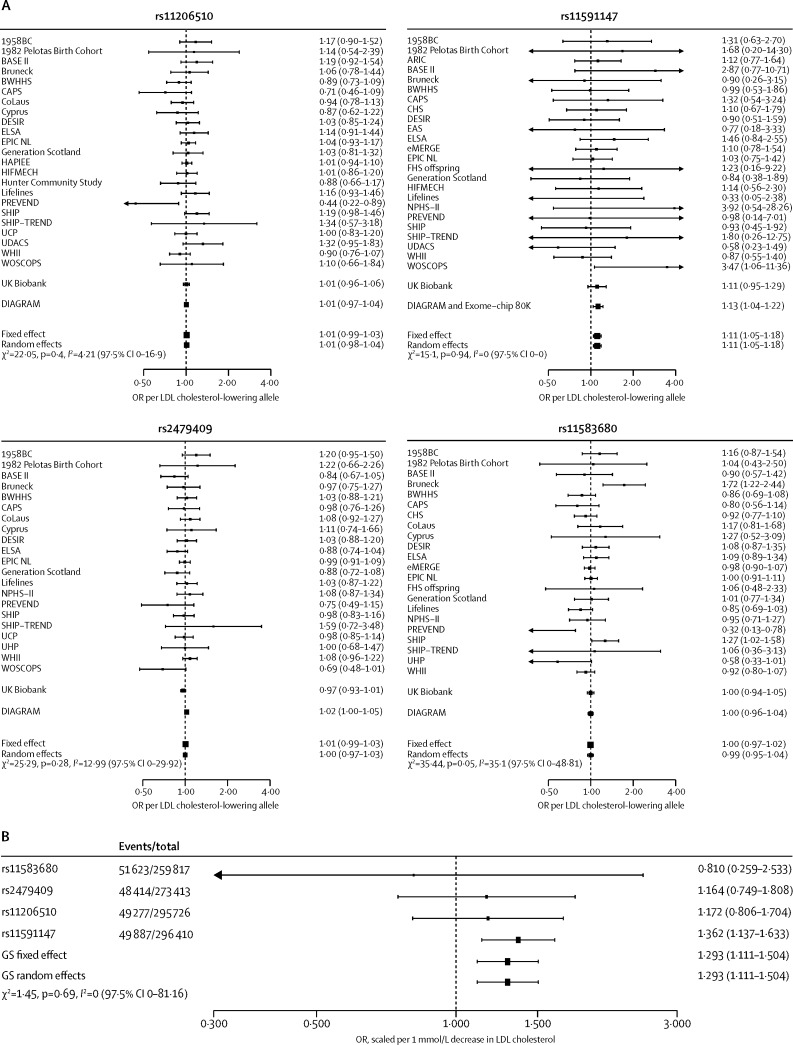
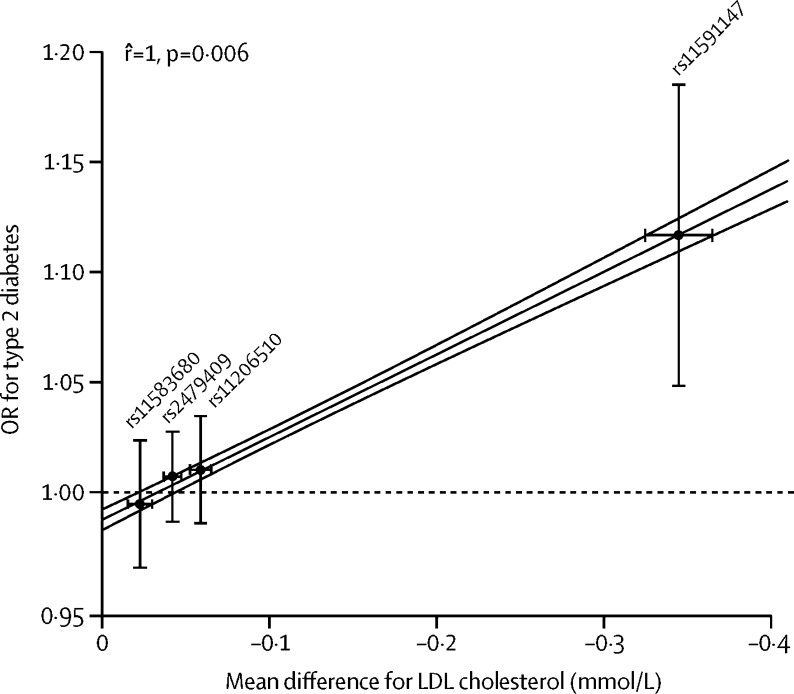
Background Statin treatment and variants in the gene encoding HMG-CoA reductase are associated with reductions in both the concentration of LDL cholesterol and the risk of coronary heart disease, but also with modest hyperglycaemia, increased bodyweight, and modestly increased risk of type 2 diabetes, which in no way offsets their substantial benefits. We sought to investigate the associations of LDL cholesterol-lowering PCSK9 variants with type 2 diabetes and related biomarkers to gauge the likely effects of PCSK9 inhibitors on diabetes risk. Methods In this mendelian randomisation study, we used data from cohort studies, randomised controlled trials, case control studies, and genetic consortia to estimate associations of PCSK9 genetic variants with LDL cholesterol, fasting blood glucose, HbA 1c , fasting insulin, bodyweight, waist-to-hip ratio, BMI, and risk of type 2 diabetes, using a standardised analysis plan, meta-analyses, and weighted gene-centric scores. Findings Data were available for more than 550 000 individuals and 51 623 cases of type 2 diabetes. Combined analyses of four independent PCSK9 variants (rs11583680, rs11591147, rs2479409, and rs11206510) scaled to 1 mmol/L lower LDL cholesterol showed associations with increased fasting glucose (0·09 mmol/L, 95% CI 0·02 to 0·15), bodyweight (1·03 kg, 0·24 to 1·82), waist-to-hip ratio (0·006, 0·003 to 0·010), and an odds ratio for type diabetes of 1·29 (1·11 to 1·50). Based on the collected data, we did not identify associations with HbA 1c (0·03%, −0·01 to 0·08), fasting insulin (0·00%, −0·06 to 0·07), and BMI (0·11 kg/m 2 , −0·09 to 0·30). Interpretation PCSK9 variants associated with lower LDL cholesterol were also associated with circulating higher fasting glucose concentration, bodyweight, and waist-to-hip ratio, and an increased risk of type 2 diabetes. In trials of PCSK9 inhibitor drugs, investigators should carefully assess these safety outcomes and quantify the risks and benefits of PCSK9 inhibitor treatment, as was previously done for statins. Funding British Heart Foundation, and University College London Hospitals NHS Foundation Trust (UCLH) National Institute for Health Research (NIHR) Biomedical Research Centre.
Overview
The claims and statistics of this paper haven’t been checked yet.
Free: it reads the open-access text and checks the first 5 claims that cite a source we can check. Create a free account to check every claim.
Integrity signals
Registry
Cites
Statistics
Figures
Verification
Claims the paper makes
The claims and statistics of this paper haven’t been checked yet.
Free: it reads the open-access text and checks the first 5 claims that cite a source we can check. Create a free account to check every claim.
Claims other papers make about this one
Each is checked against this paper’s own text: does it say what the citing paper says it does?
The source backs part of the claim, not all of it — or backs it for a different population, condition or comparison.
In the citing paper
“mendelian randomisation studies 8,[19][20][21] of genetic polymorphisms that mimic the effects of statins, ezetimibe, or PCSK9 inhibitors suggest that lifelong reductions in LDL cholesterol, irrespective of the mechanism, are associated with an increased risk of diabetes.”
From Effects of alirocumab on cardiovascular and metabolic outcomes after acute coronary syndrome in patients with or without diabetes: a prespecified analysis of the ODYSSEY OUTCOMES randomised controlled trial (2019) · cites this paper as [20]
Experimental — accuracy not yet measuredThe source backs part of the claim, not all of it — or backs it for a different population, condition or comparison.
In the citing paper
“Furthermore, we found no significant association between PCSK9 inhibition and diabetes (RR 1.04; 95% CI 0.77 to 1.41; I2 = 0%), despite the weak signal reported in some Mendelian randomization studies[30,31], with the discordance most likely arising from the fact that genetic studies reflect lifetime exposure as compared to short-term pharmacological interventions.”
From Oral PCSK9 inhibitors for elevated LDL-C: A systematic review and meta-analysis of randomized trials (2026) · cites this paper as [30]
Experimental — accuracy not yet measuredThe cited source says what the claim attributes to it.
In the citing paper
“Mendelian randomisation analyses 8,20,21 have shown that genetically determined loss of function of PCSK9 is associated with an increased risk of incident diabetes, but clinical trials of PCSK9 inhibitors have shown no such effect.9”
The cited source says what the claim attributes to it.
In the citing paper
“We created a genetic risk score (GRS) for PCSK9 function using four single nucleotide polymorphisms (SNPs) at or near the PCSK9 locus that have been previously demonstrated in a genetic risk score to strongly associate with lower LDL-C in individuals of European genetic ancestry [4]: rs11583680, rs11591147, rs2479409, and rs11206510.”
From PCSK9 loss of function is protective against extra-coronary atherosclerotic cardiovascular disease in a large multi-ethnic cohort (2020) · cites this paper as [4]
The cited source says what the claim attributes to it.
In the citing paper
“Further, our study had less power to detect a difference in T2D risk when compared to other larger published meta-analyses [4].”
From PCSK9 loss of function is protective against extra-coronary atherosclerotic cardiovascular disease in a large multi-ethnic cohort (2020) · cites this paper as [4]
1 more claim about this paper
Create a free account to see every claim other papers make about this one.
Self-check
Percentages, sums and reported differences re-computed from the paper’s own numbers.
The self-check needs the paper’s full text.
Citations
Cites
Measuring inconsistency in meta-analyses
Higgins, J. P. T., Thompson, S. G., Deeks, J. J., & Altman, D. G. (2003) · BMJ · doi:10.1136/bmj.327.7414.557 · Cited by 63,139
Statistical Analysis With Missing Data
Lahiff, M., Little, R. J. A., & Rubin, D. B. (1989) · Journal of the American Statistical Association · doi:10.2307/2289883 · Cited by 17,265
Sudlow, C., Gallacher, J., Allen, N., Beral, V., Burton, P., Danesh, J., Downey, P., Elliott, P., Green, J., Landray, M., et al. (2015) · PLOS Medicine · doi:10.1371/journal.pmed.1001779 · Cited by 12,728
A general framework for estimating the relative pathogenicity of human genetic variants
Kircher, M., Witten, D. M., Jain, P., O'Roak, B. J., Cooper, G. M., & Shendure, J. (2014) · Nature Genetics · doi:10.1038/ng.2892 · Cited by 6,183
Marginal Structural Models and Causal Inference in Epidemiology
Robins, J. M., Hernán, M. Á., & Brumback, B. (2000) · Epidemiology · doi:10.1097/00001648-200009000-00011 · Cited by 5,581
Genetic studies of body mass index yield new insights for obesity biology
Study, T. L. C., Locke, A. E., The ADIPOGen Consortium, The AGEN-BMI Working Group, The CARDIOGRAMplusC4D Consortium, The CKDGen Consortium, The, G. L. G. C., The, I. C. B. P., The MAGIC Investigators, The MuTHER Consortium, et al. (2015) · Nature · doi:10.1038/nature14177 · Cited by 4,534 · cited 1×
“…(MAGIC); 17–19 body-weight, height, BMI, and waist-to-hip ratio from the Genetic Investigation of Anthropometric Traits consortium (GIANT); 20,21 and type 2 diabetes from the Diabetes Genetics Replication and Meta-analysis consortium (DIAGRAM) 22 and Exome chip 80K. 23 Additionally,…”
Self-citationSequence Variations in PCSK9, Low LDL, and Protection against Coronary Heart Disease
Cohen, J. C., Boerwinkle, E., Mosley, T. H., & Hobbs, H. H. (2006) · New England Journal of Medicine · doi:10.1056/nejmoa054013 · Cited by 3,181
Mutations in PCSK9 cause autosomal dominant hypercholesterolemia
Abifadel, M., Varret, M., Rabès, J.-P., Allard, D., Ouguerram, K., Devillers, M., Cruaud, C., Benjannet, S., Wickham, L., Erlich, D., et al. (2003) · Nature Genetics · doi:10.1038/ng1161 · Cited by 2,985
Willer (2013) · doi:10.1038/ng.2797 · Cited by 2,983
Statistical Analysis With Missing Data
Lazar, N. A. (2003) · Technometrics · doi:10.1198/tech.2003.s167 · Cited by 2,458
Cited by
Items 201–300 of 379
Deshmukh, A. B., Bai, S., Aarthy, T., Kazi, R. S., Banarjee, R., Rathore, R., Vijayakumar, M. V., Thulasiram, H. V., Bhat, M. K., & Kulkarni, M. J. (2017) · Molecular BioSystems · doi:10.1039/c7mb00305f · Cited by 16
Bu, S. Y. (2019) · Journal of Lipid and Atherosclerosis · doi:10.12997/jla.2019.8.2.132 · Cited by 16
Zhao, T., Li, Z., Lei, S., Huang, L., & Yang, L. (2019) · Yonsei Medical Journal · doi:10.3349/ymj.2019.60.7.659 · Cited by 13
“9) Waist circumference, median (IQR), cm 81 (11) 80 (11) -0.”
Are the PCSK9 inhibitors the panacea of atherosclerosis treatment?
Stein, E. A., & Turner, T. A. (2017) · Expert Review of Cardiovascular Therapy · doi:10.1080/14779072.2017.1348231 · Cited by 13
“glucose tolerance with both HMG-CoA reductase and PCSK9 variants [27,28].”
BackgroundAssociation of genetic polymorphisms of PCSK9 with type 2 diabetes in Uygur Chinese population
Wang, M., Lu, C.-F., Yan, S.-Q., Wang, B., Yesitayi, G., Tian, Y.-L., Xiang-Ma, & Ma, Y.-T. (2022) · BMC Cardiovascular Disorders · doi:10.1186/s12872-022-02710-w · Cited by 12
“Some studies are supporting those loss-of-function genetic variants of the PCSK9 gene are associated with increased risk of T2DM [37].”
BackgroundPCSK9 genetic variants and risk of vascular and non-vascular diseases in Chinese and UK populations
Holmes, M. V., Kartsonaki, C., Boxall, R., Lin, K., Reeve, N. F., Yu, C., Lv, J., Bennett, D., Hill, M., Yang, L., et al. (2024) · European Journal of Preventive Cardiology · doi:10.1093/eurjpc/zwae009 · Cited by 14
Self-citationImpact of PCSK9 Immunization on Glycemic Indices in Diabetic Rats
Momtazi‐Borojeni, A. A., Jaafari, M. R., Abdollahi, E., Banach, M., & Sahebkar, A. (2021) · Journal of Diabetes Research · doi:10.1155/2021/4757170 · Cited by 15
Liu, L., Sheng, C., Lyu, Z., Dai, H., & Chen, K. (2021) · Frontiers in Nutrition · doi:10.3389/fnut.2021.755834 · Cited by 15
“Previous genetic studies of PCSK9 inhibition suggested that reduced LDLC levels by inhibiting PCSK9 activity were significantly associated with a higher incidence of diabetes (43, 44).”
BackgroundHu, J., Zhu, Z., Chen, Z., Yang, Q., Liang, W., & Ding, G. (2022) · Cell Proliferation · doi:10.1111/cpr.13229 · Cited by 14
Treating Dyslipidemia in Type 2 Diabetes
Nelson, A. J., & Nicholls, S. J. (2018) · Cardiology Clinics · doi:10.1016/j.ccl.2017.12.005 · Cited by 14
Efficacy and Safety of PCSK9 Monoclonal Antibodies in Patients With Diabetes
Marouf, B. H., Iqbal, Z., Mohamad, J. B., Bashir, B., Schofield, J. D., Syed, A. A., Kilpatrick, E. S., Stefanutti, C., & Soran, H. (2022) · Clinical Therapeutics · doi:10.1016/j.clinthera.2021.12.005 · Cited by 12
Huang, Z., Tan, R., Meng, L., Yang, H., Liang, X., Qin, Y., & Luo, Z. (2019) · Journal of International Medical Research · doi:10.1177/0300060519862099 · Cited by 12
“Advances in technology have enabled genome-wide association studies (GWAS) to identify more than 100 risk variants associated with T2DM.8,9 Studies of mutations in genes encoding drug targets have been useful in the prediction of both drug efficacy and adverse effects.10,11 For instance, common single nucleotide polym…”
BackgroundInfluentialShu, X. Y., Wu, J., Zhang, T., Ma, X., Du, Z., Du, Z., Xu, J., Wang, L., Chen, N., Luo, M., et al. (2022) · Nutrients · doi:10.3390/nu14245314 · Cited by 11
Association of PCSK9 Loss-of-Function Variants With Risk of Heart Failure
Trudsø, L. C., Ghouse, J., Ahlberg, G., Bundgaard, H., & OLESEN, M. S. (2022) · JAMA Cardiology · doi:10.1001/jamacardio.2022.4798 · Cited by 10
Genética de la cardiopatía isquémica: del conocimiento actual a las implicaciones clínicas
Elosúa, R., & Sayols-Baixeras, S. (2017) · Revista Española de Cardiología · doi:10.1016/j.recesp.2017.02.033 · Cited by 12
“rs12976411 ZNF507-LOC400684 19 T/A 0,090 1,18 E-14 1,49 (1,35-1,67)”
Chikowore, T., Cockeran, M., Conradie, K. R., & van Zyl, T. (2018) · Diabetes Research and Clinical Practice · doi:10.1016/j.diabres.2018.09.012 · Cited by 11
Nishikido, T., & Ray, K. K. (2019) · British Journal of Pharmacology · doi:10.1111/bph.14851 · Cited by 13
“C levels but also increased risk of DM. (Ference et al., 2016; Schmidt et al., 2017).”
BackgroundZamarrón-Licona, E., Rodríguez-Pérez, J. M., Posadas‐Sánchez, R., Vargas‐Alarcón, G., González, M. A. B., Borgonio‐Cuadra, V. M., & Pérez‐Hernández, N. (2021) · Diagnostics · doi:10.3390/diagnostics11050774 · Cited by 14
Alirocumab for the treatment of hypercholesterolaemia
Pepa, G. D., Bozzetto, L., Annuzzi, G., & Rivellese, A. A. (2017) · Expert Review of Clinical Pharmacology · doi:10.1080/17512433.2017.1318063 · Cited by 13
“of LDL-C are also associated with a higher risk of type 2 diabetes [72,73]; a recent pooled analysis of phase III trials failed to find any evidence that alirocumab increased the risk”
BackgroundCamille, M., Mbacham, W. F., Sobngwi, E., & Mbanya, J. C. (2019) · Diabetes Metabolic Syndrome and Obesity · doi:10.2147/dmso.s234243 · Cited by 12
“association with circulating LDL cholesterol levels is unclear.(12,13) Studies largely conducted in Caucasian and”
BackgroundInfluentialKosmas, C. E., Sourlas, A., Bouza, K. V., DeJesus, E., Silverio, D., Montan, P. D., & Guzman, E. (2018) · Annals of Translational Medicine · doi:10.21037/atm.2018.02.20 · Cited by 11
“On the other hand, there is evidence that certain genetic PCSK9 variants linked to lower LDL-C levels are also associated with higher fasting plasma glucose (FPG) levels, bodyweight, and waist-to-hip ratio, as well as a 29% increased risk of type 2 diabetes (23).”
BackgroundGeranylgeranyl isoprenoids and hepatic Rap1a regulate basal and statin-induced expression of PCSK9
Wang, Y., Tinsley, B., Spolitu, S., Zadroga, J. A., Agarwal, H., Sarecha, A. K., & Özcan, L. (2024) · Journal of Lipid Research · doi:10.1016/j.jlr.2024.100515 · Cited by 10
Rosoff, D. B., Wagner, J., Jung, J., Pacher, P., Christodoulides, C., Davey Smith, G., Ray, D., & Lohoff, F. W. (2025) · Diabetes · doi:10.2337/db24-0451 · Cited by 10
Association of low-density lipoprotein-cholesterol with all-cause and cause-specific mortality
Wu, M., Liao, S., Si, J., Guo, X., Kang, L., Xu, B., & Liu, Y. (2023) · Diabetes & Metabolic Syndrome Clinical Research & Reviews · doi:10.1016/j.dsx.2023.102784 · Cited by 10
Lohoff, F. W. (2018) · International Journal of Neuropsychopharmacology · doi:10.1093/ijnp/pyy087 · Cited by 10
Chikowore, T., Sahibdeen, V., Hendry, L. M., Norris, S. A., Goedecke, J. H., Micklesfield, L. K., & Lombard, Z. (2019) · Journal of Clinical & Translational Endocrinology · doi:10.1016/j.jcte.2019.100186 · Cited by 12
“Studies evaluating the association between LOF PCSK9 variants and T2D risk have focused predominantly on R46L, which is common in Caucasians but very rare in people of African ancestry [9,10,12].”
BackgroundResultTripaldi, R., Lanuti, P., Simeone, P., Liani, R., Bologna, G., Ciotti, S., Simeone, P., Castelnuovo, A. F. D., Marchisio, M., Cipollone, F., et al. (2021) · Scientific Reports · doi:10.1038/s41598-021-88941-x · Cited by 10
Does addressing prediabetes help to improve population health?
Kivimäki, M., & Tabák, Á. G. (2018) · The Lancet Diabetes & Endocrinology · doi:10.1016/s2213-8587(18)30030-5 · Cited by 14
Genetic drug target validation using Mendelian randomizationPreprint
Schmidt, A. F., Finan, C., Gordillo‐Marañón, M., Asselbergs, F. W., Freitag, D. F., Patel, R. S., Tyl, B., Chopade, S., Faraway, R., Zwierzyna, M., et al. (2019) · bioRxiv (Cold Spring Harbor Laboratory) · doi:10.1101/781039 · Cited by 10
Self-citationZheng, X., Yuan, W., Li, L., Ma, H., Zhu, M., Li, X., & Feng, X. (2025) · European Journal of Medical Research · doi:10.1186/s40001-025-02937-1 · Cited by 9
Masson, W. M., Lobo, M., Barbagelata, L., & Nogueira, J. P. (2023) · Acta Diabetologica · doi:10.1007/s00592-023-02205-w · Cited by 10
“Statins must be recommended in different populations for their lipid-lowering and anti-inflammatory effects and in this way reduce the associated increased cardiovascular risk [1].”
Common and rare genetic variants and risk of CHD
Swerdlow, D. I., & Humphries, S. E. (2017) · Nature Reviews Cardiology · doi:10.1038/nrcardio.2016.209 · Cited by 9
Self-citationPCSK9 in diabetes: sweet, bitter or sour?
Paneni, F., & Costantino, S. (2018) · European Heart Journal · doi:10.1093/eurheartj/ehy432 · Cited by 9
Lu, F., Li, E., & Yang, X. (2023) · Heliyon · doi:10.1016/j.heliyon.2023.e19371 · Cited by 9
Effects of Evolocumab on Cardiovascular Events
Mikhail, N. E. (2017) · Current Cardiology Reviews · doi:10.2174/1573403x13666170918165713 · Cited by 10
Genomic Medicine: Lessons Learned From Monogenic and Complex Bone Disorders
Trajanoska, K., & Rivadeneira, F. (2020) · Frontiers in Endocrinology · doi:10.3389/fendo.2020.556610 · Cited by 9
Pencina, K. M., Pencina, M. J., Dufresne, L., Holmes, M. V., Thanassoulis, G., & Sniderman, A. D. (2022) · The Lancet Healthy Longevity · doi:10.1016/s2666-7568(22)00079-4 · Cited by 11
Self-citationZhao, X., Song, L., Li, J., Zhou, J., Li, N., Yan, S., Chen, R., Wang, Y., Liu, C., Zhou, P., et al. (2023) · Journal of Inflammation Research · doi:10.2147/jir.s389778 · Cited by 9
“Mechanisms of PCSK9 Combined with TyG in Atherosclerosis and Cardiovascular Risk Within the current literature, Mendelian randomization studies have recently proven that genetic variants of PCSK9 are associated with higher circulating fasting glucose concentrations as well as an increased risk of T2DM.31,32 Lorenzo et…”
BackgroundInfluentialHypolipidemic Drugs and Diabetes Mellitus—Mechanisms and Data From Genetic Trials
Filippatos, T. D., Panagiotopoulou, T., Tzavella, E., & Elisaf, M. (2018) · Journal of Cardiovascular Pharmacology and Therapeutics · doi:10.1177/1074248418757011 · Cited by 9
Sarhangi, N., Khatami, F., Keshtkar, A., Heshmat, R., Atlasi, R., & Amoli, M. M. (2017) · Medical Hypothesis Discovery & Innovation in Ophthalmology · Cited by 11
Cui, N., Feng, Y., Wang, M., Lu, X., Huang, Y., Chen, Y., & Shi, X. (2024) · Endocrine Journal · doi:10.1507/endocrj.ej23-0359 · Cited by 10
Impact of Lipid-lowering Therapy on Cancer Risk: A Narrative Review
Pasha, R., Bashir, B., Omed, D., Adam, S., Kamath, A., Elhofy, A., Ferdousi, M., Azmi, S., & Soran, H. (2024) · Clinical Therapeutics · doi:10.1016/j.clinthera.2024.03.004 · Cited by 10
Target discovery using biobanks and human genetics
Hicks, M. A., Hou, C., Iranmehr, A., Marosi, K., & Kirkness, E. F. (2019) · Drug Discovery Today · doi:10.1016/j.drudis.2019.09.014 · Cited by 7
Müller‐Wieland, D., Rader, D. J., Moriarty, P. M., Bergeron, J., Langslet, G., Ray, K. K., Manvelian, G. Z., Thompson, D. E., Bujas‐Bobanovic, M., & Roth, E. M. (2019) · The Journal of Clinical Endocrinology & Metabolism · doi:10.1210/jc.2018-02703 · Cited by 7
Azarova, I. E., Klyosova, E. Y., Коломоец, И. И., Азарова, В. А., Ivakin, V. E., Konoplya, A. I., & Polonikov, A. (2020) · Russian Journal of Genetics · doi:10.1134/s1022795420070017 · Cited by 8
Vani, A. K., & Underberg, J. A. (2018) · Clinical Pharmacology & Therapeutics · doi:10.1002/cpt.1133 · Cited by 8
Berlin Aging Study II (BASE-II)
Demuth, I., Bertram, L., Drewelies, J., Düzel, S., Lill, C. M., Lindenberger, U., Pawelec, G., Spira, D., Wagner, G. G., & Gerstorf, D. (2019) · Springer eBooks · doi:10.1007/978-3-319-69892-2_27-1 · Cited by 8
Self-citationGenetic evidence implicating circulating lipids and lipid drug targets in pterygium
Cai, Y., Fang, F., Zhou, T., Shi, W., Cai, X., & Fu, Y. (2023) · Computational and Structural Biotechnology Journal · doi:10.1016/j.csbj.2023.11.002 · Cited by 6
Pleiotropic Effects of PCSK9 Inhibitors on Cardio-Cerebrovascular Diseases
Li, Z., Zhu, L., Xu, Y., Zhang, Y., Liu, Y., Sun, H., Li, S., Wang, M., Jiang, T., Zhou, J., et al. (2024) · Biomedicines · doi:10.3390/biomedicines12122729 · Cited by 8
“11 of 16 However, Mendelian randomization studies indicate that PCSK9 loss-of-function variants can reduce serum LDL-C while increasing fasting glucose levels and the risk of T2DM [80].”
Liu, S., Wan, J., Wang, D., Yang, Y., Fang, J., Luo, T., Liang, D., Hu, J., Hou, J., & Wang, P. (2024) · Nutrition Metabolism and Cardiovascular Diseases · doi:10.1016/j.numecd.2024.04.007 · Cited by 7
Alirocumab efficacy and safety by body mass index: A pooled analysis from 10 Phase 3 ODYSSEY trials
Tinahones, F. J., Laufs, U., Cariou, B., Louie, M. J., Yang, J., Thompson, D. E., & Leiter, L. A. (2019) · Diabetes & Metabolism · doi:10.1016/j.diabet.2019.101120 · Cited by 6
Self-citationDing, W., Chen, L., Xia, J., Pei, B., Song, B., & Li, X. (2024) · Medicine · doi:10.1097/md.0000000000038010 · Cited by 9
“The drug target Mendelian randomization (MR) [17] utilizes single nucleotide polymorphisms (SNPs) as instrumental variables (IVs) from medications to explore causal associations between exposure dataset (e.g., lipid-lowering drugs) and outcome dataset based on genome-wide association study (GWAS)…”
Management of Dyslipidemia in Type 2 Diabetes: Recent Advances in Nonstatin Treatment
Sugiyama, K., & Saisho, Y. (2018) · Diseases · doi:10.3390/diseases6020044 · Cited by 7
“Mendelian randomization studies with genetic variants in PCSK9 have also shown an increased risk of diabetes [43,44], and whether PCSK9 mAbs carry a risk of development of diabetes has been a matter of concern.”
BackgroundThe biological relevance of PCSK9: when less is better…
Mbikay, M., & Chrétien, M. (2022) · Biochemistry and Cell Biology · doi:10.1139/bcb-2021-0540 · Cited by 7
Statistical Methods for cis-Mendelian RandomizationPreprint
Gkatzionis, A., Burgess, S., & Newcombe, P. J. (2021) · arXiv (Cornell University) · Cited by 8
Estimating the effect of lipid‐lowering agents on novel subtypes of adult‐onset diabetes
Ye, J., Guo, K., Li, J., Li, X., Zhou, Z., & Yang, L. (2024) · Diabetes/Metabolism Research and Reviews · doi:10.1002/dmrr.3793 · Cited by 5
“C with PCSK9 inhibitors leads to an increased risk of diabetes as findings from previous studies are inconsistent, 1–4 suggesting the need for close blood glucose monitoring in patients using PCSK9 inhibitors.”
BackgroundReda, A., Almahmeed, W. A., Dobrecky‐Mery, I., Huang, P., Juárez‐Herrera, Ú., Ranjith, N., Sayre, T., & Urina‐Triana, M. (2020) · Advances in Therapy · doi:10.1007/s12325-020-01302-4 · Cited by 5
Ghouse, J., Ahlberg, G., Bundgaard, H., & OLESEN, M. S. (2021) · Diabetes Care · doi:10.2337/dc21-0955 · Cited by 5
Zou, D., Hu, Q., Liu, Y., & Yu, L. (2024) · International Journal of Clinical Pharmacy · doi:10.1007/s11096-024-01784-0 · Cited by 5
An update on trials of novel lipid-lowering drugs
Wierzbicki, A. S., Reynolds, T., & Viljoen, A. (2018) · Current Opinion in Cardiology · doi:10.1097/hco.0000000000000518 · Cited by 5
Doubling of Hemoglobin A1c on PCSK9 Inhibitor Therapy
Memon, R., Malek, R., & Munir, K. M. (2018) · The American Journal of Medicine · doi:10.1016/j.amjmed.2018.08.026 · Cited by 5
A network analysis framework of genetic and nongenetic risks for type 2 diabetes
Zhang, Y., Li, S., Cao, Z., Cheng, Y., Xu, C., Yang, H., Sun, L., Jiao, H., Ju, W., Li, W., et al. (2020) · Reviews in Endocrine and Metabolic Disorders · doi:10.1007/s11154-020-09585-2 · Cited by 4
Bovijn, J., Krebs, K., Chen, C., Boxall, R., Censin, J. C., Ferreira, T. C., Pulit, S. L., Glastonbury, C. A., Laber, S., Millwood, I. Y., et al. (2021) · Science Translational Medicine · doi:10.1126/scitranslmed.abf4530 · Cited by 5
Self-citationLi, S., & Schooling, C. M. (2022) · Scientific Reports · doi:10.1038/s41598-022-07344-8 · Cited by 8
Management of Diabetes Mellitus
Jenkins, A. J., SCOTT, E. S., Fulcher, J., Kilov, G., & Januszewski, A. S. (2018) · Contemporary cardiology · doi:10.1007/978-3-319-97622-8_7 · Cited by 6
Grobelna, M., Strauss, E., & Krasiński, Z. (2019) · Polish Journal of Cardio-Thoracic Surgery · doi:10.5114/kitp.2019.88602 · Cited by 4
Editorial comment: when Mendelian randomization goes astray
Hegele, R. A. (2021) · Current Opinion in Lipidology · doi:10.1097/mol.0000000000000735 · Cited by 4
Hu, E., & Wan, M. (2024) · Coronary Artery Disease · doi:10.1097/mca.0000000000001464 · Cited by 4
Lembo, M., Trimarco, V., Pacella, D., Izzo, R., Jankauskas, S. S., Piccinocchi, R., Gallo, P., Bardi, L., Piccinocchi, G., Morisco, C., et al. (2025) · Cardiovascular Diabetology · doi:10.1186/s12933-025-02964-6 · Cited by 5
Lin, Y.-C., Tu, H., & Wang, T. (2023) · Journal of Endocrinological Investigation · doi:10.1007/s40618-023-02209-x · Cited by 4
“Inconsistent causality between LDL-C levels and fasting glucose had been found, where a European MR study indicated increased 1 mmol/L LDL-C would decrease 0.09 mmol/L fasting glucose [18].”
InfluentialTargeting PCSK9 beyond the liver: evidence from experimental and clinical studies
Dalt, L. D., Baragetti, A., & Norata, G. D. (2025) · Expert Opinion on Therapeutic Targets · doi:10.1080/14728222.2025.2482545 · Cited by 5
“In humans, loss-of-function mutations (LOF) in the PCSK9 gene, although leading to a lifelong reduction in LDL-C, result in a higher risk of developing new-onset type 2 diabetes [22].”
Towards a More Personalized Treatment of Dyslipidemias to Prevent Cardiovascular Disease
Hoffmann, M. M. (2018) · Current Cardiology Reports · doi:10.1007/s11886-018-0996-5 · Cited by 5
Shi, J., Li, X., Zhang, W., Niu, Y., Lin, N., Zhang, H., Ning, G., Fan, J., Qin, L., Su, Q., et al. (2021) · Frontiers in Cardiovascular Medicine · doi:10.3389/fcvm.2021.664583 · Cited by 4
Pancreatic PCSK9 and its involvement in diabetes
Kockx, M., & Kritharides, L. (2019) · Journal of Thoracic Disease · doi:10.21037/jtd.2019.06.37 · Cited by 4
“Mendelian randomization studies indicate that PCSK9 loss of function variants that lead to reduced LDL-C and cardiovascular risk were associated with an increased risk of diabetes (5-7).”
PCSK9 inhibitors and diabetes mellitus
Vohnout, B., Lisičanová, J., & Havranová, A. (2018) · Vnitřní lékařství · doi:10.36290/vnl.2018.170 · Cited by 4
“Nedávno publikované 3 mendelovské randomizačné štúdie súhlasne ukázali, že nositelia loss-of-function variant génu pre PCSK9 majú okrem nižších hladín LDL-C aj zvýšené riziko rozvoja DM2T [16,19,20].”
Investigational therapies for hypercholesterolemia
TOMKIN, G. H., & Owens, D. (2017) · Expert Opinion on Investigational Drugs · doi:10.1080/13543784.2017.1315407 · Cited by 6
“in another Mendelian randomization study [79].”
Oral PCSK9 inhibitors for elevated LDL-C: A systematic review and meta-analysis of randomized trials
Karthikeyan, A., Karp, A., Maliha, M., Kharawala, A., Mangalesh, S., Shah, P., Modak, V., Alper, A., Doshi, A., Murli, H., et al. (2026) · American Journal of Preventive Cardiology · doi:10.1016/j.ajpc.2026.101659 · Cited by 3
“…PCSK9 inhibition and diabetes (RR 1.04; 95% CI 0.77 to 1.41; I 2 = 0%), despite the weak signal reported in some Mendelian randomization studies[30,31], with the discordance most likely arising from the fact that genetic studies reflect lifetime exposure as compared to short-term…”
InfluentialHu, M., Gong, Z., Li, X., Xia, J., & Yin, C. (2025) · Journal of clinical lipidology · doi:10.1016/j.jacl.2025.10.076 · Cited by 3
Yeh, K. H., Hsu, L., Trần, N. Y., Wu, S., & Ko, Y.-L. (2025) · Lipids in Health and Disease · doi:10.1186/s12944-025-02831-z · Cited by 4
“Results from genetic analyses have indicated that PCSK9 polymorphisms are associated with LDL-C concentrations and lipid metabolism, with suggestive evidence of causal and pleiotropic effects on glucose regulation [18, 19].”
LDL Cholesterol and Dysglycemia: an Intriguing Physiological Relationship
Merino, J., & Rotter, J. I. (2020) · Diabetes · doi:10.2337/dbi20-0031 · Cited by 4
Big data and cardiovascular risk—insights into obesity, diabetes, and coronary heart disease
Dörr, M. (2025) · Herz · doi:10.1007/s00059-025-05323-z · Cited by 5
Self-citationFurther options for treating lipids in people with diabetes: targeting LDL ‐cholesterol and beyond
Wierzbicki, A. S. (2018) · Diabetic Medicine · doi:10.1111/dme.13667 · Cited by 5
He, J., Zhang, X., Wang, K., & Lv, W. (2022) · Journal of Nutrition · doi:10.1093/jn/nxac012 · Cited by 4
Insights into Causal Cardiovascular Risk Factors from Mendelian Randomization
Schooling, C. M., & Zhao, J. (2023) · Current Cardiology Reports · doi:10.1007/s11886-022-01829-8 · Cited by 5
Lu, J., Liu, Y., Wang, Z., Zhou, K., Pan, Y., Zhong, S., & Jiang, G. (2024) · JACC Asia · doi:10.1016/j.jacasi.2024.07.011 · Cited by 4
Effects of evolving lipid-lowering drugs on carbohydrate metabolism
Tsimihodimos, V., & Elisaf, M. (2017) · Diabetes Research and Clinical Practice · doi:10.1016/j.diabres.2017.12.012 · Cited by 2
PCSK9 inhibition and diabetes: turning to Mendel for clues
Lee, J.-H., & Hegele, R. A. (2016) · The Lancet Diabetes & Endocrinology · doi:10.1016/s2213-8587(16)30398-9 · Cited by 3
“This question is addressed in The Lancet Diabetes & Endocrinology by Amand Schmidt and colleagues, 10 who evaluated whether PCSK9 variants that lower LDL cholesterol are associated with markers of glycaemia.”
Leveraging Human Genetics to Understand the Relation of LDL Cholesterol with Type 2 Diabetes
Ingelsson, E., & Knowles, J. W. (2017) · Clinical Chemistry · doi:10.1373/clinchem.2016.268565 · Cited by 3
Self-citationPharmacogenomics of Blood Lipid Regulation
Legault, M., Tardif, J., & Dubé, M. (2018) · Pharmacogenomics · doi:10.2217/pgs-2018-0007 · Cited by 4
Proprotein convertase subtilisin/kexin type 9 inhibitors for reduction of cardiovascular events
Turgeon, R. D., & Pearson, G. J. (2018) · American Journal of Health-System Pharmacy · doi:10.2146/ajhp170707 · Cited by 5
“50) per 1 mmol/L (39 mg/dL) in LDL-C lowering.(32) These studies demonstrated that comparable increases in the risk of diabetes per unit of LDL-C reduction can be expected with statin therapy and PCSK9 inhibitor therapy.”
BackgroundFaraj, M. (2019) · Médecine des Maladies Métaboliques · doi:10.1016/s1957-2557(19)30042-2 · Cited by 6
Malvandi, A. M., Canclini, L., Alliaj, A., Magni, P., Zambon, A., & Catapano, A. L. (2020) · Expert Opinion on Biological Therapy · doi:10.1080/14712598.2020.1801628 · Cited by 3
“The effectiveness of PCSK9i (currently in use alirocumab and evolocumab), proved the reduction of LDL-C levels by 50–60%, with an improvement of cardiovascular outcomes and without adverse events [91].”
BackgroundKAMIR-NIH Investigators, Choi, J. Y., Choi, C. U., Choi, B. G., Park, Y., Kang, D. O., Jang, W. Y., Kim, W., Na, J. O., Kim, J. W., et al. (2021) · BMC Pharmacology and Toxicology · doi:10.1186/s40360-021-00476-z · Cited by 4
Frayling, T. M., Beaumont, R. N., Jones, S. E., Yaghootkar, H., Tuke, M. A., Ruth, K. S., Casanova, F., West, B., Locke, J. M., Sharp, S. A., et al. (2017) · bioRxiv (Cold Spring Harbor Laboratory) · doi:10.1101/214700 · Cited by 3
Self-citationQuestioning the safety and benefits of evolocumab
Mascitelli, L., & Goldstein, M. R. (2017) · The Lancet Diabetes & Endocrinology · doi:10.1016/s2213-8587(17)30397-2 · Cited by 4
Chen, L., Tian, A., Liu, Z., Zhang, M., Pan, X., He, C., Liu, W., & Chen, P. (2020) · medRxiv · doi:10.1101/2020.01.20.20017723 · Cited by 4
Li, F., Ye, H., Chen, L., Ma, Y., & Chen, S. (2025) · Frontiers in Pharmacology · doi:10.3389/fphar.2025.1554631 · Cited by 2
Yang, F., Xue, M., Han, X., Li, O., Kim, D., Lu, B., & Bao, Z. (2025) · Aging Clinical and Experimental Research · doi:10.1007/s40520-025-03149-7 · Cited by 2
The Impact of PCSK9 on Diabetic Cardiomyopathy: Mechanisms and Implications
Wang, H., Wang, P., Wang, Y., Du, S., Zhao, J., & Zhang, Z. (2025) · Biomolecules · doi:10.3390/biom15091240 · Cited by 3
“Several PCSK9 loss-of-function (LOF) variants, including rs11583680, rs11591147, rs2479409, and rs11206510, have been associated with modest elevations in fasting glucose, increased body weight, and a higher risk for T2DM development [113].”
Zhang, L., Zhang, L., Zhao, J., Zhang, W. Y., & Zhang, H. (2025) · Molecular Neurobiology · doi:10.1007/s12035-025-05424-0 · Cited by 3
“Notably, this genetic association contrasts with clinical observations where neither natural PCSK9 LOF mutation carriers nor patients receiving PCSK9 inhibitor therapies demonstrate significant diabetes risk elevation in major trials [187].”
Metadata
- Authors
- Schmidt, A. F., Swerdlow, D. I., Holmes, M. V., Patel, R. S., Fairhurst-Hunter, Z., Lyall, D. M., Hartwig, F. P., Horta, B. L., Hyppönen, E., Power, C., Moldovan, M., van Iperen, E., Hovingh, G. K., Demuth, I., Norman, K., Steinhagen-Thiessen, E., Demuth, J., Bertram, L., Liu, T., Coassin, S., Willeit, J., Kiechl, S., Willeit, K., Mason, D., Wright, J., Morris, R., Wanamethee, G., Whincup, P., Ben-Shlomo, Y., McLachlan, S., Price, J. F., Kivimaki, M., Welch, C., Sanchez-Galvez, A., Marques-Vidal, P., Nicolaides, A., Panayiotou, A. G., Onland-Moret, N. C., van der Schouw, Y. T., Matullo, G., Fiorito, G., Guarrera, S., Sacerdote, C., Wareham, N. J., Langenberg, C., Scott, R., Luan, J., Bobak, M., Malyutina, S., Pająk, A., Kubinova, R., Tamosiunas, A., Pikhart, H., Husemoen, L. L. N., Grarup, N., Pedersen, O., Hansen, T., Linneberg, A., Simonsen, K. S., Cooper, J., Humphries, S. E., Brilliant, M., Kitchner, T., Hakonarson, H., Carrell, D. S., McCarty, C. A., Kirchner, H. L., Larson, E. B., Crosslin, D. R., de Andrade, M., Roden, D. M., Denny, J. C., Carty, C., Hancock, S., Attia, J., Holliday, E., O'Donnell, M., Yusuf, S., Chong, M., Pare, G., van der Harst, P., Said, M. A., Eppinga, R. N., Verweij, N., Snieder, H., Christen, T., Mook-Kanamori, D. O., Gustafsson, S., Lind, L., Ingelsson, E., Pazoki, R., Franco, O., Hofman, A., Uitterlinden, A., Dehghan, A., Teumer, A., Baumeister, S., Dörr, M., Lerch, M. M., Völker, U., Völzke, H., Ward, J., Pell, J. P., Smith, D. J., Meade, T., Maitland-van der Zee, A. H., Baranova, E. V., Young, R., Ford, I., Campbell, A., Padmanabhan, S., Bots, M. L., Grobbee, D. E., Froguel, P., Thuillier, D., Balkau, B., Bonnefond, A., Cariou, B., Smart, M., Bao, Y., Kumari, M., Mahajan, A., Ridker, P. M., Chasman, D. I., Reiner, A. P., Lange, L. A., Ritchie, M. D., Asselbergs, F. W., Casas, J.-P., Keating, B. J., Preiss, D., Hingorani, A. D., & Sattar, N.
- Affiliations
- Farr Institute (GB)
- University College London (GB)
- University of Oxford (GB)
- St Bartholomew's Hospital (GB)
- Centre for Human Genetics (GB)
- University of Glasgow (GB)
- Universidade Federal de Pelotas (BR)
- University of South Australia (AU)
- Amsterdam UMC Location University of Amsterdam (NL)
- Charité – Universitätsmedizin Berlin (DE)
- Institute for Integrative and Experimental Genomics (DE)
- Max Planck Institute for Human Development (DE)
- Innsbruck Medical University (AT)
- Bradford Royal Infirmary (GB)
- University of Bristol (GB)
- University of London (GB)
- University of Edinburgh (GB)
- Centre Hospitalier Universitaire Vaudois (CH)
- University of Nicosia (CY)
- Cyprus University of Technology (CY)
- Italian institute for Genomic Medicine (IT)
- Azienda Ospedaliero Universitaria San Giovanni Battista (IT)
- University of Cambridge (GB)
- Novosibirsk State Medical University (RU)
- Jagiellonian University (PL)
- Capital Region of Denmark (DK)
- University of Copenhagen (DK)
- Marshfield Clinic Research Foundation (US)
- Children's Hospital of Philadelphia (US)
- Kaiser Permanente Washington Health Research Institute (US)
- Essentia Health (US)
- Geisinger Medical Center (US)
- Vanderbilt University (US)
- George Washington University (US)
- University of Newcastle Australia (AU)
- Population Health Research Institute (CA)
- University Medical Center Groningen (NL)
- Leiden University Medical Center (NL)
- Uppsala University (SE)
- Erasmus MC (NL)
- Universitätsmedizin Greifswald (DE)
- London School of Hygiene & Tropical Medicine (GB)
- Utrecht University (NL)
- Institute of Genetics and Cancer (GB)
- University Medical Center Utrecht (NL)
- Centre National de la Recherche Scientifique (FR)
- Inserm (FR)
- University of Essex (GB)
- Brigham and Women's Hospital (US)
- University of Washington (US)
- University of Colorado Anschutz (US)
- Pennsylvania State University (US)
- University of Pennsylvania (US)
- Corresponding author
- Schmidt, Amand F
- ORCID
- Schmidt, Amand F
- Swerdlow, Daniel I
- Holmes, Michael V
- Patel, Riyaz S
- Lyall, Donald M
- Hartwig, Fernando Pires
- Horta, Bernardo Lessa
- Hyppönen, Elina
- Power, Christine
- Moldovan, Max
- Hovingh, G Kees
- Demuth, Ilja
- Norman, Kristina
- Bertram, Lars
- Liu, Tian
- Coassin, Stefan
- Willeit, Johann
- Kiechl, Stefan
- Willeit, Karin
- Mason, Dan
- Wright, John
- Morris, Richard
- Whincup, Peter
- McLachlan, Stela
- Price, Jackie F
- Welch, Catherine
- Marques-Vidal, Pedro
- Nicolaides, Andrew
- Panayiotou, Andrie G
- Matullo, Giuseppe
- Fiorito, Giovanni
- Guarrera, Simonetta
- Sacerdote, Carlotta
- Wareham, Nicholas J
- Langenberg, Claudia
- Luan, Jian'an
- Malyutina, Sofia
- Pająk, Andrzej
- Pikhart, Hynek
- Husemoen, Lise Lotte Nystrup
- Grarup, Niels
- Pedersen, Oluf
- Hansen, Torben
- Linneberg, Allan
- Cooper, Jackie
- Humphries, Steve E
- Brilliant, Murray
- Hakonarson, Hakon
- Carrell, David S
- McCarty, Catherine A
- Kirchner, H Lester
- Larson, Eric B
- Crosslin, David R
- Roden, Dan M
- Denny, Joshua C
- Carty, Cara
- Hancock, Stephen
- Attia, John
- O'Donnell, Martin
- Yusuf, Salim
- Chong, Michael
- Said, M Abdullah
- Verweij, Niek
- Snieder, Harold
- Christen, Tim
- Gustafsson, Stefan
- Lind, Lars
- Ingelsson, Erik
- Pazoki, Raha
- Franco, Oscar
- Dehghan, Abbas
- Teumer, Alexander
- Baumeister, Sebastian
- Dörr, Marcus
- Lerch, Markus M
- Völker, Uwe
- Völzke, Henry
- Ward, Joey
- Pell, Jill P
- Baranova, Ekaterina V
- Young, Robin
- Ford, Ian
- Campbell, Archie
- Padmanabhan, Sandosh
- Bots, Michiel L
- Grobbee, Diederick E
- Froguel, Philippe
- Balkau, Beverley
- Bonnefond, Amélie
- Cariou, Bertrand
- Smart, Melissa
- Bao, Yanchun
- Mahajan, Anubha
- Ridker, Paul M
- Chasman, Daniel I
- Reiner, Alex P
- Ritchie, Marylyn D
- Asselbergs, Folkert W
- Casas, Juan-Pablo
- Keating, Brendan J
- Preiss, David
- Hingorani, Aroon D
- Sattar, Naveed
- Venue
- The Lancet Diabetes & Endocrinology
- Publisher
- Elsevier BV
- Published
- 2017-02
- Volume
- 5
- Issue
- 2
- Pages
- 97-105
- ISSN
- 2213-8587 (ISSN-L)
- PMC
- PMC5266795
- OpenAlex
- W2559592043
- Cited by
- 380
- References
- 43
- Citations by year
- 2026: 16 · 2025: 22 · 2024: 29 · 2023: 29 · 2022: 35 · 2021: 49 · 2020: 36 · 2019: 46 · 2018: 64 · 2017: 52
- FWCI
- 60.18
- Type
- journal article
- Language
- en
- Open access
- hybrid
- doi.org
- Licence
- cc-by
- www.elsevier.com/tdm/userlicense/1.0/ (tdm)
- creativecommons.org/licenses/by/4.0/ (vor)
- Locations
- The Lancet Diabetes & Endocrinology (publishedVersion, cc-by)
- Europe PMC (PubMed Central) (publishedVersion, cc-by)
- PubMed Central (publishedVersion, cc-by)
- PubMed (publishedVersion)
- Research at the University of Copenhagen (University of Copenhagen) (publishedVersion, cc-by)
- EUR Research Repository (Erasmus University Rotterdam) (publishedVersion, other-oa)
- University of Groningen research database (University of Groningen / Centre for Information Technology) (publishedVersion, other-oa)
- SERVAL (Université de Lausanne) (publishedVersion, other-oa)
- UniSA Research Outputs Repository (University of South Australia) (acceptedVersion, other-oa)
- ENLIGHTEN (Jurnal Bimbingan dan Konseling Islam) (acceptedVersion)
- Leicester Research Archive (University of Leicester) (acceptedVersion, other-oa)
- St George's Online Research Archive (St George's University of London) (acceptedVersion)
- Open Access at Essex (University of Essex) (acceptedVersion)
- LSHTM Research Online (London School of Hygiene and Tropical Medicine) (acceptedVersion)
- Leiden Repository (Leiden University) (submittedVersion, cc-by)
- Leiden Repository (Leiden University) (submittedVersion, public-domain)
- IRIS (submittedVersion, public-domain)
- Institutional Research Information System University of Turin (University of Turin) (submittedVersion, public-domain)
- Ktisis at Cyprus University of Technology (Cyprus University of Technology) (submittedVersion, cc-by)
- MPG.PuRe (Max Planck Society) (submittedVersion, public-domain)
- Explore Bristol Research (submittedVersion, cc-by)
- Apollo (University of Cambridge) (submittedVersion, cc-by)
- Digital Access to Scholarship at Harvard (DASH) (Harvard University) (submittedVersion, cc-by)
- Homo Politicus (Academy of Humanities and Economics in Lodz) (submittedVersion, cc-by-nc-nd)
- Homo Politicus (Academy of Humanities and Economics in Lodz) (submittedVersion)
- Jagiellonian University Repository (Jagiellonian University) (submittedVersion, cc-by-nc-nd)
- Data Archiving and Networked Services (DANS) (submittedVersion)
- EUR Research Repository (Erasmus University Rotterdam) (submittedVersion, other-oa)
- RePub (Erasmus University Rotterdam) (submittedVersion, other-oa)
- Data Archiving and Networked Services (DANS) (submittedVersion, other-oa)
- KTH Publication Database DiVA (KTH Royal Institute of Technology) (submittedVersion, other-oa)
- HAL (submittedVersion)
- Adelaide Research & Scholarship (AR&S) (University of Adelaide) (submittedVersion, cc-by)
- Utrecht University Repository (Utrecht University) (submittedVersion, other-oa)
- Utrecht University Repository (Utrecht University) (submittedVersion, cc-by)
- UCL Discovery (University College London) (submittedVersion)
- University of Regensburg Publication Server (University of Regensburg) (submittedVersion)
- Max Planck Digital Library (submittedVersion, other-oa)
- Figshare (submittedVersion, cc-by)
- UnissResearch (Università degli Studi di Sassari) (submittedVersion)
- Lithuanian University of Health Sciences (submittedVersion, cc-by)
- Leiden Repository (Leiden University) (submittedVersion)
- Pure Amsterdam UMC (submittedVersion, cc-by)
- Edinburgh Research Explorer (University of Edinburgh) (submittedVersion, cc-by)
- RePub (Erasmus University Rotterdam) (submittedVersion)
- Bristol Research (University of Bristol) (submittedVersion, cc-by)
- SERVAL (Université de Lausanne) (submittedVersion)
- Spiral (Imperial College London) (submittedVersion, cc-by)
- University of Groningen research database (University of Groningen / Centre for Information Technology) (submittedVersion, other-oa)
- NOVA (University of Newcastle Australia) (submittedVersion, cc-by)
- Apollo (cc-by)
- Funders
- British Heart Foundation Programme Grant (RG/10/12/28456)
- Topics
- Health Sciences › Medicine › Cardiology and Cardiovascular Medicine › Lipoproteins and Cardiovascular Health
- Life Sciences › Biochemistry, Genetics and Molecular Biology › Genetics › Genetic Associations and Epidemiology
- Health Sciences › Medicine › Endocrinology, Diabetes and Metabolism › Diabetes, Cardiovascular Risks, and Lipoproteins
- Keywords
- PCSK9, type 2 diabetes, LDL cholesterol, PCSK9 inhibitors, fasting blood glucose, body weight, waist-to-hip ratio, HbA1c, fasting insulin, statin safety, hyperglycemia, genetic variants, diabetes risk, drug safety assessment, LDL-C lowering therapy, HMG-CoA reductase, body mass index, insulin resistance biomarkers
- MeSH terms
- Proprotein Convertase 9, Blood Glucose, Diabetes Mellitus, Type 2, Humans, Cholesterol, LDL, Genetic Variation, Cohort Studies, Case-Control Studies, Randomized Controlled Trials as Topic, Genetic Predisposition to Disease, Mendelian Randomization Analysis
About these checks
Registry, retraction, Cites and statistics results are computed, not judged, with one exception: a printed reference that no index lists is read once by a model before it counts as a citation error. Claims are extracted by a model and kept only when their quote appears verbatim in the text; each cited source is then checked, with a model’s help, for whether it says what the claim relies on. Those verdicts can be wrong — read the claim’s quote and the cited source before relying on one.
Statistics and arithmetic are recomputed, not judged.
Confidence bands are shown only for fields calibrated on our annotated test set. None is calibrated yet, so no band is shown.
What counts as a claim ›How we measure confidence ›How we check this ›
Are you an author, or do you see a problem with this page? Request a review
Data sources
Bibliographic data: Semantic Scholar, OpenAlex, Crossref.
Contains information from the Semantic Scholar Academic Graph Datasets, made available under the ODC Attribution License (ODC-BY 1.0).
Semantic Scholar’s data is described in: Kinney, R., et al. (2023). The Semantic Scholar Open Data Platform. arXiv:2301.10140.
