

PCSK9 genetic variants and risk of type 2 diabetes: a mendelian randomisation study
Open accessThe DOI matches its Crossref record; 43 of the 43 references it cites were found in a registry or an index.
Abstract
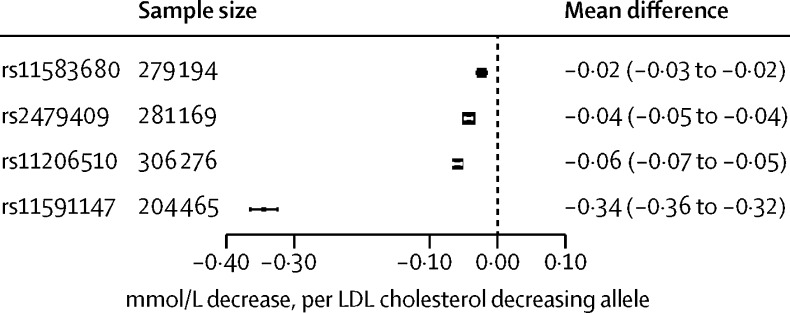
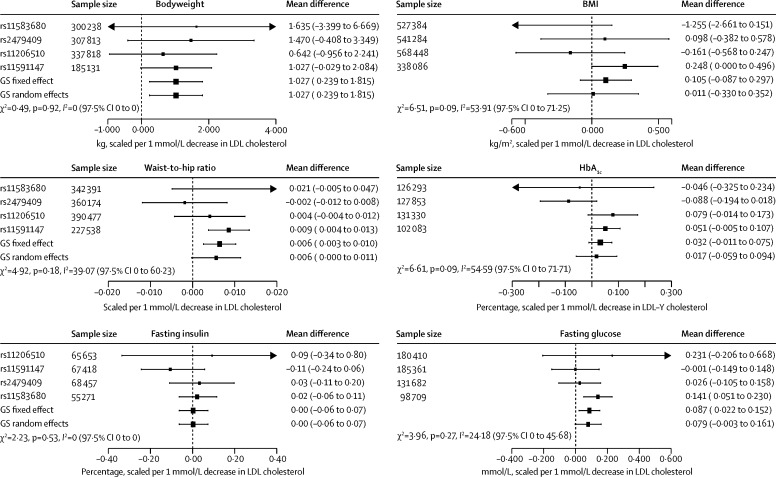
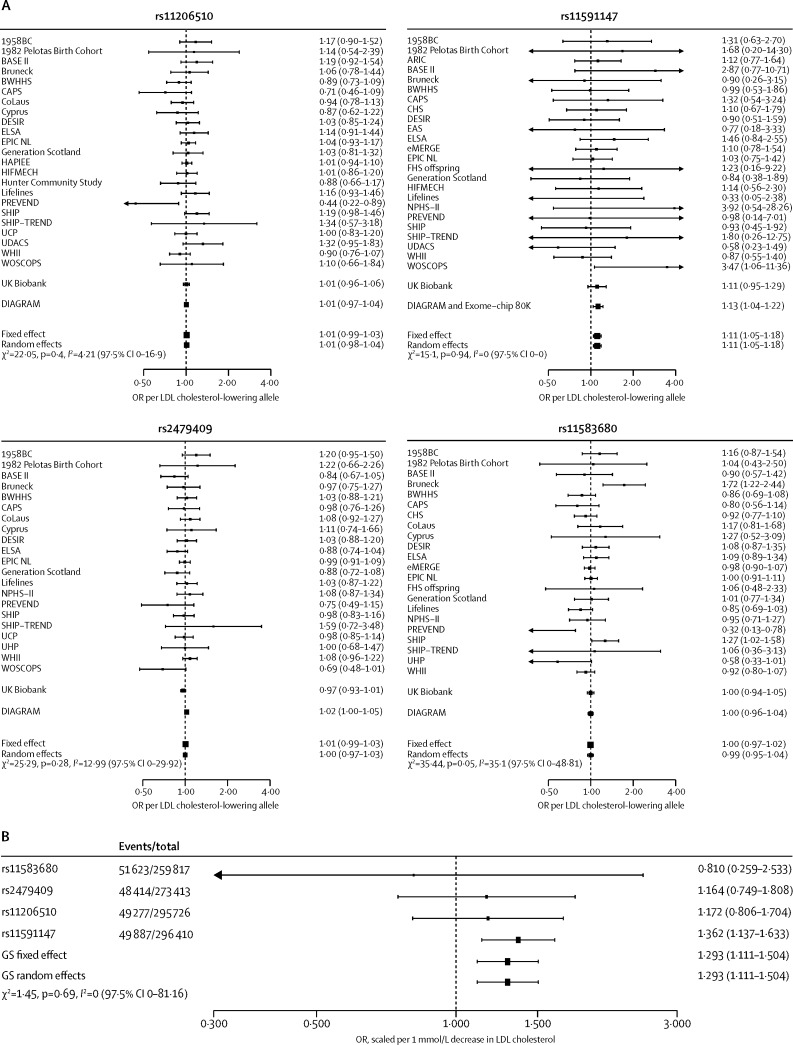
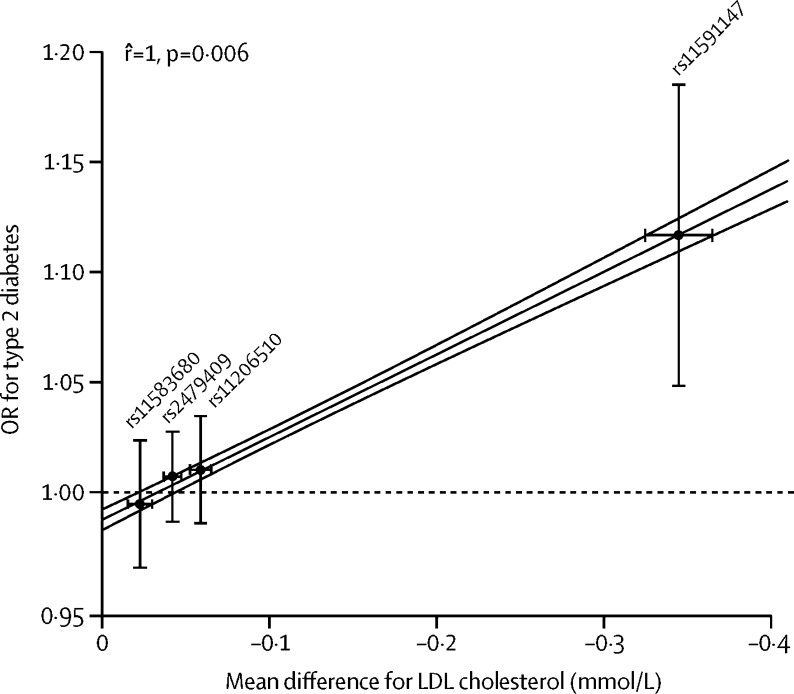
Background Statin treatment and variants in the gene encoding HMG-CoA reductase are associated with reductions in both the concentration of LDL cholesterol and the risk of coronary heart disease, but also with modest hyperglycaemia, increased bodyweight, and modestly increased risk of type 2 diabetes, which in no way offsets their substantial benefits. We sought to investigate the associations of LDL cholesterol-lowering PCSK9 variants with type 2 diabetes and related biomarkers to gauge the likely effects of PCSK9 inhibitors on diabetes risk. Methods In this mendelian randomisation study, we used data from cohort studies, randomised controlled trials, case control studies, and genetic consortia to estimate associations of PCSK9 genetic variants with LDL cholesterol, fasting blood glucose, HbA 1c , fasting insulin, bodyweight, waist-to-hip ratio, BMI, and risk of type 2 diabetes, using a standardised analysis plan, meta-analyses, and weighted gene-centric scores. Findings Data were available for more than 550 000 individuals and 51 623 cases of type 2 diabetes. Combined analyses of four independent PCSK9 variants (rs11583680, rs11591147, rs2479409, and rs11206510) scaled to 1 mmol/L lower LDL cholesterol showed associations with increased fasting glucose (0·09 mmol/L, 95% CI 0·02 to 0·15), bodyweight (1·03 kg, 0·24 to 1·82), waist-to-hip ratio (0·006, 0·003 to 0·010), and an odds ratio for type diabetes of 1·29 (1·11 to 1·50). Based on the collected data, we did not identify associations with HbA 1c (0·03%, −0·01 to 0·08), fasting insulin (0·00%, −0·06 to 0·07), and BMI (0·11 kg/m 2 , −0·09 to 0·30). Interpretation PCSK9 variants associated with lower LDL cholesterol were also associated with circulating higher fasting glucose concentration, bodyweight, and waist-to-hip ratio, and an increased risk of type 2 diabetes. In trials of PCSK9 inhibitor drugs, investigators should carefully assess these safety outcomes and quantify the risks and benefits of PCSK9 inhibitor treatment, as was previously done for statins. Funding British Heart Foundation, and University College London Hospitals NHS Foundation Trust (UCLH) National Institute for Health Research (NIHR) Biomedical Research Centre.
Overview
The claims and statistics of this paper haven’t been checked yet.
Free: it reads the open-access text and checks the first 5 claims that cite a source we can check. Create a free account to check every claim.
Integrity signals
Registry
Cites
Statistics
Figures
Verification
Claims the paper makes
The claims and statistics of this paper haven’t been checked yet.
Free: it reads the open-access text and checks the first 5 claims that cite a source we can check. Create a free account to check every claim.
Claims other papers make about this one
Each is checked against this paper’s own text: does it say what the citing paper says it does?
The source backs part of the claim, not all of it — or backs it for a different population, condition or comparison.
In the citing paper
“mendelian randomisation studies 8,[19][20][21] of genetic polymorphisms that mimic the effects of statins, ezetimibe, or PCSK9 inhibitors suggest that lifelong reductions in LDL cholesterol, irrespective of the mechanism, are associated with an increased risk of diabetes.”
From Effects of alirocumab on cardiovascular and metabolic outcomes after acute coronary syndrome in patients with or without diabetes: a prespecified analysis of the ODYSSEY OUTCOMES randomised controlled trial (2019) · cites this paper as [20]
Experimental — accuracy not yet measuredThe source backs part of the claim, not all of it — or backs it for a different population, condition or comparison.
In the citing paper
“Furthermore, we found no significant association between PCSK9 inhibition and diabetes (RR 1.04; 95% CI 0.77 to 1.41; I2 = 0%), despite the weak signal reported in some Mendelian randomization studies[30,31], with the discordance most likely arising from the fact that genetic studies reflect lifetime exposure as compared to short-term pharmacological interventions.”
From Oral PCSK9 inhibitors for elevated LDL-C: A systematic review and meta-analysis of randomized trials (2026) · cites this paper as [30]
Experimental — accuracy not yet measuredThe cited source says what the claim attributes to it.
In the citing paper
“Mendelian randomisation analyses 8,20,21 have shown that genetically determined loss of function of PCSK9 is associated with an increased risk of incident diabetes, but clinical trials of PCSK9 inhibitors have shown no such effect.9”
The cited source says what the claim attributes to it.
In the citing paper
“We created a genetic risk score (GRS) for PCSK9 function using four single nucleotide polymorphisms (SNPs) at or near the PCSK9 locus that have been previously demonstrated in a genetic risk score to strongly associate with lower LDL-C in individuals of European genetic ancestry [4]: rs11583680, rs11591147, rs2479409, and rs11206510.”
From PCSK9 loss of function is protective against extra-coronary atherosclerotic cardiovascular disease in a large multi-ethnic cohort (2020) · cites this paper as [4]
The cited source says what the claim attributes to it.
In the citing paper
“Further, our study had less power to detect a difference in T2D risk when compared to other larger published meta-analyses [4].”
From PCSK9 loss of function is protective against extra-coronary atherosclerotic cardiovascular disease in a large multi-ethnic cohort (2020) · cites this paper as [4]
1 more claim about this paper
Create a free account to see every claim other papers make about this one.
Self-check
Percentages, sums and reported differences re-computed from the paper’s own numbers.
The self-check needs the paper’s full text.
Citations
Cites
Measuring inconsistency in meta-analyses
Higgins, J. P. T., Thompson, S. G., Deeks, J. J., & Altman, D. G. (2003) · BMJ · doi:10.1136/bmj.327.7414.557 · Cited by 63,139
Statistical Analysis With Missing Data
Lahiff, M., Little, R. J. A., & Rubin, D. B. (1989) · Journal of the American Statistical Association · doi:10.2307/2289883 · Cited by 17,265
Sudlow, C., Gallacher, J., Allen, N., Beral, V., Burton, P., Danesh, J., Downey, P., Elliott, P., Green, J., Landray, M., et al. (2015) · PLOS Medicine · doi:10.1371/journal.pmed.1001779 · Cited by 12,728
A general framework for estimating the relative pathogenicity of human genetic variants
Kircher, M., Witten, D. M., Jain, P., O'Roak, B. J., Cooper, G. M., & Shendure, J. (2014) · Nature Genetics · doi:10.1038/ng.2892 · Cited by 6,183
Marginal Structural Models and Causal Inference in Epidemiology
Robins, J. M., Hernán, M. Á., & Brumback, B. (2000) · Epidemiology · doi:10.1097/00001648-200009000-00011 · Cited by 5,581
Genetic studies of body mass index yield new insights for obesity biology
Study, T. L. C., Locke, A. E., The ADIPOGen Consortium, The AGEN-BMI Working Group, The CARDIOGRAMplusC4D Consortium, The CKDGen Consortium, The, G. L. G. C., The, I. C. B. P., The MAGIC Investigators, The MuTHER Consortium, et al. (2015) · Nature · doi:10.1038/nature14177 · Cited by 4,534 · cited 1×
“…(MAGIC); 17–19 body-weight, height, BMI, and waist-to-hip ratio from the Genetic Investigation of Anthropometric Traits consortium (GIANT); 20,21 and type 2 diabetes from the Diabetes Genetics Replication and Meta-analysis consortium (DIAGRAM) 22 and Exome chip 80K. 23 Additionally,…”
Self-citationSequence Variations in PCSK9, Low LDL, and Protection against Coronary Heart Disease
Cohen, J. C., Boerwinkle, E., Mosley, T. H., & Hobbs, H. H. (2006) · New England Journal of Medicine · doi:10.1056/nejmoa054013 · Cited by 3,181
Mutations in PCSK9 cause autosomal dominant hypercholesterolemia
Abifadel, M., Varret, M., Rabès, J.-P., Allard, D., Ouguerram, K., Devillers, M., Cruaud, C., Benjannet, S., Wickham, L., Erlich, D., et al. (2003) · Nature Genetics · doi:10.1038/ng1161 · Cited by 2,985
Willer (2013) · doi:10.1038/ng.2797 · Cited by 2,983
Statistical Analysis With Missing Data
Lazar, N. A. (2003) · Technometrics · doi:10.1198/tech.2003.s167 · Cited by 2,458
Cited by
Mach, F., Baigent, C., Catapano, A. L., Koskinas, K. C., Casula, M., Badimon, L., Chapman, M. J., De Backer, G. G., Delgado, V., Ference, B. A., et al. (2020) · European Heart Journal · doi:10.1093/eurheartj/ehz455 · Cited by 8,961
Self-citationThe MR-Base platform supports systematic causal inference across the human phenome
Hemani, G., Zheng, J., Elsworth, B., Wade, K. H., Haberland, V., Baird, D., Laurin, C., Burgess, S., Bowden, J., Langdon, R., et al. (2018) · eLife · doi:10.7554/elife.34408 · Cited by 7,959
Mach, F., Baigent, C., Catapano, A. L., Koskinas, K. C., Casula, M., Badimon, L., Chapman, M. J., De Backer, G. G., Delgado, V., Ference, B. A., et al. (2019) · Atherosclerosis · doi:10.1016/j.atherosclerosis.2019.08.014 · Cited by 4,854
Self-citationRecent Developments in Mendelian Randomization Studies
Zheng, J., Baird, D., Borges, M.-C., Bowden, J., Hemani, G., Haycock, P., Evans, D. M., & Smith, G. D. (2017) · Current Epidemiology Reports · doi:10.1007/s40471-017-0128-6 · Cited by 1,147
Mendelian randomization for cardiovascular diseases: Principles and applications
Larsson, S. C., Butterworth, A. S., & Burgess, S. (2023) · European Heart Journal · doi:10.1093/eurheartj/ehad736 · Cited by 735
“95,104,105 As a further example, cis -MR analyses have been performed to predict the cardiovascular effects of lowering circulating levels of Lp(a).”
Mendelian randomization in cardiometabolic disease: challenges in evaluating causality
Holmes, M. V., Ala-Korpela, M., & Smith, G. D. (2017) · Nature Reviews Cardiology · doi:10.1038/nrcardio.2017.78 · Cited by 679
Self-citationCardiovascular Efficacy and Safety of Bococizumab in High-Risk Patients
Ridker, P. M., Revkin, J., Amarenco, P., Brunell, R., Curto, M., Civeira, F., Flather, M., Glynn, R. J., Gregoire, J., Jukema, J. W., et al. (2017) · New England Journal of Medicine · doi:10.1056/nejmoa1701488 · Cited by 624
Sabatine, M. S., Leiter, L. A., Wiviott, S. D., Giugliano, R. P., Deedwania, P., De Ferrari, G. M., Murphy, S. A., Kuder, J. F., Gouni-Berthold, I., Lewis, B. S., et al. (2017) · The Lancet Diabetes & Endocrinology · doi:10.1016/s2213-8587(17)30313-3 · Cited by 603
Genetic drug target validation using Mendelian randomisation
Schmidt, A. F., Finan, C., Gordillo-Marañón, M., Asselbergs, F. W., Freitag, D. F., Patel, R. S., Tyl, B., Chopade, S., Faraway, R., Zwierzyna, M., et al. (2020) · Nature Communications · doi:10.1038/s41467-020-16969-0 · Cited by 567
Self-citationExome-wide association study of plasma lipids in >300,000 individuals
Charge Diabetes Working Group, Liu, D. J., The EPIC-InterAct Consortium, EPIC-CVD Consortium, GOLD Consortium, Program, V. M. V., Peloso, G. M., Yu, H., Butterworth, A. S., Wang, X., et al. (2017) · Nature Genetics · doi:10.1038/ng.3977 · Cited by 540
Self-citationSafety and efficacy of statin therapy
Adhyaru, B. B., & Jacobson, T. A. (2018) · Nature Reviews Cardiology · doi:10.1038/s41569-018-0098-5 · Cited by 424
Mach, F., Ray, K. K., Wiklund, O., Corsini, A., Catapano, A. L., Bruckert, E., De Backer, G., Hegele, R. A., Hovingh, G. K., Jacobson, T. A., et al. (2018) · European Heart Journal · doi:10.1093/eurheartj/ehy182 · Cited by 370
Self-citationUsing Mendelian Randomization to Improve the Design of Randomized Trials
Ference, B. A., Holmes, M. V., & Smith, G. D. (2021) · Cold Spring Harbor Perspectives in Medicine · doi:10.1101/cshperspect.a040980 · Cited by 338
“…studies have reported that genetic variants that mimic the effect of statins, or other therapies that reduce LDL-C through up-regulation of the LDL receptor, are associated with an increased risk of diabetes (Swerdlow et al. 2015; Ference et al. 2016; Lotta et al. 2016; Schmidt et al. 2017).”
BackgroundSelf-citationRay, K. K., Colhoun, H. M., Szarek, M., Baccara-Dinet, M., Bhatt, D. L., Bittner, V. A., Budaj, A. J., Diaz, R., Goodman, S. G., Hanotin, C., et al. (2019) · The Lancet Diabetes & Endocrinology · doi:10.1016/s2213-8587(19)30158-5 · Cited by 315
PCSK9: From Basic Science Discoveries to Clinical Trials
Shapiro, M. D., Tavori, H., & Fazio, S. (2018) · Circulation Research · doi:10.1161/circresaha.118.311227 · Cited by 285
Zhao, W., Rasheed, A., Tikkanen, E., Lee, J.-J., Butterworth, A. S., Howson, J. M. M., Assimes, T. L., Chowdhury, R., Orho-Melander, M., Damrauer, S., et al. (2017) · Nature Genetics · doi:10.1038/ng.3943 · Cited by 274
“Furthermore, it has been shown that genetic variants in the PCSK9 gene that lower LDL-C levels associated with a higher risk of T2D, fasting glucose concentration, body weight, and waist-to-hip ratio 33 .”
Self-citationThe Evolving Future of PCSK9 Inhibitors
Rosenson, R. S., Hegele, R. A., Fazio, S., & Cannon, C. P. (2018) · Journal of the American College of Cardiology · doi:10.1016/j.jacc.2018.04.054 · Cited by 264
Application of magnetic nanoparticles in nucleic acid detection
Tang, C., He, Z., Liu, H., Xu, Y., Huang, H., Yang, G., Xiao, Z., Li, S., Liu, H., Deng, Y., et al. (2020) · Journal of Nanobiotechnology · doi:10.1186/s12951-020-00613-6 · Cited by 262
Walker, V. M., Davey Smith, G., Davies, N. M., & Martin, R. M. (2017) · International Journal of Epidemiology · doi:10.1093/ije/dyx207 · Cited by 217
“Other genetic studies have found similar results.(26,27,62)”
Da Dalt, L., Ruscica, M., Bonacina, F., Balzarotti, G., Dhyani, A., Di Cairano, E., Baragetti, A., Arnaboldi, L., De Metrio, S., Pellegatta, F., et al. (2019) · European Heart Journal · doi:10.1093/eurheartj/ehy357 · Cited by 209
PCSK9 monoclonal antibodies for the primary and secondary prevention of cardiovascular disease
Schmidt, A. F., Pearce, L. S., Wilkins, J. T., Overington, J. P., Hingorani, A. D., & Casas, J. P. (2017) · Cochrane Database of Systematic Reviews · doi:10.1002/14651858.cd011748.pub2 · Cited by 205
Self-citationCausal Inference in Cancer Epidemiology: What Is the Role of Mendelian Randomization?
Yarmolinsky, J., Wade, K. H., Richmond, R. C., Langdon, R. J., Bull, C. J., Tilling, K. M., Relton, C. L., Lewis, S. J., Davey Smith, G., & Martin, R. M. (2018) · Cancer Epidemiology, Biomarkers & Prevention · doi:10.1158/1055-9965.epi-17-1177 · Cited by 194
A Mendelian randomization study of the effects of blood lipids on breast cancer risk
Nowak, C., & Ärnlöv, J. (2018) · Nature Communications · doi:10.1038/s41467-018-06467-9 · Cited by 190
Holmes, M. V., Richardson, T. G., Ference, B. A., Davies, N. M., & Davey Smith, G. (2021) · Nature Reviews Cardiology · doi:10.1038/s41569-020-00493-1 · Cited by 184
Self-citationMendelian randomisation in cardiovascular research: an introduction for clinicians
Bennett, D. A., & Holmes, M. V. (2017) · Heart · doi:10.1136/heartjnl-2016-310605 · Cited by 178
“Two recent Mendelian randomisation studies 44 45 have provided orthogonal evidence that LDL-C lowering through PCSK9 inhibition is, as with statins, likely to lead to increased risk of T2D, and more generally, a recent study using SNPs across the genome provides evidence that an increased risk of…”
BackgroundSelf-citationNewman, C. B., Blaha, M. J., Boord, J. B., Cariou, B., Chait, A., Fein, H. G., Ginsberg, H. N., Goldberg, I. J., Murad, M. H., Subramanian, S., et al. (2020) · The Journal of Clinical Endocrinology & Metabolism · doi:10.1210/clinem/dgaa674 · Cited by 172
Self-citationLipid-Lowering Agents: Targets Beyond PCSK9
Hegele, R. A., & Tsimikas, S. (2019) · Circulation Research · doi:10.1161/circresaha.118.313171 · Cited by 171
Common Methods for Performing Mendelian Randomization
Teumer, A. (2018) · Frontiers in Cardiovascular Medicine · doi:10.3389/fcvm.2018.00051 · Cited by 165
“A third method for taking advantage of multiple IVs is to combine ratio estimates (triangulation) of single instruments using inverse variance weighting (29, 30).”
MethodSelf-citationStatistical methods for cis‐Mendelian randomization with two‐sample summary‐level data
Gkatzionis, A., Burgess, S., & Newcombe, P. J. (2023) · Genetic Epidemiology · doi:10.1002/gepi.22506 · Cited by 155
Lipid lowering and Alzheimer disease risk: A mendelian randomization study
Williams, D. M., Finan, C., Schmidt, A. F., Burgess, S., & Hingorani, A. D. (2020) · Annals of Neurology · doi:10.1002/ana.25642 · Cited by 157
Self-citationTargeting PCSK9 to tackle cardiovascular disease
Hummelgaard, S., Vilstrup, J. P., Gustafsen, C., Glerup, S., & Weyer, K. (2023) · Pharmacology & Therapeutics · doi:10.1016/j.pharmthera.2023.108480 · Cited by 150
Genomic insights into the causes of type 2 diabetes
Langenberg, C., & Lotta, L. A. (2018) · The Lancet · doi:10.1016/s0140-6736(18)31132-2 · Cited by 149
Self-citationInhibiting PCSK9 — biology beyond LDL control
Stoekenbroek, R. M., Lambert, G., Cariou, B., & Hovingh, G. K. (2019) · Nature Reviews Endocrinology · doi:10.1038/s41574-018-0110-5 · Cited by 141
Self-citationLeiter, L. A., Cariou, B., Müller‐Wieland, D., Colhoun, H. M., Del Prato, S., Tinahones, F. J., Ray, K. K., Bujas‐Bobanovic, M., Domenger, C., Mandel, J., et al. (2017) · Diabetes, Obesity and Metabolism · doi:10.1111/dom.13114 · Cited by 139
Self-citationHemani, G., Zheng, J., Wade, K. H., Laurin, C., Elsworth, B., Burgess, S., Bowden, J., Langdon, R., Tan, V., Yarmolinsky, J., et al. (2016) · bioRxiv (Cold Spring Harbor Laboratory) · doi:10.1101/078972 · Cited by 134
Cholesterol metabolism, pancreatic β-cell function and diabetes
Perego, C., Da Dalt, L., Pirillo, A., Galli, A., Catapano, A. L., & Norata, G. D. (2019) · Biochimica et Biophysica Acta (BBA) - Molecular Basis of Disease · doi:10.1016/j.bbadis.2019.04.012 · Cited by 135
Genetic Association of Lipids and Lipid Drug Targets With Abdominal Aortic Aneurysm: A Meta-analysis
Harrison, S. C., Holmes, M. V., Burgess, S., Asselbergs, F. W., Jones, G. T., Baas, A. F., van ’t Hof, F. N., de Bakker, P. I. W., Blankensteijn, J. D., Powell, J. T., et al. (2018) · JAMA Cardiology · doi:10.1001/jamacardio.2017.4293 · Cited by 131
Self-citationGenetics Insights in the Relationship Between Type 2 Diabetes and Coronary Heart Disease
Goodarzi, M. O., & Rotter, J. I. (2020) · Circulation Research · doi:10.1161/circresaha.119.316065 · Cited by 141
Inclisiran—New hope in the management of lipid disorders?
Dyrbuś, K., Gąsior, M., Penson, P., Ray, K. K., & Banach, M. (2020) · Journal of Clinical Lipidology · doi:10.1016/j.jacl.2019.11.001 · Cited by 120
Bovijn, J., Krebs, K., Chen, C.-Y., Boxall, R., Censin, J. C., Ferreira, T., Pulit, S. L., Glastonbury, C. A., Laber, S., Millwood, I. Y., et al. (2020) · Science Translational Medicine · doi:10.1126/scitranslmed.aay6570 · Cited by 119
Self-citationPhenomeXcan: Mapping the genome to the phenome through the transcriptome
Pividori, M., Rajagopal, P. S., Barbeira, A., Liang, Y., Melia, O., Bastarache, L. A., Park, Y., Wen, X., & Im, H. K. (2020) · Science Advances · doi:10.1126/sciadv.aba2083 · Cited by 127
Established and Emerging Lipid-Lowering Drugs for Primary and Secondary Cardiovascular Prevention
Michaeli, D. T., Michaeli, J. C., Albers, S., Boch, T., & Michaeli, T. (2023) · American Journal of Cardiovascular Drugs · doi:10.1007/s40256-023-00594-5 · Cited by 109
“PCSK9 inhibitors were also discussed to induce the expression of auto-antibodies and increase the risk of diabetes mellitus [89, 90].”
BackgroundMetabolomic Consequences of Genetic Inhibition of PCSK9 Compared With Statin Treatment
Sliz, E., Kettunen, J., Holmes, M. V., Williams, C. O., Boachie, C., Wang, Q., Männikkö, M., Sebert, S., Walters, R., Lin, K., et al. (2018) · Circulation · doi:10.1161/circulationaha.118.034942 · Cited by 109
“Additional genetic variants in the PCSK9 locus, which have previously been used in Mendelian randomization studies on PCSK9 (11,29), and display low linkage disequilibrium with rs11591147 (R(2)<0.”
BackgroundMethodSelf-citationPCSK9 and cancer: Rethinking the link
Mahboobnia, K., Pirro, M., Marini, E., Grignani, F., Bezsonov, E. E., Jamialahmadi, T., & Sahebkar, A. (2021) · Biomedicine & Pharmacotherapy · doi:10.1016/j.biopha.2021.111758 · Cited by 105
Klimentidis, Y. C., Arora, A., Newell, M., Zhou, J. J., Ordovás, J. M., Renquist, B. J., & Wood, A. C. (2020) · Diabetes · doi:10.2337/db19-1134 · Cited by 112
Ray, K. K., Leiter, L. A., Müller‐Wieland, D., Cariou, B., Colhoun, H. M., Henry, R. R., Tinahones, F. J., Bujas‐Bobanovic, M., Domenger, C., Letierce, A., et al. (2018) · Diabetes, Obesity and Metabolism · doi:10.1111/dom.13257 · Cited by 102
“Statin use has been associated with an increase in risk of T2DM, and mendelian randomization studies have reported an association between PCSK9 loss-of-function mutations and risk of diabetes.(30,32,33) However, we did not see any clinically relevant effect of alirocumab on change in glycemic parameters or in use of a…”
ResultSelf-citationBurgess, S. (2018) · Apollo (University of Cambridge) · doi:10.17863/cam.26250 · Cited by 102
Frayling, T. M., Beaumont, R. N., Jones, S. E., Yaghootkar, H., Tuke, M. A., Ruth, K. S., Casanova, F., West, B., Locke, J., Sharp, S., et al. (2018) · Cell Reports · doi:10.1016/j.celrep.2018.03.070 · Cited by 101
“06 (Ference et al., 2016; Lotta et al., 2016; Schmidt et al., 2017; Swerdlow et al., 2015) but add genetic evidence to that from trials showing that such LDL lowering increases the risk for type 2 diabetes (Frayling, 2015; Swerdlow et al.”
InfluentialSelf-citationCan LDL cholesterol be too low? Possible risks of extremely low levels
Olsson, A. G., Angelin, B., Assmann, G., Binder, C. J., Björkhem, I., Cedazo‐Minguez, A., Cohen, J., von Eckardstein, A., Farinaro, E., Müller‐Wieland, D., et al. (2017) · Journal of Internal Medicine · doi:10.1111/joim.12614 · Cited by 100
Physiological and therapeutic regulation of PCSK9 activity in cardiovascular disease
Glerup, S., Schulz, R., Laufs, U., & Schlüter, K.-D. (2017) · Basic Research in Cardiology · doi:10.1007/s00395-017-0619-0 · Cited by 93
PCSK9 Inhibition: Insights From Clinical Trials and Future Prospects
Katzmann, J. L., Gouni-Berthold, I., & Laufs, U. (2020) · Frontiers in Physiology · doi:10.3389/fphys.2020.595819 · Cited by 87
Using human genetics to improve safety assessment of therapeutics
Carss, K., Deaton, A. M., Río-Espínola, A. D., Diogo, D., Fielden, M. R., Kulkarni, D. A., Moggs, J. G., Newham, P., Nelson, M. R., Sistare, F. D., et al. (2022) · Nature Reviews Drug Discovery · doi:10.1038/s41573-022-00561-w · Cited by 100
Handelsman, Y., & Lepor, N. E. (2018) · Journal of the American Heart Association · doi:10.1161/jaha.118.008953 · Cited by 86
Lebeau, P. F., Byun, J. H., Platko, K., Al-Hashimi, A. A., Lhoták, Š., MacDonald, M. E., Mejia-Benitez, A., Prat, A., Igdoura, S. A., Trigatti, B., et al. (2019) · JHEP Reports · doi:10.1016/j.jhepr.2019.10.009 · Cited by 83
Cupido, A. J., Asselbergs, F. W., Natarajan, P., CHARGE Inflammation Working Group, Ridker, P. M., Hovingh, G. K., & Schmidt, A. F. (2022) · British Journal of Clinical Pharmacology · doi:10.1111/bcp.15191 · Cited by 92
“These models allow exploration of the directionality of a therapeutic compound on clinical outcome in trials and exploration of unanticipated on-target side effects.(19,20) MR for drug–target discovery and validation and its assumptions have been reviewed elsewhere.”
BackgroundResultInfluentialSelf-citationPCSK9 deficiency results in increased ectopic fat accumulation in experimental models and in humans
Baragetti, A., Balzarotti, G., Grigore, L., Pellegatta, F., Guerrini, U., Pisano, G., Fracanzani, A. L., Fargion, S., Norata, G. D., & Catapano, A. L. (2017) · European Journal of Preventive Cardiology · doi:10.1177/2047487317724342 · Cited by 79
The Role of High-Density Lipoproteins in Diabetes and Its Vascular Complications
Wong, N. K. P., Nicholls, S. J., Tan, J. T. M., & Bursill, C. A. (2018) · International Journal of Molecular Sciences · doi:10.3390/ijms19061680 · Cited by 81
“Despite this, recent Mendelian randomization studies found that PCSK9 genetic variants associated with low LDL also predict an increased risk of new-onset DM [136,137].”
BackgroundDifferential effects of PCSK9 variants on risk of coronary disease and ischaemic stroke
Hopewell, J. C., Malik, R., Valdés-Márquez, E., Worrall, B. B., Collins, R., & METASTROKE Collaboration of the ISGC (2018) · European Heart Journal · doi:10.1093/eurheartj/ehx373 · Cited by 74
Macchi, C., Banach, M., Corsini, A., Sirtori, C., Ferri, N., & Ruscica, M. (2019) · European Journal of Preventive Cardiology · doi:10.1177/2047487319831500 · Cited by 75
Lovegrove, C. E., Howles, S., Furniss, D., & Holmes, M. V. (2024) · Journal of Bone and Mineral Research · doi:10.1093/jbmr/zjae136 · Cited by 97
“75 As previously mentioned, the magnitude of effect from a MR study may not mirror that of a clinical intervention as MR estimates represent life-long exposure.”
BackgroundSelf-citationRosenson, R. S., Daviglus, M. L., Handelsman, Y., Pozzilli, P., Bays, H., Monsalvo, M. L., Elliott-Davey, M., Somaratne, R., & Reaven, P. (2019) · Diabetologia · doi:10.1007/s00125-019-4856-7 · Cited by 73
Genetic Insights for Drug Development in NAFLD
Eslam, M., & George, J. (2019) · Trends in Pharmacological Sciences · doi:10.1016/j.tips.2019.05.002 · Cited by 69
Cupido, A. J., Reeskamp, L. F., Hingorani, A. D., Finan, C., Asselbergs, F. W., Hovingh, G. K., & Schmidt, A. F. (2022) · JAMA Cardiology · doi:10.1001/jamacardio.2022.2333 · Cited by 68
Self-citationDiabetogenic Action of Statins: Mechanisms
Carmena, R., & Betteridge, D. J. (2019) · Current Atherosclerosis Reports · doi:10.1007/s11883-019-0780-z · Cited by 85
Wang, X., Wen, D., Chen, Y., Ma, L., & You, C. (2022) · Cardiovascular Diabetology · doi:10.1186/s12933-022-01542-4 · Cited by 67
New Perspectives on Atherogenic Dyslipidaemia and Cardiovascular Disease
Lorenzatti, A. J., & Toth, P. P. (2020) · European Cardiology Review · doi:10.15420/ecr.2019.06 · Cited by 72
Novel insights into causal effects of serum lipids and lipid-modifying targets on cholelithiasis
Chen, L., Qiu, W., Sun, X., Gao, M., Zhao, Y., Li, M., Fan, Z., & Lv, G. (2023) · Gut · doi:10.1136/gutjnl-2023-330784 · Cited by 67
New Pharmacological Approaches to Target PCSK9
Catapano, A. L., Pirillo, A., & Norata, G. D. (2020) · Current Atherosclerosis Reports · doi:10.1007/s11883-020-00847-7 · Cited by 68
Cao, Y., Liu, H., Dong, Q., Li, S., & Li, J. (2018) · Diabetes, Obesity and Metabolism · doi:10.1111/dom.13235 · Cited by 61
Cholesterol-Lowering Agents: PCSK9 Inhibitors Today and Tomorrow
Rosenson, R. S., Hegele, R. A., & Koenig, W. (2019) · Circulation Research · doi:10.1161/circresaha.118.313238 · Cited by 61
Richardson, T. G., Wang, Q., Sanderson, E., Mahajan, A., McCarthy, M. I., Frayling, T. M., Ala-Korpela, M., Sniderman, A., Davey Smith, G., & Holmes, M. V. (2021) · The Lancet Healthy Longevity · doi:10.1016/s2666-7568(21)00086-6 · Cited by 61
Self-citationArsenault, B. J., Petrides, F., Tabet, F., Bao, W., Hovingh, G. K., Boekholdt, S. M., Ramin‐Mangata, S., Meilhac, O., DeMicco, D. A., Rye, K., et al. (2017) · Journal of clinical lipidology · doi:10.1016/j.jacl.2017.10.001 · Cited by 63
“37 Finally, we found that CETP inhibition with torcetrapib provides a small but significant increase in PCSK9 levels, in patients with T2D, but not in patients without T2D.”
ResultInfluentialSelf-citationTherapy with cholesteryl ester transfer protein (CETP) inhibitors and diabetes risk
Masson, W., Lobo, M., Siniawski, D., Huerín, M., Molinero, G., Valéro, R., & Nogueira, J. P. (2018) · Diabetes & Metabolism · doi:10.1016/j.diabet.2018.02.005 · Cited by 61
Kim, J., Lee, H. S., & Lee, K. (2018) · Cardiovascular Diabetology · doi:10.1186/s12933-018-0799-4 · Cited by 67
Rao, A. S., Lindholm, D., Rivas, M. A., Knowles, J. W., Montgomery, S. B., & Ingelsson, E. (2018) · Circulation: Genomic and Precision Medicine · doi:10.1161/circgen.118.002162 · Cited by 60
Self-citationElectronic health records: the next wave of complex disease genetics
Wolford, B. N., Willer, C. J., & Surakka, I. (2018) · Human Molecular Genetics · doi:10.1093/hmg/ddy081 · Cited by 60
Inclisiran: a new generation of lipid-lowering siRNA therapeutic
Zhang, Y., Chen, H., Hong, L., Wang, H., Li, B., Zhang, M., Li, J., Liu, Y., & Liu, F. (2023) · Frontiers in Pharmacology · doi:10.3389/fphar.2023.1260921 · Cited by 78
Mendelian randomization in pharmacogenomics: The unforeseen potentials
Khasawneh, L. Q., Al-Mahayri, Z. N., & Ali, B. R. (2022) · Biomedicine & Pharmacotherapy · doi:10.1016/j.biopha.2022.112952 · Cited by 59
Nelson, C. P., Lai, F. Y., Nath, M., Ye, S., Webb, T. R., Schunkert, H., & Samani, N. J. (2019) · Circulation: Genomic and Precision Medicine · doi:10.1161/circgen.118.002196 · Cited by 55
The Reciprocal Relationship between LDL Metabolism and Type 2 Diabetes Mellitus
Bonilha, I., Hajduch, É., Luchiari, B., Nadruz, W., Goff, W. L., & Sposito, A. C. (2021) · Metabolites · doi:10.3390/metabo11120807 · Cited by 63
The Influence of Big (Clinical) Data and Genomics on Precision Medicine and Drug Development
Denny, J. C., Driest, S. L. V., Wei, W., & Roden, D. M. (2018) · Clinical Pharmacology & Therapeutics · doi:10.1002/cpt.951 · Cited by 59
“23 Their meta-analysis (including EHR samples) replicated known LDL-cholesterol-lowering effects and showed a potential risk of increased glucose and type 2 diabetes.”
BackgroundSelf-citationCaselli, C., Del Turco, S., Ragusa, R., Lorenzoni, V., De Graaf, M., Basta, G., Scholte, A., De Caterina, R., & Neglia, D. (2019) · Cardiovascular Diabetology · doi:10.1186/s12933-019-0949-3 · Cited by 50
PCSK9 in metabolism and diseases
Ajoolabady, A., Pratico, D., Mazidi, M., Davies, I. G., Lip, G. Y. H., Seidah, N., Libby, P., Kroemer, G., & Ren, J. (2025) · Metabolism · doi:10.1016/j.metabol.2024.156064 · Cited by 49
Peyot, M.-L., Roubtsova, A., Lussier, R., Chamberland, A., Essalmani, R., Murthy Madiraju, S. R., Seidah, N. G., Prentki, M., & Prat, A. (2021) · Biochimica et Biophysica Acta (BBA) - Molecular and Cell Biology of Lipids · doi:10.1016/j.bbalip.2021.158968 · Cited by 49
Lipid metabolism in homeostasis and disease
Li, Z., Deng, W., Yang, L., Tang, C., Yue, J.-M., Monteiro, O., Baptista‐Hon, D. T., & Li, T. (2026) · Signal Transduction and Targeted Therapy · doi:10.1038/s41392-025-02357-x · Cited by 74
“423 In summary, targeting lipid metabolism pathways (such as the PPAR signaling pathway and FAO), gut microbiota metabolites (such as secondary BAs), secondary BAs and their receptors (such as nuclear receptors such as FXR), and dietary and lifestyle interventions (such as the intake of n-3 and n-6…”
Pott, J., Schlegel, V., Teren, A., Horn, K., Kirsten, H., Bluecher, C., Kratzsch, J., Loeffler, M., Thiery, J., Burkhardt, R., et al. (2018) · Circulation: Genomic and Precision Medicine · doi:10.1161/circgen.117.001992 · Cited by 48
Cupido, A. J., & Kastelein, J. J. P. (2020) · Cardiovascular Research · doi:10.1093/cvr/cvaa212 · Cited by 44
“However, Mendelian Randomization demonstrated earlier that LDL-C reduction due to genetic variants in the PCSK9 locus did increase the risk of T2D.(12) The exact mechanism through which statins and PCSK9 inhibitors could increase the risk for T2D is not clear, but it is tempting to speculate that upregulation of the”
BackgroundDemuth, I., Banszerus, V. L., Drewelies, J., Düzel, S., Seeland, U., Spira, D., Tse, E., Braun, J., Bertram, L., Thiel, A., et al. (2021) · BMJ Open · doi:10.1136/bmjopen-2020-045576 · Cited by 52
Self-citationBeyond LDL: What Role for PCSK9 in Triglyceride-Rich Lipoprotein Metabolism?
Dijk, W., May, C. L., & Cariou, B. (2018) · Trends in Endocrinology and Metabolism · doi:10.1016/j.tem.2018.03.013 · Cited by 53
Self-citationStatins and diabetes: What are the connections?
Sattar, N. A. (2023) · Best Practice & Research Clinical Endocrinology & Metabolism · doi:10.1016/j.beem.2023.101749 · Cited by 59
Self-citationFeng, Q., Wei, W., Chung, C. P., Levinson, R. T., Sundermann, A. C., Mosley, J. D., Bastarache, L. A., Ferguson, J. F., Cox, N. J., Roden, D. M., et al. (2018) · PLoS Medicine · doi:10.1371/journal.pmed.1002642 · Cited by 47
Self-citationMbikay, M., Mayne, J., Sirois, F., Fedoryak, O. D., Raymond, A., Noad, J., & Chrétien, M. (2018) · Molecular Nutrition & Food Research · doi:10.1002/mnfr.201700729 · Cited by 49
The impact of triglycerides on glucose tolerance: Lipotoxicity revisited
Seghieri, M., Tricò, D., & Natali, A. (2017) · Diabetes & Metabolism · doi:10.1016/j.diabet.2017.04.010 · Cited by 43
Turgeon, R. D., Tsuyuki, R. T., Gyenes, G. T., & Pearson, G. J. (2018) · Canadian Journal of Cardiology · doi:10.1016/j.cjca.2018.04.002 · Cited by 43
Phenome-wide association analysis of LDL-cholesterol lowering genetic variants in PCSK9
Schmidt, A. F., Holmes, M. V., Preiss, D., Swerdlow, D. I., Denaxas, S., Fatemifar, G., Faraway, R., Finan, C., Lumbers, R. T., Henry, A., et al. (2019) · BMC Cardiovascular Disorders · doi:10.1186/s12872-019-1187-z · Cited by 45
“In conclusion, PCSK9 SNPs associated with lower LDL-C predict a substantial reduction in the risk of MI and concordant associations with a reduction in risk of ischemic stroke, but with a modestly increased risk of T2DM.”
BackgroundMethodInfluentialSelf-citationSoremekun, O. S., Karhunen, V., He, Y., Rajasundaram, S., Liu, B., Gkatzionis, A., Soremekun, C., Udosen, B., Musa, H. S., Silva, S., et al. (2022) · EBioMedicine · doi:10.1016/j.ebiom.2022.103953 · Cited by 44
Khoury, P. E., Elbitar, S., Ghaleb, Y., Khalil, Y. A., Varret, M., Boileau, C., & Abifadel, M. (2017) · Current Atherosclerosis Reports · doi:10.1007/s11883-017-0684-8 · Cited by 52
Schmidt, A. F., Bourfiss, M., Alasiri, A., Anton, E. P., Chopade, S., van Vugt, M., van der Laan, S. W., Groß, C., Clarkson, C., Henry, A., et al. (2023) · Science Advances · doi:10.1126/sciadv.add4984 · Cited by 47
Self-citationSattar, N. A., Toth, P. P., Blom, D. J., Koren, M. J., Soran, H., Uhart, M., Elliott, M., Cyrille, M., Somaratne, R. M., & Preiss, D. (2017) · The American Journal of Cardiology · doi:10.1016/j.amjcard.2017.07.047 · Cited by 42
Self-citationHuman Genomics and Drug Development
Schmidt, A. F., Hingorani, A. D., & Finan, C. (2022) · Cold Spring Harbor Perspectives in Medicine · doi:10.1101/cshperspect.a039230 · Cited by 41
Self-citation
Metadata
- Authors
- Schmidt, A. F., Swerdlow, D. I., Holmes, M. V., Patel, R. S., Fairhurst-Hunter, Z., Lyall, D. M., Hartwig, F. P., Horta, B. L., Hyppönen, E., Power, C., Moldovan, M., van Iperen, E., Hovingh, G. K., Demuth, I., Norman, K., Steinhagen-Thiessen, E., Demuth, J., Bertram, L., Liu, T., Coassin, S., Willeit, J., Kiechl, S., Willeit, K., Mason, D., Wright, J., Morris, R., Wanamethee, G., Whincup, P., Ben-Shlomo, Y., McLachlan, S., Price, J. F., Kivimaki, M., Welch, C., Sanchez-Galvez, A., Marques-Vidal, P., Nicolaides, A., Panayiotou, A. G., Onland-Moret, N. C., van der Schouw, Y. T., Matullo, G., Fiorito, G., Guarrera, S., Sacerdote, C., Wareham, N. J., Langenberg, C., Scott, R., Luan, J., Bobak, M., Malyutina, S., Pająk, A., Kubinova, R., Tamosiunas, A., Pikhart, H., Husemoen, L. L. N., Grarup, N., Pedersen, O., Hansen, T., Linneberg, A., Simonsen, K. S., Cooper, J., Humphries, S. E., Brilliant, M., Kitchner, T., Hakonarson, H., Carrell, D. S., McCarty, C. A., Kirchner, H. L., Larson, E. B., Crosslin, D. R., de Andrade, M., Roden, D. M., Denny, J. C., Carty, C., Hancock, S., Attia, J., Holliday, E., O'Donnell, M., Yusuf, S., Chong, M., Pare, G., van der Harst, P., Said, M. A., Eppinga, R. N., Verweij, N., Snieder, H., Christen, T., Mook-Kanamori, D. O., Gustafsson, S., Lind, L., Ingelsson, E., Pazoki, R., Franco, O., Hofman, A., Uitterlinden, A., Dehghan, A., Teumer, A., Baumeister, S., Dörr, M., Lerch, M. M., Völker, U., Völzke, H., Ward, J., Pell, J. P., Smith, D. J., Meade, T., Maitland-van der Zee, A. H., Baranova, E. V., Young, R., Ford, I., Campbell, A., Padmanabhan, S., Bots, M. L., Grobbee, D. E., Froguel, P., Thuillier, D., Balkau, B., Bonnefond, A., Cariou, B., Smart, M., Bao, Y., Kumari, M., Mahajan, A., Ridker, P. M., Chasman, D. I., Reiner, A. P., Lange, L. A., Ritchie, M. D., Asselbergs, F. W., Casas, J.-P., Keating, B. J., Preiss, D., Hingorani, A. D., & Sattar, N.
- Affiliations
- Farr Institute (GB)
- University College London (GB)
- University of Oxford (GB)
- St Bartholomew's Hospital (GB)
- Centre for Human Genetics (GB)
- University of Glasgow (GB)
- Universidade Federal de Pelotas (BR)
- University of South Australia (AU)
- Amsterdam UMC Location University of Amsterdam (NL)
- Charité – Universitätsmedizin Berlin (DE)
- Institute for Integrative and Experimental Genomics (DE)
- Max Planck Institute for Human Development (DE)
- Innsbruck Medical University (AT)
- Bradford Royal Infirmary (GB)
- University of Bristol (GB)
- University of London (GB)
- University of Edinburgh (GB)
- Centre Hospitalier Universitaire Vaudois (CH)
- University of Nicosia (CY)
- Cyprus University of Technology (CY)
- Italian institute for Genomic Medicine (IT)
- Azienda Ospedaliero Universitaria San Giovanni Battista (IT)
- University of Cambridge (GB)
- Novosibirsk State Medical University (RU)
- Jagiellonian University (PL)
- Capital Region of Denmark (DK)
- University of Copenhagen (DK)
- Marshfield Clinic Research Foundation (US)
- Children's Hospital of Philadelphia (US)
- Kaiser Permanente Washington Health Research Institute (US)
- Essentia Health (US)
- Geisinger Medical Center (US)
- Vanderbilt University (US)
- George Washington University (US)
- University of Newcastle Australia (AU)
- Population Health Research Institute (CA)
- University Medical Center Groningen (NL)
- Leiden University Medical Center (NL)
- Uppsala University (SE)
- Erasmus MC (NL)
- Universitätsmedizin Greifswald (DE)
- London School of Hygiene & Tropical Medicine (GB)
- Utrecht University (NL)
- Institute of Genetics and Cancer (GB)
- University Medical Center Utrecht (NL)
- Centre National de la Recherche Scientifique (FR)
- Inserm (FR)
- University of Essex (GB)
- Brigham and Women's Hospital (US)
- University of Washington (US)
- University of Colorado Anschutz (US)
- Pennsylvania State University (US)
- University of Pennsylvania (US)
- Corresponding author
- Schmidt, Amand F
- ORCID
- Schmidt, Amand F
- Swerdlow, Daniel I
- Holmes, Michael V
- Patel, Riyaz S
- Lyall, Donald M
- Hartwig, Fernando Pires
- Horta, Bernardo Lessa
- Hyppönen, Elina
- Power, Christine
- Moldovan, Max
- Hovingh, G Kees
- Demuth, Ilja
- Norman, Kristina
- Bertram, Lars
- Liu, Tian
- Coassin, Stefan
- Willeit, Johann
- Kiechl, Stefan
- Willeit, Karin
- Mason, Dan
- Wright, John
- Morris, Richard
- Whincup, Peter
- McLachlan, Stela
- Price, Jackie F
- Welch, Catherine
- Marques-Vidal, Pedro
- Nicolaides, Andrew
- Panayiotou, Andrie G
- Matullo, Giuseppe
- Fiorito, Giovanni
- Guarrera, Simonetta
- Sacerdote, Carlotta
- Wareham, Nicholas J
- Langenberg, Claudia
- Luan, Jian'an
- Malyutina, Sofia
- Pająk, Andrzej
- Pikhart, Hynek
- Husemoen, Lise Lotte Nystrup
- Grarup, Niels
- Pedersen, Oluf
- Hansen, Torben
- Linneberg, Allan
- Cooper, Jackie
- Humphries, Steve E
- Brilliant, Murray
- Hakonarson, Hakon
- Carrell, David S
- McCarty, Catherine A
- Kirchner, H Lester
- Larson, Eric B
- Crosslin, David R
- Roden, Dan M
- Denny, Joshua C
- Carty, Cara
- Hancock, Stephen
- Attia, John
- O'Donnell, Martin
- Yusuf, Salim
- Chong, Michael
- Said, M Abdullah
- Verweij, Niek
- Snieder, Harold
- Christen, Tim
- Gustafsson, Stefan
- Lind, Lars
- Ingelsson, Erik
- Pazoki, Raha
- Franco, Oscar
- Dehghan, Abbas
- Teumer, Alexander
- Baumeister, Sebastian
- Dörr, Marcus
- Lerch, Markus M
- Völker, Uwe
- Völzke, Henry
- Ward, Joey
- Pell, Jill P
- Baranova, Ekaterina V
- Young, Robin
- Ford, Ian
- Campbell, Archie
- Padmanabhan, Sandosh
- Bots, Michiel L
- Grobbee, Diederick E
- Froguel, Philippe
- Balkau, Beverley
- Bonnefond, Amélie
- Cariou, Bertrand
- Smart, Melissa
- Bao, Yanchun
- Mahajan, Anubha
- Ridker, Paul M
- Chasman, Daniel I
- Reiner, Alex P
- Ritchie, Marylyn D
- Asselbergs, Folkert W
- Casas, Juan-Pablo
- Keating, Brendan J
- Preiss, David
- Hingorani, Aroon D
- Sattar, Naveed
- Venue
- The Lancet Diabetes & Endocrinology
- Publisher
- Elsevier BV
- Published
- 2017-02
- Volume
- 5
- Issue
- 2
- Pages
- 97-105
- ISSN
- 2213-8587 (ISSN-L)
- PMC
- PMC5266795
- OpenAlex
- W2559592043
- Semantic Scholar
- e6bca3dd8db1dcf2d1a5abdd2d025df1fc9970f8
- Cited by
- 380
- References
- 43
- Citations by year
- 2026: 16 · 2025: 22 · 2024: 29 · 2023: 29 · 2022: 35 · 2021: 49 · 2020: 36 · 2019: 46 · 2018: 64 · 2017: 52
- FWCI
- 60.18
- Type
- journal article
- Language
- en
- Open access
- hybrid
- doi.org
- Licence
- cc-by
- www.elsevier.com/tdm/userlicense/1.0/ (tdm)
- creativecommons.org/licenses/by/4.0/ (vor)
- Locations
- The Lancet Diabetes & Endocrinology (publishedVersion, cc-by)
- Europe PMC (PubMed Central) (publishedVersion, cc-by)
- PubMed Central (publishedVersion, cc-by)
- PubMed (publishedVersion)
- Research at the University of Copenhagen (University of Copenhagen) (publishedVersion, cc-by)
- EUR Research Repository (Erasmus University Rotterdam) (publishedVersion, other-oa)
- University of Groningen research database (University of Groningen / Centre for Information Technology) (publishedVersion, other-oa)
- SERVAL (Université de Lausanne) (publishedVersion, other-oa)
- UniSA Research Outputs Repository (University of South Australia) (acceptedVersion, other-oa)
- ENLIGHTEN (Jurnal Bimbingan dan Konseling Islam) (acceptedVersion)
- Leicester Research Archive (University of Leicester) (acceptedVersion, other-oa)
- St George's Online Research Archive (St George's University of London) (acceptedVersion)
- Open Access at Essex (University of Essex) (acceptedVersion)
- LSHTM Research Online (London School of Hygiene and Tropical Medicine) (acceptedVersion)
- Leiden Repository (Leiden University) (submittedVersion, cc-by)
- Leiden Repository (Leiden University) (submittedVersion, public-domain)
- IRIS (submittedVersion, public-domain)
- Institutional Research Information System University of Turin (University of Turin) (submittedVersion, public-domain)
- Ktisis at Cyprus University of Technology (Cyprus University of Technology) (submittedVersion, cc-by)
- MPG.PuRe (Max Planck Society) (submittedVersion, public-domain)
- Explore Bristol Research (submittedVersion, cc-by)
- Apollo (University of Cambridge) (submittedVersion, cc-by)
- Digital Access to Scholarship at Harvard (DASH) (Harvard University) (submittedVersion, cc-by)
- Homo Politicus (Academy of Humanities and Economics in Lodz) (submittedVersion, cc-by-nc-nd)
- Homo Politicus (Academy of Humanities and Economics in Lodz) (submittedVersion)
- Jagiellonian University Repository (Jagiellonian University) (submittedVersion, cc-by-nc-nd)
- Data Archiving and Networked Services (DANS) (submittedVersion)
- EUR Research Repository (Erasmus University Rotterdam) (submittedVersion, other-oa)
- RePub (Erasmus University Rotterdam) (submittedVersion, other-oa)
- Data Archiving and Networked Services (DANS) (submittedVersion, other-oa)
- KTH Publication Database DiVA (KTH Royal Institute of Technology) (submittedVersion, other-oa)
- HAL (submittedVersion)
- Adelaide Research & Scholarship (AR&S) (University of Adelaide) (submittedVersion, cc-by)
- Utrecht University Repository (Utrecht University) (submittedVersion, other-oa)
- Utrecht University Repository (Utrecht University) (submittedVersion, cc-by)
- UCL Discovery (University College London) (submittedVersion)
- University of Regensburg Publication Server (University of Regensburg) (submittedVersion)
- Max Planck Digital Library (submittedVersion, other-oa)
- Figshare (submittedVersion, cc-by)
- UnissResearch (Università degli Studi di Sassari) (submittedVersion)
- Lithuanian University of Health Sciences (submittedVersion, cc-by)
- Leiden Repository (Leiden University) (submittedVersion)
- Pure Amsterdam UMC (submittedVersion, cc-by)
- Edinburgh Research Explorer (University of Edinburgh) (submittedVersion, cc-by)
- RePub (Erasmus University Rotterdam) (submittedVersion)
- Bristol Research (University of Bristol) (submittedVersion, cc-by)
- SERVAL (Université de Lausanne) (submittedVersion)
- Spiral (Imperial College London) (submittedVersion, cc-by)
- University of Groningen research database (University of Groningen / Centre for Information Technology) (submittedVersion, other-oa)
- NOVA (University of Newcastle Australia) (submittedVersion, cc-by)
- Apollo (cc-by)
- Funders
- British Heart Foundation Programme Grant (RG/10/12/28456)
- Topics
- Health Sciences › Medicine › Cardiology and Cardiovascular Medicine › Lipoproteins and Cardiovascular Health
- Life Sciences › Biochemistry, Genetics and Molecular Biology › Genetics › Genetic Associations and Epidemiology
- Health Sciences › Medicine › Endocrinology, Diabetes and Metabolism › Diabetes, Cardiovascular Risks, and Lipoproteins
- Keywords
- PCSK9, type 2 diabetes, LDL cholesterol, PCSK9 inhibitors, fasting blood glucose, body weight, waist-to-hip ratio, HbA1c, fasting insulin, statin safety, hyperglycemia, genetic variants, diabetes risk, drug safety assessment, LDL-C lowering therapy, HMG-CoA reductase, body mass index, insulin resistance biomarkers
- MeSH terms
- Proprotein Convertase 9, Blood Glucose, Diabetes Mellitus, Type 2, Humans, Cholesterol, LDL, Genetic Variation, Cohort Studies, Case-Control Studies, Randomized Controlled Trials as Topic, Genetic Predisposition to Disease, Mendelian Randomization Analysis
About these checks
Registry, retraction, Cites and statistics results are computed, not judged, with one exception: a printed reference that no index lists is read once by a model before it counts as a citation error. Claims are extracted by a model and kept only when their quote appears verbatim in the text; each cited source is then checked, with a model’s help, for whether it says what the claim relies on. Those verdicts can be wrong — read the claim’s quote and the cited source before relying on one.
Statistics and arithmetic are recomputed, not judged.
Confidence bands are shown only for fields calibrated on our annotated test set. None is calibrated yet, so no band is shown.
What counts as a claim ›How we measure confidence ›How we check this ›
Are you an author, or do you see a problem with this page? Request a review
Data sources
Bibliographic data: Semantic Scholar, OpenAlex, Crossref.
Contains information from the Semantic Scholar Academic Graph Datasets, made available under the ODC Attribution License (ODC-BY 1.0).
Semantic Scholar’s data is described in: Kinney, R., et al. (2023). The Semantic Scholar Open Data Platform. arXiv:2301.10140.
