

AVATAR therapy for auditory verbal hallucinations in people with psychosis: a single-blind, randomised controlled trial
Open accessThe DOI matches its Crossref record; 29 of the 30 references it cites were found in a registry or an index.
Abstract
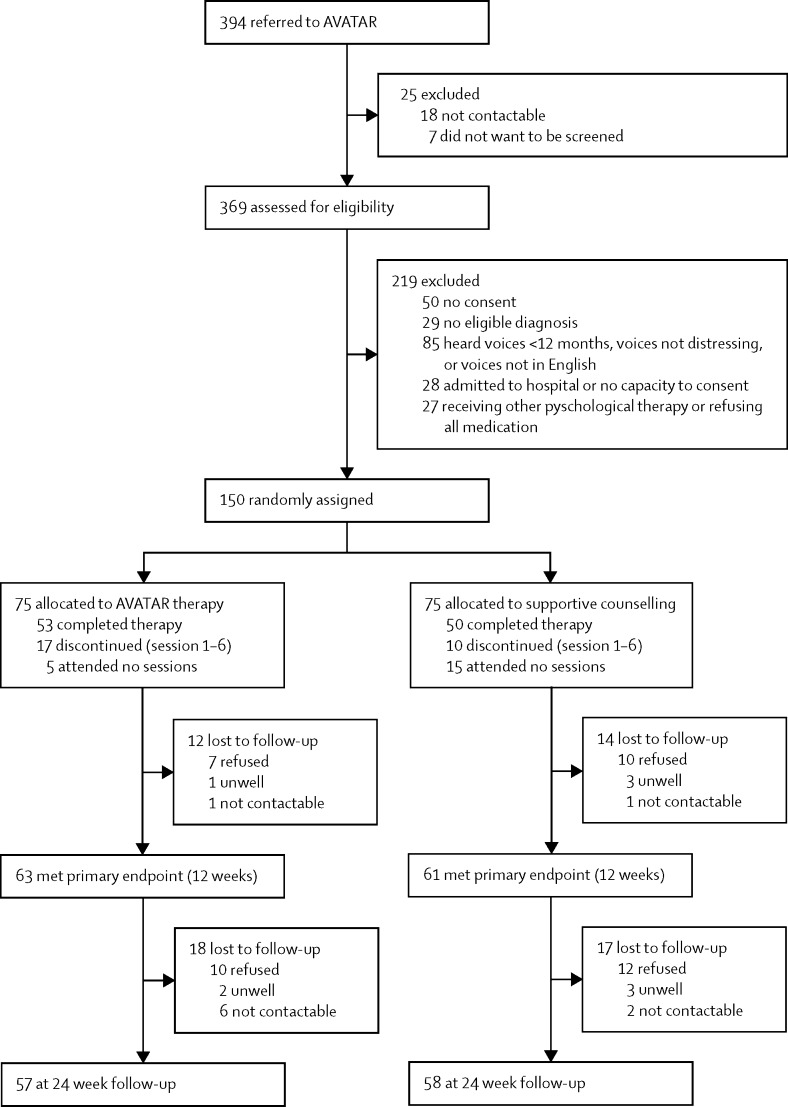
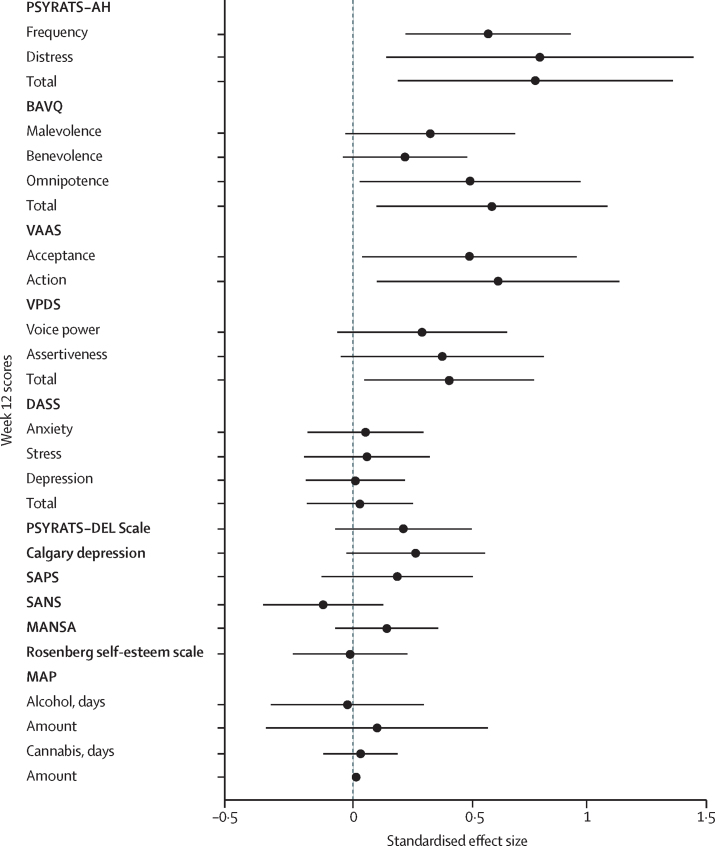
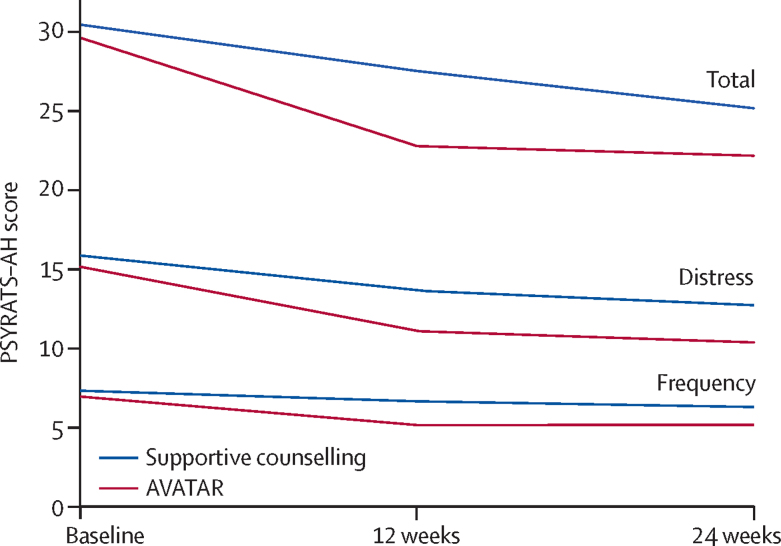
BACKGROUND: A quarter of people with psychotic conditions experience persistent auditory verbal hallucinations, despite treatment. AVATAR therapy (invented by Julian Leff in 2008) is a new approach in which people who hear voices have a dialogue with a digital representation (avatar) of their presumed persecutor, voiced by the therapist so that the avatar responds by becoming less hostile and concedes power over the course of therapy. We aimed to investigate the effect of AVATAR therapy on auditory verbal hallucinations, compared with a supportive counselling control condition. METHODS: We did this single-blind, randomised controlled trial at a single clinical location (South London and Maudsley NHS Trust). Participants were aged 18 to 65 years, had a clinical diagnosis of a schizophrenia spectrum (ICD10 F20-29) or affective disorder (F30-39 with psychotic symptoms), and had enduring auditory verbal hallucinations during the previous 12 months, despite continued treatment. Participants were randomly assigned (1:1) to receive AVATAR therapy or supportive counselling with randomised permuted blocks (block size randomly varying between two and six). Assessments were done at baseline, 12 weeks, and 24 weeks, by research assessors who were masked to therapy allocation. The primary outcome was reduction in auditory verbal hallucinations at 12 weeks, measured by total score on the Psychotic Symptoms Rating Scales Auditory Hallucinations (PSYRATS-AH). Analysis was by intention-to-treat with linear mixed models. The trial was prospectively registered with the ISRCTN registry, number 65314790. FINDINGS: Between Nov 1, 2013, and Jan 28, 2016, 394 people were referred to the study, of whom 369 were assessed for eligibility. Of these people, 150 were eligible and were randomly assigned to receive either AVATAR therapy (n=75) or supportive counselling (n=75). 124 (83%) met the primary outcome. The reduction in PSYRATS-AH total score at 12 weeks was significantly greater for AVATAR therapy than for supportive counselling (mean difference -3·82 [SE 1·47], 95% CI -6·70 to -0·94; p<0·0093). There was no evidence of any adverse events attributable to either therapy. INTERPRETATION: To our knowledge, this is the first powered, randomised controlled trial of AVATAR therapy. This brief, targeted therapy was more effective after 12 weeks of treatment than was supportive counselling in reducing the severity of persistent auditory verbal hallucinations, with a large effect size. Future multi-centre studies are needed to establish the effectiveness of AVATAR therapy and, if proven effective, we think it should become an option in the psychological treatment of auditory verbal hallucinations. FUNDING: Wellcome Trust.
Overview
The claims and statistics of this paper haven’t been checked yet.
Free: it reads the open-access text and checks the first 5 claims that cite a source we can check. Create a free account to check every claim.
Integrity signals
Registry
Cites
Statistics
Figures
Verification
Claims the paper makes
The claims and statistics of this paper haven’t been checked yet.
Free: it reads the open-access text and checks the first 5 claims that cite a source we can check. Create a free account to check every claim.
Claims other papers make about this one
Each is checked against this paper’s own text: does it say what the citing paper says it does?
The cited source doesn’t support the claim as written.
In the citing paper
“and have been successfully used to treat persecutory delusions for people with psychosis (61).”
From Key Considerations for Incorporating Conversational AI in Psychotherapy (2019) · cites this paper as [61]
Checked by a reasoning model — may be wrong.
Experimental — accuracy not yet measuredThe cited source says what the claim attributes to it.
In the citing paper
“Furtherly, distressing voice-hearing may improve in response to specific coaching [69]”
From The “common” experience of voice-hearing and its relationship with shame and guilt: a systematic review (2022) · cites this paper as [69]
The cited source says what the claim attributes to it.
In the citing paper
“with some promising early results [12–15]”
The cited source says what the claim attributes to it.
In the citing paper
“Craig et al. (43) showed that this avatar therapy was successful in diminishing the severity of patients' auditory verbal hallucinations.”
From Computer-assisted avatar-based treatment for dysfunctional beliefs in depressive inpatients: A pilot study (2021) · cites this paper as [43]
The check wasn’t confident either way, so it gives no verdict — never disputed.
In the citing paper
“In mental health, conversational AI has been shown to both facilitate and impede disclosure in different contexts.”
From Key Considerations for Incorporating Conversational AI in Psychotherapy (2019) · cites this paper as [61]
Experimental — accuracy not yet measured
Self-check
Percentages, sums and reported differences re-computed from the paper’s own numbers.
The self-check needs the paper’s full text.
Citations
Cites
Society and the Adolescent Self-Image
Rosenberg, M. (1965) · doi:10.1515/9781400876136 · Cited by 30,126
Lovibond, P. F., & Lovibond, S. H. (1995) · Behaviour Research and Therapy · doi:10.1016/0005-7967(94)00075-u · Cited by 14,523
The necessary and sufficient conditions of therapeutic personality change.
Rogers, C. R. (1957) · Journal of Consulting Psychology · doi:10.1037/h0045357 · Cited by 5,599
Scale for Assessment of Positive Symptoms (SAPS) 1984
Andreasen, N. C. (1995) · Open Scholarship Institutional Repository (Washington University in St. Louis) · Cited by 2,423
Scale for the Assessment of Negative Symptoms
Andreasen, N. C. (2014) · PsycTESTS Dataset · doi:10.1037/t12696-000 · Cited by 1,866
HADDOCK, G., McCARRON, J., TARRIER, N., & FARAGHER, E. B. (1999) · Psychological Medicine · doi:10.1017/s0033291799008661 · Cited by 1,461
Assessing Depression in Schizophrenia: The Calgary Depression Scale
Addington, D., Addington, J., & Maticka-tyndale, E. (1993) · British Journal of Psychiatry · doi:10.1192/s0007125000292581 · Cited by 1,177
Application and Results of the Manchester Short Assessment of Quality of Life (Mansa)
Priebe, S., Huxley, P., Knight, S., & Evans, S. (1999) · International Journal of Social Psychiatry · doi:10.1177/002076409904500102 · Cited by 1,071
The Omnipotence of Voices: A Cognitive Approach to Auditory Hallucinations
Chadwick, P., & Birchwood, M. (1994) · British Journal of Psychiatry · doi:10.1192/bjp.164.2.190 · Cited by 803
The Maudsley Addiction Profile (MAP): a brief instrument for assessing treatment outcome
Marsden, J., Gossop, M., Stewart, D., Best, D., Farrell, M., Lehmann, P., Edwards, C., & Strang, J. (1998) · Addiction · doi:10.1046/j.1360-0443.1998.9312185711.x · Cited by 488
Cited by
Jauhar, S., Johnstone, M., & McKenna, P. J. (2022) · The Lancet · doi:10.1016/s0140-6736(21)01730-x · Cited by 996
Fiske, A., Henningsen, P., & Buyx, A. (2019) · Journal of Medical Internet Research · doi:10.2196/13216 · Cited by 857
“A similar approach involves the use of avatars, such as the Avatar Project, for addressing persistent auditory hallucinations for patients with psychosis [22].”
MethodPot-Kolder, R. M. C. A., Geraets, C. N. W., Veling, W., van Beilen, M., Staring, A. B. P., Gijsman, H. J., Delespaul, P. A. E. G., & van der Gaag, M. (2018) · The Lancet Psychiatry · doi:10.1016/s2215-0366(18)30053-1 · Cited by 239
He, Y., Yang, L., Qian, C., Li, T., Su, Z., Zhang, Q., & Hou, X. (2023) · Journal of Medical Internet Research · doi:10.2196/43862 · Cited by 213
“We have reported the findings in accordance with the PRISMA (Preferred Reporting Items for Systematic Reviews and Meta-Analyses; Table S1 in Multimedia Appendix 1 [ 27-58”
Bighelli, I., Salanti, G., Huhn, M., Schneider‐Thoma, J., Krause, M., Reitmeir, C., Wallis, S., Schwermann, F., Pitschel‐Walz, G., Barbui, C., et al. (2018) · World Psychiatry · doi:10.1002/wps.20577 · Cited by 199
“Craig et al (80) UK AVATAR therapy (N= 75), supportive counselling (N=75) 12 5.”
BackgroundPercie du Sert, O., Potvin, S., Lipp, O., Dellazizzo, L., Laurelli, M., Breton, R., Lalonde, P., Phraxayavong, K., O'Connor, K., Pelletier, J.-F., et al. (2018) · Schizophrenia Research · doi:10.1016/j.schres.2018.02.031 · Cited by 182
Key Considerations for Incorporating Conversational AI in Psychotherapy
Miner, A. S., Shah, N., Bullock, K. D., Arnow, B. A., Bailenson, J., & Hancock, J. (2019) · Frontiers in Psychiatry · doi:10.3389/fpsyt.2019.00746 · Cited by 166
Advances in immersive virtual reality interventions for mental disorders: A new reality?
Geraets, C. N. W., van der Stouwe, E. C. D., Pot-Kolder, R., & Veling, W. (2021) · Current Opinion in Psychology · doi:10.1016/j.copsyc.2021.02.004 · Cited by 156
Advances in the use of virtual reality to treat mental health conditions
Bell, I. H., Pot-Kolder, R., Rizzo, A., Rus-Calafell, M., Cardi, V., Cella, M., Ward, T., Riches, S., Reinoso, M., Thompson, A., et al. (2024) · Nature Reviews Psychology · doi:10.1038/s44159-024-00334-9 · Cited by 140
“A fully powered replication of the original randomized trial (AVATAR1) 71 using a highly immersive approach has been developed using separate software and is being tested in an independent trial 76 .”
Self-citationJuul, S., Gluud, C., Simonsen, S., Frandsen, F. W., Kirsch, I., & Jakobsen, J. C. (2021) · BMJ Evidence-Based Medicine · doi:10.1136/bmjebm-2020-111407 · Cited by 135
Evidence on Virtual Reality-Based Therapies for Psychiatric Disorders: Meta-Review of Meta-Analyses
Dellazizzo, L., Potvin, S., Luigi, M., & Dumais, A. (2020) · Journal of Medical Internet Research · doi:10.2196/20889 · Cited by 135
“These therapies have shown important benefits in psychotic symptomatology, with large effects being observed for both delusions and auditory verbal hallucinations in several trials [71-74].”
BackgroundLincoln, T. M., & Peters, E. (2019) · Schizophrenia Research · doi:10.1016/j.schres.2017.12.014 · Cited by 115
A pilot digital intervention targeting loneliness in young people with psychosis
Lim, M. H., Gleeson, J. F. M., Rodebaugh, T. L., Eres, R., Long, K. M., Casey, K., Abbott, J.-A. M., Thomas, N., & Penn, D. L. (2020) · Social Psychiatry and Psychiatric Epidemiology · doi:10.1007/s00127-019-01681-2 · Cited by 108
Grodniewicz, J. P., & Hohol, M. (2023) · Frontiers in Psychiatry · doi:10.3389/fpsyt.2023.1190084 · Cited by 100
Dellazizzo, L., Potvin, S., Phraxayavong, K., & Dumais, A. (2021) · npj Schizophrenia · doi:10.1038/s41537-021-00139-2 · Cited by 99
Introducing and Testing the Creepiness of Situation Scale (CRoSS)
Langer, M., & König, C. J. (2018) · Frontiers in Psychology · doi:10.3389/fpsyg.2018.02220 · Cited by 91
“…there are virtual characters instructing people how to adapt their non-verbal behavior in social situations (Langer et al., 2016), computer avatars are used for therapy of psychological disorders (e.g., schizophrenia; Craig et al., 2018), and algorithms decide who you could date next (Toma, 2015).”
BackgroundImmersive Virtual Reality Applications in Schizophrenia Spectrum Therapy: A Systematic Review
Bisso, E., Signorelli, M. S., Milazzo, M., Maglia, M., Polosa, R., Aguglia, E., & Caponnetto, P. (2020) · International Journal of Environmental Research and Public Health · doi:10.3390/ijerph17176111 · Cited by 86
Lindner, P., Hamilton, W., Miloff, A., & Carlbring, P. (2019) · Frontiers in Psychiatry · doi:10.3389/fpsyt.2019.00792 · Cited by 81
“…for patients with psychosis, avatar therapy involves the patient creating a virtual avatar and externalizing auditory verbal hallucinations to this avatar through seeing and hearing this avatar perform lines that the patient would otherwise have attributed to the verbal hallucinations (43).”
BackgroundTurner, D. T., Burger, S., Smit, F., Valmaggia, L. R., & van der Gaag, M. (2020) · Schizophrenia Bulletin · doi:10.1093/schbul/sbaa045 · Cited by 82
Compassion Focused Approaches to Working With Distressing Voices
Heriot-Maitland, C., McCarthy-Jones, S., Longden, E., & Gilbert, P. (2019) · Frontiers in Psychology · doi:10.3389/fpsyg.2019.00152 · Cited by 80
“In terms of informing the development of therapeutic approaches for voice-hearing, our framework can be seen to share some commonalities with other recent therapeutic developments in the field, such as Relating Therapy (Hayward et al., 2017) and Avatar Therapy (Craig et al., 2018; Craig, 2019), which both work with vo…”
BackgroundAdery, L. H., Ichinose, M., Torregrossa, L. J., Wade, J., Nichols, H., Bekele, E., Bian, D., Gizdic, A., Granholm, E., Sarkar, N., et al. (2018) · Psychiatry Research · doi:10.1016/j.psychres.2018.10.014 · Cited by 80
AVATAR Therapy for Distressing Voices: A Comprehensive Account of Therapeutic Targets
Ward, T., Rus‐Calafell, M., Ramadhan, Z., Soumelidou, O., Fornells‐Ambrojo, M., Garety, P. A., & Craig, T. (2020) · Schizophrenia Bulletin · doi:10.1093/schbul/sbaa061 · Cited by 89
Self-citationDigital AVATAR therapy for distressing voices in psychosis: the phase 2/3 AVATAR2 trial
Garety, P. A., Edwards, C., Jafari, H., Emsley, R., Huckvale, M. A., Rus‐Calafell, M., Fornells‐Ambrojo, M., Gumley, A. I., Haddock, G., Bucci, S., et al. (2024) · Nature Medicine · doi:10.1038/s41591-024-03252-8 · Cited by 105
“All assessments of these individuals were scored by blinded assessors after these instances of unmasking.”
InfluentialSelf-citationLaacke, S., Mueller, R., Schomerus, G., & Salloch, S. (2021) · The American Journal of Bioethics · doi:10.1080/15265161.2020.1863515 · Cited by 74
“…(Fitzpatrick, Darcy, and Vierhile 2017; Inkster, Sarda, and Subramanian 2018; Mehrotra et al. 2017), virtual human avatars (Abbott and Shaw 2016; Craig et al. 2018; Rizzo et al. 2011), systems supporting the clinician ’ s judgment (Gil and Johnson 2009; Masri and Jani 2012), intelligent virtual…”
BackgroundLuhrmann, T. M., Alderson-Day, B., Bell, V., Bless, J. J., Corlett, P., Hugdahl, K., Jones, N., Larøi, F., Moseley, P., Padmavati, R., et al. (2019) · Schizophrenia Bulletin · doi:10.1093/schbul/sby110 · Cited by 73
Montagnese, M., Leptourgos, P., Fernyhough, C., Waters, F., Larøi, F., Jardri, R., McCarthy‐Jones, S., Thomas, N., Dudley, R. E. J., Taylor, J., et al. (2020) · Schizophrenia Bulletin · doi:10.1093/schbul/sbaa101 · Cited by 93
“Evidence of aberrant connectivity of neural networks has been found in relation to AHs in schizophrenia 81 and to VHs in PD. 82,83 There is some work on resting state and network connectivity in patients experiencing MMHs in schizophrenia, but no evidence is available for other disorders.”
InfluentialHolohan, M., & Fiske, A. (2021) · Frontiers in Psychology · doi:10.3389/fpsyg.2021.720476 · Cited by 70
“The area of virtual reality is increasingly being proposed for use with patients experiencing psychosis (Craig et al., 2018), schizophrenia, and autism.”
BackgroundBenrimoh, D. A., Chheda, F. D., & Margolese, H. C. (2022) · JMIR Mental Health · doi:10.2196/40410 · Cited by 82
“In this novel therapy, which has been used in psychotic disorders and has shown promise in treating persistent verbal hallucinations, patients construct a virtual representation of the persecutor and then engage in a dialogue with this “avatar,” who is voiced by the therapist [26].”
Computer-Controlled Virtual Humans in Patient-Facing Systems: Systematic Review and Meta-Analysis
Chattopadhyay, D., Ma, T., Sharifi, H., & Martyn-Nemeth, P. A. (2020) · Journal of Medical Internet Research · doi:10.2196/18839 · Cited by 69
“While their humanlike physical appearance is computer-generated (ie, animated), VH are not human-controlled [15-20] nor cartoonlike [21,22].”
BackgroundIdentification of Digital Health Priorities for Palliative Care Research: Modified Delphi Study
Nwosu, A. C., McGlinchey, T., Sanders, J. J., Stanley, S., Palfrey, J., Lubbers, P., Chapman, L., Finucane, A., & Mason, S. R. (2022) · JMIR Aging · doi:10.2196/32075 · Cited by 67
“Research demonstrates that, when used well, digital health initiatives improve health care delivery and access [5-15], and the World Health Organization suggests that digital health should be an integral part of health priorities as a means to improve health on a global scale [16,17].”
BackgroundPsychiatry in the Digital Age: A Blessing or a Curse?
Roth, C. B., Papassotiropoulos, A., Brühl, A. B., Lang, U. E., & Huber, C. G. (2021) · International Journal of Environmental Research and Public Health · doi:10.3390/ijerph18168302 · Cited by 83
“found a large effect size in reducing the severity of persistent auditory verbal hallucinations [114].”
BackgroundA palliative care approach in psychiatry: clinical implications
Strand, M., Sjöstrand, M., & Lindblad, A. (2020) · BMC Medical Ethics · doi:10.1186/s12910-020-00472-8 · Cited by 62
Alderson‐Day, B., Woods, A., Moseley, P., Common, S., Deamer, F., Dodgson, G., & Fernyhough, C. (2020) · Schizophrenia Bulletin · doi:10.1093/schbul/sbaa095 · Cited by 80
Extended Reality for the Clinical, Affective, and Social Neurosciences
Parsons, T. D., Gaggioli, A., & Riva, G. (2020) · Brain Sciences · doi:10.3390/brainsci10120922 · Cited by 66
“Another example of this approach is the “avatar therapy”, originally developed for patients with psychosis [59], and also suggested for treating depression [60].”
BackgroundBourke, E., Barker, C., & Fornells‐Ambrojo, M. (2021) · Psychology and Psychotherapy Theory Research and Practice · doi:10.1111/papt.12330 · Cited by 87
Buber, educational technology, and the expansion of dialogic space
Wegerif, R., & Major, L. (2018) · AI & Society · doi:10.1007/s00146-018-0828-6 · Cited by 82
Rus-Calafell, M., & Schneider, S. (2020) · mHealth · doi:10.21037/mhealth.2019.09.14 · Cited by 57
“Crucially VR environments also allow ‘embodied’ cognitive processes to be targeted ‘in action’, such as in AVATAR therapy (54,55), with the ultimate aim that improvements made in VR environments will generalise to real-life contexts.”
BackgroundSelf-citationLeucht, S., Siafis, S., McGrath, J. J., McGorry, P. D., Howes, O. D., Tamminga, C. A., Carr, R., Bighelli, I., Schneider‐Thoma, J., Priller, J., et al. (2025) · Nature Reviews Disease Primers · doi:10.1038/s41572-025-00667-6 · Cited by 82
Garety, P. A., Edwards, C., Ward, T., Emsley, R., Huckvale, M. A., McCrone, P., Rus‐Calafell, M., Fornells‐Ambrojo, M., Gumley, A. I., Haddock, G., et al. (2021) · Trials · doi:10.1186/s13063-021-05301-w · Cited by 63
Self-citationNijman, S. A., Veling, W., Greaves-Lord, K., Vos, M., Zandee, C. E. R., Aan het Rot, M., Geraets, C. N. W., & Pijnenborg, G. H. M. (2020) · JMIR Mental Health · doi:10.2196/17808 · Cited by 49
“VR has been found to be an effective tool in treatment of psychotic disorders, for example, for treating paranoid ideation [14] and auditory verbal hallucinations [15].”
MethodHallucinations in Older Adults: A Practical Review
Badcock, J. C., Larøi, F., Kamp, K. S., Kelsall-Foreman, I., Bucks, R. S., Weinborn, M., Begemann, M., Taylor, J., Collerton, D., O'Brien, J. T., et al. (2020) · Schizophrenia Bulletin · doi:10.1093/schbul/sbaa073 · Cited by 52
Trauma therapies for psychosis: A state‐of‐the‐art review
Hardy, A., Keen, N., van den Berg, D. P. G., Varese, F., Longden, E., Ward, T., & Brand, R. M. (2023) · Psychology and Psychotherapy Theory Research and Practice · doi:10.1111/papt.12499 · Cited by 82
“…the evidence we have reviewed from the Netherlands indicates trauma therapies for PTSD in psychosis can be safe and effective without stabilisation, although it is of note drop-out rates are relatively high in exposure-based therapies for psychosis (Craig et al., 2018; van den Berg et al., 2015).”
Self-citationKubera, K. M., Rashidi, M., Schmitgen, M. M., Barth, A., Hirjak, D., Sambataro, F., Calhoun, V. D., & Wolf, R. C. (2019) · Progress in Neuro-Psychopharmacology and Biological Psychiatry · doi:10.1016/j.pnpbp.2019.03.007 · Cited by 51
Psychosis spectrum illnesses as disorders of prefrontal critical period plasticity
Vinogradov, S., Chafee, M. V., Lee, E. G., & Morishita, H. (2022) · Neuropsychopharmacology · doi:10.1038/s41386-022-01451-w · Cited by 55
“” In the highly creative AVATAR therapy, patients select virtual avatars to represent their persecutory and derogatory hallucinations, and then engage in a progressive positive dialogue with the avatars via a therapist, to slowly modulate the intensity, negative valence, and significance of the hallucinations and “unf…”
BackgroundThe Role of Sense of Voice Presence and Anxiety Reduction in AVATAR Therapy
Rus‐Calafell, M., Ward, T., Zhang, X. C., Edwards, C., Garety, P. A., & Craig, T. (2020) · Journal of Clinical Medicine · doi:10.3390/jcm9092748 · Cited by 48
“In the context of working with voices, the AVATAR platform [9,10] creates a tailored mediated environment and delivers a realistic simulation of the experience of hearing and relating to the agent behind the voice.”
BackgroundMethodResultInfluentialSelf-citationA systematic review of the ‘eating disorder voice’ experience
Aya, V., Ulusoy, K., & Cardi, V. (2019) · International Review of Psychiatry · doi:10.1080/09540261.2019.1593112 · Cited by 50
Dellazizzo, L., du Sert, O. P., Phraxayavong, K., Potvin, S., O’Connor, K. P., & Dumais, A. (2018) · Clinical Psychology & Psychotherapy · doi:10.1002/cpp.2322 · Cited by 46
A technology-assisted life of recovery from psychosis
Ben-Zeev, D., Buck, B., Kopelovich, S., & Meller, S. (2019) · npj Schizophrenia · doi:10.1038/s41537-019-0083-y · Cited by 37
Steare, T., Giorgalli, M., Free, K., Harju‐Seppänen, J., Akther, S. F., Eskinazi, M., O’Hanlon, P., Rostill, H., Amani, S., Lloyd‐Evans, B., et al. (2021) · BMC Psychiatry · doi:10.1186/s12888-021-03317-9 · Cited by 43
Cella, M., Tomlin, P., Robotham, D., Green, P. A., Griffiths, H., Stahl, D. R., & Valmaggia, L. (2022) · Schizophrenia Research · doi:10.1016/j.schres.2022.07.013 · Cited by 42
Pribadi, T., Lin, E. C., Chen, P. S., Lee, S.-K., Rizki Fitryasari, P. K., & Chen, C. (2020) · Journal of Psychiatric and Mental Health Nursing · doi:10.1111/jpm.12611 · Cited by 44
Virtual Humans in Health-Related Interventions: A Meta-Analysis
Ma, T., Sharifi, H., & Chattopadhyay, D. (2019) · Extended Abstracts of the 2019 CHI Conference on Human Factors in Computing Systems · doi:10.1145/3290607.3312853 · Cited by 37
“Some Characteristics of Selected Studies exclusively women as participants: 2 [1, 7] exclusively children as participants: 2 [2, 19] exclusively older adults as participants: 1 [9] example of clinical conditions: overactive bladder (OAB) [1], depression [4], schizophrenia [5, 11], substance abuse [8], ASD [9], termina…”
BackgroundDellazizzo, L., Potvin, S., Phraxayavong, K., Lalonde, P., & Dumais, A. (2018) · Frontiers in Psychiatry · doi:10.3389/fpsyt.2018.00131 · Cited by 36
“Their results have been extended in a larger randomized con trolled trial (RCT) comparing Avatar Therapy (AT) to supportive counseling (21).”
BackgroundTsang, A., Bucci, S., Branitsky, A., Kaptan, S. K., Rafiq, S., Wong, S., Berry, K., & Varese, F. (2021) · Schizophrenia Research · doi:10.1016/j.schres.2021.02.013 · Cited by 51
Riches, S., Pisani, S., Bird, L., Rus‐Calafell, M., Garety, P. A., & Valmaggia, L. (2021) · International Review of Psychiatry · doi:10.1080/09540261.2021.1918648 · Cited by 49
Self-citationClarke, S., Hanna, D., Mulholland, C., Shannon, C., & Urquhart, C. (2019) · Psychosis · doi:10.1080/17522439.2019.1632376 · Cited by 36
“Craig et al. (2018) improved on this study with a larger (powered) sample, using an active control (supportive counseling) rather than TAU to control for time and attention given to participants receiving therapy.”
BackgroundInfluentialBell, I. H., Fielding-Smith, S. F., Hayward, M., Rossell, S. L., Lim, M. H., Farhall, J., & Thomas, N. (2018) · Internet Interventions · doi:10.1016/j.invent.2018.11.001 · Cited by 36
“these have been limited to the use of digital components within therapy sessions (e.g. Thomas et al., 2016; Craig et al., 2018).”
MethodRosen, C., McCarthy‐Jones, S., Jones, N., Chase, K. A., & Sharma, R. P. (2018) · Schizophrenia Research · doi:10.1016/j.schres.2018.03.030 · Cited by 46
“One therapeutic approach which has attempted to engender such ‘objective’ reductions in negative voice-content is AVATAR therapy (Leff et al., 2013; Craig et al., 2018).”
BackgroundGhaemi, S. N., Sverdlov, O., van Dam, J., Campellone, T., & Gerwien, R. (2022) · JMIR Formative Research · doi:10.2196/29154 · Cited by 34
“The Audio Visual Assisted Therapy Aid for Refractory auditory hallucinations (AVATAR) therapy [12] is a computer-assisted intervention designed on the principles of CBT for psychosis, with the specific aim of controlling persistent, distressing auditory verbal hallucinations.”
InfluentialDellazizzo, L., Giguère, S., Léveillé, N., Potvin, S., & Dumais, A. (2022) · Psychological Medicine · doi:10.1017/s003329172200143x · Cited by 44
Making Sense of Voices: a case series
Steel, C., Schnackenberg, J., Perry, H., Longden, E., Greenfield, E., & Corstens, D. (2019) · Psychosis · doi:10.1080/17522439.2018.1559874 · Cited by 45
“Therefore, in an effort to improve outcomes, recent developments within the field have put the relationship between a voice hearer and their voice at the forefront (Craig et al., 2018; Hayward, Berry, McCarthy-Jones, Strauss, & Thomas, 2013).”
BackgroundVolpato, E., Cavalera, C., Castelnuovo, G., Molinari, E., & Pagnini, F. (2022) · BMC Psychiatry · doi:10.1186/s12888-022-03902-6 · Cited by 33
Don’t abandon RCTs in IVF. We don’t even understand them
Wilkinson, J., Brison, D. R., Duffy, J. M., Farquhar, C. M., Lensen, S. F., Mastenbroek, S., van Wely, M., & Vail, A. (2019) · Human Reproduction · doi:10.1093/humrep/dez199 · Cited by 35
“this literature, RCTs accounting for variation between centres and practitioners are not only possible, but take place all the time (Beard et al., 2013; Taylor et al., 2016; Husain et al., 2017; Craig et al., 2018).”
BackgroundAvatar Therapy for people with schizophrenia or related disorders
Aali, G., Kariotis, T. C., & Shokraneh, F. (2020) · Cochrane Database of Systematic Reviews · doi:10.1002/14651858.cd011898.pub2 · Cited by 52
Dellazizzo, L., Potvin, S., Phraxayavong, K., & Dumais, A. (2020) · Journal of Clinical Medicine · doi:10.3390/jcm9103169 · Cited by 43
“The results of the two pilot trials comparing AT/VRT to treatment-as-usual [28,29] as well as a larger RCT comparing AT to supportive counseling [30] showed large effects of VR therapies on AVH in short-term follow-ups and up to a 24-week follow-up.”
ResultSmith, L. C., Mariegaard, L. S., Vernal, D. L., Christensen, A. G., Albert, N., Thomas, N., Hjorthøj, C. R., Glenthøj, L. B., & Nordentoft, M. (2022) · Trials · doi:10.1186/s13063-022-06683-1 · Cited by 40
“Patients in the experimental treatment condition will be offered seven individual sessions of VRT [23] within the first 12 weeks of the study and two booster sessions in the following 12 weeks, all conducted by a skilled therapist (psychologists, doctors or nurses with experience in treating patients suffering from ps…”
BackgroundMethodResultInfluentialCuijpers, P. J., Harrer, M., & Furukawa, T. A. (2026) · World Psychiatry · doi:10.1002/wps.70002 · Cited by 37
Voice phenomenology as a mirror of the past
van den Berg, D., Tolmeijer, E., Jongeneel, A., Staring, A. B. P., Palstra, E., van der Gaag, M., & Hardy, A. (2022) · Psychological Medicine · doi:10.1017/s0033291721004955 · Cited by 40
“…Burger, Smit, Valmaggia, and van der Gaag, 2020) with therapeutic innovations increasingly focused on targeting the autobiographical context of voice hearing (Brand, Bendall, Hardy, Rossell, & Thomas, 2021; Craig et al., 2018; Paulik, Steel, & Arntz, 2019; Varese et al., 2021; Ward et al., 2020).”
Relating Therapy for distressing voices: Who, or what, is changing?
Hayward, M., Bogen‐Johnston, L., & Deamer, F. (2018) · Psychosis · doi:10.1080/17522439.2018.1469037 · Cited by 34
“AVATAR therapy creates a visual depiction of the voice that is displayed on a computer screen and the hearer is coached to respond assertively to the avatar (Craig et al., 2017).”
BackgroundZeka, F., Clemmensen, L., Valmaggia, L., Veling, W., Hjorthøj, C. R., & Glenthøj, L. B. (2024) · Acta Psychiatrica Scandinavica · doi:10.1111/acps.13777 · Cited by 37
Dellazizzo, L., Potvin, S., Bahig, S., & Dumais, A. (2019) · Schizophrenia · doi:10.1038/s41537-019-0079-7 · Cited by 38
Beaudoin, M., Potvin, S., Machalani, A., Dellazizzo, L., Bourguignon, L., Phraxayavong, K., & Dumais, A. (2021) · Clinical Psychology & Psychotherapy · doi:10.1002/cpp.2556 · Cited by 31
Cinalioglu, K., Elbaz, S., Sekhon, K., Su, C., Rej, S., & Sekhon, H. (2023) · Journal of Medical Internet Research · doi:10.2196/38169 · Cited by 38
Workshop on Implementation Science and Digital Therapeutics for Behavioral Health
Lord, S., Campbell, A. N. C., Brunette, M. F., Cubillos, L., Bartels, S. M., Torrey, W. C., Olson, A. L., Chapman, S. H., Batsis, J. A., Polsky, D. E., et al. (2021) · JMIR Mental Health · doi:10.2196/17662 · Cited by 31
“Digital therapeutic tools developed with foundations in evidence-based principles such as motivational enhancement, behavioral and cognitive behavioral therapies, and mindfulness have demonstrated positive impact on symptom management and behavior change for substance use [21-33] and mental health conditions [34-43].”
BackgroundYoung people's narratives of hearing voices: Systemic influences and conceptual challenges
Parry, S. L., Loren, E., & Varese, F. (2020) · Clinical Psychology & Psychotherapy · doi:10.1002/cpp.2532 · Cited by 32
Thomas, N., Bless, J. J., Alderson‐Day, B., Bell, I., Cella, M., Craig, T., Delespaul, P., Hugdahl, K., Laloyaux, J., Larøi, F., et al. (2019) · Schizophrenia Bulletin · doi:10.1093/schbul/sby103 · Cited by 29
Self-citationImmersive virtual reality in the treatment of auditory hallucinations: A PRISMA scoping review
Smith, L. C., Mateos, A. C., Due, A. S., Bergström, J., Nordentoft, M., Clemmensen, L., & Glenthøj, L. B. (2024) · Psychiatry Research · doi:10.1016/j.psychres.2024.115834 · Cited by 30
“All of the studies applied interventions building on AVATAR therapy as developed by Professor Julian Leff (Craig et al., 2018; Leff et al., 2013, 2014).”
BackgroundMethodResultTherapeutic Potential of Embodied Cognition for Clinical Psychotherapies: From Theory to Practice
Fugate, J. M. B., Macrine, S., & Hernandez-Cuevas, E. M. (2024) · Cognitive Therapy and Research · doi:10.1007/s10608-024-10468-y · Cited by 26
“These emerging approaches have shown promise in the treatment of phobias, anorexia and eating disorders, schizophrenia, and PTSD (Carlin et al., 1997; Craig et al., 2018; Hodges et al., 1995; Riva, 2005; Riva et al., 1998).”
Seinfeld, S., & Montesano, A. (2025) · Journal of Clinical Psychology · doi:10.1002/jclp.23813 · Cited by 25
Smith, L. C., Vernal, D. L., Mariegaard, L. S., Christensen, A. G., Jansen, J. E., Schytte, G., Stokbro, L. A., Albert, N., Christensen, M. J., Thomas, N., et al. (2025) · The Lancet Psychiatry · doi:10.1016/s2215-0366(25)00161-0 · Cited by 37
Ehrt-Schäfer, Y., Rusmir, M., Vetter, J., Seifritz, E., Müller, M., & Kleim, B. (2023) · JMIR Mental Health · doi:10.2196/43882 · Cited by 24
“%) reported significant effects in favor of the intervention [43,44,46,59], with 2 of them using the same study population [43,44].”
BackgroundMethodResultInfluentialLiang, N., Li, X., Guo, X., Liu, S., Liu, Y., Zhao, W., Wen, Y., Li, Y., Li, J., Li, F., et al. (2022) · Journal of Psychiatric Research · doi:10.1016/j.jpsychires.2022.04.027 · Cited by 30
Digital Technology to Enhance Clinical Care of Early Psychosis
Bell, I., & Álvarez‐Jiménez, M. (2019) · Current Treatment Options in Psychiatry · doi:10.1007/s40501-019-00182-y · Cited by 31
The Implications of Embodied Artificial Intelligence in Mental Healthcare for Digital Wellbeing
Fiske, A., Henningsen, P., & Buyx, A. (2020) · Philosophical studies series · doi:10.1007/978-3-030-50585-1_10 · Cited by 34
The future of psychiatry: clinical practice, diagnosis, and treatment
Turner, S., Yadav, P., Morrin, H., & Bhat, A. (2025) · International Review of Psychiatry · doi:10.1080/09540261.2025.2594523 · Cited by 23
Reilly, T. J., Mechelli, A., McGuire, P. K., Fusar‐Poli, P., & Uhlhaas, P. J. (2019) · JMIR Mental Health · doi:10.2196/14581 · Cited by 24
“Digital interventions showing promise in established psychosis, relevant to CHR-P, include avatar therapy [78], online CBT skills program for hallucinations [79], mobile phone apps delivering therapeutic interventions [80-82], and online peer-to-to peer support networks, reported to increase…”
BackgroundVoice hearers’ experiences of the Making Sense of Voices approach in an NHS setting
Steel, C., Schnackenberg, J., Travers, Z., Longden, E., Greenfield, E., Meredith, L., Perry, H., & Corstens, D. (2020) · Psychosis · doi:10.1080/17522439.2019.1707859 · Cited by 27
“In this respect it is worth comparing the MsV approach with the recently developed avatar therapy, which involves training voice hearers to respond assertively to a computer generated representation of one of their voices (Craig et al., 2018).”
ResultHayward, M., Schlier, B., Strauss, C., Rammou, A., & Lincoln, T. M. (2020) · Schizophrenia Research · doi:10.1016/j.schres.2020.03.003 · Cited by 26
“, 2012);within AVATAR therapy, a visual depiction of the voice is created and displayed on a computer screen and the patient is coached to respond assertively to this avatar (whose responses are generated by the therapist in a different room; Craig et al., 2018); and Relating Therapy uses experiential role-plays to pr…”
BackgroundMethodAlderson‐Day, B., Woods, A., Moseley, P., Common, S., Deamer, F., Dodgson, G., & Fernyhough, C. (2020) · PsyArXiv (OSF Preprints) · doi:10.31234/osf.io/rvfty · Cited by 21
Relating to the Speaker behind the Voice: What Is Changing?
Deamer, F., & Hayward, M. (2018) · Frontiers in Psychology · doi:10.3389/fpsyg.2018.00011 · Cited by 25
“…than seeking to modify dialogues with AVH that are talking “live,” a visual depiction of the AVH is created and displayed on a computer screen and the patient is coached to respond assertively to this avatar (whose responses are generated by the therapist in a different room; Craig et al., 2018).”
BackgroundBrown, P., Waite, F., & Freeman, D. H. (2018) · Clinical Psychology Review · doi:10.1016/j.cpr.2018.12.003 · Cited by 25
Berry, C., Newcombe, H., Strauss, C., Rammou, A., Schlier, B., Lincoln, T. M., & Hayward, M. (2021) · Schizophrenia Research · doi:10.1016/j.schres.2020.12.032 · Cited by 24
Virtual Reality Interventions for Mental Health
Kothgassner, O. D., Reichmann, A., & Bock, M. M. (2023) · Current Topics in Behavioral Neurosciences · doi:10.1007/7854_2023_419 · Cited by 19
Stefaniak, I., Sorokosz, K., Janicki, A., & Wciórka, J. (2019) · Schizophrenia Research · doi:10.1016/j.schres.2019.05.036 · Cited by 24
Thompson, A., Calissano, C., Treasure, J., Ball, H., Montague, A., Ward, T., & Cardi, V. (2023) · Journal of Eating Disorders · doi:10.1186/s40337-023-00900-1 · Cited by 13
“8), against an active control, in reducing the severity of auditory hallucinations in participants identified as treatmentresistant [14].”
BackgroundMethodInfluentialSelf-citationDennard, S., Patel, R., Garety, P. A., Edwards, C., & Gumley, A. I. (2024) · Social Psychiatry and Psychiatric Epidemiology · doi:10.1007/s00127-024-02692-4 · Cited by 21
“The term ‘digital intervention’ encompasses a wide range of interventions including mobile health (M-Health) interventions that can be delivered via a smartphone or mobile application, via websites or wearable devices, as well as through virtual reality or avatars [2–6].”
Self-citationMurphy, J., Shevlin, M. E., Arseneault, L., Bentall, R. P., Caspi, A., Danese, A., Hyland, P., Moffitt, T. E., & Fisher, H. L. (2021) · Development and Psychopathology · doi:10.1017/s0954579420001728 · Cited by 25
“…as disowned aspects of oneself, and dialoguing with/challenging voices has become increasingly popular in treatment settings for distressed voice hearers (Craig et al., 2018; Deamer & Hayward, 2018; Leff, Williams, Huckvale, Arbuthnot, & Leff, 2014; Lincoln & Peters, 2019; Thomas et al., 2014).”
Lincoln, T. M., Schlier, B., Müller, R., Hayward, M., Fladung, A.-K., Bergmann, N., Böge, K., Gallinat, J., Mahlke, C., Gonther, U., et al. (2024) · Psychotherapy and Psychosomatics · doi:10.1159/000539809 · Cited by 18
Lee, B. M., Kim, S., Lee, B. J., Won, S., Park, Y.-H., Kang, C. Y., Li, L., Rami, F. Z., & Chung, Y. (2023) · Schizophrenia · doi:10.1038/s41537-023-00391-8 · Cited by 22
“These fi ndings indicate that VBM and VR control can be carried out safely in patients with psychosis which is in line with other studies in psychosis 9,54 .”
BackgroundResultHayward, M., Berry, K., Bremner, S. A., Bibby-Jones, A.-M., Robertson, S., Cavanagh, K., Gage, H., Berry, C., Neumann, S. R., Hazell, C. M., et al. (2021) · BJPsych Open · doi:10.1192/bjo.2021.983 · Cited by 21
Metadata
- Authors
- Craig, T. K., Rus-Calafell, M., Ward, T., Leff, J. P., Huckvale, M., Howarth, E., Emsley, R., & Garety, P. A.
- Affiliations
- King's College London (GB)
- The Royal Free Hospital (GB)
- University College London (GB)
- Manchester Academic Health Science Centre (GB)
- Corresponding author
- Craig, Tom KJ
- Venue
- The Lancet Psychiatry
- Publisher
- Elsevier BV
- Published
- 2018-01
- Volume
- 5
- Issue
- 1
- Pages
- 31-40
- ISSN
- 2215-0366 (ISSN-L)
- PMC
- PMC5746597
- OpenAlex
- W2769474648
- Cited by
- 403
- References
- 30
- Citations by year
- 2026: 35 · 2025: 49 · 2024: 44 · 2023: 56 · 2022: 56 · 2021: 48 · 2020: 45 · 2019: 37 · 2018: 30
- FWCI
- 25.37
- Type
- journal article
- Language
- en
- Open access
- hybrid
- doi.org
- Licence
- cc-by
- www.elsevier.com/tdm/userlicense/1.0/ (tdm)
- creativecommons.org/licenses/by/4.0/ (vor)
- Locations
- The Lancet Psychiatry (publishedVersion, cc-by)
- PubMed Central (publishedVersion, cc-by)
- PubMed (publishedVersion)
- Research Explorer (The University of Manchester) (publishedVersion, cc-by)
- UCL Discovery (University College London) (submittedVersion)
- Research Portal (King's College London) (submittedVersion, cc-by)
- Funders
- Wellcome Trust (098272/Z/12/Z, FWBC-AVATAR 098272/z/12/z)
- National Institute for Health and Care Research (NF-SI-0510-10121, NIHR-RMFI-2015-06-13-101)
- King's College London
- Topics
- Health Sciences › Medicine › Psychiatry and Mental health › Schizophrenia research and treatment
- Life Sciences › Neuroscience › Cognitive Neuroscience › Hallucinations in medical conditions
- Social Sciences › Psychology › Clinical Psychology › Psychotherapy Techniques and Applications
- Keywords
- AVATAR therapy, auditory verbal hallucinations, psychosis, schizophrenia spectrum disorders, avatars, voice dialogue, supportive counseling, treatment-resistant psychosis, psychotherapeutic interventions, adverse events, relapse prevention
- MeSH terms
- Adult, Affective Disorders, Psychotic, Computers, Female, Hallucinations, Humans, Male, Middle Aged, Psychiatric Status Rating Scales, Psychological Techniques, Schizophrenia, Schizophrenic Psychology, Single-Blind Method, Treatment Outcome, Recognition, Psychology, Pattern Recognition, Physiological
About these checks
Registry, retraction, Cites and statistics results are computed, not judged, with one exception: a printed reference that no index lists is read once by a model before it counts as a citation error. Claims are extracted by a model and kept only when their quote appears verbatim in the text; each cited source is then checked, with a model’s help, for whether it says what the claim relies on. Those verdicts can be wrong — read the claim’s quote and the cited source before relying on one.
Statistics and arithmetic are recomputed, not judged.
Confidence bands are shown only for fields calibrated on our annotated test set. None is calibrated yet, so no band is shown.
What counts as a claim ›How we measure confidence ›How we check this ›
Are you an author, or do you see a problem with this page? Request a review
Data sources
Bibliographic data: Semantic Scholar, OpenAlex, Crossref.
Contains information from the Semantic Scholar Academic Graph Datasets, made available under the ODC Attribution License (ODC-BY 1.0).
Semantic Scholar’s data is described in: Kinney, R., et al. (2023). The Semantic Scholar Open Data Platform. arXiv:2301.10140.
