

The contribution of cannabis use to variation in the incidence of psychotic disorder across Europe (EU-GEI): a multicentre case-control study
Open accessThe DOI matches its Crossref record; 32 of the 32 references it cites were found in a registry or an index.
Abstract
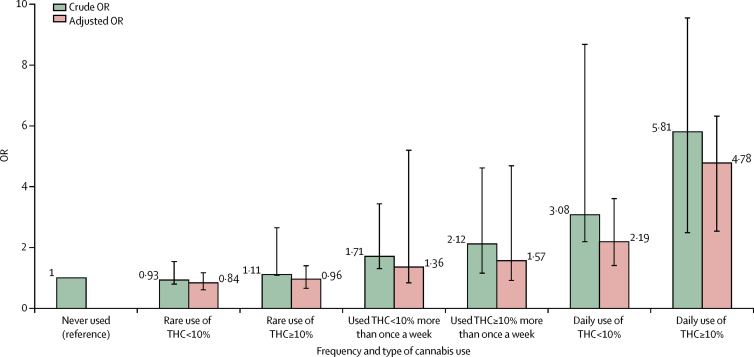
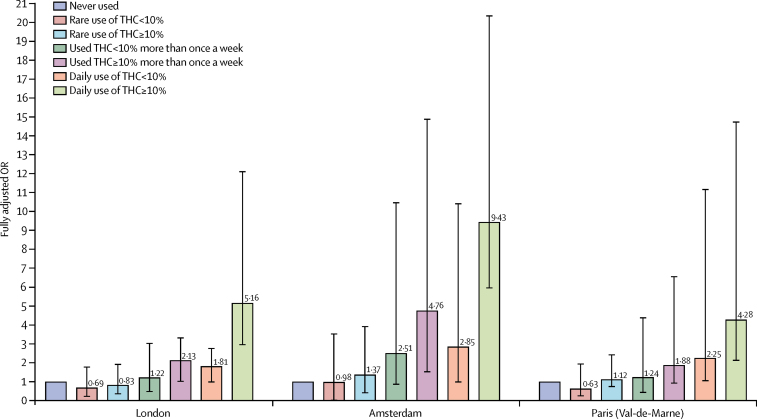
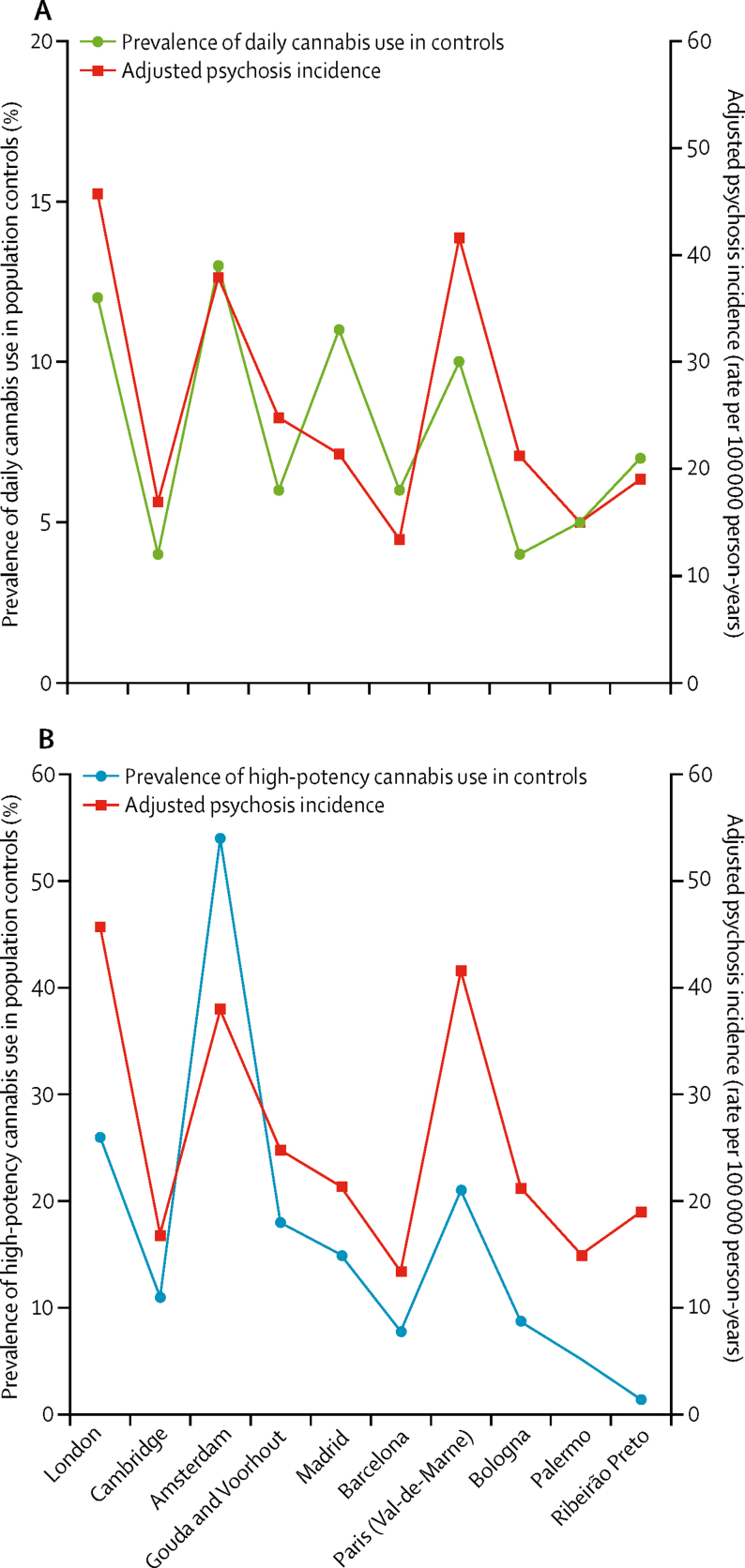
BACKGROUND: Cannabis use is associated with increased risk of later psychotic disorder but whether it affects incidence of the disorder remains unclear. We aimed to identify patterns of cannabis use with the strongest effect on odds of psychotic disorder across Europe and explore whether differences in such patterns contribute to variations in the incidence rates of psychotic disorder. METHODS: -tetrahydrocannabinol (THC) in the different types of cannabis available across the sites, we divided the types of cannabis used by participants into two categories: low potency (THC <10%) and high potency (THC ≥10%). Assuming causality, we calculated the population attributable fractions (PAFs) for the patterns of cannabis use associated with the highest odds of psychosis and the correlation between such patterns and the incidence rates for psychotic disorder across the study sites. FINDINGS: Between May 1, 2010, and April 1, 2015, we obtained data from 901 patients with first-episode psychosis across 11 sites and 1237 population controls from those same sites. Daily cannabis use was associated with increased odds of psychotic disorder compared with never users (adjusted odds ratio [OR] 3·2, 95% CI 2·2-4·1), increasing to nearly five-times increased odds for daily use of high-potency types of cannabis (4·8, 2·5-6·3). The PAFs calculated indicated that if high-potency cannabis were no longer available, 12·2% (95% CI 3·0-16·1) of cases of first-episode psychosis could be prevented across the 11 sites, rising to 30·3% (15·2-40·0) in London and 50·3% (27·4-66·0) in Amsterdam. The adjusted incident rates for psychotic disorder were positively correlated with the prevalence in controls across the 11 sites of use of high-potency cannabis (r = 0·7; p=0·0286) and daily use (r = 0·8; p=0·0109). INTERPRETATION: Differences in frequency of daily cannabis use and in use of high-potency cannabis contributed to the striking variation in the incidence of psychotic disorder across the 11 studied sites. Given the increasing availability of high-potency cannabis, this has important implications for public health. FUNDING SOURCE: Medical Research Council, the European Community's Seventh Framework Program grant, São Paulo Research Foundation, National Institute for Health Research (NIHR) Biomedical Research Centre (BRC) at South London and Maudsley NHS Foundation Trust and King's College London and the NIHR BRC at University College London, Wellcome Trust.
Overview
The claims and statistics of this paper haven’t been checked yet.
Free: it reads the open-access text and checks the first 5 claims that cite a source we can check. Create a free account to check every claim.
Integrity signals
Registry
Cites
Statistics
Figures
Verification
Claims the paper makes
The claims and statistics of this paper haven’t been checked yet.
Free: it reads the open-access text and checks the first 5 claims that cite a source we can check. Create a free account to check every claim.
Claims other papers make about this one
Each is checked against this paper’s own text: does it say what the citing paper says it does?
The source backs part of the claim, not all of it — or backs it for a different population, condition or comparison.
In the citing paper
“Use less than once a week was not associated with a psychotic disorder risk (other than acute psychoses which can emerge even with first time consumption of high THC doses).”
From Cannabis, cannabinoids and health: a review of evidence on risks and medical benefits (2025) · cites this paper as [50]
Experimental — accuracy not yet measuredThe cited source says what the claim attributes to it.
In the citing paper
“The prevalence of daily cannabis use and high potency cannabis use was positively associated with the incidence of treated psychosis across study sites in Europe and Brazil.”
From Cannabis, cannabinoids and health: a review of evidence on risks and medical benefits (2025) · cites this paper as [50]
The cited source says what the claim attributes to it.
In the citing paper
“A multinational study in Europe and Brazil [50] found that daily use of high potency cannabis increased the risk of psychosis fivefold compared to non-users while daily use of low potency cannabis doubled the risk.”
From Cannabis, cannabinoids and health: a review of evidence on risks and medical benefits (2025) · cites this paper as [50]
Self-check
Percentages, sums and reported differences re-computed from the paper’s own numbers.
The self-check needs the paper’s full text.
Citations
Cites
Marshall, M., Lewis, S., Lockwood, A., Drake, R., Jones, P., & Croudace, T. (2005) · Archives of General Psychiatry · doi:10.1001/archpsyc.62.9.975 · Cited by 1,593
Self-citationMcGuffin, P. (1991) · Archives of General Psychiatry · doi:10.1001/archpsyc.1991.01810320088015 · Cited by 1,483
McGrath, J., Saha, S., Welham, J., El Saadi, O., MacCauley, C., & Chant, D. (2004) · BMC Medicine · doi:10.1186/1741-7015-2-13 · Cited by 1,072
Meta-analysis of the Association Between the Level of Cannabis Use and Risk of Psychosis
Marconi, A., Di Forti, M., Lewis, C. M., Murray, R. M., & Vassos, E. (2016) · Schizophrenia Bulletin · doi:10.1093/schbul/sbw003 · Cited by 899
Self-citationDi Forti, M., Marconi, A., Carra, E., Fraietta, S., Trotta, A., Bonomo, M., Bianconi, F., Gardner-Sood, P., O'Connor, J., Russo, M., et al. (2015) · The Lancet Psychiatry · doi:10.1016/s2215-0366(14)00117-5 · Cited by 588
Self-citationHigh-potency cannabis and the risk of psychosis
Di Forti, M., Morgan, C., Dazzan, P., Pariante, C., Mondelli, V., Marques, T. R., Handley, R., Luzi, S., Russo, M., Paparelli, A., et al. (2009) · British Journal of Psychiatry · doi:10.1192/bjp.bp.109.064220 · Cited by 567
Self-citationAssociation Between Cannabis and Psychosis: Epidemiologic Evidence
Gage, S. H., Hickman, M., & Zammit, S. (2016) · Biological Psychiatry · doi:10.1016/j.biopsych.2015.08.001 · Cited by 379
Evaluating the public health impacts of legalizing recreational cannabis use in the United States
Hall, W., & Lynskey, M. (2016) · Addiction · doi:10.1111/add.13428 · Cited by 357
Self-citationTreated Incidence of Psychotic Disorders in the Multinational EU-GEI Study
Jongsma, H. E., Gayer-Anderson, C., Lasalvia, A., Quattrone, D., Mulè, A., Szöke, A., Selten, J.-P., Turner, C., Arango, C., Tarricone, I., et al. (2018) · JAMA Psychiatry · doi:10.1001/jamapsychiatry.2017.3554 · Cited by 335
Self-citationMurray, R. M., Quigley, H., Quattrone, D., Englund, A., & Di Forti, M. (2016) · World Psychiatry · doi:10.1002/wps.20341 · Cited by 315
Self-citation
Cited by
Items 201–300 of 1,000
Ahrens, E., Wachtendorf, L. J., Chiarella, L. S., Ashrafian, S., Suleiman, A., Tartler, T. M., Azizi, B. A., Chen, G., Berger, A. A., Shay, D., et al. (2023) · EClinicalMedicine · doi:10.1016/j.eclinm.2023.101831 · Cited by 23
Trotta, G., Rodríguez, V., Quattrone, D., Spinazzola, E., Tripoli, G., Gayer-Anderson, C. E., Freeman, T. P., Jongsma, H. E., Sideli, L., Aas, M., et al. (2023) · Psychological Medicine · doi:10.1017/s0033291723000995 · Cited by 23
“This might depend on a too broad definition utilised which did not allow us to discriminate whether exposure to physical abuse might lead to an increased risk of developing psychosis.”
InfluentialSelf-citationImpairment of Synaptic Plasticity by Cannabis, Δ9-THC, and Synthetic Cannabinoids
Hoffman, A. F., Hwang, E.-K., & Lupica, C. R. (2020) · Cold Spring Harbor Perspectives in Medicine · doi:10.1101/cshperspect.a039743 · Cited by 23
Hindocha, C., Quattrone, D., Freeman, T. P., Murray, R. M., Mondelli, V., Breen, G. D., Curtis, C. J. C., Morgan, C. J. A., Curran, H. V., & Forti, M. D. (2020) · Translational Psychiatry · doi:10.1038/s41398-020-0823-9 · Cited by 23
Self-citationCannabinoid CB1 receptor-sensitive neurodevelopmental processes and trajectories
Tseng, K. Y., & Molla, H. M. (2025) · Molecular Psychiatry · doi:10.1038/s41380-025-03057-2 · Cited by 22
Craft, S., Ferris, J., Barratt, M. J., Maier, L. J., Lynskey, M. T., WINSTOCK, A. R., & Freeman, T. P. (2021) · Psychopharmacology · doi:10.1007/s00213-021-05945-1 · Cited by 23
Self-citationPignon, B., Peyre, H., Ayrolles, A., Kirkbride, J. B., Jamain, S., Ferchiou, A., Richard, J., Baudin, G., Tosato, S., Jongsma, H. E., et al. (2022) · Epidemiology and Psychiatric Sciences · doi:10.1017/s2045796022000464 · Cited by 22
Self-citationSynaptic Density in Early Stages of Psychosis and Clinical High Risk
Blasco, M. B., Aji, K. N., Ramos-Jiménez, C., Leppert, I. R., Tardif, C. L., Cohen, J. P., Rusjan, P., & Mizrahi, R. (2024) · JAMA Psychiatry · doi:10.1001/jamapsychiatry.2024.3608 · Cited by 24
Boks, M. P., He, Y., Schubart, C. D., van Gastel, W. A., Elkrief, L., Huguet, G., van Eijk, K. R., Vinkers, C. H., Kahn, R. S., Paus, T., et al. (2020) · Brain Behavior and Immunity · doi:10.1016/j.bbi.2020.04.051 · Cited by 22
Capuzzi, E., Caldiroli, A., Besana, F., Cova, F., Buoli, M., & Clerici, M. (2020) · Journal of Substance Abuse Treatment · doi:10.1016/j.jsat.2020.108104 · Cited by 22
Amiet, D., Youssef, G. J., Hagg, L. J., Lorenzetti, V., Parkes, L., Solowij, N., & Yücel, M. (2020) · Frontiers in Psychiatry · doi:10.3389/fpsyt.2020.599365 · Cited by 22
“Regular cannabis use is typically the strongest predictor of later psychosocial impairment (13), next to potency (17, 18) and age of onset (10).”
BackgroundEarly onset psychosis and cannabis use: Prevalence, clinical presentation and influence of daily use
Pardo, M., Matali, J. L., Sivoli, J., Vila‐Badia, R., Butjosa, A., Dolz, M., Sánchez, B., Barajas, A., Cacho, N. D., Baños, I., et al. (2021) · Asian Journal of Psychiatry · doi:10.1016/j.ajp.2021.102714 · Cited by 22
Sideli, L., Schimmenti, A., Barbera, D. L., Cascia, C. L., Ferraro, L., Aas, M., Alameda, L., Velthorst, E., Fisher, H. L., Caretti, V., et al. (2022) · Schizophrenia Bulletin · doi:10.1093/schbul/sbac004 · Cited by 22
“21,42,54 This is consistent with a recent study utilising the Dunedin and E-Risk cohorts, which found that the association between childhood maltreatment and adult cognition was attenuated after controlling for early cognitive impairment and family disadvantage.”
Self-citationLuo, W., Gao, J., Guo, Z., Han, X., Song, J., Su, X., Da, X., & Liu, X. (2025) · BMC Psychiatry · doi:10.1186/s12888-025-07273-6 · Cited by 21
“If cannabis were banned, the adjusted prevalence of all psychotic disorders would fall from 37.9 to 18.8 per 100,000 person-years in Amsterdam and from 45.7 to 31.9 per 100,000 person-years in London [37].”
InfluentialZellers, S. M., Ross, J. M., Saunders, G., Ellingson, J. M., Walvig, T., Anderson, J. E., Corley, R. P., Iacono, W. G., Hewitt, J. K., Hopfer, C. J., et al. (2023) · Psychological Medicine · doi:10.1017/s0033291722003762 · Cited by 22
“Posthoc interaction power analyses were conducted via the method described by Baranger et al. (2022) using the observed correlations between predictors, the outcome, and the interaction term.”
Beyer, M., Brick, T. R., & Kühn, S. (2024) · Journal of Environmental Psychology · doi:10.1016/j.jenvp.2024.102293 · Cited by 22
“…linking cannabis use to an increased risk of developing schizophrenia (Arseneault, 2002; Di Forti et al., 2015; Os, 2002) and other psychotic disorders (Arseneault et al., 2004; Di Forti et al., 2019; Gage et al., 2016; Henquet, 2005; Minozzi et al., 2009; Moore et al., 2007; Semple et al., 2005).”
BackgroundSchoeler, T., Baldwin, J. R., Martin, E., Barkhuizen, W., & Pingault, J. (2024) · Nature Mental Health · doi:10.1038/s44220-024-00261-x · Cited by 21
A systematic review of neuroimaging and acute cannabis exposure in age-of-risk for psychosis
Cupo, L., Plitman, E., Guma, E., & Chakravarty, M. M. (2021) · Translational Psychiatry · doi:10.1038/s41398-021-01295-w · Cited by 22
Relationship between cannabis use and psychotic experiences in college students
Wright, A. C., Cather, C., Farabaugh, A. H., Terechina, O., Pedrelli, P., Nyer, M., Fava, M., & Holt, D. J. (2021) · Schizophrenia Research · doi:10.1016/j.schres.2021.04.004 · Cited by 21
Boubeta, A. R., García-Couceiro, N., Salgado, P. G., Mallah, N., Varela, J., Flórez-Menéndez, G., & Folgar, M. I. (2022) · Addictive Behaviors · doi:10.1016/j.addbeh.2022.107288 · Cited by 21
Shifting the Paradigm on Cannabis Safety
Bannigan, P., Evans, J. C., & Allen, C. J. (2022) · Cannabis and Cannabinoid Research · doi:10.1089/can.2020.0003 · Cited by 21
“A recent multicenter case–control study suggests that daily high potency cannabis use ( ‡ 10% D(9)-THC) can result in an almost fivefold increase in the likelihood of being diagnosed with psychosis, compared with individuals who have never used cannabis.(17) While other studies, that looked primarily at populations fr…”
ResultAustin-Zimmerman, I., Spinazzola, E., Quattrone, D., Wu-Choi, B., Trotta, G., Li, Z., Johnson, E. C., Richards, A. L., Freeman, T. P., Tripoli, G., et al. (2024) · Psychological Medicine · doi:10.1017/s0033291724002058 · Cited by 20
“We have used data on patterns of cannabis use (frequency of use and, where available, potency of the type used) along with genotype data from two studies: the European Network of National Schizophrenia Networks Studying Gene – Environment Interactions (EU-GEI) case-control study and the UK Biobank.”
InfluentialSelf-citationHurd, Y. L. (2025) · American Journal of Psychiatry · doi:10.1176/appi.ajp.20250444 · Cited by 20
Fusar‐Poli, P., Pillinger, T., McCutcheon, R. A., Rangaswamy, T., Asmal, L., Singh, S. P., Oliver, D., Stefanelli, R., Crossley, N. A., Gadelha, A., et al. (2026) · World Psychiatry · doi:10.1002/wps.70066 · Cited by 20
“Erad-icating cannabis use could prevent 10-12% of new psycho sis cases worldwide 21,476 .”
Schizophrenia: a classic battle ground of nature versus nurture debate
Clair, D. S., & Lang, B. (2021) · Science Bulletin · doi:10.1016/j.scib.2021.01.032 · Cited by 20
Tang, Y., Illes, P., Zhang, Y., Yin, H.-Y., & Rubini, P. (2022) · Current Neuropharmacology · doi:10.2174/1570159x20666220302152400 · Cited by 20
Marchetta, E., Mancini, G. F., Morena, M., & Campolongo, P. (2022) · Current Neuropharmacology · doi:10.2174/1570159x21666221207162750 · Cited by 20
“Notably, the use of cannabinoids might be an additional risk factor for the development of psychotic disorders in susceptible individuals and cognitive deficits in adolescents [180, 181].”
BackgroundEarly Parental Death and Risk of Psychosis in Offspring: A Six-Country Case-Control Study
Misra, S., Gelaye, B., Koenen, K. C., Williams, D. R., Borba, C. P. C., Quattrone, D., Forti, M. D., Cascia, C. L., Barbera, D. L., Tarricone, I., et al. (2019) · Journal of Clinical Medicine · doi:10.3390/jcm8071081 · Cited by 20
“Controls were excluded if they had been previously diagnosed with or treated for any psychotic disorder [31].”
BackgroundSelf-citationHaroutounian, S., Gilron, I., Belton, J. L., Degenhardt, L. J., Forti, M. D., Finn, D. P., Fogarty, A. E. C., Kalso, E. A., Krane, E. J., Rice, A. S. C., et al. (2020) · Pain · doi:10.1097/j.pain.0000000000002001 · Cited by 20
Lee, B., Levy, D. E., Macy, J. T., Elam, K. K., Bidulescu, A., & Seo, D. (2021) · Addiction · doi:10.1111/add.15758 · Cited by 21
Cannabis and the developing brain challenge risk perception
Hurd, Y. L. (2020) · Journal of Clinical Investigation · doi:10.1172/jci139051 · Cited by 20
High-potency cannabis and incident psychosis: correcting the causal assumption – Authors' reply
Forti, M. D., Morgan, C., Selten, J., Lynskey, M. T., & Murray, R. M. (2019) · The Lancet Psychiatry · doi:10.1016/s2215-0366(19)30176-2 · Cited by 20
Self-citationCannabis, cannabinoids and psychosis: a balanced view
D’Souza, D. C. (2023) · World Psychiatry · doi:10.1002/wps.21075 · Cited by 19
Cannabis: Drug of Abuse and Therapeutic Agent, Two Sides of the Same Coin
Canseco-Alba, A., & Rodríguez–Manzo, G. (2023) · Revista de investigaci�n Cl�nica · doi:10.24875/ric.23000112 · Cited by 19
Sagar, K. A., & Gruber, S. A. (2025) · CNS Drugs · doi:10.1007/s40263-024-01148-2 · Cited by 19
“A relationship between cannabis use and psychosis is well documented, leading some to believe that this commonly observed association suggests that cannabis use causes psychosis [20, 21].”
DeVylder, J., Mittal, V. A., & Schiffman, J. E. (2020) · JAMA Psychiatry · doi:10.1001/jamapsychiatry.2020.2591 · Cited by 19
Mackie, C. J., Wilson, J., Freeman, T. P., Craft, S., Torre, T. E. D. L., & Lynskey, M. T. (2021) · Addictive Behaviors · doi:10.1016/j.addbeh.2021.106837 · Cited by 19
Self-citationZuelli, F. M. D. G. C., Marques, L. A. D. C., da Roza, D. L., Loureiro, C. M., Shuhama, R., Forti, M. D., Menezes, P. R., Louzada‐Júnior, P., & Del‐Ben, C. M. (2021) · Psychological Medicine · doi:10.1017/s0033291721000726 · Cited by 20
Self-citationD’Andrea, G., Lal, J., Tosato, S., Gayer-Anderson, C. E., Jongsma, H. E., Stilo, S. A., van der Ven, E., Quattrone, D., Velthorst, E., Berardi, D., et al. (2022) · Psychological Medicine · doi:10.1017/s003329172200335x · Cited by 19
“Cases were included if they met International Classification of Disease (ICD)-10 criteria for psychotic disorders (F20 – 33), ascertained using the Operational Criteria Checklist (OPCRIT) algo-rithm (Quattrone et al., 2019; Williams et al., 1996).”
Self-citationMedical Cannabis Pain Benefit, Risk and Effectiveness Perceptions Among Belarus Medical Students
Khamenka, N., Skuhareuski, A., Reznik, A., & Isralowitz, R. (2019) · International Journal of Mental Health and Addiction · doi:10.1007/s11469-019-00152-8 · Cited by 18
Nannini, D. R., Zheng, Y., Joyce, B. T., Kim, K., Gao, T., Wang, J., Jacobs, D. R., Schreiner, P. J., Yaffe, K. S., Greenland, P., et al. (2023) · Molecular Psychiatry · doi:10.1038/s41380-023-02106-y · Cited by 18
“Participants were followed over time and underwent in-person examinations at baseline (year [Y] 0), Y2, Y5, Y7, Y10, Y15, Y20, Y25, Y30, and currently participating in Y35.”
MethodGonzález‐Valderrama, A., Jongsma, H. E., Mena, C., Castañeda, C. P., Nachar, R., Undurraga, J. P., Crossley, N. A., Aceituno, D., Iruretagoyena, B., Gallardo, C., et al. (2020) · Psychological Medicine · doi:10.1017/s0033291720002664 · Cited by 18
“…address: 81.101.15.133, on 06 Aug 2020 at 14:05:17, subject to the Cambridge Core terms of use, available at data suggested that this variation correlated with area-level socioeconomic affluence (Jongsma et al., 2018) and background levels of cannabis use in the population (Di Forti et al., 2019).”
BackgroundInfluentialSelf-citationMusa, A., Simola, N., Piras, G., Caria, F., Onaivi, E. S., & Luca, M. A. D. (2020) · Brain Sciences · doi:10.3390/brainsci10121011 · Cited by 18
Likhitsathian, S., Edelstein, O. E., Srisurapanont, M., Zolotov, Y., Karawekpanyawong, N., Reznik, A., & Isralowitz, R. (2021) · Complementary Therapies in Medicine · doi:10.1016/j.ctim.2021.102720 · Cited by 19
A “Good” Smoke? The Off-Label Use of Cannabidiol to Reduce Cannabis Use
Fortin, D., Beo, V. D., Massin, S., Bisiou, Y., Carrieri, P., & Barré, T. (2022) · Frontiers in Psychiatry · doi:10.3389/fpsyt.2022.829944 · Cited by 19
Padwa, H., Huang, D. Y. C., Mooney, L. J., Grella, C. E., Urada, D. I., Bell, D. S., Bass, B., & Boustead, A. E. (2022) · Substance Abuse Treatment Prevention and Policy · doi:10.1186/s13011-022-00467-1 · Cited by 18
Padon, A. A., Young‐Wolff, K. C., Avalos, L. A., & Silver, L. D. (2022) · Cannabis · doi:10.26828/cannabis/2022.03.005 · Cited by 19
Holmstedt, A., Olsson, M. O., & Håkansson, A. (2020) · Addictive Behaviors Reports · doi:10.1016/j.abrep.2020.100272 · Cited by 18
“Cannabis use is often associated with major depression, mood disorders, anxiety and psychotic disorder (Di Forti et al., 2019; Gobbi et al., 2019; Gobbi et al., 2019).”
BackgroundBarrera-Conde, M., Ausín, K., Lachén‐Montes, M., Fernández‐Irigoyen, J., Galindo, L., Cuenca‐Royo, A., Fernández-Avilés, C., Pérez, V., de la Torre, R., Santamaría, E., et al. (2021) · Journal of Personalized Medicine · doi:10.3390/jpm11030160 · Cited by 18
“The incidence of cannabis use is two to four times higher among SCZ patients, and its consumption doubles the risk of psychosis in a dose- and time-dependent manner [17,18].”
BackgroundBartoli, F., Riboldi, I., Bachi, B., Calabrese, A., Moretti, F., Crocamo, C., & Carrà, G. (2021) · Journal of Clinical Medicine · doi:10.3390/jcm10061303 · Cited by 18
Adolescent cannabis use and risk of mental health problems—the need for newer data
McDonald, A. J., Roerecke, M., & Mann, R. E. (2019) · Addiction · doi:10.1111/add.14724 · Cited by 18
Radhakrishnan, R., Pries, L.-K., Erzın, G., ten Have, M., de Graaf, R., van Dorsselaer, S., Günther, N., Bak, M., Rutten, B. P. F., van Os, J., et al. (2022) · Psychological Medicine · doi:10.1017/s0033291722002756 · Cited by 17
“Epidemiological studies have consistently shown an association between cannabis use and the emergence of psychosis (Di Forti et al., 2019a; 2019b; Pries et al., 2018).”
Self-citationCannabis Use and Abuse in Nepal: A Review of Studies
Shakya, D. R., Upadhaya, S. R., & Thapa, M. (2021) · Journal of Nepal Medical Association · doi:10.31729/jnma.6931 · Cited by 17
Song, W., Lin, G. N., Yu, S., & Zhao, M. (2022) · Psychiatry Research · doi:10.1016/j.psychres.2022.114453 · Cited by 17
Dunn, A. L., Michie, P. T., Hodgson, D. M., & Harms, L. R. (2020) · Neuroscience & Biobehavioral Reviews · doi:10.1016/j.neubiorev.2020.06.028 · Cited by 18
Effects of Cannabis Use on Psychotic and Mood Symptoms: A Systematic Review
Polkosnik, G. L., Sorkhou, M., & George, T. P. (2021) · The Canadian Journal of Addiction · doi:10.1097/cxa.0000000000000124 · Cited by 17
“High-potency cannabis also heightens risks for transitioning to first-episode symptoms of clinical illness.(16,86,87,100) Typically, THC content exceeding 12% is associated with the highest rates of psychiatric symptoms.”
BackgroundThe Changing Legal Landscape of Cannabis Use and Its Role in Youth-onset Psychosis
Wright, A., Cather, C., Gilman, J., & Evins, A. E. (2020) · Child and Adolescent Psychiatric Clinics of North America · doi:10.1016/j.chc.2019.08.016 · Cited by 16
Hotham, J., Cannings-John, R. L., Moore, L., Hawkins, J. L., Bonell, C. P., Hickman, M., Zammit, S., Hines, L. A., Adara, L., Townson, J. K., et al. (2023) · The British Journal of Psychiatry · doi:10.1192/bjp.2023.91 · Cited by 17
The 3-hit animal models of schizophrenia: Improving strategy to decipher and treat the disease?
Percelay, S., Lahogue, C., Billard, J., Fréret, T., Boulouard, M., & Bouët, V. (2024) · Neuroscience & Biobehavioral Reviews · doi:10.1016/j.neubiorev.2023.105526 · Cited by 16
D’Souza, D. C., Ganesh, S., Cortes-Briones, J., Campbell, M., & Emmanuel, M. K. (2019) · Psychological Medicine · doi:10.1017/s0033291719002721 · Cited by 16
The Void in Clinician Counseling of Cannabis Use
Calcaterra, S. L., Cunningham, C. O., & Hopfer, C. J. (2020) · Journal of General Internal Medicine · doi:10.1007/s11606-019-05612-4 · Cited by 16
Sami, M. B., Quattrone, D., Ferraro, L., Tripoli, G., Cascia, C. L., Gayer-Anderson, C. E., Selten, J., Arango, C., Bernardo, M., Tarricone, I., et al. (2020) · Psychological Medicine · doi:10.1017/s0033291720000847 · Cited by 16
Self-citationCannabis use and the risk of anxiety and depression in women: A comparison of three Swedish cohorts
Rabiee, R. H. S., Lundin, A., Agardh, E. E., Hensing, G. K. E., Allebeck, P., & Danielsson, A. (2020) · Drug and Alcohol Dependence · doi:10.1016/j.drugalcdep.2020.108332 · Cited by 18
Exploring Impact of Marijuana (Cannabis) Abuse on Adults Using Machine Learning
Choi, J., Chung, J., & Choi, J. (2021) · International Journal of Environmental Research and Public Health · doi:10.3390/ijerph181910357 · Cited by 16
“Studies indicate marijuana use is associated with various psychosocial and medical problems in young adults [10,15,16].”
BackgroundCannabinoids for the treatment of cannabis use disorder: New avenues for reaching and helping youth?
Thomsen, K. R., Thylstrup, B., Kenyon, E. A., Lees, R., Baandrup, L., Ewing, S. W. F., & Freeman, T. P. (2021) · Neuroscience & Biobehavioral Reviews · doi:10.1016/j.neubiorev.2021.11.033 · Cited by 17
Self-citationFeltmann, K., Villén, T., Beck, O., & Gripenberg, J. (2022) · European Journal of Public Health · doi:10.1093/eurpub/ckac105 · Cited by 16
Gilson, M. S., Kilmer, J. R., Fleming, C. B., Rhew, I. C., Calhoun, B. H., & Guttmannova, K. (2022) · Prevention Science · doi:10.1007/s11121-022-01435-8 · Cited by 16
Flores, M. W., Granados, S., & Cook, B. L. (2023) · Frontiers in Psychiatry · doi:10.3389/fpsyt.2022.1057784 · Cited by 16
Influence of cannabis use on incidence of psychosis in people at clinical high risk
Chester, L. A., Valmaggia, L., Kempton, M. J., Chesney, E., Oliver, D., Hedges, E. P., Klatsa, E., Stahl, D. R., van der Gaag, M., de Haan, L., et al. (2023) · Psychiatry and Clinical Neurosciences · doi:10.1111/pcn.13555 · Cited by 16
“Much of the data relating cannabis use to psychosis have been derived from interviewing patients after they have developed a psychotic disorder.(2,7,11) These data thus reflect patients’ retrospective assessments of their premorbid cannabis use, and recall accuracy may be influenced by the effects of time and of the d…”
BackgroundThe role of interpersonal trauma and substance use in mental health: A large population-based study
Aas, M., Sideli, L., Franceschini, C., Alameda, L., Trotta, G., Coco, G. L., Musetti, A., & Schimmenti, A. (2023) · Psychiatry Research · doi:10.1016/j.psychres.2023.115712 · Cited by 16
“For example, cannabis use may reduce depressive symptoms but increase psychotic symptoms in vulnerable individuals (Di Forti et al., 2019; Feingold and Weinstein, 2021; Quattrone et al., 2019).”
BackgroundResultSelf-citationCannabis potency in North-East Italy: A ten-year study (2010–2019)
Zamengo, L., Bettin, C., Badocco, D., & Frison, G. (2020) · Forensic Science International · doi:10.1016/j.forsciint.2020.110556 · Cited by 16
Ferraro, L., Cascia, C. L., Barbera, D. L., Sánchez‐Gutiérrez, T., Tripoli, G., Seminerio, F., Sartorio, C., Marrazzo, G., Sideli, L., Arango, C., et al. (2021) · Schizophrenia Research · doi:10.1016/j.schres.2021.08.008 · Cited by 17
Self-citationUna aproximación al panorama actual de las nuevas formas de consumo de drogas
Folgar, M. I., & Árias, F. (2022) · Adicciones · doi:10.20882/adicciones.1787 · Cited by 17
“…(current average age of onset in Spain) than at age 26; it is estimated, for example, that up to 8% of the incidence of schizophrenia in the adult population of smokers could be linked to the use of cannabis in young people (Di Forti et al., 2019; Marconi, Di Forti, Lewis, Murray & Vassos, 2016).”
BackgroundAssociation between cannabis potency and mental health in adolescence
Hines, L. A., Cannings-John, R. L., Hawkins, J. L., Bonell, C. P., Hickman, M., Zammit, S., Adara, L., Townson, J. K., & White, J. (2024) · Drug and Alcohol Dependence · doi:10.1016/j.drugalcdep.2024.111359 · Cited by 15
“Our findings signal to educators and clinicians a need for policies, organisational practices, and programmes that better attend to the potency cannabis in efforts to minimise harms associated with its use.”
Machado, A. S., Bragança, M., & Vieira‐Coelho, M. A. (2024) · Drug and Alcohol Dependence · doi:10.1016/j.drugalcdep.2024.111401 · Cited by 15
Rodríguez, V., Alameda, L., Aas, M., Gayer-Anderson, C. E., Trotta, G., Spinazzola, E., Quattrone, D., Tripoli, G., Jongsma, H. E., Stilo, S. A., et al. (2024) · Schizophrenia Bulletin · doi:10.1093/schbul/sbae207 · Cited by 15
Self-citationChiappini, S., Mosca, A., Semeraro, F., Amerio, A., Berardelli, I., Cremaschi, L., Bernardo, I. D., Pettorruso, M., Serafini, G., Dell’Osso, B. M., et al. (2025) · Comprehensive Psychiatry · doi:10.1016/j.comppsych.2025.152616 · Cited by 15
Chesney, E., Oliver, D., Sarma, A., Lamper, A. D., Slimani, I., Lloyd, M., Dickens, A. M., Welds, M., Kråkström, M., Gasparini-Andre, I., et al. (2025) · Neuropsychopharmacology · doi:10.1038/s41386-025-02175-3 · Cited by 15
“Many people with schizophrenia use cannabis [3], and about one in fi ve have a comorbid cannabis use disorder (CUD) [4].”
Self-citationThe polygenic, omnigenic and stratagenic models of complex disease risk
García‐González, J., & O’Reilly, P. F. (2026) · Nature Genetics · doi:10.1038/s41588-025-02467-w · Cited by 15
“By contrast, for complex, heterogeneous diseases, such as schizophrenia, with distinct cell-intrinsic (for example, synaptic pruning 79,80 ) and cell-extrinsic (for example, cannabis smoking 81 ) mechanisms, the stratagenic model may be most appropriate.”
Ahmed, M., Best, L. M., Pereira, C. F., Boileau, I., & Kloiber, S. M. (2022) · Neuroscience & Biobehavioral Reviews · doi:10.1016/j.neubiorev.2022.104680 · Cited by 16
Perceptions of Risks of Cannabis Use in a National Sample of US Adults
Kohlwes, Y., Keyhani, S., & Cohen, B. E. (2022) · Journal of General Internal Medicine · doi:10.1007/s11606-022-07957-9 · Cited by 15
“Other studies of risk perception utilize general risk questions and focus on demographic subgroups, such as patients with clinical depression.(1,2) We conducted a nationally representative survey of US adults to evaluate risk perceptions using a broad array of questions that included overall risk as well as their impa…”
BackgroundPow, J. L., Donald, C., Forti, M. D., Roberts, T., Weiss, H. A., Ayinde, O. O., John, S., Olley, B., Ojagbemi, A., Esponda, G. M., et al. (2023) · Psychological Medicine · doi:10.1017/s0033291723000399 · Cited by 15
“Lifetime cannabis use has been associated with an increased risk for psychotic disorders, with more frequent use further increasing that risk (Di Forti et al., 2019; Henquet et al., 2005; van Os et al., 2002; Zammit, Allebeck, A, L, & L, 2002).”
InfluentialSelf-citationTobacco use in first-episode psychosis, a multinational EU-GEI study
Sánchez‐Gutiérrez, T., Rodríguez-Toscano, E., Roldán, L., Ferraro, L., Parellada, M., Calvo, A., López, G., Rapado‐Castro, M., Barbera, D. L., Cascia, C. L., et al. (2023) · Psychological Medicine · doi:10.1017/s0033291723000806 · Cited by 15
“The EU-GEI Tobacco and Alcohol Questionnaire was used to collect information about the use of tobacco in the year prior to the assessment and other legal and illegal substances by trained personnel at each site, whose reliability was assessed throughout the study ( κ = 0.7) (Quattrone et al., 2019).”
BackgroundMethodInfluentialSelf-citationMethylomic signature of current cannabis use in two first-episode psychosis cohorts
Dempster, E. L., Wong, C. C. Y., Burrage, J., Hannon, E. J., Quattrone, D., Trotta, G., Rodríguez, V., Alameda, L., Spinazzola, E., Tripoli, G., et al. (2024) · Molecular Psychiatry · doi:10.1038/s41380-024-02689-0 · Cited by 15
Self-citationReligion in Russia: Its impact on university student medical cannabis attitudes and beliefs
Гриценко, В. В., Kogan, M., Konstantinov, V. V., Marinova, T. Y., Reznik, A., & Isralowitz, R. (2020) · Complementary Therapies in Medicine · doi:10.1016/j.ctim.2020.102546 · Cited by 15
Forti, M. D., Wu-Choi, B., Quattrone, D., Richards, A. L., Freeman, T. P., Tripoli, G., Gayer-Anderson, C. E., Rodríguez, V., Jongsma, H. E., Ferraro, L., et al. (2019) · bioRxiv (Cold Spring Harbor Laboratory) · doi:10.1101/844803 · Cited by 16
Self-citationWhat is the Link Between Substance-Induced Psychosis and Primary Psychotic Disorders?
Vassos, E. (2023) · American Journal of Psychiatry · doi:10.1176/appi.ajp.20230298 · Cited by 15
Cannabis Use in Adolescent and Young Adult Athletes: A Clinical Review
Benoy, R., Ramirez, C., Hitchcock, M., & Reardon, C. L. (2023) · Sports Health A Multidisciplinary Approach · doi:10.1177/19417381231208661 · Cited by 14
Assessing Cannabis Use in People with Psychosis
Chesney, E., Lawn, W., & McGuire, P. K. (2024) · Cannabis and Cannabinoid Research · doi:10.1089/can.2023.0032 · Cited by 14
“The prevalence of cannabis use in patients with psychosis is very high, 1,2 with as many as 36% of patients with first-episode psychosis and 21% of those with established schizophrenia meeting diagnostic criteria for a cannabis use disorder.”
BackgroundPsychosis associated with cannabis withdrawal: systematic review and case series
Chesney, E., Reilly, T. J., Scott, F., Slimani, I., Sarma, A., Kornblum, D., Oliver, D., & McGuire, P. K. (2024) · The British Journal of Psychiatry · doi:10.1192/bjp.2024.175 · Cited by 14
Arias-Magnasco, A., Lin, B. D., Pries, L.-K., & Gülöksüz, S. (2025) · Psychological Medicine · doi:10.1017/s0033291724003015 · Cited by 14
Pourebrahim, S., Ahmad, T., Rottmann, E., Schulze, J., & Scheller, B. (2025) · Biomolecules · doi:10.3390/biom15030368 · Cited by 14
Cannabinoïdes et thérapeutique
Fabresse, N., Becam, J., Carrara, L., Descoeur, J., Mario, M. D., Drevin, G., Duval, T., Hannas, N., Lanot, T., Marillier, M., et al. (2019) · Annales de Toxicologie Analytique · doi:10.1016/j.toxac.2019.06.002 · Cited by 17
To legalize or not to legalize cannabis, that is the question!
Forti, M. D. (2020) · World Psychiatry · doi:10.1002/wps.20737 · Cited by 14
Functional Dysregulations in CA1 Hippocampal Networks of a 3-Hit Mouse Model of Schizophrenia
Percelay, S., Billard, J., Fréret, T., Andrieux, A., Boulouard, M., & Bouët, V. (2021) · International Journal of Molecular Sciences · doi:10.3390/ijms22052644 · Cited by 14
Ayonrinde, O. (2019) · Psychological Medicine · doi:10.1017/s0033291719001077 · Cited by 14
Syd Barrett took a left turn and never came back, Andrew Voyce did. Why?
Hopkinson, P., Voyce, A., & Carson, J. F. (2021) · Mental Health and Social Inclusion · doi:10.1108/mhsi-06-2021-0031 · Cited by 14
Legalising Drugs Prudently: The Importance of Incentives and Values
Caulkins, J. P. (2019) · Journal of Illicit Economies and Development · doi:10.31389/jied.44 · Cited by 14
Cannabis use and psychosis: evidence and new clinical features of a new epidemic
Martinotti, G., & Forti, M. D. (2024) · European Neuropsychopharmacology · doi:10.1016/j.euroneuro.2024.11.007 · Cited by 13
Costales, B., van Boemmel-Wegmann, S., Winterstein, A. G., & Segal, R. (2021) · Journal of Psychoactive Drugs · doi:10.1080/02791072.2020.1864069 · Cited by 22
Metadata
- Authors
- Di Forti, M., Quattrone, D., Freeman, T. P., Tripoli, G., Gayer-Anderson, C., Quigley, H., Rodriguez, V., Jongsma, H. E., Ferraro, L., La Cascia, C., La Barbera, D., Tarricone, I., Berardi, D., Szöke, A., Arango, C., Tortelli, A., Velthorst, E., Bernardo, M., Del-Ben, C. M., Menezes, P. R., Selten, J.-P., Jones, P. B., Kirkbride, J. B., Rutten, B. P., de Haan, L., Sham, P. C., van Os, J., Lewis, C. M., Lynskey, M., Morgan, C., Murray, R. M., Amoretti, S., Arrojo, M., Baudin, G., Beards, S., Bernardo, M., Bobes, J., Bonetto, C., Cabrera, B., Carracedo, A., Charpeaud, T., Costas, J., Cristofalo, D., Cuadrado, P., Díaz-Caneja, C. M., Ferchiou, A., Franke, N., Frijda, F., García Bernardo, E., Garcia-Portilla, P., González, E., Hubbard, K., Jamain, S., Jiménez-López, E., Leboyer, M., López Montoya, G., Lorente-Rovira, E., Marcelino Loureiro, C., Marrazzo, G., Martínez, C., Matteis, M., Messchaart, E., Moltó, M. D., Nacher, J., Olmeda, M. S., Parellada, M., González Peñas, J., Pignon, B., Rapado, M., Richard, J.-R., Rodríguez Solano, J. J., Roldán Díaz, L., Ruggeri, M., Sáiz, P. A., Sánchez, E., Sanjuán, J., Sartorio, C., Schürhoff, F., Seminerio, F., Shuhama, R., Sideli, L., Stilo, S. A., Termorshuizen, F., Tosato, S., Tronche, A.-M., van Dam, D., & van der Ven, E.
- Affiliations
- King's College London (GB)
- University of Bath (GB)
- University of Cambridge (GB)
- University of Palermo (IT)
- University of Bologna (IT)
- Hospital General Universitario Gregorio Marañón (ES)
- Amsterdam UMC Location University of Amsterdam (NL)
- Universidade de São Paulo (BR)
- University College London (GB)
- Maastricht University Medical Centre (NL)
- ORCID
- Quattrone, Diego
- Freeman, Tom P
- Tripoli, Giada
- Gayer-Anderson, Charlotte
- Quigley, Harriet
- Jongsma, Hannah E
- Ferraro, Laura
- Tarricone, Ilaria
- Berardi, Domenico
- Arango, Celso
- Tortelli, Andrea
- Velthorst, Eva
- Menezes, Paulo Rossi
- Selten, Jean-Paul
- Jones, Peter B
- Kirkbride, James B
- Rutten, Bart PF
- Sham, Pak C
- Lewis, Cathryn M
- Lynskey, Michael
- Morgan, Craig
- Murray, Robin M
- Arrojo, Manuel
- Baudin, Grégoire
- Beards, Stephanie
- Bobes, Julio
- Bonetto, Chiara
- Cabrera, Bibiana
- Charpeaud, Thomas
- Costas, Javier
- Cuadrado, Pedro
- Hubbard, Kathryn
- Jamain, Stéphane
- Leboyer, Marion
- Lorente-Rovira, Esther
- Marrazzo, Giovanna
- Matteis, Mario
- Parellada, Mara
- Pignon, Baptiste
- Richard, Jean-Romain
- Ruggeri, Mirella
- Sáiz, Pilar A.
- Sanjuán, Julio
- Sartorio, Crocettarachele
- Schürhoff, Franck
- Shuhama, Rosana
- Sideli, Lucia
- Termorshuizen, Fabian
- Tosato, Sarah
- Tronche, Anne-Marie
- Venue
- The Lancet Psychiatry
- Publisher
- Elsevier BV
- Published
- 2019-05
- Volume
- 6
- Issue
- 5
- Pages
- 427-436
- ISSN
- 2215-0366 (ISSN-L)
- PMC
- PMC7646282
- OpenAlex
- W2922855419
- Cited by
- 875
- References
- 32
- Citations by year
- 2026: 92 · 2025: 92 · 2024: 105 · 2023: 126 · 2022: 144 · 2021: 122 · 2020: 121 · 2019: 72
- FWCI
- 71.07
- Type
- journal article
- Language
- en
- Open access
- hybrid
- doi.org
- Licence
- cc-by
- www.elsevier.com/tdm/userlicense/1.0/ (tdm)
- www.elsevier.com/legal/tdmrep-license (tdm)
- creativecommons.org/licenses/by/4.0/ (vor)
- Locations
- The Lancet Psychiatry (publishedVersion, cc-by)
- PubMed Central (publishedVersion, cc-by)
- PubMed (publishedVersion)
- Research Publications (Maastricht University) (publishedVersion, cc-by)
- Nova Science Publishers (Nova Science Publishers, Inc.) (submittedVersion, other-oa)
- Minerva Access (University of Melbourne) (submittedVersion, cc-by)
- Repository of Digital Objects for Teaching Research and Culture (University of Valencia) (submittedVersion, cc-by-nc)
- Data Archiving and Networked Services (DANS) (submittedVersion, other-oa)
- Archivio istituzionale della ricerca (Alma Mater Studiorum Università di Bologna) (submittedVersion, cc-by)
- Utrecht University Repository (Utrecht University) (submittedVersion, other-oa)
- UCL Discovery (University College London) (submittedVersion)
- UNICA IRIS Institutional Research Information System (University of Cagliari) (submittedVersion)
- Research Portal (King's College London) (submittedVersion, cc-by)
- Pure Amsterdam UMC (submittedVersion, other-oa)
- Apollo (University of Cambridge) (submittedVersion, cc-by)
- Research Publications (Maastricht University) (submittedVersion, other-oa)
- Utrecht University Repository (Utrecht University) (submittedVersion, cc-by)
- Apollo (cc-by)
- Funders
- Wellcome Trust (101272/Z/12/Z)
- Seventh Framework Programme (HEALTH-F2-2009-241909)
- Medical Research Council
- National Institute for Health and Care Research
- King's College London
- South London and Maudsley NHS Foundation Trust
- Fundação de Amparo à Pesquisa do Estado de São Paulo (2012/0417-0)
- Topics
- Health Sciences › Medicine › Pharmacology (medical) › Cannabis and Cannabinoid Research
- Health Sciences › Medicine › Psychiatry and Mental health › Schizophrenia research and treatment
- Life Sciences › Pharmacology, Toxicology and Pharmaceutics › Toxicology › Forensic Toxicology and Drug Analysis
- Keywords
- cannabis use, psychosis, first-episode psychosis, incidence, high-potency cannabis, tetrahydrocannabinol, daily cannabis use, population attributable fraction, cannabis availability, psychosis prevention, Europe, London, Amsterdam
- MeSH terms
- Adult, Brazil, Marijuana Abuse, Europe, Female, Humans, Male, Middle Aged, Psychotic Disorders, Incidence, Odds Ratio, Case-Control Studies, Young Adult
About these checks
Registry, retraction, Cites and statistics results are computed, not judged, with one exception: a printed reference that no index lists is read once by a model before it counts as a citation error. Claims are extracted by a model and kept only when their quote appears verbatim in the text; each cited source is then checked, with a model’s help, for whether it says what the claim relies on. Those verdicts can be wrong — read the claim’s quote and the cited source before relying on one.
Statistics and arithmetic are recomputed, not judged.
Confidence bands are shown only for fields calibrated on our annotated test set. None is calibrated yet, so no band is shown.
What counts as a claim ›How we measure confidence ›How we check this ›
Are you an author, or do you see a problem with this page? Request a review
Data sources
Bibliographic data: Semantic Scholar, OpenAlex, Crossref.
Contains information from the Semantic Scholar Academic Graph Datasets, made available under the ODC Attribution License (ODC-BY 1.0).
Semantic Scholar’s data is described in: Kinney, R., et al. (2023). The Semantic Scholar Open Data Platform. arXiv:2301.10140.
