

Impact of delays on effectiveness of contact tracing strategies for COVID-19: a modelling study
Open accessPublished version of a preprint
The DOI matches its Crossref record; 38 of the 38 references it cites were found in a registry or an index.
Abstract
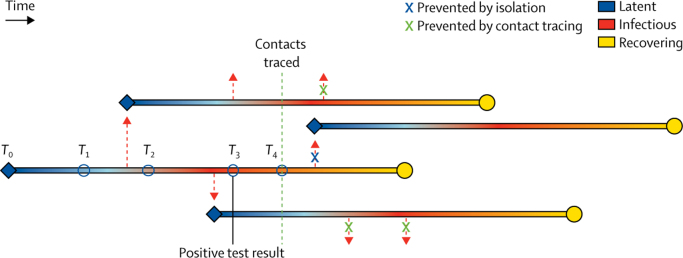
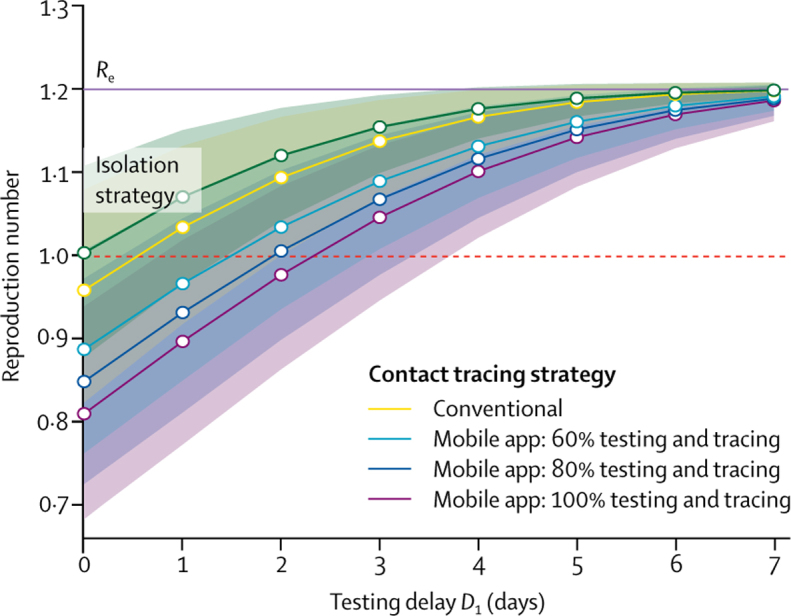
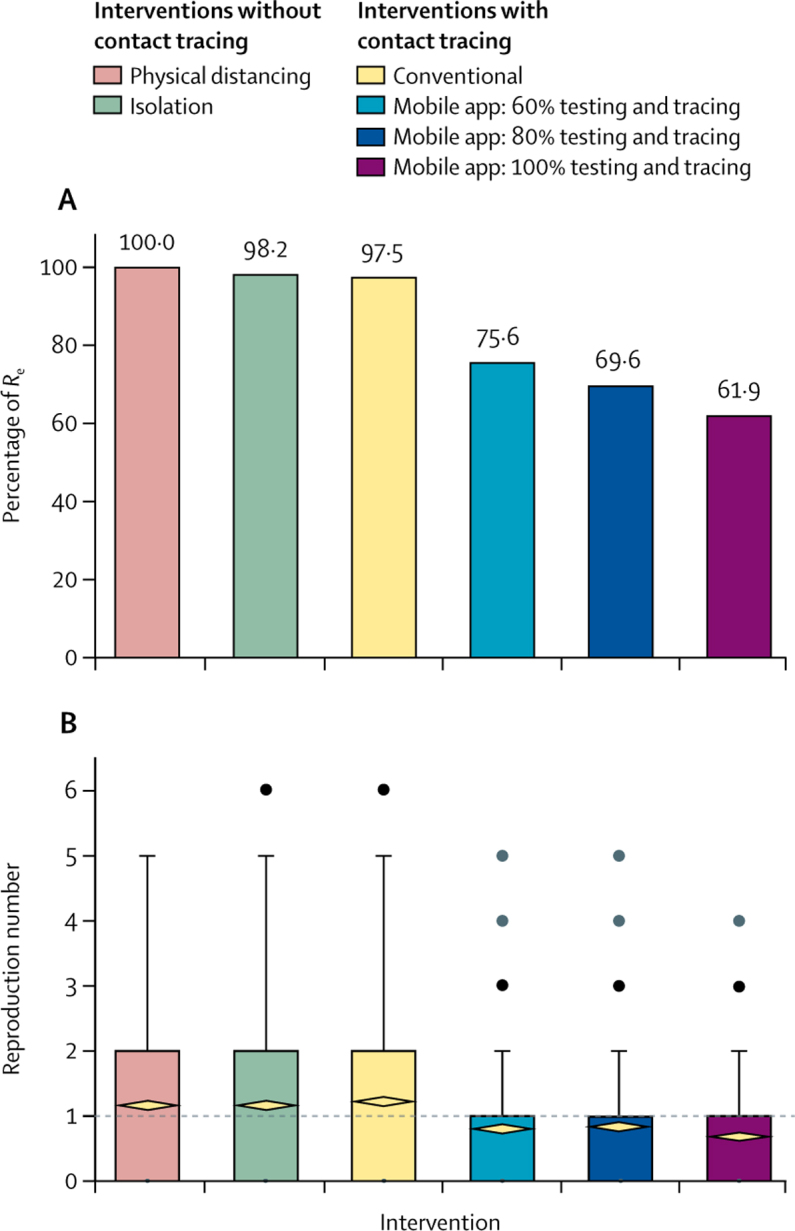
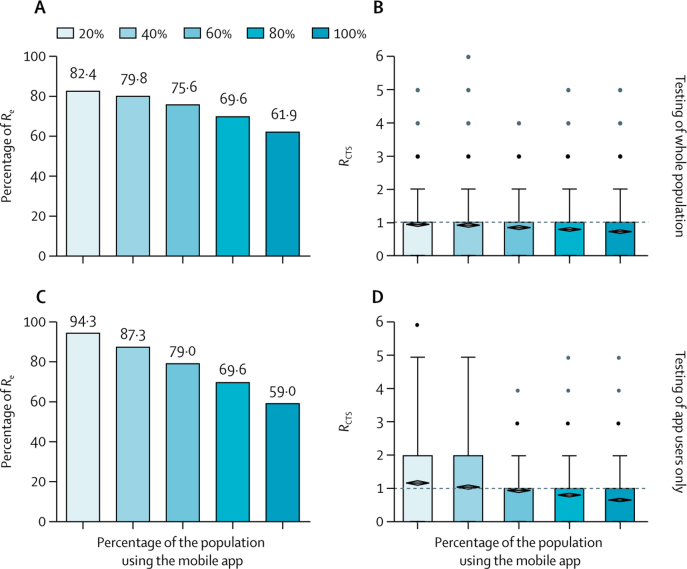
Background In countries with declining numbers of confirmed cases of COVID-19, lockdown measures are gradually being lifted. However, even if most physical distancing measures are continued, other public health measures will be needed to control the epidemic. Contact tracing via conventional methods or mobile app technology is central to control strategies during de-escalation of physical distancing. We aimed to identify key factors for a contact tracing strategy to be successful. Methods We evaluated the impact of timeliness and completeness in various steps of a contact tracing strategy using a stochastic mathematical model with explicit time delays between time of infection and symptom onset, and between symptom onset, diagnosis by testing, and isolation (testing delay). The model also includes tracing of close contacts (eg, household members) and casual contacts, followed by testing regardless of symptoms and isolation if testing positive, with different tracing delays and coverages. We computed effective reproduction numbers of a contact tracing strategy ( R CTS ) for a population with physical distancing measures and various scenarios for isolation of index cases and tracing and quarantine of their contacts. Findings For the most optimistic scenario (testing and tracing delays of 0 days and tracing coverage of 100%), and assuming that around 40% of transmissions occur before symptom onset, the model predicts that the estimated effective reproduction number of 1·2 (with physical distancing only) will be reduced to 0·8 (95% CI 0·7–0·9) by adding contact tracing. The model also shows that a similar reduction can be achieved when testing and tracing coverage is reduced to 80% ( R CTS 0·8, 95% CI 0·7–1·0). A testing delay of more than 1 day requires the tracing delay to be at most 1 day or tracing coverage to be at least 80% to keep R CTS below 1. With a testing delay of 3 days or longer, even the most efficient strategy cannot reach R CTS values below 1. The effect of minimising tracing delay (eg, with app-based technology) declines with decreasing coverage of app use, but app-based tracing alone remains more effective than conventional tracing alone even with 20% coverage, reducing the reproduction number by 17·6% compared with 2·5%. The proportion of onward transmissions per index case that can be prevented depends on testing and tracing delays, and given a 0-day tracing delay, ranges from up to 79·9% with a 0-day testing delay to 41·8% with a 3-day testing delay and 4·9% with a 7-day testing delay. Interpretation In our model, minimising testing delay had the largest impact on reducing onward transmissions. Optimising testing and tracing coverage and minimising tracing delays, for instance with app-based technology, further enhanced contact tracing effectiveness, with the potential to prevent up to 80% of all transmissions. Access to testing should therefore be optimised, and mobile app technology might reduce delays in the contact tracing process and optimise contact tracing coverage. Funding ZonMw, Fundação para a Ciência e a Tecnologia, and EU Horizon 2020 RECOVER.
Overview
The claims and statistics of this paper haven’t been checked yet.
Free: it reads the open-access text and checks the first 5 claims that cite a source we can check. Create a free account to check every claim.
Integrity signals
Registry
Cites
Statistics
Figures
Verification
Claims the paper makes
The claims and statistics of this paper haven’t been checked yet.
Free: it reads the open-access text and checks the first 5 claims that cite a source we can check. Create a free account to check every claim.
Self-check
Percentages, sums and reported differences re-computed from the paper’s own numbers.
The self-check needs the paper’s full text.
Citations
Cites
Chen, N., Zhou, M., Dong, X., Qu, J., Gong, F., Han, Y., Qiu, Y., Wang, J., Liu, Y., Wei, Y., et al. (2020) · The Lancet · doi:10.1016/s0140-6736(20)30211-7 · Cited by 21,415
Wang, D., Hu, B., Hu, C., Zhu, F., Liu, X., Zhang, J., Wang, B., Xiang, H., Cheng, Z., Xiong, Y., et al. (2020) · JAMA · doi:10.1001/jama.2020.1585 · Cited by 20,148
La certeza de lo impredecible: Cultura Educación y Sociedad en tiempos de COVID19
Martínez González, M. (2020) · DSPACE System - Metalibrary (University of the Coast) · Cited by 18,463
Martínez–González, M. B. (2020) · DSPACE System - Metalibrary (University of the Coast) · Cited by 18,294
Chan, J. F.-W., Yuan, S., Kok, K.-H., To, K. K.-W., Chu, H., Yang, J., Xing, F., Liu, J., Yip, C. C.-Y., Poon, R. W.-S., et al. (2020) · The Lancet · doi:10.1016/s0140-6736(20)30154-9 · Cited by 8,944
Temporal dynamics in viral shedding and transmissibility of COVID-19
He, X., Lau, E. H. Y., Wu, P., Deng, X., Wang, J., Hao, X., Lau, Y. C., Wong, J. Y., Guan, Y., Tan, X., et al. (2020) · Nature Medicine · doi:10.1038/s41591-020-0869-5 · Cited by 4,247
Social Contacts and Mixing Patterns Relevant to the Spread of Infectious Diseases
Mossong, J., Hens, N., Jit, M., Beutels, P., Auranen, K., Mikolajczyk, R., Massari, M., Salmaso, S., Tomba, G. S., Wallinga, J., et al. (2008) · PLoS Medicine · doi:10.1371/journal.pmed.0050074 · Cited by 2,900
Feasibility of controlling COVID-19 outbreaks by isolation of cases and contacts
Hellewell, J., Abbott, S., Gimma, A., Bosse, N. I., Jarvis, C. I., Russell, T. W., Munday, J. D., Kucharski, A. J., Edmunds, W. J., Sun, F., et al. (2020) · The Lancet Global Health · doi:10.1016/s2214-109x(20)30074-7 · Cited by 2,550
Quantifying SARS-CoV-2 transmission suggests epidemic control with digital contact tracing
Ferretti, L., Wymant, C., Kendall, M., Zhao, L., Nurtay, A., Abeler-Dörner, L., Parker, M., Bonsall, D., & Fraser, C. (2020) · Science · doi:10.1126/science.abb6936 · Cited by 2,512
Prevalence of Asymptomatic SARS-CoV-2 Infection: A Narrative Review
Oran, D. P., & Topol, E. J. (2020) · Annals of Internal Medicine · doi:10.7326/m20-3012 · Cited by 2,279
Cited by
Items 101–200 of 683
Empirical evidence on the efficiency of backward contact tracing in COVID-19
Raymenants, J., Geenen, C., Thibaut, J., Nelissen, K., Gorissen, S., & André, E. (2022) · Nature Communications · doi:10.1038/s41467-022-32531-6 · Cited by 49
Cresswell, K. M., Tahir, A., Sheikh, Z., Hussain, Z., Hernández, A. D., Harrison, E. M., Williams, R., Sheikh, A., & Hussain, A. (2021) · Journal of Medical Internet Research · doi:10.2196/26618 · Cited by 45
Contact tracing efficiency, transmission heterogeneity, and accelerating COVID-19 epidemics
Gardner, B. J., & Kilpatrick, A. M. (2021) · PLoS Computational Biology · doi:10.1371/journal.pcbi.1009122 · Cited by 52
“Rapid tests taken on the day of symptom onset, as used by the United Kingdom starting in April 2021, could result in delays as short as 1 day, whereas the time from symptom onset until test results were returned often exceeded 10 days in the US in 2020 [24,40].”
BackgroundSkoll, D., Miller, J. C., & Saxon, L. A. (2020) · Cardiovascular Digital Health Journal · doi:10.1016/j.cvdhj.2020.09.004 · Cited by 49
“66 Without a vaccine, the frequency of testing is the most powerful variable that businesses and universities can control to return to normal operations.”
The Dutch COVID-19 Contact Tracing App (the CoronaMelder): Usability Study
Bente, B. E., Klooster, J. W. J. R. V. '., Schreijer, M. A., Berkemeier, L., van Gend, J. E., Slijkhuis, P. J. H., Kelders, S. M., & van Gemert‐Pijnen, J. E. W. C. (2021) · JMIR Formative Research · doi:10.2196/27882 · Cited by 47
The Clinical Information Systems Response to the COVID-19 Pandemic
Reeves, J. J., Pageler, N. M., Wick, E. C., Melton, G. B., Tan, Y.-H. G., Clay, B. J., & Longhurst, C. (2021) · Yearbook of Medical Informatics · doi:10.1055/s-0041-1726513 · Cited by 48
“Conventional measures of contact tracing, largely based around manual interviews, are laborious and time-consuming and have been challenging to do effectively during the COVID-19 pandemic [176].”
BackgroundLeveraging the Electronic Health Record to Address the COVID-19 Pandemic
Satterfield, B. A., Dikilitas, O., & Kullo, I. J. (2021) · Mayo Clinic Proceedings · doi:10.1016/j.mayocp.2021.04.008 · Cited by 42
“Public health officials then trace these contacts and inform them about the possible exposure, leading to quarantine and testing.(2) Given the extent of the COVID-19 pandemic and its rapid spread, conventional contact tracing is not feasible in most regions; however, mobile device data linked to the EHR are a potentia…”
BackgroundModelling the potential impact of mask use in schools and society on COVID-19 control in the UK
Panovska‐Griffiths, J., Kerr, C. C., Waites, W., Stuart, R. M., Mistry, D., Foster, D., Klein, D. J., Viner, R., & Bonell, C. P. (2021) · Scientific Reports · doi:10.1038/s41598-021-88075-0 · Cited by 50
Epidemiological impacts of the NHS COVID-19 app in England and Wales throughout its first year
Kendall, M., Tsallis, D., Wymant, C., Francia, A. D., Balogun, Y., Didelot, X., Luca Ferretti, A., & Fraser, C. (2023) · Nature Communications · doi:10.1038/s41467-023-36495-z · Cited by 50
Effectiveness of contact tracing apps for SARS-CoV-2: a rapid systematic review
Jenniskens, K., Bootsma, M. C. J., Damen, J. A. A. G., Oerbekke, M. S., Vernooij, R. W. M., Spijker, R., Moons, K. G. M., Kretzschmar, M. E. E., & Hooft, L. (2021) · BMJ Open · doi:10.1136/bmjopen-2021-050519 · Cited by 40
Self-citationCOVID-19 Contact Tracing Using Blockchain
Hasan, H. R., Salah, K., Jayaraman, R., Yaqoob, I., Omar, M., & Ellahham, S. (2021) · IEEE Access · doi:10.1109/access.2021.3074753 · Cited by 42
“In efforts to mitigate the unprecedented spread of COVID-19, contact tracing applications have widely been developed [1]–[3].”
BackgroundA Survey on Radio Frequency Identification as a Scalable Technology to Face Pandemics
Bianco, G. M., Occhiuzzi, C., Panunzio, N., & Marrocco, G. (2021) · IEEE Journal of Radio Frequency Identification · doi:10.1109/jrfid.2021.3117764 · Cited by 42
“Mobile applications [166] and/or wearable radios [137] can be employed for interactions monitoring.”
BackgroundHogan, K. J., Macedo, B., Macha, V., Barman, A., & Jiang, X. (2021) · JMIR Medical Informatics · doi:10.2196/27449 · Cited by 48
“…analysis on contact tracing in general, which has found that contact tracing can reduce the effective reproduction number of a virus if the tracing is done with minimal delay, the tracing is accurate, and those informed of their potential risk follow appropriate isolation protocols [105].”
BackgroundVecino-Ortiz, A. I., Villanueva-Congote, J., Zapata-Bedoya, S., & Cucunubá, Z. M. (2021) · PLoS ONE · doi:10.1371/journal.pone.0246987 · Cited by 40
Kriemler, S., Ulytė, A., Ammann, P., Peralta, G. P., Berger, C., Puhan, M. A., & Radtke, T. (2021) · Frontiers in Pediatrics · doi:10.3389/fped.2021.645577 · Cited by 45
“Yet, cost-effective and important and prompt decisions for children, families and schools could be taken for instance in children or teachers with unclear symptomatology or in outbreak situations, given that sameday results can prevent 80% of new transmissions, whereas a 7-day delay stops only 5% [36].”
BackgroundCOVID-19 contact tracing in Belgium: main indicators and performance, January – September 2021
Proesmans, K., Hancart, S., Braeye, T., Klamer, S., Robesyn, E., Djiena, A., Leeuw, F. D., Mahieu, R., Dreuw, A., Hammami, N., et al. (2022) · Archives of Public Health · doi:10.1186/s13690-022-00875-6 · Cited by 39
“Digital proximity tracing via apps is a novel and promising measure to reduce the spread of COVID-19, with the potential to complement regular contact tracing and enhance contact tracing effectiveness [30, 36].”
BackgroundSARS-CoV-2 viral load is associated with risk of transmission to household and community contacts
Bhavnani, D., James, E. R., Johnson, K. E., Beaudenon‐Huibregtse, S., Chang, P., Rathouz, P. J., Weldon, M., Matouschek, A. T., & Young, A. E. (2022) · BMC Infectious Diseases · doi:10.1186/s12879-022-07663-1 · Cited by 44
“The effectiveness of contact tracing is highly dependent on rapid quarantine and quarantine of a large proportion of contacts [34, 35].”
BackgroundNosocomial Coronavirus Disease Outbreak Containment, Hanoi, Vietnam, March–April 2020
Duy, C., Nong, V. M., Ngo, A. V., Doan, T. T., Nguyen, T. Q., Truong, P. T., Olson, L., & Larsson, M. (2020) · Emerging infectious diseases · doi:10.3201/eid2701.202656 · Cited by 38
“Modeling suggested that active case tracing and early testing had a major effect on reducing the community transmission of COVID-19, up to 80% (14), and the outcomes from outbreak containment at BMH could provide good empirical evidence for this result.”
BackgroundUsing a household-structured branching process to analyse contact tracing in the SARS-CoV-2 pandemic
Fyles, M., Fearon, E., Overton, C. E., University of Manchester COVID-19 Modelling Group, Wingfield, T., Medley, G. F., Hall, I., Pellis, L., & House, T. (2021) · Philosophical Transactions of the Royal Society B Biological Sciences · doi:10.1098/rstb.2020.0267 · Cited by 44
A Survey of Automatic Contact Tracing Approaches Using Bluetooth Low Energy
Reichert, L., Brack, S., & Scheuermann, B. (2021) · ACM Transactions on Computing for Healthcare · doi:10.1145/3444847 · Cited by 47
Analysis of efficacy of intervention strategies for COVID-19 transmission: A case study of Hong Kong
Zhang, N., Chan, P., Jia, W., Dung, C.-H., Zhao, P., Lei, H., Su, B., Xue, P., Zhang, W., Xie, J., et al. (2021) · Environment International · doi:10.1016/j.envint.2021.106723 · Cited by 40
COVICT: an IoT based architecture for COVID-19 detection and contact tracing
Wahid, M. A., Bukhari, S. H. R., Daud, A., Awan, S. E., & Raja, M. A. Z. (2022) · Journal of Ambient Intelligence and Humanized Computing · doi:10.1007/s12652-022-04446-z · Cited by 40
“However, this is quite challenging because it is difficult to recall each and every contact for the last 3 weeks (Kretzschmar et al. 2020).”
BackgroundInfluentialA survey of COVID-19 in public transportation: Transmission risk, mitigation and prevention
Liu, X., Kortoçi, P., Motlagh, N. H., Nurmi, P., & Tarkoma, S. (2022) · Multimodal Transportation · doi:10.1016/j.multra.2022.100030 · Cited by 38
Courtellemont, L., Guinard, J., Guillaume, C., Giachè, S., Rzepecki, V., Sève, A., Gubavu, C., Baud, K., Helloco, C. L., Cassuto, N. G., et al. (2021) · Journal of Medical Virology · doi:10.1002/jmv.26896 · Cited by 36
van Beek, J., Iglὁi, Z., Boelsums, T., Fanoy, E. B., Gotz, H., Molenkamp, R., van Kampen, J., GeurtsvanKessel, C. H., van der Eijk, A., van de Vijver, D. A. M. C., et al. (2022) · Eurosurveillance · doi:10.2807/1560-7917.es.2022.27.8.2100702 · Cited by 37
“The shortening of testing delays is a critical determinant of success of a contact tracing strategy, and shortening from 3 to 1 days can push expanding outbreaks into suppression with a reproductive number below 1 [7,8].”
SARS-CoV-2 Testing Service Preferences of Adults in the United States: Discrete Choice Experiment
Zimba, R., Kulkarni, S., Berry, A., You, W., Mirzayi, C. A., Westmoreland, D. A., Parcesepe, A. M., Waldron, L., Rane, M. S., Kochhar, S., et al. (2020) · JMIR Public Health and Surveillance · doi:10.2196/25546 · Cited by 35
Exploring the drivers and barriers to uptake for digital contact tracing
Chen, A. T.-Y., & Thio, K. (2021) · Social Sciences & Humanities Open · doi:10.1016/j.ssaho.2021.100212 · Cited by 43
“It is promoted in some containment models due to its effectiveness alongside testing (Kretzschmar et al., 2020; Sun & Viboud, 2020), with some researchers arguing that it is imperative for containment to take effect (Ferretti et al.”
Precautionary Breaks: Planned, Limited Duration Circuit Breaks to Control the Prevalence of COVID-19
Keeling, M. J., Guyver‐Fletcher, G., Holmes, A., Dyson, L., Tildesley, M. J., Hill, E. M., & Medley, G. F. (2020) · Epidemics · doi:10.1016/j.epidem.2021.100526 · Cited by 43
“the level of infection is relatively low (Kretzschmar et al., 2020).”
Understanding how socioeconomic inequalities drive inequalities in COVID-19 infections
Laajaj, R., Webb, D., Aristizábal, D., Behrentz, E., Bernal, R., Buitrago, G., Cucunubá, Z. M., de la Hoz, F., Gaviría, A., Hernandéz, L. J., et al. (2022) · Scientific Reports · doi:10.1038/s41598-022-11706-7 · Cited by 41
Muhi, S., Tayler, N., Hoang, T., Ballard, S. A., Graham, M., Rojek, A. M., Kwong, J. C., Trubiano, J. A., Smibert, O. C., Drewett, G. P., et al. (2020) · The Lancet Regional Health - Western Pacific · doi:10.1016/j.lanwpc.2021.100115 · Cited by 33
Decoding China’s COVID‐19 ‘virus exceptionalism’: Community‐based digital contact tracing in Wuhan
Boeing, P., & Wang, Y. (2021) · R and D Management · doi:10.1111/radm.12464 · Cited by 41
“…data) and timeliness (the immediate identification and reaction to outbreaks), effective digital contact tracing incorporates latest information and communications technologies (ICT) to enhance the tracing measures and coordinate communication at the societal level (Kretzschmar et al., 2020).”
BackgroundInfluentialTouzani, R., Schultz, É., Holmes, S. M., Vandentorren, S., Arwidson, P., Guillemin, F., Rey, D., Rouquette, A., Bouhnik, A., & Mancini, J. (2021) · JMIR mhealth and uhealth · doi:10.2196/27768 · Cited by 37
Pabbaraju, K., Wong, A. A., Ma, R., Zelyas, N. J., & Tipples, G. A. (2021) · Journal of Virological Methods · doi:10.1016/j.jviromet.2021.114151 · Cited by 34
“The public health strategy that has proven to be vital in the containment of this virus has been extensive testing, early detection, contact tracing and isolation of cases (Kucharski et al., 2020; Reddy et al., 2021; Cheng et al., 2020; Kretzschmar et al., 2020).”
The impact of digital contact tracing on the SARS-CoV-2 pandemic—a comprehensive modelling study
Pollmann, T. R., Pollmann, J., Wiesinger, C., Haack, C., Shtembari, L., Turcati, A., Neumair, B., Meighen-Berger, S. A., Zattera, G., Neumair, M., et al. (2021) · EPJ Data Science · doi:10.1140/epjds/s13688-021-00290-x · Cited by 36
Rapid, Bottom-Up Design of a Regional Learning Health System in Response to COVID-19
Beck, A. F., Hartley, D., Kahn, R. S., Taylor, S. C., Bishop, E., Rich, K., Saeed, M., Schuler, C. L., Seid, M., Cronin, S. C., et al. (2021) · Mayo Clinic Proceedings · doi:10.1016/j.mayocp.2021.02.006 · Cited by 32
White, L., & van Basshuysen, P. (2021) · Science and Engineering Ethics · doi:10.1007/s11948-021-00301-0 · Cited by 31
Yuan, H., & Blakemore, C. (2022) · The Lancet Regional Health - Western Pacific · doi:10.1016/j.lanwpc.2021.100374 · Cited by 35
Can digital contact tracing make up for lost time?
Ivers, L. C., & Weitzner, D. J. (2020) · The Lancet Public Health · doi:10.1016/s2468-2667(20)30160-2 · Cited by 30
“The conclusion of the researchers, 4 therefore, that “app-based tracing on its own remains more effective than conventional tracing alone, even with 20% coverage, due to its inherent speed” seems premature without a more nuanced discussion of efficacy and of the potential challenges and harms of…”
BackgroundVirus spread versus contact tracing: Two competing contagion processes
Reyna-Lara, A., Soriano‐Paños, D., Gómez, S., Granell, C., Matamalas, J. T., Steinegger, B., Arenas, A., & Gómez‐Gardeñes, J. (2021) · Physical Review Research · doi:10.1103/physrevresearch.3.013163 · Cited by 33
Sustainable border control policy in the COVID-19 pandemic: A math modeling study
Zhu, Z. H., Weber, E., Strohsal, T., & Serhan, D. (2021) · Travel Medicine and Infectious Disease · doi:10.1016/j.tmaid.2021.102044 · Cited by 34
Wilson, A. M., Aviles, N., Petrie, J., Beamer, P. I., Szabo, Z., Xie, M., McIllece, J., Chen, Y., Son, Y., Halai, S., et al. (2021) · Risk Analysis · doi:10.1111/risa.13768 · Cited by 36
Liu, J., Ong, G. P., & Pang, V. J. (2022) · Transportation Research Part A Policy and Practice · doi:10.1016/j.tra.2022.05.003 · Cited by 46
Mbwogge, M. (2021) · JMIRx Med · doi:10.2196/27254 · Cited by 32
Musa, K. I., Arifin, W. N., Mohd, M. H., Jamiluddin, M. S., Ahmad, N. A., Chen, X. W., Hanis, T. M., & Bulgiba, A. M. (2021) · International Journal of Environmental Research and Public Health · doi:10.3390/ijerph18063273 · Cited by 29
“This approach of “track and trace” has remained unchanged and constant until beginning of the year 2021 [22], hence it is believed that the effect of tracing/testing delay on our modelling is minimal [23].”
BackgroundImplementing COVIDSafe: The Role of Trustworthiness and Information Privacy Law
Burdon, M., & Wang, B. T. (2021) · Law Technology and Humans · doi:10.5204/lthj.1808 · Cited by 28
The Missing Piece — SARS-CoV-2 Testing and School Reopening
Rafiei, Y., & Mello, M. M. (2020) · New England Journal of Medicine · doi:10.1056/nejmp2028209 · Cited by 28
Nooraie, R. Y., Shelton, R. C., Fiscella, K. A., Kwan, B. M., & McMahon, J. M. (2021) · Health Research Policy and Systems · doi:10.1186/s12961-021-00764-4 · Cited by 28
Ballouz, T., Menges, D., Aschmann, H. E., Domenghino, A., Fehr, J. S., Puhan, M. A., & von Wyl, V. (2021) · International Journal of Public Health · doi:10.3389/ijph.2021.1603992 · Cited by 28
Amaku, M., Covas, D. T., Coutinho, F. A. B., Azevedo, R. S., Struchiner, C. J., Wilder‐Smith, A., & Massad, E. (2020) · Infectious Disease Modelling · doi:10.1016/j.idm.2020.11.004 · Cited by 36
“Another important limitation of the model is that it does not consider any delay in the results of the test, an important factor that has been limiting this strategy in many places of the world (Kretzschmar et al., 2020).”
The Efficacy of Plant-Based Ionizers in Removing Aerosol for COVID-19 Mitigation
Suwardi, A., Ooi, C. C., Daniel, D., Tan, C. K. I., Li, H., Liang, O. Y. Z., Tang, K. Y., Chee, J. Y., Sadovoy, A., Jiang, S., et al. (2021) · Research · doi:10.34133/2021/2173642 · Cited by 30
Grill, E., Eitze, S., Bock, F. D., Dragano, N., Huebl, L., Schmich, P., Wieler, L. H., & Betsch, C. (2021) · PLoS ONE · doi:10.1371/journal.pone.0256660 · Cited by 30
Rajagopal, R. (2021) · Pattern Recognition and Image Analysis · doi:10.1134/s1054661821020140 · Cited by 27
Jeon, S., Rainisch, G., Lash, R. R., Moonan, P. K., Oeltmann, J. E., Greening, B., Adhikari, B. B., Contact Tracing Impact Group, & Meltzer, M. I. (2021) · Journal of Public Health Management and Practice · doi:10.1097/phh.0000000000001420 · Cited by 26
Winkel, B. M. F., Schram, E., Gremmels, H., Debast, S. B., Schuurman, R., Wensing, A. M. J., Bonten, M. J. M., Goedhart, E. A., Hofstra, L. M., & Antigen Rapid Test Validation Group (2021) · BMJ Open · doi:10.1136/bmjopen-2020-048206 · Cited by 26
Self-citationAshcroft, P., Lehtinen, S., & Bonhoeffer, S. (2022) · PLoS ONE · doi:10.1371/journal.pone.0263597 · Cited by 33
Speed and strength of an epidemic intervention
Dushoff, J. G., & Park, S. W. (2021) · Proceedings of the Royal Society B Biological Sciences · doi:10.1098/rspb.2020.1556 · Cited by 31
Cheng, V. C., Siu, G. G., Wong, S., Au, A. K.-W., Ng, C. S.-F., Chen, H., Li, X., Lee, L.-K., Leung, J. S.-L., Lu, K. K., et al. (2021) · The Lancet Regional Health - Western Pacific · doi:10.1016/j.lanwpc.2021.100281 · Cited by 27
Biala, T. A., Afolabi, Y. O., & Khaliq, A. Q. M. (2021) · Applied Mathematical Modelling · doi:10.1016/j.apm.2021.11.011 · Cited by 28
Zhou, S., Zhou, S., Zheng, Z., Lu, J., & Song, T. (2022) · Applied Geography · doi:10.1016/j.apgeog.2022.102702 · Cited by 25
“Individuals ’ daily contact includes close contact (regular encounters in household, and workplaces) and casual contact (random encounters at public places) (Kretzschmar et al., 2020; Yin et al., 2021).”
Modelling: Understanding pandemics and how to control them
Marion, G., Hadley, L., Isham, V. S., Mollison, D., Panovska‐Griffiths, J., Pellis, L., Tomba, G. S., Scarabel, F., Swallow, B., Trapman, P., et al. (2022) · Epidemics · doi:10.1016/j.epidem.2022.100588 · Cited by 35
Scarabel, F., Pellis, L., Ogden, N. H., & Wu, J. (2021) · Royal Society Open Science · doi:10.1098/rsos.202091 · Cited by 27
Perry, B. L. (2021) · American Journal of Public Health · doi:10.2105/ajph.2021.306244 · Cited by 26
The forecast of COVID-19 spread risk at the county level
Hssayeni, M. D., Chala, A., Dev, R., Xu, L., Shaw, J., Furht, B., & Ghoraani, B. (2021) · Journal Of Big Data · doi:10.1186/s40537-021-00491-1 · Cited by 24
“With the reopening of the world economy, one of the critical issues about the coronavirus disease 2019 (COVID-19) is the delay in the outbreak detection [1].”
BackgroundOn the effectiveness of COVID-19 restrictions and lockdowns: Pan metron ariston
Spiliopoulos, L. (2022) · BMC Public Health · doi:10.1186/s12889-022-14177-7 · Cited by 30
Rapid and Flexible RT-qPCR Surveillance Platforms To Detect SARS-CoV-2 Mutations
Spieß, K., Gunalan, V., Marving, E. L., Nielsen, S. H., Jørgensen, M. G. P., Fomsgaard, A. S., Nielsen, L., Alfaro‐Núñez, A., Karst, S. M., Mortensen, S., et al. (2023) · Microbiology Spectrum · doi:10.1128/spectrum.03591-22 · Cited by 27
“This was in line with modeling showing that minimizing testing delays had the largest impact on reducing onward transmissions (20).”
ResultBrowning, R., Sulem, D., Mengersen, K. L., Rivoirard, V., & Rousseau, J. (2021) · PLoS ONE · doi:10.1371/journal.pone.0250015 · Cited by 41
COVID-19: Current Developments and Further Opportunities in Drug Delivery and Therapeutics
Zafar, S., Arshad, M. S., Fatima, S., Ali, A. A. A., Zaman, A., Sayed, E., Chang, M., & Ahmad, Z. (2020) · Pharmaceutics · doi:10.3390/pharmaceutics12100945 · Cited by 24
“Once the number of cases become manageable, more precise measures including contact tracing or location tracing can be used to restrict the R-values [43].”
BackgroundImmigrants facing Covid 19 containment in France : An ordinary hardship of disaffiliation
Carillon, S., Gosselin, A., Coulibaly, K., Ridde, V., & du Loû, A. D. (2020) · Journal of Migration and Health · doi:10.1016/j.jmh.2020.100032 · Cited by 23
“Moreover, this process of disaffiliation took on a particular challenge in the context of the fight against Covid-19 when containment measures were lifted and contact tracing became the major strategy for limiting the virus ( Kretzschmar et al., 2020 ).”
Sunohara, S., Asakura, T., Kimura, T., Ozawa, S., Oshima, S., Yamauchi, D., & Tamakoshi, A. (2021) · PLoS ONE · doi:10.1371/journal.pone.0257107 · Cited by 30
Madoery, P. G., Detke, R., Blanco, L., Comerci, S., Fraire, J. A., Montoro, A. M. G., Bellassai, J. C., Britos, G. M., Ojeda, S., & Finochietto, J. M. (2021) · Pervasive and Mobile Computing · doi:10.1016/j.pmcj.2021.101474 · Cited by 23
GoCoronaGo: Privacy Respecting Contact Tracing for COVID-19 Management
Simmhan, Y. L., Rambha, T., Khochare, A., Ramesh, S., Baranawal, A., George, J. V., Bhope, R. A., Namtirtha, A., Sundararajan, A., Bhargav, S. S., et al. (2020) · Journal of the Indian Institute of Science · doi:10.1007/s41745-020-00201-5 · Cited by 24
“This can dramatically reduce the time required for contact tracing from days to potentially hours, thereby mitigating the spread of the virus [38].”
InfluentialDoust, J. A., Bell, K., Leeflang, M., Dinnes, J., Lord, S. J., Mallett, S., van de Wijgert, J. H. H. M., Sandberg, S., Adeli, K., Deeks, J. J., et al. (2021) · BMJ · doi:10.1136/bmj.n568 · Cited by 24
de Laval, F., Grosset-Janin, A., Delon, F., Allonneau, A., Tong, C., Letois, F., Couderc, A., Sanchez, M.-A., Destanque, C., Biot, F., et al. (2021) · BMC Infectious Diseases · doi:10.1186/s12879-021-06166-9 · Cited by 25
“Indeed, Case 2 probably contaminated the five following cases during her presymptomatic stage, and 10 pre-symptomatic contaminations (about 40%) occurred in this cluster, highlighting the need for contact tracing and identifying, testing, quarantining and/or mask wearing for asymptomatic atrisk contact persons [30].”
BackgroundChiu, R. Y. T., Kojima, N., Mosley, G. L., Cheng, K. K., Pereira, D. Y., Brobeck, M., Chan, T. L., Zee, J. S., Kittur, H., Chung, C. Y. T., et al. (2021) · Microbiology Spectrum · doi:10.1128/spectrum.00342-21 · Cited by 22
COVID-19 Contact Tracing Outcomes in Washington State, August and October 2020
Bonacci, R. A., Manahan, L. M., Miller, J. S., Moonan, P. K., Lipparelli, M. B., Difedele, L. M., Davis, L. B., Lash, R. R., & Oeltmann, J. E. (2021) · Frontiers in Public Health · doi:10.3389/fpubh.2021.782296 · Cited by 22
Yuan, H., & Blakemore, C. (2021) · The Lancet Regional Health - Western Pacific · doi:10.1016/j.lanwpc.2021.100343 · Cited by 26
Cingolani, L. (2022) · Governance · doi:10.1111/gove.12666 · Cited by 38
Effective Social Network-Based Allocation of COVID-19 Vaccines
Chen, J., Hoops, S., Marathe, A., Mortveit, H., Lewis, B. L., Venkatramanan, S., Haddadan, A., Bhattacharya, P., Adiga, A., Vullikanti, A. K. S., et al. (2022) · ACM SIGKDD Conference on Knowledge Discovery and Data Mining (KDD) · doi:10.1145/3534678.3542673 · Cited by 27
Luu, L. D. W., Payne, M., Zhang, X., Luo, L., & Lan, R. (2021) · Scientific Reports · doi:10.1038/s41598-021-81518-8 · Cited by 24
Stuart, R. M., Abeysuriya, R., Kerr, C. C., Mistry, D., Klein, D. J., Gray, R. T., Hellard, M. E., & Scott, N. (2021) · BMJ Open · doi:10.1136/bmjopen-2020-045941 · Cited by 24
VIRFIM: an AI and Internet of Medical Things-driven framework for healthcare using smart sensors
Khowaja, S. A., Khuwaja, P., Dev, K., & D’Aniello, G. (2021) · Neural Computing and Applications · doi:10.1007/s00521-021-06434-4 · Cited by 26
“Recent studies [42–44] have urged the use of smartphones and mobile sensors for contact tracing in Fig.”
BackgroundGaliani, S. (2021) · Journal of Economic Behavior & Organization · doi:10.1016/j.jebo.2021.10.016 · Cited by 30
Acceptability of the COVID-19 contact-tracing app – Does culture matter?
Dzandu, M. D., Pathak, B., & de Cesare, S. (2022) · Government Information Quarterly · doi:10.1016/j.giq.2022.101750 · Cited by 28
“The contacttracing app is cost-effective, it has the potential to prevent up to 80% of all transmission (Kretzschmar et al., 2020) and it can aid the”
Weinstein, B., da Silva, A. R., Kouzoukas, D. E., Bose, T., Kim, G. J., Correa, P. A., Pondugula, S., Lee, Y., Kim, J., & Carpenter, D. O. (2021) · International Journal of Environmental Research and Public Health · doi:10.3390/ijerph18020604 · Cited by 24
“However, multiple factors determine testing coverage, therefore, the number of confirmed cases, such as easy access for testing and its accuracy [39], contact tracing strategies [40], under-testing of asymptomatic patients [41].”
BackgroundEffectiveness modelling of digital contact-tracing solutions for tackling the COVID-19 pandemic
Shubina, V., Ometov, A., Basiri, A., & Lohan, E. S. (2021) · Journal of Navigation · doi:10.1017/s0373463321000175 · Cited by 27
von Wyl, V. (2021) · JMIR mhealth and uhealth · doi:10.2196/25345 · Cited by 27
“Given that exposed contacts enter quarantine upon app notification, the speed advantage of DPT should also lead to a faster interruption of transmission chains [10,32].”
BackgroundData-driven mathematical modeling approaches for COVID-19: A survey
Demongeot, J., & Magal, P. (2024) · Physics of Life Reviews · doi:10.1016/j.plrev.2024.08.004 · Cited by 24
van der Toorn, W., Oh, D., Bourquain, D. R., Michel, J., Krause, E., Nitsche, A., & von Kleist, M. (2021) · Patterns · doi:10.1016/j.patter.2021.100262 · Cited by 24
“Along these lines it is then also possible to project the effects of NPIs on Rt or the concomitant effects of both NPIs and vaccination on the pandemic, or to use the presented model in contexts where the effectiveness of contact tracing 99,100 with subsequent NPIs is modeled.”
A2B-COVID: A Tool for Rapidly Evaluating Potential SARS-CoV-2 Transmission Events
Illingworth, C. J. R., Hamilton, W. L., Jackson, C. H., Warne, B., Popay, A., Meredith, L. W., Hosmillo, M. D. T., Jahun, A. S., Fieldman, T., Routledge, M., et al. (2022) · Molecular Biology and Evolution · doi:10.1093/molbev/msac025 · Cited by 22
Does Contact Tracing Work? Quasi-Experimental Evidence from an Excel Error in EnglandPreprint
Fetzer, T., & Graeber, T. (2020) · medRxiv · doi:10.1101/2020.12.10.20247080 · Cited by 21
“The existing literature therefore mostly relies on correlational evidence (Klinkenberg et al., 2006; Kendall et al., 2020; Kretzschmar et al., 2020b,a; Afzal et al., 2020; Kucharski et al., 2020; Park et al., 2020; Grantz et al., 2020).”
BackgroundMethodStochastic sampling effects favor manual over digital contact tracing
Mancastroppa, M., Castellano, C., Vezzani, A., & Burioni, R. (2021) · Nature Communications · doi:10.1038/s41467-021-22082-7 · Cited by 26
Challenges and Future Directions in Pandemic Control
Álamo, T., Millán, P., Reina, D. G., Preciado, V. M., & Giordano, G. (2021) · IEEE Control Systems Letters · doi:10.1109/lcsys.2021.3085700 · Cited by 22
Celentano, J., Sachdev, D. D., Hirose, M., Ernst, A., & Reid, M. J. A. (2021) · American Journal of Tropical Medicine and Hygiene · doi:10.4269/ajtmh.20-1665 · Cited by 23
Wang, X., Lin, X., Yang, P., Wu, Z., Li, G., McGoogan, J. M., Jiao, Z., He, X., Li, S., Shi, H., et al. (2021) · Infectious Diseases of Poverty · doi:10.1186/s40249-021-00843-2 · Cited by 21
Møller, I. J. B., Utke, A. R., Rysgaard, U. K., Østergaard, L. J., & Jespersen, S. (2021) · International Journal of Infectious Diseases · doi:10.1016/j.ijid.2022.01.019 · Cited by 19
Drivers of epidemic dynamics in real time from daily digital COVID-19 measurements
Kendall, M., Ferretti, L., Wymant, C., Tsallis, D., Petrie, J., Francia, A. D., Lauro, F. D., Abeler‐Dörner, L., Manley, H., Panovska‐Griffiths, J., et al. (2024) · Science · doi:10.1126/science.adm8103 · Cited by 27
A Survey on Contact Tracing: The Latest Advancements and Challenges
Jiang, T., Zhang, Y., Zhang, M., Yu, T., Chen, Y., Lu, C., Zhang, J., Li, Z., Gao, J., & Zhou, S. (2022) · ACM Transactions on Spatial Algorithms and Systems · doi:10.1145/3494529 · Cited by 19
“[56] uses a stochastic mathematical mode to evaluate the impact of timeliness and completeness in each step of the contact tracing strategy.”
MethodEconomic Analyses of Respiratory Tract Infection Diagnostics: A Systematic Review
van der Pol, S., García, P. R., Postma, M. J., Antoñanzas, F., & van Asselt, A. D. I. (2021) · PharmacoEconomics · doi:10.1007/s40273-021-01054-1 · Cited by 22
“In light of the COVID-19 pandemic, rapid diagnostic tests are regarded as a fundamental instrument in combating the spread of SARS-CoV-2 [4, 5] and, consequently, have received considerable attention.”
BackgroundNajmi, A., Nazari, S., Safari, F., Miller, E. J., MacIntyre, C. R., & Rashidi, T. H. (2021) · Transportation · doi:10.1007/s11116-021-10210-7 · Cited by 22
Toward a Common Performance and Effectiveness Terminology for Digital Proximity Tracing Applications
Lueks, W., Benzler, J., Bogdanov, D., Kirchner, G., Lucas, R., Oliveira, R., Bart Preneel, A., Salathé, M., Troncoso, C., & von Wyl, V. (2021) · Frontiers in Digital Health · doi:10.3389/fdgth.2021.677929 · Cited by 19
Metadata
- Authors
- Kretzschmar, M. E., Rozhnova, G., Bootsma, M. C. J., van Boven, M., van de Wijgert, J. H. H. M., & Bonten, M. J. M.
- Affiliations
- Utrecht University (NL)
- University of Lisbon (PT)
- Corresponding author
- Kretzschmar, Mirjam E
- Venue
- The Lancet Public Health
- Publisher
- Elsevier BV
- Published
- 2020-08
- Volume
- 5
- Issue
- 8
- Pages
- e452-e459
- ISSN
- 2468-2667 (ISSN-L)
- PMC
- PMC7365652
- OpenAlex
- W3042453924
- Cited by
- 697
- References
- 37
- Citations by year
- 2026: 34 · 2025: 29 · 2024: 48 · 2023: 77 · 2022: 166 · 2021: 277 · 2020: 64
- FWCI
- 23.03
- Type
- journal article
- Language
- en
- Open access
- gold
- doi.org
- Licence
- cc-by-nc-nd
- www.elsevier.com/tdm/userlicense/1.0/ (tdm)
- www.elsevier.com/legal/tdmrep-license (tdm)
- creativecommons.org/licenses/by-nc-nd/4.0/ (vor)
- Locations
- The Lancet Public Health (publishedVersion, cc-by-nc-nd)
- medRxiv (acceptedVersion, cc-by-nc-nd)
- PubMed Central (publishedVersion, cc-by-nc-nd)
- PubMed (publishedVersion)
- DOAJ (DOAJ: Directory of Open Access Journals) (submittedVersion, cc-by-sa)
- Utrecht University Repository (Utrecht University) (submittedVersion, other-oa)
- Utrecht University Repository (Utrecht University) (submittedVersion, cc-by-nc-nd)
- Funders
- ZonMw (91216062, 10430022010001)
- Horizon 2020 (101003589, H2020-101003589)
- Fundação para a Ciência e a Tecnologia (131_596787873)
- Topics
- Physical Sciences › Mathematics › Modeling and Simulation › COVID-19 epidemiological studies
- Physical Sciences › Computer Science › Information Systems › COVID-19 Digital Contact Tracing
- Physical Sciences › Mathematics › Applied Mathematics › Mathematical and Theoretical Epidemiology and Ecology Models
- Keywords
- COVID-19 pandemic, contact tracing, effective reproduction number, social distancing, quarantine, isolation, pre-symptomatic transmission, stochastic epidemic model, epidemic control measures, household contacts, casual contact, SARS-CoV-2 transmission prevention
- MeSH terms
- COVID-19, COVID-19 Testing, Humans, Models, Theoretical, Pneumonia, Viral, Quarantine, Time Factors, Public Health Practice, Contact Tracing, Coronavirus Infections, Clinical Laboratory Techniques, Pandemics, Mobile Applications
About these checks
Registry, retraction, Cites and statistics results are computed, not judged, with one exception: a printed reference that no index lists is read once by a model before it counts as a citation error. Claims are extracted by a model and kept only when their quote appears verbatim in the text; each cited source is then checked, with a model’s help, for whether it says what the claim relies on. Those verdicts can be wrong — read the claim’s quote and the cited source before relying on one.
Statistics and arithmetic are recomputed, not judged.
Confidence bands are shown only for fields calibrated on our annotated test set. None is calibrated yet, so no band is shown.
What counts as a claim ›How we measure confidence ›How we check this ›
Are you an author, or do you see a problem with this page? Request a review
Data sources
Bibliographic data: Semantic Scholar, OpenAlex, Crossref.
Contains information from the Semantic Scholar Academic Graph Datasets, made available under the ODC Attribution License (ODC-BY 1.0).
Semantic Scholar’s data is described in: Kinney, R., et al. (2023). The Semantic Scholar Open Data Platform. arXiv:2301.10140.
