

Impact of delays on effectiveness of contact tracing strategies for COVID-19: a modelling study
Open accessPublished version of a preprint
The DOI matches its Crossref record; 38 of the 38 references it cites were found in a registry or an index.
Abstract
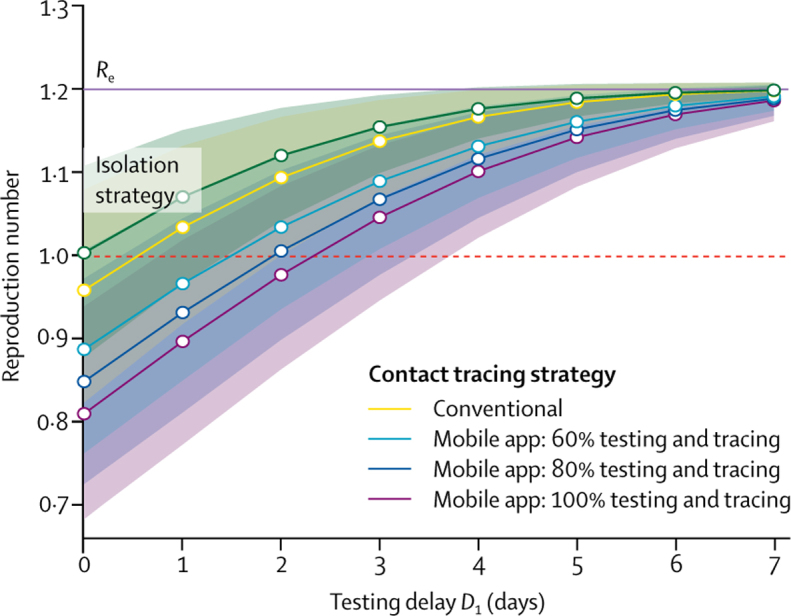
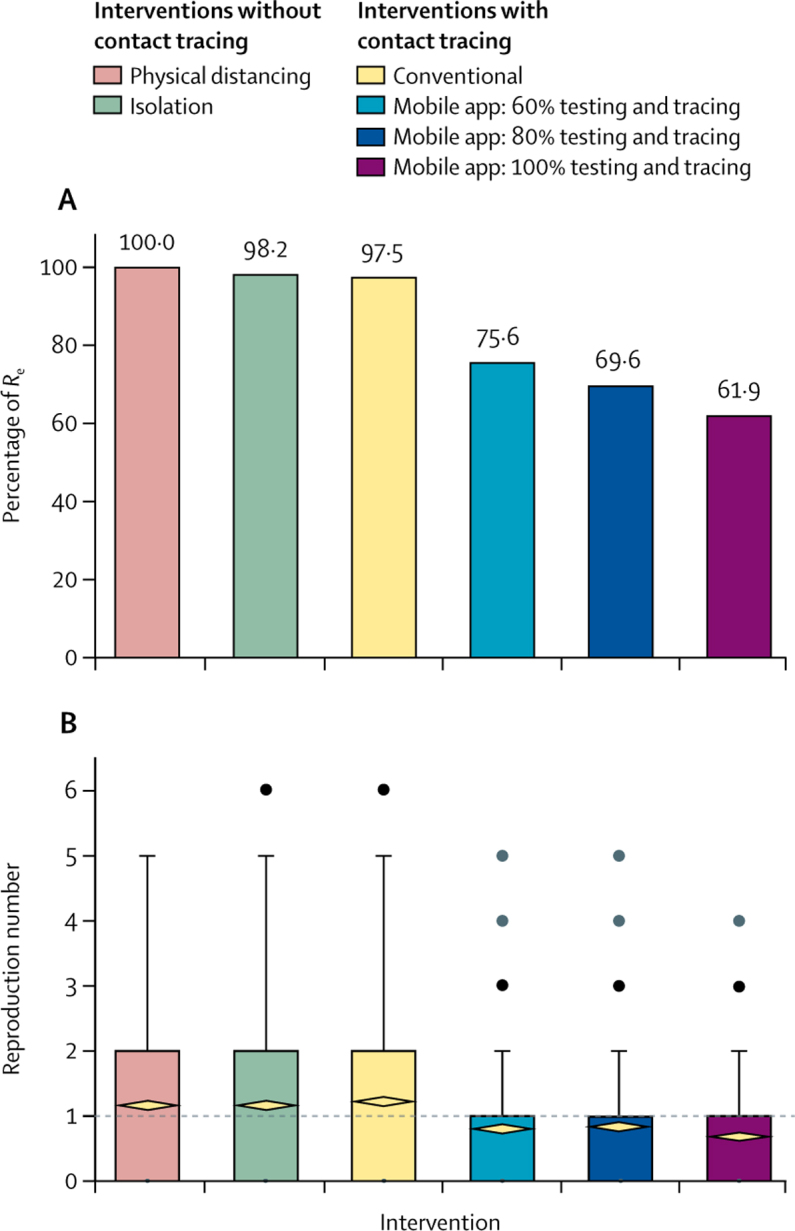
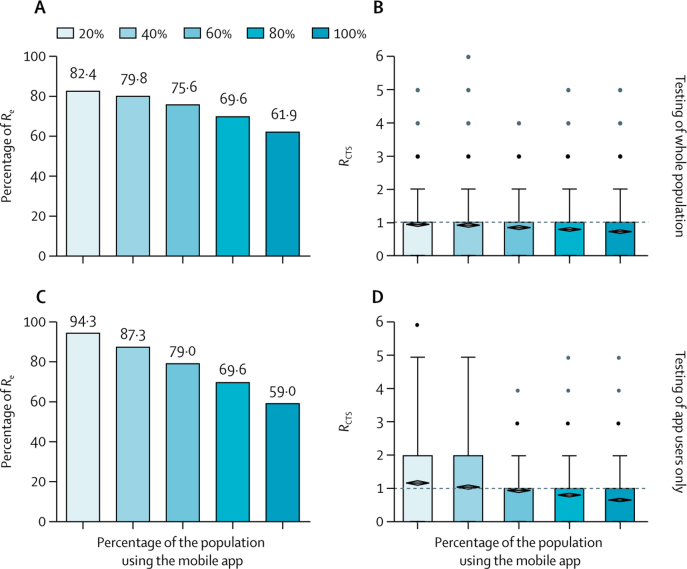
Background In countries with declining numbers of confirmed cases of COVID-19, lockdown measures are gradually being lifted. However, even if most physical distancing measures are continued, other public health measures will be needed to control the epidemic. Contact tracing via conventional methods or mobile app technology is central to control strategies during de-escalation of physical distancing. We aimed to identify key factors for a contact tracing strategy to be successful. Methods We evaluated the impact of timeliness and completeness in various steps of a contact tracing strategy using a stochastic mathematical model with explicit time delays between time of infection and symptom onset, and between symptom onset, diagnosis by testing, and isolation (testing delay). The model also includes tracing of close contacts (eg, household members) and casual contacts, followed by testing regardless of symptoms and isolation if testing positive, with different tracing delays and coverages. We computed effective reproduction numbers of a contact tracing strategy ( R CTS ) for a population with physical distancing measures and various scenarios for isolation of index cases and tracing and quarantine of their contacts. Findings For the most optimistic scenario (testing and tracing delays of 0 days and tracing coverage of 100%), and assuming that around 40% of transmissions occur before symptom onset, the model predicts that the estimated effective reproduction number of 1·2 (with physical distancing only) will be reduced to 0·8 (95% CI 0·7–0·9) by adding contact tracing. The model also shows that a similar reduction can be achieved when testing and tracing coverage is reduced to 80% ( R CTS 0·8, 95% CI 0·7–1·0). A testing delay of more than 1 day requires the tracing delay to be at most 1 day or tracing coverage to be at least 80% to keep R CTS below 1. With a testing delay of 3 days or longer, even the most efficient strategy cannot reach R CTS values below 1. The effect of minimising tracing delay (eg, with app-based technology) declines with decreasing coverage of app use, but app-based tracing alone remains more effective than conventional tracing alone even with 20% coverage, reducing the reproduction number by 17·6% compared with 2·5%. The proportion of onward transmissions per index case that can be prevented depends on testing and tracing delays, and given a 0-day tracing delay, ranges from up to 79·9% with a 0-day testing delay to 41·8% with a 3-day testing delay and 4·9% with a 7-day testing delay. Interpretation In our model, minimising testing delay had the largest impact on reducing onward transmissions. Optimising testing and tracing coverage and minimising tracing delays, for instance with app-based technology, further enhanced contact tracing effectiveness, with the potential to prevent up to 80% of all transmissions. Access to testing should therefore be optimised, and mobile app technology might reduce delays in the contact tracing process and optimise contact tracing coverage. Funding ZonMw, Fundação para a Ciência e a Tecnologia, and EU Horizon 2020 RECOVER.
Overview
The claims and statistics of this paper haven’t been checked yet.
Free: it reads the open-access text and checks the first 5 claims that cite a source we can check. Create a free account to check every claim.
Integrity signals
Registry
Cites
Statistics
Figures
Verification
Claims the paper makes
The claims and statistics of this paper haven’t been checked yet.
Free: it reads the open-access text and checks the first 5 claims that cite a source we can check. Create a free account to check every claim.
Self-check
Percentages, sums and reported differences re-computed from the paper’s own numbers.
The self-check needs the paper’s full text.
Citations
Cites
Chen, N., Zhou, M., Dong, X., Qu, J., Gong, F., Han, Y., Qiu, Y., Wang, J., Liu, Y., Wei, Y., et al. (2020) · The Lancet · doi:10.1016/s0140-6736(20)30211-7 · Cited by 21,415
Wang, D., Hu, B., Hu, C., Zhu, F., Liu, X., Zhang, J., Wang, B., Xiang, H., Cheng, Z., Xiong, Y., et al. (2020) · JAMA · doi:10.1001/jama.2020.1585 · Cited by 20,148
La certeza de lo impredecible: Cultura Educación y Sociedad en tiempos de COVID19
Martínez González, M. (2020) · DSPACE System - Metalibrary (University of the Coast) · Cited by 18,463
Martínez–González, M. B. (2020) · DSPACE System - Metalibrary (University of the Coast) · Cited by 18,294
Chan, J. F.-W., Yuan, S., Kok, K.-H., To, K. K.-W., Chu, H., Yang, J., Xing, F., Liu, J., Yip, C. C.-Y., Poon, R. W.-S., et al. (2020) · The Lancet · doi:10.1016/s0140-6736(20)30154-9 · Cited by 8,944
Temporal dynamics in viral shedding and transmissibility of COVID-19
He, X., Lau, E. H. Y., Wu, P., Deng, X., Wang, J., Hao, X., Lau, Y. C., Wong, J. Y., Guan, Y., Tan, X., et al. (2020) · Nature Medicine · doi:10.1038/s41591-020-0869-5 · Cited by 4,247
Social Contacts and Mixing Patterns Relevant to the Spread of Infectious Diseases
Mossong, J., Hens, N., Jit, M., Beutels, P., Auranen, K., Mikolajczyk, R., Massari, M., Salmaso, S., Tomba, G. S., Wallinga, J., et al. (2008) · PLoS Medicine · doi:10.1371/journal.pmed.0050074 · Cited by 2,900
Feasibility of controlling COVID-19 outbreaks by isolation of cases and contacts
Hellewell, J., Abbott, S., Gimma, A., Bosse, N. I., Jarvis, C. I., Russell, T. W., Munday, J. D., Kucharski, A. J., Edmunds, W. J., Sun, F., et al. (2020) · The Lancet Global Health · doi:10.1016/s2214-109x(20)30074-7 · Cited by 2,550
Quantifying SARS-CoV-2 transmission suggests epidemic control with digital contact tracing
Ferretti, L., Wymant, C., Kendall, M., Zhao, L., Nurtay, A., Abeler-Dörner, L., Parker, M., Bonsall, D., & Fraser, C. (2020) · Science · doi:10.1126/science.abb6936 · Cited by 2,512
Prevalence of Asymptomatic SARS-CoV-2 Infection: A Narrative Review
Oran, D. P., & Topol, E. J. (2020) · Annals of Internal Medicine · doi:10.7326/m20-3012 · Cited by 2,279
Cited by
Items 401–500 of 683
Exploring a COVID‐19 Endemic Scenario: High‐Resolution Agent‐Based Modeling of Multiple Variants
Truszkowska, A., Zino, L., Butail, S., Caroppo, E., Jiang, Z., Rizzo, A., & Porfiri, M. (2022) · Advanced Theory and Simulations · doi:10.1002/adts.202200481 · Cited by 8
Helms, Y. B., Stein, M. L., Hamdiui, N., van der Meer, A., Baron, R., Eilers, R., Crutzen, R., Kretzschmar, M., & Timen, A. (2022) · BMC Health Services Research · doi:10.1186/s12913-022-08764-y · Cited by 5
“, indoors/outdoors, at home or at a restaurant) [4, 12].”
BackgroundSelf-citationEstimation of the Branching Factor in Noisy Networks
Li, W., Sussman, D. L., & Kolaczyk, E. D. (2022) · IEEE Transactions on Network Science and Engineering · doi:10.1109/tnse.2022.3217463 · Cited by 5
“Contact tracing, and the contact networks that result, currently are playing a central role in the fight to control COVID-19 globally (especially in conjunction with testing) [17], [18], [19].”
BackgroundVisual Analytics Platform for Centralized COVID-19 Digital Contact Tracing
Olaizola, I. G., Bruse, J. L., Odriozola, J. C., Artetxe, A., Velásquez, D., Quartulli, M., & Posada, J. (2022) · IEEE Computer Graphics and Applications · doi:10.1109/mcg.2022.3230328 · Cited by 6
Optimizing the order of actions in a model of contact tracing
Meister, M., & Kleinberg, J. M. (2023) · PNAS Nexus · doi:10.1093/pnasnexus/pgad003 · Cited by 12
Delayed Model for the Transmission and Control of COVID-19 with Fangcang Shelter Hospitals
Fan, G., Li, J., Bélair, J., & Zhu, H. (2023) · SIAM Journal on Applied Mathematics · doi:10.1137/21m146154x · Cited by 5
A time-delay SEAIR model for COVID-19 spread
Barman, M., & Mishra, N. (2020) · IEEE Conference on Information and Communication Technology (CICT) · doi:10.1109/cict51604.2020.9312111 · Cited by 5
Transmission dynamics of novel Coronavirus–SARS-CoV-2 in South Sumatera, Indonesia
Sitorus, R. J., Wathan, I., Ridwan, H., Wibisono, H., Nuraini, L., Yusri, Kosim, G., Nurdin, N., Mamat, H., Andrayani, I., et al. (2021) · Clinical Epidemiology and Global Health · doi:10.1016/j.cegh.2021.100777 · Cited by 5
A Case Study of Bluetooth Technology as a Supplemental Tool in Contact Tracing
Admiraal, R., Millen, J., Patel, A., & Chambers, T. J. (2022) · Journal of Healthcare Informatics Research · doi:10.1007/s41666-021-00112-9 · Cited by 6
“Several simulation studies have examined the effectiveness of ACT based on adoption rates [10, 11], with one finding that an adoption rate as low as 20% of the population could still result in ACT being more effective than traditional contact tracing, largely due to the speed with which contact tracing can be performe…”
BackgroundMethodMiyama, T., Kakimoto, K., Iritani, N., & Motomura, K. (2022) · IJID Regions · doi:10.1016/j.ijregi.2022.06.002 · Cited by 6
Borsboom, D., Blanken, T. F., Dablander, F., Tanis, C. C., van Harreveld, F., & Mieghem, P. V. (2022) · Journal of Behavioral Data Science · doi:10.35566/jbds/v2n1/p1 · Cited by 5
Campos, M., Sempere, J. M., Galán, J. C., Moyá, A., Lloréns, C., de-los-Angeles, C., Baquero‐Artigao, F., Cantón, R., & Baquero, F. (2021) · microLife · doi:10.1093/femsml/uqab011 · Cited by 6
Stuart, R., Abeysuriya, R., Kerr, C. C., Mistry, D., Klein, D. J., Gray, R. T., Hellard, M. E., & Scott, N. (2020) · medRxiv · doi:10.1101/2020.09.02.20186742 · Cited by 5
“Evidence from numerous other settings has shown that as long as the population remains susceptible to COVID-19 infection, reopening society is likely to lead to new epidemic waves unless a welloperating test-and-trace strategy is in place [5], [17]–[19].”
BackgroundMaloney, M. J., Rhodes, N. J., & Yarnold, P. R. (2020) · medRxiv · doi:10.1101/2020.10.06.20208033 · Cited by 5
“Others have argued, early 275 in the pandemic, that rapid and comprehensive contact tracing will empower understanding of the 276 situations and the processes underlying new COVID-19 infections.(56) As is the case in fighting a wildfire, 277”
BackgroundDecoding China’s COVID-19 ‘Virus Exceptionalism’: Community-based Digital Contact Tracing in WuhanPreprint
Boeing, P., & Wang, Y. (2021) · SSRN Electronic Journal · doi:10.2139/ssrn.3820476 · Cited by 5
Raymenants, J., Geenen, C., Thibaut, J., Gorissen, S., & Nelissen, K. (2021) · Research Square · doi:10.21203/rs.3.pex-1666/v1 · Cited by 5
Gorjian, M. (2025) · Preprints.org · doi:10.20944/preprints202508.0523.v1 · Cited by 5
Teng, Y., & Song, Y. X. (2022) · Frontiers in Digital Health · doi:10.3389/fdgth.2022.916809 · Cited by 8
“This means that other supplement tools for tracing are needed in order to make the overall strategy useful (3).”
BackgroundA blueprint for effective pandemic mitigation
Shroff, N. B., Lin, Z., Dong, X., Liu, F., Ren, W., & Singh, R. (2020) · ITU Journal on Future and Evolving Technologies · doi:10.52953/mjuy7335 · Cited by 4
“For a recent survey of works on contact tracing and privacy-aware contact tracing, see [9, 11, 10, 23, 24, 28, 7, 19].”
BackgroundSimone, E. D., & Mourão, P. R. (2021) · Open Economics · doi:10.1515/openec-2020-0116 · Cited by 4
Syundyukov, E., Mednis, M., Zaharenko, L., Pildegovica, E., Danovska, I., Kistkins, S., Seidmann, A. A., Benis, A., Pīrāgs, V., & Tzivian, L. (2021) · Vaccines · doi:10.3390/vaccines9121384 · Cited by 4
“The use of digital technology is still not sufficient to strengthen pandemic management and preparedness for possible future disease outbreaks [33,34].”
BackgroundBandyopadhyay, A., Schips, M., Mitra, T., Khailaie, S., Binder, S. C., & Meyer‐Hermann, M. (2022) · Communications Medicine · doi:10.1038/s43856-022-00139-y · Cited by 4
Lucien, M. A. B., Pierre, K., Jean-Denis, G., Rigodon, J., Worrell, C. M., Couture, A., Flynn, A., Cerpa, M., Codina, L. F., Vicari, A. S., et al. (2022) · PLoS ONE · doi:10.1371/journal.pone.0274760 · Cited by 4
Cevasco, K. E., & Roess, A. (2023) · JMIR Public Health and Surveillance · doi:10.2196/38633 · Cited by 5
“A model developed to predict the impact of conventional and mobile DCT apps on the SARS-CoV-2 pandemic estimated that the disease transmission rate could be reduced by adding either contact tracers or effective widely used DCT apps (eg, Bluetooth, GPS) [3].”
Marmor, Y., Abbey, A., D, Y. S. M., & Mokryn, O. (2023) · Scientific Reports · doi:10.1038/s41598-023-39817-9 · Cited by 8
Haar, W. T., Bosdriesz, J. R., Venekamp, R. P., Schuit, E., van den Hof, S., Ebbers, W. E., Kretzschmar, M., Kluijtmans, J., Moons, C. G. M., van der Loeff, M. F. S., et al. (2023) · PLOS Digital Health · doi:10.1371/journal.pdig.0000396 · Cited by 7
Self-citationMaltsev, A. V., & Stern, M. D. (2021) · Frontiers in Physics · doi:10.3389/fphy.2020.609224 · Cited by 4
“of contact tracing assumed, based on data from the Netherlands, that the distribution of number of personal contacts outside the family is distributed as a negative binomial and used this to generate random changes to infection levels at 1-day intervals [18].”
O’Donovan, R., Buckley, C. M., Crowley, P., Fulham-McQuillan, H., Gilmore, B., Martin, J., McAuliffe, É., Moore, G., Nicholson, E., Shé, É. N., et al. (2021) · HRB Open Research · doi:10.12688/hrbopenres.13236.2 · Cited by 4
Leber, W., Lammel, O., Redlberger‐Fritz, M., Mustafa-Korninger, M. E., Glehr, R. C., Camp, J. V., Agerer, B., Lercher, A., Popa, A., Genger, J., et al. (2021) · BMJ Open · doi:10.1136/bmjopen-2020-045225 · Cited by 6
Decision analysis support for evaluating transmission risk of COVID-19 in places where people gather
Hongoh, V., Maybury, D. W., Levesque, J., Fazil, A., Otten, A., Turgeon, P., Waddell, L. A., & Ogden, N. H. (2021) · Canada Communicable Disease Report · doi:10.14745/ccdr.v47i11a02 · Cited by 5
Urban analytics: History, trajectory and critique
Boeing, G., Batty, M., Jiang, S., & Schweitzer, L. (2022) · Edward Elgar Publishing eBooks · doi:10.4337/9781789903942.00039 · Cited by 11
Finch, L. S., Harris, A., Lester, C., Veal, D., Jones, K. M., Fulton, J., Jones, L., Lee, M., Walker, T., Rossiter, M., et al. (2021) · Journal of Infection · doi:10.1016/j.jinf.2021.12.037 · Cited by 4
“With reports of turnaround times of up to 72 hours [4] impeding”
BackgroundLessons Learned in Piloting a Digital Personalized COVID-19 “Radar” on a University Campus
Loh, P., Bershteyn, A., & Yee, S. K. (2022) · Public Health Reports · doi:10.1177/00333549221112532 · Cited by 4
Clinical accuracy of SARS-CoV-2 rapid antigen testing in screening children and adolescents
Krone, M., Wagenhäuser, I., Knies, K., Hofmann, D., Engels, G., Taurines, R., McDonogh, M., Flemming, S., Meyer, T., Böhm, H., et al. (2022) · Journal of Infection · doi:10.1016/j.jinf.2022.12.017 · Cited by 4
“The earliest possible detection of SARS-CoV-2 infected individuals is the central pillar of a hospital’s screening strategy avoiding nosocomial outbreaks of SARS-CoV-2 infections and transmission clusters.(1,2)”
BackgroundWulandari, R., & Hidayanto, A. N. (2023) · Quality & Quantity · doi:10.1007/s11135-023-01695-8 · Cited by 4
“Mobile app-based digital contact tracing is more effective due to the speed and scale of its coverage (Kretzschmar et al. 2020).”
Weligampola, H., Ramanayake, L., Ranasinghe, Y., Ilangarathna, G. A., Senarath, N., Samarakoon, B., Godaliyadda, R. I., Herath, V. R., Ekanayake, P., Ekanayake, J. B., et al. (2023) · Sustainability · doi:10.3390/su151411120 · Cited by 6
Molecular Diagnosis of COVID-19; Biosafety and Pre-analytical Recommendations
Vasei, M., Jafari, E., Azad, V. F., Safavi, M., & Anvari, M. S. (2023) · Iranian journal of pathology · doi:10.30699/ijp.2023.1988405.3061 · Cited by 4
“Modeling in these studies has shown that reducing testing delays has the highest impact on reducing subsequent transfers and optimizing testing coverage (33, 34).”
BackgroundCOVID-19 in a Rural Community: Outbreak Dynamics, Contact Tracing and Environmental RNAPreprint
de Mera, I. G. F., del Río, F. J. R., de la Fuente, J., Sancho, M. P., Hervás, D., Moreno, I., Domínguez, M., Domínguez, L., & Gortázar, C. (2020) · Preprints.org · doi:10.20944/preprints202005.0450.v1 · Cited by 5
Understanding How Socioeconomic Inequalities Drive Inequalities in SARS-CoV-2 InfectionsPreprint
Laajaj, R., Webb, D., Aristizábal, D., Behrentz, E., Bernal, R., Buitrago, G., Cucunubá, Z. M., de la Hoz, F., Uribe, A. G., Hernandéz, L. J., et al. (2021) · SSRN Electronic Journal · doi:10.2139/ssrn.3841746 · Cited by 7
COVID-19: Optimal Allocation of Ventilator Supply Under Uncertainty and RiskPreprint
Yin, X., Büyüktahtakın, İ. E., & Patel, B. (2021) · SSRN Electronic Journal · doi:10.2139/ssrn.3801183 · Cited by 6
Hassan, H., Elsood, H. A., AbdElGawad, B., Kamel, R., Fahim, M., Shourbagy, S. E., Showky, S., Mohsen, A., Afifi, S., & Eid, A. (2022) · BMJ Global Health · doi:10.1136/bmjgh-2022-008681 · Cited by 5
Western Journal Of Emergency Medicine
Saucedo, C., & Lam, J. (2022) · Western Journal of Emergency Medicine · doi:10.5811/westjem.2022.9.58952 · Cited by 4
Jeon, Y. L., Lee, S. G., Lee, E. H., Song, S., Lee, O., Go, U. Y., Chun, G., Choi, H. M., & Choi, J. Y. (2023) · BMC Infectious Diseases · doi:10.1186/s12879-023-08684-0 · Cited by 3
“Especially during the pandemic, clinical laboratories had to expand their testing capacities for massive screening and rapid reporting of accurate results [23].”
BackgroundA machine learning model for automated contact tracing during disease outbreaks
Aklah, Z. T., Al-Safi, A., Ali, M. A. R. L., & Al-jabery, K. K. (2025) · Healthcare Analytics · doi:10.1016/j.health.2025.100389 · Cited by 4
Zhou, Y. L., Zhang, S., & Li, C. (2025) · Building and Environment · doi:10.1016/j.buildenv.2025.112854 · Cited by 4
Reimagining Wearable-Based Digital Contact Tracing: Insights from Kenya and Côte d'Ivoire
Niksirat, K. S., Munyendo, C. W., Leal-Neto, O. B., Katya, M., Kouassi, C. N., Ochieng, K., Angoa, G., Olayo, B., Barras, J.-P., Cattuto, C., et al. (2025) · CHI Conference on Human Factors in Computing Systems · doi:10.1145/3706598.3713817 · Cited by 6
Aber, R., Di, Y., & Dalziel, B. D. (2025) · PLoS Computational Biology · doi:10.1371/journal.pcbi.1012882 · Cited by 3
Impact of vaccination behavior on COVID-19 dynamics and economic outcomes
Alsammani, A., Ngonghala, C. N., & Martcheva, M. (2025) · Mathematical Biosciences & Engineering · doi:10.3934/mbe.2025084 · Cited by 7
Kamei, Y., Tanabe, W., Ichikawa, M., & Okumura, T. (2025) · Informatics in Medicine Unlocked · doi:10.1016/j.imu.2025.101694 · Cited by 3
Weaver, S., Byrne, S., Bruce, H., Vargas, O., & Robey, T. E. (2022) · Western Journal of Emergency Medicine · doi:10.5811/westjem.2022.5.53196 · Cited by 3
“Western Journal of Emergency Medicine: Integrating Emergency Care with Population Health, 23(5)”
Johnston, J. C., Strain, K.-L., Dribnenki, C., & Devolin, M. (2022) · Canadian Journal of Public Health · doi:10.17269/s41997-021-00604-6 · Cited by 3
Lanzarotti, E., Santi, L., Castro, R., Roslan, F., & Groisman, L. (2021) · Winter Simulation Conference · doi:10.1109/wsc52266.2021.9715445 · Cited by 5
“…delay from symptom onset to isolation, the probability of tracing contacts, the proportion of transmission that occurred before symptom onset, etc. Kretzschmar et al. (2020) assessed intervention strategies with another stochastic model highlighting the importance of testing and tracing delays to…”
BackgroundThakur, N., VOGT, F. M., Satyanarayana, S., Nair, D., Garu, K., Subedee, K. C., Mandal, S. K., Pokhrel, A., Gautam, D., & Paudel, K. P. (2022) · Tropical Medicine and Infectious Disease · doi:10.3390/tropicalmed7060098 · Cited by 3
Barnes-Josiah, D. L., Kundeti, H., & Cramer, D. W. (2022) · Journal of Public Health Management and Practice · doi:10.1097/phh.0000000000001622 · Cited by 3
“and efficient identification of contacts can mitigate the spread of disease through swift implementation of quarantine.(2,3) However, results are dependent on infected persons’ willingness to be interviewed and to identify people they may have exposed.”
BackgroundDetection of COVID-19-Affected Persons Using Convolutional Neural Network from X-Rays’ Images
Kirar, B. S., Tilwankar, S. S., Paliwal, A., Sharma, D., & Agrawal, D. (2023) · Lecture notes in electrical engineering · doi:10.1007/978-981-99-0085-5_60 · Cited by 3
Heaton, D., Nichele, E., Clos, J., & Fischer, J. E. (2023) · SN Social Sciences · doi:10.1007/s43545-023-00740-5 · Cited by 4
“This impacted the lives of several Brits due to backwards incompatibility, incorrect alerts and false positive tests (Kretzschmar et al. 2020), which meant that users had to self-isolate even when test results were incorrect, impacting income and well-being (Kent 2020).”
BackgroundDeng, Y., He, D., & Zhao, Y. (2024) · Applied Mathematical Modelling · doi:10.1016/j.apm.2024.05.018 · Cited by 3
Isiaka, S. D., Awobeku, D., Jimoh, A. U., Dauda, M., Samuel, O. W., Asaolu, S. O., Ayodeji, O., Atobatele, S., Adenipekun, S., Okoh, C., et al. (2025) · BMC Health Services Research · doi:10.1186/s12913-025-12319-2 · Cited by 4
Lessons for future outbreaks from successful contact tracing systems in Asia
Tan, J. W., Oshitani, H., Lam, P. K., Jitpeera, C., Luca Ferretti, A., & Cook, A. R. (2025) · The Lancet Regional Health - Western Pacific · doi:10.1016/j.lanwpc.2025.101563 · Cited by 3
Review of human behavior integration in COVID-19 modeling studies
Lee, H., Mahmoudi, H., Chang, D., & Jalali, M. S. (2025) · Journal of Public Health · doi:10.1093/pubmed/fdaf082 · Cited by 7
Zavascki, A. P. (2021) · Epidemiology and Infection · doi:10.1017/s0950268821000170 · Cited by 3
“This delay hinders adherence to self-isolation practices and the implementation of public-health measures to avoid transmission to close contacts [2].”
BackgroundAssociation between climate and new daily diagnoses of COVID-19
Mattiuzzi, C., Henry, B. M., Sanchis‐Gomar, F., & Lippi, G. (2020) · Journal of Hospital Management and Health Policy · doi:10.21037/jhmhp-20-147 · Cited by 3
Impact of COVID-19 contact tracing on human resources for health – A Caribbean perspective
Sobers, N., Howitt, C., Jeyaseelan, S. M., GREAVES, N. S., Harewood, H. C., Murphy, M. M., Quimby, K. R., & Hambleton, I. R. (2021) · Preventive Medicine Reports · doi:10.1016/j.pmedr.2021.101367 · Cited by 3
“4 proximity tools, although modelled estimates indicate an increase in contacts traced when apps are used (Kretzschmar et al., 2020) more recent data based on observational data found no difference in the number of contacts traced per case when they compared manual and digital contact tracing.”
Mit Kontaktdaten gegen die Pandemie: Zur Ethik von Corona Warn-Apps
van Basshuysen, P., & White, L. (2021) · Ethik in der Medizin · doi:10.1007/s00481-021-00629-y · Cited by 3
Burrowes, V. J., Usoro, I.-A., & Campbell, L. (2021) · Journal of Occupational and Environmental Medicine · doi:10.1097/jom.0000000000002265 · Cited by 3
Design of an IoT Safety Distance Monitoring Device for COVID-19
Chan, C.-S., Pang, W. L., Chan, K., & Ng, A. S. T. (2022) · Lecture notes in electrical engineering · doi:10.1007/978-981-16-8515-6_21 · Cited by 6
Miikki, K., Miikki, L., Wiklund, J., & Karakoç, A. (2022) · BioMed · doi:10.3390/biomed2020018 · Cited by 3
“However, requirements for designated laboratories and equipment, specialized staff, and several hours of turnaround time for RT-PCR tests, in turn, may result in delayed diagnosis and quarantine of the infected individuals, which further causes spreading of the disease [22].”
BackgroundHeterogeneity in testing for infectious diseases
Berrig, C., Andreasen, V., & Nielsen, B. F. (2022) · Royal Society Open Science · doi:10.1098/rsos.220129 · Cited by 4
Safranek, C. W., & Scheinker, D. (2022) · Annals of Epidemiology · doi:10.1016/j.annepidem.2022.08.051 · Cited by 3
Administration, competencies and management in educational institutions in Colombia
Mena, S. C. M. (2022) · Sociology International Journal · doi:10.15406/sij.2022.06.00298 · Cited by 3
Global age-structured spatial modeling for emerging infectious diseases like COVID-19
Xiao, Y., Zhou, J., Cheng, Q., Yang, J., Чэн, Б., Zhang, T., Xu, L., Xu, B., Ren, Z., Liu, Z., et al. (2023) · PNAS Nexus · doi:10.1093/pnasnexus/pgad127 · Cited by 4
Pasquale, D. K., Welsh, W. E., Olson, A., Yacoub, M. N., Moody, J. W., Gomez, B. A. B., Bentley‐Edwards, K. L., McCall, J., Solis-Guzman, M. L., Dunn, J., et al. (2023) · Journal of Public Health Management and Practice · doi:10.1097/phh.0000000000001780 · Cited by 3
Fischl, M. J., Young, J., Kardos, K. W., Roehler, M., Miller, T. A., Wooten, M., Holmes, N., Gula, N., Baglivo, M., Steen, J. T., et al. (2023) · Viruses · doi:10.3390/v16010061 · Cited by 3
“Timely detection of SARS-CoV-2 infection with subsequent contact tracing and rapid isolation are considered critical to containing the pandemic [1,2].”
BackgroundAre fast test results preferable to high test sensitivity in contact-tracing strategies?
Boilesen, M. R., Græsbøll, K., & Juul, J. L. (2026) · PLOS complex systems. · doi:10.1371/journal.pcsy.0000134 · Cited by 3
Passive surveillance assesses compliance with COVID-19 behavioural restrictions in a rural US county
Faust, C. L., Lambert, B. W., Kochenour, C., Robinson, A. C., & Bharti, N. (2021) · Epidemiology and Infection · doi:10.1017/s0950268821002107 · Cited by 3
Garcia-Cardenas, F., Franco, A., Cortés, R., Bertin, J., Valdéz, R., Peñaloza, F., Frías-Jiménez, E., Cedro‐Tanda, A., Mendoza-Vargas, A., Reyes‐Grajeda, J. P., et al. (2022) · Pathogens · doi:10.3390/pathogens11060628 · Cited by 3
“Swift detection of SARSCoV-2 infection is paramount for the containment of cases, for the prevention of sustained contagion, for the return to economic and education activities, and most importantly, for the reduction of mortality [3,4].”
BackgroundWestfall, M., Forster, M., Golston, O., Taylor, K., White, K., Reid, M. J. A., Dorian, A., Prelip, M. L., & Shafir, S. (2022) · Frontiers in Public Health · doi:10.3389/fpubh.2022.857674 · Cited by 3
Huang, Z., Guo, H., Lim, H. Y.-F., Ho, K. N., Tay, E., & Chow, A. L. (2022) · Scientific Reports · doi:10.1038/s41598-022-16820-0 · Cited by 4
“Contact tracing is essential in identifying the close contacts of a person with a communicable disease, but conventional methods can be laborious, time-consuming, and subject to recall biases(3).”
BackgroundHaltaufderheide, J., Viero, D., & Krämer, D. (2023) · Journal of Medical Internet Research · doi:10.2196/45112 · Cited by 3
“They have been advocated as a means to support and improve pandemic containment strategies [3-5], to allow individuals to become involved in attempts to decrease infection rates [5,6], and to protect populations from the adverse effects of COVID-19 [7,8].”
Designing Efficient Contact Tracing Through Risk-Based QuarantiningPreprint
Perrault, A., Charpignon, M., B, J. G. A., Tambe, M., & Majumder, M. S. (2020) · medRxiv · doi:10.1101/2020.11.16.20227389 · Cited by 3
“In this paper, we evaluate the potential of RBQ using an agent-based branching process model of SARS-CoV-2 transmission (Kretzschmar et al. 2020; Okolie and Müller 2020; Klinkenberg, Fraser, and Heesterbeek 2006).”
Liang, C., Lyu, T., Weissman, S., Daering, N., Olatosi, B., Hikmet, N., & Li, X. (2023) · Research Square · doi:10.21203/rs.3.rs-3213502/v1 · Cited by 3
Djurić, O., Larosa, E., Cassinadri, M., Cilloni, S., Bisaccia, E., Pepe, D., Bonvicini, L., Vicentini, M., Venturelli, F., Rossi, P. G., et al. (2024) · eLife · doi:10.7554/elife.85802 · Cited by 2
An SEIR network epidemic model with manual and digital contact tracing allowing delays
Zhang, D., & Britton, T. (2024) · Mathematical Biosciences · doi:10.1016/j.mbs.2024.109231 · Cited by 2
“There have been studies of modelling conventional contact tracing [5, 6, 17] and digital tracing [10, 15].”
BackgroundMethodInfluentialHow sudden public events shape firm digital transformation: evidence from Chinese listed firms
Shan, W., Shi, R., & Wang, Q. (2025) · Business Process Management Journal · doi:10.1108/bpmj-10-2024-0907 · Cited by 2
Reconstructing COVID-19 Infection Networks: A Link Prediction Approach to Connecting Orphan Cases
Dimitriou, P. A., Silvestros, V., Constantinou, E., Pitris, C., & Kolios, P. (2026) · Studies in computational intelligence · doi:10.1007/978-3-032-16649-4_3 · Cited by 2
Segura-Ulate, I., Bolívar-González, A., Redondo, G. M., Núñez-Corrales, S., & Gatica-Arias, A. (2022) · Revista de Biología Tropical · doi:10.15517/rev.biol.trop..v70i1.47407 · Cited by 3
“This time is critical for contact tracing to identify potentially exposed individuals and extend the search promptly; simulation results suggest that performing the testing-contact tracing cycle within the same day can significantly reduce the effective reproductive number regardless of contact tracing technology (Kre…”
BackgroundTime Scales in Disease Transmission Dynamics
Andreasen, V. (2023) · Mathematics online first collections · doi:10.1007/16618_2023_78 · Cited by 2
Predictors of later COVID-19 test seeking
Ga’al, A., Kapsack, A., Mahmud, A., Estrada-Codecido, J., Lam, P. W., Chan, A. K., Andany, N., Simor, A. E., Kiss, A., & Daneman, N. (2023) · Journal of the Association of Medical Microbiology and Infectious Disease Canada · doi:10.3138/jammi-2023-0007 · Cited by 3
Verrelli, C. M., & Rossa, F. D. (2024) · Mathematics · doi:10.3390/math12060825 · Cited by 2
Gazeley, J., Lee, T., Knight, D. R., Shivarev, A., Gordon, C., Speers, D. J., Barth, D. D., Maticevic, J., Hodge, M. M., Armstrong, P., et al. (2024) · Environments · doi:10.3390/environments11040062 · Cited by 2
Pandemic lessons from Hong Kong
Su, Z., Zhang, R., Kudiza, A., Kaburu, F. M., Tong, C., Liu, Y., Jiang, J., Xin, Y., Kuang, Q., Chen, R., et al. (2024) · Discover Public Health · doi:10.1186/s12982-024-00305-8 · Cited by 3
Testing for SARS-CoV-2 infection: a key strategy to keeping schools and universities open
Koirala, A., Wood, N., & Macartney, K. K. (2021) · The Lancet Child & Adolescent Health · doi:10.1016/s2352-4642(21)00087-0 · Cited by 2
Africa’s COVID-19 third wave: A coupled behavior-disease system in a mutual feedback loop
Kangbai, J. B., Sheku, M., Koroma, B. M., Macarthy, J. M., Kaitibi, D. B., Sahr, F., George, A. M., Gegbe, F., Cummings-Wray, D., & Babawo, L. S. (2021) · The Gazette of Medical Sciences · doi:10.46766/thegms.epidemiol.21101704 · Cited by 3
“Mathematical models backed by empirical analysis have also shown that physical distancing can mitigate COVID-19 transmission and control [7-9], and that such mitigating measures can actually reduce the reproduction number of COVID-19 to below one [10-12].”
BackgroundBalancing timeliness of reporting with increasing testing probability for epidemic data
Pritchard, A. J., Silk, M. J., Carrignon, S., Bentley, R. A., & Fefferman, N. H. (2022) · Infectious Disease Modelling · doi:10.1016/j.idm.2022.04.001 · Cited by 4
“Test-trace-and-isolate policies have been suggested to be effective when implemented with rapid testing regimes (Kretzschmar et al., 2020), but the success of such regimes are, in part, benefited by self-isolation after positive testing.”
BackgroundUdeagu, C.-C. N., Pitiranggon, M., Misra, K., Huang, J. S., Terilli, T., Ramos, Y., Alexander, M., Kim, C., Lee, D., Blaney, K., et al. (2022) · JMIR Public Health and Surveillance · doi:10.2196/40977 · Cited by 2
“The core feature of an efficient and effective contact tracing program is timely case identification and investigation to elicit exposed contacts and ensure self-isolating of case-patients as well as the notification and quarantining of their contacts [11,12].”
BackgroundEstimation of self-exciting point processes from time-censored data
Schneider, P. J., & Weber, T. A. (2023) · Physical review. E · doi:10.1103/physreve.108.015303 · Cited by 2
Mevissen, F. E. F., van Deursen, B., Voeten, H. A. C. M., & Watzeels, A. (2023) · Journal of Public Health Research · doi:10.1177/22799036231208325 · Cited by 2
Urbano, V. M., Bartolomucci, F., & AZZONE, G. F. (2024) · Data & Policy · doi:10.1017/dap.2023.42 · Cited by 3
Lee, H.-W., Choi, H., Lee, H., Lee, S., & Kim, C. (2024) · Frontiers in Public Health · doi:10.3389/fpubh.2024.1362823 · Cited by 2
“There are several previous studies about the effectiveness of contact tracing strategies for COVID-19 (41, 42, 1).”
BackgroundMethodSmith, P. J., Little, F., Hermans, S., Davies, M., Wood, R., Orrell, C., Pike, C., Peters, F., Dube, A., Georgeu-Pepper, D., et al. (2024) · BMC Public Health · doi:10.1186/s12889-024-19462-1 · Cited by 3
“Delayed contact tracing, although still providing value in identifying ▴ values provided for HHCs where transmission was measured over four weeks of follow-up household infections and managing illness [15], has limited benefit in reducing onward transmission within households in these contexts [24].”
Background
Metadata
- Authors
- Kretzschmar, M. E., Rozhnova, G., Bootsma, M. C. J., van Boven, M., van de Wijgert, J. H. H. M., & Bonten, M. J. M.
- Affiliations
- Utrecht University (NL)
- University of Lisbon (PT)
- Corresponding author
- Kretzschmar, Mirjam E
- Venue
- The Lancet Public Health
- Publisher
- Elsevier BV
- Published
- 2020-08
- Volume
- 5
- Issue
- 8
- Pages
- e452-e459
- ISSN
- 2468-2667 (ISSN-L)
- PMC
- PMC7365652
- OpenAlex
- W3042453924
- Cited by
- 697
- References
- 37
- Citations by year
- 2026: 34 · 2025: 29 · 2024: 48 · 2023: 77 · 2022: 166 · 2021: 277 · 2020: 64
- FWCI
- 23.03
- Type
- journal article
- Language
- en
- Open access
- gold
- doi.org
- Licence
- cc-by-nc-nd
- www.elsevier.com/tdm/userlicense/1.0/ (tdm)
- www.elsevier.com/legal/tdmrep-license (tdm)
- creativecommons.org/licenses/by-nc-nd/4.0/ (vor)
- Locations
- The Lancet Public Health (publishedVersion, cc-by-nc-nd)
- medRxiv (acceptedVersion, cc-by-nc-nd)
- PubMed Central (publishedVersion, cc-by-nc-nd)
- PubMed (publishedVersion)
- DOAJ (DOAJ: Directory of Open Access Journals) (submittedVersion, cc-by-sa)
- Utrecht University Repository (Utrecht University) (submittedVersion, other-oa)
- Utrecht University Repository (Utrecht University) (submittedVersion, cc-by-nc-nd)
- Funders
- ZonMw (91216062, 10430022010001)
- Horizon 2020 (101003589, H2020-101003589)
- Fundação para a Ciência e a Tecnologia (131_596787873)
- Topics
- Physical Sciences › Mathematics › Modeling and Simulation › COVID-19 epidemiological studies
- Physical Sciences › Computer Science › Information Systems › COVID-19 Digital Contact Tracing
- Physical Sciences › Mathematics › Applied Mathematics › Mathematical and Theoretical Epidemiology and Ecology Models
- Keywords
- COVID-19 pandemic, contact tracing, effective reproduction number, social distancing, quarantine, isolation, pre-symptomatic transmission, stochastic epidemic model, epidemic control measures, household contacts, casual contact, SARS-CoV-2 transmission prevention
- MeSH terms
- COVID-19, COVID-19 Testing, Humans, Models, Theoretical, Pneumonia, Viral, Quarantine, Time Factors, Public Health Practice, Contact Tracing, Coronavirus Infections, Clinical Laboratory Techniques, Pandemics, Mobile Applications
About these checks
Registry, retraction, Cites and statistics results are computed, not judged, with one exception: a printed reference that no index lists is read once by a model before it counts as a citation error. Claims are extracted by a model and kept only when their quote appears verbatim in the text; each cited source is then checked, with a model’s help, for whether it says what the claim relies on. Those verdicts can be wrong — read the claim’s quote and the cited source before relying on one.
Statistics and arithmetic are recomputed, not judged.
Confidence bands are shown only for fields calibrated on our annotated test set. None is calibrated yet, so no band is shown.
What counts as a claim ›How we measure confidence ›How we check this ›
Are you an author, or do you see a problem with this page? Request a review
Data sources
Bibliographic data: Semantic Scholar, OpenAlex, Crossref.
Contains information from the Semantic Scholar Academic Graph Datasets, made available under the ODC Attribution License (ODC-BY 1.0).
Semantic Scholar’s data is described in: Kinney, R., et al. (2023). The Semantic Scholar Open Data Platform. arXiv:2301.10140.
