

Impact of delays on effectiveness of contact tracing strategies for COVID-19: a modelling study
Open accessPublished version of a preprint
The DOI matches its Crossref record; 38 of the 38 references it cites were found in a registry or an index.
Abstract
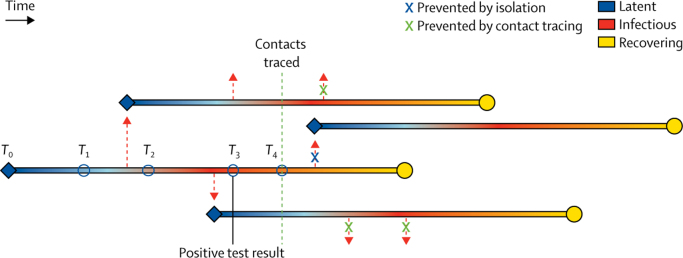
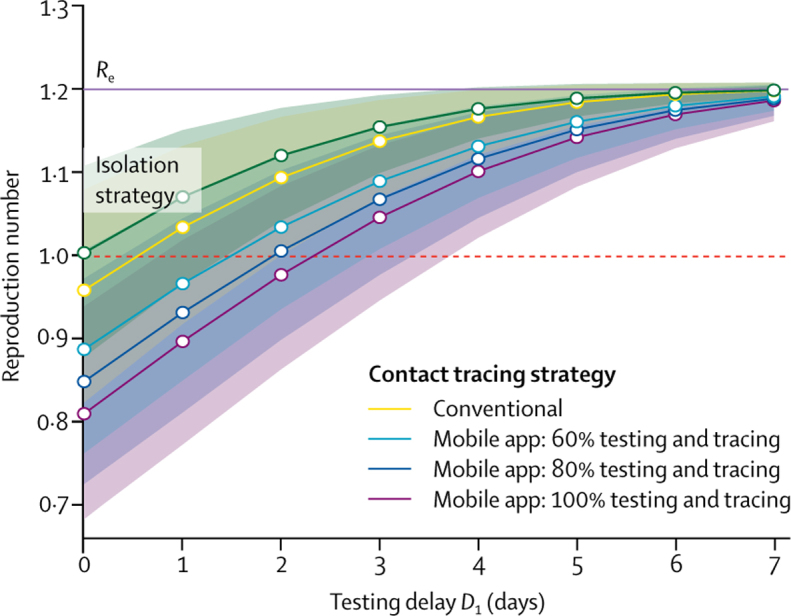
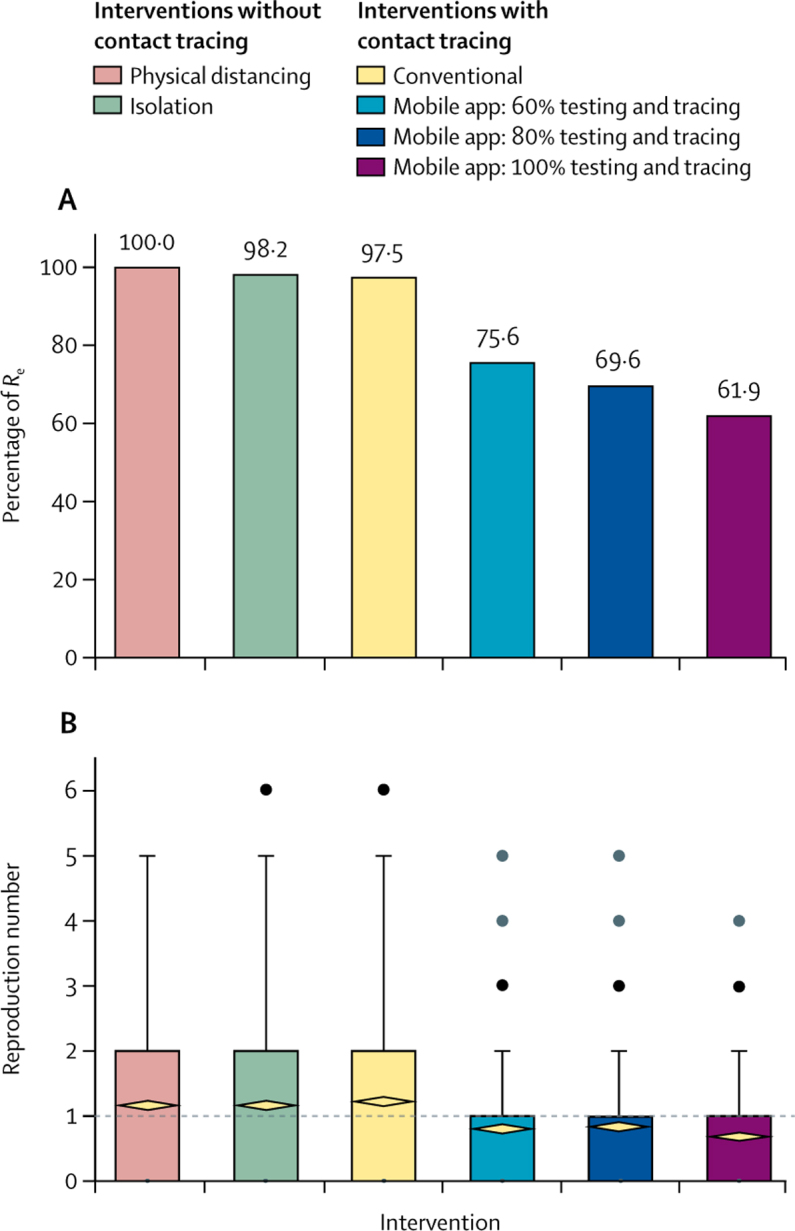
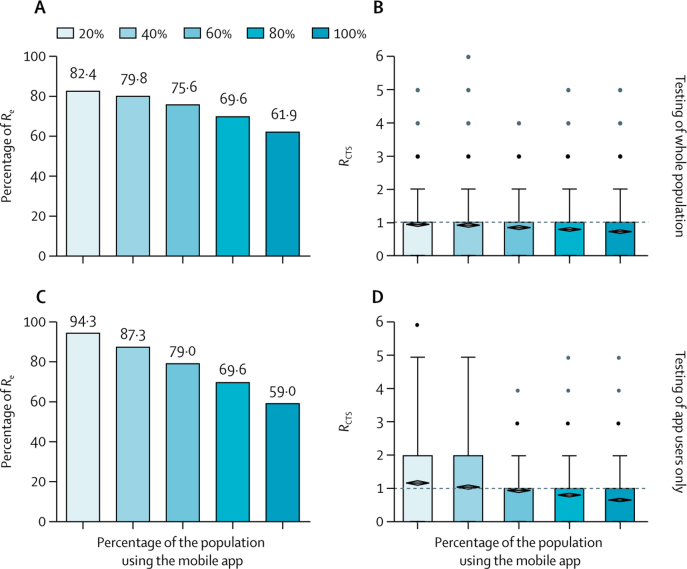
Background In countries with declining numbers of confirmed cases of COVID-19, lockdown measures are gradually being lifted. However, even if most physical distancing measures are continued, other public health measures will be needed to control the epidemic. Contact tracing via conventional methods or mobile app technology is central to control strategies during de-escalation of physical distancing. We aimed to identify key factors for a contact tracing strategy to be successful. Methods We evaluated the impact of timeliness and completeness in various steps of a contact tracing strategy using a stochastic mathematical model with explicit time delays between time of infection and symptom onset, and between symptom onset, diagnosis by testing, and isolation (testing delay). The model also includes tracing of close contacts (eg, household members) and casual contacts, followed by testing regardless of symptoms and isolation if testing positive, with different tracing delays and coverages. We computed effective reproduction numbers of a contact tracing strategy ( R CTS ) for a population with physical distancing measures and various scenarios for isolation of index cases and tracing and quarantine of their contacts. Findings For the most optimistic scenario (testing and tracing delays of 0 days and tracing coverage of 100%), and assuming that around 40% of transmissions occur before symptom onset, the model predicts that the estimated effective reproduction number of 1·2 (with physical distancing only) will be reduced to 0·8 (95% CI 0·7–0·9) by adding contact tracing. The model also shows that a similar reduction can be achieved when testing and tracing coverage is reduced to 80% ( R CTS 0·8, 95% CI 0·7–1·0). A testing delay of more than 1 day requires the tracing delay to be at most 1 day or tracing coverage to be at least 80% to keep R CTS below 1. With a testing delay of 3 days or longer, even the most efficient strategy cannot reach R CTS values below 1. The effect of minimising tracing delay (eg, with app-based technology) declines with decreasing coverage of app use, but app-based tracing alone remains more effective than conventional tracing alone even with 20% coverage, reducing the reproduction number by 17·6% compared with 2·5%. The proportion of onward transmissions per index case that can be prevented depends on testing and tracing delays, and given a 0-day tracing delay, ranges from up to 79·9% with a 0-day testing delay to 41·8% with a 3-day testing delay and 4·9% with a 7-day testing delay. Interpretation In our model, minimising testing delay had the largest impact on reducing onward transmissions. Optimising testing and tracing coverage and minimising tracing delays, for instance with app-based technology, further enhanced contact tracing effectiveness, with the potential to prevent up to 80% of all transmissions. Access to testing should therefore be optimised, and mobile app technology might reduce delays in the contact tracing process and optimise contact tracing coverage. Funding ZonMw, Fundação para a Ciência e a Tecnologia, and EU Horizon 2020 RECOVER.
Overview
The claims and statistics of this paper haven’t been checked yet.
Free: it reads the open-access text and checks the first 5 claims that cite a source we can check. Create a free account to check every claim.
Integrity signals
Registry
Cites
Statistics
Figures
Verification
Claims the paper makes
The claims and statistics of this paper haven’t been checked yet.
Free: it reads the open-access text and checks the first 5 claims that cite a source we can check. Create a free account to check every claim.
Self-check
Percentages, sums and reported differences re-computed from the paper’s own numbers.
The self-check needs the paper’s full text.
Citations
Cites
Chen, N., Zhou, M., Dong, X., Qu, J., Gong, F., Han, Y., Qiu, Y., Wang, J., Liu, Y., Wei, Y., et al. (2020) · The Lancet · doi:10.1016/s0140-6736(20)30211-7 · Cited by 21,415
Wang, D., Hu, B., Hu, C., Zhu, F., Liu, X., Zhang, J., Wang, B., Xiang, H., Cheng, Z., Xiong, Y., et al. (2020) · JAMA · doi:10.1001/jama.2020.1585 · Cited by 20,148
La certeza de lo impredecible: Cultura Educación y Sociedad en tiempos de COVID19
Martínez González, M. (2020) · DSPACE System - Metalibrary (University of the Coast) · Cited by 18,463
Martínez–González, M. B. (2020) · DSPACE System - Metalibrary (University of the Coast) · Cited by 18,294
Chan, J. F.-W., Yuan, S., Kok, K.-H., To, K. K.-W., Chu, H., Yang, J., Xing, F., Liu, J., Yip, C. C.-Y., Poon, R. W.-S., et al. (2020) · The Lancet · doi:10.1016/s0140-6736(20)30154-9 · Cited by 8,944
Temporal dynamics in viral shedding and transmissibility of COVID-19
He, X., Lau, E. H. Y., Wu, P., Deng, X., Wang, J., Hao, X., Lau, Y. C., Wong, J. Y., Guan, Y., Tan, X., et al. (2020) · Nature Medicine · doi:10.1038/s41591-020-0869-5 · Cited by 4,247
Social Contacts and Mixing Patterns Relevant to the Spread of Infectious Diseases
Mossong, J., Hens, N., Jit, M., Beutels, P., Auranen, K., Mikolajczyk, R., Massari, M., Salmaso, S., Tomba, G. S., Wallinga, J., et al. (2008) · PLoS Medicine · doi:10.1371/journal.pmed.0050074 · Cited by 2,900
Feasibility of controlling COVID-19 outbreaks by isolation of cases and contacts
Hellewell, J., Abbott, S., Gimma, A., Bosse, N. I., Jarvis, C. I., Russell, T. W., Munday, J. D., Kucharski, A. J., Edmunds, W. J., Sun, F., et al. (2020) · The Lancet Global Health · doi:10.1016/s2214-109x(20)30074-7 · Cited by 2,550
Quantifying SARS-CoV-2 transmission suggests epidemic control with digital contact tracing
Ferretti, L., Wymant, C., Kendall, M., Zhao, L., Nurtay, A., Abeler-Dörner, L., Parker, M., Bonsall, D., & Fraser, C. (2020) · Science · doi:10.1126/science.abb6936 · Cited by 2,512
Prevalence of Asymptomatic SARS-CoV-2 Infection: A Narrative Review
Oran, D. P., & Topol, E. J. (2020) · Annals of Internal Medicine · doi:10.7326/m20-3012 · Cited by 2,279
Cited by
Items 201–300 of 683
How optimal allocation of limited testing capacity changes epidemic dynamics
Calabrese, J. M., & Demers, J. (2022) · Journal of Theoretical Biology · doi:10.1016/j.jtbi.2022.111017 · Cited by 19
The Effectiveness of Strategies to Contain Sars-Cov-2: Testing, Vaccinations, and NPIs
Gabler, J., Raabe, T., Röhrl, K., & von Gaudecker, H. (2021) · Scientific Reports · doi:10.1038/s41598-022-12015-9 · Cited by 20
Identifying Synergistic Interventions to Address COVID-19 Using a Large Scale Agent-Based Model
Li, J., & Giabbanelli, P. J. (2021) · Lecture notes in computer science · doi:10.1007/978-3-030-77967-2_54 · Cited by 18
Yu, Z., Zhu, X., Liu, X., Chen, X., Wei, T., Yuan, H.-Y., Xu, Y., Zhu, R., He, H., Wong, M. S., et al. (2021) · International Journal of Environmental Research and Public Health · doi:10.3390/ijerph18147494 · Cited by 22
The COVID-19 Symptom to Isolation Cascade in a Latinx Community: A Call to Action
Rubio, L. A., Peng, J., Rojas, S., Rojas, S., Crawford, E. D., Black, D., Jacobo, J., Tulier-Laiwa, V., Hoover, C. M., Martinez, J., et al. (2021) · Open Forum Infectious Diseases · doi:10.1093/ofid/ofab023 · Cited by 19
“[27] suggested that a test turnaround time of more than 3 days will be insufficient to reduce the reproductive number to <1 without other control measures.”
BackgroundProverbio, D., Kemp, F., Magni, S., Husch, A., Aalto, A., Mombaerts, L., Skupin, A., Gonçalves, J. M., Ameijeiras‐Alonso, J., & Ley, C. (2021) · PLoS ONE · doi:10.1371/journal.pone.0252019 · Cited by 20
Bello‐Chavolla, O. Y., Antonio‐Villa, N. E., Fernández‐Chirino, L., Guerra, E. C., Fermín‐Martínez, C. A., Márquez‐Salinas, A., Vargas‐Vázquez, A., & Bahena-López, J. P. (2021) · PLoS ONE · doi:10.1371/journal.pone.0256447 · Cited by 18
“Special caution should be taken when evaluating and communicating negative results of rapid antigen tests for SARS-CoV-2, which if misinterpreted could be misleading and reduce adherence for self-isolation of asymptomatic cases identified via contact tracing [24].”
BackgroundBaker, C. M., Chadès, I., McVernon, J., Robinson, A. P., & Bondell, H. D. (2021) · Epidemics · doi:10.1016/j.epidem.2021.100503 · Cited by 18
Modeling of Vaccination and Contact Tracing as Tools to Control the COVID-19 Outbreak in Spain
Colomer, M. À., Margalida, A., Alòs, F., Oliva‐Vidal, P., Vilella, A., & Fraile, L. J. (2021) · Vaccines · doi:10.3390/vaccines9040386 · Cited by 17
“2020 [57] described how social measures have a synergistic effect with contact tracing in the control of a COVID-19 pandemic.”
BackgroundPrioritizing high-contact occupations raises effectiveness of vaccination campaigns
Nunner, H., van de Rijt, A., & Buskens, V. (2022) · Scientific Reports · doi:10.1038/s41598-021-04428-9 · Cited by 21
Geenen, C., Raymenants, J., Gorissen, S., Thibaut, J., McVernon, J., Lorent, N., & André, E. (2023) · Nature Communications · doi:10.1038/s41467-023-42518-6 · Cited by 18
Logistic advantage of two-step screening strategy for SARS-CoV-2 at airport quarantine
Yokota, I., Shane, P. Y., & Teshima, T. (2021) · Travel Medicine and Infectious Disease · doi:10.1016/j.tmaid.2021.102127 · Cited by 18
“Such delays may lead to further transmission of disease [15], especially in the confines of airport transit.”
Lee, J. K., Lin, L., & Kang, H. (2021) · JMIR Public Health and Surveillance · doi:10.2196/30462 · Cited by 19
“The contact tracing operation entails extensive processes, because it requires excessive time and resources, and may involve significant errors due to recall biases, when it is done manually [5].”
BackgroundDegeling, C., Hall, J. E., Johnson, J., Abbas, R., Bag, S. K., & Gilbert, G. L. (2021) · Health Care Analysis · doi:10.1007/s10728-021-00441-1 · Cited by 22
Alkhalifah, A., & Bukar, U. A. (2022) · Frontiers in Public Health · doi:10.3389/fpubh.2022.847184 · Cited by 19
“Contact-tracing apps are critical to COVID-19 management measures in several countries (28).”
BackgroundLocal measures enable COVID-19 containment with fewer restrictions due to cooperative effects
Bittihn, P., Hupe, L., Isensee, J., & Golestanian, R. (2021) · EClinicalMedicine · doi:10.1016/j.eclinm.2020.100718 · Cited by 19
Shearer, F. M., McCaw, J. M., RYAN, G. E., Hao, T., Tierney, N. J., Lydeamore, M., Wu, L. B., Ward, K., Ellis, S., Wood, J., et al. (2024) · Epidemics · doi:10.1016/j.epidem.2024.100764 · Cited by 17
Balancing Quarantine and Self-Distancing Measures in Adaptive Epidemic Networks
Horstmeyer, L., Kuehn, C., & Stefan Thurner, A. (2022) · Bulletin of Mathematical Biology · doi:10.1007/s11538-022-01033-3 · Cited by 20
“Formally, measures can be considered on a finer scale, such as (digital) contact tracing Ferretti et al. (2020); Kretzschmar et al. (2020).”
BackgroundMethodLeveraging Network Science for Social Distancing to Curb Pandemic Spread
Roy, S., Cherevko, A., Chakraborty, S., Ghosh, N., & Ghosh, P. (2021) · IEEE Access · doi:10.1109/access.2021.3058206 · Cited by 16
“Kretzschmar et al. evaluate the importance of timely contact tracing using a stochastic mathematical model with explicit time delays [22].”
BackgroundMultistate Assessment of Roadway Travel, Social Separation, and COVID-19 Cases
Parr, S. A., Wolshon, B., Murray‐Tuite, P. M., & Lomax, T. (2021) · Journal of Transportation Engineering Part A Systems · doi:10.1061/jtepbs.0000528 · Cited by 17
Cyber-physical spatial temporal analytics for digital twin-enabled smart contact tracing
Zhao, Z., Zhong, R. Y., Kuo, Y., Fu, Y., & Huang, G. Q. (2021) · Industrial Management & Data Systems · doi:10.1108/imds-11-2020-0634 · Cited by 19
Zheng, D., Liu, S., & Lu, W. (2022) · Journal of China Tourism Research · doi:10.1080/19388160.2022.2087817 · Cited by 18
“The extant literature of health QR codes was mainly developed in public health and communication fields, focusing on effectiveness (e.g., Fan et al., 2022; Kretzschmar et al., 2020; Vogt et al., 2022), countries (Yang et al.”
BackgroundVisual Analytics of Contact Tracing Policy Simulations During an Emergency Response
Sondag, M., Turkay, Ç., Xu, K., Matthews, L., Mohr, S., & Archambault, D. (2022) · Computer Graphics Forum · doi:10.1111/cgf.14520 · Cited by 20
Houwaart, T., Belhaj, S., Tawalbeh, E., Nagels, D., Fröhlich, Y., Finzer, P., Ciruela, P., Sabrià, A., Herrero, M., Andrés, C., et al. (2022) · Eurosurveillance · doi:10.2807/1560-7917.es.2022.27.43.2101089 · Cited by 16
“Contact tracing is generally recognised as an important element of SARS-CoV-2 mitigation strategies [2-5].”
BackgroundSoldano, G. J., Fraire, J. A., Finochietto, J. M., & Quiroga, R. (2021) · Scientific Reports · doi:10.1038/s41598-021-93538-5 · Cited by 16
Enticott, J., Slifirski, W., Lavoie, K. L., Bacon, S. L., Teede, H. J., & Boyle, J. A. (2021) · Frontiers in Public Health · doi:10.3389/fpubh.2021.630189 · Cited by 15
Reporting delays: A widely neglected impact factor in COVID-19 forecasts
Ma, L., Qiu, Z., Mieghem, P. V., & Kitsak, M. (2024) · PNAS Nexus · doi:10.1093/pnasnexus/pgae204 · Cited by 19
“Another factor, particularly significant in the first COVID-19 wave, is the delay be-tween the symptom onset and the test result (47).”
Cheng, Z., Ruktanonchai, N., Wesolowski, A., Pei, S., Wang, J., Cockings, S., Tatem, A. J., & Lai, S. (2025) · Infectious Diseases of Poverty · doi:10.1186/s40249-025-01378-6 · Cited by 23
“This understanding has been validated across multiple outbreaks, including SARS [4, 5, 108, 109], influenza, and COVID-19 [110, 111].”
Technological and analytical review of contact tracing apps for COVID-19 management
Gupta, R., Pandey, G., Chaudhary, P., & Pal, S. K. (2021) · Journal of Location Based Services · doi:10.1080/17489725.2021.1899319 · Cited by 18
“Therefore, these various evaluation measures can be used for efficient contact tracing (Kretzschmar et al. 2020).”
BackgroundKennedy‐Shaffer, L., Baym, M., & Hanage, W. P. (2021) · The Lancet Microbe · doi:10.1016/s2666-5247(21)00004-5 · Cited by 17
Listening to bluetooth beacons for epidemic risk mitigation
Barthe, G., Viti, R. D., Druschel, P., Garg, D., Gomez-Rodriguez, M., Ingo, P., Kremer, H., Lentz, M., Lorch, L., Mehta, A., et al. (2022) · Scientific Reports · doi:10.1038/s41598-022-09440-1 · Cited by 17
Ko, Y., Mendoza, V. M. P., Mendoza, R., Seo, Y. B., Lee, J., Lee, J., Kwon, D., & Jung, E. (2022) · Journal of Korean Medical Science · doi:10.3346/jkms.2022.37.e209 · Cited by 17
The German COVID-19 Digital Contact Tracing App: A Socioeconomic Evaluation
Ellmann, S., Maryschok, M., Schöffski, O., & Emmert, M. (2022) · International Journal of Environmental Research and Public Health · doi:10.3390/ijerph192114318 · Cited by 17
“This makes many measures, including contact tracing, testing, and isolation, and thus also the CWA, potentially less effective [10,13].”
BackgroundMethodIsolation and Quarantine for Coronavirus Disease 2019 in the United States, 2020–2022
Oeltmann, J. E., Vohra, D., Matulewicz, H. H., DeLuca, N., Smith, J. P., Couzens, C., Lash, R. R., Harvey, B., Boyette, M., Edwards, A., et al. (2023) · Clinical Infectious Diseases · doi:10.1093/cid/ciad163 · Cited by 15
Meiners, L., Horn, J., Jones, T. C., Mühlemann, B., Schmidt, M. L., Walper, F., Menzel, P., Schwarzer, R., Rose, R., Krumbholz, A., et al. (2022) · The Lancet Microbe · doi:10.1016/s2666-5247(23)00412-3 · Cited by 20
Hu, Y., Guo, J., Li, G., Lu, X., Li, X., Zhang, Y., Cong, L., Kang, Y., Jia, X., Shi, X., et al. (2021) · BMJ Open · doi:10.1136/bmjopen-2020-045886 · Cited by 18
Importance of untested infectious individuals for interventions to suppress COVID-19
Pérez‐Reche, F. J., Forbes, K. J., & Strachan, N. J. C. (2021) · Scientific Reports · doi:10.1038/s41598-021-00056-5 · Cited by 16
Chen, P., Zhang, D., Liu, J., & Jian, I. Y. (2022) · Building and Environment · doi:10.1016/j.buildenv.2022.109153 · Cited by 15
“However, given the complexity of human behavior and the large population involved, manual interviews can cost huge amounts of time and human resources, which will delay the time for halting the transmission [9].”
Cai, Y., & Golay, M. W. (2022) · Risk Analysis · doi:10.1111/risa.13928 · Cited by 18
Engagement and adherence trade-offs for SARS-CoV-2 contact tracing
Lucas, T. C. D., Davis, E. L., Ayabina, D. V., Borlase, A., Crellen, T., Pi, L., Medley, G. F., Yardley, L., Klepac, P., Gog, J. R., et al. (2021) · Philosophical Transactions of the Royal Society B Biological Sciences · doi:10.1098/rstb.2020.0270 · Cited by 14
Considerations for Group Testing: A Practical Approach for the Clinical Laboratory
Tan, J. G., Omar, A., Lee, W., & Wong, M. S. (2020) · Clinical Biochemist Reviews · doi:10.33176/aacb-20-00007 · Cited by 17
Mirri, S., Roccetti, M., & Delnevo, G. (2021) · Applied Sciences · doi:10.3390/app11031177 · Cited by 14
Ingelbeen, B., Peckeu, L., Laga, M., Hendrix, I., Neven, I., van der Sande, M. A. B., & van Kleef, E. (2021) · Eurosurveillance · doi:10.2807/1560-7917.es.2021.26.7.2100065 · Cited by 17
Hui, B. B., Brown, D., Chisholm, R. H., Geard, N. L., McVernon, J., & Regan, D. G. (2021) · BMC Infectious Diseases · doi:10.1186/s12879-021-06607-5 · Cited by 18
Truszkowska, A., Zino, L., Butail, S., Caroppo, E., Jiang, Z., Rizzo, A., & Porfiri, M. (2022) · Advanced Theory and Simulations · doi:10.1002/adts.202100521 · Cited by 17
“Reducing delays in testing and contact tracing could offer a pathway to mitigate difficulties in reaching high testing levels [26,27].”
BackgroundChong, K. C., Jia, K. M., Lee, S. S., Hung, C. T., Wong, N. S., Lai, F. T. T., Chau, N. N. S., Yam, C. H. K., Chow, T. Y., Wei, Y., et al. (2021) · JMIR Public Health and Surveillance · doi:10.2196/30968 · Cited by 15
“The importance and effectiveness of contact tracing have been documented elsewhere [5-8].”
BackgroundMethodCommunity-Based Testing Sites for SARS-CoV-2 — United States, March 2020–November 2021
Miller, M. F., Shi, M., Motsinger‐Reif, A. A., Weinberg, C. R., Miller, J. D., & Nichols, E. K. (2021) · MMWR Morbidity and Mortality Weekly Report · doi:10.15585/mmwr.mm7049a3 · Cited by 14
“Delays sometimes extended beyond 10 days, which limits the value of testing in mitigating onward transmission and for supporting persons in their considerations of COVID-19–associated exposure risk (7).”
BackgroundVaccination as an alternative to non-drug interventions to prevent local resurgence of COVID-19
Pan, J., Zhu, W., Tian, J., Liu, Z., Xu, A., Yao, Y., & Wang, W. (2022) · Infectious Diseases of Poverty · doi:10.1186/s40249-022-00960-6 · Cited by 16
“The average incubation period of COVID-19 is around 5.18 days [48] Since COVID-19 was very hard be detected in the �rst several days until onset [49], we assumed that the most stringent non-pharmacological interventions were detected on day 5, with a mean detection time, h of 5.”
BackgroundInfluentialVarela, A. R., Moreno, S., Contreras‐Arrieta, S., Cabeza, G. T., Restrepo, S., Sarmiento-Barbieri, I., Caballero-Díaz, Y., Flórez, L. J. H., González, J. M., Zapata, L. S., et al. (2022) · Preventive Medicine Reports · doi:10.1016/j.pmedr.2022.101798 · Cited by 14
“Even more, a modeling study suggests that delays of over 3 days from symptom onset to test result turnaround significantly decrease the effectiveness of nonpharmacological strategies such as contact tracing (Kretzschmar et al., 2020).”
A Multifaceted Evaluation of a COVID-19 Contact Tracing Program in King County, Washington
Hood, J. E., Kubiak, R. W., Avoundjian, T., Kern, E., Fagalde, M. S., Collins, H. N., Meacham, E., Baldwin, M., Lechtenberg, R. J., Bennett, A., et al. (2022) · Journal of Public Health Management and Practice · doi:10.1097/phh.0000000000001541 · Cited by 14
Porzucek, A. J., Proctor, A. M., Klinkhammer, K. E., Tritsch, S. R., Robertson, M. A., Bashor, J. P., Villani, J., Sepulveda, J. L., & Mores, C. N. (2022) · The Journal of Infectious Diseases · doi:10.1093/infdis/jiac414 · Cited by 14
Spatiotemporal tracing of pandemic spread from infection data
Roy, S., Biswas, P., & Ghosh, P. (2021) · Scientific Reports · doi:10.1038/s41598-021-97207-5 · Cited by 14
Bsat, R., Chemaitelly, H. S., Coyle, P. V., Tang, P., Hasan, M. R., Kanaani, Z. A., Al‐Kuwari, E., Butt, A. A., Jeremijenko, A. M., Kaleeckal, A. H., et al. (2022) · Journal of Global Health · doi:10.7189/jogh.12.05004 · Cited by 16
Raberahona, M., Rakotomalala, R., Rakotomijoro, E., Rahaingoalidera, T., Andry, C. E., Mamilaza, N., Razafindrabekoto, L. D. E., Rafanomezantsoa, E., Andriananja, V., Andrianasolo, R. L., et al. (2020) · International Journal of Infectious Diseases · doi:10.1016/j.ijid.2020.11.151 · Cited by 13
Clustering based Contact Tracing Analysis and Prediction of SARS-CoV-2 Infections
Gupta, M., Kumar, R., Chawla, S. K., Mishra, S., & Dhiman, S. (2018) · ICST Transactions on Scalable Information Systems · doi:10.4108/eai.3-11-2021.171756 · Cited by 14
Modeling the impacts of contact tracing on an epidemic with asymptomatic infection
Chen, Y., & Huang, H. (2021) · Applied Mathematics and Computation · doi:10.1016/j.amc.2021.126754 · Cited by 14
Roberts, D., Jamrozik, E., Heriot, G. S., Slim, A. C., Selgelid, M. J., & Miller, J. C. (2023) · Science Advances · doi:10.1126/sciadv.abn7153 · Cited by 18
Modelling the impact of contact tracing of symptomatic individuals on the COVID-19 epidemic
Amaku, M., Covas, D. T., Coutinho, F. A. B., Azevedo, R. S., & Massad, E. (2021) · Clinics · doi:10.6061/clinics/2021/e2639 · Cited by 13
Ethics of digital contact tracing wearables
Schaefer, G. O., & Ballantyne, A. (2021) · Journal of Medical Ethics · doi:10.1136/medethics-2020-106958 · Cited by 18
A Distributed Optimal Control Model Applied to COVID-19 Pandemic
Kovacevic, R. M., Stilianakis, N. I., & Veliov, V. M. (2022) · SIAM Journal on Control and Optimization · doi:10.1137/20m1373840 · Cited by 18
Epidemiological Trends of Coronavirus Disease 2019 in Sierra Leone From March 2020 to October 2021
Liu, Z., Gao, L., Xue, C., Zhao, C., Liu, T., Tia, A. B., Wang, L., Sun, J., Li, Z., & Harding, D. (2022) · Frontiers in Public Health · doi:10.3389/fpubh.2022.949425 · Cited by 15
Ko, Y., Mendoza, V. M. P., Mendoza, R., Seo, Y. B., Lee, J., & Jung, E. (2022) · Journal of Medical Virology · doi:10.1002/jmv.28232 · Cited by 13
Zhu, W., Zhu, Y., Wen, Z., Zheng, B., Xu, A., Yao, Y., & Wang, W. (2022) · BMC Infectious Diseases · doi:10.1186/s12879-022-07816-2 · Cited by 13
“However, infected cases will also be missed by NAAT if they are tested during the early stage of infection, when the viral load is below the limit of detection [9, 10].”
BackgroundBlanchard, A. C., Desforges, M., Labbé, A., Nguyen, C. T., Petit, Y., Besner, D., Zinszer, K., Séguin, O., Laghdir, Z., Adams, K., et al. (2022) · CMAJ Open · doi:10.9778/cmajo.20210327 · Cited by 13
Kim, Y. J., & Koo, P.-H. (2021) · Healthcare · doi:10.3390/healthcare9060625 · Cited by 15
“It is argued that contact tracing and the delay between symptom onset and case isolation are critical factors to reduce the spread of disease [11,12].”
BackgroundLatif, M. (2026) · Discover Mental Health · doi:10.1007/s44192-026-00409-4 · Cited by 11
Frangopoulou, M. S., van der Laan, L. N., & Ebbers, W. E. (2024) · Technology in Society · doi:10.1016/j.techsoc.2024.102616 · Cited by 14
Jeong, Y. D., Hart, W. S., Thompson, R. N., Ishikane, M., Nishiyama, T., Park, H., Iwamoto, N., Sakurai, A., Suzuki, M., Aihara, K., et al. (2024) · Nature Communications · doi:10.1038/s41467-024-51143-w · Cited by 14
“In general, if cases are detected earlier (e.g., via contact tracing) and isolation begins sooner, a larger proportion of onward transmissions can be prevented 13 .”
Graham, M., Ballard, S. A., Pasricha, S., Lin, B., Hoang, T., Stinear, T. P., Druce, J. D., Catton, M. G., Sherry, N. L., Williamson, D. A., et al. (2021) · Pathology · doi:10.1016/j.pathol.2021.08.001 · Cited by 12
“Modelling has shown that minimising testing delay had the largest impact on reducing onward transmissions and optimising testing coverage further enhanced contact tracing effectiveness.(4) Keeping the time between symptom onset and testing and isolation of an index case at 2 days or less is”
BackgroundBuder, F., Bauswein, M., Magnus, C. L., Audebert, F., Lang, H., Kundel, C., Distler, K., Reuschel, E., Lubnow, M., Müller, T. M., et al. (2021) · The Journal of Infectious Diseases · doi:10.1093/infdis/jiab415 · Cited by 16
“In order to limit complications and deaths from COVID-19, non-pharmacological interventions like containment strategies are of key relevance [6-9].”
BackgroundMaharaj, A., Parker, J., Hopkins, J. P., Gournis, E., Bogoch, I. I., Rader, B. M., Astley, C. M., Ivers, N. M., Hawkins, J. B., Lee, L., et al. (2022) · PLoS ONE · doi:10.1371/journal.pone.0262447 · Cited by 12
“At an individual-level, delays between symptom onset and testing, and between testing and COVID-19 test results mean that reported cases typically reflect disease activity from 1–2 weeks prior [3].”
BackgroundLab-in-a-van: Rapid SARS-CoV-2 testing response with a mobile laboratory
Ballard, S. A., Graham, M., David, D., Hoang, T., Donald, A., Sait, M. L., Isles, N. S., Matlock, A., Yallop, S., Bek, M. D., et al. (2022) · EBioMedicine · doi:10.1016/j.ebiom.2022.103983 · Cited by 13
Gupta, M., Parameswaran, G. G., Sra, M. S., Mohanta, R., Patel, D. H., Gupta, A., Bansal, B., Jain, V., Mazumder, A., Arora, M., et al. (2022) · PLoS ONE · doi:10.1371/journal.pone.0270789 · Cited by 13
Flexible societies excelled in saving lives in the first phase of the COVID-19 pandemic
Li, J., Akaliyski, P., Heisig, J. P., Löbl, S., & Minkov, M. (2022) · Frontiers in Psychology · doi:10.3389/fpsyg.2022.924385 · Cited by 19
“These striking national variations raise a question: What accounts for them? Research focusing on the early months of the pandemic shows that contact tracing (Kretzschmar et al., 2020), climate (Carleton et al.”
BackgroundHeaton, D., Clos, J., Nichele, E., & Fischer, J. E. (2023) · PeerJ Computer Science · doi:10.7717/peerj-cs.1211 · Cited by 17
Catching our breath: reshaping rehabilitation services for COVID-19
Khoo, T. C., Jesudason, E. C., & FitzGerald, A. (2020) · Disability and Rehabilitation · doi:10.1080/09638288.2020.1808905 · Cited by 19
Ferrero-Guillén, R., Díez-González, J., Verde, P., Álvarez, R., & Pérez, H. (2020) · Applied Sciences · doi:10.3390/app10238392 · Cited by 13
“In this paper, we introduce for the first time to the authors’ best knowledge a Genetic Algorithm optimization for the Table Location Problem for addressing the table disposition during the COVID-19 pandemic.”
BackgroundInfluentialStuart, R. L., Zhu, W., Morand, E. F., & Stripp, A. M. (2020) · Infection Disease & Health · doi:10.1016/j.idh.2020.11.003 · Cited by 11
“Predictive modelling has shown that any delays in contact tracing can significantly reduce its effectiveness [10].”
BackgroundWitteveen, D., & de Pedraza, P. (2021) · JMIR Public Health and Surveillance · doi:10.2196/27892 · Cited by 11
Technology intervention for preventing COVID-19 outbreak
Pandey, P., & Litoriya, R. (2021) · Information Technology and People · doi:10.1108/itp-05-2020-0298 · Cited by 11
Silk, M. J., Carrignon, S., Bentley, R. A., & Fefferman, N. H. (2022) · BMC Public Health · doi:10.1186/s12889-021-12353-9 · Cited by 12
High Performance Agent-Based Modeling to Study Realistic Contact Tracing Protocols
Hoops, S., Chen, J., Adiga, A., Lewis, B. L., Mortveit, H., Baek, H., Wilson, M., Xie, D., Swarup, S., Venkatramanan, S., et al. (2021) · Winter Simulation Conference · doi:10.1109/wsc52266.2021.9715382 · Cited by 11
“Informally, case investigation and contact tracing followed by case isolation and self-quarantining of contacts (Kretzschmar et al. 2020) is an intervention strategy wherein an index case (a person) with a confirmed infection is requested to provide information about individuals with whom they have come in contact, a…”
BackgroundResistance to contact tracing applications: The implementation process in a social context
Verpaalen, I. A. M., Holland, R. W., Ritter, S. M., van Hooff, M. L. M., Ebbers, W. E., Hooft, L., Metting, E., & van der Laan, L. N. (2022) · Computers in Human Behavior · doi:10.1016/j.chb.2022.107299 · Cited by 14
Gupta, P., Maharaj, T., Weiß, M., Rahaman, N., Alsdurf, H., Minoyan, N., Harnois‐Leblanc, S., Merckx, J., Williams, A., Schmidt, V. M., et al. (2023) · PLOS Digital Health · doi:10.1371/journal.pdig.0000199 · Cited by 12
“This approach, Manual Contact Tracing , is time-consuming given the need for follow-up with each individual and challenges in accurately recalling contacts [7, 8].”
Investigating the Potential Impact of Values on Requirements and Software Engineering
Sutcliffe, A., Sawyer, P., Liu, W., & Bencomo, N. (2021) · IEEE/ACM International Conference on Software Engineering: Software Engineering in Society (ICSE-SEIS) · doi:10.1109/icse-seis52602.2021.00013 · Cited by 15
COVID-19 digital contact tracing worked — heed the lessons for future pandemics
Salathé, M. (2023) · Nature · doi:10.1038/d41586-023-02130-6 · Cited by 10
Evaluating the impact of test-trace-isolate for COVID-19 management and alternative strategies
Zhang, K., Xia, Z., Huang, S., Sun, G., Lv, J., Ajelli, M., Ejima, K., & Liu, Q.-H. (2023) · PLoS Computational Biology · doi:10.1371/journal.pcbi.1011423 · Cited by 12
“‘s study [69] have shown that the tracing delay has certain impact on the contact tracing effectiveness, although lower than the testing delay.”
BackgroundMata, M. N., Haider, S. A., Dantas, R. M., Rita, J. X., & Lucas, J. L. (2024) · Studies in Higher Education · doi:10.1080/03075079.2024.2357717 · Cited by 12
“Prior studies have established that the adoption of Blockchain technology is positively influenced by the perceived usefulness of the technology across various domains (Kretzschmar et al. 2020).”
Zhou, H.-Y., Li, Y., Li, J., Meng, J., & Wu, A. (2024) · The Innovation Medicine · doi:10.59717/j.xinn-med.2024.100091 · Cited by 19
Taube, J. C., Susswein, Z., Colizza, V., & Bansal, S. (2025) · The Lancet Digital Health · doi:10.1016/j.landig.2025.100888 · Cited by 14
Hayati, D., Misnaniarti, M., & Idris, H. (2021) · Jurnal Ilmiah Universitas Batanghari Jambi · doi:10.33087/jiubj.v21i3.1708 · Cited by 10
Yang, H. Y., Zhang, S., Liu, R., Krall, A., Wang, Y., Ventura, M. J., & DeFlitch, C. J. (2022) · Springer proceedings in business and economics · doi:10.1007/978-3-030-75166-1_1 · Cited by 19
“Contacts can be traced in the community with the use of smart sensors, mobile applications, and surveys [91, 92], e.g., Sara Alert (https://saraalert.org/).”
Contact Tracing with the Exposure Notification Framework in the German Corona-Warn-App
Meyer, S., Windisch, T., Perl, A., Dzibela, D., Marzilger, R., Witt, N., Benzler, J., Kirchner, G., Feigl, T., & Mutschler, C. (2021) · International Conference on Indoor Positioning and Indoor Navigation · doi:10.1109/ipin51156.2021.9662591 · Cited by 10
“The main challenge is the error-free detection and tracking of the contacts of an infected person during their (unnoticed, but contagious) initial phase of the infection in everyday life [8], [10].”
BackgroundDasgupta, A., Bakshi, A., Mukherjee, S., Das, K., Talukdar, S., Chatterjee, P., Mondal, S., Das, P., Ghosh, S., Som, A., et al. (2022) · Wiley Interdisciplinary Reviews Data Mining and Knowledge Discovery · doi:10.1002/widm.1462 · Cited by 12
“Researchers have investigated various digital technologies (Kretzschmar et al., 2020; Y. J. Park et al., 2020; Salathé et al., 2020) for surveillance of the physical distancing measures to efficiently control the pandemic.”
BackgroundEffectiveness and resource requirements of test, trace and isolate strategies for COVID in the UK
He, B., Zaidi, S., Elesedy, B., Hutchinson, M., Paleyes, A., Harling, G., Johnson, A. M., Teh, Y. W., & on behalf of the Royal Society's DELVE group (2021) · Royal Society Open Science · doi:10.1098/rsos.201491 · Cited by 11
Suder, S., & Siibak, A. (2021) · International Labour Review · doi:10.1111/ilr.12331 · Cited by 14
Huang, Z., Tay, E., Wee, D., Guo, H., Lim, H. Y.-F., & Chow, A. L. (2022) · JMIR Formative Research · doi:10.2196/33314 · Cited by 11
“However, conventional methods are time-consuming, labor-intensive, subject to recall biases, and unscalable during large-scale outbreaks, such as COVID-19 [3].”
BackgroundBrakel, R. E. V., Kudina, O., Fonio, C., & Boersma, K. (2022) · Journal of Contingencies and Crisis Management · doi:10.1111/1468-5973.12395 · Cited by 11
McClymont, H., Si, X., & Hu, W. (2023) · Heliyon · doi:10.1016/j.heliyon.2023.e13782 · Cited by 10
Masel, J., Petrie, J., Bay, J., Ebbers, W. E., Sharan, A., Leibrand, S., Gebhard, A., & Zimmerman, S. E. (2023) · JMIR Public Health and Surveillance · doi:10.2196/49560 · Cited by 11
“This defeated much of the purpose of a digital scheme, whose motivation was to make contact tracing faster [58].”
Background
Metadata
- Authors
- Kretzschmar, M. E., Rozhnova, G., Bootsma, M. C. J., van Boven, M., van de Wijgert, J. H. H. M., & Bonten, M. J. M.
- Affiliations
- Utrecht University (NL)
- University of Lisbon (PT)
- Corresponding author
- Kretzschmar, Mirjam E
- Venue
- The Lancet Public Health
- Publisher
- Elsevier BV
- Published
- 2020-08
- Volume
- 5
- Issue
- 8
- Pages
- e452-e459
- ISSN
- 2468-2667 (ISSN-L)
- PMC
- PMC7365652
- OpenAlex
- W3042453924
- Cited by
- 697
- References
- 37
- Citations by year
- 2026: 34 · 2025: 29 · 2024: 48 · 2023: 77 · 2022: 166 · 2021: 277 · 2020: 64
- FWCI
- 23.03
- Type
- journal article
- Language
- en
- Open access
- gold
- doi.org
- Licence
- cc-by-nc-nd
- www.elsevier.com/tdm/userlicense/1.0/ (tdm)
- www.elsevier.com/legal/tdmrep-license (tdm)
- creativecommons.org/licenses/by-nc-nd/4.0/ (vor)
- Locations
- The Lancet Public Health (publishedVersion, cc-by-nc-nd)
- medRxiv (acceptedVersion, cc-by-nc-nd)
- PubMed Central (publishedVersion, cc-by-nc-nd)
- PubMed (publishedVersion)
- DOAJ (DOAJ: Directory of Open Access Journals) (submittedVersion, cc-by-sa)
- Utrecht University Repository (Utrecht University) (submittedVersion, other-oa)
- Utrecht University Repository (Utrecht University) (submittedVersion, cc-by-nc-nd)
- Funders
- ZonMw (91216062, 10430022010001)
- Horizon 2020 (101003589, H2020-101003589)
- Fundação para a Ciência e a Tecnologia (131_596787873)
- Topics
- Physical Sciences › Mathematics › Modeling and Simulation › COVID-19 epidemiological studies
- Physical Sciences › Computer Science › Information Systems › COVID-19 Digital Contact Tracing
- Physical Sciences › Mathematics › Applied Mathematics › Mathematical and Theoretical Epidemiology and Ecology Models
- Keywords
- COVID-19 pandemic, contact tracing, effective reproduction number, social distancing, quarantine, isolation, pre-symptomatic transmission, stochastic epidemic model, epidemic control measures, household contacts, casual contact, SARS-CoV-2 transmission prevention
- MeSH terms
- COVID-19, COVID-19 Testing, Humans, Models, Theoretical, Pneumonia, Viral, Quarantine, Time Factors, Public Health Practice, Contact Tracing, Coronavirus Infections, Clinical Laboratory Techniques, Pandemics, Mobile Applications
About these checks
Registry, retraction, Cites and statistics results are computed, not judged, with one exception: a printed reference that no index lists is read once by a model before it counts as a citation error. Claims are extracted by a model and kept only when their quote appears verbatim in the text; each cited source is then checked, with a model’s help, for whether it says what the claim relies on. Those verdicts can be wrong — read the claim’s quote and the cited source before relying on one.
Statistics and arithmetic are recomputed, not judged.
Confidence bands are shown only for fields calibrated on our annotated test set. None is calibrated yet, so no band is shown.
What counts as a claim ›How we measure confidence ›How we check this ›
Are you an author, or do you see a problem with this page? Request a review
Data sources
Bibliographic data: Semantic Scholar, OpenAlex, Crossref.
Contains information from the Semantic Scholar Academic Graph Datasets, made available under the ODC Attribution License (ODC-BY 1.0).
Semantic Scholar’s data is described in: Kinney, R., et al. (2023). The Semantic Scholar Open Data Platform. arXiv:2301.10140.
