

Impact of delays on effectiveness of contact tracing strategies for COVID-19: a modelling study
Open accessPublished version of a preprint
The DOI matches its Crossref record; 38 of the 38 references it cites were found in a registry or an index.
Abstract
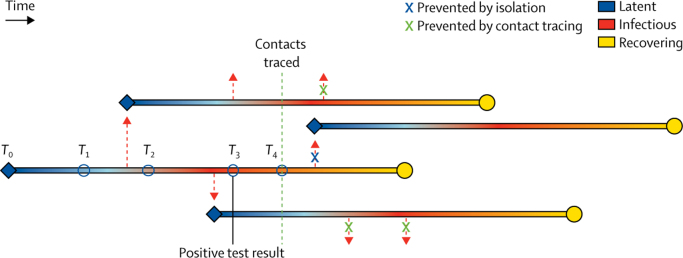
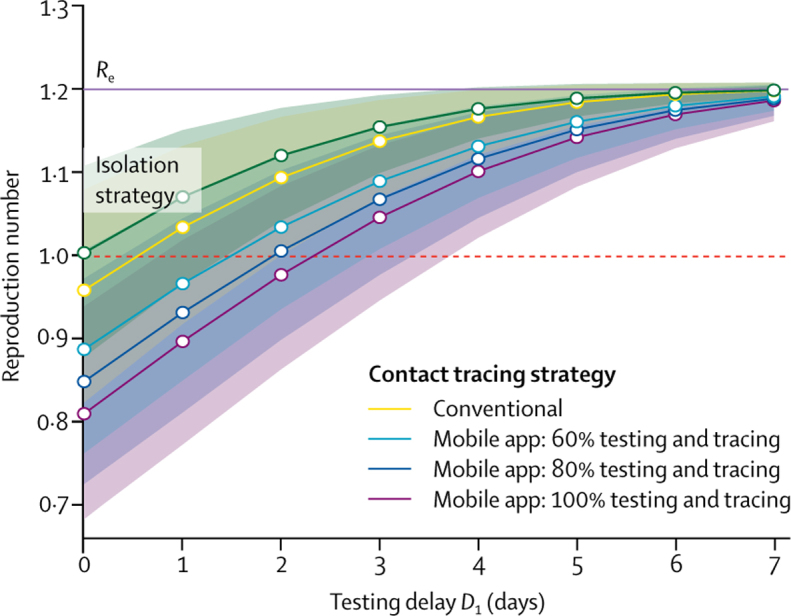
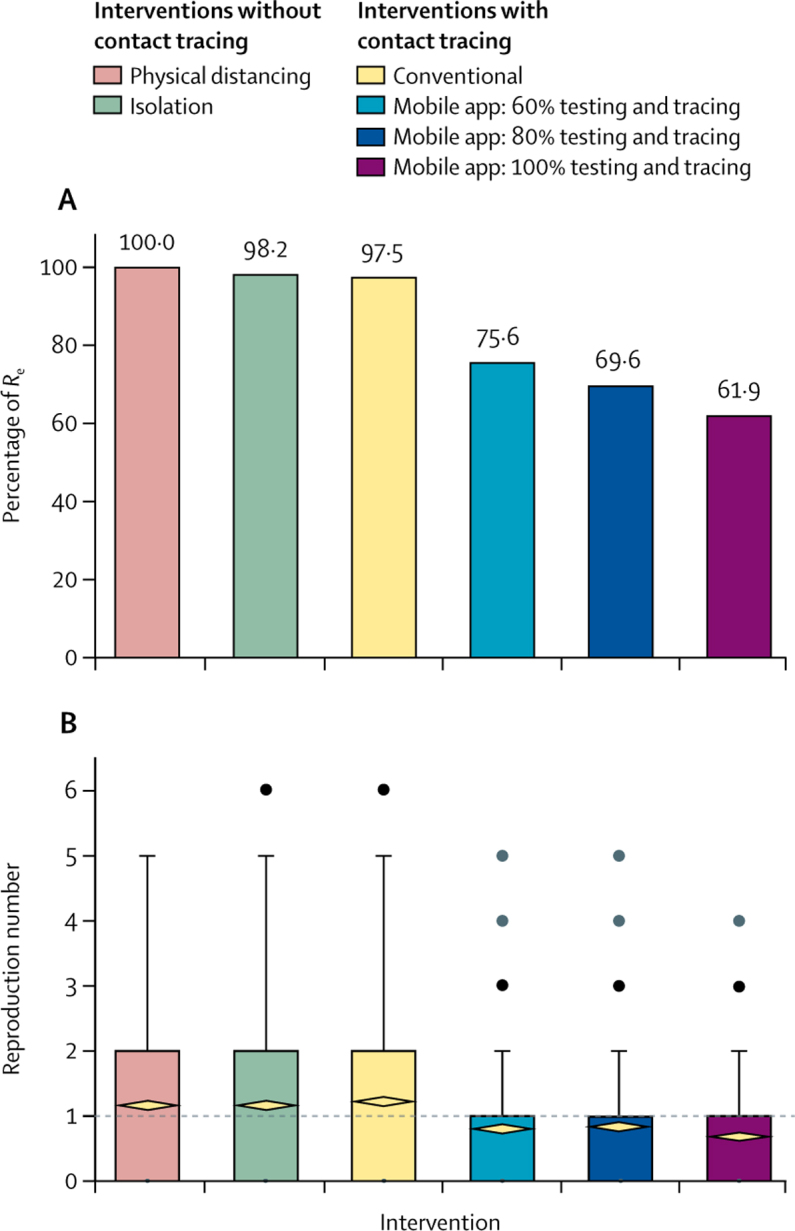
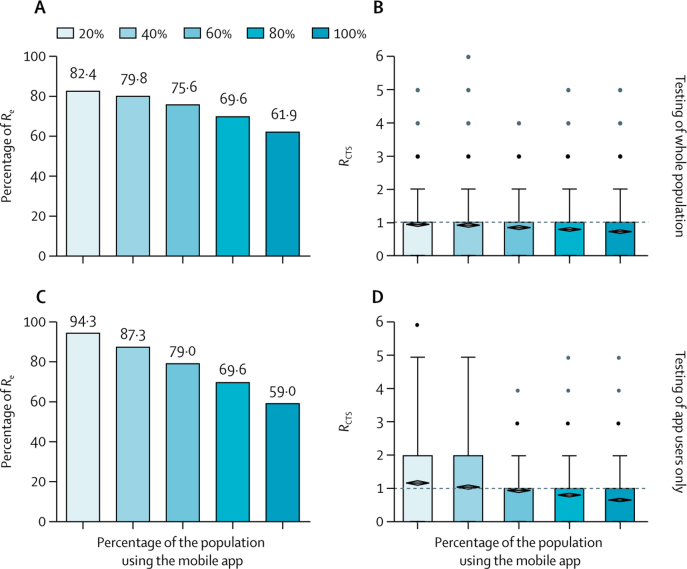
Background In countries with declining numbers of confirmed cases of COVID-19, lockdown measures are gradually being lifted. However, even if most physical distancing measures are continued, other public health measures will be needed to control the epidemic. Contact tracing via conventional methods or mobile app technology is central to control strategies during de-escalation of physical distancing. We aimed to identify key factors for a contact tracing strategy to be successful. Methods We evaluated the impact of timeliness and completeness in various steps of a contact tracing strategy using a stochastic mathematical model with explicit time delays between time of infection and symptom onset, and between symptom onset, diagnosis by testing, and isolation (testing delay). The model also includes tracing of close contacts (eg, household members) and casual contacts, followed by testing regardless of symptoms and isolation if testing positive, with different tracing delays and coverages. We computed effective reproduction numbers of a contact tracing strategy ( R CTS ) for a population with physical distancing measures and various scenarios for isolation of index cases and tracing and quarantine of their contacts. Findings For the most optimistic scenario (testing and tracing delays of 0 days and tracing coverage of 100%), and assuming that around 40% of transmissions occur before symptom onset, the model predicts that the estimated effective reproduction number of 1·2 (with physical distancing only) will be reduced to 0·8 (95% CI 0·7–0·9) by adding contact tracing. The model also shows that a similar reduction can be achieved when testing and tracing coverage is reduced to 80% ( R CTS 0·8, 95% CI 0·7–1·0). A testing delay of more than 1 day requires the tracing delay to be at most 1 day or tracing coverage to be at least 80% to keep R CTS below 1. With a testing delay of 3 days or longer, even the most efficient strategy cannot reach R CTS values below 1. The effect of minimising tracing delay (eg, with app-based technology) declines with decreasing coverage of app use, but app-based tracing alone remains more effective than conventional tracing alone even with 20% coverage, reducing the reproduction number by 17·6% compared with 2·5%. The proportion of onward transmissions per index case that can be prevented depends on testing and tracing delays, and given a 0-day tracing delay, ranges from up to 79·9% with a 0-day testing delay to 41·8% with a 3-day testing delay and 4·9% with a 7-day testing delay. Interpretation In our model, minimising testing delay had the largest impact on reducing onward transmissions. Optimising testing and tracing coverage and minimising tracing delays, for instance with app-based technology, further enhanced contact tracing effectiveness, with the potential to prevent up to 80% of all transmissions. Access to testing should therefore be optimised, and mobile app technology might reduce delays in the contact tracing process and optimise contact tracing coverage. Funding ZonMw, Fundação para a Ciência e a Tecnologia, and EU Horizon 2020 RECOVER.
Overview
The claims and statistics of this paper haven’t been checked yet.
Free: it reads the open-access text and checks the first 5 claims that cite a source we can check. Create a free account to check every claim.
Integrity signals
Registry
Cites
Statistics
Figures
Verification
Claims the paper makes
The claims and statistics of this paper haven’t been checked yet.
Free: it reads the open-access text and checks the first 5 claims that cite a source we can check. Create a free account to check every claim.
Self-check
Percentages, sums and reported differences re-computed from the paper’s own numbers.
The self-check needs the paper’s full text.
Citations
Cites
Chen, N., Zhou, M., Dong, X., Qu, J., Gong, F., Han, Y., Qiu, Y., Wang, J., Liu, Y., Wei, Y., et al. (2020) · The Lancet · doi:10.1016/s0140-6736(20)30211-7 · Cited by 21,415
Wang, D., Hu, B., Hu, C., Zhu, F., Liu, X., Zhang, J., Wang, B., Xiang, H., Cheng, Z., Xiong, Y., et al. (2020) · JAMA · doi:10.1001/jama.2020.1585 · Cited by 20,148
La certeza de lo impredecible: Cultura Educación y Sociedad en tiempos de COVID19
Martínez González, M. (2020) · DSPACE System - Metalibrary (University of the Coast) · Cited by 18,463
Martínez–González, M. B. (2020) · DSPACE System - Metalibrary (University of the Coast) · Cited by 18,294
Chan, J. F.-W., Yuan, S., Kok, K.-H., To, K. K.-W., Chu, H., Yang, J., Xing, F., Liu, J., Yip, C. C.-Y., Poon, R. W.-S., et al. (2020) · The Lancet · doi:10.1016/s0140-6736(20)30154-9 · Cited by 8,944
Temporal dynamics in viral shedding and transmissibility of COVID-19
He, X., Lau, E. H. Y., Wu, P., Deng, X., Wang, J., Hao, X., Lau, Y. C., Wong, J. Y., Guan, Y., Tan, X., et al. (2020) · Nature Medicine · doi:10.1038/s41591-020-0869-5 · Cited by 4,247
Social Contacts and Mixing Patterns Relevant to the Spread of Infectious Diseases
Mossong, J., Hens, N., Jit, M., Beutels, P., Auranen, K., Mikolajczyk, R., Massari, M., Salmaso, S., Tomba, G. S., Wallinga, J., et al. (2008) · PLoS Medicine · doi:10.1371/journal.pmed.0050074 · Cited by 2,900
Feasibility of controlling COVID-19 outbreaks by isolation of cases and contacts
Hellewell, J., Abbott, S., Gimma, A., Bosse, N. I., Jarvis, C. I., Russell, T. W., Munday, J. D., Kucharski, A. J., Edmunds, W. J., Sun, F., et al. (2020) · The Lancet Global Health · doi:10.1016/s2214-109x(20)30074-7 · Cited by 2,550
Quantifying SARS-CoV-2 transmission suggests epidemic control with digital contact tracing
Ferretti, L., Wymant, C., Kendall, M., Zhao, L., Nurtay, A., Abeler-Dörner, L., Parker, M., Bonsall, D., & Fraser, C. (2020) · Science · doi:10.1126/science.abb6936 · Cited by 2,512
Prevalence of Asymptomatic SARS-CoV-2 Infection: A Narrative Review
Oran, D. P., & Topol, E. J. (2020) · Annals of Internal Medicine · doi:10.7326/m20-3012 · Cited by 2,279
Cited by
Items 601–683 of 683
Suder, S., & Siibak, A. (2022) · Revue internationale du Travail · doi:10.1111/ilrf.12245
The role of trustworthiness in automated decision-making systems and the law
Wang, B. T. (2022) · Queensland University of Technology · doi:10.5204/thesis.eprints.231388
Wang, D., Lu, H., Li, Y., Shen, J., Jiang, G., Jin, X., Qin, H., & Guan, M. (2022) · Research Square · doi:10.21203/rs.3.rs-1795842/v1
ten Have, H. (2022) · Advancing global bioethics · doi:10.1007/978-3-030-91491-2_4
ten Have, H. (2022) · Advancing global bioethics · doi:10.1007/978-3-030-91491-2_5
Home Monitoring for Fever: An Inexpensive Screening Method to Prevent Household Spread of COVID-19Preprint
Kim, J. J., Threadcraft, M. A., Xue, W., Yue, S., Wenzel, R. P., & Southwick, F. S. (2021) · SSRN Electronic Journal · doi:10.2139/ssrn.3991636
User perceptions about sharing exposure notification information for communicable diseases
Schooley, B. L., & Feldman, S. S. (2022) · Frontiers in Digital Health · doi:10.3389/fdgth.2022.926683 · Cited by 1
Evaluating a contact tracing course: How universities can develop the public health workforce
Woodard, L., Liaw, W. R., Adepoju, O. E., Prabhu, S., Chae, M., Matuk-Villazon, O., & Beech, B. M. (2022) · Journal of American College Health · doi:10.1080/07448481.2022.2103380
State-controlled epidemic in a game against a novel pathogen
Garay, J., Kun, Á., Varga, Z., Gámez, M., Castaño-Fernández, A. B., & Móri, T. F. (2022) · Scientific Reports · doi:10.1038/s41598-022-19691-7
Graph-based system for predictive epidemiological surveillancePreprint
Akagi, J. T., García-Torres, M., Pérez-Estigarribia, P. E., Bernal, D. A. F., Grillo, S. A., Mello-Román, J. C., Noguera, J. L. V., Muñóz, M., Pedrozo, M. E., Cabrera, S. V. I., et al. (2022) · Research Square · doi:10.21203/rs.3.rs-1795250/v1
Chen, J. I., Tan, S. H. X., Chua, P. S., Lim, J. F. Y., & Yap, J. C. (2022) · Wiley eBooks · doi:10.1002/9781119812203.ch12
COVID-19 cases with a contact history: A modeling study of contact history-stratified data in Japan
Zhang, T., & Nishiura, H. (2022) · Mathematical Biosciences & Engineering · doi:10.3934/mbe.2023171
Areekal, B., Joseph, N. C., Rajan, M. P., Ravindran, R. K., Vijayan, A. S., & Vanlalhriatpuii, E. (2022) · Journal of Family Medicine and Primary Care · doi:10.4103/jfmpc.jfmpc_452_22
“8% with a 3‐day testing delay.[26] When there is delay in testing, there is a high probability of index cases interacting with the family members without isolating themselves.”
BackgroundA Trendline and Predictive Analysis of the First-Wave COVID-19 Infections in Malta
Borg, M. G., & Borg, M. A. (2023) · Epidemiologia · doi:10.3390/epidemiologia4010003
“A more likely hypothesis, however, may be the effectiveness of test-and-trace that, by this time, had been expanded and consolidated [27].”
BackgroundUporabljati ali ne uporabljati
Trkman, M. (2023) · Fakulteta za družbene vede eBooks · doi:10.51936/9789612950361 · Cited by 1
A pandemic momentum index to manage the spread of COVID-19
Iranzo, E. J. O., Sapena, J., Bertó, R., & Navarro, J. (2023) · Technological Forecasting and Social Change · doi:10.1016/j.techfore.2023.122572 · Cited by 1
“This lag time includes several days between infection and onset of symptoms and between diagnosis and laboratory confirmation and further delays in communication and inclusion in the official records [17, 18, 19, 20, 21].”
BackgroundComplex Dynamics in the Spread of COVID-19
Contreras, S. (2023) · eDiss (Georg-August-Universität Göttingen) · doi:10.53846/goediss-9876
Udeagu, C.-C. N., Gbedemah, M., Pitiranggon, M., Feldman, S., Cordoba, E., Goldenberg, S., Keeley, C., Blaney, K., Vora, N. M., & Long, T. G. (2023) · Journal of Public Health Management and Practice · doi:10.1097/phh.0000000000001748
“5 days or less since first exposure could achieve 60% to 80% reductions in onward COVID-19 transmission.(1,5,6) We did not collect the date of first exposure for our contacts; however, among the symptomatic case-patients, their contacts were identified and notified within 3 median days of their symptom onset.”
BackgroundLessons Learned: Measurement of the Impact of Covid-19 Post-pandemic
Alejandra, B. L., Escobar, R. F., & Lovelle, J. M. C. (2023) · Communications in computer and information science · doi:10.1007/978-3-031-34754-2_25
Almayahi, Z. K., Mujaini, S. M. A., Shaqsi, N. A., Hattali, N. A., Hattali, A. A., Ghafri, Y. A., Lamki, N. A., Kharusi, Z. A., Jaradi, N. A., Mayahi, A. A., et al. (2023) · Journal of Taibah University Medical Sciences · doi:10.1016/j.jtumed.2023.07.005
“This finding is particularly notable, because minimizing testing delays has been reported to prevent up to 80% of transmissions.(25) Patients in this study had fever, cough, and dyspnea as the most common symptoms on presentation; however, the time from symptom onset to admission was 7 days, which was slightly longer…”
ResultMai, W., Jenkins, R. P., Chen, Y., & Werner, D. H. (2023) · IEEE Transactions on Antennas and Propagation · doi:10.1109/tap.2023.3304123
“tracing is a classical method to efficiently classify susceptibles according to their risks [2], [3].”
MethodModeling Viral Distribution: Transmission and Control
Greening, B., & Meltzer, M. I. (2023) · Springer eBooks · doi:10.1007/978-1-4939-9544-8_60-1
Home Monitoring for Fever: An Inexpensive Screening Method to Prevent Household Spread of COVID-19
Kim, J. J., Threadcraft, M. A., Xue, W., Yue, S., Wenzel, R. P., & Southwick, F. S. (2023) · Journal of Biotechnology and Biomedicine · doi:10.26502/jbb.2642-91280101
COVID-19 contact tracing at work in Belgium - how tracers tweak guidelines for the better
Kieltyka, J., Ghattas, J., Ruppol, S., Nicaise, P., Raymenants, J., & Speybroeck, N. (2023) · BMC Public Health · doi:10.1186/s12889-023-16911-1
“Contact tracing is one of the non-pharmaceutical strategies allowing to prevent the circulation of severe acute respiratory syndrome coronavirus 2 (SARS-CoV-2) responsible for COVID19, and other infectious diseases such as tuberculosis and monkeypox [1, 2].”
BackgroundCharacterizing the role of human behavior in the effectiveness of contact-tracing applications
Fosch, A., Aleta, A., & Moreno, Y. (2023) · Frontiers in Public Health · doi:10.3389/fpubh.2023.1266989 · Cited by 2
“Prior research has identified that delays in the reporting process, poor compliance with the preventive quarantine and testing unavailability can drastically diminish the effectiveness of CT app strategies (2, 40, 41).”
BackgroundA Network-based Analytics Framework for High-Resolution Agent-based Epidemic Simulation Ensembles
Aljundi, A. A., Harrison, G., Chen, J., MARATHE, M. V., Mortveit, H., Vullikanti, A. K. S., & Adiga, A. (2023) · Winter Simulation Conference · doi:10.1109/wsc60868.2023.10407472
“However, there have been some recent model-based studies (Kretzschmar et al. 2020; Aleta et al. 2020; Kucharski et al. 2020) that have modeled and evaluated contact tracing.”
BackgroundHelms, Y. B., Stein, M. L., Hamdiui, N., van der Meer, A., Ferreira, J. A., Crutzen, R., Timen, A., & Kretzschmar, M. (2024) · PLOS Digital Health · doi:10.1371/journal.pdig.0000425 · Cited by 1
“This can lead to delays in CT and/or may force PHS to scale-down CT (e.g., in the sense that PHS increasingly focus their resources on high-risk individuals and settings), both of which can reduce the effectiveness of CT [6].”
BackgroundSelf-citationDjurić, O., Larosa, E., Cassinadri, M., Cilloni, S., Bisaccia, E., Pepe, D., Bonvicini, L., Vicentini, M., Venturelli, F., Rossi, P. G., et al. (2023) · eLife · doi:10.7554/elife.85802.sa2
Exploring the needs and experiences of contact tracing staff during the COVID-19 pandemic in Ireland
Fulham-McQuillan, H., O’Donovan, R., Buckley, C. M., Crowley, P., Gilmore, B., Martin, J., McAuliffe, É., Martin, G., Moore, G., Morrissey, M., et al. (2024) · PLoS ONE · doi:10.1371/journal.pone.0298799 · Cited by 1
“From a public health point of view, there is an essential need to inform cases and contact trace in a timely manner as reducing the delay in testing for COVID-19 has been found to have the one of the greatest impacts on reducing further transmission of the virus [42].”
Zhou, H., Sha, H., Cheke, R. A., & Tang, S. (2024) · Journal of Mathematical Biology · doi:10.1007/s00285-024-02083-y · Cited by 1
“In reality, time delays are prevalent in many controlled systems (Kretzschmar et al. 2020; Zhai et al. 2021), which make the systematic analysis more complicated and difficult and have a very important impact in the prevention and con-123 trol of disease.”
Obstacles in Basic Health Service When Dealing with COVID-19: A Reflection for Improvement
Eyanoer, P. C., & Zaluchu, F. (2024) · Journal of Multidisciplinary Healthcare · doi:10.2147/jmdh.s446298
Khogali, H., Chowdhury, J., Ravi, R. P., Osman, K., Bashab, H. M., Albayat, S., & Al-Romaihi, H. E. H. R. (2024) · Journal of Community Medicine & Public Health · doi:10.29011/2577-2228.100434
“Contact tracing could effectively reduce the reproductive number below one, provided the time between a case’s symptom onset and quarantine of at least 80% of their contacts does not exceed three days [24,25].”
Estimating the human bottleneck for contact tracing
Broda, M. D., Borovska, P., Kollenda, D., Linka, M., de Haas, N., de Haas, S., & de Haas, B. (2024) · PNAS Nexus · doi:10.1093/pnasnexus/pgae283
“Modeling suggested that CTIs suffered from severe speed limitations in the context of SARS-CoV2 (2, 3), leading many nations to implement digital contact tracing apps (CTAs) (4).”
코로나바이러스감염증-19 접촉추적격리 정책 국제 비교 및 정책 효과 시뮬레이션 연구
이, 정., 김, 연., 이, 강., 남, 기., 테오스, 정, 승., 이, 우., 오, 주., 황, 승., & 김, 다. (2024) · Public Health Weekly Report · doi:10.56786/phwr.2024.17.30.1
“However, there has been criticism that, if the government actively intervened early, it could have reduced the number of COVID-19 cases and related deaths [ 5 ].”
O uso de programas de rastreamento individual na saúde pública: um dilema da bioética
Neiva, R. J., Neto, J. F. R., Alves, A. P. O. N., Queiroz, P. D. S. F., Siqueira, L. D. G., Lima, C. C. M. E., Dias, F. S. S., & da Silva, R. F. (2024) · Revista Brasileira de Enfermagem · doi:10.1590/0034-7167-2023-0041pt
The use of individual tracking programs in public health: a bioethics dilemma
Neiva, R. J., Neto, J. F. R., Alves, A. P. O. N., Queiroz, P. D. S. F., Siqueira, L. D. G., Lima, C. C. M. E., Dias, F. S. S., & da Silva, R. F. (2024) · Revista Brasileira de Enfermagem · doi:10.1590/0034-7167-2023-0041
An individual-level probabilistic model and solution for control of infectious diseases
Xia, Y. (2024) · Mathematical Biosciences & Engineering · doi:10.3934/mbe.2024320
The Future of Virology Diagnostics Using Wearable Devices Driven by Artificial Intelligence
Sallam, M., Mijwil, M. M., Abotaleb, M. S. A., & Sailawi, A. S. A. A. (2025) · Advances in computational intelligence and robotics book series · doi:10.4018/979-8-3693-7352-1.ch020 · Cited by 1
Using Contact Tracing Technology for Communicable Disease Tracking
Dandavate, P. P., Dutta, A., Kulkarni, A., Raut, A., Atkari, D. R., Auti, S., & Joshi, A. (2024) · International Conference on Artificial Intelligence and Quantum Computation-Based Sensor Application (ICAIQSA) · doi:10.1109/icaiqsa64000.2024.10882278
“[4] In particular, Hellewell et al (2020). looked for evidence of how the persistent isolation of COVID infected individuals and their contacts was effective in controlling the outbreak of the disease.”
Wu, L. B., Baker, C. M., Tierney, N. J., Carville, K. S., McVernon, J., McCaw, J., Golding, N., & Shearer, F. M. (2025) · PLoS Computational Biology · doi:10.1371/journal.pcbi.1012906
Sideward Contact Tracing in an Epidemic Model with Mixing Groups
Zhang, D., & Favero, M. (2025) · Methodology And Computing In Applied Probability · doi:10.1007/s11009-025-10160-y
“Furthermore, [13] demonstrated that minimizing tracing delays and optimizing tracing coverage are crucial for the success of a contact tracing strategy.”
Preparedness and Emergency Responses in the Community
Lee, Q., Chau, C. L., Kwok, T., & Tse, G. (2025) · Quality of life in Asia · doi:10.1007/978-981-96-0817-1_31
Mathematical Contact Tracing Models for the COVID-19 Pandemic: A Systematic Review of the Literature
Ocagli, H., Brigiari, G., Marcolin, E., Mongillo, M., Tonon, M., Re, F. D., Gentili, D., Michieletto, F., Russo, F., & Gregori, D. (2025) · Healthcare · doi:10.3390/healthcare13080935 · Cited by 1
COVID-19 in the Deceased: Are Corpses Transmitting SARS-CoV-2?
Aminafshar, A., Sartipi, M., Pakzad, A., Shahri, S. M. H., Ansari‐Moghaddam, A., & Abdi, R. (2024) · International Journal of Infection · doi:10.5812/iji-157951
An analytical evaluation of contact tracing systems using real-world individual-level data
Li, Y., Ernst, K. C., Pogreba-Brown, K., Austhof, E., Heslin, K. M., Shilen, A., & Ram, S. (2025) · International Journal of Medical Informatics · doi:10.1016/j.ijmedinf.2025.106020
Bosdriesz, J. R., den Boogert, E. M., van Dijken, S., Dukers–Muijrers, N. H. T. M., Götz, H. M., Goverse, I. E., Leenstra, T., Petrignani, M. W. F., Raven, S. F. H., van der Loeff, M. F. S., et al. (2025) · European Journal of Public Health · doi:10.1093/eurpub/ckaf109
This DIY contact tracing app helps people exposed to COVID-19 remember who they met
Evans, J. R., Meissner, C. A., Goldfarb, D., & Lee, I. (2020) · The Conversation · doi:10.64628/aai.tskdrrdy7
Shinto, H., Mizumoto, K., Ohki, Y., Chowell, G., Saito, K., & Takayama, Y. (2025) · medRxiv · doi:10.1101/2025.09.11.25335361 · Cited by 1
Larsen, T. G., Nørgaard, S. K., Ethelberg, S., Krause, T. G., Corn, G., Irshad, I., Haimes, D., & Møller, F. T. (2025) · Open Research Europe · doi:10.12688/openreseurope.20673.1
Li, N., Rambod, B., Dukers–Muijrers, N. H. T. M., Chevalier, J. M., Steijvers, L. C., Kojan, L., Wijnen, S. M. C. E., Crutzen, R., Jahn, B., Siebert, U., et al. (2025) · Social Science & Medicine · doi:10.1016/j.socscimed.2025.118721 · Cited by 1
Self-citationHan, J. W., & Jung, E. (2025) · BMC Public Health · doi:10.1186/s12889-025-24862-y
“For instance, Kretzschmar et al. demonstrated that delays in contact tracing significantly reduce its effectiveness in controlling COVID-19 spread [39].”
Hundah, S. N. (2025) · DUT Open Scholar (Durban University of Technology) · doi:10.51415/10321/6275
Zuber, M. F. A., Rosli, N., & Muhammad, N. (2025) · AIP conference proceedings · doi:10.1063/5.0295093
Wang, X.-L., Lin, X., Yang, P., Wu, Z.-Y., Li, G., McGoogan, J. M., Jiao, Z. J. Z., He, X.-J., Li, S.-Q., Shi, H.-H., et al. (2021) · Figshare · doi:10.6084/m9.figshare.14558855
Additional file 1 of Human mobility and poverty as key drivers of COVID-19 transmission and control
Yechezkel, M., Weiss, A., Rejwan, I., Shahmoon, E., Ben-Gal, S., & Yamin, D. (2021) · Figshare · doi:10.6084/m9.figshare.14313754
Kim, M., Jeong, H., & Shin, K. (2026) · Osong Public Health and Research Perspectives · doi:10.24171/j.phrp.2025.0313
“The core policy challenge therefore lies in managing the trade-off between regulatory speed and product quality.”
Exley, J., Boadu, P., Allel, K., Erens, B., Mays, N., & Al‐Haboubi, M. (2026) · Journal of Medical Internet Research · doi:10.2196/76863
Park, S., Grantz, K. H., Lee, K. H., Rosser, E. N., Aldos, L. F., Dutta, R., Peeples, L.-M., Gurley, E. S., Marx, M. A., & Lee, E. C. (2026) · medRxiv · doi:10.64898/2026.02.05.26345670
The Impact of Socio-Environmental Factors on COVID-19 Transmission: A Spatial and Temporal Analysis
McClymont, H. (2026) · Queensland University of Technology · doi:10.5204/thesis.eprints.263200
Modeling and Simulation of the Role of Mass Testing in Controlling COVID-19
Maranhão, A., Ridenti, M. A., & Chaves, A. J. (2026) · Bulletin of Mathematical Biology · doi:10.1007/s11538-026-01593-8
Zhu, W., Liang, X., Wang, X., Zhou, W., Ge, Q., Yang, M., Zheng, B., Wen, Z., Liu, Z., Yao, Y., et al. (2026) · Infectious Disease Modelling · doi:10.1016/j.idm.2026.02.001
“S2 (He, Lau, et al., 2020; Kretzschmar et al., 2020; Salje, Cummings, & Lessler, 2016; Sina Finance, 2022; Song et al., 2022; Zhujiang Times, 2022).”
Burdi, S., Reichert, F., Mühlemann, B., Corman, V. M., Jones, T. C., Hölzer, M., Schink, S. B., Larscheid, P., Schumacher, J., Widders, G., et al. (2026) · Journal of Clinical Medicine · doi:10.3390/jcm15062290
“Other investigations support this by showing that, in the nosocomial setting, a limited number of individuals and special events can https://doi.org/10.3390/jcm15062290 contribute to a high number of transmissions [27,28] and that optimizing contact tracing can reduce nosocomial transmission [29].”
InfluentialWang, X., & Ye, M. (2026) · Journal of Comparative Economics · doi:10.1016/j.jce.2026.03.005
Effects of Contact Tracing and Isolation Policies on Epidemic Dynamics
Asan, E. O., Tunç, H., Sarı, M., & Kotil, S. (2026) · International Journal of Applied and Computational Mathematics · doi:10.1007/s40819-026-02114-w
“This is also in line with the modelling results of Kretzschmar et al., who showed that even short delays or incomplete coverage sharply reduce the impact of tracing on the effective reproduction number, leading to an underestimate if CTI is ignored at the inference stage [44].”
InfluentialÇoban, A., Nazlıcan, E., Yüzügüllü, D. A., & Demırhındı, H. (2026) · Scientific reports in medicine. · doi:10.37609/srinmed.66
Mohamad, M. H. N., Abu, I. F., Fazel, M. F., Juliana, N., Azmani, S., & Das, S. (2026) · Malaysian Journal of Medicine and Health Sciences · doi:10.47836/mjmhs.22.s3.24
Analytics for Resource Allocation in Pandemic Management
Haferkamp, J., Bicher, M., Ghasemi, P., Ulmer, M. W., Popper, N., & Ehmke, J. F. (2026) · INFORMS Journal on Applied Analytics · doi:10.1287/inte.2025.0275
A Novel Framework for Finding Seed Nodes Based on Matrix Completion and Group Testing
Nguyen, M.-T., & Bui, T. V. (2026) · Lecture notes on data engineering and communications technologies · doi:10.1007/978-3-032-23271-7_16
Impact of diagnostic delay in COVID-19 index cases on SARS-CoV-2 transmission to household contacts
Pardos-Plaza, J., Cenoz, M. G., Parrón, I., Miret, C., Toledo, D., Carol, M., Ferràs, J., Godoy, S., Zayas, M. M. S. S., Martínez‐Baz, I., et al. (2026) · Medicina Clínica (English Edition) · doi:10.1016/j.medcle.2026.107499
Höglund-Braun, H., Belhaj, S., Ehlkes, L., Geis, S., Walker, A., Dilthey, A., Rehmet, S., & Kuehne, A. (2026) · Journal of Public Health · doi:10.1007/s10389-026-02847-4
Carnevali, L., Dani, S., Niccoli, N., Picano, B., & Vicario, E. (2026) · Simulation Modelling Practice and Theory · doi:10.1016/j.simpat.2026.103332
Infection-age structured transmission model highlights the efficacy of case-finding operations
Wang, X., Jin, Z., Liu, G., Li, X., & Li, C. (2026) · Journal of Theoretical Biology · doi:10.1016/j.jtbi.2026.112559 · Cited by 1
Kiss, I. Z., Miller, J. C., Rempała, G. A., & Simon, P. L. (2026) · Interdisciplinary applied mathematics · doi:10.1007/978-3-032-14885-8_7
Park, S., Grantz, K. H., Lee, K. H., Rosser, E. N., Aldos, L. F., Dutta, R., Peeples, L.-M., Gurley, E. S., Marx, M. A., & Lee, E. C. (2026) · Research Connections · doi:10.1093/rescon/vmag149
Pandemi Yönetimi ve Tıbbi Müdahaleler
Çelik, C. (2026) · Özgür Yayınları eBooks · doi:10.58830/ozgur.pub1441.c5794
Addressing COVID-19 in Inmates at Women’s State Prison in Indonesia
Asyary, A., Rahimullah, A. R., Haryanto, B., & Rashid, H. (2026) · Tropical Medicine and Infectious Disease · doi:10.3390/tropicalmed11100268
“Therefore, in addition to taking steps to prevent person-to-person exposure, contact tracing to contain an outbreak in the early phase of the outbreak is important [21].”
What you saw was what you got? Correcting reported incidence data for testing intensity
Pedersen, R. K., Berrig, C., Tekeli, T., Röst, G., & Andreasen, V. (2026) · Epidemics · doi:10.1016/j.epidem.2026.100949
Ying, L. (2026) · Frontiers in Public Health · doi:10.3389/fpubh.2026.1978109
Metadata
- Authors
- Kretzschmar, M. E., Rozhnova, G., Bootsma, M. C. J., van Boven, M., van de Wijgert, J. H. H. M., & Bonten, M. J. M.
- Affiliations
- Utrecht University (NL)
- University of Lisbon (PT)
- Corresponding author
- Kretzschmar, Mirjam E
- Venue
- The Lancet Public Health
- Publisher
- Elsevier BV
- Published
- 2020-08
- Volume
- 5
- Issue
- 8
- Pages
- e452-e459
- ISSN
- 2468-2667 (ISSN-L)
- PMC
- PMC7365652
- OpenAlex
- W3042453924
- Cited by
- 697
- References
- 37
- Citations by year
- 2026: 34 · 2025: 29 · 2024: 48 · 2023: 77 · 2022: 166 · 2021: 277 · 2020: 64
- FWCI
- 23.03
- Type
- journal article
- Language
- en
- Open access
- gold
- doi.org
- Licence
- cc-by-nc-nd
- www.elsevier.com/tdm/userlicense/1.0/ (tdm)
- www.elsevier.com/legal/tdmrep-license (tdm)
- creativecommons.org/licenses/by-nc-nd/4.0/ (vor)
- Locations
- The Lancet Public Health (publishedVersion, cc-by-nc-nd)
- medRxiv (acceptedVersion, cc-by-nc-nd)
- PubMed Central (publishedVersion, cc-by-nc-nd)
- PubMed (publishedVersion)
- DOAJ (DOAJ: Directory of Open Access Journals) (submittedVersion, cc-by-sa)
- Utrecht University Repository (Utrecht University) (submittedVersion, other-oa)
- Utrecht University Repository (Utrecht University) (submittedVersion, cc-by-nc-nd)
- Funders
- ZonMw (91216062, 10430022010001)
- Horizon 2020 (101003589, H2020-101003589)
- Fundação para a Ciência e a Tecnologia (131_596787873)
- Topics
- Physical Sciences › Mathematics › Modeling and Simulation › COVID-19 epidemiological studies
- Physical Sciences › Computer Science › Information Systems › COVID-19 Digital Contact Tracing
- Physical Sciences › Mathematics › Applied Mathematics › Mathematical and Theoretical Epidemiology and Ecology Models
- Keywords
- COVID-19 pandemic, contact tracing, effective reproduction number, social distancing, quarantine, isolation, pre-symptomatic transmission, stochastic epidemic model, epidemic control measures, household contacts, casual contact, SARS-CoV-2 transmission prevention
- MeSH terms
- COVID-19, COVID-19 Testing, Humans, Models, Theoretical, Pneumonia, Viral, Quarantine, Time Factors, Public Health Practice, Contact Tracing, Coronavirus Infections, Clinical Laboratory Techniques, Pandemics, Mobile Applications
About these checks
Registry, retraction, Cites and statistics results are computed, not judged, with one exception: a printed reference that no index lists is read once by a model before it counts as a citation error. Claims are extracted by a model and kept only when their quote appears verbatim in the text; each cited source is then checked, with a model’s help, for whether it says what the claim relies on. Those verdicts can be wrong — read the claim’s quote and the cited source before relying on one.
Statistics and arithmetic are recomputed, not judged.
Confidence bands are shown only for fields calibrated on our annotated test set. None is calibrated yet, so no band is shown.
What counts as a claim ›How we measure confidence ›How we check this ›
Are you an author, or do you see a problem with this page? Request a review
Data sources
Bibliographic data: Semantic Scholar, OpenAlex, Crossref.
Contains information from the Semantic Scholar Academic Graph Datasets, made available under the ODC Attribution License (ODC-BY 1.0).
Semantic Scholar’s data is described in: Kinney, R., et al. (2023). The Semantic Scholar Open Data Platform. arXiv:2301.10140.
