

Health care’s response to climate change: A carbon footprint assessment of the NHS in England
Open accessThe DOI matches its Crossref record; 25 of the 26 references it cites were found in a registry or an index.
Abstract
BACKGROUND: Climate change threatens to undermine the past 50 years of gains in public health. In response, the National Health Service (NHS) in England has been working since 2008 to quantify and reduce its carbon footprint. This Article presents the latest update to its greenhouse gas accounting, identifying interventions for mitigation efforts and describing an approach applicable to other health systems across the world. METHODS: A hybrid model was used to quantify emissions within Scopes 1, 2, and 3 of the Greenhouse Gas Protocol, as well as patient and visitor travel emissions, from 1990 to 2019. This approach complements the broad coverage of top-down economic modelling with the high accuracy of bottom-up data wherever available. Available data were backcasted or forecasted to cover all years. To enable the identification of measures to reduce carbon emissions, results were disaggregated by organisation type. FINDINGS: In 2019, the health service's emissions totalled 25 megatonnes of carbon dioxide equivalent, a reduction of 26% since 1990, and a decrease of 64% in the emissions per inpatient finished admission episode. Of the 2019 footprint, 62% came from the supply chain, 24% from the direct delivery of care, 10% from staff commute and patient and visitor travel, and 4% from private health and care services commissioned by the NHS. INTERPRETATION: This work represents the longest and most comprehensive accounting of national health-care emissions globally, and underscores the importance of incorporating bottom-up data to improve the accuracy of top-down modelling and enabling detailed monitoring of progress as health systems act to reduce emissions. FUNDING: Wellcome Trust.
Overview
The claims and statistics of this paper haven’t been checked yet.
Free: it reads the open-access text and checks the first 5 claims that cite a source we can check. Create a free account to check every claim.
Integrity signals
Registry
Cites
Statistics
Figures
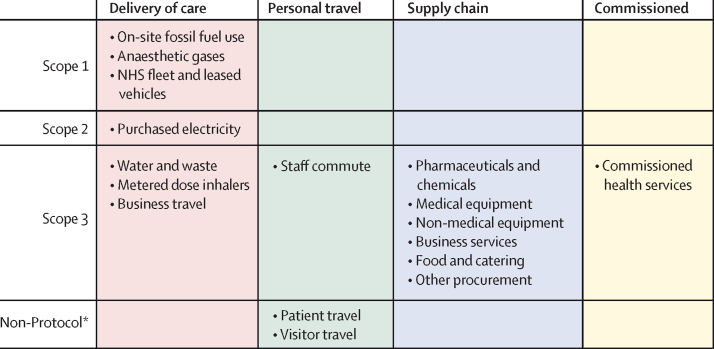
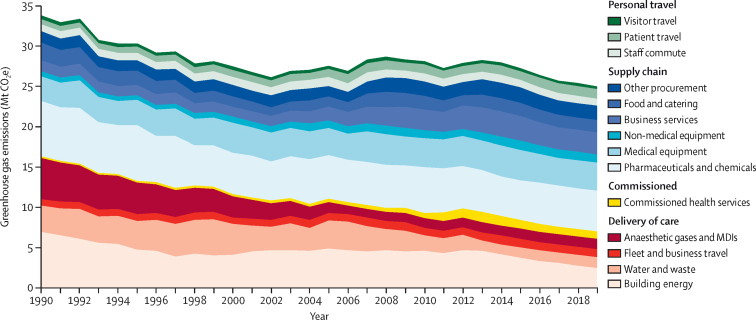
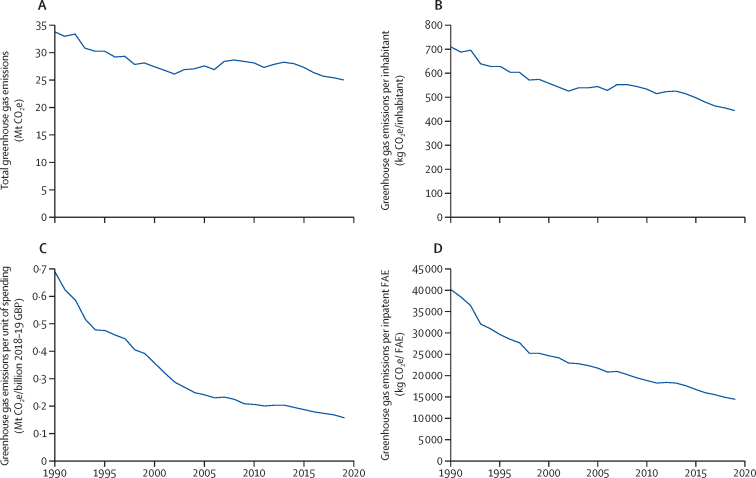
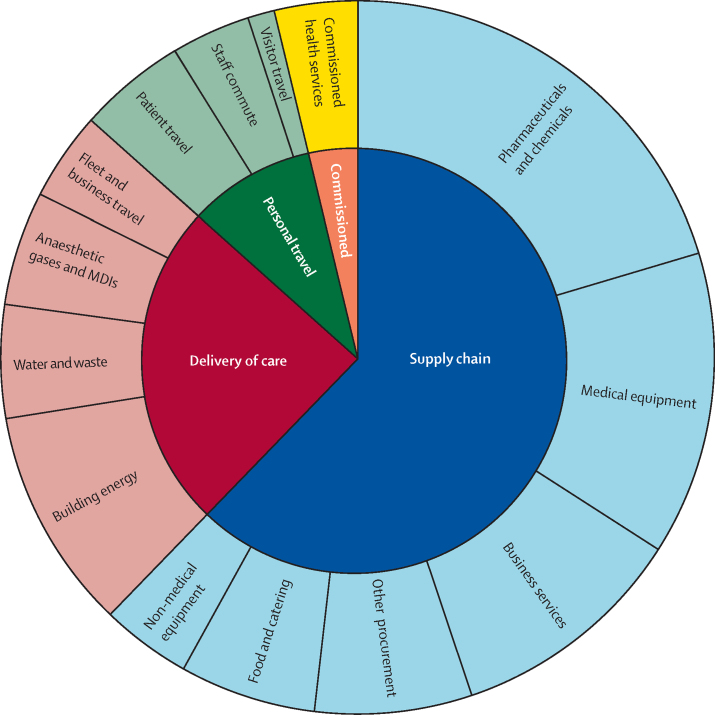
Verification
Claims the paper makes
The claims and statistics of this paper haven’t been checked yet.
Free: it reads the open-access text and checks the first 5 claims that cite a source we can check. Create a free account to check every claim.
Claims other papers make about this one
Each is checked against this paper’s own text: does it say what the citing paper says it does?
The check wasn’t confident either way, so it gives no verdict — never disputed.
In the citing paper
“Unfortunately, the awareness of the healthcare community regarding the negative impact of the sector on the natural environment and society, and in turn the responsibility for dealing with it, is very low [23].”
From Towards Green and Sustainable Healthcare: A Literature Review and Research Agenda for Green Leadership in the Healthcare Sector (2023) · cites this paper as [23]
Experimental — accuracy not yet measured
Self-check
Percentages, sums and reported differences re-computed from the paper’s own numbers.
The self-check needs the paper’s full text.
Citations
Cites
(2014) · doi:10.59327/ipcc/ar5-9789291691432 · Cited by 5,217
Watts, N., Amann, M., Arnell, N., Ayeb-Karlsson, S., Belesova, K., Boykoff, M., Byass, P., Cai, W., Campbell-Lendrum, D., Capstick, S., et al. (2019) · The Lancet · doi:10.1016/s0140-6736(19)32596-6 · Cited by 1,472
Self-citationThe environmental footprint of health care: a global assessment
Lenzen, M., Malik, A., Li, M., Fry, J., Weisz, H., Pichler, P.-P., Chaves, L. S. M., Capon, A., & Pencheon, D. (2020) · The Lancet Planetary Health · doi:10.1016/s2542-5196(20)30121-2 · Cited by 1,211
Environmental impacts of the U.S. health care system and effects on public health
Eckelman, M. J., & Sherman, J. (2016) · PLOS ONE · doi:10.1371/journal.pone.0157014 · Cited by 1,017
Self-citationInternational comparison of health care carbon footprints
Pichler, P.-P., Jaccard, I. S., Weisz, U., & Weisz, H. (2019) · Environmental Research Letters · doi:10.1088/1748-9326/ab19e1 · Cited by 812
The carbon footprint of Australian health care
Malik, A., Lenzen, M., McAlister, S., & McGain, F. (2018) · The Lancet Planetary Health · doi:10.1016/s2542-5196(17)30180-8 · Cited by 534
Eckelman, M. J., Sherman, J. D., & MacNeill, A. J. (2018) · PLOS Medicine · doi:10.1371/journal.pmed.1002623 · Cited by 346
Self-citationThe green print: Advancement of environmental sustainability in healthcare
Sherman, J. D., Thiel, C., MacNeill, A., Eckelman, M. J., Dubrow, R., Hopf, H., Lagasse, R., Bialowitz, J., Costello, A., Forbes, M., et al. (2020) · Resources, Conservation and Recycling · doi:10.1016/j.resconrec.2020.104882 · Cited by 327
Self-citationEDITORIAL: CARBON FOOTPRINT AND INPUT–OUTPUT ANALYSIS – AN INTRODUCTION
Wiedmann, T. (2009) · Economic Systems Research · doi:10.1080/09535310903541256 · Cited by 298
Estimated Global Disease Burden From US Health Care Sector Greenhouse Gas Emissions
Eckelman, M. J., & Sherman, J. D. (2018) · American Journal of Public Health · doi:10.2105/ajph.2017.303846 · Cited by 258
Self-citation
Research works printed but not linked: 1
- 28. NHS Sustainable Development Unit. Goods and services carbon hotspots. NHS England breakdown of goods and services carbon footprint by organisation type. Cambridge: NHS Sustainable Development Unit, 2012.
Cited by
Items 101–200 of 1,000
Mitigating the systemic loss of nitrous oxide: a narrative review and data-driven practice analysis
Chesebro, B. B., & Gandhi, S. (2024) · British Journal of Anaesthesia · doi:10.1016/j.bja.2024.08.028 · Cited by 37
Walsh, S. J., O’Leary, A. C., Bergin, C. J., Lee, S., Varley, Á., & Lynch, M. R. (2024) · BMC Health Services Research · doi:10.1186/s12913-024-12068-8 · Cited by 38
Kampman, J. M., van Bree, E. M., Gielen, L., & Weiland, N. H. S. (2025) · British Journal of Anaesthesia · doi:10.1016/j.bja.2024.11.049 · Cited by 37
Sürme, Y., Maraş, G., & Akbuğa, G. A. (2024) · Nursing in Critical Care · doi:10.1111/nicc.13150 · Cited by 37
Lichter, K. E., Charbonneau, K., Sabbagh, A., Witztum, A., Chuter, R., Anand, C., Thiel, C. L., & Mohamad, O. (2023) · International Journal of Radiation Oncology*Biology*Physics · doi:10.1016/j.ijrobp.2023.04.036 · Cited by 36
Han, L., Sullivan, R. J., Tree, A. C., Lewis, D. J., Price, P., Sangar, V., van der Meulen, J., & Aggarwal, A. K. (2024) · Radiotherapy and Oncology · doi:10.1016/j.radonc.2024.110092 · Cited by 36
“In 2019, staff commute and patient and visitor travel contributed to 10 % of total NHS CO 2 emissions [8].”
BackgroundCritical care nurses’ experiences on environmental sustainability: A qualitative content analysis
Bartoli, D., Petrosino, F., Midolo, L., Pucciarelli, G., & Trotta, F. (2024) · Intensive and Critical Care Nursing · doi:10.1016/j.iccn.2024.103847 · Cited by 36
Alarifi, A. M., Alshahrani, N. Z., Jokhdar, H., & Asiri, A. M. (2025) · Journal of Epidemiology and Global Health · doi:10.1007/s44197-025-00385-y · Cited by 35
“Healthcare contributes 5% of global CO₂ emissions [ 110].”
Maloney, B. P., McKerlie, T., Nasir, M., Murphy, C., Moi, M., Mudalige, P. K. G., Naser, N. E., & Duane, B. G. (2022) · Journal of Hospital Infection · doi:10.1016/j.jhin.2022.09.006 · Cited by 35
Improving environmental sustainability of intensive care units: A mini-review
See, K. C. (2023) · World Journal of Critical Care Medicine · doi:10.5492/wjccm.v12.i4.217 · Cited by 35
Orsini, L. P., Landi, S., Leardini, C., & Veronesi, G. (2024) · Journal of Cleaner Production · doi:10.1016/j.jclepro.2024.142720 · Cited by 34
Moussa, G., Ch’ng, S. W., Park, D. Y., Ziaei, H., Jalil, A., Patton, N., Ivanova, T., Lett, K. S., & Andreatta, W. (2021) · American Journal of Ophthalmology · doi:10.1016/j.ajo.2021.09.020 · Cited by 34
Transitioning to Sustainable Healthcare: Decarbonising Healthcare Clinics, a Literature Review
Duindam, D. (2022) · Challenges · doi:10.3390/challe13020068 · Cited by 36
“A feature that has assisted hospitals to decarbonise is improved sustainability metric reporting [43].”
BackgroundLevy, M. L., Bateman, E. D., Allan, K., Bacharier, L. B., Bonini, M., Boulet, L., BOURDIN, A. A., Brightling, C. E., Brusselle, G., Buhl, R., et al. (2023) · The Lancet · doi:10.1016/s0140-6736(23)01358-2 · Cited by 34
Keil, M. (2023) · Cleaner Environmental Systems · doi:10.1016/j.cesys.2023.100140 · Cited by 34
Photocatalytic Material-Microorganism Hybrid System and Its Application—A Review
Song, J., Lin, H., Zhao, G., & Huang, X. (2022) · Micromachines · doi:10.3390/mi13060861 · Cited by 33
The carbon footprint of as-needed budesonide/formoterol in mild asthma: apost hocanalysis
Hatter, L., Holliday, M., Eathorne, A., Bruce, P., Pavord, I. D., Reddel, H. K., Hancox, R. J., Papi, A. A., Weatherall, M., & Beasley, R. W. (2024) · European Respiratory Journal · doi:10.1183/13993003.01705-2023 · Cited by 33
A Systematic Review and Evaluation of Sustainable AI Algorithms and Techniques in Healthcare
Alzoubi, Y. I., Topcu, A. E., & Α, E. E. (2025) · IEEE Access · doi:10.1109/access.2025.3596189 · Cited by 33
“A detailed longitudinal analysis by Tennison et al. [5] of the United Kingdom’s National Health Service revealed that, between 1990 and 2019, the National Health Service was responsible for approximately 5.4% of England’s total CO 2 emissions, with a substantial 62% stemming from its supply chains.”
InfluentialWhat Can Hospitals Learn from The Coca-Cola Company? Health Care Sustainability Reporting
Senay, E., Cort, T., Perkison, W. B., Laestadius, J. G., & Sherman, J. D. (2022) · NEJM Catalyst · doi:10.1056/cat.21.0362 · Cited by 33
Self-citationHenniger, D., Lux, T. J., Windsheimer, M., Brand, M., Weich, A., Kudlich, T., Schöttker, K., Hann, A., & Meining, A. G. (2023) · Gut · doi:10.1136/gutjnl-2023-331024 · Cited by 33
Assessing the Carbon Footprint of Telemedicine: A Systematic Review
van der Zee, C., Chang‐Wolf, J. M., Koopmanschap, M. A., van Leeuwen, R., & Wisse, R. P. L. (2024) · Health Services Insights · doi:10.1177/11786329241271562 · Cited by 34
Accelerating climate action: the role of health professionals
Dobson, J., Cook, S., Frumkin, H., Haines, A., & Abbasi, K. A. (2021) · BMJ · doi:10.1136/bmj.n2425 · Cited by 33
Triple planetary crisis: why healthcare professionals should care
Ihsan, F. R., Bloomfield, J. G., & Monrouxe, L. V. (2024) · Frontiers in Medicine · doi:10.3389/fmed.2024.1465662 · Cited by 32
Environmental sustainability in cardiovascular practice: current challenges and future directions
Rajagopalan, S., McAlister, S., Jay, J., Pham, R. D., Brook, R. D., Nasir, K., Nieuwenhuijsen, M. J., Landrigan, P. J., Wiesler, A., Sanborn, C., et al. (2024) · Nature Reviews Cardiology · doi:10.1038/s41569-024-01077-z · Cited by 32
“…industry, the National Health Services in the UK reported emissions of approximately 25 mega tonnes of CO 2 equivalent (CO 2 e; a reference unit used to compare emissions between different GHGs on the basis of their global warming potential), which amounts to 540 kg of CO 2 e per capita 20 .”
Climate Change and Gastroenterology: Planetary Primum Non Nocere and How Industry Must Help
Haddock, R., de Latour, R. A., Siau, K., Hayee, B., & Gayam, S. (2022) · The American Journal of Gastroenterology · doi:10.14309/ajg.0000000000001604 · Cited by 32
“carbon footprint of health care (7), such efforts require engage-”
BackgroundBaumann, A. A. W., Conway, N., Doblinger, C., Steinhauser, S., Paszko, A., Lehmann, F., Schneider, G. H., Schulz, C. M., & Schneider, F. (2022) · Zeitschrift für Evidenz Fortbildung und Qualität im Gesundheitswesen · doi:10.1016/j.zefq.2022.05.013 · Cited by 32
Sustainability in physiotherapy and rehabilitation
Palstam, A., Sehdev, S., Barna, S., Andersson, M., & Liebenberg, N. (2022) · Orthopaedics and Trauma · doi:10.1016/j.mporth.2022.07.005 · Cited by 32
Gastrointestinal endoscopy’s carbon footprint
Park, S. B., & Cha, J. M. (2023) · Clinical Endoscopy · doi:10.5946/ce.2023.003 · Cited by 32
“Tennison et al.9 reported divergent sectors of GHG emissions from the National Health Service (NHS) in England in 2019.”
BackgroundSpil, N. A., van Nieuwenhuizen, K. E., Rowe, R. E., Thornton, J., Murphy, E., Verheijen, E., Shelton, C., & Heazell, A. E. P. (2024) · BJOG An International Journal of Obstetrics & Gynaecology · doi:10.1111/1471-0528.17771 · Cited by 32
Hanneman, K. A., Alahmad, B., Ghosh, A., Khatana, S. A. M., Huang, M., Liu, J., Abadi, A. M., Khraishah, H., Beckie, T. M., Rajagopalan, S., et al. (2026) · Circulation · doi:10.1161/cir.0000000000001419 · Cited by 32
Sustainable oral healthcare and the environment: challenges
Mulligan, S., Smith, L., & Martín, N. (2021) · Dental Update · doi:10.12968/denu.2021.48.6.493 · Cited by 31
Phull, M., Begum, H., John, J. B., van Hove, M., McGrath, J. S., O’Flynn, K. J., Briggs, T. W. R., & Gray, W. K. (2023) · European Urology Open Science · doi:10.1016/j.euros.2023.03.007 · Cited by 31
“Increasing the provision of day-case surgery, where clinically appropriate, has potential for reducing the carbon footprint of that care pathway by removing the need for high-resource, carbon-intensive inpatient hospital stays [6].”
BackgroundCarbon footprint of hospital laundry: a life-cycle assessment
John, J. B., Collins, M., O’Flynn, K. J., Briggs, T. W. R., Gray, W. K., & McGrath, J. S. (2024) · BMJ Open · doi:10.1136/bmjopen-2023-080838 · Cited by 30
The carbon footprint of a surgical pathology laboratory in France
Béchu, C., Rullier, A., Lesoin, P.-E., Gaillot-Durand, L., Trécourt, A., Gosset, P., & Tilmant, C. (2024) · American Journal of Clinical Pathology · doi:10.1093/ajcp/aqae022 · Cited by 30
MacNeill, A. J., Rizan, C., & Sherman, J. D. (2024) · British Journal of Anaesthesia · doi:10.1016/j.bja.2024.05.042 · Cited by 30
Self-citationMas, F. D., Cobianchi, L., Piccolo, D., Balch, J. A., Biancuzzi, H., Biffl, W. L., Campostrini, S., Cicuttin, E., Coccolini, F., Damaskos, D., et al. (2024) · World Journal of Emergency Surgery · doi:10.1186/s13017-024-00533-y · Cited by 30
Davies, J. F., McGain, F., Sloan, E. D., Francis, J., & Best, S. (2024) · The Lancet Planetary Health · doi:10.1016/s2542-5196(24)00241-9 · Cited by 29
Environmental Sustainability in the Cardiac Catheter Laboratory
Szirt, R., Monjur, M. R., McGovern, L., Charlesworth, K., O’Connor, S. A., Weaver, J. C., & Coughlan, J. J. (2022) · Heart Lung and Circulation · doi:10.1016/j.hlc.2022.06.694 · Cited by 29
Research Progress of Carbon-Neutral Design for Buildings
Liang, R., Zheng, X., Wang, P., Liang, J., & Hu, L. (2023) · Energies · doi:10.3390/en16165929 · Cited by 30
Guiding principles for the next generation of health-care sustainability metrics
Eckelman, M. J., Weisz, U., Pichler, P., Sherman, J. D., & Weisz, H. (2024) · The Lancet Planetary Health · doi:10.1016/s2542-5196(24)00159-1 · Cited by 30
“…metrics, as they are not part of the health sector as defined by the System of Health Accounts; 31 however, such estimates, as shown by NHS England, 10 can reveal important information about emissions reduction potentials through better spatial health-care provision planning, providing access to…”
BackgroundSelf-citationA focus group study of ethical issues during climate-informed health decision-making
Hantel, A., Senay, E., Richie, C., Revette, A. C., Nava‐Coulter, B., Hlubocky, F. J., Walsh, T. P., Siegler, M. A., & Abel, G. A. (2024) · Nature Climate Change · doi:10.1038/s41558-024-02121-z · Cited by 29
“Analyses and interventions targeting this problem first focused on policies and system-level factors that could improve sustainability and resource conservation 3 .”
Improving Antimicrobial Use to Protect the Environment: What Is the Role of Infection Specialists?
Walpole, S. C., Eii, M. N., Lyons, T., & Aldridge, C. (2023) · Antibiotics · doi:10.3390/antibiotics12040640 · Cited by 29
Decarbonizing Health Care: Engaging Leaders in Change
Lee, V. S., Gerwig, K., Hough, E., Mate, K. S., Biggio, R., & Kaplan, R. S. (2023) · NEJM Catalyst · doi:10.1056/cat.22.0433 · Cited by 28
Effective respiratory management of asthma and COPD and the environmental impacts of inhalers
Usmani, O. S., & Levy, M. L. (2023) · npj Primary Care Respiratory Medicine · doi:10.1038/s41533-023-00346-7 · Cited by 28
Gagné, M. E., Karanikas, A., Green, S., & Gupta, S. (2023) · BMJ Open Respiratory Research · doi:10.1136/bmjresp-2023-001716 · Cited by 28
Inhalational volatile anaesthetic agents: the atmospheric scientists' viewpoint
Nielsen, O. J., & Andersen, M. P. S. (2024) · Anaesthesia · doi:10.1111/anae.16119 · Cited by 29
“Inhalational volatile anaesthetic agent emissions alone contribute to approximately 3% of a wealthy nation ’ s healthcare-related climate footprint [1].”
BackgroundPickles, K. M., Haas, R., Guppy, M., O’Connor, D. A., Pathirana, T., Barratt, A. L., & Buchbinder, R. (2024) · BMJ Evidence-Based Medicine · doi:10.1136/bmjebm-2023-112707 · Cited by 27
Carbon Emissions From Patient Travel for Health Care
Zurl, H., Qian, Z. J., Stelzl, D. R., Dagnino, F., Korn, S. M., Labban, M., Lipsitz, S. R., Leitsmann, M., Ahyai, S., Ellimoottil, C. S., et al. (2025) · JAMA Network Open · doi:10.1001/jamanetworkopen.2025.2513 · Cited by 27
Carbon emissions and hospital pathology stewardship: a retrospective cohort analysis
McAlister, S., Smyth, B. J., Koprivic, I., Tanna, G. L. D., McGain, F., Charlesworth, K., Brown, M. A., & Koneçny, P. (2021) · Internal Medicine Journal · doi:10.1111/imj.15622 · Cited by 27
Thomas, M. A. F., Ward, C. J., Sinnott, M., Davies, T., Wong, J. M., Wong, J. K. L., Kunst, G., Anwar, S., Baker, C., Begum, F., et al. (2024) · British Journal of Anaesthesia · doi:10.1016/j.bja.2024.08.027 · Cited by 27
MCF classifier: Estimating, standardizing, and stratifying medicine carbon footprints, at scale
Taylor, H., Mahamdallie, S., Sawyer, M. H., & Rahman, N. (2024) · British Journal of Clinical Pharmacology · doi:10.1111/bcp.16229 · Cited by 27
AI-Driven Chemical Design: Transforming the Sustainability of the Pharmaceutical Industry
Ruiz-Gonzalez, A. (2025) · Future Pharmacology · doi:10.3390/futurepharmacol5020024 · Cited by 26
“The carbon footprint from pharmaceuticals can be as high as 20%, as observed in the UK’s National Health Service (NHS) [6].”
Kuiter, S. G., Herrmann, A., Mertz, M., Quitmann, C., & Salloch, S. (2025) · BMC Medical Ethics · doi:10.1186/s12910-025-01230-4 · Cited by 26
“In 2019, a reduction of the carbon footprint by 26% was achieved in comparison to the 1990 baseline, thus, establishing the NHS as a pioneer in the realization of these targets [11].”
The carbon footprints of single-use and reusable medical devices: a systematic review
Booth, A., Chowaniec, M., Goyal, S., Faulkner, S. D., & Shaw, S. E. (2025) · BMJ Open · doi:10.1136/bmjopen-2025-108446 · Cited by 28
Pegg, M., Rawson, R., & Okere, U. V. (2022) · Journal of Health Services Research & Policy · doi:10.1177/13558196221094488 · Cited by 27
“8 million, the National Health Service (NHS) is the largest publicly funded health system in the world and the fifth largest workforce globally.(4) In 2019, NHS Digital(5) reported the NHS in England generates approximately 538,600 tonnes of waste per year and contributes approximately 6% carbon footprint of the UK em…”
BackgroundWong, A., Gynther, A., Li, C., Rounds, M., Lee, J. H., Krieser, D., Posma, E., & McGain, F. (2022) · British Journal of Anaesthesia · doi:10.1016/j.bja.2022.05.022 · Cited by 26
Rochon, M., Jawarchan, A., Fagan, F., Otter, J. A., & Tanner, J. (2023) · Journal of Hospital Infection · doi:10.1016/j.jhin.2023.01.001 · Cited by 26
Lokmic‐Tomkins, Z., Barbour, L. R., LeClair, J., Luebke, J. M., McGuinness, S. L., Limaye, V. S., Pillai, P., Flynn, M. P., Kamp, M. A., Leder, K. S., et al. (2024) · Frontiers in Medicine · doi:10.3389/fmed.2024.1437632 · Cited by 26
Sustainable Supply Chains for Disease Prevention and Treatment: Integrating Green Logistics
Paul, P. O., Abbey, A. B. N., Onukwulu, E. C., Eyo-Udo, N. L., & Agho, M. O. (2024) · International Journal of Multidisciplinary Research and Growth Evaluation · doi:10.54660/.ijmrge.2024.5.6.1490-1494 · Cited by 26
Inhaler-Related Greenhouse Gas Emissions in the US: A Serial Cross-Sectional Analysis
Feldman, W. B., Han, J., Raymakers, A., Furie, G., & Chesebro, B. B. (2025) · JAMA · doi:10.1001/jama.2025.16524 · Cited by 25
Avşar, T. S., Yang, X., & Lorgelly, P. K. (2022) · PharmacoEconomics · doi:10.1007/s40273-022-01221-y · Cited by 25
“The review also finds that none of the HTA guidelines consider the environmental impacts despite the international recognition of the significant impact of health care on the climate crisis [68].”
BackgroundSherman, J. D., & Singh, H. (2023) · The Joint Commission Journal on Quality and Patient Safety · doi:10.1016/j.jcjq.2023.02.006 · Cited by 25
Self-citationKindred, M., Shabrina, Z., & Zakiyah, N. (2023) · Applied Health Economics and Health Policy · doi:10.1007/s40258-023-00839-z · Cited by 26
“Thus, the healthcare sector can potentially play a vital role in the mitigation of anthropogenic climate change, by leveraging its influence to drive carbon emission reductions [2].”
BackgroundMethodInfluentialMeeting the environmental challenges of endoscopy: a pathway from strategy to implementation
Hernandez, L. V., Agrawal, D., Skole, K. S., Crockett, S. D., Shimpi, R. A., Renteln, D. A. V., & Pohl, H. (2023) · Gastrointestinal Endoscopy · doi:10.1016/j.gie.2023.07.031 · Cited by 25
Environmental sustainability from anesthesia providers’ perspective: a qualitative study
Gasciauskaite, G., Lunkiewicz, J., Spahn, D. R., Deschwanden, C. V., Nöthiger, C. B., & Tscholl, D. W. (2023) · BMC Anesthesiology · doi:10.1186/s12871-023-02344-1 · Cited by 25
“Inhaled anesthetics can account for 50% of perioperative emissions [13] and 5% of hospital emissions [14].”
BackgroundU.S. medical organizations and climate change advocacy: a review of public facing websites
Bush, T. M., Jensen, W. A., & Katsumoto, T. R. (2022) · BMC Public Health · doi:10.1186/s12889-022-14339-7 · Cited by 25
“lacks a strong centralized health care authority, such as the United Kingdom’s National Health Service, that can drive the health sector’s actions towards mitigation and adaptation [35].”
BackgroundThe Necessity of Environmentally Sustainable Kidney Care
Stigant, C. E., Rajan, T., Barraclough, K. A., & Miller, F. A. (2023) · Canadian Journal of Kidney Health and Disease · doi:10.1177/20543581231166484 · Cited by 25
Decarbonising Health Systems Across OECD Countries
OECD (2025) · OECD health policy studies · doi:10.1787/5ac2b24b-en · Cited by 25
Li, R., Yan, J. X., & Reddick, C. (2022) · Applied Thermal Engineering · doi:10.1016/j.applthermaleng.2022.118537 · Cited by 24
The carbon footprint of the perioperative transurethral resection of bladder tumour pathway
John, J. B., Collins, M., Eames, S., O’Flynn, K. J., Briggs, T. W. R., Gray, W. K., & McGrath, J. S. (2024) · British Journal of Urology · doi:10.1111/bju.16477 · Cited by 24
Lim, O. Z.-H., Chua, W. Y., Wong, A., Ling, R. R., Chan, H. C., Quek, S. C., Wu, S., & Somani, J. (2024) · Antimicrobial Resistance and Infection Control · doi:10.1186/s13756-024-01507-0 · Cited by 26
Cao, Y., Qi, F., Cui, H., & Yuan, M. (2022) · Environmental Science and Pollution Research · doi:10.1007/s11356-022-24756-1 · Cited by 23
“Reviewing the region as a whole based on CFs can effectively cover industries with high carbon emissions, provide a distributed inventory (Ramachandra 2012), and conduct further assessments (Tennison et al. 2021) to serve environmental policy formulation.”
BackgroundBaddley, J., & Rasheed, F. N. (2023) · Cleaner Logistics and Supply Chain · doi:10.1016/j.clscn.2023.100109 · Cited by 23
Jacobson, S., Kacew, A. J., Knoebel, R. W., Hsieh, P.-H., Ratain, M. J., & Strohbehn, G. W. (2023) · JCO Oncology Practice · doi:10.1200/op.23.00227 · Cited by 24
“At the same time that climate change caused by human activity imperils human health,(1,2) health care itself is a major emitter of greenhouse gases (GHGs).(3,4) Reducing health care’s environmental impact has become a global priority: 55 countries have committed to sustainable low-carbon health systems and 20 to net-z…”
BackgroundBreth‐Petersen, M., Barratt, A. L., McGain, F., Skowno, J., Zhong, G., Weatherall, A., Bell, K., & Pickles, K. M. (2023) · Anaesthesia and Intensive Care · doi:10.1177/0310057x231212211 · Cited by 23
Mominkhan, D. M., Alamri, F. A., Balharith, M., Alharbi, M., Alshebli, A., Alshareef, S. Y., Khairaldain, A., Almutairi, N., Abusit, A., Almuzaini, Y. S., et al. (2023) · Frontiers in Sustainable Energy Policy · doi:10.3389/fsuep.2023.1230253 · Cited by 23
Interventions for increasing energy efficiency in hospitals
Chen-Xu, J., Kislaya, I., Fernandes, R. M., Carvalho, J., Blanco, B., Omrani, O. E., Miotto, E., Čič, K., Boto, P., & Viegas, S. (2024) · Cochrane Database of Systematic Reviews · doi:10.1002/14651858.cd015693 · Cited by 23
Environmental Sustainability Initiatives in the Operating Room: A Scoping Review
Görgün, E., Dehipawala, S., O’Hara, M., Naoumtchik, E., Gangoli, G., Ricketts, C. D., & Tommaselli, G. A. (2024) · Annals of Surgery Open · doi:10.1097/as9.0000000000000451 · Cited by 23
Green endoscopy: using quality improvement to develop sustainable practice
Maurice, J. B., Rochford, A., Marshall, S. M., Sebastian, S., Dhar, A., & Hayee, B. (2021) · Frontline Gastroenterology · doi:10.1136/flgastro-2021-101874 · Cited by 23
Pavli, A., Loblay, V., Rychetnik, L., & Usherwood, T. P. (2023) · Family Practice · doi:10.1093/fampra/cmad027 · Cited by 22
A race to net zero—early lessons from healthcare's decarbonization marathon
Lakatos, K., Teherani, A., Thottathil, S. E., Gandhi, S., Weiser, S. D., & Brindis, C. D. (2023) · Health Affairs Scholar · doi:10.1093/haschl/qxad006 · Cited by 22
van Hove, M., John, J. B., Ojelade, E., Ayyaz, F., Koris, J., Frame, J., Swart, M., Snowden, C. P., Briggs, T. W. R., & Gray, W. K. (2024) · Anaesthesia · doi:10.1111/anae.16170 · Cited by 22
“Healthcare is a major contributor to global carbon emissions; in the UK, healthcare is responsible for 4.6% of all carbon emissions [5 – 7].”
BackgroundInfluentialHow many carbon emissions are saved by doing one less MRI?
McAlister, S., Barratt, A. L., Bell, K., & McGain, F. (2024) · The Lancet Planetary Health · doi:10.1016/s2542-5196(24)00092-5 · Cited by 22
Patient perspectives on the environmental impact of inhalers: A survey in British Columbia
Quantz, D., Wong, G. Y. C., & Liang, K. E. (2023) · Canadian Pharmacists Journal / Revue des Pharmaciens du Canada · doi:10.1177/17151635231202980 · Cited by 21
Lathan, R., Hitchman, L. H., Walshaw, J., Ravindhran, B., Carradice, D., Smith, G., Chetter, I. C., & Yiasemidou, M. (2024) · Frontiers in Surgery · doi:10.3389/fsurg.2024.1300625 · Cited by 21
“In 2019, the National Health Service (NHS)contributed to around 25 million tonnes of carbon dioxide equivalent (CO 2 e) emissions equating to around 7% of the total UK carbon footprint that year (10).”
BackgroundMethodThöne, M., Lask, J., Hennenlotter, J., Saar, M., Tsaur, I., Stenzl, A., & Rausch, S. (2024) · Urolithiasis · doi:10.1007/s00240-024-01664-2 · Cited by 21
Driving down embedded emissions from medical nitrous oxide
Chakera, A. (2021) · BMJ · doi:10.1136/bmj.n2922 · Cited by 21
Martindale, A., Morris, D. S., Cromarty, T., Fennell-Wells, A., & Duane, B. G. (2023) · Emergency Medicine Journal · doi:10.1136/emermed-2022-213042 · Cited by 20
Predicting the climate impact of healthcare facilities using gradient boosting machines
Yin, H., Sharma, B., Hu, H., Liu, F., Kaur, M., Cohen, G., McConnell, R., & Eckel, S. P. (2023) · Cleaner Environmental Systems · doi:10.1016/j.cesys.2023.100155 · Cited by 20
Kallay, O., Sadad, R., Zafzafi, A., & Motulsky, E. H. (2024) · BMJ Open Ophthalmology · doi:10.1136/bmjophth-2023-001617 · Cited by 20
Carbon Footprint Analysis of an Outpatient Dermatology Practice at an Academic Medical Center
Silva, G. S., Waegel, A., Kepner, J., Evans, G. J., Braham, W. W., & Rosenbach, M. A. (2025) · JAMA Dermatology · doi:10.1001/jamadermatol.2024.5669 · Cited by 20
Asia‐Pacific survey on green endoscopy
Ho, J. C. L., Lui, R. N.-S., Ho, S. H., Tee, N. C. H., Luo, X., Tang, R. S. Y., Chiu, P. W. Y., Ang, T. L., & (GEIA), T. G. E. I. O. A. (2023) · Journal of Gastroenterology and Hepatology · doi:10.1111/jgh.16409 · Cited by 20
“19 Because human travel accounts for 45% of GHG emissions of ambulatory endoscopy, 8 simple measures like combining upper and lower endoscopy on the same day may also result in a remarkable carbon reduction.”
BackgroundPlanetary Health in CanMEDS 2025
Green, S., Labine, N., Luo, O. D., Vipond, J., Moloo, H., Bouka, A., & Thoma, B. (2022) · Canadian Medical Education Journal · doi:10.36834/cmej.75438 · Cited by 19
“…Health Service in the United Kingdom suggests that nearly 70% of emissions come from medicines, equipment, and other aspects of the supply chain; 10% comes from travel; 10% comes from building energy; 5% from water and waste; and a full 5% from anesthetic gases and Metered Dose Inhalers (15).”
BackgroundEnvironmental sustainability and the paradox of prevention
Richie, C. (2023) · Journal of Medical Ethics · doi:10.1136/jme-2023-109437 · Cited by 19
“4 Policymakers and national governments which oversee healthcare allocation and monitor healthcare carbon— such as the UK Carbon Reduction Strategy , 18 Green Dutch Healthcare deal 19 and the Green Transition in the Norwegian Health Sector 20 —have taken steps to reduce healthcare carbon.”
BackgroundBryant, A. K., Lewy, J. R., Bressler, R. D., Chopra, Z., Gyori, D. J., Bazzell, B. G., Moeller, J. A., Jacobson, S., Fendrick, A. M., Kerr, E. A., et al. (2024) · The Lancet Oncology · doi:10.1016/s1470-2045(24)00200-6 · Cited by 19
Greener intravitreal injections: a narrative review
Ong, A. Y., Birtel, J., & Issa, P. C. (2024) · Eye · doi:10.1038/s41433-024-03185-z · Cited by 19
“The Greenhouse Gas Protocol (GHGP) is a framework to measure and manage greenhouse gas emissions from the public and private sectors, and has been adapted by the NHS to a healthcare setting [13].”
Fournier, J., Barret, L., Khouri, C., Naudet, F., Boussageon, R., & Roustit, M. (2024) · Journal of Clinical Epidemiology · doi:10.1016/j.jclinepi.2024.111478 · Cited by 19
Development of National Antimicrobial Intravenous-to-Oral Switch Criteria and Decision Aid
Harvey, E. J., Hand, K. S. P., Weston, D., & Ashiru-Oredope, D. A. I. (2023) · Journal of Clinical Medicine · doi:10.3390/jcm12062086 · Cited by 20
Sustainability is critical for future proofing the NHS
Issa, R., Forbes, C., Baker, C., Morgan, M. P. G., Womersley, K., Klaber, B., Mulcahy, E., & Stancliffe, R. (2024) · BMJ · doi:10.1136/bmj-2024-079259 · Cited by 20
Future of Surgery: Technology Enhanced Surgical Training: Report of the FOS:TEST Commission
Adebayo, O., Aldoori, J., Allum, W., Aruparayil, N., Badran, A., Beatty, J. W., Bhatia, S., Bolton, W., Giwa, L., Burke, J., et al. (2022) · doi:10.1308/fos2.2022 · Cited by 21
Metadata
- Authors
- Tennison, I., Roschnik, S., Ashby, B., Boyd, R., Hamilton, I., Oreszczyn, T., Owen, A., Romanello, M., Ruyssevelt, P., Sherman, J. D., Smith, A. Z. P., Steele, K., Watts, N., & Eckelman, M. J.
- Affiliations
- NHS England (GB)
- Arup Group (United Kingdom) (GB)
- University College London (GB)
- University of Leeds (GB)
- Yale University (US)
- Northeastern University (US)
- Corresponding author
- Eckelman, Matthew J
- ORCID
- Venue
- The Lancet Planetary Health
- Publisher
- Elsevier BV
- Published
- 2021-02
- Volume
- 5
- Issue
- 2
- Pages
- e84-e92
- ISSN
- 2542-5196 (ISSN-L)
- PMC
- PMC7887664
- OpenAlex
- W3127500650
- Semantic Scholar
- a1762bc0f4da5ef3f86d7b8d6807200964d0b7e1
- Cited by
- 1,039
- References
- 26
- Citations by year
- 2026: 134 · 2025: 222 · 2024: 221 · 2023: 317 · 2022: 105 · 2021: 40
- FWCI
- 55.35
- Type
- journal article
- Language
- en
- Open access
- gold
- doi.org
- Licence
- cc-by
- www.elsevier.com/tdm/userlicense/1.0/ (tdm)
- www.elsevier.com/legal/tdmrep-license (tdm)
- creativecommons.org/licenses/by/4.0/ (vor)
- Locations
- The Lancet Planetary Health (publishedVersion, cc-by)
- PubMed Central (publishedVersion, cc-by)
- PubMed (publishedVersion)
- White Rose Research Online (University of Leeds, The University of Sheffield, University of York) (acceptedVersion)
- DOAJ (DOAJ: Directory of Open Access Journals) (submittedVersion, cc-by-sa)
- UCL Discovery (University College London) (submittedVersion)
- Funders
- Wellcome Trust (209734/Z/17/Z)
- Topics
- Physical Sciences › Environmental Science › Environmental Engineering › Environmental Impact and Sustainability
- Physical Sciences › Environmental Science › Health, Toxicology and Mutagenesis › Climate Change and Health Impacts
- Physical Sciences › Engineering › Architecture › Healthcare Facilities Design and Sustainability
- Keywords
- healthcare emissions, carbon footprint, National Health Service, greenhouse gas accounting, climate change mitigation, supply chain emissions, Greenhouse Gas Protocol
- MeSH terms
- Greenhouse Gases, Carbon Dioxide, Delivery of Health Care, England, Humans, State Medicine, Transportation, Health Care Sector, Climate Change, Carbon Footprint
About these checks
Registry, retraction, Cites and statistics results are computed, not judged, with one exception: a printed reference that no index lists is read once by a model before it counts as a citation error. Claims are extracted by a model and kept only when their quote appears verbatim in the text; each cited source is then checked, with a model’s help, for whether it says what the claim relies on. Those verdicts can be wrong — read the claim’s quote and the cited source before relying on one.
Statistics and arithmetic are recomputed, not judged.
Confidence bands are shown only for fields calibrated on our annotated test set. None is calibrated yet, so no band is shown.
What counts as a claim ›How we measure confidence ›How we check this ›
Are you an author, or do you see a problem with this page? Request a review
Data sources
Bibliographic data: Semantic Scholar, OpenAlex, Crossref.
Contains information from the Semantic Scholar Academic Graph Datasets, made available under the ODC Attribution License (ODC-BY 1.0).
Semantic Scholar’s data is described in: Kinney, R., et al. (2023). The Semantic Scholar Open Data Platform. arXiv:2301.10140.
