

Health care’s response to climate change: A carbon footprint assessment of the NHS in England
Open accessThe DOI matches its Crossref record; 25 of the 26 references it cites were found in a registry or an index.
Abstract
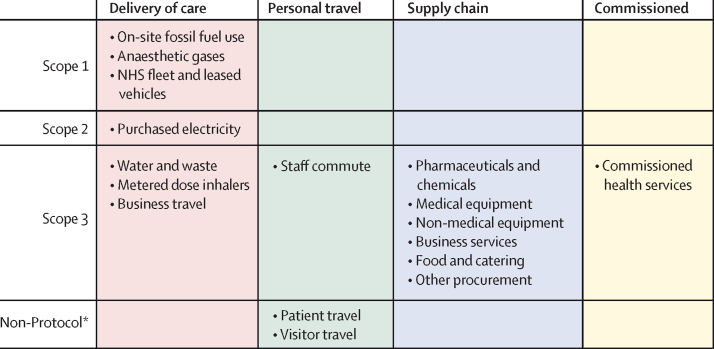
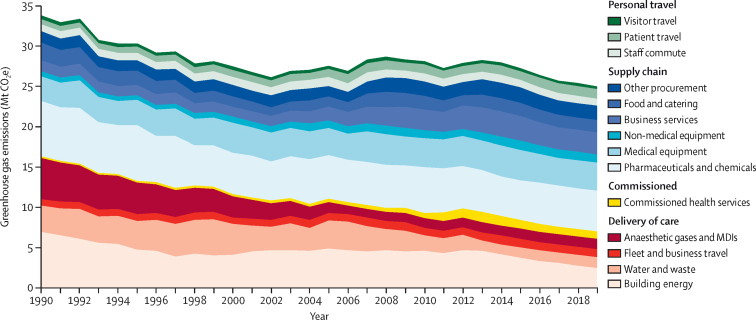
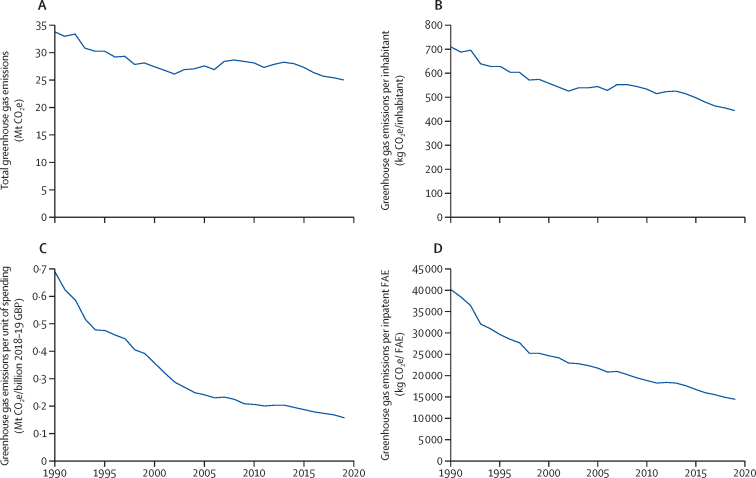
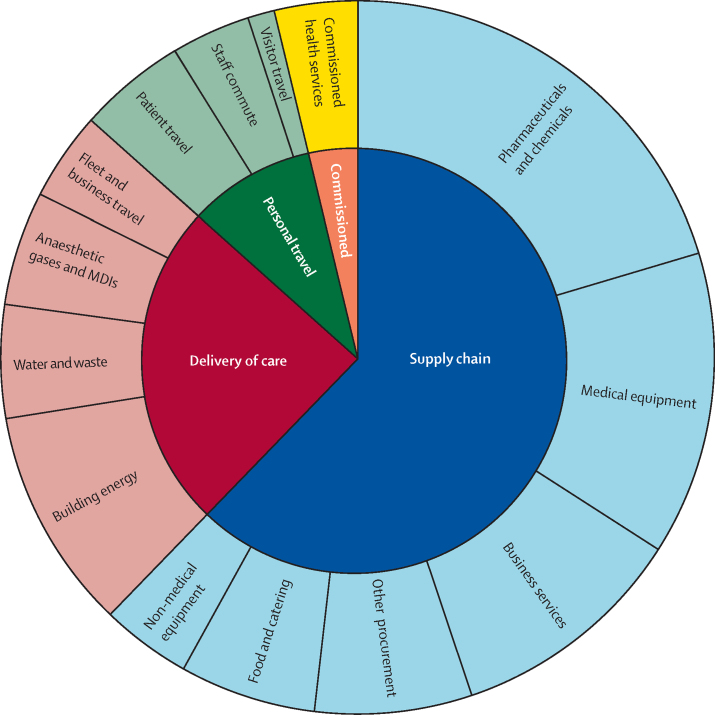
BACKGROUND: Climate change threatens to undermine the past 50 years of gains in public health. In response, the National Health Service (NHS) in England has been working since 2008 to quantify and reduce its carbon footprint. This Article presents the latest update to its greenhouse gas accounting, identifying interventions for mitigation efforts and describing an approach applicable to other health systems across the world. METHODS: A hybrid model was used to quantify emissions within Scopes 1, 2, and 3 of the Greenhouse Gas Protocol, as well as patient and visitor travel emissions, from 1990 to 2019. This approach complements the broad coverage of top-down economic modelling with the high accuracy of bottom-up data wherever available. Available data were backcasted or forecasted to cover all years. To enable the identification of measures to reduce carbon emissions, results were disaggregated by organisation type. FINDINGS: In 2019, the health service's emissions totalled 25 megatonnes of carbon dioxide equivalent, a reduction of 26% since 1990, and a decrease of 64% in the emissions per inpatient finished admission episode. Of the 2019 footprint, 62% came from the supply chain, 24% from the direct delivery of care, 10% from staff commute and patient and visitor travel, and 4% from private health and care services commissioned by the NHS. INTERPRETATION: This work represents the longest and most comprehensive accounting of national health-care emissions globally, and underscores the importance of incorporating bottom-up data to improve the accuracy of top-down modelling and enabling detailed monitoring of progress as health systems act to reduce emissions. FUNDING: Wellcome Trust.
Overview
The claims and statistics of this paper haven’t been checked yet.
Free: it reads the open-access text and checks the first 5 claims that cite a source we can check. Create a free account to check every claim.
Integrity signals
Registry
Cites
Statistics
Figures
Verification
Claims the paper makes
The claims and statistics of this paper haven’t been checked yet.
Free: it reads the open-access text and checks the first 5 claims that cite a source we can check. Create a free account to check every claim.
Claims other papers make about this one
Each is checked against this paper’s own text: does it say what the citing paper says it does?
The check wasn’t confident either way, so it gives no verdict — never disputed.
In the citing paper
“Unfortunately, the awareness of the healthcare community regarding the negative impact of the sector on the natural environment and society, and in turn the responsibility for dealing with it, is very low [23].”
From Towards Green and Sustainable Healthcare: A Literature Review and Research Agenda for Green Leadership in the Healthcare Sector (2023) · cites this paper as [23]
Experimental — accuracy not yet measured
Self-check
Percentages, sums and reported differences re-computed from the paper’s own numbers.
The self-check needs the paper’s full text.
Citations
Cites
(2014) · doi:10.59327/ipcc/ar5-9789291691432 · Cited by 5,217
Watts, N., Amann, M., Arnell, N., Ayeb-Karlsson, S., Belesova, K., Boykoff, M., Byass, P., Cai, W., Campbell-Lendrum, D., Capstick, S., et al. (2019) · The Lancet · doi:10.1016/s0140-6736(19)32596-6 · Cited by 1,472
Self-citationThe environmental footprint of health care: a global assessment
Lenzen, M., Malik, A., Li, M., Fry, J., Weisz, H., Pichler, P.-P., Chaves, L. S. M., Capon, A., & Pencheon, D. (2020) · The Lancet Planetary Health · doi:10.1016/s2542-5196(20)30121-2 · Cited by 1,211
Environmental impacts of the U.S. health care system and effects on public health
Eckelman, M. J., & Sherman, J. (2016) · PLOS ONE · doi:10.1371/journal.pone.0157014 · Cited by 1,017
Self-citationInternational comparison of health care carbon footprints
Pichler, P.-P., Jaccard, I. S., Weisz, U., & Weisz, H. (2019) · Environmental Research Letters · doi:10.1088/1748-9326/ab19e1 · Cited by 812
The carbon footprint of Australian health care
Malik, A., Lenzen, M., McAlister, S., & McGain, F. (2018) · The Lancet Planetary Health · doi:10.1016/s2542-5196(17)30180-8 · Cited by 534
Eckelman, M. J., Sherman, J. D., & MacNeill, A. J. (2018) · PLOS Medicine · doi:10.1371/journal.pmed.1002623 · Cited by 346
Self-citationThe green print: Advancement of environmental sustainability in healthcare
Sherman, J. D., Thiel, C., MacNeill, A., Eckelman, M. J., Dubrow, R., Hopf, H., Lagasse, R., Bialowitz, J., Costello, A., Forbes, M., et al. (2020) · Resources, Conservation and Recycling · doi:10.1016/j.resconrec.2020.104882 · Cited by 327
Self-citationEDITORIAL: CARBON FOOTPRINT AND INPUT–OUTPUT ANALYSIS – AN INTRODUCTION
Wiedmann, T. (2009) · Economic Systems Research · doi:10.1080/09535310903541256 · Cited by 298
Estimated Global Disease Burden From US Health Care Sector Greenhouse Gas Emissions
Eckelman, M. J., & Sherman, J. D. (2018) · American Journal of Public Health · doi:10.2105/ajph.2017.303846 · Cited by 258
Self-citation
Research works printed but not linked: 1
- 28. NHS Sustainable Development Unit. Goods and services carbon hotspots. NHS England breakdown of goods and services carbon footprint by organisation type. Cambridge: NHS Sustainable Development Unit, 2012.
Cited by
Items 201–300 of 1,000
Fülbert, H., Schäfer, L. N., Gerspacher, L. M., Bösner, S., Schut, C., Krolewski, R., Knipper, M., & Justus Liebig University Giessen (2023) · GMS journal for medical education · doi:10.22029/jlupub-17984 · Cited by 18
Life cycle assessment of medical oxygen
Tariq, M., Siddhantakar, A., Sherman, J. D., Cimprich, A., & Young, S. B. (2024) · Journal of Cleaner Production · doi:10.1016/j.jclepro.2024.141126 · Cited by 19
Self-citationPark, E. J., Bae, J., Kim, J., Yoon, J.-U., Do, W., Yoon, J.-P., Shon, H.-S., Kang, Y., Kim, H. Y., & Cho, A.-R. (2024) · Medicine · doi:10.1097/md.0000000000037256 · Cited by 18
“[8,19] While this percentage may seem small globally, CO 2 e emissions from inhalation anesthetics account for 5% of a hospital CO 2 e and 50% of surgery-related CO 2 e. [20–22] Therefore, anesthesiologists play an important role in reducing the environmental impact through their care.”
BackgroundThe carbon footprint of total knee replacements
McGain, F., Wickramarachchi, K., Aye, L., Chan, B. G., Sheridan, N., Tran, P., & McAlister, S. (2024) · Australian Health Review · doi:10.1071/ah24154 · Cited by 18
Moermond, C., Puhlmann, N., Pieters, L., Matharu, A. S., Boone, L., Dobbelaere, M. R., Proquin, H., Kümmerer, K., Ragas, A. M. J., Vidaurre, R., et al. (2024) · Sustainable Chemistry and Pharmacy · doi:10.1016/j.scp.2024.101893 · Cited by 18
Zhang, X., Albrecht, K., Herget‐Rosenthal, S., & Rogowski, W. H. (2022) · Journal of Industrial Ecology · doi:10.1111/jiec.13294 · Cited by 19
Sustainability for planetary health: A seventh domain of quality in primary care
Klemenc–Ketiš, Z., & Rochfort, A. (2022) · Slovenian Journal of Public Health · doi:10.2478/sjph-2022-0026 · Cited by 18
“Primary care has a high carbon footprint, in particular from prescribing medication, which accounts for up to 60% of this (8, 9).”
BackgroundHow do we decarbonise fairly? Emissions, inequities and the implications for net zero healthcare
Bhopal, A. S., Bærøe, K., & Norheim, O. F. (2022) · Journal of the Royal Society of Medicine · doi:10.1177/01410768221113069 · Cited by 18
“(Source of data: Per-capita healthcare footprint from Tennison et al.(14) – a detailed analysis of the English NHS carbon footprint; Per-capita carbon footprint from the World Inequality Report database(13) – the most comprehensive database on wealth and income inequality.”
MethodToward including environmental sustainability in Health Technology Assessment
Holtorf, A., Pegg, M., Mueller, D., McMeekin, N., & Environmental Sustainability in HTA Working Group of HTAi (ESHTA) (2025) · International Journal of Technology Assessment in Health Care · doi:10.1017/s0266462325100500 · Cited by 17
Pruijm, M. T., Rho, E., Woywodt, A., & Segerer, S. (2024) · Clinical Kidney Journal · doi:10.1093/ckj/sfae144 · Cited by 17
Intensive care unit carbon footprint: A bibliometric and document content analysis
Özkan, E. (2024) · Nursing in Critical Care · doi:10.1111/nicc.13142 · Cited by 17
Murphy, A. C., Carroll, W. D., Gotsell, M., Potter, C., Quint, J. K., & Malone, R. (2024) · BMJ Open Respiratory Research · doi:10.1136/bmjresp-2024-002579 · Cited by 17
Berger, M., Ehlers, J. P., & Nitsche, J. (2025) · Journal of Medical Internet Research · doi:10.2196/71795 · Cited by 17
“Furthermore, indirect emissions from the health care sector, including supply chains as well as the transportation of patients and staff to and from health care facilities, are particularly significant [11].”
Williams, J. T. W., Bell, K., Morton, R. L., & Dieng, M. (2022) · Applied Health Economics and Health Policy · doi:10.1007/s40258-022-00765-6 · Cited by 17
“This accounts for the majority of the healthcare sector’s carbon footprint [16].”
BackgroundSergeant, M., Webster, R., Varangu, L., Rao, A., Kandasamy, S., Rampton, M., Mathur, N., & Hategan, A. (2022) · Healthcare Quarterly · doi:10.12927/hcq.2022.26946 · Cited by 17
King, J., Poo, S. X. W., El-Sayed, A., Kabir, M., Hiner, G., Olabinan, O., Colwill, M., Ayubi, H., Shakweh, E., Kronsten, V. T., et al. (2022) · Frontline Gastroenterology · doi:10.1136/flgastro-2022-102215 · Cited by 17
(DOG), D. O. G., Geerling, G., Birtel, J., Faber, H., Fangerau, H., Gamulescu, A., Gronow, T., Guthoff, R. F., Helbig, H., Herwig‐Carl, M. C., et al. (2023) · Die Ophthalmologie · doi:10.1007/s00347-022-01792-3 · Cited by 16
Reducing the Climate Impact of Critical Care
Rabin, A. S., Lai, P. S., Maximous, S. I., & Shankar, H. (2023) · CHEST Critical Care · doi:10.1016/j.chstcc.2023.100037 · Cited by 16
Hibbs, S. P., Thomas, S., Agarwal, N., Andrews, C., Eskander, S., Abdalla, A. S., Staves, J., Eckelman, M. J., & Murphy, M. F. (2024) · Transfusion · doi:10.1111/trf.17786 · Cited by 16
“27 The same is true within NHSBT, which has already achieved its target to reduce carbon emissions by 50% over the 10 year period to 2025 (from 22,529 tons CO 2 in 2014/2015 to 9756 tons CO 2 in 2020/2021), through working with suppliers, reducing the number of operational sites, the introduction…”
BackgroundSelf-citationKapuria, B., Hamadeh, R. S., Mazloum, F., Korbane, J. A., Aung, K., Kamal, D., Chamoun, N., & Syed, S. (2024) · Frontiers in Health Services · doi:10.3389/frhs.2024.1386432 · Cited by 16
Healthcare procurement in the race to net-zero: Practical steps for healthcare leadership
Lavoie, D. C. T., Maraj, A., Wong, G. Y. C., Parascandalo, F., & Sergeant, M. (2024) · Healthcare Management Forum · doi:10.1177/08404704241258152 · Cited by 16
Measuring and improving the cradle-to-grave environmental performance of urological procedures
John, J. B., Gray, W. K., Briggs, T. W. R., & McGrath, J. S. (2024) · Nature Reviews Urology · doi:10.1038/s41585-024-00937-0 · Cited by 16
“Despite UK data showing a reduction in the total GHG emissions generated by the NHS between 1990 and 2019, falling from ~34 megatonnes (Mt) to ~25 Mt CO 2 e, these improvements have been made in very specific areas such as energy procurement, anaesthetic gases and inhalers 3 .”
InfluentialNunes, A. R., Karaba, F., Geddes, O., Bickerton, A., Atherton, H., Dahlmann, F., Eccles, A., Gregg, M., Spencer, R. A., Twohig, H., et al. (2025) · BMJ Open · doi:10.1136/bmjopen-2024-091404 · Cited by 16
Simulation-based education and sustainability: creating a bridge to action
Mitchell, K., Canham, R., Hughes, K. P., & Tallentire, V. R. (2025) · Advances in Simulation · doi:10.1186/s41077-025-00354-2 · Cited by 16
Lopes, R., Shelton, C., & Charlesworth, M. (2021) · Current Opinion in Anaesthesiology · doi:10.1097/aco.0000000000001009 · Cited by 16
Nachhaltigkeit in der Augenheilkunde: Adaptation an die Klimakrise und Mitigation
Birtel, J., Heimann, H., Hoerauf, H., Helbig, H., Schulz, C., Holz, F. G., & Geerling, G. (2022) · Die Ophthalmologie · doi:10.1007/s00347-022-01608-4 · Cited by 16
The carbon footprint of a hospice
Dokal, K., Morris, M., Spooner, R., & Perkins, P. (2022) · BMJ Supportive & Palliative Care · doi:10.1136/spcare-2022-003972 · Cited by 16
Nagasaki, K., Kaji, Y., Wada, Y., & Sasaki, T. (2023) · Journal of General and Family Medicine · doi:10.1002/jgf2.622 · Cited by 16
Medical Practice and the Climate Crisis
Levinson, W. S. (2024) · JAMA · doi:10.1001/jama.2024.8163 · Cited by 16
Fylan, F., & Allison, G. (2023) · The Journal of Climate Change and Health · doi:10.1016/j.joclim.2023.100241 · Cited by 15
Effectiveness of a waste volatile anaesthetic gas collection and recycling system
Slutzman, J. E., Ciardi, F., Smith, S. J., & Everett, L. L. (2024) · British Journal of Anaesthesia · doi:10.1016/j.bja.2024.07.010 · Cited by 15
Anesthetic Gases: Environmental Impacts and Mitigation Strategies for Fluranes and Nitrous Oxide
Anderson, W. A., & Rao, A. (2024) · Environments · doi:10.3390/environments11120275 · Cited by 15
Parker, J. (2025) · Medicine Health Care and Philosophy · doi:10.1007/s11019-025-10254-x · Cited by 15
“They found that emissions follow a social gradient where the poorest decile in England use 20% of their carbon emissions on healthcare whereas the wealthiest decile spend 10 times less (2”
InfluentialIntegrating Environmental Impact in Health Technology Assessment: An Exploratory Study
Ducrot, C., Péron, J., Delaye, M., Pérol, D., Durand‐Zaleski, I., & Piffoux, M. (2025) · PharmacoEconomics · doi:10.1007/s40273-025-01521-z · Cited by 15
“Drugs and medical devices represent about 20–55% of care pathway-associated GHG emissions [7–9].”
The climate impacts of healthcare digitalization: A scoping review
Nissinen, A., Pitkänen, A., Барчук, А. А., Hosseinian, A., Johansson, A., Kaisti, M., Karvonen, J., Marttinen, P., Moen, H., Peltola, E., et al. (2025) · Digital Health · doi:10.1177/20552076251364666 · Cited by 15
Perisetti, A., Desai, M., Bourke, M. J., Penman, I. D., Repici, A., Reddy, D. N., Tajiri, H., Rex, D. K., Hassan, C., & Sharma, P. (2022) · Gut · doi:10.1136/gutjnl-2022-328369 · Cited by 15
Nassikas, N. J., & Gold, D. R. (2023) · Journal of Allergy and Clinical Immunology · doi:10.1016/j.jaci.2023.09.013 · Cited by 15
Jabaudon, M., Vallabh, B., Bacher, H. P., Badenes, R., & Kehl, F. (2024) · Anaesthesia Critical Care & Pain Medicine · doi:10.1016/j.accpm.2024.101389 · Cited by 15
Switching to the Dry-Powder Inhaler Easyhaler®: A Narrative Review of the Evidence
Lavorini, F., Chudek, J. T., Gálffy, G., Pallarés-Sanmartín, A., Pelkonen, A. S., Rytilä, P. H., Syk, J., Szilasi, M., Tamási, L., Xanthopoulos, A., et al. (2021) · Pulmonary Therapy · doi:10.1007/s41030-021-00174-5 · Cited by 15
Regulating Environmental Impact of Medical Devices in the United Kingdom—A Scoping Review
Kumar, P. A. (2021) · Prosthesis · doi:10.3390/prosthesis3040033 · Cited by 15
Bhutta, M. F., & Rizan, C. (2024) · Annals of The Royal College of Surgeons of England · doi:10.1308/rcsann.2024.0005 · Cited by 15
Dvořák, T., Meeks, S. L., Dvorak, L., Rineer, J. M., Kelly, P., Ramakrishna, N. R., Henig, T., Küçükvar, M., Onat, N. C., Tatari, O., et al. (2023) · International Journal of Radiation Oncology*Biology*Physics · doi:10.1016/j.ijrobp.2023.05.022 · Cited by 14
Marrauld, L., Egnell, M., Verneuil, B., & Rambaud, T. (2023) · Médecine des Maladies Métaboliques · doi:10.1016/j.mmm.2023.05.003 · Cited by 14
Harvey, E. J., McLeod, M. C., Brún, C. D., & Ashiru-Oredope, D. A. I. (2023) · BMJ Open · doi:10.1136/bmjopen-2022-068299 · Cited by 15
Whittaker, M., Davies, J. C., Sargent, A., Sawyer, M. H., & Crosbie, E. J. (2023) · BJOG An International Journal of Obstetrics & Gynaecology · doi:10.1111/1471-0528.17722 · Cited by 14
“2 For example, a hysterectomy for surgical management of cervical cancer is associated with a carbon footprint of 285–814 kg CO 2 e, 61,62 depending on approach.”
BackgroundChanpariyavatevong, K., Champahom, T., Se, C., Jomnonkwao, S., & Ratanavaraha, V. (2024) · Heliyon · doi:10.1016/j.heliyon.2024.e26072 · Cited by 14
“Additionally, shifting to nonmotorized travel modes as part of transportation can significantly reduce traffic congestion, a major source of CO 2 emissions [35 – 37].”
BackgroundGrüßer, L., Bayram, B., Ziemann, S., Wallqvist, J., Wienhold, J., Rossaint, R., Derwall, M., & Follmann, A. (2024) · Telemedicine Journal and e-Health · doi:10.1089/tmj.2023.0700 · Cited by 14
Sijm-Eeken, M. E., Ossebaard, H. C., Čaluković, A., Temme, B., Peute, L., & Jaspers, M. (2024) · BMC Health Services Research · doi:10.1186/s12913-024-11749-8 · Cited by 14
“Freight transport [21, 22] Business travel [21, 22, 27] Yes Procurement and products Food and catering [21, 22] Business services [21, 22] Materials [20] Other procurement (non food) [21, 22] Yes b Pharmaceuticals and chemicals [20–22] Paper products [22] Manufactured fuels, chemicals, gases [22]…”
BackgroundInfluentialChen, S. W., Zolo, Y., Ngulube, L., Isiagi, M., & Maswime, S. (2025) · BMC Surgery · doi:10.1186/s12893-024-02712-9 · Cited by 14
“[7, 18, 19] Gross domestic product (GDP) data is from the IMF Datamapper tool.”
Vieira, R. J., Sousa‐Pinto, B., Herrmann, A., Antó, J. M., Williams, S., Bognanni, A., Pereira, A. M., Haahtela, T., Leontiadis, G. I., Pfaar, O., et al. (2025) · The Journal of Allergy and Clinical Immunology In Practice · doi:10.1016/j.jaip.2025.04.060 · Cited by 14
Environmental Footprint Assessment of a Cleanup at Hypothetical Contaminated Site
Khan, M. A. A., Qadir, Z., Asad, M., Kouzani, A. Z., & Mahmud, M. A. P. (2021) · Applied Sciences · doi:10.3390/app11114907 · Cited by 14
Health Care and Climate Change—Telemedicine’s Role in Environmental Stewardship
Smith, M. W., O’Shea, A. M. J., & Wray, C. M. (2023) · JAMA Network Open · doi:10.1001/jamanetworkopen.2022.53794 · Cited by 14
Gadi, N. R., Lam, K., Acharya, A., Beatty, J. W., & Purkayastha, S. (2023) · Annals of Medicine and Surgery · doi:10.1097/ms9.0000000000000289 · Cited by 14
“’s public sector emissions and has a carbon footprint of 25 million tonnes of CO2e per year([2,3]).”
BackgroundRecent progress on carbon footprint assessment of healthcare services
Jerin, A., Mahmud, M. A. P., Ackland, M. L., & Kouzani, A. Z. (2024) · Environmental Research Communications · doi:10.1088/2515-7620/ad7e83 · Cited by 14
The Role of Laboratories in Reducing the Carbon Footprint
Badrick, T. C. (2022) · American Journal of Clinical Pathology · doi:10.1093/ajcp/aqac056 · Cited by 14
Davies, J. F., Trajceska, L., & Weinberg, L. (2023) · Anaesthesia and Intensive Care · doi:10.1177/0310057x221129291 · Cited by 13
“In the UK’s National Health Service, around 5% of healthcare’s carbon footprint is estimated to be directly attributed to anaesthetic gases.(7) A health economic evaluation of volatile anaesthetic purchasing in hospitals in Victoria between 2005 and 2011 found that”
BackgroundAn assessment of sustainable transport infrastructure in a national healthcare system
Angelov, S., Jimenez, C. K., Wall, V., & O’Croinin, D. F. (2023) · The Surgeon · doi:10.1016/j.surge.2023.10.008 · Cited by 13
Karam, K. M., Moussa, M., Valentin, E., Meyer, A., Bohu, Y., Gérometta, A., Grimaud, O., Lefèvre, N., & Hardy, A. (2024) · Knee Surgery Sports Traumatology Arthroscopy · doi:10.1002/ksa.12035 · Cited by 13
Sharif, Κ., de Santiago, E. R., David, P., Afek, A. B., Gralnek, I. M., Ben‐Horin, S., & Lahat, A. (2024) · The Lancet. Gastroenterology & hepatology · doi:10.1016/s2468-1253(23)00414-4 · Cited by 13
Yusuf, H. E., Gor, R., Memon, R. S., Vegiventi, C., & Kumar, A. (2024) · Future Healthcare Journal · doi:10.1016/j.fhj.2024.100174 · Cited by 13
Estimation of carbon emissions associated with tibial plateau levelling osteotomies in 10 dogs
Ryan, A., West, E., Matchwick, A., Lederer, E., & Pierce, J. T. (2024) · Veterinary Anaesthesia and Analgesia · doi:10.1016/j.vaa.2024.09.007 · Cited by 13
Lukac, S., Leinert, E., Kühn, T., Dayan, D., Ebner, F. K., Pfister, K., Schäffler, H., Veselinovic, K., Janni, W., Hiete, M., et al. (2024) · European Journal of Surgical Oncology · doi:10.1016/j.ejso.2024.108779 · Cited by 13
Wurzel, D. F., Montgomery, B. D., Anderson, N. V. E., Schneider‐Futschik, E. K., George, J., Bosnic-Anticevich, S. Z., Stone, E. C. A., Hancox, R. J., Fingleton, J., Kuek, S. L., et al. (2024) · Respirology · doi:10.1111/resp.14852 · Cited by 13
Implementing recycling in the operating room: a single-center experience
Mastronardi, M., Bortul, M., Dragani, F., Biloslavo, A., de Manzini, N., & Palmisano, S. (2025) · Surgical Endoscopy · doi:10.1007/s00464-024-11502-6 · Cited by 13
“Since the healthcare system is a significant contributor to this problem [1, 5], the Scientific Community is advancing efforts to find more sustainable solutions that ensure public health.”
Quitmann, C., Terres, L., Maun, A., Sauerborn, R., Reynolds, E., Bärnighausen, T., Herrmann, A., & Franke, B. (2025) · Cleaner Environmental Systems · doi:10.1016/j.cesys.2025.100262 · Cited by 13
Sumrit, D. (2025) · Cleaner Engineering and Technology · doi:10.1016/j.clet.2025.100916 · Cited by 13
Kaur, H., Parascandalo, F., Krantzberg, G., Ko, E., Mathur, N., Gill, A. S., Razack, F., & Sergeant, M. (2025) · Canadian Family Physician · doi:10.46747/cfp.7104263 · Cited by 13
The optimal mode of anaesthesia: are we ready for an evidence-based recommendation?
Kampman, J. M., & Weiland, N. H. S. (2025) · British Journal of Anaesthesia · doi:10.1016/j.bja.2025.03.005 · Cited by 13
Espinosa, S., Martínez, F., Antiñolo, M., Nielsen, O. J., & Jiménez, E. (2025) · Environmental Science Processes & Impacts · doi:10.1039/d5em00061k · Cited by 13
Sustainable health care in a renal centre - carbon saving is coupled with cost-efficiency
Choo, S., Murcutt, G., Steinbach, I., & Stoves, J. L. (2025) · Journal of Nephrology · doi:10.1007/s40620-025-02354-x · Cited by 13
“In 2019, the carbon footprint for the National Health Service (NHS) in England was estimated at 25 megatonnes of carbon dioxide equivalent [3].”
An exploration of hospital pharmacists’ engagement with sustainability policy in the NHS England
Singleton, J., Lau, E., & Nissen, L. M. (2022) · International Journal of Pharmacy Practice · doi:10.1093/ijpp/riac040 · Cited by 13
Gendy, D., Walters, H. L., O'Mahony, E., & Zaman, S. (2022) · Clinical Radiology · doi:10.1016/j.crad.2022.05.002 · Cited by 13
How Should We Respond to Health Care Generating Environmental Harm?
Collins, A., & Demorest, S. L. (2022) · The AMA Journal of Ethic · doi:10.1001/amajethics.2022.1004 · Cited by 13
Greenhouse gas emissions of an outpatient care service: a cost-based approach
Keil, M., & Grün, L. (2022) · Zeitschrift für Evidenz Fortbildung und Qualität im Gesundheitswesen · doi:10.1016/j.zefq.2022.09.005 · Cited by 13
Arndt, E.-M., Jansen, T. R., Bojko, J., Roos, J., Babasiz, M., Randau, T. M., Welle, K., Burger, C., & Kabir, K. (2023) · Frontiers in Surgery · doi:10.3389/fsurg.2023.959639 · Cited by 13
Rani, P. K., Khanna, R., Ravindrane, R., Yeleswarapu, S. C., Panaganti, A. K., Thakur, V. S., Sharadi, V., Varghese, I., Rathi, V. M., & Vaddavalli, P. K. (2024) · Eye · doi:10.1038/s41433-024-02934-4 · Cited by 13
“However, the health system could significantly influence this through innovative models of care [18].”
Climate-conscious inhaler prescribing for family physicians
Green, S., Stoynova, V., Culley, C. L., Kaplan, A. G., Hale, I., Simms, N., & Khan, N. (2024) · Canadian Family Physician · doi:10.46747/cfp.7006381 · Cited by 13
Dry eye disease sustainability
de Ribot, F. M., del Castillo, J. M. B., Geerling, G., Messmer, E. M., Baudouin, C., & Alves, M. (2023) · The Ocular Surface · doi:10.1016/j.jtos.2023.08.006 · Cited by 13
Quantitative Evaluation of Carbon Reduction Policy Based on the Background of Global Climate Change
Meng, J., & Xu, W. (2023) · Sustainability · doi:10.3390/su151914581 · Cited by 12
Carbon footprint of laparoscopic right hemicolectomy
Taylor, A., Au, S., Krivankova, B., Asanai, K., & Manimaran, N. (2023) · British journal of surgery · doi:10.1093/bjs/znad422 · Cited by 12
Environmental Impact of a Direct Laryngoscopy: Opportunities for Pollution Mitigation
Filley, G. I., Kayastha, D., Hayes, W., Mehra, S., Sherman, J. D., & Eckelman, M. J. (2024) · The Laryngoscope · doi:10.1002/lary.31341 · Cited by 12
Self-citationVerlinden, A., Boone, L., Soete, W. D., & Dewulf, J. P. (2024) · Sustainable Production and Consumption · doi:10.1016/j.spc.2024.10.016 · Cited by 12
Colquhoun, D. A., Hovord, D. G., Rachel, R., Yuan, Y., Mentz, G. B., Koppera, P., Dubovoy, T. Z., Picton, P., & Mashour, G. A. (2025) · The Lancet Planetary Health · doi:10.1016/s2542-5196(24)00331-0 · Cited by 12
Mitigating the environmental effects of healthcare: the role of the endocrinologist
Rizan, C., Rotchell, J. M., Eng, P. C., Robaire, B., Ciocan, C. M., Kapoor, N., Kalra, S., & Sherman, J. D. (2025) · Nature Reviews Endocrinology · doi:10.1038/s41574-025-01098-9 · Cited by 12
“Major sources of endocrinology emissions stem from prescribed pharmaceuticals, patient and staff transportation, energy requirements of buildings associated with outpatient appointments, and emissions associated with investigations and monitoring 14 .”
Self-citationCircular material flow of medication in the intensive care unit
Klasen, J., Rijcks, S., Gommers, D. A. M. P. J., Diehl, J. C., & Hunfeld, N. (2025) · Critical Care · doi:10.1186/s13054-025-05434-3 · Cited by 12
“Intensive care units (ICUs) are identified as carbon hot-spots due to their continuous operation, high resource utilization, and energy-intensive nature [1, 2].”
Akgün, Z., & Palamar, M. (2025) · Eye · doi:10.1038/s41433-025-03885-0 · Cited by 13
“According to data from the UK National Health Service, staff commuting and patient travel make up 10% of healthcare emissions [47].”
Environmental Issues in Clinical Laboratories: Pragmatic Pathways to Sustainability.
Badrick, T. C., Majid, H., Männistö, T. I., & Anetor, J. I. (2025) · Europe PMC (PubMed Central) · Cited by 12
Environmental footprint in specific industries: intellectual base and research status
Huang, X., Chen, R., Ho, E. H. Z., Kong, S., Yeo, Z., & Kong, Y. (2025) · Carbon Footprints · doi:10.20517/cf.2025.32 · Cited by 12
Kranke, P., Jakobsson, J., Marin, L., Kleinberg, R. L. K., Landoni, G., Barbero, F. R., Rossi, M., Sanders, G., & Zacharowski, K. D. (2025) · Current Opinion in Anaesthesiology · doi:10.1097/aco.0000000000001595 · Cited by 12
“Emissions in health-care are predominantly driven by supply chain factors, such as the manufacturing of goods (e.g. chemicals and medical equipment), and by delivery of care factors (e.g. building energy, water, and waste) [112].”
The Environmental Impact of Spine Surgery and the Path to Sustainability
McNamee, C., Rakovac, A., & Cawley, D. T. (2022) · Spine · doi:10.1097/brs.0000000000004550 · Cited by 12
Saggar, A., & Nigam, B. (2023) · Journal of Climate Change · doi:10.3233/jcc230003 · Cited by 12
The environmental impacts of anesthesia
Grunert, M., Hunt, M. F., & Decker, M. (2024) · Current Opinion in Urology · doi:10.1097/mou.0000000000001192 · Cited by 12
“According to a UK report from 2019, 20% of greenhouse gases from the healthcare sector stemmed from pharma-ceuticals, not including anesthetic gases [15].”
Sustainable pharma: The need, current status and mission for the future
Agrawal, M., Bansal, A., Khandelwal, V. K., & Bansal, N. (2024) · Scripta Medica · doi:10.5937/scriptamed55-51612 · Cited by 12
Panorama da Saúde: América Latina e Caribe 2023
OECD, & Bank, T. W. (2023) · OECD eBooks · doi:10.1787/047f9a8a-pt · Cited by 13
‘Green podiatry’ ‐ reducing our carbon footprints. Lessons from a sustainability panel
Evans, A. (2021) · Journal of Foot and Ankle Research · doi:10.1186/s13047-021-00497-1 · Cited by 12
Sustainable practice: what can I do?
Wedmore, F., Nolan, T., & Watts, N. (2023) · BMJ · doi:10.1136/bmj.p2461 · Cited by 12
Self-citationMathieu, E., Pickles, K. M., Barratt, A. L., & Bell, K. (2024) · Environmental Research Letters · doi:10.1088/1748-9326/ad7c6a · Cited by 11
“At least 50% of total healthcare carbon emissions come from the delivery of clinical care [4].”
Hernandez, A. M., Chen, A. F., Ghatpande, O. A., Omary, R. A., Woolen, S. A., Jung, Y., & Fananapazir, G. (2024) · Journal of Computer Assisted Tomography · doi:10.1097/rct.0000000000001700 · Cited by 11
Gaudreau-Simard, M., Shetty, N., Silverstein, W. K., Luo, O. D., & Stoynova, V. (2025) · Journal of General Internal Medicine · doi:10.1007/s11606-025-09441-6 · Cited by 11
“35 Studies in the UK have shown that 3.5% of the National Health Service’s carbon footprint is related exclusively to MDIs, 36 making this an attractive target for intervention.”
InfluentialSkraastad, E. J., Elvir-Lazo, O. L., White, P. F., Chernobylsky, D., Brring, R., & Yumul, R. (2025) · BJA Open · doi:10.1016/j.bjao.2025.100406 · Cited by 11
Metadata
- Authors
- Tennison, I., Roschnik, S., Ashby, B., Boyd, R., Hamilton, I., Oreszczyn, T., Owen, A., Romanello, M., Ruyssevelt, P., Sherman, J. D., Smith, A. Z. P., Steele, K., Watts, N., & Eckelman, M. J.
- Affiliations
- NHS England (GB)
- Arup Group (United Kingdom) (GB)
- University College London (GB)
- University of Leeds (GB)
- Yale University (US)
- Northeastern University (US)
- Corresponding author
- Eckelman, Matthew J
- ORCID
- Venue
- The Lancet Planetary Health
- Publisher
- Elsevier BV
- Published
- 2021-02
- Volume
- 5
- Issue
- 2
- Pages
- e84-e92
- ISSN
- 2542-5196 (ISSN-L)
- PMC
- PMC7887664
- OpenAlex
- W3127500650
- Semantic Scholar
- a1762bc0f4da5ef3f86d7b8d6807200964d0b7e1
- Cited by
- 1,039
- References
- 26
- Citations by year
- 2026: 134 · 2025: 222 · 2024: 221 · 2023: 317 · 2022: 105 · 2021: 40
- FWCI
- 55.35
- Type
- journal article
- Language
- en
- Open access
- gold
- doi.org
- Licence
- cc-by
- www.elsevier.com/tdm/userlicense/1.0/ (tdm)
- www.elsevier.com/legal/tdmrep-license (tdm)
- creativecommons.org/licenses/by/4.0/ (vor)
- Locations
- The Lancet Planetary Health (publishedVersion, cc-by)
- PubMed Central (publishedVersion, cc-by)
- PubMed (publishedVersion)
- White Rose Research Online (University of Leeds, The University of Sheffield, University of York) (acceptedVersion)
- DOAJ (DOAJ: Directory of Open Access Journals) (submittedVersion, cc-by-sa)
- UCL Discovery (University College London) (submittedVersion)
- Funders
- Wellcome Trust (209734/Z/17/Z)
- Topics
- Physical Sciences › Environmental Science › Environmental Engineering › Environmental Impact and Sustainability
- Physical Sciences › Environmental Science › Health, Toxicology and Mutagenesis › Climate Change and Health Impacts
- Physical Sciences › Engineering › Architecture › Healthcare Facilities Design and Sustainability
- Keywords
- healthcare emissions, carbon footprint, National Health Service, greenhouse gas accounting, climate change mitigation, supply chain emissions, Greenhouse Gas Protocol
- MeSH terms
- Greenhouse Gases, Carbon Dioxide, Delivery of Health Care, England, Humans, State Medicine, Transportation, Health Care Sector, Climate Change, Carbon Footprint
About these checks
Registry, retraction, Cites and statistics results are computed, not judged, with one exception: a printed reference that no index lists is read once by a model before it counts as a citation error. Claims are extracted by a model and kept only when their quote appears verbatim in the text; each cited source is then checked, with a model’s help, for whether it says what the claim relies on. Those verdicts can be wrong — read the claim’s quote and the cited source before relying on one.
Statistics and arithmetic are recomputed, not judged.
Confidence bands are shown only for fields calibrated on our annotated test set. None is calibrated yet, so no band is shown.
What counts as a claim ›How we measure confidence ›How we check this ›
Are you an author, or do you see a problem with this page? Request a review
Data sources
Bibliographic data: Semantic Scholar, OpenAlex, Crossref.
Contains information from the Semantic Scholar Academic Graph Datasets, made available under the ODC Attribution License (ODC-BY 1.0).
Semantic Scholar’s data is described in: Kinney, R., et al. (2023). The Semantic Scholar Open Data Platform. arXiv:2301.10140.
