

Health care’s response to climate change: A carbon footprint assessment of the NHS in England
Open accessThe DOI matches its Crossref record; 25 of the 26 references it cites were found in a registry or an index.
Abstract
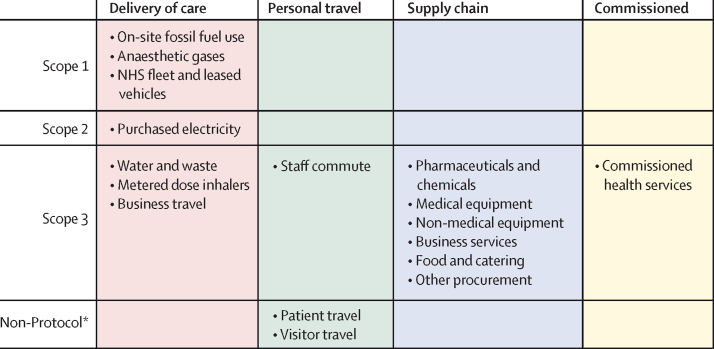
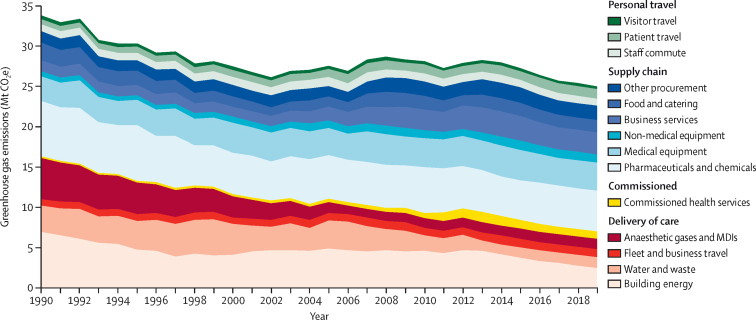
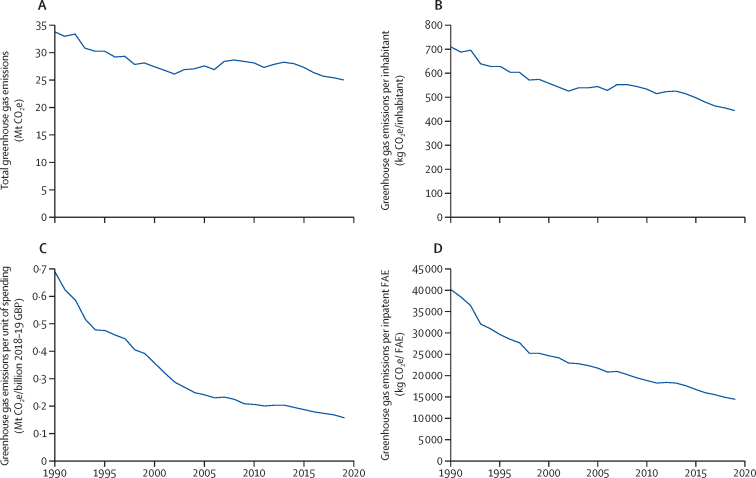
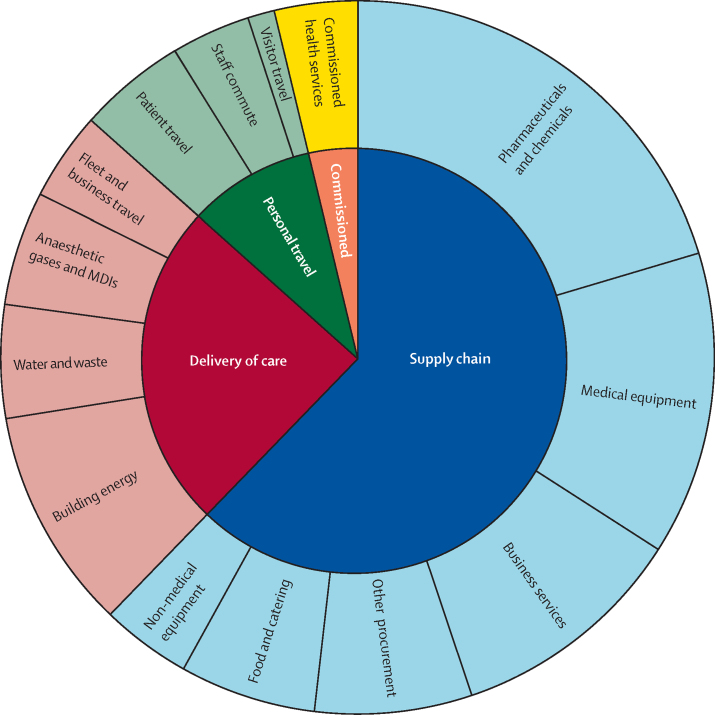
BACKGROUND: Climate change threatens to undermine the past 50 years of gains in public health. In response, the National Health Service (NHS) in England has been working since 2008 to quantify and reduce its carbon footprint. This Article presents the latest update to its greenhouse gas accounting, identifying interventions for mitigation efforts and describing an approach applicable to other health systems across the world. METHODS: A hybrid model was used to quantify emissions within Scopes 1, 2, and 3 of the Greenhouse Gas Protocol, as well as patient and visitor travel emissions, from 1990 to 2019. This approach complements the broad coverage of top-down economic modelling with the high accuracy of bottom-up data wherever available. Available data were backcasted or forecasted to cover all years. To enable the identification of measures to reduce carbon emissions, results were disaggregated by organisation type. FINDINGS: In 2019, the health service's emissions totalled 25 megatonnes of carbon dioxide equivalent, a reduction of 26% since 1990, and a decrease of 64% in the emissions per inpatient finished admission episode. Of the 2019 footprint, 62% came from the supply chain, 24% from the direct delivery of care, 10% from staff commute and patient and visitor travel, and 4% from private health and care services commissioned by the NHS. INTERPRETATION: This work represents the longest and most comprehensive accounting of national health-care emissions globally, and underscores the importance of incorporating bottom-up data to improve the accuracy of top-down modelling and enabling detailed monitoring of progress as health systems act to reduce emissions. FUNDING: Wellcome Trust.
Overview
The claims and statistics of this paper haven’t been checked yet.
Free: it reads the open-access text and checks the first 5 claims that cite a source we can check. Create a free account to check every claim.
Integrity signals
Registry
Cites
Statistics
Figures
Verification
Claims the paper makes
The claims and statistics of this paper haven’t been checked yet.
Free: it reads the open-access text and checks the first 5 claims that cite a source we can check. Create a free account to check every claim.
Claims other papers make about this one
Each is checked against this paper’s own text: does it say what the citing paper says it does?
The check wasn’t confident either way, so it gives no verdict — never disputed.
In the citing paper
“Unfortunately, the awareness of the healthcare community regarding the negative impact of the sector on the natural environment and society, and in turn the responsibility for dealing with it, is very low [23].”
From Towards Green and Sustainable Healthcare: A Literature Review and Research Agenda for Green Leadership in the Healthcare Sector (2023) · cites this paper as [23]
Experimental — accuracy not yet measured
Self-check
Percentages, sums and reported differences re-computed from the paper’s own numbers.
The self-check needs the paper’s full text.
Citations
Cites
(2014) · doi:10.59327/ipcc/ar5-9789291691432 · Cited by 5,217
Watts, N., Amann, M., Arnell, N., Ayeb-Karlsson, S., Belesova, K., Boykoff, M., Byass, P., Cai, W., Campbell-Lendrum, D., Capstick, S., et al. (2019) · The Lancet · doi:10.1016/s0140-6736(19)32596-6 · Cited by 1,472
Self-citationThe environmental footprint of health care: a global assessment
Lenzen, M., Malik, A., Li, M., Fry, J., Weisz, H., Pichler, P.-P., Chaves, L. S. M., Capon, A., & Pencheon, D. (2020) · The Lancet Planetary Health · doi:10.1016/s2542-5196(20)30121-2 · Cited by 1,211
Environmental impacts of the U.S. health care system and effects on public health
Eckelman, M. J., & Sherman, J. (2016) · PLOS ONE · doi:10.1371/journal.pone.0157014 · Cited by 1,017
Self-citationInternational comparison of health care carbon footprints
Pichler, P.-P., Jaccard, I. S., Weisz, U., & Weisz, H. (2019) · Environmental Research Letters · doi:10.1088/1748-9326/ab19e1 · Cited by 812
The carbon footprint of Australian health care
Malik, A., Lenzen, M., McAlister, S., & McGain, F. (2018) · The Lancet Planetary Health · doi:10.1016/s2542-5196(17)30180-8 · Cited by 534
Eckelman, M. J., Sherman, J. D., & MacNeill, A. J. (2018) · PLOS Medicine · doi:10.1371/journal.pmed.1002623 · Cited by 346
Self-citationThe green print: Advancement of environmental sustainability in healthcare
Sherman, J. D., Thiel, C., MacNeill, A., Eckelman, M. J., Dubrow, R., Hopf, H., Lagasse, R., Bialowitz, J., Costello, A., Forbes, M., et al. (2020) · Resources, Conservation and Recycling · doi:10.1016/j.resconrec.2020.104882 · Cited by 327
Self-citationEDITORIAL: CARBON FOOTPRINT AND INPUT–OUTPUT ANALYSIS – AN INTRODUCTION
Wiedmann, T. (2009) · Economic Systems Research · doi:10.1080/09535310903541256 · Cited by 298
Estimated Global Disease Burden From US Health Care Sector Greenhouse Gas Emissions
Eckelman, M. J., & Sherman, J. D. (2018) · American Journal of Public Health · doi:10.2105/ajph.2017.303846 · Cited by 258
Self-citation
Research works printed but not linked: 1
- 28. NHS Sustainable Development Unit. Goods and services carbon hotspots. NHS England breakdown of goods and services carbon footprint by organisation type. Cambridge: NHS Sustainable Development Unit, 2012.
Cited by
Hassan, Q., Sameen, A. Z., Salman, H. M., Jaszczur, M., & Al-Jiboory, A. K. (2023) · Journal of Energy Storage · doi:10.1016/j.est.2023.108404 · Cited by 480
RetractedHealth, Wellbeing and the Changing Structure of Communities
(2023) · Climate Change 2022 – Impacts, Adaptation and Vulnerability · doi:10.1017/9781009325844.009 · Cited by 294
van Daalen, K. R., Tonne, C., Semenza, J. C., Rocklöv, J., Markandya, A., Dasandi, N., Jankin, S., Achebak, H., Ballester, J., Bechara, H., et al. (2024) · The Lancet Public Health · doi:10.1016/s2468-2667(24)00055-0 · Cited by 290
Self-citationPlanetary health care: a framework for sustainable health systems
MacNeill, A. J., McGain, F., & Sherman, J. D. (2021) · The Lancet Planetary Health · doi:10.1016/s2542-5196(21)00005-x · Cited by 275
Self-citationHydrogen as an energy carrier: properties, storage methods, challenges, and future implications
Hassan, Q., Algburi, S., Sameen, A. Z., Jaszczur, M., & Salman, H. M. (2024) · Environment Systems and Decisions · doi:10.1007/s10669-023-09932-z · Cited by 234
“…such as the UK and Sweden, made progress in reducing emissions through the use of renewable energy sources and energy efficiency measures (Tennison et al. 2021) 2020 In 2020, global greenhouse gas emissions saw a temporary reduction due to the COVID-19 pandemic, which led to decreased…”
The carbon footprint of healthcare settings: A systematic review
Rodríguez‐Jiménez, L., Romero‐Martín, M., Spruell, T., Steley, Z., & Gómez‐Salgado, J. (2023) · Journal of Advanced Nursing · doi:10.1111/jan.15671 · Cited by 233
Howard, C., MacNeill, A. J., Hughes, F., Alqodmani, L., Charlesworth, K., Almeida, R. D. A., Harris, R. D., Jochum, B., Maibach, E. W., Maki, L., et al. (2023) · The Lancet Planetary Health · doi:10.1016/s2542-5196(23)00022-0 · Cited by 235
Self-citationRodríguez de Santiago, E., Dinis-Ribeiro, M., Pohl, H., Agrawal, D., Arvanitakis, M., Baddeley, R., Bak, E., Bhandari, P., Bretthauer, M., Burga, P., et al. (2022) · Endoscopy · doi:10.1055/a-1859-3726 · Cited by 223
“Finally, most elective GI endoscopic procedures should be performed on an outpatient basis, as hospitalization for a procedure incurs more resource consumption and CO 2 emissions [79].”
BackgroundWhite, S. M., Shelton, C. L., Gelb, A. W., Lawson, C., McGain, F., Muret, J., Sherman, J. D., & representing the World Federation of Societies of Anaesthesiologists Global Working Group on Environmental Sustainability in Anaesthesia (2022) · Anaesthesia · doi:10.1111/anae.15598 · Cited by 202
“Decarbonisation of supply chains is crucial for achieving sustainable healthcare and circular economies (i.e. keeping materials in use and making more ef fi cient use of natural resources) [8, 13, 14, 16, 49, 54, 74 – 76].”
BackgroundSelf-citationThe carbon footprint of hospital diagnostic imaging in Australia
McAlister, S., McGain, F., Breth-Petersen, M., Story, D., Charlesworth, K., Ison, G., & Barratt, A. (2022) · The Lancet Regional Health - Western Pacific · doi:10.1016/j.lanwpc.2022.100459 · Cited by 188
The role of the health sector in tackling climate change: A narrative review
Or, Z., & Seppänen, A. (2024) · Health Policy · doi:10.1016/j.healthpol.2024.105053 · Cited by 183
Estimating the environmental impact of disposable endoscopic equipment and endoscopes
Namburar, S., von Renteln, D., Damianos, J., Bradish, L., Barrett, J., Aguilera-Fish, A., Cushman-Roisin, B., & Pohl, H. (2022) · Gut · doi:10.1136/gutjnl-2021-324729 · Cited by 171
Assessing the potential climate impact of anaesthetic gases
Andersen, M. P. S., Nielsen, O. J., & Sherman, J. D. (2023) · The Lancet Planetary Health · doi:10.1016/s2542-5196(23)00084-0 · Cited by 164
Self-citationRizan, C., Lillywhite, R., Reed, M., & Bhutta, M. F. (2023) · Journal of the Royal Society of Medicine · doi:10.1177/01410768231166135 · Cited by 163
Health at a Glance: Latin America and the Caribbean 2023
OECD, & Bank, T. W. (2023) · OECD eBooks · doi:10.1787/532b0e2d-en · Cited by 163
HealthcareLCA: an open-access living database of health-care environmental impact assessments
Drew, J., Christie, S., Rainham, D. G. C., & Rizan, C. (2022) · The Lancet Planetary Health · doi:10.1016/s2542-5196(22)00257-1 · Cited by 162
Steenmeijer, M. A., Rodrigues, J. F. D., Zijp, M. C., & Waaijers, S. L. (2022) · The Lancet Planetary Health · doi:10.1016/s2542-5196(22)00244-3 · Cited by 149
Action guidance for addressing pollution from inhalational anaesthetics
Devlin‐Hegedus, J., McGain, F., Harris, R. D., & Sherman, J. D. (2022) · Anaesthesia · doi:10.1111/anae.15785 · Cited by 147
“Whilst these are a seemingly small contribution to total global emissions, inhalational anaesthetics account for 5% of acute hospital CO2e emissions and 50% of peri-operative department emissions (in high-income countries) [12, 20, 21].”
BackgroundSelf-citationSebastian, S., Dhar, A., Baddeley, R., Donnelly, L., Haddock, R., Arasaradnam, R. P., Coulter, A., Disney, B., Griffiths, H., Healey, C., et al. (2022) · Gut · doi:10.1136/gutjnl-2022-328460 · Cited by 137
The European Green Deal and nephrology: a call for action by the European Kidney Health Alliance
Vanholder, R. C., Agar, J. W. M., Braks, M., Gallego, D., Gerritsen, K. G. F., Harber, M. A., Noruišienė, E., Pancířová, J., Piccoli, G. B., Stamatialis, D. F., et al. (2022) · Nephrology Dialysis Transplantation · doi:10.1093/ndt/gfac160 · Cited by 135
The environmental impact of inhalers for asthma: A green challenge and a golden opportunity
Wilkinson, A., & Woodcock, A. A. (2021) · British Journal of Clinical Pharmacology · doi:10.1111/bcp.15135 · Cited by 132
“In the UK, HFC MDIs account for approximately 13% of the NHS's carbon footprint related to the delivery of care.(11) The NHS in”
BackgroundBerniak-Woźny, J., & Rataj, M. (2023) · International Journal of Environmental Research and Public Health · doi:10.3390/ijerph20020908 · Cited by 129
The Carbon Footprint of Gastrointestinal Endoscopy: It is Time for Sustainable Endoscopy
Lacroute, J., Marcantoni, J., Petitot, S., Weber, J., Levy, P., Dirrenberger, B., Tchoumak, I., Baron, M., Gibert, S., Marguerite, S., et al. (2022) · Endoscopy · doi:10.1055/a-2088-4062 · Cited by 123
“UK NHS data showed that, in 2019, GHG emissions linked to healthcare travel were 10% [15].”
The environmental impact of surgery: A systematic review
Shoham, M., Baker, N. M., Peterson, M. E., & Fox, P. M. (2022) · Surgery · doi:10.1016/j.surg.2022.04.010 · Cited by 119
Strategies and tactics to reduce the impact of healthcare on climate change: systematic review
Braithwaite, J., Smith, C. L., Leask, E., Wijekulasuriya, S., Brooke-Cowden, K., Fisher, G., Patel, R., Pagano, L., Rahimi‐Ardabili, H., Spanos, S., et al. (2024) · BMJ · doi:10.1136/bmj-2024-081284 · Cited by 121
High value health care is low carbon health care
Barratt, A. L., Bell, K., Charlesworth, K., & McGain, F. (2021) · The Medical Journal of Australia · doi:10.5694/mja2.51331 · Cited by 116
“Data sources: Malik et al, 3 Tennison et al 2021,4 and Braithwaite et al.6 ◆ M JA 2 16 (2 ) ▪ 7 F eb ru ar y 20 22 68 Perspectives M JA 2 16 (2 ) ▪ 7 F eb ru ar y 20 22 system approach, with macro (government), meso (organisational) and micro (individual) level elements.”
BackgroundSustainable and Resilient Health Care in the Face of a Changing Climate
Sherman, J. D., MacNeill, A. J., Biddinger, P. D., Ergün, Ö., Salas, R. N., & Eckelman, M. J. (2023) · Annual Review of Public Health · doi:10.1146/annurev-publhealth-071421-051937 · Cited by 114
“…access (e.g., climate-intensified weather events leading to facility damage, impaired transportation, power out-ages), increasing costs (e.g., due to altered and increased disease burdens, system damages), and reducing quality (e.g., from supply chain disruptions and infrastructure damage) (108).”
BackgroundInfluentialSelf-citationNicolet, J., Mueller, Y. K., Paruta, P., Boucher, J., & Senn, N. (2022) · Environmental Health · doi:10.1186/s12940-021-00814-y · Cited by 103
“A recent UK study found that the average primary care consultation produces 66 CO2eq kg [12], which is ten times that of our results.”
MethodResultThe environmental impact of inhaled therapy: making informed treatment choices
Woodcock, A. A., Beeh, K. M., Sagara, H., Aumônier, S., Addo‐Yobo, E. O. D., Khan, J. A., Vestbo, J., & Tope, H. (2021) · European Respiratory Journal · doi:10.1183/13993003.02106-2021 · Cited by 96
“[21, 22].”
Carbon footprint of healthcare systems: a systematic review of evidence and methods
Keil, M., Frehse, L., Hagemeister, M., Knieß, M., Lange, O., Kronenberg, T., & Rogowski, W. H. (2024) · BMJ Open · doi:10.1136/bmjopen-2023-078464 · Cited by 93
Environmental management of industrial decarbonization with focus on chemical sectors: A review
Rajabloo, T., Ceuninck, W. D., Wortswinkel, L. V., Rezakazemi, M., & Aminabhavi, T. M. (2021) · Journal of Environmental Management · doi:10.1016/j.jenvman.2021.114055 · Cited by 92
Farid, I. M., Siam, H. S., Abbas, M. H. H., Mohamed, I., Mahmoud, S. A., Tolba, M., Abbas, H. H., Yang, X., Antoniadis, V., Rinklebe, J., et al. (2022) · Chemosphere · doi:10.1016/j.chemosphere.2021.133389 · Cited by 86
Artificial Intelligence in the NHS: Climate and Emissions✰,✰✰
Bloomfield, P. S., Clutton-Brock, P., Pencheon, E., Magnusson, J., & Karpathakis, K. (2021) · The Journal of Climate Change and Health · doi:10.1016/j.joclim.2021.100056 · Cited by 89
The carbon footprint of surgical operations: a systematic review update
Robinson, P. M., Surendran, K., Lim, S. J., & Robinson, M. (2023) · Annals of The Royal College of Surgeons of England · doi:10.1308/rcsann.2023.0057 · Cited by 90
Booth, A., Jager, A., Faulkner, S. D., Winchester, C., & Shaw, S. E. (2023) · International Journal of Environmental Research and Public Health · doi:10.3390/ijerph20043206 · Cited by 83
“In 2019, 20% of the carbon footprint of the NHS was due to medicines and chemicals and an additional 5% was due to anesthetic gases (2%) and inhalers (3%) [4].”
BackgroundPatel, K., Gonzalez, B. D., Turner, K. L., Tabriz, A. A., Rollison, D. E. M., Robinson, E. J., Naso, C. M., Wang, X., & Spiess, P. E. (2023) · JAMA Network Open · doi:10.1001/jamanetworkopen.2022.53788 · Cited by 81
Rodler, S., Ramacciotti, L. S., Maas, M., Mokhtar, D., Hershenhouse, J. S., Abreu, A. L., Fuchs, G. J., Stief, C. G., Gill, I. S., & Cacciamani, G. E. (2023) · European Urology Focus · doi:10.1016/j.euf.2023.11.013 · Cited by 81
Overdiagnosis is increasing the carbon footprint of healthcare
Barratt, A. L., & McGain, F. (2021) · BMJ · doi:10.1136/bmj.n2407 · Cited by 80
Davies, J. F., McAlister, S., Eckelman, M. J., McGain, F., Seglenieks, R., Gutman, E. N., Groome, J., Palipane, N., Latoff, K., Nielsen, D. P. D., et al. (2024) · British Journal of Anaesthesia · doi:10.1016/j.bja.2023.11.053 · Cited by 78
Self-citationShen, T., Rasdi, I. B., Ezani, E., & San, O. T. (2024) · Scientific Reports · doi:10.1038/s41598-024-60418-7 · Cited by 83
Mandatory Reporting of Emissions to Achieve Net-Zero Health Care
Singh, H., Eckelman, M. J., Berwick, D. M., & Sherman, J. D. (2022) · New England Journal of Medicine · doi:10.1056/nejmsb2210022 · Cited by 78
Self-citationEnvironmental sustainability in orthopaedic surgery: a scoping review
Phoon, K. M., Afzal, I., Sochart, D. H., Asopa, V., Gikas, P. D., & Kader, D. F. (2022) · Bone & Joint Open · doi:10.1302/2633-1462.38.bjo-2022-0067.r1 · Cited by 77
Environmental impacts of Australia's largest health system
Malik, A., Padget, M., Carter, S., Wakiyama, T., Maitland-Scott, I., Vyas, A., Boylan, S. M., Mulcahy, G., Li, M., Lenzen, M., et al. (2021) · Resources Conservation and Recycling · doi:10.1016/j.resconrec.2021.105556 · Cited by 74
Developing Green Healthcare Activities in the Total Quality Management Framework
Lee, S. M., & Lee, D. (2022) · International Journal of Environmental Research and Public Health · doi:10.3390/ijerph19116504 · Cited by 74
Strange, M. P., Booth, A., Akiki, M., Wieringa, S., & Shaw, S. E. (2023) · Journal of Medical Internet Research · doi:10.2196/44823 · Cited by 73
“More recent research has demonstrated high levels of feasibility and acceptability of virtual consulting, with reductions in travel contributing to reduced emissions [11,34-36].”
The Impact of Climate Change, Pollution, and Biodiversity Loss on Digestive Health and Disease
Leddin, D. J. (2024) · Gastro Hep Advances · doi:10.1016/j.gastha.2024.01.018 · Cited by 73
Priority setting and net zero healthcare: how much health can a tonne of carbon buy?
Bhopal, A. S., & Norheim, O. F. (2021) · BMJ · doi:10.1136/bmj-2021-067199 · Cited by 69
Healthcare resilience: a meta-narrative systematic review and synthesis of reviews
Tan, M. Z. Y., Prager, G., Mcclelland, A., & Dark, P. M. (2023) · BMJ Open · doi:10.1136/bmjopen-2023-072136 · Cited by 67
A bibliometric review of carbon footprint research
Dong, Q., Zhong, C., Geng, Y., Dong, F., Chen, W., & Zhang, Y. (2024) · Carbon Footprints · doi:10.20517/cf.2023.45 · Cited by 63
Hu, H., Cohen, G., Sharma, B., Yin, H., & McConnell, R. (2022) · Annual Review of Environment and Resources · doi:10.1146/annurev-environ-112320-095157 · Cited by 62
Create intensive care green teams, there is no time to waste
Trent, L., Law, J., & Grimaldi, D. (2023) · Intensive Care Medicine · doi:10.1007/s00134-023-07015-w · Cited by 62
“Countries with decarbonised power, like France and Sweden, should focus on pharmaceuticals and medical equipment (which are carbon hotspots and are routinely imported [8]).”
BackgroundEco-audit of conventional heart surgery procedures
Grinberg, D., Buzzi, R., Pozzi, M., Schweizer, R., Capsal, J., Thinot, B., Le, M., Obadia, J., & Cottinet, P. (2021) · European Journal of Cardio-Thoracic Surgery · doi:10.1093/ejcts/ezab320 · Cited by 61
Fair pathways to net-zero healthcare
Bhopal, A. S., & Norheim, O. F. (2023) · Nature Medicine · doi:10.1038/s41591-023-02351-2 · Cited by 60
Quantifying the carbon footprint of clinical trials: guidance development and case studies
Griffiths, J., Fox, L., Williamson, P. R., Adshead, F., Salman, P. R. A.-S., Anderson, C., Bedson, E., Bliss, P. J., Boshoff, A., Chen, X., et al. (2024) · BMJ Open · doi:10.1136/bmjopen-2023-075755 · Cited by 60
Climate change and primary health care in Africa: A scoping review
Lokotola, C. L., Mash, R. J., Naidoo, K., Mubangizi, V., Mofolo, N., & Schwerdtle, P. N. (2023) · The Journal of Climate Change and Health · doi:10.1016/j.joclim.2023.100229 · Cited by 59
Towards estimating the carbon footprint of external beam radiotherapy
Chuter, R., Stanford-Edwards, C., Cummings, J., Taylor, C., Lowe, G. J., Holden, E., Razak, R., Glassborow, E., Herbert, S., Reggian, G., et al. (2023) · Physica Medica · doi:10.1016/j.ejmp.2023.102652 · Cited by 57
“In 2019 the NHS was responsible for approximately 25 million metric tonnes CO 2 equivalent emissions (CO 2 e), which is equivalent to roughly 5% of the UK ’ s entire carbon footprint [4].”
BackgroundInfluentialCristiano, W., Marchi, C. D., Domenico, K. D., Punzo, O., Mancini, A., & Mancini, L. (2024) · Environmental Sciences Europe · doi:10.1186/s12302-024-00839-3 · Cited by 57
“Some evidence suggests that this process has already begun [20, 34].”
BackgroundInfluentialCarbon Emissions From Different Dialysis Modalities: A Life Cycle Assessment
Barraclough, K. A., Talbot, B. E. M., Knight, J. F., Blair, S., McGain, F., Masterson, R., Knight, R., Nelson, C., McDonald, S. P., & McAlister, S. (2025) · American Journal of Kidney Diseases · doi:10.1053/j.ajkd.2025.04.019 · Cited by 57
Blenkinsop, S., Foley, A., Schneider, N., Willis, J., Fowler, H. J., & Sisodiya, S. M. (2021) · Epilepsia · doi:10.1111/epi.17046 · Cited by 56
Climate change and its impact on infectious diseases in Asia
Zain, A., Sadarangani, S. P., Shek, L. P., & Vasoo, S. S. (2024) · Singapore Medical Journal · doi:10.4103/singaporemedj.smj-2023-180 · Cited by 55
“[94] While medico‑legal risks can make it tempting to over‑investigate and overtreat, the medical principle of ‘primum non nocere’ (first, do no harm) should serve as a reminder.”
BackgroundTranslating Planetary Health Principles Into Sustainable Primary Care Services
Holguera, J. G., Gaille, M., Carral, M. D. R., Steinberger, J. K., Marti, J., Bühler, N., Kaufmann, A., Chiapperino, L., Vicedo‐Cabrera, A. M., Schwarz, J., et al. (2022) · Frontiers in Public Health · doi:10.3389/fpubh.2022.931212 · Cited by 54
The green and sustainable radiology department
Mariampillai, J., Rockall, A., Manuellian, C., Cartwright, S., Taylor, S., Deng, M., & Sheard, S. (2023) · Die Radiologie · doi:10.1007/s00117-023-01189-6 · Cited by 54
The Carbon Footprint of Hospital Services and Care Pathways: A State-of-the-Science Review
Kouwenberg, L. H. J. A., Cohen, E. S., Hehenkamp, W. J. K., Snijder, L. E., Kampman, J. M., Küçükkeles, B., Kourula, A. E., Meijers, M. H. C., Smit, E. S., Weiland, N. H. S., et al. (2024) · Environmental Health Perspectives · doi:10.1289/ehp14754 · Cited by 57
“4,9,99 Our study results revealed similar hotspots, although the relative size and importance of their contributions varied from national estimations because of di ff erences in methodologies, study scopes, and data availability.”
Hagenaars, R. H., Heijungs, R., de Koning, A., Tukker, A., & Wang, R. (2025) · The Lancet Planetary Health · doi:10.1016/s2542-5196(25)00028-2 · Cited by 53
Breth‐Petersen, M., Bell, K., Pickles, K. M., McGain, F., McAlister, S., & Barratt, A. L. (2022) · BMJ Open · doi:10.1136/bmjopen-2021-056997 · Cited by 53
Alami, H., Lehoux, P., Miller, F. A., Shaw, S. E., & Fortin, J. (2023) · The International Journal of Health Planning and Management · doi:10.1002/hpm.3616 · Cited by 53
Andrieu, B., Marrauld, L., Vidal, O., Egnell, M., Boyer, L., & Fond, G. B. (2023) · The Lancet Planetary Health · doi:10.1016/s2542-5196(23)00169-9 · Cited by 52
Parker, J. (2022) · Journal of Medical Ethics · doi:10.1136/jme-2022-108388 · Cited by 51
Inhaled anaesthesia and analgesia contribute to climate change
Sherman, J. D., & Chesebro, B. B. (2022) · BMJ · doi:10.1136/bmj.o1301 · Cited by 51
Self-citationJiang, C. Y., Strohbehn, G. W., Dedinsky, R., Raupp, S., Pannecouk, B., Yentz, S. E., & Ramnath, N. (2021) · JCO Oncology Practice · doi:10.1200/op.21.00317 · Cited by 50
Carbon footprint of oral medicines using hybrid life cycle assessment
Piffoux, M., Tellier, A. L., Taillemite, Z., Ducrot, C., & Taillemite, S. (2024) · Journal of Cleaner Production · doi:10.1016/j.jclepro.2024.143576 · Cited by 50
Weimann, L. E., & Weimann, E. (2022) · International Journal of Environmental Research and Public Health · doi:10.3390/ijerph191912167 · Cited by 49
Janson, C., Maslova, E., Wilkinson, A., Penz, E. D., Papi, A. A., Budgen, N., Vogelmeier, C. F., Kupczyk, M., Bell, J., & Menzies-Gow, A. N. (2022) · European Respiratory Journal · doi:10.1183/13993003.02760-2021 · Cited by 49
Vignali, V., Hines, P. A., Cruz, A. G., Ziętek, B., & Herold, R. (2022) · Frontiers in Medicine · doi:10.3389/fmed.2022.1064003 · Cited by 50
Gupta, S., Couillard, S., Digby, G. C., Tse, S. M., Green, S., Aceron, R., Carlsten, C., Hubick, J., & Penz, E. D. (2023) · Canadian Journal of Respiratory Critical Care and Sleep Medicine · doi:10.1080/24745332.2023.2254283 · Cited by 48
“9 An example of the latter is the pressurized MDI, which currently relies on hydrofluorocarbon (HFC) propellants, which are potent GHGs.”
BackgroundClimate change and children’s respiratory health
Bignier, C., Havet, L., Brisoux, M., Omeiche, C., Misra, S., Gonsard, A., & Drummond, D. (2024) · Paediatric Respiratory Reviews · doi:10.1016/j.prrv.2024.07.002 · Cited by 48
Luo, O. D., Razvi, Y., Kaur, G., Lim, M., Smith, K., Carson, J. J. K., Pétrin-Desrosiers, C., Haldane, V. E., Simms, N., & Miller, F. A. (2023) · The Lancet Planetary Health · doi:10.1016/s2542-5196(22)00311-4 · Cited by 48
Huang, A., Cooke, S., Garsden, C., Behne, C., & Borkoles, E. (2024) · BMC Health Services Research · doi:10.1186/s12913-024-10882-8 · Cited by 46
“The importance of healthcare staff in creating and maintaining an environmentally sustainable healthcare system is highlighted in the literature [15, 16].”
BackgroundLife cycle assessment and life cycle cost of repairing surgical scissors
Rizan, C., Brophy, T., Lillywhite, R., Reed, M., & Bhutta, M. F. (2022) · The International Journal of Life Cycle Assessment · doi:10.1007/s11367-022-02064-7 · Cited by 46
Guirado-Fuentes, C., Sacks, A. A., Trujillo‐Martín, M. M., García‐Pérez, L., Rodríguez‐Rodríguez, L., Carrión, C., & Serrano‐Aguilar, P. (2023) · International Journal of Environmental Research and Public Health · doi:10.3390/ijerph20064949 · Cited by 45
Almukhtar, A., Batcup, C., Bowman, M., Beatty, J. W., Leff, D. R., Demirel, P., Porat, T., & Judah, G. (2023) · International Journal of Surgery · doi:10.1097/js9.0000000000000829 · Cited by 46
“Healthcare has a substantial in fl uence on carbon emissions and other environmental issues, for example through waste generation (e.g. disposable items) [1,2] , use of anaesthetic gases [3 – 7] , the vehicles involved in patient transport [2,8] , water [2,9] , and electricity use [8,10,11] .”
BackgroundSustainable practice: Prescribing oral over intravenous medications
Eii, M. N., Walpole, S. C., & Aldridge, C. (2023) · BMJ · doi:10.1136/bmj-2023-075297 · Cited by 45
Smith, C. L., Zurynski, Y. A., & Braithwaite, J. (2022) · Journal of the American Medical Informatics Association · doi:10.1093/jamia/ocac113 · Cited by 45
“Formed in 2008, the UK’s Greener National Health Service (NHS) Programme (formerly, the Sustainable Development Unit) is longest running and only national-level reporting performed by a public healthcare agency.(9) The NHS utilizes the GHG Protocol Corporate Standard(12) to apply the UK’s MIRO model to measure commiss…”
BackgroundMethodMüller, F., Skok, J. I., Arnetz, J. E., Bouthillier, M. J., & Holman, H. T. (2023) · The Journal of the American Board of Family Medicine · doi:10.3122/jabfm.2023.230027r1 · Cited by 44
“Pharmaceuticals have been described as the major source of greenhouse gases in primary care, 6 and changing prescription practice is likely to reduce carbon footprints.”
BackgroundBatcup, C., Breth‐Petersen, M., Dakin, T., Barratt, A. L., McGain, F., Newell, B. R., & Pickles, K. M. (2023) · BMC Health Services Research · doi:10.1186/s12913-023-09370-2 · Cited by 44
“Since clinical activity itself accounts for 70–80% of the total carbon footprint of healthcare (not buildings, water, and waste) [16, 17] optimising how clinical care is delivered is a key component to decarbonising the health sector.”
BackgroundCarbon footprint modelling of national health systems: Opportunities, challenges and recommendations
Booth, A. (2022) · The International Journal of Health Planning and Management · doi:10.1002/hpm.3447 · Cited by 43
Lathan, R., Sidapra, M., Yiasemidou, M., Long, J. A., Totty, J. P., Smith, G., & Chetter, I. C. (2022) · PLoS ONE · doi:10.1038/s41746-022-00655-0 · Cited by 43
Greenhouse Gas Emissions and Costs of Inhaler Devices in the US
Tirumalasetty, J., Miller, S. A., Prescott, H. C., DeTata, S. R., Arroyo, A. C., Wilkinson, A., & Rabin, A. S. (2024) · JAMA · doi:10.1001/jama.2024.15331 · Cited by 43
Bernat, M., Cuvillon, P., Brieussel, T., Roche, M., Remacle, A., Léone, M., Lukaszewicz, A., Bouvet, L., & Zieleskiewicz, L. (2025) · British Journal of Anaesthesia · doi:10.1016/j.bja.2025.01.043 · Cited by 43
Sergeant, M., Ly, O., Kandasamy, S., Anand, S. S., & de Souza, R. J. (2024) · The Lancet Planetary Health · doi:10.1016/s2542-5196(24)00048-2 · Cited by 42
Lau, I., Alex Burdorf, A., Hesseling, S. A. W., Wijk, L., Tauber, M., & Hunfeld, N. (2024) · Frontiers in Public Health · doi:10.3389/fpubh.2024.1380400 · Cited by 42
Talbot, B. E. M., Fletcher, R. A., Neal, B. C., Oshima, M., Adshead, F., Moore, K., McGain, F., McAlister, S., Barraclough, K. A., Knight, J., et al. (2024) · The Lancet Planetary Health · doi:10.1016/s2542-5196(24)00281-x · Cited by 45
“The NHS estimate, calculated using a hybrid of top-down and bottom-up economic approaches with different boundaries and inclusions, 22 was chosen to highlight that even within the same health-care system the method of greenhouse gas emissions estimation can markedly impact results of such modelling…”
InfluentialCalculating the carbon footprint of a Geriatric Medicine clinic before and after COVID-19
Bartlett, S. P., & Keir, S. L. (2022) · Age and Ageing · doi:10.1093/ageing/afab275 · Cited by 43
“Of the UK’s annual 450 million tonnes of carbon dioxide equivalent emissions (CO2e; [1]), the NHS is responsible for 5% (25 million tonnes; [2]), 10% of which is patient travel [2].”
Carbon footprint and associated costs of asthma exacerbation care among UK adults
Kponee, K. Z., Marvel, J., Ishikawa, R., Choubey, A., Kaur, H., Thokala, P., Ngom, K., Fakih, I., Schatzki, T., & Signorovitch, J. (2022) · Journal of Medical Economics · doi:10.1080/13696998.2022.2063603 · Cited by 42
Environmental Health: A Position Paper From the American College of Physicians
Crowley, R. J., Mathew, S. M., Hilden, D. R., Mathew, S. M., Hilden, D. R., Beachy, M. W., Curry, W. A., Hollon, M. F., Jumper, C., Mellacheruvu, P., et al. (2022) · Annals of Internal Medicine · doi:10.7326/m22-1864 · Cited by 43
Environmental footprinting of hospitals: Organizational life cycle assessment of a Canadian hospital
Cimprich, A., & Young, S. B. (2023) · Journal of Industrial Ecology · doi:10.1111/jiec.13425 · Cited by 42
Bein, T., & McGain, F. (2022) · Intensive Care Medicine · doi:10.1007/s00134-022-06930-8 · Cited by 41
“In the UK, 20% of the carbon footprint is attributed to buildings, electricity, and gas, while 80% results from clinical care [7].”
BackgroundKlauber, J., Wasem, J., Beivers, A., Mostert, C., & Scheller‐Kreinsen, D. (2024) · Springer eBooks · doi:10.1007/978-3-662-68792-5 · Cited by 39
Climate adaptive hospital: A systematic review of determinants and actions
Mashallahi, A., Ardalan, A., Nejati, A., & Ostadtaghizadeh, A. (2022) · Journal of Environmental Health Science and Engineering · doi:10.1007/s40201-022-00810-5 · Cited by 38
Bortoluzzi, F. N., Sorge, A., Vassallo, R., Montalbano, L. M., Monica, F., Mura, S. L., Canova, D., Checchin, D., Fedeli, P., Marmo, R., et al. (2022) · Digestive and Liver Disease · doi:10.1016/j.dld.2022.08.018 · Cited by 39
Metadata
- Authors
- Tennison, I., Roschnik, S., Ashby, B., Boyd, R., Hamilton, I., Oreszczyn, T., Owen, A., Romanello, M., Ruyssevelt, P., Sherman, J. D., Smith, A. Z. P., Steele, K., Watts, N., & Eckelman, M. J.
- Affiliations
- NHS England (GB)
- Arup Group (United Kingdom) (GB)
- University College London (GB)
- University of Leeds (GB)
- Yale University (US)
- Northeastern University (US)
- Corresponding author
- Eckelman, Matthew J
- ORCID
- Venue
- The Lancet Planetary Health
- Publisher
- Elsevier BV
- Published
- 2021-02
- Volume
- 5
- Issue
- 2
- Pages
- e84-e92
- ISSN
- 2542-5196 (ISSN-L)
- PMC
- PMC7887664
- OpenAlex
- W3127500650
- Semantic Scholar
- a1762bc0f4da5ef3f86d7b8d6807200964d0b7e1
- Cited by
- 1,039
- References
- 26
- Citations by year
- 2026: 134 · 2025: 222 · 2024: 221 · 2023: 317 · 2022: 105 · 2021: 40
- FWCI
- 55.35
- Type
- journal article
- Language
- en
- Open access
- gold
- doi.org
- Licence
- cc-by
- www.elsevier.com/tdm/userlicense/1.0/ (tdm)
- www.elsevier.com/legal/tdmrep-license (tdm)
- creativecommons.org/licenses/by/4.0/ (vor)
- Locations
- The Lancet Planetary Health (publishedVersion, cc-by)
- PubMed Central (publishedVersion, cc-by)
- PubMed (publishedVersion)
- White Rose Research Online (University of Leeds, The University of Sheffield, University of York) (acceptedVersion)
- DOAJ (DOAJ: Directory of Open Access Journals) (submittedVersion, cc-by-sa)
- UCL Discovery (University College London) (submittedVersion)
- Funders
- Wellcome Trust (209734/Z/17/Z)
- Topics
- Physical Sciences › Environmental Science › Environmental Engineering › Environmental Impact and Sustainability
- Physical Sciences › Environmental Science › Health, Toxicology and Mutagenesis › Climate Change and Health Impacts
- Physical Sciences › Engineering › Architecture › Healthcare Facilities Design and Sustainability
- Keywords
- healthcare emissions, carbon footprint, National Health Service, greenhouse gas accounting, climate change mitigation, supply chain emissions, Greenhouse Gas Protocol
- MeSH terms
- Greenhouse Gases, Carbon Dioxide, Delivery of Health Care, England, Humans, State Medicine, Transportation, Health Care Sector, Climate Change, Carbon Footprint
About these checks
Registry, retraction, Cites and statistics results are computed, not judged, with one exception: a printed reference that no index lists is read once by a model before it counts as a citation error. Claims are extracted by a model and kept only when their quote appears verbatim in the text; each cited source is then checked, with a model’s help, for whether it says what the claim relies on. Those verdicts can be wrong — read the claim’s quote and the cited source before relying on one.
Statistics and arithmetic are recomputed, not judged.
Confidence bands are shown only for fields calibrated on our annotated test set. None is calibrated yet, so no band is shown.
What counts as a claim ›How we measure confidence ›How we check this ›
Are you an author, or do you see a problem with this page? Request a review
Data sources
Bibliographic data: Semantic Scholar, OpenAlex, Crossref.
Contains information from the Semantic Scholar Academic Graph Datasets, made available under the ODC Attribution License (ODC-BY 1.0).
Semantic Scholar’s data is described in: Kinney, R., et al. (2023). The Semantic Scholar Open Data Platform. arXiv:2301.10140.
