

Health care’s response to climate change: A carbon footprint assessment of the NHS in England
Open accessThe DOI matches its Crossref record; 25 of the 26 references it cites were found in a registry or an index.
Abstract
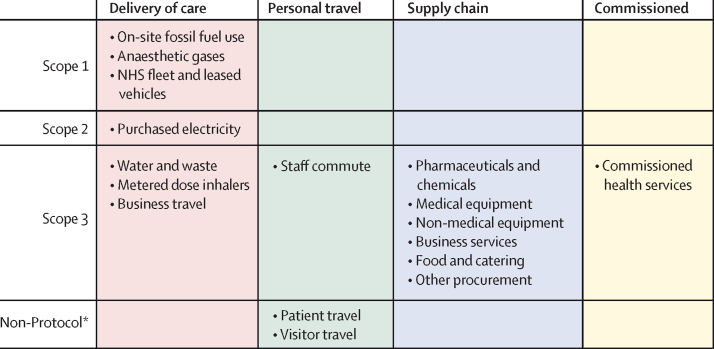
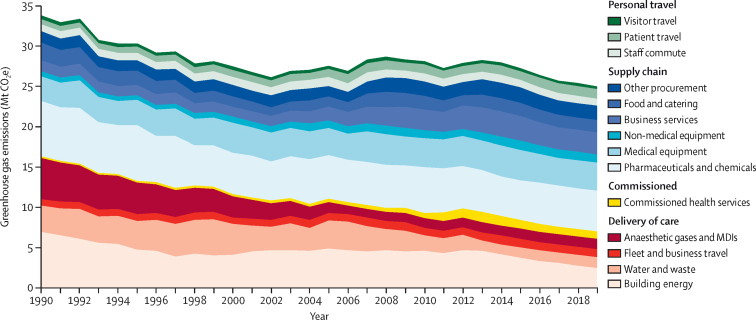
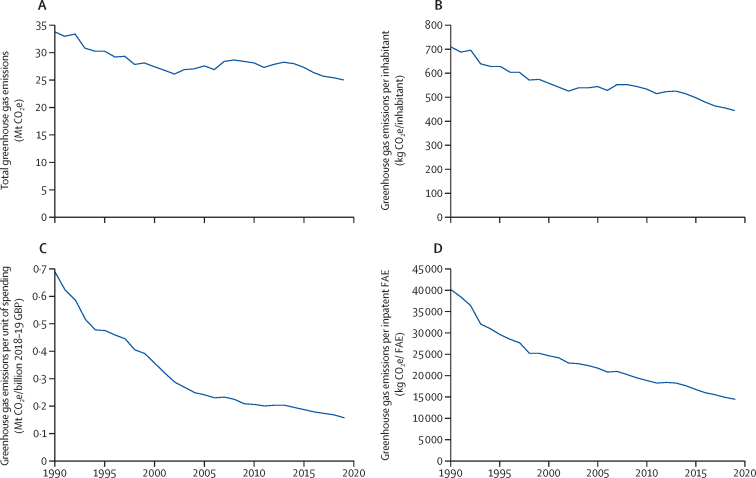
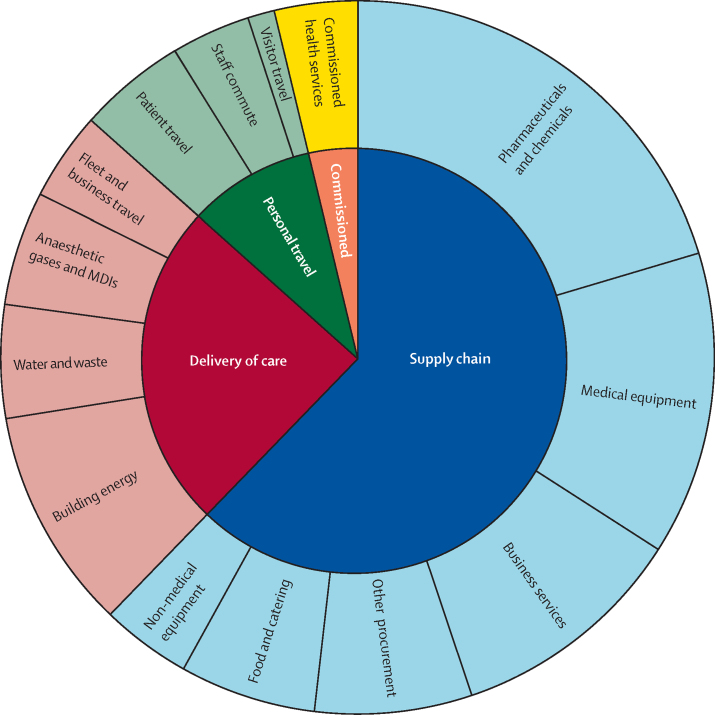
BACKGROUND: Climate change threatens to undermine the past 50 years of gains in public health. In response, the National Health Service (NHS) in England has been working since 2008 to quantify and reduce its carbon footprint. This Article presents the latest update to its greenhouse gas accounting, identifying interventions for mitigation efforts and describing an approach applicable to other health systems across the world. METHODS: A hybrid model was used to quantify emissions within Scopes 1, 2, and 3 of the Greenhouse Gas Protocol, as well as patient and visitor travel emissions, from 1990 to 2019. This approach complements the broad coverage of top-down economic modelling with the high accuracy of bottom-up data wherever available. Available data were backcasted or forecasted to cover all years. To enable the identification of measures to reduce carbon emissions, results were disaggregated by organisation type. FINDINGS: In 2019, the health service's emissions totalled 25 megatonnes of carbon dioxide equivalent, a reduction of 26% since 1990, and a decrease of 64% in the emissions per inpatient finished admission episode. Of the 2019 footprint, 62% came from the supply chain, 24% from the direct delivery of care, 10% from staff commute and patient and visitor travel, and 4% from private health and care services commissioned by the NHS. INTERPRETATION: This work represents the longest and most comprehensive accounting of national health-care emissions globally, and underscores the importance of incorporating bottom-up data to improve the accuracy of top-down modelling and enabling detailed monitoring of progress as health systems act to reduce emissions. FUNDING: Wellcome Trust.
Overview
The claims and statistics of this paper haven’t been checked yet.
Free: it reads the open-access text and checks the first 5 claims that cite a source we can check. Create a free account to check every claim.
Integrity signals
Registry
Cites
Statistics
Figures
Verification
Claims the paper makes
The claims and statistics of this paper haven’t been checked yet.
Free: it reads the open-access text and checks the first 5 claims that cite a source we can check. Create a free account to check every claim.
Claims other papers make about this one
Each is checked against this paper’s own text: does it say what the citing paper says it does?
The check wasn’t confident either way, so it gives no verdict — never disputed.
In the citing paper
“Unfortunately, the awareness of the healthcare community regarding the negative impact of the sector on the natural environment and society, and in turn the responsibility for dealing with it, is very low [23].”
From Towards Green and Sustainable Healthcare: A Literature Review and Research Agenda for Green Leadership in the Healthcare Sector (2023) · cites this paper as [23]
Experimental — accuracy not yet measured
Self-check
Percentages, sums and reported differences re-computed from the paper’s own numbers.
The self-check needs the paper’s full text.
Citations
Cites
(2014) · doi:10.59327/ipcc/ar5-9789291691432 · Cited by 5,217
Watts, N., Amann, M., Arnell, N., Ayeb-Karlsson, S., Belesova, K., Boykoff, M., Byass, P., Cai, W., Campbell-Lendrum, D., Capstick, S., et al. (2019) · The Lancet · doi:10.1016/s0140-6736(19)32596-6 · Cited by 1,472
Self-citationThe environmental footprint of health care: a global assessment
Lenzen, M., Malik, A., Li, M., Fry, J., Weisz, H., Pichler, P.-P., Chaves, L. S. M., Capon, A., & Pencheon, D. (2020) · The Lancet Planetary Health · doi:10.1016/s2542-5196(20)30121-2 · Cited by 1,211
Environmental impacts of the U.S. health care system and effects on public health
Eckelman, M. J., & Sherman, J. (2016) · PLOS ONE · doi:10.1371/journal.pone.0157014 · Cited by 1,017
Self-citationInternational comparison of health care carbon footprints
Pichler, P.-P., Jaccard, I. S., Weisz, U., & Weisz, H. (2019) · Environmental Research Letters · doi:10.1088/1748-9326/ab19e1 · Cited by 812
The carbon footprint of Australian health care
Malik, A., Lenzen, M., McAlister, S., & McGain, F. (2018) · The Lancet Planetary Health · doi:10.1016/s2542-5196(17)30180-8 · Cited by 534
Eckelman, M. J., Sherman, J. D., & MacNeill, A. J. (2018) · PLOS Medicine · doi:10.1371/journal.pmed.1002623 · Cited by 346
Self-citationThe green print: Advancement of environmental sustainability in healthcare
Sherman, J. D., Thiel, C., MacNeill, A., Eckelman, M. J., Dubrow, R., Hopf, H., Lagasse, R., Bialowitz, J., Costello, A., Forbes, M., et al. (2020) · Resources, Conservation and Recycling · doi:10.1016/j.resconrec.2020.104882 · Cited by 327
Self-citationEDITORIAL: CARBON FOOTPRINT AND INPUT–OUTPUT ANALYSIS – AN INTRODUCTION
Wiedmann, T. (2009) · Economic Systems Research · doi:10.1080/09535310903541256 · Cited by 298
Estimated Global Disease Burden From US Health Care Sector Greenhouse Gas Emissions
Eckelman, M. J., & Sherman, J. D. (2018) · American Journal of Public Health · doi:10.2105/ajph.2017.303846 · Cited by 258
Self-citation
Research works printed but not linked: 1
- 28. NHS Sustainable Development Unit. Goods and services carbon hotspots. NHS England breakdown of goods and services carbon footprint by organisation type. Cambridge: NHS Sustainable Development Unit, 2012.
Cited by
Items 501–600 of 1,000
Optimising inhaled therapy for patients with asthma
Bansal, A., Franklin, L., & Twohig, H. (2024) · BMJ · doi:10.1136/bmj-2024-080353 · Cited by 4
“In England they account for 13% of the emissions related to delivery of care 22 • Where clinically appropriate, lower carbon dry powder inhalers can be safely and effectively used by many patients with asthma 10 Placebo devices and inhaler training devices can be valuable tools to support…”
Estimating greenhouse gas emissions from the health sector in Canada: Mind the gap
Nowlan, J., & Miller, F. A. (2025) · Healthcare Management Forum · doi:10.1177/08404704251316859 · Cited by 4
“16 When combined with data about the GHG emissions associated with each activity, a more detailed picture emerges to guide practice and policy change.”
Cimprich, A., Parker, G., Miller, F. A., & Young, S. B. (2025) · Health Affairs Scholar · doi:10.1093/haschl/qxaf017 · Cited by 4
Planetary Health and Climate Action in Radiology
Yan, T. D., Forster, B. B., Harris, A. C., & Brown, M. J. (2025) · Canadian Association of Radiologists Journal · doi:10.1177/08465371251322733 · Cited by 4
“28 Both from a patient outcome and sustainability perspective, it is imperative that healthcare practices are shifted away from reactive care to a focus on preventive care.”
Sustainable procurement in the NHS: barriers and enablers to staff behavioural change
Smith, M. H., Bhutta, M. F., Malone, T., & Williams, S. (2025) · British Journal of Healthcare Management · doi:10.12968/bjhc.2024.0087 · Cited by 4
Défi environnemental et soins de santé : une introduction
Berquin, A., Grimaldi, D., Hosten, E., Modrie, P., Scholtes, F., & Wieërs, G. (2024) · ORBi (University of Liège) · Cited by 4
Chuter, R., Lowe, G., & Dickinson, N. J. (2022) · Clinical Oncology · doi:10.1016/j.clon.2021.12.018 · Cited by 4
Yuliani, A. R., Sari, M. M., & Suryawan, I. W. K. (2023) · Journal of Earth and Marine Technology (JEMT) · doi:10.31284/j.jemt.2023.v3i2.4509 · Cited by 4
Bjorgaard, J., & Potter, T. (2023) · Challenges · doi:10.3390/challe14040042 · Cited by 4
Healthcare sustainability in cardiothoracic surgery
Leow, L., Tam, J. K. C., Poh, P. K., & Zain, A. (2024) · ANZ Journal of Surgery · doi:10.1111/ans.18899 · Cited by 4
Ojelade, E., Koris, J., Begum, H., Vanhove, M., Briggs, T. W. R., & Gray, W. K. (2024) · Annals of The Royal College of Surgeons of England · doi:10.1308/rcsann.2024.0035 · Cited by 4
Balancing the health benefits and climate mortality costs of haemodialysis
Bhopal, A. S., Sharma, S., & Norheim, O. F. (2023) · Future Healthcare Journal · doi:10.7861/fhj.2022-0127 · Cited by 4
Palmeiro-Silva, Y. K., Reneses, T. P., Velényi, E. V., & Herrera, C. A. (2023) · OECD eBooks · doi:10.1787/eeeb7fab-en · Cited by 4
Ali, F., Jabouri, H., Abbott, R. A., & Wernham, A. G. H. (2024) · Clinical and Experimental Dermatology · doi:10.1093/ced/llae524 · Cited by 4
Climate change and human health: Last call to arms for us
Corrente, A., Pace, M. C., & Fiore, M. (2024) · World Journal of Clinical Cases · doi:10.12998/wjcc.v12.i11.1870 · Cited by 4
“This measure is central to understanding and mitigating the impact of human actions on the environment[17].”
Modelling energy dependencies : from raw materials to global health
Andrieu, B. (2023) · theses.fr (ABES) · doi:10.70675/cc02fea5ze53ez48b4zb889z6b7b1a224857 · Cited by 4
GREEN ICU: Unidad de Cuidados Intensivos responsable y sostenible
Gabiña, I. S., & López, M. J. P. (2023) · Medicina Intensiva · doi:10.1016/j.medin.2023.10.016 · Cited by 3
Pujiati, A., Fafurida, F., Rosalia, A. C. T., Rahman, M. A., & Damayanti, N. (2024) · Advances in economics, business and management research/Advances in Economics, Business and Management Research · doi:10.2991/978-94-6463-522-5_7 · Cited by 3
Chen, S., McAlister, S., Colagiuri, P., Pickles, K. M., & Barratt, A. L. (2024) · ANZ Journal of Surgery · doi:10.1111/ans.19306 · Cited by 3
Rethinking Economic Transformation for Sustainable and Inclusive Development: Turning a Corner?
Scheja, E., & Kim, K. B. (2024) · Edward Elgar Publishing eBooks · doi:10.4337/9781035348466 · Cited by 3
Investigating the Convergence of Healthcare Management and Environmental Sustainability Initiatives
Lenka, D. N., RenukaJyothi, S., Lyngdoh, N. N. K., Asif, M., & Gupta, S. (2023) · Health Leadership and Quality of Life · doi:10.56294/hl2023323 · Cited by 3
The Role of Clinicians in the Climate Crisis
Levinson, W. S. (2025) · JAMA Network Open · doi:10.1001/jamanetworkopen.2025.2519 · Cited by 3
Twohig, H., Franklin, L., Carroll, W. D., Jackson, E., Mallen, C. D., Ruan, B., Yapp, L., van der Windt, D., & Smith, J. N. (2025) · Paediatric Respiratory Reviews · doi:10.1016/j.prrv.2025.04.005 · Cited by 3
Wu, R., & Liang, Y. (2025) · International Journal of Health Policy and Management · doi:10.34172/ijhpm.9157 · Cited by 3
Tucker, K., Braybrooke, A., & Burgess, R. (2025) · Musculoskeletal Care · doi:10.1002/msc.70138 · Cited by 3
Samuel, G. N., MacFarlane, M., & Briggs, S. (2025) · Sociology of Health & Illness · doi:10.1111/1467-9566.70058 · Cited by 3
Priority Setting in the Context of Planetary Healthcare
Apantaku, G. O., Kapiriri, L., Norheim, O. F., Azevedo, I. C. C., Kim, D., Hensher, M., Ananthapavan, J., Bhopal, A. S., MacNeill, A. J., Sherman, J. D., et al. (2025) · Applied Health Economics and Health Policy · doi:10.1007/s40258-025-00980-x · Cited by 3
Self-citationCarbon Footprint Impact, of Monoclonal Antibodies for Severe Asthma, Administered in Italy
Bagnasco, D., Pini, L., Bondi, B., Montagnino, C., Testino, E., Capuano, V., Pugliaro, C., Brussino, L., Nicola, S., Caminati, M., et al. (2025) · Biomedicines · doi:10.3390/biomedicines13071574 · Cited by 3
“Regarding data about the environmental impact, we search the literature for similar manuscripts [31–34], researching what other authors use to make analogue calculations, and then we use the found parameters to “translate” in CO 2 production the number of hospitalizations, the impact of CS used for…”
Zhao, H., Liao, W., Fu, L. S., Zhao, M., Zhang, S., Wu, J., Chai, P., & Cai, W. (2025) · Sustainable Production and Consumption · doi:10.1016/j.spc.2025.08.017 · Cited by 3
Onder, O. (2025) · AI & Society · doi:10.1007/s00146-025-02603-4 · Cited by 3
Louro, L. F., Sinclair, C., Hargreaves, L., Coumbe, K., Ali, M. H., Percan, V., Bacon, B., Kukaswadia, A., & Mair, T. S. (2025) · Equine Veterinary Journal · doi:10.1111/evj.70108 · Cited by 3
Sustainability practices made easy
de Ribot, F. M., March, A., Elferink, S., van Leeuwen, R., Chang, D. F., & Findl, O. (2025) · Eye · doi:10.1038/s41433-025-04046-z · Cited by 3
Assessing greenhouse gas emissions in a primary care subdistrict in Cederberg, South Africa
Schwerdtle, P. N., Quitmann, C., Herrmann, A., Thakur, S., Adams, C., Jobanputra, K., & Mash, R. J. (2025) · BMC Health Services Research · doi:10.1186/s12913-025-13489-9 · Cited by 3
“Building energy use and diesel generators contributed minimally, which aligns with findings from other studies in both LMICs [9] and HICs [20, 30], where Scope 3 sources often account for up to 90% of emissions.”
Toward climate resilience in Israel’s healthcare system: decision-makers' perspectives
Lador, I., Negev, M., Rosenthal, A., & Shapira, S. (2025) · Israel Journal of Health Policy Research · doi:10.1186/s13584-025-00729-w · Cited by 3
“…Health Service (NHS), the world’s largest publicly funded health system, exemplifies climate action by having achieved a 26% reduction in green-house gas emissions by 2019 compared to 1990 levels [31] and becoming the first healthcare system to embed net-zero emissions into legislation [32].”
Brulé, G., Boiko, P., Mezeray, T. M., Nadal, D., Vuilleumier, S., Senn, N., Fehr, J., Crivelli, L., Zinsstag, J., & Probst-Hensch, N. (2025) · Ethics Medicine and Public Health · doi:10.1016/j.jemep.2025.101227 · Cited by 3
Bhopal, A. S., Hensher, M., MacNeill, A. J., Norheim, O. F., Sherman, J. D., & Mitton, C. (2025) · The Lancet Planetary Health · doi:10.1016/j.lanplh.2025.101391 · Cited by 3
Self-citationWalsh, S. J., O’Leary, A. C., & Lynch, M. (2025) · BMJ Open Quality · doi:10.1136/bmjoq-2025-003827 · Cited by 3
Geddes, O., Twohig, H., Eccles, A., Atherton, H., Dahlmann, F., Karaba, F., Nunes, A. R., Spencer, R. A., Thomas, N., & Dale, J. R. (2026) · Primary Health Care Research & Development · doi:10.1017/s1463423626101145 · Cited by 3
Nurfikri, A., Purwana, R., Soesilo, T. E. B., & Kesa, D. D. (2026) · Sustainability · doi:10.3390/su18073211 · Cited by 3
Lokmic‐Tomkins, Z., Davies, S., Bhandari, D., Robinson, E. L., Manser, R., Dunne, B., & von Gerich, H. (2023) · European Respiratory Society eBooks · doi:10.1183/2312508x.10001523 · Cited by 3
Is a care pathway for enhanced recovery after colorectal surgery environmentally responsible?
Kabanova, D., Moret, C., Albaladejo, P., & Slim, K. (2023) · Journal of Visceral Surgery · doi:10.1016/j.jviscsurg.2023.10.008 · Cited by 3
The NCSBN 2024 Environmental Scan: Every Moment Matters, Realizing Lasting Impact
National Council of State Boards of Nursing (2024) · Journal of Nursing Regulation · doi:10.1016/s2155-8256(23)00127-8 · Cited by 3
Başaran, N., Gültekin, P., & Gültekin, Y. S. (2023) · Journal of International Scientific Publications : Ecology & Safety. · doi:10.62991/es1996240312 · Cited by 3
Yeo, J. J. Y., Gupta, K. K., Mughal, Z., & Bhatt, C. (2024) · The Journal of Laryngology & Otology · doi:10.1017/s0022215124001129 · Cited by 3
Prakash, R., Nasser, A. A. H. H., Sharma, A., Eastwood, D. M., Reed, M. R., & Agrawal, Y. (2024) · Bone & Joint Open · doi:10.1302/2633-1462.512.bjo-2024-0167.r1 · Cited by 3
Sustainability management practices in the furniture sector: an analytical study
GÜLTAŞ, P. (2024) · Mobilya ve Ahşap Malzeme Araştırmaları Dergisi · doi:10.33725/mamad.1568828 · Cited by 4
Vilhelmsson, A., Cofina, I. P., Wolodarski, M., & Alfvén, T. (2025) · The Journal of Climate Change and Health · doi:10.1016/j.joclim.2025.100413 · Cited by 3
“Other important pharmacological recommendations concerned avoiding medicines, such as fl uoro-quinolones because of their resistance in nature and instead of metered dose inhalers prescribe dry powder inhalers to reduce unnecessary release of greenhouse gases [22].”
Travel Costs and Carbon Savings Associated With Telemedicine in a Tertiary Care Rhinology Center
Kellerman, H., Mace, J. C., Detwiller, K. Y., Geltzeiler, M. N., Smith, T. L., & Pandrangi, V. C. (2025) · International Forum of Allergy & Rhinology · doi:10.1002/alr.23540 · Cited by 3
Gölcük, Y. (2025) · Intensive and Critical Care Nursing · doi:10.1016/j.iccn.2025.104006 · Cited by 3
Klimaresilienz und Gesundheit – die Vitalparameter des Planeten leuchten rot
i, M. H., & Schulz, C. M. (2025) · Die Innere Medizin · doi:10.1007/s00108-025-01867-8 · Cited by 3
Smale, E. M., van den Berg, J., Heijman, J. K. –., Bekker, C. L., & van den Bemt, B. J. F. (2025) · International Journal for Quality in Health Care · doi:10.1093/intqhc/mzaf038 · Cited by 3
“Medications are environmental hotspots [3–7].”
Liang, J., Wu, R., Bi, P., Tong, S., Zhang, R., Yao, X., Jin, X., & Li, Y. (2025) · PLoS Medicine · doi:10.1371/journal.pmed.1004738 · Cited by 3
“Other countries showed similar patterns: Australia (36 MtCO 2 e, 7% during 2014 and 2015) [19], Austria (6.8 MtCO 2 e, 7% in 2014) [20], Japan (72 MtCO 2 e, 5.2% in 2015) [21], and the UK (27 MtCO 2 e, 4% in 2019) [22].”
InfluentialToward Sustainable Dermatology
Tan, E. (2025) · Dermatologic Clinics · doi:10.1016/j.det.2025.08.005 · Cited by 3
Shearer, G., Nicole, S., Bowling, B., Saleem, J., Zreik, N. H., Hubbard, C., Tennent, T. D., Hindle, L., Phull, M., Briggs, T. W. R., et al. (2025) · BMJ Leader · doi:10.1136/leader-2025-001228 · Cited by 3
To pollute or not to pollute? Decreasing the ecological footprint of pediatrics in the COVID-19 era
Gözderesi, Y., Tsagkaris, C., Eleftheriades, A., & Pervanidou, P. (2022) · The Journal of Climate Change and Health · doi:10.1016/j.joclim.2022.100141 · Cited by 3
Sustainability as part of a quality framework for the organisation of oral healthcare
Dyer, T. A., Mulligan, S., & Martín, N. (2023) · BDJ · doi:10.1038/s41415-023-6269-8 · Cited by 3
The Impact of Climate Change on Chronic Kidney Disease
Shehaj, L., & Kazancıoğlu, R. (2023) · Bezmialem Science · doi:10.14235/bas.galenos.2023.74436 · Cited by 3
“The medical industry has a significant environmental impact because of the amount of water and energy used in manufacturing, interventions, and waste production (73).”
Sustainable practice: Optimising surgical instrument trays
Robb, H., & Beatty, J. W. (2023) · BMJ · doi:10.1136/bmj-2023-076274 · Cited by 3
Gradually, then suddenly: Singapore’s journey towards sustainable medicine
Watts, N., Ng, A. Z. Y., & Zain, A. (2024) · Singapore Medical Journal · doi:10.4103/singaporemedj.smj-2024-061 · Cited by 3
“[7] It has since achieved massive emission reductions and stayed ahead of national targets, all while demonstrating how healthcare decarbonisation initiatives improve patient care quality and reduce overall costs.”
BackgroundSelf-citationClimate change and environmental sustainability in otolaryngology: A state-of-the-art review
Dilger, A. E., Meiklejohn, D. A., Bent, J. P., Tummala, N., Bergmark, R. W., & Lalakea, M. L. (2024) · The Surgeon · doi:10.1016/j.surge.2024.06.007 · Cited by 3
Rehman, M. U., Moussa, R., Lin, C. S., Ahmed, N., Rehman, A., Malik, K., & Ahmed, J. (2024) · International Journal of Surgical Oncology · doi:10.1155/2024/9837336 · Cited by 3
“62% [15.6 Mt C02e] of these emissions were produced as a result of the supply chain, of which medical equipment and pharmaceuticals and chemicals (such as tissue processing equipment) made up a substantial proportion (51%; [8.1 Mt C02e]) [28].”
BackgroundInfluentialBusby, J., Khezrian, M., Patel, S., Tran, T. N., Rhodes, K. M., & Heaney, L. G. (2024) · ERJ Open Research · doi:10.1183/23120541.01009-2024 · Cited by 3
“Within the UK, healthcare contributes 4 – 5% of total GHG emissions [3], representing a key target for climate change mitigation efforts.”
Cervera‐Jackson, R., McCready, P., Ireland, S. L., Riphagen, S. D., Adalat, S., Adams, A., & Plater, T. (2025) · Nursing in Critical Care · doi:10.1111/nicc.13252 · Cited by 3
Bentley, A., Culley, C. L., & Stoynova, V. (2025) · The Canadian Journal of Hospital Pharmacy · doi:10.4212/cjhp.3606 · Cited by 3
The environmental elephant in the office: medications
McDermott, E., Halil, R., Nash, W., Douglass, R. J., Train, A. D., Zvereva, E., Kandasamy, S., Zahid, D., & Sergeant, M. (2025) · Canadian Family Physician · doi:10.46747/cfp.7104233 · Cited by 4
Climate change and child health
McGain, F. (2022) · Journal of Paediatrics and Child Health · doi:10.1111/jpc.16281 · Cited by 3
Mithila, Elahi, S. A. –. E. –., & Abir, T. M. (2023) · Advances in Infectious Diseases · doi:10.4236/aid.2023.133035 · Cited by 3
Scherer, M., Burgers, J. S., & the Guidelines International Network Multimorbidity Working Group (2024) · Clinical and Public Health Guidelines · doi:10.1002/gin2.12016 · Cited by 3
Hospital vulnerabilities to a changing climate: climate-adaptive strategies in emergency care
Goniewicz, K., Kusters, R. W. J., van Dijken, T., Granholm, F., & Hertelendy, A. J. (2024) · European Journal of Emergency Medicine · doi:10.1097/mej.0000000000001186 · Cited by 3
“These measures contribute to the reduction of the carbon footprint while also enhancing the hospital’s capacity to function autonomously during EWEs [11,12].”
Rogers, B. A. (2021) · Annals of The Royal College of Surgeons of England · doi:10.1308/rcsann.2021.0292 · Cited by 3
Occupational therapists must embrace rapid change for a sustainable future
Reagon, C. (2022) · British Journal of Occupational Therapy · doi:10.1177/03080226221111956 · Cited by 3
Climate Change, Heat-Related Acute Kidney Disease, and the Need for Action
Gallagher, A., Smyth, B. J., & Jha, V. (2023) · American Journal of Kidney Diseases · doi:10.1053/j.ajkd.2022.11.002 · Cited by 3
Health and Climate Change: How do we protect people's health in the climate crisis?
Astorga, I., Sório, R. E., & Bauhoff, S. (2023) · doi:10.18235/0004845 · Cited by 3
Environmental sustainability in the intensive care unit: A toolkit to counter futility!
Bhonagiri, D., Pinder, M., & Huckson, S. (2023) · Critical Care and Resuscitation · doi:10.1016/j.ccrj.2023.04.001 · Cited by 3
Gennaro, F. D. (2024) · Frontiers in Antibiotics · doi:10.3389/frabi.2024.1405401 · Cited by 3
Singleton, J., & Letts, A. (2024) · Journal of Environmental Planning and Management · doi:10.1080/09640568.2024.2345741 · Cited by 2
“One of the most significant contributors to healthcare emissions is pharmaceuticals, which comprised approximately 19% of the Australian healthcare sector ’ s carbon foot-print in 2014-15 (Malik et al. 2018), and approximately 22% of NHS England ’ s carbon footprint in 2019 (Tennison et al. 2021).”
Climate change and the pivotal role of health professionals
Huston, P. (2024) · Journal of Evaluation in Clinical Practice · doi:10.1111/jep.14103 · Cited by 2
Fifteen-minute consultation: Considering greener asthma treatments for children and young people
Falconer, O., Knight, K., & Gray, S. J. (2024) · Archives of Disease in Childhood Education & Practice · doi:10.1136/archdischild-2024-327168 · Cited by 2
The carbon footprint associated with the overuse of short-acting β2-agonists in asthma patients
Chen, C., Lin, I.-C., Lai, C., Liu, H., Wang, Y.-H., Wang, C., & Wang, H. (2024) · Environmental Research Communications · doi:10.1088/2515-7620/ad9818 · Cited by 2
Gebhardt, N., Kern, O. A., Schwaab, L., Friederich, H., & Nikendei, C. (2025) · Discover Sustainability · doi:10.1007/s43621-024-00772-8 · Cited by 2
“However, aside from the notable exception of the UK health care system [3], assessments of GHG emissions in the health care sector are scarce, both on a sectorial and an organizational level [5, 7–9].”
Minimizing the Effects of Surgical Care on Climate Change
Levinson, W. S., Chang, I., & Ward, S. E. (2025) · JAMA · doi:10.1001/jama.2025.0883 · Cited by 2
Grant, R., Niebel, D., Hunt, W., Kamp, E., Ali, F., & Tso, S. H. Y. (2025) · Clinical and Experimental Dermatology · doi:10.1093/ced/llaf133 · Cited by 2
Uncovering the carbon cost: Environmental impact of free flap reconstruction procedures in the UK
Clay, B., Hindocha, S., & Maheshwari, K. (2025) · Journal of Plastic Surgery and Hand Surgery · doi:10.2340/jphs.v60.43375 · Cited by 2
Promoting Nordic ‘Green Care Practices’
Jessen, N. H., & Hjörleifsson, S. (2025) · Scandinavian Journal of Primary Health Care · doi:10.1080/02813432.2025.2503450 · Cited by 2
“Data from england estimates that 48% of general practice’s greenhouse gas emissions come from prescribing medications alone [18]. the United Nations estimates that phasing out hydrofluorocarbon (hFc) gases could reduce global warming by 0.4 °c by the end of the century, with significant…”
InfluentialLarsen, S. M., Jessen, N. H., Friederichsen, B., Brodersen, J., & Árnadóttir, Á. (2025) · Scandinavian Journal of Public Health · doi:10.1177/14034948251333003 · Cited by 2
“Clinical activity and the use of medicine and medical equipment account for more than 80% of GHG emissions from healthcare [4].”
InfluentialPatel, S. S., Bains, A., Ali, N., & Chawla, P. (2025) · Circular Economy and Sustainability · doi:10.1007/s43615-025-00611-6 · Cited by 2
“…and appliances such as those used for caring for diabetic patients are a major part of the overall healthcare supply chain, which can constitute up to 62% of the total 25 MtCO 2 e carbon emissions from the health service sector, as per the analysis carried out for the NHS in England in 2019 [ 51].”
Ma, J., Bi, S., Du, R., Jiao, W., Liang, Z., Zhou, Q., Zhou, S., Pan, Y., Tang, W., Zhang, H., et al. (2025) · International Journal for Quality in Health Care · doi:10.1093/intqhc/mzaf050 · Cited by 2
Hillen, F., McLaren, J. S., & White, K. (2025) · Anaesthesia · doi:10.1111/anae.16702 · Cited by 2
“Emissions of inhalational anaesthetic agents account for approximately 3% of the healthcare-associated footprint [1].”
Goh, S., Tan, Y. H. J., & Lie, S. A. (2025) · Nursing in Critical Care · doi:10.1111/nicc.70145 · Cited by 2
Carbon footprint and sustainable development in anesthesia: a narrative review
(2025) · Signa Vitae · doi:10.22514/sv.2025.123 · Cited by 2
“Furthermore, direct emissions from these anesthetics account for approximately 3% of the healthcare-related climate footprint in high-income countries, as well as over half of the emissions associated with perioperative services [ 34–37].”
Xie, B., Gao, X., Cheng, Y., Niu, M., & Liu, S. (2025) · Frontiers in Public Health · doi:10.3389/fpubh.2025.1640294 · Cited by 2
“…UK NHS achieved a 25% reduction in emissions by phasing out CFC-based inhalers, decarbonizing the electricity grid, and optimizing its supply chain; however, Scope 3 emissions (from pharmaceuticals and devices) remain difficult to curb due to delays in multinational production and procurement (49).”
Simpson, R., Tennison, I., Episkopou, E., Bagga, Y., Patel, H., Caunt, M., & Eckelman, M. J. (2026) · The Lancet Planetary Health · doi:10.1016/j.lanplh.2026.101464 · Cited by 2
Self-citationSuggett, J. A., & Wang, S. (2025) · European Medical Journal · doi:10.33590/emj/rebz6731 · Cited by 2
Setayeshgar, S., Liang, K. E., Stoynova, V., Frosst, G., & Smolina, K. (2025) · BMJ Open Respiratory Research · doi:10.1136/bmjresp-2025-003218 · Cited by 2
Bowley, N., Thomas, P. B. M., Sivaprasad, S., Purbrick, R. M. J., Beardmore, E., Gilbert, R. M., Clarke, A., & Chase, T. J. G. (2025) · Eye · doi:10.1038/s41433-025-04020-9 · Cited by 2
“In England, the supply chain is estimated to account for 62% of the total carbon footprint of the NHS [5]; similarly, in Scotland there are approximately 8000 suppliers who provide £2.5 billion worth of goods and services to the NHS each year [6].”
InfluentialA novel framework to assess the prevention value of a health intervention
Pearson‐Stuttard, J., Treharne, C., King, R., Harper, H., Pokhilenko, I., Gomes, M., Garrison, L. P., Reynoso, R., Skau, J. K. H., & Byrne, K. (2025) · Diabetes Obesity and Metabolism · doi:10.1111/dom.70232 · Cited by 2
“34 To illustrate the impacts on carbon emissions for this framework, we used a study by Tennison et al. 35 that estimated the carbon footprint of the National Health Service (NHS) in England and included estimates of carbon dioxide equivalent emissions per unit of care activity (including per…”
InfluentialPaydar, M. A., Dong, J., Hamada, A., Sabounchi, S., Jain, N., Smith, N. M., & Burman, E. (2025) · Building Services Engineering Research and Technology · doi:10.1177/01436244251407856 · Cited by 2
Jones, K., Senay, E., Slutzman, J. E., & Padget, M. (2025) · The Journal of Climate Change and Health · doi:10.1016/j.joclim.2025.100618 · Cited by 2
“Scope 1 and scope 2 emissions may be simpler to manage at the organization-level [30,31].”
Foiled for Choice: Carbon Impact Assessment of Laboratory Heating Setups and Insulation Strategies
Chen, Y., Guzmán, J. A. E., Shaver, M. P., & Picken, C. A. R. (2026) · Sustainability & Circularity NOW · doi:10.1055/a-2773-4746 · Cited by 2
Olinechenko, Y. (2025) · Ecological Sciences · doi:10.32846/2306-9716/2025.eco.6-63.33 · Cited by 2
Metadata
- Authors
- Tennison, I., Roschnik, S., Ashby, B., Boyd, R., Hamilton, I., Oreszczyn, T., Owen, A., Romanello, M., Ruyssevelt, P., Sherman, J. D., Smith, A. Z. P., Steele, K., Watts, N., & Eckelman, M. J.
- Affiliations
- NHS England (GB)
- Arup Group (United Kingdom) (GB)
- University College London (GB)
- University of Leeds (GB)
- Yale University (US)
- Northeastern University (US)
- Corresponding author
- Eckelman, Matthew J
- ORCID
- Venue
- The Lancet Planetary Health
- Publisher
- Elsevier BV
- Published
- 2021-02
- Volume
- 5
- Issue
- 2
- Pages
- e84-e92
- ISSN
- 2542-5196 (ISSN-L)
- PMC
- PMC7887664
- OpenAlex
- W3127500650
- Semantic Scholar
- a1762bc0f4da5ef3f86d7b8d6807200964d0b7e1
- Cited by
- 1,039
- References
- 26
- Citations by year
- 2026: 134 · 2025: 222 · 2024: 221 · 2023: 317 · 2022: 105 · 2021: 40
- FWCI
- 55.35
- Type
- journal article
- Language
- en
- Open access
- gold
- doi.org
- Licence
- cc-by
- www.elsevier.com/tdm/userlicense/1.0/ (tdm)
- www.elsevier.com/legal/tdmrep-license (tdm)
- creativecommons.org/licenses/by/4.0/ (vor)
- Locations
- The Lancet Planetary Health (publishedVersion, cc-by)
- PubMed Central (publishedVersion, cc-by)
- PubMed (publishedVersion)
- White Rose Research Online (University of Leeds, The University of Sheffield, University of York) (acceptedVersion)
- DOAJ (DOAJ: Directory of Open Access Journals) (submittedVersion, cc-by-sa)
- UCL Discovery (University College London) (submittedVersion)
- Funders
- Wellcome Trust (209734/Z/17/Z)
- Topics
- Physical Sciences › Environmental Science › Environmental Engineering › Environmental Impact and Sustainability
- Physical Sciences › Environmental Science › Health, Toxicology and Mutagenesis › Climate Change and Health Impacts
- Physical Sciences › Engineering › Architecture › Healthcare Facilities Design and Sustainability
- Keywords
- healthcare emissions, carbon footprint, National Health Service, greenhouse gas accounting, climate change mitigation, supply chain emissions, Greenhouse Gas Protocol
- MeSH terms
- Greenhouse Gases, Carbon Dioxide, Delivery of Health Care, England, Humans, State Medicine, Transportation, Health Care Sector, Climate Change, Carbon Footprint
About these checks
Registry, retraction, Cites and statistics results are computed, not judged, with one exception: a printed reference that no index lists is read once by a model before it counts as a citation error. Claims are extracted by a model and kept only when their quote appears verbatim in the text; each cited source is then checked, with a model’s help, for whether it says what the claim relies on. Those verdicts can be wrong — read the claim’s quote and the cited source before relying on one.
Statistics and arithmetic are recomputed, not judged.
Confidence bands are shown only for fields calibrated on our annotated test set. None is calibrated yet, so no band is shown.
What counts as a claim ›How we measure confidence ›How we check this ›
Are you an author, or do you see a problem with this page? Request a review
Data sources
Bibliographic data: Semantic Scholar, OpenAlex, Crossref.
Contains information from the Semantic Scholar Academic Graph Datasets, made available under the ODC Attribution License (ODC-BY 1.0).
Semantic Scholar’s data is described in: Kinney, R., et al. (2023). The Semantic Scholar Open Data Platform. arXiv:2301.10140.
