

Health care’s response to climate change: A carbon footprint assessment of the NHS in England
Open accessThe DOI matches its Crossref record; 25 of the 26 references it cites were found in a registry or an index.
Abstract
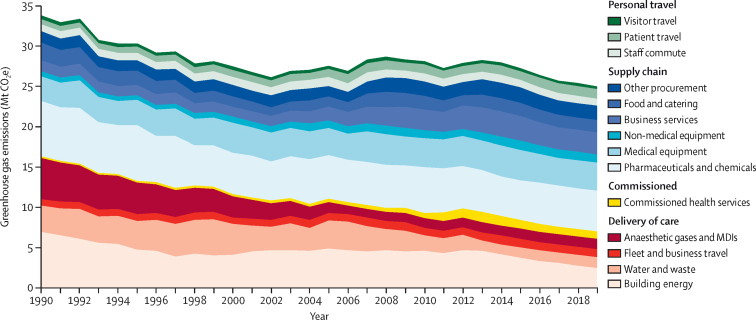
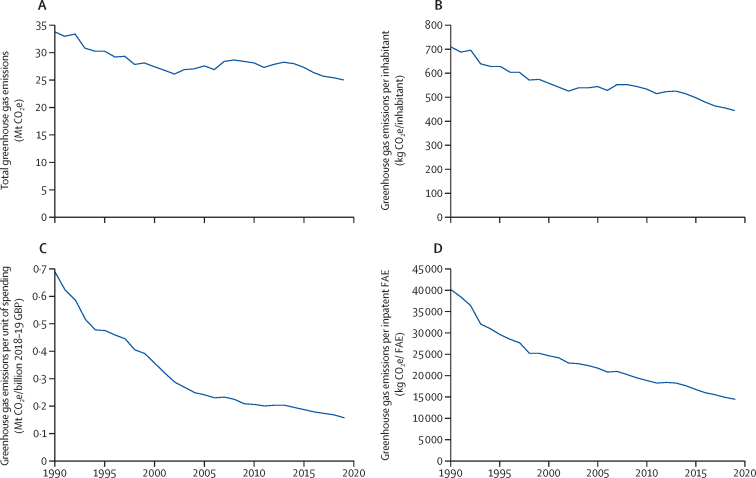
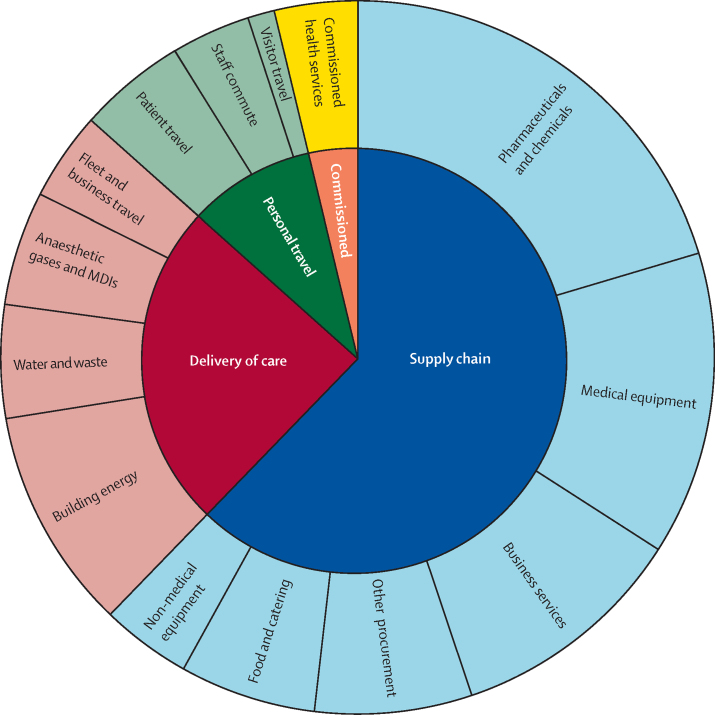
BACKGROUND: Climate change threatens to undermine the past 50 years of gains in public health. In response, the National Health Service (NHS) in England has been working since 2008 to quantify and reduce its carbon footprint. This Article presents the latest update to its greenhouse gas accounting, identifying interventions for mitigation efforts and describing an approach applicable to other health systems across the world. METHODS: A hybrid model was used to quantify emissions within Scopes 1, 2, and 3 of the Greenhouse Gas Protocol, as well as patient and visitor travel emissions, from 1990 to 2019. This approach complements the broad coverage of top-down economic modelling with the high accuracy of bottom-up data wherever available. Available data were backcasted or forecasted to cover all years. To enable the identification of measures to reduce carbon emissions, results were disaggregated by organisation type. FINDINGS: In 2019, the health service's emissions totalled 25 megatonnes of carbon dioxide equivalent, a reduction of 26% since 1990, and a decrease of 64% in the emissions per inpatient finished admission episode. Of the 2019 footprint, 62% came from the supply chain, 24% from the direct delivery of care, 10% from staff commute and patient and visitor travel, and 4% from private health and care services commissioned by the NHS. INTERPRETATION: This work represents the longest and most comprehensive accounting of national health-care emissions globally, and underscores the importance of incorporating bottom-up data to improve the accuracy of top-down modelling and enabling detailed monitoring of progress as health systems act to reduce emissions. FUNDING: Wellcome Trust.
Overview
The claims and statistics of this paper haven’t been checked yet.
Free: it reads the open-access text and checks the first 5 claims that cite a source we can check. Create a free account to check every claim.
Integrity signals
Registry
Cites
Statistics
Figures
Verification
Claims the paper makes
The claims and statistics of this paper haven’t been checked yet.
Free: it reads the open-access text and checks the first 5 claims that cite a source we can check. Create a free account to check every claim.
Claims other papers make about this one
Each is checked against this paper’s own text: does it say what the citing paper says it does?
The check wasn’t confident either way, so it gives no verdict — never disputed.
In the citing paper
“Unfortunately, the awareness of the healthcare community regarding the negative impact of the sector on the natural environment and society, and in turn the responsibility for dealing with it, is very low [23].”
From Towards Green and Sustainable Healthcare: A Literature Review and Research Agenda for Green Leadership in the Healthcare Sector (2023) · cites this paper as [23]
Experimental — accuracy not yet measured
Self-check
Percentages, sums and reported differences re-computed from the paper’s own numbers.
The self-check needs the paper’s full text.
Citations
Cites
(2014) · doi:10.59327/ipcc/ar5-9789291691432 · Cited by 5,217
Watts, N., Amann, M., Arnell, N., Ayeb-Karlsson, S., Belesova, K., Boykoff, M., Byass, P., Cai, W., Campbell-Lendrum, D., Capstick, S., et al. (2019) · The Lancet · doi:10.1016/s0140-6736(19)32596-6 · Cited by 1,472
Self-citationThe environmental footprint of health care: a global assessment
Lenzen, M., Malik, A., Li, M., Fry, J., Weisz, H., Pichler, P.-P., Chaves, L. S. M., Capon, A., & Pencheon, D. (2020) · The Lancet Planetary Health · doi:10.1016/s2542-5196(20)30121-2 · Cited by 1,211
Environmental impacts of the U.S. health care system and effects on public health
Eckelman, M. J., & Sherman, J. (2016) · PLOS ONE · doi:10.1371/journal.pone.0157014 · Cited by 1,017
Self-citationInternational comparison of health care carbon footprints
Pichler, P.-P., Jaccard, I. S., Weisz, U., & Weisz, H. (2019) · Environmental Research Letters · doi:10.1088/1748-9326/ab19e1 · Cited by 812
The carbon footprint of Australian health care
Malik, A., Lenzen, M., McAlister, S., & McGain, F. (2018) · The Lancet Planetary Health · doi:10.1016/s2542-5196(17)30180-8 · Cited by 534
Eckelman, M. J., Sherman, J. D., & MacNeill, A. J. (2018) · PLOS Medicine · doi:10.1371/journal.pmed.1002623 · Cited by 346
Self-citationThe green print: Advancement of environmental sustainability in healthcare
Sherman, J. D., Thiel, C., MacNeill, A., Eckelman, M. J., Dubrow, R., Hopf, H., Lagasse, R., Bialowitz, J., Costello, A., Forbes, M., et al. (2020) · Resources, Conservation and Recycling · doi:10.1016/j.resconrec.2020.104882 · Cited by 327
Self-citationEDITORIAL: CARBON FOOTPRINT AND INPUT–OUTPUT ANALYSIS – AN INTRODUCTION
Wiedmann, T. (2009) · Economic Systems Research · doi:10.1080/09535310903541256 · Cited by 298
Estimated Global Disease Burden From US Health Care Sector Greenhouse Gas Emissions
Eckelman, M. J., & Sherman, J. D. (2018) · American Journal of Public Health · doi:10.2105/ajph.2017.303846 · Cited by 258
Self-citation
Research works printed but not linked: 1
- 28. NHS Sustainable Development Unit. Goods and services carbon hotspots. NHS England breakdown of goods and services carbon footprint by organisation type. Cambridge: NHS Sustainable Development Unit, 2012.
Cited by
Items 401–500 of 1,000
Zooming to Net Zero: Using Virtual Visits to Decrease Carbon Emissions and Costs from Surgery
Chang, J. H., Maskal, S. M., Ellis, R. C., Prabhu, A. S., Rosen, M. J., Walsh, R. M., & Miller, B. T. (2023) · Journal of Gastrointestinal Surgery · doi:10.1007/s11605-023-05713-w · Cited by 7
“[1,2] The COVID-19 pandemic was a catalyst for telemedicine as the healthcare industry had to rethink clinical care while social distancing.”
BackgroundGrover, S., Patel, N., & Tso, S. H. Y. (2024) · Clinical and Experimental Dermatology · doi:10.1093/ced/llae043 · Cited by 7
Incorporating ‘Green Podiatry’ into your clinic, and into your life
Evans, A. (2022) · Journal of Foot and Ankle Research · doi:10.1186/s13047-022-00591-y · Cited by 7
“Clinicians will require knowledge and support to achieve this goal, as part of the NHS responsibility for achieving climate targets [12, 13].”
BackgroundMeasurement and Management of Value Chain Greenhouse Gas Emissions from Supermarket Retailing
Mungkung, R. T., & Nudchanate, T. (2023) · Weather Climate and Society · doi:10.1175/wcas-d-23-0012.1 · Cited by 6
The safety of nitrous oxide: glass half-full or half-empty?
Peyton, P. J., & Leslie, K. (2024) · British Journal of Anaesthesia · doi:10.1016/j.bja.2024.04.047 · Cited by 6
Imaginer les soins primaires de demain
Senn, N., Bourgueil, Y., Breton, M., Cohidon, C., Falcoff, H., Ferguson, M., Hudon, C., Macq, J., & Van Durme, T. (2025) · doi:10.53738/revmed.95763 · Cited by 6
Developing an Ecotoxicological Classification for Frequently Used Drugs in Primary Care
Charmillot, T., Chèvre, N., & Senn, N. (2025) · International Journal of Environmental Research and Public Health · doi:10.3390/ijerph22020290 · Cited by 6
“According to a study published in The Lancet, pharmaceuticals and chemicals contributed to 20–32% of the total greenhouse gas emissions of the English national health system in 2019 [18].”
Webb, C., Anguilano, L., Troisi, G., & Rivera, X. C. S. (2025) · Environmental Impact Assessment Review · doi:10.1016/j.eiar.2025.107847 · Cited by 6
Franklin, L., Mallen, C. D., & Twohig, H. (2025) · BJGP Open · doi:10.3399/bjgpo.2024.0208 · Cited by 6
SAMARA, A. A., Hanton, T., Thakar, R., Jauniaux, E. R. M., & Khalil, A. A. (2025) · Frontiers in Global Women s Health · doi:10.3389/fgwh.2025.1483938 · Cited by 6
da Silva, L. M., de Araújo, A. C. L. F., Defácio, L., Vale, R. B. P., Machado, D., Silveira, S. Q., Nersessian, R. S. F., Neto, M. G., Mizubuti, G. B., & Lima, H. D. O. (2025) · Canadian Journal of Anesthesia/Journal canadien d anesthésie · doi:10.1007/s12630-025-03002-5 · Cited by 6
Lichter, K. E., Asaro, A., Qureshi, M. M., Truong, M. T., Parekh, A. D., Witztum, A., Anand, C., Silva, G. S., Royce, T. J., Zaorsky, N. G., et al. (2025) · Radiotherapy and Oncology · doi:10.1016/j.radonc.2025.111161 · Cited by 6
Self-citationTutticci, S., & Marian, M. (2025) · Asian Journal of Ethics in Health and Medicine · doi:10.51847/oghdokcuki · Cited by 6
Skovrup, N. F., & Pedersen, S. (2025) · Scandinavian Journal of Public Health · doi:10.1177/14034948251387510 · Cited by 6
“A British study states that care delivery (e.g. electricity, water consumption, and heat) constitutes approximately 4–6% [21].”
A website calculator to benchmark the carbon footprint of haemodialysis
Beige, J., Knöller, S., Pachmann, M., Sommer, F., Barth, H. P., Masanneck, M., Kleophas, W., Schaffron, R., Stracke, S., deGroot, K., et al. (2026) · Nephrology Dialysis Transplantation · doi:10.1093/ndt/gfaf263 · Cited by 6
“Healthcare significantly contributes to climate change [3 –5 ] and overall environmental burden, accounting for an estimate of 5–10% of global GHG emissions [6 , 7 ].”
Yin, J., Zhou, C., Yan, X., Kan, J., & Dong, T. (2026) · International Journal of Production Economics · doi:10.1016/j.ijpe.2026.109986 · Cited by 6
Sarfati, M., Lefébure, A., Harpet, C., Baurès, E., & Marrauld, L. (2023) · Management in healthcare. · doi:10.69554/bumf6682 · Cited by 6
Hale, I., Green, S., Davis, M., & Nowlan, J. (2024) · Canadian Family Physician · doi:10.46747/cfp.7004224 · Cited by 6
“10 When we send someone for a laboratory test or prescribe a medication, large amounts of energy and resources are required to produce the supplies and equipment needed to manufacture, process, transport, and obtain these products.”
BackgroundThe role of planetary health in urologic oncology
Lawaczeck, L., Rudolph, J. E., Norz, V., Tsaur, I., & Rausch, S. (2024) · Expert Review of Anticancer Therapy · doi:10.1080/14737140.2024.2350631 · Cited by 6
“Finally, reusable surgical products are also more resistant to shocks and disruptions in the supply chain, which are becoming increasingly common with climate change [22,72].”
BackgroundChang, J. H., Moussally, M., Mubashir, M., Woo, K. P., Walsh, R. M., Gordon, I. O., Utech, J., Asfaw, S. H., & Miller, B. T. (2024) · Journal of surgical education · doi:10.1016/j.jsurg.2024.03.017 · Cited by 6
Carbon footprint of a laser unit: a study of two centres in the UK
Maheshwari, K., Epanomeritakis, I. E., Hills, S., & Hindocha, S. (2024) · Lasers in Medical Science · doi:10.1007/s10103-024-04081-4 · Cited by 6
“The private sector contributed to 4% of this footprint [3].”
InfluentialOECD, & Bank, T. W. (2023) · OECD eBooks · doi:10.1787/2bebe4a8-en · Cited by 6
Candio, P. (2024) · CSR, sustainability, ethics & governance · doi:10.1007/978-3-031-63985-2_2 · Cited by 6
The current state of sustainable healthcare in Australia
Verlis, K. M., Haddock, R., & Barratt, A. L. (2024) · Australian Health Review · doi:10.1071/ah24065 · Cited by 6
Climate change from the Asia‐Pacific perspective: What an allergist needs to know and do
Zain, A., Yeo, I. S. X., Wong, L. S. Y., & Shek, L. P. (2024) · Pediatric Allergy and Immunology · doi:10.1111/pai.14216 · Cited by 6
Karaba, F., Nunes, A. R., Geddes, O., Atherton, H., Dahlmann, F., Eccles, A., Gregg, M., Spencer, R. A., Twohig, H., & Dale, J. R. (2024) · BMJ Open · doi:10.1136/bmjopen-2024-087795 · Cited by 6
Holt, S. G., Koornneef, E. J., Obaidli, A. A. K. A., Hubbert, L., & Nicholson, L. K. (2024) · International Journal of Nephrology and Renovascular Disease · doi:10.2147/ijnrd.s481121 · Cited by 6
Uncovering the Evidence for Sustainability in Urology: A Scoping Review
Abdulrasheed, H. A., Adenipekun, A., Elsayed, W., Mohsin, M. S., Madarshahian, D., Almedej, H., & Osman, B. (2024) · Urology Research and Practice · doi:10.5152/tud.2024.24093 · Cited by 6
Engaging clinicians to reduce carbon-intensive, unnecessary tests and procedures
Levinson, W. S., & Silverstein, W. K. (2024) · The Lancet Planetary Health · doi:10.1016/s2542-5196(24)00301-2 · Cited by 6
Climate change impacts and sustainability integration among breast international group members
O'Reilly, S., Griffiths, J., Fox, L., Weadick, C., Oo, N. M., Murphy, L., O'Leary, R., Goulioti, T., Adam, V. S., Razis, E. D., et al. (2025) · The Breast · doi:10.1016/j.breast.2025.104469 · Cited by 6
“Health-care ’ s climate toxicity extends from manufacture to transport to pro-curement to infrastructure and to data storage [6].”
Emergent climate protection strategies in German hospitals: A cluster analysis
Schmidt, L., & Bohnet-Joschko, S. (2025) · PLoS ONE · doi:10.1371/journal.pone.0312661 · Cited by 6
“This trend, well documented in recent literature [75–77], aligns with objectives of enhancing operational efficiency, fostering competitive advantage, and contributing to climate protection efforts [11,78].”
Patenaude, B., & Ballreich, J. M. (2022) · The Journal of Climate Change and Health · doi:10.1016/j.joclim.2022.100127 · Cited by 6
“In the United Kingdom a recent study found that the pharmaceutical and medical supply chain was the leading source of carbon emissions within the health sector, contributing to 32 percent of total healthcare sector emissions with chemicals production, energy, and cold chain logistics representing a significant contrib…”
BackgroundJegatheeswaran, L., Oungpasuk, K., Choi, B., Nakhoul, M., Gokani, S. A., Espehana, A., Naing, T. K. P., & Burgan, O. (2022) · The Journal of Laryngology & Otology · doi:10.1017/s0022215122002274 · Cited by 6
Groupe Néphrologie verte de la SFNDT : premières réflexions
Chazot, C., Hachad, H., Filipozzi, P., Legallais, C., Jullien, P., Huré, F., Dardim, K., Lasseur, C., Métayer, H., Aguiléra, D., et al. (2023) · Néphrologie & Thérapeutique · doi:10.1684/ndt.2023.1 · Cited by 6
Sustainable dermatology—A practical guide for the Australian dermatologist
Tan, E. (2023) · Australasian Journal of Dermatology · doi:10.1111/ajd.14178 · Cited by 6
“39 Dermatologists play an important role in demanding that pharmaceutical industries and medical suppliers disclose to us the carbon footprint of their products and supply chain so that we can make informed, environmentally sound purchasing decisions.”
BackgroundTempo de agir de maneira sustentável: Por que não podemos esperar mais?
Furukawa, P. D. O., Cunha, I. C. K. O., & Pedreira, M. D. L. G. (2023) · Revista Brasileira de Enfermagem · doi:10.1590/0034-7167-2022-0813 · Cited by 6
“The health sector is responsible for 4.4% of global greenhouse gas emissions, which is equivalent to annual emissions from 514 coal-fired power plants (2,4,7) .”
BackgroundInfluentialVerbruggen, S. C. A. T., den Otter, S. C., Bakker, J., Briassoulis, G. C., Ilia, S., Latten, L., Joosten, K. F. M., Rooze, S., van Zanten, E., Beattie, R. M., et al. (2024) · Frontline Gastroenterology · doi:10.1136/flgastro-2023-102478 · Cited by 6
Climate, health care, and the race to zero: An urgent call to action
Collins, A., Demorest, S. L., & Slutzman, J. E. (2021) · The Journal of Climate Change and Health · doi:10.1016/j.joclim.2021.100050 · Cited by 6
Yin, R., Huang, J., Crisp, G., & Ivers, R. G. (2023) · Australian Journal of General Practice · doi:10.31128/ajgp-07-22-6502 · Cited by 6
The Physical Basis for Climate Change
Leddin, D. J. (2023) · Springer eBooks · doi:10.1007/978-3-031-39466-9_1 · Cited by 6
Pour des services de santé suisses durables dans les limites planétaires
Holguera, J. G., & Senn, N. (2022) · SERVAL (Université de Lausanne) · doi:10.5281/zenodo.6513483 · Cited by 6
Sustainable development in equine anaesthesia
Haseler, C. J., West, E., Louro, L. F., Petruccione, I., White, K., & Pierce, J. M. T. (2022) · Equine Veterinary Education · doi:10.1111/eve.13752 · Cited by 6
Hale, I., & McKenzie, A. (2024) · BMJ Open Quality · doi:10.1136/bmjoq-2024-002838 · Cited by 5
Climate change and primary care: how to reduce the carbon footprint of your practice
Naughton, M., Round, T., & Payne, R. (2024) · British Journal of General Practice · doi:10.3399/bjgp25x740349 · Cited by 6
Ambition With Uncertainty: Exploring Policy-Makers’ Perspectives on Pathways to Net Zero Healthcare
Bhopal, A. S., Bærøe, K., & Norheim, O. F. (2025) · International Journal of Health Policy and Management · doi:10.34172/ijhpm.8440 · Cited by 5
“12,13,16,17 In England, for example, the main contributors to the health sector’s carbon footprint are patient and staff travel (10%), anaesthetic gases and inhalers (5%), building energy (10%), water and waste management (5%), and the (Scope 3) supply chain of health services (62%), which includes…”
Kadrić, D., Blažević, R., Bajrić, H., Peco, A., & Kadrić, E. (2025) · Tehnički glasnik · doi:10.31803/tg-20231114190214 · Cited by 5
“…are highly energy-intensive buildings, requiring large amounts of energy for operations including energy consumption in buildings and from medical procedures, such as sterilisation, radiology, laboratories, operating rooms, ventilation, air conditioning, heating, kitchens and laundry rooms [1, 2].”
Postoperative remote first care for financially and environmentally sustainable healthcare
Lathan, R., Hitchman, L. H., Walshaw, J., Ravindhran, B., Carradice, D., Smith, G., Chetter, I. C., & Yiasemidou, M. (2025) · npj Digital Medicine · doi:10.1038/s41746-025-01585-3 · Cited by 5
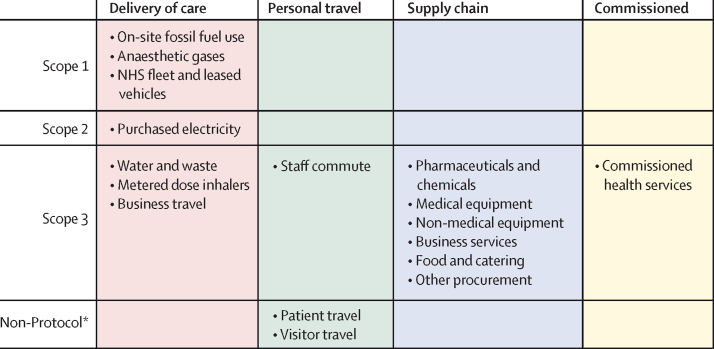
“The footprint analysis covers greenhouse gas (GHG) emissions under Scopes 1, 2 and 3 of the Greenhouse Gas Protocol 26 , in addition to personal travel emissions not usually covered within these analyses, providing a comprehensive NHS Carbon Footprint Plus model (Supplementary Table 1) 3 .”
Strzalkowski, P., Strzalkowska, A., Roth, M., Kaya, S., Geerling, G., & Guthoff, R. (2025) · Graefe s Archive for Clinical and Experimental Ophthalmology · doi:10.1007/s00417-025-06905-7 · Cited by 5
“In comparison, the UK has reported fluorinated gas emis - sions within its healthcare sector: in 2019, the total car - bon footprint of the NHS was 25 megatons of CO 2 [48].”
Rethinking research funding through a sustainability Lens
Tu, K. J., & Greever, C. (2025) · Clinical Biochemistry · doi:10.1016/j.clinbiochem.2025.110987 · Cited by 5
Mastronardi, M., Fracon, S., Ahuja, M. S., Ngo, V. Q. J., Westwood, E., & Yiasemidou, M. (2025) · Annali Italiani di Chirurgia · doi:10.62713/aic.4099 · Cited by 5
Surgical Education Within Planetary Health Curricula: A Global Environmental Scan (2022–2025)
Vayalikunnel, R., Manoel, P. Z., Manoel, A. Z., Jeyakumar, M., Chen, L. Q., Jeyakumar, R., Balmes, P., Lalande, A., MacNeill, A. J., Joharifard, S., et al. (2025) · International Journal of Environmental Research and Public Health · doi:10.3390/ijerph22101545 · Cited by 5
“Most of the impacts of health services delivery are attributable to energy and resource utilization, and acute care settings, such as hospitals, are the most environmentally intensive sites of treatment [6–8].”
EcoRad: sustainable radiology and the ecology of economics
Northrup, B. E., Hanneman, K. A., & Omary, R. A. (2024) · BJR|Open · doi:10.1093/bjro/tzaf027 · Cited by 5
“36 The UK Green Building Council and the United States Environmental Protection Agency 37,38 provide resources to reduce supply chain emissions.”
Baddeley, R., & Hayee, B. (2025) · Digestive Endoscopy · doi:10.1111/den.70080 · Cited by 5
Carbon Footprint of Antibody‐Based Drugs and Biologics Using Hybrid Life Cycle Assessment
Taillemite, S., Fenelon, M., Scherlinger, M., & Piffoux, M. (2026) · Clinical Pharmacology & Therapeutics · doi:10.1002/cpt.70301 · Cited by 5
The carbon footprint of surgical operations: 2023–2025 systematic review update
Savio, A., Marchi, B., Roletto, A., Guizzi, P., Milano, G., Zavanella, L. E., & Zanoni, S. (2026) · PLoS ONE · doi:10.1371/journal.pone.0349415 · Cited by 5
Environmentally friendly inhalers: issues for the general practice consultation
Parker, J. (2022) · British Journal of General Practice · doi:10.3399/bjgp22x720821 · Cited by 5
The carbon footprint of cataract surgery and ISBCS
Ferreira, I., García, O., & Carnielli, L. M. (2023) · Elsevier eBooks · doi:10.1016/b978-0-323-95309-2.00052-0 · Cited by 6
Spinos, D., Doshi, J., & Garas, G. (2023) · The Journal of Laryngology & Otology · doi:10.1017/s0022215123001780 · Cited by 5
Nidhi, A. (2023) · Nature Environment and Pollution Technology · doi:10.46488/nept.2023.v22i04.036 · Cited by 5
“Clinical trials are a vital component of the process of developing new medicines, and they are also a contributor to the emissions of greenhouse gases (Tennison et al. 2021).”
Survey of the endoscopy workforce’s perception of sustainability
Poo, S. X. W., Kader, R., Shakweh, E., Kronsten, V. T., Baddeley, R., Gastroenterology London Investigative Network for Trainees Study Group (GLINT), Siddhi, S., & Hayee, B. (2024) · Frontline Gastroenterology · doi:10.1136/flgastro-2024-102807 · Cited by 5
Mizori, R., Sadiq, M., Omran, Y. A., Chandrakumar, C., Lewis, T., Musbahi, O., & Karuppaiah, K. (2025) · International Orthopaedics · doi:10.1007/s00264-025-06532-1 · Cited by 5
Yazdi, A. K., Özaydın, G., Tan, Y., Ishizaka, A., & Li, J. (2025) · Annals of Operations Research · doi:10.1007/s10479-025-06636-2 · Cited by 5
Hojat, L. S., Veltri, C., Newman, N. J., Ferreira, R. E., Moore, V. L., Higbee-Todd, K. J., Lee, A. P., Woods, A. G., Singer, M. E., & Spivak, E. S. (2025) · Open Forum Infectious Diseases · doi:10.1093/ofid/ofaf308 · Cited by 5
“First, the quantified CO 2 -equivalent GHG emissions only include the materials being disposed of by the hospital, but these are underestimates, not accounting for the additional major sources of antimicro-bial-associated GHG emissions such as the drug manufacturing process and shipping [26].”
Comparative Study of Key Supply Chain Management Elements in Sustainability Reports
Lee, V., Marasini, D. P., Dong, W., Lee, H., & Lee, D. (2021) · Businesses · doi:10.3390/businesses1030013 · Cited by 5
“Exemplifying this interrelationship, the National Health Service in England reported that 62% of the healthcare industry’s carbon footprint in 2019 came from its supply chain [55].”
BackgroundNachhaltige Transformation von Praxen und Ambulanzen
Saha, S., Hübner, A., Luhmann, E., Niebel, D., & Hecker, C. (2022) · Die Dermatologie · doi:10.1007/s00105-022-05084-4 · Cited by 5
Makhecha, S., Eftychiou, L., Tsang, V., Vas, V., Christiansen, N., Crook, J., & Bentley, S. (2022) · BMJ Open Quality · doi:10.1136/bmjoq-2022-001916 · Cited by 5
The fight against climate change in primary care: a prescription for change
Naughton, M., & Payne, R. (2022) · Family Practice · doi:10.1093/fampra/cmac119 · Cited by 5
Gathering the evidence: health and aged care carbon inventory study
Desmond, S., Smith, J., Hogg, J., Walton-Hespe, J., & Gardner-Marlin, J. (2023) · Australian Health Review · doi:10.1071/ah23129 · Cited by 5
Tsagkaris, C., Saeed, H., Laubscher, L., Eleftheriades, A., Stavros, S., Drakaki, Ε., Potiris, A., Panagiotopoulos, D., Sioutis, D., Panagopoulos, P., et al. (2023) · Diseases · doi:10.3390/diseases11040157 · Cited by 5
“It was found that the procurement and transportation of patients and healthcare personnel accounted for more than 30% of the medical waste of acute medical care and more than 20% of ambulatory healthcare services, including surgical emergencies [10].”
BackgroundWilson, N., & Dalton, C. (2024) · The Journal of Climate Change and Health · doi:10.1016/j.joclim.2024.100298 · Cited by 5
How can we improve the carbon footprint of IBD clinical care?
Carbery, I., Bhatnagar, G., Cooney, R. M., & Selinger, C. P. (2024) · Frontline Gastroenterology · doi:10.1136/flgastro-2023-102564 · Cited by 5
Cost of Carbon in the Total Cost of Healthcare Procedures: A Methodological Challenge
Pugliesi, P.-S., Marrauld, L., & Lejeune, C. (2024) · Applied Health Economics and Health Policy · doi:10.1007/s40258-024-00890-4 · Cited by 5
Environmental footprinting in health care: a primer
Fry, J., Bone, A., Kanemoto, K., Smith, C. L., & Watts, N. (2024) · The Medical Journal of Australia · doi:10.5694/mja2.52481 · Cited by 5
Self-citationCarbon footprints in the urologic field: From diagnosis to surgery
Lee, J. S., Song, M., & Kim, J. H. (2025) · Korean journal of urology · doi:10.4111/icu.20250004 · Cited by 5
“Within the National Health Service (NHS), the supply chain accounts for 62% of its carbon footprint, while staff and patient transport contributes 10%, and healthcare delivery represents 24% [4].”
Nachhaltiges Verordnungsverhalten und Implementierung in Leitlinien
Heuer, R., & Nast, A. (2022) · Die Dermatologie · doi:10.1007/s00105-022-05083-5 · Cited by 5
The Economic Impact of a Pilot Digital Day-Case Pathway for Knee Arthroplasty in a U.K. Setting
Cooper, D. M., Bhuskute, N. M., Hepworth, C., & Walsh, G. (2023) · JBJS Open Access · doi:10.2106/jbjs.oa.22.00051 · Cited by 5
Bianchi, V., Misuriello, F., Piras, E., Nesci, C., Chiarello, M. M., & Brisinda, G. (2025) · International Journal of Surgery · doi:10.1097/js9.0000000000002347 · Cited by 4
“Currently, multiple organizations in different countries are promoting climate-friendly healthcare [ 76 , 79 ] .”
Tan, K., & Zhang, J. (2025) · Scientific Reports · doi:10.1038/s41598-025-09293-4 · Cited by 4
Kouwenberg, L. H. J. A., Wijnhoven, A. M., Cohen, E. S., Hehenkamp, W. J. K., Weiland, N. H. S., & Kringos, D. S. (2025) · Health Research Policy and Systems · doi:10.1186/s12961-025-01386-w · Cited by 4
“Participants’ perceptions of environmentally impactful care were largely aligned with the existing literature [9, 11, 12, 18], unlike previous studies involving stakeholders less engaged in sustainability [32].”
Pons, S., Atchade, E., D’Aranda, E., Bounes, F. V., Lallemant, F., Schoeffler, M., Trouiller, P., Dahyot‐Fizelier, C., & Hafiani, E. M. (2025) · Anaesthesia Critical Care & Pain Medicine · doi:10.1016/j.accpm.2025.101609 · Cited by 4
Cancer care underuse, overuse, and inequalities
Vaccarella, S., & Vineis, P. (2025) · JNCI Journal of the National Cancer Institute · doi:10.1093/jnci/djaf290 · Cited by 4
Embedding Sustainability into the Imaging and Care of Patients with Cancer
Northrup, B. E., Hanneman, K. A., Lichter, K. E., Rockall, A., Zigmund, B., D’Anna, G., Zhang, Z., Osborne, J. R., Silva, G. S., Waeldner, K., et al. (2025) · Radiology Imaging Cancer · doi:10.1148/rycan.250054 · Cited by 4
Ma, Y., Shi, X., Lu, L., Xu, Y., Zhang, J., Yu, T., Peng, Y., Ke, E., Lin, S., Guo, R., et al. (2025) · Journal of Cleaner Production · doi:10.1016/j.jclepro.2025.147331 · Cited by 4
Shaw, L., Orr, N., Lawal, H., Briscoe, S., Yan, X., Coon, J. T., Meléndez‐Torres, G. J., Martin-Pintado, C., & Garside, R. (2025) · Campbell Systematic Reviews · doi:10.1002/cl2.70077 · Cited by 4
Fossil Health: Deconstructing the Health and Energy Relationship to Reimagine a Viable Future
Vivas, L., Cash‐Gibson, L., & Chiabai, A. (2026) · International Journal of Social Determinants of Health and Health Services · doi:10.1177/27551938261419437 · Cited by 4
Radbel, J. M., Brigham, E. P., Bayram, H., Rabin, A. S., Ewart, G. W., Rice, M., Cerceo, E. A., Mosesón, E. M., Baid, H., Trent, L., et al. (2026) · Annals of the American Thoracic Society · doi:10.1093/annalsats/aaoag055 · Cited by 4
Ranjekar, A. M., OOST, G. V., Kaviti, A. K., & Sikarwar, V. S. (2026) · Journal of environmental chemical engineering · doi:10.1016/j.jece.2026.124024 · Cited by 5
GREEN ICU: responsible and sustainable ICU
Gabiña, I. S., & López, M. J. P. (2024) · Medicina Intensiva (English Edition) · doi:10.1016/j.medine.2023.11.008 · Cited by 4
Climate change and health in planetary perspectives: challenges for the health sector
Ha, M. (2025) · Environmental Analysis Health and Toxicology · doi:10.5620/eaht.2025s06 · Cited by 4
“While their emissions are on the rise, the UK’s National Health Service (NHS)[63] and Kaiser Permanente, a leading Health Maintenance Organization (HMO) in the U.S. [64], have successfully reduced their GHG emissions through planned carbon neutrality initiatives.”
The emergency department carbon footprint calculator: Design and validation
Rodríguez‐Jiménez, L., Romero‐Martín, M., & Gómez-Salgado, J. C. (2025) · Medicine · doi:10.1097/md.0000000000041652 · Cited by 4
“[15] Similarly, Spain and Australia have reported analogous figures, with contributions to national emissions hovering around 5.4% and 7.2%, respectively.”
InfluentialPractical sustainable laboratory medicine
Badrick, T. C., Aykal, G., Männistö, T. I., & Anetor, J. I. (2025) · Clinica Chimica Acta · doi:10.1016/j.cca.2025.120428 · Cited by 4
The carbon footprint of group and save in elective and emergency surgery
Robinson, A. V., Moses, O., Bass, J., & Pegna, V. (2025) · Annals of The Royal College of Surgeons of England · doi:10.1308/rcsann.2024.0073 · Cited by 4
Marion, C., Bernat, M., Hammad, E., Calvet, J.-P., Roche, M., Marecal, L., Zieleskiewicz, L., & Léone, M. (2025) · Annals of Intensive Care · doi:10.1186/s13613-025-01536-x · Cited by 4
“At this rate, the healthcare sector would rank as the fifth-largest emitter in the world [4].”
Rudrapatna, V. A., Wang, T. A., Vazirnia, P., Wang, K., Alhalel, N., Azzam, S., Mattson, G., Becker, A. E., Oon, C.-Y., Wang, S., et al. (2026) · BMJ Public Health · doi:10.1136/bmjph-2025-004862 · Cited by 4
Clinical Medicine and Climate Change
Morejón-Jaramillo, P. E., Nassikas, N. J., & Rice, M. B. (2023) · Immunology and Allergy Clinics of North America · doi:10.1016/j.iac.2023.07.006 · Cited by 4
Green gastroenterology adaptation, resilience and an industry perspective
Thiel, C. L., Pak, E. V., Burkard, R., & Huber, H. (2023) · Gut · doi:10.1136/gutjnl-2023-331277 · Cited by 4
Lachgas-Analgesie unter dem Aspekt: Nachhaltigkeit im Kreißsaal
Dresen, F., Bechert, S., Bolkenius, D., Snyder-Ramos, S., & Koch, S. (2023) · Hebamme · doi:10.1055/a-2160-4933 · Cited by 4
“Hierbei geht der NHS nicht nur bei der Verpflichtung der Medizinprodukt-Her - steller zur CO 2 -Neutralität, sondern auch bei der klinischen Testung neuer technischer Lösungen vorbildhaft voran [27, 40].”
BackgroundWhat can professional medical societies do to mitigate climate change?
Veitch, A. (2024) · Frontline Gastroenterology · doi:10.1136/flgastro-2023-102481 · Cited by 4
Umweltauswirkungen des Gesundheitssektors
Quitmann, C., Keil, M., Herrmann, A., Schulz, R., & Pichler, P. (2024) · Springer eBooks · doi:10.1007/978-3-662-68792-5_17 · Cited by 4
Nolan, B., Hoskins, M. J., Phillips, B., & Evans, K. L. (2024) · Anaesthesia and Intensive Care · doi:10.1177/0310057x241263113 · Cited by 4
Metadata
- Authors
- Tennison, I., Roschnik, S., Ashby, B., Boyd, R., Hamilton, I., Oreszczyn, T., Owen, A., Romanello, M., Ruyssevelt, P., Sherman, J. D., Smith, A. Z. P., Steele, K., Watts, N., & Eckelman, M. J.
- Affiliations
- NHS England (GB)
- Arup Group (United Kingdom) (GB)
- University College London (GB)
- University of Leeds (GB)
- Yale University (US)
- Northeastern University (US)
- Corresponding author
- Eckelman, Matthew J
- ORCID
- Venue
- The Lancet Planetary Health
- Publisher
- Elsevier BV
- Published
- 2021-02
- Volume
- 5
- Issue
- 2
- Pages
- e84-e92
- ISSN
- 2542-5196 (ISSN-L)
- PMC
- PMC7887664
- OpenAlex
- W3127500650
- Semantic Scholar
- a1762bc0f4da5ef3f86d7b8d6807200964d0b7e1
- Cited by
- 1,039
- References
- 26
- Citations by year
- 2026: 134 · 2025: 222 · 2024: 221 · 2023: 317 · 2022: 105 · 2021: 40
- FWCI
- 55.35
- Type
- journal article
- Language
- en
- Open access
- gold
- doi.org
- Licence
- cc-by
- www.elsevier.com/tdm/userlicense/1.0/ (tdm)
- www.elsevier.com/legal/tdmrep-license (tdm)
- creativecommons.org/licenses/by/4.0/ (vor)
- Locations
- The Lancet Planetary Health (publishedVersion, cc-by)
- PubMed Central (publishedVersion, cc-by)
- PubMed (publishedVersion)
- White Rose Research Online (University of Leeds, The University of Sheffield, University of York) (acceptedVersion)
- DOAJ (DOAJ: Directory of Open Access Journals) (submittedVersion, cc-by-sa)
- UCL Discovery (University College London) (submittedVersion)
- Funders
- Wellcome Trust (209734/Z/17/Z)
- Topics
- Physical Sciences › Environmental Science › Environmental Engineering › Environmental Impact and Sustainability
- Physical Sciences › Environmental Science › Health, Toxicology and Mutagenesis › Climate Change and Health Impacts
- Physical Sciences › Engineering › Architecture › Healthcare Facilities Design and Sustainability
- Keywords
- healthcare emissions, carbon footprint, National Health Service, greenhouse gas accounting, climate change mitigation, supply chain emissions, Greenhouse Gas Protocol
- MeSH terms
- Greenhouse Gases, Carbon Dioxide, Delivery of Health Care, England, Humans, State Medicine, Transportation, Health Care Sector, Climate Change, Carbon Footprint
About these checks
Registry, retraction, Cites and statistics results are computed, not judged, with one exception: a printed reference that no index lists is read once by a model before it counts as a citation error. Claims are extracted by a model and kept only when their quote appears verbatim in the text; each cited source is then checked, with a model’s help, for whether it says what the claim relies on. Those verdicts can be wrong — read the claim’s quote and the cited source before relying on one.
Statistics and arithmetic are recomputed, not judged.
Confidence bands are shown only for fields calibrated on our annotated test set. None is calibrated yet, so no band is shown.
What counts as a claim ›How we measure confidence ›How we check this ›
Are you an author, or do you see a problem with this page? Request a review
Data sources
Bibliographic data: Semantic Scholar, OpenAlex, Crossref.
Contains information from the Semantic Scholar Academic Graph Datasets, made available under the ODC Attribution License (ODC-BY 1.0).
Semantic Scholar’s data is described in: Kinney, R., et al. (2023). The Semantic Scholar Open Data Platform. arXiv:2301.10140.
