

Applications of digital technology in COVID-19 pandemic planning and response
Open accessThe DOI matches its Crossref record; 17 of the 17 references it cites were found in a registry or an index.
Abstract
With high transmissibility and no effective vaccine or therapy, COVID-19 is now a global pandemic. Government-coordinated efforts across the globe have focused on containment and mitigation, with varying degrees of success. Countries that have maintained low COVID-19 per-capita mortality rates appear to share strategies that include early surveillance, testing, contact tracing, and strict quarantine. The scale of coordination and data management required for effective implementation of these strategies has-in most successful countries-relied on adopting digital technology and integrating it into policy and health care. This Viewpoint provides a framework for the application of digital technologies in pandemic management and response, highlighting ways in which successful countries have adopted these technologies for pandemic planning, surveillance, testing, contact tracing, quarantine, and health care.
Overview
The claims and statistics of this paper haven’t been checked yet.
Free: it reads the open-access text and checks the first 5 claims that cite a source we can check. Create a free account to check every claim.
Integrity signals
Registry
Cites
Statistics
Figures
Verification
Claims the paper makes
The claims and statistics of this paper haven’t been checked yet.
Free: it reads the open-access text and checks the first 5 claims that cite a source we can check. Create a free account to check every claim.
Claims other papers make about this one
Each is checked against this paper’s own text: does it say what the citing paper says it does?
The cited source says what the claim attributes to it.
In the citing paper
“The current COVID-19 pandemic has highlighted the need for effective infectious disease surveillance at national and state levels 57 ,”
From Multimodal biomedical AI (2022) · cites this paper as [57]
In the citing paper
“Digitization of the healthcare system can aid in the management of the pandemic, mitigating the disruption of societal systems [1].”
From Global Interest in Telehealth During COVID-19 Pandemic: An Analysis of Google Trends™ (2020) · cites this paper as [1]
In the citing paper
“For example, Singapore implemented a mobile phone application, TraceTogether, which pushes notifications to devices in close proximity as 2 m apart and sharing information [175].”
From Human-centred artificial intelligence for mobile health sensing: challenges and opportunities (2023) · cites this paper as [175]
Self-check
Percentages, sums and reported differences re-computed from the paper’s own numbers.
The self-check needs the paper’s full text.
Citations
Cites
A novel coronavirus from patients with pneumonia in China, 2019
Zhu, N., Zhang, D., Wang, W., Li, X., Yang, B., Song, J., Zhao, X., Huang, B., Shi, W., Lu, R., et al. (2020) · New England Journal of Medicine · doi:10.1056/nejmoa2001017 · Cited by 28,244
Wu, J. T., Leung, K., & Leung, G. M. (2020) · The Lancet · doi:10.1016/s0140-6736(20)30260-9 · Cited by 4,389
An Introduction to Statistical Learning: with Applications in R
James, G. M., Witten, D., Hastie, T. J., & Tibshirani, R. J. (2018) · doi:10.25334/q4ht55 · Cited by 2,912
Quantifying SARS-CoV-2 transmission suggests epidemic control with digital contact tracing
Ferretti, L., Wymant, C., Kendall, M., Zhao, L., Nurtay, A., Abeler-Dörner, L., Parker, M., Bonsall, D., & Fraser, C. (2020) · Science · doi:10.1126/science.abb6936 · Cited by 2,512
Li, L., Qin, L., Xu, Z., Yin, Y., Wang, X., Kong, B., Bai, J., Lu, Y., Fang, Z., Song, Q., et al. (2020) · Radiology · doi:10.1148/radiol.2020200905 · Cited by 1,927
Sohil, F., Sohali, M. U., & Shabbir, J. (2022) · Statistical Theory and Related Fields · doi:10.1080/24754269.2021.1980261 · Cited by 1,624
Response to COVID-19 in Taiwan: Big Data Analytics, New Technology, and Proactive Testing
Wang, C. J., Ng, C. Y., & Brook, R. H. (2020) · JAMA · doi:10.1001/jama.2020.3151 · Cited by 1,391
Prediction models need appropriate internal, internal-external, and external validation
Steyerberg, E. W., & Harrell, F. E. (2016) · Journal of Clinical Epidemiology · doi:10.1016/j.jclinepi.2015.04.005 · Cited by 1,304
Torous, J., Jän Myrick, K., Rauseo-Ricupero, N., & Firth, J. (2020) · JMIR Mental Health · doi:10.2196/18848 · Cited by 946
COVID-19 and artificial intelligence: protecting health-care workers and curbing the spread
McCall, B. (2020) · The Lancet Digital Health · doi:10.1016/s2589-7500(20)30054-6 · Cited by 396
Research works printed but not linked: 3
- 12. Naudé W. Artificial intelligence vs. COVID-19: an early review. https://www.iza.org/publications/dp/13110/artificial-intelligence- against-covid-19-an-early-review (accessed May 22, 2020).
- 31. Cisco. Study reveals 74 percent of consumers open to virtual doctor visits. https://newsroom.cisco.com/press-release-content?type=web content&articleId=1148539 (accessed May 21, 2020).
- 35. Health Affairs. Ensuring the growth of telehealth during COVID-19 does not exacerbate disparities in care. https://www.healthaffairs. org/do/10.1377/hblog20200505.591306/full/ (accessed May 21, 2020). · doi:10.1377/hblog20200505.591306/full/
Cited by
Items 301–400 of 1,000
Yoon, Y. K., Lee, J., Kim, S. I., & Peck, K. R. (2020) · Journal of Korean Medical Science · doi:10.3346/jkms.2020.35.e387 · Cited by 14
Artificial Intelligence and an Edge-IoMT-Based System for Combating COVID-19 Pandemic
Awotunde, J. B., Jimoh, R. G., Matiluko, O. E., Gbadamosi, B., & Ajamu, G. J. (2021) · Springer eBooks · doi:10.1007/978-981-16-6542-4_11 · Cited by 21
Digital health care services in post COVID-19 scenario: modeling the enabling factors
Sindhu, S. (2022) · International Journal of Pharmaceutical and Healthcare Marketing · doi:10.1108/ijphm-04-2021-0046 · Cited by 14
Nurhayati, N., Lasmawan, I. W., Arnyana, I. B. P., & Candiasa, I. M. (2022) · International Journal of Health Sciences · doi:10.53730/ijhs.v6n2.8971 · Cited by 14
“Based on those facts, the purpose of this research is to measure the effectiveness of animated videos used in improving students’ science process skills and creativity in science learning during COVID-19 pandemic (Vaishya et al., 2020; Whitelaw et al., 2020).”
Harish, V., Samson, T. G., Diemert, L. M., Tuite, A. R., Mamdani, M., Khan, K., McGahan, A. M., Shaw, J., Das, S., & Rosella, L. C. (2022) · PLOS Digital Health · doi:10.1371/journal.pdig.0000164 · Cited by 15
A Narrative Review of Innovative Responses During the COVID-19 Pandemic in 2020
Wu, T.-C., & Ho, C. B. (2022) · International Journal of Public Health · doi:10.3389/ijph.2022.1604652 · Cited by 16
“Although existing studies on innovations in the healthcare system have typically focused on technology, they do not cover all kinds of innovative responses, and the details of the technology applications remain unclear [8, 9].”
BackgroundTam, W., Alajlani, M., & Abd-Alrazaq, A. A. (2023) · Journal of Medical Internet Research · doi:10.2196/42950 · Cited by 15
“Positive attitudes toward technology adoption in health care have been further accelerated by the COVID-19 pandemic [21-23].”
Positioning Digital Tracing Applications in the Management of the COVID-19 Pandemic in France
Albouy-Llaty, M., Martin, C., Benamouzig, D., Bothorel, E., Munier, G., Simonin, C., Guéant, J., & Rüsch, E. (2021) · Journal of Medical Internet Research · doi:10.2196/27301 · Cited by 14
“These countries also developed a public health strategy involving the use of digital contact tracing (DCT) applications to improve timely tracking and contact tracing [2,3].”
Stockman, J. K., Anderson, K. M., Tsuyuki, K., & Horvath, K. J. (2021) · Journal of Health Care for the Poor and Underserved · doi:10.1353/hpu.2021.0056 · Cited by 16
“56,57 Further, with reduced or no in-person support, technology-based interventions and programs including telehealth may help buffer the effects of loneliness and social isolation.”
Accounting for unstable environments in the public sector: managing post-COVID-19 times
Bastida, F., Bracci, E., & Hoque, Z. (2021) · Journal of Public Budgeting Accounting & Financial Management · doi:10.1108/jpbafm-09-2021-0136 · Cited by 17
Drone selection for disaster responses: an application of the stratified-best-worst method
Johny, D., Padhi, S. S., & Cheng, T. C. E. (2025) · Management Decision · doi:10.1108/md-07-2024-1658 · Cited by 19
The Expanding Digital Reach of the Chinese State: Digital Governance in China
Kostka, G., & Bogs, A. (2025) · Regulation & Governance · doi:10.1111/rego.70078 · Cited by 15
Mangalam, M. (2025) · Artificial Intelligence in Medicine · doi:10.1016/j.artmed.2025.103272 · Cited by 14
A New Dimension of Health Care: The Benefits, Limitations and Implications of Virtual Medicine
Shah, K., & Tomljenovic-Berube, A. M. (2021) · Journal of Undergraduate Life Sciences · doi:10.33137/juls.v15i1.37034 · Cited by 14
Leite, G. S., Albuquerque, A. B., & Pinheiro, P. R. (2021) · International Journal of Environmental Research and Public Health · doi:10.3390/ijerph182010765 · Cited by 13
“[25] made available a viewpoint with a framework for the application of digital technologies in pandemic management and response.”
BackgroundCOVID-19 Contact Tracing and Detection-Based on Blockchain Technology
Torky, M. F., Goda, E., Snåšel, V., & Hassanien, A. E. (2021) · Informatics · doi:10.3390/informatics8040072 · Cited by 13
Exploring User Acceptance Determinants of COVID-19-Tracing Apps to Manage the Pandemic
Krüger, N., Behne, A., Beinke, J. H., Stibe, A., & Teuteberg, F. (2021) · International Journal of Technology and Human Interaction · doi:10.4018/ijthi.293197 · Cited by 15
“These scenarios build the data output or user interaction picture in our scheme (Whitelaw et al., 2020).”
BackgroundMethodDevelopment of a UVC-based disinfection robot
Ma, Y., Xi, N., Xue, Y., Wang, S., Wang, Q., & Gu, Y. (2022) · Industrial Robot the international journal of robotics research and application · doi:10.1108/ir-10-2021-0227 · Cited by 13
Burkle, F. M., Bradt, D. A., Green, J., & Ryan, B. J. (2020) · Prehospital and Disaster Medicine · doi:10.1017/s1049023x20001363 · Cited by 13
Sugito, S., Agung, A. A. G., Yudana, I. M., & Ariawan, I. P. W. (2022) · International Journal of Health Sciences · doi:10.53730/ijhs.v6n2.7583 · Cited by 13
A Low Cost IoT Cyber-Physical System for Vehicle and Pedestrian Tracking in a Smart Campus
Toutouh, J., & Alba, E. (2022) · Sensors · doi:10.3390/s22176585 · Cited by 13
Work-Related Safety and Health Issues among Food and Parcel Delivery Riders
Zulkifly, S. S. (2023) · Business, management and economics · doi:10.5772/intechopen.110783 · Cited by 14
Digital exposure notification tools: A global landscape analysis
Nebeker, C., Kareem, D., Yong, A., Kunowski, R., Malekinejad, M., & Aronoff-Spencer, E. S. (2023) · PLOS Digital Health · doi:10.1371/journal.pdig.0000287 · Cited by 13
“The COVID-19 pandemic coincided with and spurred advances in the development and demand for novel health technologies, supporting remote monitoring, telemedicine, and digital public health interventions such as EN [13].”
BackgroundAssessment of COVID-19 control strategies in a steel industry using a SWOT matrix
Arani, M. H., Moslemzadeh, M., Fallahzadeh, O., khorvash, H., Dakhilpour, M., & Mohammadzadeh, M. (2021) · Toxicology and Industrial Health · doi:10.1177/07482337211013319 · Cited by 14
“Countries such as India, Singapore, Canada, United States, and South Korea have initiated the utilization of information and communication technologies (ICTs) to combat the coronavirus pandemic (Bayram et al., 2020; Scott et al., 2020; Whitelaw et al., 2020).”
BackgroundZhang, X., Ouyang, S., & Tavitiyaman, P. (2022) · Tourism and Hospitality · doi:10.3390/tourhosp3020024 · Cited by 14
Effectiveness of containment strategies in preventing SARS-CoV-2 transmission
Leung, K. K., Zhang, R., Hashim, M. J., Fang, M., Xu, J., Sun, D., Li, X., Liu, Y., Deng, H., Zeng, D., et al. (2022) · Journal of Infection and Public Health · doi:10.1016/j.jiph.2022.04.012 · Cited by 13
“These apps can be integrated into comprehensive control strategies [22,23,37].”
BackgroundSmart Building Technologies in Response to COVID-19
Xie, X., Ramakrishna, S., & Manganelli, M. (2022) · Energies · doi:10.3390/en15155488 · Cited by 13
Levin‐Zamir, D. (2023) · Information Services & Use · doi:10.3233/isu-230192 · Cited by 12
“The pandemic enabled the development of a wide variety of digital health technologies, which were adopted and integrated to enable and support public health planning, surveillance, testing, contact tracing, quarantine, and health care [9,10].”
Jordan, H. R., Sahni, S., Ahmed, M. M., Fares, J. E., Desai, B., Lenchur, C. N., & Jermyn, R. T. (2023) · Cureus · doi:10.7759/cureus.47639 · Cited by 13
The Effect of Nutritional Mobile Apps on Populations With Cancer: Systematic Review
Ng, K. L. S., Munisamy, M., Lim, J. B. Y., & Alshagga, M. A. (2024) · JMIR Cancer · doi:10.2196/50662 · Cited by 13
Mukherjee, S., Distler, V., Lenzini, G., & Cardoso-Leite, P. (2024) · European Symposium on Usable Security (EuroUSEC) · doi:10.1145/3688459.3688474 · Cited by 15
“For instance, if reviewers prioritize algo-rithm reliance over objective judgment, unfair cheating accusations can occur due to algorithmic biases from skewed training datasets [2, 57].”
Hausvater, A., Pleasure, M., Vieira, D. L., Banco, D., & Dodson, J. A. (2024) · American Journal of Preventive Cardiology · doi:10.1016/j.ajpc.2024.100917 · Cited by 13
The impact of digitization on economy in the context of the Coronavirus pandemic
Ionescu, C.-D., Iordache, M., & Țițan, E. (2021) · SHS Web of Conferences · doi:10.1051/shsconf/20219201018 · Cited by 12
A Comprehensive Review of Applications of Internet of Things for Covid-19 Pandemic
Malliga, S., Kogilavani, S. V., & Nandhini, P. S. (2021) · IOP Conference Series Materials Science and Engineering · doi:10.1088/1757-899x/1055/1/012083 · Cited by 16
A Survey on Machine Learning and Internet of Things for COVID-19
Α, E. E., Mathew, S., Topcu, A. E., & Abdelbaki, W. (2021) · IEEE World AI IoT Congress (AIIoT) · doi:10.1109/aiiot52608.2021.9454241 · Cited by 12
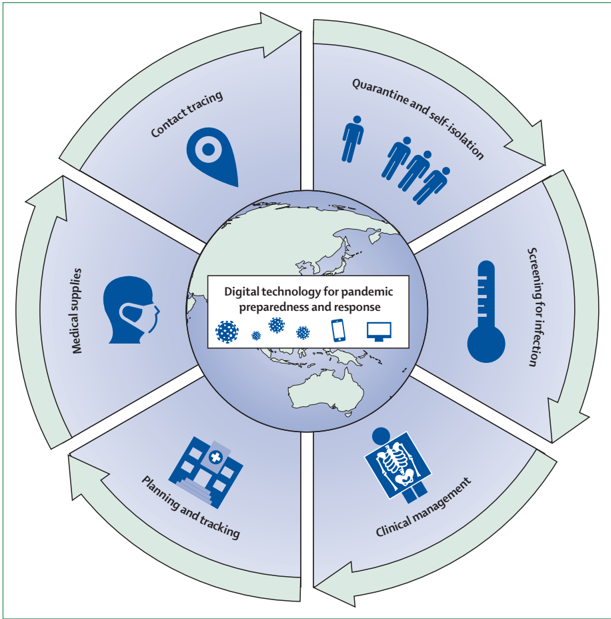
“One study [31], for example, categorized applications according to pandemic patterns, considering tracking, screening for infections, contact tracing, case isolation, clinical operations, and post-case treatments.”
BackgroundGonzález, A. B. P. (2021) · Latin American Journal of Energy Research · doi:10.21712/lajer.2021.v8.n1.p1-21 · Cited by 27
Aleksejeva, V., Lavrinenko, O., Betlej, A., & Danileviča, A. (2021) · Journal of Entrepreneurship and Sustainability Issues · doi:10.9770/jesi.2021.9.2(22 · Cited by 12
Ensuring Doctor of Pharmacy Graduates Have the Essential Competencies for Innovative Practice
Mourad, N., Seo, S.-W., & Kahaleh, A. A. (2023) · American Journal of Pharmaceutical Education · doi:10.5688/ajpe9100 · Cited by 12
“The countries that melded these strategies with appropriate policy and health care services had lower per capita mortality rates and flattened incidence curves.(13) In addition, wearable devices have been studied to help track recovery from and predict COVID-19 with self-reported symptoms, as demonstrated by the DETEC…”
BackgroundSeberger, J. S., Obi, I., Loukil, M., Liao, W., Wild, D. J., & Patil, S. (2022) · Proceedings of the ACM on Human-Computer Interaction · doi:10.1145/3555586 · Cited by 13
“As such, alongside a host of digital solutions to the pandemic [108], apps designed to track the spread of the pandemic represent a speculative infrastructure of daily life [86].”
BackgroundThe Saudi Community View of the Use of Artificial Intelligence in Health Care
Albinsaad, L. S., Alkhawajah, A. A., Abuageelah, B. M., Alkhalaf, R., Alfaifi, M. H., Oberi, I. A., Alnajjad, A. I., Albalawi, I. A., Alessa, M. Y., & Khan, A. (2024) · Annals of African Medicine · doi:10.4103/aam.aam_192_23 · Cited by 13
Ocloo, E. C., Coffie, I. S., Bukari, Z., & Bashiru, S. (2024) · Cogent Business & Management · doi:10.1080/23311975.2024.2358549 · Cited by 13
COVID/HIV Co-Infection: A Syndemic Perspective on What to Ask and How to Answer
Gesesew, H. A., Mwanri, L., Stephens, J. H., Woldemichael, K., & Ward, P. (2021) · Frontiers in Public Health · doi:10.3389/fpubh.2021.623468 · Cited by 12
“The application of technology on data collection for COVID-19 related research, potential biases and how to address them; the expansion and innovation of mobile applications for contact tracing (71) in Singapore, South Korea, Australia, and other countries; and the use of social media for research findings disseminati…”
BackgroundYuan, E. J. (2021) · Asian Journal of Communication · doi:10.1080/01292986.2021.1913620 · Cited by 12
Demuyakor, J., & Geng, Y.-Q. (2022) · Online Journal of Communication and Media Technologies · doi:10.30935/ojcmt/12249 · Cited by 7
The IHI Rochester Report 2022 on Healthcare Informatics Research: Resuming After the CoViD-19
Combi, C., Facelli, J. C., Haddawy, P., Holmes, J. H., Koch, S., Liu, H., Meyer, J., Peleg, M., Pozzi, G., Štiglic, G., et al. (2023) · Journal of Healthcare Informatics Research · doi:10.1007/s41666-023-00126-5 · Cited by 12
“…includes reports from a technical/computer science point of view about applications and approaches responding to CoViD-19 -related challenges [9–16] as well as about the role of machine learning in controlling the pandemic from a clinical perspective [17, 18] and recommendations for…”
BackgroundWinter, M. R., Baumeister, H., Frick, U., Tallon, M., Reichert, M., & Pryss, R. C. (2021) · Annual International Conference of the IEEE Engineering in Medicine and Biology Society (EMBC) · doi:10.1109/embc46164.2021.9630949 · Cited by 12
“, better overview of the COVID-19 situation) [6].”
BackgroundA tale of two applications: lessons learned from national LMIC COVID applications
Winkie, M. J., & Nambudiri, V. E. (2022) · Journal of the American Medical Informatics Association · doi:10.1093/jamia/ocac146 · Cited by 12
“While countries pursued different approaches in execution of COVID-19 strategies, many LMIC COVID-19 applications shared core features of contract tracing, quarantine tracking, testing coordination, screening, clinical management recommendations, and information dissemination.(18)”
BackgroundMethodPopulation Health and Health Services: Old Challenges and New Realities in the COVID-19 Era
Sarría‐Santamera, A., Yeskendir, A., Maulenkul, T., Orazumbekova, B., Gaipov, A., Imaz-Iglesia, I., Pinilla-Navas, L., Moreno‐Casbas, T., & Corral, T. (2021) · International Journal of Environmental Research and Public Health · doi:10.3390/ijerph18041658 · Cited by 12
Digital Healthcare Innovative Services in Times of Crisis: A Literature Review
Anastasiadou, O., Tsipouras, M. G., Mpogiatzidis, P., & Angelidis, P. A. (2025) · Healthcare · doi:10.3390/healthcare13080889 · Cited by 16
“Thus, addressing these multifaceted challenges is crucial for the successful implementation and sustainability of digital health services in a crisis context [22].”
Hadjileontiadis, L. J., Charisis, V. S., Hadjidimitriou, S., Dias, S. B., Apostolidis, G., Dimaridis, G., Kitsas, I. K., Karlas, A., Fasoula, N., Levi‐Schaffer, F., et al. (2025) · EClinicalMedicine · doi:10.1016/j.eclinm.2025.103243 · Cited by 11
Reflections on techno-solutionism in education: Manifestations and causes
Thibaud, E. (2025) · Educational Philosophy and Theory · doi:10.1080/00131857.2025.2528852 · Cited by 11
Breaking out of the Box: Wearable Technology Applications for Detecting the Spread of COVID-19
Al‐Emran, M., & Ehrenfeld, J. M. (2021) · Journal of Medical Systems · doi:10.1007/s10916-020-01697-1 · Cited by 11
“With the exponential increase of patients affected by COVID-19 and the absence of an effective therapy or vaccine, COVID-19 still represents a global health challenge [1].”
BackgroundDigital Health–Enabled Clinical Trials in Stroke: Ready for Prime Time?
Berwanger, O. B., & Machline-Carrion, M. J. (2022) · Stroke · doi:10.1161/strokeaha.122.037378 · Cited by 11
“28,30,31 The term digital health has never been more current, and, at the same time, disruptive.”
BackgroundTowards QR Code Health Systems Amid COVID-19: Lessons Learnt from Other QR Code Digital Technologies
Mbunge, E., Ndumiso, N., Kavu, T. D., Dandajena, K., Batani, J., & Fashoto, S. G. (2022) · Springer series on bio- and neurosystems · doi:10.1007/978-3-031-10031-4_7 · Cited by 13
COVID ‐19 and the chemical industry: impacts, challenges, and opportunities
Abedsoltan, H. (2023) · Journal of Chemical Technology & Biotechnology · doi:10.1002/jctb.7531 · Cited by 17
The role of digital surveillance during outbreaks: the Ghana experience from COVID‑19 response
Owusu, I., Acheampong, G. K., Akyereko, E., Agyei, N. A., Ashong, M., Amofa, I., Mpangah, R. A., Kenu, E., Aboagye, R. G., Adu, C., et al. (2023) · Journal of Public Health in Africa · doi:10.4081/jphia.2023.2755 · Cited by 11
“Compared to traditional outbreak response systems without technology, the incorporation of digital surveillance technology significantly facilitated the implementation of COVID-19 response strategies (10,11).”
MethodXu, Q., & Shu, S. (2023) · Scientific Reports · doi:10.1038/s41598-023-49933-1 · Cited by 11
“In addition to this, scholars have analyzed digital technologies from the banking industry 16 , the healthcare industry 17 , and industrial enterprises 18 that can transform low-level entities, such as data, into information and knowledge to product information transformation of services.”
BackgroundReiss, M., Kraus, M., Riedel, M., & Czypionka, T. (2024) · BMJ Public Health · doi:10.1136/bmjph-2023-000378 · Cited by 12
Singh, A. K., Sharma, K. K., Bajpai, M. K., & Cabezuelo, A. S. (2024) · Applied Soft Computing · doi:10.1016/j.asoc.2024.112374 · Cited by 12
Current state of developing advanced therapies for rare diseases in the European Union
Qiu, T., Wang, Y., Dabbous, M., Hanna, E., Han, R., Liang, S., & Toumi, M. (2020) · Expert Opinion on Orphan Drugs · doi:10.1080/21678707.2020.1835640 · Cited by 11
Video-ethnography during Covid-19 and beyond: Generating user foresights in a virtual world
Sakellariou, E., Karantinou, K., & Goffin, K. (2021) · Technological Forecasting and Social Change · doi:10.1016/j.techfore.2021.120817 · Cited by 11
Voice-based screening for SARS-CoV-2 exposure in cardiovascular clinics
Sharma, A., Oulousian, E., Ni, J., Lópes, R. D., Cheng, M. P., Label, J., Henriques, F., Lighter, C., Giannetti, N., & Avram, R. (2021) · European Heart Journal - Digital Health · doi:10.1093/ehjdh/ztab055 · Cited by 11
Iqbal, F. M., Joshi, M., Fox, R., Koutsoukou, T., Sharma, A., Wright, M., Khan, S. N., Ashrafian, H., & Darzi, A. W. (2022) · Frontiers in Bioengineering and Biotechnology · doi:10.3389/fbioe.2022.895973 · Cited by 11
“Future research should seek to include information system evaluation frameworks that test implementation attributes, strategies, and organisational aspects during piloting of digital solutions, particularly as the pandemic has altered attitudes towards digitisation (Golinelli et al., 2020; Whitelaw et al., 2020).”
BackgroundInfection rate and factors affecting close contacts of COVID‐19 cases: A systematic review
Li, Y., Tan, J., Tan, S., Zhou, Y., Sai, B., Dai, B., & Lu, X. B. (2022) · Journal of Evidence-Based Medicine · doi:10.1111/jebm.12508 · Cited by 12
DASS-CARE 2.0: Blockchain-Based Healthcare Framework for Collaborative Diagnosis in CIoMT Ecosystem
Ayache, M., Gawanmeh, A., & Al-Karaki, J. N. (2022) · Conference on Cloud and Internet of Things (CIoT) · doi:10.1109/ciot53061.2022.9766532 · Cited by 10
UĞUR, A., & Sarı, T. (2022) · Humanistic Perspective · doi:10.47793/hp.1075810 · Cited by 12
Wang, Y., Ngien, A., & Ahmed, S. (2022) · Communication Studies · doi:10.1080/10510974.2022.2094982 · Cited by 12
“Moreover, this study takes a societal perceptive on the tensions of the human-machine relationship (Dehnert, 2021) and discusses the influences of emerging technologies in mediating people’s lives during COVID-19 (McEwen & Lui, 2021).”
BackgroundInfluentialPant, D. P., Acharya, B., & Kattel, M. R. (2023) · Heliyon · doi:10.1016/j.heliyon.2023.e15214 · Cited by 10
“Countries that have applied digital technologies in pandemic management and response, especially in terms of planning, surveillance, testing, contact tracing, quarantine and health care, have also been successful in containing COVID-19 [38,86,87].”
Acharya, A., Judah, G., Ashrafian, H., Sounderajah, V., Johnstone-Waddell, N., Harris, M., Stevenson, A., & Darzi, A. W. (2023) · EBioMedicine · doi:10.1016/j.ebiom.2023.104685 · Cited by 10
The Future of Remote Monitoring for Pregnancy.
Walter, J. R., Xu, S., Stringer, J. S. A., & Rogers, J. A. (2022) · PubMed · Cited by 16
A proposed digital transformation model for implementation by digital leaders
Razmak, J., & Farhan, W. (2024) · Smart and Sustainable Built Environment · doi:10.1108/sasbe-11-2023-0369 · Cited by 11
Luai, A. F., Radzi, N. A. M., & Sabri, B. A. M. (2024) · Journal of international oral health · doi:10.4103/jioh.jioh_281_23 · Cited by 11
Richey, M., Brooks, J. W., & Ravishankar, M. N. (2024) · Information Systems Journal · doi:10.1111/isj.12554 · Cited by 13
“…tools were leveraged to support continuation of critical services during the COVID-19 pandemic (e.g., Girish et al., 2022; Pan & Zhang, 2020; Whitelaw et al., 2020), facilitate coordination and communication during crises and natural disasters (Gambo et al., 2021; Tim et al., 2017), and…”
Polzer, T., & Öner, S. (2024) · Abacus · doi:10.1111/abac.12351 · Cited by 12
Artificial intelligence in respiratory pandemics—ready for disease X? A scoping review
Straub, J., Lobato, E. E., Páez, D., Langs, G., & Prosch, H. (2024) · European Radiology · doi:10.1007/s00330-024-11183-8 · Cited by 10
“Especially in early pandemic phases, radiological data collection, curation and distribution are essential for an optimized response to a previously unknown pathogen, which has only recently been exempli fi ed through COVID-19 [8, 9].”
Desafios Sociais e Éticos da Inteligência Artificial no Século XXI
Machado, H., & Silva, S. (2024) · UMinho Editora eBooks · doi:10.21814/uminho.ed.130 · Cited by 17
Health is the Motive and Digital is the Instrument
Seethalakshmi, S., & Nandan, R. (2020) · Journal of the Indian Institute of Science · doi:10.1007/s41745-020-00190-5 · Cited by 10
Horizon Scanning: Rise of Planetary Health Genomics and Digital Twins for Pandemic Preparedness
Geantă, M., Tanwar, A. S., Lehrach, H., Satyamoorthy, K., & Brand, A. M. (2021) · OMICS A Journal of Integrative Biology · doi:10.1089/omi.2021.0062 · Cited by 10
“…technologies was different from one country to another, ‘‘countries that have quickly deployed digital technologies to facilitate planning, surveillance, testing, contact tracing, quarantine, and clinical management have remained front-runners in managing disease burden’’ (Van Spall et al., 2020).”
He, F., Wu, Y., Yang, J., Chen, K., Xie, J., Tuersun, Y., Li, L., Wu, F., Kan, Y., Deng, Y., et al. (2022) · BMC Health Services Research · doi:10.1186/s12913-022-08126-8 · Cited by 11
“Discussion In the context of the COVID-19 pandemic, the importance and convenience of digital health are becoming more and more prominent [26, 27], with telemedicine enabling people to have medical consultations at home and avoid infections, and many countries and regions are actively promoting the development of digi…”
BackgroundKafhali, S. E., & Mir, I. E. (2023) · Elsevier eBooks · doi:10.1016/b978-0-323-99421-7.00008-8 · Cited by 10
Jormanainen, V. J., & Soininen, L. (2021) · Studies in health technology and informatics · doi:10.3233/shti210270 · Cited by 13
Istiani, N. F. F., Alkadri, M. F., van Nes, A., & Susanto, D. (2023) · Cogent Social Sciences · doi:10.1080/23311886.2022.2163754 · Cited by 13
“…WFH shows positive progress towards minimizing the risk of COVID-19 infection, side-effects such as distraction of family members (Xiao et al., 2020), noise (Dümen & Şaher, 2020), and internet costs (Whitelaw et al., 2020) cannot be denied as considerable factors that affect working productivity.”
BackgroundA Platform for Data-Centric, Continuous Epidemiological Analyses (EpiGraphHub): Descriptive Analysis
Coelho, F. C., Câmara, D. C. P., Araújo, E. C., Bianchi, L., Ogasawara, I., Dalal, J., James, A., Abbate, J. L., Merzouki, A., dos Reis, I. C., et al. (2023) · Journal of Medical Internet Research · doi:10.2196/40554 · Cited by 10
Evaluating the e-permit system in construction using stakeholder analysis and network theory
Amer, L., Thneibat, M., Sammour, F., & Lepkova, N. (2025) · Journal of Civil Engineering and Management · doi:10.3846/jcem.2025.22253 · Cited by 12
Raghavan, A., Demircioğlu, M. A., & Orazgaliyev, S. (2025) · Journal of Open Innovation Technology Market and Complexity · doi:10.1016/j.joitmc.2025.100529 · Cited by 11
Advancements in Sensor Technology for Monitoring and Management of Chronic Coronary Syndrome
Cricco, R., Segreti, A., Ferro, A., Beato, S., Castaldo, G., Ciancio, M., Sacco, F. M., Pennazza, G., Ussia, G. P., & Grigioni, F. (2025) · Sensors · doi:10.3390/s25154585 · Cited by 11
“These requirements necessitate substantial investments in digital infrastructure, cybersecurity, cloud computing, and specialized training, which may be prohibitively expensive for underfunded health systems [125,126].”
COVID-19 and the Digital Ecosystem: Using a Mobile App to Connect a Rural Community
Maphosa, V. (2021) · Aquademia · doi:10.21601/aquademia/9580 · Cited by 10
“A contact tracing app developed in Singapore stores mobile phone records of individuals that came into proximity with the user for possible COVID-19 transmission for a 21-day window to help trace individuals (Whitelaw et al., 2020).”
BackgroundDyda, A., Fahim, M., Fraser, J., Kirrane, M., Wong, I. Y., McNeil, K., Ruge, M., Lau, C. L., & Sullivan, C. M. (2021) · Applied Clinical Informatics · doi:10.1055/s-0041-1740190 · Cited by 9
Griswold, D. P., & Rubiano, A. M. (2022) · BMJ Open · doi:10.1136/bmjopen-2021-051792 · Cited by 9
Alvarado, J. R., Lainfiesta, X., Paniagua-Ávila, A., & Asturias, G. (2022) · Frontiers in Research Metrics and Analytics · doi:10.3389/frma.2022.899611 · Cited by 9
Zhen, Q., Zhang, A., Huang, Q., Li, J., Du, Y., & Zhang, Q. (2022) · International Journal of Environmental Research and Public Health · doi:10.3390/ijerph191711007 · Cited by 12
Aisyah, D. N., Manikam, L., Kiasatina, T., Naman, M., Adisasmito, W. B. B., & Kozlakidis, Z. (2022) · JMIR Public Health and Surveillance · doi:10.2196/40089 · Cited by 12
“…to emerge as potential key solutions in the control of the COVID-19 pandemic, beyond the tracing aspect and often including advice or recommendations on personal preventive aspects, resulting to a behavioral change that could be also monitored in terms of its health protocol compliance [17,20-22].”
Role of AI and ML in Epidemics and Pandemics
Bezbaruah, R., Ghosh, M., Kumari, S., Nongrang, L., Ali, S. R., Lahiri, M., Waris, H., & Kakoti, B. B. (2023) · Wiley eBooks · doi:10.1002/9781119865728.ch15 · Cited by 12
Lekapol, A., Raksanam, B., Sornkaew, W., Thirarattanasunthon, P., Nak‐Ai, W., Bunmalert, A., Kraikaew, R., Chuaykaew, B., Munira, L., & Mallongi, A. (2025) · Journal of Multidisciplinary Healthcare · doi:10.2147/jmdh.s541792 · Cited by 9
COVID-19 as a Driver for Digital Transformation in Healthcare
Steinhauser, S. (2021) · Future of business and finance · doi:10.1007/978-3-030-65896-0_8 · Cited by 12
Magutshwa, S., & Radianti, J. (2022) · Hawaii International Conference on System Sciences (HICSS) · doi:10.24251/hicss.2022.305 · Cited by 12
Supporting Technologies for COVID-19 Prevention: Systemized Review
Zhao, Z., Li, R., Ma, Y., Islam, I., Rajper, A. M. A., Song, W., Ren, H., & Tse, Z. T. H. (2022) · JMIRx Med · doi:10.2196/30344 · Cited by 9
“Several review papers have discussed digital health technologies as a response to these issues, including artificial intelligence and big data [9-12].”
BackgroundDigital Surveillance Trends and Chinese Influence in Light of the COVID-19 Pandemic
Germanò, M. A., Liu, A., Skebba, J., & Jili, B. (2023) · Asian Journal of Comparative Law · doi:10.1017/asjcl.2022.31 · Cited by 11
Sustainable Smart Healthcare Applications: Lessons Learned from the COVID-19 Pandemic
Chen, T. (2023) · SpringerBriefs in applied sciences and technology · doi:10.1007/978-3-031-37146-2_4 · Cited by 9
Wu, J., & Li, Q. (2023) · Frontiers in Public Health · doi:10.3389/fpubh.2023.1281405 · Cited by 10
“This includes GPS data, health databases, facial recognition technology, connected surveillance systems and smartphones for disease monitoring (23).”
Metadata
- Authors
- Whitelaw, S., Mamas, M. A., Topol, E., & Van Spall, H. G. C.
- Affiliations
- McMaster University (CA)
- University of Manchester (GB)
- Scripps Research Institute (US)
- Venue
- The Lancet Digital Health
- Publisher
- Elsevier BV
- Published
- 2020-08
- Volume
- 2
- Issue
- 8
- Pages
- e435-e440
- ISSN
- 2589-7500 (ISSN-L)
- PMC
- PMC7324092
- OpenAlex
- W3037795158
- Semantic Scholar
- 47342aa15810afcb61deb6a2faaecd52fba67777
- Cited by
- 992
- References
- 17
- Citations by year
- 2026: 48 · 2025: 72 · 2024: 97 · 2023: 184 · 2022: 241 · 2021: 288 · 2020: 61
- FWCI
- 182.23
- Type
- journal article
- Language
- en
- Update notices
- erratum (2021-03-01)
- Open access
- gold
- doi.org
- Licence
- cc-by
- www.elsevier.com/tdm/userlicense/1.0/ (tdm)
- www.elsevier.com/legal/tdmrep-license (tdm)
- creativecommons.org/licenses/by/4.0/ (vor)
- Locations
- The Lancet Digital Health (publishedVersion, cc-by)
- PubMed Central (publishedVersion, cc-by)
- PubMed (publishedVersion)
- Keele Research Repository (Keele University) (submittedVersion, cc-by)
- MacSphere (McMaster University) (submittedVersion, cc-by)
- Funders
- Canadian Institutes of Health Research
- Topics
- Physical Sciences › Computer Science › Information Systems › COVID-19 Digital Contact Tracing
- Health Sciences › Medicine › Epidemiology › Data-Driven Disease Surveillance
- Physical Sciences › Computer Science › Information Systems › Healthcare during COVID-19 Pandemic
- Keywords
- COVID-19 pandemic, digital technologies, pandemic planning, pandemic response, contact tracing, quarantine, testing, disease surveillance, health data management, health policy
- MeSH terms
- Digital Technology, COVID-19, SARS-CoV-2, Humans, Quarantine, Risk Factors, Contact Tracing, Disease Management, Pandemics
About these checks
Registry, retraction, Cites and statistics results are computed, not judged, with one exception: a printed reference that no index lists is read once by a model before it counts as a citation error. Claims are extracted by a model and kept only when their quote appears verbatim in the text; each cited source is then checked, with a model’s help, for whether it says what the claim relies on. Those verdicts can be wrong — read the claim’s quote and the cited source before relying on one.
Statistics and arithmetic are recomputed, not judged.
Confidence bands are shown only for fields calibrated on our annotated test set. None is calibrated yet, so no band is shown.
What counts as a claim ›How we measure confidence ›How we check this ›
Are you an author, or do you see a problem with this page? Request a review
Data sources
Bibliographic data: Semantic Scholar, OpenAlex, Crossref.
Contains information from the Semantic Scholar Academic Graph Datasets, made available under the ODC Attribution License (ODC-BY 1.0).
Semantic Scholar’s data is described in: Kinney, R., et al. (2023). The Semantic Scholar Open Data Platform. arXiv:2301.10140.
