

Applications of digital technology in COVID-19 pandemic planning and response
Open accessThe DOI matches its Crossref record; 17 of the 17 references it cites were found in a registry or an index.
Abstract
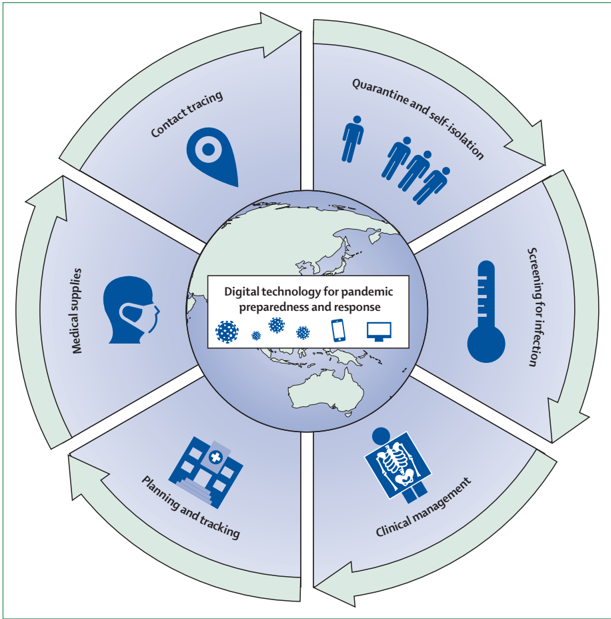
With high transmissibility and no effective vaccine or therapy, COVID-19 is now a global pandemic. Government-coordinated efforts across the globe have focused on containment and mitigation, with varying degrees of success. Countries that have maintained low COVID-19 per-capita mortality rates appear to share strategies that include early surveillance, testing, contact tracing, and strict quarantine. The scale of coordination and data management required for effective implementation of these strategies has-in most successful countries-relied on adopting digital technology and integrating it into policy and health care. This Viewpoint provides a framework for the application of digital technologies in pandemic management and response, highlighting ways in which successful countries have adopted these technologies for pandemic planning, surveillance, testing, contact tracing, quarantine, and health care.
Overview
The claims and statistics of this paper haven’t been checked yet.
Free: it reads the open-access text and checks the first 5 claims that cite a source we can check. Create a free account to check every claim.
Integrity signals
Registry
Cites
Statistics
Figures
Verification
Claims the paper makes
The claims and statistics of this paper haven’t been checked yet.
Free: it reads the open-access text and checks the first 5 claims that cite a source we can check. Create a free account to check every claim.
Claims other papers make about this one
Each is checked against this paper’s own text: does it say what the citing paper says it does?
The cited source says what the claim attributes to it.
In the citing paper
“The current COVID-19 pandemic has highlighted the need for effective infectious disease surveillance at national and state levels 57 ,”
From Multimodal biomedical AI (2022) · cites this paper as [57]
In the citing paper
“Digitization of the healthcare system can aid in the management of the pandemic, mitigating the disruption of societal systems [1].”
From Global Interest in Telehealth During COVID-19 Pandemic: An Analysis of Google Trends™ (2020) · cites this paper as [1]
In the citing paper
“For example, Singapore implemented a mobile phone application, TraceTogether, which pushes notifications to devices in close proximity as 2 m apart and sharing information [175].”
From Human-centred artificial intelligence for mobile health sensing: challenges and opportunities (2023) · cites this paper as [175]
Self-check
Percentages, sums and reported differences re-computed from the paper’s own numbers.
The self-check needs the paper’s full text.
Citations
Cites
A novel coronavirus from patients with pneumonia in China, 2019
Zhu, N., Zhang, D., Wang, W., Li, X., Yang, B., Song, J., Zhao, X., Huang, B., Shi, W., Lu, R., et al. (2020) · New England Journal of Medicine · doi:10.1056/nejmoa2001017 · Cited by 28,244
Wu, J. T., Leung, K., & Leung, G. M. (2020) · The Lancet · doi:10.1016/s0140-6736(20)30260-9 · Cited by 4,389
An Introduction to Statistical Learning: with Applications in R
James, G. M., Witten, D., Hastie, T. J., & Tibshirani, R. J. (2018) · doi:10.25334/q4ht55 · Cited by 2,912
Quantifying SARS-CoV-2 transmission suggests epidemic control with digital contact tracing
Ferretti, L., Wymant, C., Kendall, M., Zhao, L., Nurtay, A., Abeler-Dörner, L., Parker, M., Bonsall, D., & Fraser, C. (2020) · Science · doi:10.1126/science.abb6936 · Cited by 2,512
Li, L., Qin, L., Xu, Z., Yin, Y., Wang, X., Kong, B., Bai, J., Lu, Y., Fang, Z., Song, Q., et al. (2020) · Radiology · doi:10.1148/radiol.2020200905 · Cited by 1,927
Sohil, F., Sohali, M. U., & Shabbir, J. (2022) · Statistical Theory and Related Fields · doi:10.1080/24754269.2021.1980261 · Cited by 1,624
Response to COVID-19 in Taiwan: Big Data Analytics, New Technology, and Proactive Testing
Wang, C. J., Ng, C. Y., & Brook, R. H. (2020) · JAMA · doi:10.1001/jama.2020.3151 · Cited by 1,391
Prediction models need appropriate internal, internal-external, and external validation
Steyerberg, E. W., & Harrell, F. E. (2016) · Journal of Clinical Epidemiology · doi:10.1016/j.jclinepi.2015.04.005 · Cited by 1,304
Torous, J., Jän Myrick, K., Rauseo-Ricupero, N., & Firth, J. (2020) · JMIR Mental Health · doi:10.2196/18848 · Cited by 946
COVID-19 and artificial intelligence: protecting health-care workers and curbing the spread
McCall, B. (2020) · The Lancet Digital Health · doi:10.1016/s2589-7500(20)30054-6 · Cited by 396
Research works printed but not linked: 3
- 12. Naudé W. Artificial intelligence vs. COVID-19: an early review. https://www.iza.org/publications/dp/13110/artificial-intelligence- against-covid-19-an-early-review (accessed May 22, 2020).
- 31. Cisco. Study reveals 74 percent of consumers open to virtual doctor visits. https://newsroom.cisco.com/press-release-content?type=web content&articleId=1148539 (accessed May 21, 2020).
- 35. Health Affairs. Ensuring the growth of telehealth during COVID-19 does not exacerbate disparities in care. https://www.healthaffairs. org/do/10.1377/hblog20200505.591306/full/ (accessed May 21, 2020). · doi:10.1377/hblog20200505.591306/full/
Cited by
Acosta, J. N., Falcone, G. J., Rajpurkar, P., & Topol, E. J. (2022) · Nature Medicine · doi:10.1038/s41591-022-01981-2 · Cited by 1,365
“The current COVID-19 pandemic has highlighted the need for effective infectious disease surveillance at national and state levels 57 , with some countries successfully integrating multimodal data from migration maps, mobile phone utilization and health delivery data to forecast the spread of the…”
BackgroundSelf-citationCOVID-19: A Global Challenge with Old History, Epidemiology and Progress So Far
Khan, M., Adil, S. F., Alkhathlan, H. Z., Tahir, M. N., Saif, S., Khan, M., & Khan, S. T. (2020) · Molecules · doi:10.3390/molecules26010039 · Cited by 584
Petersson, L., Larsson, I., Nygren, J. M., Nilsen, P., Neher, M., Reed, J. E., Tyskbo, D., & Svedberg, P. (2022) · BMC Health Services Research · doi:10.1186/s12913-022-08215-8 · Cited by 434
Vuong, Q.-H., Le, T.-T., La, V.-P., Nguyen, H. T. T., Ho, M.-T., Van Khuc, Q., & Nguyen, M.-H. (2022) · Humanities and Social Sciences Communications · doi:10.1057/s41599-022-01034-6 · Cited by 344
Popescu, S. M., Mansoor, S., Wani, O. A., Kumar, S. S., Sharma, V., Sharma, A., Arya, V. M., Kirkham, M. B., Hou, D., Bolan, N., et al. (2024) · Frontiers in Environmental Science · doi:10.3389/fenvs.2024.1336088 · Cited by 334
Digital Engagement of Older Adults: Scoping Review
Kebede, A. S., Ozolins, L.-L., Holst, H., & Galvin, K. (2022) · Journal of Medical Internet Research · doi:10.2196/40192 · Cited by 298
“…the SARS-CoV-2 pandemic has further increased the reliance on digital technology for everyday living, working from home, shopping, financial transactions, e-learning, communication, entertainment, and health service delivery (eg, remote consultation through e-consult and e-pharmacy) [10,11].”
Wang, Q., Su, M., Zhang, M., & Li, R. (2021) · International Journal of Environmental Research and Public Health · doi:10.3390/ijerph18116053 · Cited by 277
“Case Study 1: Health Code Health Code (HC) is one of the main application scenarios of big data [190,191].”
BackgroundGunasekeran, D. V., Tseng, R. M. W. W., Tham, Y.-C., & Wong, T. Y. (2021) · npj Digital Medicine · doi:10.1038/s41746-021-00412-9 · Cited by 273
“Coupled with evolving recommendations as scientists gradually uncover more information about this virus 23 , the infodemic has needlessly fueled growing paranoia and anxiety among the public 7 , as well as confusion for patients with chronic diseases who seek to continue the care for their medical…”
BackgroundMaguire, R., McCann, L., Kotronoulas, G., Kearney, N., Ream, E., Armes, J., Patiraki, E., Furlong, E., Fox, P., Gaiger, A., et al. (2021) · BMJ · doi:10.1136/bmj.n1647 · Cited by 243
Whitelaw, S., Pellegrini, D. M., Mamas, M. A., Cowie, M., & Van Spall, H. G. C. (2021) · European Heart Journal - Digital Health · doi:10.1093/ehjdh/ztab005 · Cited by 241
“12”
Self-citationMission AI: The New System Technology
Sheikh, H., Prins, C., & Schrijvers, E. (2023) · Research for Policy · doi:10.1007/978-3-031-21448-6 · Cited by 125
Mbunge, E. (2020) · Diabetes & Metabolic Syndrome: Clinical Research & Reviews · doi:10.1016/j.dsx.2020.08.029 · Cited by 198
Digital government transformation in turbulent times: Responses, challenges, and future direction
Eom, S.-J., & Lee, J. (2022) · Government Information Quarterly · doi:10.1016/j.giq.2022.101690 · Cited by 204
“The pandemic has posed severe challenges to governments and their citizens worldwide (Whitelaw, Mamas, Topol, & Van Spall, 2020).”
Hu, H., Xu, J., Liu, M., & Lim, M. K. (2023) · Journal of Business Research · doi:10.1016/j.jbusres.2022.113480 · Cited by 172
“…to the COVID-19 pandemic — such as mass population surveillance and screening, case identification, contact tracing, and evaluation of interventions based on mobility data and communication with the public — have facilitated the widespread adoption of DTs (Budd et al., 2020; Whitelaw et al., 2020).”
Tracking and promoting the usage of a COVID-19 contact tracing app
Munzert, S., Selb, P., Gohdes, A., Stoetzer, L. F., & Lowe, W. (2021) · Nature Human Behaviour · doi:10.1038/s41562-020-01044-x · Cited by 190
A critical review of emerging technologies for tackling COVID ‐19 pandemic
Mbunge, E., Akinnuwesi, B., Fashoto, S. G., Metfula, A. S., & Mashwama, P. (2021) · Human Behavior and Emerging Technologies · doi:10.1002/hbe2.237 · Cited by 184
The dawn of digital public health in Europe: Implications for public health policy and practice
Wong, B. L. H., Maaß, L., Vodden, A., van Kessel, R., Sorbello, S., Buttigieg, S., & Odone, A. (2022) · The Lancet Regional Health - Europe · doi:10.1016/j.lanepe.2022.100316 · Cited by 148
One Digital Health: A Unified Framework for Future Health Ecosystems
Benis, A., Tamburis, O., Chronaki, C., & Moen, A. (2021) · Journal of Medical Internet Research · doi:10.2196/22189 · Cited by 177
Jabarulla, M. Y., & Lee, H.-N. (2021) · Healthcare · doi:10.3390/healthcare9081019 · Cited by 170
“The viewpoint of the authors of [40] represents pandemic management and response strategies based on a methodological application of digital technologies.”
BackgroundDigital Technology-Based Telemedicine for the COVID-19 Pandemic
Shen, Y.-T., Chen, L., Yue, W.-W., & Xu, H.-X. (2021) · Frontiers in Medicine · doi:10.3389/fmed.2021.646506 · Cited by 146
Hirten, R. P., Danieletto, M., Tomalin, L., Choi, K. H., Zweig, M., Golden, E., Kaur, S., Helmus, D., Biello, A., Pyzik, R., et al. (2021) · Journal of Medical Internet Research · doi:10.2196/26107 · Cited by 160
“Digital health technology offers an opportunity to address the limitations of traditional public health strategies aimed at curbing the spread of COVID-19 [7].”
Impacts of Healthcare 4.0 digital technologies on the resilience of hospitals
Tortorella, G. L., Saurin, T. A., Fogliatto, F. S., da Rosa, V. M., Tonetto, L. M., & Magrabi, F. (2021) · Technological Forecasting and Social Change · doi:10.1016/j.techfore.2021.120666 · Cited by 175
Readiness for voice assistants to support healthcare delivery during a health crisis and pandemic
Sezgin, E., Huang, Y., Ramtekkar, U., & Lin, S. (2020) · npj Digital Medicine · doi:10.1038/s41746-020-00332-0 · Cited by 155
“Since VAs can be synchronous, asynchronous, and multimodal (voice-only vs. voice and visual, over the PC, smart speaker, or mobile phone), technology providers could also strategize the delivery of health content based on the receiver ’ s socioeconomic status or digital ecosystem 43 .”
BackgroundBlockchain applications in health care for COVID-19 and beyond: a systematic review
Ng, W. Y., Tan, T.-E., Movva, P. V. H., Fang, A. H. S., Yeo, K.-K., Ho, D., Foo, F. S. S., Xiao, Z., Sun, K., Wong, T. Y., et al. (2021) · The Lancet Digital Health · doi:10.1016/s2589-7500(21)00210-7 · Cited by 127
“4,5 Blockchain is a foundational digital technology that integrates multiple other such technologies (appendix pp 2–4).”
BackgroundYe, Y., Pandey, A., Bawden, C. E., Sumsuzzman, D. M., Rajput, R., Shoukat, A., Singer, B. H., Moghadas, S. M., & Galvani, A. P. (2025) · Nature Communications · doi:10.1038/s41467-024-55461-x · Cited by 188
Mapping the use of artificial intelligence in medical education: a scoping review
Rincón, E. H. H., Jimenez, D., Aguilar, L. A. C., Flórez, J. M. P., Tapia, Á. E. R., & Peñuela, C. L. J. (2025) · BMC Medical Education · doi:10.1186/s12909-025-07089-8 · Cited by 145
“These advancements have enhanced accessibility and personalization of healthcare, marking a significant shift in how patients and healthcare professionals interact with information and services [3, 4].”
Digitalization impacts the COVID-19 pandemic and the stringency of government measures
Heinrichs, H., Mueller, F., Rohfleisch, L., Schulz, V., Talbot, S. R., & Kiessling, F. M. (2022) · Scientific Reports · doi:10.1038/s41598-022-24726-0 · Cited by 141
“Countries that deployed digital surveillance and contact tracing remained pioneers in managing disease burden 10 , ultimately strengthening people’s autonomy to maintain near-normal lives 59 .”
Wang, B., Schlagwein, D., Ćećez-Kecmanović, D., & Cahalane, M. C. (2020) · Journal of the Association for Information Systems · doi:10.17705/1jais.00641 · Cited by 187
“Machine-controlled work arrangements based on big data and machine learning have increasingly arisen during the COVID-19 pandemic (Whitelaw et al., 2020; Lalmuanawma, Hussain, & Chhakchhuak, 2020).”
BackgroundEkstrand-Abueg, M., Hinch, R., Wu, N., Liu, L., Probert, W. J. M., Wu, A., Eastham, P., Shafi, Y., Rosencrantz, M., Dikovsky, M., et al. (2021) · npj Digital Medicine · doi:10.1038/s41746-021-00422-7 · Cited by 137
The Internet of Medical Things (IoMT): opportunities and challenges
El‐Saleh, A. A., Sheikh, A. M., Albreem, M. A. M., & Honnurvali, M. S. (2024) · Wireless Networks · doi:10.1007/s11276-024-03764-8 · Cited by 155
A modified UTAUT model for the acceptance and use of digital technology for tackling COVID-19
Akinnuwesi, B. A., Uzoka, F.-M. E., Fashoto, S. G., Mbunge, E., Odumabo, A. T., Amusa, O. O., Okpeku, M., & Owolabi, O. (2021) · Sustainable Operations and Computers · doi:10.1016/j.susoc.2021.12.001 · Cited by 152
“Adoption of digital technologies in the period of COVID-19 has helped government and private organizations in planning and responding to emergencies [50] .”
The role of institutional and self in the formation of trust in artificial intelligence technologies
Wong, L.-W., Tan, G. W.-H., Ooi, K.-B., & Dwivedi, Y. (2024) · Internet Research · doi:10.1108/intr-07-2021-0446 · Cited by 105
Kodali, P. B. (2023) · Risk Management and Healthcare Policy · doi:10.2147/rmhp.s366759 · Cited by 145
“Digital technologies played a central role in pandemic response across the countries and minimized the pandemic’s social, economic and health impacts.(125,126) Leveraging technology can enable bridging the gaps towards attainment of UHC in low and middle-income countries.”
BackgroundA recent review of aviation fuels and sustainable aviation fuels
Qasem, N. A. A., Mourad, A., Abderrahmane, A., Said, Z., Younis, O., Guedri, K., & Kolsi, L. (2024) · Journal of Thermal Analysis and Calorimetry · doi:10.1007/s10973-024-13027-5 · Cited by 132
“However, after February 14, 2020, the number of flights dropped dramatically, owing to border closures and quarantine policies, as governments attempted to respond effectively to the COVID-19 pandemic [31–33].”
Psychological factors influencing technology adoption: A case study from the oil and gas industry
Roberts, R., Flin, R., Millar, D., & Corradi, L. (2021) · Technovation · doi:10.1016/j.technovation.2020.102219 · Cited by 121
Advancements and future prospects of wearable sensing technology for healthcare applications
Sharma, A., Singh, A., Gupta, V., & Arya, S. K. (2022) · Sensors & Diagnostics · doi:10.1039/d2sd00005a · Cited by 135
The metaverse in current digital medicine
Sun, M., Xie, L., Liu, Y., Li, K., Jiang, B., Lu, Y., Yang, Y., Yu, H., Song, Y., Bai, C., et al. (2022) · Clinical eHealth · doi:10.1016/j.ceh.2022.07.002 · Cited by 116
Martzoukou, K., Luders, E. S., Mair, J., Κωσταγιόλας, Π., Johnson, N., Work, F., & Fulton, C. (2023) · Journal of Advanced Nursing · doi:10.1111/jan.15801 · Cited by 115
“The COVID-19 pandemic accelerated the need for more advanced digital skills to cope with digital transformation within healthcare (Whitelaw et al., 2020 ).”
BackgroundThe Role of Digital Technology in Curbing COVID-19
Alghamdi, N. S., & Alghamdi, S. M. (2022) · International Journal of Environmental Research and Public Health · doi:10.3390/ijerph19148287 · Cited by 121
Prado, N. M. D. B. L., Rossi, T. R. A., Chaves, S. C. L., de Barros, S. G., Magno, L., dos Santos, H. L. P. C., & dos Santos, A. M. (2020) · Cadernos de Saúde Pública · doi:10.1590/0102-311x00183820 · Cited by 115
Digital imaging, technologies and artificial intelligence applications during COVID-19 pandemic
Alhasan, M., & Hasaneen, M. (2021) · Computerized Medical Imaging and Graphics · doi:10.1016/j.compmedimag.2021.101933 · Cited by 116
“Examples of such interventions entailed the management of case detection, socioeconomic impressions streamed by the circulation of the virus, and the institution of public health mandates to tackle the outbreak within the affected territories (Kapoor et al., 2020; Whitelaw et al., 2020).”
Smartphone apps in the COVID-19 pandemic
Pandit, J. A., Radin, J. M., Quer, G., & Topol, E. J. (2022) · Nature Biotechnology · doi:10.1038/s41587-022-01350-x · Cited by 101
Self-citationSusanty, L., Hartati, Z., Sholihin, R., Syahid, A., & Liriwati, F. Y. (2021) · Linguistics and Culture Review · doi:10.21744/lingcure.v5ns1.1401 · Cited by 114
Mora, L., Kummitha, R. K. R., & Esposito, G. (2021) · Government Information Quarterly · doi:10.1016/j.giq.2021.101599 · Cited by 102
“Covid-19 literature shows that public authorities 1 have heavily relied upon digital technologies to intensify their virus containment efforts, in particular where national infection curves have been flattened and mortality rates have been minimized (Whitelaw, Mamas, Topol, & Van Spall, 2020).”
BackgroundManagement of Medico-Legal Risks in Digital Health Era: A Scoping Review
Oliva, A., Grassi, S., Vetrugno, G., Rossi, R., Morte, G. D., Pinchi, V., & Caputo, P. M. (2022) · Frontiers in Medicine · doi:10.3389/fmed.2021.821756 · Cited by 110
“…some nations adopted the data-first approach (in which storage and communication to health and research institutions of the data represent the priority) and some others chose the privacy-first approach (in which health authorities do not know individual movements and interactions) (28, 29).”
BackgroundSharifi, A., Ahmadi, M., & Ala, A. (2021) · Environmental Science and Pollution Research · doi:10.1007/s11356-021-15292-5 · Cited by 88
“With this system, individuals ’ incidence and the speed of disease transmission can be significantly assessed (Whitelaw et al. 2020).”
BackgroundLai, X., & Rau, P. P. (2021) · Computers in Human Behavior · doi:10.1016/j.chb.2021.106894 · Cited by 107
Antiporta, D. A., Cutipé, Y., Mendoza, M., Celentano, D. D., Stuart, E. A., & Bruni, A. (2021) · BMC Psychiatry · doi:10.1186/s12888-021-03107-3 · Cited by 96
“However, awareness has been raised around the challenges of using digital tools to collect data [16, 17].”
BackgroundD’Amico, G., Arbolino, R., Ши, Л., Yiğitcanlar, T., & Ioppolo, G. (2021) · Sustainability · doi:10.3390/su13116043 · Cited by 103
“For example, many cities failed to provide online education due to lack of adequate broadband connections or web traffic overload [153].”
A systematic review on AI/ML approaches against COVID-19 outbreak
Dogan, O., Tiwari, S., Jabbar, M. A., & Guggari, S. (2021) · Complex & Intelligent Systems · doi:10.1007/s40747-021-00424-8 · Cited by 87
“Social control With high transmissibility of COVID-19, many countries adopted AI for pandemic management [151] and are successful in reducing the mortality rate.”
BackgroundSocial Health Protection During the COVID-Pandemic Using IoT
Reddy, M. A., Reddy, B. M., Mukund, C. S., Venneti, K., Preethi, D., & Boopathi, S. (2023) · Advances in electronic government, digital divide, and regional development book series · doi:10.4018/978-1-7998-8394-4.ch009 · Cited by 87
Harnessing the digital potential of the next generation of health professionals
Wong, B. L. H., Khurana, M. P., Smith, R. D., El-Omrani, O., Pold, A., Lotfi, A., O’Leary, C. A., & Saminarsih, D. S. (2021) · Human Resources for Health · doi:10.1186/s12960-021-00591-2 · Cited by 67
“Amidst the ongoing COVID-19 pandemic, the unprecedented potential of digital health technologies for improving access to and quality of essential health services has been proven and augmented through engaging youth in promoting their effective use [3, 4].”
BackgroundUsers’ intention to continue using mHealth services: A DEMATEL approach during the COVID-19 pandemic
Alzahrani, A. I., Al‐Samarraie, H., Eldenfria, A., Dodoo, J. E., & Alalwan, N. (2022) · Technology in Society · doi:10.1016/j.techsoc.2022.101862 · Cited by 94
“This implies that the public are at the centre of the healthcare service delivery, and that health services should be transformed so that individuals can be continuously use them effectively [3,4].”
BackgroundImran, M., Zaman, U., Imran, I., Imtiaz, J., Fayaz, M., & Gwak, J. (2021) · Electronics · doi:10.3390/electronics10202501 · Cited by 92
“World health organization (WHO) and centers for disease control and prevention (CDC) stated that digital technologies could play an essential role in enhancing health policy regarding COVID-19 disease [165].”
BackgroundHealth Apps for Combating COVID-19: Descriptive Review and Taxonomy
Almalki, M., & Giannicchi, A. (2021) · JMIR mHealth and uHealth · doi:10.2196/24322 · Cited by 71
“In addition, health apps are not only limited to simply providing information about COVID-19 but also used to facilitate data-driven disease surveillance, screening, triage, diagnosis, and monitoring by governments or health officials, health care professionals, and health organizations [3,6].”
BackgroundChallenges and prospects of visual contactless physiological monitoring in clinical study
Huang, B., Hu, S., Liu, Z., Lin, C., Su, J., Zhao, C., Wang, L., & Wang, W. (2023) · npj Digital Medicine · doi:10.1038/s41746-023-00973-x · Cited by 92
“Governments paid increasing attention to digital medicine and telemedicine systems, and patients gradually accepted this treatment approach 37,38,42 .”
BackgroundStoreng, K. T., & de Bengy Puyvallée, A. (2021) · Global Public Health · doi:10.1080/17441692.2021.1882530 · Cited by 67
“In August 2020, an article in The Lancet claimed that ‘countries that have quickly deployed digital technologies […] have remained front-runners in managing disease burden’ (Whitelaw et al., 2020).”
BackgroundInfluentialD’Amico, G., Arbolino, R., Ши, Л., Yiğitcanlar, T., & Ioppolo, G. (2021) · Land Use Policy · doi:10.1016/j.landusepol.2021.105819 · Cited by 85
Rangaswamy, E., Nawaz, N., & Changzhuang, Z. (2022) · Humanities and Social Sciences Communications · doi:10.1057/s41599-022-01102-x · Cited by 99
Nnaji, C. A., Jin, Z., & Karakhan, A. A. (2022) · Process Safety and Environmental Protection · doi:10.1016/j.psep.2022.01.002 · Cited by 83
Guasti, L., Dilaveris, P., Mamas, M. A., Richter, D. J., Christodorescu, R., Lumens, J., Schuuring, M. J., Carugo, S., Afilalo, J., Ferrini, M., et al. (2022) · ESC Heart Failure · doi:10.1002/ehf2.14022 · Cited by 81
Self-citationRecent review of COVID-19 management: diagnosis, treatment and vaccination
Chavda, V. P., Vuppu, S., Mishra, T., Kamaraj, S., Patel, A., Sharma, N., & Chen, Z. (2022) · Pharmacological Reports · doi:10.1007/s43440-022-00425-5 · Cited by 77
Nilsén, P., Svedberg, P., Nygren, J., Frideros, M., Johansson, J., & Schueller, S. M. (2022) · Implementation Research and Practice · doi:10.1177/26334895221112033 · Cited by 79
“It is firmly established in implementation and innovation research that novel technologies are often resisted by healthcare professionals, contributing to a slow and variable uptake (Safi et al., 2018; Whitelaw et al., 2020).”
BackgroundIoannou, A., & Tussyadiah, I. (2021) · Technology in Society · doi:10.1016/j.techsoc.2021.101774 · Cited by 71
“Several countries, such as China, Germany, Singapore, Israel, Australia, and the UK, have rolled out contact tracing applications, collecting a wide range of data, such as CCTV images from surveillance cameras and smartphone geolocation data, gaining detailed timelines of people’s physical movements to better understa…”
BackgroundAmmar, A., Bouaziz, B., Trabelsi, K., Glenn, J. M., Żmijewski, P., Müller, P., Chtourou, H., Jmaïel, M., Chamari, K., Driss, T., et al. (2020) · Biology of Sport · doi:10.5114/biolsport.2021.100149 · Cited by 78
Tomczyk, S., Barth, S., Schmidt, S., & Muehlan, H. (2021) · Journal of Medical Internet Research · doi:10.2196/25447 · Cited by 69
“…an agreement to share health-related data (ie, infection status) via mobile apps with governmental institutions or other citizens, raising concerns surrounding data privacy and a potential breach as well as misuse of health information beyond COVID-19 purposes (cf “surveillance creep” [3,6,7]).”
InfluentialApplication technology to fight the COVID-19 pandemic: Lessons learned in Thailand
Intawong, K., Olson, D. K., & Chariyalertsak, S. (2020) · Biochemical and Biophysical Research Communications · doi:10.1016/j.bbrc.2020.10.097 · Cited by 73
“Therefore, application technology is vital for managing and controlling the large amount of information needed to stop the COVID-19 pandemic [15].”
Amugongo, L. M., Kriebitz, A., Boch, A., & Lütge, C. (2025) · AI and Ethics · doi:10.1007/s43681-023-00331-3 · Cited by 68
“Administrative solutions play a significant role when designing measures against pandemics [42], but also in the allocation of resources to patients [43].”
Kozyreva, A., Lorenz-Spreen, P., Lewandowsky, S., Garrett, P. M., Herzog, S. M., Pachur, T., & Hertwig, R. (2021) · Scientific Reports · doi:10.1038/s41598-021-98249-5 · Cited by 71
Design Standards and Operational Planning Frameworks for Scalable Blood Collection Networks
Ogbete, J. C., Aminu-Ibrahim, A., & Ambali, K. B. (2022) · Gyanshauryam International Scientific Refereed Research Journal · doi:10.32628/gisrrj225635 · Cited by 74
Tackling post-pandemic challenges with digital technologies: an empirical study
Khan, S. A. R., Yu, Z., Umar, M., Jabbour, A. B. L. D. S., & Mor, R. S. (2021) · Journal of Enterprise Information Management · doi:10.1108/jeim-01-2021-0040 · Cited by 71
A Survey on Security and Privacy Issues in Contact Tracing Application of Covid-19
Sowmiya, B., Abhijith, V. S., Sudersan, S., Rajasekar, S. J. S., Thangavel, M., & Varalakshmi, P. (2021) · SN Computer Science · doi:10.1007/s42979-021-00520-z · Cited by 72
Lee, C., Wang, D., Desouza, K. C., & Evans, R. D. (2021) · Sustainability · doi:10.3390/su131810195 · Cited by 72
Guo, Q., Zhang, L., Gui, C., Chen, G., Chen, Y., Tan, H., Su, W., Zhang, R., & Gao, Q. (2023) · Journal of Medical Internet Research · doi:10.2196/38256 · Cited by 72
“These approaches help improve the efficiency of health care workers, reducing the risk of outbreaks, and enabling patients to access suitable therapies with efficacy monitoring, which are likely to be the future application scenario [62].”
Yang, M., Mamun, A. A., Gao, J., Rahman, M. K., Salameh, A. A. M., & Alam, S. S. (2024) · Scientific Reports · doi:10.1038/s41598-023-50436-2 · Cited by 75
Knawy, B. A., McKillop, M. M., Abduljawad, J., Tarkoma, S., Adil, M., Schaper, L., Chee, A., Bates, D. W., Klag, M. J., Lee, U., et al. (2022) · JAMA Network Open · doi:10.1001/jamanetworkopen.2022.0214 · Cited by 72
“This information should encompass consumer-generated data and should complement traditional surveillance data by providing (1) information about heterogeneous populations, including those with a range of symptoms; (2) information about individuals’ daily experiences of a condition or disease state outside the clinic;…”
Machine Learning Approaches for Tackling Novel Coronavirus (COVID-19) Pandemic
Rahman, M. M., Islam, M. M., Manik, M. M. H., Islam, M. R., & Al-Rakhami, M. S. (2021) · SN Computer Science · doi:10.1007/s42979-021-00774-7 · Cited by 62
COVID-19 Diagnosis: A Review of Rapid Antigen, RT-PCR and Artificial Intelligence Methods
Aruleba, R. T., Adekiya, T. A., Ayawei, N., Obaido, G., Aruleba, K., Mienye, I. D., Aruleba, I., & Ogbuokiri, B. (2022) · Bioengineering · doi:10.3390/bioengineering9040153 · Cited by 64
Ahmed, I., Chehri, A., & Jeon, G. (2023) · IEEE Transactions on Computational Biology and Bioinformatics · doi:10.1109/tcbb.2023.3294333 · Cited by 65
“…of high-level operations such as rapid contact tracing, mass screening of large populations, supply chain control and management for drugs and vaccines, telemedicine consultations, and E-commerce development has driven a broad spectrum of applications using these advanced digital technologies [7].”
BackgroundEmerging technologies and COVID-19 digital vaccination certificates and passports
Mbunge, E., Dzinamarira, T., Fashoto, S. G., & Batani, J. (2021) · Public Health in Practice · doi:10.1016/j.puhip.2021.100136 · Cited by 59
“Fourthly, Quick Response (QR) technology will allow authorities to check people’s health status record and verify COVID-19 digital certificates by using quick response [12,15,16].”
Gupta, M., Shoja, A., & Mikalef, P. (2021) · Annals of Operations Research · doi:10.1007/s10479-021-03962-z · Cited by 61
McAuliffe, M., Blower, J., & Beduschi, A. (2021) · Societies · doi:10.3390/soc11040135 · Cited by 71
“The application of health-related technologies during the pandemic has been imperative to provide virtual care, track medication orders, and communicate health information from wearable technology to healthcare professionals [35,43].”
BackgroundInfluentialLeong, S., Eom, K., Ishii, K., Aichberger, M. C., Fetz, K., Müller, T., Kim, H. S., & Sherman, D. K. (2022) · PLoS ONE · doi:10.1371/journal.pone.0275388 · Cited by 64
Shaw, S. E., Hughes, G., Wherton, J. P., Moore, L., Rosen, R., Papoutsi, C., Rushforth, A., Morris, J. H., Wood, G. W., Faulkner, S. D., et al. (2021) · Frontiers in Digital Health · doi:10.3389/fdgth.2021.754319 · Cited by 60
Aftermath on COVID-19 technological and socioeconomic changes: A meta-analytic review
Yao, X., Xu, Z., Škare, M., & Wang, X. (2024) · Technological Forecasting and Social Change · doi:10.1016/j.techfore.2024.123322 · Cited by 57
Understanding digital technology trends in healthcare and preventive strategy
Susilo, C. B., Jayanto, I., & Kusumawaty, I. (2021) · International journal of health & medical sciences · doi:10.31295/ijhms.v4n3.1769 · Cited by 69
Can technological advancements help to alleviate COVID-19 pandemic? a review
Thomas, M. J., Lal, V., Baby, A. K., Rabeeh, V. M., James, A., & Raj, A. K. (2021) · Journal of Biomedical Informatics · doi:10.1016/j.jbi.2021.103787 · Cited by 62
“It requires special training with Covid databases, and creating proper predictive models may also be difficult as it lacks historical data [15].”
InfluentialThe use of digital technologies in social marketing: a systematic review
Flaherty, T., Domegan, C. T., & Anand, M. (2021) · Journal of Social Marketing · doi:10.1108/jsocm-01-2021-0022 · Cited by 55
Jiang, J. X., Qi, K., Bai, G., & Schulman, K. A. (2023) · Health Affairs Scholar · doi:10.1093/haschl/qxad056 · Cited by 65
Basu, A., Kuziemsky, C. E., Novaes, M. D. A., Kleber, A., Sales, F. J. R., Al-Shorbaji, N., Florez-Arango, J. F., Gogia, S. B., Ho, K., Hunter, I. M., et al. (2021) · Yearbook of Medical Informatics · doi:10.1055/s-0041-1726484 · Cited by 60
McNeil, C., Verlander, S., Divi, N., & Smolinski, M. S. (2022) · JMIR Public Health and Surveillance · doi:10.2196/38551 · Cited by 59
“The emergence of COVID-19 has led to a rapid increase in digital technology to directly engage the public in early detection and rapid response through apps for workplace health, contact tracing, and health information [7,8].”
Tong, H. L., Maher, C. A., Parker, K. E., Pham, T., Neves, A. L., Riordan, B. C., Chow, C. K., Laranjo, L., & Quiroz, J. C. (2022) · PLOS Digital Health · doi:10.1371/journal.pdig.0000087 · Cited by 60
From SARS to COVID-19: Digital infrastructures of surveillance and segregation in exceptional times
Tan, S. B., Chiu-Shee, C., & Duarte, F. (2021) · Cities · doi:10.1016/j.cities.2021.103486 · Cited by 53
“…of digital surveillance and other digital infrastructure during COVID-19 (e. g. Das & Zhang, 2020; French & Monahan, 2020; Ting et al., 2020; Whitelaw et al., 2020) there has been no study that compares current governmental efforts to implement such infrastructures to those during the 2003…”
BackgroundBoffetta, P., & Collatuzzo, G. (2022) · La Medicina del Lavoro · doi:10.23749/mdl.v113i1.12622 · Cited by 65
Woldegiorgis, E. T. (2022) · Perspectives in Education · doi:10.18820/2519593x/pie.v40.i3.13 · Cited by 66
Sharara, S., & Radia, S. (2021) · Journal of Orthodontics · doi:10.1177/14653125211031568 · Cited by 53
“In addition, there has been wide implementation of this digital technology into policy and healthcare for pandemic planning, contact tracing and quarantine (Whitelaw et al., 2020).”
BackgroundThe role of contemporary digital tools and technologies in COVID‐19 crisis: An exploratory analysis
Subramanian, M., Kogilavani, S. V., Hatamleh, W. A., Alnuaim, A. A., Abdelhady, M., & Easwaramoorthy, S. V. (2021) · Expert Systems · doi:10.1111/exsy.12834 · Cited by 58
“Very recently, a novel severe acute respiratory syndrome coronavirus 2 (SARS-COVID-2) triggered COVID-19, a global pandemic infectious disease (Whitelaw et al., 2020).”
BackgroundLee, C., Wang, D., Lyu, S., Evans, R. D., & Li, L. (2022) · Industrial Management & Data Systems · doi:10.1108/imds-01-2022-0008 · Cited by 58
Social-related factors in integrated UTAUT model for ZakaTech acceptance during the COVID-19 crisis
Bin‐Nashwan, S. A., Shah, M. H., Abdul-Jabbar, H., & Al-Ttaffi, L. H. A. (2023) · Journal of Islamic accounting and business research · doi:10.1108/jiabr-02-2022-0038 · Cited by 59
Measurement of multimodal physiological signals for stimulation detection by wearable devices
Cosoli, G., Poli, A., Scalise, L., & Spinsante, S. (2021) · Measurement · doi:10.1016/j.measurement.2021.109966 · Cited by 57
Metadata
- Authors
- Whitelaw, S., Mamas, M. A., Topol, E., & Van Spall, H. G. C.
- Affiliations
- McMaster University (CA)
- University of Manchester (GB)
- Scripps Research Institute (US)
- Venue
- The Lancet Digital Health
- Publisher
- Elsevier BV
- Published
- 2020-08
- Volume
- 2
- Issue
- 8
- Pages
- e435-e440
- ISSN
- 2589-7500 (ISSN-L)
- PMC
- PMC7324092
- OpenAlex
- W3037795158
- Semantic Scholar
- 47342aa15810afcb61deb6a2faaecd52fba67777
- Cited by
- 992
- References
- 17
- Citations by year
- 2026: 48 · 2025: 72 · 2024: 97 · 2023: 184 · 2022: 241 · 2021: 288 · 2020: 61
- FWCI
- 182.23
- Type
- journal article
- Language
- en
- Update notices
- erratum (2021-03-01)
- Open access
- gold
- doi.org
- Licence
- cc-by
- www.elsevier.com/tdm/userlicense/1.0/ (tdm)
- www.elsevier.com/legal/tdmrep-license (tdm)
- creativecommons.org/licenses/by/4.0/ (vor)
- Locations
- The Lancet Digital Health (publishedVersion, cc-by)
- PubMed Central (publishedVersion, cc-by)
- PubMed (publishedVersion)
- Keele Research Repository (Keele University) (submittedVersion, cc-by)
- MacSphere (McMaster University) (submittedVersion, cc-by)
- Funders
- Canadian Institutes of Health Research
- Topics
- Physical Sciences › Computer Science › Information Systems › COVID-19 Digital Contact Tracing
- Health Sciences › Medicine › Epidemiology › Data-Driven Disease Surveillance
- Physical Sciences › Computer Science › Information Systems › Healthcare during COVID-19 Pandemic
- Keywords
- COVID-19 pandemic, digital technologies, pandemic planning, pandemic response, contact tracing, quarantine, testing, disease surveillance, health data management, health policy
- MeSH terms
- Digital Technology, COVID-19, SARS-CoV-2, Humans, Quarantine, Risk Factors, Contact Tracing, Disease Management, Pandemics
About these checks
Registry, retraction, Cites and statistics results are computed, not judged, with one exception: a printed reference that no index lists is read once by a model before it counts as a citation error. Claims are extracted by a model and kept only when their quote appears verbatim in the text; each cited source is then checked, with a model’s help, for whether it says what the claim relies on. Those verdicts can be wrong — read the claim’s quote and the cited source before relying on one.
Statistics and arithmetic are recomputed, not judged.
Confidence bands are shown only for fields calibrated on our annotated test set. None is calibrated yet, so no band is shown.
What counts as a claim ›How we measure confidence ›How we check this ›
Are you an author, or do you see a problem with this page? Request a review
Data sources
Bibliographic data: Semantic Scholar, OpenAlex, Crossref.
Contains information from the Semantic Scholar Academic Graph Datasets, made available under the ODC Attribution License (ODC-BY 1.0).
Semantic Scholar’s data is described in: Kinney, R., et al. (2023). The Semantic Scholar Open Data Platform. arXiv:2301.10140.
