

Guidelines for clinical trial protocols for interventions involving artificial intelligence: the SPIRIT-AI extension
Open accessThe DOI matches its Crossref record; 52 of the 52 references it cites were found in a registry or an index.
Abstract
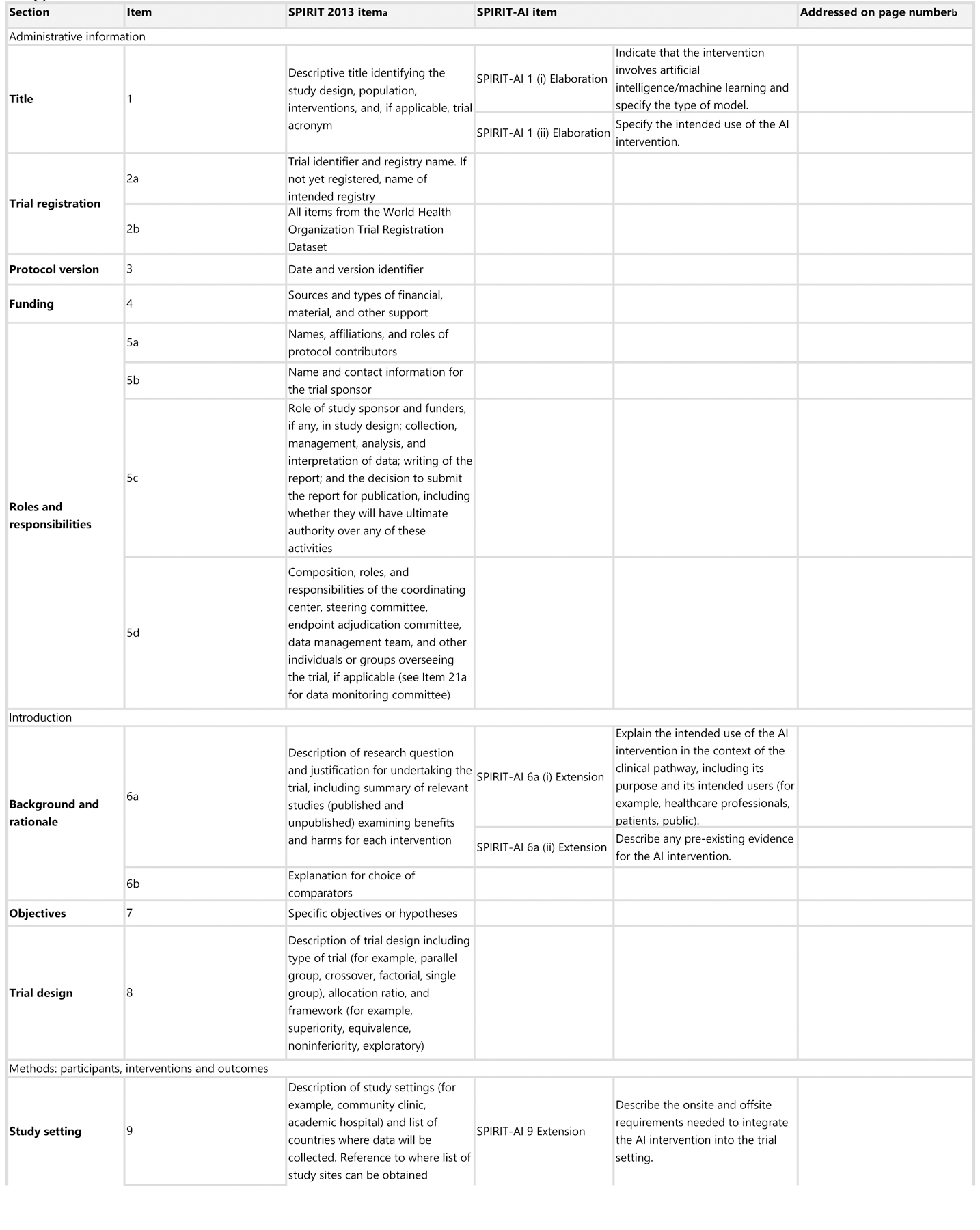
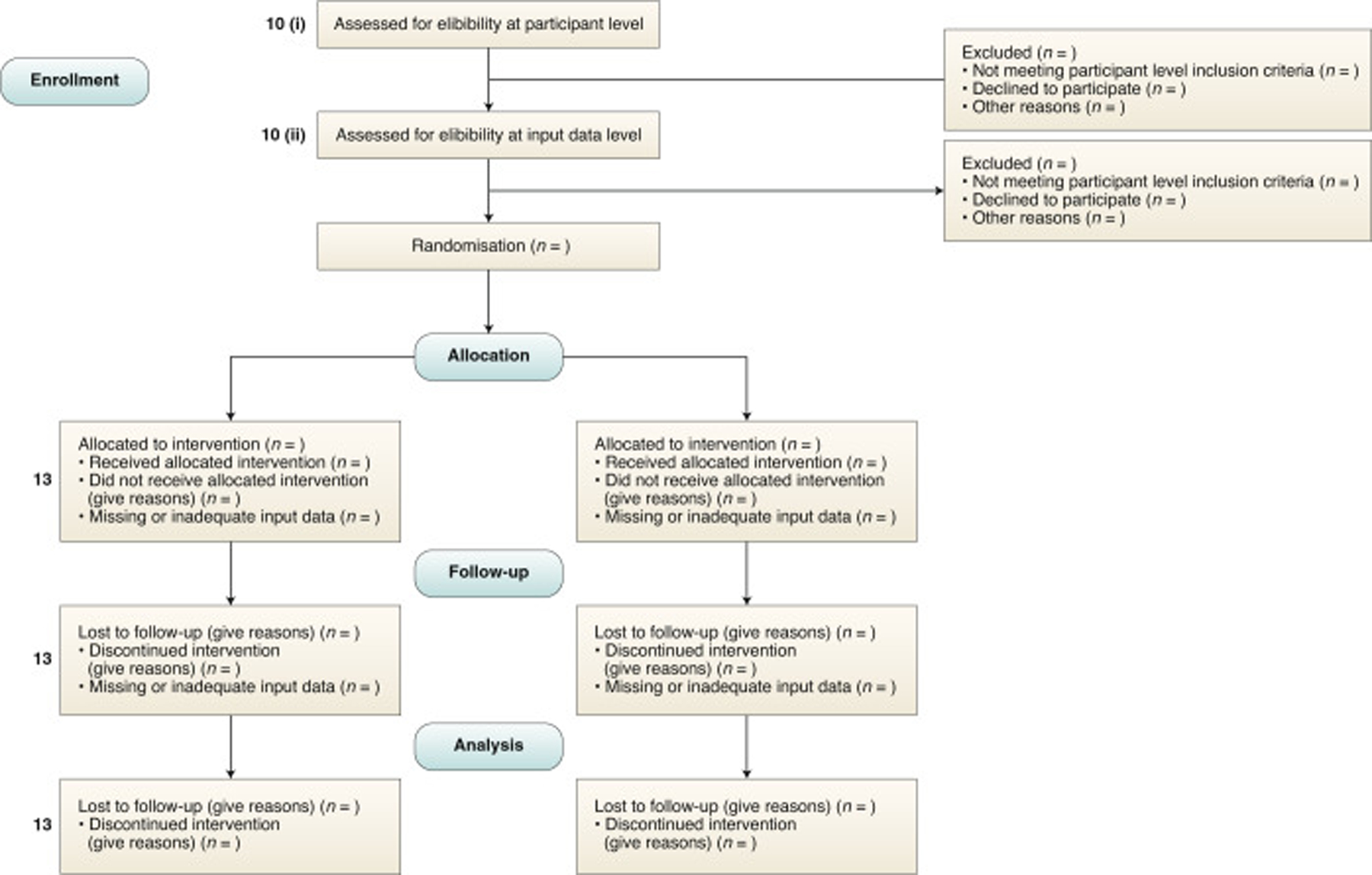
The SPIRIT 2013 statement aims to improve the completeness of clinical trial protocol reporting by providing evidence-based recommendations for the minimum set of items to be addressed. This guidance has been instrumental in promoting transparent evaluation of new interventions. More recently, there has been a growing recognition that interventions involving artificial intelligence (AI) need to undergo rigorous, prospective evaluation to demonstrate their impact on health outcomes. The SPIRIT-AI (Standard Protocol Items: Recommendations for Interventional Trials-Artificial Intelligence) extension is a new reporting guideline for clinical trial protocols evaluating interventions with an AI component. It was developed in parallel with its companion statement for trial reports: CONSORT-AI (Consolidated Standards of Reporting Trials-Artificial Intelligence). Both guidelines were developed through a staged consensus process involving literature review and expert consultation to generate 26 candidate items, which were consulted upon by an international multi-stakeholder group in a two-stage Delphi survey (103 stakeholders), agreed upon in a consensus meeting (31 stakeholders) and refined through a checklist pilot (34 participants). The SPIRIT-AI extension includes 15 new items that were considered sufficiently important for clinical trial protocols of AI interventions. These new items should be routinely reported in addition to the core SPIRIT 2013 items. SPIRIT-AI recommends that investigators provide clear descriptions of the AI intervention, including instructions and skills required for use, the setting in which the AI intervention will be integrated, considerations for the handling of input and output data, the human-AI interaction and analysis of error cases. SPIRIT-AI will help promote transparency and completeness for clinical trial protocols for AI interventions. Its use will assist editors and peer reviewers, as well as the general readership, to understand, interpret, and critically appraise the design and risk of bias for a planned clinical trial.
Overview
The claims and statistics of this paper haven’t been checked yet.
Free: it reads the open-access text and checks the first 5 claims that cite a source we can check. Create a free account to check every claim.
Integrity signals
Registry
Cites
Statistics
Figures
Verification
Claims the paper makes
The claims and statistics of this paper haven’t been checked yet.
Free: it reads the open-access text and checks the first 5 claims that cite a source we can check. Create a free account to check every claim.
Claims other papers make about this one
Each is checked against this paper’s own text: does it say what the citing paper says it does?
The source backs part of the claim, not all of it — or backs it for a different population, condition or comparison.
In the citing paper
“the SPIRIT-AI (Standard Protocol Items: Recommendations for Interventional Trials-Artificial Intelligence) extension guidelines clearly state the importance of pre-existing evidence for AI intervention, with evidence that the AI-assisted tool produces better performance compared with the standard of care [58].”
From Randomized Controlled Trials of Artificial Intelligence in Clinical Practice: Systematic Review (2022) · cites this paper as [58]
Experimental — accuracy not yet measuredIn the citing paper
“Additional guidelines include SPIRIT-AI (Standard Protocol Items: Recommendations for Interventional Trials-Artificial Intelligence), which provides an extended set of 15 items for AI-focused protocol documents (199), and CONSORT-AI (Consolidated Standards of Reporting of Trials-Artificial Intelligence), which provides an extended set of 14 items for reporting on AI-focused clinical trials (200).”
From Artificial Intelligence in Oncology: Current Landscape, Challenges, and Future Directions (2024) · cites this paper as [199]
Self-check
Percentages, sums and reported differences re-computed from the paper’s own numbers.
The self-check needs the paper’s full text.
Citations
Cites
Dermatologist-level classification of skin cancer with deep neural networks
Esteva, A., Kuprel, B., Novoa, R. A., Ko, J., Swetter, S. M., Blau, H. M., & Thrun, S. (2017) · Nature · doi:10.1038/nature21056 · Cited by 14,362
Self-citationSPIRIT 2013 Statement: Defining Standard Protocol Items for Clinical Trials
Chan, A.-W., Tetzlaff, J. M., Altman, D. G., Laupacis, A., Gøtzsche, P. C., Krleža-Jerić, K., Hróbjartsson, A., Mann, H., Dickersin, K., Berlin, J. A., et al. (2013) · Annals of Internal Medicine · doi:10.7326/0003-4819-158-3-201302050-00583 · Cited by 7,363
Self-citationSPIRIT 2013 explanation and elaboration: guidance for protocols of clinical trials
Chan, A.-W., Tetzlaff, J. M., Gotzsche, P. C., Altman, D. G., Mann, H., Berlin, J. A., Dickersin, K., Hrobjartsson, A., Schulz, K. F., Parulekar, W. R., et al. (2013) · BMJ · doi:10.1136/bmj.e7586 · Cited by 6,251
Self-citationInternational evaluation of an AI system for breast cancer screening
McKinney, S. M., Sieniek, M., Godbole, V., Godwin, J., Antropova, N., Ashrafian, H., Back, T., Chesus, M., Corrado, G. S., Darzi, A., et al. (2020) · Nature · doi:10.1038/s41586-019-1799-6 · Cited by 3,287
Self-citationKey challenges for delivering clinical impact with artificial intelligence
Kelly, C. J., Karthikesalingam, A., Suleyman, M., Corrado, G., & King, D. (2019) · BMC Medicine · doi:10.1186/s12916-019-1426-2 · Cited by 3,136 · cited 1×
“37,38 AI systems are dependent on their operational environment, and the protocol should provide details of the hardware and software requirements to allow technical integration of the AI intervention at each study site.”
Self-citationAn overview of clinical decision support systems: Benefits, risks, and strategies for success
Sutton, R. T., Pincock, D., Baumgart, D. C., Sadowski, D. C., Fedorak, R. N., & Kroeker, K. I. (2020) · npj Digital Medicine · doi:10.1038/s41746-020-0221-y · Cited by 3,019
Clinically applicable deep learning for diagnosis and referral in retinal disease
De Fauw, J., Ledsam, J. R., Romera-Paredes, B., Nikolov, S., Tomasev, N., Blackwell, S., Askham, H., Glorot, X., O’Donoghue, B., Visentin, D., et al. (2018) · Nature Medicine · doi:10.1038/s41591-018-0107-6 · Cited by 2,639
Self-citationThe practical implementation of artificial intelligence technologies in medicine
He, J., Baxter, S. L., Xu, J., Xu, J., Zhou, X., & Zhang, K. (2019) · Nature Medicine · doi:10.1038/s41591-018-0307-0 · Cited by 2,246
Liu, X., Faes, L., Kale, A. U., Wagner, S. K., Fu, D. J., Bruynseels, A., Mahendiran, T., Moraes, G., Shamdas, M., Kern, C., et al. (2019) · The Lancet Digital Health · doi:10.1016/s2589-7500(19)30123-2 · Cited by 1,883
Self-citationZech, J. R., Badgeley, M. A., Liu, M., Costa, A. B., Titano, J. J., & Oermann, E. K. (2018) · PLOS Medicine · doi:10.1371/journal.pmed.1002683 · Cited by 1,719
Cited by
Items 301–400 of 601
Solebo, A. L., & Braithwaite, T. (2020) · EClinicalMedicine · doi:10.1016/j.eclinm.2020.100536 · Cited by 6
Bilal, M., Brown, J. R. G., & Berzin, T. M. (2020) · The Lancet. Gastroenterology & hepatology · doi:10.1016/s2468-1253(20)30289-2 · Cited by 6
The Learning Electronic Health Record
Clermont, G. (2023) · Critical Care Clinics · doi:10.1016/j.ccc.2023.03.004 · Cited by 6
Koh, R. G. L., Khan, M. A., Rashidiani, S., Hassan, S. I., Tucci, V., Liu, T., Nesovic, K., Kumbhare, D. A., & Doyle, T. E. (2023) · IEEE Access · doi:10.1109/access.2023.3316019 · Cited by 6
“as QUADAS-2 [50], [52], TRIPOD-AI [55], PROBAST163 AI [56], STARD-AI [57], SPIRIT-AI [58], CONSORT-AI 164”
O'Brien, A. J., Vrazas, J. I., & Clements, W. (2023) · Journal of Medical Imaging and Radiation Oncology · doi:10.1111/1754-9485.13609 · Cited by 6
Lopez-Perez, L. (2022) · UPM Digital Archive (Technical University of Madrid) · doi:10.20868/upm.thesis.70347 · Cited by 6
Thyroid Cancer Radiomics: Navigating Challenges in a Developing Landscape
Maurea, S., Stanzione, A., & Klain, M. (2023) · Cancers · doi:10.3390/cancers15245884 · Cited by 6
Brereton, T. A., Malik, M. M., Rost, L. M., Ohde, J. W., Zheng, L., Jose, K. A., Peterson, K. J., Vidal, D. E., Lifson, M. A., Melnick, J., et al. (2024) · Mayo Clinic Proceedings Digital Health · doi:10.1016/j.mcpdig.2024.03.008 · Cited by 5
Murovec, B., Deutsch, L., Osredkar, D., & Stres, B. (2024) · Frontiers in Microbiology · doi:10.3389/fmicb.2024.1426465 · Cited by 5
Zhong, J., Zhu, T., & Huang, Y. (2025) · Journal of Medical Internet Research · doi:10.2196/56774 · Cited by 5
Li, J., Mao, N., Aodeng, S., Zhang, H., Zhu, Z., Wang, L., Liu, Y., Qi, H., Qiao, H., Lin, Y., et al. (2025) · International Forum of Allergy & Rhinology · doi:10.1002/alr.23595 · Cited by 5
Advancing Medicinal Plant Research with Artificial Intelligence: Key Applications and Benefits
Ydyrys, A., Nurtayeva, M., & Yerkebayeva, M. (2025) · Natural Resources for Human Health · doi:10.53365/nrfhh/206025 · Cited by 6
Liang, Y., Wei, Z., Yi, D., Chen, X., Siyao, D. U., Wong, C., Xu, Z., Gao, W., Han, C., Chen, K., et al. (2026) · Nature Communications · doi:10.1038/s41467-026-69212-7 · Cited by 5
Khurshid, Z., Habib, Z., Schwendicke, F., & Osathanon, T. (2026) · Odontology · doi:10.1007/s10266-026-01386-4 · Cited by 5
Muñoz, J., Fernández-Araujo, N. J., Ruíz-Cacho, R., & Muñoz-Visedo, J. (2026) · Journal of Critical Care · doi:10.1016/j.jcrc.2026.155600 · Cited by 5
Evidence over explanations: put medical AI to the test
Pesapane, F., Rotili, A., Penco, S., Nicosia, L., & Cassano, E. (2026) · npj Artificial Intelligence · doi:10.1038/s44387-026-00092-4 · Cited by 5
Wu, L., Wang, B., Lin, B., Li, M., Wu, Y., Si, H., Zeng, Y., Lu, L., Gao, L., Chen, Z., et al. (2025) · Journal of Bone and Joint Surgery · doi:10.2106/jbjs.24.01601 · Cited by 5
Clinical Evaluation of AI in Medicine
Liu, X., Sachdeva, G. S., Ibrahim, H. F., Charalambides, M., & Denniston, A. K. (2022) · Springer eBooks · doi:10.1007/978-3-030-64573-1_310 · Cited by 5
Self-citationPromises and challenges of machine learning for device therapy in heart failure
Gautam, N., Mounsey, J. P., Yeh, E. T. H., & Alaref, S. J. (2023) · European Heart Journal · doi:10.1093/eurheartj/ehad036 · Cited by 5
Jain, D., Chandra, P., Ali, Z., Fatma, N., & Khan, H. (2024) · Current Drug Discovery Technologies · doi:10.2174/0115701638313233240830132804 · Cited by 5
Podda, M., Pisanu, A., Pellino, G., Simone, A. D., Selvaggi, L., Murzi, V., Locci, E., Rottoli, M., Calini, G., Cardelli, S., et al. (2025) · World Journal of Emergency Surgery · doi:10.1186/s13017-025-00594-7 · Cited by 5
Al-Hashemi, H. A. A. (2023) · American Journal of Economics and Business Management · Cited by 5
Unprepared and overwhelmed: A case for clinician-focused AI education
Siddiqui, N., Bouchi, Y., Kim, E., Hron, J. D., Park, J. S., & Kang, J. J. (2025) · Artificial Intelligence in Medicine · doi:10.1016/j.artmed.2025.103252 · Cited by 4
Tan, M., Tang, S., Kan, S., Zhang, H., Wu, B., Ni, Z., Lin, C., & Ding, J. (2025) · BMJ Open · doi:10.1136/bmjopen-2025-099226 · Cited by 4
Kernbach, J. M., Schroeder, U., Hakvoort, K., Ort, J., Hamou, H. A., Bzdok, D., Temel, Y., Kubben, P., Weyland, C. S., Wiesmann, M., et al. (2025) · npj Precision Oncology · doi:10.1038/s41698-025-01183-2 · Cited by 4
Kitaguchi, D., Fuse, N., Wakabayashi, M., Kosugi, N., Ishikawa, Y., Hayashi, K., Hasegawa, H., Takeshita, N., & Ito, M. (2025) · European Surgical Research · doi:10.1159/000549894 · Cited by 4
AI-powered closed-loop wearable bioelectronics for personalized and autonomous healthcare
Gao, B., Ge, Z., Sun, X., Lin, B., Gao, Y., Min, J., Zhang, Q., Rogers, J. A., Yu, X., Gao, W. F., et al. (2026) · Nature Sensors · doi:10.1038/s44460-026-00105-4 · Cited by 6
Song, D., Chung, Y., Kim, J., Choi, J., & Lee, Y. (2025) · Computer Methods and Programs in Biomedicine · doi:10.1016/j.cmpb.2025.108651 · Cited by 4
ASSISTENTE VIRTUAL: FERRAMENTA PARA COPRODUÇÃO EM SAÚDE NO ENFRENTAMENTO À COVID-19
Fabrizzio, G. C., de Oliveira, L. M., da Costa, D. G., Erdmann, A. L., & dos Santos, J. L. G. (2023) · Texto & Contexto - Enfermagem · doi:10.1590/1980-265x-tce-2022-0136pt · Cited by 4
Barbati, G., Pasqualetti, P., Matranga, D., Scotti, L., Franchi, M., Simeon, V., Signoriello, S., Gandin, I., Pacella, D., Porreca, A., et al. (2024) · Epidemiology Biostatistics and Public Health · doi:10.54103/2282-0930/22227 · Cited by 4
Opportunity to Use Artificial Intelligence in Medicine
Pop-Jordanova, N. D. (2024) · PRILOZI · doi:10.2478/prilozi-2024-0009 · Cited by 4
Inteligencia Artificial: Hacia un Nuevo Paradigma en Medicina
Alcocer-Olaciregui, A. E., Burgos, P. L., Barreto, G. L. L., Morales-Beleño, C., & Andrade, S. O. (2024) · Ciencia Latina Revista Científica Multidisciplinar · doi:10.37811/cl_rcm.v8i4.12608 · Cited by 4
Machine Learning Solutions in Smart Healthcare: Features, Applications, and Challenges
Patel, V., Chaurasia, V., Siddiqui, E. A., Patole, S. P., & Mahadeva, R. (2024) · Advances in computational intelligence and robotics book series · doi:10.4018/979-8-3693-4326-5.ch013 · Cited by 4
Payne, P., Johnson, K. B., Maddox, T. M., Embí, P. J., Mandl, K. D., McGraw, D., Saria, S., & Adams, L. L. (2024) · Journal of the American Medical Informatics Association · doi:10.1093/jamia/ocae306 · Cited by 4
Iatropoulos, S., Dandrieux, P., Blanco, D., Ruffault, A., Gignoux, E., Mosser, C., Hollander, K., Navarro, L., & Édouard, P. (2025) · BMJ Open Sport & Exercise Medicine · doi:10.1136/bmjsem-2025-002501 · Cited by 4
Striking a Balance: Innovation, Equity, and Consistency in AI Health Technologies
Perakslis, E. D., Nolen, K., Fricklas, E., & Tubb, T. (2025) · JMIR AI · doi:10.2196/57421 · Cited by 4
Generative Artificial Intelligence as a Catalyst for Effective Cancer Treatments
Derbal, Y. (2025) · AI in Clinical Medicine · doi:10.14740/aicm5 · Cited by 4
Bruninx, A., Scheenstra, B., Dekker, A. L. A. J., Maessen, J. G., Hof, A. W. J. V. ’., Kietselaer, B., & Bermejo, I. (2021) · Preventive Medicine Reports · doi:10.1016/j.pmedr.2021.101672 · Cited by 4
Moving beyond algorithmic accuracy to improving user interaction with clinical AI
Berkovsky, S., & Coiera, E. W. (2023) · PLOS Digital Health · doi:10.1371/journal.pdig.0000222 · Cited by 4
Charting a path forward for clinical research in artificial intelligence and gastroenterology
Brown, J. R. G., Waljee, A. K., Mori, Y., Sharma, P., & Berzin, T. M. (2021) · Digestive Endoscopy · doi:10.1111/den.13974 · Cited by 4
Exarchos, K., & Κostikas, Κ. (2023) · European Respiratory Society eBooks · doi:10.1183/2312508x.10000823 · Cited by 4
Cernuschi, A. L., Masci, C., Corso, F., Muccini, C., Ceccarelli, D., Galli, L., Ieva, F., Castagna, A., & Paganoni, A. M. (2025) · Operational Research · doi:10.1007/s12351-025-00972-8 · Cited by 3
Clinical evaluation of GenAI adaptive cancer therapy
Derbal, Y. (2025) · EngMedicine · doi:10.1016/j.engmed.2025.100116 · Cited by 3
David-Olawade, A. C., Osunmakinde, A., Ayoola, F. I., Egbon, E., & Olawade, D. B. (2026) · Digital engineering. · doi:10.1016/j.dte.2026.100090 · Cited by 3
Boppana, S. H., Chandrashekar, A., Maddineni, G., Chakinala, R. C., Raj, R., Shivaprakash, R. B., Yarra, P., Sunkesula, V. C. K., & Mintz, C. D. (2026) · Journal of Clinical Medicine · doi:10.3390/jcm15072484 · Cited by 3
Zhang, J., & Hu, M. (2026) · Asian Journal of Psychiatry · doi:10.1016/j.ajp.2026.104970 · Cited by 3
Tiwari, E., Shrimankar, D., Maindarkar, M. A., Saba, L., & Suri, J. S. (2026) · Diagnostics · doi:10.3390/diagnostics16081158 · Cited by 3
Pradhan, V., Shekhar, H., Munda, P. K., Tiwari, A., Jha, S., & Rai, P. (2026) · Cureus · doi:10.7759/cureus.109459 · Cited by 3
Lim, Y. X., Ming, L. C., Ng, N. C., Leow, S., & Ingle, R. G. (2026) · Discover Computing · doi:10.1007/s10791-026-10205-x · Cited by 3
The role of artificial intelligence in cancer epidemiology: Challenges and opportunities
Zhao, S., Yu, P., Xu, R., & Li, S. (2026) · Intelligent Oncology · doi:10.1016/j.intonc.2026.100070 · Cited by 3
The consensus-based CINEX guideline for reporting clinical information extraction studies
Reichenpfader, D., Zaghir, J., Cécilia‐Joseph, E., Delange, B., Shaitarova, A., Sylvestre, E., Dennstädt, F., Zhang, B., Teodoro, D., Meystre, S. M., et al. (2026) · Journal of the American Medical Informatics Association · doi:10.1093/jamia/ocag136 · Cited by 3
Clinical Trial Registries, Results Databases, and Research Data Repositories
Krleža-Jerić, K., Mahmić-Kaknjo, M., & Emam, K. E. (2023) · Health informatics · doi:10.1007/978-3-031-27173-1_17 · Cited by 3
A foundation for evaluating the surgical artificial intelligence literature
Hashimoto, D. A., Sambasastry, S. K., Singh, V., Kurada, S., Altieri, M. S., Yoshida, T., Madani, A., & Jogan, M. (2024) · European Journal of Surgical Oncology · doi:10.1016/j.ejso.2024.108014 · Cited by 3
Evans, H., Sivakumar, N., Bhanderi, S., Graham, S., Snead, D. R. J., Patel, A., & Robinson, A. (2025) · BMJ Open Gastroenterology · doi:10.1136/bmjgast-2024-001649 · Cited by 3
The role of humans in the future of medicine: Completing the cycle
Kenig, N., & Vives, A. M. (2025) · Metaverse · doi:10.54517/m3129 · Cited by 4
A Primer on Artificial Intelligence Research in Dentistry
Uribe, S. E., & Schwendicke, F. (2025) · Springer eBooks · doi:10.1007/978-3-031-84047-0_9 · Cited by 3
Sappor, E. E., & Chakraborty, R. (2025) · Hospitals · doi:10.3390/hospitals2010001 · Cited by 3
Clinical Machine Learning Modeling Studies: Methodology and Data Reporting
Dumitrașcu, O., Wang, Y., & Chen, J. J.-W. (2022) · Journal of Neuro-Ophthalmology · doi:10.1097/wno.0000000000001605 · Cited by 3
Morgan, D., Hashem, Y., Francis, J., Esnaashari, S., Straub, V. J., & Bright, J. (2023) · Oxford University Research Archive (ORA) (University of Oxford) · doi:10.48550/arxiv.2303.14007 · Cited by 3
From AI Agents to AI Scientists in Health: Emerging Landscape, Challenges, and the Path ForwardPreprint
Chen, Q., Wang, X., Zhou, R., Kim, H., Wang, S., Zhao, W., Liu, T., Riaz, I., He, L., Zhao, Y., et al. (2026) · SSRN Electronic Journal · doi:10.2139/ssrn.6889798 · Cited by 3
Abi, R., & Adetunji, O. (2023) · International Journal of Medicine Sciences · doi:10.33545/26648881.2023.v5.i1a.69 · Cited by 2
A review on artificial intelligence and machine learning used in pharmaceutical research
Wadighare, U. A., & Deshmukh, S. P. (2024) · GSC Biological and Pharmaceutical Sciences · doi:10.30574/gscbps.2024.26.1.0446 · Cited by 2
Hall, S. S., Juszczak, E., Birchenall, M., Elbourne, D. R., Beller, E., Chan, A., Little, P. S., Montgomery, A. A., & Kahan, B. C. (2025) · BMJ Open · doi:10.1136/bmjopen-2023-082917 · Cited by 2
Self-citationAISIM: evaluating impacts of user interface elements of an AI assisting tool
Wiratchawa, K., Wanna, Y., Junsawang, P., Titapun, A., Techasen, A., Boonrod, A., Laopaiboon, V., Chamadol, N., Bulathwela, S., & Intharah, T. (2025) · PLoS ONE · doi:10.1371/journal.pone.0322854 · Cited by 2
Early Detection of ALS in Absence of Speech Impairments with Computer Audition
Mallol-Ragolta, A., Gonzalez-Machorro, M., von Heynitz, R. K., Scherzer, K. Y., Cordts, I., & Schuller, B. W. (2025) · Lecture notes in computer science · doi:10.1007/978-3-031-95838-0_27 · Cited by 2
A comprehensive survey of AI trust frameworks in healthcare: current state and future directions
Eke, C. I., Shuib, L. M., & Phiri, M. (2025) · Health Services and Outcomes Research Methodology · doi:10.1007/s10742-025-00351-y · Cited by 2
Guo, Y., Aboagye, E. O., & Gujral, D. M. (2025) · Current Oncology Reports · doi:10.1007/s11912-025-01730-x · Cited by 2
The Need for Benchmarks to Advance AI-Enabled Player Risk Detection in Gambling
Ghaharian, K., Dragičević, S., Percy, C., Nelson, S. E., Murch, W. S., Heirene, R. M., Simeon-Rose, K., & Schrans, T. (2026) · Journal of Gambling Studies · doi:10.1007/s10899-026-10483-6 · Cited by 2
Leung, H.-H., Duckworth, C., Burns, D., Guy, M., & Boniface, M. (2026) · BMJ Digital Health & AI · doi:10.1136/bmjdhai-2025-000269 · Cited by 2
Major, J., Mahnken, K., Young, A., O’Brien, C., Tran, A. V., Crotty, P., Ford, A. I., & Vassar, M. B. (2025) · Journal of Bone and Joint Surgery · doi:10.2106/jbjs.25.00373 · Cited by 2
FAD-MIL: a weakly supervised fracture detection model based on X-ray images
Xue, F., Zhang, Y., Zhao, W., Wang, Z., Maimaiti, A., Zhang, J. M., & Li, Y. (2026) · Scientific Reports · doi:10.1038/s41598-026-44675-2 · Cited by 2
Dadelo, S. (2026) · Applied Sciences · doi:10.3390/app16073380 · Cited by 2
Syailendra, E. A., Arshad, H., Lopez‐Ramirez, F., Tixier, F., Kawamoto, S., Fishman, E. K., & Chu, L. C. H. (2026) · Korean Journal of Radiology · doi:10.3348/kjr.2026.0003 · Cited by 2
Ferreira, J. M. A., Тукаєв, С., & Giannouli, V. (2026) · Healthcare · doi:10.3390/healthcare14121660 · Cited by 2
Kareemi, H., Colak, A., Yadav, K., Michalowski, W., & Vaillancourt, C. (2026) · Canadian Journal of Emergency Medicine · doi:10.1007/s43678-026-01189-0 · Cited by 2
Lucki, M., Lucka, E., Żak, J., Mitkowski, P. P., & Lesiak, M. (2026) · Journal of Clinical Medicine · doi:10.3390/jcm15134885 · Cited by 2
Artificial Intelligence in Imaging of Chronic Liver Diseases
Sabottke, C. F., Spieler, B. M., Moawad, A. W., & Elsayes, K. M. (2021) · Magnetic Resonance Imaging Clinics of North America · doi:10.1016/j.mric.2021.05.011 · Cited by 2
Harnessing artificial intelligence for transpathology advancements
Liu, Z., Dong, S., Zhang, L., & Shi, K. (2024) · Elsevier eBooks · doi:10.1016/b978-0-323-95223-1.00022-9 · Cited by 2
Inteligencia artificial en la práctica clínica: calidad y evidencia
Puchades, R., & Ramos-Ruperto, L. (2024) · Revista Clínica Española · doi:10.1016/j.rce.2024.07.009 · Cited by 2
Clinical Evaluation of AI in Medicine
Liu, X., Sachdeva, G. S., Ibrahim, H. F., Charalambides, M., & Denniston, A. K. (2021) · Springer eBooks · doi:10.1007/978-3-030-58080-3_310-1 · Cited by 2
Self-citationArtificial Intelligence: Why We Need It and Why We Need to Be Cautious
Wright, L. S. (2023) · Cambridge University Press eBooks · doi:10.1017/9781009052023.006 · Cited by 2
EQUATOR Network Mapping Review for Dysphagia Research
Steele, C. M., Burdick, R. J., Dallal-York, J., Shapira‐Galitz, Y., & Abrams, S. W. (2024) · American Journal of Speech-Language Pathology · doi:10.1044/2023_ajslp-23-00306 · Cited by 2
Neeraj Madhuria, D. V. S., Saxena, V., Singh, S. P., Sharma, G., & Begum5, M. S. (2024) · Frontiers in Health Informatics · Cited by 2
Towards an objective classification of multiple sclerosis
Eshaghi, A. (2020) · Multiple Sclerosis Journal · doi:10.1177/1352458520975325 · Cited by 2
Meta-analyses of machine learning in endoscopy: stacking apples and oranges
de Groof, J., Antonelli, G., Dinis-Ribeiro, M. J., & Bergman, J. J. G. H. M. (2021) · Gastrointestinal Endoscopy · doi:10.1016/j.gie.2021.01.010 · Cited by 2
Before the Clinic: Transparent and Operable Design Principles for Healthcare AIPreprint
Bakumenko, A., Masino, A. J., & Hoelscher, J. (2025) · arXiv (Cornell University) · doi:10.48550/arxiv.2511.01902 · Cited by 2
Ma, S., Li, L., Lv, D., Yang, X., Su, H., Zhang, L., Zhang, M., Ma, Y., Guo, T., & Cai, H. (2023) · Wiley Interdisciplinary Reviews Data Mining and Knowledge Discovery · doi:10.1002/widm.1525 · Cited by 1
AI and Epigenetic Responsibility
Hedlund, M. (2024) · Bristol University Press eBooks · doi:10.51952/9781529225440.ch006 · Cited by 1
The Horizon of Consciousness for Affective Computing: Future Trends and Possibilities
Garg, M. (2024) · The Springer series in applied machine learning · doi:10.1007/978-3-031-63821-3_14 · Cited by 1
Artificial intelligence in clinical practice: Quality and evidence
Puchades, R., & Ramos-Ruperto, L. (2024) · Revista Clínica Española (English Edition) · doi:10.1016/j.rceng.2024.11.001 · Cited by 1
Jayanath, C., Arnaud, É., & Elbattah, M. (2025) · IEEE International Conference on Digital Health (ICDH) · doi:10.1109/icdh67620.2025.00020 · Cited by 1
Elrefay, B. W., Hussien, T., Hamid, A. M., ALFURAYH, S. A., Al-Harbi, M. R. O., Goma, L. R. K., El-Nemer, A. M. R., & Conde, M. (2025) · Journal of Carcinogenesis · doi:10.64149/j.carcinog.24.5s.1207-1220 · Cited by 1
Artificial Intelligence in UK Hospital Medicine: From Innovation to Implementation
Carroll, D., Boodhoo, V., Lowe, D. J., & Carlin, C. M. (2025) · British Journal of Hospital Medicine · doi:10.12968/hmed.2025.0468 · Cited by 1
Implications and utility of artificial intelligence in clinical spine surgical practice
Weinberg, J., Bonamer, J. P., Kelhofer, N. C., Jawad-Makki, M. A., Zuckerbraun, R., Gonzalez, C., Ramanathan, R., Lee, J. Y., Spitnale, M. J., & Wawrose, R. A. (2025) · Seminars in Spine Surgery · doi:10.1016/j.semss.2025.101239 · Cited by 1
Ayeyemi, B., Shobowale, K. O., Aliu, T. B., Abdulkabir, A., & Lawal, M. A. (2024) · doi:10.53858/bren01010115 · Cited by 1
Eskandar, K. (2026) · Journal of Addictive Diseases · doi:10.1080/10550887.2025.2607456 · Cited by 1
“28,29 30 The gaps we documented suggest that many opioid-specific deployments predate or under-adopt these emerging standards, making it difficult to compare and replicate operational performance across settings.”
Otokiti, A. U., Shih, H.-J., Ozoude, M. M., Siguachi, I., Warsame, L., Williams, K. S., & Akinloye, S. J. (2025) · Medical Research Archives · doi:10.18103/mra.v13i12.7083 · Cited by 1
Gong, H., Luo, J., Mao, S., Gong, Y., Lu, Y., Ding, J., & Zhu, X. (2026) · Frontiers in Oncology · doi:10.3389/fonc.2025.1700447 · Cited by 1
Evans, R., Bryant, L. D., Russell, G., Wong, D., & Absolom, K. L. (2026) · International Journal of Medical Informatics · doi:10.1016/j.ijmedinf.2026.106360 · Cited by 1
Metadata
- Authors
- Cruz Rivera, S., Liu, X., Chan, A.-W., Denniston, A. K., Calvert, M. J., Ashrafian, H., Beam, A. L., Collins, G. S., Darzi, A., Deeks, J. J., ElZarrad, M. K., Espinoza, C., Esteva, A., Faes, L., Ferrante di Ruffano, L., Fletcher, J., Golub, R., Harvey, H., Haug, C., Holmes, C., Jonas, A., Keane, P. A., Kelly, C. J., Lee, A. Y., Lee, C. S., Manna, E., Matcham, J., McCradden, M., Moher, D., Monteiro, J., Mulrow, C., Oakden-Rayner, L., Paltoo, D., Panico, M. B., Price, G., Rowley, S., Savage, R., Sarkar, R., Vollmer, S. J., & Yau, C.
- Affiliations
- University Hospitals Birmingham NHS Foundation Trust (GB)
- University of Toronto (CA)
- Moorfields Eye Hospital NHS Foundation Trust (GB)
- Health Data Research UK (GB)
- University of Birmingham (GB)
- Corresponding author
- Denniston, Alastair K
- ORCID
- Liu, Xiaoxuan
- Chan, An-Wen
- Denniston, Alastair K
- Calvert, Melanie J
- Ashrafian, Hutan
- Beam, Andrew L
- Darzi, Ara
- Deeks, Jonathan J
- ElZarrad, M Khair
- Esteva, Andre
- Faes, Livia
- Fletcher, John
- Harvey, Hugh
- Haug, Charlotte
- Keane, Pearse A
- Kelly, Christopher J
- Lee, Aaron Y
- Lee, Cecilia S
- McCradden, Melissa
- Moher, David
- Mulrow, Cynthia
- Rowley, Samuel
- Savage, Richard
- Sarkar, Rupa
- Vollmer, Sebastian J
- Yau, Christopher
- Venue
- The Lancet Digital Health
- Publisher
- Elsevier BV
- Published
- 2020-10
- Volume
- 2
- Issue
- 10
- Pages
- e549-e560
- ISSN
- 2589-7500 (ISSN-L)
- PMC
- PMC8212701
- OpenAlex
- W3084438218
- Semantic Scholar
- 107169ebaa4f979572bebfe56452120440bacb7a
- Cited by
- 486
- References
- 50
- Citations by year
- 2026: 117 · 2025: 88 · 2024: 85 · 2023: 82 · 2022: 63 · 2021: 47 · 2020: 4
- FWCI
- 10.12
- Type
- journal article
- Language
- en
- Open access
- gold
- doi.org
- Licence
- cc-by-nc-nd
- www.elsevier.com/tdm/userlicense/1.0/ (tdm)
- www.elsevier.com/legal/tdmrep-license (tdm)
- creativecommons.org/licenses/by-nc-nd/4.0/ (vor)
- Locations
- The Lancet Digital Health (publishedVersion, cc-by-nc-nd)
- PubMed (publishedVersion)
- University of Birmingham Research Portal (University of Birmingham) (publishedVersion, cc-by-nc-nd)
- PubMed Central (acceptedVersion, cc-by-nc-nd)
- DOAJ (DOAJ: Directory of Open Access Journals) (submittedVersion, cc-by-sa)
- UCL Discovery (University College London) (submittedVersion)
- University of Birmingham Research Portal (University of Birmingham) (submittedVersion, cc-by-nc-nd)
- Spiral (Imperial College London) (submittedVersion, other-oa)
- Funders
- National Institutes of Health (7K01HL141771-02)
- Health Foundation
- Alan Turing Institute
- U.S. Food and Drug Administration
- University of Birmingham
- University Hospitals Birmingham NHS Foundation Trust
- U.S. National Library of Medicine
- European Regional Development Fund
- UK Research and Innovation
- Office of the Director
- Surgical Reconstruction and Microbiology Research Centre
- UCB Pharma
- Moorfields Eye Charity
- National Institute for Health and Care Research
- Macmillan Cancer Support
- Birmingham Biomedical Research Centre
- Wellcome Trust
- Topics
- Social Sciences › Decision Sciences › Statistics, Probability and Uncertainty › Meta-analysis and systematic reviews
- Health Sciences › Medicine › Health Informatics › Artificial Intelligence in Healthcare and Education
- Health Sciences › Medicine › Public Health, Environmental and Occupational Health › Clinical practice guidelines implementation
- Keywords
- reporting guidelines, artificial intelligence interventions, artificial intelligence in healthcare, human-AI interaction, risk of bias, CONSORT-AI, Delphi consensus
- MeSH terms
- Artificial Intelligence, Clinical Trials as Topic, Delphi Technique, Humans, Publishing, Research Design, Guidelines as Topic, Disclosure, Consensus, Checklist, Research Report
About these checks
Registry, retraction, Cites and statistics results are computed, not judged, with one exception: a printed reference that no index lists is read once by a model before it counts as a citation error. Claims are extracted by a model and kept only when their quote appears verbatim in the text; each cited source is then checked, with a model’s help, for whether it says what the claim relies on. Those verdicts can be wrong — read the claim’s quote and the cited source before relying on one.
Statistics and arithmetic are recomputed, not judged.
Confidence bands are shown only for fields calibrated on our annotated test set. None is calibrated yet, so no band is shown.
What counts as a claim ›How we measure confidence ›How we check this ›
Are you an author, or do you see a problem with this page? Request a review
Data sources
Bibliographic data: Semantic Scholar, OpenAlex, Crossref.
Contains information from the Semantic Scholar Academic Graph Datasets, made available under the ODC Attribution License (ODC-BY 1.0).
Semantic Scholar’s data is described in: Kinney, R., et al. (2023). The Semantic Scholar Open Data Platform. arXiv:2301.10140.
