

Guidelines for clinical trial protocols for interventions involving artificial intelligence: the SPIRIT-AI extension
Open accessThe DOI matches its Crossref record; 52 of the 52 references it cites were found in a registry or an index.
Abstract
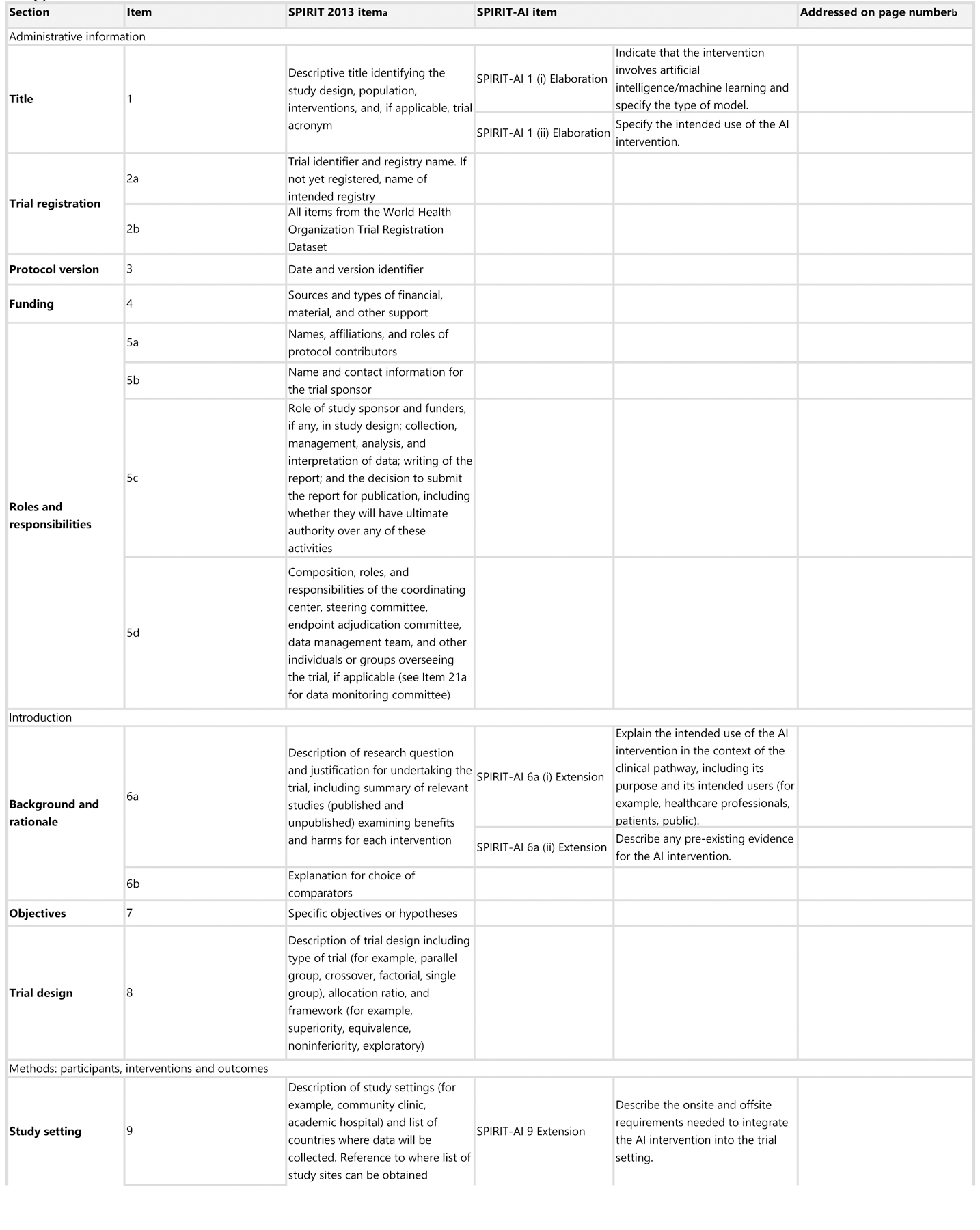
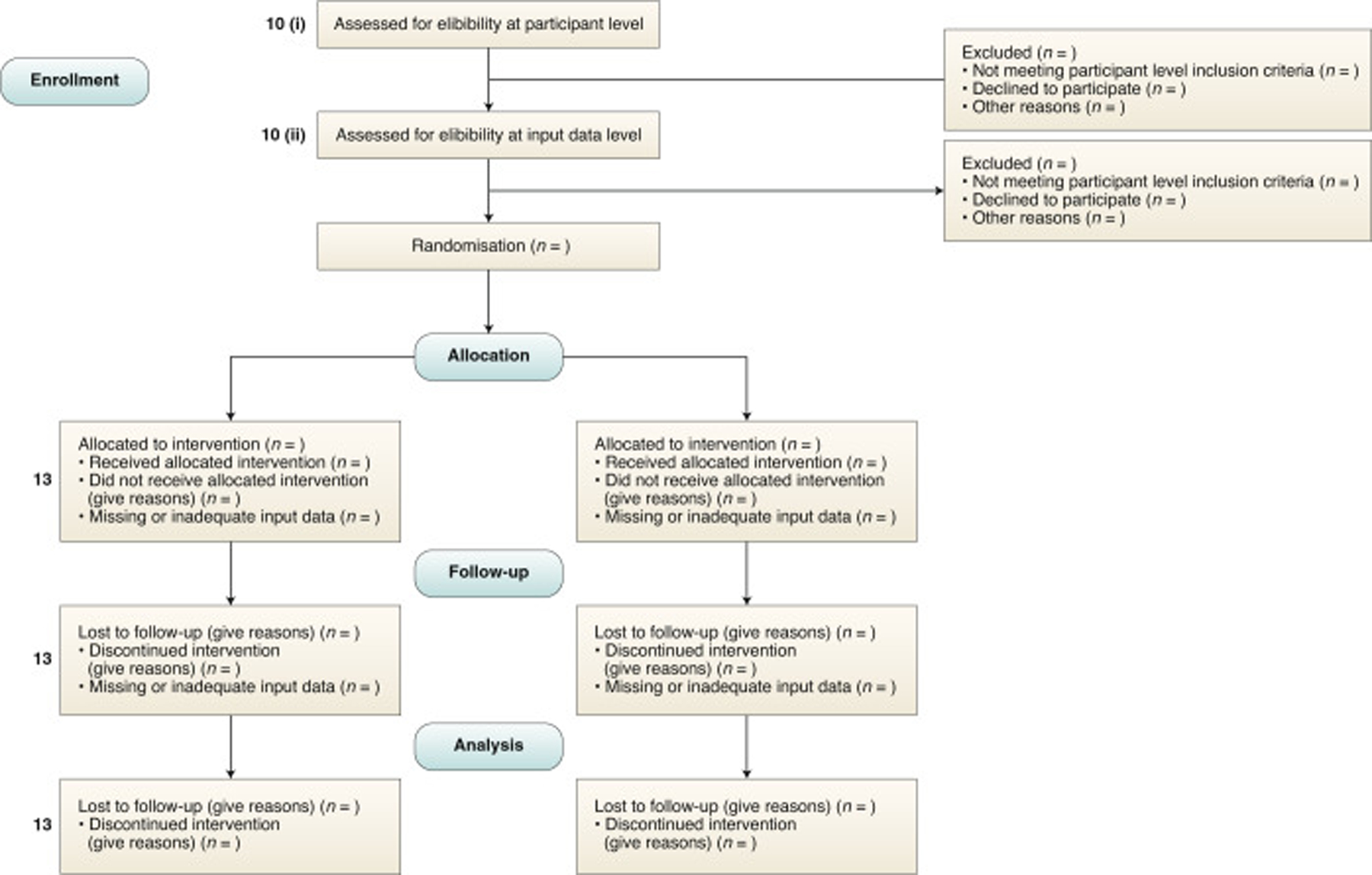
The SPIRIT 2013 statement aims to improve the completeness of clinical trial protocol reporting by providing evidence-based recommendations for the minimum set of items to be addressed. This guidance has been instrumental in promoting transparent evaluation of new interventions. More recently, there has been a growing recognition that interventions involving artificial intelligence (AI) need to undergo rigorous, prospective evaluation to demonstrate their impact on health outcomes. The SPIRIT-AI (Standard Protocol Items: Recommendations for Interventional Trials-Artificial Intelligence) extension is a new reporting guideline for clinical trial protocols evaluating interventions with an AI component. It was developed in parallel with its companion statement for trial reports: CONSORT-AI (Consolidated Standards of Reporting Trials-Artificial Intelligence). Both guidelines were developed through a staged consensus process involving literature review and expert consultation to generate 26 candidate items, which were consulted upon by an international multi-stakeholder group in a two-stage Delphi survey (103 stakeholders), agreed upon in a consensus meeting (31 stakeholders) and refined through a checklist pilot (34 participants). The SPIRIT-AI extension includes 15 new items that were considered sufficiently important for clinical trial protocols of AI interventions. These new items should be routinely reported in addition to the core SPIRIT 2013 items. SPIRIT-AI recommends that investigators provide clear descriptions of the AI intervention, including instructions and skills required for use, the setting in which the AI intervention will be integrated, considerations for the handling of input and output data, the human-AI interaction and analysis of error cases. SPIRIT-AI will help promote transparency and completeness for clinical trial protocols for AI interventions. Its use will assist editors and peer reviewers, as well as the general readership, to understand, interpret, and critically appraise the design and risk of bias for a planned clinical trial.
Overview
The claims and statistics of this paper haven’t been checked yet.
Free: it reads the open-access text and checks the first 5 claims that cite a source we can check. Create a free account to check every claim.
Integrity signals
Registry
Cites
Statistics
Figures
Verification
Claims the paper makes
The claims and statistics of this paper haven’t been checked yet.
Free: it reads the open-access text and checks the first 5 claims that cite a source we can check. Create a free account to check every claim.
Claims other papers make about this one
Each is checked against this paper’s own text: does it say what the citing paper says it does?
The source backs part of the claim, not all of it — or backs it for a different population, condition or comparison.
In the citing paper
“the SPIRIT-AI (Standard Protocol Items: Recommendations for Interventional Trials-Artificial Intelligence) extension guidelines clearly state the importance of pre-existing evidence for AI intervention, with evidence that the AI-assisted tool produces better performance compared with the standard of care [58].”
From Randomized Controlled Trials of Artificial Intelligence in Clinical Practice: Systematic Review (2022) · cites this paper as [58]
Experimental — accuracy not yet measuredIn the citing paper
“Additional guidelines include SPIRIT-AI (Standard Protocol Items: Recommendations for Interventional Trials-Artificial Intelligence), which provides an extended set of 15 items for AI-focused protocol documents (199), and CONSORT-AI (Consolidated Standards of Reporting of Trials-Artificial Intelligence), which provides an extended set of 14 items for reporting on AI-focused clinical trials (200).”
From Artificial Intelligence in Oncology: Current Landscape, Challenges, and Future Directions (2024) · cites this paper as [199]
Self-check
Percentages, sums and reported differences re-computed from the paper’s own numbers.
The self-check needs the paper’s full text.
Citations
Cites
Dermatologist-level classification of skin cancer with deep neural networks
Esteva, A., Kuprel, B., Novoa, R. A., Ko, J., Swetter, S. M., Blau, H. M., & Thrun, S. (2017) · Nature · doi:10.1038/nature21056 · Cited by 14,362
Self-citationSPIRIT 2013 Statement: Defining Standard Protocol Items for Clinical Trials
Chan, A.-W., Tetzlaff, J. M., Altman, D. G., Laupacis, A., Gøtzsche, P. C., Krleža-Jerić, K., Hróbjartsson, A., Mann, H., Dickersin, K., Berlin, J. A., et al. (2013) · Annals of Internal Medicine · doi:10.7326/0003-4819-158-3-201302050-00583 · Cited by 7,363
Self-citationSPIRIT 2013 explanation and elaboration: guidance for protocols of clinical trials
Chan, A.-W., Tetzlaff, J. M., Gotzsche, P. C., Altman, D. G., Mann, H., Berlin, J. A., Dickersin, K., Hrobjartsson, A., Schulz, K. F., Parulekar, W. R., et al. (2013) · BMJ · doi:10.1136/bmj.e7586 · Cited by 6,251
Self-citationInternational evaluation of an AI system for breast cancer screening
McKinney, S. M., Sieniek, M., Godbole, V., Godwin, J., Antropova, N., Ashrafian, H., Back, T., Chesus, M., Corrado, G. S., Darzi, A., et al. (2020) · Nature · doi:10.1038/s41586-019-1799-6 · Cited by 3,287
Self-citationKey challenges for delivering clinical impact with artificial intelligence
Kelly, C. J., Karthikesalingam, A., Suleyman, M., Corrado, G., & King, D. (2019) · BMC Medicine · doi:10.1186/s12916-019-1426-2 · Cited by 3,136 · cited 1×
“37,38 AI systems are dependent on their operational environment, and the protocol should provide details of the hardware and software requirements to allow technical integration of the AI intervention at each study site.”
Self-citationAn overview of clinical decision support systems: Benefits, risks, and strategies for success
Sutton, R. T., Pincock, D., Baumgart, D. C., Sadowski, D. C., Fedorak, R. N., & Kroeker, K. I. (2020) · npj Digital Medicine · doi:10.1038/s41746-020-0221-y · Cited by 3,019
Clinically applicable deep learning for diagnosis and referral in retinal disease
De Fauw, J., Ledsam, J. R., Romera-Paredes, B., Nikolov, S., Tomasev, N., Blackwell, S., Askham, H., Glorot, X., O’Donoghue, B., Visentin, D., et al. (2018) · Nature Medicine · doi:10.1038/s41591-018-0107-6 · Cited by 2,639
Self-citationThe practical implementation of artificial intelligence technologies in medicine
He, J., Baxter, S. L., Xu, J., Xu, J., Zhou, X., & Zhang, K. (2019) · Nature Medicine · doi:10.1038/s41591-018-0307-0 · Cited by 2,246
Liu, X., Faes, L., Kale, A. U., Wagner, S. K., Fu, D. J., Bruynseels, A., Mahendiran, T., Moraes, G., Shamdas, M., Kern, C., et al. (2019) · The Lancet Digital Health · doi:10.1016/s2589-7500(19)30123-2 · Cited by 1,883
Self-citationZech, J. R., Badgeley, M. A., Liu, M., Costa, A. B., Titano, J. J., & Oermann, E. K. (2018) · PLOS Medicine · doi:10.1371/journal.pmed.1002683 · Cited by 1,719
Cited by
Rajpurkar, P., Chen, E., Banerjee, O., & Topol, E. J. (2022) · Nature Medicine · doi:10.1038/s41591-021-01614-0 · Cited by 3,212
Artificial Intelligence and Machine Learning in Clinical Medicine, 2023
Haug, C. J., & Drazen, J. M. (2023) · New England Journal of Medicine · doi:10.1056/nejmra2302038 · Cited by 1,215
Self-citationVasey, B., Nagendran, M., Campbell, B., Clifton, D. A., Collins, G. S., Denaxas, S., Denniston, A. K., Faes, L., Geerts, B., Ibrahim, M., et al. (2022) · Nature Medicine · doi:10.1038/s41591-022-01772-9 · Cited by 1,039
Self-citationThe next generation of evidence-based medicine
Subbiah, V. (2023) · Nature Medicine · doi:10.1038/s41591-022-02160-z · Cited by 544
Ethical and Bias Considerations in Artificial Intelligence/Machine Learning
Hanna, M. G., Pantanowitz, L., Jackson, B., Palmer, O., Visweswaran, S., Pantanowitz, J., Deebajah, M., & Rashidi, H. H. (2025) · Modern Pathology · doi:10.1016/j.modpat.2024.100686 · Cited by 535
Artificial intelligence in histopathology: enhancing cancer research and clinical oncology
Shmatko, A., Ghaffari Laleh, N., Gerstung, M., & Kather, J. N. (2022) · Nature Cancer · doi:10.1038/s43018-022-00436-4 · Cited by 446
Designing deep learning studies in cancer diagnostics
Kleppe, A., Skrede, O.-J., De Raedt, S., Liestøl, K., Kerr, D. J., & Danielsen, H. E. (2021) · Nature Reviews Cancer · doi:10.1038/s41568-020-00327-9 · Cited by 316
Jones, O. T., Matin, R. N., van der Schaar, M., Prathivadi Bhayankaram, K., Ranmuthu, C. K. I., Islam, M. S., Behiyat, D., Boscott, R., Calanzani, N., Emery, J., et al. (2022) · The Lancet Digital Health · doi:10.1016/s2589-7500(22)00023-1 · Cited by 272
Artificial intelligence revolutionizing drug development: Exploring opportunities and challenges
Tiwari, P. C., Pal, R., Chaudhary, M. J., & Nath, R. (2023) · Drug Development Research · doi:10.1002/ddr.22115 · Cited by 221
Technology readiness levels for machine learning systems
Lavin, A., Gilligan-Lee, C. M., Visnjic, A., Ganju, S., Newman, D., Ganguly, S., Lange, D., Baydin, A. G., Sharma, A., Gibson, A., et al. (2022) · Nature Communications · doi:10.1038/s41467-022-33128-9 · Cited by 209
Self-citationArtificial Intelligence in Oncology: Current Landscape, Challenges, and Future Directions
Lotter, W., Hassett, M. J., Schultz, N., Kehl, K. L., Van Allen, E. M., & Cerami, E. (2024) · Cancer Discovery · doi:10.1158/2159-8290.cd-23-1199 · Cited by 196
AI, Health, and Health Care Today and Tomorrow: The JAMA Summit Report on Artificial Intelligence
Angus, D. C., Khera, R., Lieu, T., Liu, V., Ahmad, F. S., Anderson, B., Bhavani, S. V., Bindman, A., Brennan, T., Celi, L. A., et al. (2025) · JAMA · doi:10.1001/jama.2025.18490 · Cited by 195
Self-citationArtificial intelligence in ophthalmology: The path to the real-world clinic
Li, Z., Wang, L., Wu, X., Jiang, J., Qiang, W., Xie, H., Zhou, H., Wu, S., Shao, Y., & Chen, W. (2023) · Cell Reports Medicine · doi:10.1016/j.xcrm.2023.101095 · Cited by 188
Daneshjou, R., Barata, C., Betz-Stablein, B., Celebi, M. E., Codella, N., Combalia, M., Guitera, P., Gutman, D., Halpern, A., Helba, B., et al. (2022) · JAMA Dermatology · doi:10.1001/jamadermatol.2021.4915 · Cited by 157
Ibrahim, H., Liu, X., Rivera, S. C., Moher, D., Chan, A.-W., Sydes, M. R., Calvert, M. J., & Denniston, A. K. (2021) · Trials · doi:10.1186/s13063-020-04951-6 · Cited by 184
Self-citationRole of Artificial Intelligence in the Early Diagnosis of Oral Cancer. A Scoping Review
García-Pola, M., Pons-Fuster, E., Suárez-Fernández, C., Romero, J. M., Romero-Méndez, A., & López‐Jornet, P. (2021) · Cancers · doi:10.3390/cancers13184600 · Cited by 183
The impact of inconsistent human annotations on AI driven clinical decision making
Sylolypavan, A., Sleeman, D. H., Wu, H., & Sim, M. R. (2023) · npj Digital Medicine · doi:10.1038/s41746-023-00773-3 · Cited by 184
Artificial intelligence and deep learning in ophthalmology: Current status and future perspectives
Jin, K., & Ye, J. (2022) · Advances in Ophthalmology Practice and Research · doi:10.1016/j.aopr.2022.100078 · Cited by 132
“65 In recent decades, many standardized reporting protocols have arisen, of which CON-SORT-AI, 66 STARD-AI, 11 SPIRIT-AI 67 and TRIPOD 68 are among the most extensively applied.”
APPRAISE-AI Tool for Quantitative Evaluation of AI Studies for Clinical Decision Support
Kwong, J. C. C., Khondker, A., Lajkosz, K., McDermott, M. B. A., Frigola, X. B., McCradden, M. D., Mamdani, M., Kulkarni, G. S., & Johnson, A. E. W. (2023) · JAMA Network Open · doi:10.1001/jamanetworkopen.2023.35377 · Cited by 142
Self-citationArtificial intelligence in government: Concepts, standards, and a unified framework
Straub, V. J., Morgan, D., Bright, J., & Margetts, H. Z. (2023) · Government Information Quarterly · doi:10.1016/j.giq.2023.101881 · Cited by 178
SPIRIT 2025 statement: updated guideline for protocols of randomized trials
Chan, A., Boutron, I., Hopewell, S., Moher, D., Schulz, K. F., Collins, G. S., Tunn, R., Aggarwal, R., Berkwits, M., Berlin, J. A., et al. (2025) · Nature Medicine · doi:10.1038/s41591-025-03668-w · Cited by 174
Self-citationMethods for clinical evaluation of artificial intelligence algorithms for medical diagnosis
Park, S. H., Han, K., Jang, H. Y., Park, J. E., Lee, J.-G., Kim, D. W., & Choi, J. (2023) · Radiology · doi:10.1148/radiol.220182 · Cited by 163
Manyara, A. M., Purvis, A., Ciani, O., Collins, G. S., & Taylor, R. S. (2024) · Journal of Clinical Epidemiology · doi:10.1016/j.jclinepi.2024.111485 · Cited by 163
A manifesto on explainability for artificial intelligence in medicine
Combi, C., Amico, B., Bellazzi, R., Holzinger, A., Moore, J. H., Zitnik, M., & Holmes, J. H. (2022) · Artificial Intelligence in Medicine · doi:10.1016/j.artmed.2022.102423 · Cited by 163
Explainable Artificial Intelligence Methods in Combating Pandemics: A Systematic Review
Giuste, F., Shi, W., Zhu, Y., Naren, T., Isgut, M., Sha, Y., Tong, L., Gupte, M., & Wang, M. D. (2023) · IEEE Reviews in Biomedical Engineering · doi:10.1109/rbme.2022.3185953 · Cited by 128
Reporting guidelines in medical artificial intelligence: a systematic review and meta-analysis
Kolbinger, F. R., Veldhuizen, G. P., Zhu, J., Truhn, D., & Kather, J. N. (2024) · Communications Medicine · doi:10.1038/s43856-024-00492-0 · Cited by 160
Olczak, J., Pavlopoulos, J., Prijs, J., Ijpma, F. F. A., Doornberg, J. N., Lundström, C., Hedlund, J., & Gordon, M. (2021) · Acta Orthopaedica · doi:10.1080/17453674.2021.1918389 · Cited by 127
Artificial Intelligence in Skin Cancer Diagnosis: A Reality Check
Brancaccio, G., Balato, A., Malvehy, J., Puig, S., Argenziano, G., & Kittler, H. (2023) · Journal of Investigative Dermatology · doi:10.1016/j.jid.2023.10.004 · Cited by 159
Artificial Intelligence in Pharmaceutical Sciences
Lu, M., Yin, J., Zhu, Q., Lin, G., Mou, M., Liu, F., Pan, Z., You, N., Lian, X., Li, F., et al. (2023) · Engineering · doi:10.1016/j.eng.2023.01.014 · Cited by 161
Inteligencia artificial en medicina: presente y futuro
Ortega, D. L., Carrillo‐Pérez, D. L., & Carrillo-Esper, R. (2023) · Gaceta Médica de México · doi:10.24875/gmm.m22000688 · Cited by 146
van de Sande, D., Van Genderen, M. E., Smit, J. M., Huiskens, J., Visser, J. J., Veen, R. E. R., van Unen, E., BA, O. H., Gommers, D., & Bommel, J. V. (2022) · BMJ Health & Care Informatics · doi:10.1136/bmjhci-2021-100495 · Cited by 135
Responsibility beyond design: Physicians’ requirements for ethical medical AI
Sand, M., Durán, J. M., & Jongsma, K. R. (2021) · Bioethics · doi:10.1111/bioe.12887 · Cited by 133
Pfob, A., Lu, S.-C., & Sidey-Gibbons, C. J. (2022) · BMC Medical Research Methodology · doi:10.1186/s12874-022-01758-8 · Cited by 137
Tomašev, N., Harris, N., Baur, S., Mottram, A., Glorot, X., Rae, J. W., Zielinski, M., Askham, H., Saraiva, A., Magliulo, V., et al. (2021) · Nature Protocols · doi:10.1038/s41596-021-00513-5 · Cited by 131
Artificial intelligence-enabled decision support in nephrology
Loftus, T. J., Shickel, B., Ozrazgat‐Baslanti, T., Ren, Y., Glicksberg, B. S., Cao, J., Singh, K., Chan, L., Nadkarni, G. N., & Bihorac, A. (2022) · Nature Reviews Nephrology · doi:10.1038/s41581-022-00562-3 · Cited by 129
A review on knowledge graphs for healthcare: Resources, applications, and promises
Cui, H., Lu, J., Xu, R., Wang, S.-Y., Ma, W., Yu, Y., Yu, S., Kan, X., Ling, C., Zhao, L., et al. (2025) · Journal of Biomedical Informatics · doi:10.1016/j.jbi.2025.104861 · Cited by 130
Gao, Y., Ventura‐Díaz, S., Wang, X., He, M., Xu, Z., Weir, A., Zhou, H.-Y., Zhang, T., van Duijnhoven, F. H., Han, L., et al. (2024) · Nature Communications · doi:10.1038/s41467-024-53450-8 · Cited by 127
Empirical data drift detection experiments on real-world medical imaging data
Kore, A., Abbasi Bavil, E., Subasri, V., Abdalla, M., Fine, B., Dolatabadi, E., & Abdalla, M. (2024) · Nature Communications · doi:10.1038/s41467-024-46142-w · Cited by 124
Hadjiiski, L. M., Cha, K., Chan, H., Drukker, K., Morra, L., Näppi, J. J., Sahiner, B., Yoshida, H., Chen, Q., Deserno, T. M., et al. (2023) · Medical Physics · doi:10.1002/mp.16188 · Cited by 122
Artificial Intelligence in Surgery: A Systematic Review of Use and Validation
Kenig, N., Echeverría, J. M., & Vives, A. M. (2024) · Journal of Clinical Medicine · doi:10.3390/jcm13237108 · Cited by 124
Randomized Controlled Trials of Artificial Intelligence in Clinical Practice: Systematic Review
Lam, T. Y. T., Cheung, M. F. K., Munro, Y. L., Lim, K. M., Shung, D., & Sung, J. J. Y. (2022) · Journal of Medical Internet Research · doi:10.2196/37188 · Cited by 120
Muralidharan, V., Burgart, A. M., Daneshjou, R., & Rose, S. (2023) · npj Digital Medicine · doi:10.1038/s41746-023-00898-5 · Cited by 120
Svennberg, E., Han, J. K., Caiani, E. G., Engelhardt, S., Ernst, S., Friedman, P. A., Garcia, R., Ghanbari, H., Hindricks, G., Man, S. H., et al. (2025) · EP Europace · doi:10.1093/europace/euaf071 · Cited by 121
Early Diagnosis of Cardiovascular Diseases in the Era of Artificial Intelligence: An In-Depth Review
Almansouri, N. E., Awe, M., Rajavelu, S., Jahnavi, K., Shastry, R., Hasan, A., Hasan, H., Lakkimsetti, M., AlAbbasi, R. K., Criollo-Gutiérrez, B. D., et al. (2024) · Cureus · doi:10.7759/cureus.55869 · Cited by 112
Dupuis, M., Delbos, L., Veil, R., & Adamsbaum, C. (2022) · Diagnostic and Interventional Imaging · doi:10.1016/j.diii.2021.10.007 · Cited by 94
Nuclear Medicine and Artificial Intelligence: Best Practices for Algorithm Development
Bradshaw, T. J., Boellaard, R., Dutta, J., Jha, A. K., Jacobs, P., Li, Q., Liu, C., Sitek, A., Saboury, B., Scott, P. J. H., et al. (2022) · Journal of Nuclear Medicine · doi:10.2967/jnumed.121.262567 · Cited by 94
Hu, D., Hu, Y., Hu, R., Tan, Z. L., Ni, P., Chen, Y., Xiang, X., Li, Y., & Liu, J. (2024) · International Journal of Computational Methods · doi:10.1142/s021987622450066x · Cited by 109
Similarity and quality metrics for MR image-to-image translation
Dohmen, M., Klemens, M., Baltruschat, I. M., Truong, T., & Lenga, M. (2025) · Scientific Reports · doi:10.1038/s41598-025-87358-0 · Cited by 112
Guidelines on clinical research evaluation of artificial intelligence in ophthalmology (2023)
Yang, W., & Xu, Y. (2023) · International Journal of Ophthalmology · doi:10.18240/ijo.2023.09.02 · Cited by 102
An introduction to machine learning and analysis of its use in rheumatic diseases
Kingsmore, K. M., Puglisi, C., Grammer, A. C., & Lipsky, P. E. (2021) · Nature Reviews Rheumatology · doi:10.1038/s41584-021-00708-w · Cited by 100
A Primer for Evaluating Large Language Models in Social-Science Research
Abdurahman, S., Ziabari, A. S., Moore, A. K., Bartels, D. M., & Dehghani, M. (2025) · Advances in Methods and Practices in Psychological Science · doi:10.1177/25152459251325174 · Cited by 101
Translation of AI into oncology clinical practice
El Naqa, I., Karolak, A., Luo, Y., Folio, L., Tarhini, A. A., Rollison, D., & Parodi, K. (2023) · Oncogene · doi:10.1038/s41388-023-02826-z · Cited by 81
Malamateniou, C., McFadden, S. L., McQuinlan, Y., England, A., Woznitza, N., Goldsworthy, S., Currie, C., Skelton, E., Chu, K.-Y., Alware, N., et al. (2021) · Radiography · doi:10.1016/j.radi.2021.07.028 · Cited by 92
Hadan, H., Wang, D. M., Mogavi, R. H., Tu, J., Zhang-Kennedy, L., & Nacke, L. E. (2024) · Computers in Human Behavior: Artificial Humans · doi:10.1016/j.chbah.2024.100095 · Cited by 55
Kayaalp, M. E., Prill, R., Sezgin, E. A., Cong, T., Królikowska, A., & Hirschmann, M. T. (2025) · Knee Surgery Sports Traumatology Arthroscopy · doi:10.1002/ksa.12628 · Cited by 90
Developing image analysis methods for digital pathology
Bankhead, P. (2022) · The Journal of Pathology · doi:10.1002/path.5921 · Cited by 89
Friedrich, S., Groß, S., König, I. R., Engelhardt, S., Bahls, M., Heinz, J., Huber, C., Kaderali, L., Kelm, M., Leha, A., et al. (2021) · European Heart Journal - Digital Health · doi:10.1093/ehjdh/ztab054 · Cited by 88
Artificial intelligence in smart drug delivery systems: a step toward personalized medicine
Panchpuri, M., Painuli, R., & Kumar, C. (2025) · RSC Pharmaceutics · doi:10.1039/d5pm00089k · Cited by 90
Artificial intelligence to enhance clinical value across the spectrum of cardiovascular healthcare
Gill, S. K., Karwath, A., Uh, H., Cardoso, V. R., Gu, Z., Barsky, A., Slater, L. T., Acharjee, A., Duan, J., Dall’Olio, L., et al. (2023) · European Heart Journal · doi:10.1093/eurheartj/ehac758 · Cited by 85
Artificial Intelligence in Clinical Oncology: From Data to Digital Pathology and Treatment
Kumar, K. S., Miskovic, V., Blasiak, A., Sundar, R., Pedrocchi, A., Pearson, A. T., Prelaj, A., & Ho, D. (2023) · American Society of Clinical Oncology Educational Book · doi:10.1200/edbk_390084 · Cited by 81
Clinical Implementation of Artificial Intelligence Scribes in Health Care: A Systematic Review
Hassan, H., Zipursky, A. R., Rabbani, N., You, J. G.-T., Tse, G., Orenstein, E. W., Ray, M., Parsons, C. R., Shin, S., Lawton, G., et al. (2025) · Applied Clinical Informatics · doi:10.1055/a-2597-2017 · Cited by 81
Vasey, B., Lippert, K. A. N., Khan, D. Z., Ibrahim, M., Koh, C. H., Layard Horsfall, H., Lee, K. S., Williams, S., Marcus, H. J., & McCulloch, P. (2023) · Annals of Surgery · doi:10.1097/sla.0000000000005700 · Cited by 80
Desai, K. T., Befano, B., Xue, Z., Kelly, H. A., Campos, N. G., Egemen, D., Gage, J. C., Rodríguez, A. C., Sahasrabuddhe, V. V., Levitz, D., et al. (2021) · International Journal of Cancer · doi:10.1002/ijc.33879 · Cited by 81
Artificial intelligence and urology: ethical considerations for urologists and patients
Cacciamani, G. E., Chen, A. W., Gill, I. S., & Hung, A. J. (2023) · Nature Reviews Urology · doi:10.1038/s41585-023-00796-1 · Cited by 80
Artificial intelligence in liver cancer — new tools for research and patient management
Caldéraro, J., Žigutytė, L., Truhn, D., Jaffe, A., & Kather, J. N. (2024) · Nature Reviews Gastroenterology & Hepatology · doi:10.1038/s41575-024-00919-y · Cited by 80
Shelmerdine, S. C., Arthurs, O. J., Denniston, A., & Sebire, N. J. (2021) · BMJ Health & Care Informatics · doi:10.1136/bmjhci-2021-100385 · Cited by 66
Self-citationStandardized Reporting of Machine Learning Applications in Urology: The STREAM-URO Framework
Kwong, J. C. C., McLoughlin, L. C., Haider, M. A., Goldenberg, M. G., Erdman, L., Rickard, M., Lorenzo, A. J., Hung, A. J., Farcas, M. A., Goldenberg, L., et al. (2021) · European Urology Focus · doi:10.1016/j.euf.2021.07.004 · Cited by 78
Ethical, Legal, and Financial Considerations of Artificial Intelligence in Surgery
Morris, M. X., Song, E. Y., Rajesh, A., Asaad, M., & Phillips, B. T. (2022) · The American Surgeon · doi:10.1177/00031348221117042 · Cited by 76
Goh, S. S. N., Goh, R. S. J., Chong, B., Ng, Q. X., Koh, G. C., Ngiam, K. Y., & Hartman, M. (2025) · Journal of Medical Internet Research · doi:10.2196/62941 · Cited by 77
Hasanzadeh, A., Hamblin, M. R., Kiani, J., Noori, H., Hardie, J. M., Karimi, M., & Shafiee, H. (2022) · Nano Today · doi:10.1016/j.nantod.2022.101665 · Cited by 74
Arnould, L., Mériaudeau, F., Guénancia, C., Germanèse, C., Delcourt, C., Kawasaki, R., Cheung, C. Y.-L., Creuzot-Garcher, C. P., & Grzybowski, A. E. (2022) · Ophthalmology and Therapy · doi:10.1007/s40123-022-00641-5 · Cited by 74
“[132].”
Uncertainty-aware deep learning in healthcare: A scoping review
Loftus, T. J., Shickel, B., Ruppert, M. M., Balch, J. A., Ozrazgat-Baslanti, T., Tighe, P. J., Efron, P. A., Hogan, W. R., Rashidi, P., Upchurch, G. R., et al. (2022) · PLOS Digital Health · doi:10.1371/journal.pdig.0000085 · Cited by 73
The silent trial - the bridge between bench-to-bedside clinical AI applications
Kwong, J. C. C., Erdman, L., Khondker, A., Skreta, M., Goldenberg, A., McCradden, M. D., Lorenzo, A. J., & Rickard, M. (2022) · Frontiers in Digital Health · doi:10.3389/fdgth.2022.929508 · Cited by 73
Self-citationA normative framework for artificial intelligence as a sociotechnical system in healthcare
McCradden, M. D., Joshi, S. D., Anderson, J. A., & London, A. J. (2023) · Patterns · doi:10.1016/j.patter.2023.100864 · Cited by 74
Self-citationZsidai, B., Hilkert, A., Kaarre, J., Narup, E., Senorski, E. H., Grassi, A., Ley, C., Longo, U. G., Herbst, E., Hirschmann, M. T., et al. (2023) · Journal of Experimental Orthopaedics · doi:10.1186/s40634-023-00683-z · Cited by 73
“…developments towards standardizing the reports of AI-intensive research include the CONSORT-AI [23], STARD-AI [43], TRIPOD-AI [13], PROBAST-AI [13] and SPIRIT-AI [14] guidelines, which facilitate the implementation of rigorous guidelines reporting results and risk of bias in AI-intensive research.”
Guidelines and standard frameworks for artificial intelligence in medicine: a systematic review
Shiferaw, K. B., Roloff, M., Balaur, I., Welter, D., Waltemath, D., & Zeleke, A. A. (2024) · JAMIA Open · doi:10.1093/jamiaopen/ooae155 · Cited by 74
Evans, H., & Snead, D. (2024) · npj Digital Medicine · doi:10.1038/s41746-024-01093-w · Cited by 47
Colacci, M., Huang, Y. Q., Postill, G., Zhelnov, P., Fennelly, O., Verma, A. A., Straus, S. E., & Tricco, A. C. (2024) · Journal of Clinical Epidemiology · doi:10.1016/j.jclinepi.2024.111606 · Cited by 72
Reporting guidelines for artificial intelligence in healthcare research
Ibrahim, H., Liu, X., & Denniston, A. K. (2021) · Clinical & Experimental Ophthalmology · doi:10.1111/ceo.13943 · Cited by 61
Self-citationArtificial Intelligence in Colorectal Cancer Surgery: Present and Future Perspectives
Quero, G., Mascagni, P., Kolbinger, F. R., Fiorillo, C., Sio, D. D., Longo, F., Schena, C. A., Laterza, V., Rosa, F., Menghi, R., et al. (2022) · Cancers · doi:10.3390/cancers14153803 · Cited by 70
“Translational studies exploring the clinical value of surgical AI still remain to be published, but currently available guidelines can help designing protocols [37], early assessments [38], and reporting of AI-based interventions [39].”
The Invisible Workload of Open Research
Hostler, T. (2023) · Journal of Trial and Error · doi:10.36850/mr5 · Cited by 74
Ideal algorithms in healthcare: Explainable, dynamic, precise, autonomous, fair, and reproducible
Loftus, T. J., Tighe, P. J., Ozrazgat-Baslanti, T., Davis, J. P., Ruppert, M. M., Ren, Y., Shickel, B., Kamaleswaran, R., Hogan, W. R., Moorman, J. R., et al. (2022) · PLOS Digital Health · doi:10.1371/journal.pdig.0000006 · Cited by 57
Gunasekeran, D. V., Zheng, F., Lim, G. Y. S., Chong, C. C. Y., Zhang, S., Ng, W. Y., Keel, S., Xiang, Y., Park, K. H., Park, S. J., et al. (2022) · Frontiers in Medicine · doi:10.3389/fmed.2022.875242 · Cited by 69
Self-citationMachine Learning in Clinical Trials: A Primer with Applications to Neurology
Miller, M. I., Shih, L. C., & Kolachalama, V. B. (2023) · Neurotherapeutics · doi:10.1007/s13311-023-01384-2 · Cited by 67
Thériault-Lauzier, P., Corbin, D., Tastet, O., Langlais, É. L., Taji, B., Kang, G., Chong, A., So, D. Y. F., Tang, A., Gichoya, J. W., et al. (2024) · Canadian Journal of Cardiology · doi:10.1016/j.cjca.2024.05.025 · Cited by 65
Oncologic Imaging and Radiomics: A Walkthrough Review of Methodological Challenges
Stanzione, A., Cuocolo, R., Ugga, L., Verde, F., Romeo, V., Brunetti, A., & Maurea, S. (2022) · Cancers · doi:10.3390/cancers14194871 · Cited by 64
Ursin, F., Timmermann, C., & Steger, F. (2021) · Bioethics · doi:10.1111/bioe.12918 · Cited by 64
Stidham, R. W., Cai, L., Cheng, S., Rajaei, F., Hiatt, T., Wittrup, E., Rice, M. D., Bishu, S., Wehkamp, J., Schultz, W., et al. (2024) · Gastroenterology · doi:10.1053/j.gastro.2023.09.049 · Cited by 63
Liu, Y., Yu, W., & Dillon, T. S. (2024) · npj Digital Medicine · doi:10.1038/s41746-024-01254-x · Cited by 63
Hamamoto, R., Koyama, T., Kouno, N., Yasuda, T., Yui, S., Sudo, K., Hirata, M., Sunami, K., Kubo, T., Takasawa, K., et al. (2022) · Experimental Hematology & Oncology · doi:10.1186/s40164-022-00333-7 · Cited by 48
Rethinking clinical trials for medical AI with dynamic deployments of adaptive systems
Rosenthal, J. T., Beecy, A., & Sabuncu, M. R. (2025) · npj Digital Medicine · doi:10.1038/s41746-025-01674-3 · Cited by 59
You, J. G., Hernandez-Boussard, T., Pfeffer, M. A., Landman, A., & Mishuris, R. G. (2025) · npj Digital Medicine · doi:10.1038/s41746-025-01506-4 · Cited by 59
Nahm, W. J., Sohail, N., Burshtein, J. G., Goldust, M., & Tsoukas, M. M. (2025) · International Journal of Dermatology · doi:10.1111/ijd.17847 · Cited by 59
Artificial intelligence and deep learning for small bowel capsule endoscopy
Trasolini, R. P., & Byrne, M. F. (2020) · Digestive Endoscopy · doi:10.1111/den.13896 · Cited by 59
“55 With standards in place, we expect an increasing number of prospective randomized controlled trials going forward.”
Artificial intelligence in the neonatal intensive care unit: the time is now
Beam, K., Sharma, P., Levy, P. T., & Beam, A. L. (2023) · Journal of Perinatology · doi:10.1038/s41372-023-01719-z · Cited by 61
Self-citationCurrent Applications of Artificial Intelligence in Bariatric Surgery
Bellini, V., Valente, M., Turetti, M., RIO, P. D., Saturno, F., Maffezzoni, M., & Bignami, E. G. (2022) · Obesity Surgery · doi:10.1007/s11695-022-06100-1 · Cited by 58
Real-World and Regulatory Perspectives of Artificial Intelligence in Cardiovascular Imaging
Wellnhofer, E. (2022) · Frontiers in Cardiovascular Medicine · doi:10.3389/fcvm.2022.890809 · Cited by 56
Revolutionizing Cancer Research: The Impact of Artificial Intelligence in Digital Biobanking
Frascarelli, C., Bonizzi, G., Musico, C. R., Mane, E., Cassi, C., Guerini Rocco, E., Farina, A., Scarpa, A., Lawlor, R., Reggiani Bonetti, L., et al. (2023) · Journal of Personalized Medicine · doi:10.3390/jpm13091390 · Cited by 42
Ethical Considerations in the Design and Conduct of Clinical Trials of Artificial Intelligence
Youssef, A., Nichol, A. A., Martinez‐Martin, N., Larson, D. B., Abràmoff, M. D., Wolf, R. M., & Char, D. S. (2024) · JAMA Network Open · doi:10.1001/jamanetworkopen.2024.32482 · Cited by 58
Carmo, L. O. E., van den Merkhof, A., Olczak, J., Gordon, M., Jutte, P. C., Jaarsma, R. L., IJpma, F. F. A., Doornberg, J. N., & Prijs, J. (2021) · Bone & Joint Open · doi:10.1302/2633-1462.210.bjo-2021-0133 · Cited by 56
Metadata
- Authors
- Cruz Rivera, S., Liu, X., Chan, A.-W., Denniston, A. K., Calvert, M. J., Ashrafian, H., Beam, A. L., Collins, G. S., Darzi, A., Deeks, J. J., ElZarrad, M. K., Espinoza, C., Esteva, A., Faes, L., Ferrante di Ruffano, L., Fletcher, J., Golub, R., Harvey, H., Haug, C., Holmes, C., Jonas, A., Keane, P. A., Kelly, C. J., Lee, A. Y., Lee, C. S., Manna, E., Matcham, J., McCradden, M., Moher, D., Monteiro, J., Mulrow, C., Oakden-Rayner, L., Paltoo, D., Panico, M. B., Price, G., Rowley, S., Savage, R., Sarkar, R., Vollmer, S. J., & Yau, C.
- Affiliations
- University Hospitals Birmingham NHS Foundation Trust (GB)
- University of Toronto (CA)
- Moorfields Eye Hospital NHS Foundation Trust (GB)
- Health Data Research UK (GB)
- University of Birmingham (GB)
- Corresponding author
- Denniston, Alastair K
- ORCID
- Liu, Xiaoxuan
- Chan, An-Wen
- Denniston, Alastair K
- Calvert, Melanie J
- Ashrafian, Hutan
- Beam, Andrew L
- Darzi, Ara
- Deeks, Jonathan J
- ElZarrad, M Khair
- Esteva, Andre
- Faes, Livia
- Fletcher, John
- Harvey, Hugh
- Haug, Charlotte
- Keane, Pearse A
- Kelly, Christopher J
- Lee, Aaron Y
- Lee, Cecilia S
- McCradden, Melissa
- Moher, David
- Mulrow, Cynthia
- Rowley, Samuel
- Savage, Richard
- Sarkar, Rupa
- Vollmer, Sebastian J
- Yau, Christopher
- Venue
- The Lancet Digital Health
- Publisher
- Elsevier BV
- Published
- 2020-10
- Volume
- 2
- Issue
- 10
- Pages
- e549-e560
- ISSN
- 2589-7500 (ISSN-L)
- PMC
- PMC8212701
- OpenAlex
- W3084438218
- Semantic Scholar
- 107169ebaa4f979572bebfe56452120440bacb7a
- Cited by
- 486
- References
- 50
- Citations by year
- 2026: 117 · 2025: 88 · 2024: 85 · 2023: 82 · 2022: 63 · 2021: 47 · 2020: 4
- FWCI
- 10.12
- Type
- journal article
- Language
- en
- Open access
- gold
- doi.org
- Licence
- cc-by-nc-nd
- www.elsevier.com/tdm/userlicense/1.0/ (tdm)
- www.elsevier.com/legal/tdmrep-license (tdm)
- creativecommons.org/licenses/by-nc-nd/4.0/ (vor)
- Locations
- The Lancet Digital Health (publishedVersion, cc-by-nc-nd)
- PubMed (publishedVersion)
- University of Birmingham Research Portal (University of Birmingham) (publishedVersion, cc-by-nc-nd)
- PubMed Central (acceptedVersion, cc-by-nc-nd)
- DOAJ (DOAJ: Directory of Open Access Journals) (submittedVersion, cc-by-sa)
- UCL Discovery (University College London) (submittedVersion)
- University of Birmingham Research Portal (University of Birmingham) (submittedVersion, cc-by-nc-nd)
- Spiral (Imperial College London) (submittedVersion, other-oa)
- Funders
- National Institutes of Health (7K01HL141771-02)
- Health Foundation
- Alan Turing Institute
- U.S. Food and Drug Administration
- University of Birmingham
- University Hospitals Birmingham NHS Foundation Trust
- U.S. National Library of Medicine
- European Regional Development Fund
- UK Research and Innovation
- Office of the Director
- Surgical Reconstruction and Microbiology Research Centre
- UCB Pharma
- Moorfields Eye Charity
- National Institute for Health and Care Research
- Macmillan Cancer Support
- Birmingham Biomedical Research Centre
- Wellcome Trust
- Topics
- Social Sciences › Decision Sciences › Statistics, Probability and Uncertainty › Meta-analysis and systematic reviews
- Health Sciences › Medicine › Health Informatics › Artificial Intelligence in Healthcare and Education
- Health Sciences › Medicine › Public Health, Environmental and Occupational Health › Clinical practice guidelines implementation
- Keywords
- reporting guidelines, artificial intelligence interventions, artificial intelligence in healthcare, human-AI interaction, risk of bias, CONSORT-AI, Delphi consensus
- MeSH terms
- Artificial Intelligence, Clinical Trials as Topic, Delphi Technique, Humans, Publishing, Research Design, Guidelines as Topic, Disclosure, Consensus, Checklist, Research Report
About these checks
Registry, retraction, Cites and statistics results are computed, not judged, with one exception: a printed reference that no index lists is read once by a model before it counts as a citation error. Claims are extracted by a model and kept only when their quote appears verbatim in the text; each cited source is then checked, with a model’s help, for whether it says what the claim relies on. Those verdicts can be wrong — read the claim’s quote and the cited source before relying on one.
Statistics and arithmetic are recomputed, not judged.
Confidence bands are shown only for fields calibrated on our annotated test set. None is calibrated yet, so no band is shown.
What counts as a claim ›How we measure confidence ›How we check this ›
Are you an author, or do you see a problem with this page? Request a review
Data sources
Bibliographic data: Semantic Scholar, OpenAlex, Crossref.
Contains information from the Semantic Scholar Academic Graph Datasets, made available under the ODC Attribution License (ODC-BY 1.0).
Semantic Scholar’s data is described in: Kinney, R., et al. (2023). The Semantic Scholar Open Data Platform. arXiv:2301.10140.
