

Guidelines for clinical trial protocols for interventions involving artificial intelligence: the SPIRIT-AI extension
Open accessThe DOI matches its Crossref record; 52 of the 52 references it cites were found in a registry or an index.
Abstract
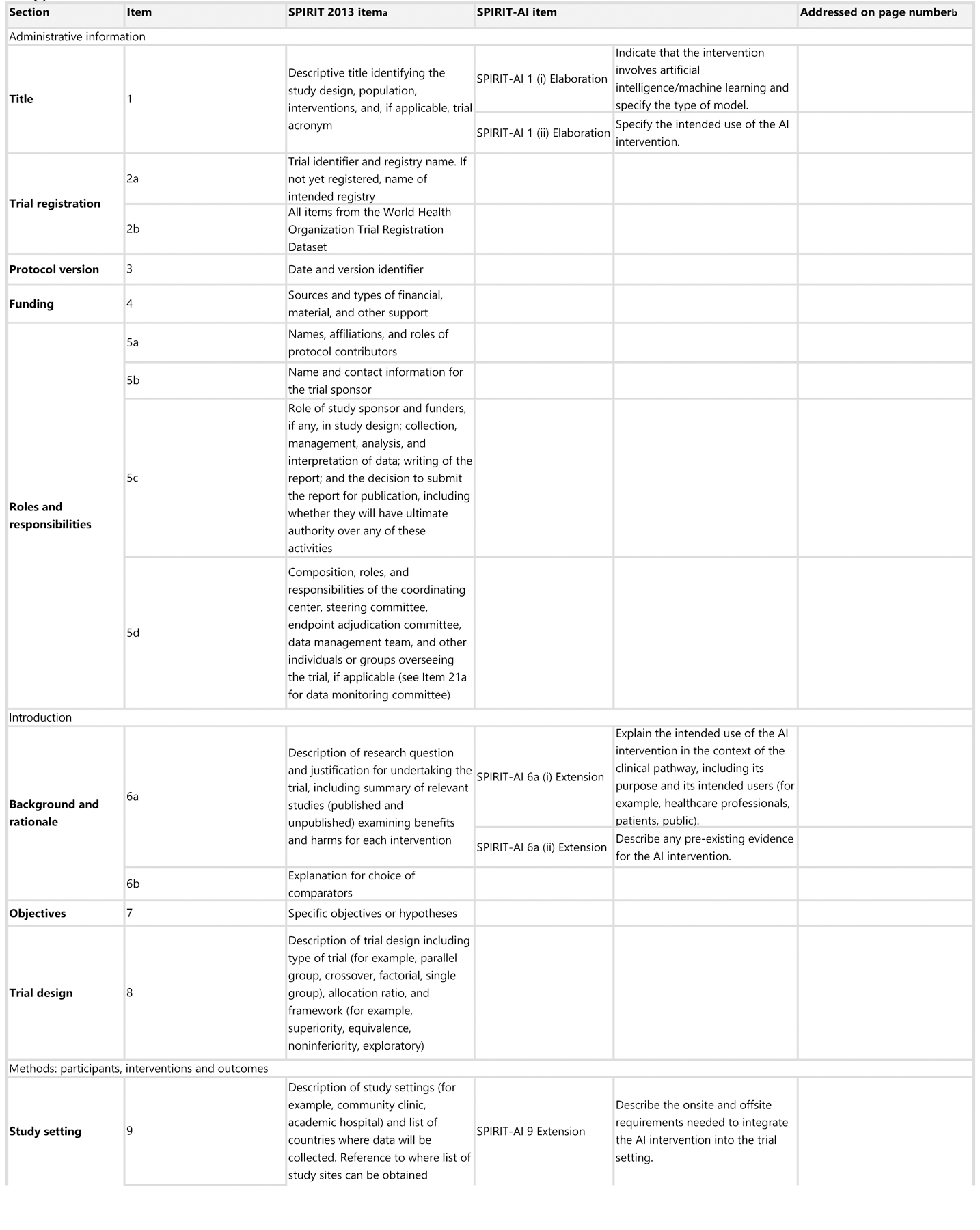
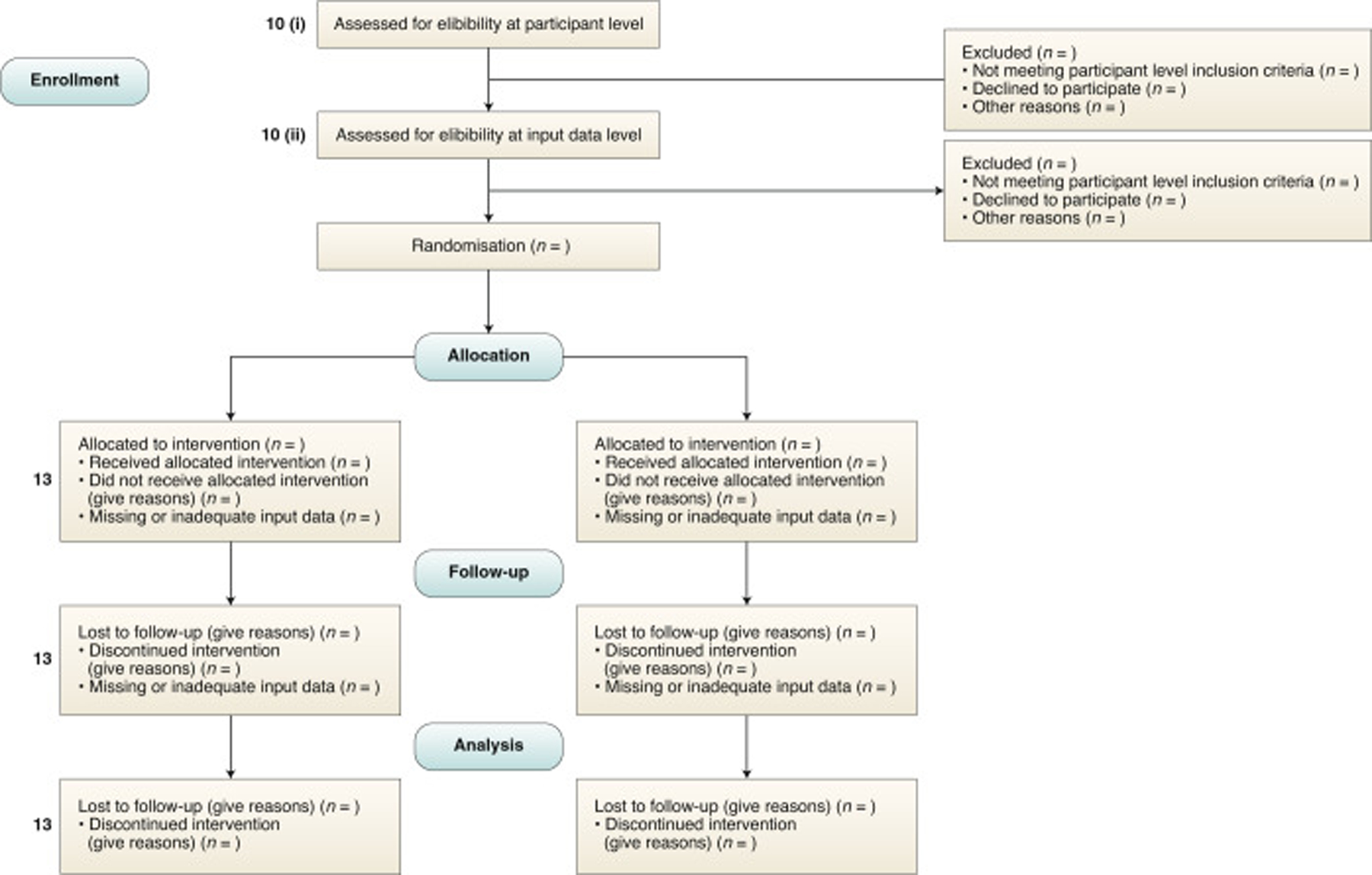
The SPIRIT 2013 statement aims to improve the completeness of clinical trial protocol reporting by providing evidence-based recommendations for the minimum set of items to be addressed. This guidance has been instrumental in promoting transparent evaluation of new interventions. More recently, there has been a growing recognition that interventions involving artificial intelligence (AI) need to undergo rigorous, prospective evaluation to demonstrate their impact on health outcomes. The SPIRIT-AI (Standard Protocol Items: Recommendations for Interventional Trials-Artificial Intelligence) extension is a new reporting guideline for clinical trial protocols evaluating interventions with an AI component. It was developed in parallel with its companion statement for trial reports: CONSORT-AI (Consolidated Standards of Reporting Trials-Artificial Intelligence). Both guidelines were developed through a staged consensus process involving literature review and expert consultation to generate 26 candidate items, which were consulted upon by an international multi-stakeholder group in a two-stage Delphi survey (103 stakeholders), agreed upon in a consensus meeting (31 stakeholders) and refined through a checklist pilot (34 participants). The SPIRIT-AI extension includes 15 new items that were considered sufficiently important for clinical trial protocols of AI interventions. These new items should be routinely reported in addition to the core SPIRIT 2013 items. SPIRIT-AI recommends that investigators provide clear descriptions of the AI intervention, including instructions and skills required for use, the setting in which the AI intervention will be integrated, considerations for the handling of input and output data, the human-AI interaction and analysis of error cases. SPIRIT-AI will help promote transparency and completeness for clinical trial protocols for AI interventions. Its use will assist editors and peer reviewers, as well as the general readership, to understand, interpret, and critically appraise the design and risk of bias for a planned clinical trial.
Overview
The claims and statistics of this paper haven’t been checked yet.
Free: it reads the open-access text and checks the first 5 claims that cite a source we can check. Create a free account to check every claim.
Integrity signals
Registry
Cites
Statistics
Figures
Verification
Claims the paper makes
The claims and statistics of this paper haven’t been checked yet.
Free: it reads the open-access text and checks the first 5 claims that cite a source we can check. Create a free account to check every claim.
Claims other papers make about this one
Each is checked against this paper’s own text: does it say what the citing paper says it does?
The source backs part of the claim, not all of it — or backs it for a different population, condition or comparison.
In the citing paper
“the SPIRIT-AI (Standard Protocol Items: Recommendations for Interventional Trials-Artificial Intelligence) extension guidelines clearly state the importance of pre-existing evidence for AI intervention, with evidence that the AI-assisted tool produces better performance compared with the standard of care [58].”
From Randomized Controlled Trials of Artificial Intelligence in Clinical Practice: Systematic Review (2022) · cites this paper as [58]
Experimental — accuracy not yet measuredIn the citing paper
“Additional guidelines include SPIRIT-AI (Standard Protocol Items: Recommendations for Interventional Trials-Artificial Intelligence), which provides an extended set of 15 items for AI-focused protocol documents (199), and CONSORT-AI (Consolidated Standards of Reporting of Trials-Artificial Intelligence), which provides an extended set of 14 items for reporting on AI-focused clinical trials (200).”
From Artificial Intelligence in Oncology: Current Landscape, Challenges, and Future Directions (2024) · cites this paper as [199]
Self-check
Percentages, sums and reported differences re-computed from the paper’s own numbers.
The self-check needs the paper’s full text.
Citations
Cites
Dermatologist-level classification of skin cancer with deep neural networks
Esteva, A., Kuprel, B., Novoa, R. A., Ko, J., Swetter, S. M., Blau, H. M., & Thrun, S. (2017) · Nature · doi:10.1038/nature21056 · Cited by 14,362
Self-citationSPIRIT 2013 Statement: Defining Standard Protocol Items for Clinical Trials
Chan, A.-W., Tetzlaff, J. M., Altman, D. G., Laupacis, A., Gøtzsche, P. C., Krleža-Jerić, K., Hróbjartsson, A., Mann, H., Dickersin, K., Berlin, J. A., et al. (2013) · Annals of Internal Medicine · doi:10.7326/0003-4819-158-3-201302050-00583 · Cited by 7,363
Self-citationSPIRIT 2013 explanation and elaboration: guidance for protocols of clinical trials
Chan, A.-W., Tetzlaff, J. M., Gotzsche, P. C., Altman, D. G., Mann, H., Berlin, J. A., Dickersin, K., Hrobjartsson, A., Schulz, K. F., Parulekar, W. R., et al. (2013) · BMJ · doi:10.1136/bmj.e7586 · Cited by 6,251
Self-citationInternational evaluation of an AI system for breast cancer screening
McKinney, S. M., Sieniek, M., Godbole, V., Godwin, J., Antropova, N., Ashrafian, H., Back, T., Chesus, M., Corrado, G. S., Darzi, A., et al. (2020) · Nature · doi:10.1038/s41586-019-1799-6 · Cited by 3,287
Self-citationKey challenges for delivering clinical impact with artificial intelligence
Kelly, C. J., Karthikesalingam, A., Suleyman, M., Corrado, G., & King, D. (2019) · BMC Medicine · doi:10.1186/s12916-019-1426-2 · Cited by 3,136 · cited 1×
“37,38 AI systems are dependent on their operational environment, and the protocol should provide details of the hardware and software requirements to allow technical integration of the AI intervention at each study site.”
Self-citationAn overview of clinical decision support systems: Benefits, risks, and strategies for success
Sutton, R. T., Pincock, D., Baumgart, D. C., Sadowski, D. C., Fedorak, R. N., & Kroeker, K. I. (2020) · npj Digital Medicine · doi:10.1038/s41746-020-0221-y · Cited by 3,019
Clinically applicable deep learning for diagnosis and referral in retinal disease
De Fauw, J., Ledsam, J. R., Romera-Paredes, B., Nikolov, S., Tomasev, N., Blackwell, S., Askham, H., Glorot, X., O’Donoghue, B., Visentin, D., et al. (2018) · Nature Medicine · doi:10.1038/s41591-018-0107-6 · Cited by 2,639
Self-citationThe practical implementation of artificial intelligence technologies in medicine
He, J., Baxter, S. L., Xu, J., Xu, J., Zhou, X., & Zhang, K. (2019) · Nature Medicine · doi:10.1038/s41591-018-0307-0 · Cited by 2,246
Liu, X., Faes, L., Kale, A. U., Wagner, S. K., Fu, D. J., Bruynseels, A., Mahendiran, T., Moraes, G., Shamdas, M., Kern, C., et al. (2019) · The Lancet Digital Health · doi:10.1016/s2589-7500(19)30123-2 · Cited by 1,883
Self-citationZech, J. R., Badgeley, M. A., Liu, M., Costa, A. B., Titano, J. J., & Oermann, E. K. (2018) · PLOS Medicine · doi:10.1371/journal.pmed.1002683 · Cited by 1,719
Rajpurkar, P., Irvin, J., Ball, R. L., Zhu, K., Yang, B., Mehta, H., Duan, T., Ding, D., Bagul, A., Langlotz, C. P., et al. (2018) · PLOS Medicine · doi:10.1371/journal.pmed.1002686 · Cited by 1,449
Guidance for Developers of Health Research Reporting Guidelines
Moher, D., Schulz, K. F., Simera, I., & Altman, D. G. (2010) · PLoS Medicine · doi:10.1371/journal.pmed.1000217 · Cited by 1,437 · cited 1×
“29 The SPIRIT-AI and CONSORT-AI Steering Group, consisting of 15 international experts, was formed to oversee the conduct and methodology of the study.”
Self-citationDo no harm: a roadmap for responsible machine learning for health care
Wiens, J., Saria, S., Sendak, M., Ghassemi, M., Liu, V. X., Doshi-Velez, F., Jung, K., Heller, K., Kale, D., Saeed, M., et al. (2019) · Nature Medicine · doi:10.1038/s41591-019-0548-6 · Cited by 1,266 · cited 1×
“43,44 For example, it may become unclear whether an error case occurred due to human deviation from the instructed procedure, or if it was an error made by the AI system.”
Nagendran, M., Chen, Y., Lovejoy, C. A., Gordon, A. C., Komorowski, M., Harvey, H., Topol, E. J., Ioannidis, J. P. A., Collins, G. S., & Maruthappu, M. (2020) · BMJ · doi:10.1136/bmj.m689 · Cited by 1,152 · cited 1×
“…clinical efficacy of newer interventions based on, or including, an AI component (called “AI interventions” here) 15,18–23 has similarly been met with concerns about design and reporting, 17,24–26 This has highlighted the need to provide reporting guidance that is fit for purpose in this domain.”
Self-citationAbràmoff, M. D., Lou, Y., Erginay, A., Clarida, W., Amelon, R., Folk, J. C., & Niemeijer, M. (2016) · Investigative Opthalmology & Visual Science · doi:10.1167/iovs.16-19964 · Cited by 1,101
Adversarial attacks on medical machine learning
Finlayson, S. G., Bowers, J. D., Ito, J., Zittrain, J. L., Beam, A. L., & Kohane, I. S. (2019) · Science · doi:10.1126/science.aaw4399 · Cited by 1,088 · cited 1×
“47,48 The concern is that given the theoretical ease with which AI systems could be deployed at scale, any unintended harmful consequences could be catastrophic.”
Self-citationWang, P., Berzin, T. M., Glissen Brown, J. R., Bharadwaj, S., Becq, A., Xiao, X., Liu, P., Li, L., Song, Y., Zhang, D., et al. (2019) · Gut · doi:10.1136/gutjnl-2018-317500 · Cited by 865
Self-citationCalvert, M., Kyte, D., Mercieca-Bebber, R., Slade, A., Chan, A.-W., King, M. T., and the SPIRIT-PRO Group, Hunn, A., Bottomley, A., Regnault, A., et al. (2018) · JAMA · doi:10.1001/jama.2017.21903 · Cited by 814
Self-citationFleuren, L. M., Klausch, T. L. T., Zwager, C. L., Schoonmade, L. J., Guo, T., Roggeveen, L. F., Swart, E. L., Girbes, A. R. J., Thoral, P., Ercole, A., et al. (2020) · Intensive Care Medicine · doi:10.1007/s00134-019-05872-y · Cited by 755
Reporting of artificial intelligence prediction models
Collins, G. S., & Moons, K. G. M. (2019) · The Lancet · doi:10.1016/s0140-6736(19)30037-6 · Cited by 701 · cited 3×
“…clinical efficacy of newer interventions based on, or including, an AI component (called “AI interventions” here) 15,18–23 has similarly been met with concerns about design and reporting, 17,24–26 This has highlighted the need to provide reporting guidance that is fit for purpose in this domain.”
Self-citationWijnberge, M., Geerts, B. F., Hol, L., Lemmers, N., Mulder, M. P., Berge, P., Schenk, J., Terwindt, L. E., Hollmann, M. W., Vlaar, A. P., et al. (2020) · JAMA · doi:10.1001/jama.2020.0592 · Cited by 586
Wang, P., Liu, X., Berzin, T. M., Glissen Brown, J. R., Liu, P., Zhou, C., Lei, L., Li, L., Guo, Z., Lei, S., et al. (2020) · The Lancet Gastroenterology & Hepatology · doi:10.1016/s2468-1253(19)30411-x · Cited by 415
Self-citationHidden stratification causes clinically meaningful failures in machine learning for medical imaging
Oakden-Rayner, L., Dunnmon, J., Carneiro, G., & Re, C. (2020) · Proceedings of the ACM Conference on Health, Inference, and Learning · doi:10.1145/3368555.3384468 · Cited by 411
Self-citationGong, D., Wu, L., Zhang, J., Mu, G., Shen, L., Liu, J., Wang, Z., Zhou, W., An, P., Huang, X., et al. (2020) · The Lancet Gastroenterology & Hepatology · doi:10.1016/s2468-1253(19)30413-3 · Cited by 393
Artificial intelligence in health care: accountability and safety
Habli, I., Lawton, T., & Porter, Z. (2020) · Bulletin of the World Health Organization · doi:10.2471/blt.19.237487 · Cited by 357 · cited 1×
“43,44 For example, it may become unclear whether an error case occurred due to human deviation from the instructed procedure, or if it was an error made by the AI system.”
Why deep-learning AIs are so easy to fool
Heaven, D. (2019) · Nature · doi:10.1038/d41586-019-03013-5 · Cited by 342
Impact of a deep learning assistant on the histopathologic classification of liver cancer
Kiani, A., Uyumazturk, B., Rajpurkar, P., Wang, A., Gao, R., Jones, E., Yu, Y., Langlotz, C. P., Ball, R. L., Montine, T. J., et al. (2020) · npj Digital Medicine · doi:10.1038/s41746-020-0232-8 · Cited by 325 · cited 1×
“Examples include clinician-led selection of regions of interest from a histology slide that is then interpreted by an AI diagnostic system, 42 or an endoscopist’s selection of a colonoscopy video clips as input data for an algorithm designed to detect polyps.”
Wu, L., Zhang, J., Zhou, W., An, P., Shen, L., Liu, J., Jiang, X., Huang, X., Mu, G., Wan, X., et al. (2019) · Gut · doi:10.1136/gutjnl-2018-317366 · Cited by 316
The Effect of Image Resolution on Deep Learning in Radiography
Sabottke, C. F., & Spieler, B. M. (2020) · Radiology: Artificial Intelligence · doi:10.1148/ryai.2019190015 · Cited by 312
Labovitz, D. L., Shafner, L., Reyes Gil, M., Virmani, D., & Hanina, A. (2017) · Stroke · doi:10.1161/strokeaha.116.016281 · Cited by 311
Predicting conversion to wet age-related macular degeneration using deep learning
Yim, J., Chopra, R., Spitz, T., Winkens, J., Obika, A., Kelly, C., Askham, H., Lukic, M., Huemer, J., Fasler, K., et al. (2020) · Nature Medicine · doi:10.1038/s41591-020-0867-7 · Cited by 297
Self-citationSu, J.-R., Li, Z., Shao, X.-J., Ji, C.-R., Ji, R., Zhou, R.-C., Li, G.-C., Liu, G.-Q., He, Y.-S., Zuo, X.-L., et al. (2020) · Gastrointestinal Endoscopy · doi:10.1016/j.gie.2019.08.026 · Cited by 286
Sounderajah, V., Ashrafian, H., Aggarwal, R., De Fauw, J., Denniston, A. K., Greaves, F., Karthikesalingam, A., King, D., Liu, X., Markar, S. R., et al. (2020) · Nature Medicine · doi:10.1038/s41591-020-0941-1 · Cited by 270
Self-citationClinical applications of continual learning machine learning
Lee, C. S., & Lee, A. Y. (2020) · The Lancet Digital Health · doi:10.1016/s2589-7500(20)30102-3 · Cited by 254 · cited 1×
“49 This topic will be monitored and revisited in future iterations of SPIRIT-AI.”
Self-citationSTARE-HI—Statement on reporting of evaluation studies in Health Informatics
TALMON, J., AMMENWERTH, E., BRENDER, J., DEKEIZER, N., NYKANEN, P., & RIGBY, M. (2009) · International Journal of Medical Informatics · doi:10.1016/j.ijmedinf.2008.09.002 · Cited by 234 · cited 1×
“52 The SPIRIT-AI extension is expected to encourage careful early planning of AI interventions for clinical trials and this, in conjunction with CONSORT-AI, should help to improve the quality of trials for AI interventions.”
Choi, K. J., Jang, J. K., Lee, S. S., Sung, Y. S., Shim, W. H., Kim, H. S., Yun, J., Choi, J.-Y., Lee, Y., Kang, B.-K., et al. (2018) · Radiology · doi:10.1148/radiol.2018180763 · Cited by 213
Mendes-Soares, H., Raveh-Sadka, T., Azulay, S., Edens, K., Ben-Shlomo, Y., Cohen, Y., Ofek, T., Bachrach, D., Stevens, J., Colibaseanu, D., et al. (2019) · JAMA Network Open · doi:10.1001/jamanetworkopen.2018.8102 · Cited by 212
Voss, C., Schwartz, J., Daniels, J., Kline, A., Haber, N., Washington, P., Tariq, Q., Robinson, T. N., Desai, M., Phillips, J. M., et al. (2019) · JAMA Pediatrics · doi:10.1001/jamapediatrics.2019.0285 · Cited by 206 · cited 2×
“35 Two studies were reported with reference to the CONSORT statement, 22,34 and one study provided an unpublished trial protocol.”
Lin, H., Li, R., Liu, Z., Chen, J., Yang, Y., Chen, H., Lin, Z., Lai, W., Long, E., Wu, X., et al. (2019) · EClinicalMedicine · doi:10.1016/j.eclinm.2019.03.001 · Cited by 199
Self-citationAn artificial intelligence decision support system for the management of type 1 diabetes
Tyler, N. S., Mosquera-Lopez, C. M., Wilson, L. M., Dodier, R. H., Branigan, D. L., Gabo, V. B., Guillot, F. H., Hilts, W. W., El Youssef, J., Castle, J. R., et al. (2020) · Nature Metabolism · doi:10.1038/s42255-020-0212-y · Cited by 163 · cited 1×
“16 However, in most recent cases, the majority of published evidence has consisted of in-silico, early-phase validation.”
Dai, L., Cheng, C.-W., Tian, R., Zhong, L. L., Li, Y.-P., Lyu, A.-P., Chan, A.-W., Shang, H.-C., & Bian, Z.-X. (2019) · Chinese Journal of Integrative Medicine · doi:10.1007/s11655-018-2999-x · Cited by 145
Self-citationReporting guidelines for clinical trials evaluating artificial intelligence interventions are needed
The CONSORT-AI and SPIRIT-AI Steering Group (2019) · Nature Medicine · doi:10.1038/s41591-019-0603-3 · Cited by 143
Caballero-Ruiz, E., García-Sáez, G., Rigla, M., Villaplana, M., Pons, B., & Hernando, M. E. (2017) · International Journal of Medical Informatics · doi:10.1016/j.ijmedinf.2017.02.014 · Cited by 136
Pooch, E. H. P., Ballester, P., & Barros, R. C. (2020) · Lecture Notes in Computer Science · doi:10.1007/978-3-030-62469-9_7 · Cited by 134
Kim, H., Goo, J. M., Lee, K. H., Kim, Y. T., & Park, C. M. (2020) · Radiology · doi:10.1148/radiol.2020192764 · Cited by 130
Use of guidelines to improve the quality and transparency of reporting oral health research
Sarkis-Onofre, R., Cenci, M. S., Demarco, F. F., Lynch, C. D., Fleming, P. S., Pereira-Cenci, T., & Moher, D. (2015) · Journal of Dentistry · doi:10.1016/j.jdent.2015.01.006 · Cited by 73
Self-citationNicolae, A., Morton, G., Chung, H., Loblaw, A., Jain, S., Mitchell, D., Lu, L., Helou, J., Al-Hanaqta, M., Heath, E., et al. (2017) · International Journal of Radiation Oncology*Biology*Physics · doi:10.1016/j.ijrobp.2016.11.036 · Cited by 69
Extension of the CONSORT and SPIRIT statements
Liu, X., Faes, L., Calvert, M. J., & Denniston, A. K. (2019) · The Lancet · doi:10.1016/s0140-6736(19)31819-7 · Cited by 65 · cited 1×
“27,28 It is complementary to the CONSORT-AI statement, which aims to promote high-quality reporting of AI trials.”
Self-citationPooch, E. H. P., Ballester, P. L., & Barros, R. C. (2019) · arXiv · doi:10.48550/arxiv.1909.01940 · Cited by 32
Gregory, J., Welliver, S., & Chong, J. (2020) · Journal of Magnetic Resonance Imaging · doi:10.1002/jmri.27035 · Cited by 27
Confounding variables can degrade generalization performance of radiological deep learning models
Zech, J. R., Badgeley, M. A., Liu, M., Costa, A. B., Titano, J. J., & Oermann, E. K. (2018) · arXiv · doi:10.48550/arxiv.1807.00431 · Cited by 26
Kim, T. W. B., Gay, N., Khemka, A., & Garino, J. (2016) · JMIR Rehabilitation and Assistive Technologies · doi:10.2196/rehab.5148 · Cited by 24
Cited by
Rajpurkar, P., Chen, E., Banerjee, O., & Topol, E. J. (2022) · Nature Medicine · doi:10.1038/s41591-021-01614-0 · Cited by 3,212
Artificial Intelligence and Machine Learning in Clinical Medicine, 2023
Haug, C. J., & Drazen, J. M. (2023) · New England Journal of Medicine · doi:10.1056/nejmra2302038 · Cited by 1,215
Self-citationVasey, B., Nagendran, M., Campbell, B., Clifton, D. A., Collins, G. S., Denaxas, S., Denniston, A. K., Faes, L., Geerts, B., Ibrahim, M., et al. (2022) · Nature Medicine · doi:10.1038/s41591-022-01772-9 · Cited by 1,039
Self-citationThe next generation of evidence-based medicine
Subbiah, V. (2023) · Nature Medicine · doi:10.1038/s41591-022-02160-z · Cited by 544
Ethical and Bias Considerations in Artificial Intelligence/Machine Learning
Hanna, M. G., Pantanowitz, L., Jackson, B., Palmer, O., Visweswaran, S., Pantanowitz, J., Deebajah, M., & Rashidi, H. H. (2025) · Modern Pathology · doi:10.1016/j.modpat.2024.100686 · Cited by 535
Metadata
- Authors
- Cruz Rivera, S., Liu, X., Chan, A.-W., Denniston, A. K., Calvert, M. J., Ashrafian, H., Beam, A. L., Collins, G. S., Darzi, A., Deeks, J. J., ElZarrad, M. K., Espinoza, C., Esteva, A., Faes, L., Ferrante di Ruffano, L., Fletcher, J., Golub, R., Harvey, H., Haug, C., Holmes, C., Jonas, A., Keane, P. A., Kelly, C. J., Lee, A. Y., Lee, C. S., Manna, E., Matcham, J., McCradden, M., Moher, D., Monteiro, J., Mulrow, C., Oakden-Rayner, L., Paltoo, D., Panico, M. B., Price, G., Rowley, S., Savage, R., Sarkar, R., Vollmer, S. J., & Yau, C.
- Affiliations
- University Hospitals Birmingham NHS Foundation Trust (GB)
- University of Toronto (CA)
- Moorfields Eye Hospital NHS Foundation Trust (GB)
- Health Data Research UK (GB)
- University of Birmingham (GB)
- Corresponding author
- Denniston, Alastair K
- ORCID
- Liu, Xiaoxuan
- Chan, An-Wen
- Denniston, Alastair K
- Calvert, Melanie J
- Ashrafian, Hutan
- Beam, Andrew L
- Darzi, Ara
- Deeks, Jonathan J
- ElZarrad, M Khair
- Esteva, Andre
- Faes, Livia
- Fletcher, John
- Harvey, Hugh
- Haug, Charlotte
- Keane, Pearse A
- Kelly, Christopher J
- Lee, Aaron Y
- Lee, Cecilia S
- McCradden, Melissa
- Moher, David
- Mulrow, Cynthia
- Rowley, Samuel
- Savage, Richard
- Sarkar, Rupa
- Vollmer, Sebastian J
- Yau, Christopher
- Venue
- The Lancet Digital Health
- Publisher
- Elsevier BV
- Published
- 2020-10
- Volume
- 2
- Issue
- 10
- Pages
- e549-e560
- ISSN
- 2589-7500 (ISSN-L)
- PMC
- PMC8212701
- OpenAlex
- W3084438218
- Cited by
- 486
- References
- 50
- Citations by year
- 2026: 117 · 2025: 88 · 2024: 85 · 2023: 82 · 2022: 63 · 2021: 47 · 2020: 4
- FWCI
- 10.12
- Type
- journal article
- Language
- en
- Open access
- gold
- doi.org
- Licence
- cc-by-nc-nd
- www.elsevier.com/tdm/userlicense/1.0/ (tdm)
- www.elsevier.com/legal/tdmrep-license (tdm)
- creativecommons.org/licenses/by-nc-nd/4.0/ (vor)
- Locations
- The Lancet Digital Health (publishedVersion, cc-by-nc-nd)
- PubMed (publishedVersion)
- University of Birmingham Research Portal (University of Birmingham) (publishedVersion, cc-by-nc-nd)
- PubMed Central (acceptedVersion, cc-by-nc-nd)
- DOAJ (DOAJ: Directory of Open Access Journals) (submittedVersion, cc-by-sa)
- UCL Discovery (University College London) (submittedVersion)
- University of Birmingham Research Portal (University of Birmingham) (submittedVersion, cc-by-nc-nd)
- Spiral (Imperial College London) (submittedVersion, other-oa)
- Funders
- National Institutes of Health (7K01HL141771-02)
- Health Foundation
- Alan Turing Institute
- U.S. Food and Drug Administration
- University of Birmingham
- University Hospitals Birmingham NHS Foundation Trust
- U.S. National Library of Medicine
- European Regional Development Fund
- UK Research and Innovation
- Office of the Director
- Surgical Reconstruction and Microbiology Research Centre
- UCB Pharma
- Moorfields Eye Charity
- National Institute for Health and Care Research
- Macmillan Cancer Support
- Birmingham Biomedical Research Centre
- Wellcome Trust
- Topics
- Social Sciences › Decision Sciences › Statistics, Probability and Uncertainty › Meta-analysis and systematic reviews
- Health Sciences › Medicine › Health Informatics › Artificial Intelligence in Healthcare and Education
- Health Sciences › Medicine › Public Health, Environmental and Occupational Health › Clinical practice guidelines implementation
- Keywords
- reporting guidelines, artificial intelligence interventions, artificial intelligence in healthcare, human-AI interaction, risk of bias, CONSORT-AI, Delphi consensus
- MeSH terms
- Artificial Intelligence, Clinical Trials as Topic, Delphi Technique, Humans, Publishing, Research Design, Guidelines as Topic, Disclosure, Consensus, Checklist, Research Report
About these checks
Registry, retraction, Cites and statistics results are computed, not judged, with one exception: a printed reference that no index lists is read once by a model before it counts as a citation error. Claims are extracted by a model and kept only when their quote appears verbatim in the text; each cited source is then checked, with a model’s help, for whether it says what the claim relies on. Those verdicts can be wrong — read the claim’s quote and the cited source before relying on one.
Statistics and arithmetic are recomputed, not judged.
Confidence bands are shown only for fields calibrated on our annotated test set. None is calibrated yet, so no band is shown.
What counts as a claim ›How we measure confidence ›How we check this ›
Are you an author, or do you see a problem with this page? Request a review
Data sources
Bibliographic data: Semantic Scholar, OpenAlex, Crossref.
Contains information from the Semantic Scholar Academic Graph Datasets, made available under the ODC Attribution License (ODC-BY 1.0).
Semantic Scholar’s data is described in: Kinney, R., et al. (2023). The Semantic Scholar Open Data Platform. arXiv:2301.10140.
