

The DOI matches its Crossref record; 31 of the 31 references it cites were found in a registry or an index.
Point-of-care screening for heart failure with reduced ejection fraction using artificial intelligence during ECG-enabled stethoscope examination in London, UK: a prospective, observational, multicentre study
Open accessAbstract
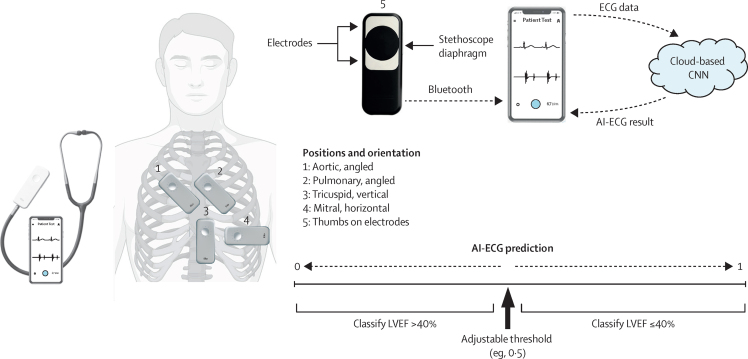
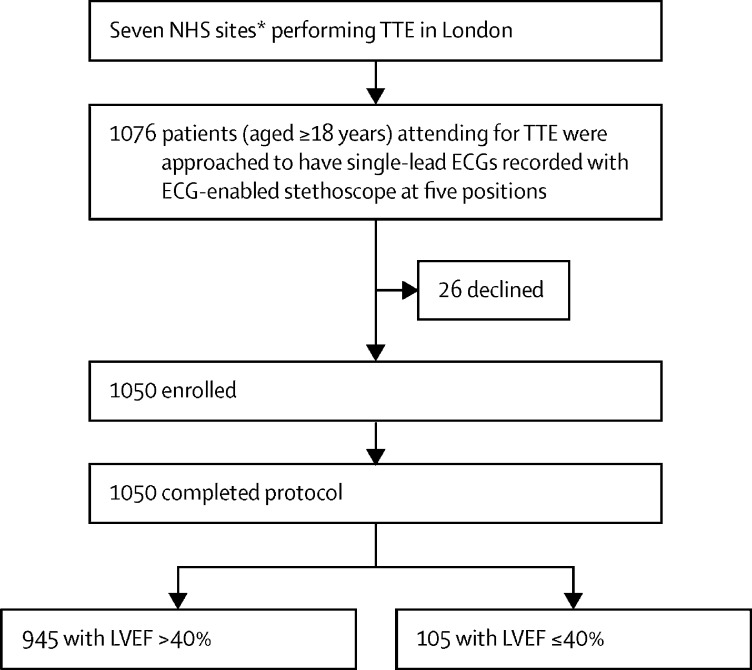
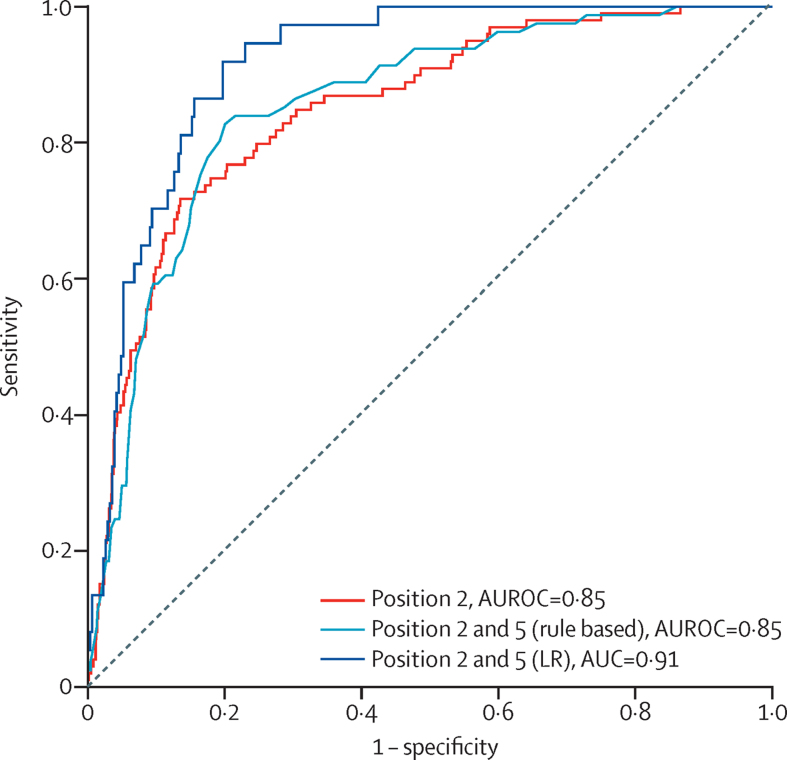
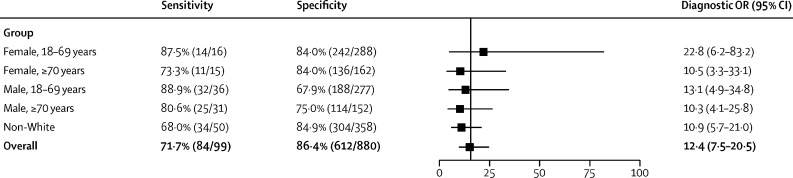
BACKGROUND: Most patients who have heart failure with a reduced ejection fraction, when left ventricular ejection fraction (LVEF) is 40% or lower, are diagnosed in hospital. This is despite previous presentations to primary care with symptoms. We aimed to test an artificial intelligence (AI) algorithm applied to a single-lead ECG, recorded during ECG-enabled stethoscope examination, to validate a potential point-of-care screening tool for LVEF of 40% or lower. METHODS: We conducted an observational, prospective, multicentre study of a convolutional neural network (known as AI-ECG) that was previously validated for the detection of reduced LVEF using 12-lead ECG as input. We used AI-ECG retrained to interpret single-lead ECG input alone. Patients (aged ≥18 years) attending for transthoracic echocardiogram in London (UK) were recruited. All participants had 15 s of supine, single-lead ECG recorded at the four standard anatomical positions for cardiac auscultation, plus one handheld position, using an ECG-enabled stethoscope. Transthoracic echocardiogram-derived percentage LVEF was used as ground truth. The primary outcome was performance of AI-ECG at classifying reduced LVEF (LVEF ≤40%), measured using metrics including the area under the receiver operating characteristic curve (AUROC), sensitivity, and specificity, with two-sided 95% CIs. The primary outcome was reported for each position individually and with an optimal combination of AI-ECG outputs (interval range 0-1) from two positions using a rule-based approach and several classification models. This study is registered with ClinicalTrials.gov, NCT04601415. FINDINGS: Between Feb 6 and May 27, 2021, we recruited 1050 patients (mean age 62 years [SD 17·4], 535 [51%] male, 432 [41%] non-White). 945 (90%) had an ejection fraction of at least 40%, and 105 (10%) had an ejection fraction of 40% or lower. Across all positions, ECGs were most frequently of adequate quality for AI-ECG interpretation at the pulmonary position (979 [93·3%] of 1050). Quality was lowest for the aortic position (846 [80·6%]). AI-ECG performed best at the pulmonary valve position (p=0·02), with an AUROC of 0·85 (95% CI 0·81-0·89), sensitivity of 84·8% (76·2-91·3), and specificity of 69·5% (66·4-72·6). Diagnostic odds ratios did not differ by age, sex, or non-White ethnicity. Taking the optimal combination of two positions (pulmonary and handheld positions), the rule-based approach resulted in an AUROC of 0·85 (0·81-0·89), sensitivity of 82·7% (72·7-90·2), and specificity of 79·9% (77·0-82·6). Using AI-ECG outputs from these two positions, a weighted logistic regression with l2 regularisation resulted in an AUROC of 0·91 (0·88-0·95), sensitivity of 91·9% (78·1-98·3), and specificity of 80·2% (75·5-84·3). INTERPRETATION: A deep learning system applied to single-lead ECGs acquired during a routine examination with an ECG-enabled stethoscope can detect LVEF of 40% or lower. These findings highlight the potential for inexpensive, non-invasive, workflow-adapted, point-of-care screening, for earlier diagnosis and prognostically beneficial treatment. FUNDING: NHS Accelerated Access Collaborative, NHSX, and the National Institute for Health Research.
Overview
The claims and statistics of this paper haven’t been checked yet.
Run the check — free, no account needed. It reads the open-access text and checks the sources it cites.
Integrity signals
Registry
Cites
Statistics
Figures
Verification
Claims the paper makes
The claims and statistics of this paper haven’t been checked yet.
Run the check — free, no account needed. It reads the open-access text and checks the sources it cites.
Claims other papers make about this one
Each is checked against this paper’s own text: does it say what the citing paper says it does?
The source backs part of the claim, not all of it — or backs it for a different population, condition or comparison.
In the citing paper
“Models trained on clinical ECGs have been applied to wearable device ECGs, but have traditionally shown significantly lower performance on wearable device ECGs than on held-out clinical ECG test sets14,15.”
From Detection of left ventricular systolic dysfunction from single-lead electrocardiography adapted for portable and wearable devices (2023) · cites this paper as [14]
Experimental — accuracy not yet measuredThe source backs part of the claim, not all of it — or backs it for a different population, condition or comparison.
In the citing paper
“Consequently, the performance of models for detecting LVSD from portable device ECGs may degrade in the real-world setting, with lower performance than observed in the original single-lead derivatives of the clinical development studies14,15.”
From Detection of left ventricular systolic dysfunction from single-lead electrocardiography adapted for portable and wearable devices (2023) · cites this paper as [14]
Experimental — accuracy not yet measuredThe cited source says what the claim attributes to it.
In the citing paper
“Separately, a prospective multicenter study showed that a deep-learning model applied to single-lead ECGs obtained during examination with an ECG-enabled stethoscope could identify patients with a left ventricular ejection fraction of 40% or lower [64].”
From Deep Learning Applied to 12-Lead ECGs for Detection of Structural, Metabolic and Systemic Disease (2026) · cites this paper as [64]
Self-check
Percentages, sums and reported differences re-computed from the paper’s own numbers.
The self-check needs the paper’s full text.
Citations
Cites
DeLong, E. R., DeLong, D. M., & Clarke-Pearson, D. L. (1988) · Biometrics · doi:10.2307/2531595 · Cited by 22,649
High-performance medicine: the convergence of human and artificial intelligence
Topol, E. J. (2019) · Nature Medicine · doi:10.1038/s41591-018-0300-7 · Cited by 10,450
Forecasting the Impact of Heart Failure in the United States
Heidenreich, P. A., Albert, N. M., Allen, L. A., Bluemke, D. A., Butler, J., Fonarow, G. C., Ikonomidis, J. S., Khavjou, O., Konstam, M. A., Maddox, T. M., et al. (2013) · Circulation Heart Failure · doi:10.1161/hhf.0b013e318291329a · Cited by 2,884
Global Public Health Burden of Heart Failure
Savarese, G., & Lund, L. H. (2017) · Cardiac failure review · doi:10.15420/cfr.2016:25:2 · Cited by 2,818
Angiotensin–Neprilysin Inhibition in Heart Failure with Preserved Ejection Fraction
Solomon, S. D., McMurray, J. J. V., Anand, I. S., Ge, J., Lam, C. S. P., Maggioni, A. P., Martinez, F., Packer, M., Pfeffer, M. A., Pieske, B., et al. (2019) · New England Journal of Medicine · doi:10.1056/nejmoa1908655 · Cited by 2,430
The Global Health and Economic Burden of Hospitalizations for Heart Failure
Ambrosy, A. P., Fonarow, G. C., Butler, J., Chioncel, O. D., Greene, S. J., Vaduganathan, M., Nodari, S., Lam, C. S. P., Sato, N., Shah, A. N., et al. (2014) · Journal of the American College of Cardiology · doi:10.1016/j.jacc.2013.11.053 · Cited by 2,110
Bozkurt, B., Coats, A. J. S., Tsutsui, H., Abdelhamid, C. M., Adamopoulos, S., Albert, N., Anker, S. D., Atherton, J., Böhm, M., Butler, J., et al. (2021) · European Journal of Heart Failure · doi:10.1002/ejhf.2115 · Cited by 1,665
Attia, Z. I., Noseworthy, P. A., Lopez-Jimenez, F., Asirvatham, S. J., Deshmukh, A. J., Gersh, B. J., Carter, R. E., Yao, X., Rabinstein, A. A., Erickson, B. J., et al. (2019) · The Lancet · doi:10.1016/s0140-6736(19)31721-0 · Cited by 1,613
Attia, Z. I., Kapa, S., Lopez-Jimenez, F., McKie, P. M., Ladewig, D. J., Satam, G., Pellikka, P. A., Enriquez-Sarano, M., Noseworthy, P. A., Munger, T. M., et al. (2019) · Nature Medicine · doi:10.1038/s41591-018-0240-2 · Cited by 1,389
Nagendran, M., Chen, Y., Lovejoy, C. A., Gordon, A. C., Komorowski, M., Harvey, H., Topol, E. J., Ioannidis, J. P. A., Collins, G. S., & Maruthappu, M. (2020) · BMJ · doi:10.1136/bmj.m689 · Cited by 1,152
Cited by
Sorted by citations
Items 101–167 of 167
Chao, M., Jacob, A. J., Sinha, A., Hallam, K. A., Kragholm, K. H., Sharma, P., Rapaka, S., Giraldo, J. C. R., & Chang, S.-M. (2025) · European Heart Journal - Imaging Methods and Practice · doi:10.1093/ehjimp/qyaf121 · Cited by 2
Chen, J., Marwick, T. H., & Soh, C. H. (2026) · American Journal of Preventive Cardiology · doi:10.1016/j.ajpc.2026.101691 · Cited by 2
Detecting heart failure from B-mode ultrasound characterization of arterial pulse waves
Reavette, R. M., Ramakrishnan, A., Rowland, E. M., Tang, M., Mayet, J., & Weinberg, P. D. (2024) · American Journal of Physiology-Heart and Circulatory Physiology · doi:10.1152/ajpheart.00219.2024 · Cited by 2
Adedinsewo, D. A., Dugan, J. L., Johnson, P. W., Douglass, E. J., Morales-Lara, A. C., Parkulo, M. A., Ting, H. H., Cooper, L. T., Scott, L. R., Valverde, A. M., et al. (2023) · Mayo Clinic Proceedings Digital Health · doi:10.1016/j.mcpdig.2023.07.007 · Cited by 2
Self-citationCreighton, C. M., & Bressan, N. J. (2024) · Wiley eBooks · doi:10.1002/9781119830306.ch9 · Cited by 2
Artificial intelligence and cardiovascular disease in women
Campos, B. A. F., Adedinsewo, D. A., Tsang, W., & Silversides, C. K. (2023) · Elsevier eBooks · doi:10.1016/b978-0-323-90534-3.00027-5 · Cited by 1
Joshi, S., Shaik, H. R., Sharma, S. R., Strong, P., Srivatsa, U. N., Ebong, I., Jeong, H., Chuah, C., & Mo, L. (2025) · IEEE Access · doi:10.1109/access.2025.3592693 · Cited by 3
An Overview of Artificial Intelligence in Primary Care and Administrative Medicine
Morelli, V. (2025) · Primary Care Clinics in Office Practice · doi:10.1016/j.pop.2025.07.008 · Cited by 1
AI-Enhanced Pulmonary Auscultation for Heart Failure Detection
Mao, X., Hove, J. D., Grand, J., & Puthusserypady, S. K. (2025) · Annual International Conference of the IEEE Engineering in Medicine and Biology Society (EMBC) · doi:10.1109/embc58623.2025.11253377 · Cited by 1
Abramov, D., Cheema, B. S., Keramida, K., Hosseini, K., Fudim, M., & Minhas, A. M. K. (2026) · Heart Failure Reviews · doi:10.1007/s10741-025-10591-2 · Cited by 1
AI-powered digital stethoscopes: A new opportunity in tuberculosis screening?
Barrett, R., Qin, Z. Z., Kohli, M., & Pai, M. (2026) · Med · doi:10.1016/j.medj.2025.100964 · Cited by 1
Artificial intelligence in heart failure
Li, X., Liu, Y., Zhang, X., Yang, N., Xu, T. W., Cui, X. W., & Chen, G. (2026) · The Egyptian Heart Journal · doi:10.1186/s43044-026-00723-w · Cited by 1
Dhingra, L. S., Croon, P. M., Batinica, B., Aminorroaya, A., Pedroso, A. F., & Khera, R. (2026) · Current Heart Failure Reports · doi:10.1007/s11897-026-00748-x · Cited by 3
Ansar, F., Waheed, M. A., Zafar, U., Kolapo, A., SARFARAZ, W., & Rashid, K. (2026) · Health Science Reports · doi:10.1002/hsr2.71855 · Cited by 2
Armas, R. E. D., & Singh, J. P. (2026) · Current Cardiology Reports · doi:10.1007/s11886-026-02358-4 · Cited by 2
A Multimodal Model of ECG and Heart Sound Signal by Considering Normal and Abnormal Heart
Oktivasari, P., Haryanto, F., & Suprijadi (2022) · JOIV International Journal on Informatics Visualization · doi:10.30630/joiv.6.4.1220 · Cited by 1
ARTIFICIAL INTELLIGENCE IN CARDIOVASCULAR DISEASES: A SYSTEMIC REVIEW AND META-ANALYSIS
Qammar, J., Muneeb, M., Munir, E., Javed, M. N., Javed, R., & Qammar, B. (2023) · Journal of Population Therapeutics and Clinical Pharmacology · doi:10.53555/jptcp.v30i19.3751 · Cited by 1
CNN Based Deep Learning to Detect Low Ejection Fraction Using Single Lead ECG
Vasudevan, N., Howard, J. P., Landman, S. R., Sarkar, S., & Keene, D. (2023) · IEEE International Conference on Bioinformatics and Bioengineering (BIBE) · doi:10.1109/bibe60311.2023.00047 · Cited by 1
Self-citationArtificial Intelligence in Cutaneous Lesions: Where do we Stand and What is Next?
(2024) · Frontiers research topics · doi:10.3389/978-2-8325-4911-7 · Cited by 1
Evaluation of AI-Assisted Stethoscope for Cardiac Time Intervals in Pediatric Patients
Fredman, E. S., Miller, N., Littell, L. M., Lariego, A. C., Orr, W. B., Conner, T. M., Pompa, A. G., Roelle, L., Rohatgi, R. K., & Silva, J. N. A. (2024) · JACC Advances · doi:10.1016/j.jacadv.2024.101078 · Cited by 1
Reepu, R., Kaur, G., & Sharma, S. (2025) · Advances in computational intelligence and robotics book series · doi:10.4018/979-8-3373-3476-9.ch018 · Cited by 1
Sau, A., Pastika, L., Sieliwończyk, E., Patlatzoglou, K., Ribeiro, A. H., McGurk, K. A., Zeidaabadi, B., Zhang, H., Macierzanka, K., Mandic, D. P., et al. (2024) · medRxiv · doi:10.1101/2024.01.13.24301267 · Cited by 1
Self-citationWhat is the Future of Diagnostics in Heart Failure?
McCoubrey, A., & Campbell, R. T. (2025) · British Journal of Hospital Medicine · doi:10.12968/hmed.2024.0797 · Cited by 2
Croon, P. M., Boonstra, M., Allaart, C. P., Arends, B. K. O., Dhingra, L. S., Huang, Y., Mast, T. P., Khera, R., Kuo, C., Kwon, J., et al. (2025) · medRxiv · doi:10.1101/2025.07.08.25331129 · Cited by 1
Deep Learning Applied to 12-Lead ECGs for Detection of Structural, Metabolic and Systemic Disease
Shaulian, S., Zeltser, R., & Makaryus, A. N. (2026) · Diagnostics · doi:10.3390/diagnostics16172834
La justicia en las sociedades contemporáneas
Bennacer, J. M. (2006) · Cuadernos de derecho judicial
Luo, H. (2022) · doi:10.26481/dis.20220922hl
Patel, N., Agamy, S., & Ahmad, M. (2022) · European Heart Journal - Digital Health · doi:10.1093/ehjdh/ztac053
Artificial intelligence in heart failure and transplant
Sarnaik, K. S., & Tang, W. H. W. (2023) · Elsevier eBooks · doi:10.1016/b978-0-443-15688-5.00036-x
Bächtiger, P., Kelshiker, M. A., Moe, M. E. G., Kramer, D. B., & Peters, N. S. (2024) · Cambridge University Press eBooks · doi:10.1017/9781009373234.008
Self-citationSpatial QRS-T angle as a predictor of low left ventricular ejection fraction
Sobolev, A. V., Анатольевна, С. Т., Blinova, E. V., Drozdov, D. V., Kozhemyakina, E. S., Борисовна, Б. А., & Ageev, F. T. (2024) · Russian Cardiology Bulletin · doi:10.17116/cardiobulletin20241902155
Expanding the horizon of heart failure with Preserved Ejection Fraction (HFPEF)
Weerts, J. (2024) · Research Publications (Maastricht University) · doi:10.26481/dis.20240626jw
Marketou, M. E., Angelaki, E., Barmparis, G., Fragkiadakis, K., Maragkoudakis, S., Zacharis, E. A., Plevritaki, A., Kampanieris, E., Kalomoirakis, P., Kassotakis, S., et al. (2024) · Research Square · doi:10.21203/rs.3.rs-4657761/v1
Artificial Intelligence and Primary Care: A Scoping Review (Preprint)Preprint
Katonai, G., Árvai, N., & Meskó, B. (2024) · doi:10.2196/preprints.65950
Digital health technologies in clinical trials—Regulatory basics
Bhavnani, S. P. (2025) · Elsevier eBooks · doi:10.1016/b978-0-323-91790-2.00105-2
Zhang, H., Zhang, P., Ma, F., Chao, L., Shan, W., & Li, Q. (2024) · International Conference on Bioinformatics and Computational Biology (ICBCB) · doi:10.1109/icbcb61507.2024.11012075
Artificial intelligence at the point-of-care in cardio-oncology
Guo, J., & DeCara, J. M. (2025) · Elsevier eBooks · doi:10.1016/b978-0-443-29829-5.00009-8
Nnadi, E. N., Otto, C., Hamid, A. B., Volgman, A. S., & Brown, S.-A. N. (2025) · Elsevier eBooks · doi:10.1016/b978-0-443-29829-5.00004-9
Gálvez-Hernández, P., Audet, L., Shakeri, Z., & Wodchis, W. P. (2025) · medRxiv · doi:10.1101/2025.08.01.25332615
Empowering Heart Failure Management Through Artificial Intelligence
Levra, A. G. (2025) · Springer eBooks · doi:10.1007/978-3-031-95256-2_10 · Cited by 1
Feng, S., Wu, X., Cen, H., Chen, S., Yu, B., Pang, Z., Sun, P., & Zhang, H. (2025) · Computer Methods and Programs in Biomedicine · doi:10.1016/j.cmpb.2025.109031
Digital Health Maturity Stage 5: Innovating platform and services
Wilkins-Wong, Z. S. Y., & Liaw, S. (2025) · Elsevier eBooks · doi:10.1016/b978-0-323-95260-6.00005-8
Bian, J., Chee, K. H., Liu, C., Sun, H., Zhang, S., Chen, P., & Ting, H.-N. (2025) · Frontiers in Cardiovascular Medicine · doi:10.3389/fcvm.2025.1613577
Kılıç, M. E., Arayıcı, M. E., Akbilgiç, O., & Yılmaz, M. B. (2025) · Canadian Journal of Cardiology · doi:10.1016/j.cjca.2025.12.022
Mookerjee, S. (2026) · Biomedical visualization · doi:10.1007/978-3-032-06520-9_1
Razzaq, U., Docherty, K. F., Ajmi, A. A., Alebraheem, A., Burns, R., Davie, A. P., Gan, J., Hogg, K. J., Jackson, C. E., Mathioudaki, E., et al. (2026) · Open Heart · doi:10.1136/openhrt-2025-003785
A 1D Lightweight ShuffleNetV2 for Cardiovascular Disease Detection in a Point-of-Care System
Jiang, F., Lim, Y. W., Ahmad, S. A., Ahmad, F. A., Ismail, L. I., Hussein, A. F., & Rokhani, F. Z. (2025) · IEEE Asia Pacific Conference on Circuits and Systems (APCCAS) · doi:10.1109/apccas67402.2025.11377498
AI-enhanced digital phonocardiography for TAVR procedural evaluation: Pilot study
Murata, M., Saji, M., Nanasato, M., Fuki, M., Funaki, T., Higuchi, R., Izumi, Y., Kitamura, M., Takamisawa, I., Tsuchiya, M., et al. (2026) · International Journal of Cardiology Innovations · doi:10.1016/j.ijci.2026.100001
Borde, D. P., Joshi, S. S., Chidambaram, K., Jasapara, A., Thimmarayappa, A., Devarakonda, B. V., Kamat, S. S., Gandhe, U., Muniraj, G., Madanaik, S. S., et al. (2026) · Journal of Cardiothoracic and Vascular Anesthesia · doi:10.1053/j.jvca.2026.03.002
Ajagbe, K. A., Oyetola, E. O., Jagunmolu, H. A., Adeyemo, R. O., Salami, S. O., Oyetola, O. T., Oyelude, S. O., Adegbosin, P., Idowu, T. O., Ezekiel, O. O., et al. (2026) · SN Comprehensive Clinical Medicine · doi:10.1007/s42399-026-02315-w
AI-enabled clinically aligned fewer-lead ECG approaches for detecting cardiovascular diseases
Sikandar, T., Hasan, M. T., Azad, A. K. M., Khan, A., & Moni, M. A. (2026) · Artificial Intelligence Review · doi:10.1007/s10462-026-11577-8
Nolin-Lapalme, A., Tastet, O., Sowa, A., Delfrate, J., Adib, I. E., Morisset, J., Ahuja, R., Banerjee, R., Lessard, M.-G., Vadeboncœur, A., et al. (2026) · Journal of Electrocardiology · doi:10.1016/j.jelectrocard.2026.154359
AI Regulations in Medical Devices
Khinvasara, T. (2026) · Springer handbooks · doi:10.1007/978-3-032-01636-2_40
Sun, X., Zhang, C., Sun, G., Wang, P., Meng, C., & Li, Z. J. (2026) · Advanced Functional Materials · doi:10.1002/adfm.76294
Wisana, I. D. G. H., Luthfiyah, S., Triwiyanto, T., & Ismath, M. (2026) · Journal of Electrocardiology · doi:10.1016/j.jelectrocard.2026.154394
Chen, Y., Yu, Q., Xu, H., Zhang, L., Li, W., & Wu, Y. (2026) · Reviews in Cardiovascular Medicine · doi:10.31083/rcm48196
Systematic reviews of medical machine learning: limitations of pooling AUCs
Gupta, A., Sileshi, R. M., Thompson, J., & Noheria, A. (2026) · European Heart Journal - Digital Health · doi:10.1093/ehjdh/ztag107 · Cited by 1
Can AI assist in reducing diagnostic error? A narrative review
Scott, I. A. (2026) · Diagnosis · doi:10.1515/dx-2026-0021
Amirshahi, A., Toosi, M. H., Mohammadi, S., Albini, S., Schiavone, P. D., Ansaloni, G., Aminifar, A., & Atienza, D. (2026) · Communications Medicine · doi:10.1038/s43856-026-01740-1
Critical Care and Intensive Care Unit Agents
Dinç, R., & Ardıç, N. (2026) · Springer eBooks · doi:10.1007/978-3-032-26723-8_14
Cardiovascular Medicine: Autonomous Monitoring and Treatment Support
Dinç, R., & Ardıç, N. (2026) · Springer eBooks · doi:10.1007/978-3-032-26723-8_17
Aminorroaya, A., Shankar, S. V., Khan, M., Carter, M., Dhingra, L. S., Khunte, A., Lombo, B., McNamara, R. L., Oikonomou, E. K., Pedroso, A. F., et al. (2026) · medRxiv · doi:10.64898/2026.09.14.26361683
Manakina, E. S., VOROBYEVA, T. S., Викторовна, К. О., & Pashkova, V. V. (2026) · Medical Technologies Assessment and Choice · doi:10.17116/medtech20264803146
Milić, M., Sinanović, Š., Kostić, D., Djenic, N., & Ralić, B. (2026) · Glasnik javnog zdravlja · doi:10.5937/serbjph2603277m
Chen, H., Huang, J., & Hou, X. (2026) · Frontiers in Cardiovascular Medicine · doi:10.3389/fcvm.2026.1940621
Alshahrani, A. M., Selvaraj, L., Kandasamy, G., & Anandan, S. (2026) · Life · doi:10.3390/life16111771
Perspectives on Artificial Intelligence Enabled Heart Sound Analysis for Cardiac Amyloidosis
Jindal, T., Gohri, J., Chalasani, V., Jakkireddy, P., Arora, A., Rauf, A., Bumrah, S. K. K., Kaur, A., Farook, F., Saraboji, K., et al. (2026) · Medical Sciences · doi:10.3390/medsci14070718
Metadata
- Authors
- Bachtiger, P., Petri, C. F., Scott, F. E., Ri Park, S., Kelshiker, M. A., Sahemey, H. K., Dumea, B., Alquero, R., Padam, P. S., Hatrick, I. R., Ali, A., Ribeiro, M., Cheung, W.-S., Bual, N., Rana, B., Shun-Shin, M., Kramer, D. B., Fragoyannis, A., Keene, D., Plymen, C. M., & Peters, N. S.
- Affiliations
- Imperial College London (GB)
- Imperial College Healthcare NHS Trust (GB)
- Beth Israel Deaconess Medical Center (US)
- Corresponding author
- Peters, Nicholas S
- ORCID
- Venue
- The Lancet Digital Health
- Publisher
- Elsevier BV
- Published
- 2022-02
- Volume
- 4
- Issue
- 2
- Pages
- e117-e125
- ISSN
- 2589-7500 (ISSN-L)
- PMC
- PMC8789562
- OpenAlex
- W4206756110
- Cited by
- 167
- References
- 31
- Citations by year
- 2026: 40 · 2025: 48 · 2024: 46 · 2023: 18 · 2022: 14
- FWCI
- 21.94
- Type
- journal article
- Language
- en
- Open access
- gold
- doi.org
- Licence
- Locations
- The Lancet Digital Health (publishedVersion, cc-by)
- PubMed Central (publishedVersion, cc-by)
- PubMed (publishedVersion)
- DOAJ (DOAJ: Directory of Open Access Journals) (submittedVersion, cc-by-sa)
- Spiral (Imperial College London) (submittedVersion, cc-by)
- Funders
- National Institute for Health Research
- Topics
- Health Sciences › Medicine › Cardiology and Cardiovascular Medicine › ECG Monitoring and Analysis
- Health Sciences › Health Professions › Health Information Management › Artificial Intelligence in Healthcare
- Health Sciences › Medicine › Health Informatics › Artificial Intelligence in Healthcare and Education
- Keywords
- heart failure with reduced ejection fraction, point-of-care screening, artificial intelligence, single-lead ECG, convolutional neural networks, left ventricular ejection fraction, transthoracic echocardiography, cardiac auscultation, primary care, early diagnosis, model generalization, sex differences
- MeSH terms
- Aged, Artificial Intelligence, Electrocardiography, Female, United Kingdom, Heart Failure, Humans, Male, Middle Aged, Physical Examination, Prospective Studies, Neural Networks, Computer, Stethoscopes, Point-of-Care Systems
About these checks
Registry, retraction, Cites and statistics results are computed, not judged, with one exception: a printed reference that no index lists is read once by a model before it counts as a citation error. Claims are extracted by a model and kept only when their quote appears verbatim in the text; each cited source is then checked, with a model’s help, for whether it says what the claim relies on. Those verdicts can be wrong — read the claim’s quote and the cited source before relying on one.
Statistics and arithmetic are recomputed, not judged.
Confidence bands are shown only for fields calibrated on our annotated test set. None is calibrated yet, so no band is shown.
What counts as a claim ›How we measure confidence ›How we check this ›
Are you an author, or do you see a problem with this page? Request a review
