

The DOI matches its Crossref record; 305 of the 305 references it cites were found in a registry or an index.
Monitoring immune modulation by nutrition in the general population: identifying and substantiating effects on human health
Open accessAbstract
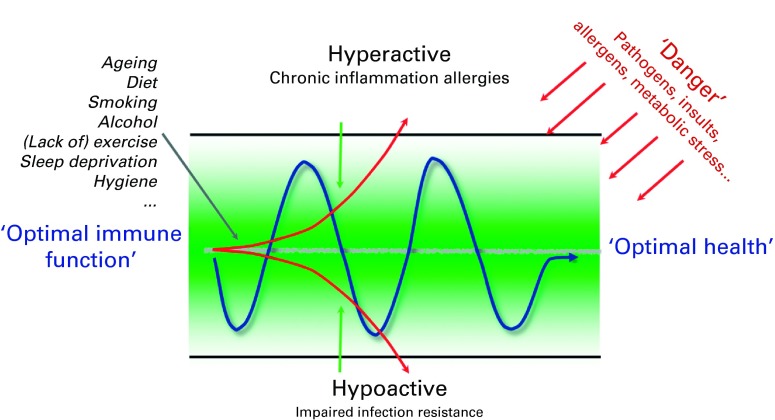
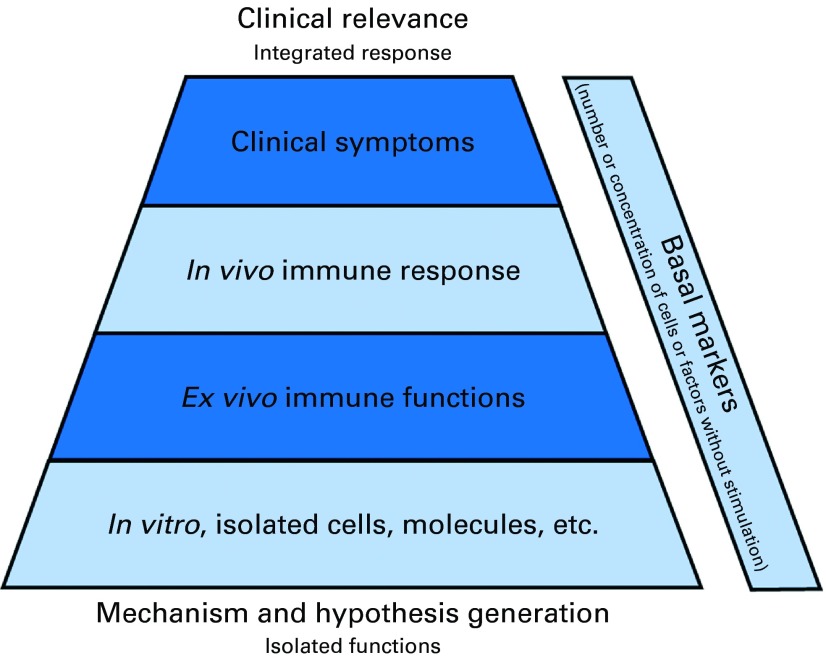
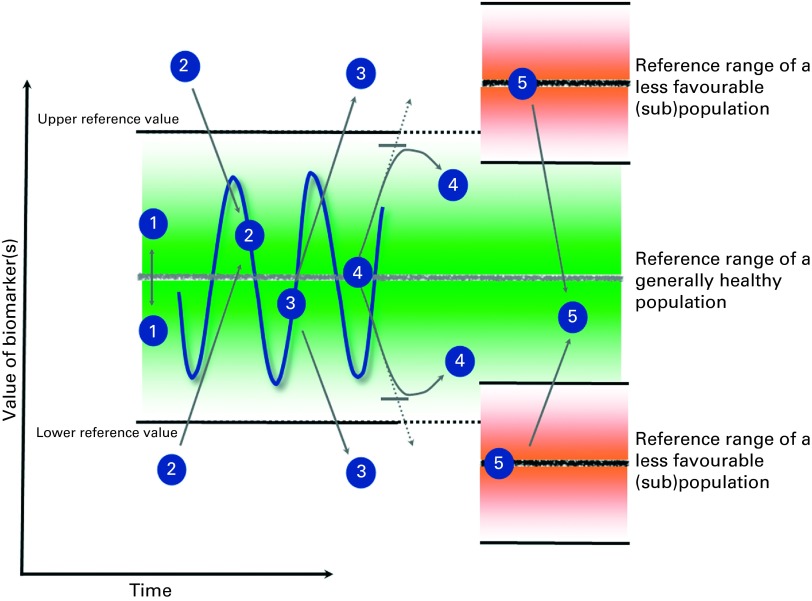
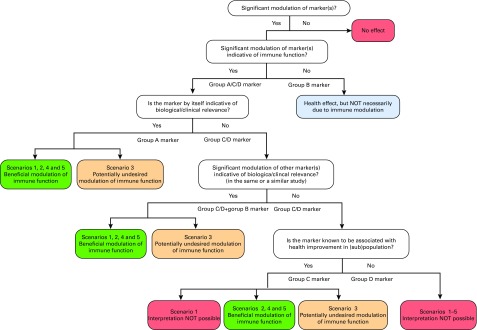
Optimal functioning of the immune system is crucial to human health, and nutrition is one of the major exogenous factors modulating different aspects of immune function. Currently, no single marker is available to predict the effect of a dietary intervention on different aspects of immune function. To provide further guidance on the assessment and interpretation of the modulation of immune functions due to nutrition in the general population, International Life Sciences Institute Europe commissioned a group of experts from academia, government and the food industry to prepare a guidance document. A draft of this paper was refined at a workshop involving additional experts. First, the expert group defined criteria to evaluate the usefulness of immune function markers. Over seventy-five markers were scored within the context of three distinct immune system functions: defence against pathogens; avoidance or mitigation of allergy; control of low-grade (metabolic) inflammation. The most useful markers were subsequently classified depending on whether they by themselves signify clinical relevance and/or involvement of immune function. Next, five theoretical scenarios were drafted describing potential changes in the values of markers compared with a relevant reference range. Finally, all elements were combined, providing a framework to aid the design and interpretation of studies assessing the effects of nutrition on immune function. This stepwise approach offers a clear rationale for selecting markers for future trials and provides a framework for the interpretation of outcomes. A similar stepwise approach may also be useful to rationalise the selection and interpretation of markers for other physiological processes critical to the maintenance of health and well-being.
Overview
The claims and statistics of this paper haven’t been checked yet.
Run the check — free, no account needed. It reads the open-access text and checks the sources it cites.
Integrity signals
Registry
Cites
Statistics
Figures
Verification
Claims the paper makes
The claims and statistics of this paper haven’t been checked yet.
Run the check — free, no account needed. It reads the open-access text and checks the sources it cites.
Claims other papers make about this one
Each is checked against this paper’s own text: does it say what the citing paper says it does?
In the citing paper
“The development, maintenance and optional functioning of immune cells is dependent on adequate nutrition, evident at all stages of life [4,5,33,49,69].”
From Immune function and micronutrient requirements change over the life course (2018) · cites this paper as [69]
In the citing paper
“As no single biomarker exists that accurately reflects the effects of supplementation on the immune response, clinical outcomes are instead used to determine the effectiveness of supplementation [49,69].”
From Immune function and micronutrient requirements change over the life course (2018) · cites this paper as [69]
Self-check
Percentages, sums and reported differences re-computed from the paper’s own numbers.
The self-check needs the paper’s full text.
Citations
Cites
Intestinal mucosal barrier function in health and disease
Turner, J. R. (2009) · Nature reviews. Immunology · doi:10.1038/nri2653 · Cited by 3,952
Monocyte recruitment during infection and inflammation
Shi, C., & Pamer, E. G. (2011) · Nature Reviews Immunology · doi:10.1038/nri3070 · Cited by 3,015
NATURAL KILLER CELLS IN ANTIVIRAL DEFENSE: Function and Regulation by Innate Cytokines
Biron, C. A., Nguyen, K. B., Pien, G. C., Cousens, L. P., & Salazar‐Mather, T. P. (1999) · Annual Review of Immunology · doi:10.1146/annurev.immunol.17.1.189 · Cited by 2,136
Towards a systems understanding of MHC class I and MHC class II antigen presentation
Neefjes, J., Jongsma, M. L. M., Paul, P., & Bakke, O. (2011) · Nature Reviews Immunology · doi:10.1038/nri3084 · Cited by 2,044
Regulation and Functions of the IL-10 Family of Cytokines in Inflammation and Disease
Ouyang, W., Rutz, S., Crellin, N. K., Valdez, P. A., & Hymowitz, S. G. (2011) · Annual Review of Immunology · doi:10.1146/annurev-immunol-031210-101312 · Cited by 2,011
Antigen Presentation and T Cell Stimulation by Dendritic Cells
Guermonprez, P., Valladeau‐Guilemond, J., Zitvogel, L., Théry, C., & Amigorena, S. (2002) · Annual Review of Immunology · doi:10.1146/annurev.immunol.20.100301.064828 · Cited by 1,990
Neutrophil Function: From Mechanisms to Disease
Amulic, B., Cazalet, C., Hayes, G. L., Metzler, K. D., & Zychlinsky, A. (2012) · Annual Review of Immunology · doi:10.1146/annurev-immunol-020711-074942 · Cited by 1,782
Skin immune sentinels in health and disease
Nestle, F. O., Meglio, P. D., Qin, J., & Nickoloff, B. J. (2009) · Nature reviews. Immunology · doi:10.1038/nri2622 · Cited by 1,520
TH-17 cells in the circle of immunity and autoimmunity
Bettelli, E., Oukka, M., & Kuchroo, V. K. (2007) · Nature Immunology · doi:10.1038/ni0407-345 · Cited by 1,520
Research works printed but not linked: 7
- Clifton, 2003, How effective are meal replacements for treating obesity?, Asia Pac J Clin Nutr, 12, S51
- Rechkemmer, 2002, Use of fecal water as a biomarker in dietary intervention studies, J Nutr, 132, 3537S
- 2005, The Treatment of Diarrhoea: A Manual for Physicians and Other Senior Health Workers
- 2006, Guideline on Clinical Evaluation of New Vaccines
- Mackinnon, 1999, Advances in Exercise and Immunology
- Barriga-Ibars, 2005, [Interrelations between sleep and the immune status], Rev Neurol, 40, 548
- 1997, Note for Guidance on Harmonisation of Requirements for Influenza Vaccines
Cited by
Sorted by citations
Immune function and micronutrient requirements change over the life course
Maggini, S., Pierre, A., & Calder, P. C. (2018) · Nutrients · doi:10.3390/nu10101531 · Cited by 710
Self-citationNutritional considerations for healthy aging and reduction in age-related chronic disease
Shlisky, J., Bloom, D. E., Beaudreault, A. R., Tucker, K. L., Keller, H. H., Freund-Levi, Y., Fielding, R. A., Cheng, F. W., Jensen, G. L., Wu, D., et al. (2017) · Advances in Nutrition · doi:10.3945/an.116.013474 · Cited by 462
Dietary phytochemicals and neuro-inflammaging: from mechanistic insights to translational challenges
Davinelli, S., Maes, M., Corbi, G., Zarrelli, A., Willcox, D. C., & Scapagnini, G. (2016) · Immunity & Ageing · doi:10.1186/s12979-016-0070-3 · Cited by 122
Nutrigerontology: a key for achieving successful ageing and longevity
Aiello, A., Accardi, G., Candore, G., Carruba, G., Davinelli, S., Passarino, G., Scapagnini, G., Vasto, S., & Caruso, C. (2016) · Immunity & Ageing · doi:10.1186/s12979-016-0071-2 · Cited by 69
Calder, P. C., Kreider, R. B., & McKay, D. L. (2025) · Nutrients · doi:10.3390/nu17020279 · Cited by 16
Self-citation
Metadata
- Authors
- Albers, R., Bourdet-Sicard, R., Braun, D., Calder, P. C., Herz, U., Lambert, C., Lenoir-Wijnkoop, I., Méheust, A., Ouwehand, A., Phothirath, P., Sako, T., Salminen, S., Siemensma, A., van Loveren, H., & Sack, U.
- Affiliations
- Unilever Research and Development Vlaardingen (NL)
- University of Southampton (GB)
- Centre Hospitalier Universitaire de Saint-Étienne (FR)
- International Life Sciences Institute Europe (BE)
- DuPont (Finland) (FI)
- Nestlé (Switzerland) (CH)
- Yakult (Netherlands) (NL)
- University of Turku (FI)
- FrieslandCampina (Netherlands) (NL)
- Leipzig University (DE)
- Venue
- British Journal of Nutrition
- Publisher
- Cambridge University Press (CUP)
- Published
- 2013-08-01
- Volume
- 110
- Issue
- S2
- Pages
- S1-S30
- ISSN
- 0007-1145 (ISSN-L)
- 1475-2662
- PMC
- PMC3734536
- OpenAlex
- W2169076799
- Cited by
- 150
- References
- 305
- Citations by year
- 2026: 5 · 2025: 4 · 2024: 12 · 2023: 8 · 2022: 14 · 2021: 13 · 2020: 12 · 2019: 10 · 2018: 12 · 2017: 15 · 2016: 13 · 2015: 15 · 2014: 14 · 2013: 2
- FWCI
- 14.96
- Type
- journal article
- Language
- en
- Open access
- hybrid
- doi.org
- Licence
- Locations
- British Journal Of Nutrition (publishedVersion, cc-by-nc-sa)
- Europe PMC (PubMed Central) (publishedVersion, other-oa)
- PubMed Central (publishedVersion, cc-by-nc-sa)
- PubMed (publishedVersion)
- Socio-Environmental Systems Modeling (acceptedVersion)
- reroDoc Digital Library (submittedVersion)
- Research Publications (Maastricht University) (submittedVersion, cc-by-nc-sa)
- ePrints Soton (University of Southampton) (submittedVersion)
- Rivm Repository (Netherlands National Institute for Public Health and the Environment) (submittedVersion)
- Research Publications (Maastricht University) (submittedVersion, other-oa)
- Data Archiving and Networked Services (DANS) (submittedVersion, other-oa)
- Funders
- Mead Johnson Nutrition
- Danone
- Loughborough University
- Universiteit Utrecht
- Consiglio Nazionale delle Ricerche
- Università di Bologna
- Université de Lausanne
- FrieslandCampina
- Wageningen University and Research
- DSM Nutritional Products
- Topics
- Health Sciences › Medicine › Public Health, Environmental and Occupational Health › Nutrition and Health Studies
- Health Sciences › Medicine › Public Health, Environmental and Occupational Health › Nutritional Studies and Diet
- Health Sciences › Medicine › Physiology (medical) › Exercise and Physiological Responses
- Keywords
- immune function, nutrition, dietary intervention, pathogen defense, allergy, metabolic inflammation, marker selection, research design, outcome interpretation, general population
- MeSH terms
- Health Status, Humans, Hypersensitivity, Immune System, Infections, Inflammation, Nutritional Physiological Phenomena, Research Design, Biomarkers, Outcome Assessment, Health Care, Guidelines as Topic
About these checks
Registry, retraction, Cites and statistics results are computed, not judged, with one exception: a printed reference that no index lists is read once by a model before it counts as a citation error. Claims are extracted by a model and kept only when their quote appears verbatim in the text; each cited source is then checked, with a model’s help, for whether it says what the claim relies on. Those verdicts can be wrong — read the claim’s quote and the cited source before relying on one.
Statistics and arithmetic are recomputed, not judged.
Confidence bands are shown only for fields calibrated on our annotated test set. None is calibrated yet, so no band is shown.
What counts as a claim ›How we measure confidence ›How we check this ›
Are you an author, or do you see a problem with this page? Request a review
