

Collagen peptide supplementation in combination with resistance training improves body composition and increases muscle strength in elderly sarcopenic men: a randomised controlled trial
Open accessThe DOI matches its Crossref record; 48 of the 48 references it cites were found in a registry or an index.
Abstract
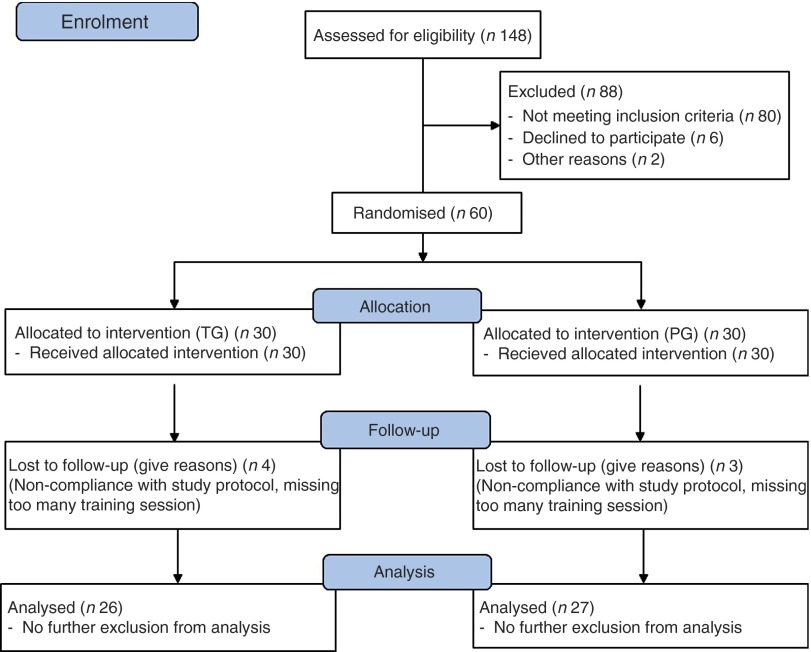
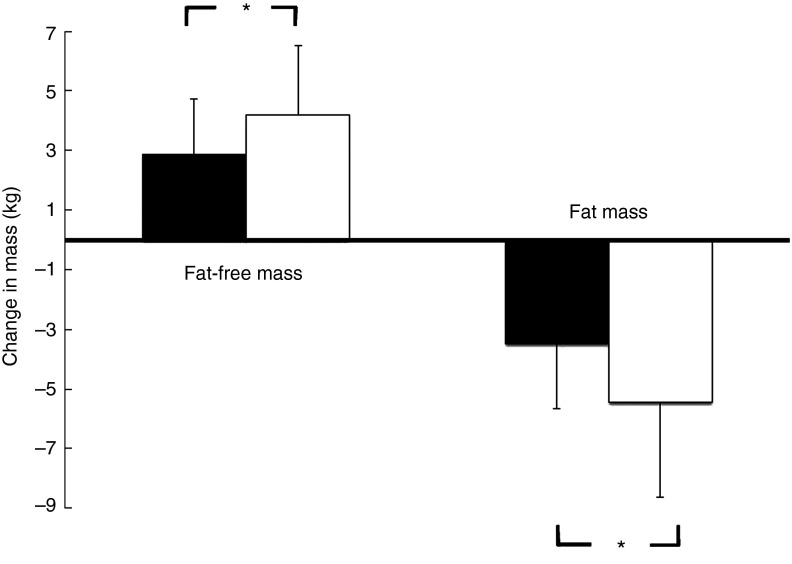
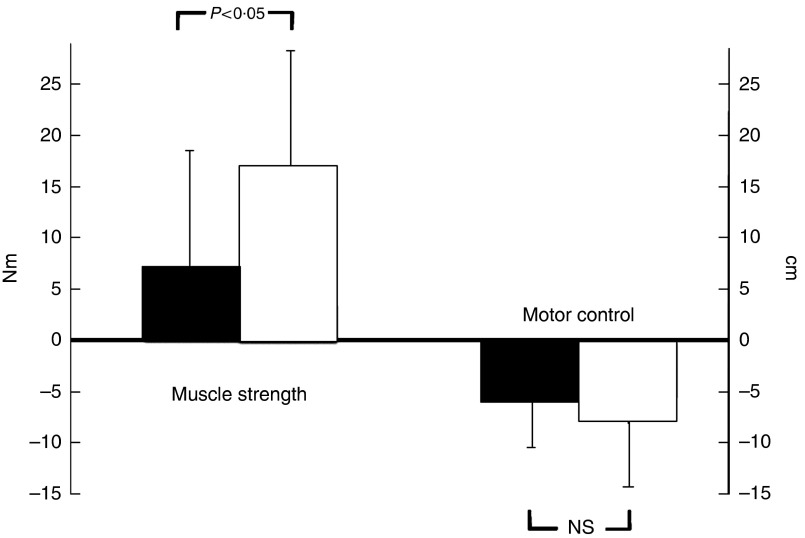
Protein supplementation in combination with resistance training may increase muscle mass and muscle strength in elderly subjects. The objective of this study was to assess the influence of post-exercise protein supplementation with collagen peptides v. placebo on muscle mass and muscle function following resistance training in elderly subjects with sarcopenia. A total of fifty-three male subjects (72·2 ( sd 4·68) years) with sarcopenia (class I or II) completed this randomised double-blind placebo-controlled study. All the participants underwent a 12-week guided resistance training programme (three sessions per week) and were supplemented with either collagen peptides (treatment group (TG)) (15 g/d) or silica as placebo (placebo group (PG)). Fat-free mass (FFM), fat mass (FM) and bone mass (BM) were measured before and after the intervention using dual-energy X-ray absorptiometry. Isokinetic quadriceps strength (IQS) of the right leg was determined and sensory motor control (SMC) was investigated by a standardised one-leg stabilisation test. Following the training programme, all the subjects showed significantly higher ( P <0·01) levels for FFM, BM, IQS and SMC with significantly lower ( P <0·01) levels for FM. The effect was significantly more pronounced in subjects receiving collagen peptides: FFM (TG +4·2 ( sd 2·31) kg/PG +2·9 ( sd 1·84) kg; P <0·05); IQS (TG +16·5 ( sd 12·9) Nm/PG +7·3 ( sd 13·2) Nm; P <0·05); and FM (TG –5·4 ( sd 3·17) kg/PG –3·5 ( sd 2·16) kg; P <0·05). Our data demonstrate that compared with placebo, collagen peptide supplementation in combination with resistance training further improved body composition by increasing FFM, muscle strength and the loss in FM.
Overview
The claims and statistics of this paper haven’t been checked yet.
Free: it reads the open-access text and checks the first 5 claims that cite a source we can check. Create a free account to check every claim.
Integrity signals
Registry
Cites
Statistics
Figures
Verification
Claims the paper makes
The claims and statistics of this paper haven’t been checked yet.
Free: it reads the open-access text and checks the first 5 claims that cite a source we can check. Create a free account to check every claim.
Claims other papers make about this one
Each is checked against this paper’s own text: does it say what the citing paper says it does?
The cited source says what the claim attributes to it.
In the citing paper
“We selected collagen as a comparator as it provides an isonitrogenous and isoenergetic comparison (as opposed to carbohydrate, which is often used) (16), and as it has shown considerable and impressive anabolic properties in older adults (17) [which have been questioned (18)].”
In the citing paper
“A pilot study in individuals initiating GLP-1RAs found that bovine colostrum (combined with chicken egg-derived factors) significantly alleviated common GI side effects affecting 60% of subjects on GLP-1RAs, such as nausea, bloating, or diarrhea, allowing them to continue therapy comfortably [167].”
From Nutritional Approaches to Enhance GLP-1 Analogue Therapy in Obesity: A Narrative Review (2025) · cites this paper as [167]
Self-check
Percentages, sums and reported differences re-computed from the paper’s own numbers.
The self-check needs the paper’s full text.
Citations
Cites
Sarcopenia: European consensus on definition and diagnosis
Cruz-Jentoft, A. J., Baeyens, J. P., Bauer, J. M., Boirie, Y., Cederholm, T., Landi, F., Martin, F. C., Michel, J.-P., Rolland, Y., Schneider, S. M., et al. (2010) · Age and Ageing · doi:10.1093/ageing/afq034 · Cited by 11,601
Progressive resistance strength training for improving physical function in older adults
Liu, C.-J., & Latham, N. K. (2009) · Cochrane Database of Systematic Reviews · doi:10.1002/14651858.cd002759.pub2 · Cited by 1,258 · cited 1×
“The results of the current study are in accordance with previous investigations, showing that resistance exercise improves strength, FFM, co-ordination as well as postural control in the ageing population((25)).”
ResultCermak, N. M., Res, P. T., de Groot, L. C., Saris, W. H., & van Loon, L. J. (2012) · The American Journal of Clinical Nutrition · doi:10.3945/ajcn.112.037556 · Cited by 827 · cited 6×
“In a most recent meta-analysis, Cermak et al.(11) included twenty-two RCT that have investigated the effect of resistance exercise and protein supplementation on FFM and muscle strength in both young and older subjects.”
BackgroundMethodResultInfluentialWalston, J. D. (2012) · Current Opinion in Rheumatology · doi:10.1097/bor.0b013e328358d59b · Cited by 697
Nutritional recommendations for the management of sarcopenia
Morley, J. E., Argiles, J. M., Evans, W. J., Bhasin, S., Cella, D., Deutz, N. E. P., Doehner, W., Fearon, K. C. H., Ferrucci, L., Hellerstein, M. K., et al. (2010) · Journal of the American Medical Directors Association · doi:10.1016/j.jamda.2010.04.014 · Cited by 664 · cited 1×
“transduction pathways involved in initiating translation such as the mTOR signalling pathway((16,17)).”
BackgroundPennings, B., Boirie, Y., Senden, J. M., Gijsen, A. P., Kuipers, H., & van Loon, L. J. (2011) · The American Journal of Clinical Nutrition · doi:10.3945/ajcn.110.008102 · Cited by 656 · cited 1×
“Furthermore, it has been speculated that the timing of protein supplementation as well as the absorption kinetic of the administered protein can have an influence on the efficacy((41)).”
BackgroundInternational Society of Sports Nutrition position stand: Nutrient timing
Kerksick, C., Harvey, T., Stout, J., Campbell, B., Wilborn, C., Kreider, R., Kalman, D., Ziegenfuss, T., Lopez, H., Landis, J., et al. (2008) · Journal of the International Society of Sports Nutrition · doi:10.1186/1550-2783-5-17 · Cited by 456
Stevia (Stevia rebaudiana) a bio-sweetener: a review
Goyal, S. K., Samsher, & Goyal, R. K. (2010) · International Journal of Food Sciences and Nutrition · doi:10.3109/09637480903193049 · Cited by 451
Role of dietary protein in the sarcopenia of aging
Paddon-Jones, D., Short, K. R., Campbell, W. W., Volpi, E., & Wolfe, R. R. (2008) · The American Journal of Clinical Nutrition · doi:10.1093/ajcn/87.5.1562s · Cited by 401 · cited 1×
“However, there is a controversial discussion as to whether the anabolic effect of resistance exercise can be further enhanced by protein supplementation, particularly in the elderly((26,27)).”
BackgroundCreatine: Endogenous Metabolite, Dietary, and Therapeutic Supplement
Brosnan, J. T., & Brosnan, M. E. (2007) · Annual Review of Nutrition · doi:10.1146/annurev.nutr.27.061406.093621 · Cited by 347 · cited 1×
“In addition, collagen contains relatively high amounts of arginine and glycine, both known to be important substrates for the synthesis of creatine in the human body((19)).”
Background
Research works printed but not linked: 2
- Adam M, Spacek P & Hulejova H (2002) What is the effect of collagen peptides peroral administration in postmenopausal osteoporosis. Ces Reumatol 10, 131-137.
- Mayer F, Gollhofer A & Berg A (2003) Krafttraining mit Älteren und chronisch Kranken (Resistance training in elderly or chronically ill subjects). Deutsch Z Sportmed 54, 88-94.
Cited by
Items 101–200 of 278
Effects of a resistance training community programme in older adults
Syed‐Abdul, M. M., McClellan, C. L., Parks, E. J., & Ball, S. (2021) · Ageing and Society · doi:10.1017/s0144686x20001786 · Cited by 20
Symphony of regulated cell death: Unveiling therapeutic horizons in sarcopenia
Peng, J., Zou, M., Zhang, Q., Liu, D., Chen, S., Fang, R., Gao, Y., Yan, X., & Hao, L. (2025) · Metabolism · doi:10.1016/j.metabol.2025.156359 · Cited by 20
Nutritional Supplements for Muscle Hypertrophy: Mechanisms and Morphology—Focused Evidence
Mănescu, A. M., Hangu, S. Ș., & Mănescu, D. C. (2025) · Nutrients · doi:10.3390/nu17223603 · Cited by 18
The Effects of Exercise in Patients with Sarcopenia
Τσεκούρα, Μ., Billis, E. V., Kastrinis, A., Katsoulaki, M., Fousekis, K., Tsepis, E., Konstantoudaki, X., & Gliatis, J. (2021) · Advances in experimental medicine and biology · doi:10.1007/978-3-030-78771-4_31 · Cited by 18
Jacinto, J. L., Nunes, J. P., Gorissen, S. H. M., Capel, D. M. G., Bernardes, A. G., Ribeiro, A. S., Cyrino, E. S., Phillips, S. M., & Aguiar, A. F. (2022) · International Journal of Sport Nutrition and Exercise Metabolism · doi:10.1123/ijsnem.2021-0265 · Cited by 23
Larder, C. E., Iskandar, M. M., & Kubow, S. J. (2021) · Nutrients · doi:10.3390/nu13082720 · Cited by 19
“Other clinical studies, however, have used much greater doses ranging from 5 to 35 g of hydrolyzed collagen products [14,15,17,19,81,82].”
BackgroundArtikel Review: Potensi Kolagen sebagai Bahan Aktif Sediaan Farmasi
Rahman, V. R., Bratadiredja, M. A., & Saptarini, N. M. (2021) · Majalah Farmasetika · doi:10.24198/mfarmasetika.v6i3.33621 · Cited by 17
Nikoo, M., Guo, X., Zhang, A., Cui, Z., Jiang, S., Yang, Y., Liu, Y., & Wang, W. (2026) · Trends in Food Science & Technology · doi:10.1016/j.tifs.2026.105622 · Cited by 16
Liao, X., Cheng, D., Li, J., Zhu, L., Zhang, S., Jing, X., & Shi, L. (2024) · BMC Geriatrics · doi:10.1186/s12877-024-04860-2 · Cited by 22
“…the fat free mass, isokinetic quadriceps strength and sensory motor control of all subjects were significantly increased, the fat mass was significantly decreased, and the effect of the intervention group treated with oral administration of 15 g collagen peptide per day was more significant [35].”
BackgroundVariation in Protein Origin and Utilization: Research and Clinical Application
Paddon‐Jones, D., Coss‐Bu, J. A., Morris, C. R., Phillips, S. M., & Wernerman, J. (2017) · Nutrition in Clinical Practice · doi:10.1177/0884533617691244 · Cited by 20
“Supplementation with an incomplete protein source may be beneficial and contribute to positive health outcomes if consumed in combination with regular meals or other protein sources that provide an abundant supply of the limiting amino acids.(69) However, if consumed in isolation (eg, meal replacement) or in combinati…”
BackgroundProwting, J. L., Bemben, D. A., Black, C. D., Day, E. A., & Campbell, J. A. (2020) · International Journal of Sport Nutrition and Exercise Metabolism · doi:10.1123/ijsnem.2020-0149 · Cited by 19
Carcelén‐Fraile, M. D. C., Lorenzo-Nocino, M. F., Afanador-Restrepo, D. F., Rodríguez-López, C., Aibar‐Almazán, A., Hita‐Contreras, F., Achalandabaso‐Ochoa, A., & Castellote‐Caballero, Y. (2023) · Frontiers in Public Health · doi:10.3389/fpubh.2022.1037464 · Cited by 18
“From the thirteen articles included in this study, it was possible to score nine (26–32, 35, 36) of them using the PEDro website, while 4 of the studies (33, 34, 37, 38) were evaluated manually.”
MethodResultInfluentialChen, C., Chang, S., Chang, C., Hu, C.-C., Nakao, Y., Yong, S. M., Mandy, Y. L. O., Lim, C. J., Shim, E. K. S., & Shih, H. (2023) · Nutrition Journal · doi:10.1186/s12937-023-00837-w · Cited by 18
Sarcopenia in the elderly: from clinical aspects to therapeutic options
Bianchetti, A., & Novelli, A. (2019) · Geriatric Care · doi:10.4081/gc.2019.8033 · Cited by 16
Functional and Nutraceutical Ingredients From Marine Resources
Binsi, P. K., & Zynudheen, A. A. (2019) · Elsevier eBooks · doi:10.1016/b978-0-12-816687-1.00004-7 · Cited by 19
Hu, J., Wang, Z., Lei, B., Li, J., & Wang, R. (2021) · International Journal of Environmental Research and Public Health · doi:10.3390/ijerph182010740 · Cited by 19
“A recent meta-analysis indicated that the ketogenic diet decreased FFM, and this negative effect could not be ameliorated by combining it with RT [36].”
BackgroundInfluentialBrueckheimer, P. J., Silva, T. C., Rodrigues, L., Zague, V., & Filho, C. I. (2025) · Orthopedic Reviews · doi:10.52965/001c.129086 · Cited by 18
Alcock, R., Shaw, G., & Burke, L. M. (2018) · International Journal of Sport Nutrition and Exercise Metabolism · doi:10.1123/ijsnem.2018-0139 · Cited by 18
Balshaw, T. G., Funnell, M. P., McDermott, E. J., Maden‐Wilkinson, T., Massey, G. J., Abela, S., Quteishat, B., Edsey, M., James, L. J., & Folland, J. P. (2023) · Medicine & Science in Sports & Exercise · doi:10.1249/mss.0000000000003242 · Cited by 17
Do Dietary Factors Influence Tendon Metabolism?
Scott, A., & Nordin, C. (2016) · Advances in experimental medicine and biology · doi:10.1007/978-3-319-33943-6_27 · Cited by 16
Ullevig, S. L., Zuniga, K. E., Lobitz, C. A., Santoyo, A., & Yin, Z. (2021) · Nutrition and Health · doi:10.1177/02601060211051592 · Cited by 14
“…promoted gain in muscle mass. Previous studies investigating sarcopenia in older adults with either protein supplementation and exercise have detected significant improvements in muscle mass (DALY et al., 2014; GRYSON et al., 2014; TIELAND et al., 2012; YAMADA et al., 2019; ZDZIEBLIK et al., 2015).”
BackgroundGarcía, W. S., & Vargas, P. C. (2018) · Pensar en Movimiento Revista de Ciencias del Ejercicio y la Salud · doi:10.15517/pensarmov.v16i1.30000 · Cited by 14
Lee, J., Hwang, H. W., Jin, H., Lee, J.-E., Kang, N. J., & Lee, D. (2022) · Journal of Agricultural and Food Chemistry · doi:10.1021/acs.jafc.2c01251 · Cited by 13
Kimira, Y., Osawa, K., Osawa, Y., & Mano, H. (2023) · Biomolecules · doi:10.3390/biom13111617 · Cited by 15
“Previous research indicated that the intake of 15 g of specific collagen peptides notably increased fat-free mass and leg muscle strength following resistance training in older men with sarcopenia [27].”
BackgroundInfluentialBrook, M. S., Scaife, P. J., Bass, J. J., Cegielski, J., Watanabe, S., Wilkinson, D. J., Smith, K., Phillips, B. E., & Atherton, P. J. (2021) · Clinical Nutrition · doi:10.1016/j.clnu.2021.01.002 · Cited by 17
“Given our previous work illustrating the limited leucine requirement to robustly stimulate MPS in older adults, at rest and after resistance exercise (RE; [16]), coupled to the proposed anabolic properties of collagen peptides/NEAA [23,24]; we investigated the effects of a low volume protein blend of CP andmilk protei…”
BackgroundA method for the process of collagen modified polyester from fish scales waste
Hou, E.-J., Huang, C.-S., Lee, Y.-C., Han, Y., & Chu, H. (2022) · MethodsX · doi:10.1016/j.mex.2022.101636 · Cited by 13
Paulus, M. C., Kouw, I. W. K., Boelens, Y. F. N., Hermans, A. J. H., Strookappe, B., & van Zanten, A. R. H. (2025) · Clinical Nutrition · doi:10.1016/j.clnu.2025.01.020 · Cited by 12
S3-Leitlinie Klinische Ernährung und Hydrierung im Alter
Volkert, D., Bauer, J. M., Benzinger, P., Eglseer, D., Frühwald, T., Gehrke, I., Kiesswetter, E., Lenzen-Großimlinghaus, R., Wirth, R., & (DGG), I. Z. M. D. F. W. F. A. K. E. (. F. K. E. D. S. (. G. F. G. E. V. (2025) · Aktuelle Ernährungsmedizin · doi:10.1055/a-2548-7209 · Cited by 13
Identification of new biomarkers for sarcopenia and characterization of cathepsin D biomarker
L’Hôte, C., Cordier, B., Labasse, A., Boileau, C., Costes, B., & Henrotin, Y. (2021) · JCSM Rapid Communications · doi:10.1002/rco2.26 · Cited by 12
Jerger, S., Jendricke, P., Centner, C., Bischof, K., Kohl, J., Keller, S., Gollhofer, A., & König, D. (2023) · Sports Medicine - Open · doi:10.1186/s40798-023-00654-9 · Cited by 12
“But in contrast to previous studies [13, 15, 17], there were no statistically significant differences between the groups.”
BackgroundResultSelf-citationKim, K. M., & Kang, H. J. (2020) · Exercise Science · doi:10.15857/ksep.2020.29.2.109 · Cited by 12
“연구 D [19]는 European Working Group on Sarcopenia in older People (EWGSP)[27] 기준에 해당하는 근감소증 남성 노인 27명을 선정하 여 저항운동 후 근육량과 근기능에 미치는 효과성을 검증하였다.”
Efficacy of collagen peptide supplementation on bone and muscle health: a meta-analysis
Sun, C. N., Yang, A., Teng, F., & Xia, Y. (2025) · Frontiers in Nutrition · doi:10.3389/fnut.2025.1646090 · Cited by 10
Dietary Alaska Pollack Protein Induces Acute and Sustainable Skeletal Muscle Hypertrophy in Rats
Uchida, K., Fujitani, M., Mizushige, T., Kawabata, F., Hayamizu, K., Uozumi, K., Hara, Y., Sawai, M., Uehigashi, R., Okada, S., et al. (2022) · Nutrients · doi:10.3390/nu14030547 · Cited by 10
“reported that an oral administration of collagen peptide has a muscle hypertrophy effect with, but not without an intervention of the exercise in the clinical study [41].”
BackgroundGuo, Z., Yang, Y., Hu, B., Zhu, L., Liu, C., Li, M., Gu, Z., Xin, Y., Guo, Z., Sun, H., et al. (2023) · Foods · doi:10.3390/foods12051003 · Cited by 10
Tominaga, T., Huang, J., Wang, S., Noguchi, M., Tong, Y., Asano-Oritani, M., & Suzuki, K. (2023) · International Journal of Molecular Sciences · doi:10.3390/ijms24086925 · Cited by 10
Neltner, T. J., Sahoo, P. K., SMITH, R. W., Anders, J. P. V., Arnett, J. E., Schmidt, R. J., Johnson, G. O., Natarajan, S. K., & Housh, T. J. (2022) · Journal of Dietary Supplements · doi:10.1080/19390211.2022.2157522 · Cited by 12
“Due to the extensive functions of type 1 collagen throughout the body, there has been interest in the effects of collagen-based dietary supplements on health-and performance-related outcomes (Zdzieblik et al. 2015; Shaw et al. 2017; Zdzieblik et al. 2017; Dressler et al. 2018; Lis et al. 2022).”
BackgroundBischof, K., Stafilidis, S., Bundschuh, L., Oesser, S., Baca, A., & König, D. (2023) · Frontiers in Nutrition · doi:10.3389/fnut.2023.1266056 · Cited by 13
Self-citationIwasaki, Y., Taga, Y., Suzuki, A., Kurokawa, M., Satō, Y., & Shigemura, Y. (2020) · Applied Sciences · doi:10.3390/app10124066 · Cited by 10
“muscle strength in sarcopenic patients [5].”
Park, J., Kim, M., Shin, H., Ahn, H., & Park, Y. K. (2023) · Clinical Nutrition Research · doi:10.7762/cnr.2023.12.4.245 · Cited by 9
“…has an excellent amino acid composition and contains relatively high amounts of arginine and glycine, which are important for the synthesis of creatine in the human body; thus, interest in collagen supplementation has recently drawn attention to the possibility of body composition control [7,14].”
BackgroundMethodInfluentialProtein Delivery in Critical Care- What Have Recent Trials Shown Us?
Paulus, M. C., & van Zanten, A. R. H. (2024) · Critical Care Clinics · doi:10.1016/j.ccc.2024.09.003 · Cited by 11
Peptibodies: Bridging the gap between peptides and antibodies
Khezri, H., Mostafavi, M., Dabirmanesh, B., & Khajeh, K. (2024) · International Journal of Biological Macromolecules · doi:10.1016/j.ijbiomac.2024.134718 · Cited by 10
Latini, L., Porta, F., Maccarrone, V., Zompa, D., Cipolletta, E., Mirza, R. M., Filippucci, E., & Vreju, F. A. (2024) · Life · doi:10.3390/life14111351 · Cited by 11
Li, J., Cheng, J., Teng, Z., Zhang, X., Chen, X.-L., Sun, M.-L., Wang, J., Zhang, Y., Ding, J., Tian, X.-M., et al. (2022) · Marine Drugs · doi:10.3390/md20010048 · Cited by 9
Nutritional Approaches to Enhance GLP-1 Analogue Therapy in Obesity: A Narrative Review
Dias, D. D., Vasconcelos, A. R., Souza, A. C. R., Menezes, C. D., Silva, I. S. T. E., & Name, J. J. (2025) · Obesities · doi:10.3390/obesities5040088 · Cited by 8
“Supplementation with 15 g/day for 12 weeks, combined with exercise, increased fat-free mass and muscle strength and reduced fat mass in elderly sarcopenic men [164] and premenopausal women [165].”
Lee, K., Gang, G. G., Kang, Y. G., Jung, S. S., Park, H.-G., & Jang, J. H. (2021) · Applied Sciences · doi:10.3390/app112210534 · Cited by 8
Griffen, C., Renshaw, D. W., Duncan, M. J., Weickert, M. O., & Hattersley, J. G. (2022) · Physiological Reports · doi:10.14814/phy2.15268 · Cited by 9
“…(<1.0 g/kg/d) have observed both individual (Bauer et al., 2015; Bo et al., 2019; Kang et al., 2020; Park et al., 2018; ten Haaf et al., 2019) and augmented increases in FFM (Kang et al., 2019; Rondanelli et al., 2016, 2018; Tieland et al., 2012b; Yamada et al., 2019; Zdzieblik et al., 2015).”
BackgroundInfluentialLee, E., Bang, J., Lee, J. Y., Jun, W., & Lee, Y. (2022) · Journal of Medicinal Food · doi:10.1089/jmf.2022.k.0025 · Cited by 8
“20 In this study, PCP did not show any significant levels of cytotoxicity at concentrations up to 2000 l g/mL in 3T3-L1 preadipocytes.”
Immunomodulatory role of edible bone collagen peptides on macrophage and lymphocyte cell cultures
Soriano-Romaní, L., Nieto, J. A., & García-Benlloch, S. (2022) · Food and Agricultural Immunology · doi:10.1080/09540105.2022.2098936 · Cited by 8
“…improvement in most prevalent degenerative diseases in joints and bones (Daneault et al., 2017; Porfírio & Fanaro, 2016), skin properties (de Miranda et al., 2021), pressure ulcer and wound healing (Nomoto & Iizaka, 2020), sarcopenia (Zdzieblik et al., 2015) and fibromialgia (Olson et al., 2016).”
BackgroundRevitalizing skin, hair, nails, and muscles: Unlocking beauty and wellness with vegan collagen
Warma, S., Warma, H., Merja, A. M., Patel, N., & Patel, M. N. (2024) · Journal of Cosmetic Dermatology · doi:10.1111/jocd.16443 · Cited by 8
Rozga, M., Jones, K., Robinson, J., & Yahiro, A. M. (2021) · Public Health Nutrition · doi:10.1017/s1368980021002184 · Cited by 9
“There were no SR available for carbohydrate replacement (n 4 RCT(50,53,85,118)) or collagen (n 2 RCT(116,178)) in non- or recreational athletes.”
BackgroundInfluentialSystematic Review of Diagnostic Tools and Interventions for Sarcopenia
Cheong, M. J., Kang, Y., Kim, S., & Kang, H.-W. (2022) · Healthcare · doi:10.3390/healthcare10020199 · Cited by 9
“(2015) [30] Handheld dynamometer Handgrip strength (<32 kg) DXA: measurement of muscle mass for sarcopenia classes I and II S (M) EG (n = 26, age = 72.”
BackgroundInfluentialWatanabe, R., Yamaguchi, M., Watanabe, K., Shimizu, M., Takahashi, A., Sone, H., & Kamiyama, S. (2021) · Journal of Nutritional Science and Vitaminology · doi:10.3177/jnsv.67.57 · Cited by 8
Al‐Rawhani, A. H., Adznam, S. N., Zaid, Z. A., Yusop, N. B. M., Sallehuddin, H. M., & Alshawsh, M. A. (2025) · Journal of Parenteral and Enteral Nutrition · doi:10.1002/jpen.2749 · Cited by 7
Ji, W., Lee, D., Kim, M., Lim, J., Lim, J.-Y., Baek, J. U., Kim, S., Lee, C. H., Kim, M., & Won, C. W. (2024) · BMC Geriatrics · doi:10.1186/s12877-024-05434-y · Cited by 7
“Creatine [21], essential amino acids (EAAs) [21, 22], whey protein, and collagen peptides [23] have been proposed as protein supplementation components for sarcopenia in older patients.”
BackgroundResultWolf, J. V. E., Schoene, D., Kohl, M., KEMMLER, W. K., & Kiesswetter, E. (2025) · Osteoporosis International · doi:10.1007/s00198-025-07393-5 · Cited by 7
“Six RCTs investigated whether combining protein and exercise interventions is more effective than exercise alone on total body bone mineral content [26, 42–45 , 48 ].”
InfluentialOh, J., Park, S. H., Kim, D. S., Choi, W., Jang, J., Rahmawati, L., Jang, W. Y., Lim, H. K., Hwang, J. Y., Gu, G. R., et al. (2023) · Molecules · doi:10.3390/molecules28041950 · Cited by 7
“Based on the reports that collagen in combination with resistance exercise increased muscle strength in elderly sarcopenic men and premenopausal women [43,44], we believe that collagen intake along with exercise would be helpful to improve muscle strength.”
InfluentialHow Nutrition and Supplements Impact Aesthetic Outcomes
Wicklund, A. K. (2023) · Plastic and Aesthetic Nursing · doi:10.1097/psn.0000000000000501 · Cited by 8
Kim, H., Jeon, B., Lee, H.-J., & Chung, D. (2020) · Journal of the Korean Society of Food Science and Nutrition · doi:10.3746/jkfn.2020.49.5.454 · Cited by 7
Bonnet, N., Capeding, M. R., Siegwald, L., Garcia‐Garcerà, M., Desgeorges, T., Tytgat, H. L. P., Krattinger, L.-F., Lebumfacil, J. D., Phee, L., Moll, J. M., et al. (2025) · Nature Communications · doi:10.1038/s41467-025-66930-2 · Cited by 8
“In ourstudy,wecouldobservesomeassociationstohealthoutcomes;for example, citrulline was associated with tibia SOS, and 4-hydroxypro-line, a metabolite found in collagen, was positively associated with handgrip, consistent with a previous intervention with collagen peptide in sarcopenic men 63 .”
Younis, M. I., Tlay, R. H., Altemimi, A. B., Ruan, Z., & Abedelmaksoud, T. G. (2025) · Food Science & Nutrition · doi:10.1002/fsn3.71061 · Cited by 7
“…the integration of resistance training with collagen or whey peptides significantly enhanced body composition in sarcopenic adults: one study reported a +4.2 kg increase in fat-free mass (compared to +2.9 kg with placebo) and notable strength gains over a 12-week period (Zdzieblik et al. 2015).”
InfluentialBagheri, R., Shakibaee, A., CAMERA, D. M., Sobhani, V., Ghobadi, H., Nazar, E., Fakhari, H., & Dutheil, F. (2023) · Frontiers in Nutrition · doi:10.3389/fnut.2023.1205310 · Cited by 8
Khanom, U. S., Ohigashi, I., Fujimori, S., Kondo, K., Takada, K., & Takahama, Y. (2019) · The Journal of Immunology · doi:10.4049/jimmunol.1900097 · Cited by 7
“Peptides are also included in nutritional supplements and functional diets (20, 21).”
BackgroundCollagen-based nanomaterials in drug delivery and biomedical applications
Vichare, R., Hossain, C. M., Ali, K. A., Dutta, D., Sneed, K., & Biswal, M. R. (2021) · Elsevier eBooks · doi:10.1016/b978-0-12-820874-8.00008-7 · Cited by 7
Xiang, M., Han, Q., Chen, Y., Duan, S., Han, X., Sui, X., Ren, C., & Wang, Q. (2024) · Metabolites · doi:10.3390/metabo14100538 · Cited by 5
“Some peptides have been found to stimulate muscle protein synthesis [16], increase muscle strength [17], and improve recovery [18].”
BackgroundKung, C., Lin, M., & Chen, B. (2024) · Food Frontiers · doi:10.1002/fft2.539 · Cited by 7
Zhang, R., Fu, Z., Xiong, J., Guo, W., Shi, W., Jia, B., Shi, J., & Yin, D. (2025) · Food Science & Nutrition · doi:10.1002/fsn3.70278 · Cited by 5
“Additionally, the amino acids and bioactive peptides in BCP may activate antioxidant enzyme systems and reduce oxidative stress, further delaying fatigue onset and enhancing exercise capacity (Chen et al. 2022; Kwon et al. 2021; Ma et al. 2020; Zdzieblik et al. 2015; Zhou et al. 2024).”
Dakhovnik, A., Mantovani, M., Knufinke, M., Brügger, V., Pramono, I. E., Statzer, C., Saravi, B., Demidenko, O., Budovskaya, Y. V., Rümmelein, C. B., et al. (2025) · npj Aging · doi:10.1038/s41514-025-00280-7 · Cited by 6
Collagen supplementation - does it bring real benefits?
Kaziród, K., Hunek, A. K., Zapała, M. A., Wiśniewska-Skomra, J., Chmielarz, K., Tylutka, K., & Hapon, A. (2023) · Quality in Sport · doi:10.12775/qs.2023.13.01.008 · Cited by 5
Robberechts, R., Poffé, C., Ampe, N., Bogaerts, S., & Hespel, P. (2023) · International Journal of Sport Nutrition and Exercise Metabolism · doi:10.1123/ijsnem.2023-0070 · Cited by 9
“…collagen peptide supplementation in conjunction with resistance training increased fat-free mass (Balshaw et al., 2022; Kirmse et al., 2019; Zdzieblik et al., 2015, 2021), muscle strength (Balshaw et al., 2022; Jendricke et al., 2019; Zdzieblik et al., 2015), rate of force development (Lis…”
Hosokawa, T., Tajika, T., Suto, M., Honda, A., & Chikuda, H. (2024) · The Journal Of Hand Surgery · doi:10.1016/j.jhsa.2024.07.007 · Cited by 5
Effect of specific collagen peptides with various dosages on body composition in untrained men
Zdzieblik, D., Oesser, S., Dressler, P., Gollhofer, A., & König, D. (2017) · Proceedings of The Nutrition Society · doi:10.1017/s0029665117003731 · Cited by 5
Self-citationModern disintegration and primal connectivity
Wallden, M., & Sisson, M. (2019) · Journal of Bodywork and Movement Therapies · doi:10.1016/j.jbmt.2019.03.003 · Cited by 5
Arai, H. (2020) · JMA Journal · doi:10.31662/jmaj.2019-0032 · Cited by 10
“investigated the effect of 60 min resistance training using exercise machines three times a week while receiving 15 g of collagen peptide or placebo for three months ((45)).”
MethodHydrolyzed Collagen Supplementation on Lower Body Stiffness in Recreational Triathletes
Nuñez-Lisboa, M., Dewolf, A. H., Cataldo, M., Castro‐Sepúlveda, M., Zbinden‐Foncea, H., & Cancino-López, J. (2021) · Asian Journal of Sports Medicine · doi:10.5812/asjsm.107893 · Cited by 6
Exercise and Protein Supplementation for Prevention and Treatment of Sarcopenia
Landers‐Ramos, R. Q., & Dondero, K. R. (2019) · Current Geriatrics Reports · doi:10.1007/s13670-019-00293-7 · Cited by 5
Reynolds, K. M., Hansell, E. J., Thorley, J., Funnell, M. P., Thackray, A. E., Stensel, D. J., Bailey, S. J., James, L. J., Prawitt, J., Virgilio, N., et al. (2025) · British Journal of Nutrition · doi:10.1017/s0007114525103851 · Cited by 4
“Indeed, studies have shown that ingesting collagen supplements (5 – 30 g) in the days before and/or daily after exercise bouts can enhance recovery (27) , increase muscle mass (28) improve body composition (29 – 32) reduce muscle and joint pain (33,34) and enhance sleep quality (35) .”
Pueyo-Arias, M., Lópeź‐Yoldi, M., Navas‐Carretero, S., González-Navarro, C. J., Zulet, M. Á., & Milagro, F. I. (2025) · Nutrition Research Reviews · doi:10.1017/s0954422425100309 · Cited by 7
“Several clinical studies reported significant concomitant increases in FFM and decreases in FM (29,33,34) .”
Abad, P. C. C., Gavilanes, D. J., Vivanco-Zárate, A. S., & Sarango-González, K. P. (2026) · Frontiers in Nutrition · doi:10.3389/fnut.2026.1817891 · Cited by 4
Nulty, C. D., Phelan, K., & Erskine, R. M. (2025) · European Journal of Sport Science · doi:10.1002/ejsc.12281 · Cited by 6
“…not augment adaptations in any of these tasks, which is consistent with recent reports in young men (Jerger et al. 2022; Balshaw et al. 2022), yet conflicts with studies in older men where collagen supplementation outperformed placebo in certain measures of strength (Zdzieblik et al. 2021, 2015).”
Identification and characterization of myogenic regulatory peptides from fermented milk
Lu, Y., Xia, A., Zhao, J., Chen, W., Zhou, P., & Liu, X. (2025) · International Dairy Journal · doi:10.1016/j.idairyj.2025.106248 · Cited by 4
Kiuchi, Y., Tsutsumimoto, K., Doi, T., Kurita, S., Nishimoto, K., Makizako, H., & Shimada, H. (2023) · Maturitas · doi:10.1016/j.maturitas.2023.107887 · Cited by 6
Telomere Length is Associated with the Prevalence, Persistence, and Incidence of Sarcopenia
Salinas‐Rodríguez, A., Manrique-Espinoza, B. S., Rivera‐Almaraz, A., Sánchez-López, J. M., & Rosas‐Vargas, H. (2024) · Archives of Medical Research · doi:10.1016/j.arcmed.2024.103007 · Cited by 4
Kirmse, M., LOTTMANN, T. M., Volk, N. R., de Marées, M., Holwerda, A. M., van Loon, L. J. C., & Platen, P. (2024) · Medicine & Science in Sports & Exercise · doi:10.1249/mss.0000000000003519 · Cited by 6
García, W. S., & Vargas, P. C. (2019) · Pensar en Movimiento Revista de Ciencias del Ejercicio y la Salud · doi:10.15517/pensarmov.v17i1.34449 · Cited by 5
“…Kim et al., 2012b; Kim et al., 2016; Maltais et al., 2016; Papanicolaou et al., 2013; Perreault et al., 2016; Shahar et al., 2013; Wei, Pang, Ng y Ng, 2017; Yamamoto et al., 2017; Zdzieblik et al., 2015) se extrajo un total de 49 TE (38 correspondientes al grupo experimental y 11 al grupo control).”
BackgroundInfluentialZdzieblik, D., Oesser, S., Baumstark, M. W., Gollhofer, A., & König, D. (2025) · British Journal Of Nutrition · doi:10.1017/s000711452510425x · Cited by 4
Self-citationBabu, M. M., Unnikrishnan, P., Anokhi Chandrababu, K., Kunnath, S., & Kamalamma, B. P. (2026) · Food and Humanity · doi:10.1016/j.foohum.2026.101042 · Cited by 3
Li, S., Li, J., Ren, K., Yang, X., Yu, X., Zhao, Q., & Huang, H. (2026) · Complementary Therapies in Medicine · doi:10.1016/j.ctim.2026.103343 · Cited by 3
Saito, E., Yamaguchi, T., Ito, M., Takayanagi, R., Maruki‐Uchida, H., Nishimura, E., Koikeda, T., & Iemoto, N. (2026) · Functional Foods in Health and Disease · doi:10.31989/ffhd.v16i4.1930 · Cited by 3
“The duration of musculoskeletal discomfort is inversely proportional to the range of motion, suggesting that improved range of motion may alleviate lower back pain during sock-related activities [35]. body composition in older adult men with sarcopenia [38].”
Lin, C.-L., Huang, S.-W., Chen, H., Huang, M.-H., Liou, T., & Liao, C. (2026) · Nutrients · doi:10.3390/nu18091409 · Cited by 4
Song, H., Xue, S., Zhao, W., & Yu, Z. (2026) · Food Research International · doi:10.1016/j.foodres.2026.119392 · Cited by 3
Collagen peptides combined with type II in joint pain of the elderly
de Lima, R. B., Amaral, C. L., & Minatti, J. (2020) · Revista Científica Multidisciplinar Núcleo do Conhecimento · doi:10.32749/nucleodoconhecimento.com.br/nutricao/peptideos-de-colageno · Cited by 3
Shen, M., Zhang, W., Wu, G., Zhu, L., Qi, X., & Zhang, H. (2021) · Critical Reviews in Food Science and Nutrition · doi:10.1080/10408398.2021.1956877 · Cited by 3
The development of the sports nutrition drink formula with low allergenic capacity
Melnikova, E. I., & Bogdanova, E. V. (2021) · IOP Conference Series Earth and Environmental Science · doi:10.1088/1755-1315/848/1/012025 · Cited by 6
Kim, T. K., & Gil, H. Y. (2024) · Journal of Clinical Medicine · doi:10.3390/jcm13092607 · Cited by 3
“The muscle mass and strength can be further increased through collagen supplementation combined with resistance exercise in elderly subjects [14].”
BackgroundStored Energy and Recovery: A Key Factor in Post-Stroke Sarcopenia Management
Nagano, F., Yoshimura, Y., Matsumoto, A., Sato, Y., Abe, T., Shimazu, S., Shiraishi, A., Bise, T., Kido, Y., Hamada, T., et al. (2024) · Annals of Nutrition and Metabolism · doi:10.1159/000541795 · Cited by 4
“Studies in older people with sarcopenia [24 – 26] have shown that a combined exercise and nutritional intervention (essential amino acid [24], tea catechin [25], and collagen peptide [26] supplementation) is more effective than either alone in improving SMM and strength.”
Shin, J. S., Kim, H. J., Chae, J., Ku, B.-H., Lim, J., Kim, Y., & Choi, J. (2021) · Toxicology and Environmental Health Sciences · doi:10.1007/s13530-021-00090-w · Cited by 3
Fritz, R., Mayer, L., Bóday, P., Maszlag, A., & Fritz, P. (2024) · Journal of Orthopaedics and Sports Medicine · doi:10.26502/josm.511500142 · Cited by 3
“The amount of hyaluronic acid produced by fibroblasts decreases and collagen synthesis slows down [11].”
BackgroundElvira-Aranda, C., De-Castellar, R., Gomis-Gomis, M. J., Gómez-Paternina, J. E., & Perez-Turpin, J. A. (2022) · Journal of Human Sport and Exercise · doi:10.14198/jhse.2023.181.20 · Cited by 2
“However, these benefits could have similar effects in populations older than 65 years (Zdzieblik et al., 2015) and in premenopausal women (Jendricke et al.”
Nakajima, Y., Onishi, H., Mizukami, Y., Niida, Y., Okamoto, T., Konoshita, N., Tanaka, T., Matsunaga, A., Kubota, M., Ikawa, M., et al. (2025) · Asian Journal of Occupational Therapy · doi:10.11596/asiajot.21.27 · Cited by 3
Fatoni, F. (2025) · Sehat Rakyat Jurnal Kesehatan Masyarakat · doi:10.54259/sehatrakyat.v4i2.4308 · Cited by 2
Metadata
- Authors
- Zdzieblik, D., Oesser, S., Baumstark, M. W., Gollhofer, A., & König, D.
- Affiliations
- University of Freiburg (DE)
- University Medical Center Freiburg (DE)
- Corresponding author
- König, Daniel
- Venue
- British Journal of Nutrition
- Publisher
- Cambridge University Press (CUP)
- Published
- 2015-09-10
- Volume
- 114
- Issue
- 8
- Pages
- 1237-1245
- ISSN
- 0007-1145 (ISSN-L)
- 1475-2662
- PMC
- PMC4594048
- OpenAlex
- W2115523499
- Cited by
- 269
- References
- 48
- Citations by year
- 2026: 27 · 2025: 25 · 2024: 30 · 2023: 31 · 2022: 27 · 2021: 46 · 2020: 26 · 2019: 26 · 2018: 14 · 2017: 13 · 2016: 4
- FWCI
- 7.62
- Type
- journal article
- Language
- en
- Update notices
- correction (2015-09-10)
- Open access
- hybrid
- doi.org
- Locations
- British Journal Of Nutrition (publishedVersion, cc-by)
- Europe PMC (PubMed Central) (publishedVersion, cc-by)
- PubMed Central (publishedVersion, cc-by)
- PubMed (publishedVersion)
- FreiDok plus (Universitätsbibliothek Freiburg) (submittedVersion)
- Topics
- Health Sciences › Medicine › Physiology (medical) › Nutrition and Health in Aging
- Health Sciences › Nursing › Nutrition and Dietetics › Muscle metabolism and nutrition
- Life Sciences › Biochemistry, Genetics and Molecular Biology › Molecular Biology › Muscle Physiology and Disorders
- Keywords
- collagen peptides, protein supplementation, resistance training, sarcopenia, older men, muscle strength, muscle mass, body composition, fat-free mass, fat mass, bone mass, isokinetic quadriceps strength, sensorimotor control, post-exercise supplementation
- MeSH terms
- Aged, Body Composition, Energy Intake, Collagen, Double-Blind Method, Humans, Male, Absorptiometry, Photon, Bone Density, Muscle, Skeletal, Dietary Supplements, Quadriceps Muscle, Muscle Strength, Resistance Training, Sarcopenia
About these checks
Registry, retraction, Cites and statistics results are computed, not judged, with one exception: a printed reference that no index lists is read once by a model before it counts as a citation error. Claims are extracted by a model and kept only when their quote appears verbatim in the text; each cited source is then checked, with a model’s help, for whether it says what the claim relies on. Those verdicts can be wrong — read the claim’s quote and the cited source before relying on one.
Statistics and arithmetic are recomputed, not judged.
Confidence bands are shown only for fields calibrated on our annotated test set. None is calibrated yet, so no band is shown.
What counts as a claim ›How we measure confidence ›How we check this ›
Are you an author, or do you see a problem with this page? Request a review
Data sources
Bibliographic data: Semantic Scholar, OpenAlex, Crossref.
Contains information from the Semantic Scholar Academic Graph Datasets, made available under the ODC Attribution License (ODC-BY 1.0).
Semantic Scholar’s data is described in: Kinney, R., et al. (2023). The Semantic Scholar Open Data Platform. arXiv:2301.10140.
