

Collagen peptide supplementation in combination with resistance training improves body composition and increases muscle strength in elderly sarcopenic men: a randomised controlled trial
Open accessThe DOI matches its Crossref record; 48 of the 48 references it cites were found in a registry or an index.
Abstract
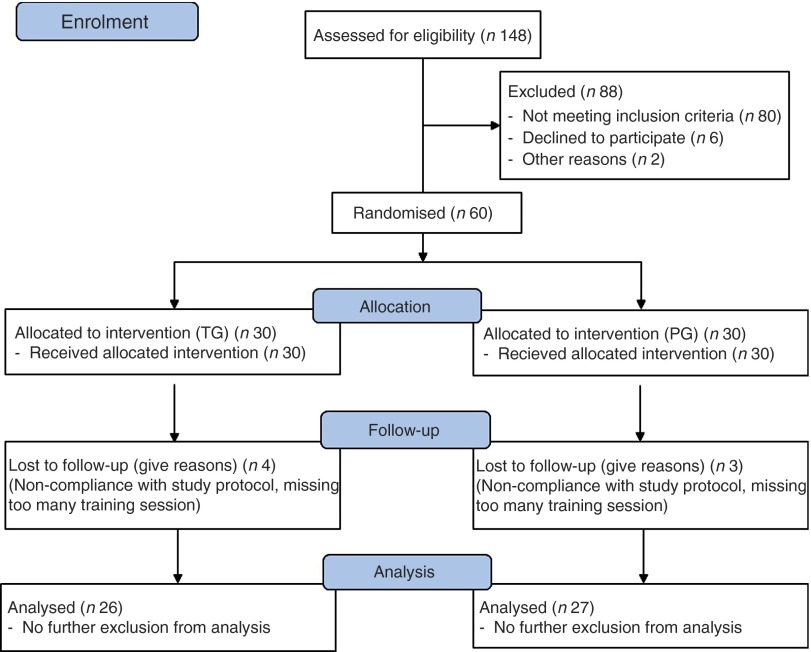
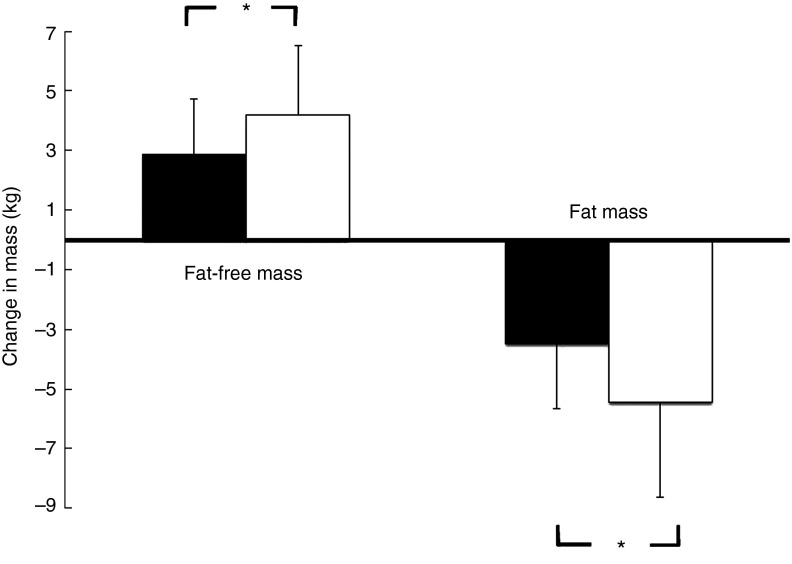
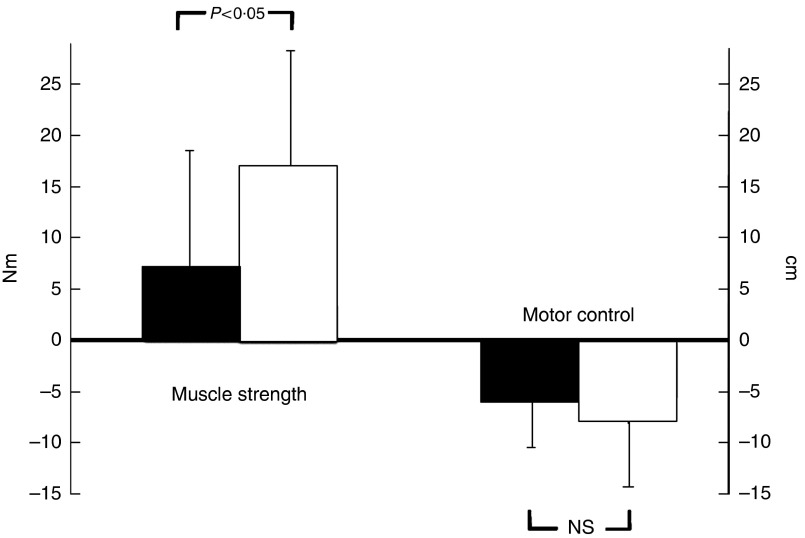
Protein supplementation in combination with resistance training may increase muscle mass and muscle strength in elderly subjects. The objective of this study was to assess the influence of post-exercise protein supplementation with collagen peptides v. placebo on muscle mass and muscle function following resistance training in elderly subjects with sarcopenia. A total of fifty-three male subjects (72·2 ( sd 4·68) years) with sarcopenia (class I or II) completed this randomised double-blind placebo-controlled study. All the participants underwent a 12-week guided resistance training programme (three sessions per week) and were supplemented with either collagen peptides (treatment group (TG)) (15 g/d) or silica as placebo (placebo group (PG)). Fat-free mass (FFM), fat mass (FM) and bone mass (BM) were measured before and after the intervention using dual-energy X-ray absorptiometry. Isokinetic quadriceps strength (IQS) of the right leg was determined and sensory motor control (SMC) was investigated by a standardised one-leg stabilisation test. Following the training programme, all the subjects showed significantly higher ( P <0·01) levels for FFM, BM, IQS and SMC with significantly lower ( P <0·01) levels for FM. The effect was significantly more pronounced in subjects receiving collagen peptides: FFM (TG +4·2 ( sd 2·31) kg/PG +2·9 ( sd 1·84) kg; P <0·05); IQS (TG +16·5 ( sd 12·9) Nm/PG +7·3 ( sd 13·2) Nm; P <0·05); and FM (TG –5·4 ( sd 3·17) kg/PG –3·5 ( sd 2·16) kg; P <0·05). Our data demonstrate that compared with placebo, collagen peptide supplementation in combination with resistance training further improved body composition by increasing FFM, muscle strength and the loss in FM.
Overview
The claims and statistics of this paper haven’t been checked yet.
Free: it reads the open-access text and checks the first 5 claims that cite a source we can check. Create a free account to check every claim.
Integrity signals
Registry
Cites
Statistics
Figures
Verification
Claims the paper makes
The claims and statistics of this paper haven’t been checked yet.
Free: it reads the open-access text and checks the first 5 claims that cite a source we can check. Create a free account to check every claim.
Claims other papers make about this one
Each is checked against this paper’s own text: does it say what the citing paper says it does?
The cited source says what the claim attributes to it.
In the citing paper
“We selected collagen as a comparator as it provides an isonitrogenous and isoenergetic comparison (as opposed to carbohydrate, which is often used) (16), and as it has shown considerable and impressive anabolic properties in older adults (17) [which have been questioned (18)].”
In the citing paper
“A pilot study in individuals initiating GLP-1RAs found that bovine colostrum (combined with chicken egg-derived factors) significantly alleviated common GI side effects affecting 60% of subjects on GLP-1RAs, such as nausea, bloating, or diarrhea, allowing them to continue therapy comfortably [167].”
From Nutritional Approaches to Enhance GLP-1 Analogue Therapy in Obesity: A Narrative Review (2025) · cites this paper as [167]
Self-check
Percentages, sums and reported differences re-computed from the paper’s own numbers.
The self-check needs the paper’s full text.
Citations
Cites
Sarcopenia: European consensus on definition and diagnosis
Cruz-Jentoft, A. J., Baeyens, J. P., Bauer, J. M., Boirie, Y., Cederholm, T., Landi, F., Martin, F. C., Michel, J.-P., Rolland, Y., Schneider, S. M., et al. (2010) · Age and Ageing · doi:10.1093/ageing/afq034 · Cited by 11,601
Progressive resistance strength training for improving physical function in older adults
Liu, C.-J., & Latham, N. K. (2009) · Cochrane Database of Systematic Reviews · doi:10.1002/14651858.cd002759.pub2 · Cited by 1,258 · cited 1×
“The results of the current study are in accordance with previous investigations, showing that resistance exercise improves strength, FFM, co-ordination as well as postural control in the ageing population((25)).”
ResultCermak, N. M., Res, P. T., de Groot, L. C., Saris, W. H., & van Loon, L. J. (2012) · The American Journal of Clinical Nutrition · doi:10.3945/ajcn.112.037556 · Cited by 827 · cited 6×
“In a most recent meta-analysis, Cermak et al.(11) included twenty-two RCT that have investigated the effect of resistance exercise and protein supplementation on FFM and muscle strength in both young and older subjects.”
BackgroundMethodResultInfluentialWalston, J. D. (2012) · Current Opinion in Rheumatology · doi:10.1097/bor.0b013e328358d59b · Cited by 697
Nutritional recommendations for the management of sarcopenia
Morley, J. E., Argiles, J. M., Evans, W. J., Bhasin, S., Cella, D., Deutz, N. E. P., Doehner, W., Fearon, K. C. H., Ferrucci, L., Hellerstein, M. K., et al. (2010) · Journal of the American Medical Directors Association · doi:10.1016/j.jamda.2010.04.014 · Cited by 664 · cited 1×
“transduction pathways involved in initiating translation such as the mTOR signalling pathway((16,17)).”
BackgroundPennings, B., Boirie, Y., Senden, J. M., Gijsen, A. P., Kuipers, H., & van Loon, L. J. (2011) · The American Journal of Clinical Nutrition · doi:10.3945/ajcn.110.008102 · Cited by 656 · cited 1×
“Furthermore, it has been speculated that the timing of protein supplementation as well as the absorption kinetic of the administered protein can have an influence on the efficacy((41)).”
BackgroundInternational Society of Sports Nutrition position stand: Nutrient timing
Kerksick, C., Harvey, T., Stout, J., Campbell, B., Wilborn, C., Kreider, R., Kalman, D., Ziegenfuss, T., Lopez, H., Landis, J., et al. (2008) · Journal of the International Society of Sports Nutrition · doi:10.1186/1550-2783-5-17 · Cited by 456
Stevia (Stevia rebaudiana) a bio-sweetener: a review
Goyal, S. K., Samsher, & Goyal, R. K. (2010) · International Journal of Food Sciences and Nutrition · doi:10.3109/09637480903193049 · Cited by 451
Role of dietary protein in the sarcopenia of aging
Paddon-Jones, D., Short, K. R., Campbell, W. W., Volpi, E., & Wolfe, R. R. (2008) · The American Journal of Clinical Nutrition · doi:10.1093/ajcn/87.5.1562s · Cited by 401 · cited 1×
“However, there is a controversial discussion as to whether the anabolic effect of resistance exercise can be further enhanced by protein supplementation, particularly in the elderly((26,27)).”
BackgroundCreatine: Endogenous Metabolite, Dietary, and Therapeutic Supplement
Brosnan, J. T., & Brosnan, M. E. (2007) · Annual Review of Nutrition · doi:10.1146/annurev.nutr.27.061406.093621 · Cited by 347 · cited 1×
“In addition, collagen contains relatively high amounts of arginine and glycine, both known to be important substrates for the synthesis of creatine in the human body((19)).”
BackgroundRole of collagen hydrolysate in bone and joint disease
Moskowitz, R. W. (2000) · Seminars in Arthritis and Rheumatism · doi:10.1053/sarh.2000.9622 · Cited by 322 · cited 1×
“Finally, several investigations have shown that collagen peptides significantly reduce pain in subjects with osteoarthritis as well as functional joint pain((13,50)).”
BackgroundSarcopenia in the elderly: Diagnosis, physiopathology and treatment
Malafarina, V., Úriz-Otano, F., Iniesta, R., & Gil-Guerrero, L. (2012) · Maturitas · doi:10.1016/j.maturitas.2011.11.012 · Cited by 297 · cited 1×
“falls and an overall prevalence for frailty((3,4)).”
WERLE, S., GOLDHAHN, J., DRERUP, S., SIMMEN, B. R., SPROTT, H., & HERREN, D. B. (2009) · Journal of Hand Surgery (European Volume) · doi:10.1177/1753193408096763 · Cited by 277
Verdijk, L. B., Jonkers, R. A., Gleeson, B. G., Beelen, M., Meijer, K., Savelberg, H. H., Wodzig, W. K., Dendale, P., & van Loon, L. J. (2009) · The American Journal of Clinical Nutrition · doi:10.3945/ajcn.2008.26626 · Cited by 253
Proksch, E., Segger, D., Degwert, J., Schunck, M., Zague, V., & Oesser, S. (2014) · Skin Pharmacology and Physiology · doi:10.1159/000351376 · Cited by 249
Self-citationPhillips, S. M., Tang, J. E., & Moore, D. R. (2009) · Journal of the American College of Nutrition · doi:10.1080/07315724.2009.10718096 · Cited by 243 · cited 2×
“Although a considerable amount of well-controlled studies have reported an increase in FFM and muscle strength following the combination of resistance exercise with protein supplementation, other investigators could not confirm a synergistic effect((8,9)).”
BackgroundOhara, H., Matsumoto, H., Ito, K., Iwai, K., & Sato, K. (2007) · Journal of Agricultural and Food Chemistry · doi:10.1021/jf062834s · Cited by 232 · cited 1×
“The peptides are rapidly resorbed in the small intestine, which may be important for post-exercise recovery, although the existence of the postexercise metabolic window has recently been challenged((12)).”
BackgroundMalafarina, V., Uriz-Otano, F., Iniesta, R., & Gil-Guerrero, L. (2013) · Journal of the American Medical Directors Association · doi:10.1016/j.jamda.2012.08.001 · Cited by 231 · cited 2×
“Moreover, a most recent review supports the efficacy of nutritional supplementation in the treatment of sarcopenia((30)).”
BackgroundOesser, S., Adam, M., Babel, W., & Seifert, J. (1999) · The Journal of Nutrition · doi:10.1093/jn/129.10.1891 · Cited by 228
Self-citationChalé, A., Cloutier, G. J., Hau, C., Phillips, E. M., Dallal, G. E., & Fielding, R. A. (2013) · The Journals of Gerontology: Series A · doi:10.1093/gerona/gls221 · Cited by 208
Protein Nutrition, Exercise and Aging
Evans, W. J. (2004) · Journal of the American College of Nutrition · doi:10.1080/07315724.2004.10719430 · Cited by 204 · cited 1×
“However, there is a controversial discussion as to whether the anabolic effect of resistance exercise can be further enhanced by protein supplementation, particularly in the elderly((26,27)).”
BackgroundBello, A. E., & Oesser, S. (2006) · Current Medical Research and Opinion · doi:10.1185/030079906x148373 · Cited by 197 · cited 1×
“Finally, several investigations have shown that collagen peptides significantly reduce pain in subjects with osteoarthritis as well as functional joint pain((13,50)).”
BackgroundSelf-citationProksch, E., Schunck, M., Zague, V., Segger, D., Degwert, J., & Oesser, S. (2014) · Skin Pharmacology and Physiology · doi:10.1159/000355523 · Cited by 191
Self-citationOesser, S., & Seifert, J. (2003) · Cell and Tissue Research · doi:10.1007/s00441-003-0702-8 · Cited by 171
Self-citationSarcopenia in the elderly: basic and clinical issues
Wang, C., & Bai, L. (2012) · Geriatrics & Gerontology International · doi:10.1111/j.1447-0594.2012.00851.x · Cited by 170 · cited 1×
“In general, ageing is associated with a decline in motor function, muscle mass and a decrease in muscular performance((1,2)).”
BackgroundMcAlindon, T. E., Nuite, M., Krishnan, N., Ruthazer, R., Price, L. L., Burstein, D., Griffith, J., & Flechsenhar, K. R. (2011) · Osteoarthritis and Cartilage · doi:10.1016/j.joca.2011.01.001 · Cited by 166
Ichikawa, S., Morifuji, M., Ohara, H., Matsumoto, H., Takeuchi, Y., & Sato, K. (2010) · International Journal of Food Sciences and Nutrition · doi:10.3109/09637480903257711 · Cited by 160
Resistance Exercise for the Aging Adult: Clinical Implications and Prescription Guidelines
Peterson, M. D., & Gordon, P. M. (2011) · The American Journal of Medicine · doi:10.1016/j.amjmed.2010.08.020 · Cited by 158
Nutritional Interventions to Promote Post-Exercise Muscle Protein Synthesis
Koopman, R., Saris, W. H. M., Wagenmakers, A. J. M., & van Loon, L. J. C. (2007) · Sports Medicine · doi:10.2165/00007256-200737100-00005 · Cited by 141 · cited 1×
“resistance exercise stimulates muscle protein synthesis rates in the post-exercise period((28,29)).”
BackgroundExercise, Amino Acids, and Aging in the Control of Human Muscle Protein Synthesis
WALKER, D. K., DICKINSON, J. M., TIMMERMAN, K. L., DRUMMOND, M. J., REIDY, P. T., FRY, C. S., GUNDERMANN, D. M., & RASMUSSEN, B. B. (2011) · Medicine & Science in Sports & Exercise · doi:10.1249/mss.0b013e318223b037 · Cited by 139
Protein Supplementation during Resistance-Type Exercise Training in the Elderly
LEENDERS, M., VERDIJK, L. B., VAN DER HOEVEN, L., VAN KRANENBURG, J., NILWIK, R., WODZIG, W. K. W. H., SENDEN, J. M. G., KEIZER, H. A., & VAN LOON, L. J. C. (2013) · Medicine & Science in Sports & Exercise · doi:10.1249/mss.0b013e318272fcdb · Cited by 129
Miller, P. E., Alexander, D. D., & Perez, V. (2014) · Journal of the American College of Nutrition · doi:10.1080/07315724.2013.875365 · Cited by 122
Leenders, M., & van Loon, L. J. (2011) · Nutrition Reviews · doi:10.1111/j.1753-4887.2011.00443.x · Cited by 112 · cited 1×
“transduction pathways involved in initiating translation such as the mTOR signalling pathway((16,17)).”
BackgroundEffect of nutritional interventions and resistance exercise on aging muscle mass and strength
Candow, D. G., Forbes, S. C., Little, J. P., Cornish, S. M., Pinkoski, C., & Chilibeck, P. D. (2012) · Biogerontology · doi:10.1007/s10522-012-9385-4 · Cited by 109 · cited 2×
“Although a considerable amount of well-controlled studies have reported an increase in FFM and muscle strength following the combination of resistance exercise with protein supplementation, other investigators could not confirm a synergistic effect((8,9)).”
BackgroundBenito-Ruiz, P., Camacho-Zambrano, M. M., Carrillo-Arcentales, J. N., Mestanza-Peralta, M. A., Vallejo-Flores, C. A., Vargas-López, S. V., Villacís-Tamayo, R. A., & Zurita-Gavilanes, L. A. (2009) · International Journal of Food Sciences and Nutrition · doi:10.1080/09637480802498820 · Cited by 103
Protein coingestion stimulates muscle protein synthesis during resistance-type exercise
Beelen, M., Koopman, R., Gijsen, A. P., Vandereyt, H., Kies, A. K., Kuipers, H., Saris, W. H. M., & van Loon, L. J. C. (2008) · American Journal of Physiology-Endocrinology and Metabolism · doi:10.1152/ajpendo.00774.2007 · Cited by 94 · cited 1×
“resistance exercise stimulates muscle protein synthesis rates in the post-exercise period((28,29)).”
BackgroundPhysical Activity and Sarcopenia
Pillard, F., Laoudj‐Chenivesse, D., Carnac, G., Mercier, J. G., RAMI, J., Rivière, D., & Rolland, Y. (2011) · Clinics in Geriatric Medicine · doi:10.1016/j.cger.2011.03.009 · Cited by 91
Frailty Syndrome in Geriatric Medicine
Ruiz, M. A., Cefalu, C. A., & Reske, T. (2012) · The American Journal of the Medical Sciences · doi:10.1097/maj.0b013e318256c6aa · Cited by 86 · cited 1×
“falls and an overall prevalence for frailty((3,4)).”
Kim, H. K., Kim, M., & Leem, K. (2013) · Molecules · doi:10.3390/molecules181215474 · Cited by 84
Antonio, J., & Ciccone, V. (2013) · Journal of the International Society of Sports Nutrition · doi:10.1186/1550-2783-10-36 · Cited by 83 · cited 1×
“Creatine supplementation has been shown to improve both muscle mass and muscular function in some but not all studies((45)).”
BackgroundDeibert, P., Solleder, F., König, D., Vitolins, M. Z., Dickhuth, H.-H., Gollhofer, A., & Berg, A. (2011) · The Aging Male · doi:10.3109/13685538.2011.565091 · Cited by 60 · cited 1×
“In a previous study, we could demonstrate that soya protein together with a resistance training programme, comparable with the one applied in the present investigation, increased muscle mass to a higher extent than in the control group without protein supplementation((34)).”
ResultSelf-citationHays, N. P., Kim, H., Wells, A. M., Kajkenova, O., & Evans, W. J. (2009) · Journal of the American Dietetic Association · doi:10.1016/j.jada.2009.03.003 · Cited by 56 · cited 2×
“The results of the present investigation do not support this assumption, and the following findings could contribute to further explain the increase in FFM and strength following collagen peptides supplementation: it has been shown that collagen peptide intake was superior to whey protein in maintaining N balance and…”
BackgroundResultEndothelial function and the regulation of muscle protein anabolism in older adults
Timmerman, K. L., & Volpi, E. (2013) · Nutrition, Metabolism and Cardiovascular Diseases · doi:10.1016/j.numecd.2012.03.013 · Cited by 53 · cited 2×
“In addition, Timmerman & Volpi((47)) discussed the positive effect of an increased microvascular perfusion, and thus increased amino acid delivery, on enhanced anabolic responses after protein supplementation.”
BackgroundSarcopenia: current theories and the potential beneficial effect of creatine application strategies
Candow, D. G. (2011) · Biogerontology · doi:10.1007/s10522-011-9327-6 · Cited by 53
Kouguchi, T., Ohmori, T., Shimizu, M., Takahata, Y., 前山佳昭, Suzuki, T., Morimatsu, F., & Tanabe, S. (2013) · Bioscience Biotechnology and Biochemistry · doi:10.1271/bbb.120718 · Cited by 39 · cited 1×
“Collagen peptides have shown to positively influence microcirculation((48,49)); therefore, this might cause an additional beneficial effect in promoting muscle”
BackgroundFielding, R. A., & Parkington, J. D. (2002) · Nutrition in Clinical Care · doi:10.1046/j.1523-5408.2002.00606.x · Cited by 38
Boeer, J., Mueller, O., Krauß, I., Haupt, G., Axmann, D., & Horstmann, T. (2010) · PubMed · Cited by 30
Nonaka, I., Katsuda, S.-I., Ohmori, T., Shigehisa, T., Nakagami, T., & Maruyama, S. (1997) · Bioscience Biotechnology and Biochemistry · doi:10.1271/bbb.61.772 · Cited by 13 · cited 1×
“Collagen peptides have shown to positively influence microcirculation((48,49)); therefore, this might cause an additional beneficial effect in promoting muscle”
Background
Research works printed but not linked: 2
- Adam M, Spacek P & Hulejova H (2002) What is the effect of collagen peptides peroral administration in postmenopausal osteoporosis. Ces Reumatol 10, 131-137.
- Mayer F, Gollhofer A & Berg A (2003) Krafttraining mit Älteren und chronisch Kranken (Resistance training in elderly or chronically ill subjects). Deutsch Z Sportmed 54, 88-94.
Cited by
Dent, E., Morley, J. E., Cruz-Jentoft, A. J., Arai, H., Kritchevsky, S. B., Guralnik, J., Bauer, J. M., Pahor, M., Clark, B. C., Cesari, M., et al. (2018) · The Journal of nutrition, health and aging · doi:10.1007/s12603-018-1139-9 · Cited by 1,130
Nutrition and physical activity in the prevention and treatment of sarcopenia: systematic review.
the IOF-ESCEO Sarcopenia Working Group, Beaudart, C., Dawson, A., Shaw, S. C., Harvey, N. C., Kanis, J. A., Binkley, N., Reginster, J. Y., Chapurlat, R., Chan, D. C., et al. (2017) · Osteoporosis International · doi:10.1007/s00198-017-3980-9 · Cited by 602
“An interactive effect of protein supplementation and exercise was reported in only three of these studies: one looked at frail individuals [33], a second has been performed in elderly sarcopenic men [25], and the third enrolled female retirement village residents whose protein supplementation was lean red meat [22].”
BackgroundYoshimura, Y., Wakabayashi, H., Yamada, M., Kim, H., Harada, A., & Arai, H. (2017) · Journal of the American Medical Directors Association · doi:10.1016/j.jamda.2017.03.019 · Cited by 365
Liao, C.-D., Tsauo, J.-Y., Wu, Y.-T., Cheng, C.-P., Chen, H.-C., Huang, Y.-C., Chen, H.-C., & Liou, T.-H. (2017) · The American Journal of Clinical Nutrition · doi:10.3945/ajcn.116.143594 · Cited by 317
“Our results reveal that PS had an important effect on RET-induced lean mass gain in male participants (18, 20, 25, 30, 31, 33), whereas no relevant effect was observed in female participants (19, 25, 29).”
BackgroundMethodResultInfluentialSkeletal muscle aging: influence of oxidative stress and physical exercise
Gomes, M. J., Martinez, P. F., Pagan, L. U., Damatto, R. L., Mariano Cezar, M. D., Ruiz Lima, A. R., Okoshi, K., & Okoshi, M. P. (2017) · Oncotarget · doi:10.18632/oncotarget.14670 · Cited by 285
“Collagen peptide supplementation combined with resistance training increased fat free mass and muscle strength in elderly sarcopenic men compared with training alone [140].”
Background
Metadata
- Authors
- Zdzieblik, D., Oesser, S., Baumstark, M. W., Gollhofer, A., & König, D.
- Affiliations
- University of Freiburg (DE)
- University Medical Center Freiburg (DE)
- Corresponding author
- König, Daniel
- Venue
- British Journal of Nutrition
- Publisher
- Cambridge University Press (CUP)
- Published
- 2015-09-10
- Volume
- 114
- Issue
- 8
- Pages
- 1237-1245
- ISSN
- 0007-1145 (ISSN-L)
- 1475-2662
- PMC
- PMC4594048
- OpenAlex
- W2115523499
- Cited by
- 269
- References
- 48
- Citations by year
- 2026: 27 · 2025: 25 · 2024: 30 · 2023: 31 · 2022: 27 · 2021: 46 · 2020: 26 · 2019: 26 · 2018: 14 · 2017: 13 · 2016: 4
- FWCI
- 7.62
- Type
- journal article
- Language
- en
- Update notices
- correction (2015-09-10)
- Open access
- hybrid
- doi.org
- Locations
- British Journal Of Nutrition (publishedVersion, cc-by)
- Europe PMC (PubMed Central) (publishedVersion, cc-by)
- PubMed Central (publishedVersion, cc-by)
- PubMed (publishedVersion)
- FreiDok plus (Universitätsbibliothek Freiburg) (submittedVersion)
- Topics
- Health Sciences › Medicine › Physiology (medical) › Nutrition and Health in Aging
- Health Sciences › Nursing › Nutrition and Dietetics › Muscle metabolism and nutrition
- Life Sciences › Biochemistry, Genetics and Molecular Biology › Molecular Biology › Muscle Physiology and Disorders
- Keywords
- collagen peptides, protein supplementation, resistance training, sarcopenia, older men, muscle strength, muscle mass, body composition, fat-free mass, fat mass, bone mass, isokinetic quadriceps strength, sensorimotor control, post-exercise supplementation
- MeSH terms
- Aged, Body Composition, Energy Intake, Collagen, Double-Blind Method, Humans, Male, Absorptiometry, Photon, Bone Density, Muscle, Skeletal, Dietary Supplements, Quadriceps Muscle, Muscle Strength, Resistance Training, Sarcopenia
About these checks
Registry, retraction, Cites and statistics results are computed, not judged, with one exception: a printed reference that no index lists is read once by a model before it counts as a citation error. Claims are extracted by a model and kept only when their quote appears verbatim in the text; each cited source is then checked, with a model’s help, for whether it says what the claim relies on. Those verdicts can be wrong — read the claim’s quote and the cited source before relying on one.
Statistics and arithmetic are recomputed, not judged.
Confidence bands are shown only for fields calibrated on our annotated test set. None is calibrated yet, so no band is shown.
What counts as a claim ›How we measure confidence ›How we check this ›
Are you an author, or do you see a problem with this page? Request a review
Data sources
Bibliographic data: Semantic Scholar, OpenAlex, Crossref.
Contains information from the Semantic Scholar Academic Graph Datasets, made available under the ODC Attribution License (ODC-BY 1.0).
Semantic Scholar’s data is described in: Kinney, R., et al. (2023). The Semantic Scholar Open Data Platform. arXiv:2301.10140.
