

Effects of low-carbohydrate diets v. low-fat diets on body weight and cardiovascular risk factors: a meta-analysis of randomised controlled trials
Open accessThe DOI matches its Crossref record; 60 of the 60 references it cites were found in a registry or an index; 22 of the 61 sources its claims cite were checked for support.
Abstract
The effects of low-carbohydrate (LC) diets on body weight and cardiovascular risk are unclear, and previous studies have found varying results. Our aim was to conduct a meta-analysis of randomised controlled trials (RCT), assessing the effects of LC diets v. low-fat (LF) diets on weight loss and risk factors of CVD. Studies were identified by searching MEDLINE, Embase and Cochrane Trials. Studies had to fulfil the following criteria: a RCT; the LC diet was defined in accordance with the Atkins diet, or carbohydrate intake of <20% of total energy intake; twenty subjects or more per group; the subjects were previously healthy; and the dietary intervention had a duration of 6 months or longer. Results from individual studies were pooled as weighted mean difference (WMD) using a random effect model. In all, eleven RCT with 1369 participants met all the set eligibility criteria. Compared with participants on LF diets, participants on LC diets experienced a greater reduction in body weight (WMD -2·17 kg; 95% CI -3·36, -0·99) and TAG (WMD -0·26 mmol/l; 95% CI -0·37, -0·15), but a greater increase in HDL-cholesterol (WMD 0·14 mmol/l; 95% CI 0·09, 0·19) and LDL-cholesterol (WMD 0·16 mmol/l; 95% CI 0·003, 0·33). This meta-analysis demonstrates opposite change in two important cardiovascular risk factors on LC diets--greater weight loss and increased LDL-cholesterol. Our findings suggest that the beneficial changes of LC diets must be weighed against the possible detrimental effects of increased LDL-cholesterol.
Overview
CoChat Summary
TL;DR
In this meta-analysis of 11 randomised controlled trials (1369 participants), low-carbohydrate diets produced greater weight loss and TAG reduction and a greater HDL-cholesterol increase than low-fat diets, but also a greater increase in LDL-cholesterol. The authors conclude that benefits of low-carbohydrate diets must be weighed against the possible detrimental effect of increased LDL-cholesterol.
Key findings
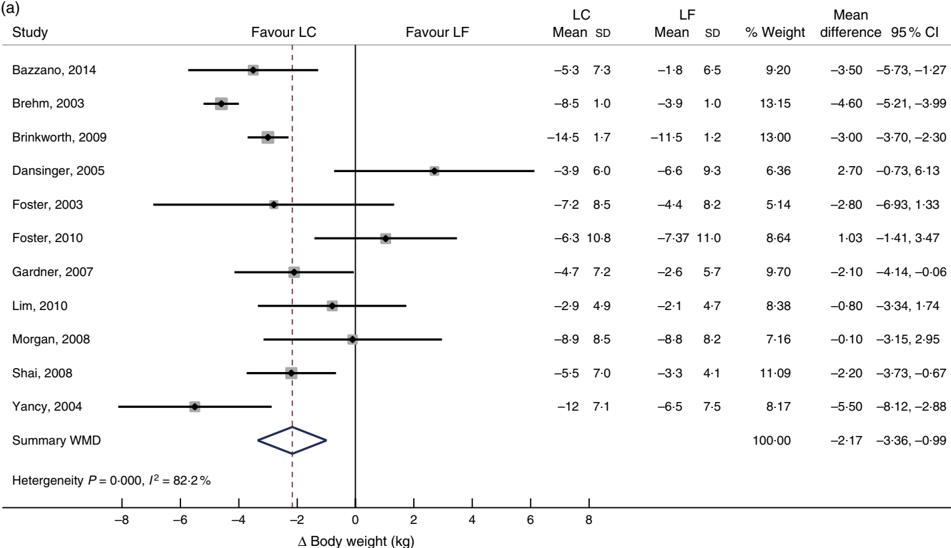
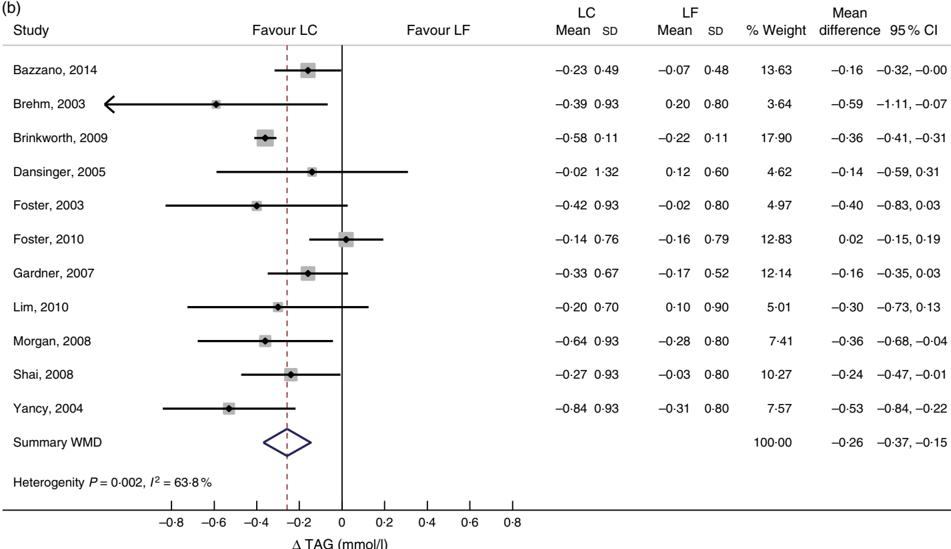
- Compared with low-fat diets, low-carbohydrate diets led to greater body-weight reduction (WMD −2·17 kg; 95 % CI −3·36, −0·99) and greater TAG reduction (WMD −0·26 mmol/l; 95 % CI −0·37, −0·15).
- Low-carbohydrate diets also produced a greater increase in HDL-cholesterol (WMD 0·14 mmol/l; 95 % CI 0·09, 0·19) and in LDL-cholesterol (WMD 0·16 mmol/l; 95 % CI 0·003, 0·33).
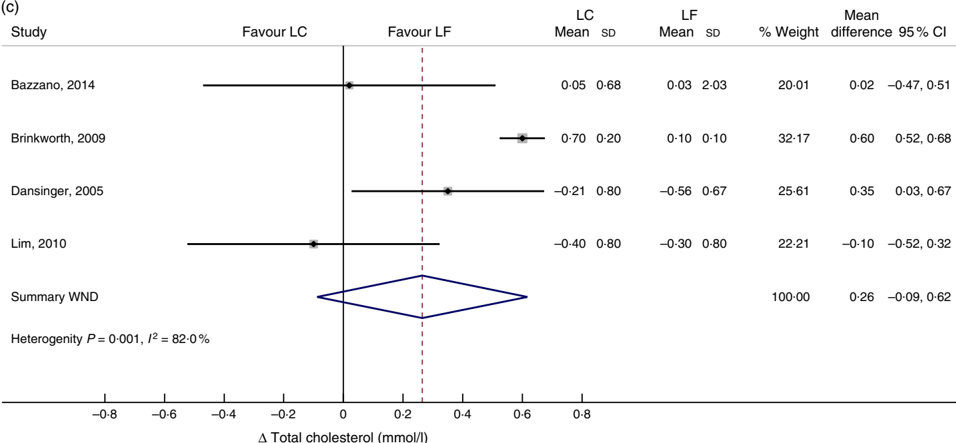
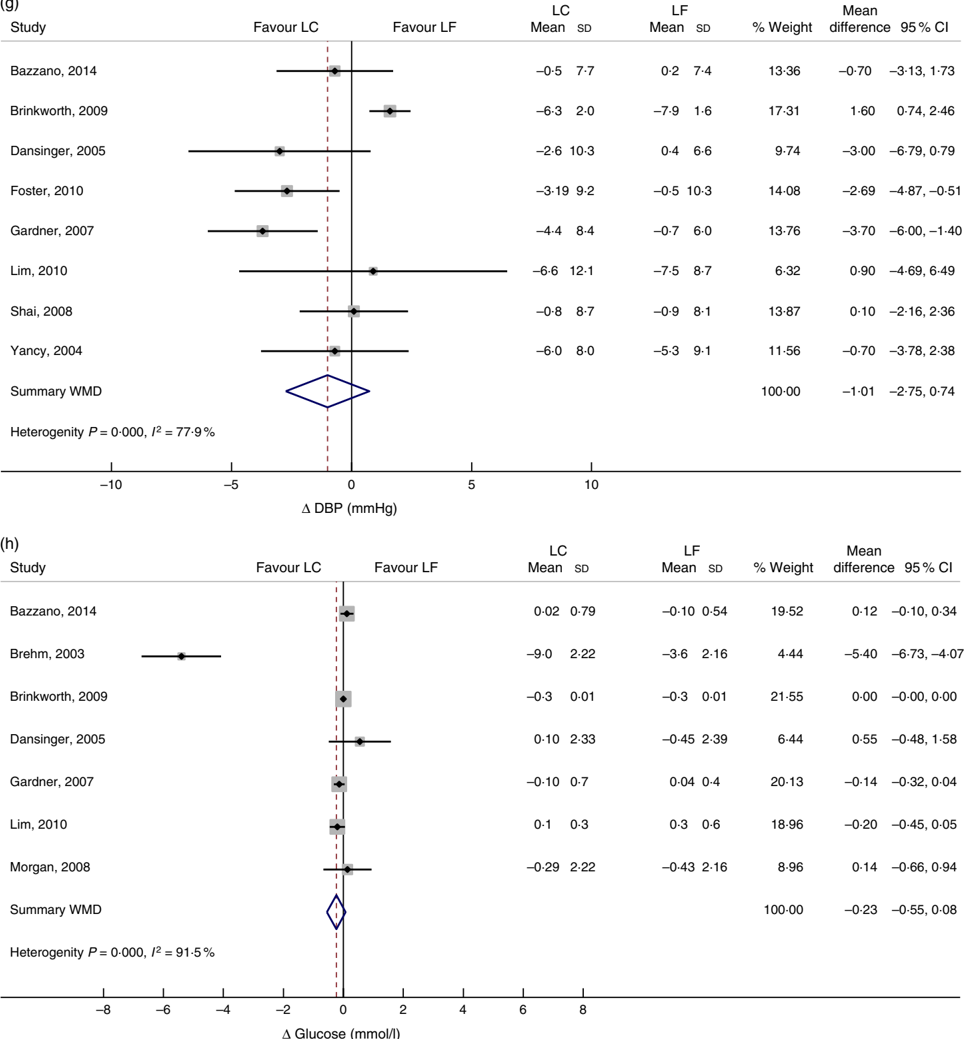
- No significant differences were found for total cholesterol, systolic blood pressure, diastolic blood pressure, glucose or insulin.
- Heterogeneity was moderate to high for all variables (I² 63–92 %); possible publication bias was detected for body weight, total cholesterol, LDL-cholesterol and diastolic blood pressure, but trim-and-fill estimates were unchanged.
Methods
- Systematic review and meta-analysis of randomised controlled trials, reported according to PRISMA and registered in PROSPERO (CRD42015020458); MEDLINE, Embase and Cochrane CENTRAL were searched to 28 May 2015.
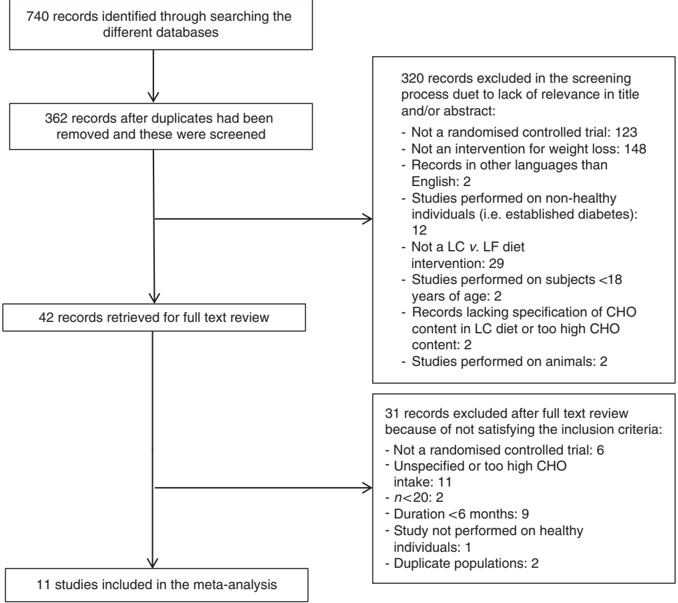
- Inclusion criteria: RCT comparing a low-carbohydrate diet (Atkins-type or <20 % of total energy from carbohydrate) with a low-fat diet; ≥20 subjects per group; previously healthy subjects; intervention duration ≥6 months. Severe obesity (BMI ≥35 kg/m²) and supplementary medical therapy were excluded.
- Eleven RCTs with 1369 participants (low-carbohydrate n 688; low-fat n 681) were pooled using random-effects weighted mean differences; risk of bias was assessed with the Cochrane tool, with sensitivity, subgroup and publication-bias analyses performed in Stata 13.1.
Limitations
- The paper states that heterogeneity was moderate to high for all variables, and that funnel-plot asymmetry raised the possibility of publication bias; Egger’s test has low power when fewer than 10 studies are included.
- The paper states high dropout rates (average 31 % for both diet groups), limited dietary adherence, self-reported dietary intake, and variation in reported macronutrient intake (carbohydrate 9–40 % of total energy; fat 37–54 % at end of intervention), which may limit generalisability and validity.
- The paper states that no included study examined hard endpoints such as CHD or mortality, results may not apply to individuals with obesity-related conditions such as diabetes, CVD or lipid-metabolism disturbances, and multiple testing was not adjusted for.
Model-written summary. Check it against the paper before relying on it.
Integrity signals
Registry
Cites
Statistics
Figures
Verification
Claims the paper makes
14 Valid · 2 Not valid · 13 Not checked · 68 Own results and interpretations
Some cited sources support this claim and some don’t — read each source’s verdict below.
In the paper
“In analyses that excluded studies including subjects with associated metabolic disorders (11,28,29,34,37,38) , the WMD was similar as in the primary meta-analysis for body weight (six studies), TAG (six studies), TC (one study), HDL-cholesterol (six studies) and LDL-cholesterol (six studies).”
What the sources say
- Not checked — no full text of the sourcecites [11] 11. Brehm BJ, Seeley RJ, Daniels SR, et al . (2003) A randomized trial comparing a very low carbohydrate diet and a calorie-restricted low fat diet on body weight and cardiovascular risk factors in healthy women. J Clin Endocrinol Metab 88 , 1617 -1623. source
- Not checked — no full text of the sourcecites [28] 28. Foster GD, Wyatt HR, Hill JO, et al . (2003) A randomized trial of a low-carbohydrate diet for obesity. N Engl J Med 348 , 2082 -2090. source
- Disputedcites [29] 29. Morgan LM, Grif fi n BA, Millward DJ, et al . (2009) Comparison of the effects of four commercially available weight-loss programmes on lipid-based cardiovascular risk factors. Public Health Nutr 12 , 799 -807. sourceExperimental — accuracy not yet measured
The citation is attached only to the list of studies excluded for 'including subjects with associated metabolic disorders'; the WMD/sensitivity-analysis result itself is the citing paper's own meta-analysis, not this source's finding. Our copy of Morgan et al. (2009) says the opposite about its population: the 'Study setting, subjects and design' section lists GP-confirmed exclusion criteria of prior CHD, known type 1 or 2 diabetes, liver or respiratory failure, gout, lipid-lowering or anti-hypertensive medication, secondary obesity (Cushing's syndrome, hypothyroidism) and any malabsorptive state. The Discussion concludes the programmes 'can help people with uncomplicated obesity'. So this trial did not enrol subjects with associated metabolic disorders. (LLM, conf=0.82)
Checked by a reasoning model — may be wrong.
- Disputedcites [34] 34. Bazzano LA, Hu T, Reynolds K, et al . (2014) Effects of lowcarbohydrate and low-fat diets: a randomized trial. Ann Intern Med 161 , 309 -318. sourceExperimental — accuracy not yet measured
The citation identifies Bazzano et al. as a study excluded because it included subjects with associated metabolic disorders. But the Methods (Setting and Participants; page unavailable) say the trial excluded people with clinical cardiovascular disease, type 2 diabetes, or kidney disease, and describe its population as having no clinical comorbid conditions. This paper also reports a single trial, not the cited weighted-mean-difference sensitivity analysis. (LLM, conf=0.88)
Checked by a reasoning model — may be wrong.
- Supportedcites [37] 37. Foster GD, Wyatt HR, Hill JO, et al . (2010) Weight and metabolic outcomes after 2 years on a low-carbohydrate versus low-fat diet: a randomized trial. Ann Intern Med 153 , 147 -157. source
The citation identifies a study among those excluded because of participants’ metabolic characteristics; it is not offered as the source of the citing authors’ weighted mean differences. The Participants and study design section says this trial enrolled people with abdominal obesity and at least one additional metabolic-syndrome risk factor. (LLM, conf=0.86)
- Not checked — no full text of the sourcecites [38] 38. Gardner CD, Kiazand A, Alhassan S, et al . (2007) Comparison of the Atkins, Zone, Ornish, and LEARN diets for change in weight and related risk factors among overweight premenopausal women: the A to Z Weight Loss Study: a randomized trial. JAMA 297 , 969 -977. source
plain- Asserted: passes — The authors put it forward as true.
- Checkable: passes — It can be checked against evidence.
- Load-bearing: unclear — It is unclear whether the paper’s conclusions depend on it.
- Based: passes — The paper gives a reason why it holds.
The cited sources support only part of this claim — read each source’s verdict below.
In the paper
“Further, large Mendelian randomisation studies indicate that increased HDLcholesterol cannot be translated into a reduction in CVD risk (42,43)”
What the sources say
- Partly supportedcites [42] 42. Haase CL, Tybjaerg-Hansen A, Qayyum AA, et al . (2012) LCAT, HDL cholesterol and ischemic cardiovascular disease: a Mendelian randomization study of HDL cholesterol in 54500 individuals. J Clin Endocrinol Metab 97 , E248 -E256. sourceExperimental — accuracy not yet measured
The Discussion reports that genetically decreased HDL cholesterol was not associated with increased MI risk and concludes that the data do not favor isolated HDL-cholesterol raising as an antiatherogenic strategy. That supports skepticism about raising HDL, but the claim's categorical statement that increased HDL cannot reduce CVD risk goes beyond this study's hedged conclusion and its focus on MI and ischemic cardiovascular disease. (LLM, conf=0.88)
- Partly supportedcites [43] 43. Wu Z, Lou Y, Qiu X, et al . (2014) Association of cholesteryl ester transfer protein (CETP) gene polymorphism, high density lipoprotein cholesterol and risk of coronary artery disease: a meta-analysis using a Mendelian randomization approach. BMC Med Genet 15 , 118. sourceExperimental — accuracy not yet measured
The Abstract Conclusions state that increased HDL-C cannot be translated into reduced coronary artery disease (CAD) risk. The Conclusion limits the Mendelian-randomization inference to CAD among Caucasians; the citing sentence broadens this to cardiovascular disease (CVD) risk generally. (LLM, conf=0.85)
hedged- Asserted: passes — The authors put it forward as true.
- Checkable: passes — It can be checked against evidence.
- Load-bearing: passes — The paper’s conclusions depend on it.
- Based: passes — The paper gives a reason why it holds.
- Partly supported
The sources with a verdict support this claim; the rest weren’t checked yet, have no full text we could read, or their verdicts aren’t rated yet.
In the paper
“The signi fi cant weight loss and increase in LDL-cholesterol in the LC v . LF groups in the present meta-analysis are consistent with several other meta-analyses (12,15,16)”
What the sources say
- Supportedcites [12] 12. Bueno NB, de Melo IS, de Oliveira SL, et al . (2013) Verylow-carbohydrate ketogenic diet v. low-fat diet for long-term weight loss: a meta-analysis of randomised controlled trials. Br J Nutr 110 , 1178 -1187. source
The Discussion (p. 5) reports greater weight loss and a greater LDL-cholesterol increase with a very-low-carbohydrate ketogenic diet than with a low-fat diet over at least 12 months. It also says the weight-loss finding is similar to previous meta-analyses. This supports citing the paper as a meta-analysis consistent with the stated findings. (LLM, conf=0.92)
- Not checked — no full text of the sourcecites [15] 15. Nordmann AJ, Nordmann A, Briel M, et al . (2006) Effects of lowcarbohydrate vs low-fat diets on weight loss and cardiovascular risk factors -a meta-analysis of randomized controlled trials. Arch Inter Med 166 , 285 -293. source
- Not checked — no full text of the sourcecites [16] 16. Schwingshackl L & Hoffmann G (2013) Comparison of effects of long-term low-fat vs high-fat diets on blood lipid levels in overweight or obese patients: a systematic review and meta-analysis. J Acad Nutr Diet 113, 1640 -1661. source
plainstates an association- Asserted: passes — The authors put it forward as true.
- Checkable: passes — It can be checked against evidence.
- Load-bearing: unclear — It is unclear whether the paper’s conclusions depend on it.
- Based: passes — The paper gives a reason why it holds.
- Supported
The sources with a verdict support this claim; the rest weren’t checked yet, have no full text we could read, or their verdicts aren’t rated yet.
In the paper
“Previous meta-analyses have included studies with CHO ranging from 20 g/d upto 40 -45 % at the beginning of the intervention (15,21)”
What the sources say
- Not checked — no full text of the sourcecites [15] 15. Nordmann AJ, Nordmann A, Briel M, et al . (2006) Effects of lowcarbohydrate vs low-fat diets on weight loss and cardiovascular risk factors -a meta-analysis of randomized controlled trials. Arch Inter Med 166 , 285 -293. source
- Supportedcites [21] 21. Hu T, Mills KT, Yao L, et al . (2012) Effects of low-carbohydrate diets versus low-fat diets on metabolic risk factors: a metaanalysis of randomized controlled clinical trials. Am J Epidemiol 176 , Suppl. 7, S44 -S54. source
Table 1 (p. S52) lists included trials starting at 20 g of carbohydrate per day and others targeting 40% or 45% carbohydrate. The Results likewise state that carbohydrate targets in the low-carbohydrate groups ranged up to 45% of energy intake. (LLM, conf=0.92)
plain- Asserted: passes — The authors put it forward as true.
- Checkable: passes — It can be checked against evidence.
- Load-bearing: passes — The paper’s conclusions depend on it.
- Based: passes — The paper gives a reason why it holds.
The cited sources support only part of this claim — read each source’s verdict below.
In the paper
“On the other hand, increased levels of LDL-cholesterol are clearly associated with increased risk of CVD (18,19)”
What the sources say
- Partly supportedcites [18] 18. Berneis KK & Krauss RM (2002) Metabolic origins and clinical signi fi cance of LDL heterogeneity. J Lipid Res 43 , 1363 -1379. sourceExperimental — accuracy not yet measured
The paper’s Abstract (page unavailable) links LDL particle profiles, including a predominance of small dense LDL, to increased coronary heart disease risk. It does not establish the more specific claim that higher LDL-cholesterol concentration itself is associated with higher CVD risk. (LLM, conf=0.78)
- Not checked — no full text of the sourcecites [19] 19. Krauss RM & Siri PW (2004) Metabolic abnormalities: triglyceride and low-density lipoprotein. Endocrinol Metab Clin North Am 33 , 405 -415. source
boostedstates an association- Asserted: passes — The authors put it forward as true.
- Checkable: passes — It can be checked against evidence.
- Load-bearing: passes — The paper’s conclusions depend on it.
- Based: passes — The paper gives a reason why it holds.
- Partly supported
38 more claims · 2 with their cited sources checked
Create a free account to see all 97 claims and to verify the 7 references still open.
- Probably not a substantial claim. 31
- It may state two separate claims as one. 28
- The quote only partly states this claim. 1
Claims other papers make about this one
Each is checked against this paper’s own text: does it say what the citing paper says it does?
The source backs part of the claim, not all of it — or backs it for a different population, condition or comparison.
In the citing paper
“Studies with more stringent definitions for LC observed slightly greater weight loss in the initial phase than in the LF groups, but the differences were clinically small and limited to the initial phase [44].”
From Dietary and Behavioral Strategies for Weight Loss and Weight Loss Maintenance: A Narrative Review (2025) · cites this paper as [44]
Experimental — accuracy not yet measuredThe source backs part of the claim, not all of it — or backs it for a different population, condition or comparison.
In the citing paper
“The greater long-term weight loss when consuming high-fat diets than when consuming low-fat diets (16, 101–104)”
From The carbohydrate-insulin model: A physiological perspective on the obesity pandemic (2021) · cites this paper as [103]
Experimental — accuracy not yet measuredThe source backs part of the claim, not all of it — or backs it for a different population, condition or comparison.
In the citing paper
“Several systematic reviews and meta-analyses over the past decade have examined the effects of LCDs, unanimously showing superior weight loss to LFDs [136,138–145], with mean differences ranging 1.01–2.64 kg.”
From International Society of Sports Nutrition position stand: diets for body weight reduction (2026) · cites this paper as [140]
Experimental — accuracy not yet measuredThe cited source says what the claim attributes to it.
In the citing paper
“Reported lipid changes in LC groups included lower triglyceride concentrations and higher HDL cholesterol and LDL cholesterol levels [44].”
From Dietary and Behavioral Strategies for Weight Loss and Weight Loss Maintenance: A Narrative Review (2025) · cites this paper as [44]
The cited source says what the claim attributes to it.
In the citing paper
“In studies applying more stringent criteria for LC, such as carbohydrate intake below 20% of energy or 20 to 40 g/day during the initial phase, LC was associated with greater weight loss than LF. The mean difference was 2.17 kg after at least 6 months of intervention [44].”
From Dietary and Behavioral Strategies for Weight Loss and Weight Loss Maintenance: A Narrative Review (2025) · cites this paper as [44]
3 more claims about this paper
Create a free account to see every claim other papers make about this one.
Self-check
Percentages, sums and reported differences re-computed from the paper’s own numbers.
Each contradiction between two passages listed here was confirmed by an independent check.
Rated minor: it would not touch a result — a value no result rests on, a p-value that stays on the same side of the significance level, or a conflict that is clerical, resolved elsewhere in the paper, or outside its own findings.
In the paper
§ Study and subject characteristics · p. 3
“The dietary goal for the LF diets was < 30 % of total energy as fat.”
§ Study and subject characteristics · p. 4
“55% of total energy as CHO, 15% as protein and 30% as fat”
Rated minor: it would not touch a result — a value no result rests on, a p-value that stays on the same side of the significance level, or a conflict that is clerical, resolved elsewhere in the paper, or outside its own findings.
In the paper
§ Study and subject characteristics · p. 3
“Furthermore, subjects on the LF diet were imposed a energy restriction”
§ Study and subject characteristics · p. 4
“55%of total energy intake as CHO. No energy restriction”
Citations
Cites
Preferred Reporting Items for Systematic Reviews and Meta-Analyses: the PRISMA statement
Moher, D., Liberati, A., Tetzlaff, J., Altman, D. G., & for the PRISMA Group (2009) · BMJ · doi:10.1136/bmj.b2535 · Cited by 83,823
Preferred Reporting Items for Systematic Reviews and Meta-Analyses: The PRISMA Statement
Moher, D., Liberati, A., Tetzlaff, J., Altman, D. G., & The PRISMA Group (2009) · PLoS Medicine · doi:10.1371/journal.pmed.1000097 · Cited by 64,042
Bias in meta-analysis detected by a simple, graphical test
Egger, M., Smith, G. D., Schneider, M., & Minder, C. (1997) · BMJ · doi:10.1136/bmj.315.7109.629 · Cited by 56,722
Preferred reporting items for systematic reviews and meta-analyses: the PRISMA Statement.
(2009) · PubMed Central · Cited by 44,859
Meta-analysis in clinical trials
DerSimonian, R., & Laird, N. (1986) · Controlled Clinical Trials · doi:10.1016/0197-2456(86)90046-2 · Cited by 39,552 · cited 1×
“Summary WMD with 95% CI for the outcome measures were calculated using a random effect model((31)).”
MethodQuantifying heterogeneity in a meta‐analysis
Higgins, J. P. T., & Thompson, S. G. (2002) · Statistics in Medicine · doi:10.1002/sim.1186 · Cited by 36,763
Preferred Reporting Items for Systematic Reviews and Meta-Analyses: The PRISMA Statement
Moher, D., Liberati, A., Tetzlaff, J., & Altman, D. G. (2009) · Journal of Clinical Epidemiology · doi:10.1016/j.jclinepi.2009.06.005 · Cited by 19,575
Ng, M., Fleming, T., Robinson, M., Thomson, B., Graetz, N., Margono, C., Mullany, E. C., Biryukov, S., Abbafati, C., Abera, S. F., et al. (2014) · The Lancet · doi:10.1016/s0140-6736(14)60460-8 · Cited by 11,952
Levesque, R. J. R. (2017) · Encyclopedia of Adolescence · doi:10.1007/978-3-319-32132-5_447-2 · Cited by 4,021
Assessing Risk of Bias in Included Studies
Higgins, J. P., & Altman, D. G. (2008) · Cochrane Handbook for Systematic Reviews of Interventions · doi:10.1002/9780470712184.ch8 · Cited by 3,396 · cited 1×
“Methodological quality was evaluated by two authors using the Cochrane Collaboration’s tool for assessing risk of bias((25)) indicating the following bias categories: selection bias (random sequence generation, allocation concealment); performance bias (blinding of participants and personnel and blinding of the outcom…”
Method
Research works printed but not linked: 1
- 47. Higgins JPT & Green S (editors) (2011) Recommendations on testing for funnel plot asymmetry. Cochrane Handbook for Systematic Reviews of Interventions , version 5.1.0 [updated March 2011]. http://handbook.cochrane.org/chapter\_10/10\_4\_ 3\_1\_recommendations\_on\_testing\_for\_funnel\_plot\_asymmetry. htm (accessed February 2015).
Cited by
Items 201–300 of 438
Choi, Y.-J., Kang, K., Je, M., Lee, Y., & Kim, Y. (2025) · Nutrients · doi:10.3390/nu17040674 · Cited by 16
“Similarly, Mansoor et al., 2016 [96] showed that a low carbohydrate diet (<20% of total daily energy intake) significantly decreased BW (WMD = − 2.17 kg; 95% CI − 3.36 to − 0.99) compared with the low-fat diet.”
InfluentialFeng, S., Liu, R., Colwell, B., Chung, S. Y., Barry, A. E., & Wang, H. (2025) · Clinical Nutrition · doi:10.1016/j.clnu.2025.09.005 · Cited by 189
Dening, J., George, E. S., Ball, K., Mohebbi, M., & Islam, S. M. S. (2022) · BMJ Open · doi:10.1136/bmjopen-2021-054594 · Cited by 10
Duffus, S. H., Slaughter, J. C., Cooley, W., Sharif, N., Rainer, K., Coate, K. C., Jaser, S. S., Moore, D. J., Niswender, K. D., & Gregory, J. M. (2022) · Pediatric Diabetes · doi:10.1111/pedi.13407 · Cited by 12
Low carbohydrate high fat-diet in real life assessed by diet history interviews
Hagström, H., Hagfors, L. N., Tellström, A., Hedelin, R., & Lindmark, K. (2023) · Nutrition Journal · doi:10.1186/s12937-023-00847-8 · Cited by 11
Lewis, J. I., Lind, M. V., Møller, G., Hansen, T. F., Pedersen, H., Christensen, M. M. B., Laursen, J. C., Nielsen, S., Ottendahl, C. B., Larsen, C. V. L., et al. (2023) · British Journal Of Nutrition · doi:10.1017/s000711452300106x · Cited by 11
“TAG on the other hand was unaffected by diet, which is surprising considering the established TAG-lowering effects of fish oil (36,37) , and we found no benefits on BP, although this effect is well-supported by a large meta-analysis of RCT with fish and fish oil (38) .”
InfluentialKabthymer, R. H., Karim, M. N., Itsiopoulos, C., Hodge, A. M., & de Courten, B. V. (2024) · Diabetes & Metabolic Syndrome Clinical Research & Reviews · doi:10.1016/j.dsx.2024.103049 · Cited by 9
Animal Products and Human Nutrition
Scanes, C. G. (2017) · Elsevier eBooks · doi:10.1016/b978-0-12-805247-1.00003-4 · Cited by 16
Bolesławska, I., Kowalówka, M., Dobrzyńska, M., Karaźniewicz‐Łada, M., & Przysławski, J. (2021) · Nutrients · doi:10.3390/nu13082774 · Cited by 11
Diet, inflammation, and cardiovascular disease
Vahid, F., Chiriboga, D. E., Bohn, T., & Hébert, J. R. (2022) · Elsevier eBooks · doi:10.1016/b978-0-12-822130-3.00015-6 · Cited by 10
Healthy and unhealthy low-carbohydrate diets and plasma markers of cardiometabolic risk
Huang, Y. P., Li, X., Zhang, T., Zeng, X., Li, M., Li, H., Yang, H., Zhang, C., Zhu, Y., Zhang, Z., et al. (2022) · British Journal Of Nutrition · doi:10.1017/s0007114522003038 · Cited by 9
“These results may also partly explain the inconsistent findings in the effect on lipid file among previous randomised controlled trials(4,8), in which”
BackgroundResultTian, Q., Lin, L., Shan, Z., Lu, Q., Li, R., Liu, S., Lin, X., Li, R., Chen, X., Ou, Y., et al. (2024) · Journal of Nutrition · doi:10.1016/j.tjnut.2024.03.011 · Cited by 8
Zhang, Y. L., He, T., Hu, Y., & Gao, C. (2024) · Diabetes Metabolic Syndrome and Obesity · doi:10.2147/dmso.s467719 · Cited by 9
“24 The findings are consistent with the weight loss meta-analyses conducted by these authors (eg, Mansoor N, Hu T, and Chawla S), 23,25,26 in which LCD showed similar benefits for weight loss, although Chawla S also stratified results by length of follow-up to provide a more nuanced understanding…”
ResultKetogenic diet in clinical populations—a narrative review
Zemer, A., Samaei, S., Yoel, U., Biderman, A., & Pincu, Y. (2024) · Frontiers in Medicine · doi:10.3389/fmed.2024.1432717 · Cited by 13
Wu, Z., Liu, B., Wang, X., AlEssa, H. B., Zeleznik, O. A., Eliassen, A. H., Clish, C. B., Wang, M., Mukamal, K. J., Rimm, E. B., et al. (2026) · Journal of the American College of Cardiology · doi:10.1016/j.jacc.2025.12.038 · Cited by 12
Effect of Low Carbohydrate Diet (LCD) for Diabetic Patients withHypertriglycemia
Ebe, K., Bando, H., Muneta, T., Bando, M., & Yonei, Y. (2017) · Institutional Repositories DataBase (IRDB) · Cited by 15
Risk of Type 2 Diabetes Among Individuals with Excess Weight: Weight Trajectory Effects
Owora, A. H., Allison, D. B., Zhang, X., Gletsu-Miller, N. A., & Gadde, K. M. (2022) · Current Diabetes Reports · doi:10.1007/s11892-022-01486-9 · Cited by 11
Santos‐Báez, L. S., Díaz‐Rizzolo, D. A., Popp, C. J., Shaw, D., Fine, K. S., Altomare, A., St‐Onge, M., Manoogian, E. N. C., Panda, S., Cheng, B., et al. (2024) · Nutrients · doi:10.3390/nu16091295 · Cited by 10
“Interventional and epidemiological studies suggest that an excess calorie intake [3], particularly food with a high glycemic load [4,5], are key contributors to overall obesity risk and metabolic dysfunction [6,7].”
BackgroundPan‐risk factor for a comprehensive cardiovascular health management
Zheng, R., Xu, Y., Li, M., Lu, J., Xu, M., Wang, T., Zhao, Z., Wang, S., Lin, H., Zhang, X., et al. (2022) · Journal of Diabetes · doi:10.1111/1753-0407.13258 · Cited by 9
“Medically supervised very-low-carbohydrate diets, defined as <10% total daily energy from carbohydrates (<50 g carbohydrate/d), as a means of weight loss and improving CVD risk factors could be beneficial in the short-term intervention (≤6 months), but it is difficult to maintain.(58) A ketogenic diet is characterized…”
BackgroundApproach to patients with hypertriglyceridemia
Chait, A., & Feingold, K. R. (2022) · Best Practice & Research Clinical Endocrinology & Metabolism · doi:10.1016/j.beem.2022.101659 · Cited by 11
Bhutani, S., & McClain, A. C. (2022) · Nutrients · doi:10.3390/nu14153178 · Cited by 11
“A low carbohydrate dietary regimen is generally accompanied by a high-fat intake and is an effective strategy for weight loss [40].”
BackgroundGaspa, G., Naciu, A. M., Rosa, C. D., Lattanzi, G., Beato, I., MICHELI, V., TURRIZIANI, C., Khazrai, Y. M., & CESAREO, R. (2022) · Minerva Endocrinology · doi:10.23736/s2724-6507.22.03922-7 · Cited by 13
Wilson, M. L., Lane, K. E., Fadel, A., Dawson, E. A., Moore, E., Mazidi, M., Webb, R. J., & Davies, I. G. (2024) · Nutrition Reviews · doi:10.1093/nutrit/nuae103 · Cited by 8
Keto therapy–unveiling the potential of ketogenic diet in psychiatric care: A scoping review
Boltri, M., Scalia, A., Brusa, F., Manzo, F., Apicella, E., & Mendolicchio, L. (2025) · Nutrition · doi:10.1016/j.nut.2025.112710 · Cited by 13
Diamond, D. M., Mason, P., & Bikman, B. T. (2024) · Frontiers in Nutrition · doi:10.3389/fnut.2024.1394610 · Cited by 8
Low-carbohydrate diets increase LDL-cholesterol, and thereby indicate increased risk of CVD
Mansoor, N., Vinknes, K. J., Veierød, M. B., & Retterstøl, K. (2016) · British Journal Of Nutrition · doi:10.1017/s0007114516001343 · Cited by 8
“that LDL-cholesterol is a limited predictor of CVD risk, and (2) that despite increases in LDL-cholesterol the overall effects of the LC diet (increased HDL-cholesterol and decreased TAG) indicate the better alternative for improving metabolic dysregulation.”
BackgroundSelf-citationHolzbach, L. C., Silveira, A. G. Z., Franco, L. P., Horst, M. A., & Cominetti, C. (2021) · British Journal Of Nutrition · doi:10.1017/s0007114521004396 · Cited by 9
“Although inadequate dietary habits, mainly high-fat diets, may be related to excessive accumulation of body fat in individuals with NWO syndrome(34), it is important to highlight the influence of genetic variability in the phenotypic response to eating habits.”
BackgroundDietary Approaches and Health Outcomes: An Evidence Analysis Center Scoping Review
Handu, D., & Piemonte, T. A. (2021) · Journal of the Academy of Nutrition and Dietetics · doi:10.1016/j.jand.2021.08.106 · Cited by 10
The development of the 2020 Dietary Reference Intakes for Koreans: carbohydrate
Kim, W. (2021) · Journal of Nutrition and Health · doi:10.4163/jnh.2021.54.6.584 · Cited by 7
“또한 우리나라 성인은 탄수화물로부터 총 에너지의 50–80%를 섭취하며, 탄수화물의 섭취비율이 70%를 초과하는 경우 탄수화물의 섭취비율이 50% 미만인 경우와 비교하여 대사증후군과 2형당뇨병의 위험 은 높으나, 고지혈증 (예: 총 콜레스테롤과 low-density lipoprotein [LDL]-콜레스테롤 수준 증 585https://doi.org/10.4163/jnh.2021.54.6.584 https://e-jnh.org 가)의 위험은 낮다고 보고하였다.”
InfluentialKetoCycle mobile app for ketogenic diet: a retrospective study of weight loss and engagement
Valinskas, S., Aleknavičius, K., & Jonusas, J. (2022) · BMC Nutrition · doi:10.1186/s40795-022-00539-2 · Cited by 6
Mousavi, S. M., Ejtahed, H., Marvasti, F. E., Taghavi, M., Siadat, S. D., Hasani‐Ranjbar, S., Larijani, B. A., & Esmaillzadeh, A. (2023) · Clinical Therapeutics · doi:10.1016/j.clinthera.2023.02.002 · Cited by 8
Finucane, F. M., Rafey, M. F., Leahy, M. J., O’Shea, P. M., O'Brien, T., & O'Donnell, M. J. (2023) · Human Nutrition & Metabolism · doi:10.1016/j.hnm.2023.200192 · Cited by 7
Secular trends in serum lipid profiles in young adults in Norway, 2001-19
Arnesen, E., & Retterstøl, K. (2022) · Atherosclerosis Plus · doi:10.1016/j.athplu.2022.03.006 · Cited by 7
Self-citationResearch on Diet and Human Health
López‐Gil, J. F., & López, P. J. T. (2022) · International Journal of Environmental Research and Public Health · doi:10.3390/ijerph19116526 · Cited by 7
“, cancer, cardiovascular disease) [8].”
Kempf, K., Röhling, M., Kolb, H., & Martin, S. (2023) · Nutrients · doi:10.3390/nu15051301 · Cited by 6
“The relevance of insulin levels for body weight regulation has led to the carbohydrate-insulin-concept [22,38] and mirrors results of meta-analyses that found low-fat diets inferior to low-glycaemic diets for weight reduction [39,40].”
ResultFieger, E., Fadel, K., Modarres, A. H., Wickham, E. P., & Wolver, S. E. (2020) · AACE Clinical Case Reports · doi:10.4158/accr-2020-0314 · Cited by 8
“In fact, some studies have demonstrated greater weight loss in patients on a VLCKD compared with a low-fat diet (10).”
BackgroundHafez, D., Lopez, K. S., Saslow, L. R., & Richardson, C. R. (2021) · Frontiers in Nutrition · doi:10.3389/fnut.2021.682137 · Cited by 6
Association between dietary fiber intake and obesity in US adults: from NHANES 1999–2018
Lai, S., Zeng, Y., Lin, G., Li, Y., Lin, Z., & Ouyang, X. (2025) · Frontiers in Nutrition · doi:10.3389/fnut.2025.1602600 · Cited by 11
Tosefsky, K. N., Lam, J. S. T., Wang, Y. N., Keymanesh, S., Kuan, A. J., Metcalfe‐Roach, A., Cirstea, M. S., Sacheli, M., Finlay, B. B., Cohen, T. R., et al. (2026) · Journal of Parkinson s Disease · doi:10.1177/1877718x261418986 · Cited by 12
“50 In keeping with the MeDi framework, MeDi-KDs emphasize meeting the KD ’ s high fat requirements using unsaturated sources, such as olive oil and fatty fi sh, which may minimize cardiovascular risks associated with standard KDs high in saturated fats.”
Lee, H. A., Hwang, H., Oh, S., Park, E. A., Cho, S. J., Kim, H. S., & Park, H. (2017) · Clinical Nutrition · doi:10.1016/j.clnu.2017.04.017 · Cited by 5
Shah, P., Wolever, T. M. S., Jenkins, A. L., Ezatagha, A., Campbell, J. E., Zurbau, A., Jain, M., Gote, M., Bhaduri, A., & Mullick, A. (2021) · Heliyon · doi:10.1016/j.heliyon.2021.e06805 · Cited by 8
Carbohydrates as Nutritional Components for Health and Longevity
Okburan, G., & Gezer, C. (2021) · Healthy ageing and longevity · doi:10.1007/978-3-030-83017-5_2 · Cited by 8
Human body weight, nutrients, and foods: a scoping review
Hjelmesaeth, J. S., & Sjöberg, A. (2022) · Food & Nutrition Research · doi:10.29219/fnr.v66.8814 · Cited by 7
The Data Behind Popular Diets for Weight Loss
Ehrlicher, S. E., Chui, T. K., Clina, J. G., Ellison, K. M., & Sayer, R. D. (2022) · Medical Clinics of North America · doi:10.1016/j.mcna.2022.05.003 · Cited by 6
Wang, X., Zhou, C., Li, Y., Yang, H., Sun, X., Li, S., & Li, J. (2024) · Journal of Neural Transmission · doi:10.1007/s00702-024-02802-1 · Cited by 5
“Cholesterol profiles and metabolism, recognized risk fac - tor for cerebrovascular and cardiovascular disease (CVD) (Goldstein and Brown 2015; Leritz et al. 2016 ; Mansoor et al. 2016 ), are increasingly implicated in cognitive impairments and neurodegenerative disease.”
Low carbohydrate high fat-diet in real life; A descriptive analysis of cardiovascular risk factors
Hagström, H., Hagfors, L. N., Hedelin, R., Brunström, M., & Lindmark, K. (2025) · International Journal of Cardiology Cardiovascular Risk and Prevention · doi:10.1016/j.ijcrp.2025.200384 · Cited by 6
Models that explain the cause of obesity
Prakash, S. S. (2018) · Indian Journal of Endocrinology and Metabolism · doi:10.4103/ijem.ijem_67_18 · Cited by 5
“The acceptance of Carb-O is on the rise over the past decade due to evidence showing obesity reversal associated with reduced consumption of high-glycemic index carbohydrates.[3] Recently, two studies[4,5] examined Carb-O as a cause of obesity utilizing bidirectional Mendelian randomization analysis,[6] which is a too…”
MethodLifestyle management in type 2 diabetes
Hindmarsh, D., & Nicholls, M. A. (2019) · InnovAiT Education and inspiration for general practice · doi:10.1177/1755738019836267 · Cited by 5
“…trials showed that subjects on low carbohydrate diets, when compared with subjects on low fat diets, experienced significantly greater weight loss, greater reduction in the levels of triglycerides and greater increase in the level of HDL-cholesterol after 6 months to 2 years (Mansoor et al., 2016).”
BackgroundDiet and Physical Activity Behaviors in Primary Care Patients with Recent Intentional Weight Loss
Gibbs, B. B., Tudorascu, D. L., Bryce, C. L., COMER, D. M., Fischer, G. S., Hess, R., Huber, K., McTigue, K. M., Simkin‐Silverman, L. R., & Conroy, M. B. (2017) · Translational Journal of the American College of Sports Medicine · doi:10.1249/tjx.0000000000000040 · Cited by 5
Weznaver, C. D., Nybacka, S., Simrén, M., Törnblom, H., Jakobsson, S., & Störsrud, S. (2024) · Journal of Human Nutrition and Dietetics · doi:10.1111/jhn.13349 · Cited by 8
The Ketogenic Diet in Obesity Management: Friend or Foe?
Alum, E. U., Izah, S. C., Betiang, P. A., Ugwu, O. P.-C., Ainebyoona, C., Uti, D. E., Echegu, D. A., & Alum, B. N. (2025) · Cell Biochemistry and Biophysics · doi:10.1007/s12013-025-01878-0 · Cited by 29
Lizogub, V. G., Kramarova, V. N., Polonska, L., Kaminska, T. M., Melnychuk, I. O., & Tyravska, Y. (2020) · World of Medicine and Biology · doi:10.26724/2079-8334-2020-3-73-65-69 · Cited by 4
Ellison, K. M., Wyatt, H. R., Hill, J. O., & Sayer, R. D. (2024) · Obesity Reviews · doi:10.1111/obr.13706 · Cited by 4
“Importantly for the topic of this paper, the weight loss benefit of low-CHO diets has been demonstrated in people with 22,23 and without T2D 24,25 and may suggest that greater short-term weight loss may be achieved with a low-CHO diet, irrespective of glycemic status.”
Abdulghani, M. F., & AL‐Fayyadh, S. (2024) · Frontiers in Public Health · doi:10.3389/fpubh.2024.1415916 · Cited by 4
Pujol-Busquets, G., Smith, J. A. H., Fàbregues, S., Bach-Faig, A., & Larmuth, K. (2024) · Appetite · doi:10.1016/j.appet.2024.107725 · Cited by 5
“…reviews emphasises the efficacy of low-carbohydrate, high-fat (LCHF) diets in mitigating metabolic syndrome and type 2 diabetes mellitus (T2DM) (Feinman et al., 2015; Hashimoto et al., 2016; Hession et al., 2009; Mansoor et al., 2016; Meng et al., 2017; Paoli et al., 2013; Westman et al., 2008).”
BackgroundMosallanezhad, Z., Jalali, M., Clark, C. C. T., Zibaeenezhad, M. J., Nouri, M., Mohammadi, S. S., Sayadi, M., Razeghian‐Jahromi, I., Parsa, N., Zibaeenejad, F., et al. (2024) · BMC Public Health · doi:10.1186/s12889-024-20106-7 · Cited by 4
“However, recent studies have shown that individuals who adhere to a LCD experience greater reductions in weight , total cholesterol (TC) and triglyceride (TG), and increased high density lipoprotein cholesterol (HDL-c) levels, compared to the counter-parts on a low-fat diet (LFD) [12–14].”
BackgroundScott, E. J., Shehata, M., Panesar, A., Summers, C., & Dale, J. R. (2021) · BJGP Open · doi:10.3399/bjgpo.2021.0137 · Cited by 9
“Obesity is the primary risk factor for the onset and progression of T2DM, and 80% of people with T2DM are overweight or obese.(2,3) Effective,”
BackgroundAlimentation glucidolipidique et maladies cardio-vasculaires
Bard, J. (2021) · Actualités Pharmaceutiques · doi:10.1016/j.actpha.2021.08.007 · Cited by 6
Chen, J. H., Fukasawa, M., Sakane, N., Suganuma, A., Kuzuya, H., Pandey, S., D’Alessandro, P., Venkatapurapu, S. P., & Dwivedi, G. (2023) · PLoS ONE · doi:10.1371/journal.pone.0287069 · Cited by 5
Treatment for Childhood Obesity: Using a Biological Model to Inform Dietary Targets
Ebbeling, C. B., & Ludwig, D. S. (2022) · The Journal of Pediatrics · doi:10.1016/j.jpeds.2022.12.004 · Cited by 3
The Ketogenic Diet: The Ke(y) - to Success? A Review of Weight Loss, Lipids, and Cardiovascular Risk
Boal, A., & Kanonidou, C. (2024) · Journal of Cardiology and Cardiovascular Medicine · doi:10.29328/journal.jccm.1001178 · Cited by 4
Dimba, N. R., Mzimela, N., & Khathi, A. (2024) · Biomedicines · doi:10.3390/biomedicines12061275 · Cited by 6
“They aid in weight loss by decreasing triglycerides, and they also reduce the risk of cardiovascular diseases by increasing good high-density lipoprotein cholesterol levels [77,78].”
BackgroundKhodarahmi, M., Seyedhosseini-Ghaheh, H., & Askari, G. (2025) · Food Science & Nutrition · doi:10.1002/fsn3.70566 · Cited by 3
“An extensive body of evidence has suggested that disparities in dietary macronutrient composition, particularly carbohydrate and fat intake, may attenuate disease risk (Krieger et al. 2006; Mansoor et al. 2016; Barber et al. 2021).”
Metabolic Changes and Their Characterization
Ain, N.-U., & Gull, H. (2020) · Springer eBooks · doi:10.1007/978-981-15-1067-0_2 · Cited by 3
Díaz, G., Castañeda-Gómez, Á. M., Belalcázar-Monsalve, M. P., Zambrano-Salazar, J. P., Bautista-Velandia, M. C., & Ballesteros-Arbeláez, F. (2021) · Revista de Nutrición Clínica y Metabolismo · doi:10.35454/rncm.v4n3.273 · Cited by 4
Wang, J., Lv, S., Zhou, Y., Sun, Y., Zhu, H., Yan, G., Wu, Y., & Ma, Y. (2022) · British Journal Of Nutrition · doi:10.1017/s0007114522001076 · Cited by 3
“The beneficial effects of LCD on HDL-cholesterol have been demonstrated in several systematic reviews (44 – 47) .”
Efficacy of low carbohydrate ketogenic diet in weight management: A narrative review
Zaman, S., & Ahammed, T. (2024) · Obesity Medicine · doi:10.1016/j.obmed.2024.100550 · Cited by 4
Krebszellen lieben Zucker, Patientinnen brauchen Fett
Kämmerer, U., Bartmann, C., Wöckel, A., & Reuss-Borst, M. A. (2019) · Der Gynäkologe · doi:10.1007/s00129-019-4459-x · Cited by 3
Flaxseed bread for therapeutic nutrition
Sevostyanova, N. N., Pchelina, E. A., Vikhrova, M. A., Trezorova, O., & Andreeva, L. V. (2020) · IOP Conference Series Earth and Environmental Science · doi:10.1088/1755-1315/613/1/012137 · Cited by 3
Paradigmenwechsel in den Empfehlungen zur Ernährung bei Typ-2-Diabetes
Lechner, K., McKenzie, A. L., & Worm, N. (2021) · Info Diabetologie · doi:10.1007/s15034-020-3646-0 · Cited by 3
Highlights from European Society of Cardiology Congress: a focus on nutrition
Цыганкова, Д. П. (2021) · Complex Issues of Cardiovascular Diseases · doi:10.17802/2306-1278-2021-10-1-83-88 · Cited by 3
Juca, C. F. J., Cho, Y., Ham, D., & Joung, H. (2021) · Nutrients · doi:10.3390/nu13061834 · Cited by 4
“Several meta-analyses of randomized controlled clinical trials (RCTs) revealed that a low-carbohydrate diet resulted in reduction of body weight and positive changes in triglycerides and high-density lipoprotein (HDL) levels, but increased low-density lipoprotein (LDL) levels [17,18].”
BackgroundThe Handbook of Wellness Medicine
Snellings, J. E. (2021) · Family Medicine · doi:10.22454/fammed.2021.204951 · Cited by 3
Opportunities and challenges for research on low-carbohydrate diets in prostate cancer
Langlais, C. S., & Chan, J. M. (2020) · Nature Reviews Urology · doi:10.1038/s41585-020-0326-8 · Cited by 3
Lifestyle Approaches to Lowering Triglycerides
Hankinson, S. J., Miller, M. J., & Freeman, A. M. (2021) · Contemporary cardiology · doi:10.1007/978-3-030-78177-4_14 · Cited by 2
Experiences of Women Following a Low-Carbohydrate Diet While Breastfeeding
Dwyer, G. G., Akers, L., & Akers, J. D. (2023) · Clinical Lactation · doi:10.1891/cl-2022-0015 · Cited by 2
Gut microbiota regulate wheat starch‐induced metabolic disorders via control of colonic SCD1
Lee, E., Do, M. H., Jhun, H., Park, J., & Park, H. (2023) · Food Frontiers · doi:10.1002/fft2.324 · Cited by 2
Pointke, M., Strenge, F., Piotrowski, D., Matteikat, A., Meyhöfer, S., Meyhöfer, S. M., Chamorro, R., & Wilms, B. (2024) · Frontiers in Nutrition · doi:10.3389/fnut.2024.1469230 · Cited by 4
De, S., Chiew, A., Chong, S. V., Chiew, J., Lum, N. P. Y., Khor, Y. C., Barman, M., Das, S., & Abas, A. L. (2025) · International Journal of Obesity · doi:10.1038/s41366-025-01832-3 · Cited by 2
“Long-term research on this dietary strategy may prove very helpful in the prevention and management of people with diabetes and heart disease.”
Schreel, L., Bürkle, M., Thiem, A., von Baehr, V., Sauren, J., & Keferstein, G. (2025) · Frontiers in Nutrition · doi:10.3389/fnut.2025.1635489 · Cited by 4
Cho, H. J., Shin, W., Song, Y., Lee, J., Kang, D., & Lee, J. E. (2025) · Clinical Nutrition · doi:10.1016/j.clnu.2025.106549 · Cited by 2
Papandreou, D., Alsuwaidi, A., Taha, Z., Giaginis, C., Vasios, G. K., & Andreou, E. P. (2026) · Nutrients · doi:10.3390/nu18071040 · Cited by 3
Bochenek, H., Krga, I., Sergi, D., Kouvari, M., Zec, M. M., & Naumovski, N. (2022) · Reviews in Cardiovascular Medicine · doi:10.31083/j.rcm2301041 · Cited by 2
“Nevertheless, dietary patterns that significantly reduce total carbohydrate intake have mixed effects on cardiometabolic health; a meta-analysis suggested that such diets have beneficial effects on weight control, blood pressure and triglycerides yet not LDL-C [67,68].”
BackgroundMedical Weight Management: A Multidisciplinary Approach
Elhag, W., & Ansari, W. E. (2022) · IntechOpen eBooks · doi:10.5772/intechopen.105475 · Cited by 3
McCullough, D., Harrison, T., Enright, K. J., Amirabdollahian, F., Mazidi, M., Lane, K. E., Stewart, C. E., & Davies, I. G. (2023) · Nutrients · doi:10.3390/nu15133002 · Cited by 2
“These results are perhaps in contrast with previous research that highlights that although cholesterol concentrations do increase with an LCHF diet, they tend to be greater in LDL-C compared to HCLF [5,7].”
BackgroundResultBanton, S., Pezzali, J. G., Richards, T. L., Hillyer, L. M., David, W. L., Pisco, J. M., Templeman, J. R., & Shoveller, A. K. K. (2025) · Translational Animal Science · doi:10.1093/tas/txaf018 · Cited by 4
“…be higher in fat, often referred to as “ketogenic” diets, and can increase high-and low-density lipoprotein cholesterol (HDL and LDL, respectively; Mansoor et al., 2016), the latter of which is known to be associated with cardiovascular disease, especially atherosclerosis, in humans (Vekic et…”
Akasheh, R. T., Fantuzzi, G., Varady, K. A., Cheng, T. D., & Kalam, F. (2025) · Current Developments in Nutrition · doi:10.1016/j.cdnut.2025.104566 · Cited by 3
“ADF is a type of intermittent fasting that involves alternating between days of severe caloric restriction and ad libitum eating [1,4], although LC diets restrict carbohydrate intake in favor of higher proportions of protein and fat [5].”
Najafi, M., Hariri, Z., Nikpayam, O., Sarvi, A. H., Pasand, M., Noura, P., & Nejad, F. F. (2025) · Diabetes & Metabolic Syndrome Clinical Research & Reviews · doi:10.1016/j.dsx.2025.103352 · Cited by 2
Association of the low-carbohydrate dietary pattern with postpartum weight retention in women
Chen, Y., Qin, Y., Zhang, Z., Huang, S., Jiao, C., Zhang, Z., Bao, W., & Mao, L. (2021) · Food & Function · doi:10.1039/d1fo00935d · Cited by 7
Perera, D. M., & Moe, J. L. (2020) · Cambridge University Press eBooks · doi:10.1017/9781108650182.005 · Cited by 3
Wellness Interventions in the Workplace
Chernoff, R. A. (2020) · Cambridge University Press eBooks · doi:10.1017/9781108650182.020 · Cited by 3
Sharma‐Brymer, V., Dashper, K. L., & Brymer, E. (2020) · Cambridge University Press eBooks · doi:10.1017/9781108650182.034 · Cited by 3
Dietary Determinants of Fat Mass and Body Composition
Zulet, M. Á., Moreno-Aliaga, M. J., & Martínez, J. A. (2017) · Springer eBooks · doi:10.1007/978-3-319-52031-5_10 · Cited by 2
Role of Macronutrients in Human Health and Disease
Tappia, P. S., & Shah, A. K. (2022) · Springer eBooks · doi:10.1007/978-981-16-8845-4_24 · Cited by 2
Diet and physical activity in the treatment of obesity - current knowledge
Brzuszkiewicz, K., Rudziński, G., Pożarowska, K., & Grunwald, A. (2022) · Journal of Education Health and Sport · doi:10.12775/jehs.2022.12.12.028 · Cited by 6
Golzarand, M., Masrouri, S., Soraneh, S., Moslehi, N., Mirmiran, P., & Azizi, F. (2024) · International Journal of Food Sciences and Nutrition · doi:10.1080/09637486.2024.2313972 · Cited by 2
“Results of a recent meta-analysis of randomised controlled trials (RCTs) indicated subjects in the LCD group had more weight loss and an increase in HDL level than those in the HCD group.”
ResultSind Low-Carb-Diäten lebensgefährlich?
Worm, N., & Lechner, K. (2019) · Aktuelle Ernährungsmedizin · doi:10.1055/a-0855-2545 · Cited by 2
The Power of Diet in CVD Risk Factor Reduction
Jenkins, W. M., Jenkins, A. E., Jenkins, A. L., & Brydson, C. (2019) · Elsevier eBooks · doi:10.1016/b978-0-12-810510-8.00001-7 · Cited by 1
The ketogenic diet in health and disease
Rajiyah, T., & Pannain, S. (2020) · Elsevier eBooks · doi:10.1016/b978-0-12-816918-6.00025-1 · Cited by 1
Well-Being and Work–Life Balance: Cultural, Positive Psychology, and Practical Perspectives
Bolton, M. A., Lobben, I., Pruzinsky, T., & Stern, T. A. (2020) · Cambridge University Press eBooks · doi:10.1017/9781108650182.046 · Cited by 3
Metadata
- Authors
- Mansoor, N., Vinknes, K. J., Veierød, M. B., & Retterstøl, K.
- Affiliations
- University of Oslo (NO)
- Oslo University Hospital (NO)
- Corresponding author
- Mansoor, Nadia
- Venue
- British Journal of Nutrition
- Publisher
- Cambridge University Press (CUP)
- Published
- 2015-12-04
- Volume
- 115
- Issue
- 3
- Pages
- 466-479
- ISSN
- 0007-1145 (ISSN-L)
- 1475-2662
- OpenAlex
- W2192691149
- Semantic Scholar
- a0ae2d772d7a7eb96dfef72f05e760305859ae9b
- Cited by
- 439
- References
- 52
- Citations by year
- 2026: 19 · 2025: 32 · 2024: 36 · 2023: 31 · 2022: 58 · 2021: 57 · 2020: 101 · 2019: 35 · 2018: 38 · 2017: 25 · 2016: 6 · 2015: 1
- FWCI
- 2.86
- Type
- journal article
- Language
- en
- Open access
- bronze
- doi.org
- Locations
- British Journal Of Nutrition (publishedVersion)
- PubMed (publishedVersion)
- Funders
- Universitetet i Oslo
- Direktør Throne Holsts Fond For Ernæringsforskning
- Topics
- Health Sciences › Medicine › Physiology (medical) › Diet and metabolism studies
- Health Sciences › Medicine › Physiology (medical) › Dietary Effects on Health
- Health Sciences › Medicine › Public Health, Environmental and Occupational Health › Nutritional Studies and Diet
- Keywords
- low-carbohydrate diet, low-fat diet, weight loss, body weight, cardiovascular risk factors, LDL cholesterol, HDL cholesterol, triglycerides, Atkins diet, dietary intervention
- MeSH terms
- Body Weight, Energy Intake, Cardiovascular Diseases, Humans, Cholesterol, HDL, Cholesterol, LDL, Risk Factors, Triglycerides, Randomized Controlled Trials as Topic, Databases, Factual, Diet, Fat-Restricted, Diet, Carbohydrate-Restricted
About these checks
Registry, retraction, Cites and statistics results are computed, not judged, with one exception: a printed reference that no index lists is read once by a model before it counts as a citation error. Claims are extracted by a model and kept only when their quote appears verbatim in the text; each cited source is then checked, with a model’s help, for whether it says what the claim relies on. Those verdicts can be wrong — read the claim’s quote and the cited source before relying on one.
The claim verdicts this report counts are experimental: their accuracy is not yet measured.
A language model drew the claims from the paper on 2026-10-10, under version 3 of the claim definition (model deepseek-v4.1-flash, prompt extract-v3).
A second model labelled each claim on 2026-10-10 (model jev-1.13-20260917, definition revision gold-guideline-v0.2).
Cited sources are checked with a language model’s help (qwen3.8-omni-flash and gpt-6-sol).
Statistics and arithmetic are recomputed, not judged.
Confidence bands are shown only for fields calibrated on our annotated test set. None is calibrated yet, so no band is shown.
What counts as a claim ›How we measure confidence ›How we check this ›
Are you an author, or do you see a problem with this page? Request a review
Data sources
Bibliographic data: Semantic Scholar, OpenAlex, Crossref.
Contains information from the Semantic Scholar Academic Graph Datasets, made available under the ODC Attribution License (ODC-BY 1.0).
Semantic Scholar’s data is described in: Kinney, R., et al. (2023). The Semantic Scholar Open Data Platform. arXiv:2301.10140.
