

Effects of low-carbohydrate diets v. low-fat diets on body weight and cardiovascular risk factors: a meta-analysis of randomised controlled trials
Open accessThe DOI matches its Crossref record; 60 of the 60 references it cites were found in a registry or an index; 22 of the 61 sources its claims cite were checked for support.
Abstract
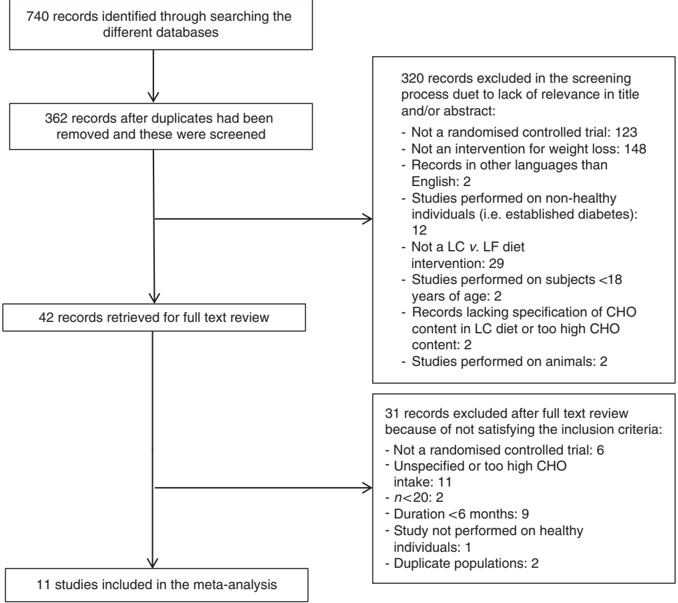
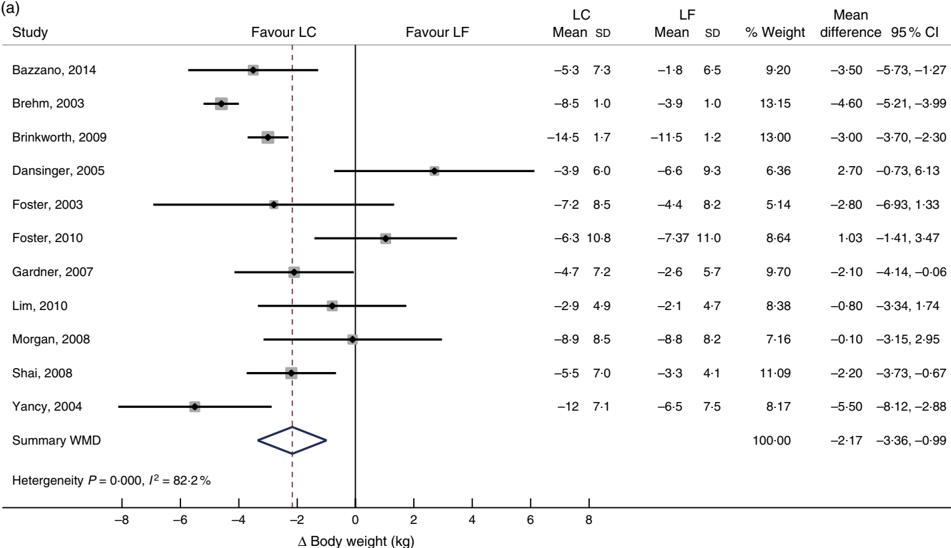
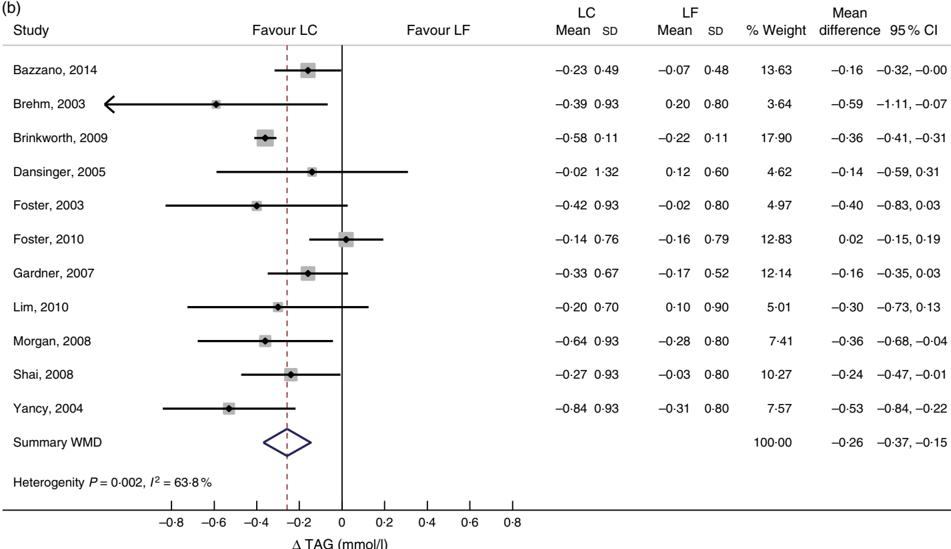
The effects of low-carbohydrate (LC) diets on body weight and cardiovascular risk are unclear, and previous studies have found varying results. Our aim was to conduct a meta-analysis of randomised controlled trials (RCT), assessing the effects of LC diets v. low-fat (LF) diets on weight loss and risk factors of CVD. Studies were identified by searching MEDLINE, Embase and Cochrane Trials. Studies had to fulfil the following criteria: a RCT; the LC diet was defined in accordance with the Atkins diet, or carbohydrate intake of <20% of total energy intake; twenty subjects or more per group; the subjects were previously healthy; and the dietary intervention had a duration of 6 months or longer. Results from individual studies were pooled as weighted mean difference (WMD) using a random effect model. In all, eleven RCT with 1369 participants met all the set eligibility criteria. Compared with participants on LF diets, participants on LC diets experienced a greater reduction in body weight (WMD -2·17 kg; 95% CI -3·36, -0·99) and TAG (WMD -0·26 mmol/l; 95% CI -0·37, -0·15), but a greater increase in HDL-cholesterol (WMD 0·14 mmol/l; 95% CI 0·09, 0·19) and LDL-cholesterol (WMD 0·16 mmol/l; 95% CI 0·003, 0·33). This meta-analysis demonstrates opposite change in two important cardiovascular risk factors on LC diets--greater weight loss and increased LDL-cholesterol. Our findings suggest that the beneficial changes of LC diets must be weighed against the possible detrimental effects of increased LDL-cholesterol.
Overview
CoChat Summary
TL;DR
In this meta-analysis of 11 randomised controlled trials (1369 participants), low-carbohydrate diets produced greater weight loss and TAG reduction and a greater HDL-cholesterol increase than low-fat diets, but also a greater increase in LDL-cholesterol. The authors conclude that benefits of low-carbohydrate diets must be weighed against the possible detrimental effect of increased LDL-cholesterol.
Key findings
- Compared with low-fat diets, low-carbohydrate diets led to greater body-weight reduction (WMD −2·17 kg; 95 % CI −3·36, −0·99) and greater TAG reduction (WMD −0·26 mmol/l; 95 % CI −0·37, −0·15).
- Low-carbohydrate diets also produced a greater increase in HDL-cholesterol (WMD 0·14 mmol/l; 95 % CI 0·09, 0·19) and in LDL-cholesterol (WMD 0·16 mmol/l; 95 % CI 0·003, 0·33).
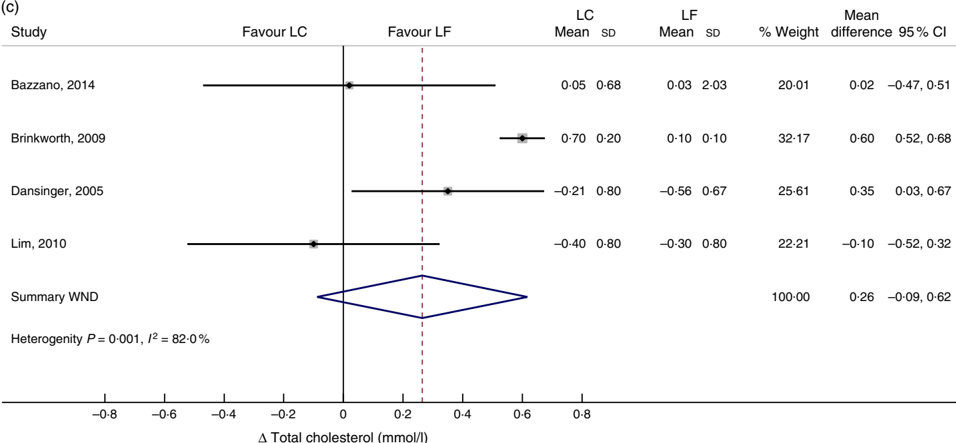
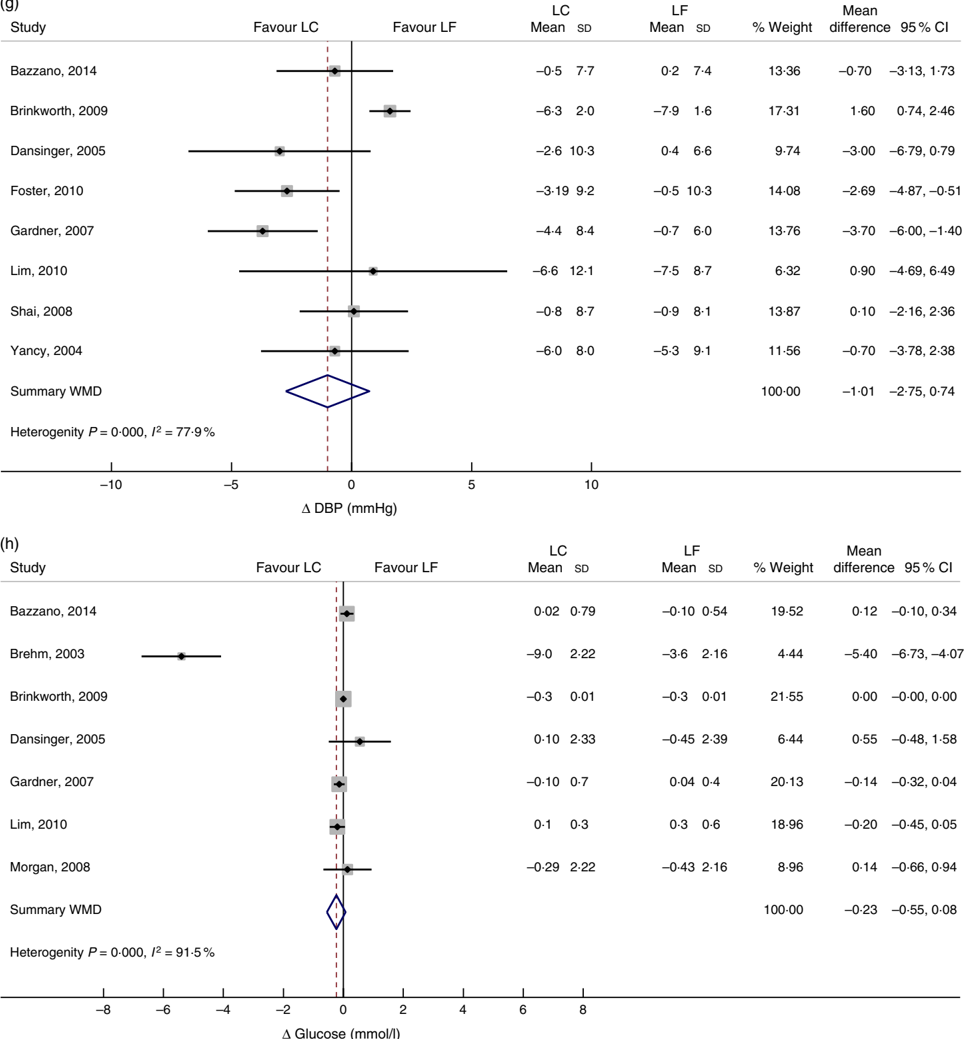
- No significant differences were found for total cholesterol, systolic blood pressure, diastolic blood pressure, glucose or insulin.
- Heterogeneity was moderate to high for all variables (I² 63–92 %); possible publication bias was detected for body weight, total cholesterol, LDL-cholesterol and diastolic blood pressure, but trim-and-fill estimates were unchanged.
Methods
- Systematic review and meta-analysis of randomised controlled trials, reported according to PRISMA and registered in PROSPERO (CRD42015020458); MEDLINE, Embase and Cochrane CENTRAL were searched to 28 May 2015.
- Inclusion criteria: RCT comparing a low-carbohydrate diet (Atkins-type or <20 % of total energy from carbohydrate) with a low-fat diet; ≥20 subjects per group; previously healthy subjects; intervention duration ≥6 months. Severe obesity (BMI ≥35 kg/m²) and supplementary medical therapy were excluded.
- Eleven RCTs with 1369 participants (low-carbohydrate n 688; low-fat n 681) were pooled using random-effects weighted mean differences; risk of bias was assessed with the Cochrane tool, with sensitivity, subgroup and publication-bias analyses performed in Stata 13.1.
Limitations
- The paper states that heterogeneity was moderate to high for all variables, and that funnel-plot asymmetry raised the possibility of publication bias; Egger’s test has low power when fewer than 10 studies are included.
- The paper states high dropout rates (average 31 % for both diet groups), limited dietary adherence, self-reported dietary intake, and variation in reported macronutrient intake (carbohydrate 9–40 % of total energy; fat 37–54 % at end of intervention), which may limit generalisability and validity.
- The paper states that no included study examined hard endpoints such as CHD or mortality, results may not apply to individuals with obesity-related conditions such as diabetes, CVD or lipid-metabolism disturbances, and multiple testing was not adjusted for.
Model-written summary. Check it against the paper before relying on it.
Integrity signals
Registry
Cites
Statistics
Figures
Verification
Claims the paper makes
14 Valid · 2 Not valid · 13 Not checked · 68 Own results and interpretations
Some cited sources support this claim and some don’t — read each source’s verdict below.
In the paper
“In analyses that excluded studies including subjects with associated metabolic disorders (11,28,29,34,37,38) , the WMD was similar as in the primary meta-analysis for body weight (six studies), TAG (six studies), TC (one study), HDL-cholesterol (six studies) and LDL-cholesterol (six studies).”
What the sources say
- Not checked — no full text of the sourcecites [11] 11. Brehm BJ, Seeley RJ, Daniels SR, et al . (2003) A randomized trial comparing a very low carbohydrate diet and a calorie-restricted low fat diet on body weight and cardiovascular risk factors in healthy women. J Clin Endocrinol Metab 88 , 1617 -1623. source
- Not checked — no full text of the sourcecites [28] 28. Foster GD, Wyatt HR, Hill JO, et al . (2003) A randomized trial of a low-carbohydrate diet for obesity. N Engl J Med 348 , 2082 -2090. source
- Disputedcites [29] 29. Morgan LM, Grif fi n BA, Millward DJ, et al . (2009) Comparison of the effects of four commercially available weight-loss programmes on lipid-based cardiovascular risk factors. Public Health Nutr 12 , 799 -807. sourceExperimental — accuracy not yet measured
The citation is attached only to the list of studies excluded for 'including subjects with associated metabolic disorders'; the WMD/sensitivity-analysis result itself is the citing paper's own meta-analysis, not this source's finding. Our copy of Morgan et al. (2009) says the opposite about its population: the 'Study setting, subjects and design' section lists GP-confirmed exclusion criteria of prior CHD, known type 1 or 2 diabetes, liver or respiratory failure, gout, lipid-lowering or anti-hypertensive medication, secondary obesity (Cushing's syndrome, hypothyroidism) and any malabsorptive state. The Discussion concludes the programmes 'can help people with uncomplicated obesity'. So this trial did not enrol subjects with associated metabolic disorders. (LLM, conf=0.82)
Checked by a reasoning model — may be wrong.
- Disputedcites [34] 34. Bazzano LA, Hu T, Reynolds K, et al . (2014) Effects of lowcarbohydrate and low-fat diets: a randomized trial. Ann Intern Med 161 , 309 -318. sourceExperimental — accuracy not yet measured
The citation identifies Bazzano et al. as a study excluded because it included subjects with associated metabolic disorders. But the Methods (Setting and Participants; page unavailable) say the trial excluded people with clinical cardiovascular disease, type 2 diabetes, or kidney disease, and describe its population as having no clinical comorbid conditions. This paper also reports a single trial, not the cited weighted-mean-difference sensitivity analysis. (LLM, conf=0.88)
Checked by a reasoning model — may be wrong.
- Supportedcites [37] 37. Foster GD, Wyatt HR, Hill JO, et al . (2010) Weight and metabolic outcomes after 2 years on a low-carbohydrate versus low-fat diet: a randomized trial. Ann Intern Med 153 , 147 -157. source
The citation identifies a study among those excluded because of participants’ metabolic characteristics; it is not offered as the source of the citing authors’ weighted mean differences. The Participants and study design section says this trial enrolled people with abdominal obesity and at least one additional metabolic-syndrome risk factor. (LLM, conf=0.86)
- Not checked — no full text of the sourcecites [38] 38. Gardner CD, Kiazand A, Alhassan S, et al . (2007) Comparison of the Atkins, Zone, Ornish, and LEARN diets for change in weight and related risk factors among overweight premenopausal women: the A to Z Weight Loss Study: a randomized trial. JAMA 297 , 969 -977. source
plain- Asserted: passes — The authors put it forward as true.
- Checkable: passes — It can be checked against evidence.
- Load-bearing: unclear — It is unclear whether the paper’s conclusions depend on it.
- Based: passes — The paper gives a reason why it holds.
The cited sources support only part of this claim — read each source’s verdict below.
In the paper
“Further, large Mendelian randomisation studies indicate that increased HDLcholesterol cannot be translated into a reduction in CVD risk (42,43)”
What the sources say
- Partly supportedcites [42] 42. Haase CL, Tybjaerg-Hansen A, Qayyum AA, et al . (2012) LCAT, HDL cholesterol and ischemic cardiovascular disease: a Mendelian randomization study of HDL cholesterol in 54500 individuals. J Clin Endocrinol Metab 97 , E248 -E256. sourceExperimental — accuracy not yet measured
The Discussion reports that genetically decreased HDL cholesterol was not associated with increased MI risk and concludes that the data do not favor isolated HDL-cholesterol raising as an antiatherogenic strategy. That supports skepticism about raising HDL, but the claim's categorical statement that increased HDL cannot reduce CVD risk goes beyond this study's hedged conclusion and its focus on MI and ischemic cardiovascular disease. (LLM, conf=0.88)
- Partly supportedcites [43] 43. Wu Z, Lou Y, Qiu X, et al . (2014) Association of cholesteryl ester transfer protein (CETP) gene polymorphism, high density lipoprotein cholesterol and risk of coronary artery disease: a meta-analysis using a Mendelian randomization approach. BMC Med Genet 15 , 118. sourceExperimental — accuracy not yet measured
The Abstract Conclusions state that increased HDL-C cannot be translated into reduced coronary artery disease (CAD) risk. The Conclusion limits the Mendelian-randomization inference to CAD among Caucasians; the citing sentence broadens this to cardiovascular disease (CVD) risk generally. (LLM, conf=0.85)
hedged- Asserted: passes — The authors put it forward as true.
- Checkable: passes — It can be checked against evidence.
- Load-bearing: passes — The paper’s conclusions depend on it.
- Based: passes — The paper gives a reason why it holds.
- Partly supported
The sources with a verdict support this claim; the rest weren’t checked yet, have no full text we could read, or their verdicts aren’t rated yet.
In the paper
“The signi fi cant weight loss and increase in LDL-cholesterol in the LC v . LF groups in the present meta-analysis are consistent with several other meta-analyses (12,15,16)”
What the sources say
- Supportedcites [12] 12. Bueno NB, de Melo IS, de Oliveira SL, et al . (2013) Verylow-carbohydrate ketogenic diet v. low-fat diet for long-term weight loss: a meta-analysis of randomised controlled trials. Br J Nutr 110 , 1178 -1187. source
The Discussion (p. 5) reports greater weight loss and a greater LDL-cholesterol increase with a very-low-carbohydrate ketogenic diet than with a low-fat diet over at least 12 months. It also says the weight-loss finding is similar to previous meta-analyses. This supports citing the paper as a meta-analysis consistent with the stated findings. (LLM, conf=0.92)
- Not checked — no full text of the sourcecites [15] 15. Nordmann AJ, Nordmann A, Briel M, et al . (2006) Effects of lowcarbohydrate vs low-fat diets on weight loss and cardiovascular risk factors -a meta-analysis of randomized controlled trials. Arch Inter Med 166 , 285 -293. source
- Not checked — no full text of the sourcecites [16] 16. Schwingshackl L & Hoffmann G (2013) Comparison of effects of long-term low-fat vs high-fat diets on blood lipid levels in overweight or obese patients: a systematic review and meta-analysis. J Acad Nutr Diet 113, 1640 -1661. source
plainstates an association- Asserted: passes — The authors put it forward as true.
- Checkable: passes — It can be checked against evidence.
- Load-bearing: unclear — It is unclear whether the paper’s conclusions depend on it.
- Based: passes — The paper gives a reason why it holds.
- Supported
The sources with a verdict support this claim; the rest weren’t checked yet, have no full text we could read, or their verdicts aren’t rated yet.
In the paper
“Previous meta-analyses have included studies with CHO ranging from 20 g/d upto 40 -45 % at the beginning of the intervention (15,21)”
What the sources say
- Not checked — no full text of the sourcecites [15] 15. Nordmann AJ, Nordmann A, Briel M, et al . (2006) Effects of lowcarbohydrate vs low-fat diets on weight loss and cardiovascular risk factors -a meta-analysis of randomized controlled trials. Arch Inter Med 166 , 285 -293. source
- Supportedcites [21] 21. Hu T, Mills KT, Yao L, et al . (2012) Effects of low-carbohydrate diets versus low-fat diets on metabolic risk factors: a metaanalysis of randomized controlled clinical trials. Am J Epidemiol 176 , Suppl. 7, S44 -S54. source
Table 1 (p. S52) lists included trials starting at 20 g of carbohydrate per day and others targeting 40% or 45% carbohydrate. The Results likewise state that carbohydrate targets in the low-carbohydrate groups ranged up to 45% of energy intake. (LLM, conf=0.92)
plain- Asserted: passes — The authors put it forward as true.
- Checkable: passes — It can be checked against evidence.
- Load-bearing: passes — The paper’s conclusions depend on it.
- Based: passes — The paper gives a reason why it holds.
The cited sources support only part of this claim — read each source’s verdict below.
In the paper
“On the other hand, increased levels of LDL-cholesterol are clearly associated with increased risk of CVD (18,19)”
What the sources say
- Partly supportedcites [18] 18. Berneis KK & Krauss RM (2002) Metabolic origins and clinical signi fi cance of LDL heterogeneity. J Lipid Res 43 , 1363 -1379. sourceExperimental — accuracy not yet measured
The paper’s Abstract (page unavailable) links LDL particle profiles, including a predominance of small dense LDL, to increased coronary heart disease risk. It does not establish the more specific claim that higher LDL-cholesterol concentration itself is associated with higher CVD risk. (LLM, conf=0.78)
- Not checked — no full text of the sourcecites [19] 19. Krauss RM & Siri PW (2004) Metabolic abnormalities: triglyceride and low-density lipoprotein. Endocrinol Metab Clin North Am 33 , 405 -415. source
boostedstates an association- Asserted: passes — The authors put it forward as true.
- Checkable: passes — It can be checked against evidence.
- Load-bearing: passes — The paper’s conclusions depend on it.
- Based: passes — The paper gives a reason why it holds.
- Partly supported
38 more claims · 2 with their cited sources checked
Create a free account to see all 97 claims and to verify the 7 references still open.
- Probably not a substantial claim. 31
- It may state two separate claims as one. 28
- The quote only partly states this claim. 1
Claims other papers make about this one
Each is checked against this paper’s own text: does it say what the citing paper says it does?
The source backs part of the claim, not all of it — or backs it for a different population, condition or comparison.
In the citing paper
“Studies with more stringent definitions for LC observed slightly greater weight loss in the initial phase than in the LF groups, but the differences were clinically small and limited to the initial phase [44].”
From Dietary and Behavioral Strategies for Weight Loss and Weight Loss Maintenance: A Narrative Review (2025) · cites this paper as [44]
Experimental — accuracy not yet measuredThe source backs part of the claim, not all of it — or backs it for a different population, condition or comparison.
In the citing paper
“The greater long-term weight loss when consuming high-fat diets than when consuming low-fat diets (16, 101–104)”
From The carbohydrate-insulin model: A physiological perspective on the obesity pandemic (2021) · cites this paper as [103]
Experimental — accuracy not yet measuredThe source backs part of the claim, not all of it — or backs it for a different population, condition or comparison.
In the citing paper
“Several systematic reviews and meta-analyses over the past decade have examined the effects of LCDs, unanimously showing superior weight loss to LFDs [136,138–145], with mean differences ranging 1.01–2.64 kg.”
From International Society of Sports Nutrition position stand: diets for body weight reduction (2026) · cites this paper as [140]
Experimental — accuracy not yet measuredThe cited source says what the claim attributes to it.
In the citing paper
“Reported lipid changes in LC groups included lower triglyceride concentrations and higher HDL cholesterol and LDL cholesterol levels [44].”
From Dietary and Behavioral Strategies for Weight Loss and Weight Loss Maintenance: A Narrative Review (2025) · cites this paper as [44]
The cited source says what the claim attributes to it.
In the citing paper
“In studies applying more stringent criteria for LC, such as carbohydrate intake below 20% of energy or 20 to 40 g/day during the initial phase, LC was associated with greater weight loss than LF. The mean difference was 2.17 kg after at least 6 months of intervention [44].”
From Dietary and Behavioral Strategies for Weight Loss and Weight Loss Maintenance: A Narrative Review (2025) · cites this paper as [44]
3 more claims about this paper
Create a free account to see every claim other papers make about this one.
Self-check
Percentages, sums and reported differences re-computed from the paper’s own numbers.
Each contradiction between two passages listed here was confirmed by an independent check.
Rated minor: it would not touch a result — a value no result rests on, a p-value that stays on the same side of the significance level, or a conflict that is clerical, resolved elsewhere in the paper, or outside its own findings.
In the paper
§ Study and subject characteristics · p. 3
“The dietary goal for the LF diets was < 30 % of total energy as fat.”
§ Study and subject characteristics · p. 4
“55% of total energy as CHO, 15% as protein and 30% as fat”
Rated minor: it would not touch a result — a value no result rests on, a p-value that stays on the same side of the significance level, or a conflict that is clerical, resolved elsewhere in the paper, or outside its own findings.
In the paper
§ Study and subject characteristics · p. 3
“Furthermore, subjects on the LF diet were imposed a energy restriction”
§ Study and subject characteristics · p. 4
“55%of total energy intake as CHO. No energy restriction”
Citations
Cites
Preferred Reporting Items for Systematic Reviews and Meta-Analyses: the PRISMA statement
Moher, D., Liberati, A., Tetzlaff, J., Altman, D. G., & for the PRISMA Group (2009) · BMJ · doi:10.1136/bmj.b2535 · Cited by 83,823
Preferred Reporting Items for Systematic Reviews and Meta-Analyses: The PRISMA Statement
Moher, D., Liberati, A., Tetzlaff, J., Altman, D. G., & The PRISMA Group (2009) · PLoS Medicine · doi:10.1371/journal.pmed.1000097 · Cited by 64,042
Bias in meta-analysis detected by a simple, graphical test
Egger, M., Smith, G. D., Schneider, M., & Minder, C. (1997) · BMJ · doi:10.1136/bmj.315.7109.629 · Cited by 56,722
Preferred reporting items for systematic reviews and meta-analyses: the PRISMA Statement.
(2009) · PubMed Central · Cited by 44,859
Meta-analysis in clinical trials
DerSimonian, R., & Laird, N. (1986) · Controlled Clinical Trials · doi:10.1016/0197-2456(86)90046-2 · Cited by 39,552 · cited 1×
“Summary WMD with 95% CI for the outcome measures were calculated using a random effect model((31)).”
MethodQuantifying heterogeneity in a meta‐analysis
Higgins, J. P. T., & Thompson, S. G. (2002) · Statistics in Medicine · doi:10.1002/sim.1186 · Cited by 36,763
Preferred Reporting Items for Systematic Reviews and Meta-Analyses: The PRISMA Statement
Moher, D., Liberati, A., Tetzlaff, J., & Altman, D. G. (2009) · Journal of Clinical Epidemiology · doi:10.1016/j.jclinepi.2009.06.005 · Cited by 19,575
Ng, M., Fleming, T., Robinson, M., Thomson, B., Graetz, N., Margono, C., Mullany, E. C., Biryukov, S., Abbafati, C., Abera, S. F., et al. (2014) · The Lancet · doi:10.1016/s0140-6736(14)60460-8 · Cited by 11,952
Levesque, R. J. R. (2017) · Encyclopedia of Adolescence · doi:10.1007/978-3-319-32132-5_447-2 · Cited by 4,021
Assessing Risk of Bias in Included Studies
Higgins, J. P., & Altman, D. G. (2008) · Cochrane Handbook for Systematic Reviews of Interventions · doi:10.1002/9780470712184.ch8 · Cited by 3,396 · cited 1×
“Methodological quality was evaluated by two authors using the Cochrane Collaboration’s tool for assessing risk of bias((25)) indicating the following bias categories: selection bias (random sequence generation, allocation concealment); performance bias (blinding of participants and personnel and blinding of the outcom…”
Method
Research works printed but not linked: 1
- 47. Higgins JPT & Green S (editors) (2011) Recommendations on testing for funnel plot asymmetry. Cochrane Handbook for Systematic Reviews of Interventions , version 5.1.0 [updated March 2011]. http://handbook.cochrane.org/chapter\_10/10\_4\_ 3\_1\_recommendations\_on\_testing\_for\_funnel\_plot\_asymmetry. htm (accessed February 2015).
Cited by
Dietary Strategies for Metabolic Syndrome: A Comprehensive Review
Castro-Barquero, S., Ruiz-León, A. M., Sierra-Pérez, M., Estruch, R., & Casas, R. (2020) · Nutrients · doi:10.3390/nu12102983 · Cited by 482
“Likewise, low-CH diets showed greater effects on the control of glycated hemoglobin and blood lipid levels than low-fat diets in a short to medium term intervention [52,112,119,120].”
BackgroundDietary and nutritional approaches for prevention and management of type 2 diabetes
Forouhi, N. G., Misra, A., Mohan, V., Taylor, R., & Yancy, W. (2018) · BMJ · doi:10.1136/bmj.k2234 · Cited by 472
Salas-Salvadó, J., Díaz-López, A., Ruiz-Canela, M., Basora, J., Fitó, M., Corella, D., Serra-Majem, L., Wärnberg, J., Romaguera, D., Estruch, R., et al. (2019) · Diabetes Care · doi:10.2337/dc18-0836 · Cited by 445
“saturated fatty acids and cholesterol and thereby have the unwanted effect of increasing LDL cholesterol (12,27), a potent and recognized risk factor for atherosclerotic CVD.”
BackgroundThe Carbohydrate-Insulin Model of Obesity: Beyond “Calories In, Calories Out”
Ludwig, D. S., & Ebbeling, C. B. (2018) · JAMA Internal Medicine · doi:10.1001/jamainternmed.2018.2933 · Cited by 440
Ge, L., Sadeghirad, B., Ball, G. D. C., da Costa, B. R., Hitchcock, C. L., Svendrovski, A., Kiflen, R., Quadri, K., Kwon, H. Y., Karamouzian, M., et al. (2020) · BMJ · doi:10.1136/bmj.m696 · Cited by 426
Zhu, H., Bi, D., Zhang, Y., Kong, C., Du, J., Wu, X., Wei, Q., & Qin, H. (2022) · Signal Transduction and Targeted Therapy · doi:10.1038/s41392-021-00831-w · Cited by 399
Kirkpatrick, C. F., Bolick, J. P., Kris-Etherton, P. M., Sikand, G., Aspry, K. E., Soffer, D. E., Willard, K.-E., & Maki, K. C. (2019) · Journal of Clinical Lipidology · doi:10.1016/j.jacl.2019.08.003 · Cited by 390
Dietary carbohydrates: role of quality and quantity in chronic disease
Ludwig, D. S., Hu, F. B., Tappy, L., & Brand-Miller, J. (2018) · BMJ · doi:10.1136/bmj.k2340 · Cited by 330
Dietary fat and cardiometabolic health: evidence, controversies, and consensus for guidance
Forouhi, N. G., Krauss, R. M., Taubes, G., & Willett, W. (2018) · BMJ · doi:10.1136/bmj.k2139 · Cited by 314
Cohort Profile: Design and methods of the PREDIMED-Plus randomized trial
Martínez-González, M. A., Buil-Cosiales, P., Corella, D., Bulló, M., Fitó, M., Vioque, J., Romaguera, D., Martínez, J. A., Wärnberg, J., López-Miranda, J., et al. (2019) · International Journal of Epidemiology · doi:10.1093/ije/dyy225 · Cited by 309
International society of sports nutrition position stand: diets and body composition
Aragon, A. A., Schoenfeld, B. J., Wildman, R., Kleiner, S., VanDusseldorp, T., Taylor, L., Earnest, C. P., Arciero, P. J., Wilborn, C., Kalman, D. S., et al. (2017) · Journal of the International Society of Sports Nutrition · doi:10.1186/s12970-017-0174-y · Cited by 301
“weight loss and other cardiovascular risk factors [47].”
BackgroundOkamura, T., Tsukamoto, K., Arai, H., Fujioka, Y., Ishigaki, Y., Koba, S., Ohmura, H., Shoji, T., Yokote, K., Yoshida, H., et al. (2024) · Journal of Atherosclerosis and Thrombosis · doi:10.5551/jat.gl2022 · Cited by 302
The carbohydrate-insulin model: A physiological perspective on the obesity pandemic
Ludwig, D. S., Aronne, L. J., Astrup, A., de Cabo, R., Cantley, L. C., Friedman, M. I., Heymsfield, S. B., Johnson, J. D., King, J. C., Krauss, R. M., et al. (2021) · The American Journal of Clinical Nutrition · doi:10.1093/ajcn/nqab270 · Cited by 292
Ebbeling, C. B., Feldman, H. A., Klein, G. L., Wong, J. M. W., Bielak, L., Steltz, S. K., Luoto, P. K., Wolfe, R. R., Wong, W. W., & Ludwig, D. S. (2018) · BMJ · doi:10.1136/bmj.k4583 · Cited by 274
Freire, R. (2020) · Nutrition · doi:10.1016/j.nut.2019.07.001 · Cited by 262
“Moreover, HP-HF diets are often associated with a high intake of animal products and saturated fat, causing detrimental effects of increased low-density lipoprotein cholesterol [39,40].”
BackgroundDietary interventions for obesity: clinical and mechanistic findings.
Chao, A. M., Quigley, K. M., & Wadden, T. A. (2021) · Journal of Clinical Investigation · doi:10.1172/jci140065 · Cited by 257
Dietary fat: From foe to friend?
Ludwig, D. S., Willett, W. C., Volek, J. S., & Neuhouser, M. L. (2018) · Science · doi:10.1126/science.aau2096 · Cited by 257
Overweight and diabetes prevention: Is a low-carbohydrate-high-fat diet recommendable?
Brouns, F. (2018) · European Journal of Nutrition · doi:10.1007/s00394-018-1636-y · Cited by 235
“[49] concerned data of 11 randomized controlled studies (total of 1369 participants).”
BackgroundLow-Carb and Ketogenic Diets in Type 1 and Type 2 Diabetes
Bolla, A. M., Caretto, A., Laurenzi, A., Scavini, M., & Piemonti, L. (2019) · Nutrients · doi:10.3390/nu11050962 · Cited by 226
“Similar results were reported by a recent meta-analysis [32], according to which persons on LCD experienced a greater reduction in body weight, but an increase in HDL and LDL cholesterol.”
ResultThe ketogenic diet: Pros and cons
O'Neill, B., & Raggi, P. (2020) · Atherosclerosis · doi:10.1016/j.atherosclerosis.2019.11.021 · Cited by 219
Khan, S. U., Khan, M. U., Riaz, H., Valavoor, S., Zhao, D., Vaughan, L., Okunrintemi, V., Riaz, I. B., Khan, M. S., Kaluski, E., et al. (2019) · Annals of Internal Medicine · doi:10.7326/m19-0341 · Cited by 216
Optimal Diet Strategies for Weight Loss and Weight Loss Maintenance
Kim, J. Y. (2021) · Journal of Obesity & Metabolic Syndrome · doi:10.7570/jomes20065 · Cited by 193
The Burden of Carbohydrates in Health and Disease
Clemente-Suárez, V. J., Mielgo-Ayuso, J., Martín-Rodríguez, A., Ramos-Campo, D. J., Redondo-Flórez, L., & Tornero-Aguilera, J. F. (2022) · Nutrients · doi:10.3390/nu14183809 · Cited by 194
Bhanpuri, N. H., Hallberg, S. J., Williams, P. T., McKenzie, A. L., Ballard, K. D., Campbell, W. W., McCarter, J. P., Phinney, S. D., & Volek, J. S. (2018) · Cardiovascular Diabetology · doi:10.1186/s12933-018-0698-8 · Cited by 190
Chawla, S., Tessarolo Silva, F., Amaral Medeiros, S., Mekary, R., & Radenkovic, D. (2020) · Nutrients · doi:10.3390/nu12123774 · Cited by 185
“In line with previous meta-analyses [18,62,79], our analysis observed diminished differences between low-carbohydrate and low-fat diets at 24 months and the WMD decreased from −1.”
ResultAdvantages and Disadvantages of the Ketogenic Diet: A Review Article
Batch, J. T., Lamsal, S. P., Adkins, M., Sultan, S., & Ramirez, M. N. (2020) · Cureus · doi:10.7759/cureus.9639 · Cited by 181
“Interestingly, the authors mentioned that this was attributed to lower energy intake rather than the macronutrient composition [11].”
BackgroundDiet and exercise in NAFLD/NASH: Beyond the obvious
Semmler, G., Datz, C., Reiberger, T., & Trauner, M. (2021) · Liver International · doi:10.1111/liv.15024 · Cited by 179
Evidence that supports the prescription of low-carbohydrate high-fat diets: A narrative review
Noakes, T. D., & Windt, J. (2017) · British Journal of Sports Medicine · doi:10.1136/bjsports-2016-096491 · Cited by 178
A Heart-Healthy Diet for Cardiovascular Disease Prevention: Where Are We Now?
Diab, A., Dastmalchi, L. N., Gulati, M., & Michos, E. D. (2023) · Vascular Health and Risk Management · doi:10.2147/vhrm.s379874 · Cited by 176
“For example, probiotics use has shown benefits in mild reduction in blood pressure, blood glucose, and TMAO levels.106 Higher fiber intake is associated with increased diversity of the gut microbiota,38 and a higher fiber diet is associated with lower risk of hypertension and CVD.107 Individuals with hypertension were…”
BackgroundInfluentialGardner, C. D., Vadiveloo, M. K., Petersen, K. S., Anderson, C. A. M., Springfield, S., Van Horn, L., Khera, A., Lamendola, C., Mayo, S. M., Joseph, J. J., et al. (2023) · Circulation · doi:10.1161/cir.0000000000001146 · Cited by 172
Diets and drugs for weight loss and health in obesity – An update
Aaseth, J., Ellefsen, S., Alehagen, U., Sundfør, T. M., & Alexander, J. (2021) · Biomedicine & Pharmacotherapy · doi:10.1016/j.biopha.2021.111789 · Cited by 174
Tzenios, N., Lewis, E. D., Crowley, D. C., Chahine, M., & Evans, M. (2022) · Metabolic Syndrome and Related Disorders · doi:10.1089/met.2021.0042 · Cited by 169
Metabolic dysfunction and obesity‐related cancer: Beyond obesity and metabolic syndrome
Karra, P., Winn, M., Pauleck, S., Bulsiewicz‐Jacobsen, A., Peterson, L., Coletta, A., Doherty, J., Ulrich, C. M., Summers, S. A., Gunter, M., et al. (2022) · Obesity · doi:10.1002/oby.23444 · Cited by 168
Dinu, M., Pagliai, G., Angelino, D., Rosi, A., Dall'Asta, M., Bresciani, L., Ferraris, C., Guglielmetti, M., Godos, J., Del Bo', C., et al. (2020) · Advances in Nutrition · doi:10.1093/advances/nmaa006 · Cited by 164
Schwingshackl, L., Chaimani, A., Schwedhelm, C., Toledo, E., Pünsch, M., Hoffmann, G., & Boeing, H. (2019) · Critical Reviews in Food Science and Nutrition · doi:10.1080/10408398.2018.1463967 · Cited by 161
“Previous meta-analyses reported conflicting results regarding the blood pressure lowering effects of LC and HP diets (Bueno et al. 2013; Mansoor et al. 2016; Santesso et al. 2012; Schwingshackl and Hoffmann 2013b; Wycherley et al. 2012).”
ResultKoliaki, C., Spinos, T., Spinou, Μ., Brinia, Μ.-E., Mitsopoulou, D., & Katsilambros, N. (2018) · Healthcare · doi:10.3390/healthcare6030073 · Cited by 146
“Some meta-analyses have suggested that low-carbohydrate diets provide better weight loss outcomes than low-fat diets, but weight loss benefits should be weighed against potential risks associated with LDL-cholesterol increase [59].”
BackgroundManagement of Type 1 Diabetes With a Very Low–Carbohydrate Diet
Lennerz, B. S., Barton, A., Bernstein, R. K., Dikeman, R. D., Diulus, C., Hallberg, S., Rhodes, E. T., Ebbeling, C. B., Westman, E. C., Yancy, W. S., et al. (2018) · Pediatrics · doi:10.1542/peds.2017-3349 · Cited by 146
Ultraprocessed Foods and Obesity Risk: A Critical Review of Reported Mechanisms
Valicente, V. M., Peng, C.-H., Pacheco, K. N., Lin, L., Kielb, E. I., Dawoodani, E., Abdollahi, A., & Mattes, R. D. (2023) · Advances in Nutrition · doi:10.1016/j.advnut.2023.04.006 · Cited by 144
Sievenpiper, J. L. (2020) · Nutrition Reviews · doi:10.1093/nutrit/nuz082 · Cited by 144
“non–high-density lipoprotein cholesterol (non-HDLC), and apolipoprotein B (apo B), in people with and without diabetes.(22,23) The quality of the protein and fat substituting for the carbohydrate in low-carbohydrate”
BackgroundThe Ketogenic Diet: Evidence for Optimism but High-Quality Research Needed
Ludwig, D. S. (2020) · The Journal of Nutrition · doi:10.1093/jn/nxz308 · Cited by 133
Kelly, T., Unwin, D., & Finucane, F. (2020) · International Journal of Environmental Research and Public Health · doi:10.3390/ijerph17072557 · Cited by 128
“A second consideration is the increase in LDL-cholesterol that is described with some [27] but not all [108] low-carbohydrate interventions, but the fact that this appears limited to the large LDL subfraction [76] suggests it is unclear whether it increases cardiovascular risk.”
BackgroundA Clinician's Guide to Healthy Eating for Cardiovascular Disease Prevention
Pallazola, V. A., Davis, D. M., Whelton, S. P., Cardoso, R., Latina, J. M., Michos, E. D., Sarkar, S., Blumenthal, R. S., Arnett, D. K., Stone, N. J., et al. (2019) · Mayo Clinic Proceedings: Innovations, Quality & Outcomes · doi:10.1016/j.mayocpiqo.2019.05.001 · Cited by 123
“LCHF diets are associated with improved weight loss and increased insulin sensitivity but an increase in LDL-C levels.(79,80) Some studies have suggested that the Atkins style diet was as effective as the Mediterranean diet for weight loss(81); both diets were superior to a low-fat diet.”
BackgroundLow-carbohydrate diets for overweight and obesity: A systematic review of the systematic reviews
Churuangsuk, C., Kherouf, M., Combet, E., & Lean, M. (2018) · Obesity Reviews · doi:10.1111/obr.12744 · Cited by 118
“Mansoor 2016 (12) LCDs showed inconsistent changes in two CVD risk factors – leading to more weight loss yet increased LDL.”
BackgroundMethodResultInfluentialKetogenic Diet: A New Light Shining on Old but Gold Biochemistry
Longo, R., Peri, C., Cricrì, D., Coppi, L., Caruso, D., Mitro, N., Fabiani, E. D., & Crestani, M. (2019) · Nutrients · doi:10.3390/nu11102497 · Cited by 137
“[109] showed that consumption of low carbohydrate diets in overweighed “healthy” subjects induced a greater weight loss when compared with individuals following low fat diets.”
BackgroundKorsmo‐Haugen, H., Brurberg, K. G., Mann, J., & Aas, A. (2019) · Diabetes, Obesity and Metabolism · doi:10.1111/dom.13499 · Cited by 115
Competing paradigms of obesity pathogenesis: energy balance versus carbohydrate-insulin models
Ludwig, D. S., Apovian, C. M., Aronne, L. J., Astrup, A., Cantley, L. C., Ebbeling, C. B., Heymsfield, S. B., Johnson, J. D., King, J. C., Krauss, R. M., et al. (2022) · European Journal of Clinical Nutrition · doi:10.1038/s41430-022-01179-2 · Cited by 111
Gjuladin-Hellon, T., Davies, I. G., Penson, P., & Amiri Baghbadorani, R. (2019) · Nutrition Reviews · doi:10.1093/nutrit/nuy049 · Cited by 108
“These differences are presumably due to the different inclusion/exclusion criteria during the selection process between the current and the 2 previous meta-analyses.(29,30)”
Gómez-Delgado, F., Katsiki, N., López‐Miranda, J., & Pérez‐Martínez, P. (2020) · Critical Reviews in Food Science and Nutrition · doi:10.1080/10408398.2020.1764487 · Cited by 134
“The main benefit of this diet is the promotion of weight loss (Bueno et al. 2013, Mansoor et al. 2016).”
BackgroundBurén, J., Ericsson, M., Damasceno, N., & Sjödin, A. (2021) · Nutrients · doi:10.3390/nu13030814 · Cited by 104
“Alongside its well ‐ documented weight ‐ reducing effects [5,6], recent studies have also shown a beneficial impact of ketogenic LCHF diets on cardiovascular risk factors [5].”
Retterstøl, K., Svendsen, M., Narverud, I., & Holven, K. B. (2018) · Atherosclerosis · doi:10.1016/j.atherosclerosis.2018.10.013 · Cited by 97
Self-citationImplementing a low-carbohydrate, ketogenic diet to manage type 2 diabetes mellitus
Westman, E. C., Tondt, J., Maguire, E., & Yancy, W. S. (2018) · Expert Review of Endocrinology & Metabolism · doi:10.1080/17446651.2018.1523713 · Cited by 95
Li, Z.-H., Gao, X., Chung, V. C., Zhong, W.-F., Fu, Q., Lv, Y.-B., Wang, Z.-H., Shen, D., Zhang, X.-R., Zhang, P.-D., et al. (2020) · Annals of the Rheumatic Diseases · doi:10.1136/annrheumdis-2020-217176 · Cited by 91
“41 42 Mechanisms other than anti-inflammation, reducing glycolysis and increasing amino acid catabolism might also be involved in mediating our observed outcomes.”
Impacts of carbohydrate‐restricted diets on micronutrient intakes and status: A systematic review
Churuangsuk, C., Griffiths, D., Lean, M. E. J., & Combet, E. (2019) · Obesity Reviews · doi:10.1111/obr.12857 · Cited by 92
Lu, M., Wan, Y., Yang, B., Huggins, C. E., & Li, D. (2018) · British Journal of Nutrition · doi:10.1017/s0007114517002902 · Cited by 91
“Notably two systematic reviews and meta-analyses((8,9)) have reported common findings that high-fat diets v.”
BackgroundThe Role of Exercise, Diet, and Cytokines in Preventing Obesity and Improving Adipose Tissue
Atakan, M. M., Koşar, Ş. N., Güzel, Y., Tin, H. T., & Yan, X. (2021) · Nutrients · doi:10.3390/nu13051459 · Cited by 87
“A meta-analysis that included the studies with a duration of 6 months or longer dietary intervention, investigated the effects of LCDs and low-fat diets (LFDs) on weight loss [158].”
MethodGenetic evidence that carbohydrate-stimulated insulin secretion leads to obesity
Astley, C. M., Todd, J. N., Salem, R. M., Vedantam, S., Ebbeling, C. B., Huang, P. L., Ludwig, D. S., Hirschhorn, J. N., & Florez, J. C. (2018) · Clinical Chemistry · doi:10.1373/clinchem.2017.280727 · Cited by 86
Nutrition transition in 2 lowland Bolivian subsistence populations
Kraft, T. S., Stieglitz, J., Trumble, B. C., Martin, M. A., Kaplan, H. S., & Gurven, M. (2018) · American Journal of Clinical Nutrition · doi:10.1093/ajcn/nqy250 · Cited by 91
Schwingshackl, L., Zähringer, J., Beyerbach, J., Werner, S. S., Heseker, H., Koletzko, B. V., & Meerpohl, J. J. (2021) · Annals of Nutrition and Metabolism · doi:10.1159/000515058 · Cited by 95
Yannakoulia, M., & Scarmeas, N. (2024) · New England Journal of Medicine · doi:10.1056/nejmra2211889 · Cited by 89
The evolving role of diet in prostate cancer risk and progression
Kaiser, A., Haskins, C. P., Siddiqui, M. M., Hussain, A., & D’Adamo, C. R. (2019) · Current Opinion in Oncology · doi:10.1097/cco.0000000000000519 · Cited by 91
Neuenschwander, M., HOFFMANN, G. E., Schwingshackl, L., & Schlesinger, S. (2019) · European Journal of Epidemiology · doi:10.1007/s10654-019-00534-1 · Cited by 77
“A meta-analysis including overweight and obese individuals with and without diabetes also found a significant reduction of TG levels comparing a low carbohydrate diet to a low fat diet [110].”
Chen, W., Zhang, S., Hu, X., Chen, F., & Li, D. (2023) · Nutrients · doi:10.3390/nu15234898 · Cited by 89
“In a meta-analysis involving 11 RCTs with 1369 participants, the subjects on a low-carbohydrate diet had greater weight loss but increased cholesterol compared to those on a low-fat diet [21].”
BackgroundTahreem, A., Rakha, A., Rabail, R., Nazir, A., Socol, C. T., Maerescu, C. M., & Aadil, R. M. (2022) · Frontiers in Nutrition · doi:10.3389/fnut.2022.960922 · Cited by 98
Dietary Management of Obesity: A Review of the Evidence
Hwalla, N., & Jaafar, Z. (2020) · Diagnostics · doi:10.3390/diagnostics11010024 · Cited by 66
“(2016) [57] 1369 adults, BMI status not specified ≥6 months Low fat vs.”
BackgroundWillems, A. E. M., Sura–de Jong, M., van Beek, A. P., Nederhof, E., & van Dijk, G. (2021) · Nutrition Reviews · doi:10.1093/nutrit/nuaa044 · Cited by 66
Freedland, S. J., Allen, J., Jarman, A. K., Oyekunle, T. O., Armstrong, A. J., Moul, J. W., Sandler, H. M., Posadas, E. M., Levin, D., Wiggins, E. K., et al. (2020) · Clinical Cancer Research · doi:10.1158/1078-0432.ccr-19-3873 · Cited by 63
“A meta-analysis of 11 RCTs concluded that the beneficial changes of LCDs in weight loss should be weighed against the possible detrimental effects of increases in LDL (45).”
InfluentialFechner, E., Smeets, E., Schrauwen, P., & Mensink, R. (2020) · Nutrients · doi:10.3390/nu12040991 · Cited by 64
“The unintended reduction in energy intake can be explained by the satiating effect of fat and protein, an appetite-suppressing effect of ketones, as well as increased attention to dietary behavior [58,59].”
International society of sports nutrition position stand: tactical athlete nutrition
Gonzalez, D. E., McAllister, M. J., Waldman, H. S., Ferrando, A. A., Joyce, J., Barringer, N., Dawes, J. J., Kieffer, A. J., Harvey, T. M., Kerksick, C. M., et al. (2022) · Journal of the International Society of Sports Nutrition · doi:10.1080/15502783.2022.2086017 · Cited by 89
Barkas, F., Nomikos, T., Liberopoulos, E. N., & Panagiotakos, D. B. (2020) · Nutrients · doi:10.3390/nu12082436 · Cited by 75
“Therefore, irrespectively of which diet will prove superior regarding the lipid management and CV prevention in FH patients, any dietary intervention reducing dietary intake is effective in weight reduction or control and should be recommended in such individuals, especially in those with overweight or obesity [35,36].”
BackgroundAlexander, L., Christensen, S. M., Richardson, L., Ingersoll, A. B., Burridge, K., Golden, A., Karjoo, S., Cortez, D., Shelver, M., & Bays, H. E. (2022) · Obesity Pillars · doi:10.1016/j.obpill.2021.100005 · Cited by 61
“Encouraged [33,54,55] : o The induction phase allows no more than 20 g of carbohydrates per day from non-starchy vegetables and leafy greens, encourages adequate protein, and includes a higher proportion of dietary fat to reduce insulin levels and generate a state of nutritional ketosis. o The…”
BackgroundEfficacy of different dietary patterns on lowering of blood pressure level: an umbrella review
Sukhato, K., Akksilp, K., Dellow, A., Vathesatogkit, P., & Anothaisintawee, T. (2020) · American Journal of Clinical Nutrition · doi:10.1093/ajcn/nqaa252 · Cited by 70
Ketogenic Diet: A Review of Composition Diversity, Mechanism of Action and Clinical Application
Malinowska, D., & Żendzian‐Piotrowska, M. (2024) · Journal of Nutrition and Metabolism · doi:10.1155/2024/6666171 · Cited by 86
Dietary modifications for weight loss and weight loss maintenance
Yannakoulia, M., Poulimeneas, D., Mamalaki, E., & Anastasiou, C. A. (2019) · Metabolism · doi:10.1016/j.metabol.2019.01.001 · Cited by 60
A Clinical Perspective of Low Carbohydrate Ketogenic Diets: A Narrative Review
Sukkar, S. G., & Muscaritoli, M. (2021) · Frontiers in Nutrition · doi:10.3389/fnut.2021.642628 · Cited by 75
Guess, N. D. (2018) · Nutrients · doi:10.3390/nu10091245 · Cited by 78
“Data from meta-analyses show that low-carbohydrate diets (the definition can vary but typically under 30% energy from carbohydrate) are at least as good as low-fat diets (<30% of total energy intake from fat) at promoting weight loss [12,13].”
BackgroundZazpe, I., Santiago, S., Gea, A., Ruiz‐Canela, M., Carlos, S., Bes‐Rastrollo, M., & Martínez‐González, M. Á. (2016) · Nutrition Metabolism and Cardiovascular Diseases · doi:10.1016/j.numecd.2016.07.002 · Cited by 68
Metabolic Syndrome—Role of Dietary Fat Type and Quantity
Clifton, P. M. (2019) · Nutrients · doi:10.3390/nu11071438 · Cited by 71
“[25] performed a meta-analysis of 11 weight loss trials with 1369 participants with a low carbohydrate level being defined as <20% carbohydrates.”
MethodImportance of Dietary Changes During the Coronavirus Pandemic: How to Upgrade Your Immune Response
Châari, A., Bendriss, G., Zakaria, D., & McVeigh, C. (2020) · Frontiers in Public Health · doi:10.3389/fpubh.2020.00476 · Cited by 65
Strubl, S., Oehm, S., Torres, J. A., Grundmann, F., Haratani, J., Decker, M., Vuong, S., Bhandal, A. K., Methot, N., Haynie-Cion, R., et al. (2021) · Clinical Kidney Journal · doi:10.1093/ckj/sfab162 · Cited by 60
“Several positive effects of KDIs, like improvements in body weight, body fat, BP, HDL or inflammation markers, could outweigh the possible adverse effect of increased cholesterol/LDL on CVD risk [26, 46–49].”
A Scoping Review of Current Guidelines on Dietary Fat and Fat Quality
Schwingshackl, L., Zähringer, J., Beyerbach, J., Werner, S. S., Nagavci, B., Heseker, H., Koletzko, B., Meerpohl, J. J., & on behalf of the International Union of Nutritional Sciences (IUNS) Task force on Dietary Fat Quality (2021) · Annals of Nutrition and Metabolism · doi:10.1159/000515671 · Cited by 53
A Review of Ketogenic Diet and Lifestyle.
McGaugh, E., & Barthel, B. (2022) · PubMed Central · Cited by 130
Vilar-Gomez, E., Athinarayanan, S. J., Adams, R. N., Hallberg, S. J., Bhanpuri, N. H., McKenzie, A. L., Campbell, W. W., McCarter, J. P., Phinney, S. D., Volek, J. S., et al. (2019) · BMJ Open · doi:10.1136/bmjopen-2018-023597 · Cited by 50
“weight loss effect to low-fat, high-carbohydrate (LFHC) diets in adults with overweight and 105 obesity[23-26] and short-term interventions with very low-carbohydrate diets are associated with 106”
BackgroundLowering the Bar on the Low-Fat Diet
Ludwig, D. S. (2016) · JAMA · doi:10.1001/jama.2016.15473 · Cited by 49
Kalam, F., Gabel, K., Cienfuegos, S., Wiseman, E., Ezpeleta, M., Steward, M., Pavlou, V., & Varady, K. A. (2019) · Obesity Science & Practice · doi:10.1002/osp4.367 · Cited by 49
Volek, J. S., Kackley, M. L., & Buga, A. (2024) · Current Nutrition Reports · doi:10.1007/s13668-024-00548-6 · Cited by 48
“The results of multiple recent meta-analyses indicate that low-carbohydrate dietary patterns do at least as well, and often better, at promoting weight loss and certain risk markers for cardiovascular disease when compared with low-fat dietary patterns [40, 41, 178–180].”
BackgroundLow-carbohydrate diets for the treatment of obesity and type 2 diabetes
Hall, K. D., & Chung, S. T. (2018) · Current Opinion in Clinical Nutrition & Metabolic Care · doi:10.1097/mco.0000000000000470 · Cited by 46
Yang, Q., Lang, X., Li, W., & Liang, Y. (2022) · European Journal of Clinical Nutrition · doi:10.1038/s41430-021-00927-0 · Cited by 45
Oehm, S., Steinke, K., Schmidt, J., Arjune, S., Todorova, P., Lindemann, C. H., Wöstmann, F., Meyer, F. I., Siedek, F., Weimbs, T., et al. (2022) · Nephrology Dialysis Transplantation · doi:10.1093/ndt/gfac311 · Cited by 50
Dietary management of dyslipidemia and the impact of dietary patterns on lipid disorders
Agarwala, A., Petersen, K. S., Jafari, F. M., & Kris‐Etherton, P. M. (2022) · Progress in Cardiovascular Diseases · doi:10.1016/j.pcad.2022.11.003 · Cited by 50
Joo, M., Moon, S., Lee, Y. S., & Kim, M. G. (2023) · Nutrition Reviews · doi:10.1093/nutrit/nuad017 · Cited by 53
Clinical Effect of Low Carbohydrate Diet (LCD): Case Report
Bando, H., Ebe, K., Muneta, T., Bando, M., & Yonei, Y. (2017) · Diabetes Case Reports · doi:10.4172/2572-5629.1000124 · Cited by 52
Dietary Composition and Cardiovascular Risk: A Mediator or a Bystander?
Korakas, E., Dimitriadis, G., Raptis, A. E., & Lambadiari, V. (2018) · Nutrients · doi:10.3390/nu10121912 · Cited by 56
Soto-Mota, A., Flores-Jurado, Y., Norwitz, N. G., Feldman, D., Pereira, M. A., Danaei, G., & Ludwig, D. S. (2024) · American Journal of Clinical Nutrition · doi:10.1016/j.ajcnut.2024.01.009 · Cited by 57
Eating, diet, and nutrition for the treatment of non-alcoholic fatty liver disease
Semmler, G., Datz, C., & Trauner, M. (2022) · Clinical and Molecular Hepatology · doi:10.3350/cmh.2022.0364 · Cited by 46
“, high in dietary fat) such as elevated LDL and total cholesterol levels in the long-term.(45,46) Finally, both low carbohydrate consumption (<40% of total energy intake) and high carbohydrate consumption (>70%) were associated with higher overall mortality in unselected patients (i.”
BackgroundWali, J. A., Raubenheimer, D., Senior, A. M., Couteur, D. G. L., & Simpson, S. J. (2020) · Cardiovascular Research · doi:10.1093/cvr/cvaa136 · Cited by 45
Alsharairi, N. A. (2021) · Nutrients · doi:10.3390/nu13113702 · Cited by 52
Reversal and Remission of T2DM – An Update for Practitioners
Shibib, L., Al-Qaisi, M., Ahmed, A., Miras, A. D., Nott, D., Pelling, M., Greenwald, S. E., & Guess, N. D. (2022) · Vascular Health and Risk Management · doi:10.2147/vhrm.s345810 · Cited by 48
Caputo, M., Pigni, S., Antoniotti, V., Agosti, E., Caramaschi, A., Antonioli, A., Aimaretti, G., Manfredi, M., Bona, E., & Prodam, F. (2022) · Critical Reviews in Food Science and Nutrition · doi:10.1080/10408398.2022.2087593 · Cited by 44
“According to a recent meta-analysis of randomized clinical trials (Mansoor et al. 2016), participants on low-carb diets experienced a greater reduction in body weight compared with participants on low-fat diets, but, at the same time, a greater increase in HDL-cholesterol and LDL-cholesterol,…”
MethodWachsmuth, N. B., Aberer, F., Haupt, S., Schierbauer, J. R., Zimmer, R. T., Eckstein, M. L., Zunner, B., Schmidt, W., Niedrist, T., Sourij, H., et al. (2022) · Nutrients · doi:10.3390/nu14030423 · Cited by 37
“Recently, meta-analyses have shown that weight reduction can be achieved with both of our performed diets [32] with a more pronounced weight loss when LC diet was conducted [33].”
Kim, H., & Song, S.-W. (2019) · Nutrients · doi:10.3390/nu11030628 · Cited by 39
Metadata
- Authors
- Mansoor, N., Vinknes, K. J., Veierød, M. B., & Retterstøl, K.
- Affiliations
- University of Oslo (NO)
- Oslo University Hospital (NO)
- Corresponding author
- Mansoor, Nadia
- Venue
- British Journal of Nutrition
- Publisher
- Cambridge University Press (CUP)
- Published
- 2015-12-04
- Volume
- 115
- Issue
- 3
- Pages
- 466-479
- ISSN
- 0007-1145 (ISSN-L)
- 1475-2662
- OpenAlex
- W2192691149
- Semantic Scholar
- a0ae2d772d7a7eb96dfef72f05e760305859ae9b
- Cited by
- 439
- References
- 52
- Citations by year
- 2026: 19 · 2025: 32 · 2024: 36 · 2023: 31 · 2022: 58 · 2021: 57 · 2020: 101 · 2019: 35 · 2018: 38 · 2017: 25 · 2016: 6 · 2015: 1
- FWCI
- 2.86
- Type
- journal article
- Language
- en
- Open access
- bronze
- doi.org
- Locations
- British Journal Of Nutrition (publishedVersion)
- PubMed (publishedVersion)
- Funders
- Universitetet i Oslo
- Direktør Throne Holsts Fond For Ernæringsforskning
- Topics
- Health Sciences › Medicine › Physiology (medical) › Diet and metabolism studies
- Health Sciences › Medicine › Physiology (medical) › Dietary Effects on Health
- Health Sciences › Medicine › Public Health, Environmental and Occupational Health › Nutritional Studies and Diet
- Keywords
- low-carbohydrate diet, low-fat diet, weight loss, body weight, cardiovascular risk factors, LDL cholesterol, HDL cholesterol, triglycerides, Atkins diet, dietary intervention
- MeSH terms
- Body Weight, Energy Intake, Cardiovascular Diseases, Humans, Cholesterol, HDL, Cholesterol, LDL, Risk Factors, Triglycerides, Randomized Controlled Trials as Topic, Databases, Factual, Diet, Fat-Restricted, Diet, Carbohydrate-Restricted
About these checks
Registry, retraction, Cites and statistics results are computed, not judged, with one exception: a printed reference that no index lists is read once by a model before it counts as a citation error. Claims are extracted by a model and kept only when their quote appears verbatim in the text; each cited source is then checked, with a model’s help, for whether it says what the claim relies on. Those verdicts can be wrong — read the claim’s quote and the cited source before relying on one.
The claim verdicts this report counts are experimental: their accuracy is not yet measured.
A language model drew the claims from the paper on 2026-10-10, under version 3 of the claim definition (model deepseek-v4.1-flash, prompt extract-v3).
A second model labelled each claim on 2026-10-10 (model jev-1.13-20260917, definition revision gold-guideline-v0.2).
Cited sources are checked with a language model’s help (qwen3.8-omni-flash and gpt-6-sol).
Statistics and arithmetic are recomputed, not judged.
Confidence bands are shown only for fields calibrated on our annotated test set. None is calibrated yet, so no band is shown.
What counts as a claim ›How we measure confidence ›How we check this ›
Are you an author, or do you see a problem with this page? Request a review
Data sources
Bibliographic data: Semantic Scholar, OpenAlex, Crossref.
Contains information from the Semantic Scholar Academic Graph Datasets, made available under the ODC Attribution License (ODC-BY 1.0).
Semantic Scholar’s data is described in: Kinney, R., et al. (2023). The Semantic Scholar Open Data Platform. arXiv:2301.10140.
