

The emerging importance of tackling sleep-diet interactions in lifestyle interventions for weight management
Open accessThe DOI matches its Crossref record; 84 of the 84 references it cites were found in a registry or an index.
Abstract
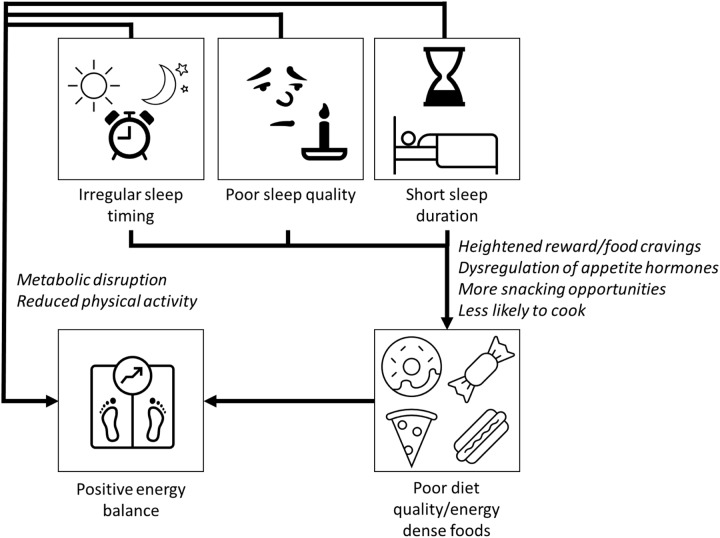
Sleep habits are directly related to risk of obesity, and this relationship may be partly mediated through food choices and eating behaviour. Short sleep duration, impaired sleep quality and suboptimal sleep timing are all implicated in weight gain and adverse cardiometabolic health, at least partly mediated through their associations with diet quality. Short-term sleep restriction leads to increased energy intake, and habitually short sleepers report dietary intakes that indicate a less healthy diet compared with adequate sleepers. Evidence is emerging that sleep extension interventions in short sleepers may reduce intake of sugars and overall energy intake. Poor sleep quality, night shift work patterns and social jetlag are also associated with lower diet quality and consumption of energy-dense foods. Incorporating sleep advice into weight management interventions may be more effective than energy-restricted diets and exercise advice alone. However, there are a lack of intervention studies that aim to lengthen sleep, improve sleep quality or adjust irregular sleep timing to investigate the impact on dietary intakes and eating behaviour in participants aiming to lose weight or maintain weight loss. Finally, future research should take account of individual characteristics such as age, sex, life stage and changing working practices when designing combined lifestyle interventions including sleep behaviour change for health and well-being.
Overview
The claims and statistics of this paper haven’t been checked yet.
Free: it reads the open-access text and checks the first 5 claims that cite a source we can check. Create a free account to check every claim.
Integrity signals
Registry
Cites
Statistics
Figures
Verification
Claims the paper makes
The claims and statistics of this paper haven’t been checked yet.
Free: it reads the open-access text and checks the first 5 claims that cite a source we can check. Create a free account to check every claim.
Claims other papers make about this one
Each is checked against this paper’s own text: does it say what the citing paper says it does?
In the citing paper
“Poor sleep habits can significantly impact sleep duration, sleep quality and sleep timing and have been associated with metabolic disruption, reduction in physical activity, increased energy intake, and poor diet quality and eating behaviors, leading to an increased risk of obesity [117].”
From Application of nutrition interventions with GLP-1 based therapies: A narrative review of the challenges and solutions (2025) · cites this paper as [117]
Self-check
Percentages, sums and reported differences re-computed from the paper’s own numbers.
The self-check needs the paper’s full text.
Citations
Cites
The Pittsburgh Sleep Quality Index: a new instrument for psychiatric practice and research
Buysse, D. J., Reynolds, C. F., Monk, T. H., Berman, S. R., & Kupfer, D. J. (1989) · Psychiatry Research · doi:10.1016/0165-1781(89)90047-4 · Cited by 35,234 · cited 2×
“Sleep quality is often evaluated subjectively both clinically and in research using the Pittsburg Sleep Quality Index (37) , which asks a series of questions to generate component scores for overall sleep quality, latency, duration, efficiency, disturbances, use of sleeping medications and daytime sleepiness and an ov…”
Social Jetlag: Misalignment of Biological and Social Time
Wittmann, M., Dinich, J., Merrow, M., & Roenneberg, T. (2006) · Chronobiology International · doi:10.1080/07420520500545979 · Cited by 2,625 · cited 1×
“This discordance between sleep onset and waking times across the work/non-work parts of the week is known as ‘social jetlag’, calculated as the different in sleep-midpoint between work days and non-work days(55).”
Taheri, S., Lin, L., Austin, D., Young, T., & Mignot, E. (2004) · PLoS Medicine · doi:10.1371/journal.pmed.0010062 · Cited by 2,477
National Sleep Foundation’s updated sleep duration recommendations: final report
Hirshkowitz, M., Whiton, K., Albert, S. M., Alessi, C., Bruni, O., DonCarlos, L., Hazen, N., Herman, J., Adams Hillard, P. J., Katz, E. S., et al. (2015) · Sleep Health · doi:10.1016/j.sleh.2015.10.004 · Cited by 2,348 · cited 1×
“The National Sleep Foundation recommends a sleep duration of 7–9 h per night for adults(23).”
Cappuccio, F. P., Cooper, D., D'Elia, L., Strazzullo, P., & Miller, M. A. (2011) · European Heart Journal · doi:10.1093/eurheartj/ehr007 · Cited by 2,146
Meta-Analysis of Short Sleep Duration and Obesity in Children and Adults
Cappuccio, F. P., Taggart, F. M., Kandala, N.-B., Currie, A., Peile, E., Stranges, S., & Miller, M. A. (2008) · Sleep · doi:10.1093/sleep/31.5.619 · Cited by 2,076 · cited 2×
“Thus, diet is likely to be a significant mediating factor in the well-established links between inadequate sleep and increased risk of CVD, type 2 diabetes and obesity (6 – 12) .”
Roenneberg, T., Allebrandt, K. V., Merrow, M., & Vetter, C. (2012) · Current Biology · doi:10.1016/j.cub.2012.03.038 · Cited by 1,407
Scott, A. J., Webb, T. L., Martyn-St James, M., Rowse, G., & Weich, S. (2021) · Sleep Medicine Reviews · doi:10.1016/j.smrv.2021.101556 · Cited by 1,094 · cited 1×
“However, there is strong evidence that improving sleep quality can positively impact mental health that is likely to enablehealthier dietary behaviours(42).”
Spiegel, K., Leproult, R., L’Hermite-Balériaux, M., Copinschi, G., Penev, P. D., & Van Cauter, E. (2004) · The Journal of Clinical Endocrinology & Metabolism · doi:10.1210/jc.2004-1003 · Cited by 1,006 · cited 1×
“Another explanation is dysregulation of appetite hormones such as ghrelin and leptin (68 – 70) , although evidence is somewhat inconsistent (71) .”
Sleep duration and risk of type 2 diabetes: a meta-analysis of prospective studies
Shan, Z., Ma, H., Xie, M., Yan, P., Guo, Y., Bao, W., Rong, Y., Jackson, C. L., Hu, F. B., & Liu, L. (2015) · Diabetes Care · doi:10.2337/dc14-2073 · Cited by 902
Shift work and vascular events: systematic review and meta-analysis
Vyas, M. V., Garg, A. X., Iansavichus, A. V., Costella, J., Donner, A., Laugsand, L. E., Janszky, I., Mrkobrada, M., Parraga, G., & Hackam, D. G. (2012) · BMJ · doi:10.1136/bmj.e4800 · Cited by 840 · cited 1×
“The greater risks of cardiometabolic diseases (47,48) , obesity (49) and metabolic dysfunction (50) from working shifts (currently estimated at 14 % of the working population in the UK (51) ) are well documented.”
Chronotype and Social Jetlag: A (Self-) Critical Review
Roenneberg, T., Pilz, L. K., Zerbini, G., & Winnebeck, E. C. (2019) · Biology · doi:10.3390/biology8030054 · Cited by 733 · cited 1×
“Estimates from the UK NDNS survey show that around 14 % of adults aged 19–64 years have a> 2 h difference in sleep duration between week days and weekend days(20), and 46 % of respondents to the Munich ChronoType Questionnaire (n 185 333) had a delay in midsleep on free days compared with workdays of more than 1 h (17…”
Why Sleep Matters—The Economic Costs of Insufficient Sleep: A Cross-Country Comparative Analysis
Hafner, M., Štěpánek, M., Taylor, J., Troxel, W., & Stolk, C. V. (2016) · Rand health quarterly · doi:10.7249/rhq-06-04-11 · Cited by 623
Hoevenaar-Blom, M. P., Spijkerman, A. M. W., Kromhout, D., van den Berg, J. F., & Verschuren, W. M. M. (2011) · Sleep · doi:10.5665/sleep.1382 · Cited by 558
Shift work and diabetes mellitus: a meta-analysis of observational studies
Gan, Y., Yang, C., Tong, X., Sun, H., Cong, Y., Yin, X., Li, L., Cao, S., Dong, X., Gong, Y., et al. (2015) · Occupational and Environmental Medicine · doi:10.1136/oemed-2014-102150 · Cited by 526 · cited 1×
“The greater risks of cardiometabolic diseases(47,48), obesity(49) and metabolic dysfunction(50) from working shifts (currently estimated at 14 % of the working population in the UK(51)) are well documented.”
Short sleep duration and dietary intake: epidemiologic evidence, mechanisms, and health implications
Dashti, H. S., Scheer, F. A., Jacques, P. F., Lamon-Fava, S., & Ordovás, J. M. (2015) · Advances in Nutrition · doi:10.3945/an.115.008623 · Cited by 503 · cited 2×
“Short sleep has also been associated with more snacking and eating out, less variety in the diet, a greater likelihood of missing breakfast and consuming fewermainmeals, increasing intake of energy in the evening and irregular eating patterns, as reviewed by Dashti et al.(32).”
Sleep duration and obesity among adults: a meta-analysis of prospective studies
Wu, Y., Zhai, L., & Zhang, D. (2014) · Sleep Medicine · doi:10.1016/j.sleep.2014.07.018 · Cited by 480 · cited 1×
“Short sleep duration is associated with obesity(6,75) and increased abdominal fat(76), and short-term (4-d) sleep restriction induces a small net increase in body weight(77).”
Kocevska, D., Lysen, T. S., Dotinga, A., Koopman-Verhoeff, M. E., Luijk, M. P. C. M., Antypa, N., Biermasz, N. R., Blokstra, A., Brug, J., Burk, W. J., et al. (2020) · Nature Human Behaviour · doi:10.1038/s41562-020-00965-x · Cited by 473 · cited 2×
“Sleep quality is equally important, particularly as there is a U-shaped relationship between sleep duration and sleep quality, with poorer sleep quality being more prevalent in both short sleepers and long sleepers (> 9 h)(36).”
Bei, B., Wiley, J. F., Trinder, J., & Manber, R. (2016) · Sleep Medicine Reviews · doi:10.1016/j.smrv.2015.06.003 · Cited by 439
Social jetlag, obesity and metabolic disorder: investigation in a cohort study
Parsons, M. J., Moffitt, T. E., Gregory, A. M., Goldman-Mellor, S., Nolan, P. M., Poulton, R., & Caspi, A. (2015) · International Journal of Obesity · doi:10.1038/ijo.2014.201 · Cited by 426 · cited 1×
“Sleep timing is also emerging as a key predictor of risk of morbidity (15) , with later bedtimes, greater variability in sleep midpoint and irregular sleep durations being linked with increased biomarkers of cardiometabolic disease risk and adiposity (16 – 19) .”
Meta-analysis on shift work and risks of specific obesity types
Sun, M., Feng, W., Wang, F., Li, P., Li, Z., Li, M., Tse, G., Vlaanderen, J., Vermeulen, R., & Tse, L. A. (2018) · Obesity Reviews · doi:10.1111/obr.12621 · Cited by 391 · cited 1×
“The greater risks of cardiometabolic diseases (47,48) , obesity (49) and metabolic dysfunction (50) from working shifts (currently estimated at 14 % of the working population in the UK (51) ) are well documented.”
Sleep timing, sleep consistency, and health in adults: a systematic review
Chaput, J.-P., Dutil, C., Featherstone, R., Ross, R., Giangregorio, L., Saunders, T. J., Janssen, I., Poitras, V. J., Kho, M. E., Ross-White, A., et al. (2020) · Applied Physiology, Nutrition, and Metabolism · doi:10.1139/apnm-2020-0032 · Cited by 361 · cited 1×
“Sleep timing is also emerging as a key predictor of risk of morbidity (15) , with later bedtimes, greater variability in sleep midpoint and irregular sleep durations being linked with increased biomarkers of cardiometabolic disease risk and adiposity (16 – 19) .”
Association between diet and sleep quality: A systematic review
Godos, J., Grosso, G., Castellano, S., Galvano, F., Caraci, F., & Ferri, R. (2021) · Sleep Medicine Reviews · doi:10.1016/j.smrv.2021.101430 · Cited by 356 · cited 2×
“Observational studies from various countries have reported associations between better sleep quality and adherence to the Mediterranean diet, higher intake of fruits and vegetables and lower dietary inflammatory index and high sugar/refined starch food intakes, as reviewed by Godos et al. (39) .”
Sleep duration and health in adults: an overview of systematic reviews
Chaput, J.-P., Dutil, C., Featherstone, R., Ross, R., Giangregorio, L., Saunders, T. J., Janssen, I., Poitras, V. J., Kho, M. E., Ross-White, A., et al. (2020) · Applied Physiology, Nutrition, and Metabolism · doi:10.1139/apnm-2020-0034 · Cited by 351 · cited 3×
“Thus, diet is likely to be a significant mediating factor in the well-established links between inadequate sleep and increased risk of CVD, type 2 diabetes and obesity (6 – 12) .”
Measuring Sleep Efficiency: What Should the Denominator Be?
Reed, D. L., & Sacco, W. P. (2016) · Journal of Clinical Sleep Medicine · doi:10.5664/jcsm.5498 · Cited by 339 · cited 1×
“there are no national/international guidelines for sleep quality, but a general recommended cut-off is a sleep efficiency of 85%; in other words, total sleep time as a percentage of time in bed from the point of intention to sleep (including sleep latency, total sleep time, time awake after initial sleep onset and tim…”
Grandner, M. A., Jackson, N., Gerstner, J. R., & Knutson, K. L. (2013) · Appetite · doi:10.1016/j.appet.2013.01.004 · Cited by 310 · cited 1×
“Growing evidence from observational studies suggests that short sleep is associated with poor diet, including higher sugar intake(27), and lower fibre(28), fruit and vegetables(29) and diet quality indices(30,31).”
Meta‐analysis on night shift work and risk of metabolic syndrome
Wang, F., Zhang, L., Zhang, Y., Zhang, B., He, Y., Xie, S., Li, M., Miao, X., Chan, E. Y. Y., Tang, J. L., et al. (2014) · Obesity Reviews · doi:10.1111/obr.12194 · Cited by 302 · cited 1×
“The greater risks of cardiometabolic diseases(47,48), obesity(49) and metabolic dysfunction(50) from working shifts (currently estimated at 14 % of the working population in the UK(51)) are well documented.”
High-glycemic-index carbohydrate meals shorten sleep onset
Afaghi, A., O'Connor, H., & Chow, C. M. (2007) · The American Journal of Clinical Nutrition · doi:10.1093/ajcn/85.2.426 · Cited by 274 · cited 1×
“Another small crossover (n 12) study in young males reporting that consuming higher glycaemic index (GI) rice in the evening may reduce sleep latency compared with lower GI rice(44), further supported by a subsequent small crossover study (n 10) confirming that higher-GI evening meals reduced sleep latency and totalwa…”
Short sleep duration predicts risk of metabolic syndrome: A systematic review and meta-analysis
Xi, B., He, D., Zhang, M., Xue, J., & Zhou, D. (2014) · Sleep Medicine Reviews · doi:10.1016/j.smrv.2013.06.001 · Cited by 252
Wang, Q., Xi, B., Liu, M., Zhang, Y., & Fu, M. (2012) · Hypertension Research · doi:10.1038/hr.2012.91 · Cited by 246
The self in context: brain systems linking mental and physical health
Koban, L., Gianaros, P. J., Kober, H., & Wager, T. D. (2021) · Nature Reviews Neuroscience · doi:10.1038/s41583-021-00446-8 · Cited by 237 · cited 1×
“Both poor sleep quality and poor diet quality are end products of psychological factors such as work or family stress, anxiety or loneliness leading to emotional distress(41); therefore, it is important to determine whether poor sleep quality itself can initiate or exacerbate unhealthy food choices to better support t…”
Sleep restriction increases the neuronal response to unhealthy food in normal-weight individuals
St-Onge, M.-P., Wolfe, S., Sy, M., Shechter, A., & Hirsch, J. (2014) · International Journal of Obesity · doi:10.1038/ijo.2013.114 · Cited by 229 · cited 1×
“Short sleep may cause changes in the brain that lead to a more intense sense of taste (64) and a greater desire for highly palatable sugary/fatty foods via the neuronal reward network (65,66) .”
Influence of Partial Sleep Deprivation on Energy Balance and Insulin Sensitivity in Healthy Women
Bosy-Westphal, A., Hinrichs, S., Jauch-Chara, K., Hitze, B., Later, W., Wilms, B., Settler, U., Peters, A., Kiosz, D., & Müller, M. J. (2008) · Obesity Facts · doi:10.1159/000158874 · Cited by 221 · cited 1×
“Short sleep duration is associated with obesity(6,75) and increased abdominal fat(76), and short-term (4-d) sleep restriction induces a small net increase in body weight(77).”
Sleep and Diet: Mounting Evidence of a Cyclical Relationship
Zuraikat, F. M., Wood, R. A., Barragán, R., & St-Onge, M.-P. (2021) · Annual Review of Nutrition · doi:10.1146/annurev-nutr-120420-021719 · Cited by 206 · cited 2×
“These provide preliminary evidence that eating high GI starchy foods before bed-time promote better sleep quality, but interventional evidence is lacking on the impact of whole dietary patterns on markers of sleep qualityandcurrentlytheonlydataavailablearederivedfromobser-vational studies that show associations betwee…”
The effect of shift work on eating habits: a systematic review
Souza, R. V., Sarmento, R. A., de Almeida, J. C., & Canuto, R. (2019) · Scandinavian Journal of Work, Environment & Health · doi:10.5271/sjweh.3759 · Cited by 197 · cited 1×
“A systematic review of thirty-three observational studies found more meal skipping and nocturnal eating in night and rotating shift workers, as well as increased consumption of soft drinks, higher energy and saturated fat intakes and lower fibre intake(57).”
Desroches, S., Lapointe, A., Ratté, S., Gravel, K., Légaré, F., & Turcotte, S. (2013) · Cochrane Database of Systematic Reviews · doi:10.1002/14651858.cd008722.pub2 · Cited by 187 · cited 1×
“However, the most effective strategy to facilitate adherence to dietary guidelines and weight management programmes continues to be the subject of intense discussion (1,2) .”
Kant, A. K., & Graubard, B. I. (2014) · The American Journal of Clinical Nutrition · doi:10.3945/ajcn.114.085191 · Cited by 182 · cited 8×
“In the USA, current estimates are consistent with the UK in that 36 % of adults aged 20 years or older sleep for 6 h or less on weekdays or workdays(27).”
InfluentialThe association between sleep patterns and obesity in older adults
Patel, S. R., Hayes, A. L., Blackwell, T., Evans, D. S., Ancoli-Israel, S., Wing, Y. K., Stone, K. L., & Groups, F. T. O. F. I. M. (. A. T. S. O. O. F. (. R. (2014) · International Journal of Obesity · doi:10.1038/ijo.2014.13 · Cited by 174 · cited 1×
“Sleep timing is also emerging as a key predictor of risk of morbidity (15) , with later bedtimes, greater variability in sleep midpoint and irregular sleep durations being linked with increased biomarkers of cardiometabolic disease risk and adiposity (16 – 19) .”
Elevated ghrelin predicts food intake during experimental sleep restriction
Broussard, J. L., Kilkus, J. M., Delebecque, F., Abraham, V., Day, A., Whitmore, H. R., & Tasali, E. (2016) · Obesity · doi:10.1002/oby.21321 · Cited by 173 · cited 1×
“Another explanation is dysregulation of appetite hormones such as ghrelin and leptin (68 – 70) , although evidence is somewhat inconsistent (71) .”
The effects of partial sleep deprivation on energy balance: a systematic review and meta-analysis
Al Khatib, H. K., Harding, S. V., Darzi, J., & Pot, G. K. (2017) · European Journal of Clinical Nutrition · doi:10.1038/ejcn.2016.201 · Cited by 167 · cited 1×
“…trials have investigated the impact of short-term sleep restriction on energy intake (mostly under highly controlled conditions in a laboratory setting), overall showing that shortsleep duration (3 h 45min to 5 h 30 min sleep per night) results in increased energy intake of 385 kcal per day (33) .”
Scheelbeek, P., Green, R., Papier, K., Knuppel, A., Alae-Carew, C., Balkwill, A., Key, T. J., Beral, V., & Dangour, A. D. (2020) · BMJ Open · doi:10.1136/bmjopen-2020-037554 · Cited by 167
Tasali, E., Wroblewski, K., Kahn, E., Kilkus, J., & Schoeller, D. A. (2022) · JAMA Internal Medicine · doi:10.1001/jamainternmed.2021.8098 · Cited by 159 · cited 2×
“Similarly, Tasali et al.(35) conducted a parallel 2-arm, 2-week randomised controlled trial in eighty healthy young adults (49% female) with overweight and reporting sleep< 6·5 h/night; the intervention group receiving personalised sleep hygiene counselling resulted in an increase in sleep duration of 1·2 h per night…”
Sleep Duration and Five-Year Abdominal Fat Accumulation in a Minority Cohort: The IRAS Family Study
Hairston, K. G., Bryer-Ash, M., Norris, J. M., Haffner, S., Bowden, D. W., & Wagenknecht, L. E. (2010) · Sleep · doi:10.1093/sleep/33.3.289 · Cited by 128
Al Khatib, H. K., Hall, W. L., Creedon, A., Ooi, E., Masri, T., McGowan, L., Harding, S. V., Darzi, J., & Pot, G. K. (2018) · The American Journal of Clinical Nutrition · doi:10.1093/ajcn/nqx030 · Cited by 126 · cited 4×
“…that prevented them sleeping for 7 h or more (e.g. having a dark, uncluttered bedroom, avoiding electronic screens late in the evening, keeping a regular bedtime, not exercising too close to bed-time, avoiding large meals, caffeine and alcohol close to bedtime, meditation for stress, etc) (34) .”
InfluentialSelf-citationZhou, Q., Zhang, M., & Hu, D. (2019) · Sleep And Breathing · doi:10.1007/s11325-019-01824-4 · Cited by 115
Why sleep matters -- the economic costs of insufficient sleep: A cross-country comparative analysis
Hafner, M., Stepanek, M., Taylor, J., et al. (2016) · doi:10.7249/rr1791 · Cited by 113
Zuraikat, F. M., Makarem, N., Liao, M., St‐Onge, M., & Aggarwal, B. (2020) · Journal of the American Heart Association · doi:10.1161/jaha.119.014587 · Cited by 105 · cited 1×
“Moreover, poorer sleep quality was associatedwith a greater weight of food intake, higher intake of added sugars and caffeine, lower dairy intakes and lower unsaturated fat, and longer sleep onset latency was associated with higher energy intakes in 495 USA women aged 20–79 years(40).”
Strohmaier, S., Devore, E. E., Zhang, Y., & Schernhammer, E. S. (2018) · Current Diabetes Reports · doi:10.1007/s11892-018-1102-5 · Cited by 100 · cited 1×
“Although there is a direct effect of circadian misalignment on cardiometabolic health (52) , it is also likely that part of the increased cardiometabolic disease risk is attributable to the unfavourable influence of undertaking shift work on diet quality (53,54) .”
Habitual sleep variability, not sleep duration, is associated with caloric intake in adolescents
He, F., Bixler, E. O., Berg, A. S., Kawasawa, Y. I., Vgontzas, A. N., Fernández‐Mendoza, J., Yanosky, J. D., & Liao, D. (2015) · Sleep Medicine · doi:10.1016/j.sleep.2015.03.004 · Cited by 96 · cited 1×
“reported that sleep variability in 324 USA adolescents (the SD of 7-day sleep duration) was associated with higher energy intakes, whereas there were no associations with sleep duration(61).”
Zerón-Rugerio, M. F., Cambras, T., & Izquierdo-Pulido, M. (2019) · Nutrients · doi:10.3390/nu11081756 · Cited by 91 · cited 1×
“Social jetlag has also been associated with poor diet in observational studies (58,59) .”
Zhou, J., Kim, J. E., Armstrong, C. L. H., Chen, N., & Campbell, W. W. (2016) · American Journal of Clinical Nutrition · doi:10.3945/ajcn.115.124669 · Cited by 89 · cited 1×
“For example, consumption of a higher proportion of energy as protein during energy-restricted dietsimprovedPittsburg SleepQuality Indexscorescomparedwith lower relative protein intakes (43) .”
Theorell-Haglöw, J., Lemming, E. W., Michaëlsson, K., Elmståhl, S., Lind, L., & Lindberg, E. (2020) · Journal of Clinical Sleep Medicine · doi:10.5664/jcsm.8112 · Cited by 81
Yan, B., Yang, J., Zhao, B., Fan, Y., Wang, W., & Ma, X. (2021) · Journal of the American Heart Association · doi:10.1161/jaha.120.016201 · Cited by 81 · cited 1×
“It is also important to consider sleep quality, a term that encompasses frequency of awakenings, time taken to get to sleep (sleep latency) and time spent awake as a proportion of time spent in bed (sleep efficiency), measured both by subjective(21) and objective(22) assessment methodologies.”
Lombardi, D. A., Wirtz, A., Willetts, J. L., & Folkard, S. (2012) · Chronobiology International · doi:10.3109/07420528.2012.675253 · Cited by 73 · cited 1×
“Inadequate sleep duration is increasingly being recognised as a significant problem for the health of the nation, with well-described associations between poor sleep and impaired health(12,13) and increased risk of accidents and injuries(14).”
Almoosawi, S., Palla, L., Walshe, I. H., Vingeliene, S., & Ellis, J. G. (2018) · Nutrients · doi:10.3390/nu10091131 · Cited by 71 · cited 1×
“Analysis of Y1-4 NDNS data by Almoosawi and colleagues showed that both negative and positive differences in sleep duration (sleep midpoints not being available in this data set) on week nights and weekend nights were associated with reduced diet quality (60) .”
Dietary Interventions for Night Shift Workers: A Literature Review
Phoi, Y. Y., & Keogh, J. B. (2019) · Nutrients · doi:10.3390/nu11102276 · Cited by 69 · cited 1×
“There is a lack of evidence from randomised controlled trials on the impact of manipulating sleep timing (whilst keeping sleep duration constant) on diet quality or eating behaviour, although there are a handful of dietary interventions targeted at night shift workers to improve health outcomes(62).”
Sleep, food cravings and taste
Lv, W., Finlayson, G., & Dando, R. (2018) · Appetite · doi:10.1016/j.appet.2018.02.013 · Cited by 67 · cited 1×
“Short sleep may cause changes in the brain that lead to a more intense sense of taste (64) and a greater desire for highly palatable sugary/fatty foods via the neuronal reward network (65,66) .”
Jansen, E. C., Prather, A. A., & Leung, C. W. (2020) · Appetite · doi:10.1016/j.appet.2020.104748 · Cited by 66 · cited 1×
“Growing evidence from observational studies suggests that short sleep is associated with poor diet, including higher sugar intake (27) , and lower fibre (28) , fruit and vegetables (29) and diet quality indices (30,31) .”
Massar, S. A. A., Ng, A., Soon, C. S., Ong, J. L., Chua, X. Y., Chee, N. I. Y. N., Lee, T.-S. W., & Chee, M. W. L. (2021) · SLEEP · doi:10.1093/sleep/zsab250 · Cited by 66 · cited 1×
“…many people, this has resulted in the adoption of hybrid working patterns that could potentially reduce the degree of social jetlag (83) , although the overall impact on sleep health and well-being of hybrid working relative to 100 % office working or fully working at home is not yet clear (84) .”
Sleep Deprivation Selectively Upregulates an Amygdala–Hypothalamic Circuit Involved in Food Reward
Rihm, J. S., Menz, M. M., Schultz, H., Bruder, L., Schilbach, L., Schmid, S. M., & Peters, J. (2019) · The Journal of Neuroscience · doi:10.1523/jneurosci.0250-18.2018 · Cited by 65 · cited 1×
“Short sleep may cause changes in the brain that lead to a more intense sense of taste(64) and a greater desire for highly palatable sugary/fatty foods via the neuronal reward network(65,66).”
Yang, C.-L., Schnepp, J., & Tucker, R. M. (2019) · Nutrients · doi:10.3390/nu11030663 · Cited by 65 · cited 1×
“…constant to control for circadian effects) led to increases in hunger, increased food cravings, increased susceptibility to food reward and selection of larger portions at lunchtime in a randomised controlled trial in twenty-four young healthy females compared with a full night ’ s sleep (67) .”
St-Onge, M.-P., Pizinger, T., Kovtun, K., & RoyChoudhury, A. (2019) · European Journal of Clinical Nutrition · doi:10.1038/s41430-018-0312-x · Cited by 64 · cited 1×
“The results showed that late sleep timing did not increase energy intake, saturated fat or sugar intakes, possibly because the strict regime outside of participants ’ normal environment inhibited natural behaviours (63) .”
Soltanieh, S., Solgi, S., Ansari, M., Santos, H. O., & Abbasi, B. (2021) · Clinical Nutrition ESPEN · doi:10.1016/j.clnesp.2021.07.029 · Cited by 58 · cited 1×
“Another explanation is dysregulation of appetite hormones such as ghrelin and leptin(68–70), although evidence is somewhat inconsistent(71).”
Kline, C. E., Chasens, E. R., Bizhanova, Z., Sereika, S. M., Buysse, D. J., Imes, C. C., Kariuki, J. K., Mendez, D. D., Cajita, M. I., Rathbun, S. L., et al. (2021) · International Journal of Obesity · doi:10.1038/s41366-020-00728-8 · Cited by 56 · cited 1×
“…to be bidirectional, healthy sleep habits are likely to facilitate healthier dietary choices and reduced food cravings; for example, better sleep health at baseline was associated with greater weight loss in adults with overweight/obesity undergoing a 1 year weight management programme (78) .”
Influence of sleep restriction on weight loss outcomes associated with caloric restriction
Wang, X., Sparks, J. R., Bowyer, K. P., & Youngstedt, S. D. (2018) · Sleep · doi:10.1093/sleep/zsy027 · Cited by 54 · cited 1×
“Finally, Wang et al. ( n 36) combined an 8-week weight loss intervention with 1 h per night, 5 nights per week sleep restriction (net weekly sleep deficit 169 min), which resulted in similar weight loss to the weight loss control group, but reduced fat mass loss (82) .”
Vlahoyiannis, A., Aphamis, G., Andreou, E. P., Samoutis, G., Sakkas, G. K., & Giannaki, C. D. (2018) · Nutrients · doi:10.3390/nu10111795 · Cited by 54 · cited 1×
“Another small crossover (n 12) study in young males reporting that consuming higher glycaemic index (GI) rice in the evening may reduce sleep latency compared with lower GI rice(44), further supported by a subsequent small crossover study (n 10) confirming that higher-GI evening meals reduced sleep latency and totalwa…”
The multidimensionality of sleep in population‐based samples: a narrative review
van de Langenberg, S. C. N., Kocevska, D., & Luik, A. I. (2022) · Journal of Sleep Research · doi:10.1111/jsr.13608 · Cited by 52 · cited 1×
“…university, parenting, menopause and retirement), biological age and sex should all be taken into consideration as sleep requirements, sleep quality and sleep timing and the physiological, psychological and dietary consequences of poor sleep health all vary across these characteristics (86) .”
The Better Weight-Better Sleep Study: A Pilot Intervention in Primary Care
Logue, E. (2012) · American Journal of Health Behavior · doi:10.5993/ajhb.36.3.4 · Cited by 51 · cited 1×
“One study randomised forty-six patients with overweight/ obesity to either a weight loss (diet, exercise and cognitive behavioural therapy) plus sleep intervention arm, or weight loss alone and showed there was a greater amount of weight loss after 12 weeks in the sleep group, although drop-out rates were high and sle…”
Perceived barriers to healthy eating and adherence to dietary guidelines: Nationwide study
de Mestral, C., Khalatbari‐Soltani, S., Stringhini, S., & Marques-Vidal, P. M. (2019) · Clinical Nutrition · doi:10.1016/j.clnu.2019.11.025 · Cited by 49
Çetiner, Ö., Yıldırım, G., & Kalyoncu, Z. (2021) · Journal of the Academy of Nutrition and Dietetics · doi:10.1016/j.jand.2021.01.017 · Cited by 48 · cited 1×
“Social jetlag has also been associated with poor diet in observational studies (58,59) .”
Nechifor, R. E., Ciobanu, D. M., Vonica, C. L., Popiţa, C., Román, G., Bala, C. G., Mocan, A., Inceu, G., Craciun, A. E., & Rusu, A. (2020) · Sleep Medicine · doi:10.1016/j.sleep.2020.03.018 · Cited by 41 · cited 1×
“evidence suggests independent effects of social jetlag on brain regions associated with reward and food craving(74).”
Social jetlag and sleep debts are altered in different rosters of night shift work
Casjens, S., Brenscheidt, F., Tisch, A., Beermann, B., Brüning, T., Behrens, T., & Rabstein, S. (2022) · PLoS ONE · doi:10.1371/journal.pone.0262049 · Cited by 39 · cited 1×
“…of sleep timing on appetite and reward behavior, it is difficult to disentangle circadian effects from the effects of sleep curtailment, as night shift work is associated with short sleep duration and reduced sleep quality (72) , and social jetlag is also more common in short-sleepers (20) .”
Moreno-Frías, C., Figueroa‐Vega, N., & Malacara, J. M. (2020) · Journal of Adolescent Health · doi:10.1016/j.jadohealth.2019.11.301 · Cited by 34
Brandão, L. E. M., Martikainen, T., Merikanto, I., Holzinger, B., Morin, C. M., Espie, C. A., Bolstad, C. J., Léger, D., Chung, F. F., Plazzi, G., et al. (2021) · Nature and Science of Sleep · doi:10.2147/nss.s327365 · Cited by 32 · cited 1×
“For many people, this has resulted in the adoption of hybrid working patterns that could potentially reduce the degree of social jetlag (83) , although the overall impact on sleep health and well-being of hybrid working relative to 100 % office working or fully working at home is not yet clear (84)…”
Aldubayan, M. A., Pigsborg, K., Gormsen, S. M. O., Serra, F. A., Palou, M., Mena, P. R., Wetzels, M., Calleja, A., Caimari, A., Bas-Prior, J. M. D., et al. (2022) · BMJ Open · doi:10.1136/bmjopen-2021-051285 · Cited by 28 · cited 1×
“Personalisation of dietary advice in weight loss interventions may be even more impactful if personalisation of sleep hygiene advice is delivered in tandem(85), and developing ways to deliver personalised combination lifestyle interventions at scale should be a priority for governments and health authorities.”
Eating on the night shift: A need for evidence‐based dietary guidelines?
D’Annibale, M., Hornzee, N., Whelan, M., Guess, N. D., Hall, W. L., & Gibson, R. (2021) · Nutrition Bulletin · doi:10.1111/nbu.12515 · Cited by 25 · cited 1×
“Although there is a direct effect of circadian misalignment on cardiometabolic health (52) , it is also likely that part of the increased cardiometabolic disease risk is attributable to the unfavourable influence of undertaking shift work on diet quality (53,54) .”
Self-citationGębski, J., Jeżewska-Zychowicz, M., Guzek, D., Świątkowska, M., Stangierska, D., & Plichta, M. (2018) · International Journal of Environmental Research and Public Health · doi:10.3390/ijerph15112497 · Cited by 21 · cited 1×
“Growing evidence from observational studies suggests that short sleep is associated with poor diet, including higher sugar intake(27), and lower fibre(28), fruit and vegetables(29) and diet quality indices(30,31).”
Khatib, H. A., Dikariyanto, V., Bermingham, K. M., Gibson, R., & Hall, W. L. (2022) · Public Health Nutrition · doi:10.1017/s1368980022000167 · Cited by 21
Self-citationStubbs, R. J., Duarte, C., O’Driscoll, R., Turicchi, J., Kwaśnicka, D., Sniehotta, F. F., Marques, M. M., Horgan, G. W., Larsen, S. C., Palmeira, A. L., et al. (2021) · Obesity Facts · doi:10.1159/000513042 · Cited by 20 · cited 1×
“However, the most effective strategy to facilitate adherence to dietary guidelines and weight management programmes continues to be the subject of intense discussion(1,2).”
Flatley, D., Reyner, L. A., & Horne, J. (2004) · Cited by 19
Chronic disruption of circadian rhythm with mistimed sleep and appetite – an exploratory research
Rusu, A., Ciobanu, D. M., Vonica, C. L., Bala, C. G., Mocan, A., Sima, D. I., Inceu, G., Craciun, A. E., Pop, R. M., Craciun, C. I., et al. (2021) · Chronobiology International · doi:10.1080/07420528.2021.1895196 · Cited by 19 · cited 1×
“However, observational data indicate that social jetlag is independently associated with increased appetite for food(73) and preliminary”
Sambou, M. L., Zhao, X., Hong, T., Naveed, M., Sambou, A., Hafa, F. E., Basnet, T. B., & Dai, J. (2021) · Sleep And Breathing · doi:10.1007/s11325-021-02394-0 · Cited by 16 · cited 1×
“Inadequate sleep duration is increasingly being recognised as a significant problem for the health of the nation, with well-described associations between poor sleep and impaired health(12,13) and increased risk of accidents and injuries(14).”
A cross-sectional study examining the associations between shift work and diet quality
Hornzee, N., O'Connor, C., Byrne, N. M., Whelan, M., & Gibson, R. (2021) · Proceedings of The Nutrition Society · doi:10.1017/s0029665121000252 · Cited by 13
Demos, K. E., Leahey, T. M., Hart, C. N., Trautvetter, J., Coward, P. R., Duszlak, J., & Wing, R. R. (2015) · Obesity Science & Practice · doi:10.1002/osp4.16 · Cited by 8 · cited 1×
“weight loss intervention, but there was poor compliance to sleep extension and no difference in weight loss at the end of the 18 week weight loss intervention, indicating that continued sleep health support may needed throughout weight management programmes for efficacy(81).”
Research works printed but not linked: 1
- Public Health England & Food Standards Agency (2021) National Diet and Nutrition Survey: Diet, Nutrition and Physical Activity in 2020. A Follow up Study during COVID-19. London: PHE, FSA.
Cited by
Piperni, E., Nguyen, L. H., Manghi, P., Kim, H., Pasolli, E., Andreu‐Sánchez, S., Arrè, A., Bermingham, K. M., Blanco‐Míguez, A., Manara, S., et al. (2024) · Cell · doi:10.1016/j.cell.2024.06.018 · Cited by 115
Kurhaluk, N., & Tkaczenko, H. (2025) · Nutrients · doi:10.3390/nu17040665 · Cited by 62
“Ensuring a consistent sleep schedule with 7–9 h of restful sleep each night is therefore essential for maintaining hormonal balance and vascular health [296].”
Xiao, N., Ding, Y., Cui, B., Li, R., Qu, X.-R., Zhou, H., Au, K.-H., Fan, X.-D., Xie, J.-C., Huang, Y., et al. (2024) · The Innovation Medicine · doi:10.59717/j.xinn-med.2024.100090 · Cited by 43
Farrell, E. T., Wirth, M. D., McLain, A. C., Hurley, T. G., Shook, R. P., Hand, G. A., Hébert, J. R., & Blair, S. N. (2023) · Nutrients · doi:10.3390/nu15020419 · Cited by 24
“Additionally, associations between poor diet quality and social jetlag have been well established [79].”
BackgroundArslan, N., Bozkır, E., Koçak, T., Akın, M., & Yılmaz, B. (2024) · Nutrients · doi:10.3390/nu16162683 · Cited by 26
“These factors contribute to the development of non-communicable diseases like cardiovascular diseases, diabetes, obesity, and cancer, and result in a decline in overall health [20].”
Metadata
- Authors
- Hall, W. L.
- Affiliations
- King's College London (GB)
- Corresponding author
- Hall, Wendy L.
- ORCID
- Hall, Wendy L.
- Venue
- British Journal Of Nutrition
- Publisher
- Cambridge University Press (CUP)
- Published
- 2022-05-23
- Volume
- 128
- Issue
- 3
- Pages
- 561-568
- ISSN
- 0007-1145 (ISSN-L)
- 1475-2662
- PMC
- PMC9340846
- OpenAlex
- W4281296588
- Semantic Scholar
- 005e1fc8be7fff462cfa2ef116668949b7509edc
- Cited by
- 46
- References
- 82
- Citations by year
- 2026: 10 · 2025: 11 · 2024: 16 · 2023: 8 · 2022: 1
- FWCI
- 8.28
- Type
- journal article
- Language
- en
- Open access
- hybrid
- doi.org
- Locations
- British Journal Of Nutrition (publishedVersion, cc-by)
- PubMed Central (publishedVersion, cc-by)
- PubMed (publishedVersion)
- Research Portal (King's College London) (publishedVersion, cc-by-nc-nd)
- Topics
- Social Sciences › Psychology › Experimental and Cognitive Psychology › Sleep and related disorders
- Social Sciences › Psychology › Experimental and Cognitive Psychology › Sleep and Work-Related Fatigue
- Life Sciences › Neuroscience › Endocrine and Autonomic Systems › Circadian rhythm and melatonin
- Keywords
- sleep duration, sleep quality, sleep timing, short sleepers, sleep extension, weight management, obesity, diet quality, eating behaviour, energy intake, night shift work, social jetlag, lifestyle intervention, weight loss maintenance, cardiometabolic health
- MeSH terms
- Diet, Feeding Behavior, Humans, Life Style, Obesity, Sleep
About these checks
Registry, retraction, Cites and statistics results are computed, not judged, with one exception: a printed reference that no index lists is read once by a model before it counts as a citation error. Claims are extracted by a model and kept only when their quote appears verbatim in the text; each cited source is then checked, with a model’s help, for whether it says what the claim relies on. Those verdicts can be wrong — read the claim’s quote and the cited source before relying on one.
Statistics and arithmetic are recomputed, not judged.
Confidence bands are shown only for fields calibrated on our annotated test set. None is calibrated yet, so no band is shown.
What counts as a claim ›How we measure confidence ›How we check this ›
Are you an author, or do you see a problem with this page? Request a review
Data sources
Bibliographic data: Semantic Scholar, OpenAlex, Crossref.
Contains information from the Semantic Scholar Academic Graph Datasets, made available under the ODC Attribution License (ODC-BY 1.0).
Semantic Scholar’s data is described in: Kinney, R., et al. (2023). The Semantic Scholar Open Data Platform. arXiv:2301.10140.
