

Reconsidering the Role of Procedures for Decision Acceptance
Open accessThe DOI matches its Crossref record; 87 of the 87 references it cites were found in a registry or an index.
Abstract
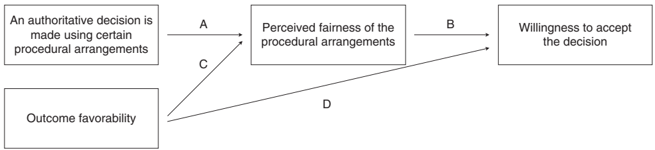
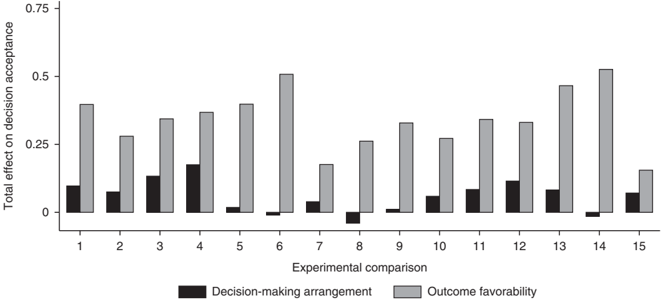
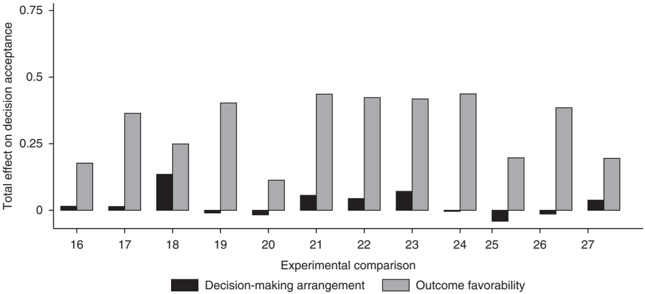
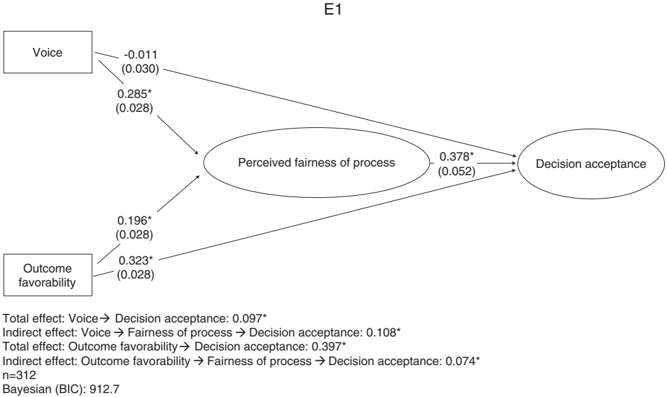
Procedural fairness theory posits that the way in which authoritative decisions are made strongly impacts people’s willingness to accept them. This article challenges this claim by contending that democratic governments can achieve little in terms of acceptance of policy decisions by the procedural means at their disposal. Instead, outcome favorability is the dominant determinant of decision acceptance. The article explicates that while central parts of procedural fairness theory are true, outcome favorability is still overwhelmingly the strongest determinant of individuals’ willingness to accept authoritative decisions. It improves on previous research by locating all key variables into one causal model and testing this model using appropriate data. Findings from a large number of experiments (both vignette and field) reproduce the expected relationships from previous research and support the additional predictions.
Overview
The claims and statistics of this paper haven’t been checked yet.
Free: it reads the open-access text and checks the first 5 claims that cite a source we can check. Create a free account to check every claim.
Integrity signals
Registry
Cites
Statistics
Figures

Verification
Claims the paper makes
The claims and statistics of this paper haven’t been checked yet.
Free: it reads the open-access text and checks the first 5 claims that cite a source we can check. Create a free account to check every claim.
Self-check
Percentages, sums and reported differences re-computed from the paper’s own numbers.
The self-check needs the paper’s full text.
Citations
Cites
Advances In Experimental Social Psychology
(2022) · Advances in Experimental Social Psychology · doi:10.1016/s0065-2601(22)x0002-6 · Cited by 22,259
Mediation in experimental and nonexperimental studies: New procedures and recommendations.
Shrout, P. E., & Bolger, N. (2002) · Psychological Methods · doi:10.1037/1082-989x.7.4.422 · Cited by 11,335 · cited 1×
“51 Shrout and Bolger 2002.”
The case for motivated reasoning.
Kunda, Z. (1990) · Psychological Bulletin · doi:10.1037/0033-2909.108.3.480 · Cited by 9,022
The Social Psychology of Procedural Justice
Lind, E. A., & Tyler, T. R. (1988) · Critical Issues in Social Justice · doi:10.1007/978-1-4899-2115-4 · Cited by 6,585
Participation and Democratic Theory
Pateman, C. (1970) · doi:10.1017/cbo9780511720444 · Cited by 6,159
Motivated Skepticism in the Evaluation of Political Beliefs
Taber, C. S., & Lodge, M. (2006) · American Journal of Political Science · doi:10.1111/j.1540-5907.2006.00214.x · Cited by 4,344
Procedural Justice: A Psychological Analysis
Thibaut, J. W., & Walker, L. (1975) · Medical Entomology and Zoology · Cited by 3,241
A Relational Model of Authority in Groups
Tyler, T. R., & Lind, E. A. (1992) · Advances in Experimental Social Psychology · doi:10.1016/s0065-2601(08)60283-x · Cited by 2,977
Procedural Justice: A Psychological Analysis
Caldeira, G. A., Thibaut, J., Walker, L., & Nagel, S. S. (1976) · The Western Political Quarterly · doi:10.2307/448155 · Cited by 2,907
Interactional justice : communication criteria of fairness
Bies, R. (1986) · Medical Entomology and Zoology · Cited by 2,761
Research works printed but not linked: 4
- Tyler, Tom. 1990. Why People Obey the Law: Procedural Justice, Legitimacy and Compliance. New Haven, CT: Yale University Press.
- Muthen, Linda, and Muthen Bengt. 1998-2010. Mplus Users' Guide, 6th Edition, Los Angeles, CA: Muthen and Muthen.
- --. 2006. Psychological Perspectives on Legitimacy and Legitimation. Annual Review of Psychology 57:375-400.
- Tom, and Steven Blader. 2003. The Group Engagement Model: Procedural Justice, Social Identity, and Cooperative Behavior. Personality and Social Psychology Review 7:349-61.
Cited by
All Male Panels? Representation and Democratic Legitimacy
Clayton, A., O'Brien, D. Z., & Piscopo, J. M. (2019) · American Journal of Political Science · doi:10.1111/ajps.12391 · Cited by 322
“…theories of procedural fairness, which emphasize how the nature of citizen involvement in, and influence over, political decisions affects legitimacy beliefs (see De Fine Licht et al. 2014; Esaiasson, Gilljam, and Persson 2012; Esaiasson et al. 2016; Persson, Esaiasson, and Gilljam 2013).”
BackgroundStrebel, M. A., Kübler, D., & Marcinkowski, F. (2019) · European Journal of Political Research · doi:10.1111/1475-6765.12293 · Cited by 142
“On the one hand, we do not use field experiments, as in Tyler (1994) or Esaiasson et al. (2012, 2016b), but an experiment embedded in a population-based survey.2 A limitation of traditional experimental designs is that they only allow for assessing the effect of one treatment at a time.”
BackgroundMethodCatching the ‘Deliberative Wave’? How (Disaffected) Citizens Assess Deliberative Citizen Forums
Goldberg, S., & Bächtiger, A. (2022) · British Journal of Political Science · doi:10.1017/s0007123422000059 · Cited by 137
The Winner Takes It All: Revisiting the Effect of Direct Democracy on Citizens’ Political Support
Mariën, S., & Kern, A. (2017) · Political Behavior · doi:10.1007/s11109-017-9427-3 · Cited by 139
“A recent pioneering study addresses this lacuna and shows that outcome favorability is indeed critical in the decision acceptance of the outcomes of a direct democratic process (Esaiasson et al. 2016).”
BackgroundMethodWerner, H. (2019) · European Journal of Political Research · doi:10.1111/1475-6765.12358 · Cited by 122
“…the role of such considerations by building on research on instrumental reactions to electoral loss in the American context (Bowler & Donovan 2007; Smith et al. 2010) and on research on the role of outcome favourability for the evaluation of decision-making processes (e.g., Esaiasson et al. 2016).”
BackgroundWerner, H., & Mariën, S. (2020) · British Journal of Political Science · doi:10.1017/s0007123420000459 · Cited by 122
Pilet, J., Bol, D., Vittori, D., & Paulis, E. (2023) · European Journal of Political Research · doi:10.1111/1475-6765.12541 · Cited by 146
“This pattern also exists in the choice of other institutions including those of technocratic governance (Arnesen, 2017; Beiser-McGrath et al., 2022; Esaiasson et al., 2019; Harms et al., 2021; Landwehr & Leininger, 2019; van der Does & Kantorowicz, 2021).”
InfluentialBertsou, E. (2021) · European Journal of Political Research · doi:10.1111/1475-6765.12448 · Cited by 104
Explaining elite perceptions of legitimacy in global governance
Verhaegen, S., Scholte, J. A., & Tallberg, J. (2021) · European Journal of International Relations · doi:10.1177/1354066121994320 · Cited by 85
“Fairness, with its dual dimensions of procedural justice (Tyler, 1990) and distributive justice (Rawls, 1971), has been shown to matter for legitimacy perceptions towards governance arrangements (Esaiasson et al., 2019; Skitka et al., 2003).”
BackgroundBeyers, J., & Arras, S. (2020) · Regulation & Governance · doi:10.1111/rego.12323 · Cited by 85
“…we hypothesize, in line with recent political science studies, that a decision that is in con fl ict with basic ideological orientations becomes more acceptable if individuals believe that the decision was made through an acceptable decision-making procedure (Esaiasson 2010; Esaiasson et al .”
InfluentialEsaiasson, P., Arnesen, S., & Werner, H. (2023) · Comparative Political Studies · doi:10.1177/00104140221109433 · Cited by 70
“Such an outcome favorability effect on procedural fairness assessments has been registered repeatedly in empirical research (Arnesen, 2017; Doherty & Wolak, 2012; Esaiasson et al., 2019).”
BackgroundResultSelf-citationHow trust and emotions influence policy acceptance: The case of the Irish water charges
Rodríguez-Sánchez, C., Schuitema, G., Claudy, M., & Esper, F. S. (2018) · British Journal of Social Psychology · doi:10.1111/bjso.12242 · Cited by 73
Procedural Fairness and the Legitimacy of Agency Rulemaking
Ruder, A. I., & Woods, N. D. (2020) · Journal of Public Administration Research and Theory · doi:10.1093/jopart/muz017 · Cited by 58
Scaling Up? Unpacking the Effect of Deliberative Mini-Publics on Legitimacy Perceptions
Germann, M., Mariën, S., & Muradova, L. (2022) · Political Studies · doi:10.1177/00323217221137444 · Cited by 70
“The sample size was informed by an a priori power analysis drawing insights into expected effect sizes from prior related studies (Esaiasson et al., 2012, 2019; Werner and Marien, 2022) and a pilot study ( N = 100).”
BackgroundMethodInfluentialDolšak, N., Adolph, C., & Prakash, A. (2020) · Public Administration · doi:10.1111/padm.12657 · Cited by 74
Citizenship and Contemporary Direct Democracy
Altman, D. (2018) · Cambridge University Press eBooks · doi:10.1017/9781108634397 · Cited by 124
(Inequality in) Interest Group Involvement and the Legitimacy of Policy Making
Rasmussen, A., & Reher, S. (2022) · British Journal of Political Science · doi:10.1017/s0007123422000242 · Cited by 74
“We also include a measure of outcome favourability , that is, whether the policy decision is aligned with the respondent ’ s policy preference (see De Fine Licht et al. 2014), which is an important factor in individuals ’ perceptions of legitimacy (Arnesen et al. 2019; Esaiasson et al. 2019).”
BackgroundInfluentialArnesen, S., Broderstad, T. S., Johannesson, M. P., & Linde, J. (2019) · European Union Politics · doi:10.1177/1465116518820163 · Cited by 63
“…growing popularity and use of referendums and legislative initiatives has led to an increased interest in questions related to different perspectives on democracy and democratic legitimacy (Donovan and Karp, 2006; Ferrin and Kriesi, 2016; Hobolt, 2006; Morel, 2017; Qvortrup, 2018; Scarrow, 2001).”
BackgroundPreferences for Referenda: Intrinsic or Instrumental? Evidence from a Survey Experiment
Landwehr, C., & Harms, P. (2019) · Political Studies · doi:10.1177/0032321719879619 · Cited by 55
Martin, A., Mikołajczak, G., & Orr, R. I. (2020) · International Political Science Review · doi:10.1177/0192512120908874 · Cited by 53
“The other important qualification concerns the issues raised by Esaiasson et al. (2019), Marien and Kern (2018) and Magalhães and Aguiar-Conraria (2019), as stated in the literature review.”
BackgroundSovereignty, Substance, and Public Support for European Courts’ Human Rights Rulings
Madsen, M. R., Mayoral, J. A., Strezhnev, A., & Voeten, E. (2021) · American Political Science Review · doi:10.1017/s0003055421001143 · Cited by 61
van Dijk, L., & Lefevere, J. (2023) · European Journal of Political Research · doi:10.1111/1475-6765.12523 · Cited by 55
“(1 = ‘Not at all willing’; 7 = ‘Very willing’) (adapted from Esaiasson et al., 2019).”
van der Eijk, C., & Rose, J. D. (2020) · The British Journal of Politics and International Relations · doi:10.1177/1369148120932852 · Cited by 45
Schraff, D., & Schimmelfennig, F. (2020) · European Union Politics · doi:10.1177/1465116520949698 · Cited by 50
Losers’ consent and emotions in the aftermath of the Brexit referendum
Tilley, J. R., & HOBOLT, S. B. (2023) · West European Politics · doi:10.1080/01402382.2023.2168945 · Cited by 50
“For example, Esaiasson et al. ( 2012 , 2019 ) ask ‘how fair do you think matters were when the decision was taken’ and Marien and Kern ( 2018 ) ask respondents how ‘fair do you think that the referendum proceeded’.”
BackgroundWerner, H., & Jacobs, K. (2021) · British Journal of Political Science · doi:10.1017/s0007123421000314 · Cited by 50
Sources of Legitimacy in Global Governance
Scholte, J. A. (2019) · Outlines of global transformations politics economics law · doi:10.23932/2542-0240-2019-12-3-47-76 · Cited by 47
Policy Preferences and Policy Legitimacy After Referendums: Evidence from the Brexit Negotiations
HOBOLT, S. B., Tilley, J. R., & Leeper, T. J. (2020) · Political Behavior · doi:10.1007/s11109-020-09639-w · Cited by 44
McGuire, J., & Cremer, D. D. (2022) · AI and Ethics · doi:10.1007/s43681-022-00192-2 · Cited by 48
“Our instrument was based on validated measure of acceptance and adapted to fit our organizational context [43].”
MethodKuyper, J. W. (2018) · Journal of Deliberative Democracy · doi:10.16997/jdd.291 · Cited by 48
The moment you decide, you divide: How politicians assess procedural fairness
Esaiasson, P., & Öhberg, P. (2020) · European Journal of Political Research · doi:10.1111/1475-6765.12370 · Cited by 44
Self-citationGeißel, B. (2022) · Routledge eBooks · doi:10.4324/9781003297109 · Cited by 58
Procedural Fairness, the Economy, and Support for Political Authorities
Magalhães, P. C., & Aguiar‐Conraria, L. (2018) · Political Psychology · doi:10.1111/pops.12500 · Cited by 44
McGrath, L. F., Huber, R. A., Bernauer, T., & Koubi, V. (2021) · Comparative Political Studies · doi:10.1177/00104140211024284 · Cited by 46
“Again applying an instrumental logic, citizens consider whether their preferences are likely to be implemented via referenda and potentially oppose delegation to this form of decision-making even if they think referenda are a more legitimate procedure (Arvai & Froschauer, 2010; Esaiasson et al., 2016; Marien & Kern, 2…”
BackgroundMethodInfluentialde Blok, L., & Kumlin, S. (2021) · Political Studies · doi:10.1177/0032321721993646 · Cited by 41
“Accordingly, performance perceptions and fairness evaluations may not always correspond with actual performance or fairness because they can be coloured by one’s predispositions towards a political actor or institution (Esaiasson et al., 2016).”
BackgroundGoldberg, S. (2021) · Journal of Deliberative Democracy · doi:10.16997/jdd.973 · Cited by 41
“Furthermore, this experiment is the first study to connect different authorization mechanisms and design elements of deliberative forums with other sources of legitimation such as issue salience and non-participants’ substantive policy preferences (Esaiasson et al. 2016; Marien and Kern 2018).”
BackgroundCitizen Assessment of Electoral Reforms: Do Evaluations of Fairness Blunt Self-Interest?
Biggers, D. R., & Bowler, S. (2021) · Political Behavior · doi:10.1007/s11109-021-09723-9 · Cited by 32
Rojon, S., & Pilet, J. (2021) · Sustainability · doi:10.3390/su131910518 · Cited by 31
“Furthermore, the inclusion of ordinary citizens is crucial for promoting the acceptance of policies that require a concerted effort from the broader public [45].”
Majority representation and legitimacy: Survey-experimental evidence from the European Union
Wratil, C., & Wäckerle, J. (2023) · European Journal of Political Research · doi:10.1111/1475-6765.12507 · Cited by 32
“…of a decision greatly depend on whether the decision is in line with their personal preferences – often called ‘outcome favorability’ (e.g., Anderson & Guillory, 1997; Anderson et al., 2005; Arnesen & Peters, 2018; Esaiasson et al., 2016, 2017; Ezrow & Xezonakis, 2011; Mayne & Hakhverdian, 2017).”
InfluentialMini-Publics, (Lack of) Representativeness, and Legitimacy Beliefs
Germann, M. (2025) · British Journal of Political Science · doi:10.1017/s0007123424000322 · Cited by 35
“Prior research on the legitimacy of political decision-making mechanisms suggests good correspondence between findings in scenario experiments, field experiments, and observational studies (for example, Esaiasson, Gilljam, and Persson 2012; Esaiasson et al. 2019; Olken 2010; Torgler 2005).”
InfluentialThe Effect of Core Values on Support for Electoral Reform: Evidence from Two Survey Experiments
Virgin, S. G. (2021) · American Journal of Political Science · doi:10.1111/ajps.12658 · Cited by 31
Goldberg, S., Lindell, M., & Bächtiger, A. (2024) · American Political Science Review · doi:10.1017/s0003055424001163 · Cited by 32
“It’s Not Over When It’s Over”―Post-Decision Arrangements and Empirical Legitimacy
de Fine Licht, J., Agerberg, M., & Esaiasson, P. (2022) · Journal of Public Administration Research and Theory · doi:10.1093/jopart/muab023 · Cited by 28
Self-citationPilet, J., Vittori, D., Rojon, S., & Paulis, E. (2023) · Party Politics · doi:10.1177/13540688231153932 · Cited by 27
“They have been shown to in fl uence citizens ’ willingness to accept policy outcomes (Bertsou, 2022; Esaiasson et al., 2019; Tow fi gh, 2016), their overall trust in the political system (Boulianne, 2018; J¨aske, 2019), and their participation in politics (Bengtsson and Christensen, 2016; Gherghina…”
Nativist attitudes and opportunistic support for democracy
Kokkonen, A., & Linde, J. (2021) · West European Politics · doi:10.1080/01402382.2021.2007459 · Cited by 27
“…has shown that perceptions of procedural fairness are endogenous to outcome favorability, i.e. people who receive an unfavourable outcome tend to perceive an objective process as less fair than those who receive a favourable outcome (Doherty and Wolak 2012; Esaiasson et al. 2019; Skitka 2002).”
BackgroundSchaffner, F. (2020) · Political Studies · doi:10.1177/0032321719891845 · Cited by 26
“The primary determinant of the perceived fairness of political decisions is outcome favourability (Esaiasson et al., 2019).”
BackgroundJohn, P. C., Martin, A., & Mikołajczak, G. (2022) · Regulation & Governance · doi:10.1111/rego.12460 · Cited by 28
Becher, M., & Brouard, S. (2020) · American Journal of Political Science · doi:10.1111/ajps.12558 · Cited by 25
“Most studies in this body of research have focused on implementation decisions rather than policymaking and they often focus on process perceptions rather than variation in actual decision-making procedures (Esaiasson et al., 2016).”
BackgroundZeitlin, J., van der Duin, D., Kuhn, T., Weimer, M., & Jensen, M. D. (2021) · Regulation & Governance · doi:10.1111/rego.12483 · Cited by 27
“…can offset or even outweigh citizens ’ prior expressed preferences on decision outcomes, in contrast to the fi ndings of previous studies discussed above such as Beyers and Arras (2021), de Fine Licht (2014), de Fine Licht et al. (2014), Earle and Siegrist (2008), and Esaiasson et al. (2016, 2017).”
InfluentialThe perceived legitimacy of deliberative minipublics: taking the perspective of polarized citizens
van Dijk, L., Turkenburg, E., & Pow, J. (2023) · European Political Science Review · doi:10.1017/s1755773922000649 · Cited by 26
“Perceived legitimacy of minipublics Afterwards, we measure the perceived legitimacy of the minipublic using two indicators (see also Esaiasson et al ., 2019; Werner and Marien, 2018).”
Methodvan der Does, R., & Kantorowicz, J. (2021) · Research & Politics · doi:10.1177/20531680211024011 · Cited by 27
“, 2020; Landwehr and Harms, 2020) as well as for their willingness to accept the respective policy outcomes (Arnesen, 2017; Arnesen and Peters, 2018; Esaiasson et al., 2019).”
BackgroundWang, D., Jiang, S., Liu, B., Li, X., & Yuan, X. (2022) · Buildings · doi:10.3390/buildings12081251 · Cited by 23
Kaufmann, W., Ingrams, A. R., & Jacobs, D. (2020) · The American Review of Public Administration · doi:10.1177/0275074020954250 · Cited by 24
Märtins, J., Westmattelmann, D., & Schewe, G. (2022) · Journal of Decision System · doi:10.1080/12460125.2022.2041274 · Cited by 26
“to one’s own advantage, the attitude towards that decision might be negative if the decision-making was perceived as unjust (Esaiasson et al., 2019; Kim & Mauborgne, 2003).”
BackgroundQuality of Government and Political Support
Linde, J., & Dahlberg, S. (2021) · Oxford University Press eBooks · doi:10.1093/oxfordhb/9780198858218.013.12 · Cited by 35
Vittori, D., Paulis, E., Pilet, J., & Rojon, S. (2022) · Electoral Studies · doi:10.1016/j.electstud.2022.102566 · Cited by 22
Partisan Politics and Institutional Choice in Public Bureaucracies: Evidence from Sweden
Holmgren, M. (2018) · Journal of Public Administration Research and Theory · doi:10.1093/jopart/muy010 · Cited by 25
“More generally, recent survey experiments have also shown that Swedish citizens are much more likely to favor decision-making procedures that make them into policy winners (Esaiasson et al 2016).”
BackgroundIntegrating Large Language Models into Higher Education: Guidelines for Effective Implementation
Licht, K. D. F. (2023) · International Society for the Study of Information Summit (IS4SI Summit) · doi:10.3390/cmsf2023008065 · Cited by 24
Karv, T., & Strandberg, K. (2023) · Journal of Elections Public Opinion and Parties · doi:10.1080/17457289.2023.2281381 · Cited by 18
“…found opinions about referendums to be related to instrumental considerations, e.g. you support referendums if you expect to end up on the winning side (Werner 2020), and outcome favorability, e.g. you support referendums if you ended up on the winning side (Brummel 2020; Esaiasson et al. 2019).”
Escher, T., & Rottinghaus, B. (2023) · Policy & Internet · doi:10.1002/poi3.371 · Cited by 23
The effect of accumulated losses on perceptions of legitimacy
Kern, A., Mariën, S., & Muradova, L. (2021) · European Political Science Review · doi:10.1017/s175577392300036x · Cited by 18
Brummel, L., & de Blok, L. (2024) · Public Management Review · doi:10.1080/14719037.2024.2337843 · Cited by 17
“First, in line with previous research, a clear pattern from the data emerges showing that decision winners are consistently more likely than decision losers to consider the decision procedure as fair (see also Esaiasson et al. 2019; Werner and Marien 2022).”
InfluentialGoovaerts, I., Licht, J. D. F., & Mariën, S. (2025) · European Journal of Political Research · doi:10.1111/1475-6765.12711 · Cited by 18
Fleming, W., Needham, M. D., & Biedenweg, K. A. (2021) · Environmental Management · doi:10.1007/s00267-021-01556-w · Cited by 17
“…Oregon State University, Corvallis, OR, USA 2 Department of Forest Ecosystems and Society, Oregon State University, Corvallis, OR, USA 12 34 56 78 90 () ;,: 12 34 56 78 90 (); ,: Individuals indicate supportive beliefs for governance when the outcomes are what they favor (Esaiasson et al. 2019).”
BackgroundFair Enough? Mini-Public Composition and Outcome Acceptance from the Maxi Public
Paulis, E., Pilet, J., Rojon, S., & Vittori, D. (2024) · Journal of Deliberative Democracy · doi:10.16997/jdd.1535 · Cited by 18
Pfeffer, J., & Newig, J. (2025) · Environmental Science & Policy · doi:10.1016/j.envsci.2025.103993 · Cited by 17
Muradova, L., & Suiter, J. (2022) · International Journal of Public Opinion Research · doi:10.1093/ijpor/edac026 · Cited by 15
“This may, in turn, improve people’s acceptance of unfavorable policy outcomes (for alternative mechanisms, see e.g., Esaiasson, Persson, Gilljam, & Lindholm., 2016; Marien & Kern, 2018).”
Aizenberg, E., Werner, H., & van Geldere, S. (2023) · Journal of European Public Policy · doi:10.1080/13501763.2023.2266459 · Cited by 16
“…processes has repeatedly shown that the favorability of the outcome, that is, whether individuals won or lost the decision, has substantial e ff ects on their evaluations of the process and the decision-making authority (e.g., Arnesen, 2017; Esaiasson et al ., 2019; Marien & Kern, 2018).”
From Losers’ Consent to Winners’ Restraint: Citizens Reactions to Accumulating Democratic Violations
Werner, H., Bertsou, E., & Mariën, S. (2025) · Political Behavior · doi:10.1007/s11109-025-10001-1 · Cited by 20
“…tions, the literature has consistently documented a winner-loser gap, highlighting that citizens at least partially evaluate the legitimacy of political decision-making through the lens of winning and losing (e.g. André & Depauw, 2017; Arnesen, 2017; Doherty & Wolak, 2012; Esaiasson et al., 2019 ).”
Beyond the Myth of Legality? Framing Effects and Public Reactions to High Court Decisions in Europe
Magalhães, P. C., Skiple, J. K., Pereira, M. M., Arnesen, S., & Bentsen, H. L. (2023) · Comparative Political Studies · doi:10.1177/00104140231152769 · Cited by 15
“The question format is similar to posttreatment measures of decisional acceptance used in other studies of procedural fairness (e.g., Arnesen & Peters, 2018; Esaiasson et al., 2019; Grimes, 2006; Van der Toorn et al., 2011).”
BackgroundMethodInfluentialKevins, A., & Vis, B. (2021) · Political Behavior · doi:10.1007/s11109-021-09751-5 · Cited by 13
What Kind of Electoral Outcome do People Think is Good for Democracy?
Blais, A., Bol, D., Bowler, S., Farrell, D. M., Fredén, A., Foucault, M., Heisbourg, E., Lachat, R., Lago, I., Loewen, P. J., et al. (2021) · Political Studies · doi:10.1177/00323217211055560 · Cited by 16
“Here, the intuition is that citizens are concerned about a process that they consider to be fair (Esaiasson et al., 2019; Rohrschneider, 2005).”
BackgroundPanel, S., Paulis, E., Pilet, J., Rojon, S., & Vittori, D. (2023) · Political Behavior · doi:10.1007/s11109-023-09904-8 · Cited by 15
“…to several aspects of the decision-making process–such as procedural fairness or descriptive representation–recent research shows that they care much more about the substance of the final decision (Esaiasson et al., 2019; Franchino & Zucchini, 2015; Strebel et al., 2019; Wratil & Wäckerle, 2022).”
Nakatani, M. (2021) · International Political Science Review · doi:10.1177/0192512121998250 · Cited by 13
“Previous studies have shown that a favourable outcome has the greatest effect on the acceptance of decisions and that the associated process has no or a very small impact (Arnesen, 2017; Esaiasson et al., 2016).”
BackgroundMethodResultInfluentialHansen, F. G. (2021) · Journal of Experimental Political Science · doi:10.1017/xps.2021.23 · Cited by 13
Rejecting representation? Party systems and popular support for referendums in Europe
Bessen, B. R. (2020) · Electoral Studies · doi:10.1016/j.electstud.2020.102219 · Cited by 13
Ohnuma, S., Yokoyama, M., & Mizutori, S. (2022) · Sustainability · doi:10.3390/su14063403 · Cited by 12
“Procedural arrangements are inseparably connected to the acceptance of policymaking decisions [49].”
BackgroundBeyond parliamentarism: How do citizens want to decide on divisive policies?
Vittori, D., Rojon, S., & Pilet, J. (2024) · Comparative European Politics · doi:10.1057/s41295-024-00379-3 · Cited by 10
“…to different decision-making process, when confronted with scenarios where policy gains are at stake, citizens seem to prioritize policy gains over process fairness (Arnesen 2017; Esaiasson et al. 2012, 2016a, b; Smith et al. 2010; Tilley and Hobolt 2023; Werner 2020; Werner and Marien 2022).”
Operational transparency and satisfaction with public services
Hsu, H. (2025) · Public Management Review · doi:10.1080/14719037.2025.2507953 · Cited by 13
“One possible explanation for this unexpected result might be that such an interaction requires stronger outcome favourability and severity (Buell and Norton 2011; Esaiasson et al. 2019).”
Procedures Matter: Strong Voice, Evaluations of Policy Performance, and Regime Support
Rhodes-Purdy, M. (2020) · Political Studies · doi:10.1177/0032321720903813 · Cited by 26
‘Stick to the status quo’? A conjoint experiment with German adolescents on democratic designs
Schwaiger, V., & Bächtiger, A. (2024) · European Journal of Political Research · doi:10.1111/1475-6765.12697 · Cited by 10
Liu, Y., Lee, H., & Berry, F. S. (2023) · Public Performance & Management Review · doi:10.1080/15309576.2023.2184839 · Cited by 13
“More relevant to this study, Esaiasson et al. (2019) suggest that citizens’ preferences are more driven by program effectiveness information than democratic value information.”
BackgroundDierckx, K., Hiel, A. V., & Valcke, B. (2020) · Journal of Ethnic and Migration Studies · doi:10.1080/1369183x.2020.1726733 · Cited by 10
Choosing an electoral rule: Values and self-interest in the lab
Bol, D., Blais, A., Coulombe, M., Laslier, J., & Pilet, J. (2023) · Journal of Economic Psychology · doi:10.1016/j.joep.2023.102602 · Cited by 10
Deliberating Justice in Citizen Jury Processes—Lessons for Just Transitions Governance
Huttunen, S., Kulha, K., Kyllönen, S., Mela, H., Ojanen, M., Soini, K., Sorvali, J., Suni, N., & Saarikoski, H. (2025) · Environmental Policy and Governance · doi:10.1002/eet.70010 · Cited by 10
Benefit or procedure? Determinants of perceived distributive fairness in rural China
Zuo, C., & Huang, X. L. (2024) · World Development · doi:10.1016/j.worlddev.2024.106821 · Cited by 9
Regionale politische Kulturen: Demokratische Einstellungen in den deutschen Bundesländern
Reiser, M., Hebenstreit, J., & Küppers, A. (2023) · Zeitschrift für Politikwissenschaft · doi:10.1007/s41358-024-00364-y · Cited by 10
Arnesen, S., Broderstad, T. S., Johannesson, M. P., & Linde, J. (2024) · Political Studies · doi:10.1177/00323217241266025 · Cited by 9
“The willingness to accept decisions are more affected by what the outcome is than how the decision came about (Esaiasson et al., 2019), but that is not to say that procedures are irrelevant.”
InfluentialPax populi? An analysis of the conflict resolution potential of referendums on self-determination
Germann, M. (2022) · European Political Science Review · doi:10.1017/s1755773922000169 · Cited by 12
“The wordings of the outcome questions were adapted from prior vignette experiments (Esaiasson et al., 2012; Esaiasson et al., 2019; Werner and Marien, 2022).”
InfluentialInput from Whom? Public Reactions to Consultation Measures
Kevins, A. (2020) · Political Studies · doi:10.1177/0032321720956327 · Cited by 8
“In line with past work, reactions to these processes were then broken down by outcome favourability and political efficacy (e.g. Coffé and Michels, 2014; Esaiasson et al., 2019; Landwehr and Steiner, 2017).”
BackgroundResultŠerek, J., Juhová, D. S., & Lomičová, L. (2021) · Journal of Applied Social Psychology · doi:10.1111/jasp.12839 · Cited by 9
Arnesen, S., Bergh, J., Christensen, D. A., & Aardal, B. (2021) · Electoral Studies · doi:10.1016/j.electstud.2021.102313 · Cited by 11
Bunea, A., & Nørbech, I. (2025) · Policy Studies Journal · doi:10.1111/psj.70027 · Cited by 9
“…has shown growing evidence that ‘outcome favorability’, defined as ‘the degree to which a decision coincides with an individual's preference’ (Esaiasson et al., 2019), is the dominant determinant of decision acceptance and, in some cases, even more important than procedural fairness (Werner…”
Paulis, E., Pilet, J., Vittori, D., & Rojon, S. (2025) · Environmental Science & Policy · doi:10.1016/j.envsci.2025.104159 · Cited by 7
“…can matter and citizens can differentiate between decision-making arrangements based on their quality (Persson et al., 2013), the key driver of policy acceptance is often the content of the policy decision and its alignment with personal policy preferences (Esaiasson et al., 2019, Arnesen, 2017).”
InfluentialDoes Legitimacy Mitigate Corruption? The Relevance of Social Traps in Low-corruption Contexts
Erlingsson, G. Ó., Jónsdóttir, G. A., & Kristinsson, G. H. (2021) · International Journal of Public Administration · doi:10.1080/01900692.2021.1955926 · Cited by 7
Karv, T., Backström, K., & Strandberg, K. (2022) · Local Government Studies · doi:10.1080/03003930.2022.2047029 · Cited by 8
“As the moderating effects of process opinion is an understudied element of the local referendum literature, our study aims at making an important contribution to that line of research (but see Esaiasson et al. 2019).”
BackgroundResultInfluentialTribal Politics: How Brexit Divided Britain
HOBOLT, S. B., & Tilley, J. R. (2026) · doi:10.1093/9780198911746.001.0001 · Cited by 8
Lost but not blown away: How do losers of party leadership contests react?
Lingier, L., Kern, A., & Wauters, B. (2022) · Party Politics · doi:10.1177/13540688221126585 · Cited by 6
“…research in general elections that losers differ from winners when it comes to attitudes about the (functioning of) political system, the perceived legitimacy of the elections, and the willingness to accept the outcome of the elections (Anderson et al., 2005; Esaiasson et al., 2016; Moehler, 2009).”
BackgroundGulevich, O. A., Borovikova, J., & Rodionova, M. (2023) · Political Psychology · doi:10.1111/pops.12936 · Cited by 8
Wang, X., Junchen, W., & Li, Z. (2020) · International Journal of Emerging Technologies in Learning (iJET) · doi:10.3991/ijet.v15i14.15357 · Cited by 6
“[14] questioned that people's acceptance of decisions is affected by procedural equity.”
Background
Metadata
- Authors
- Esaiasson, P., Persson, M., Gilljam, M., & Lindholm, T.
- Affiliations
- Stockholm University (SE)
- University of Gothenburg (SE)
- Corresponding author
- Esaiasson, Peter
- Venue
- British Journal of Political Science
- Publisher
- Cambridge University Press (CUP)
- Published
- 2016-12-12
- Volume
- 49
- Issue
- 1
- Pages
- 291-314
- ISSN
- 0007-1234 (ISSN-L)
- 1469-2112
- OpenAlex
- W2564544276
- Cited by
- 223
- References
- 86
- Citations by year
- 2026: 50 · 2025: 26 · 2024: 26 · 2023: 22 · 2022: 25 · 2021: 26 · 2020: 19 · 2019: 8 · 2018: 20 · 2017: 1
- FWCI
- 27.64
- Type
- journal article
- Language
- en
- Open access
- hybrid
- doi.org
- Locations
- British Journal of Political Science (publishedVersion, cc-by)
- RePEc: Research Papers in Economics (submittedVersion)
- Funders
- Vetenskapsrådet
- Riksbankens Jubileumsfond (P10-0210:1)
- Topics
- Social Sciences › Public Administration › Public Policy and Administration Research
- Social Sciences › Economics, Econometrics and Finance › Economics and Econometrics › Experimental Behavioral Economics Studies
- Social Sciences › Decision Sciences › General Decision Sciences › Decision-Making and Behavioral Economics
- Keywords
- procedural justice, decision acceptance, outcome favorability, policy acceptance, democratic government, causal models, public opinion
About these checks
Registry, retraction, Cites and statistics results are computed, not judged, with one exception: a printed reference that no index lists is read once by a model before it counts as a citation error. Claims are extracted by a model and kept only when their quote appears verbatim in the text; each cited source is then checked, with a model’s help, for whether it says what the claim relies on. Those verdicts can be wrong — read the claim’s quote and the cited source before relying on one.
Statistics and arithmetic are recomputed, not judged.
Confidence bands are shown only for fields calibrated on our annotated test set. None is calibrated yet, so no band is shown.
What counts as a claim ›How we measure confidence ›How we check this ›
Are you an author, or do you see a problem with this page? Request a review
Data sources
Bibliographic data: Semantic Scholar, OpenAlex, Crossref.
Contains information from the Semantic Scholar Academic Graph Datasets, made available under the ODC Attribution License (ODC-BY 1.0).
Semantic Scholar’s data is described in: Kinney, R., et al. (2023). The Semantic Scholar Open Data Platform. arXiv:2301.10140.
