

Maternal nutritional status, C1metabolism and offspring DNA methylation: a review of current evidence in human subjects
Open accessThe DOI matches its Crossref record; 129 of the 129 references it cites were found in a registry or an index.
Abstract
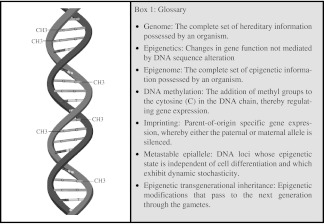
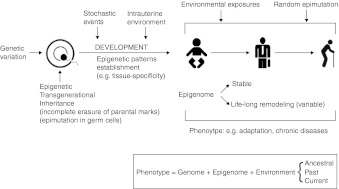
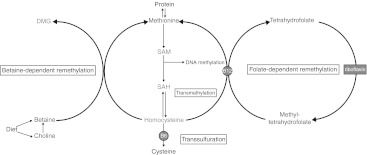
Evidence is growing for the long-term effects of environmental factors during early-life on later disease susceptibility. It is believed that epigenetic mechanisms (changes in gene function not mediated by DNA sequence alteration), particularly DNA methylation, play a role in these processes. This paper reviews the current state of knowledge of the involvement of C 1 metabolism and methyl donors and cofactors in maternal diet-induced DNA methylation changes in utero as an epigenetic mechanism. Methyl groups for DNA methylation are mostly derived from the diet and supplied through C 1 metabolism by way of choline, betaine, methionine or folate, with involvement of riboflavin and vitamins B 6 and B 12 as cofactors. Mouse models have shown that epigenetic features, for example DNA methylation, can be altered by periconceptional nutritional interventions such as folate supplementation, thereby changing offspring phenotype. Evidence of early nutrient-induced epigenetic change in human subjects is scant, but it is known that during pregnancy C 1 metabolism has to cope with high fetal demands for folate and choline needed for neural tube closure and normal development. Retrospective studies investigating the effect of famine or season during pregnancy indicate that variation in early environmental exposure in utero leads to differences in DNA methylation of offspring. This may affect gene expression in the offspring. Further research is needed to examine the real impact of maternal nutrient availability on DNA methylation in the developing fetus.
Overview
The claims and statistics of this paper haven’t been checked yet.
Free: it reads the open-access text and checks the first 5 claims that cite a source we can check. Create a free account to check every claim.
Integrity signals
Registry
Cites
Statistics
Figures
Verification
Claims the paper makes
The claims and statistics of this paper haven’t been checked yet.
Free: it reads the open-access text and checks the first 5 claims that cite a source we can check. Create a free account to check every claim.
Claims other papers make about this one
Each is checked against this paper’s own text: does it say what the citing paper says it does?
The source backs part of the claim, not all of it — or backs it for a different population, condition or comparison.
In the citing paper
“For example, studies of individuals conceived during famine conditions have revealed decreased DNA methylation of specific loci, such as the IGF2 gene, associated with an increased risk of obesity, dyslipidemia, and insulin resistance later in life (Dominguez-Salas et al., 2012).”
From Influence of Metabolism on Epigenetics and Disease (2013) · cites this paper as Dominguez-Salas et al., 2012
Experimental — accuracy not yet measured
Self-check
Percentages, sums and reported differences re-computed from the paper’s own numbers.
The self-check needs the paper’s full text.
Citations
Cites
1 retracted
Zeisel, S. H. (2008) · Brain Research · doi:10.1016/j.brainres.2008.08.059 · Cited by 44 · cited 1×
“Methyl groups for fetal DNA methylation and development are provided through C1 metabolism ((52)).”
RetractedEpigenetic differences arise during the lifetime of monozygotic twins
Fraga, M. F., Ballestar, E., Paz, M. F., Ropero, S., Setien, F., Ballestar, M. L., Heine-Suñer, D., Cigudosa, J. C., Urioste, M., Benitez, J., et al. (2005) · Proceedings of the National Academy of Sciences · doi:10.1073/pnas.0500398102 · Cited by 3,602 · cited 4×
“Fraga et al.(36) observed that DNA methylation patterns in twins are indistinguishable at birth.”
InfluentialPrevention of neural tube defects: Results of the Medical Research Council Vitamin Study
(1991) · The Lancet · doi:10.1016/0140-6736(91)90133-a · Cited by 3,472
Persistent epigenetic differences associated with prenatal exposure to famine in humans
Heijmans, B. T., Tobi, E. W., Stein, A. D., Putter, H., Blauw, G. J., Susser, E. S., Slagboom, P. E., & Lumey, L. H. (2008) · Proceedings of the National Academy of Sciences · doi:10.1073/pnas.0806560105 · Cited by 3,082 · cited 4×
“In an attempt to explain these observations, Heijmans et al.(117) tested for differences in DNA methylation of the IGF2 gene locus comparing those exposed to periconceptional famine in early development with same-sex siblings conceived before or after the famine six decades later (Table 1).”
InfluentialDNA methylation landscapes: Provocative insights from epigenomics
Suzuki, M. M., & Bird, A. (2008) · Nature Reviews Genetics · doi:10.1038/nrg2341 · Cited by 3,039 · cited 3×
“However, gene promoters contain CpG-rich DNA areas called ‘CpG islands’, which are usually unmethylated, highlighting the importance of DNA methylation in the regulation of gene expression((10,11)).”
INFANT MORTALITY, CHILDHOOD NUTRITION, AND ISCHAEMIC HEART DISEASE IN ENGLAND AND WALES
BARKER, D. (1986) · The Lancet · doi:10.1016/s0140-6736(86)91340-1 · Cited by 2,892 · cited 1×
“Southampton (UK) studied retrospective data of geographical disease distribution and noticed that neonatal mortality was strongly associated with IHD rates in the UK((4)).”
DNA methylation and human disease
Robertson, K. D. (2005) · Nature Reviews Genetics · doi:10.1038/nrg1655 · Cited by 2,864 · cited 1×
“Imprinted genes play a critical role in regulation of placental and embryonic development, as well as in intrauterine growth and thus, early influences can have a substantial impact on human health later in life((10,21)).”
Principles of nutritional assessment
(1990) · Choice Reviews Online · doi:10.5860/choice.27-6362 · Cited by 2,765
Sharma, S., Kelly, T. K., & Jones, P. A. (2010) · Carcinogenesis · doi:10.1093/carcin/bgp220 · Cited by 2,637 · cited 1×
“These epigenetic mechanisms ‘crosstalk’ in an orchestrated manner to regulate gene expression throughout life((9)).”
Elective induction versus spontaneous labor after sonographic diagnosis of fetal macrosomia.
Combs, C. A., Singh, N. B., & Khoury, J. C. (1993) · PubMed · Cited by 2,505
Research works printed but not linked: 1
- (1998 Dietary Reference Intakes for Folate, Thiamine, Riboflavin, Niacin, Vitamin B12, Panthothenic acid, Biotine, and Choline [Institute of Medicine, National Academy of Sciences US, editor] Washington, DC National Academy Press
Cited by
Influence of Metabolism on Epigenetics and Disease
Kaelin, W. G., & McKnight, S. L. (2013) · Cell · doi:10.1016/j.cell.2013.03.004 · Cited by 920
“For example, studies of individuals conceived during famine conditions have revealed decreased DNA methylation of specific loci, such as the IGF2 gene, associated with an increased risk of obesity, dyslipidemia, and insulin resistance later in life (Dominguez-Salas et al., 2012).”
Maternal nutrition at conception modulates DNA methylation of human metastable epialleles
Dominguez-Salas, P., Moore, S. E., Baker, M. S., Bergen, A. W., Cox, S. E., Dyer, R. A., Fulford, A. J., Guan, Y., Laritsky, E., Silver, M. J., et al. (2014) · Nature Communications · doi:10.1038/ncomms4746 · Cited by 506
Self-citationMarques, A. H., O'Connor, T. G., Roth, C., Susser, E., & Bjørke-Monsen, A.-L. (2013) · Frontiers in Neuroscience · doi:10.3389/fnins.2013.00120 · Cited by 226
“Nutritional factors related to single carbon metabolisms, choline, folate (which is necessary for DNA methylation) and vitamins B2, B6, and B12 are important modulators for epigenetic mechanisms (Dominguez-Salas et al., 2012).”
BackgroundVitamin B12: one carbon metabolism, fetal growth and programming for chronic disease
Rush, E. C., Katre, P., & Yajnik, C. S. (2014) · European Journal of Clinical Nutrition · doi:10.1038/ejcn.2013.232 · Cited by 202
Epigenetic regulation of the oxytocin receptor gene: implications for behavioral neuroscience
Kumsta, R., Hummel, E., Chen, F. S., & Heinrichs, M. (2013) · Frontiers in Neuroscience · doi:10.3389/fnins.2013.00083 · Cited by 207
Dominguez-Salas, P., Moore, S. E., Cole, D., da Costa, K.-A., Cox, S. E., Dyer, R. A., Fulford, A. J., Innis, S. M., Waterland, R. A., Zeisel, S. H., et al. (2013) · The American Journal of Clinical Nutrition · doi:10.3945/ajcn.112.048462 · Cited by 149
“A high dimethylglycine/betaine ratio may indicate a higher rate of betaine methyl group transfer from remethylation of homocysteine (4).”
BackgroundSelf-citationEpigenetic memory of environmental organisms: A reflection of lifetime stressor exposures
Mirbahai, L., & Chipman, J. K. (2013) · Mutation Research/Genetic Toxicology and Environmental Mutagenesis · doi:10.1016/j.mrgentox.2013.10.003 · Cited by 163
“Published by Elsevier B.V.”
BackgroundInfluentialEmerging roles for folate and related B-vitamins in brain health across the lifecycle
McGarel, C., Pentieva, K., Strain, J. J., & McNulty, H. (2015) · Proceedings of the Nutrition Society · doi:10.1017/s0029665114001554 · Cited by 141
Drake, A. J., McPherson, R. C., Godfrey, K. M., Cooper, C., Lillycrop, K. A., Hanson, M. A., Meehan, R. R., Seckl, J. R., & Reynolds, R. M. (2012) · Clinical Endocrinology · doi:10.1111/j.1365-2265.2012.04453.x · Cited by 133
Lan, X., Cretney, E. C., Schmidt, J. K., Khateeb, K., Berg, M. A., Peñagaricano, F., Magness, R. R., Radunz, A. E., & Khatib, H. (2013) · Frontiers in Genetics · doi:10.3389/fgene.2013.00049 · Cited by 134
“Diet can alter DNA methylation by changing the concentration of S-adenosine methionine by the amount of methyl donors present in the diet (Zeisel, 2009; Dominguez-Salas et al., 2012).”
BackgroundFetal Malnutrition and Long-Term Outcomes
Fall, C. H. D. (2013) · Nestlé Nutrition Institute Workshop series · doi:10.1159/000348384 · Cited by 134
McGee, M., Bainbridge, S. A., & Fontaine‐Bisson, B. (2018) · Nutrition Reviews · doi:10.1093/nutrit/nuy006 · Cited by 128
Ghosh, S., Sinha, J. K., Putcha, U. K., & Raghunath, M. (2016) · Frontiers in Nutrition · doi:10.3389/fnut.2016.00001 · Cited by 124
Prenatal maternal immune activation causes epigenetic differences in adolescent mouse brain
Basil, P., Li, Q., Dempster, E. L., Mill, J., Sham, P.-C., Wong, C. C. Y., & McAlonan, G. M. (2014) · Translational Psychiatry · doi:10.1038/tp.2014.80 · Cited by 116
Low Vitamin B12 and Lipid Metabolism: Evidence from Pre-Clinical and Clinical Studies
Boachie, J., Adaikalakoteswari, A., Samavat, J., & Saravanan, P. (2020) · Nutrients · doi:10.3390/nu12071925 · Cited by 130
“Low B12 independently impairs the MS action [85] affecting SAM/SAH ratio which is a principal determinant of the methylation potential of cellular DNA, thereby inducing dysregulation of gene expressions [86,87].”
BackgroundCanadian Consensus on Female Nutrition: Adolescence, Reproduction, Menopause, and Beyond
O’Connor, D. L., Blake, J. M., Bell, R. C., Bowen, A., Callum, J., Fenton, S., Gray‐Donald, K., Rossiter, M. D., Adamo, K. B., Brett, K., et al. (2016) · Journal of Obstetrics and Gynaecology Canada · doi:10.1016/j.jogc.2016.01.001 · Cited by 120
Environmental Impact on DNA Methylation in the Germline: State of the Art and Gaps of Knowledge
Pacchierotti, F., & Spanò, M. (2015) · BioMed Research International · doi:10.1155/2015/123484 · Cited by 107
“The study focused on the analysis of human candidate metastable epiallelic loci [25, 146].”
BackgroundBiological embedding of early‐life exposures and disease risk in humans: a role for DNA methylation
Demetriou, C. A., van Veldhoven, K., Relton, C., Stringhini, S., Kyriacou, K., & Vineis, P. (2015) · European Journal of Clinical Investigation · doi:10.1111/eci.12406 · Cited by 95
Folic Acid and Autism: A Systematic Review of the Current State of Knowledge
Hoxha, B., Hoxha, M., Domi, E., Gervasoni, J., Persichilli, S., Малај, В., & Zappacosta, B. (2021) · Cells · doi:10.3390/cells10081976 · Cited by 111
“The epigenetic dependent modifications in the brain, such as neuron connectivity and morphology, occur most frequently during pregnancy and in perinatal period [9].”
BackgroundMasih, S. P., Plumptre, L., Ly, A., Berger, H. M., Lausman, A. Y., Croxford, R., Kim, Y., & O’Connor, D. L. (2015) · Journal of Nutrition · doi:10.3945/jn.115.211300 · Cited by 101
“documented, there is a growing body of evidence demonstrating that excessive exposure to one-carbon nutrients in utero can potentially affect disease susceptibility in the offspring later in life, which may in part be mediated by epigenetic mechanisms such as DNA methylation (2).”
Future Directions in ADHD Etiology Research
Nigg, J. T. (2012) · Journal of Clinical Child & Adolescent Psychology · doi:10.1080/15374416.2012.686870 · Cited by 78
Holistic Integration of Omics Tools for Precision Nutrition in Health and Disease
Ramos-López, O., Martínez, J. A., & Milagro, F. I. (2022) · Nutrients · doi:10.3390/nu14194074 · Cited by 94
“ability of diet-derived methyl donors (folate, coline, betaine, and methionine) and cofactors (vitamins B2, B6, and B12) is critical for DNA methylation reactions through 1-carbon metabolism, which impacts gene expression and health outcomes in offspring [78].”
BackgroundEpigenetics and neurodegeneration: role of early-life nutrition
Gabbianelli, R., & Damiani, E. (2018) · The Journal of Nutritional Biochemistry · doi:10.1016/j.jnutbio.2018.01.014 · Cited by 82
The Metabolic Ghetto: An Evolutionary Perspective on Nutrition, Power Relations and Chronic Disease
Wells, J. C. K. (2016) · Cambridge University Press eBooks · doi:10.1017/cbo9780511972959 · Cited by 76
Adair, L. S. (2014) · Nestlé Nutrition Institute Workshop series · doi:10.1159/000354949 · Cited by 91
Histone methylations in heart development, congenital and adult heart diseases
Zhang, Q.-J., & Liu, Z.-P. (2015) · Epigenomics · doi:10.2217/epi.14.60 · Cited by 76
Skjærven, K. H., Jakt, L. M., Fernandes, J. M. O., Dahl, J. A., Adam, A., Klughammer, J., Bock, C., & Espe, M. (2018) · Scientific Reports · doi:10.1038/s41598-018-21211-5 · Cited by 86
Marques-Rocha, J. L., Milagro, F. I., Mansego, M. L., Mourão, D. M., Martínez, J. A., & Bressan, J. (2016) · Epigenetics · doi:10.1080/15592294.2015.1135286 · Cited by 80
“methylation in particular, being riboflavin, vitamin B12 and folate the major determinants of one-carbon metabolism.(36) In this sense, our results confirm the importance of riboflavin in DNA methylation process.”
BackgroundBatistel, F., Alharthi, A. S., Wang, L., Parys, C., Pan, Y., Cardoso, F. C., & Loor, J. J. (2017) · Journal of Nutrition · doi:10.3945/jn.117.251876 · Cited by 73
Caradonna, F., Consiglio, O., Luparello, C., & Gentile, C. (2020) · Nutrients · doi:10.3390/nu12061748 · Cited by 70
“In confirmation of this, the hypothesis can be reported that an altered mother nutrition and poor in dietary supply of methyl donors during pregnancy may result in permanent alterations in the DNA methylation patterns of newborns when the fetus epigenome is particularly responsive to environmental stimuli [52].”
BackgroundMcCullough, L. E., Miller, E. E., Mendez, M. A., Murtha, A. P., Murphy, S. K., & Hoyo, C. (2016) · Clinical Epigenetics · doi:10.1186/s13148-016-0174-9 · Cited by 62
“Finally, while there is an urgent need to better understand how maternal micronutrients involved in the 1-CC metabolism pathway affect developmental epigenetics, redundancy in methyl-donor supply pathways may indicate that alterations of one substrate could, through compensatory mechanisms, perturb others [34].”
BackgroundSchaevitz, L. R., & Berger-Sweeney, J. E. (2012) · ILAR Journal · doi:10.1093/ilar.53.3-4.322 · Cited by 64
Bouwland-Both, M. I., Mil, N. H. G., Stolk, L., Eilers, P. H. C., Verbiest, M. M. P. J., Heijmans, B. T., Tiemeier, H. W., Hofman, A., Steegers, E. A. P., Jaddoe, V. W. V., et al. (2013) · PLoS ONE · doi:10.1371/journal.pone.0081731 · Cited by 76
“Moreover, hyperhomocysteinemia also affects DNA methylation levels [8,9].”
BackgroundMitochondrial health, the epigenome and healthspan
Aon, M. A., Cortassa, S., Juhaszova, M., & Sollott, S. J. (2016) · Clinical Science · doi:10.1042/cs20160002 · Cited by 66
Homberg, J. R., Kyzar, E. J., Scattoni, M. L., Norton, W., Pittman, J. T., Gaikwad, S., Nguyen, M., Poudel, M. K., Ullmann, J. F. P., Diamond, D. M., et al. (2016) · Brain Research Bulletin · doi:10.1016/j.brainresbull.2016.04.015 · Cited by 75
Srinivasan, K., Thomas, T. S., Kapanee, A. R. M., Ramthal, A., Bellinger, D. C., Bosch, R. J., Kurpad, A. V., & Duggan, C. (2016) · Maternal and Child Nutrition · doi:10.1111/mcn.12325 · Cited by 74
“Maternal micronutrient status is critical for optimal fetal brain development, and is likely to influence DNA methylation and cognitive performance in infancy and early childhood (Georgieff 2007; Dominguez-Salas et al. 2012).”
Tserga, A., Binder, A. M., & Michels, K. B. (2017) · The FASEB Journal · doi:10.1096/fj.201601214rr · Cited by 64
Epigenetic programming of hypoxic–ischemic encephalopathy in response to fetal hypoxia
Ma, Q., & Zhang, L. (2014) · Progress in Neurobiology · doi:10.1016/j.pneurobio.2014.11.001 · Cited by 68
Mendy, M. E., Caboux, É., Sylla, B. S., Dillner, J., Chinquee, J., Wild, C. P., & participants, B. S. (2014) · Pathobiology · doi:10.1159/000362093 · Cited by 61
Early-life nutritional effects on the female reproductive system
Chan, K. A., Tsoulis, M. W., & Sloboda, D. M. (2014) · Journal of Endocrinology · doi:10.1530/joe-14-0469 · Cited by 63
“Moreover, epigenetic marks that are thought to reflect early-life nutritional status have been put forward as possible biomarkers of long-term disease risk (Heijmans et al. 2008, Godfrey et al. 2011, Dominguez-Salas et al. 2012, 2014, Khulan et al. 2012).”
BackgroundLecorguillé, M., Teo, S. M., & Phillips, C. M. (2021) · Nutrients · doi:10.3390/nu13093130 · Cited by 69
“Earlylife exposures have been described to be recorded in the “cellular memory” and having the potential to influence cellular functions with long-term effects [18,156].”
BackgroundInfluentialMaternal Methyl-Group Donor Intake and Global DNA (Hydroxy)Methylation before and during Pregnancy
Pauwels, S., Duca, R. C., Devlieger, R., Freson, K., Straetmans, D. P. L., Herck, E. V., Huybrechts, I., Koppen, G., & Godderis, L. (2016) · Nutrients · doi:10.3390/nu8080474 · Cited by 55
“Homocysteine can leave the methionine cycle through the transsulfuration pathway or can be re‐ methylated to methionine through the methionine or folate cycle [2,9].”
BackgroundInfluentialNeurogenetics and Epigenetics in Impulsive Behaviour: Impact on Reward Circuitry
Archer, T., & Blum, K. (2012) · Journal of Genetic Syndromes & Gene Therapy · doi:10.4172/2157-7412.1000115 · Cited by 54
“For example, maternal diet may program offspring growth and metabolic pathways thereby instigating a lifelong susceptibility to cognitive or emotional problems and diabetes leading to obesity [23–25].”
BackgroundPrentice, S. (2017) · Frontiers in Immunology · doi:10.3389/fimmu.2017.01641 · Cited by 52
Huang, T., Zheng, Y., Qi, Q., Xu, M., Ley, S. H., Li, Y., Kang, J. H., Wiggs, J. L., Pasquale, L. R., Chan, A. T., et al. (2015) · Diabetes · doi:10.2337/db15-0264 · Cited by 55
“Several B vitamins, including folate, riboflavin (B2), pyridoxine (B6), and B12, act as key enzyme cofactors and play essential roles in methyl group metabolism and DNA methylation in particular (11,12).”
BackgroundSebayang, S. K., Dibley, M. J., Astutik, E., Efendi, F., Kelly, P. J., & Li, M. (2019) · Maternal and Child Nutrition · doi:10.1111/mcn.12889 · Cited by 54
Attention deficits and hyperactivity–impulsivity: What have we learned, what next?
Nigg, J. T. (2013) · Development and Psychopathology · doi:10.1017/s0954579413000734 · Cited by 51
Consequences of dietary methyl donor supplements: Is more always better?
Shorter, K. R., Felder, M. R., & Vrana, P. B. (2015) · Progress in Biophysics and Molecular Biology · doi:10.1016/j.pbiomolbio.2015.03.007 · Cited by 57
Sable, P., Kale, A. A., Joshi, A. A., & Joshi, S. (2014) · International Journal of Developmental Neuroscience · doi:10.1016/j.ijdevneu.2014.01.003 · Cited by 55
“Micronutrients like folic acid and vitamin B12 are part of the one carbon cycle and are vital for the generation of methyl groups which affect DNA and histone methylation thereby regulating gene expression in the offspring (Dominguez-Salas et al., 2012).”
BackgroundKoseki, J., Konno, M., Asai, A., Colvin, H. S., Kawamoto, K., Nishida, N., Sakai, D., Kudo, T., Satoh, T., Doki, Y., et al. (2018) · Scientific Reports · doi:10.1038/s41598-017-18456-x · Cited by 54
Thomas, S., Thomas, T. S., Bosch, R. J., Ramthal, A., Bellinger, D. C., Kurpad, A. V., Duggan, C., & Srinivasan, K. (2018) · Maternal and Child Health Journal · doi:10.1007/s10995-018-2605-z · Cited by 58
Folate, Homocysteine and the Cardiac Neural Crest
Rosenquist, T. H. (2013) · Developmental Dynamics · doi:10.1002/dvdy.23922 · Cited by 49
“Further research obviously is required, as has been discussed also by Dominguez-Salas et al. (2012).”
Lai, J. S., Ayob, M. N. M., Cai, S., Quah, P. L., Gluckman, P. D., Shek, L. P., Yap, F. K. P., Tan, K. H., Chong, Y. S., Godfrey, K. M., et al. (2019) · British Journal Of Nutrition · doi:10.1017/s0007114519000746 · Cited by 50
“Vitamins B12 and B6 are the sources of coenzymes which participate in one-carbon metabolism shown to play a role in neurodevelopment(37); the lack of both nutrients may thus have an additive negative effect on cognitive function.”
BackgroundAdaikalakoteswari, A., Vatish, M., Lawson, A. J., Wood, C., Sivakumar, K., McTernan, P. G., Webster, C., Anderson, N., Yajnik, C. S., Tripathi, G., et al. (2015) · Nutrients · doi:10.3390/nu7042401 · Cited by 57
“The plausible biochemical reasons that low maternal B12 status increase the metabolic risk in the offspring might be, firstly, in the cytoplasm, vitamin B12 acts as a cofactor for conversion of homocysteine to methionine, the direct precursor of S-adenosylmethionine (SAM) which is the common donor required for methyla…”
BackgroundEpigenetic mechanisms and models in the origins of asthma
Karmaus, W., Ziyab, A. H., Everson, T. M., & Holloway, J. W. (2012) · Current Opinion in Allergy and Clinical Immunology · doi:10.1097/aci.0b013e32835ad0e7 · Cited by 46
Cho, C. E., Sánchez‐Hernández, D., Reza‐López, S. A., Huot, P. S. P., Kim, Y., & Anderson, G. H. (2013) · International Journal of Obesity · doi:10.1038/ijo.2012.210 · Cited by 44
Goodspeed, D. M., Seferovic, M. D., Holland, W. L., McKnight, R. A., Summers, S. A., Branch, D. W., Lane, R. H., & Aagaard, K. M. (2014) · The FASEB Journal · doi:10.1096/fj.14-259614 · Cited by 39
“Methylation is further influenced along the renal arginine-dependent nitric oxide pathway (51).”
BackgroundAging and nutrition induce tissue-specific changes on global DNA methylation status in rats
Guarasci, F., D’Aquila, P., Mandalà, M., Garasto, S., Lattanzio, F., Corsonello, A., Passarino, G., & Bellizzi, D. (2018) · Mechanisms of Ageing and Development · doi:10.1016/j.mad.2018.02.001 · Cited by 40
Exploring the Role of Maternal Nutritional Epigenetics in Congenital Heart Disease
Joshi, R. O., Chellappan, S., & Kukshal, P. (2020) · Current Developments in Nutrition · doi:10.1093/cdn/nzaa166 · Cited by 38
Epigenetic Effect of Maternal Methyl-Group Donor Intake on Offspring’s Health and Disease
Bokor, S., Vass, R. A., Funke, S., Ertl, T., & Molnár, D. (2022) · Life · doi:10.3390/life12050609 · Cited by 40
“, folate, choline, betaine, and methionine), are higher because of the developing and growing fetus [42,43].”
BackgroundEarly-Life Exposures and Risk of Diabetes Mellitus and Obesity
Gingras, V., Hivert, M., & Oken, E. (2018) · Current Diabetes Reports · doi:10.1007/s11892-018-1050-0 · Cited by 33
Nutrition and cognition across the lifetime: an overview on epigenetic mechanisms
Polverino, A., Sorrentino, P., Pesoli, M., & Mandolesi, L. (2021) · AIMS neuroscience · doi:10.3934/neuroscience.2021024 · Cited by 35
“cognitive functioning later in life [100], [101],”
Plows, J. F., Budin, F., Andersson, R., Mills, V., Macé, K., Davidge, S. T., Vickers, M. H., Baker, P. N., Silva‐Zolezzi, I., & Stanley, J. L. (2017) · Nutrients · doi:10.3390/nu9020141 · Cited by 33
Fetal one-carbon nutrient concentrations may be affected by gestational diabetes
Barzilay, E., Moon, A. S., Plumptre, L., Masih, S. P., Sohn, K., Visentin, C., Ly, A., Malysheva, O., Croxford, R., Caudill, M. A., et al. (2018) · Nutrition Research · doi:10.1016/j.nutres.2018.04.010 · Cited by 31
Lin, X.-H., Wu, D., Gao, L., Zhang, J., Pan, H., Wang, H., Li, C., Ping, Z., Guo, M., Wu, Y., et al. (2016) · Oncotarget · doi:10.18632/oncotarget.13442 · Cited by 36
“DNA methylation is a well-known epigenetic modification that participates in metabolic programming during the perinatal period [30].”
BackgroundRooney, M. L., Bottiglieri, T., Wasek-Patterson, B., McMahon, A., Hughes, C., McCann, A., Horigan, G., Strain, J., McNulty, H., & Ward, M. (2020) · Biochimie · doi:10.1016/j.biochi.2020.04.004 · Cited by 34
Maternal biomarkers of methylation status and non-syndromic orofacial cleft risk: a meta-analysis
Blanco, R., Colombo, A., Pardo, R. A., V, & Suazo, J. (2016) · International Journal of Oral and Maxillofacial Surgery · doi:10.1016/j.ijom.2016.06.011 · Cited by 29
Golding, J., Gregory, S., Clark, R., Iles‐Caven, Y., Ellis, G. L., Taylor, C. M., & Hibbeln, J. R. (2020) · Nutrition Research · doi:10.1016/j.nutres.2020.12.005 · Cited by 31
Review of Environmental Impact on the Epigenetic Regulation of Atopic Diseases
Sabounchi, S., Bollyky, J., & Nadeau, K. C. (2015) · Current Allergy and Asthma Reports · doi:10.1007/s11882-015-0533-1 · Cited by 29
Antioxidant-Prooxidant Balance in the Intestine: Applications in Chick Placement and Pig
Surai, P. F., & Fisinin, V. I. (2015) · Cited by 26
Monasso, G. S., Küpers, L. K., Jaddoe, V. W. V., Heil, S. G., & Felix, J. F. (2021) · Clinical Epigenetics · doi:10.1186/s13148-021-01065-x · Cited by 26
“Altered epigenetic aging in response to the environment in utero, resulting in gestational age acceleration, might be an underlying mechanism for the associations of circulating folate, vitamin B12 and homocysteine concentrations during pregnancy and health outcomes in children [2, 3, 5, 9, 20].”
BackgroundInfluentialImplication of the Mediterranean diet on the human epigenome
Kenanoğlu, S., Gökçe, N., Akalın, H., Ergören, M. Ç., Beccari, T., Bertelli, M., & Dündar, M. (2022) · Journal of preventive medicine and hygiene · doi:10.15167/2421-4248/jpmh2022.63.2s3.2746 · Cited by 36
“In fact, this knowledge became even more significant with the evaluation of metabolic parameters, strikingly revealing that the individual is not only dependent on his/her own diet, but also influenced by his/her parents’ diet [5, 31].”
Epigenetic Profiles in Children with a Neural Tube Defect; A Case-Control Study in Two Populations
Stolk, L., Bouwland-Both, M. I., van Mill, N. H., Verbiest, M. M. P. J., Eilers, P. H. C., Zhu, H., Suarez, L., Uitterlinden, A. G., & Steegers‐Theunissen, R. P. M. (2013) · PLoS ONE · doi:10.1371/journal.pone.0078462 · Cited by 29
“The 1C-metabolism has repeatedly been associated with DNA-methylation [4,5].”
BackgroundReproducibility and validity of an FFQ to assess usual intake of methyl-group donors
Pauwels, S., Doperé, I., Huybrechts, I., Godderis, L., Koppen, G., & Vansant, G. A. A. M. (2015) · Public Health Nutrition · doi:10.1017/s1368980014003140 · Cited by 24
“S -Adenosylmethionine is derived from methionine, which is de-methylated through the action of DNA methyltransferases to S -adenosylhomocysteine (4) .”
Lecorguillé, M., Lioret, S., de Lauzon‐Guillain, B., de Gavelle, E., Forhan, A., Mariotti, F., Charles, M.-A. A., & Heude, B. (2020) · Nutrients · doi:10.3390/nu12030838 · Cited by 25
“One study conducted in Gambia found that infants conceived during the dry or wet season (with significant seasonal variation in nutrients) had different levels of DNA methylation at a number of sites correlated with their methyldonor micronutrient status [26,48].”
Breton‐Larrivée, M., Elder, E., Legault, L., Langford‐Avelar, A., MacFarlane, A. J., & McGraw, S. (2023) · The FASEB Journal · doi:10.1096/fj.202201564r · Cited by 21
Andraos, S., de Seymour, J. V., O'Sullivan, J. M., & Kussmann, M. (2018) · Molecular Nutrition & Food Research · doi:10.1002/mnfr.201800034 · Cited by 28
Epigenome modifiers and metabolic rewiring: New frontiers in therapeutics
Ferrari, A., Longo, R., Silva, R., Mitro, N., Caruso, D., De Fabiani, E., & Crestani, M. (2019) · Pharmacology & Therapeutics · doi:10.1016/j.pharmthera.2018.08.008 · Cited by 19
Monasso, G. S., Santos, S., Geurtsen, M. L., Heil, S. G., Felix, J. F., & Jaddoe, V. W. V. (2021) · Journal of Nutrition · doi:10.1093/jn/nxab039 · Cited by 19
“Folate and vitamin B-12 are essential for cellular growth and differentiation and regulate homocysteine metabolism (6, 12).”
BackgroundInfluentialMonasso, G. S., Hoang, T. T., Mancano, G., Fernández‐Barrés, S., Dou, J., Jaddoe, V. W. V., Page, C. M., Johnson, L., Bustamante, M., Bakulski, K. M., et al. (2023) · Epigenetics · doi:10.1080/15592294.2023.2202835 · Cited by 20
“Maternal vitamin B12 analyses were additionally adjusted for gestational age at blood sampling, as physiologically vitamin B12 concentrations decline during pregnancy [8,9].”
BackgroundMethodInfluentialNash, A. J., Mandaviya, P. R., Dib, M., Uitterlinden, A. G., van Meurs, J. B. J., Heil, S. G., Andrew, T., & Ahmadi, K. R. (2018) · The FASEB Journal · doi:10.1096/fj.201800400r · Cited by 22
Devi, S., Mukhopadhyay, A., Dwarkanath, P., Thomas, T. S., Crasta, J., Thomas, A., Sheela, C. N., Hsu, J. W.-C., Tang, G. J., Jahoor, F., et al. (2017) · Journal of Nutrition · doi:10.3945/jn.116.241042 · Cited by 22
Rai, V., & Kumar, P. (2017) · Egyptian Journal of Medical Human Genetics · doi:10.1016/j.ejmhg.2017.06.006 · Cited by 19
Zhu, X., Li, R., Kang, G., Kang, Q., Rao, W., Yang, M., Cao, B., Zhang, M., Sun, Y., Wang, Y., et al. (2019) · Disease Markers · doi:10.1155/2019/8062397 · Cited by 18
“Retrospective studies have revealed that a poor utero environment caused by famine during pregnancy can lead to differences in DNA methylation in offspring [8].”
BackgroundSkjærven, K. H., Mommens, M., Adam, A., Saito, T., Oveland, E., & Espe, M. (2022) · Aquaculture · doi:10.1016/j.aquaculture.2022.738187 · Cited by 18
Monasso, G. S., Felix, J. F., Heil, S. G., de Rijke, Y. B., Gaillard, R., & Jaddoe, V. W. V. (2021) · Clinical Nutrition · doi:10.1016/j.clnu.2021.08.001 · Cited by 18
“Particularly during fetal development, vitamin B12 and folate are important for cellular growth and differentiation and regulating homocysteine metabolism [16,17].”
BackgroundInfluentialLecorguillé, M., Charles, M.-A. A., Lepeule, J., Lioret, S., de Lauzon‐Guillain, B., Forhan, A., Tost, J., Suderman, M. J., & Heude, B. (2021) · Epigenetics · doi:10.1080/15592294.2021.1957575 · Cited by 19
“The latter depends upon the supply of dietary OCM nutrients, which are necessary to establish methylation patterns during embryogenesis and maintain them during cell proliferation [1].”
Backgroundda Silva, A. V. A., Oliveira, S. B., Rienzi, S. C. D., Brown-Steinke, K., Dehan, L. M., Rood, J. K., Carreira, V., Le, H., Maier, E. A., Betz, K., et al. (2018) · Current Developments in Nutrition · doi:10.1093/cdn/nzy070 · Cited by 20
Self-citationHong, S. A., Lee, E., Kwon, S. O., Kim, K. W., Shin, Y. H., Ahn, K. M., Kim, E.-J., Lee, J.-G., Oh, S., & Hong, S. (2016) · World Journal of Pediatrics · doi:10.1007/s12519-016-0054-6 · Cited by 14
“[10,11] For example, antioxidants, such as vitamin E, decrease lipid peroxidation and superoxide production, [12] protect immune cells from reactive oxygen species (ROS), and enhance macrophage function and production of antibodies such as immunoglobulin A. [13] Respiratory tract infection (RTI)…”
BackgroundLecorguillé, M., Navarro, P., Chen, L., Murrin, C. M., Viljoen, K., Mehegan, J., Shivappa, N., Hébert, J. R., Kelleher, C. C., Suderman, M. J., et al. (2023) · Journal of Nutrition · doi:10.1016/j.tjnut.2023.01.028 · Cited by 18
“Epigenetic mechanisms (that is, changes in gene function not mediated by DNA nucleotide sequence alteration), particularly DNA methylation (DNAm), may play a role by responding to and retaining a long-term memory of the in utero environment [2,3].”
BackgroundPauwels, S., Doperé, I., Huybrechts, I., Godderis, L., Koppen, G., & Vansant, G. A. A. M. (2014) · International Journal of Food Sciences and Nutrition · doi:10.3109/09637486.2014.917149 · Cited by 16
“SAH has the ability to inhibit transmethylation reactions through an increase in SAH or a decrease in SAM, which disrupts the SAH:SAM ratio (Dominguez-Salas et al., 2012; Mato et al., 1997).”
BackgroundAgbota, G., Fiévet, N., Heude, B., Accrombessi, M., Ahouayito, U., Yovo, E., Dossa, D., Dramane, L., Gartner, A., Ezinmègnon, S., et al. (2019) · Pediatric Obesity · doi:10.1111/ijpo.12573 · Cited by 15
“In humans, epigenetic changes related to maternal nutrition have also been shown in newborns conceived during the hungry vs the harvest season and in offspring of women exposed to the Dutch famine.(42) Although maternal supplementation during pregnancy has been associated with a reduction of both maternal nutritional…”
BackgroundNienaber‐Rousseau, C. (2024) · Nutrition Reviews · doi:10.1093/nutrit/nuae015 · Cited by 18
Wu, Y., Cheng, Z., Bai, Y., & Ma, X. (2019) · Current Protein and Peptide Science · doi:10.2174/1389203720666190125110150 · Cited by 14
Moore, R., Anturaniemi, J., Velagapudi, V., Nandania, J., Barrouin‐Melo, S. M., & Hielm-Björkman, A. K. (2020) · Frontiers in Veterinary Science · doi:10.3389/fvets.2020.554296 · Cited by 16
“Playing important roles in one-carbon metabolism, and subsequently often discussed in the context of DNA methylation, betaine is converted to dimethylglycine as its methyl group is added to homocysteine, producing methionine (103) (Figure 7).”
BackgroundGilley, S. P., Weaver, N. E., Sticca, E., Jambal, P., Palacios, A., Kerns, M. E., Anand, P., Kemp, J. F., Westcott, J., Figueroa, L., et al. (2019) · Current Developments in Nutrition · doi:10.1093/cdn/nzz132 · Cited by 12
“For example, betaine is directly involved in homocysteine recycling in the 1C pathway (6, 12, 40) and maternal levels may decrease due to the high rate of DNA methylation in the growing fetus.”
BackgroundInfluentialβ-Cell Identity in Type 2 Diabetes: Lost or Found?
Butler, A. E., & Dhawan, S. (2015) · Diabetes · doi:10.2337/db15-0550 · Cited by 16
“Epigenetic mechanisms, such as DNA methylation that regulates the endocrine cell identity, are also sensitive to the cellular metabolic status (19,20).”
BackgroundChan, Y., MacFarlane, A. J., & O’Connor, D. L. (2015) · Journal of Nutrition · doi:10.3945/jn.115.217851 · Cited by 11
Warzak, D. A., Johnson, S. A., Ellersieck, M. R., Roberts, R. M., Zhang, X., Ho, S., & Rosenfeld, C. S. (2015) · The Journal of Nutritional Biochemistry · doi:10.1016/j.jnutbio.2015.01.003 · Cited by 11
“Despite the controversial nature of the latter studies, thesefindings overall are consistentwithmanyothers in the nutrition field [19–21] indicating that maternal uterine environment can modulate epigenetic marks established early in development that are the forerunner of events manifested after the animal is born and…”
BackgroundSulaiman, S. A., Blasio, M. J. D., Harland, M. L., Gatford, K. L., & Owens, J. A. (2017) · American Journal of Physiology-Endocrinology and Metabolism · doi:10.1152/ajpendo.00033.2017 · Cited by 10
“Some methyl donors, such as betaine and folic acid, may also act as antioxidants (8, 33).”
Background
Metadata
- Authors
- Dominguez-Salas, P., Cox, S. E., Prentice, A. M., Hennig, B. J., & Moore, S. E.
- Affiliations
- London School of Hygiene & Tropical Medicine (GB)
- Venue
- Proceedings of the Nutrition Society
- Publisher
- Cambridge University Press (CUP)
- Published
- 2011-11-29
- Volume
- 71
- Issue
- 1
- Pages
- 154-165
- ISSN
- 0029-6651 (ISSN-L)
- 1475-2719
- PMC
- PMC3491641
- OpenAlex
- W2136477791
- Cited by
- 163
- References
- 128
- Citations by year
- 2026: 8 · 2025: 1 · 2024: 4 · 2023: 3 · 2022: 9 · 2021: 12 · 2020: 13 · 2019: 8 · 2018: 15 · 2017: 13 · 2016: 19 · 2015: 15 · 2014: 14 · 2013: 22 · 2012: 6
- FWCI
- 2.01
- Type
- journal article
- Language
- en
- Open access
- hybrid
- doi.org
- Licence
- cc-by-nc-sa
- www.cambridge.org/core/terms (unspecified)
- Locations
- Proceedings of The Nutrition Society (publishedVersion, cc-by-nc-sa)
- Europe PMC (PubMed Central) (publishedVersion, cc-by-nc-sa)
- PubMed Central (publishedVersion, cc-by-nc-sa)
- PubMed (publishedVersion)
- Greenwich Academic Literature Archive (University of Greenwich) (acceptedVersion)
- LSHTM Research Online (London School of Hygiene and Tropical Medicine) (acceptedVersion)
- LSHTM Research Online (London School of Hygiene and Tropical Medicine) (submittedVersion, cc-by-nc-nd)
- Funders
- Wellcome Trust (WT086369MA)
- Topics
- Health Sciences › Medicine › Pediatrics, Perinatology and Child Health › Birth, Development, and Health
- Life Sciences › Biochemistry, Genetics and Molecular Biology › Molecular Biology › Epigenetics and DNA Methylation
- Health Sciences › Nursing › Nutrition and Dietetics › Folate and B Vitamins Research
- Keywords
- maternal nutritional status, C1 metabolism, DNA methylation, epigenetics, methyl donors, choline, betaine, methionine, folic acid, riboflavin, vitamin B6, vitamin B12, season of birth, fetal development, neural tube closure
- MeSH terms
- Animals, Carbon, Diet, Female, Humans, Nutritional Requirements, Nutritional Status, Pregnancy, Prenatal Exposure Delayed Effects, DNA Methylation, Prenatal Nutritional Physiological Phenomena, Epigenesis, Genetic, Fetal Development
About these checks
Registry, retraction, Cites and statistics results are computed, not judged, with one exception: a printed reference that no index lists is read once by a model before it counts as a citation error. Claims are extracted by a model and kept only when their quote appears verbatim in the text; each cited source is then checked, with a model’s help, for whether it says what the claim relies on. Those verdicts can be wrong — read the claim’s quote and the cited source before relying on one.
Statistics and arithmetic are recomputed, not judged.
Confidence bands are shown only for fields calibrated on our annotated test set. None is calibrated yet, so no band is shown.
What counts as a claim ›How we measure confidence ›How we check this ›
Are you an author, or do you see a problem with this page? Request a review
Data sources
Bibliographic data: Semantic Scholar, OpenAlex, Crossref.
Contains information from the Semantic Scholar Academic Graph Datasets, made available under the ODC Attribution License (ODC-BY 1.0).
Semantic Scholar’s data is described in: Kinney, R., et al. (2023). The Semantic Scholar Open Data Platform. arXiv:2301.10140.
