

The methods and outcomes of cultural adaptations of psychological treatments for depressive disorders: a systematic review
Open accessThe DOI matches its Crossref record; 54 of the 54 references it cites were found in a registry or an index.
Abstract
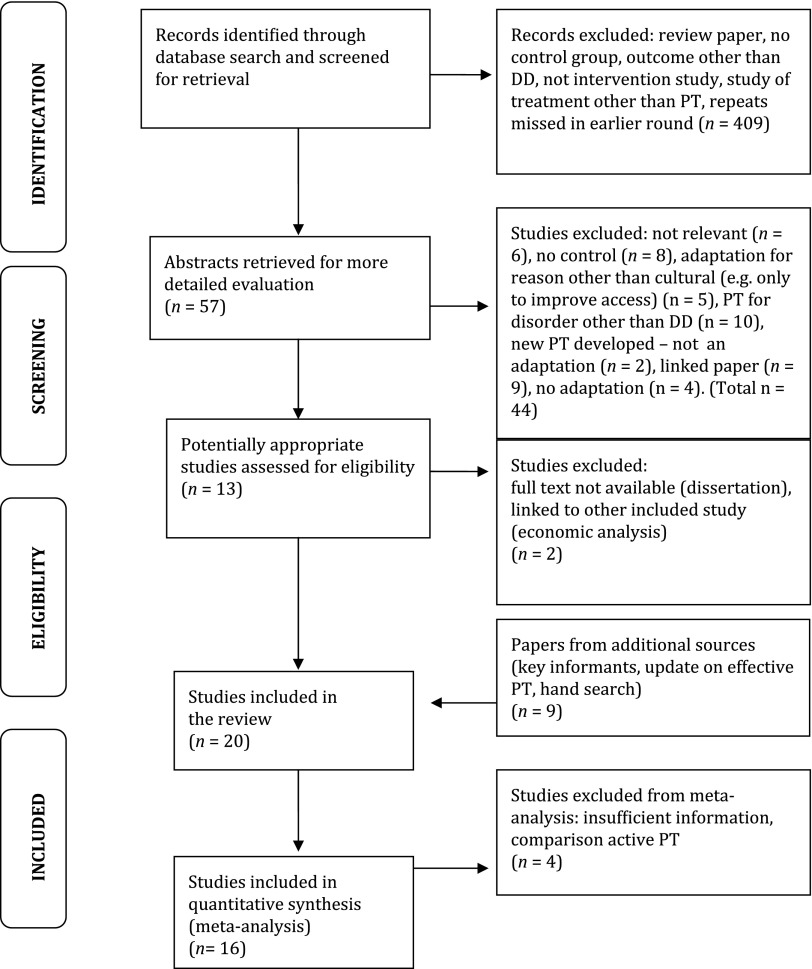
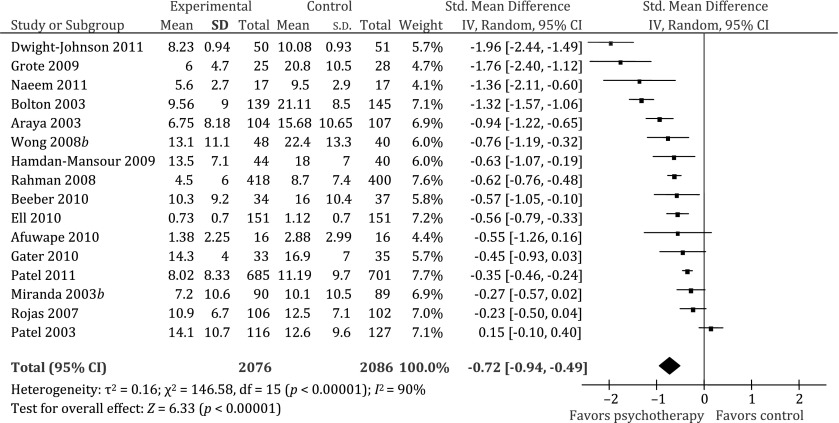
Background: Cultural adaptations of evidence-based psychological treatments (PTs) are important to enhance their universal applicability. The aim of this study was to review systematically the literature on adaptations of PTs for depressive disorders for ethnic minorities in Western countries and for any population in non-Western countries to describe the process, extent and nature of the adaptations and the effectiveness of the adapted treatments. Method: Controlled trials were identified using database searches, key informants, previous reviews and reference lists. Data on the process and details of the adaptations were analyzed using qualitative methods and meta-analysis was used to assess treatment effectiveness. Results: Twenty studies were included in this review, of which 16 were included in the meta-analysis. The process of adaptation was reported in two-thirds of the studies. Most adaptations were found in the dimensions of language, context and therapist delivering the treatment. The meta-analysis revealed a statistically significant benefit in favor of the adapted treatment [standardized mean difference (SMD) −0.72, 95% confidence interval (CI) −0.94 to −0.49]. Conclusions: Cultural adaptations of PTs follow a systematic procedure and lead primarily to adaptations in the implementation of the treatments rather than their content. Such PTs are effective in the treatment of depressive disorders in populations other than those for whom they were originally developed.
Overview
The claims and statistics of this paper haven’t been checked yet.
Free: it reads the open-access text and checks the first 5 claims that cite a source we can check. Create a free account to check every claim.
Integrity signals
Registry
Cites
Statistics
Figures
Verification
Claims the paper makes
The claims and statistics of this paper haven’t been checked yet.
Free: it reads the open-access text and checks the first 5 claims that cite a source we can check. Create a free account to check every claim.
Claims other papers make about this one
Each is checked against this paper’s own text: does it say what the citing paper says it does?
The source backs part of the claim, not all of it — or backs it for a different population, condition or comparison.
In the citing paper
“Cultural adaptation is important for psychosocial interventions for various mental health conditions, and meta-analyses have shown that such interventions are more effective than non-culturally adapted interventions. (474-476)”
From Dementia prevention, intervention, and care: 2024 report of the Lancet standing Commission (2024) · cites this paper as [476]
Experimental — accuracy not yet measuredThe source backs part of the claim, not all of it — or backs it for a different population, condition or comparison.
In the citing paper
“Research consistently shows that culturally adapted treatments are more effective, acceptable, and satisfying for patients [58-60].”
From Effectiveness of an Internet-Based Self-Help Acceptance and Commitment Therapy Program on Medical Students’ Mental Well-Being: Follow-Up Randomized Controlled Trial (2024) · cites this paper as [58]
Experimental — accuracy not yet measuredThe source backs part of the claim, not all of it — or backs it for a different population, condition or comparison.
In the citing paper
“Studies have also demonstrated that participants find culturally adapted ACT enjoyable and acceptable [58,61,62].”
From Effectiveness of an Internet-Based Self-Help Acceptance and Commitment Therapy Program on Medical Students’ Mental Well-Being: Follow-Up Randomized Controlled Trial (2024) · cites this paper as [58]
Experimental — accuracy not yet measuredThe source backs part of the claim, not all of it — or backs it for a different population, condition or comparison.
In the citing paper
“There is evidence that adapted, culturally-relevant mental health programming is an effective tool for addressing poor mental health in humanitarian contexts [8,9,10,11]”
From Psychological Interventions for Survivors of Intimate Partner Violence in Humanitarian Settings: An Overview of the Evidence and Implementation Considerations (2022) · cites this paper as [10]
Experimental — accuracy not yet measuredThe cited source says what the claim attributes to it.
In the citing paper
“The emerging evidence-base accordingly emphasises delivery adaptations (practitioner skills, characteristics and flexible patient centred approaches) over cultural adaptation of underlying principles of therapies [10-12].”
From Development and evaluation of culturally sensitive psychosocial interventions for under-served people in primary care (2014) · cites this paper as [10]
1 more claim about this paper
Create a free account to see every claim other papers make about this one.
Self-check
Percentages, sums and reported differences re-computed from the paper’s own numbers.
The self-check needs the paper’s full text.
Citations
Cites
Preferred Reporting Items for Systematic Reviews and Meta-Analyses: the PRISMA statement
Moher, D., Liberati, A., Tetzlaff, J., Altman, D. G., & for the PRISMA Group (2009) · BMJ · doi:10.1136/bmj.b2535 · Cited by 83,823
Measuring inconsistency in meta-analyses
Higgins, J. P. T., Thompson, S. G., Deeks, J. J., & Altman, D. G. (2003) · BMJ · doi:10.1136/bmj.327.7414.557 · Cited by 63,139 · cited 3×
“A random-effects model was used for the meta-analyses because substantial heterogeneity was observed (I(2)=90%) (Higgins et al. 2003).”
InfluentialBias in meta-analysis detected by a simple, graphical test
Egger, M., Smith, G. D., Schneider, M., & Minder, C. (1997) · BMJ · doi:10.1136/bmj.315.7109.629 · Cited by 56,722 · cited 1×
“check for publication bias (Egger et al. 1997); the plot was asymmetrical suggesting publication bias.”
Preferred reporting items for systematic reviews and meta-analyses: the PRISMA Statement.
(2009) · PubMed Central · Cited by 44,859
Preferred Reporting Items for Systematic Reviews and Meta-Analyses: The PRISMA Statement
Moher, D., Liberati, A., Tetzlaff, J., & Altman, D. G. (2009) · Journal of Clinical Epidemiology · doi:10.1016/j.jclinepi.2009.06.005 · Cited by 19,575
Developing and evaluating complex interventions: the new Medical Research Council guidance
Craig, P., Dieppe, P., Macintyre, S., Michie, S., Nazareth, I., & Petticrew, M. (2008) · BMJ · doi:10.1136/bmj.a1655 · Cited by 10,995 · cited 2×
“These themes were based on two frameworks: (1) The Medical Research Council (MRC) framework for the development and evaluation of complex interventions was used to draw out common elements in the process of cultural adaptation (Craig et al. 2008).”
Culturally adapted mental health intervention: a meta-analytic review
Griner, D., & Smith, T. B. (2006) · Psychotherapy: Theory, Research, Practice, Training · doi:10.1037/0033-3204.43.4.531 · Cited by 1,236 · cited 3×
“Although there have been previous systematic reviews of adaptations of mental health interventions (Griner & Smith, 2006; Huey & Polo, 2008; Benish et al. 2011; Smith et al .”
Psychotherapy for depression in adults: A meta-analysis of comparative outcome studies.
Cuijpers, P., van Straten, A., Andersson, G., & van Oppen, P. (2008) · Journal of Consulting and Clinical Psychology · doi:10.1037/a0013075 · Cited by 1,050 · cited 1×
“Although there is extensive evidence of the effectiveness of psychological treatments (PTs) for depressive disorders (Cuijpers et al. 2008; Hollon & Ponniah, 2010), it has been argued that PTs are developed in particular cultural contexts and that this may limit their universal applicability.”
Rahman, A., Malik, A., Sikander, S., Roberts, C., & Creed, F. (2008) · The Lancet · doi:10.1016/s0140-6736(08)61400-2 · Cited by 993 · cited 25×
“Non-RCTs were included as they too would provide information on all the research questions including effectiveness.”
InfluentialSelf-citationIssues and challenges in the design of culturally adapted evidence-based interventions
Castro, F. G., Barrera, M., & Holleran Steiker, L. K. (2010) · Annual Review of Clinical Psychology · doi:10.1146/annurev-clinpsy-033109-132032 · Cited by 796
Research works printed but not linked: 2
- 2. Andrew G, Dias-Saxena F, Patel V (2000). The development of a counselling treatment for common mental disorders in general health care settings. Indian Journal of Clinical Psychology 27, 72– 79
- 17. Crespo MM (2006). Effects of culturally specific dynamically oriented group art therapy with immigrant Latinas. Doctoral dissertation, California Institute of Integral Studies, San Francisco, CA
Cited by
Items 101–200 of 349
Husain, M. O., Chaudhry, I. B., Mehmood, N., Rehman, R. U., Kazmi, A., Hamirani, M. M., Kiran, T., Khoso, A. B., Bassett, P., Husain, M. I., et al. (2017) · BMC Health Services Research · doi:10.1186/s12913-017-2740-z · Cited by 29
“With regards to psychological interventions, the adaptation is generally focused on implementation, rather than the content of the treatments [29].”
BackgroundAggarwal, N. K. (2014) · Evidence-Based Mental Health · doi:10.1136/eb-2014-101928 · Cited by 26
Latif, M., Husain, M. I., Gul, M., Naz, S., Irfan, M., Aslam, M., Awan, F., Sharif, A., Rathod, S., Farooq, S., et al. (2020) · Behavioural and Cognitive Psychotherapy · doi:10.1017/s1352465820000685 · Cited by 36
Naslund, J. A., Kalha, J., Restivo, J. L., Amarreh, I., Callands, T. A., Chen, H., Gómez–Restrepo, C., Hamoda, H. M., Kapoor, A., Levkoff, S. E., et al. (2021) · Asian Journal of Psychiatry · doi:10.1016/j.ajp.2021.102557 · Cited by 29
Self-citationMcDermott, L., Hameed, I., & Lau‐Zhu, A. (2024) · Trauma Violence & Abuse · doi:10.1177/15248380241262262 · Cited by 35
A Systematic Review of Culturally Adapted Behavioral Activation Treatments for Depression
Lehmann, D. C., & Bördlein, C. (2020) · Research on Social Work Practice · doi:10.1177/1049731520915635 · Cited by 28
“In therapy with ethnic minority clients, values and contextual circumstances such as socioeconomic status, community environment, spirituality, or experiences of discrimination are often ignored or minimized (Chowdhary et al., 2014; Griner & Smith, 2006).”
BackgroundAsrat, B., Lund, C., Ambaw, F., & Schneider, M. (2021) · Pilot and Feasibility Studies · doi:10.1186/s40814-021-00889-x · Cited by 28
“This finding is supported by a randomized controlled trial from Uganda that demonstrated high acceptability and effectiveness of group IPT with an excellent acceptability (only 7.8% dropout rate) [37] and findings of other studies from LMICs [13, 38, 39].”
BackgroundResultInfluentialBhat, A. S., Goud, B. R., Ruben, J. P., Jayaram, G., Radhakrishnan, R., & Srinivasan, K. (2020) · Culture Medicine and Psychiatry · doi:10.1007/s11013-019-09664-3 · Cited by 28
Palma-Gómez, A., Herrero, R., Baños, R., García‐Palacios, A., Castañeiras, C. E., Fernández, G. L., Llull, D. M., Cudris–Torres, L., Barranco, L. A., Cárdenas-Gómez, L., et al. (2020) · BMC Psychiatry · doi:10.1186/s12888-020-02536-w · Cited by 36
Nyongesa, M. K., Mwangome, E., Mwangi, P. M., Nasambu, C., Mbuthia, J. W., Koot, H. M., Cuijpers, P. J., Newton, C. R. J. C., & Abubakar, A. A. (2022) · BJPsych Open · doi:10.1192/bjo.2022.564 · Cited by 26
Nguyen, T. A., Nguyen, H., Pham, T., Nguyen, T. H., & Hinton, L. (2018) · Medicine · doi:10.1097/md.0000000000012553 · Cited by 25
Global Child and Adolescent Mental Health
Cullins, L. M., & Mian, A. I. (2015) · Child and Adolescent Psychiatric Clinics of North America · doi:10.1016/j.chc.2015.06.010 · Cited by 21
Falgas‐Bagué, I., Wang, Y., Banerjee, S., Ali, N., DiMarzio, K., Palao, D. J., & Alegria, M. M. (2019) · Frontiers in Psychiatry · doi:10.3389/fpsyt.2019.00817 · Cited by 26
“One strategy that has been effective in improving adherence among Latino populations is culturally adapting interventions (21).”
BackgroundSpanhel, K., Balci, S., Baumeister, H., Bengel, J., & Sander, L. (2020) · Systematic Reviews · doi:10.1186/s13643-020-01438-y · Cited by 25
Nadkarni, A., Costa, S., Gupta, D., Fernandes, D. M., Catalano, A., Velleman, R. D. B., Sambari, S., Pednekar, S., Hussain, F. N., D’Souza, E., et al. (2021) · Journal of Substance Abuse Treatment · doi:10.1016/j.jsat.2021.108331 · Cited by 21
Self-citationBrijnath, B., Navarro, C., Antoniades, J., & Gilbert, A. S. (2022) · Clinical Gerontologist · doi:10.1080/07317115.2022.2101968 · Cited by 27
“…2127, Melbourne 3050, Australia © 2022 Taylor & Francis Group, LLC example, a systematic review has shown that culturally-adapted psychological interventions are more efficacious than non-adapted interventions (Standardized mean difference 0.72, 95% (CI), −0.94 to −0.49) (Chowdhary et al., 2014).”
BackgroundInfluentialListiyandini, R. A., Andriani, A., Kusristanti, C., Moulds, M. L., Mahoney, A., & Newby, J. M. (2023) · JMIR Formative Research · doi:10.2196/47126 · Cited by 36
“Furthermore, adapting evidence-based psychotherapeutic interventions to harmonize with relevant spiritual and cultural worldviews can enhance their benefits and applicability among diverse populations [36,43,44].”
BackgroundMutamba, B. B., Kohrt, B. A., Okello, J., Nakigudde, J., Opar, B. T., Musisi, S., Bazeyo, W., & de Jong, J. T. V. M. (2018) · Implementation Science · doi:10.1186/s13012-018-0785-y · Cited by 23
Gibson, K., Little, J., Cowlishaw, S., Ipitoa Toromon, T., Forbes, D., & O’Donnell, M. (2021) · European Journal of Psychotraumatology · doi:10.1080/20008198.2021.1948253 · Cited by 20
“Consideration was also given to research expounding the outcomes of adaptations undertaken to deliver psychological interventions across cultures previously (e.g. Chowdhary et al., 2013).”
BackgroundTran, T. D., Nguyen, H. T., Shochet, I. M., Nguyen, N. T., La, N., Wurfl, A. M., Orr, J. A., Nguyen, H. T. M., Stocker, R., & Fisher, J. (2023) · Cambridge Prisms Global Mental Health · doi:10.1017/gmh.2023.66 · Cited by 23
“The evidenceontheeffectiveness ofanumberofadopted mental health interventions in new settings is positive (Benish et al., 2011; Chowdhary et al., 2014).”
BackgroundCultural Adaptations to Psychotherapy: Real-World Applications
Koslofsky, S., & Rodríguez, M. M. D. (2016) · Clinical Case Studies · doi:10.1177/1534650116668273 · Cited by 26
“…literature to support the increased effectiveness of culturally adapted evidence-based interventions (Barrerra, Castro, Strycker, & Toobert, 2013; Benish, Quintana, & Wampold, 2011; Chavez-Korell et al., 2012; Chowdhary et al., 2014; Griner & Smith, 2006; Smith, Domenech Rodríguez, & Bernal, 2011).”
BackgroundFennig, M. (2020) · The British Journal of Social Work · doi:10.1093/bjsw/bcaa024 · Cited by 30
Cork, C., White, R. G., Noël, P., & Bergin, N. (2018) · Trauma Violence & Abuse · doi:10.1177/1524838018784585 · Cited by 23
Markkula, N., Lehti, V., Adhikari, P., Peña, S., Heliste, J., Mikkonen, E., RAUTANEN, M. T., Salama, E. S. S., & Guragain, B. (2019) · Cambridge Prisms Global Mental Health · doi:10.1017/gmh.2019.15 · Cited by 21
“Psychosocial interventions, also in their culturally adapted forms, have been shown to be effective in the treatment of common mental disorders (Chowdhary et al., 2014; De Silva et al., 2013).”
BackgroundAsrat, B., Lund, C., Ambaw, F., & Schneider, M. (2020) · PLoS ONE · doi:10.1371/journal.pone.0238321 · Cited by 22
“Chowdhary and colleagues support this argument in a systematic review showing that trials following proper adaptation and contextualization of psychological treatments were more effective than trials that used non-adapted treatments [7].”
BackgroundResultInfluentialLakin, D. P., García-Moreno, C., & Roesch, E. (2022) · International Journal of Environmental Research and Public Health · doi:10.3390/ijerph19052916 · Cited by 18
Benjamin, L., Gillard, S., Nielsen, J. J., da Silva, M. E. P., & Sin, J. (2025) · Trauma Violence & Abuse · doi:10.1177/15248380251320982 · Cited by 31
“In line with reviews that have adapted interventions to target depressive and anxiety disorders (Chowdhary et al., 2014; Vally & Maggott, 2015; van Loon et al., 2013), this often includes reference to culturally understood metaphors, analogies, and imagery to support therapeutic intervention.”
Explanatory style in youth self-harm: an Indian qualitative study to inform intervention design
Aggarwal, S., Patton, G. C., Bahl, D., Shah, N., Berk, M., & Patel, V. (2020) · Evidence-Based Mental Health · doi:10.1136/ebmental-2020-300159 · Cited by 24
Self-citationSingh, A., Nemiro, A., Malik, A., Guimond, M.-F., Nduwimana, E., Likindikoki, S. L., Annan, J. R., & Tol, W. A. (2021) · Conflict and Health · doi:10.1186/s13031-021-00391-4 · Cited by 22
Adaptation of a school-based mental health program for adolescents in Vietnam
La, N., Shochet, I. M., Tran, T. D., Fisher, J., Wurfl, A. M., Nguyen, N. T., Orr, J. A., Stocker, R., & Nguyen, H. T. (2022) · PLoS ONE · doi:10.1371/journal.pone.0271959 · Cited by 20
“The effectiveness of a number of adapted psychological treatments and interventions has been demonstrated in new settings [19,20].”
BackgroundJohnson, L. C. M., Chwastiak, L., Poongothai, S., Tandon, N., Anjana, R. M., Aravind, S. R., Sridhar, G. R., Rao, D., Mohan, V., & Ali, M. K. (2020) · Translational Behavioral Medicine · doi:10.1093/tbm/ibz192 · Cited by 18
“In these studies, adaptations were made to language, therapist selection, materials, and the treatment approach in order to ensure that the treatment was accessible and acceptable to patients [24].”
BackgroundYu, S. H., Brookman-Frazee, L. I., Kim, J. J., Barnett, M. L., Wright, B., & Lau, A. S. (2021) · Journal of Consulting and Clinical Psychology · doi:10.1037/ccp0000667 · Cited by 24
Susanty, D., Noël, P., Sabeh, M. S., & Jahoda, A. J. (2020) · Journal of Applied Research in Intellectual Disabilities · doi:10.1111/jar.12820 · Cited by 19
Fenta, T. B., Keynejad, R. C., MYERS, B. J., Honikman, S., Medhin, G., Girma, F., Howard, L. M., Sorsdahl, K. R., & Hanlon, C. (2021) · Pilot and Feasibility Studies · doi:10.1186/s40814-021-00773-8 · Cited by 19
Zemestani, M., Mohammed, A. F., Ismail, A. A., & Vujanovic, A. A. (2022) · Behavior Therapy · doi:10.1016/j.beth.2022.01.009 · Cited by 27
Evaluation of a culturally adapted cognitive behavior therapy-based, third-wave therapy manual
Phiri, P., Clarke, I., Baxter, L., Zeng, Y.-T., JIAN-QING, S., Tang, X., Rathod, S., Soomro, M. G., Delanerolle, G., & Naeem, F. (2023) · World Journal of Psychiatry · doi:10.5498/wjp.v13.i1.15 · Cited by 17
Musanje, K., Camlin, C. S., Kamya, M. R., Vanderplasschen, W., Sinclair, D. L., Getahun, M., Kirabo, H., Nangendo, J., Kiweewa, J. M., White, R. G., et al. (2023) · PLOS Global Public Health · doi:10.1371/journal.pgph.0001605 · Cited by 24
“risks jeopardizing the extent to which it remains true to the scientific principles that have guided the development of the intervention [62], other framework adaptations have shown that it is possible to adapt interventions while keeping the core tenets intact [63].”
BackgroundLau, A. S., Huey, S. J., & Baumann, A. A. (2023) · Behaviour Research and Therapy · doi:10.1016/j.brat.2023.104377 · Cited by 19
Making space for embedded knowledge in Global Mental Health: a role for social work?
Orr, D. M. R., & Jain, S. (2014) · European Journal of Social Work · doi:10.1080/13691457.2014.948810 · Cited by 19
“In fact, many leading figures in GMH show appreciation of social psychiatric perspectives, and investigate the evidence-base for psychosocial techniques as well as interventions focusing on medication when making recommendations (Patel, 2014).”
BackgroundA Review of Hip Hop-Based Interventions for Health Literacy, Health Behaviors, and Mental Health
Robinson, C. D., Seaman, E. L., Montgomery, L., & Winfrey, A. (2017) · Journal of Racial and Ethnic Health Disparities · doi:10.1007/s40615-017-0389-2 · Cited by 24
“Moreover, some research indicates that interventions that reflect the culture of a target population are more effective than standard treatments [18, 19].”
BackgroundSTARC-SUD – Adaptation of a transdiagnostic intervention for refugees with substance use disorders
Lotzin, A., Lindert, J., Koch, T., Liedl, A., & Schäfer, I. (2021) · Clinical Psychology in Europe · doi:10.32872/cpe.5329 · Cited by 19
“proaches in populations with other cultural backgrounds (Anik et al., 2021; Chowdhary et al., 2014).”
BackgroundInfluentialMan, J., & Kangas, M. (2019) · Qualitative Health Research · doi:10.1177/1049732319858326 · Cited by 15
“…review of studies on psychological treatments for depression with culturally diverse populations found that two thirds of the studies reported cultural adaptations to psychological treatments for depression, with comparable efficacy to standard psychological interventions (Chowdhary et al., 2014).”
BackgroundHuang, Y., Leung, V. W. Y., Craig, S. L., & CHUI, C. H.-K. (2021) · Health & Social Care in the Community · doi:10.1111/hsc.13666 · Cited by 18
Heim, E., & Knaevelsrud, C. (2021) · Clinical Psychology in Europe · doi:10.32872/cpe.5513 · Cited by 17
Improving access to primary mental healthcare for Indigenous Australians
Reifels, L., Bassilios, B., Nicholas, A., Fletcher, J. R., King, K., Ewen, S. C., & Pirkis, J. (2014) · Australian & New Zealand Journal of Psychiatry · doi:10.1177/0004867414562046 · Cited by 14
“Similarly, this study did not examine the impact of other locally existing Indigenous health services on ATAPS service reach, or the merit and acceptability of specific implementation and cultural adaptation mechanisms employed by agencies and providers (Chowdhary et al., 2014).”
BackgroundExploring mental distress among immigrant mothers participating in parent training
Bjørknes, R., Larsen, M., Ottemöller, F. G., & Kjøbli, J. (2015) · Children and Youth Services Review · doi:10.1016/j.childyouth.2015.01.018 · Cited by 16
Lal, S., Gleeson, J., D’Alfonso, S., Lee, H., Etienne, G., Joober, R., Lepage, M., & Álvarez‐Jiménez, M. (2023) · Schizophrenia · doi:10.1038/s41537-023-00352-1 · Cited by 17
Culturally adapted mental health services: An updated meta-analysis of client outcomes.
Smith, T. B., & Trimble, J. E. (2015) · American Psychological Association eBooks · doi:10.1037/14733-007 · Cited by 18
“A review of 20 studies specific to the treatment of depression also found a large average effect size (d = .72; Chowdhary et al., 2014).”
BackgroundArjadi, R., Nauta, M. H., Suryani, A. O., & Bockting, C. (2018) · Makara Human Behavior Studies in Asia · doi:10.7454/hubs.asia.2050418 · Cited by 14
“…of the intervention, especially prior to its implementation, we have tried to ensure that depressed Indonesians will benefit, because culturally adapted treatments demonstrate enhanced effectiveness, according to the evidence provided by research with other populations (Chowdhary et al, 2014).”
BackgroundMethodAdaptation in Dissemination and Implementation Science
Baumann, A. A., Stirman, S. W., & Cabassa, L. J. (2023) · Oxford University Press eBooks · doi:10.1093/oso/9780197660690.003.0008 · Cited by 14
Advancing Psychosocial Treatment for Body Dysmorphic Disorder: A State-of-the-Science Review
Jonathan, G., Armstrong, C. H., Miyares, P. E., Williams, J., & Wilhelm, S. (2024) · Behavior Therapy · doi:10.1016/j.beth.2024.04.002 · Cited by 15
Family interventions and armed conflict
de Jong, J. T. V. M. (2020) · Elsevier eBooks · doi:10.1016/b978-0-12-815493-9.00015-6 · Cited by 15
Reifels, L., Nicholas, A., Fletcher, J. R., Bassilios, B., King, K., Ewen, S. C., & Pirkis, J. (2018) · Global Health Research and Policy · doi:10.1186/s41256-018-0071-1 · Cited by 14
“Dedicated provider strategies to ensure the cultural appropriateness of services were primarily aimed at the context and process of delivery (involving, flexible referral pathways, suitable locations, adaptation of client engagement, and service feedback processes) and, to a lesser extent, the nature and content of in…”
BackgroundCorna, F., Tofail, F., Chowdhury, M., & Bizouerne, C. (2019) · Intervention · doi:10.4103/intv.intv_28_19 · Cited by 18
“As Chowdhary’s studies review (Chowdhary et al., 2014) shows, psychological interventions delivered by non-specialist mental health workers are effective for the treatment of perinatal depression.”
BackgroundSouthampton Adaptation Framework to Culturally Adapt Cognitive Behavior Therapy
Naeem, F., Phiri, P., & Husain, N. (2024) · Psychiatric Clinics of North America · doi:10.1016/j.psc.2024.02.009 · Cited by 19
Zhou, D.-H. R., Chiu, Y.-L. M., Lo, T.-L. W., Lo, W.-F. A., Wong, S., Leung, C.-H. T., Yu, C.-K., Chang, Y. S. G., & Luk, K.-L. (2020) · Journal of Mental Health · doi:10.1080/09638237.2020.1793123 · Cited by 16
“Several recent studies have demonstrated the superiority of culturally adapted interventions (Cabral & Smith, 2011; Chowdhary et al., 2014; Hodge et al., 2012; Smith & Trimble, 2016; van Loon et al., 2013).”
BackgroundLampard-Scotford, A. R., Pfavayi, L. T., Kasambala, M., Choto, E. T., Vengesai, A., Lim, R. M., Tagwireyi, P., Banda, G., Mazigo, H. D., Mduluza, T., et al. (2022) · PLOS Water · doi:10.1371/journal.pwat.0000038 · Cited by 16
“Western psychology and interventions have been successful in non-Western countries when they have been adapted to be culturally relevant within the culture it was delivered with an increase in acceptance and effectiveness [43, 44].”
BackgroundJankowska, M. (2019) · The Cognitive Behaviour Therapist · doi:10.1017/s1754470x18000211 · Cited by 17
Cultural Adaptations of the Standard EMDR Protocol in Five African Countries
Mbazzi, F. B., Dewailly, A., Admasu, K., Masika, Y. D., Wamala, K., Vera, A., Bwesigye, D., & Roth, G. (2021) · Journal of EMDR Practice and Research · doi:10.1891/emdr-d-20-00028 · Cited by 22
“Cultural modifications are crucial when adopting therapy methods from high-income countries for use in lowincome countries (Chowdhary et al., 2014; Patel et al., 2007; Wilson & Tang, 2007).”
BackgroundYoung, D. K. W., Carlbring, P., Petrus Yat-nam, N. G., & Chen, Q.-R. J. (2022) · Research on Social Work Practice · doi:10.1177/10497315221087904 · Cited by 13
“OE(FT): Full-time open employment; OE(PT): Part-time open employment. than non-adapted psychological interventions for people with mental disorders (Chowdhary et al., 2014; Griner & Smith, 2006), and culturally adapted CBT is found to produce a better treatment effect than non-adapted CBT for…”
BackgroundWang, D., Lin, B., Zhang, S., Xu, W., & Liu, X. (2024) · Journal of Medical Internet Research · doi:10.2196/50664 · Cited by 10
“Studies have also demonstrated that participants find culturally adapted ACT enjoyable and acceptable [58,61,62].”
Rojas‐García, A., Ruíz-Pérez, I., Gonçalves, D. C., Rodríguez‐Barranco, M., & Ricci‐Cabello, I. (2014) · Clinical Psychology Science and Practice · doi:10.1111/cpsp.12081 · Cited by 16
Using relevance mapping methodology to design an adolescent mental health intervention in India
Boustani, M. M., Daleiden, E. L., Bernstein, A., Michelson, D., Gellatly, R., Malik, K., Patel, V., & Chorpita, B. F. (2020) · Global Health Action · doi:10.1080/16549716.2020.1775062 · Cited by 10
“Building an intervention in context necessitates important design considerations [7] such as [1] accounting for the local epidemiology [2] addressing the majority of targeted problems with minimum cost and effort [3] reflecting on challenges that affect implementation and utilization (e.”
BackgroundSelf-citationJensen, E., Carr, R., Degnan, A., Berry, K., & Edge, D. (2021) · British Journal of Clinical Psychology · doi:10.1111/bjc.12273 · Cited by 15
Praptomojati, A., Icanervilia, A. V., Nauta, M. H., & Bouman, T. K. (2023) · Asian Journal of Psychiatry · doi:10.1016/j.ajp.2023.103896 · Cited by 20
Daniel, M., Kallakuri, S., Gronholm, P. C., Wahid, S. S., Kohrt, B. A., Thornicroft, G., & Maulik, P. K. (2024) · Frontiers in Psychiatry · doi:10.3389/fpsyt.2024.1337662 · Cited by 11
Cultural adaptations of digital therapeutics
Naslund, J. A., & Spagnolo, J. (2022) · Elsevier eBooks · doi:10.1016/b978-0-323-90045-4.00001-0 · Cited by 9
Cognitive behavioral therapy around the globe
Kuo, C. (2019) · Elsevier eBooks · doi:10.1016/b978-0-12-814932-4.00005-7 · Cited by 11
O'Donnell, A. J., Anderson, P., Schmidt, C. S., Braddick, F., López‐Pelayo, H., Mejía‐Trujillo, J., Rey, G. N., Arroyo, M., Aguilar, N. B., Piazza, M., et al. (2022) · Global Health Action · doi:10.1080/16549716.2022.2080344 · Cited by 15
Brijnath, B., Markusevska, S., Lock, K., Doherty, K., Eccleston, C. E. A., Navarro, C., Gilbert, A. S., Antoniades, J., & Cavuoto, M. G. (2025) · Clinical Gerontologist · doi:10.1080/07317115.2025.2453710 · Cited by 9
“Multiple systematic reviews have highlighted that culturally adapted interventions are more effective than non-adapted interventions (Chowdhary et al., 2014; Chu & Leino, 2017) and that integrating culturally relevant images, narratives, and entertainment-education that resonate with end-users are…”
Bhagyalakshmi, K. C., & Aneesh Kumar, P. (2022) · Journal of Community Psychology · doi:10.1002/jcop.22868 · Cited by 14
Lotito, C., Turrini, G., Purgato, M., Bryant, R. A., Félez-Nóbrega, M., Haro, J. M., Lorant, V., McDaid, D., Mediavilla, R., Melchior, M., et al. (2023) · BMC Psychology · doi:10.1186/s40359-023-01208-0 · Cited by 8
Jones, G. M., Herrmann, F. M., & Nock, M. K. (2023) · JMIR Formative Research · doi:10.2196/49284 · Cited by 9
“Extensive meta-analyses and systematic reviews have shown culturally adapted mental health interventions to be significantly more effective than non-adapted interventions [53-57].”
BackgroundDiwan, S., Eliazar, A., Pham, D., & Fuentes, M. D. C. P. (2023) · Transcultural Psychiatry · doi:10.1177/13634615231191996 · Cited by 8
“…adapted psychological interventions for depression which found the adapted interventions to have comparable effectiveness for the treatment of depressive disorder as reported in the larger body of evidence evaluating psychological interventions in other populations (Chowdhary et al., 2014).”
Llave, K., Cheng, K. K., Ko, A., Pham, A., Ericson, M., Campos, B., Perez-Gilbe, H. R., & Kim, J. H. J. (2024) · International Journal of Behavioral Medicine · doi:10.1007/s12529-024-10264-8 · Cited by 14
Culture and Psychological Interventions
Huang, C. Y., & Zane, N. W. S. (2019) · Oxford University Press eBooks · doi:10.1093/oso/9780190679743.003.0015 · Cited by 10
Managing Depression among Diverse Older Adults in Primary Care: The BRIGHTEN Program
Emery‐Tiburcio, E. E., Mack, L., Lattie, E. G., Lusarreta, M., Marquine, M. J., Vail, M. R., & Golden, R. (2016) · Clinical Gerontologist · doi:10.1080/07317115.2016.1224785 · Cited by 9
“Multiple meta-analyses (Bernish, Quintana, & Wampold, 2011; Chowdhary et al., 2014) indicate that culturally adapted psychotherapy is more efficacious than traditional psychotherapy in improving psychological functioning.”
BackgroundLakin, D. P., Win, K. S., Aung, H., Soe, K. N. C., Kyi, B., Marcell, A. V., Tol, W. A., & Bass, J. K. (2021) · BMC Public Health · doi:10.1186/s12889-021-10249-2 · Cited by 7
C2D2 Dataset: A Resource for the Cognitive Distortion Analysis and Its Impact on Mental Health
Wang, B., Deng, P., Zhao, Y., & Qin, B. (2023) · Findings of the Association for Computational Linguistics: EMNLP (Findings of EMNLP) · doi:10.18653/v1/2023.findings-emnlp.680 · Cited by 33
“In these countries, there is a greater need for affordable and dependable automated detection technologies compared to the availability of reliable mental health services in developed regions (Patel and Kleinman, 2003; Kohn et al., 2004; Chowdhary et al., 2014).”
BackgroundSupporting the mental health of forcibly displaced children
Pluess, M., Brown, F. L., & Panter‐Brick, C. (2025) · Nature Reviews Psychology · doi:10.1038/s44159-025-00447-9 · Cited by 14
Young, D. K. W., Carlbring, P., Petrus, Y. N. N. G., & Chen, Q.-R. J. (2022) · Research on Social Work Practice · doi:10.1177/10497315221079236 · Cited by 9
“…adapted psychological interventions produce better treatment effects than nonadapted psychological interventions for people with depression (Chowdhary et al., 2014; Hall, Ibaraki, Huang, Marti, & Stice, 2016), and culturally adapted CBT produces a better treatment effect than non-adapted…”
BackgroundKumar, M., Verdeli, H., Saxena, S., Petersen, I., Huang, K., Othieno, C. J., Grote, N. K., Law, R., Unützer, J., & McKay, M. M. (2022) · Clinical Medicine Insights Psychiatry · doi:10.1177/11795573221075573 · Cited by 11
“In a systematic review and meta-analysis of cultural adaptations carried in low-intensity psychological treatments, Shehadeh et al(49) found that most adaptations were around language translations and use of more culturally appropriate metaphor(49); however, Chowdhary et al(63) identified the need to focus more on the…”
BackgroundSelf-citationRamírez-Cruz, J. C., Bianchi, J. M., Santana-Cárdenas, S., Javier-Juárez, S. P., & Franco‐Paredes, K. (2023) · Terapia psicológica · doi:10.4067/s0718-48082023000100087 · Cited by 7
Kohrt, B. A., & Bhardwaj, A. (2019) · Elsevier eBooks · doi:10.1016/b978-0-12-814932-4.00003-3 · Cited by 7
Psychosocial Treatments for Ethnoculturally Diverse Youth with Suicidal Thoughts and Behaviors
Duarté‐Vélez, Y., Vélez‐Grau, C., & Álvarez, K. (2021) · Springer eBooks · doi:10.1007/978-3-030-82465-5_19 · Cited by 9
Assessing psychotherapy as a western healing practice through prediction of help-seeking attitudes
Ahn, J. Y., Bedi, R. P., Choubisa, R., & Ruparel, N. (2023) · Counselling Psychology Quarterly · doi:10.1080/09515070.2023.2173147 · Cited by 10
“Some awareness that psychotherapy has embedded Western cultural components is demonstrated by those who advocate for culturally-adapting psychological treatments (e.g. Chowdhary et al., 2014).”
BackgroundInfluentialApplying a Process-Oriented Model of Cultural Competence to Behavioral Activation for Depression
Santos, M. M., Nagy, G. A., Kanter, J. W., & López, S. R. (2021) · Cognitive and Behavioral Practice · doi:10.1016/j.cbpra.2020.11.007 · Cited by 9
Ingman, T., Ali, S., Bhui, K. S., & Chalder, T. (2016) · The British Journal of Psychiatry · doi:10.1192/bjp.bp.115.169300 · Cited by 11
Perry, A., Gardener, C., Shieh, J., Hồ, Q. T., Doan, A., & Bhui, K. (2024) · Transcultural Psychiatry · doi:10.1177/13634615241228071 · Cited by 7
“…derives from several meta-analyses, which show a moderate to large effect for the bene fi t of culturally adapted interventions (Anik et al., 2020; Chowdhary et al., 2014; Degnan et al., 2017; Hall et al., 2016; Harper-Shehadeh et al., 2016; Rathod, Gega et al., 2018; Rathod, Phiri et al., 2018;…”
InfluentialNg’oma, M., Atif, N., Meltzer-Brody, S. E., Chirwa, E. M., & Stewart, R. C. (2024) · PLOS Global Public Health · doi:10.1371/journal.pgph.0002128 · Cited by 9
“However, such interventions need to be culturally and contextually adapted to make them relevant to the needs of the target population [16] and to ensure their uptake [17].”
BackgroundResultAustad, K., Cordova-Ramos, E. G., Fernández, A., & Drainoni, M. (2025) · Implementation Science Communications · doi:10.1186/s43058-025-00753-6 · Cited by 8
“Numerous systematic reviews have found that cultural adaptation moderately improves the effectiveness of EBIs for minoritized populations compared to the unadapted intervention [8–10].”
Scheibl, F., Boots, L. M. M., Eley, R., Fox, C., Gracey, F., Dening, K. H., Oyebode, J. R., Penhale, B., Poland, F. M., Ridel, G., et al. (2024) · JMIR Formative Research · doi:10.2196/52389 · Cited by 8
“Our findings support previous research showing that interventions require cultural tailoring to match the cultural identities of the target community [20,21,60].”
BackgroundResultThe impact of culture on anxiety related cognitions: an exploration with Saudi-Arabian individuals
Al-Noor, Z., Selai, C. E., Ansari, R. A., AlHadi, A. N., Hilo, B. E., & Scior, K. (2018) · Mental Health Religion & Culture · doi:10.1080/13674676.2018.1505839 · Cited by 8
“In the UK, Cognitive Behavioural Therapy (CBT) has gained status as the first-line treatment for a wide range of mental health problems, it has also received credence as an effective intervention internationally (Al Gelban, 2009; Beck, 2016; Chowdhary et al., 2014).”
BackgroundEnhancing and Improving Treatment Engagement with Hispanic Patients
Bridges, A. J., & Anastasia, E. A. (2016) · Springer eBooks · doi:10.1007/978-3-319-42533-7_8 · Cited by 7
Special Issue Editorial: Cultural Adaption of Psychological Interventions
Heim, E., & Weise, C. (2021) · Clinical Psychology in Europe · doi:10.32872/cpe.7627 · Cited by 12
“Empirical evidence on substantial modifications is scarce, and cultural adaptation methods are often insufficiently reported in literature (Chowdhary et al., 2014; Harper Shehadeh et al., 2016).”
BackgroundWang, D., Lin, B., Du, J., Liu, W., Sun, T., Li, Q., & Xiao, L. (2025) · International Journal of Clinical and Health Psychology · doi:10.1016/j.ijchp.2025.100543 · Cited by 11
“Participants find culturally adapted ACT enjoyable and acceptable (Chowdhary et al., 2014; Perry et al., 2019; 2024).”
Khan, A., & Madihie, A. (2025) · Journal of EMDR Practice and Research · doi:10.34133/jemdr.0005 · Cited by 6
RetractedBedi, R. P. (2025) · Counselling Psychology Quarterly · doi:10.1080/09515070.2025.2521631 · Cited by 8
“…the psychotherapy was conducted in a Western or non-Western country as the comparative effect size was found to be lower in non-Western countries (Chowdhary et al., 2014) and this is consistent with meta-analyses that typically find a lower effect size in general in non-Western countries…”
A first look at diversity gaps in psychotherapy research publications and representation
Solomonov, N., Chen, S. Z., Briskin, E. A., Castonguay, L. G., Krause, M., McMain, S., Duggal, C., Youn, S. J., Lorenzo‐Luaces, L., & Barber, J. P. (2024) · Psychotherapy Research · doi:10.1080/10503307.2024.2428693 · Cited by 7
“Another important challenge is the focus on Euro-and US-centric outcomes, which may not be experienced as relevant to non-majority and non-western cultures (Chowdhary et al., 2014).”
Banks, N. (2020) · Emerald Group Publishing Limited eBooks · doi:10.1108/978-1-83909-964-920201014 · Cited by 8
Metadata
- Authors
- Chowdhary, N., Jotheeswaran, A. T., Nadkarni, A., Hollon, S. D., King, M., Jordans, M. J. D., Rahman, A., Verdeli, H., Araya, R., & Patel, V.
- Affiliations
- London School of Hygiene & Tropical Medicine (GB)
- Vanderbilt University (US)
- University College London (GB)
- HealthNet TPO (NL)
- University of Liverpool (GB)
- Columbia University (US)
- University of Bristol (GB)
- Corresponding author
- Patel, V.
- ORCID
- Venue
- Psychological Medicine
- Publisher
- Cambridge University Press (CUP)
- Published
- 2013-07-19
- Volume
- 44
- Issue
- 6
- Pages
- 1131-1146
- ISSN
- 0033-2917 (ISSN-L)
- 1469-8978
- PMC
- PMC3943384
- OpenAlex
- W2117132662
- Cited by
- 349
- References
- 53
- Citations by year
- 2026: 26 · 2025: 54 · 2024: 26 · 2023: 38 · 2022: 19 · 2021: 43 · 2020: 37 · 2019: 23 · 2018: 28 · 2017: 9 · 2016: 12 · 2015: 23 · 2014: 11
- FWCI
- 2.03
- Type
- journal article
- Language
- en
- Open access
- hybrid
- doi.org
- Locations
- Psychological Medicine (publishedVersion, cc-by)
- Europe PMC (PubMed Central) (publishedVersion, cc-by)
- PubMed Central (publishedVersion, cc-by)
- PubMed (publishedVersion)
- LSHTM Research Online (London School of Hygiene and Tropical Medicine) (acceptedVersion)
- UCL Discovery (University College London) (submittedVersion)
- Research Portal (King's College London) (submittedVersion, cc-by)
- Greater South Information System
- Funders
- Wellcome Trust (091834)
- Topics
- Health Sciences › Medicine › Psychiatry and Mental health › Mental Health Treatment and Access
- Health Sciences › Medicine › Public Health, Environmental and Occupational Health › Cultural Competency in Health Care
- Social Sciences › Psychology › Clinical Psychology › Psychotherapy Techniques and Applications
- Keywords
- cultural adaptation, psychological intervention, depressive disorders, ethnic minorities, cross-cultural adaptation, treatment effectiveness, language adaptation, implementation adaptation, non-Western populations
- MeSH terms
- Depressive Disorder, Humans, Minority Groups, Psychotherapy, Culturally Competent Care
About these checks
Registry, retraction, Cites and statistics results are computed, not judged, with one exception: a printed reference that no index lists is read once by a model before it counts as a citation error. Claims are extracted by a model and kept only when their quote appears verbatim in the text; each cited source is then checked, with a model’s help, for whether it says what the claim relies on. Those verdicts can be wrong — read the claim’s quote and the cited source before relying on one.
Statistics and arithmetic are recomputed, not judged.
Confidence bands are shown only for fields calibrated on our annotated test set. None is calibrated yet, so no band is shown.
What counts as a claim ›How we measure confidence ›How we check this ›
Are you an author, or do you see a problem with this page? Request a review
Data sources
Bibliographic data: Semantic Scholar, OpenAlex, Crossref.
Contains information from the Semantic Scholar Academic Graph Datasets, made available under the ODC Attribution License (ODC-BY 1.0).
Semantic Scholar’s data is described in: Kinney, R., et al. (2023). The Semantic Scholar Open Data Platform. arXiv:2301.10140.
