

The methods and outcomes of cultural adaptations of psychological treatments for depressive disorders: a systematic review
Open accessThe DOI matches its Crossref record; 54 of the 54 references it cites were found in a registry or an index.
Abstract
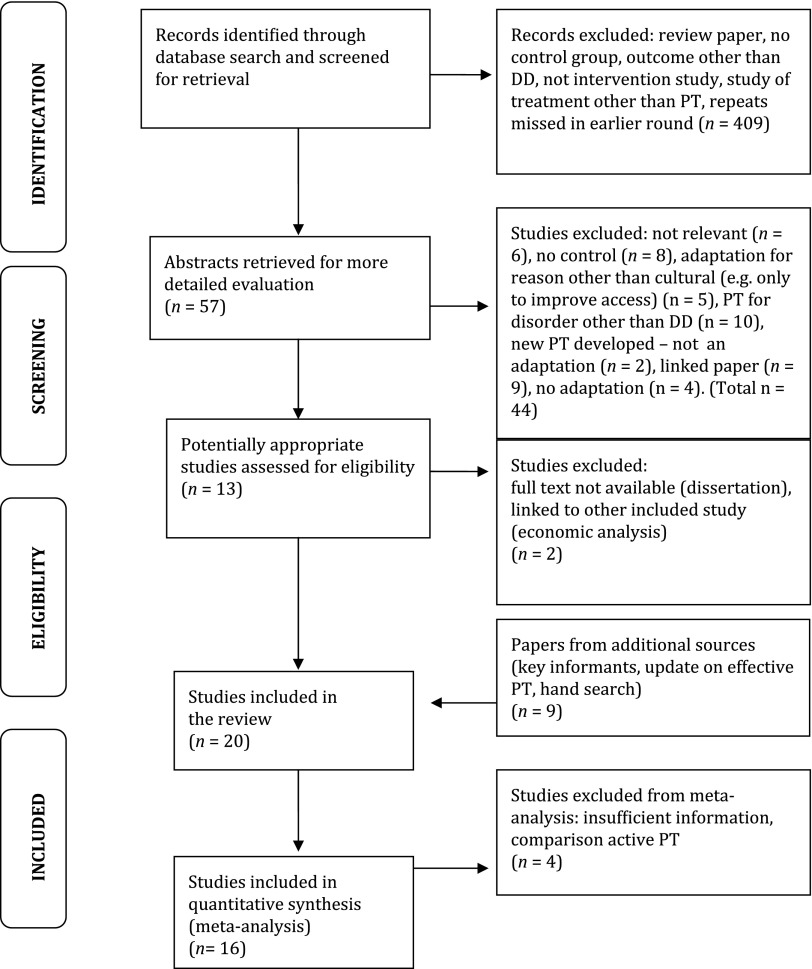
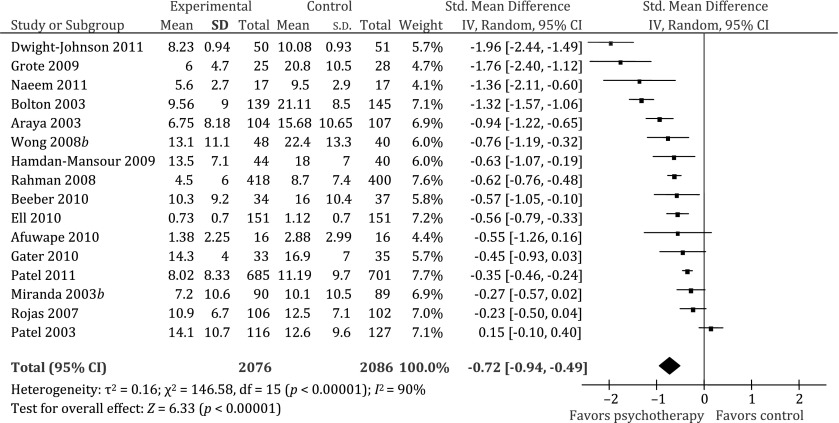
Background: Cultural adaptations of evidence-based psychological treatments (PTs) are important to enhance their universal applicability. The aim of this study was to review systematically the literature on adaptations of PTs for depressive disorders for ethnic minorities in Western countries and for any population in non-Western countries to describe the process, extent and nature of the adaptations and the effectiveness of the adapted treatments. Method: Controlled trials were identified using database searches, key informants, previous reviews and reference lists. Data on the process and details of the adaptations were analyzed using qualitative methods and meta-analysis was used to assess treatment effectiveness. Results: Twenty studies were included in this review, of which 16 were included in the meta-analysis. The process of adaptation was reported in two-thirds of the studies. Most adaptations were found in the dimensions of language, context and therapist delivering the treatment. The meta-analysis revealed a statistically significant benefit in favor of the adapted treatment [standardized mean difference (SMD) −0.72, 95% confidence interval (CI) −0.94 to −0.49]. Conclusions: Cultural adaptations of PTs follow a systematic procedure and lead primarily to adaptations in the implementation of the treatments rather than their content. Such PTs are effective in the treatment of depressive disorders in populations other than those for whom they were originally developed.
Overview
The claims and statistics of this paper haven’t been checked yet.
Free: it reads the open-access text and checks the first 5 claims that cite a source we can check. Create a free account to check every claim.
Integrity signals
Registry
Cites
Statistics
Figures
Verification
Claims the paper makes
The claims and statistics of this paper haven’t been checked yet.
Free: it reads the open-access text and checks the first 5 claims that cite a source we can check. Create a free account to check every claim.
Claims other papers make about this one
Each is checked against this paper’s own text: does it say what the citing paper says it does?
The source backs part of the claim, not all of it — or backs it for a different population, condition or comparison.
In the citing paper
“Cultural adaptation is important for psychosocial interventions for various mental health conditions, and meta-analyses have shown that such interventions are more effective than non-culturally adapted interventions. (474-476)”
From Dementia prevention, intervention, and care: 2024 report of the Lancet standing Commission (2024) · cites this paper as [476]
Experimental — accuracy not yet measuredThe source backs part of the claim, not all of it — or backs it for a different population, condition or comparison.
In the citing paper
“Research consistently shows that culturally adapted treatments are more effective, acceptable, and satisfying for patients [58-60].”
From Effectiveness of an Internet-Based Self-Help Acceptance and Commitment Therapy Program on Medical Students’ Mental Well-Being: Follow-Up Randomized Controlled Trial (2024) · cites this paper as [58]
Experimental — accuracy not yet measuredThe source backs part of the claim, not all of it — or backs it for a different population, condition or comparison.
In the citing paper
“Studies have also demonstrated that participants find culturally adapted ACT enjoyable and acceptable [58,61,62].”
From Effectiveness of an Internet-Based Self-Help Acceptance and Commitment Therapy Program on Medical Students’ Mental Well-Being: Follow-Up Randomized Controlled Trial (2024) · cites this paper as [58]
Experimental — accuracy not yet measuredThe source backs part of the claim, not all of it — or backs it for a different population, condition or comparison.
In the citing paper
“There is evidence that adapted, culturally-relevant mental health programming is an effective tool for addressing poor mental health in humanitarian contexts [8,9,10,11]”
From Psychological Interventions for Survivors of Intimate Partner Violence in Humanitarian Settings: An Overview of the Evidence and Implementation Considerations (2022) · cites this paper as [10]
Experimental — accuracy not yet measuredThe cited source says what the claim attributes to it.
In the citing paper
“The emerging evidence-base accordingly emphasises delivery adaptations (practitioner skills, characteristics and flexible patient centred approaches) over cultural adaptation of underlying principles of therapies [10-12].”
From Development and evaluation of culturally sensitive psychosocial interventions for under-served people in primary care (2014) · cites this paper as [10]
1 more claim about this paper
Create a free account to see every claim other papers make about this one.
Self-check
Percentages, sums and reported differences re-computed from the paper’s own numbers.
The self-check needs the paper’s full text.
Citations
Cites
Preferred Reporting Items for Systematic Reviews and Meta-Analyses: the PRISMA statement
Moher, D., Liberati, A., Tetzlaff, J., Altman, D. G., & for the PRISMA Group (2009) · BMJ · doi:10.1136/bmj.b2535 · Cited by 83,823
Measuring inconsistency in meta-analyses
Higgins, J. P. T., Thompson, S. G., Deeks, J. J., & Altman, D. G. (2003) · BMJ · doi:10.1136/bmj.327.7414.557 · Cited by 63,139 · cited 3×
“A random-effects model was used for the meta-analyses because substantial heterogeneity was observed (I(2)=90%) (Higgins et al. 2003).”
InfluentialBias in meta-analysis detected by a simple, graphical test
Egger, M., Smith, G. D., Schneider, M., & Minder, C. (1997) · BMJ · doi:10.1136/bmj.315.7109.629 · Cited by 56,722 · cited 1×
“check for publication bias (Egger et al. 1997); the plot was asymmetrical suggesting publication bias.”
Preferred reporting items for systematic reviews and meta-analyses: the PRISMA Statement.
(2009) · PubMed Central · Cited by 44,859
Preferred Reporting Items for Systematic Reviews and Meta-Analyses: The PRISMA Statement
Moher, D., Liberati, A., Tetzlaff, J., & Altman, D. G. (2009) · Journal of Clinical Epidemiology · doi:10.1016/j.jclinepi.2009.06.005 · Cited by 19,575
Developing and evaluating complex interventions: the new Medical Research Council guidance
Craig, P., Dieppe, P., Macintyre, S., Michie, S., Nazareth, I., & Petticrew, M. (2008) · BMJ · doi:10.1136/bmj.a1655 · Cited by 10,995 · cited 2×
“These themes were based on two frameworks: (1) The Medical Research Council (MRC) framework for the development and evaluation of complex interventions was used to draw out common elements in the process of cultural adaptation (Craig et al. 2008).”
Culturally adapted mental health intervention: a meta-analytic review
Griner, D., & Smith, T. B. (2006) · Psychotherapy: Theory, Research, Practice, Training · doi:10.1037/0033-3204.43.4.531 · Cited by 1,236 · cited 3×
“Although there have been previous systematic reviews of adaptations of mental health interventions (Griner & Smith, 2006; Huey & Polo, 2008; Benish et al. 2011; Smith et al .”
Psychotherapy for depression in adults: A meta-analysis of comparative outcome studies.
Cuijpers, P., van Straten, A., Andersson, G., & van Oppen, P. (2008) · Journal of Consulting and Clinical Psychology · doi:10.1037/a0013075 · Cited by 1,050 · cited 1×
“Although there is extensive evidence of the effectiveness of psychological treatments (PTs) for depressive disorders (Cuijpers et al. 2008; Hollon & Ponniah, 2010), it has been argued that PTs are developed in particular cultural contexts and that this may limit their universal applicability.”
Rahman, A., Malik, A., Sikander, S., Roberts, C., & Creed, F. (2008) · The Lancet · doi:10.1016/s0140-6736(08)61400-2 · Cited by 993 · cited 25×
“Non-RCTs were included as they too would provide information on all the research questions including effectiveness.”
InfluentialSelf-citationIssues and challenges in the design of culturally adapted evidence-based interventions
Castro, F. G., Barrera, M., & Holleran Steiker, L. K. (2010) · Annual Review of Clinical Psychology · doi:10.1146/annurev-clinpsy-033109-132032 · Cited by 796
Research works printed but not linked: 2
- 2. Andrew G, Dias-Saxena F, Patel V (2000). The development of a counselling treatment for common mental disorders in general health care settings. Indian Journal of Clinical Psychology 27, 72– 79
- 17. Crespo MM (2006). Effects of culturally specific dynamically oriented group art therapy with immigrant Latinas. Doctoral dissertation, California Institute of Integral Studies, San Francisco, CA
Cited by
Dementia prevention, intervention, and care: 2024 report of the Lancet standing Commission
Livingston, G., Huntley, J., Liu, K. Y., Costafreda, S. G., Selbæk, G., Alladi, S., Ames, D., Banerjee, S., Burns, A., Brayne, C., et al. (2024) · The Lancet · doi:10.1016/s0140-6736(24)01296-0 · Cited by 3,860
A Meta-Analysis of Cultural Adaptations of Psychological Interventions
Hall, G. C. N., Ibaraki, A. Y., Huang, E. R., Marti, C. N., & Stice, E. (2016) · Behavior Therapy · doi:10.1016/j.beth.2016.09.005 · Cited by 598
A systematic review and meta-analysis of psychological interventions to improve mental wellbeing
van Agteren, J., Iasiello, M., Lo, L., Bartholomaeus, J., Kopsaftis, Z., Carey, M., & Kyrios, M. (2021) · Nature Human Behaviour · doi:10.1038/s41562-021-01093-w · Cited by 510
Dawson, K. S., Bryant, R. A., Harper, M., Kuowei Tay, A., Rahman, A., Schafer, A., & van Ommeren, M. (2015) · World Psychiatry · doi:10.1002/wps.20255 · Cited by 440
“Chowdhary et al (38) have identified key components that require adaptation in different cultures (e.”
BackgroundSelf-citationKohrt, B. A., Asher, L., Bhardwaj, A., Fazel, M., Jordans, M. J. D., Mutamba, B. B., Nadkarni, A., Pedersen, G. A., Singla, D. R., & Patel, V. (2018) · International Journal of Environmental Research and Public Health · doi:10.3390/ijerph15061279 · Cited by 347
“, 2014 [33] Common mental disorders, Perinatal mental disorders”
BackgroundInfluentialSelf-citationRathod, S., Gega, L., Degnan, A., Pikard, J., Khan, T., Husain, N., Munshi, T., & Naeem, F. (2018) · Neuropsychiatric Disease and Treatment · doi:10.2147/ndt.s138430 · Cited by 261
“One focused on schizophrenia(23) while four focused on depressive symptoms.(13,18,19,21) One review focused on a specific population, that is, Latinos,(22) and another on Latino, African American, or Native American only,(16) while the rest included studies of different ethnic and cultural groups.”
Disparities in service use among children with autism: a systematic review.
Smith, K. A., Gehricke, J.-G., Iadarola, S., Wolfe, A., & Kuhlthau, K. A. (2020) · Pediatrics · doi:10.1542/peds.2019-1895g · Cited by 254
Rahman, A., Divan, G., Hamdani, S. U., Vajaratkar, V., Taylor, C., Leadbitter, K., Aldred, C., Minhas, A., Cardozo, P., Emsley, R., et al. (2016) · The Lancet Psychiatry · doi:10.1016/s2215-0366(15)00388-0 · Cited by 203
Self-citationCultural Adaptation of Scalable Psychological Interventions: A New Conceptual Framework
Heim, E., & Kohrt, B. A. (2019) · Clinical Psychology in Europe · doi:10.32872/cpe.v1i4.37679 · Cited by 191
“Evidence on such adaptations has been summarised in systematic reviews (Chowdhary et al., 2014; Harper Shehadeh et al., 2016).”
BackgroundBaron, E. C., Hanlon, C., Mall, S., Honikman, S., Breuer, E., Kathree, T., Luitel, N. P., Nakku, J., Lund, C., Medhin, G., et al. (2016) · BMC Health Services Research · doi:10.1186/s12913-016-1291-z · Cited by 189
“Although there is growing evidence from other LMICs indicating that psychosocial interventions can be culturally adapted and are effective at addressing common mental disorders [24, 25, 120], the transferability of these findings to rural settings in low-income countries, and feasibility of these interventions to scar…”
BackgroundSelf-citationHarper Shehadeh, M., Heim, E., Chowdhary, N., Maercker, A., & Albanese, E. (2016) · JMIR Mental Health · doi:10.2196/mental.5776 · Cited by 188
“We used the Bernal and Sáez-Santiago framework because it had been used to categorize adaptations made in previous systematic reviews [22-24].”
BackgroundMethodResultInfluentialSelf-citationChowdhary, N., Anand, A., Dimidjian, S., Shinde, S., Weobong, B., Balaji, M., Hollon, S. D., Rahman, A., Wilson, G. T., Verdeli, H., et al. (2016) · British Journal of Psychiatry · doi:10.1192/bjp.bp.114.161075 · Cited by 167
“19 We also were influenced by the approach of dismantling evidence-based psychological treatments to identify core treatment strategies that could be more easily task-shared with less qualified workers.”
Self-citationPetersen, I., Hanass Hancock, J., Bhana, A., & Govender, K. (2014) · Journal of Affective Disorders · doi:10.1016/j.jad.2014.02.013 · Cited by 166
Chronic pain and mental health: integrated solutions for global problems
Kohrt, B. A., Griffith, J. L., & Patel, V. (2018) · Pain · doi:10.1097/j.pain.0000000000001296 · Cited by 161
“In all contexts, interventions that have undergone cultural adaptation focusing on language for expression of distress outperform unadapted interventions.(5,16) Therefore, it is crucial to use”
Self-citationArundell, L.-L., Barnett, P., Buckman, J. E. J., Saunders, R., & Pilling, S. (2021) · Clinical Psychology Review · doi:10.1016/j.cpr.2021.102063 · Cited by 134
Perera, C., Salamanca-Sanabria, A., Caballero-Bernal, J., Feldman, L., Hansen, M., Bird, M., Hansen, P., Dinesen, C., Wiedemann, N., & Vallières, F. (2020) · Conflict and Health · doi:10.1186/s13031-020-00290-0 · Cited by 165
“To achieve this, it is recommended to follow adaptation protocols or frameworks that support adaptations to language and context without altering the core intervention content [6, 57].”
BackgroundFoundations of multicultural psychology: Research to inform effective practice.
Smith, T. B., & Trimble, J. E. (2016) · doi:10.1037/14733-000 · Cited by 132
Murray, L. K., Tol, W., Jordans, M., Sabir, G., Amin, A. M., Bolton, P., Bass, J., Bonilla-Escobar, F. J., & Thornicroft, G. (2014) · Intervention · doi:10.1097/wtf.0000000000000070 · Cited by 118
Self-citationDigital apothecaries: a vision for making health care interventions accessible worldwide
Muñoz, R. F., Chavira, D. A., Himle, J. A., Koerner, K., Muroff, J., Reynolds, J., Rose, R. D., Ruzek, J. I., Teachman, B. A., & Schueller, S. M. (2018) · mHealth · doi:10.21037/mhealth.2018.05.04 · Cited by 118
Degnan, A., Baker, S., Edge, D., Nottidge, W., Noke, M., Press, C. J., Husain, N., Rathod, S., & Drake, R. J. (2018) · Psychological Medicine · doi:10.1017/s0033291717002264 · Cited by 109
“This may explain the more modest efficacy against total symptoms than in previous reviews of adapted interventions which included nonrandomised trials and mixed ethnic and diagnostic samples (e.g. Griner & Smith, 2006; Chowdhary et al. 2014).”
InfluentialBangpan, M., Felix, L., & Dickson, K. (2019) · BMJ Global Health · doi:10.1136/bmjgh-2019-001484 · Cited by 108
Heim, E., Kohrt, B. A., Koschorke, M., Milenova, M., & Thornicroft, G. (2020) · Epidemiology and Psychiatric Sciences · doi:10.1017/s2045796018000458 · Cited by 99
“The importance of culturally adapting psychotherapeutic interventions has increasingly been stressed (Chowdhary et al., 2014).”
Cultural adaptations to augment health and mental health services: a systematic review
Healey, P., Stager, M. L., Woodmass, K., Dettlaff, A. J., Vergara, A., Janke, R., & Wells, S. J. (2017) · BMC Health Services Research · doi:10.1186/s12913-016-1953-x · Cited by 121
“[39] elaborated on the targets of adaptation in psychotherapy as well as on how to develop adaptations.”
BackgroundChibanda, D., Cowan, F. M., Healy, J. L., Abas, M., & Lund, C. (2015) · Tropical Medicine & International Health · doi:10.1111/tmi.12500 · Cited by 87
Bennouna, C., Khauli, N., Basir, M., Allaf, C., Wessells, M., & Stark, L. (2019) · Social Science & Medicine · doi:10.1016/j.socscimed.2019.112558 · Cited by 120
Provision of mental healthcare for children and adolescents: a worldwide view
Rocha, T. B.-M., Graeff-Martins, A. S., Kieling, C., & Rohde, L. A. (2015) · Current Opinion in Psychiatry · doi:10.1097/yco.0000000000000169 · Cited by 84
“For instance, evidence suggests that psychosocial treatments for depression that has undergone cultural adaptation exhibit larger effect sizes for effectiveness [28].”
BackgroundScaling up mental health care and psychosocial support in low-resource settings: a roadmap to impact
Jordans, M. J. D., & Kohrt, B. A. (2020) · Epidemiology and Psychiatric Sciences · doi:10.1017/s2045796020001018 · Cited by 94
“Ensuring a match between context and intervention has demonstrated to result in superior treatment outcome (Chowdhary et al., 2014), though this association is not undisputed (Cuijpers et al., 2018).”
BackgroundSelf-citationHinton, L., Tran, D., Nguyen, T.-N., Ho, J., & Gitlin, L. (2019) · BMJ Global Health · doi:10.1136/bmjgh-2019-001830 · Cited by 82
Cork, C., Kaiser, B. N., & White, R. G. (2019) · Global Mental Health · doi:10.1017/gmh.2019.5 · Cited by 80
“Commentators, such as Chowdhary et al. (2014), have reflected on the importance of culturally and linguistically adapting mental health interventions to optimise engagement with services in local contexts.”
Dickson, K., & Bangpan, M. (2018) · Cambridge Prisms Global Mental Health · doi:10.1017/gmh.2018.12 · Cited by 94
“Yet, the majority of humanitarian emergencies occur in non-Western, low-resource settings where such approaches may not be feasible or applicable, (Attanayake et al. 2009; Chowdhary et al. 2014).”
BackgroundSangraula, M., Kohrt, B. A., Ghimire, R., Shrestha, P., Luitel, N. P., van’t Hof, E., Dawson, K., & Jordans, M. J. D. (2021) · Global Mental Health · doi:10.1017/gmh.2021.5 · Cited by 78
“, 2002) highlighting the importance of even ‘simple’ cultural adaptations (Chowdhary et al., 2014).”
BackgroundSelf-citationTol, W. A., Augustinavicius, J., Carswell, K., Brown, F. L., Adaku, A., Leku, M. R., García-Moreno, C., Ventevogel, P., White, R. G., & van Ommeren, M. (2018) · Global Mental Health · doi:10.1017/gmh.2018.14 · Cited by 69
“Adapted interventions may then be tested using controlled designs (Medical Research Council, 2008; Chowdhary et al., 2014).”
BackgroundInfluentialThe efficacy of cognitive behavioral therapy for Chinese people: A meta-analysis
Ng, T. K., & Wong, D. F. K. (2018) · Australian & New Zealand Journal of Psychiatry · doi:10.1177/0004867417741555 · Cited by 71
“…psychotherapy have originated from Western societies emphasizing Western cultural values, such as individualism and future orientation (Griner and Smith, 2006; Lin, 2002), they might be less culturally appropriate for people from other cultural groups (Benish et al., 2011; Chowdhary et al., 2014).”
BackgroundInfluentialReporting Cultural Adaptation in Psychological Trials – The RECAPT criteria
Heim, E., Mewes, R., Ramia, J. A., Glaesmer, H., Hall, B. J., Shehadeh, M. H., Ünlü, B., Kananian, S., Kohrt, B. A., Lechner‐Meichsner, F., et al. (2021) · Clinical Psychology in Europe · doi:10.32872/cpe.6351 · Cited by 87
“There is much evidence on such surface adaptations of psychological interventions (Chowdhary et al., 2014; Chu & Leino, 2017; Harper Shehadeh et al., 2016).”
BackgroundCeccarelli, C., Prina, E., Muneghina, O., Jordans, M. J. D., Barker, E. D., Miller, K. E., Singh, R. K., Acartürk, C., Sorsdhal, K., Cuijpers, P. J., et al. (2022) · Epidemiology and Psychiatric Sciences · doi:10.1017/s2045796022000580 · Cited by 70
Self-citationAbi Ramia, J., Harper Shehadeh, M., Kheir, W., Zoghbi, E., Watts, S., Heim, E., & El Chammay, R. (2018) · Global Mental Health · doi:10.1017/gmh.2018.29 · Cited by 65
Culturally adapted psychotherapies for depressed adults: A systematic review and meta-analysis
Anik, E., West, R. M., Cardno, A. G., & Mir, G. (2021) · Journal of Affective Disorders · doi:10.1016/j.jad.2020.09.051 · Cited by 65
“This suggests increased recent interest in cultural adaptation of psychotherapies for depressed adults from diverse cultural backgrounds, since a previous review covering the period 1981 - 2012 only identified 20 studies (Chowdhary et al., 2014).”
BackgroundLeske, S., Harris, M. G., Charlson, F. J., Ferrari, A. J., Baxter, A. J., Logan, J. M., Toombs, M., & Whiteford, H. (2016) · Australian & New Zealand Journal of Psychiatry · doi:10.1177/0004867416662150 · Cited by 65
“More recent reviews have also offered support for culturally adapted interventions (Benish et al., 2011; Chowdhary et al., 2014; RojasGarcía et al., 2015; Van Loon et al., 2013), but these did not include any additional studies in Indigenous samples.”
BackgroundBockting, C. L. H., Williams, A. D., Carswell, K., & Grech, A. E. (2016) · Global Mental Health · doi:10.1017/gmh.2016.21 · Cited by 62
“illustrated information) should be taken into account (Chowdhary et al. 2014).”
Nadkarni, A., Velleman, R., Dabholkar, H., Shinde, S., Bhat, B., McCambridge, J., Murthy, P., Wilson, T., Weobong, B., & Patel, V. (2015) · Alcoholism: Clinical and Experimental Research · doi:10.1111/acer.12653 · Cited by 59
“There is also evidence demonstrating that PT developed in Western cultural contexts retain their effectiveness in different cultural contexts, when adapted following a systematic methodology (Chowdhary et al., 2013).”
BackgroundMethodInfluentialSelf-citationKananian, S., Soltani, Y., Hinton, D. E., & Stangier, U. (2020) · Journal of Traumatic Stress · doi:10.1002/jts.22615 · Cited by 76
Ruzek, J. I., & Yeager, C. M. (2017) · Global Mental Health · doi:10.1017/gmh.2017.11 · Cited by 54
“In a review of cultural adaptations of CBT interventions for depression, Chowdary et al. (2014) found that adaptations predominantly reflected efforts to enhance acceptability as opposed to modifications of core content, thus maintaining fidelity to the original interventions.”
BackgroundModel for Service Delivery for Developmental Disorders in Low-Income Countries
Hamdani, S. U., Minhas, F. A., Iqbal, Z., & Rahman, A. (2015) · Pediatrics · doi:10.1542/peds.2015-0861 · Cited by 54
Self-citationLovell, K., Lamb, J., Gask, L., Bower, P., Waheed, W., Chew-Graham, C., Lamb, J., Aseem, S., Beatty, S., Burroughs, H., et al. (2014) · BMC Psychiatry · doi:10.1186/s12888-014-0217-8 · Cited by 53
“The emerging evidence-base accordingly emphasises delivery adaptations (practitioner skills, characteristics and flexible patient centred approaches) over cultural adaptation of underlying principles of therapies [10-12].”
BackgroundMartin, P., Murray, L. K., Darnell, D., & Dorsey, S. (2018) · Clinical Psychology: Science and Practice · doi:10.1111/cpsp.12270 · Cited by 53
Baskin, C., Zijlstra, G., McGrath, M., Lee, C. Y., Duncan, F. H., Oliver, E. J., Osborn, D., Dykxhoorn, J. L., Kaner, E., Lafortune, L., et al. (2021) · BMJ Open · doi:10.1136/bmjopen-2020-041102 · Cited by 67
Garabiles, M. R., Harper Shehadeh, M., & Hall, B. J. (2019) · JMIR Formative Research · doi:10.2196/11600 · Cited by 50
“In fact, a systematic review [11] on cultural adaptation of interventions for depressive disorders showed that all the studies included in the review preserved the original treatment’s framework and core principles that were deemed acceptable.”
BackgroundMethodCultural influences in mental health treatment
Huang, C. Y., & Zane, N. (2016) · Current Opinion in Psychology · doi:10.1016/j.copsyc.2015.10.009 · Cited by 49
Salamanca-Sanabria, A., Richards, D., & Timulak, L. (2019) · Internet Interventions · doi:10.1016/j.invent.2018.11.005 · Cited by 49
Rojas‐García, A., Ruíz-Pérez, I., Rodríguez‐Barranco, M., Gonçalves, D. C., Pastor‐Moreno, G., & Ricci‐Cabello, I. (2015) · Clinical Psychology Review · doi:10.1016/j.cpr.2015.03.001 · Cited by 60
Translation, cultural adaptation and field-testing of the Thinking Healthy Program for Vietnam
Fisher, J., Nguyen, H. T. M., Mannava, P., Tran, H., Dam, T., Tran, H., Tran, T. D., Durrant, K., Rahman, A., & Luchters, S. M. F. (2014) · Globalization and Health · doi:10.1186/1744-8603-10-37 · Cited by 57
“There is emerging evidence that this challenge can be overcome by using evidence-informed, perinatal psychological or psycho-educational programs in local communities, which have, if developed in other settings, been culturally adapted [14].”
BackgroundSelf-citationBrown, C., Maggin, D. M., & Buren, M. K. (2018) · Education and Treatment of Children · doi:10.1353/etc.2018.0024 · Cited by 59
Brown, F. L., Aoun, M., Taha, K., Steen, F., Hansen, P., Bird, M., Dawson, K. S., Watts, S., Chammay, R. E., Sijbrandij, M., et al. (2020) · Frontiers in Psychiatry · doi:10.3389/fpsyt.2020.00212 · Cited by 56
Self-citationCultural Adaptations to Youth Mental Health Interventions: A Systematic Review
Arora, P. G., Parr, K. M., Khoo, O., Lim, K., Coriano, V., & Baker, C. N. (2021) · Journal of Child and Family Studies · doi:10.1007/s10826-021-02058-3 · Cited by 49
Edge, D., Degnan, A., Cotterill, S., Berry, K., Baker, J. A., Drake, R., & Abel, K. M. (2018) · Health Services and Delivery Research · doi:10.3310/hsdr06320 · Cited by 56
Wright, A., Reisig, A., & Cullen, B. (2020) · Journal of Behavioral and Cognitive Therapy · doi:10.1016/j.jbct.2020.10.003 · Cited by 47
Interpersonal Psychotherapy: A Scoping Review and Historical Perspective (1974–2017)
Ravitz, P., Watson, P., Lawson, A., Constantino, M. J., Bernecker, S. L., Park, J., & Swartz, H. A. (2019) · Harvard Review of Psychiatry · doi:10.1097/hrp.0000000000000219 · Cited by 58
Singla, D. R., Lemberg-Pelly, S., Lawson, A., Zahedi, N., Thomas-Jacques, T., & Dennis, C.-L. (2020) · JMIR Mental Health · doi:10.2196/19271 · Cited by 47
“Furthermore, there is evidence that cultural beliefs can play a significant role in the acceptance of psychological treatments, treatment providers, and treatment delivery models [45].”
BackgroundHölzel, L. P., Ries, Z., Kriston, L., Dirmaier, J., Zill, J. M., Rummel‐Kluge, C., Niebling, W., Bermejo, I., & Härter, M. C. (2016) · BMJ Open · doi:10.1136/bmjopen-2016-012008 · Cited by 50
Aggarwal, N. K., Balaji, M., Kumar, S., Mohanraj, R., Rahman, A., Verdeli, H., Araya, R., Jordans, M. J. D., Chowdhary, N., & Patel, V. (2014) · Journal of Affective Disorders · doi:10.1016/j.jad.2014.03.036 · Cited by 46
“, 2013), the content and process of delivery of PTs need to be adapted to the local context to enhance their feasibility and acceptability (Chowdhary et al., 2013; Rahman, 2007).”
BackgroundMethodInfluentialSelf-citationBhui, K. S., Aslam, R. W., Palinski, A., McCabe, R., Johnson, M., Weich, S., Singh, S. P., Knapp, M. R. J., Ardino, V., & Szczepura, A. K. (2015) · The British Journal of Psychiatry · doi:10.1192/bjp.bp.114.158899 · Cited by 62
“24,25 So, interventions targeting therapeutic communications may reduce inequalities of experiences and outcomes from psychiatric care.”
Nakimuli‐Mpungu, E., Wamala, K., Okello, J., Alderman, S., Odokonyero, R. F., Musisi, S., Mojtabai, R., & Mills, E. J. (2014) · Journal of Affective Disorders · doi:10.1016/j.jad.2014.05.005 · Cited by 45
“Trained mental health workers will train and supervise community lay workers identified by the target community using simplified intervention and training manuals translated into the local language of the target community (Chowdhary et al., 2013).”
BackgroundBedi, R. P. (2018) · Archives of Scientific Psychology · doi:10.1037/arc0000047 · Cited by 87
“…al., 2015; Nadkarni et al., 2017), and parent training and interventions based on Western conceptualizations and research have perhaps the strongest overall research support in favor of their implementation in LMI countries (Chowdhary et al., 2014; Leijten et al., 2016; Ortiz & Del Vecchio, 2013).”
BackgroundResultInfluentialSpanhel, K., Schweizer, J. S., Wirsching, D., Lehr, D., Baumeister, H., Bengel, J., & Sander, L. (2019) · Internet Interventions · doi:10.1016/j.invent.2019.100252 · Cited by 44
“Correspondingly, the effectiveness can be increased by cultural adaptation (Benish et al., 2011; Chowdhary et al., 2014; Griner and Smith, 2006).”
BackgroundAl-Sawafi, A., Lovell, K., Renwick, L., & Husain, N. (2020) · BMC Psychiatry · doi:10.1186/s12888-020-02816-5 · Cited by 42
Brady, B., Veljanova, I., Schabrun, S. M., & Chipchase, L. S. (2018) · BMJ Open · doi:10.1136/bmjopen-2018-021999 · Cited by 53
Rose‐Clarke, K., Pradhan, I., Shrestha, P., Prakash, B. K., Magar, J., Luitel, N. P., Devakumar, D., Rafaeli, A. K., Clougherty, K. F., Kohrt, B. A., et al. (2020) · BMC Psychology · doi:10.1186/s40359-020-00452-y · Cited by 63
Self-citationMukdarut, B., Chiumento, A., Dickson, K., & Felix, L. (2017) · doi:10.21201/2017.8937 · Cited by 40
Culturally adapted CBT – the evolution of psychotherapy adaptation frameworks and evidence
Naeem, F., Sajid, S., Naz, S., & Phiri, P. (2023) · The Cognitive Behaviour Therapist · doi:10.1017/s1754470x2300003x · Cited by 57
“(2021) also found statistically significant effects promoting the use of culturally adapted interventions for depression in comparison with control groups (SMD = – 0.63, 95% CI – 0.87 to – 0.39), which is in line with previous findings and reviews (Chowdhary et al ., 2014).”
InfluentialModerators in psychotherapy meta-analysis
Spielmans, G. I., & Flückiger, C. (2018) · Psychotherapy Research · doi:10.1080/10503307.2017.1422214 · Cited by 40
“Further, the generalizability of study results to socio-cultural backgrounds and mental health systems of specific countries is another important, yet often overlooked consideration (Chowdhary et al., 2014; Jacob et al., 2007).”
BackgroundColeman, S., Mukasakindi, H., Rose, A. L., Galea, J. T., Nyirandagijimana, B., Hakizimana, J., Bienvenue, R., Kundu, P., Uwimana, E., Uwamwezi, A., et al. (2021) · Intervention · doi:10.4103/intv.intv_41_20 · Cited by 46
“However, published literature rarely describes the cross-site adaptation processes for psychological interventions to context or culture, including curriculum or implementation adaptations (Chowdhary et al., 2014).”
BackgroundSchneider, M., Baron, E., Davies, T., Munodawafa, M., & Lund, C. (2018) · Cambridge Prisms Global Mental Health · doi:10.1017/gmh.2018.1 · Cited by 42
Teles, S., Sosa‐Napolskij, M., Paúl, C., Ferreira, A., & Seeher, K. M. (2020) · Dementia · doi:10.1177/1471301220910333 · Cited by 43
Oladeji, B. D., Kola, L., Abiona, T., Montgomery, A. A., Araya, R., & Gureje, O. (2015) · BMC Psychiatry · doi:10.1186/s12888-015-0483-0 · Cited by 36
“We used a local adaptation of Problem Solving Treatment for Primary Care (PST-PC), [15,28,29] a seven-step common sense talk therapy that aims at helping patients solve troublesome problems that contribute to causing or prolonging the depressive episode.”
BackgroundMethodSelf-citationCulturally sensitive grief treatment and support: A scoping review
Aeschlimann, A., Heim, E., Killikelly, C., Arafa, M., & Maercker, A. (2024) · SSM - Mental Health · doi:10.1016/j.ssmmh.2024.100325 · Cited by 49
Beck, A. F., Nadkarni, A., Calam, R. M., Naeem, F., & Husain, N. (2015) · Asian Journal of Psychiatry · doi:10.1016/j.ajp.2015.10.008 · Cited by 38
Self-citationIndian Perspective on Psychotherapy: Cultural Issues
Bhargava, R., Kumar, N., & Gupta, A. (2016) · Journal of Contemporary Psychotherapy · doi:10.1007/s10879-016-9348-1 · Cited by 47
“Chowdhary et al. (2014) systematically reviewed 20 studies on adaptations of PT on depressive disorders among ethnic minorities in Western countries and for any population in non-Western countries.”
BackgroundHusain, M. I., Chaudhry, I. B., Rahman, R. R., Hamirani, M. M., Mehmood, N., Haddad, P. M., Hodsoll, J. P., Young, A. H., Naeem, F., & Husain, N. (2017) · International Journal of Bipolar Disorders · doi:10.1186/s40345-017-0074-8 · Cited by 40
“Previous systematic reviews of the efficacy of culturally adapted mental health interventions have found a moderately strong benefit of culturally adapted interventions (Griner and Smith 2006; Chowdhary et al. 2014).”
BackgroundMethodTeles, S., Ferreira, A., Seeher, K. M., Fréel, S., & Paúl, C. (2020) · BMC Geriatrics · doi:10.1186/s12877-019-1364-z · Cited by 45
Rochat, T., Arteche, A. X., Stein, A. L., Mitchell, J., & Bland, R. (2015) · AIDS · doi:10.1097/qad.0000000000000668 · Cited by 45
“do show improvements, it is likely that they require therapeutic interventions that Amagugu did not provide because it is not designed as treatment for clinical depression or anxiety, for which more established therapeutic interventions exist [62,63].”
BackgroundA cross-cultural interpersonal model of adolescent depression: A qualitative study in rural Nepal
Rose-Clarke, K., Hassan, E., BK, P., Magar, J., Devakumar, D., Luitel, N. P., Verdeli, H., & Kohrt, B. A. (2021) · Social Science & Medicine · doi:10.1016/j.socscimed.2020.113623 · Cited by 33
“provider, setting, group size and composition) (Chowdhary et al., 2014).”
Self-citationGiusto, A., & Puffer, E. (2018) · Global Mental Health · doi:10.1017/gmh.2017.32 · Cited by 32
“Though there is a debate in the field regarding the necessary level of adaptation, there seems to be a consensus that some level of adaptation beyond translation is associated with more positive outcomes (Barrera et al. 2013; Chowdhary et al. 2014).”
BackgroundJenstad, L. M., Howe, T., Breau, G., Abel, J., Colozzo, P., Halas, G., Mason, G., Rieger, C. L., Simon, L., & Strachan, S. M. (2023) · Patient Education and Counseling · doi:10.1016/j.pec.2023.108040 · Cited by 48
Lindow, J. C., Hughes, J. L., South, C. C., Gutierrez, L., Bannister, E., Trivedi, M. H., & Byerly, M. (2019) · Archives of Suicide Research · doi:10.1080/13811118.2019.1624667 · Cited by 40
Fenta, T. B., Keynejad, R. C., Honikman, S., Sorsdahl, K. R., MYERS, B. J., Fekadu, A., & Hanlon, C. (2020) · BMC Pregnancy and Childbirth · doi:10.1186/s12884-020-03069-6 · Cited by 41
Lal, S., Gleeson, J., Rivard, L., D'Alfonso, S., Joober, R., Malla, A., & Alvarez-Jimenez, M. (2020) · JMIR Formative Research · doi:10.2196/19887 · Cited by 32
“Indeed, within the broader mental health literature, previous studies have indicated that interventions originally designed for a population and adapted to the cultural and contextual needs of another population can yield better outcomes than providing those interventions to the same population without adaptation [2,6…”
BackgroundPrevalence and risk factors associated with depression in pregnant adolescents in Nairobi, Kenya
Tele, A., Kathono, J., Mwaniga, S., Nyongesa, V., Yator, O., Gachuno, O. W., Wamalwa, D. C., Amugune, B. K., Cuijpers, P. J., Saxena, S., et al. (2022) · Journal of Affective Disorders Reports · doi:10.1016/j.jadr.2022.100424 · Cited by 44
“Depression is the leading cause of disease burden in women of reproductive age (Chowdhary et al., 2014; Howard and Khalifeh, 2020).”
Wong, Q. J. J., Chen, J., Gregory, B., Baillie, A. J., Nagata, T., Furukawa, T. A., Kaiya, H., Peters, L., & Rapee, R. M. (2019) · Journal of Affective Disorders · doi:10.1016/j.jad.2018.09.028 · Cited by 32
Wahid, S. S., Sarker, M., Arafat, A. S. M. E., Apu, A. R., & Kohrt, B. A. (2021) · Culture Medicine and Psychiatry · doi:10.1007/s11013-021-09735-4 · Cited by 39
Rahman, A., & Kieling, C. (2015) · Wiley eBooks · doi:10.1002/9781118381953.ch16 · Cited by 31
Self-citationBangpan, M., Lambert, F., Chiumento, A., & Dickson, K. (2016) · doi:10.21201/2016.605150 · Cited by 30
Racial and ethnic disparities in depression treatment
Cardemil, E. V., Nelson, T., & Keefe, K. (2015) · Current Opinion in Psychology · doi:10.1016/j.copsyc.2015.01.021 · Cited by 34
Magidson, J. F., Lejuez, C. W., Kamal, T., Blevins, E., Murray, L. K., Bass, J., Bolton, P. A., & Pagoto, S. (2015) · Cambridge Prisms Global Mental Health · doi:10.1017/gmh.2015.22 · Cited by 34
“Within any RCTs in low-resource settings, researchers have to examine the processes of adaptation to understand how EBTs can be applied to non-Western populations (Patel et al. 2007; Verdeli et al. 2008; Kaysen et al. 2013; Murray et al. 2013; Chowdhary et al. 2014).”
BackgroundShala, M., Morina, N., Burchert, S., Cerga-Pashoja, A., Knaevelsrud, C., Maercker, A., & Heim, E. (2020) · Internet Interventions · doi:10.1016/j.invent.2020.100339 · Cited by 29
Lal, S., Gleeson, J., MALLA, A. K., Rivard, L., Joober, R., Chandrasena, R. D., & Álvarez‐Jiménez, M. (2018) · JMIR Research Protocols · doi:10.2196/resprot.8810 · Cited by 31
“In fact, recent systematic reviews indicate that the effectiveness of mental health–related interventions (in-person or Web-based) developed in one context and evaluated in another, are influenced by whether the intervention was adapted before the implementation [3,6,8,9].”
BackgroundSpruill, T. M., Friedman, D. J., Díaz, L., Butler, M. J., Goldfeld, K. S., O’Kula, S. S., Montesdeoca, J., Payano, L., Shallcross, A. J., Kaur, K., et al. (2021) · Translational Behavioral Medicine · doi:10.1093/tbm/ibab045 · Cited by 33
Designing Psychological Treatments for Scalability: The PREMIUM Approach
Vellakkal, S., & Patel, V. (2015) · PLOS ONE · doi:10.1371/journal.pone.0134189 · Cited by 29
“This observation strengthens the confidence with which such psychological theories can be generalized across cultural contexts, a finding consistent with the experiences of other investigators seeking to adapt psychological treatments for use in culturally diverse settings [13].”
ResultSelf-citationCultural Adaptation of a Low-Intensity Group Psychological Intervention for Syrian Refugees
Akhtar, A., Engels, M., Bawaneh, A., Bird, M., Bryant, R., Cuijpers, P., Hansen, P., Al-Hayek, H., Ilkkursun, Z., Kurt, G., et al. (2021) · Intervention · doi:10.4103/intv.intv_38_20 · Cited by 28
“Sections of the manual presented in the cognitive interviews were preselected based on elements of the Bernal framework of language, persons, metaphors, content, concepts, goals, methods and context used (Bernal et al., 2009; Bernal & Sáez-Santiago, 2006; Chowdhary et al., 2014).”
BackgroundMethodWang, Y., Li, X., Zhang, Q., Yeung, D., & Wu, Y. (2025) · JMIR mHealth and uHealth · doi:10.2196/63806 · Cited by 35
“This framework has been successfully applied in previous cultural adaptations of psychological interventions for Asian populations [35,36].”
Ventevogel, P. (2018) · Mental Health of Refugee and Conflict-Affected Populations · doi:10.1007/978-3-319-97046-2_8 · Cited by 27
Metadata
- Authors
- Chowdhary, N., Jotheeswaran, A. T., Nadkarni, A., Hollon, S. D., King, M., Jordans, M. J. D., Rahman, A., Verdeli, H., Araya, R., & Patel, V.
- Affiliations
- London School of Hygiene & Tropical Medicine (GB)
- Vanderbilt University (US)
- University College London (GB)
- HealthNet TPO (NL)
- University of Liverpool (GB)
- Columbia University (US)
- University of Bristol (GB)
- Corresponding author
- Patel, V.
- ORCID
- Venue
- Psychological Medicine
- Publisher
- Cambridge University Press (CUP)
- Published
- 2013-07-19
- Volume
- 44
- Issue
- 6
- Pages
- 1131-1146
- ISSN
- 0033-2917 (ISSN-L)
- 1469-8978
- PMC
- PMC3943384
- OpenAlex
- W2117132662
- Cited by
- 349
- References
- 53
- Citations by year
- 2026: 26 · 2025: 54 · 2024: 26 · 2023: 38 · 2022: 19 · 2021: 43 · 2020: 37 · 2019: 23 · 2018: 28 · 2017: 9 · 2016: 12 · 2015: 23 · 2014: 11
- FWCI
- 2.03
- Type
- journal article
- Language
- en
- Open access
- hybrid
- doi.org
- Locations
- Psychological Medicine (publishedVersion, cc-by)
- Europe PMC (PubMed Central) (publishedVersion, cc-by)
- PubMed Central (publishedVersion, cc-by)
- PubMed (publishedVersion)
- LSHTM Research Online (London School of Hygiene and Tropical Medicine) (acceptedVersion)
- UCL Discovery (University College London) (submittedVersion)
- Research Portal (King's College London) (submittedVersion, cc-by)
- Greater South Information System
- Funders
- Wellcome Trust (091834)
- Topics
- Health Sciences › Medicine › Psychiatry and Mental health › Mental Health Treatment and Access
- Health Sciences › Medicine › Public Health, Environmental and Occupational Health › Cultural Competency in Health Care
- Social Sciences › Psychology › Clinical Psychology › Psychotherapy Techniques and Applications
- Keywords
- cultural adaptation, psychological intervention, depressive disorders, ethnic minorities, cross-cultural adaptation, treatment effectiveness, language adaptation, implementation adaptation, non-Western populations
- MeSH terms
- Depressive Disorder, Humans, Minority Groups, Psychotherapy, Culturally Competent Care
About these checks
Registry, retraction, Cites and statistics results are computed, not judged, with one exception: a printed reference that no index lists is read once by a model before it counts as a citation error. Claims are extracted by a model and kept only when their quote appears verbatim in the text; each cited source is then checked, with a model’s help, for whether it says what the claim relies on. Those verdicts can be wrong — read the claim’s quote and the cited source before relying on one.
Statistics and arithmetic are recomputed, not judged.
Confidence bands are shown only for fields calibrated on our annotated test set. None is calibrated yet, so no band is shown.
What counts as a claim ›How we measure confidence ›How we check this ›
Are you an author, or do you see a problem with this page? Request a review
Data sources
Bibliographic data: Semantic Scholar, OpenAlex, Crossref.
Contains information from the Semantic Scholar Academic Graph Datasets, made available under the ODC Attribution License (ODC-BY 1.0).
Semantic Scholar’s data is described in: Kinney, R., et al. (2023). The Semantic Scholar Open Data Platform. arXiv:2301.10140.
